Reviewed by Tara Sullivan · Updated July 2026 · 9 min read
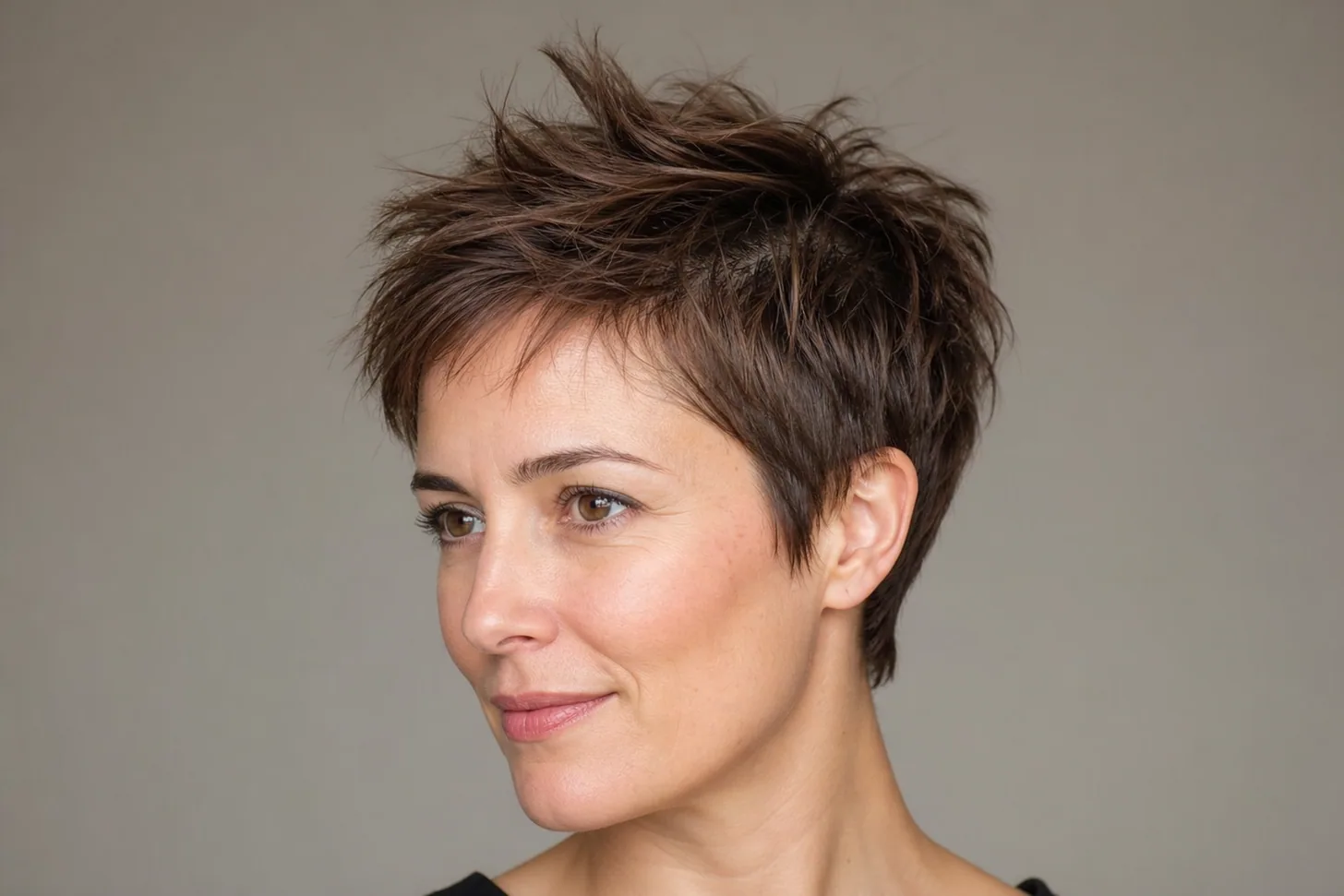
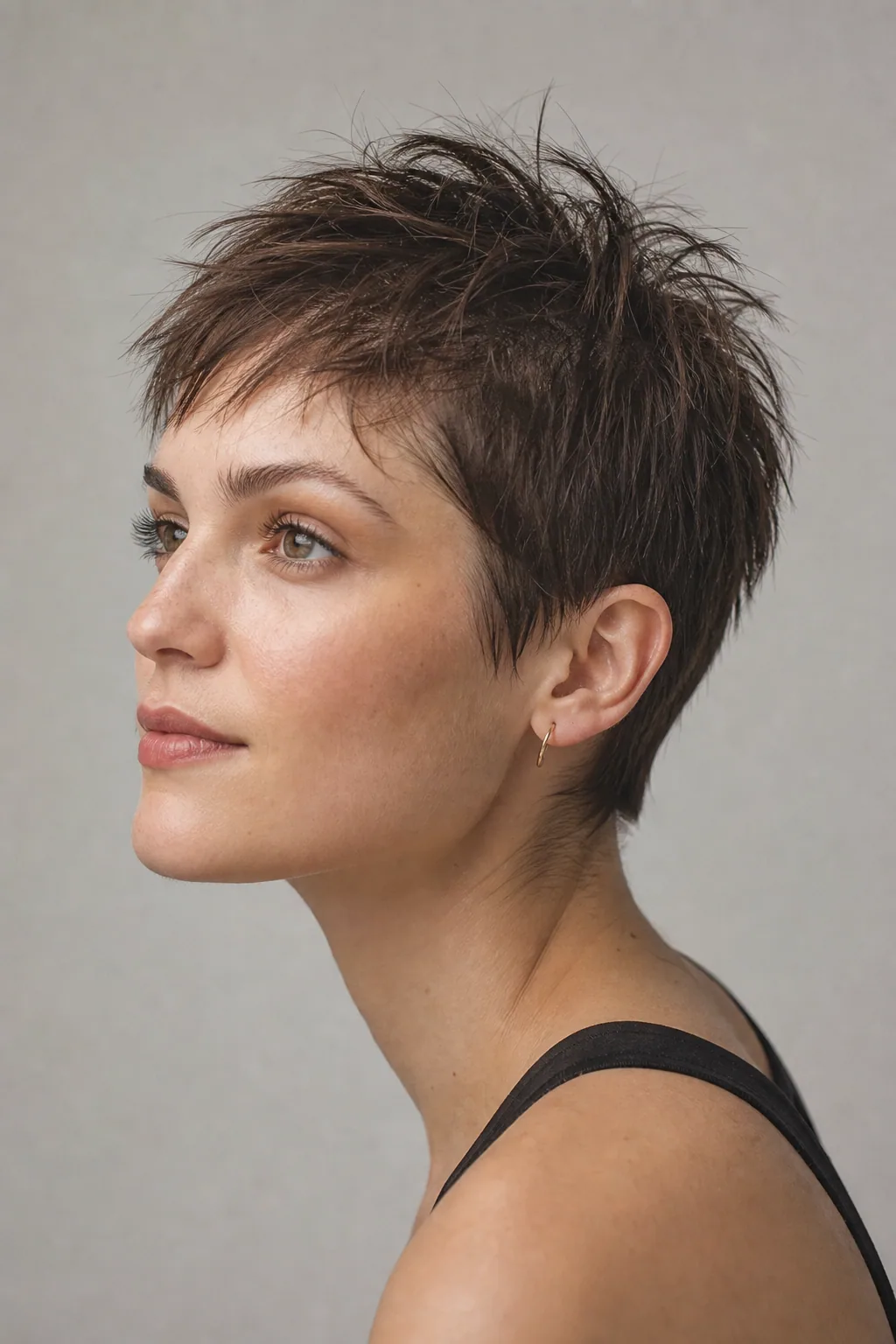
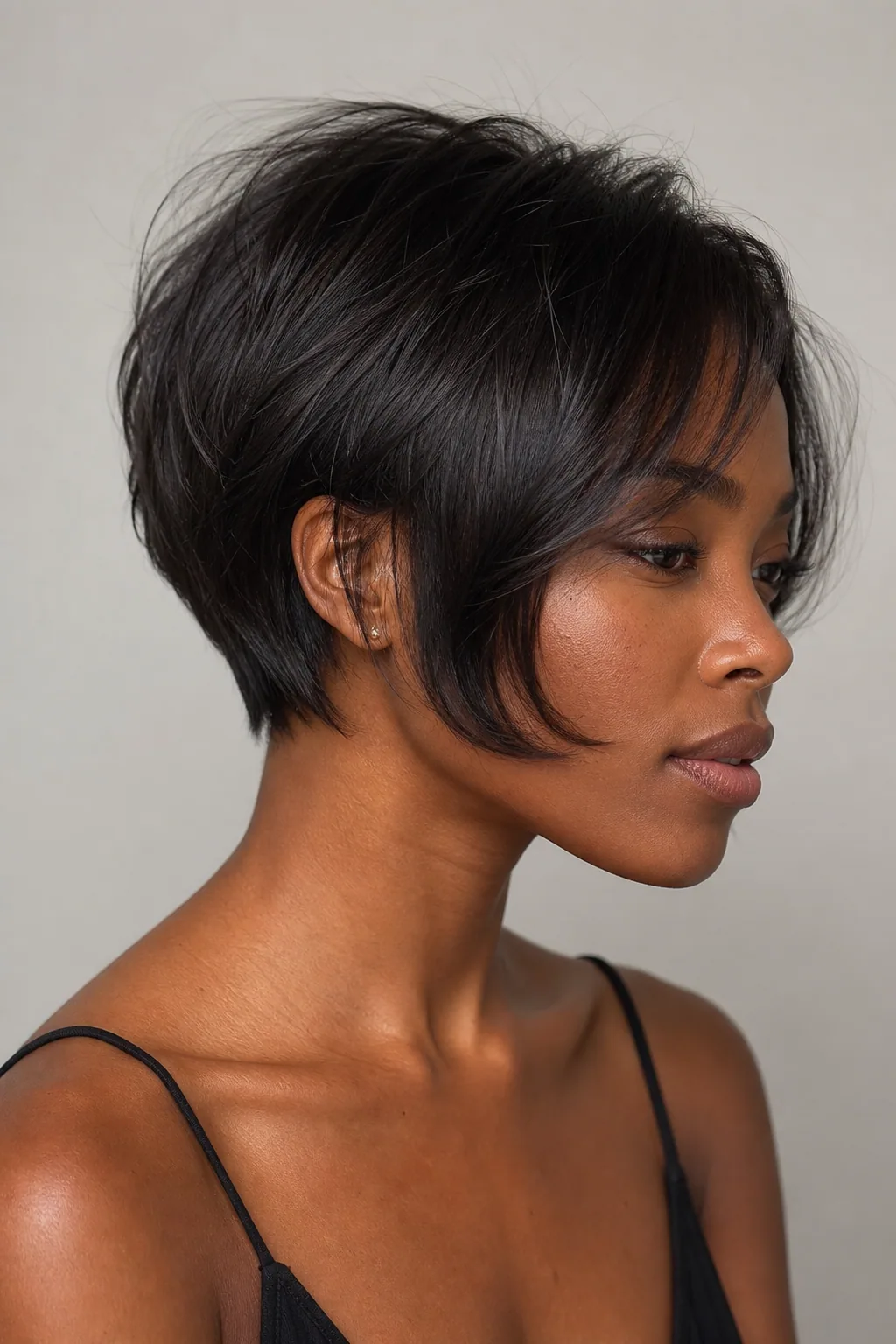
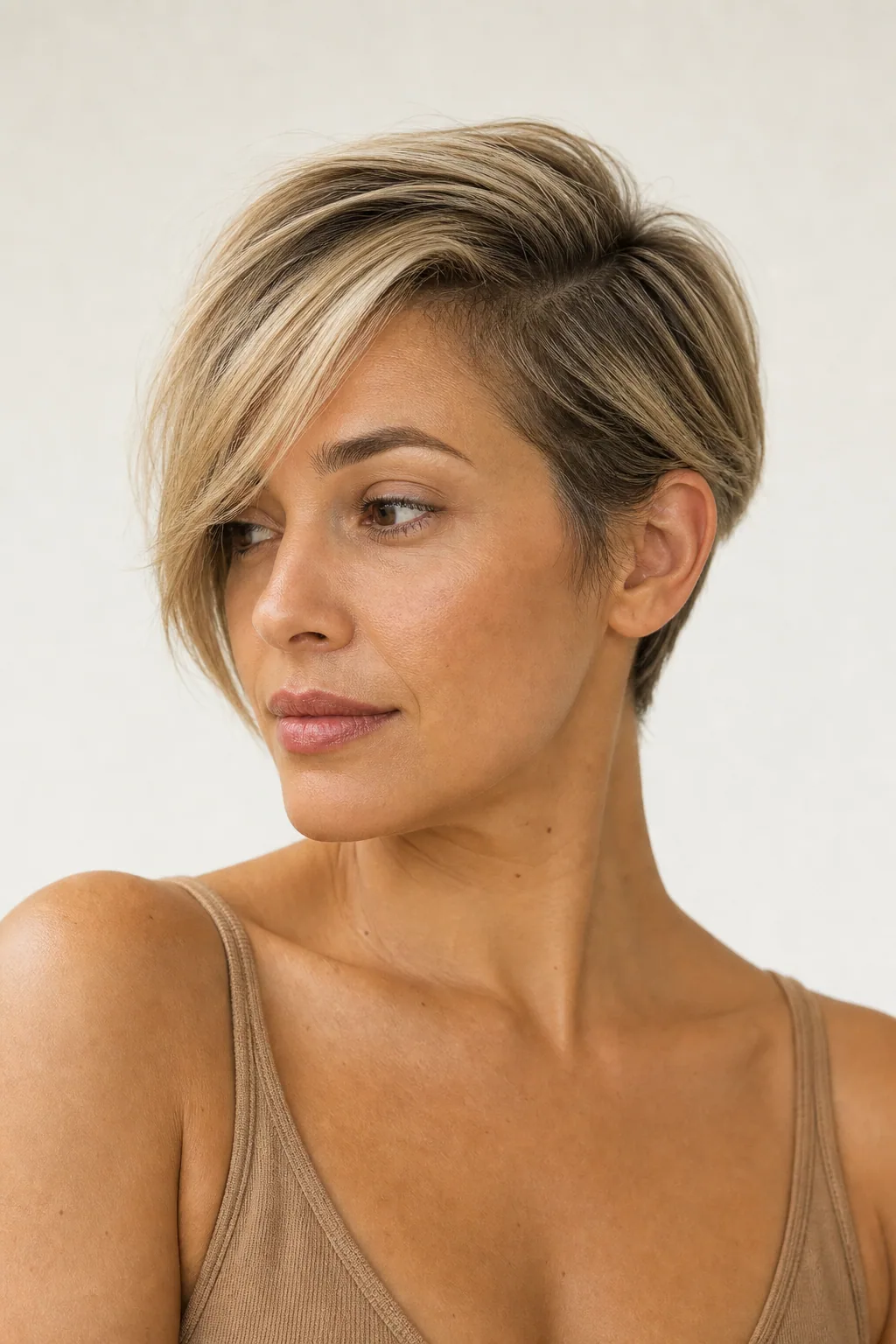
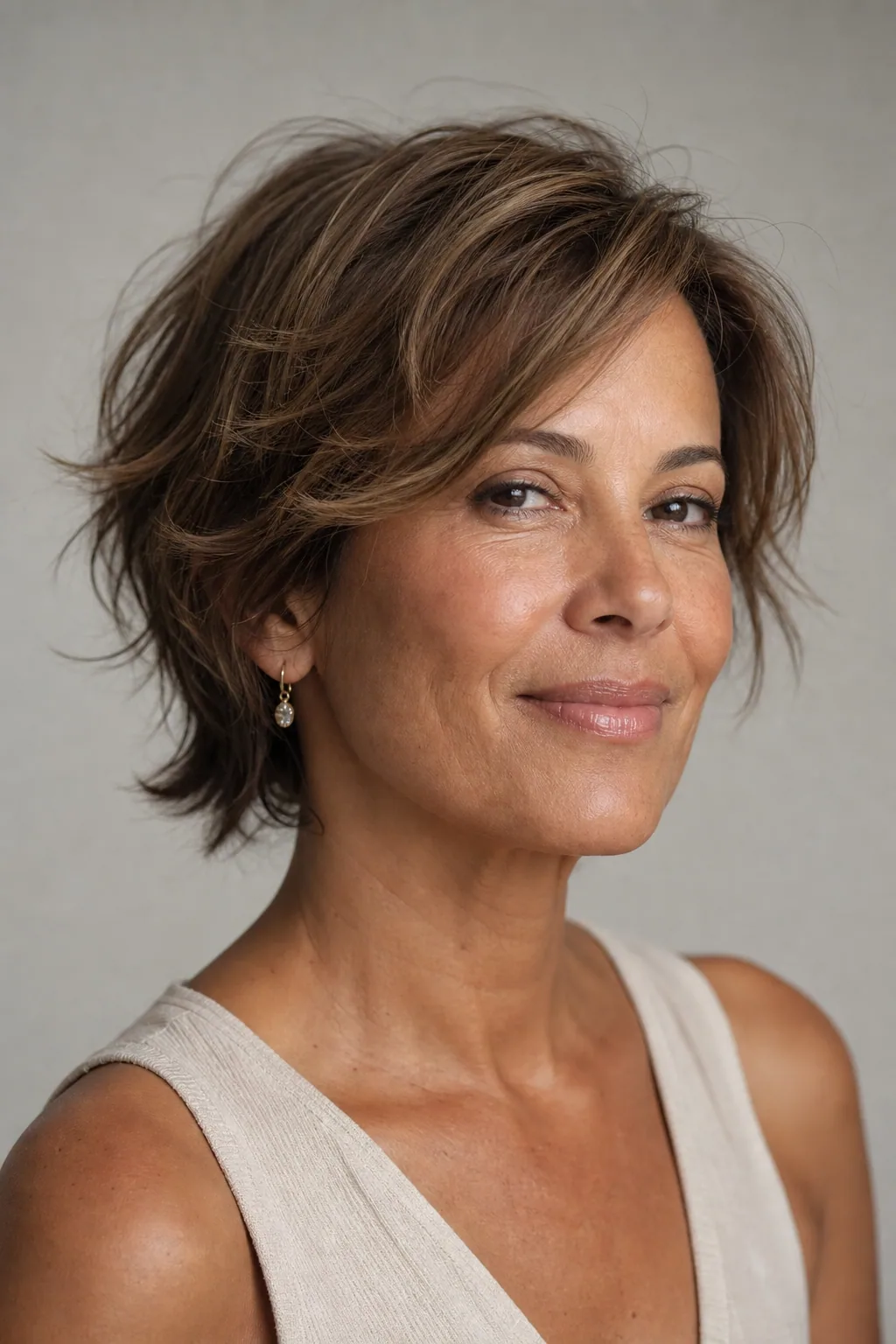
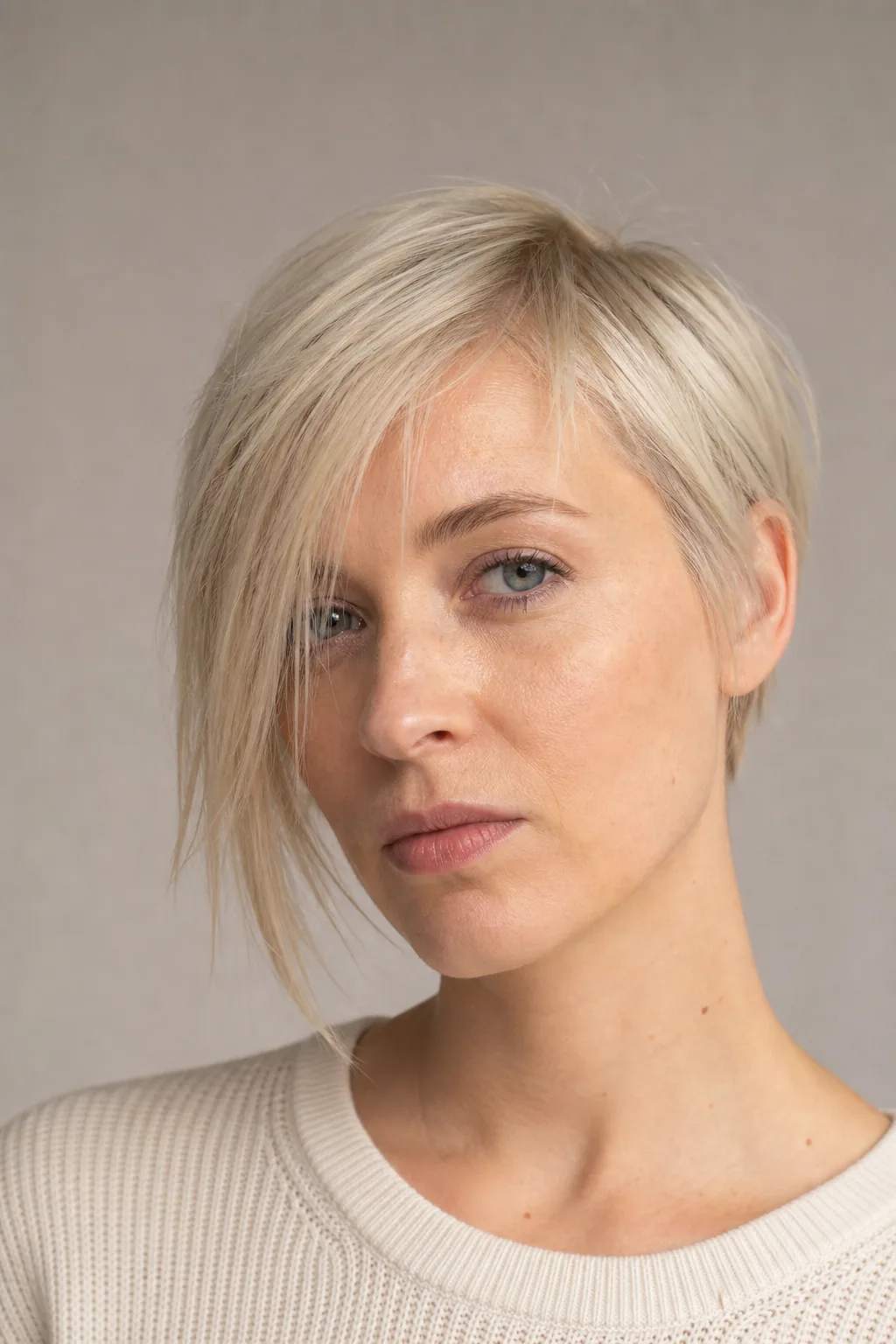
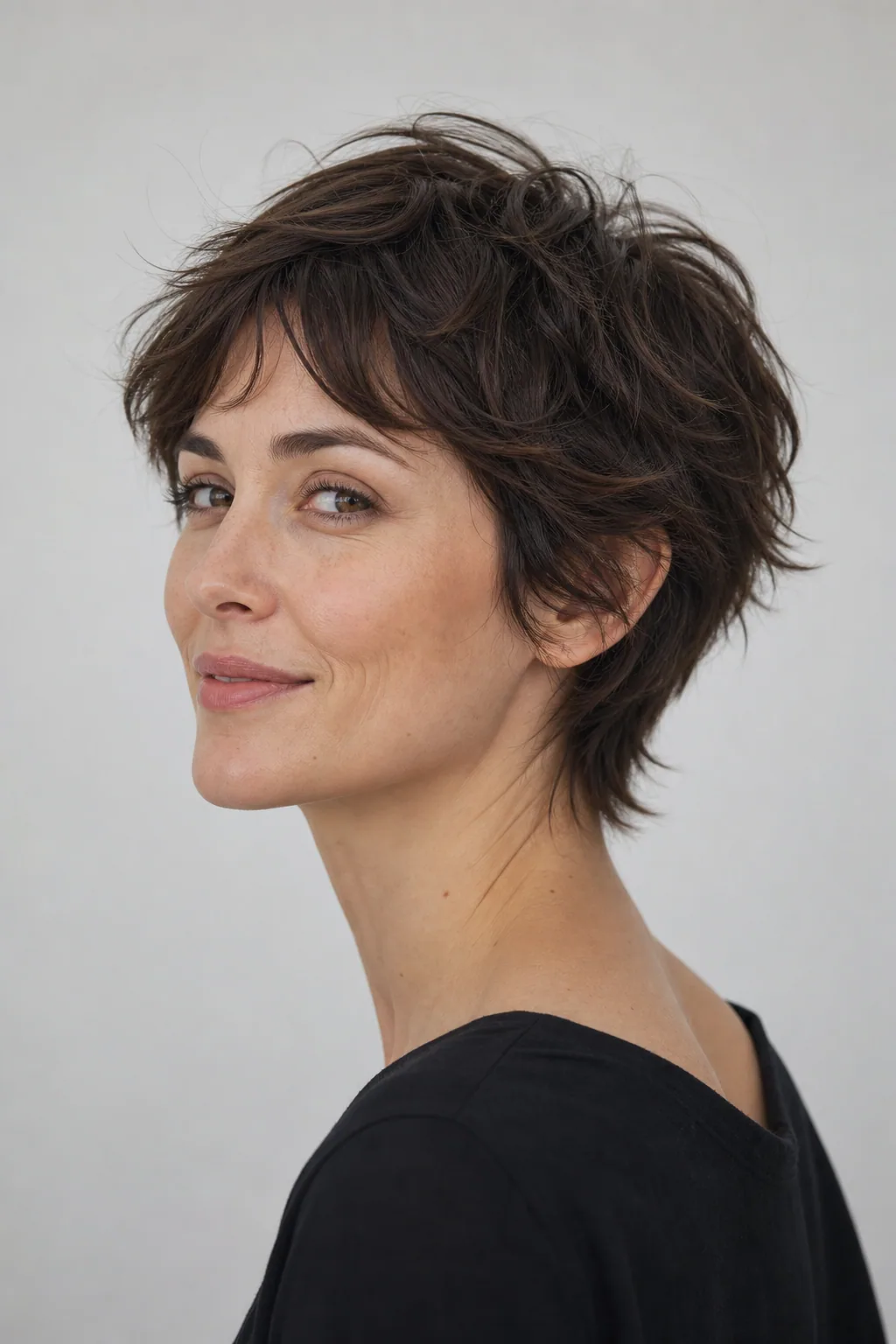
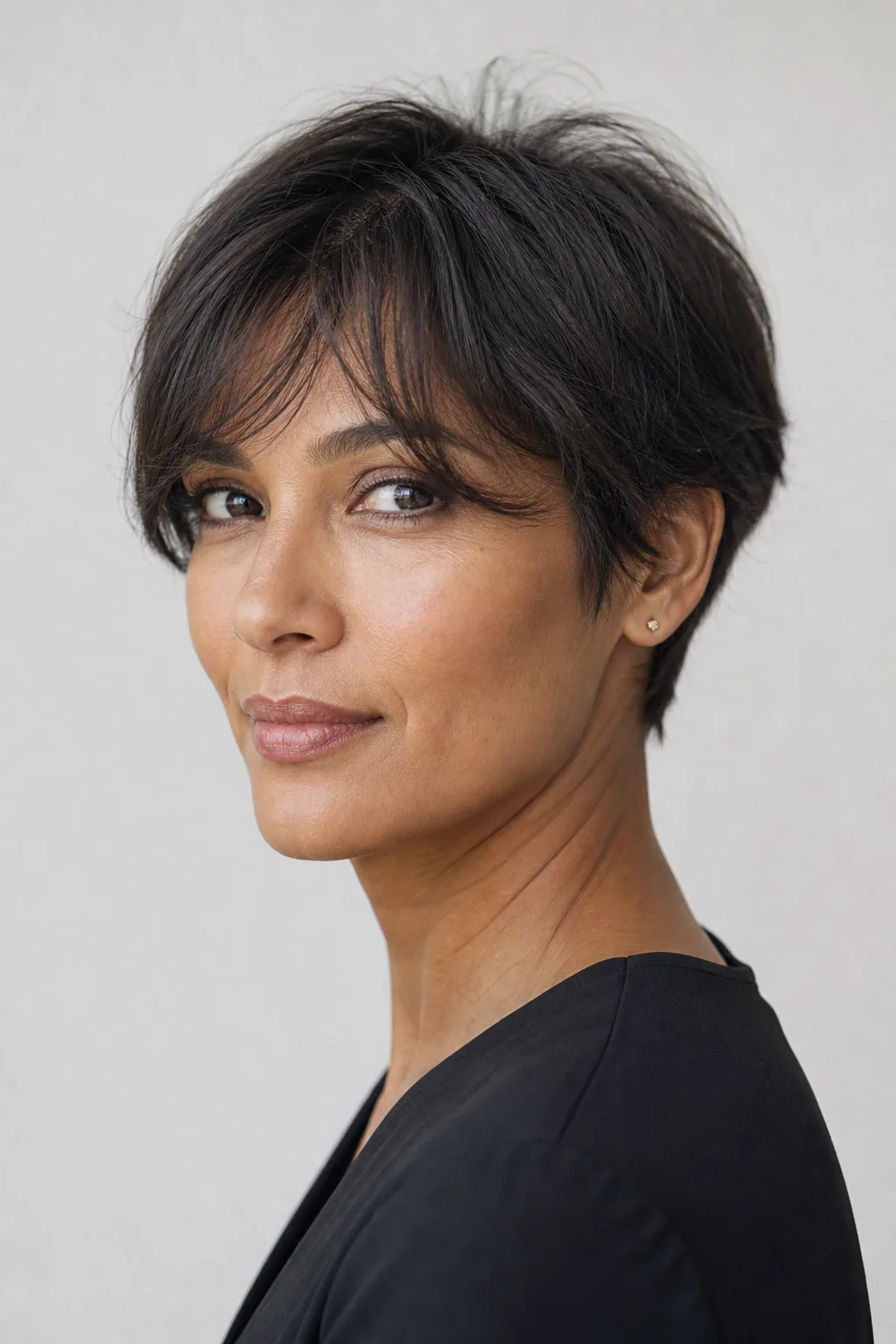
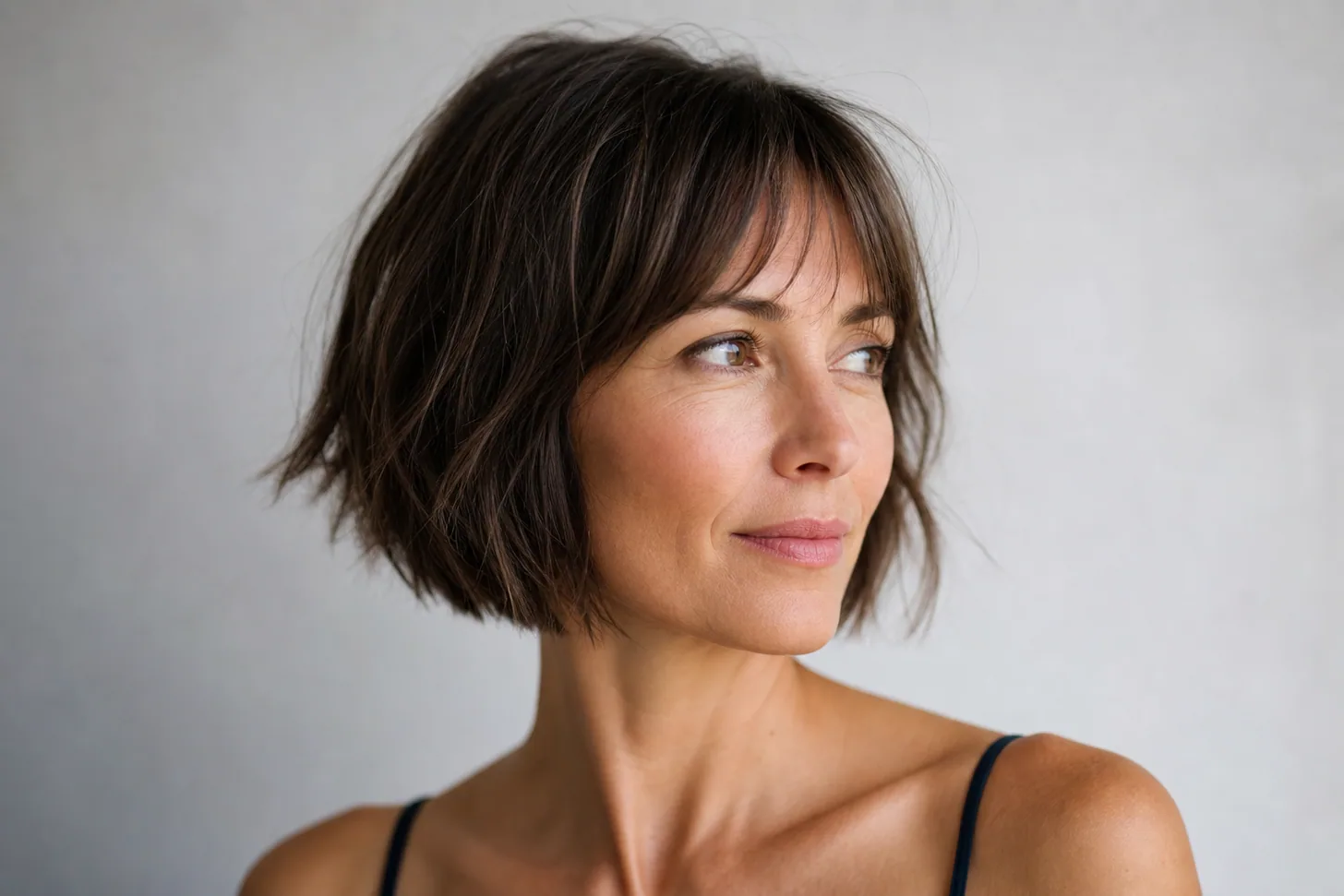
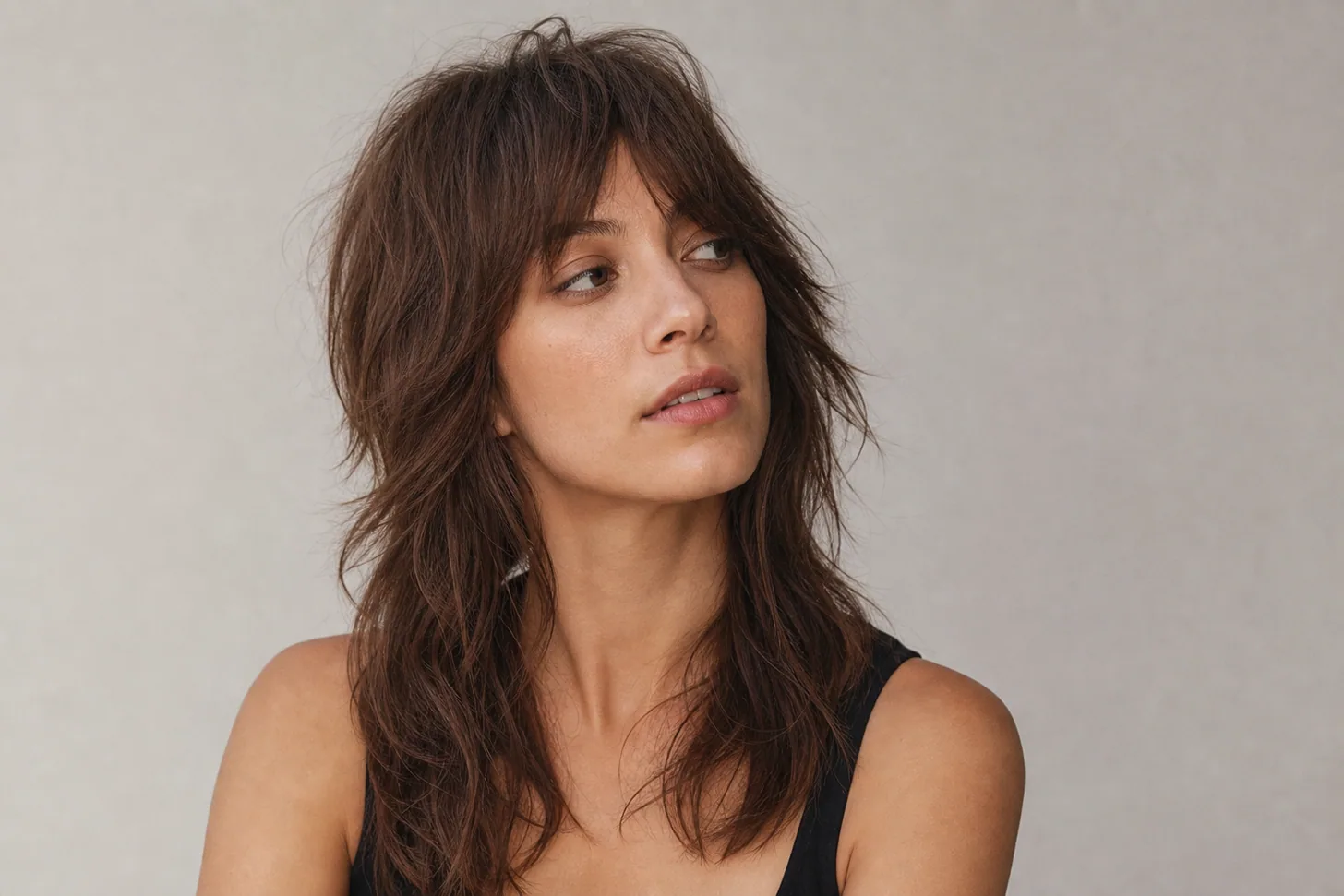
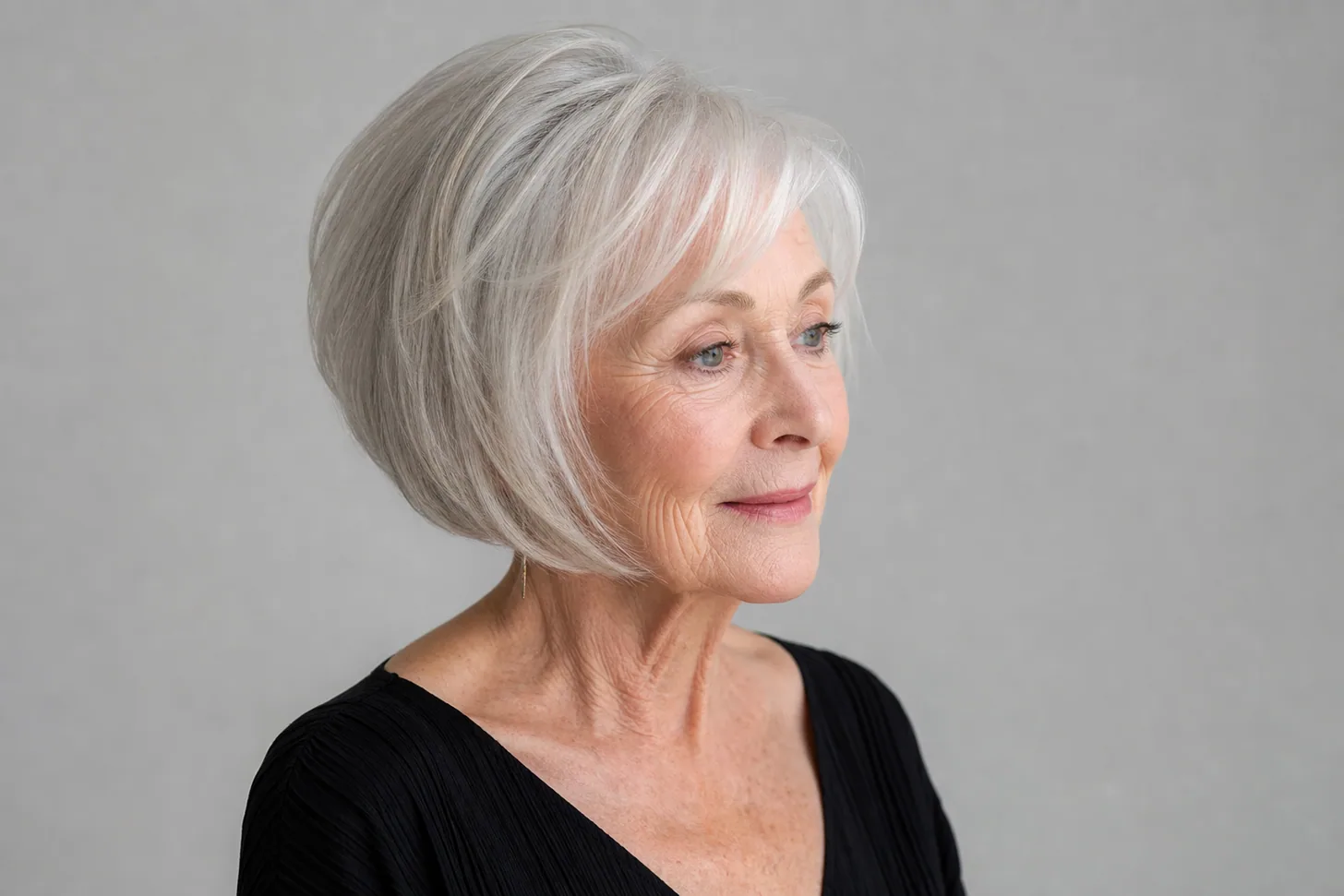
A pixie is the most flattering cut fine hair can wear, for one physical reason: length is weight, and weight is what drags fine hair flat. Take the length away and the same hair stands up on its own. Below, 18 salon-tested pixies grouped by how gracefully they grow out — from crisp crops to long, bob-bound versions — each with who it suits, plus a face-shape cheat sheet and the exact words to bring to your stylist.
Chair-side note
The clients who love their pixie longest are the ones who started it long. A pixie that begins at the pixie-bob length grows through nothing but flattering shapes — I just chase the sides and neck every six weeks while the top runs on. The ones who regret it usually went for the shortest crop on day one, then hit the awkward grow-out wall three months later. If you're pixie-curious but nervous, we start long.
SB
— Simone Baptiste, Senior Stylist
Why a pixie flatters fine hair
Fine hair is a matter of strand diameter — each hair is narrow, so a headful of it carries little weight and collapses at the root faster than coarse hair does (how the hair fiber and follicle work, Cleveland Clinic). A long cut spends that hair on length it can't support. A pixie spends it on a small, standing shape instead — the same amount of hair, concentrated, lifts and reads as fullness.
The same logic keeps working below pixie length, with coverage rather than flatness as the thing to watch: see very short haircuts for fine hair. If you're not sure whether your hair is fine, thin, or both, start with the two-minute fine-vs-thin check; density decides how short you can safely go. And if you're weighing a pixie against something you can tie back, our haircuts for fine & thin hair hub lays out the whole range.
Short & textured pixies
Cropped and above the ear, where a pixie does its boldest work — maximum lift, minimum weight, and a shape that looks intentional from every angle. These need the most upkeep and grow out the least gracefully, so they're for the low-maintenance-styling, higher-maintenance-salon reader.
1
Classic textured crop
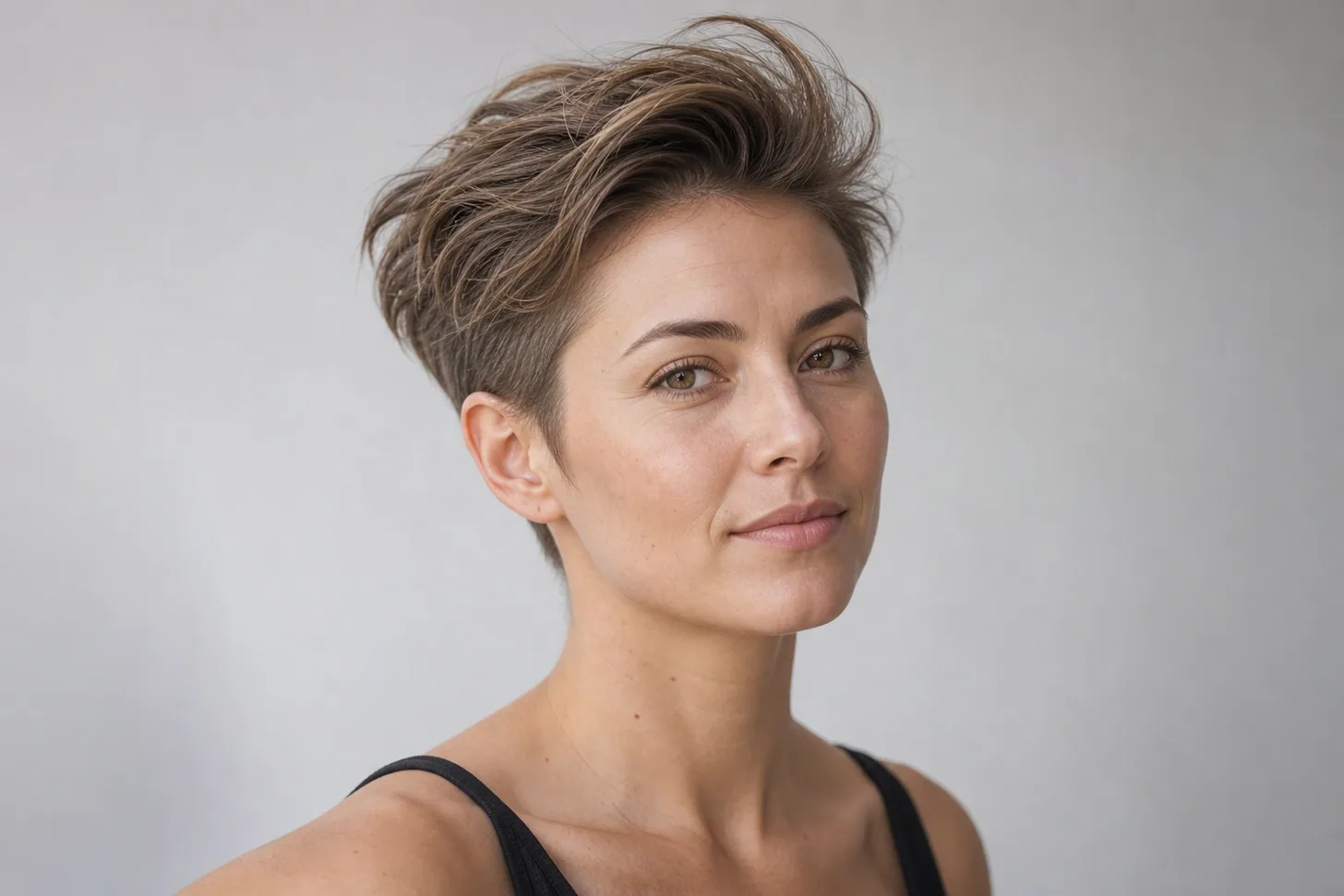
The workhorse: short sides, a longer point-cut top that separates into pieces instead of lying in a sheet. On fine hair the separation is the whole trick — a few standing pieces read as far more hair than a flat, solid top ever would.
2
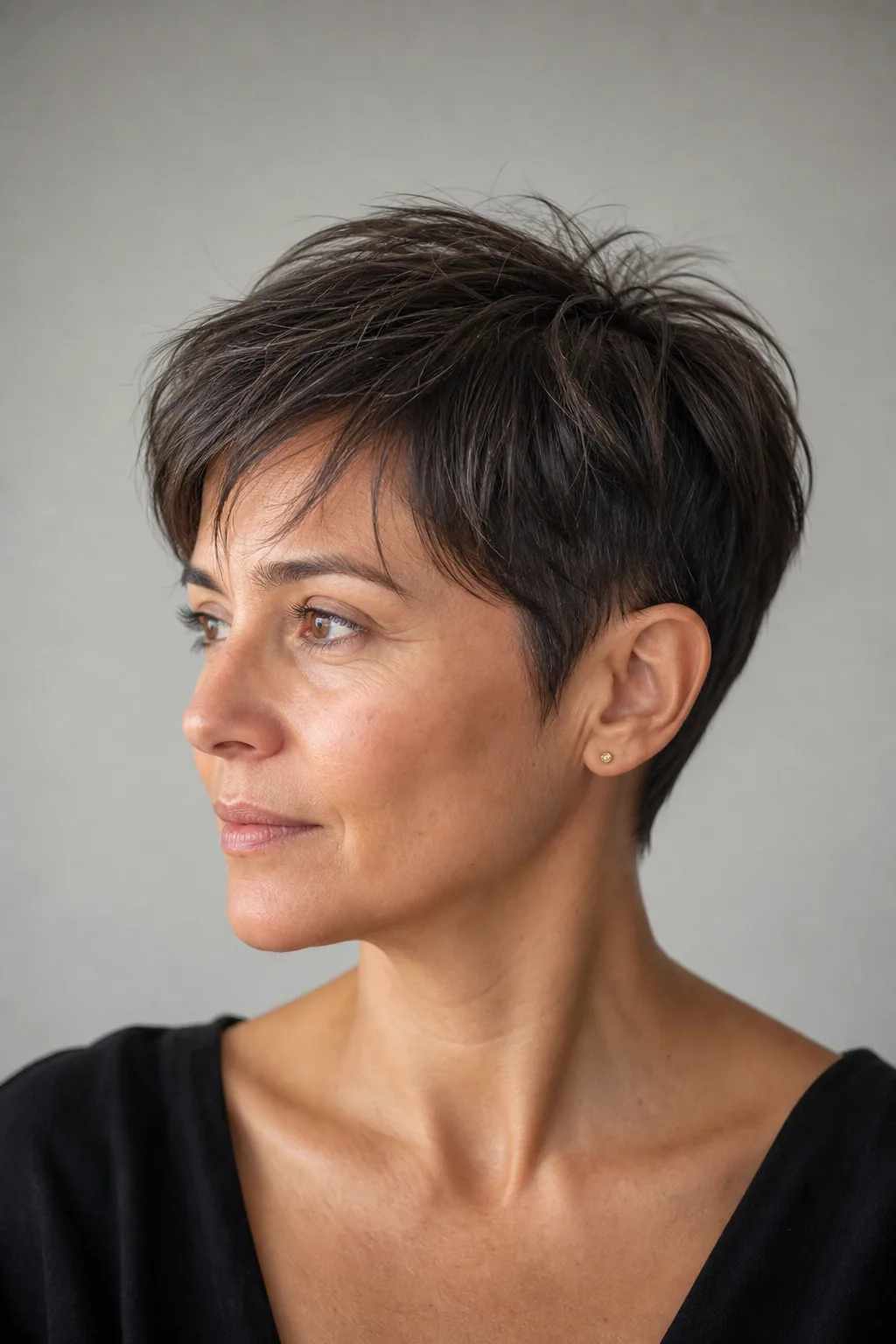
Tapered pixie
Graduated tight at the nape and sides, building a rounded shelf of weight up toward the crown — the same fullness-where-it-falls-flattest logic as a graduated bob for fine hair, in miniature. The taper is what keeps it from reading boyish. Best on oval and heart faces.
3
Rounded gamine crop
The short, soft, close-to-the-head shape made famous on delicate features. It needs strong bone structure or a definite fringe to balance it — on fine hair it's flattering precisely because there's no length competing with your face. Style is a fingertip of paste, nothing more.
4
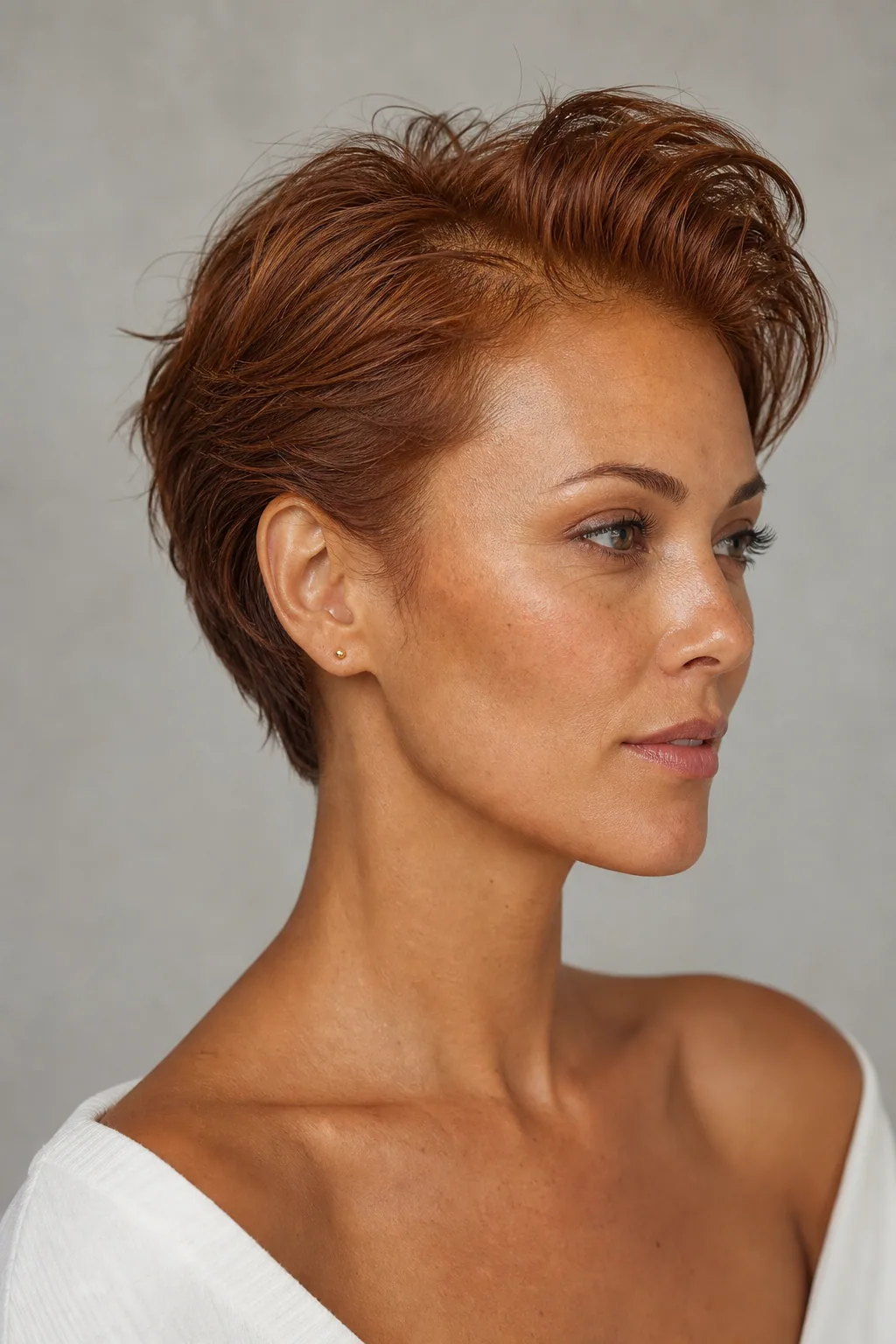
Pixie with a lifted quiff
Extra length reserved at the front, styled up and back into a soft quiff for real height where fine hair reads fullest — the crown and hairline. Ask your stylist to leave the top-front an inch longer than instinct says; that inch is your volume. Two minutes with a round brush and a cool shot sets it.
5
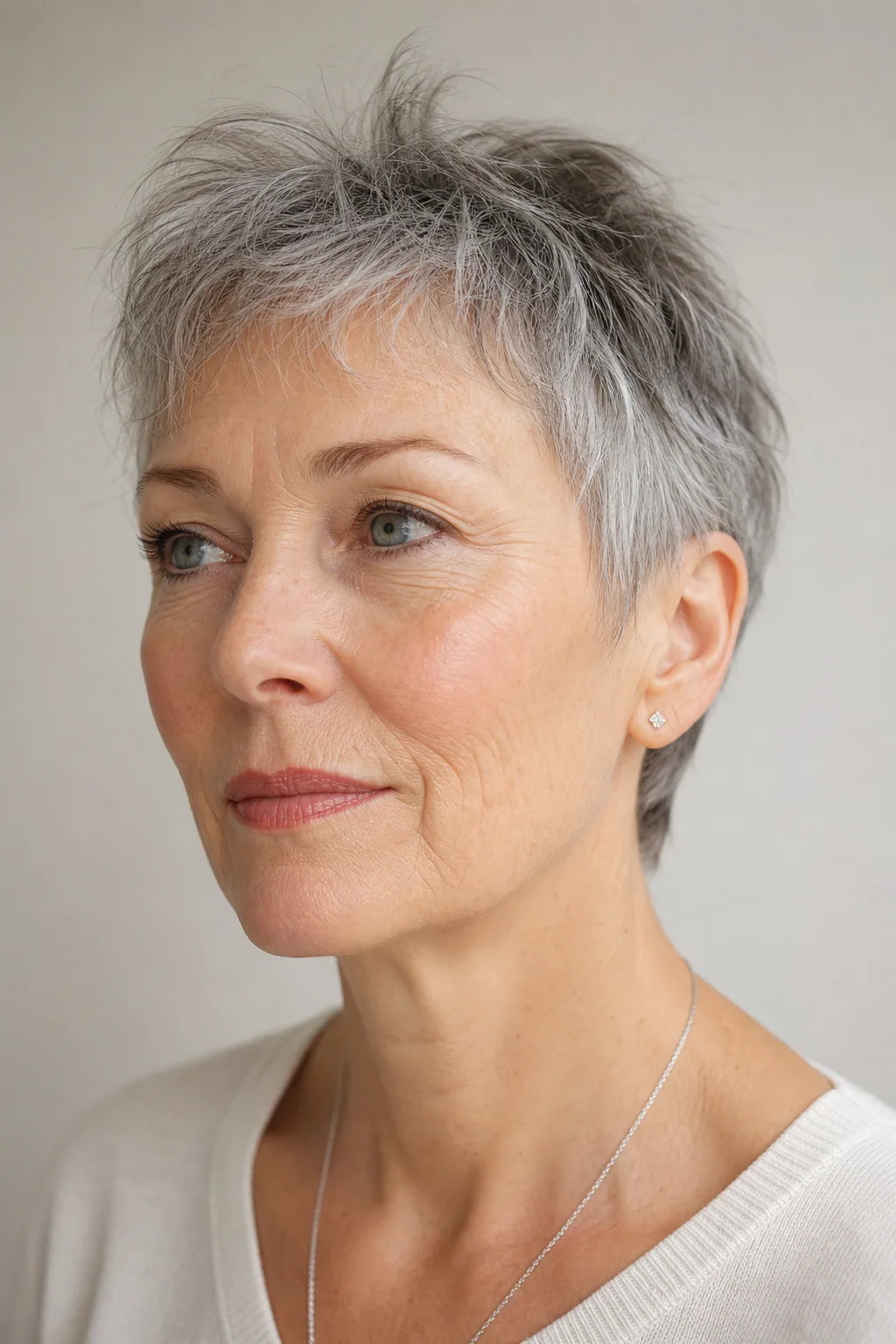
Salt-and-pepper crop for mature fine hair
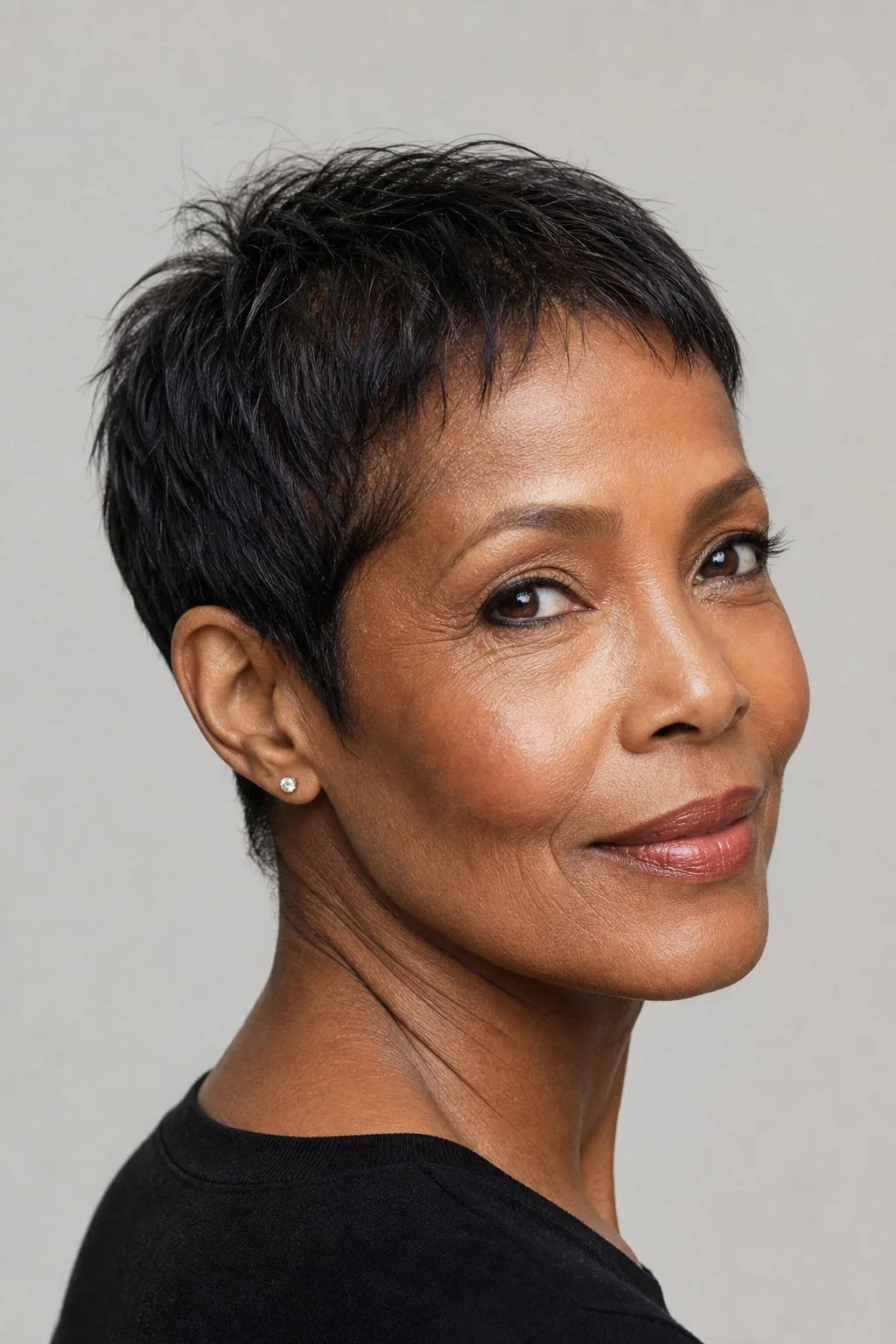
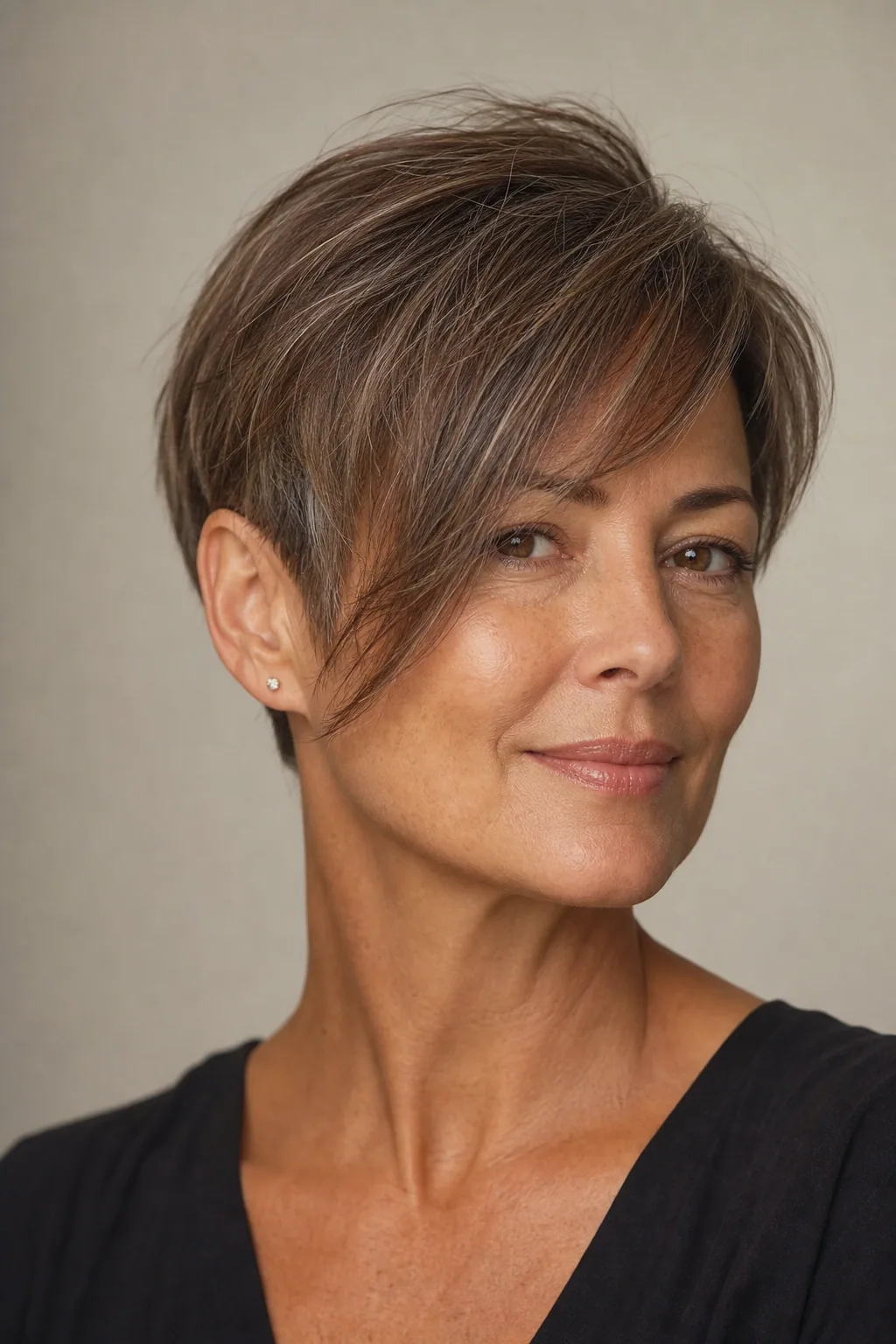
Hair usually finers with the decades, and a soft crop answers it head-on — short enough to stand up, textured enough to hide where density has thinned. Grey and silver hair is often slightly coarser than its pigmented neighbours, which actually helps a pixie hold its shape. Wash-and-wear with one pass of paste.
6
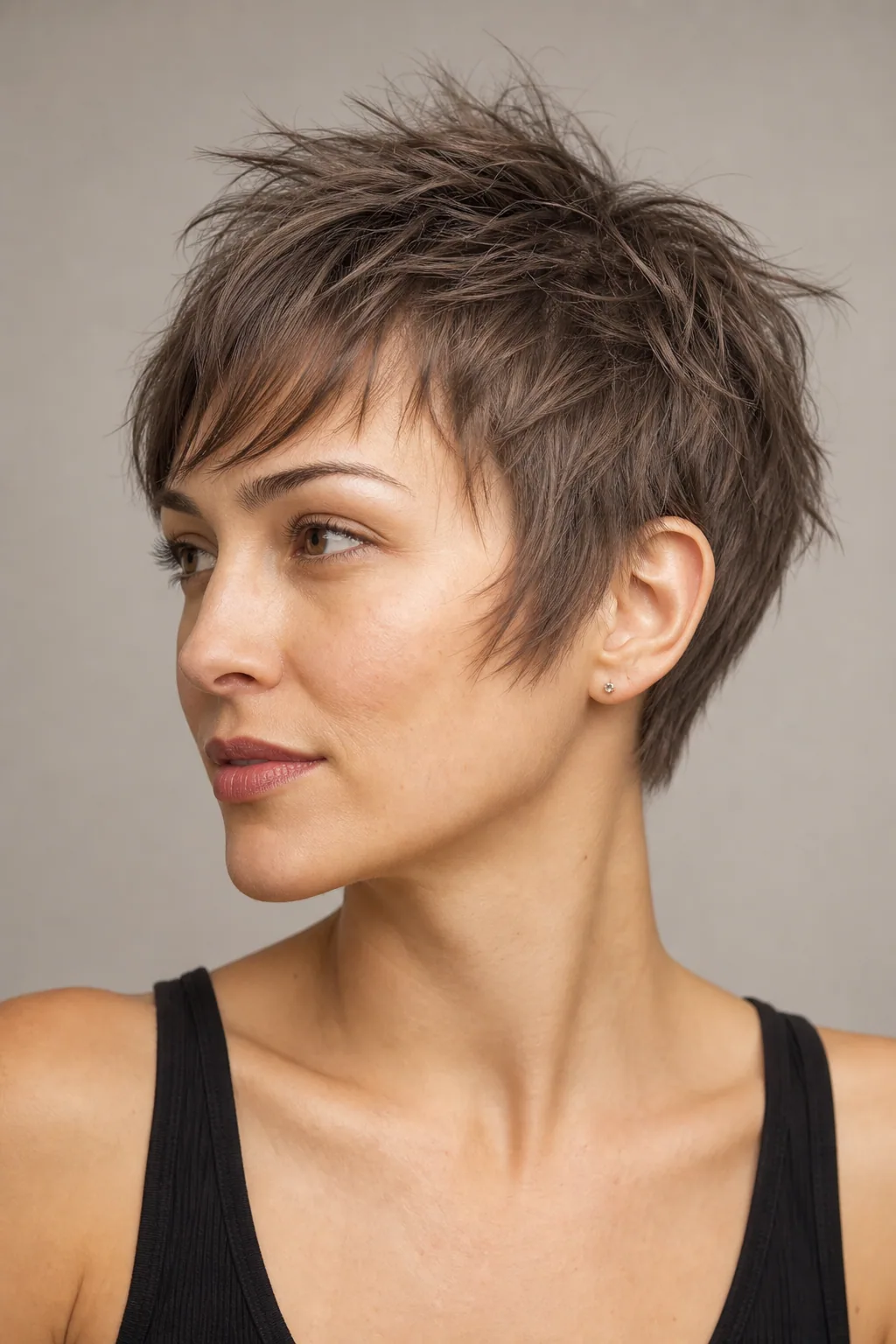
Choppy point-cut pixie
Deliberately uneven lengths on top, all cut with the points of the scissors rather than a razor, so the ends stay full-width and the choppiness stands rather than wilts. This is the version to ask for if your fine hair is also straight and flyaway — the texture gives it grip and grip gives it height.
Longer pixies that grow out gracefully
Ear-length and beyond — the versions to choose if you want the pixie look without the every-month salon commitment, or if you're testing short before you fully commit. These grow through flattering shapes, not awkward ones — and a light taper through the sides, the feather cut approach, is what stops them shelfing out as they grow.
7
The long pixie
Length kept through the top and fringe, sides trimmed close — long enough to tuck behind the ear, short enough to stand up at the crown. This is the single most grow-out-friendly cut on the page: it becomes a longer pixie, then a crop-bob, without a bad week in between. My default recommendation for a first pixie.
8
Pixie-bob hybrid
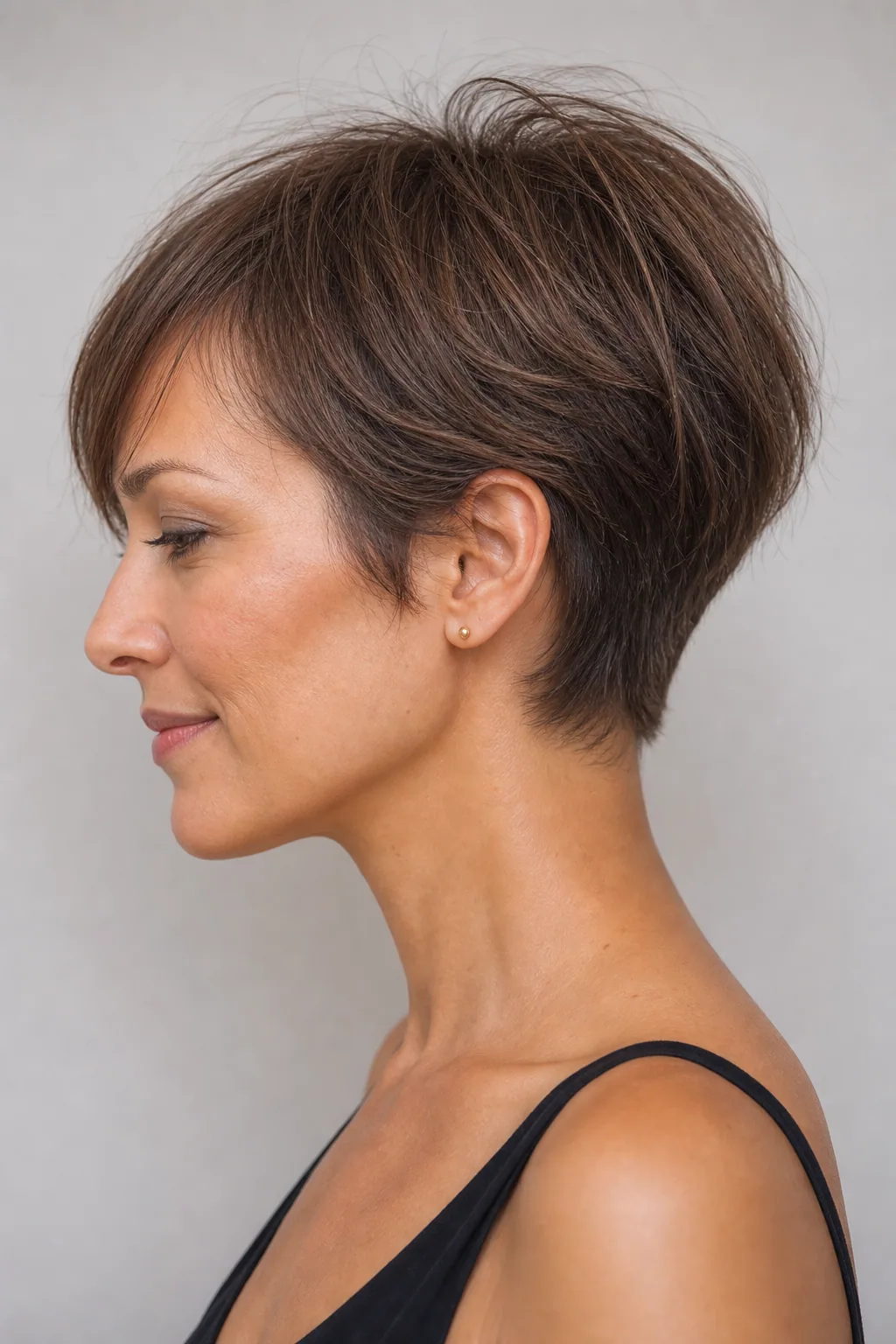
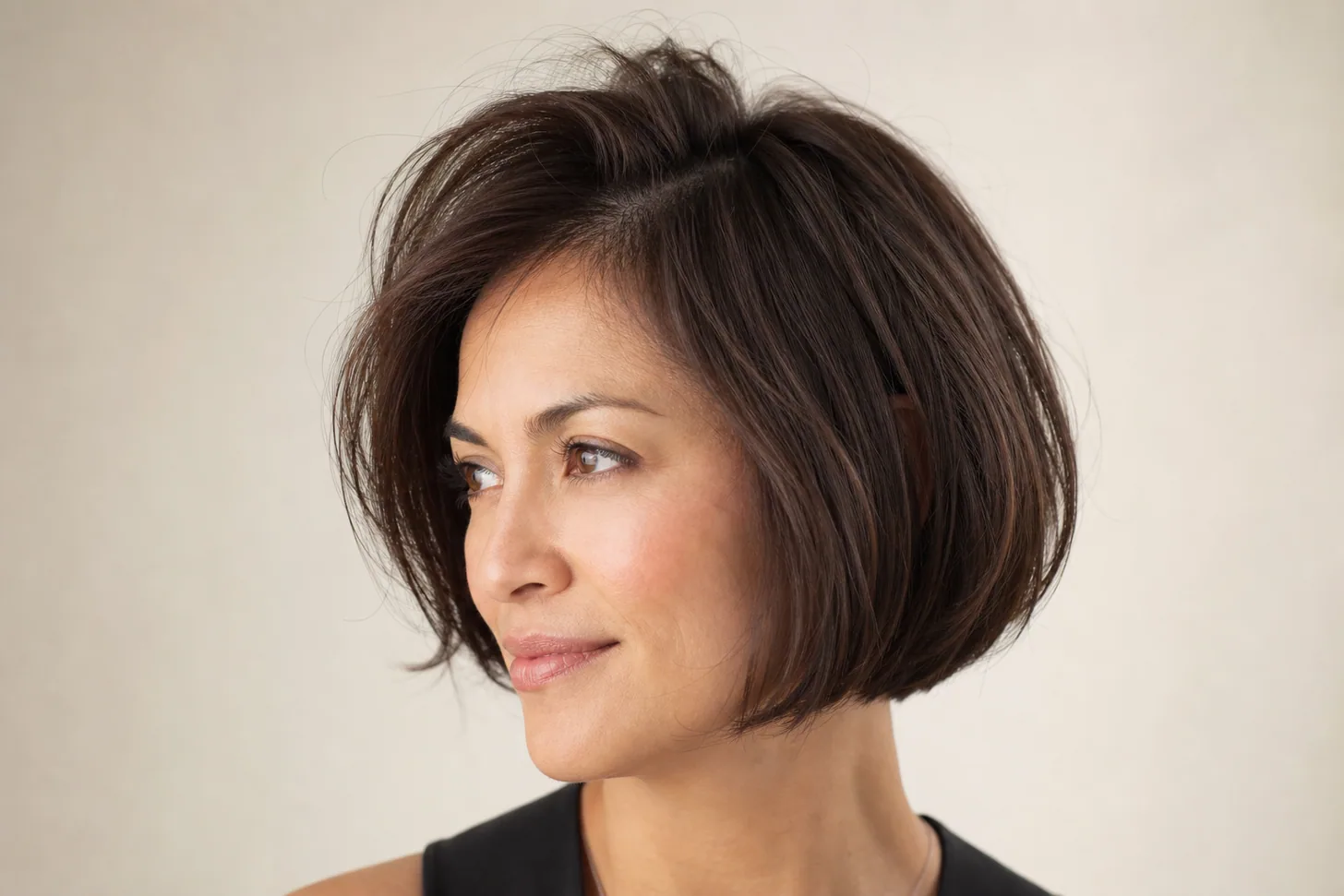
Short and rounded at the back like a pixie, angling longer to graze the jaw in front like a bob — the best of both, and it grows straight into a French or ear-length bob. Suits almost every face because you can tune the front length to your proportions. The gateway cut for the pixie-nervous.
A deep side part throws the longer top across the forehead in a soft sweep, and the deep part alone doubles the crown lift by standing the roots against their trained direction. Flattering on round and square faces — the diagonal breaks up width. No heat required if you part it while damp.
10
Softly layered long pixie
A few conservative internal layers through the top give movement without thinning the shape — the same restraint that makes layered bobs work on fine hair. Keep the layering light: on a pixie there's no length to spare, so over-layering shows scalp fast. Air-dries with a scrunch of foam.
11
Asymmetric long pixie
One side left noticeably longer than the other, angling the eye diagonally across the face. The asymmetry does the slimming work for round and full faces, and it grows out unevenly-on-purpose, which hides the grow-out entirely. A confident, editorial shape that still styles in two minutes.
12
Shaggy pixie
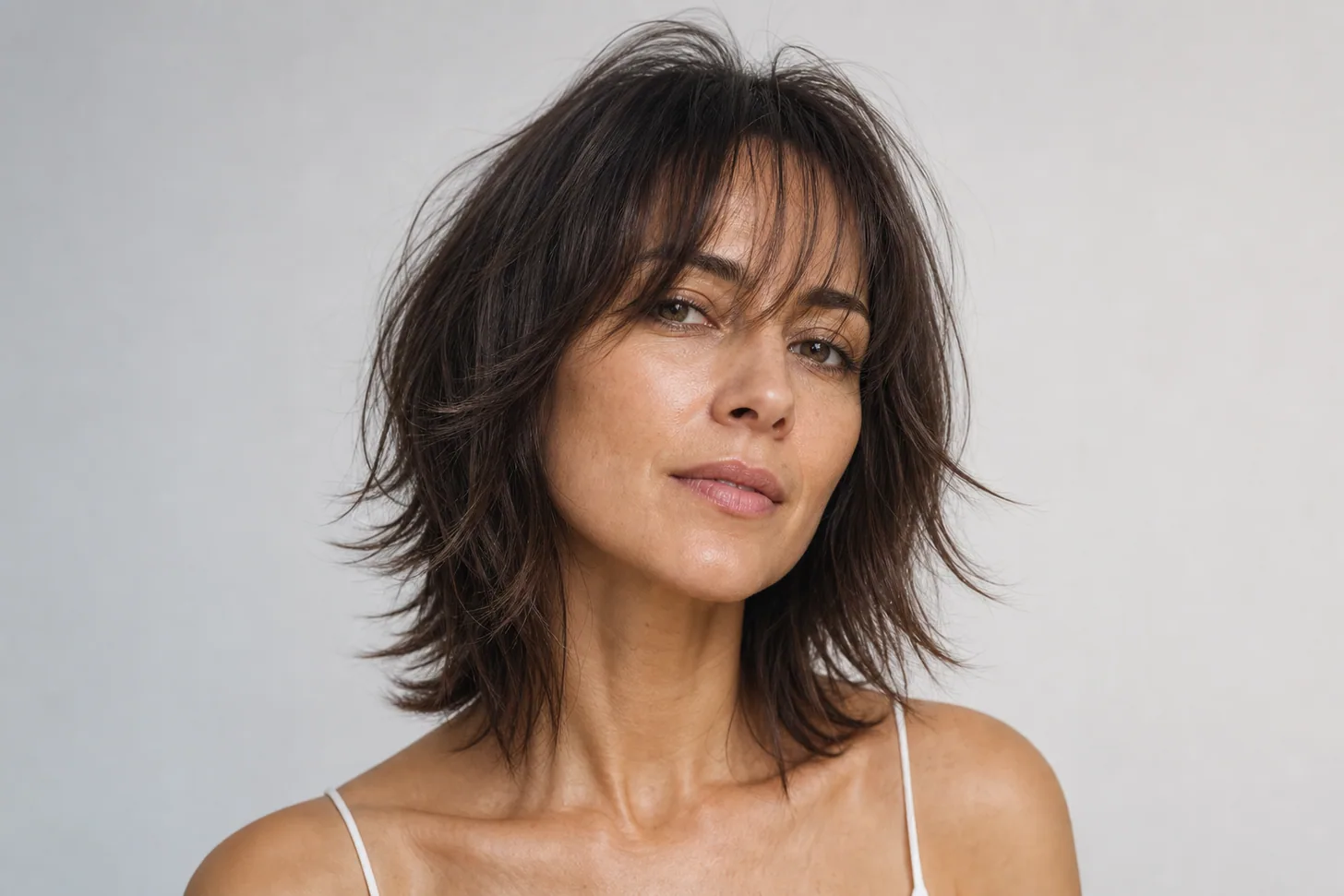
A pixie built on shag principles — choppy, piece-y crown layers and a wispy nape for maximum lived-in texture and height. Best on fine hair with a little natural wave; on poker-straight, very thin hair the choppiness can read sparse rather than tousled. Ask for a texturized, not thinned, finish.
Pixies with bangs & styling variations
The daily side of any of these is its own skill — styling short fine hair covers the five minutes that decide whether a pixie reads sharp or flat.
The fringe is a pixie's biggest lever — it reshapes the face and adds a second point of interest so the eye never lands on where density is thin. These are the details that make a short cut feel like your cut.
13
Pixie with a curtain fringe
A soft, center-parted fringe that frames the face and softens a short cut instantly — the most universally flattering pixie fringe there is. We break down the fringe half of this look in curtain bangs for fine & thin hair. On a pixie it also gives you something to grow into a longer front.
14
Pixie with micro baby bangs
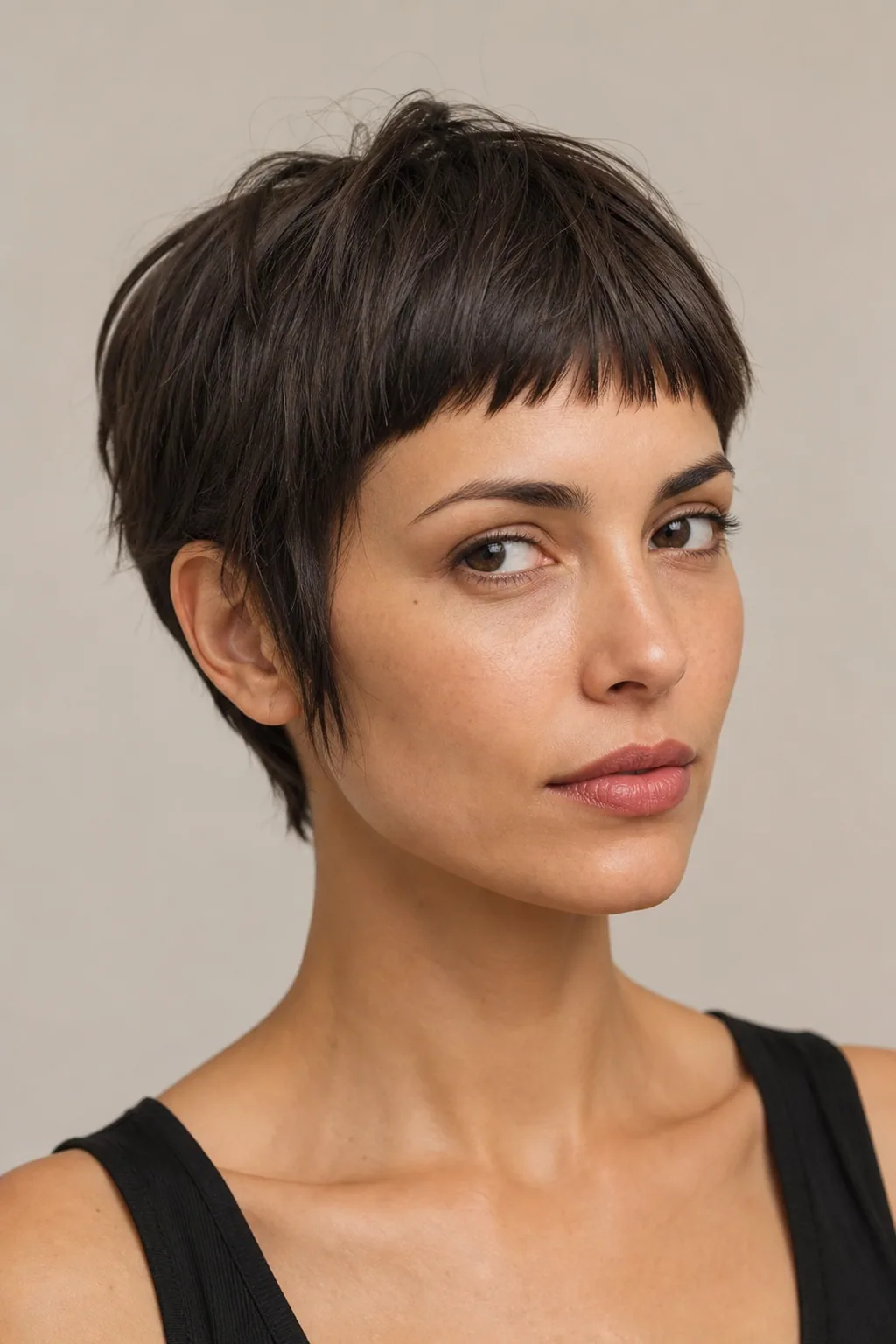
A blunt, high fringe cropped well above the brow — bold, French, and surprisingly kind to fine hair because a short bang needs no density to look intentional. Best on oval and heart faces with a higher forehead to show off. A statement, not a hiding place.
15
Pixie with side-swept bangs
A longer fringe swept to one side, grazing the cheekbone — the softest, most forgiving option, and the easiest to grow out because it simply gets longer and prettier. Sweeps attention diagonally across the face, which flatters rounder shapes. The safe first fringe for pixie beginners.
16
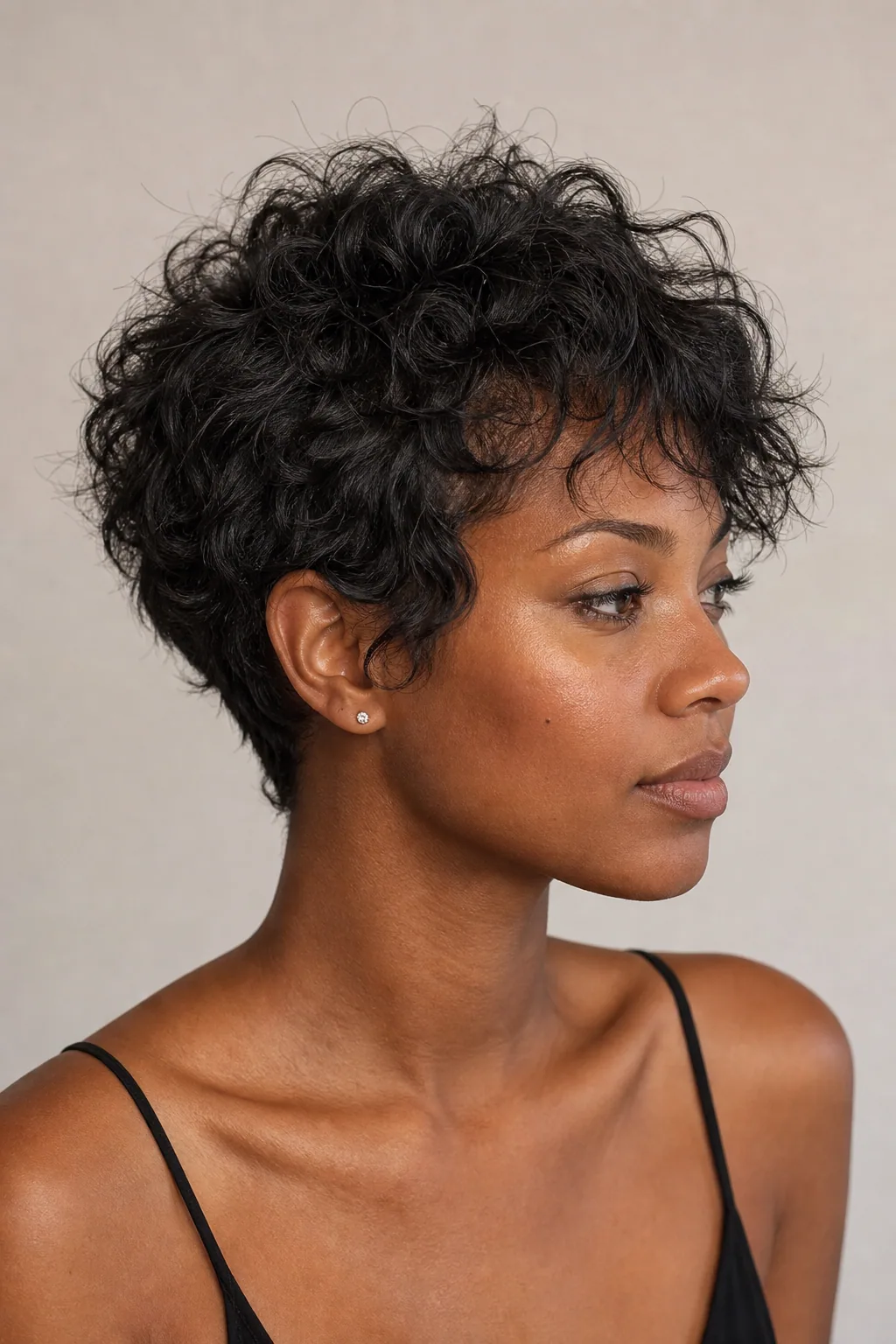
Tousled wavy pixie
Cut to work with a natural bend rather than fight it — fine wavy hair air-dries into a piled, textured pixie that looks fuller than any blow-dry can fake, because the wave stacks visual volume. A scrunch of light foam and let it be. The lowest-effort cut here for anyone with a wave.
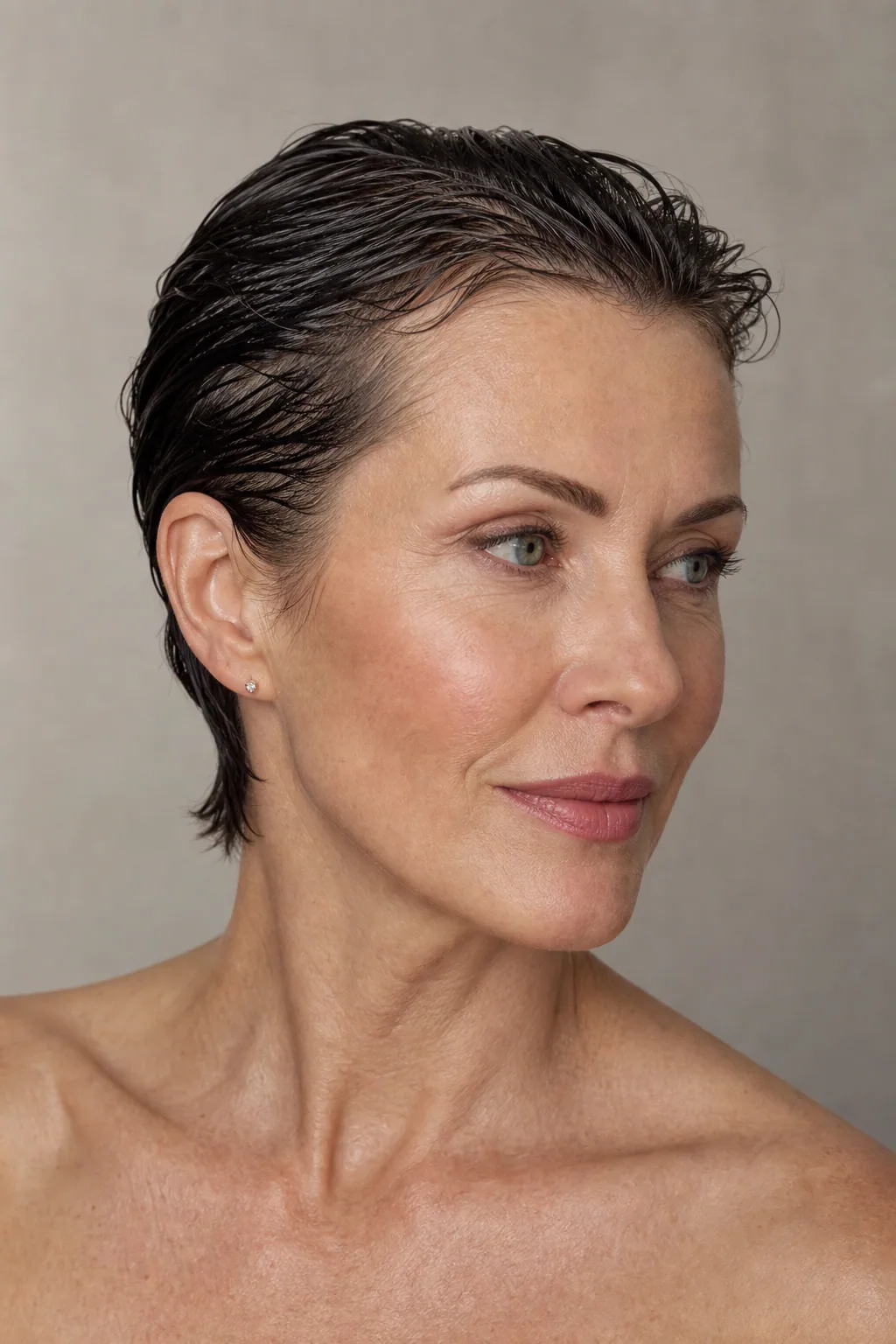
17
Slicked-back wet-look pixie
The same cut, restyled sleek and back off the face with a light styling gel — proof a pixie has a dressed-up gear. Because wet-look flattens deliberately, it's the one pixie style where fine hair's fineness is an asset: it lies down clean without looking greasy. Ten seconds to evening-ready.
18
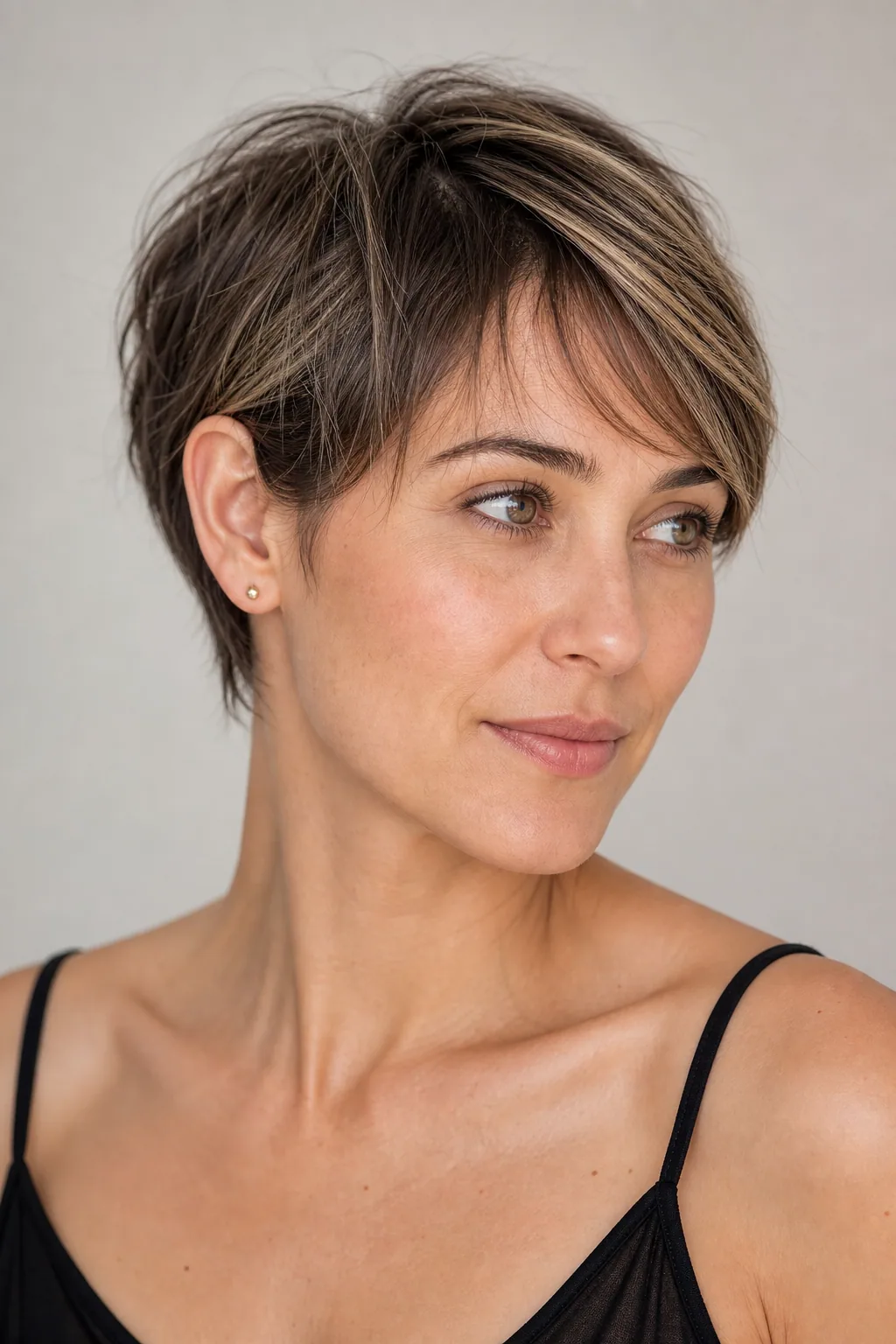
Pixie with money-piece highlights
A few brightening pieces at the fringe and crown catch light at different depths, faking a dimension the scissors alone can't. On fine hair, contrast — not stripes — is what reads as more hair; keep the placement soft and concentrated up top. The finishing touch that makes a simple crop look expensive. A pinhead of pomade made for fine hair gives separation at the crown that a cream cannot, provided you keep it off the roots.
Pixies for your face shape
If a pixie feels a step too far but you want the same built-in volume, the wedge keeps more length at the front while stacking weight at the back.
A pixie hides nothing, so the shape has to be chosen for your face, not against it. If you haven't mapped your face shape yet, our two-minute face-shape guide does it with a mirror and a washable marker.
Balanced proportions carry short crops and long pixies alike.
Round
Side-swept or asymmetric long pixie with height on top
Vertical lift and diagonal sweep elongate; avoid equal side width.
Square
Softly layered long pixie
Wispy texture and a side sweep round a strong jaw.
Heart
Rounded crop or pixie with fuller fringe
Weight and fringe at the brow balance a wider forehead.
Long / oblong
Pixie with a fuller curtain or side fringe
A fringe shortens the face; keep height moderate.
The honest maintenance & grow-out picture
A pixie is low-effort to style and higher-effort to keep — the trade every short cut makes. Here's what each version actually asks of you. Upkeep expectations shift by decade too, and short cuts for fine hair over 50 and short cuts for mature fine hair both weigh the trade differently.
Version
Trim
Daily styling
Grow-out
Classic / rounded crop
4–6 wks
2–5 min
Hits an awkward mushroom stage; plan the transition
Tapered / choppy pixie
4–6 wks
3–5 min
Sides catch up to top; grows into a shag-pixie
Long pixie
6–8 wks
3–6 min
Very graceful — becomes a crop, then a bob
Pixie-bob hybrid
6–8 wks
3–8 min
The easiest grow-out; blends straight into a bob
Pixie with side-swept fringe
5–7 wks (fringe sooner)
3–6 min
Fringe just gets longer and softer
What to ask your stylist
Say: "I have fine hair and I want a pixie with height on top — point-cut the top for texture, no razor and no thinning shears, and leave the top-front long enough to lift. Keep the sides and nape clean."
If your hair also runs thin, add: "Leave a little more weight and length on the crown — I don't want the scalp showing through a short top." And if you're pixie-curious but unsure, ask for "a long pixie or pixie-bob to start, so I can grow it out easily if I change my mind." Bring a photo of the shape above; the length matters more than the name.
Very low density with a scalp that already shows at the crown. A short crop can expose it further — choose a longer pixie with a weightier top, or a blunt bob whose hemline builds a stronger thickness illusion.
You can't get to the salon every 4–6 weeks. A short crop grows shapeless fast; start with a long pixie or pixie-bob that forgives time.
Tight curls that shrink several inches when dry. A pixie cut wet can spring far shorter than planned — see a dry-cutting specialist who cuts curl by curl.
Your hair is relaxed. A pixie is one of the best shapes for relaxed fine hair, but the crown has to be cut to lift, because relaxed hair lies flat and will not stand on its own — short relaxed hairstyles for thin hair has the versions built for it.
You rely on a ponytail for gym days or heat waves. Be honest about that before you cut — a pixie can't be tied back. A layered lob keeps the option.
FAQ
Yes — arguably better than any long cut. Length is weight, and weight is what drags fine hair flat. Cut short, the same hair stands up on its own, so a pixie reads full where a ponytail read limp. The one caveat is very low density at the crown: leave a little extra length and weight on top so a short crop doesn't expose the scalp.
It creates the illusion of fullness by removing the weight that flattens the root and by concentrating what hair you have into a small, dense-looking shape. Point-cut texture on top adds separation that reads as more hair. It does not add strands — if the scalp shows through at the crown, ask for a slightly longer, weightier top rather than a cropped, over-textured one.
Start long. A long pixie or pixie-bob grows through the flattering shapes — first a longer pixie, then a crop, then a French or ear-length bob — instead of the classic awkward mushroom stage. Keep trimming the sides and neck every six weeks while you let the top and fringe run long; that keeps a shape on your head the whole way down. The full month-by-month version, including the wing stage most people quit at, is in growing out short fine hair.
A short, tapered pixie needs a shape-up every 4 to 6 weeks — the neckline and sides lose their crispness fast, and that crispness is most of the style. A longer, grown-out pixie stretches to 6 to 8 weeks because it is meant to look soft. If budget is the issue, choose a longer pixie from the start; it forgives time between cuts.
No. A razor tapers each strand to a fine point, and on fine hair that means see-through, frizz-prone ends and a top that will not hold height. Ask for point cutting — scissors nipped vertically into the ends. It gives the same soft, piece-y texture a pixie needs while keeping each strand at nearly full width, which is what lets the top stand up.
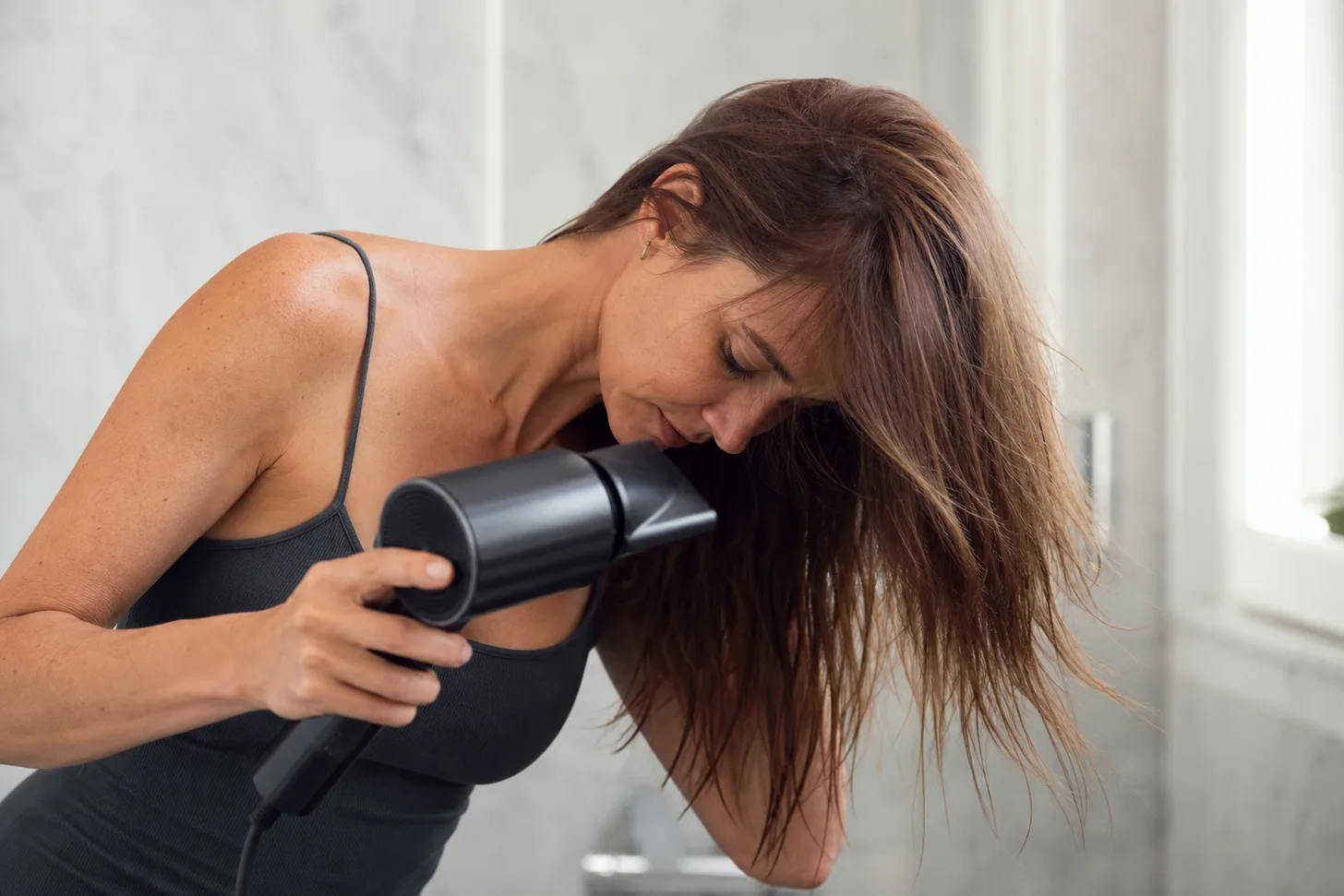
Almost nothing, done at the root. A pea of lightweight mousse or a mist of root spray on damp roots, a two-minute rough blow-dry pushing the top up and forward, and a matte texture paste worked through the tips with fingertips. Skip anything creamy or oily — a pixie lives or dies on how light the top layer stays.
Eleven years behind the chair, specializing in short shapes and fine-hair texture. Simone believes the best haircut is the one you can style yourself in ten minutes.
Images in this article are AI-generated illustrations, not photographs of real clients or results. See our image policy.
Results vary with hair type, density, and growth patterns. This guide is educational and not a substitute for an in-person consultation with a licensed stylist.
Get the good hair intel
One honest, stylist-written guide in your inbox each week. No hype.

 SB
SB