Reviewed by Tara Sullivan · Updated August 2026 · 9 min read
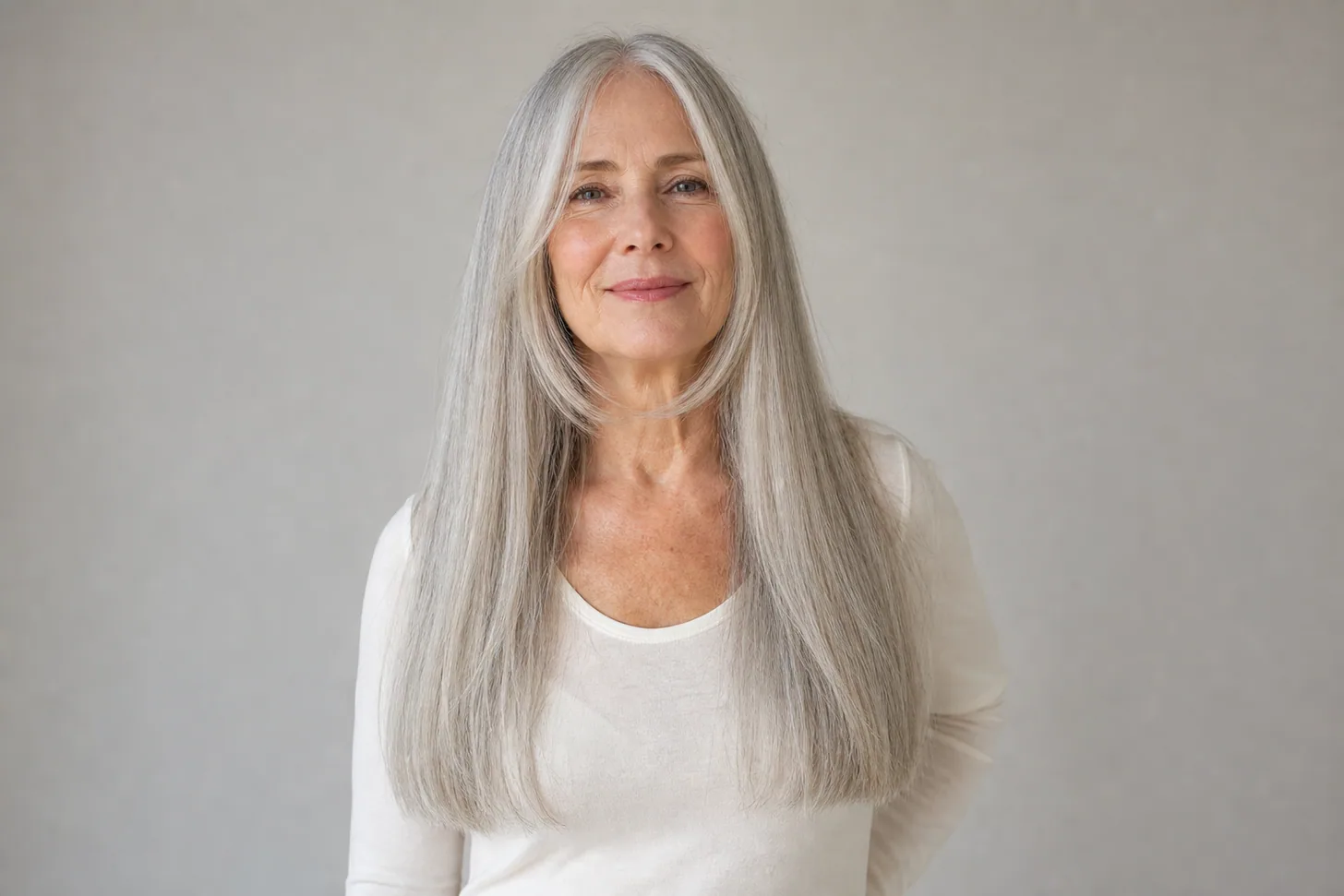
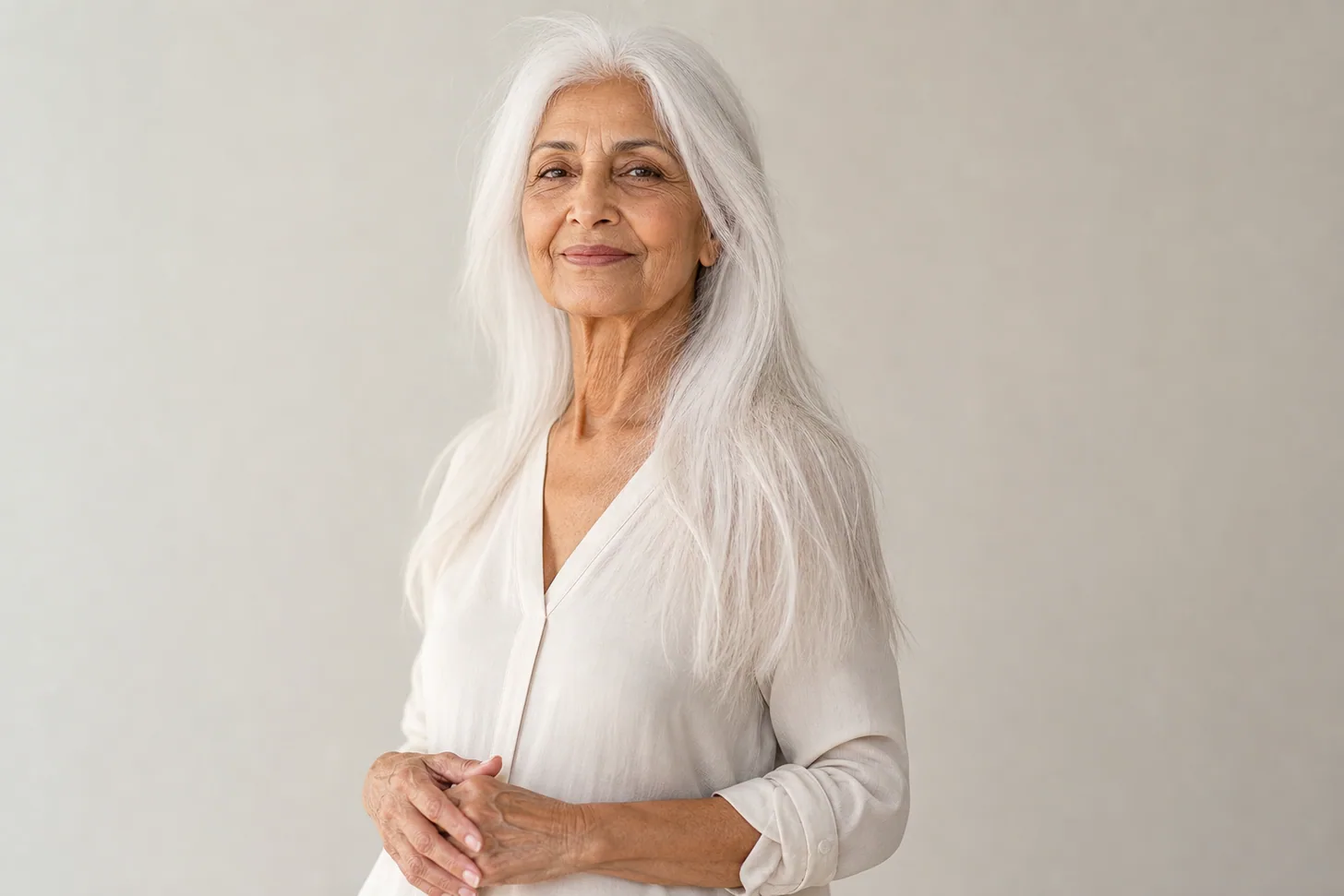
Nobody has to cut their hair at 60 — but the thing that decides whether long hair looks current or looks neglected isn't your age, it's the last two inches. Long hair with dense, blunt, glossy ends reads deliberate at any age.
Long hair that tapers to a see-through point reads thin, and it's that version people are half-remembering when they tell you women over 60 should go short. So the question worth answering isn't "am I too old for this length?" but "can my ends still fill it?" — and there's a ten-second test for that further down.
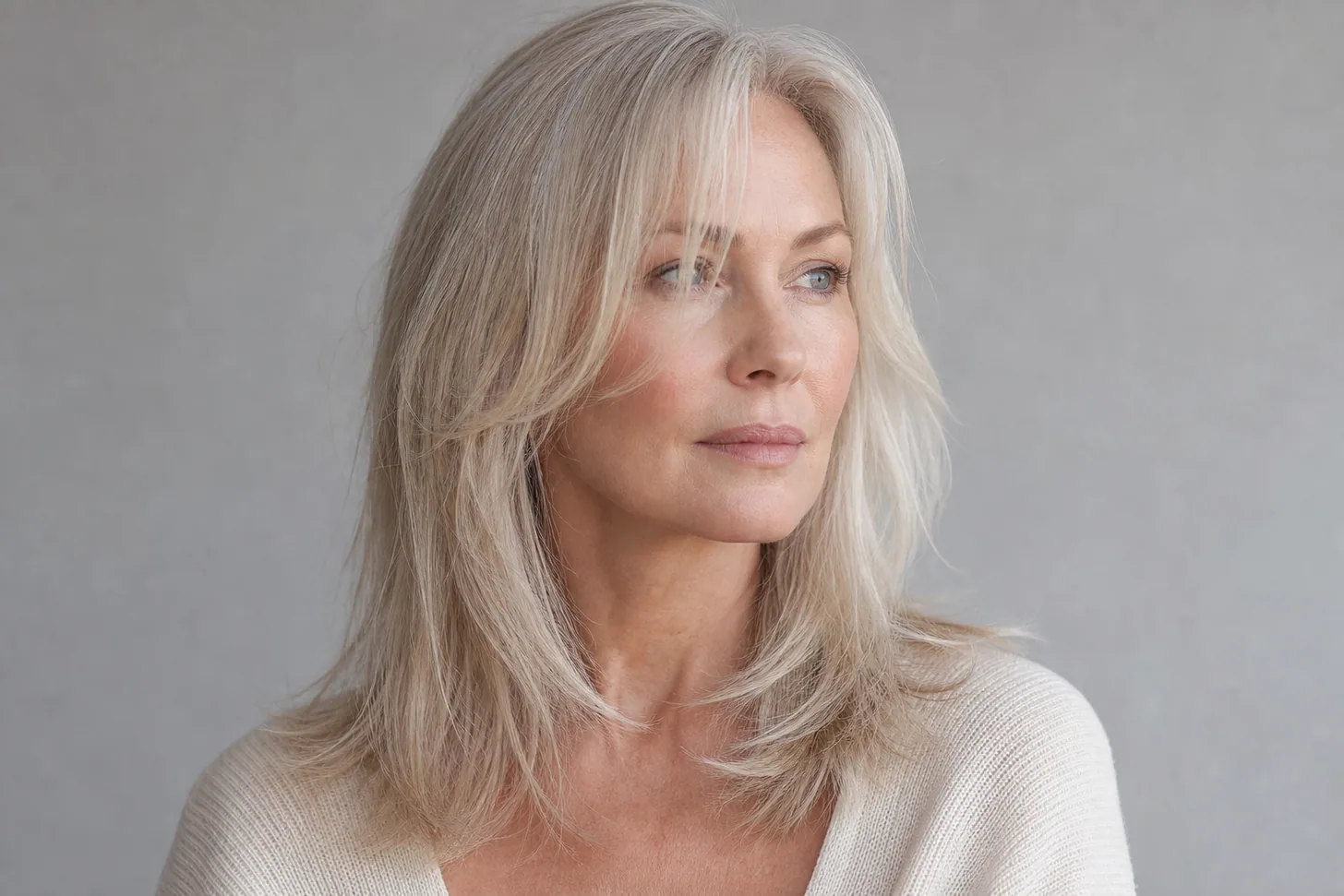
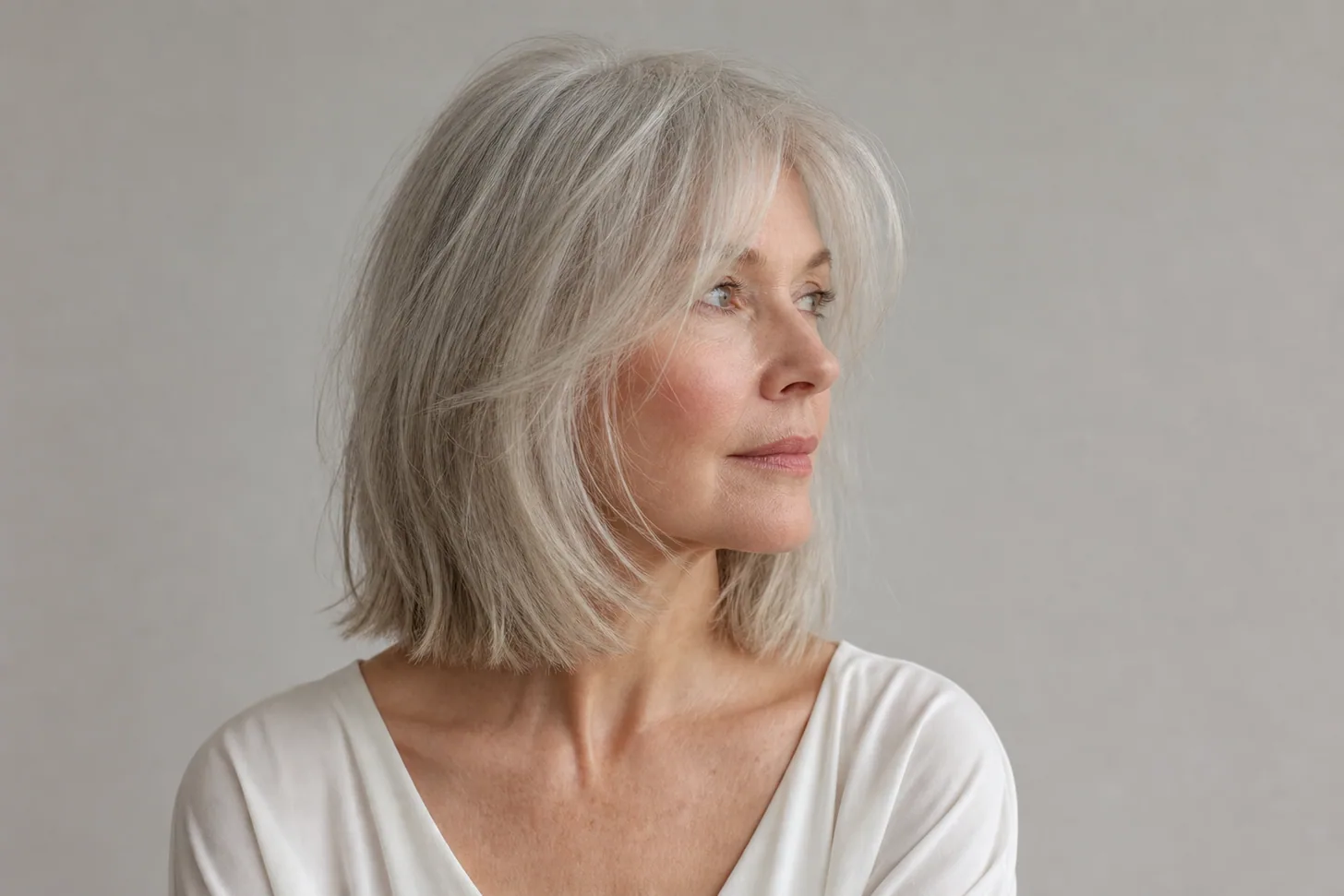
Below are 14 long cuts built for fine and thinning hair after 60, grouped from the shapes that hold density through to the silver-specific options and the ways to wear it that don't cost you volume, plus the honest signal that it's time to come shorter. For a shorter compromise that often looks fuller, see medium lengths over 60; for the age below this one, long hair over 50.
Chair-side note
I've never once told a woman she was too old for her hair, and I've often told one that her ends were. Those are different sentences and the second one is fixable. Here's the test I do in the chair, and you can do it at home in front of a mirror: gather everything into a ponytail and look at the last two inches.
If the width you started with is still roughly the width you're holding at the bottom, keep the length — it's working. If it narrows to a point you can see through, the length isn't the problem, the tail of it is, and taking off two inches will make the whole head look thicker rather than shorter.
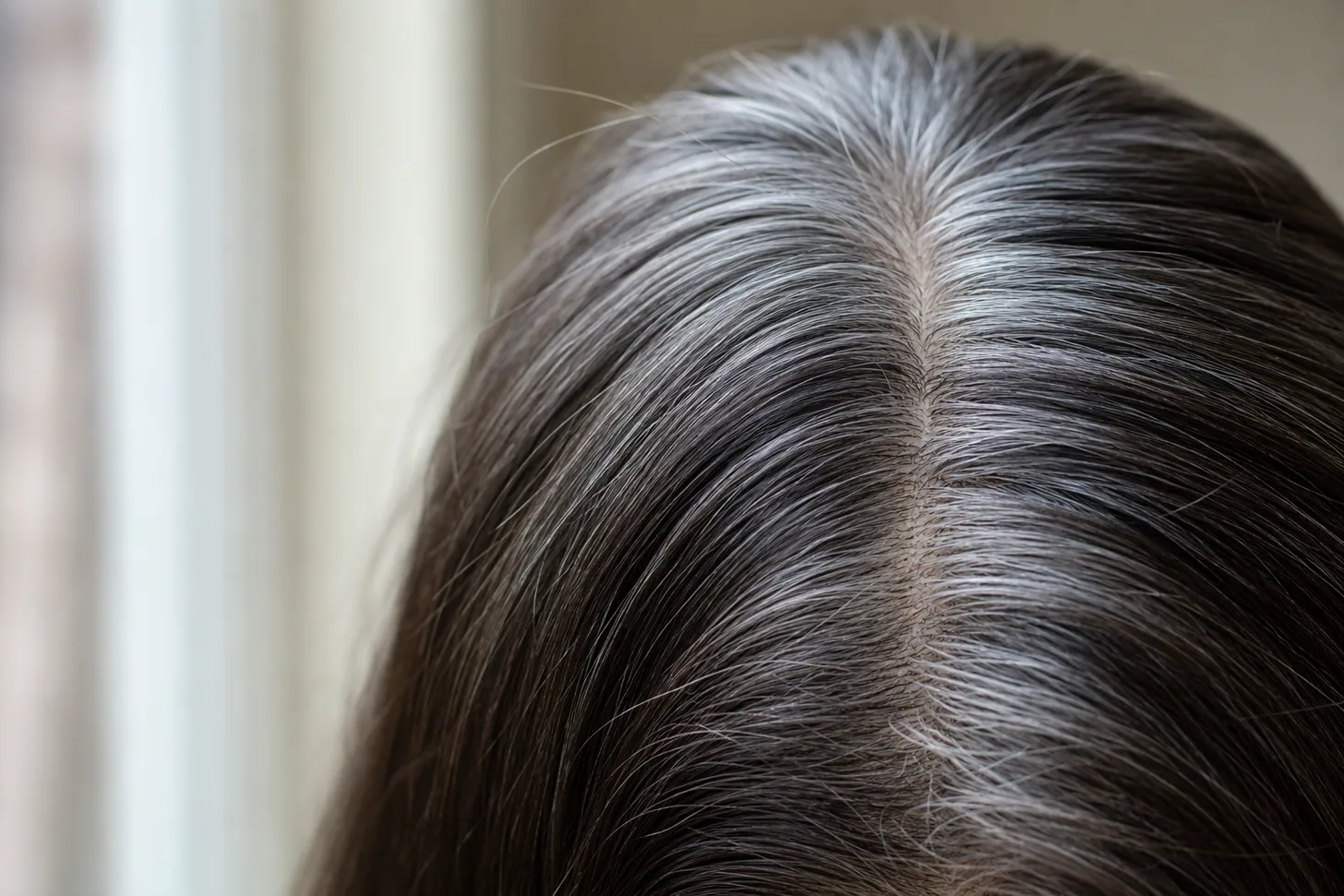
The other thing I watch for at this age is the part. Long hair is heavy, heavy hair lies flat, and flat hair makes a part look wider than it is. Half the women who come in convinced they need to cut everything off actually need to move their parting, put lift at the crown back into the cut, and get a gloss.
SB
— Simone Baptiste, Senior Stylist
What actually changes after 60 — and what to do about each part
Three things shift, and each has a specific answer in the cut rather than in a bottle.
Density falls, so the perimeter has to work harder. Fewer hairs means less to fill the shape, which is why heavy layering is the commonest mistake at this age: it removes weight from exactly the place that was still reading as thick. A defined weight line and restrained internal layers do the opposite. The full argument is in layers on fine hair.
Growth slows, so the ends are older than they used to be. Hair at your mid-back has been on your head for four or five years. At 35 the same length was newer hair. That's why trims stop being cosmetic and start being structural — and why a light dusting every 10 to 12 weeks does more for how full your hair looks than any thickening product. See how often to trim fine hair.
Texture and color change together. Gray hair often comes in slightly coarser and drier than the pigmented hair it replaced, which is genuinely useful — it holds a set better — but it also takes on yellow tones from water, sun and product, and dry ends on long hair are what makes length look tired. A gloss is the highest-value salon add-on for long gray hair; details in hair gloss on fine hair and fixing brassiness.
Long cuts built to hold density
Five shapes that keep the length while making the most of what's actually there.
long cut with a strong blunt weight line at mid-length on fine silver hair, woman over 60
1
The long cut with a strong weight line
The foundation shape, and the one to ask for by name. The bulk of the hair ends together at one clear level so the eye reads a solid edge instead of a fade, with only a little movement cut in above it. On fine hair after 60 this single decision does more for apparent thickness than any product. Ask for "a strong weight line at the mid-length — take the weight off the very ends only."
long hair with soft point-cut internal layers lifting at the crown on fine gray-blonde hair, woman over 60
2
The long cut with crown lift built in
Same length, but with a handful of shorter internal layers hidden under the top section at the crown. They can't be seen, and they give the hair at the top of your head something to sit on, which is where long hair goes flat first. This is the cut for anyone whose part looks wider than it used to. It needs a root product to hold — the cut creates the possibility of lift, not the lift itself.
long hair with a soft U-shaped perimeter on fine white hair past the shoulder blades, woman over 60
3
The U-shape, not the V
A worthwhile technical choice most people never get offered. A deep V-shaped perimeter funnels the hair into a narrow point, which exaggerates thin ends; a soft U keeps the outline broad and full to the bottom. If your density has dropped, ask for a U. It's the same length and a completely different silhouette.
softened long shag with gentle layers and movement on fine silver hair, woman over 60
4
The softened long shag
A shag with the volume dialled down — texture through the top two-thirds, weight preserved at the perimeter. It suits fine hair with some natural wave, and it's the most forgiving shape for hair that's a little uneven in density. Say "shag, but softened — I don't want it choppy or thinned at the ends." Full detail in the shag for fine hair.
long hair cut to just below the shoulder blades with blunt dense ends on fine hair, woman over 60
5
The "long enough" compromise — just past the shoulder blades
For most fine hair after 60, this is the length where you get everything: it still reads as long hair, it still goes up into a chignon, and it stops just before the point where ends start to thin out. If you've been fighting to keep mid-back length and losing, this is where to land instead — and it usually looks fuller the day you do it.
Framing the face, which is where people actually look
Four ways to put fullness at the front. Any one of these changes how long hair reads more than the back of the cut ever will.
long silver hair with soft center-parted curtain bangs sweeping to the cheekbones, woman over 60
6
Long with curtain bangs
Still the single most flattering pairing for long hair at this age. Soft, center-parted curtain bangs sweeping back along the cheekbones put a cushion of fullness right at the front, lift the eye upward, and stop long hair hanging like two flat panels. They grow out invisibly, so if you hate them you've lost nothing but a few weeks.
long fine hair with an airy wispy fringe on the forehead, woman over 60 with glasses
7
Long with a wispy fringe
Lighter than a full fringe and far safer on fine hair, because a heavy blunt fringe borrows density from the top of your head — the place you can least afford to lend it. A wispy fringe softens the forehead while leaving the crown intact, and it sits well with glasses. Ask for it point-cut, not thinned with shears.
long hair with jaw-length face-framing pieces on fine gray hair, woman over 60
8
Long with jaw-length face-framing
No fringe, but the front sections cut shorter so they fall along the jaw and turn in slightly. It creates a soft frame that flatters a softening jawline, and unlike a fringe it needs almost no daily styling — which matters when you're already committing time to long hair. See face-framing layers.
long fine hair worn with a deep side part and lifted root at the crown, woman over 60
9
Long with a deep side part
Free volume and a free camouflage. Moving the part away from where it's sat for years lifts the roots that had been trained flat, and a deeper side part sends hair across the crown rather than exposing a center line. It's the most useful thirty seconds available to long fine hair — the method is in where to part fine hair.
Silver, white and gray-blended long hair
Long gray hair has its own rules, and they're mostly about light rather than about cut.
glossy long silver hair with high shine and blunt ends, woman over 60
10
The glossed silver long cut
Gray hair is more light-dependent than pigmented hair: dull silver looks like a texture problem, shiny silver looks like a decision. A clear or toning gloss every couple of months is what separates the two, and it costs a fraction of a color service. It also lays the cuticle down, which makes long fine hair feel smoother to run a brush through — one less source of breakage.
long hair with soft lowlights blending gray into natural color, fine hair, woman over 60
11
The gray-blended long cut
For anyone who isn't ready to be fully silver but is tired of the regrowth line — which shows more on long hair, because there's more length below it drawing attention to the top. Soft lowlights woven through the top sections blur the transition and add the tonal depth that reads as density on fine hair. The full grow-out strategy is in going gray with fine hair.
long white-blonde hair kept bright and cool-toned, fine hair, woman over 60
12
The bright white-blonde long cut
Fully white hair worn long is a genuinely striking look, and keeping it out of yellow is most of the job. Hard water, chlorine, sun and even some styling products push it warm. A violet-toned shampoo used sparingly — once a week, not every wash, because overuse leaves fine hair dull and lilac — plus a periodic toning gloss keeps it clean. More on the mechanics in brassiness on fine hair.
Two ways to wear it that don't cost you volume
Long hair worn down all day is long hair being handled all day, and fine hair pays for handling.
long fine hair set on large velcro rollers at the crown, then brushed into soft body, woman over 60
13
The soft roller set
The most reliable heatless volume there is for this hair type, and no arm fatigue — which is a real factor nobody writes about. Large rollers at the crown and along the top on damp hair, left in until the hair is completely dry and cold, then shaken out rather than brushed flat. See rollers for fine hair and heatless volume.
low chignon with a lifted crown on long fine silver hair, woman over 60
14
The low chignon with a lifted crown
The most elegant use of long hair after 60, and the kindest to it. Pinch the crown up before you secure anything — the difference between this and looking severe is entirely in that lift — then coil low at the nape and pin. Keep it soft enough that you can't feel it, because tension at the hairline is a genuine risk on fine hair. Variations in buns for fine hair. A decade further on the same shapes need a firmer perimeter and a longer trim interval — see long hair on fine hair after 70.
What to ask your stylist
Bring a photo, but bring the ponytail test too. Try: "I want to keep the length. My hair is fine and the density has dropped, so please keep a strong weight line and only add soft point-cut layers — no razor, no thinning shears through the ends." Then ask directly: "Look at my last two inches and tell me honestly whether they can carry this length, or whether I'd look fuller two inches shorter."
If you want the front to do more work, add: "Curtain bangs, or face-framing to the jaw." And if it's been a while since the length looked shiny, ask about a gloss before you consider anything more drastic. The wider script is in what to ask your stylist.
When the length may not be your best move
Your ponytail tapers to a point you can see through.The ends have gone. Two inches off will make everything above them look denser — see trims for fine hair.
Your scalp shows through at the crown or the part is widening.Weight is working against you. Read thinning on top and fine hair or thinning? before committing to a long shape.
You've stopped washing or styling it because it's a chore.Long hair that isn't maintained is what actually reads as ageing. A medium length you'll look after beats long hair you won't.
You're mid-shed or recovering from one.Don't make a permanent cutting decision during a temporary shed. Find the cause first — menopause, blood tests, medications.
Shoulder or grip problems make styling painful.A cut that needs ten minutes of raised arms every morning is the wrong cut, however much you like it. Rollers or a shorter shape solve it.
FAQ
No. Age isn't what decides this — condition and density are. The rule people are half-remembering when they say women over 60 should cut their hair is a real observation dressed up as a law: long hair that has gone see-through at the ends reads thin and tired, and that becomes more common with age because density falls and growth slows. But long hair with dense, blunt, glossy ends looks entirely current at any age. The honest test takes ten seconds. Gather your hair into a ponytail and look at the last two inches. If the ponytail tapers to a wispy point you can see daylight through, the length is costing you. If it holds its width to the ends, the length is earning its place and nobody should be telling you otherwise.
For most fine hair after 60, mid-back is the practical ceiling and collarbone-to-shoulder-blade is the sweet spot. Two things set that limit. The first is weight: length pulls the hair flat at the root, and root lift is what makes fine hair look full, so every extra inch costs you volume at the top of your head. The second is time — hair that reaches your mid-back has been growing for four or five years, which is four or five years of washing, brushing, sun and heat on the oldest inch. With growth slowing after 60, the ends are older than they used to be at the same length. That's why the same woman can look fuller with three inches off. This isn't an argument for short hair. It's an argument for choosing a length your ends can still fill.
A cut with a defined weight line and restrained internal layering. The weight line is the level where the bulk of your hair ends together — a strong one makes the hair read dense because the eye sees a solid edge rather than a fade. Above it, a few point-cut internal layers create movement and let the crown lift. What doesn't work is heavy layering all the way through, razoring, or thinning shears through the ends, all of which take out the very density you're trying to show. A U-shaped perimeter suits lower density better than a deep V, because a V concentrates what little hair you have into a narrow point. Face-framing at the jaw or cheekbone adds a second layer of visual fullness at the front, which is where most people actually look.
Either works on long fine hair, but they need different maintenance. Grown-out silver is genuinely striking at length, and it has one real advantage for fine hair: gray hair is often slightly coarser in texture than the pigmented hair it replaced, so it can hold a set better. Its disadvantages are that it picks up yellow tones from water, product and sun, and that the contrast between a pale scalp and pale hair is much lower — which quietly hides a widening part. Continuing to color keeps depth and richness, which reads as density, but the regrowth line at the part is more obvious the longer your hair is, so it demands a schedule. The middle option most stylists reach for is a soft blend of lowlights or a root shadow, which lets the gray come through without a hard line.
Every 10 to 12 weeks for a light dusting, and that's a slightly longer interval than younger fine hair needs — not because the ends wear less, but because growth is slower, so a heavy trim costs more length than it used to. The instruction that matters is what you ask for rather than how often. Say a light dusting to remove the see-through ends, keep the weight line, don't thin it. What goes wrong at this age is usually one of two things: trims skipped for a year until the ends are transparent, or a stylist quietly taking two inches every visit until the length has gone without any decision ever being made. Ask for the amount to be shown to you between two fingers before the scissors move.
It can, and it's worth being clear about why so you can decide with your eyes open. Long hair is heavy, and weight flattens the roots against the scalp, which widens the visible part — the exact place thinning shows first. Long hair also draws the eye downward along the part line. None of that means you must cut it off. Three adjustments help a great deal: move your part, because a part worn in the same place for years lies flat and looks wider; add lift at the crown through the cut and a root product rather than trying to add volume everywhere; and consider a soft fringe or face-framing, which interrupts the sight line to the part. If your scalp is genuinely showing through at the crown, that's worth a separate conversation about coverage and about why it's happening.
A roller set on damp hair is the most reliable heatless option for this hair type, and it's the one that has quietly worked for decades. Large velcro or foam rollers put in at the crown and along the top, left until the hair is completely dry and cool, produce root lift and soft body that a blow-dry has to work much harder for — and there's no arm fatigue involved, which matters more than most hair guides admit. Overnight braids or a loose twist produce wave rather than lift, which suits long hair that's already thick enough at the ends. Whatever you use, the same physics applies: hair sets as it cools and dries, so the last thing to do is nothing. Take the rollers out only when the hair is stone cold, then shake the roots rather than brushing them flat.
Not at all, and the women whose long hair looks best usually wear it up half the time. There's a practical reason as well as a stylistic one: hair worn down is handled, brushed and exposed all day, and fine hair pays for handling in breakage. A low chignon with a lifted crown, a half-up secured with a claw clip, or a loose low ponytail with the crown pinched up first all read as deliberate rather than as giving up on it. The one thing to avoid is the scraped-back, high, tight version — tension at the hairline is a genuine risk on fine hair, and pulling the crown flat removes the lift that makes the whole thing look full. Aim for soft at the front, secure at the back, and never tight enough to feel it.
Eleven years cutting fine hair. Simone's test for keeping length after 60: hold the ponytail, look at the last two inches, and be honest about what you see.
Images in this article are AI-generated illustrations, not photographs of real clients or results. See our image policy.
Results vary with hair type, density, and growth patterns. This guide is educational and not a substitute for an in-person consultation with a licensed stylist. If you are experiencing sudden, patchy or prolonged hair loss or scalp symptoms, see a board-certified dermatologist.
Get the good hair intel
One honest, stylist-written guide in your inbox each week. No hype.

 SB
SB