Reviewed by Tara Sullivan · Updated July 2026 · 11 min read
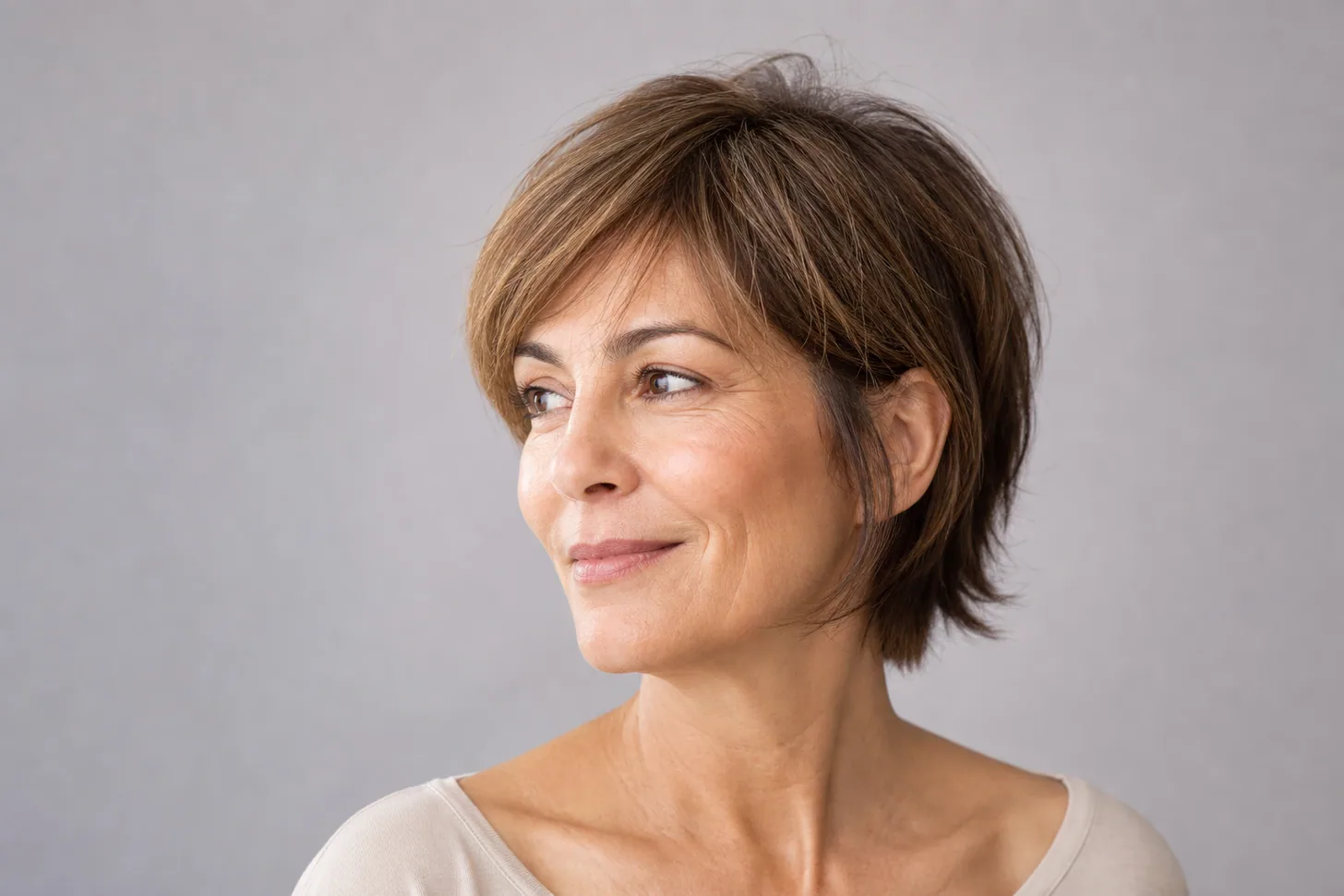
The best haircuts for fine hair over 60 are shorter, layered, and cut to build lift at the root — not long, one-length hair that drags the little volume you have straight down.
After 60, most women are working with fine strands and lower density than they used to have, so the cut has to do the fullness work that the hair no longer does on its own. Below, 18 low-maintenance shapes that flatter mature fine hair, grouped by length, each with who it suits and the exact words to bring your stylist.
Chair-side note
The most common thing I see with clients over 60 is that they're still asking for the cut they wore at 40. The hair has changed — it's finer, there's less of it, and it holds a set differently — so the cut has to change with it.
When someone tells me their hair "just went flat and lifeless," nine times out of ten the length is the culprit, not the hair itself. Take a few inches off and rebuild the shape at the crown, and the same head of hair looks twice as full.
SB
— Simone Baptiste, Senior Stylist
Why fine hair needs a different cut after 60
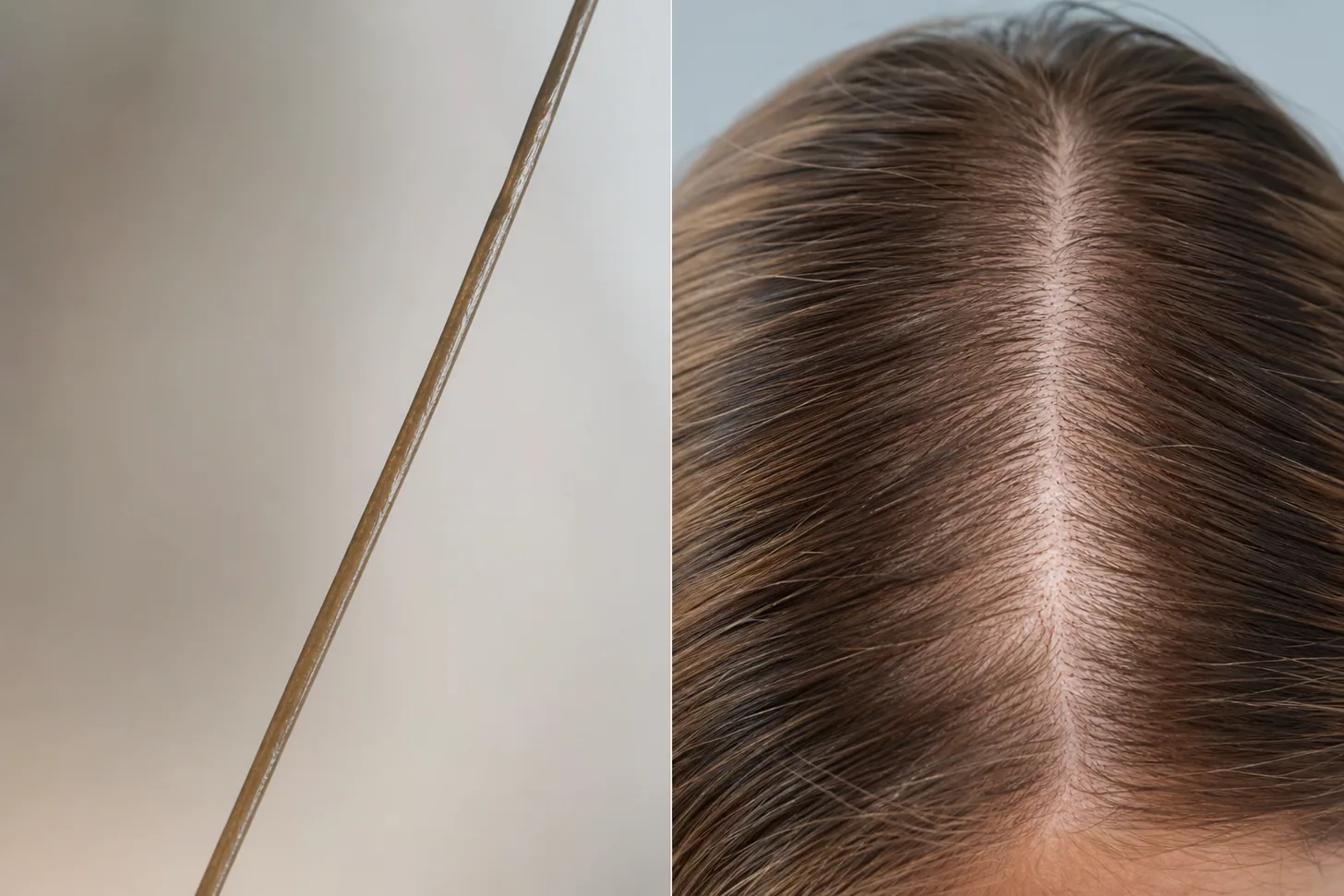
Two things happen to hair with age, and they stack. The individual strand gets finer (narrower in diameter), and overall density drops as fewer follicles stay active — so hair that was merely fine at 40 often reads as fine and thin at 60.
Estrogen decline through and after menopause is a big driver of that shift. Length is the enemy of both: the longer the hair, the more its own weight pulls the roots flat and the more the ends thin out to wispy points that show every gap.
Shorter, layered shapes reverse it — they remove the weight, stack fullness where you can see it, and take far less effort to style each morning. If you're not sure whether you're dealing with fine strands, low density, or both, our two-minute guide to telling fine hair from thin hair helps you choose the right version below.
Short, wash-and-go cuts
The lowest-maintenance category and, for many women over 60, the most flattering. These pixies and crops build their fullness into the shape, so the roots stand up on their own and styling is a few minutes with your fingers. A decade on, effort tends to become the deciding factor rather than one factor among several — our wash-and-wear cuts for thin hair over 70 sort the same shapes by how much work each takes.
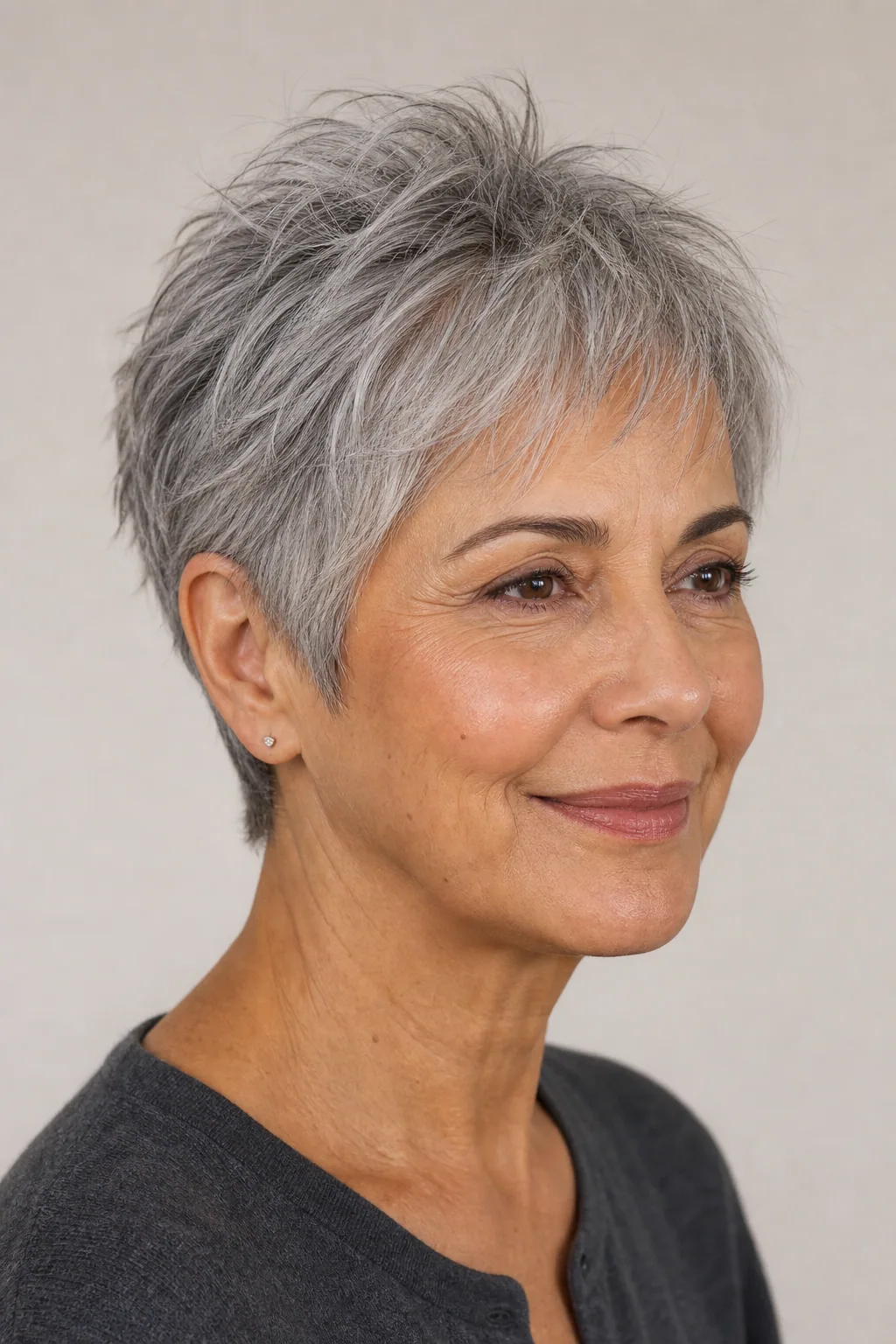
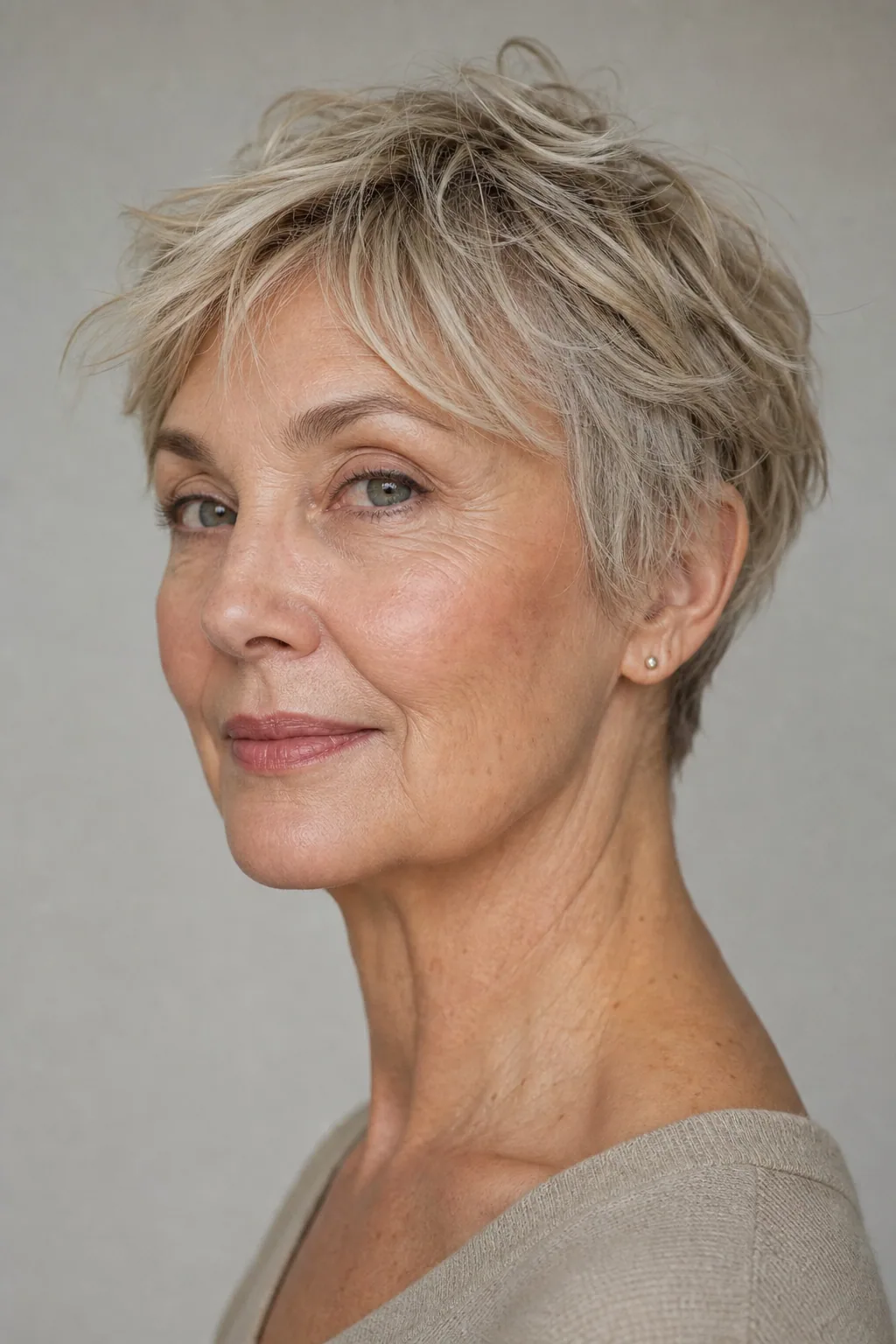
Short, piece-y layers through the top give the crown height fine hair can't hold on its own — the single most volume-building cut in this edit. Ask for point-cut texture on top rather than a tight, uniform clip, so it looks soft and modern instead of set. A dab of texture paste on dry hair and you're done.
2
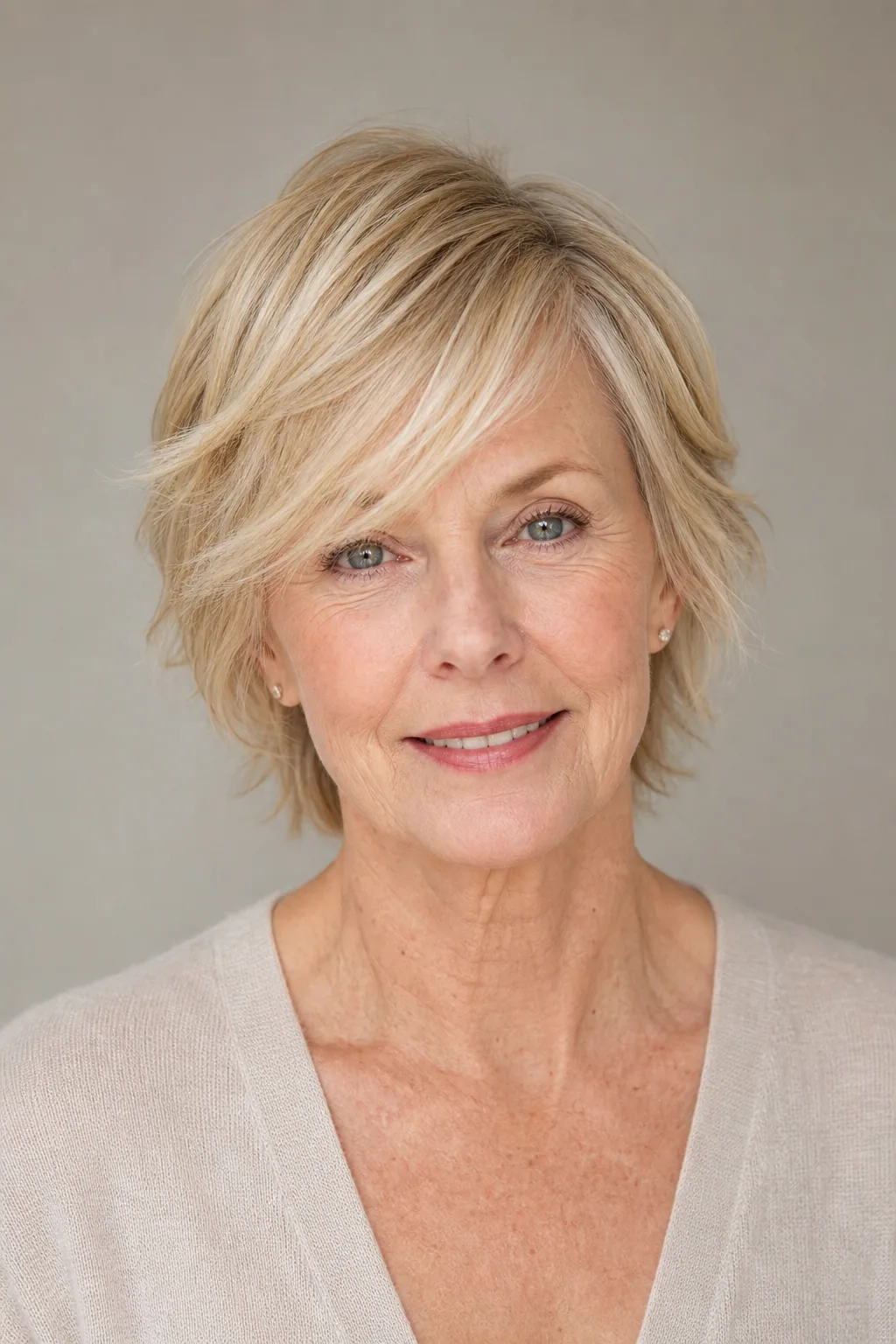
Layered pixie with a side-swept fringe
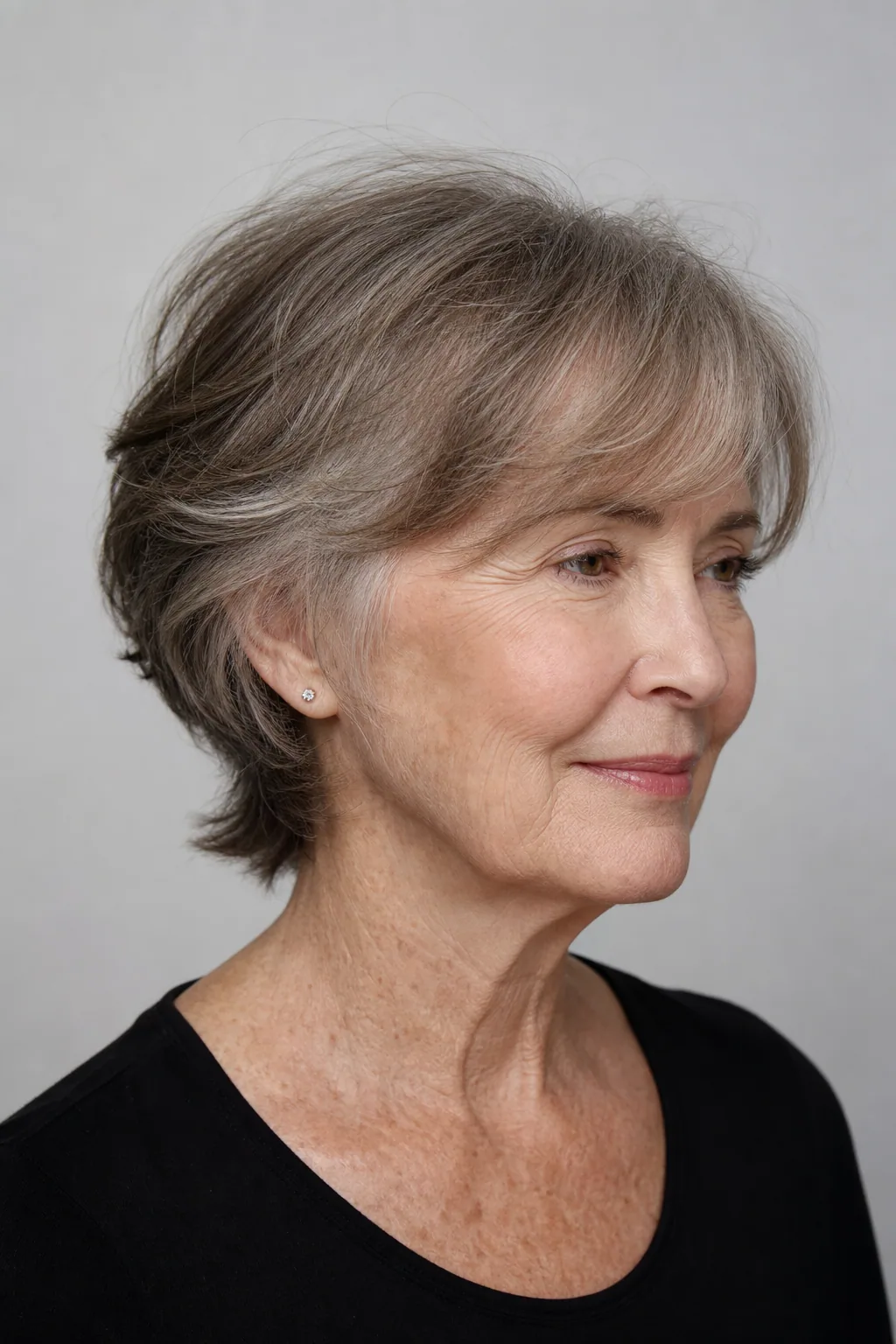
A longer, softer pixie with a fringe swept to one side, which frames the face and hides a high or thinning hairline. It suits a round or square face because the diagonal line slims and lifts. Longer on top than a classic crop, so it grows out gracefully between trims.
3
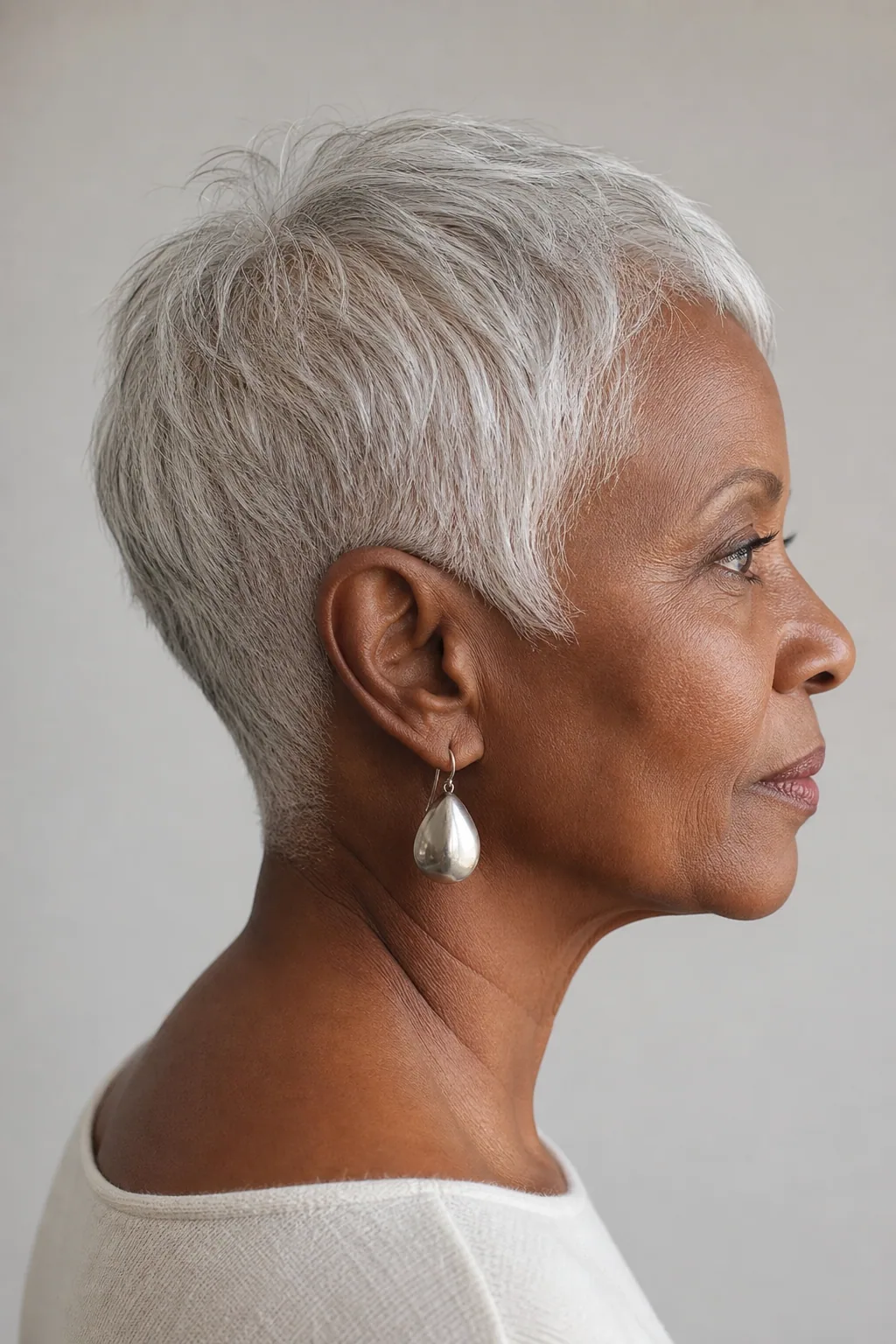
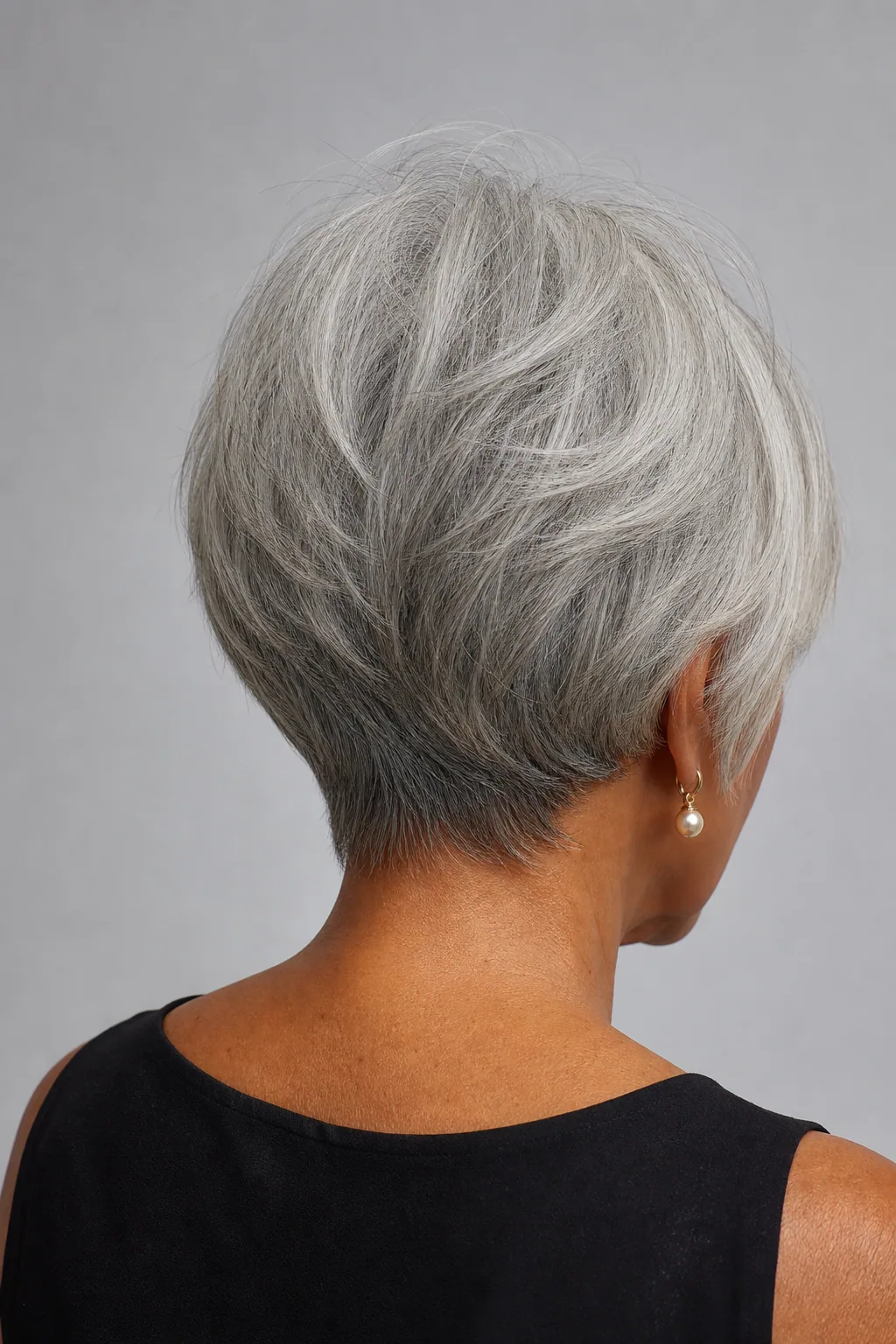
Tapered pixie for silver hair
Tapered close at the sides and nape with a little length left on top — the taper makes thin density around the ears and neck disappear. Silver and white hair looks especially sharp in this shape because the clean line reads intentional and polished. Genuinely wash-and-go: no heat needed most days.
4
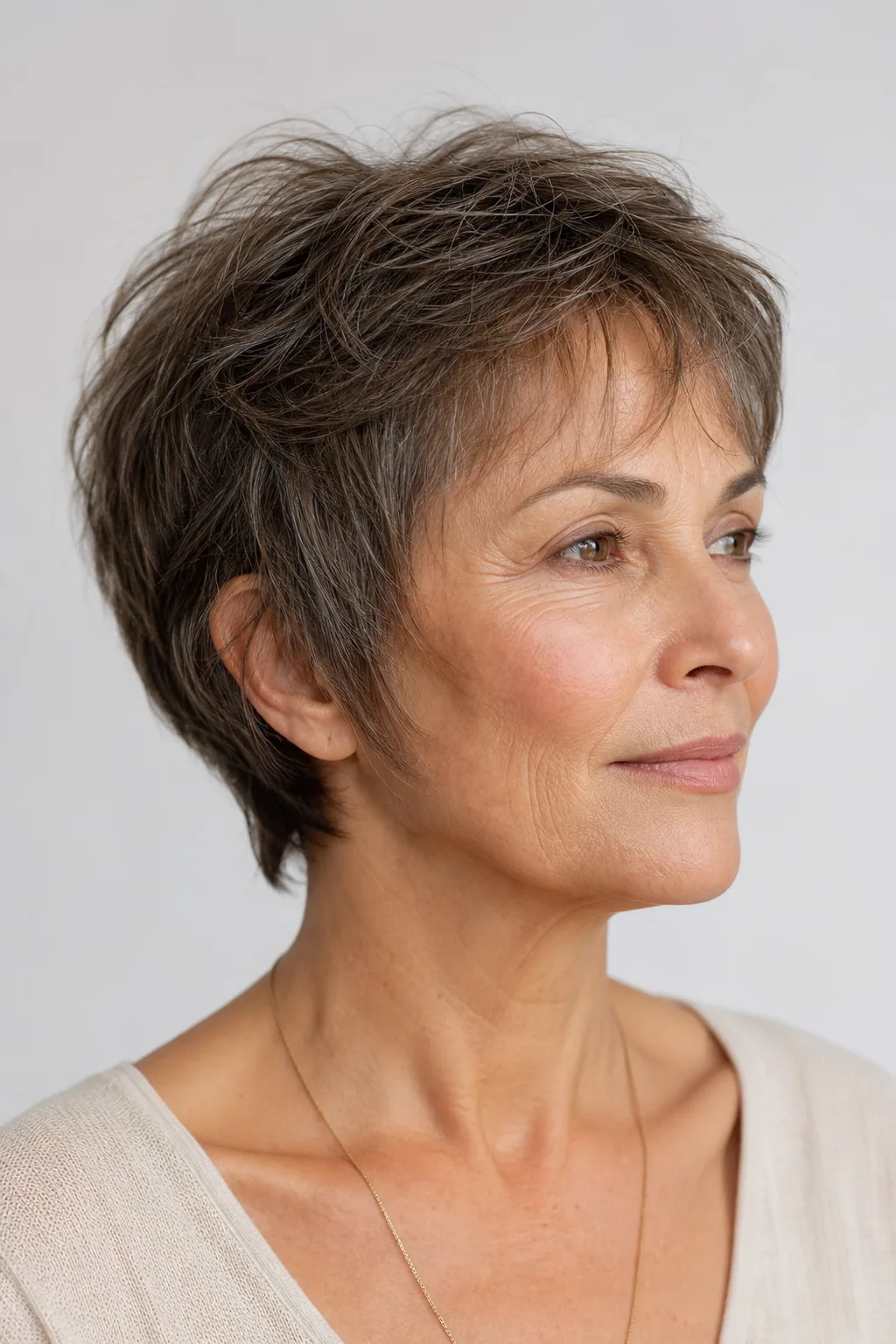
Short textured crop
A little softer and rounder than a pixie, cropped close but left textured through the top for movement. The broken-up texture catches light and creates the look of more hair — a smart trick when density is low. Works best on straight-to-wavy fine hair; ask your stylist to keep the outline soft, not sculpted.
5
Tousled wash-and-wear crop
The most casual cut here — cut for a lived-in, undone finish you rough-dry with your fingers and leave. If your priority is looking put-together in five minutes with no round brush, this is it. A pea-sized amount of light styling cream on dry ends keeps the texture from tipping into frizzy.
Chin and jaw-length bobs
The bob is the workhorse cut for fine hair at any age, and after 60 it earns its place: chin-to-jaw length is short enough to look dense but long enough to feel like you still have hair. Weight placement is everything here.
6
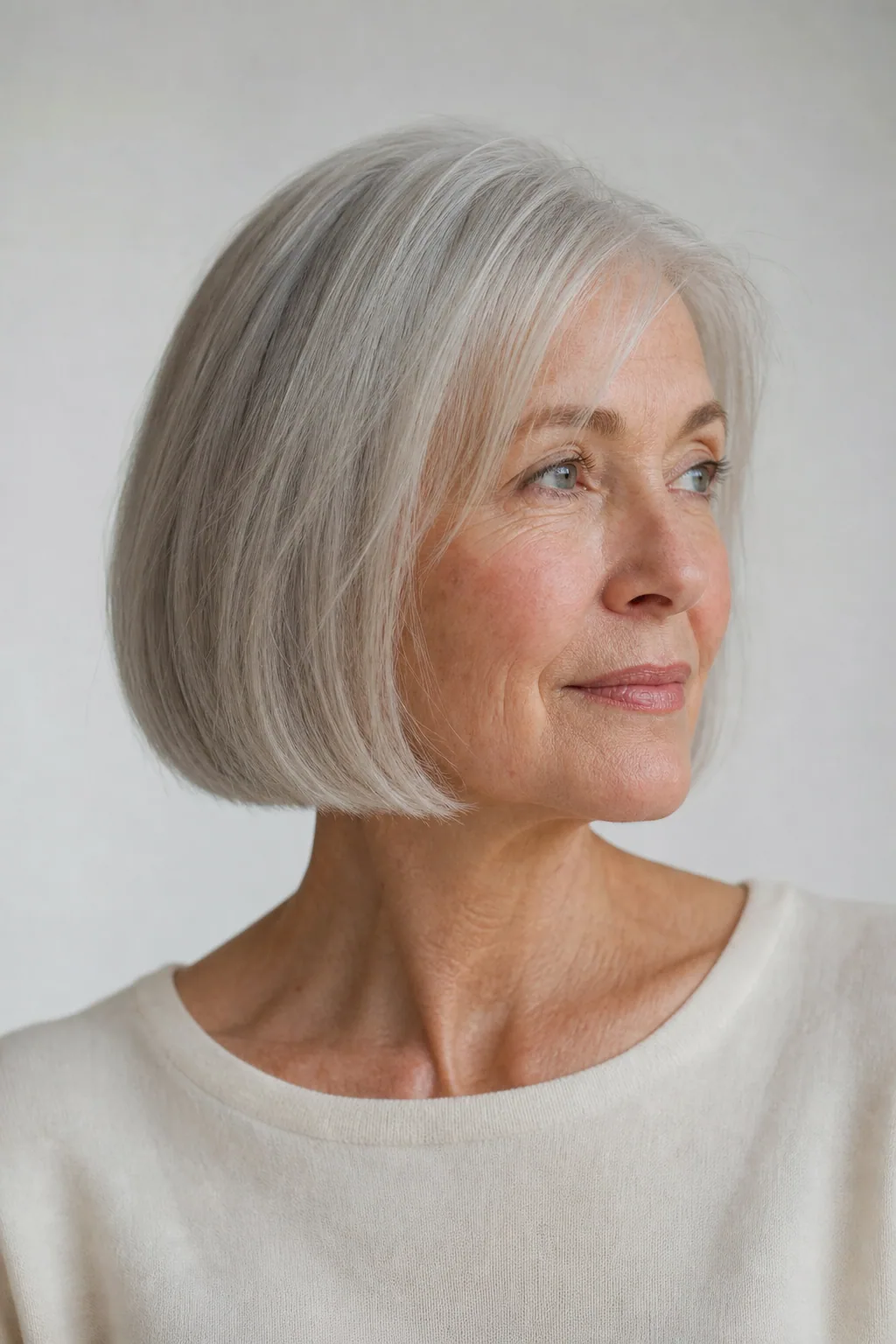
Blunt chin-length bob
Every strand ends on one clean line, which makes the ends look thicker — the go-to when hair is fine but density is still reasonable. Keep it right at chin length; too short and a blunt line can expose the crown when density is low. Ask for a point-cut finish on the very ends so the line stays soft, not stiff.
7
Graduated (stacked) bob
Internal graduation at the back packs weight and height right at the crown, where fine hair collapses first. This is the bob to ask for if flatness on top is your main complaint — the stacking builds lift no product can match. It does want a trim every five to six weeks to keep the shape sharp.
8
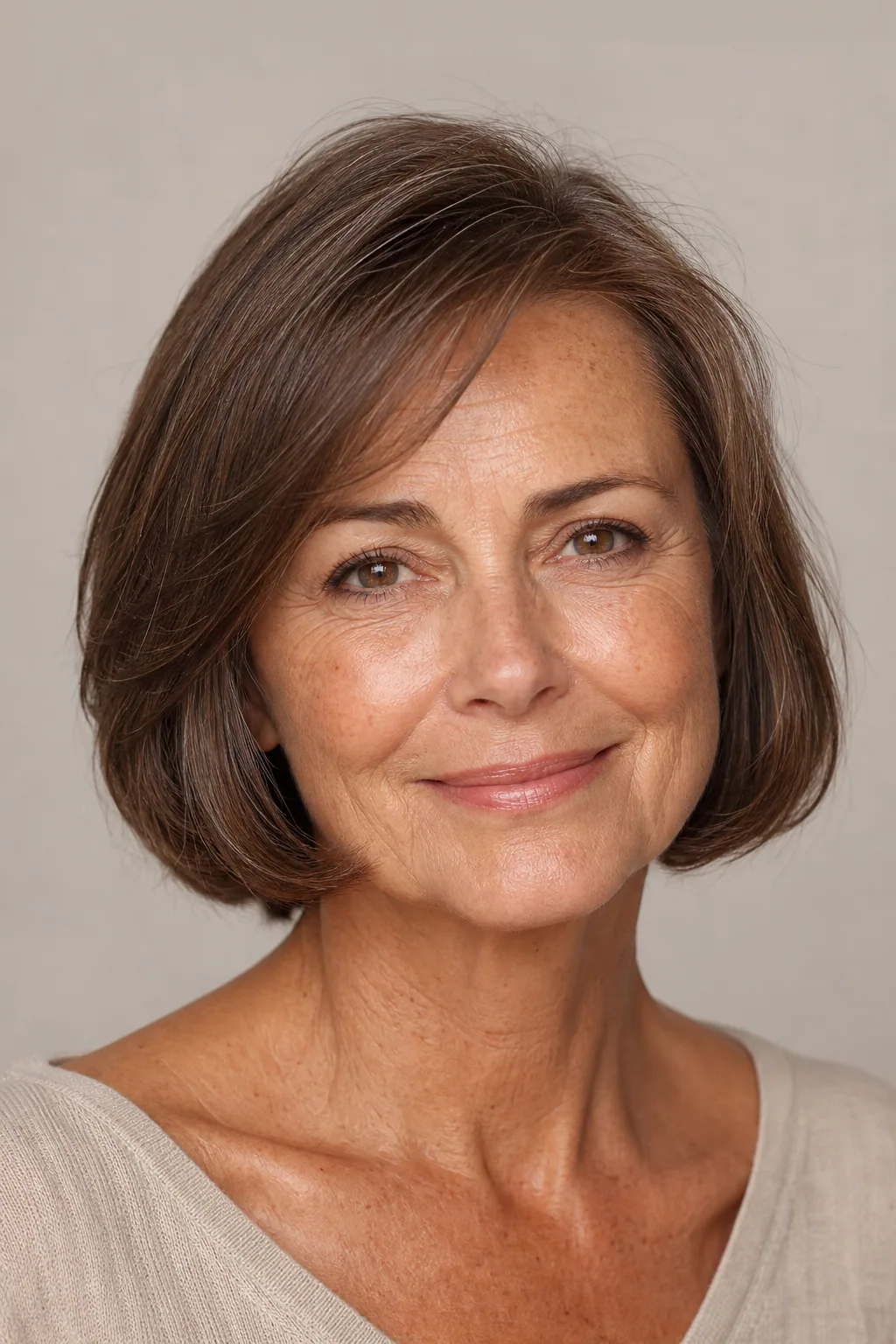
Soft rounded bob with a side part
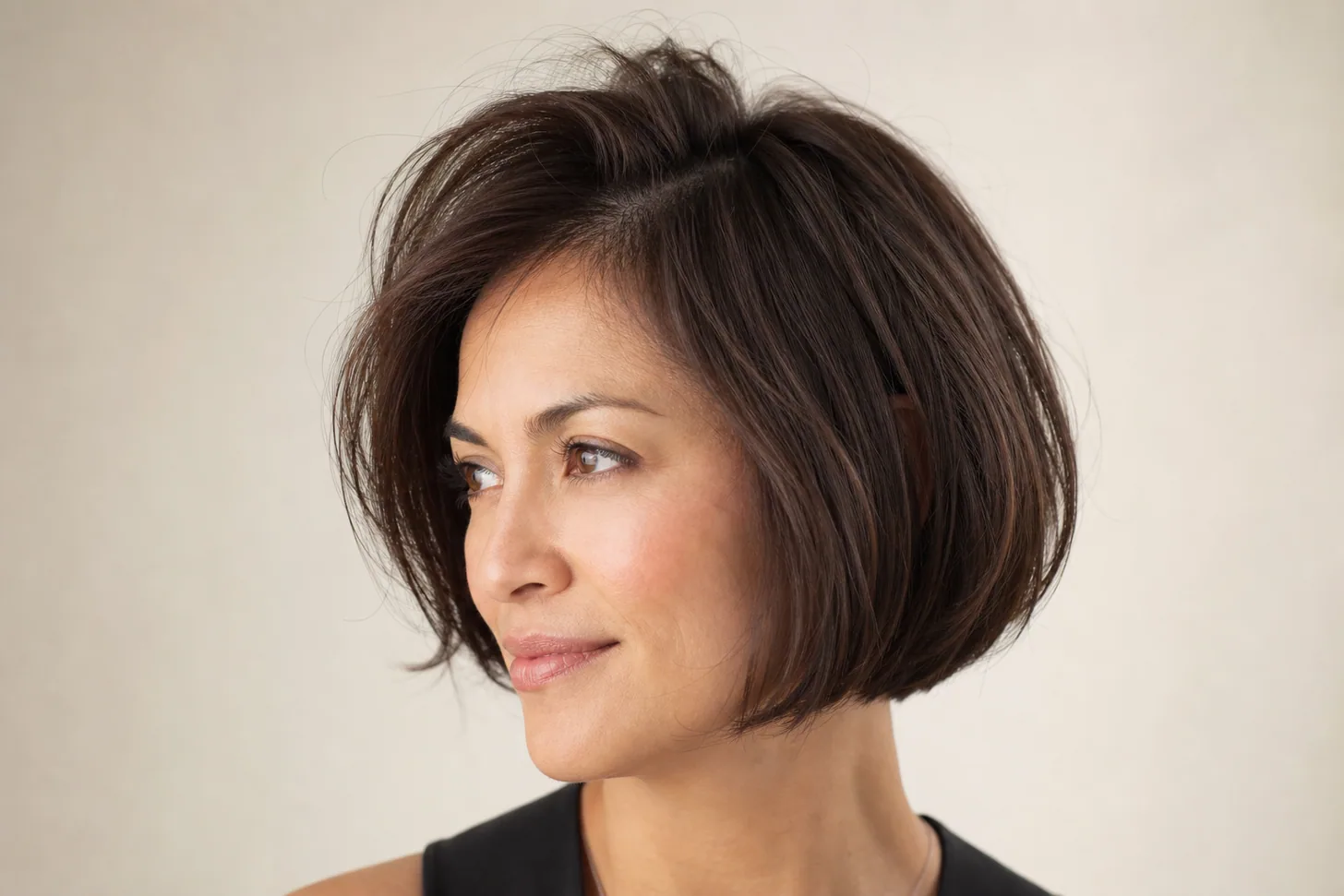
A curved perimeter that tucks under into a gentle dome, worn with a deep side part that instantly lifts the roots on the fuller side. The side part is the free volume trick — it stands the hair against its trained direction. Flattering on nearly every face shape and forgiving as it grows out.
9
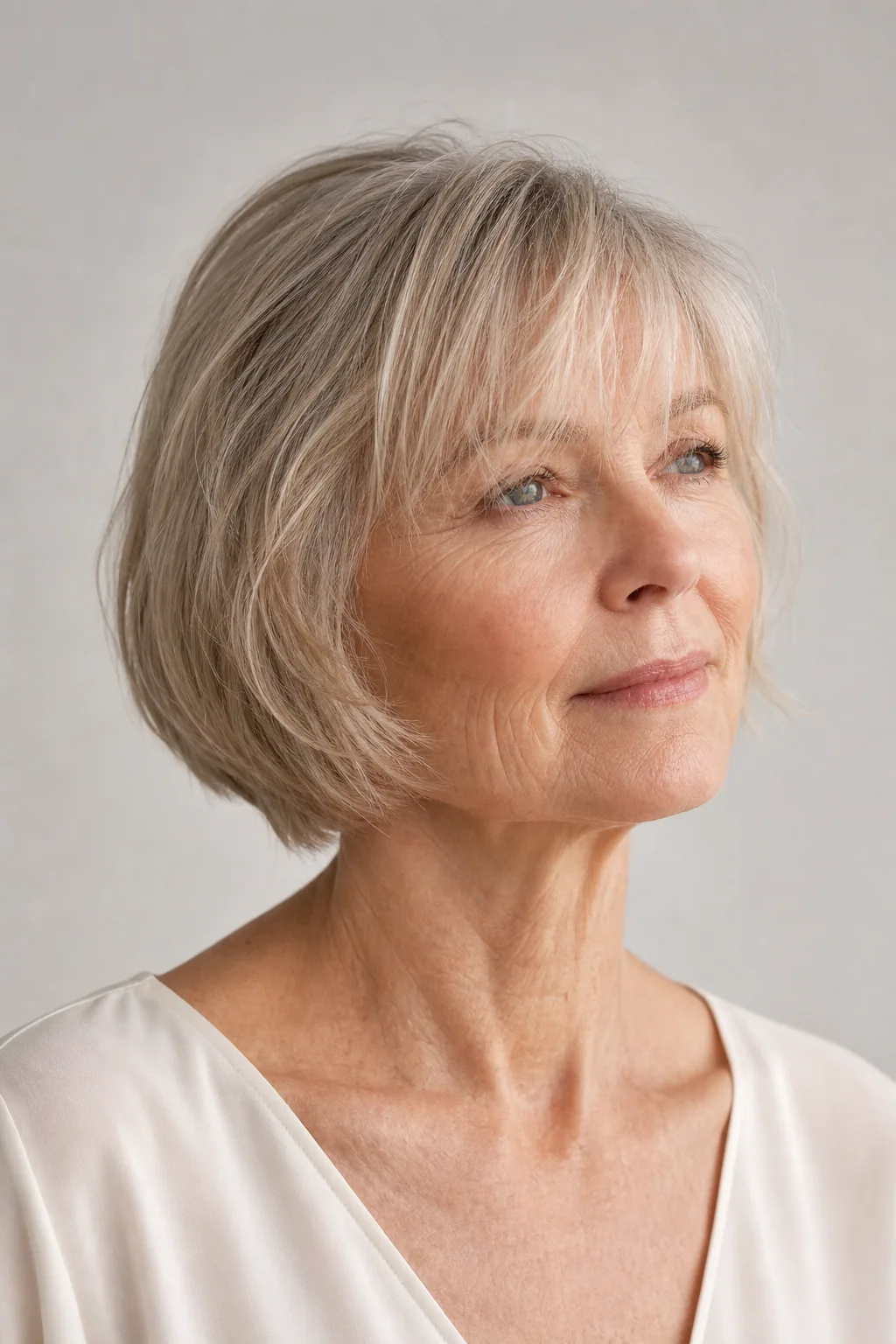
Chin bob with wispy bangs
A simple chin bob lifted by soft, feathered bangs that add a second layer of density around the face and soften a lined forehead far more kindly than a heavy blunt fringe. Ask for a point-cut, wispy fringe that melts into face-framing pieces. The bangs also mean you can skip styling the top and still look finished.
10
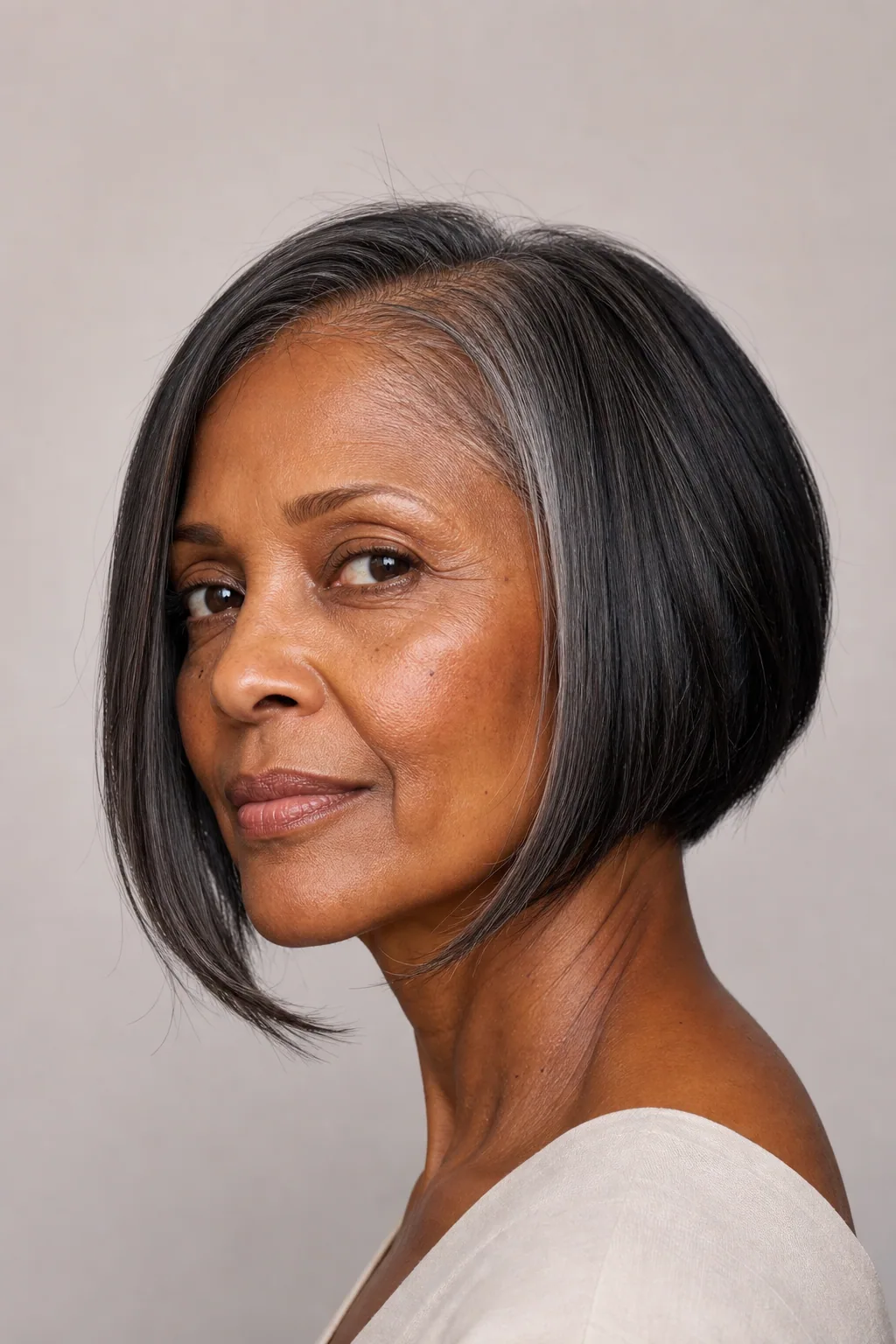
Angled A-line bob
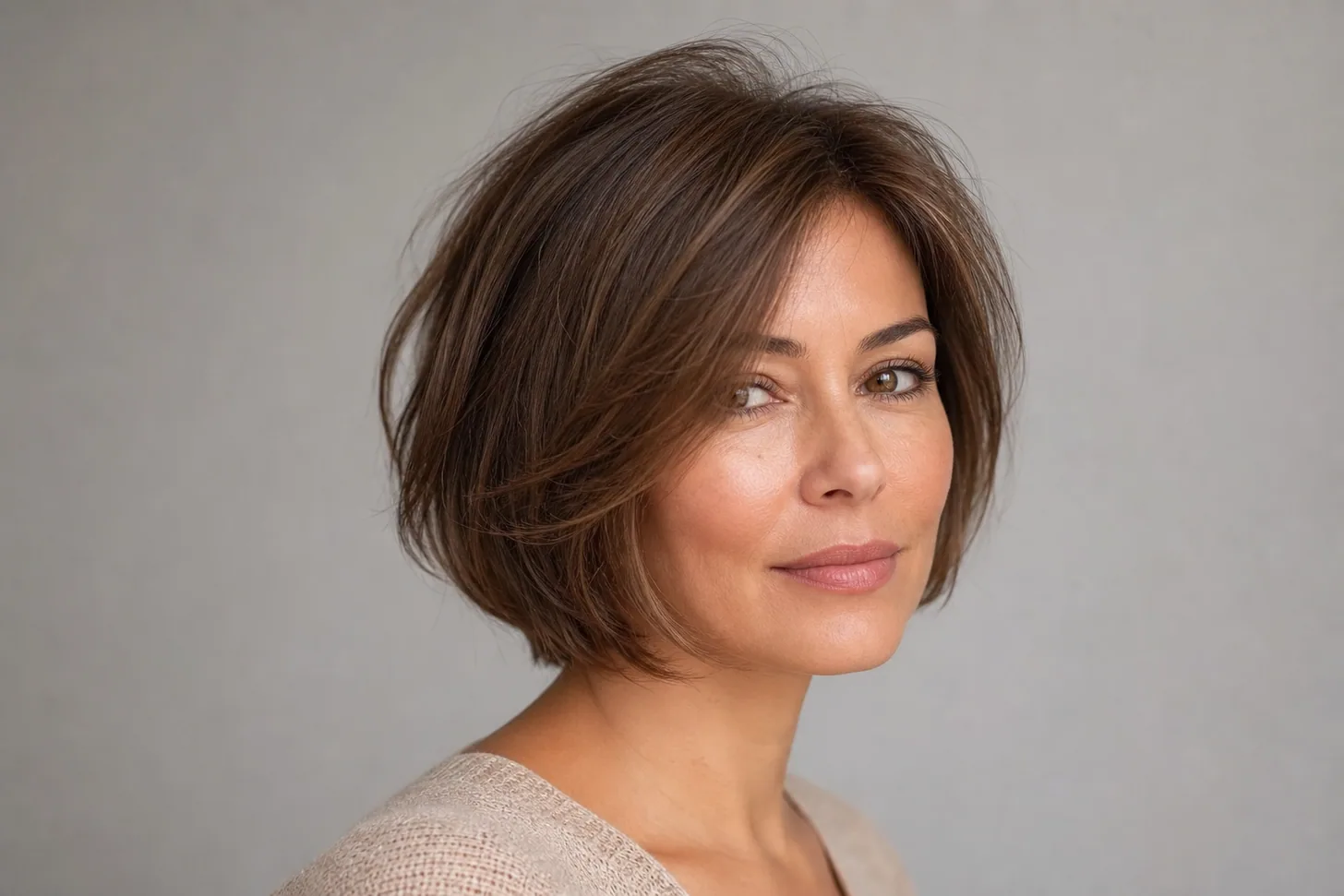
Shorter and stacked at the back, angling to a longer jaw-framing front — the graduation builds volume while the forward angle draws the eye down and slims a rounder or fuller face. Keep the front length below the chin so it elongates rather than widens. A modern, slightly dressier take on the classic bob.
11
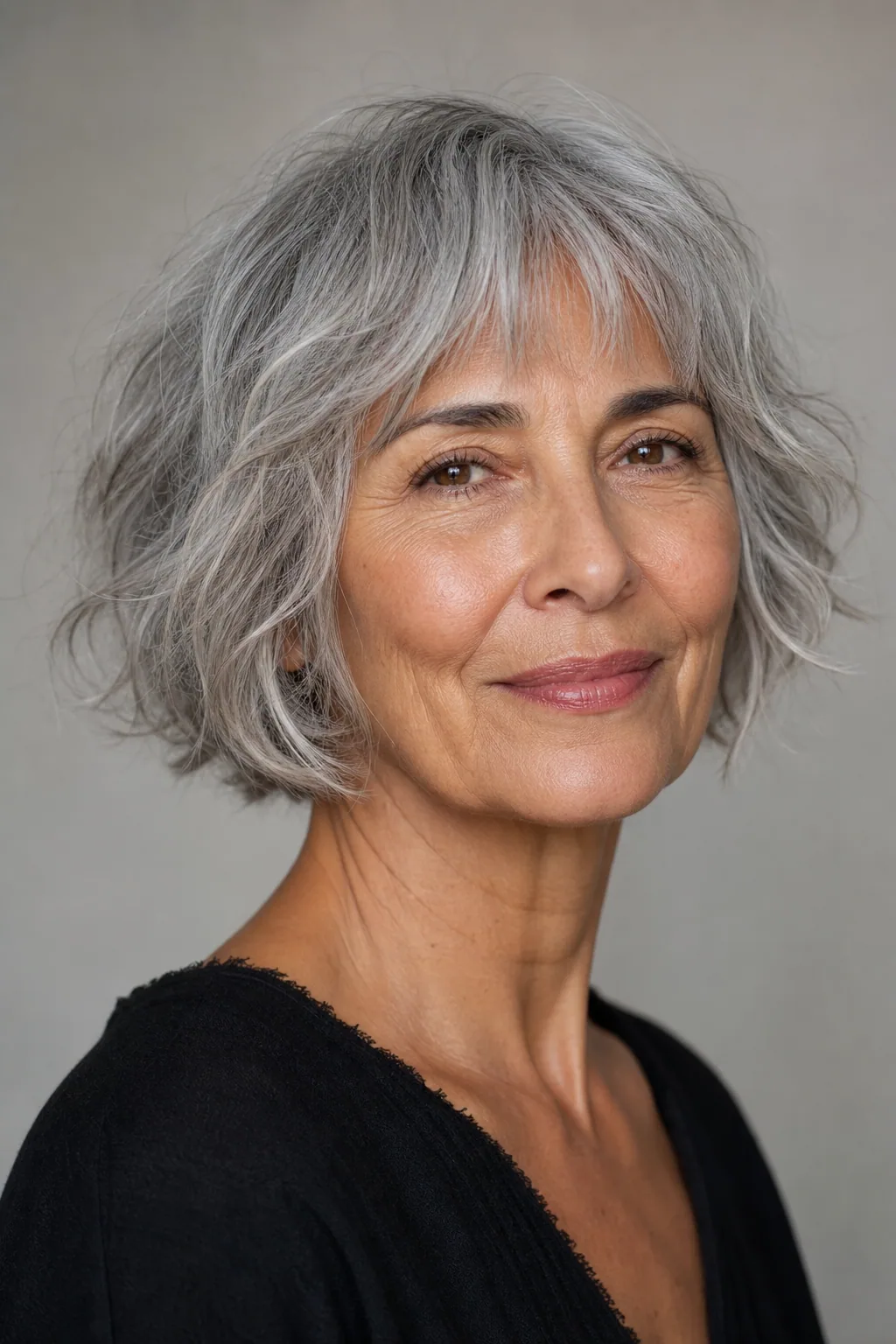
Textured French bob
A chin-grazing bob with piece-y ends and a soft fringe — low-commitment volume that looks effortless even unstyled. It suits fine, wavy hair especially well, since the natural wave supplies built-in body you don't have to build with heat. One of the easiest cuts here to wear gray and undone.
If you're not ready to go short, length can work over 60 — but only with the right layering to keep it from hanging flat. These sit between the collarbone and shoulder, the longest lengths I'd recommend on fine, lower-density hair.
12
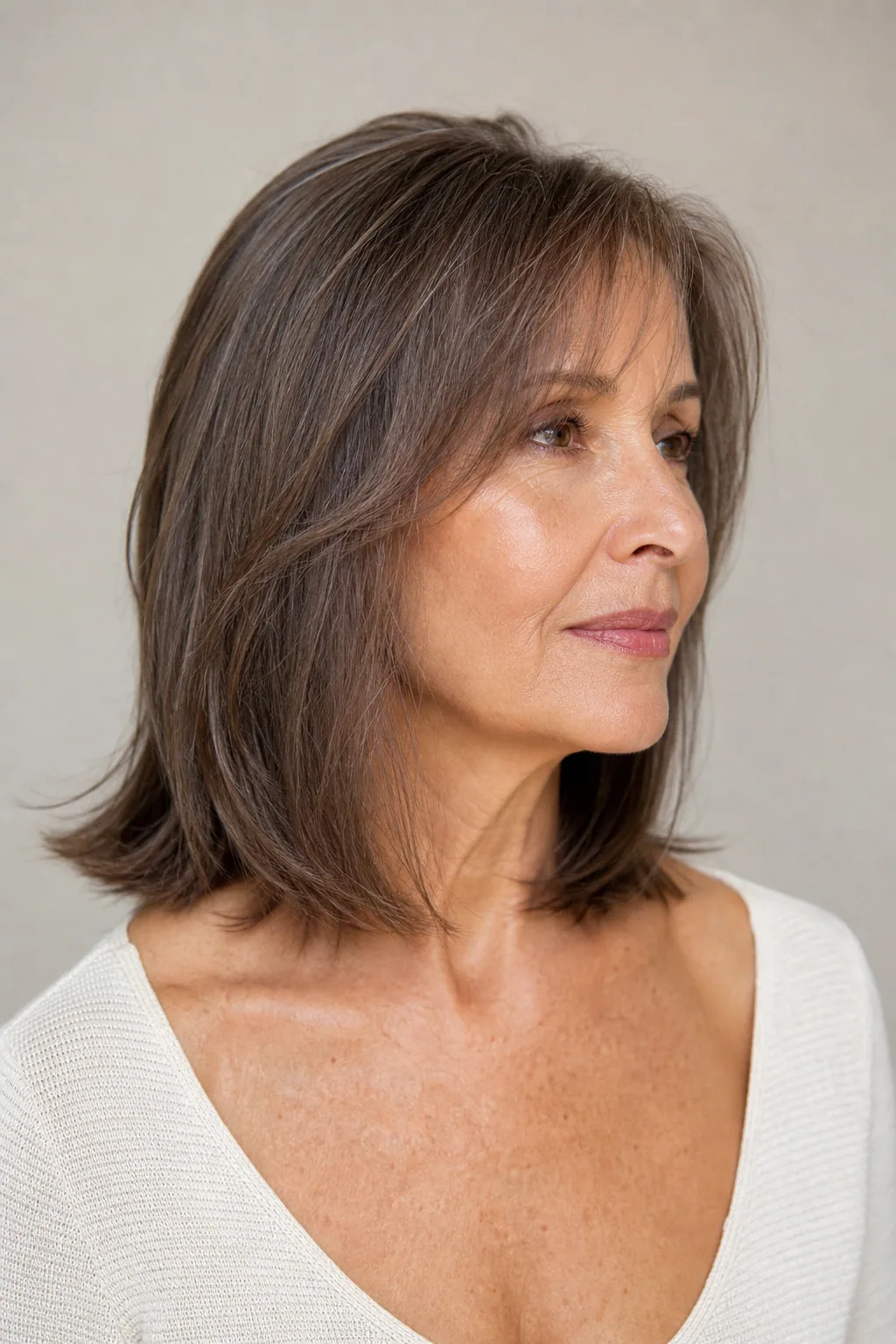
Collarbone lob with soft layers
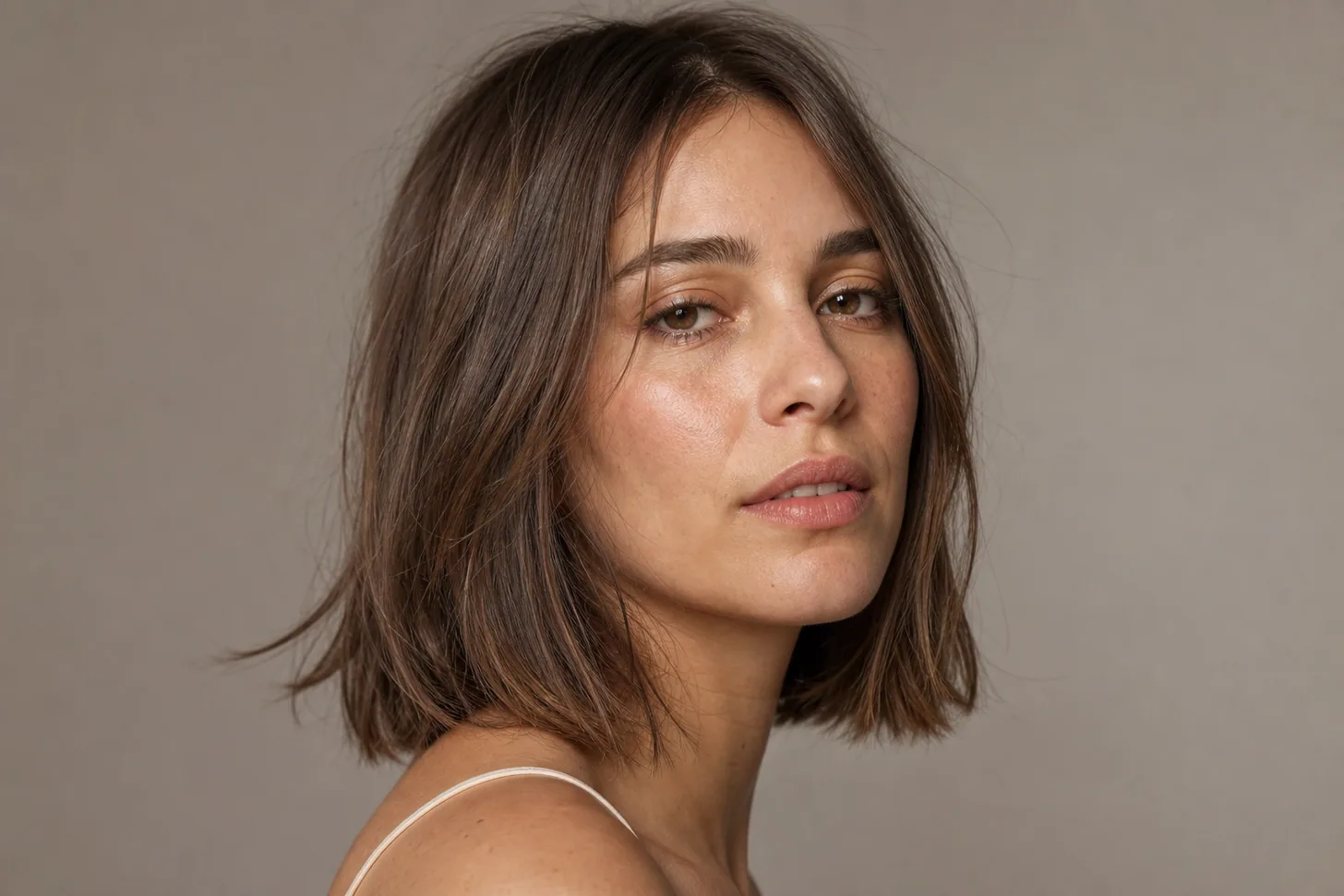
A longer bob grazing the collarbone with conservative, point-cut internal layers to keep it from going flat and stringy. This is the most length I'd put on fine hair over 60 — any longer and the weight wins. See our full gallery of the lob haircut for thin hair for more variations on this length.
13
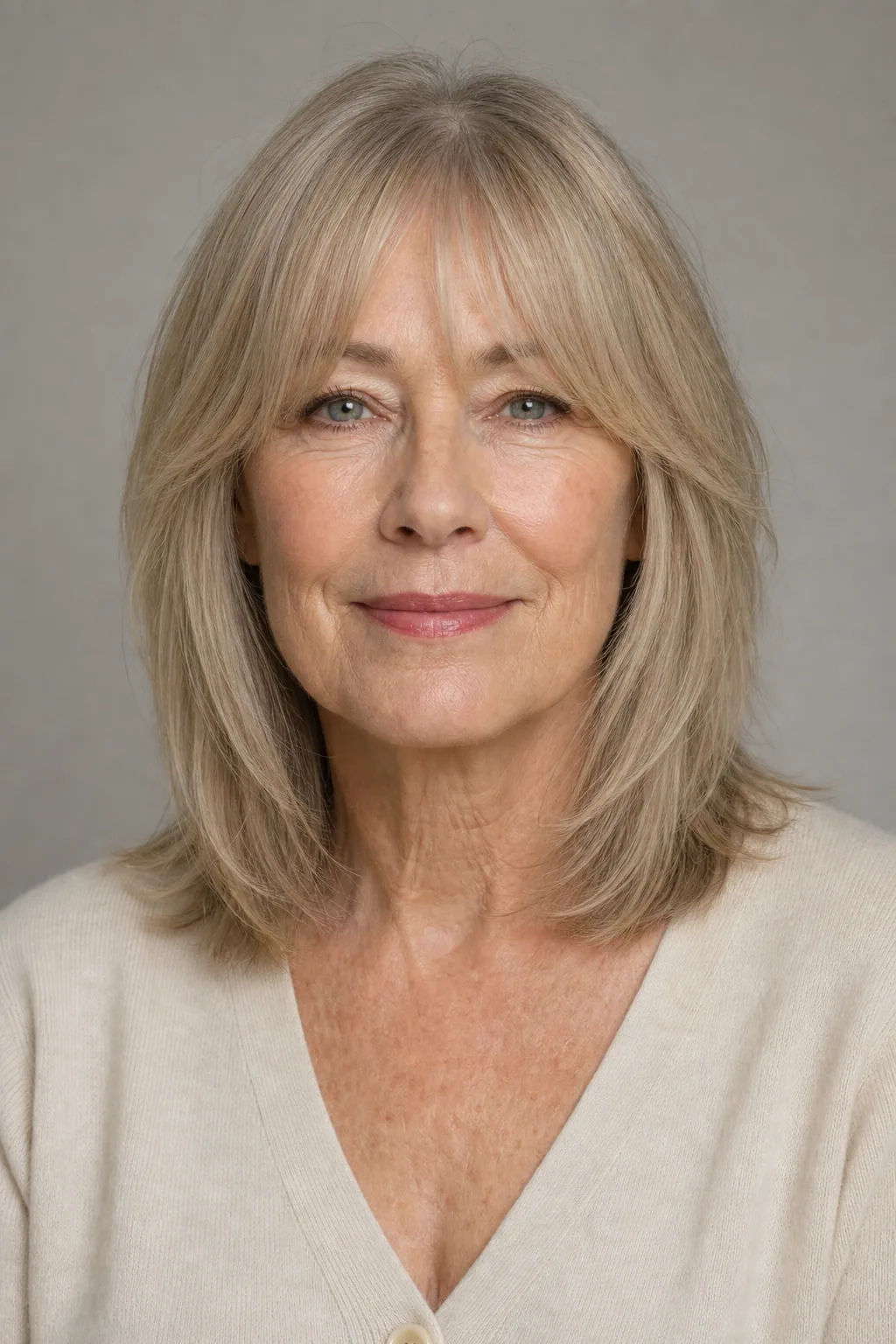
Layered lob with curtain bangs
Face-framing layers and soft curtain bangs add movement and frame the face without cutting off length you may not be ready to lose. The bangs give the front fullness and draw the eye to your eyes, not to thinner density elsewhere. A gentle entry point if a true bob feels too drastic.
14
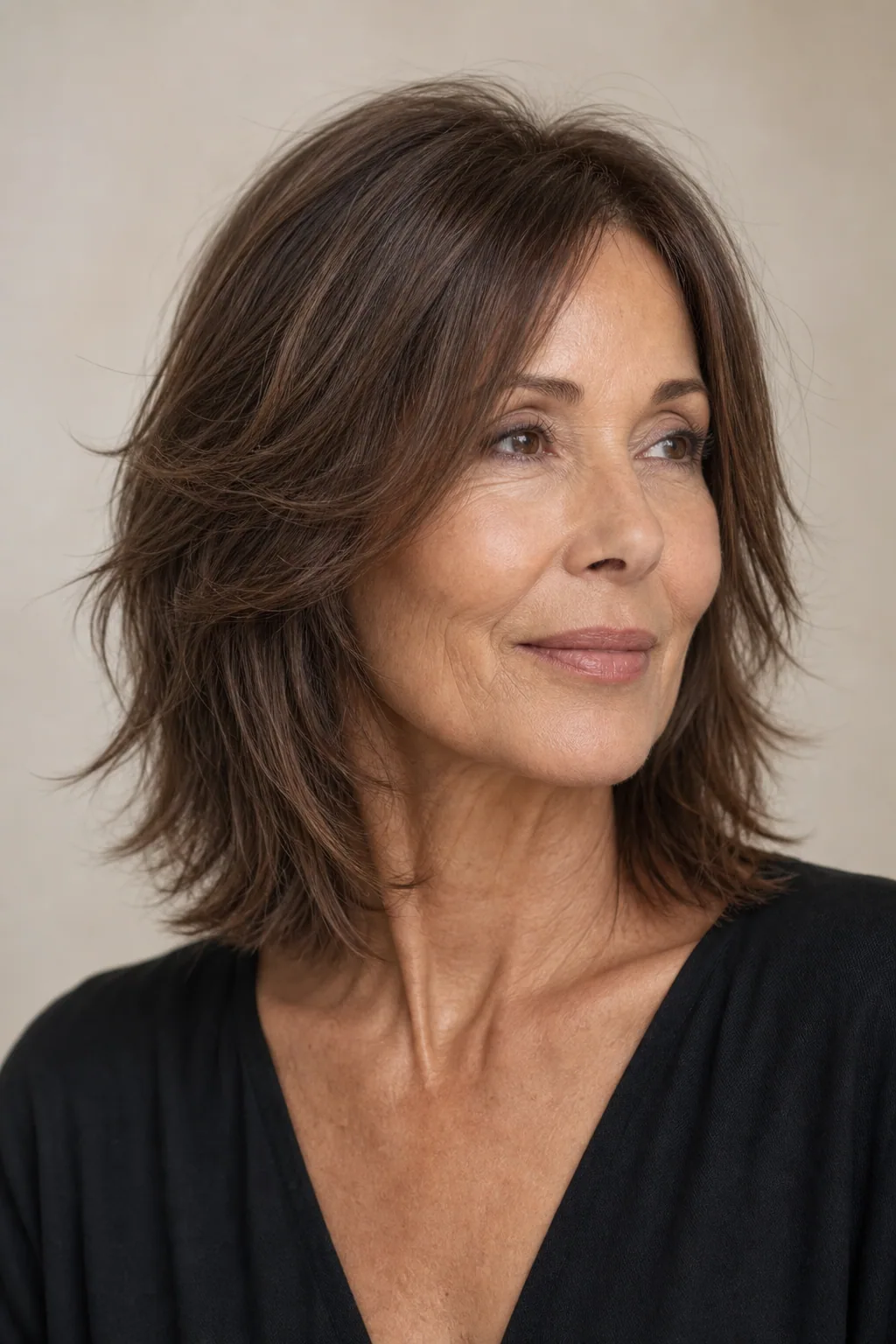
Soft shoulder-length shag
A gently layered shag with feathered pieces through the top creates airy movement and lift without the choppy, youthful edge of a full rock-and-roll shag. The layers do the volume work so the length can stay. Our guide to shaggy haircuts for fine hair shows how to keep the layering soft rather than thinning.
15
Layered cut with face-framing pieces
A shoulder-skimming cut with layers that start at the cheekbone to frame and lift the face. The face-framing is the key detail — it puts movement and fullness exactly where it flatters and softens a longer or fuller face. Ask specifically for the shortest layer to hit at the cheekbone, not below the chin.
Cuts that work with gray and thinning at the crown
The wedge haircut deserves a mention here specifically: gray hair is often wider and more resistant than the hair it replaced, which is a nuisance in most cuts and free volume in a stacked one.
Two very common over-60 realities deserve their own picks: silver-to-gray color, which can read thinner because the strands are more translucent, and visible thinning at the crown or part. These three are cut to handle both.
16
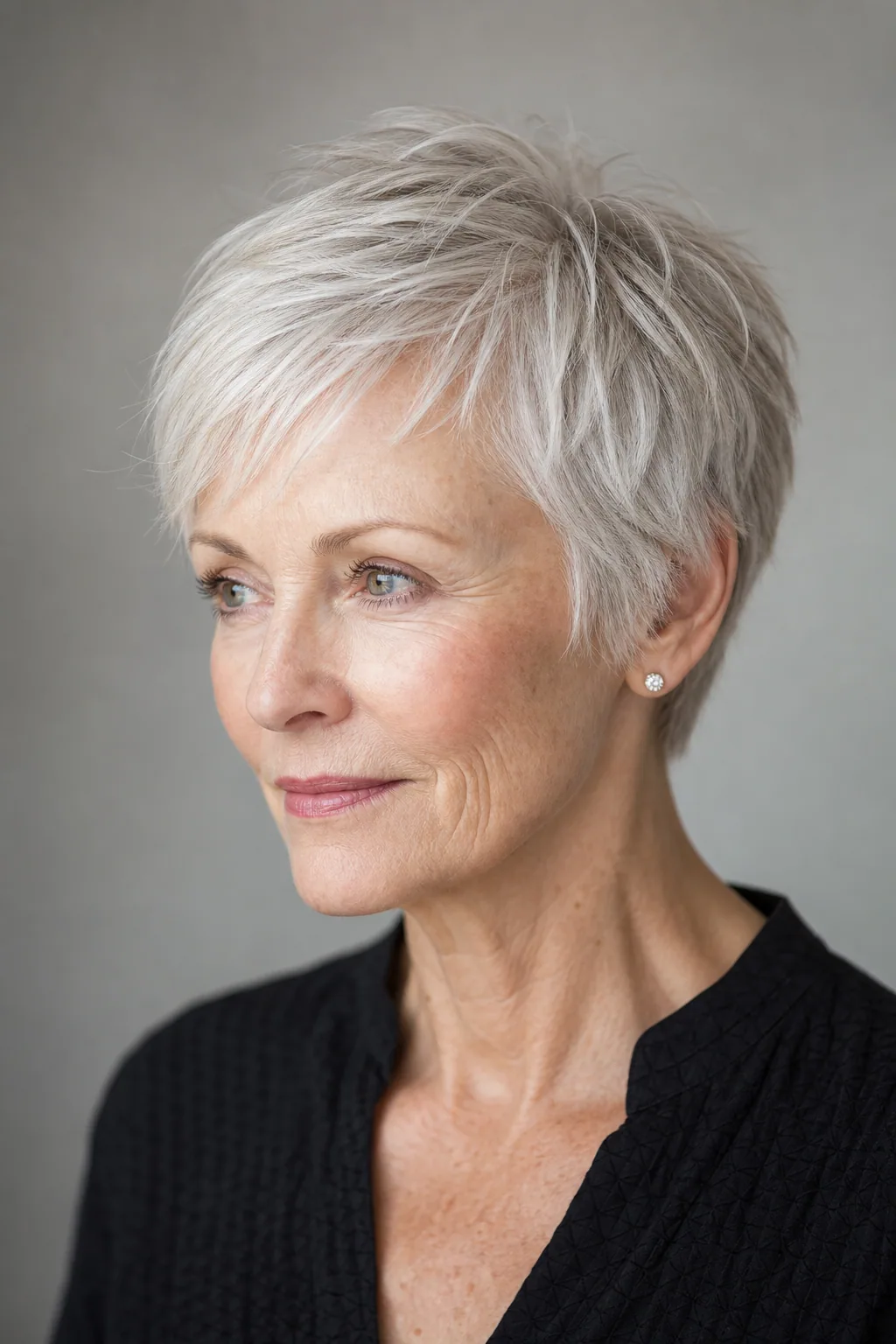
Piece-y silver pixie
Deliberately separated, piece-y texture is the move for silver hair, which can look flat and thin when worn smooth. Breaking it up catches light and reads as fullness, and a matte texture product keeps it from going shiny and sparse. The shortest cut on the list and the most striking on true silver.
17
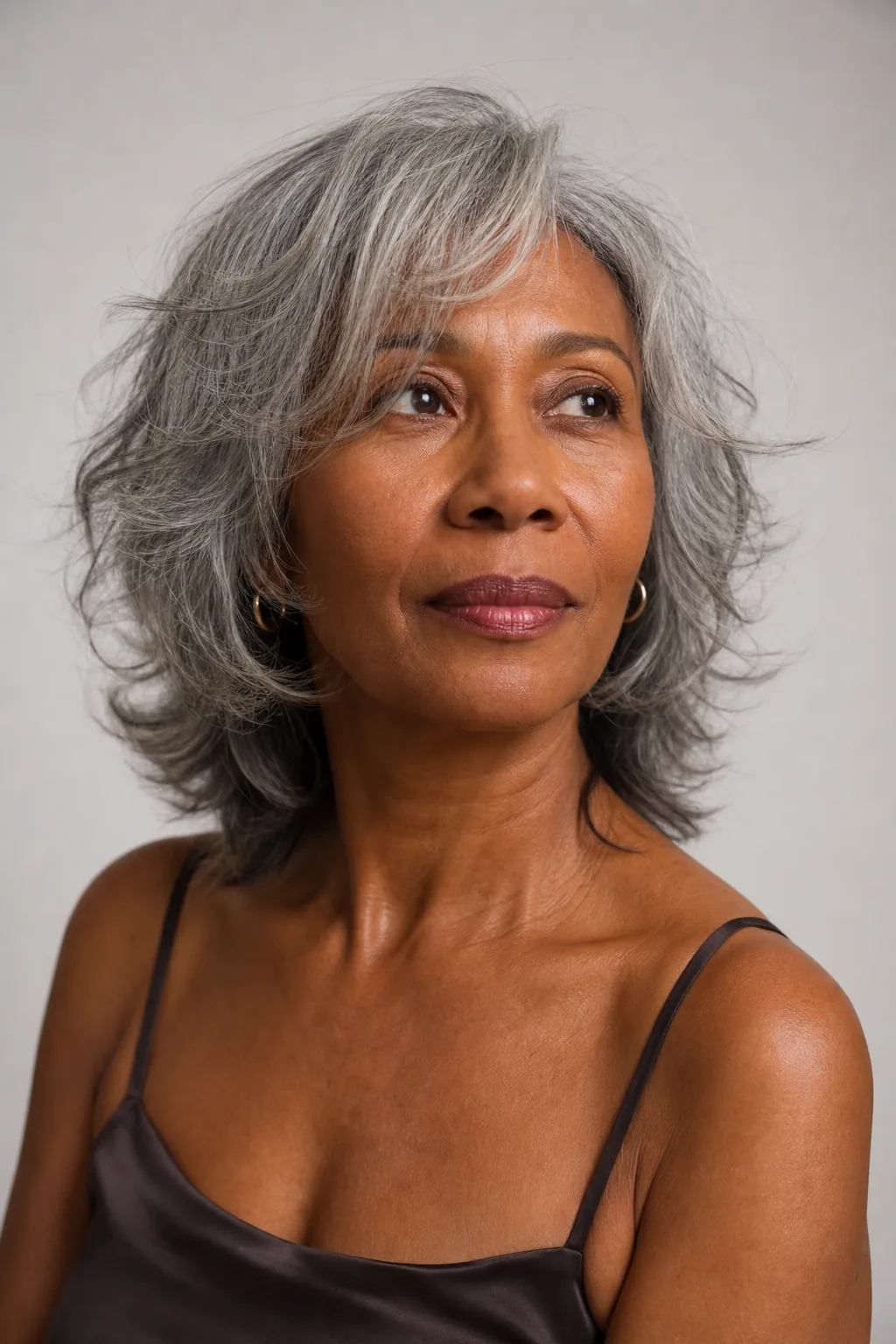
Blended salt-and-pepper bob
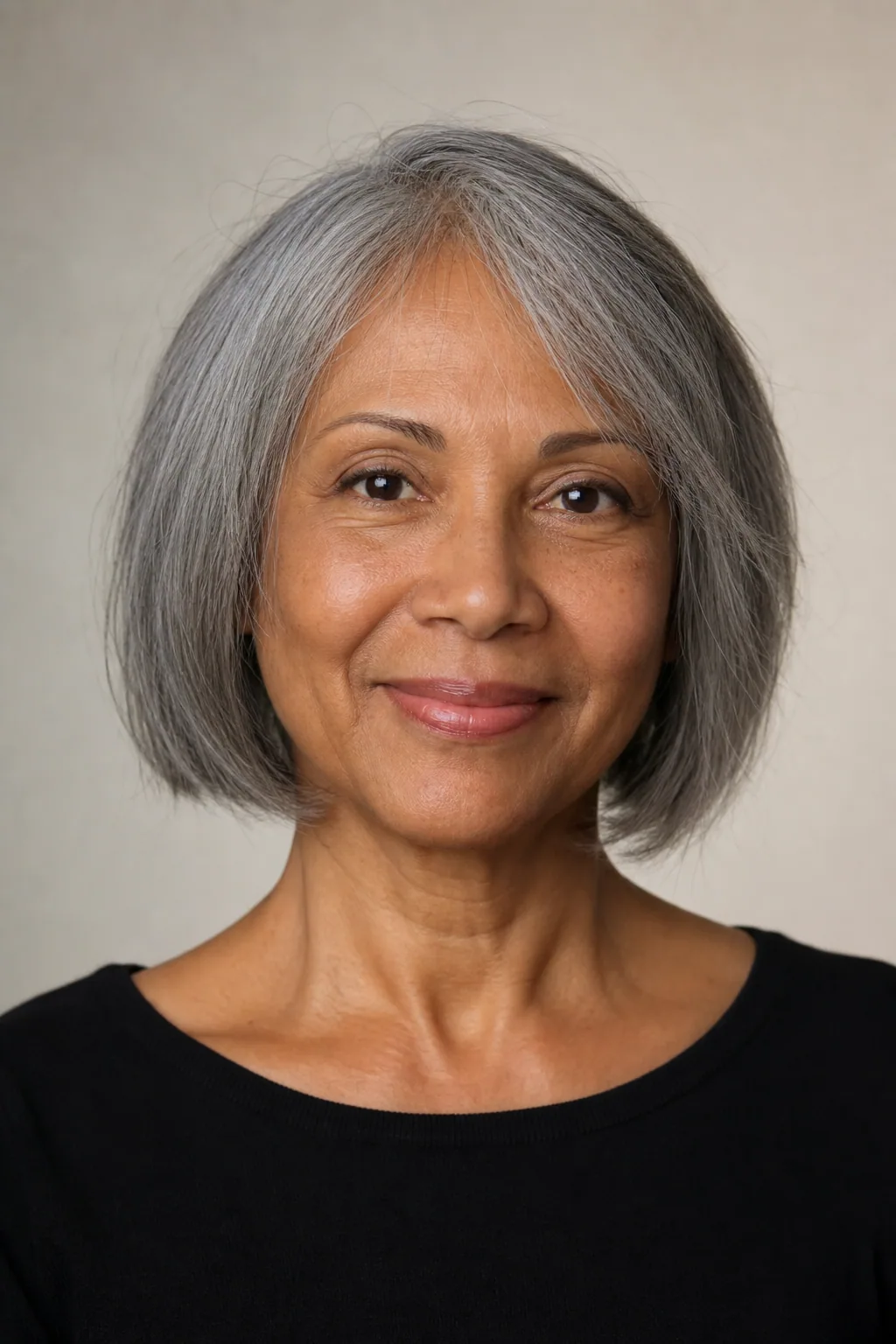
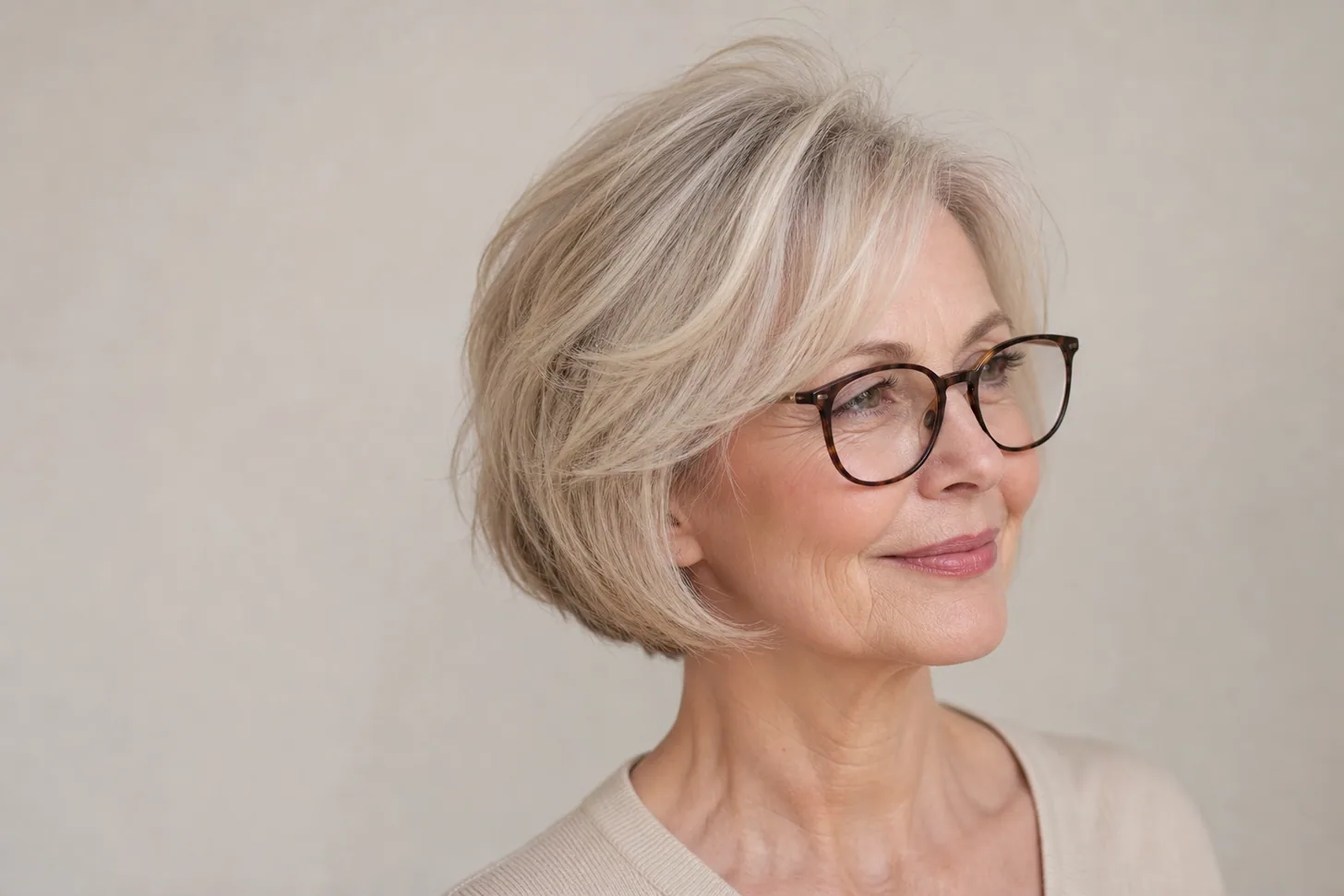
A chin bob that leans into natural salt-and-pepper dimension — the mix of lighter and darker strands does the same job as highlights, creating depth that reads as more hair. No color needed; the natural variation is the volume trick. A blended gloss at the salon keeps the grays bright rather than dull.
18
Side-swept layers for a thinning crown
When the part or crown is where you see the most scalp, a side-swept shape with layers built to fall over the top redistributes coverage where you need it. Switching to a deep side part and keeping a little length on top disguises a widening part better than any product. A quiet, confidence-restoring cut if thinning on top is the real concern.
Styling it at home in under 10 minutes
Every cut above is built to keep daily styling short. The honest routine for fine hair over 60 is three steps, not ten: lift, dry, and a light finish.
Blow-dry the roots against their fall (or air-dry with a side part), then a cool shot to set
4–6 min
Finish light
A little texture spray or paste on dry hair for separation — never a heavy cream near the scalp
1 min
Hair Gracefully may earn a commission on purchases made through links on this page, at no cost to you. We only recommend products our stylists would actually use on fine hair.
Chair-side note
The one habit I try to break with every over-60 client: reaching for a rich cream or oil to "nourish" thinning hair. I understand the instinct, but on fine, lower-density hair those products are pure weight — they flatten the root and make the hair look sparser, not healthier.
Keep anything rich to the mid-lengths and ends, keep the scalp and roots clean and light, and let the cut do the fullness work. If dryness is the worry, a lightweight leave-in on the ends only does the job without the flatten.
SB
— Simone Baptiste, Senior Stylist
What to ask your stylist
Bring the language, not just a photo. For fine hair over 60, say: "My hair is fine and has thinned a bit — I want a cut that looks fuller and is easy to style at home. Can we do point-cut internal layers for lift, and please don't razor or heavily thin the ends, it makes my hair look see-through."
If the crown is your concern, add: "Keep some weight and length on top so my scalp doesn't show, and build volume at the crown." And if low-maintenance is the priority: "Build the shape so it works with a quick air-dry — I don't want to need a round brush every morning."
Those three sentences prevent the most common regrets. If you're still deciding on a shape, our face-shape guide helps you narrow it down before you sit in the chair.
When a longer cut may still be your best move
Your hair is fine but still fairly dense. If you haven't lost much density, a collarbone lob with layers can absolutely work — you have the fullness to carry the length.
You wear it up most days. If your hair usually lives in a low bun or twist, keeping length for the updo can matter more than down-styled volume — see updos built for fine hair.
You're willing to style it daily. Length on fine hair over 60 needs a root-first blow-dry to look full; if you'd rather not, go shorter and let the cut do the work.
FAQ
A chin-to-collarbone cut with soft internal layers and a little face-framing is the most reliable choice. It keeps enough length to style, sits above the point where fine hair drags flat, and puts fullness near the face where it flatters. A blunt or graduated bob and a soft layered lob are the two shapes that suit the widest range of faces after 60.
No — the length isn't what ages a cut, the shape and styling are. A soft, textured short cut with a little movement around the face looks current and lifts the features; a stiff, set, or overly tight short cut is what reads dated. A well-cut pixie or crop often looks younger than long, thin hair that hangs flat.
Every 5 to 8 weeks depending on the cut. Short shapes and bobs live on their perimeter line and need trimming every 5 to 6 weeks to stay crisp; a longer layered cut can stretch to 7 or 8. Regular trims matter more on fine hair because split, wispy ends read as even thinner.
Yes, and it's one of the best cuts for it. A graduated or stacked bob builds fullness at the back of the head where fine hair falls flattest, and a chin-length blunt bob makes the ends look denser. Keep a little length and weight on top if density is low at the crown so the scalp doesn't show through.
It can look thinner because gray strands are often more translucent and reflect more light, so the scalp shows through more easily. The fix is texture and a matte, blended finish rather than a flat, shiny set — a soft-glossed toner and a texturizing product help gray hair read fuller without adding weight.
Soft, wispy or side-swept bangs work well — they add a second layer of visual density around the face and soften the hairline. Avoid a heavy, blunt, straight-across fringe on very fine hair, which can look sparse and separate. Ask for a point-cut, feathered fringe that blends into face-framing pieces.
Eleven years behind the chair, specializing in short shapes and fine-hair texture. Simone believes the best haircut is the one you can style yourself in ten minutes.
Images in this article are AI-generated illustrations, not photographs of real clients or results. See our image policy.
Results vary with hair type, density, and growth patterns. This guide is educational and not a substitute for an in-person consultation with a licensed stylist. If you're noticing sudden or patchy thinning, a board-certified dermatologist can rule out a treatable cause.
Get the good hair intel
One honest, stylist-written guide in your inbox each week. No hype.

 SB
SB