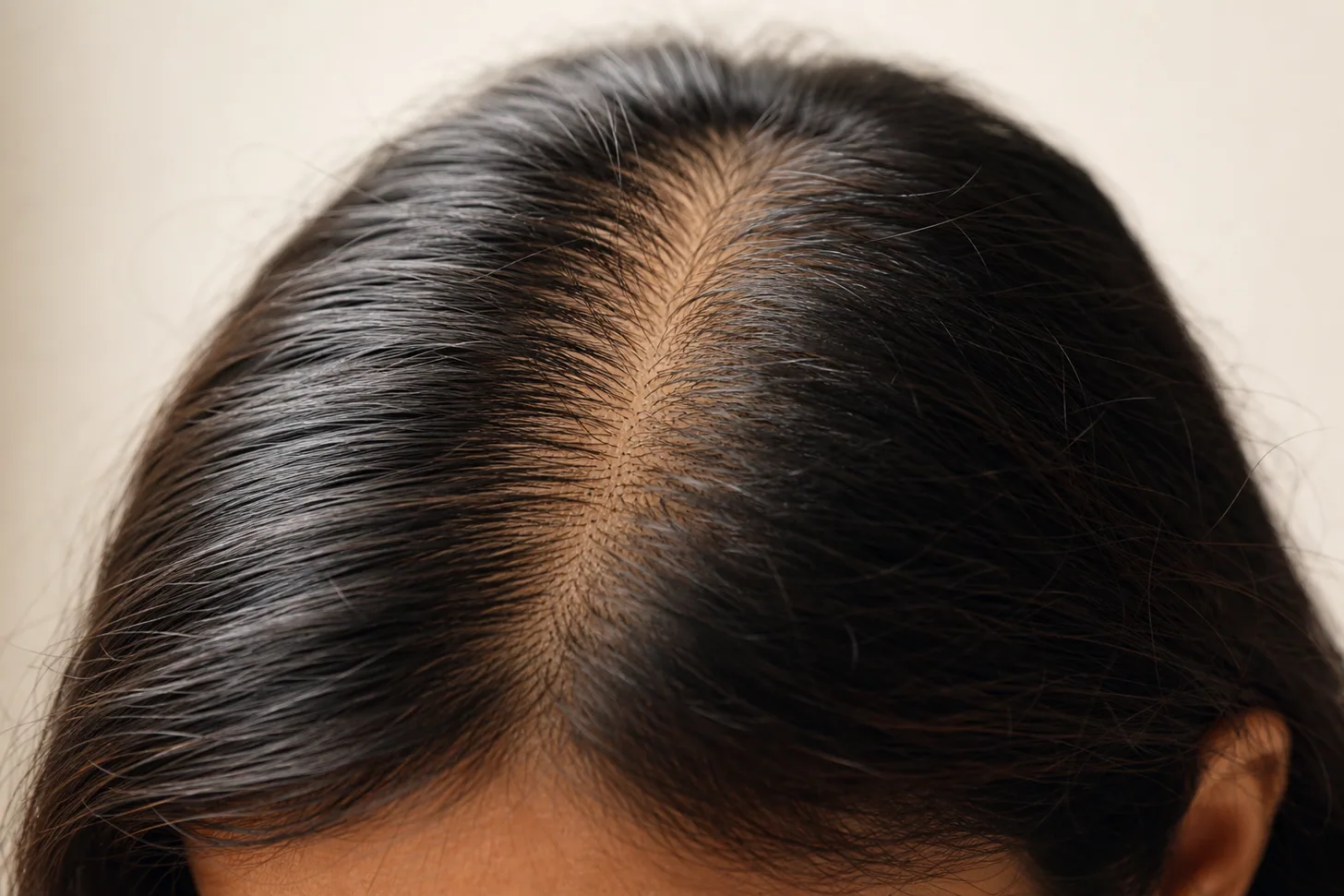
The honest answer, up front: you can't change the genetic thickness of the individual fine strands you already have — strand width is set mostly by genetics, age, and hormones, and no product regrows a narrow strand as a wide one. What you can do is protect every strand so it reaches its full length and thickness instead of snapping off short, keep the scalp it grows from healthy, correct any real nutritional deficiency, and — in cases of genuine thinning — improve density with evidence-based treatment.
The rinses and rituals that promise to do it faster are assessed one by one in viral hair hacks for fine hair. So "thicker" is partly out of your hands and partly within them. Below is exactly what genuinely helps, what's mostly hype, and when the question belongs to a dermatologist rather than a shelf of serums.
What actually makes hair look "thick" — diameter vs density
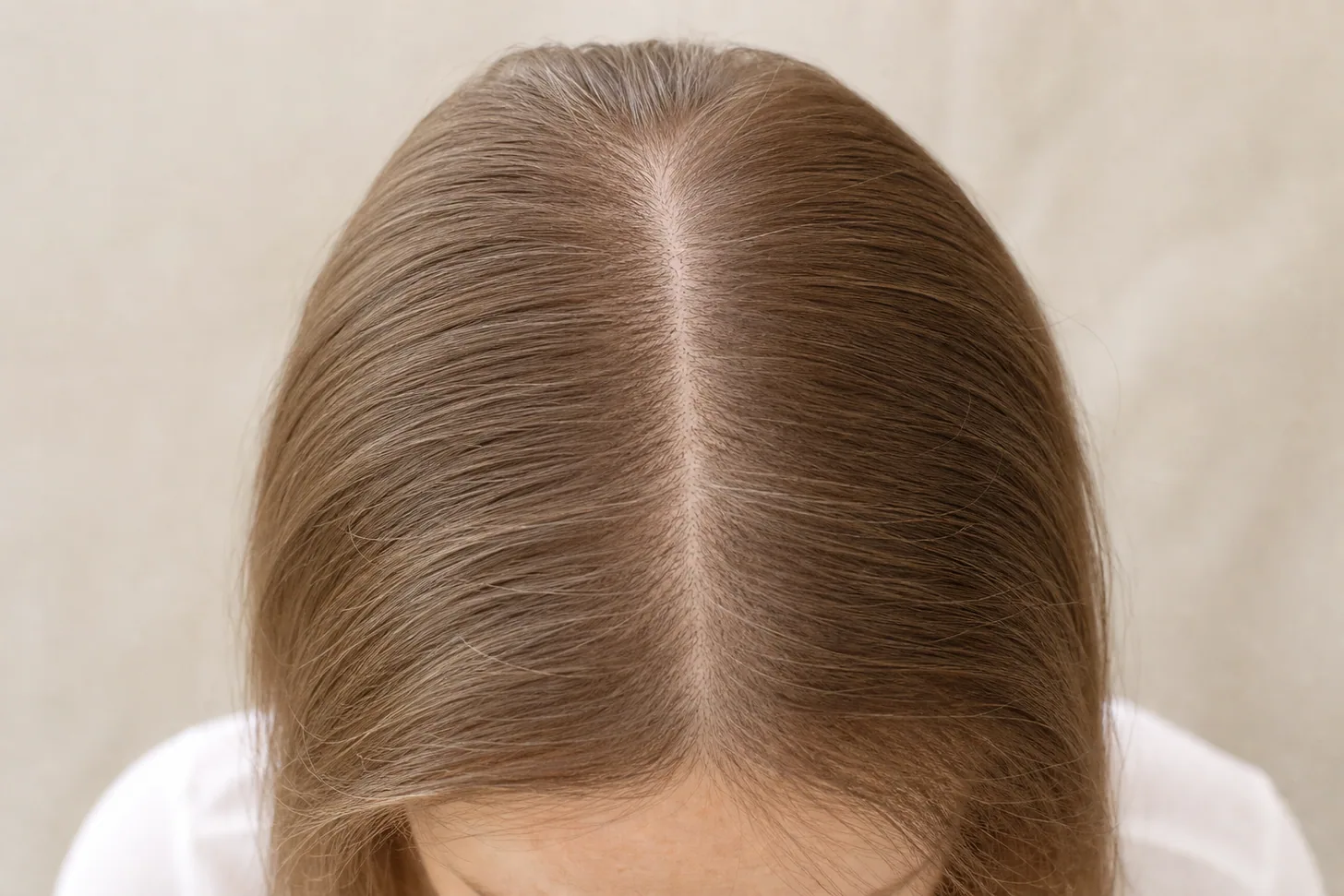
When people say they want thicker hair, they're almost always describing two different measurements at once, and untangling them is the whole game. Strand diameter is how wide each individual hair is — that's what "fine" means. Density is how many strands you have per square inch of scalp — that's what "thin" versus "thick" describes.
A head of hair reads as full when it has generous amounts of both, but the two are independent: you can have fine strands packed densely, or coarse strands spread sparsely, or any combination. We break the pair apart in detail in fine vs thin hair: what you actually have, and it matters here because the honest answer to "can I grow it thicker?" is completely different depending on which one you're really asking about.
Diameter is the one you're mostly stuck with. Density is the one that can move — up a little with care, down with age or a medical cause, and back up in some situations with treatment. So the productive way to hold the question is: I can't make my strands wider, but can I keep more of them, healthier, for longer? Yes. That's where the real levers are.
Can you change strand diameter? Mostly, no
This is the part the internet is least honest about, so I'll be plain: the width of a hair is decided by the follicle it grows from, and that follicle's output is governed largely by genetics, age, and hormones — none of which a shampoo reaches.
If you were born with fine hair, your follicles produce narrow strands, and they will keep doing that regardless of how many "thickening" bottles you cycle through. No topical product has been shown to permanently widen a healthy fine strand.
Two honest asterisks. First, hormones genuinely do influence strand caliber over a lifetime — which is why some women notice their hair feeling finer after menopause as estrogen falls, a change covered in full in menopause and fine hair, and why pattern hair loss progressively miniaturizes strands, shrinking them thinner and shorter over years.
That's a medical process, not a styling one, and it's a reason to see a doctor rather than a reason to buy a serum. Second, "coating" products can make a strand temporarily behave thicker — a fiber that swells the cuticle or deposits a film adds surface until the next wash. That's cosmetic, it's real, and it's fine to use; it just isn't growth, and it's honest to know the difference.
Chair-side note
The sentence I say most often about this: "We can't change the width of your hair, but we can stop you losing the length and fullness you already grow." Nearly every client who comes in convinced their hair is getting thinner is losing hair to breakage, not to their follicles — mid-shaft snapping from heat, tight elastics, and over-brushing, so strands never reach the length that would read as full.
That's the most fixable problem in this entire article, and it costs nothing. Before you spend a cent on growth products, spend two weeks being gentle and watch what stops breaking off. The same logic runs in the other direction at the ends: how often to trim fine hair is where most of the length people grow quietly goes.
MH
— Megan Holloway, Editor-in-Chief
What genuinely helps
None of these widen a strand. What they do is protect the hair you grow, support the scalp it grows from, and — in the right circumstances — increase density. In order of how much control you actually have:
Minimizing breakage lets each strand reach full length and thickness
Fine hair has the least structural reserve of any hair type, so it breaks first and shows it soonest. A strand that snaps at the mid-shaft never reaches the length — or the tapering fullness — it was capable of, which reads to you as "thinner."
Protecting it is the highest-yield thing on this list and it's free: lower your heat-tool temperature and always use a heat protectant, swap tight elastics for soft coils, detangle from the ends up with a wide-tooth comb, and don't brush aggressively when wet, when hair is at its most fragile.
Hair grows out of skin, and unhappy skin grows compromised hair. Chronic flaking, inflammation, or buildup can disrupt the follicle's environment, so keeping the scalp clean, calm, and well-circulated is genuinely foundational — not because it widens strands, but because it lets follicles do their normal job without interference.
For fine hair this mostly means washing often enough that oil and product don't accumulate at the roots (fine scalps usually need more frequent, lighter washing, not less), and not smothering the scalp in heavy oils that clog it. This isn't a miracle lever; it's the baseline that lets everything else work. The two shampoo actives that have actual trials behind them — and the honest reading of caffeine and biotin on a label — are in best shampoo for thinning hair.
Correcting a real deficiency — if you actually have one
Nutrition matters, but only in one specific direction: a genuine deficiency can cause hair to thin, and correcting it can help that hair recover. The common culprits are iron (particularly in menstruating women) and vitamin D, and sometimes thyroid dysfunction, which shows up in hair before you'd guess.
The crucial word is deficiency. Topping up a nutrient you're already replete in does nothing for thickness — the follicle takes what it needs and ignores the surplus. So the evidence-based move is to ask a doctor to test rather than to guess-and-supplement, because the fix depends entirely on what (if anything) is actually low.
Minoxidil is the one topical with real density evidence
Three honest caveats matter: it doesn't change the genetic width of a fine strand; results vary from person to person and aren't guaranteed; and it only works while you keep using it — stop, and any gain fades over the following months. Because it's a treatment rather than a cosmetic, the right first step is a conversation with a doctor or dermatologist about whether it fits your situation, not a self-diagnosis at the pharmacy shelf. This article is education, not a prescription, and I won't pretend otherwise.
Explanatory figure — side-by-side illustration contrasting strand diameter (one thin vs one thick hair) with density (few vs many strands on scalp), clean editorial diagram style
What's mostly hype
Now the money-saving half. Most of what's marketed for "thicker hair" is either cosmetic dressed up as growth, or nutrition sold to people who don't need it.
"Thickening" and "volumizing" shampoos as growth. These work — as cosmetics. They coat the strand and lift the cuticle so hair feels fuller and holds volume better, which is a legitimate, pleasant effect.
What they don't do is grow new hair or widen the strand; the fullness rinses and wears away and comes back with the next application. Use them happily for the look, but don't mistake them for a growth treatment, and don't expect them to change what's happening at the follicle.
Most "hair growth" supplements without a deficiency. The blends marketed for thickness lean on the assumption that more nutrients equals more hair. They don't, unless you were short of something to begin with. On normal levels, the follicle simply doesn't build a wider strand from surplus vitamins. The full accounting — which ingredients have evidence, which two trials exist and who funded them, and which ingredients cause hair loss in excess — is in do hair growth supplements actually work?
The biotin myth specifically. Biotin is the poster child here. True biotin deficiency is uncommon in people eating a normal diet, and for everyone else, biotin supplements haven't been shown to thicken hair. Worse, high-dose biotin can interfere with lab tests — including thyroid and cardiac markers — which can mask or mimic a real medical problem and send a diagnosis sideways.
If your hair is genuinely changing, that's a reason to get tested, not to megadose a vitamin that could scramble the test — and if you're already taking one, stopping it 72 hours before the blood draw is the whole fix.
Chair-side note
A client once brought in six months of an expensive "density" supplement and asked why it wasn't working. It wasn't working because nothing was wrong with her levels — her hair had always been fine, and no capsule was going to rewrite that.
What actually helped her was almost boring: a blunter cut that left weight at the ends, dropping her flat iron by thirty degrees, and a lighter conditioner kept off the roots. Her hair looked visibly fuller within a few weeks — not because it grew thicker, but because she stopped losing what she had and started styling with, instead of against, fine hair. Save the supplement money for a good cut.
MH
— Megan Holloway, Editor-in-Chief
What won't grow fine hair thicker (don't waste money)
Any product promising to permanently make your strands wider. Strand diameter is genetic; no topical rebuilds a fine strand as a coarse one — "thickening" effects are cosmetic and wash out.
Biotin megadoses when you're not deficient. No proven thickening benefit, and high doses can distort thyroid and cardiac lab tests — potentially hiding a real problem.
"Hair growth" supplement blends taken on spec. They help only if they're correcting a genuine deficiency; on normal levels, the follicle ignores the surplus. Ask a doctor to test first.
Castor oil, rosemary rinses, and scalp "growth" oils as a cure. Pleasant and mostly harmless, but not a substitute for treating real thinning — and heavy oils can flatten fine hair and burden the scalp.
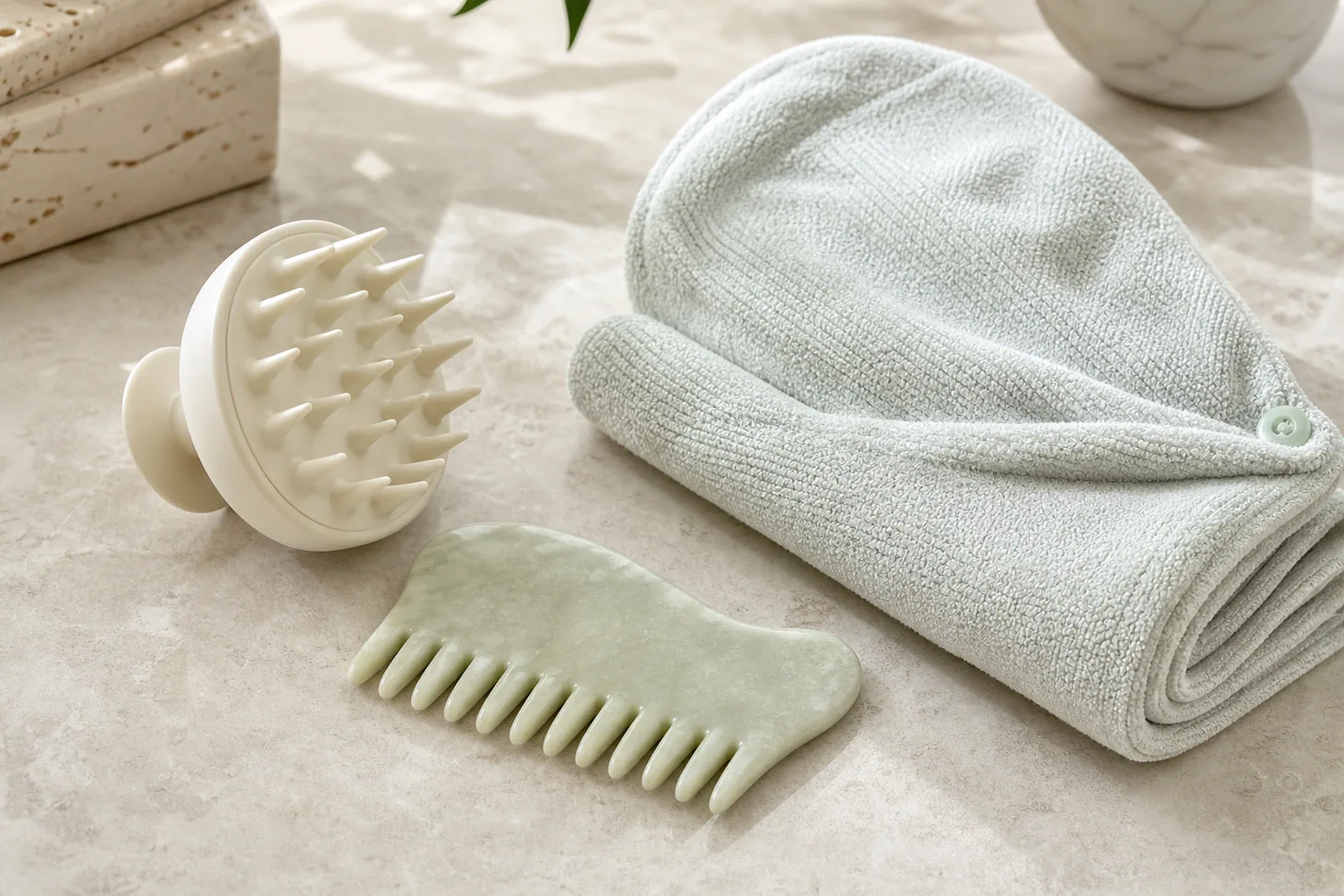
Aggressive brushing or scalp massage devices marketed to "stimulate" thickness. Over-manipulation breaks fragile fine strands faster than it helps; gentleness protects far more hair than vigor ever adds.
When to see a dermatologist
One cause worth naming before you go, because it's the most common hormonal driver in younger women and it's routinely missed: PCOS and hair loss on fine hair.
Lifelong fine hair is a hair type, not a medical problem — but a genuine change in how much hair you have is worth a professional look, and the earlier the better, because most causes of thinning are far more treatable early.
Book a board-certified dermatologist if you notice your part widening or scalp becoming more visible over months, your ponytail measurably slimming compared with your own past, shedding that stays elevated well beyond your normal for more than a few weeks, or thinning that arrives with scalp symptoms like itching, burning, redness, or flaking.
Sudden, patchy, or clumping loss deserves a prompt visit rather than a wait-and-see. If you're not sure whether what you're seeing is fineness or an actual drop in density, our guide to telling fine hair from thinning — and the specific patterns of thinning on top of fine hair — will help you decide whether this is a styling question or a medical one.
When it's medical, a dermatologist can identify the cause and match the treatment to it, which is something no product aisle can do. It's worth knowing what that appointment can usefully cover before you go: which blood tests actually matter for hair loss sets out the short list, why a "normal" ferritin can still be the answer, and the one thing to stop taking 48 hours beforehand.
Worth reviewing your prescriptions before you go, too — medications that cause hair shedding covers the two-to-four-month lag that makes the trigger so easy to miss. And if your worry is length rather than density, that's a separate question with separate arithmetic — why fine hair won't grow long.
The realistic bottom line — and the cosmetic route
So: can you grow fine hair thicker? You can't widen the strands you were born with, and it's kinder to yourself to stop chasing that. What you absolutely can do is keep more of your hair, healthier, for longer — by handling it gently so it stops breaking, looking after your scalp, correcting any real deficiency a doctor finds, and, if you're truly thinning, exploring evidence-based treatment under medical guidance.
That's the honest ceiling, and it's a genuinely useful one. What that last option actually contains — PRP, microneedling, laser caps, and the prescription tier — is set out in what a dermatologist can actually do, ranked by evidence per dollar, because in this field the cost and the evidence do not run in the same direction.
Then there's the cosmetic route, which is not a consolation prize — it's often the fastest win of all. The right cut leaves weight where fine hair needs it, and root-first styling creates real, visible fullness the same afternoon.
If your density is stable and you simply want fuller-looking hair, that's a styling project, and it's the entire subject of how to add volume to thin hair. Protect what you grow, treat what's genuinely treatable, and style the rest with the volume tools that actually work — that's the whole honest playbook.
FAQ
You can't meaningfully change the diameter of the fine strands you already have — strand width is set mostly by genetics, age, and hormones. What you can change is how much of that hair survives to full length (by minimizing breakage), how healthy the scalp it grows from is, and, in some cases, how many strands are actively growing. So "thicker" is partly out of your hands and partly within them: you protect and optimize rather than rebuild the strand from scratch.
Only if you are genuinely biotin-deficient, which is uncommon in people eating a normal diet. For everyone else, biotin supplements have not been shown to thicken hair, and high doses can distort certain lab tests — including thyroid and cardiac markers — which can mask or mimic a medical problem. If your hair is changing, the more useful step is asking a doctor to check for real deficiencies like iron or vitamin D rather than megadosing biotin on spec. Do hair growth supplements actually work? covers the evidence and the lab-test problem in full.
If your hair was always fine, it was never thick, so there is no "again" — the individual strands are naturally narrow and will stay that way. If your hair used to feel fuller and has since thinned, that's a change in density (number of strands), not diameter, and it may be treatable depending on the cause. That's the important distinction: fine that has always been fine is a hair type, while hair that has genuinely thinned is worth a dermatologist's assessment.
Topical minoxidil is an over-the-counter treatment with real evidence for improving hair density in some people with pattern hair loss, and the American Academy of Dermatology lists it among first-line options. It doesn't change the genetic width of a fine strand, results vary from person to person, and it only works while you keep using it — stop, and the benefit fades over months. Because it's a treatment, not a cosmetic, it's worth discussing with a doctor or dermatologist before you start rather than self-prescribing.
The things with the best evidence are unglamorous: minimizing breakage so each strand reaches its full length and thickness, keeping the scalp healthy, correcting any real nutritional deficiency a doctor identifies, and — for pattern thinning — evidence-based treatment such as topical minoxidil under medical guidance. Fine hair grows at the same rate as any other hair; the lever you control isn't speed, it's how much of what you grow you manage to keep.
Correcting a true deficiency — iron and vitamin D are the common culprits — can help hair that thinned because of it, and that's a real, worthwhile fix. But taking supplements when your levels are already normal doesn't add thickness; extra nutrients past what the follicle needs don't build a wider strand. The honest path is to ask a doctor to test rather than guess, because "hair growth" supplement blends are mostly marketing when there's no deficiency to correct.
Fourteen years in hair — eight behind the chair, six in editorial — with a focus on scalp health and the science of fine, flat-prone hair. Megan reviews product formulas the way she'd read a label for her own clients: weight first.
This article is for general education and is not medical advice. If you are experiencing sudden or patchy hair loss, scalp pain, or other concerning symptoms, see a board-certified dermatologist.
Images in this article are AI-generated illustrations, not photographs of real clients or results. See our image policy.
Results vary with hair type, density, and growth patterns. This guide is educational and not a substitute for an in-person consultation with a licensed stylist.
Get the good hair intel
One honest, stylist-written guide in your inbox each week. No hype.

 MH
MH