Reviewed by Tara Sullivan · Updated July 2026 · 8 min read
In your 40s the job of a short cut is different: it should look modern and put-together, give fine hair the fullness it lacks, and fit a life that doesn't leave much time for hair. You've likely still got decent density — this isn't a thinning story yet — so the goal is a fresh, current shape with built-in texture, not a set-and-curl.
A short, textured cut removes the weight that drags fine hair flat, lifts it at the root, and reads full while taking five minutes on a work-and-school morning. Below are 16 salon-tested short cuts for fine hair over 40, grouped by mood and how you live, each with who it suits and the exact words to bring your stylist.
Chair-side note
The clients I see in their 40s almost all say a version of the same thing: "I want to look pulled-together, but I have zero time." That's exactly the brief a short, textured cut is built for. Long fine hair asks you to work for its volume every single morning; a good short shape gives you fullness for free, straight out of the shower.
The trick at this age is keeping it modern and undone — think lived-in texture and a soft, air-dried finish, not a smooth rounded blow-dry that tips into "mumsy." I cut point-cut texture through the ends, keep a clean weight line so nothing looks stringy, and shape it to move the part for instant root lift. Short doesn't mean fussy anymore. Done right, it's the freshest, lowest-effort thing you can do with fine hair.
SB
— Simone Baptiste, Senior Stylist
Why a short cut works for fine hair in your 40s
Fine hair has thinner individual strands, so length works against it: the longer it gets, the more its own weight pulls it down flat against the head, and the flatter it lies, the thinner it looks. Cutting it shorter removes that weight so the hair can lift at the root and swing — which the eye reads as fullness.
Point-cut texture through the ends adds separation and movement that makes fine hair look denser than it is. And a short shape is genuinely low-upkeep, which is the whole point in a decade packed with work and family: the cut does the styling for you.
It helps to know exactly what you're working with — our guide to fine versus thin hair explains the difference between strand thickness and overall density, which changes how a cut is built. If you've noticed a bit more shedding or your part widening slightly, that's often just a first, subtle shift rather than real thinning; if it worries you, our honest look at fine hair or thinning is worth a read before you decide.
Modern short bobs & lobs
The most versatile ground in your 40s: short enough to lift fine hair, long enough to feel fashion-forward and flexible. These six are the current-feeling shapes I reach for most. For the whole-decade picture rather than the short lengths alone, see fine hair over 40.
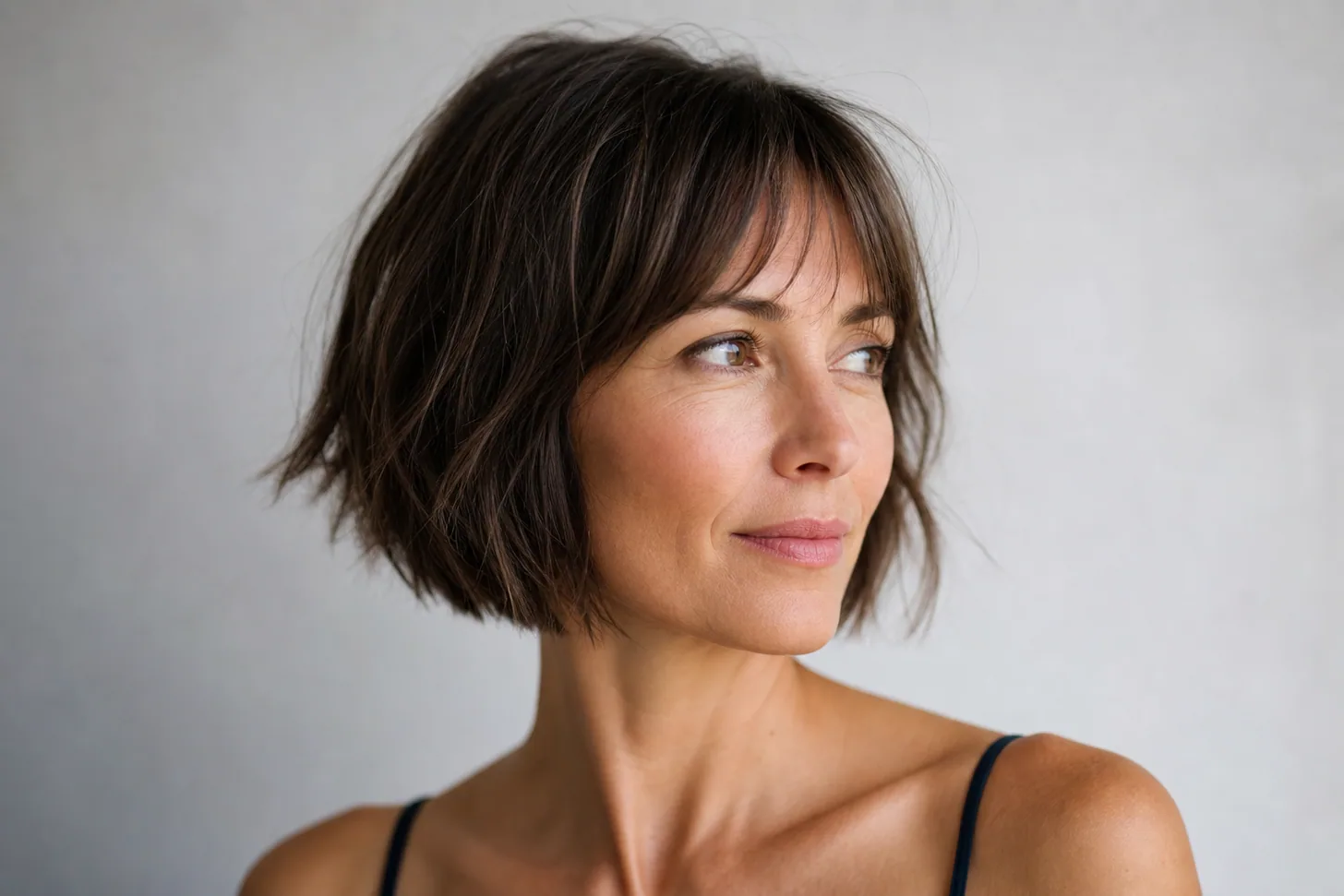
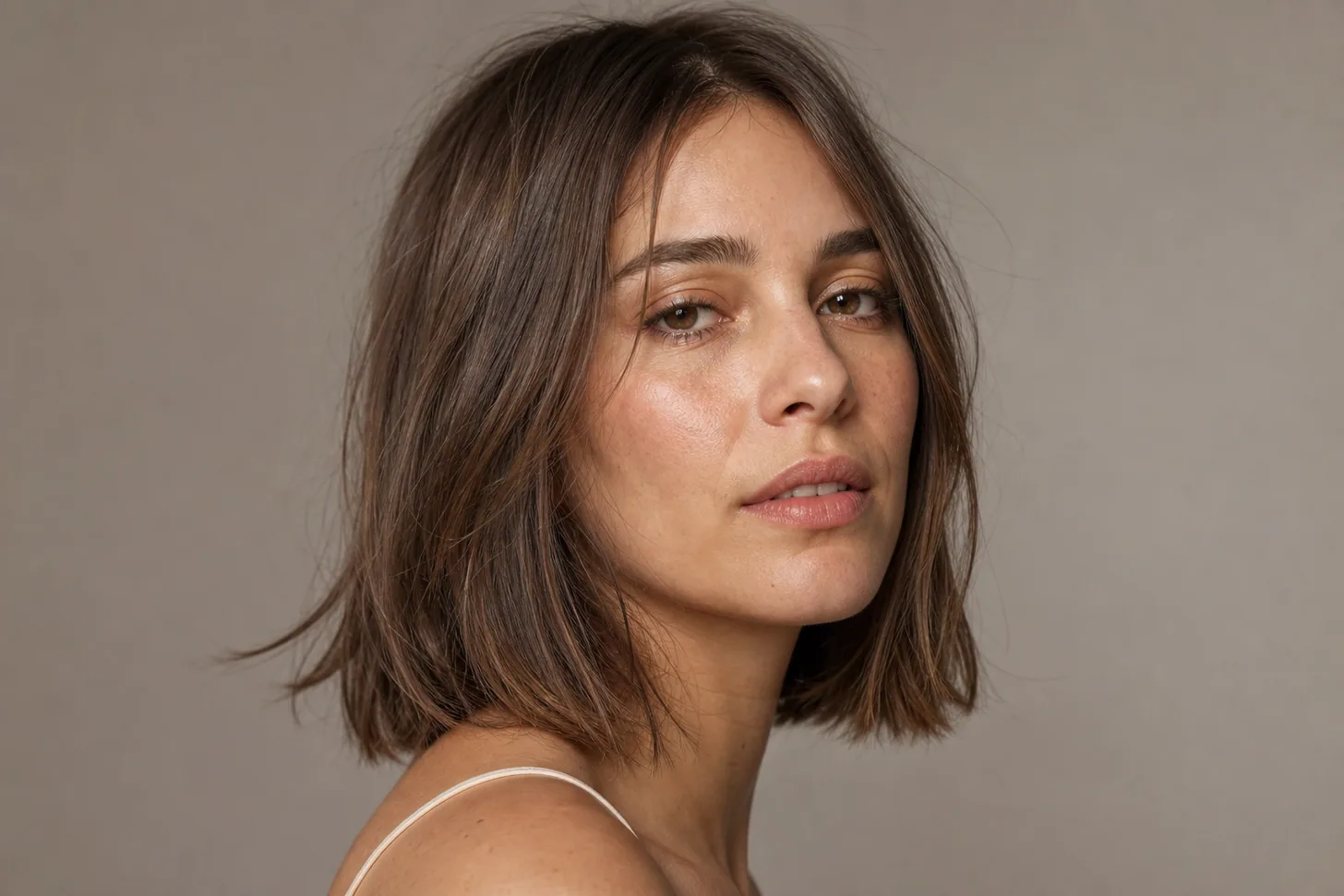
chin-length French bob with soft undone texture and a slight tuck on fine glossy brunette hair, woman in her 40s
1
The French bob
The cut of the moment for fine hair — a chin-grazing bob worn a little undone, with the ends kept dense so the perimeter looks full. It's effortlessly chic without trying, and short enough to lift fine hair at the root. See our full guide to the French bob for fine hair for the exact length and finish that suits you.
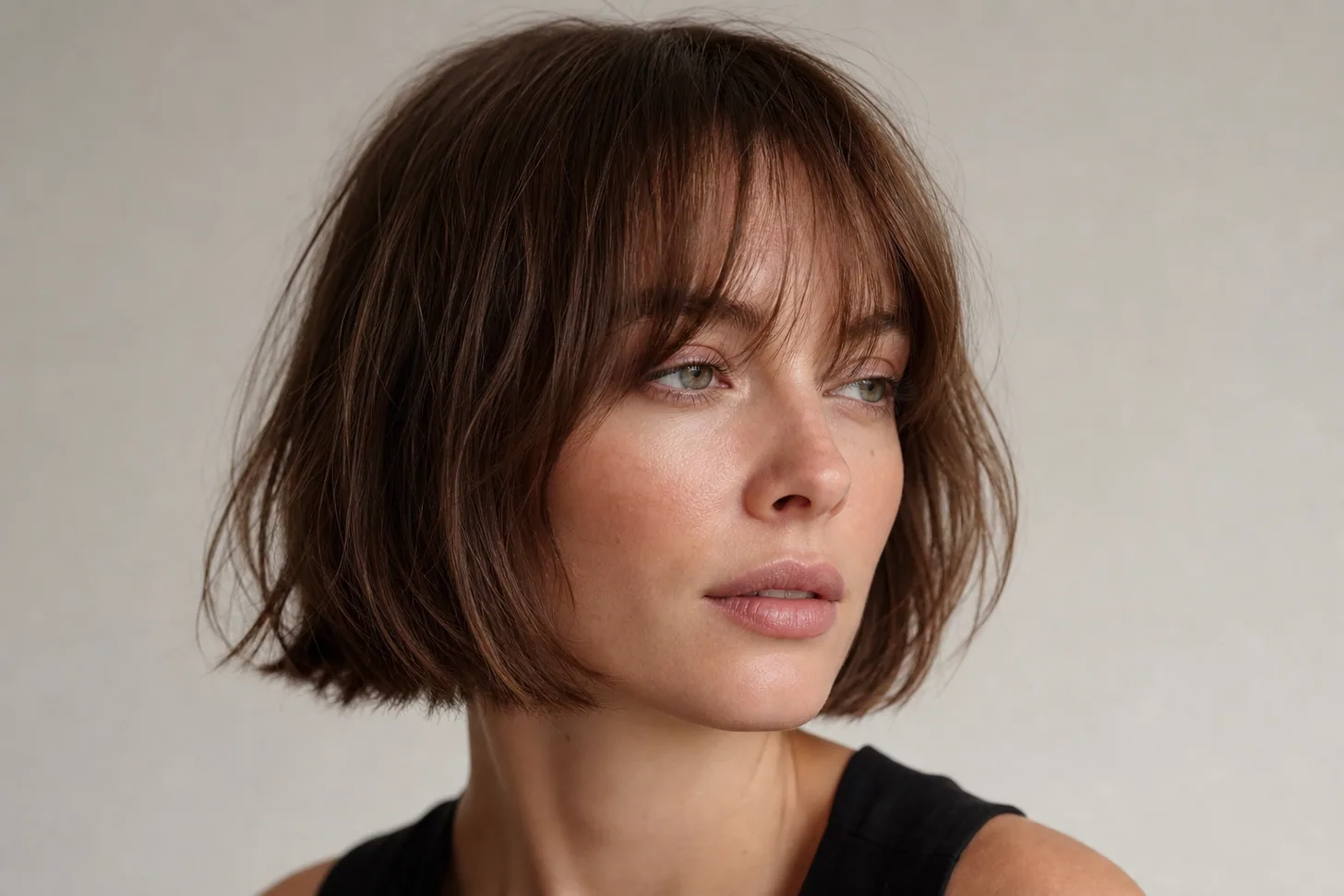
blunt jaw-length bob with heavy dense ends and a glassy finish on fine blonde hair, woman in her 40s
2
Blunt jaw bob with dense ends
Cut to one clean length at the jaw, this blunt bob keeps every strand of weight at the ends, which is exactly where fine hair benefits from looking thick. The strong line is modern and polished. Best if your density is still even and you want a sharp, put-together shape.
choppy textured bob with piece-y ends and lots of movement on fine auburn hair, woman in her 40s
3
Textured choppy bob
A bob broken up with point-cut texture so the ends fall in separated, piece-y sections rather than a solid block. That separation is what makes fine hair read as full and gives the cut its cool, undone edge. Rough-dry it, scrunch in a little texture spray, and it's done — the least fussy way to look current.
short collarbone lob with soft invisible layers and gentle bend on fine light-brown hair, woman in her 40s
4
Short lob with soft layers
If you're not ready to go truly short, a lob just above the collarbone with a few soft, invisible layers keeps length while stopping fine hair from hanging limp. The layers add movement without thinning the ends. It's the gentlest step toward short — flexible enough to tuck, half-up, or wear down. More options in our lob for fine hair guide.
angled A-line bob shorter at the back and longer at the front on fine dark-brown hair, woman in her 40s
5
Angled A-line bob
Graduated shorter at the back and longer toward the face, the A-line builds a lifted, rounded shape at the crown while the longer front flatters the jaw. That back graduation adds height where fine hair falls flat. A sharp, architectural choice that still swings and moves.
chin bob with soft curtain bangs framing the face on fine honey-blonde hair, woman in her 40s
6
Chin bob with curtain bangs
A chin-length bob softened with curtain bangs that part in the middle and sweep back to frame the cheekbones. The fringe is light and see-through, so it flatters fine hair without demanding density, and it instantly modernizes the shape. The most face-flattering pick here for anyone who wants a fresh, fashion-forward update.
Easy pixies & crops with edge
For maximum lift and the fastest morning of all, go shorter. These five give fine hair real height at the crown and a bit of attitude.
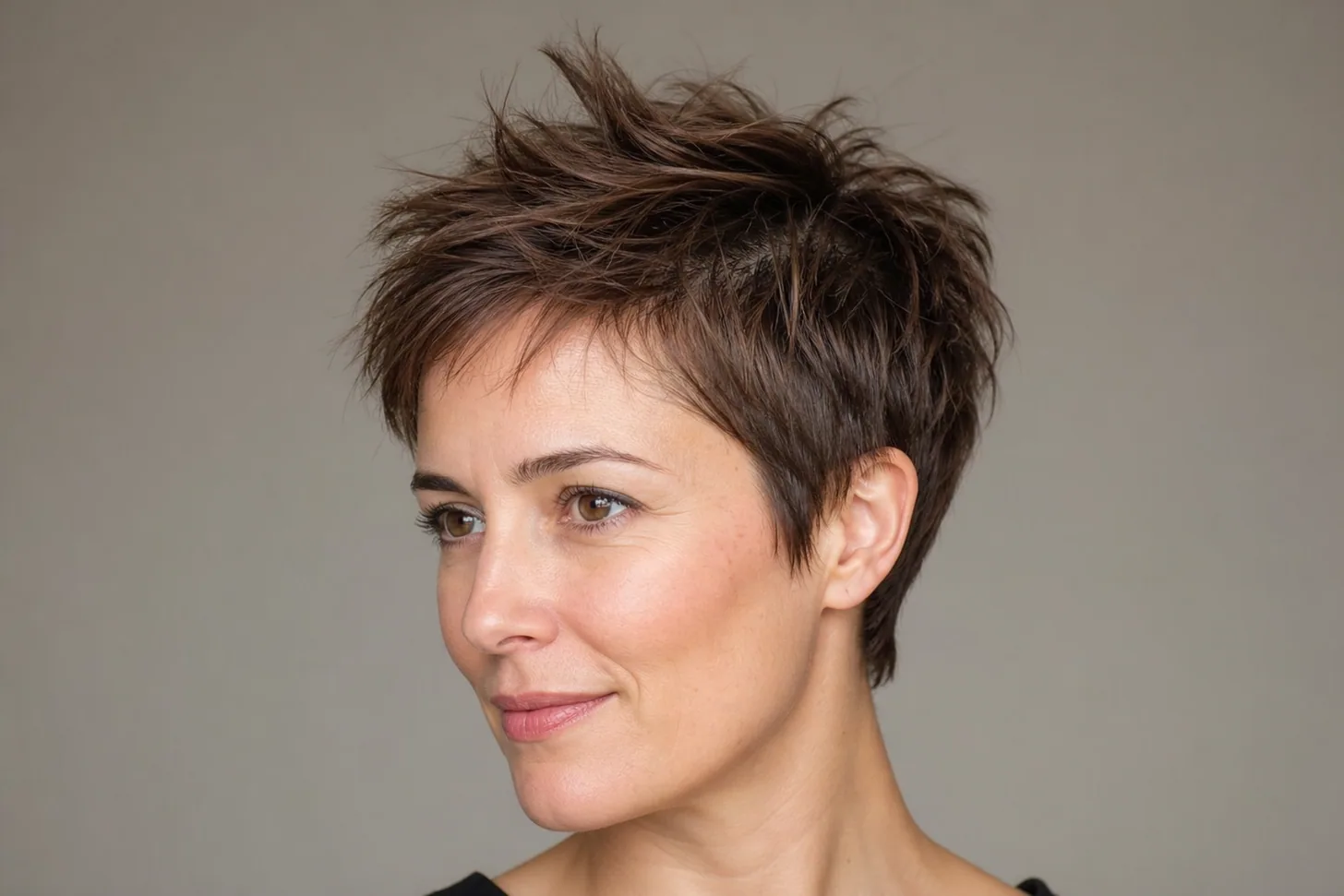
textured pixie with piece-y lifted crown and soft edges on fine chestnut hair, woman in her 40s
7
Textured pixie
Short all over with point-cut texture on top for height and separation, this is the pixie that looks fresh rather than severe. It lifts fine hair right off the crown, where volume matters most, and needs only a dab of paste to finish. Our pixie guide for fine hair walks through the length and layering that suit your face.
grown-out long pixie with longer top and tapered sides on fine ash-blonde hair, woman in her 40s
8
Long, grown-out pixie
A softer pixie with extra length left on top, so you can sweep and style it rather than wear it cropped close. It's the easiest short cut to live with because it grows out gracefully and gives you more to play with. A great first step if you're nervous about going really short.
side-swept pixie with a deep side part and diagonal sweep on fine warm-brown hair, woman in her 40s
9
Side-swept pixie
Worn with a deep side part so the top sweeps across on a diagonal, adding a flattering line and extra root height on the fuller side. The sweep softens the face and reads glamorous rather than boyish. Ideal if you love a pixie but want a touch more polish and movement.
choppy wash-and-go crop with undone separated texture on fine dark-blonde hair, woman in her 40s
10
Choppy wash-and-go crop
Cut to look good the second it air-dries — piece-y, undone, and genuinely no-effort. The choppy texture builds separation that reads as volume, so fine hair looks full with nothing but a scrunch of product. This is the cut for the busiest mornings, when styling simply isn't happening.
bixie blending a bob and a pixie with textured nape and lifted top on fine espresso-brown hair, woman in her 40s
11
The bixie
The bob-pixie hybrid — a little longer and more feminine than a pixie, a little shorter and edgier than a bob. It gives crown lift with softness around the face, so fine hair looks full without the commitment of a true crop. See our bixie for fine hair guide for the shape in detail; it's the fashion-forward middle ground.
Low-effort short cuts for a no-time morning
When the alarm goes and there's a school run before work, these five are built to look full on air-dry alone — the shapes that forgive a skipped styling session. If short turns out not to be the answer, the same decade’s mid-lengths are in medium-length cuts for fine hair over 40.
air-dry textured bob with natural bend and root lift on fine mid-brown hair, woman in her 40s
12
Air-dry textured bob
A bob cut specifically to be worn air-dried, with just enough internal texture to fall into a natural bend as it dries. No round brush, no heat — a little mousse in damp hair and let it do its thing. The most realistic short cut for anyone who genuinely never blow-dries. Pairs well with our low-maintenance cuts approach.
simple wash-and-go crop with a rounded natural finish on fine light-auburn hair, woman in her 40s
13
Wash-and-go crop
The lowest-maintenance shape on the list — short, simply cut, and finished with fingers rather than tools. Because there's so little hair, it dries fast and holds its shape on its own. If your ideal morning routine is "wash, shake, leave," this is your cut.
short lob cut to tuck cleanly behind the ears on fine caramel-brown hair, woman in her 40s
14
Tuck-behind-the-ear lob
A short lob cut so the sides sit neatly tucked behind the ears — one quick move and you're done, hair off your face for the day. Tucked it's sleek and practical; loose it frames. Two easy looks from one cut, and no styling required for either. A smart, flexible pick for a hands-on decade.
short cut worn with a deep side part sweeping over for root volume on fine golden-brown hair, woman in her 40s
15
Side-parted volume cut
A short shape designed around a deep side part, so the fuller side sweeps over for instant root height with zero product. Simply switching from a center to a side part is the fastest volume trick there is on fine hair. The most effortless way here to fake density on a rushed morning.
undone wavy short bob with soft tousled bends on fine sandy-blonde hair, woman in her 40s
16
Undone wavy bob
A short bob worn with a soft, tousled wave — scrunched in as it air-dries or set with a quick twist of a wand if you have five spare minutes. The bends add body and disguise fine hair's flatness beautifully. It looks styled without being high-maintenance, which is the whole 40s brief in one cut.
The five-minute routine that keeps a short cut full
A well-cut short shape does most of the work, but a couple of habits keep fine hair looking its fullest without stealing your morning. Start on damp hair and work a little root lifter or a lightweight mousse into the roots at the crown — that's where you want the height, so keep heavier product off the ends.
Then either rough-dry with your fingers for two minutes with your head tipped forward, or scrunch and air-dry if you're truly pressed for time; both lift the roots far better than smoothing everything down with a round brush, which flattens fine hair and tips the look toward matronly.
Break up the ends with a pinch of texture paste or a mist of texture spray so it reads piece-y and undone, and move your part off-center for instant root volume. Skip heavy oils and serums entirely — they weigh fine hair down. When it goes flat by mid-afternoon, a quick shot of dry shampoo at the roots revives the lift without a rewash. For more on building body into fine hair, see our tips on adding volume.
Chair-side note
Here's the single habit that separates a fresh short cut from a flat one: rough-dry, then texture. Most people either blow-dry smooth and round — which flattens fine hair and ages the cut — or they skip drying entirely and let it fall limp.
The sweet spot is in between. Spend two minutes rough-drying the roots with just your fingers and the nozzle, head tipped forward, until the roots are dry and lifted but the ends are still a touch damp.
Then work a small amount of texture paste or spray through the mid-lengths and ends and scrunch. That order matters: dry roots give you height, textured ends give you the piece-y, undone finish that makes fine hair look full and current. It's genuinely five minutes, and it's the difference between "did my hair" and "have great hair."
SB
— Simone Baptiste, Senior Stylist
What to ask your stylist
Bring a photo, but bring your priorities too — how the cut lives day to day matters as much as the shape. Say: "I have fine hair and I want a short cut that looks full and modern, not set or mumsy. Please add point-cut texture through the ends for separation rather than a heavy blunt weight line — unless my density can support it — and build a little lift at my crown."
If mornings are tight, add: "I want it to air-dry or rough-dry well, because I don't have time for a full blowout." And if you want it to feel current: "Keep it undone and piece-y rather than smooth and rounded."
A good stylist will translate that into the right length and layering for your face and density — and those few sentences are what get you a cut you'll actually enjoy every day. Explore more shapes across our haircuts hub if you're still deciding.
When a short cut isn't the move
You love tying your hair back for the gym, work, or the school run. A short cut removes that option; a lob or collarbone length keeps the ponytail while still lifting fine hair.
Your hair is very fine and you really want length. Going short isn't the only path to fullness — soft layers and volume techniques on longer hair can work; see our guide to short styles for fine hair to weigh it up.
You have a strong cowlick at the crown or hairline. A very short crop can make it stand up; a slightly longer bob or a cut worked around the cowlick behaves far better.
You're heat-styling-averse but want a sleek, blunt bob. A glassy blunt bob needs a blowout to look its best — if you won't blow-dry, choose a textured, air-dry shape instead.
In a different decade? See short cuts for fine hair over 50, or our broader guide to mature fine hair for how the priorities shift as density changes.
FAQ
The best short cut in your 40s is one that looks modern and put-together but takes five minutes, and for fine hair that usually means a French bob or a textured, choppy bob. Both remove the weight that drags fine hair flat and add point-cut texture that reads as fullness, while still looking current rather than styled-and-set. If you want to go shorter, an easy textured pixie or a bixie gives even more crown lift with almost no upkeep. The real answer depends on your face shape and how much time you have in the morning — but the winning formula is short, textured, and low-fuss.
Yes. Length adds weight, and on fine hair that weight pulls the hair down flat against the head so it looks thinner than it is. Cutting it shorter removes that drag so the hair can lift at the root and swing, which the eye reads as more density. Point-cut texture through the ends adds separation and movement that makes fine hair look fuller still. A blunt weight line at the perimeter also helps by keeping the ends dense. The effect is immediate — a good short cut can make fine hair look noticeably thicker the moment you leave the salon.
Not if it's cut in a modern shape. What reads as mumsy is a short cut that's over-set, too uniform, and styled smooth and round — think a tight, curled 'do rather than a haircut. A current short cut is the opposite: undone, textured, a little piece-y, worn air-dried or rough-dried rather than perfectly blown out. A French bob, a choppy lob, or a lived-in textured pixie all look fresh and fashion-forward. Ask your stylist specifically for texture and an undone finish, avoid a rounded blow-dry, and a short cut will look younger, not older.
Absolutely — bangs are one of the freshest updates for a short cut in your 40s, and curtain bangs are the easiest to wear with fine hair. They're soft and see-through rather than heavy, so they don't demand density fine hair doesn't have, and they frame the face and draw the eye up. A soft, wispy or side-swept fringe works too. What to avoid is a thick, blunt straight-across fringe, which needs more density than most fine hair can spare and can look sparse. Keep any fringe light and airy and it will flatter.
Let the cut and one product do the work. On damp hair, work a lightweight root lifter into the roots at the crown, then rough-dry with your fingers for two minutes with your head tipped forward, or scrunch and air-dry if you're really pressed. Break up the ends with a little texture spray or a pinch of paste so it looks piece-y and undone. Move your part off-center for instant root height. Skip heavy oils and serums, which flatten fine hair. A short cut is the lowest-effort way to look full — the shape holds even when your routine doesn't.
Both suit fine hair — it comes down to how short you want to go and how you like to wear it. A French bob keeps a little length at the chin, so you can tuck it, wear a bit of texture, and it feels versatile and fashion-forward while still being low-fuss. A pixie gives more crown lift and is even faster in the morning, but it's a bigger commitment and you lose the option to pull it back. If you want the modern-short look with room to change your mind, start with a French bob; if you love a true wash-and-go and want maximum lift, go pixie.
Eleven years behind the chair, specializing in short shapes and fine-hair texture. Simone believes the best haircut is the one you can style yourself in ten minutes.
Results vary with hair type, density, and growth patterns. This guide is educational and not a substitute for an in-person consultation with a licensed stylist.
Hairstyle images in this guide are AI-generated illustrations, not photos of real clients or results. See our image policy.
Get the good hair intel
One honest, stylist-written guide in your inbox each week. No hype.

 SB
SB