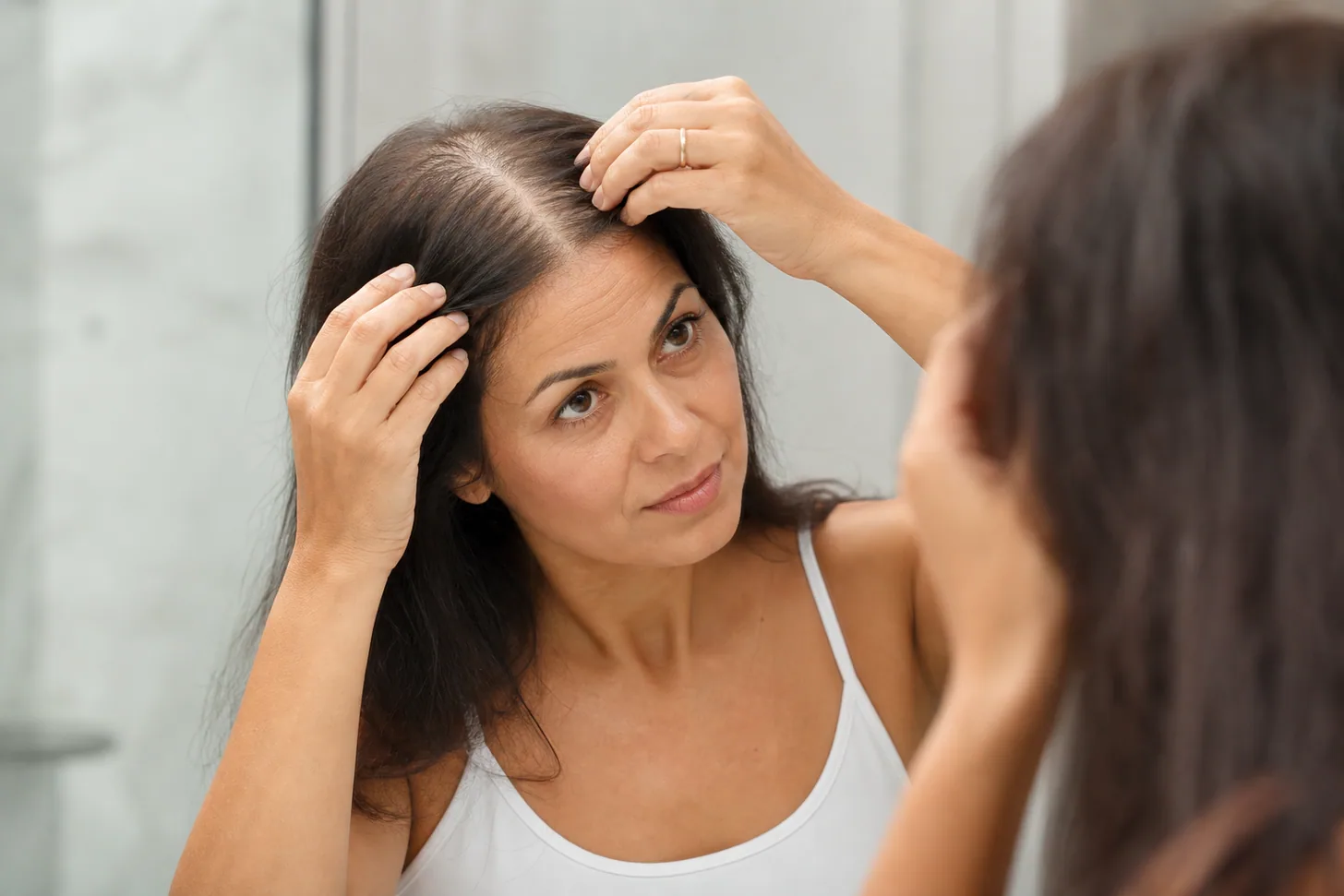
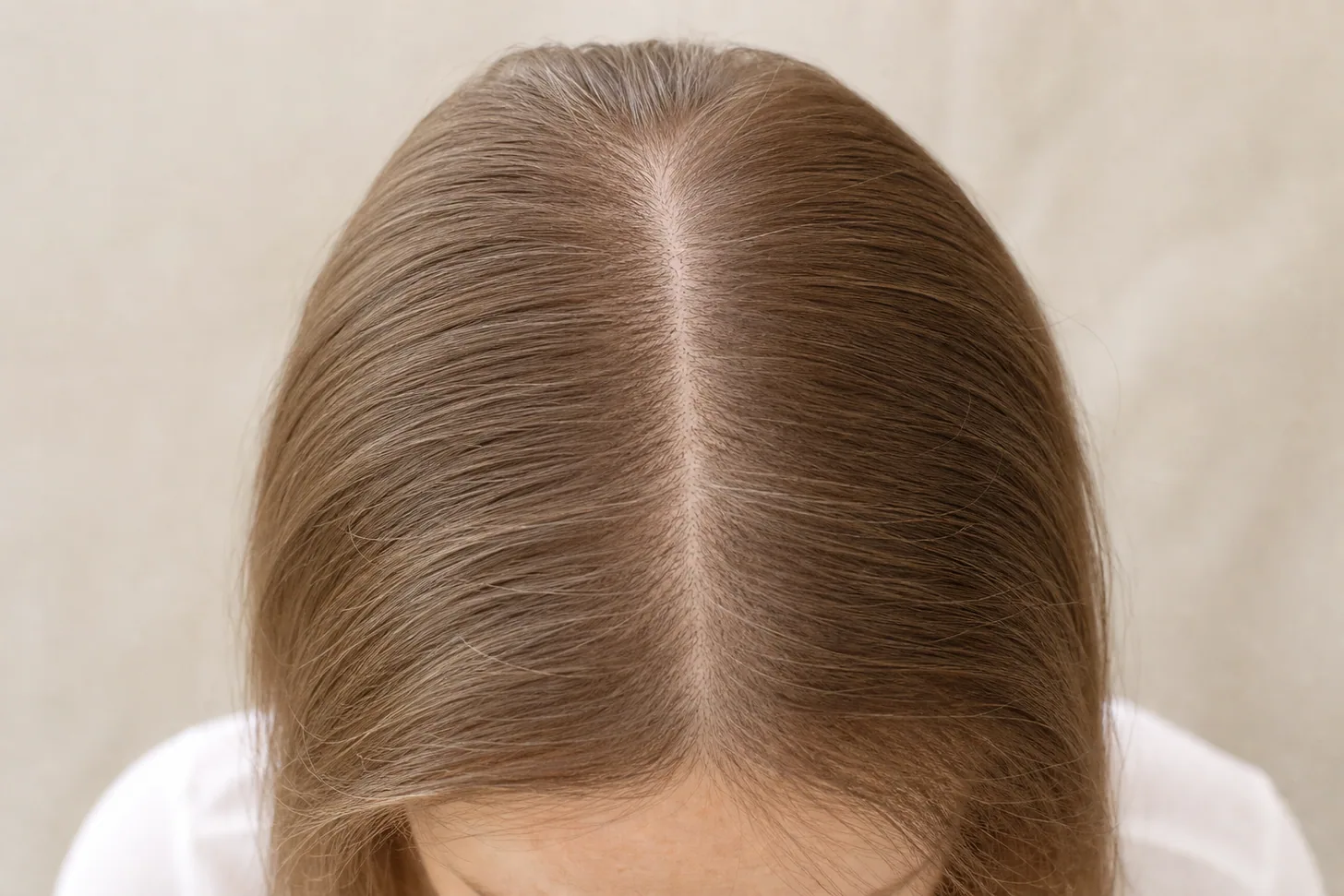
First: is it thinning, or normal shedding?
Everyone sheds every day, and the American Academy of Dermatology puts a normal day at 50 to 100 hairs. Long hair makes that look like a lot in the shower drain or the brush.
Thinning is different. It shows as more scalp: a wider part, a smaller ponytail, light shining through at the crown. If the hair in the drain has gone up but the part looks the same, you are probably shedding, not thinning.
Fine hair makes both look worse sooner, because each strand covers less scalp. Our guide to telling fine hair from thinning hair has three checks you can do at home in ten minutes.
Why is my hair thinning at 20? The common causes
Most thinning at this age comes from one of six causes. They are listed roughly from most to least common in the people who ask us, not from a study.
1. A shed from something that happened months ago
This is telogen effluvium: a stress on the body pushes many hairs into their resting phase at once. They fall out together 2 to 4 months after the trigger, which is why the cause is so easy to miss.
Common triggers in your teens and 20s are a high fever or bad illness, crash dieting, an exam season or a breakup, stopping the contraceptive pill, and some medications. The acne drug isotretinoin is a known one; see medications that cause hair loss.
The shed is spread over the whole head, and it usually settles by itself within six to nine months. Shedding after weight loss follows the same timeline.
2. Pattern hair loss starting early
Androgenetic alopecia, the inherited kind, can begin any time after puberty. In women it widens the part and thins the top while the hairline stays put. In men it starts at the temples, the crown or both.
It does not fall out in clumps. Each new hair grows back a little finer, so the change is slow and easy to doubt. This is the cause where starting early matters most.
3. Low iron, thyroid problems and other deficiencies
Low iron stores are common in young women, especially with heavy periods or a plant-based diet. An underactive or overactive thyroid can also cause shedding.
Both are found with a simple blood test and both get better with treatment. The blood tests worth asking for lists what to request.
4. Hormones, including PCOS
Polycystic ovary syndrome often first shows in the late teens and 20s. Thinning on top together with acne, irregular periods or new coarse facial hair is the pattern to mention to a doctor.
The full picture is in PCOS and hair loss on fine hair.
5. Hairstyles that pull
Tight ponytails, slicked-back buns, braids and heavy extensions pull on the same follicles every day. Over time that causes traction alopecia, usually at the temples and hairline.
The AAD's rule is simple: "If your hairstyle feels painful, the style is too tight." Caught early, it recovers. Left for years, it can become permanent, so thinning at the hairline is worth acting on.
6. Patches, not thinning
Round, smooth bald patches are usually alopecia areata, an autoimmune condition that often starts in childhood or the teens. Broken hairs in one area can also come from pulling hair without meaning to.
Both need a dermatologist rather than a wait-and-see approach. Neither is caused by anything you did wrong.
Hair thinning in your teens
Teen hair thinning has the same causes, in a different order. Sheds after illness or strict dieting, tight sports ponytails and alopecia areata patches are the usual reasons at 14 to 17.
Pattern hair loss can begin after puberty, more often in boys than girls. If you are under 18, see a doctor before buying any hair-loss treatment. Over-the-counter minoxidil is labelled for adults, and a doctor can check for the treatable causes first.
A sudden shed in a teenager who is eating very little deserves attention for its own sake, not just the hair's. If that is you, please talk to a parent, a school nurse or a doctor.
Hair thinning in your 20s: women and men
For women in their 20s, the usual answers are a shed after a trigger, low iron, coming off the pill, PCOS or early pattern loss. A wider part with a normal hairline points toward pattern loss; a thinner ponytail all over points toward a shed.
For men in their 20s, temples moving back and a thinner crown are usually pattern hair loss. It is common and very treatable when started early. Haircuts for thinning hair in men covers the cosmetic side.
The timeline tells you which one it is
Timing separates the causes better than looking in the mirror. Ask yourself two questions: when did it start, and what happened three months before that?
- Sudden, all over, with lots of hair in the drain: most likely a shed. Look back two to four months for a trigger.
- Slow, over a year or more, mostly on top: most likely pattern hair loss. The hair in the drain may look normal.
- At the temples or along the hairline only: think about tight styles first, then pattern loss in men.
- Round patches: see a dermatologist.
A shed can also uncover pattern loss that was already starting. If the part never goes back to its old width after the shedding stops, get it checked. Diffuse thinning on fine hair explains how the two overlap.
What to do this month
- Photograph your part in the same light, same spot, once a month. Memory is unreliable; photos are not.
- Write down the last six months: illnesses, diets, new medications, stopping the pill, big stresses.
- Book a GP or dermatologist appointment and ask about iron stores (ferritin), thyroid and, for women with other symptoms, hormones.
- Pause biotin before the blood test. It can distort some lab results, including thyroid tests.
- Loosen any tight daily style and rotate where your ponytail sits.
If it is pattern hair loss, early treatment matters. The AAD notes that "Treatment delivers the best results when started at the first sign of hair loss". The options and their evidence are in hair loss treatments for fine hair.
Making thin hair look fuller in the meantime
While you wait for answers, the cosmetic side is fully in your control. A blunt cut keeps the ends looking thick, and moving your part a centimetre hides a widening line.
A tinted scalp concealer softens the contrast at the part in a minute. For cuts, see haircuts for thinning hair in women, and for lift, root volume for fine hair.

 MH
MH