Reviewed by Tara Sullivan · Updated July 2026 · 8 min read
Yes, you can build real volume in fine hair without a single hot tool. The trick is to set the shape while the hair dries and lock the root, not the ends — a fine strand takes whatever position it dries in, so if it dries braided, rolled, or clipped up off the scalp, that's where it stays until the next wet or humid day.
Below are eight heatless methods, grouped by how much time they take, each with what it actually delivers on fine hair, how long it holds, and one honest limitation.
Chair-side note
My favorite five-minute trick for fine hair isn't a product — it's a couple of large Velcro rollers dropped into the crown while I do my makeup. By the time my face is done, the roots have set standing up, and I pull the rollers out to lift, not a curl.
Clients are always surprised it needs no heat and no skill. The one rule: your hair has to be nearly dry when the rollers go in, not wet. Roll wet fine hair and it dries slowly, unevenly, and drops the moment you free it.
SB
— Simone Baptiste, Senior Stylist
Why heatless volume works on fine hair
Hair holds a temporary shape because water breaks the weak hydrogen bonds inside each strand, and those bonds re-form as the hair dries — so hair that dries in a lifted or bent position sets there until it gets wet or humid again, a well-documented principle in hair science. A blow-dryer just speeds that drying up; the shaping is done by how the hair is held, not by the heat.
That's the whole reason a no-heat set works — and on fine hair it's more than a nice-to-have. Fine strands are fragile and show heat damage sooner, so styling that skips hot tools spares them the breakage that can end up looking like more thinning. The catch is that a fine strand has little stiffness of its own, so a heatless set holds best when you build it at the root and give it a little grip.
None of these build a cushion at the roots the way backcombing does — worth knowing if what you actually want is height rather than shape. This is also the method behind the hair-down brief that actually survives a wedding day, in bridesmaid hairstyles for fine hair.
The longer a set stays undisturbed, the more completely it dries and the longer it holds. These two run while you sleep, so they cost you no morning time — set on damp, not soaking, hair so it dries in place overnight.
1. Overnight braids and twists build a soft, heatless wave
What it is: the simplest overnight set — damp hair braided or twisted before bed, unraveled in the morning.
How: on towel-dried, evenly damp hair, work a little lightweight mousse through the lengths. For a soft, even wave use two or three loose braids; for more of a bend, twist sections into rope-like coils and pin them. Sleep, then unravel gently, tip your head over, and shake the wave out with your fingers.
On fine hair: the wave itself reads as texture and fullness, and the movement disguises how flat fine hair falls. Fewer, looser braids give a soft S-wave; many tight braids give a crimped, denser look.
How long it holds: a fully-dried overnight braid usually carries through a work day, longer with a texture spray.
The honest limitation: braids set a directional kink, not a rounded curl, and they add movement more than true root lift. Poker-straight fine hair will also drop the wave fastest in humidity.
fine hair in two loose overnight braids on damp hair before bed, soft and low-tension, no heat
2. Foam or fabric rollers set a rounder, all-over body overnight
What it is: soft rollers — foam, flexi-rods, or fabric strips — set on damp hair and slept on for rounded volume rather than a wave.
How: mist damp hair with a root lifter or light mousse, take sections about the width of the roller, and roll from the ends up toward the scalp, rolling up and over so the root lifts too. Soft rollers are comfortable enough to sleep on. In the morning, unroll each one gently downward and break the set up with your fingers, not a brush.
On fine hair: this is the method that builds actual body, not just texture — larger rollers give a soft, bouncy bend that fine hair holds far better than a tight curl. Roll the crown up and over for lift where fine hair falls flattest.
How long it holds: the strongest heatless hold of the group; a well-dried roller set often lasts into a second day.
The honest limitation: it takes 10–15 minutes to put in, and if the hair is too wet it won't dry through by morning and will drop as soon as you free it. Not every overnight method that circulates online survives contact with fine hair — which viral hair hacks actually work sorts the useful ones from the rest.
Get-ready-window methods: 20–40 minutes
Root clips belong in this group too, with one caveat worth knowing before you buy: the technique comes from curly hair, and on fine straight hair the lift holds for hours rather than all day.
No overnight commitment — these set while you do your makeup or eat breakfast, and target the crown, the only place root lift actually reads on fine hair.
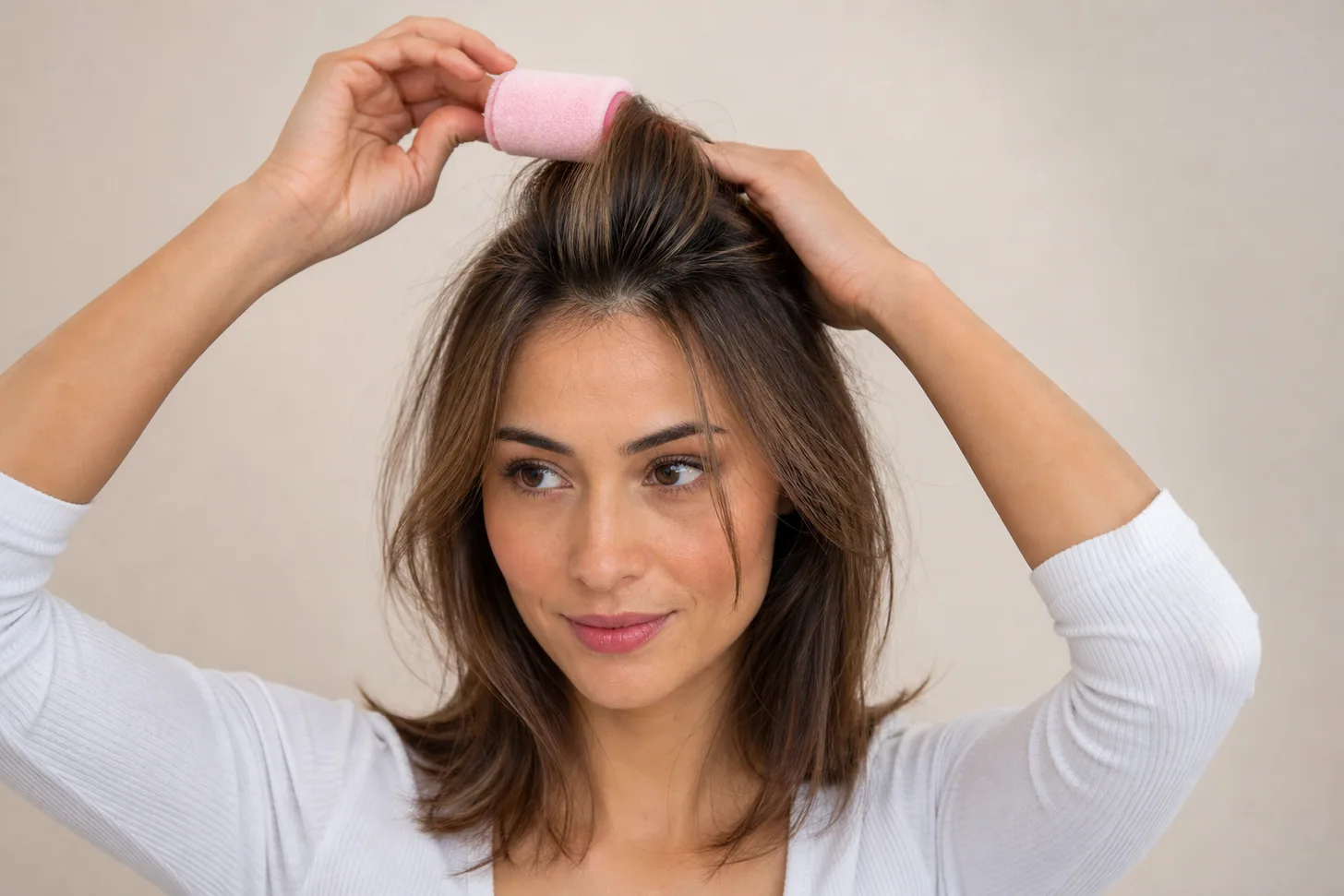
3. Velcro rollers at the crown lift the roots while you get ready
What it is: a few large self-grip Velcro rollers set into the crown for a fast, clip-free root lift.
How: on nearly-dry hair, take two or three horizontal sections across the crown, lift each straight up, and roll a large Velcro roller down to the root so the base stands away from the scalp. Leave them in 20–40 minutes while you get ready, then unwind gently and mist the roots with a texture spray.
On fine hair: the quickest genuine root lift with no heat and no skill — the self-grip does the work. It targets exactly where fine hair collapses.
How long it holds: several hours; better with a little grip product, since a bare fine strand slides back down.
The honest limitation: Velcro can snag and tangle very fine or fragile hair, so unwind slowly. Set them on wet hair and they simply won't hold.
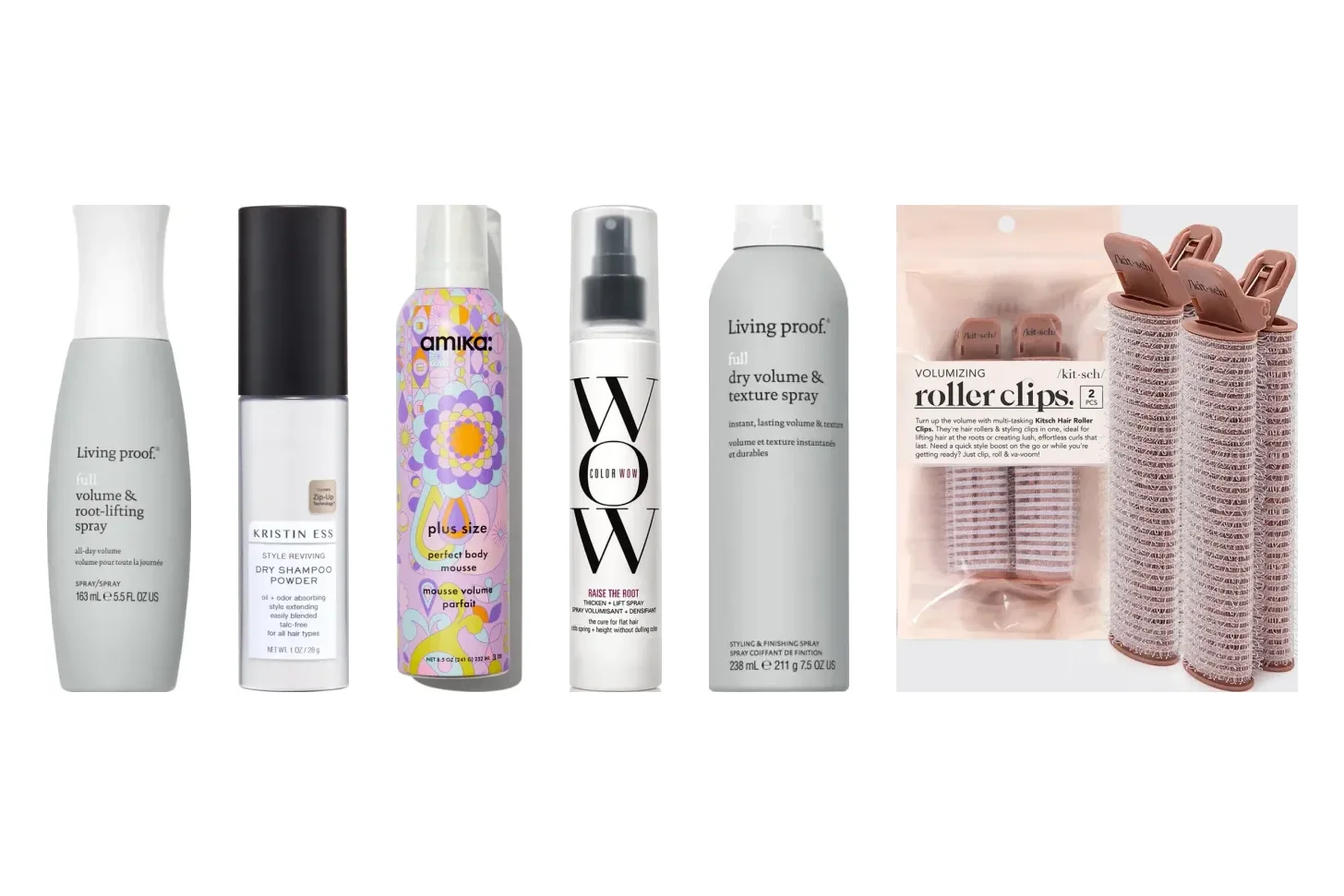
Which ones: larger, softer-hooked rollers snag fine hair far less than small aggressive ones — see our roller picks for fine hair, which also covers the hot and overnight versions.
three large Velcro rollers set into the crown of fine hair for root lift while getting ready, no hot tools
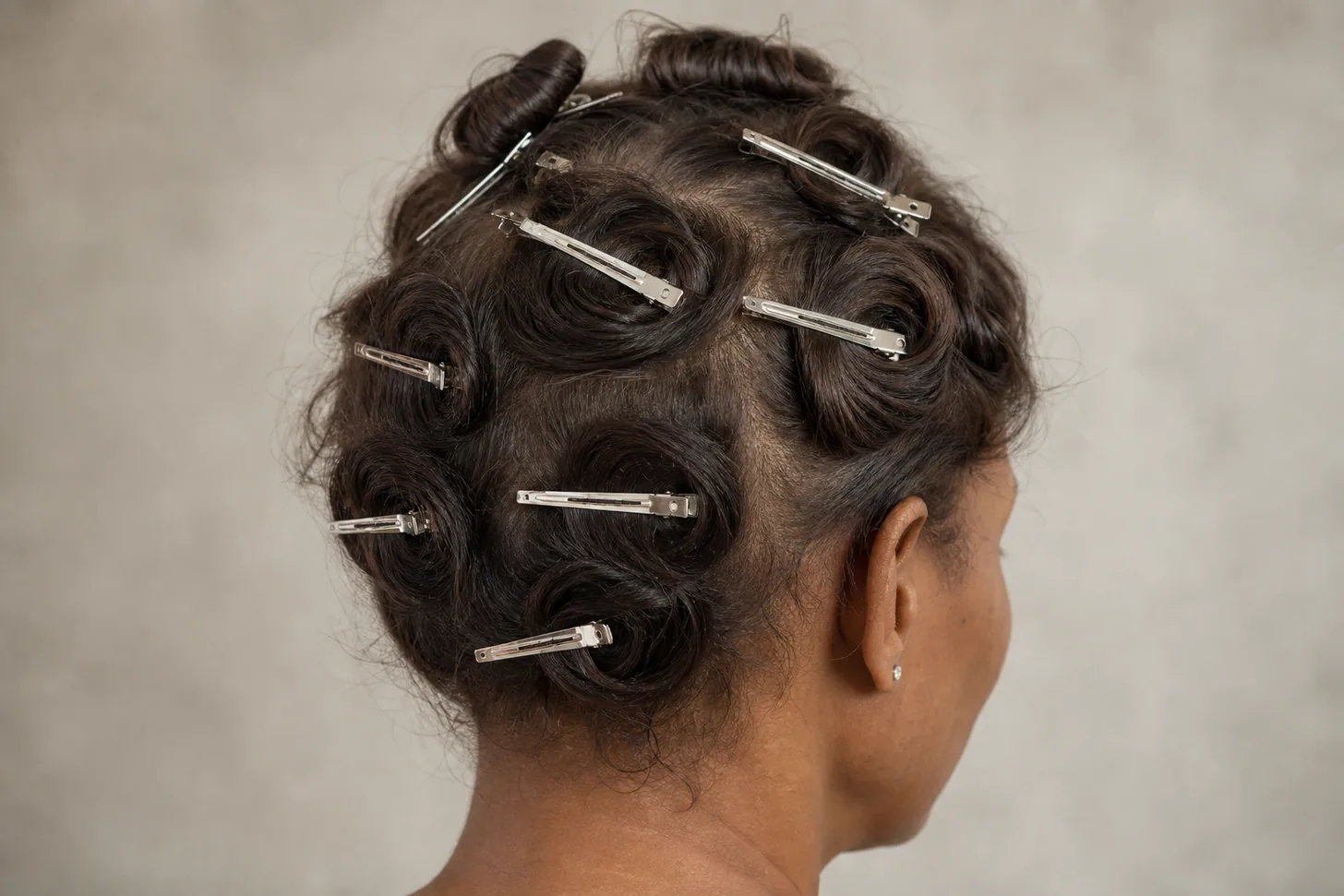
4. Duckbill clips at the crown build root volume as hair dries
What it is: root-clipping — flat duckbill clips holding the crown roots upright while the hair air-dries.
How: work a root lifter into damp roots at the crown, take small sections, lift each one straight up, and slide a duckbill or flat clip in flat against the scalp to pin the root standing up. Leave the clips in until the hair is completely dry, then remove them and tousle.
On fine hair: the gentlest lift here — no tension, no tearing, no heat — and it works passively while you do something else. A flipped-part version (clip the crown against its natural fall) adds even more lift.
How long it holds: a few hours of soft lift; pair it with a texture spray to extend it.
The honest limitation: it lifts the very root but doesn't add body through the lengths, and clip marks can show if you pin the hair too tightly or remove the clips before the roots are bone dry.
Chair-side note
A mistake I see constantly: braiding or rolling soaking-wet fine hair and expecting a soft wave. What you actually get is a sharp, crimpy kink — because at the root the hair is bent hard while it's most moldable, and it dries into that exact fold.
For a soft, brushed-out wave on fine hair, towel-dry and rough-dry to evenly damp first, then set. Damp sets soft; dripping sets sharp. The same rule saves a lot of "why does my braid-wave look like a zigzag" frustration.
SB
— Simone Baptiste, Senior Stylist
Air-dry & preserve methods
These shape the hair as it dries naturally — no rollers, no braids — and the last one protects whatever set you built so it survives the night. If you want the drying process itself rather than the setting methods, how to air-dry fine hair covers what's happening to the roots while the water leaves.
5. Plopping (the pineapple) sets fine waves without a diffuser
What it is: cupping wavy fine hair up into a soft cotton tee (plopping), or piling it loosely on top of the head (the pineapple), so it dries without the weight of the length pulling the wave and roots flat.
How: after a light mousse on soaking-wet-to-damp hair, flip your head forward and cradle the lengths into a flat cotton tee, wrapping it up and back. Leave 10–15 minutes to absorb water and set the shape — fine hair holds less water and reaches the set sooner than the half-hour curly guidance assumes, and every extra minute is time the roots spend pinned flat under the fabric.
Unwrap while the hair is still clearly damp, shake the roots out with your fingertips, then air-dry the rest of the way. For overnight, gather the hair into a high, loose pile secured with a silk scrunchie. Towel-drying and plopping fine hair has the full timing argument.
On fine hair: the single best air-dry move for fine, wavy or bendy hair — it stops gravity from dragging the wave out and keeps the roots from drying flat against the scalp.
How long it holds: a full day for wavy hair; it's setting a natural wave rather than forcing one.
The honest limitation: it only works on hair with some natural wave or bend. On poker-straight fine hair there's no wave to set, so it does little.
6. A root lifter plus air-dry gives soft body with zero heat
What it is: the lowest-effort method — a lightweight lifting product worked into damp roots, then air-dried head-down so the roots dry standing up.
How: on towel-dried, damp hair, work a small amount of lightweight root lifter or mousse into the roots only, concentrating on the crown. Flip your head forward and scrunch the roots with your fingers as they dry, or clip a couple of crown sections up. Let it dry fully before you touch the shape.
On fine hair: the product gives a fine strand the backbone it lacks, coating it so it dries stiffer and stands up — the closest thing to "volume from a bottle," as long as the product is genuinely lightweight.
How long it holds: a few hours of soft lift; not as firm as a set, but effortless and repeatable.
The honest limitation: anything heavy, creamy, or oily at the root does the opposite and flattens fine hair — weight is the enemy, however "volumizing" the label claims.
fine hair clipped up at the crown with flat duckbill clips to air-dry root volume, no heat
7. A deep side part and head-flip air-dry props the crown up
What it is: two free tricks — drying the hair with the roots trained upward, then setting a deep side part to hold the lift.
How: air-dry with your head hanging forward, or with your part flipped to the opposite side of where it naturally falls, so the roots have to stand up to cross over. Once dry, drop the part into a deep side part. The hair has to travel over the new part line to fall, which builds instant height at the crown.
On fine hair: the cheapest volume there is — no product, no tools — and a deep side part doubles as coverage for a widening part or a flat crown.
How long it holds: the part-swap lift lasts as long as you keep the part; the head-flip lift is soft and eases over a few hours.
The honest limitation: on its own it's a subtle lift, not dramatic volume. It works best stacked with a root lifter or a couple of crown rollers.
8. A silk pillowcase or scrunchie preserves the set overnight
What it is: not a volume method so much as a preservation one — silk cuts the friction that flattens fine hair and roughs up a set while you sleep.
How: sleep on a silk or satin pillowcase, and if you tie your hair up, use a silk scrunchie in a high, loose pineapple rather than a tight elastic. In the morning, tip your head over, shake the roots out, and refresh with a mist of texture spray.
On fine hair: fine hair is easily creased and flattened overnight; silk lets it slide instead of dragging, so yesterday's set survives and second-day hair looks intentional.
How long it holds: it extends whatever you already did — it can turn a one-day set into a two-day one.
The honest limitation: silk preserves volume, it doesn't create it. Start with a flat set and you'll wake up with a well-preserved flat set.
How to make heatless volume last
Three habits stretch any of these sets on fine hair. First, give the set grip: fine strands are slippery and slide back down, so a mist of texture spray at the roots after you take the rollers or braids out adds the friction that holds lift in place. Second, don't overwork it — take the set down gently, break it up with your fingers instead of a brush, and resist re-touching it through the day, because handling relaxes the shape.
Third, refresh rather than restart: when the afternoon flattens the crown, a quick pass of dry shampoo at the roots revives the lift and absorbs the oil that re-flattens fine hair, no rewetting required. The full day-two playbook is in reviving second-day fine hair. If you do want heat, the lowest-cost version on fine hair is a flat-iron bend rather than a barrel curl — see curling fine hair with a flat iron.
When heatless volume won't be enough
You have very fine hair and low density. An overnight set can drop out by mid-morning with no product to grip. Set on a light mousse or root lifter, not bare hair, or the lift won't take.
Your hair is poker-straight and it's humid. Straight fine hair drops a braid- or roller-wave within an hour once humidity re-relaxes the bonds you set. A cooled blow-dry holds firmer on days that matter — see the root-volume method, or the pin-cooling technique in how to curl fine hair so it holds. For a wave that lasts months rather than a morning, a gentle body wave or perm is the lasting version of the same set.
The flatness is really build-up, not a styling problem. If lift won't take even on clean-feeling hair, no set will fix a coated root — clarify first, then style. Here's why hair keeps falling flat.
You're noticing rapid or patchy thinning, not gradual fineness. Styling helps the look, but check the cause — read our honest guide to fine hair versus thin hair and speak to your doctor.
FAQ
Yes. Fine hair takes a heatless set for the same reason it takes a hot one: as the hair dries, the weak hydrogen bonds inside each strand re-form and lock in whatever shape it dried in. Set that shape while your hair is damp — braided, rolled, clipped up at the roots — and let it dry undisturbed, and you get real lift and movement with no hot tools. Heatless volume tends to hold a little less firmly than a cooled blow-dry on very fine hair, so a light root lifter and a texture spray for grip make the difference between a set that lasts the day and one that drops by lunch.
Set the shape on damp — not soaking — hair before bed and sleep on it. The three that work best on fine hair are loose braids or twists for a soft wave, foam or fabric rollers for rounded all-over body, and a high, loose pineapple to protect a wavy set. Work a little lightweight mousse or root lifter through damp hair first so the set has something to grip, and sleep on a silk pillowcase so friction doesn't rough it up. In the morning, unravel gently, tip your head over and shake it out, and lock it with a mist of texture spray.
They work very well — rollers are the most reliable heatless method for fine hair because they build rounded body, not just a wave. Velcro rollers set into nearly-dry crown roots for 20 to 40 minutes lift the root with no heat and no clips. Foam or fabric rollers set on damp hair overnight give a softer, all-over bend that suits fine hair better than a tight curl. The key is to let the set cool and dry completely before you take the rollers out, and to finish with a texture spray, because fine hair is slippery and a bare set slides back down.
Braids give you a wave and bends; rollers give you rounded volume and lift. On fine hair, braids are the easiest overnight option and read as texture and fullness, but they set a directional kink rather than a soft curl, and a tight braid on soaking-wet hair sets a sharp bend, not a wave. Rollers take a few more minutes to put in but build body at the root and a rounder shape that fine hair holds better. If your goal is beachy movement, braid; if it's lift and bounce, roll. Many fine-haired clients do best with a couple of rollers at the crown for lift plus braids through the lengths for wave.
On fine hair, expect most heatless sets to look their best for the first several hours and to soften over the day — a morning roller set or overnight braid usually carries through a work day, especially with a texture spray for grip. Overnight sets that dried fully and cooled in place hold longer than a quick get-ready-window set. The two things that shorten it are humidity, which relaxes the hydrogen bonds you set, and fine, slippery strands with no grip. A light product before the set and a silk pillowcase to preserve it overnight both stretch the hold.
It's gentler, which matters a lot on fine hair. Fine strands are more fragile and show heat damage sooner, so skipping hot tools protects them from breakage that can end up looking like more thinning. The trade-off is control: a cooled blow-dry still sets the firmest, longest-lasting root lift on very fine hair. The honest answer is to use heatless methods as your default — for the hair health alone — and keep the round brush for the days you need maximum, all-day volume. Neither is wrong; heatless is simply the kinder everyday choice.
Eleven years behind the chair, specializing in short shapes and fine-hair texture. Simone believes the best haircut is the one you can style yourself in ten minutes.
Results vary with hair type, density, and growth patterns. This guide is educational and not a substitute for an in-person consultation with a licensed stylist.
Images in this guide are AI-generated illustrations, not photos of real clients or results. See our image policy.
Get the good hair intel
One honest, stylist-written guide in your inbox each week. No hype.

 SB
SB