Reviewed by Tara Sullivan · Updated August 2026 · 10 min read
Search the wedge for fine hair and you'll be told, in the same breath, that the stacked back is what creates the fullness — and that the fix is to point-cut it into soft wisps so it doesn't look blocky.
Those instructions cancel each other out. A wedge is a weight cut: the stack at the back of the head is retained weight piled on itself, and that mass is the entire reason the silhouette reads full. Texturise it, thin the nape, slide-cut through the stack, and you haven't softened a wedge — you've removed the thing that made it one, and what's left is a shapeless short cut.
That single distinction is what decides whether this cut is the best short shape fine hair can have or a five-week regret. Below: how a wedge is actually built, why it suits fine hair specifically, 14 versions from the close-cropped classic to the longer wedge bob, the four words to refuse in the chair, and the honest maintenance number.
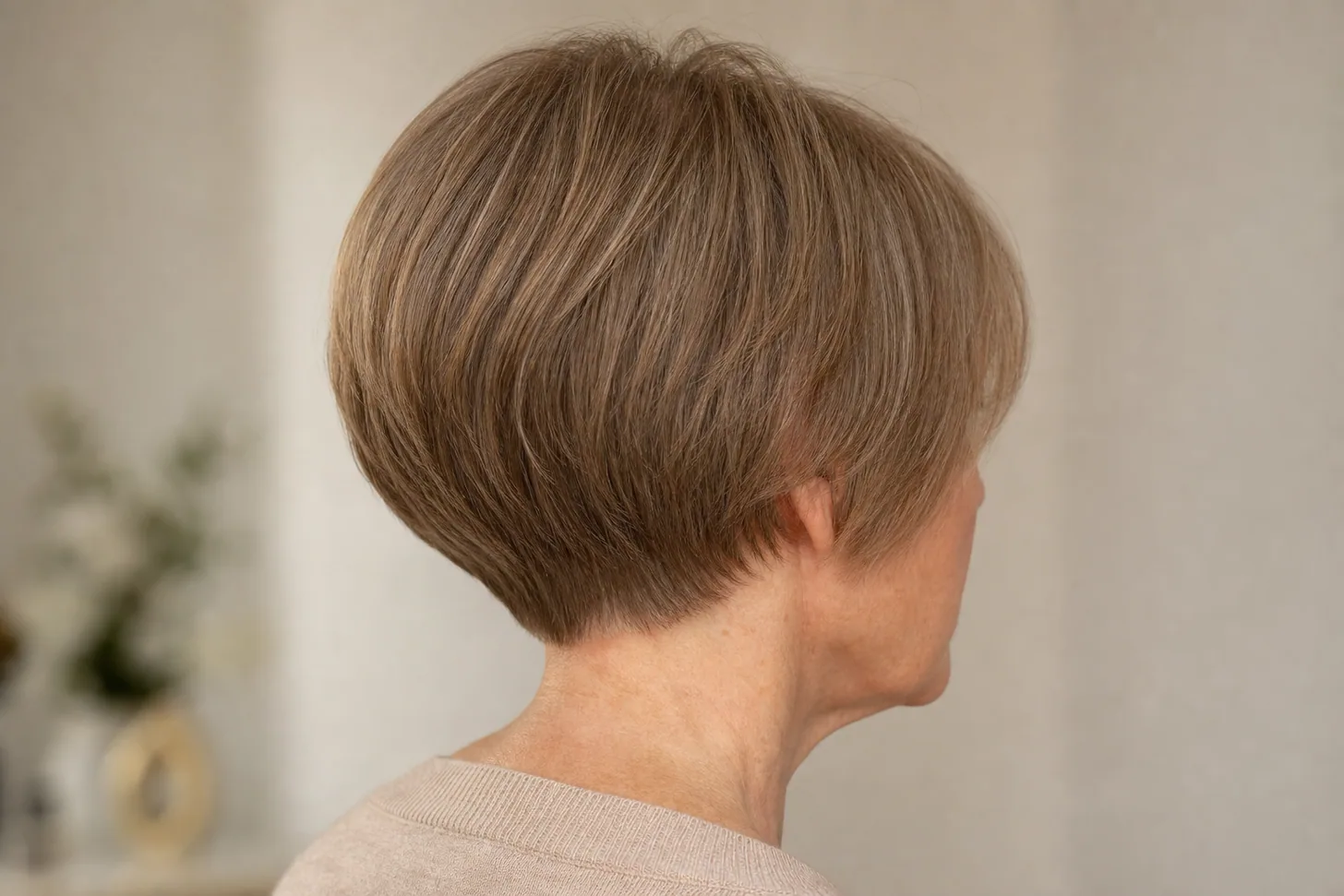
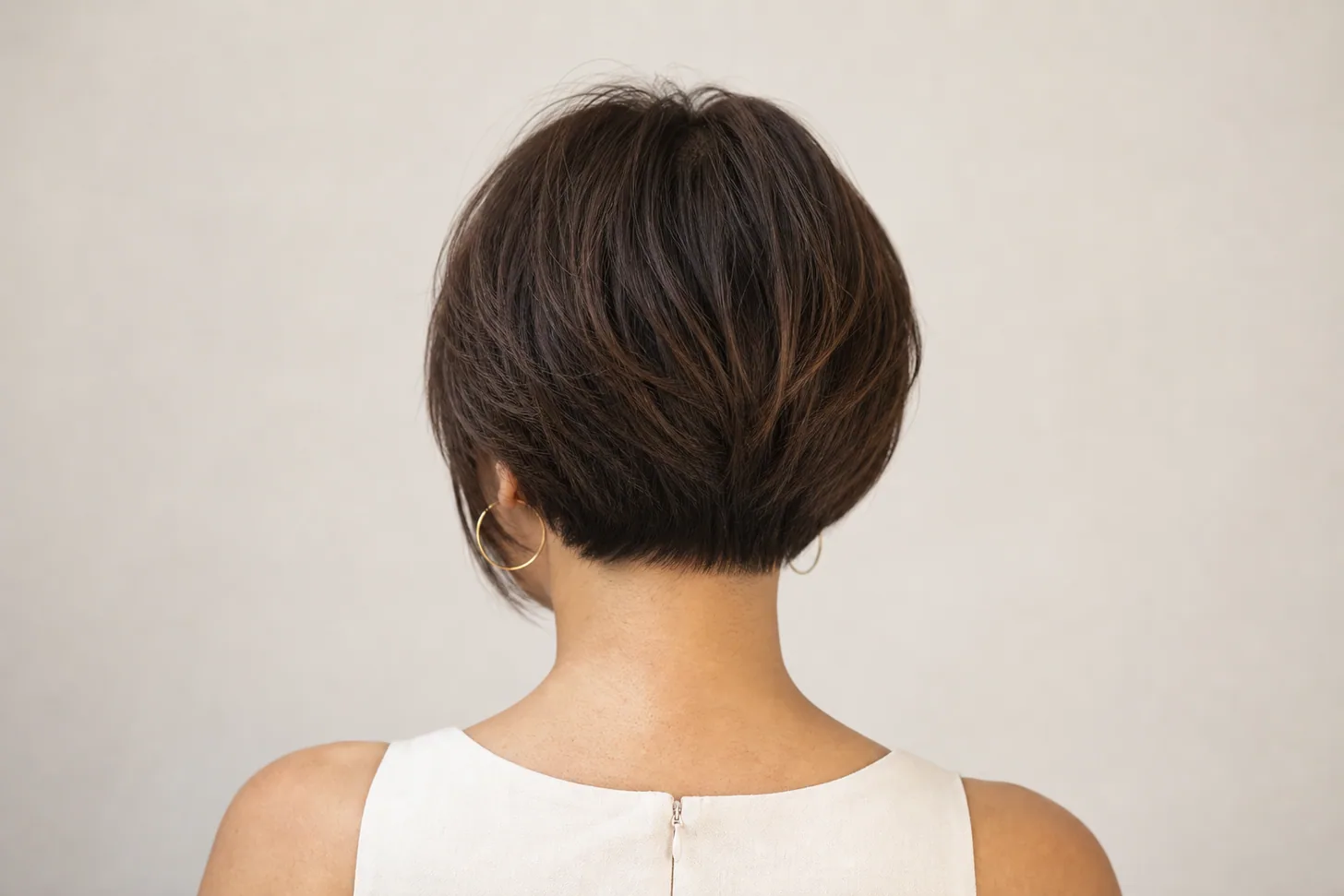
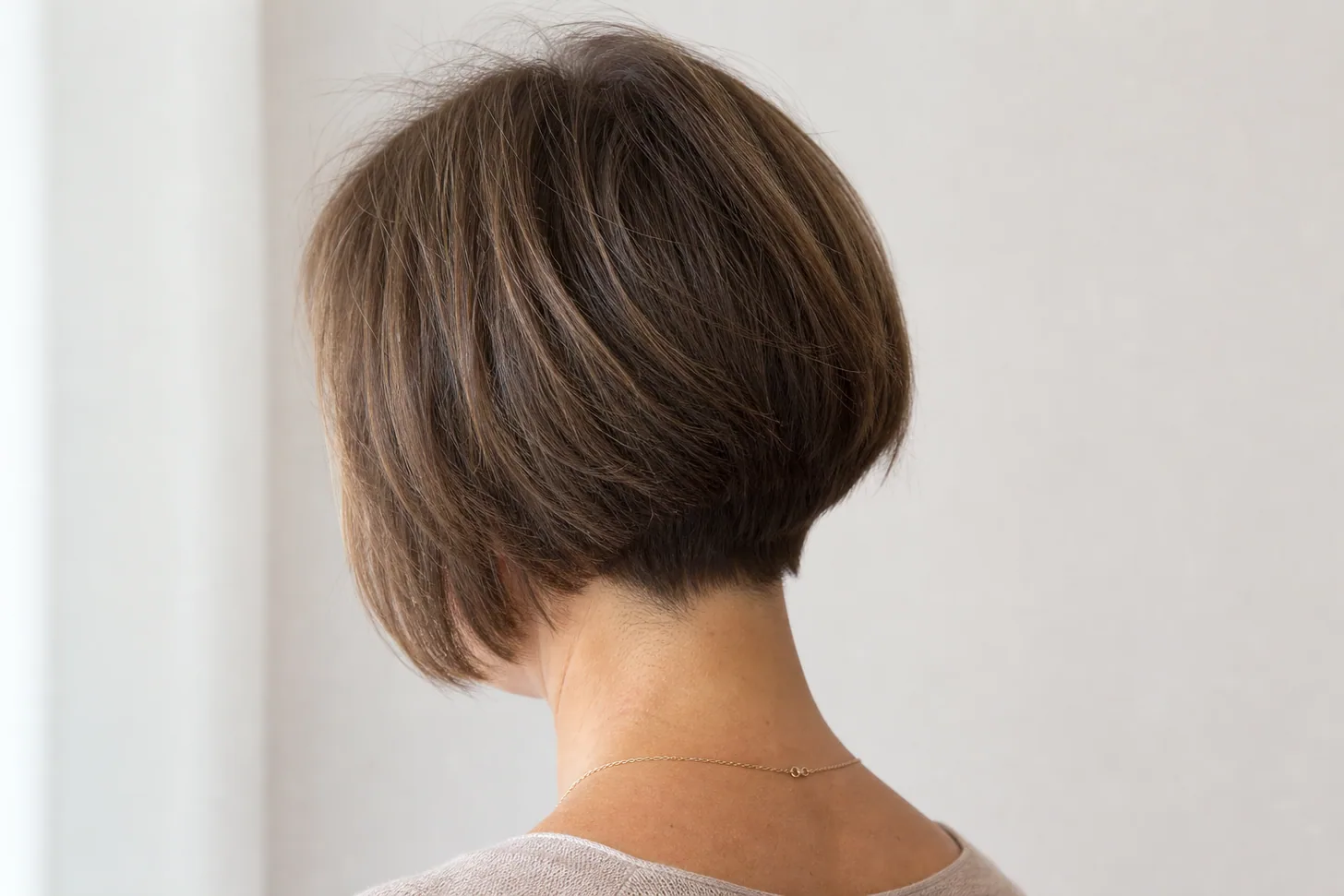
The shape lives in profile: close at the nape, widest high at the occipital, angled forward at the sides.
What a wedge actually is — and why it's a weight cut
Three things define the shape, and all three are about where the hair's own weight sits.
A close nape. The hair at the bottom of the back is cut very short — short enough that it sits against the head rather than hanging. This is what removes the length that was contributing nothing on fine hair, and it's what stops the cut looking bottom-heavy.
A stack that climbs steeply to the occipital. Above the nape, each layer is cut slightly longer than the one below, so the hair piles onto itself. The widest point of the whole silhouette sits high on the back of the head, at the occipital bone. That pile is retained weight — hair on top of hair.
Sides angled forward. The perimeter travels forward past the ear so the front pieces are longer than the back, framing the jaw and balancing the width at the back.
Now the part that matters. A stack works because you're looking through several layers of hair at once, so light doesn't pass through. The moment weight is removed from the mid-shaft — by thinning shears, a razor, slide cutting, or point-cutting taken more than a fraction of an inch deep — the stack loses its density and collapses toward the head. You get the outline of a wedge with none of the fullness, which is the worst of both.
This is the same argument the corpus makes about blunt cuts and about where feathering is safe to sit: on fine hair, weight is the resource, and most salon defaults are designed to remove it because most clients have too much of it.
Chair-side note
The wedge is the cut I get asked for by name more than any other, and the one clients are most nervous about naming — there's usually a pause and then "I know it's a bit dated." It isn't the shape that dated. It's the blow-dry.
The original was set into a hard round helmet, and if you put the same cut on a head today and dry it with your fingers instead of a round brush, it reads as a modern graduated crop. I've stopped arguing about the word and started asking what they want the back of their head to look like, which gets us to the same place in a third of the time.
SB
— Simone Baptiste, Senior Stylist
Why it suits fine hair better than almost any other type
Most short cuts ask fine hair to do something it can't. A wedge asks it to do the one thing it's good at: lie exactly where it's put.
Fine hair's problem
What the wedge does about it
Collapses at the back and crown, where you can't see or reach it
Builds the volume into the cut at exactly that point, so it holds without styling
Length hangs flat and adds no fullness
Removes it at the nape, concentrating what you have higher up
Ends look thin and see-through
Keeps a blunt perimeter, which is the strongest visual cue that hair is dense
A flat back of the head gives the hair no curve to follow
You want maximum built-in volume and will keep the appointments
You want the same effect with more length and a longer leash
If the maintenance number is the sticking point, take the stacked bob. It's the same idea with the commitment dialled down, and it will look better at week nine than a grown-out wedge does.
14 wedge haircuts for fine and thin hair
Ordered shortest to longest. Every one of these keeps the weight in the stack and the perimeter solid — what changes is how short the nape goes, how long the front runs, and how much the styling softens the shape.
The close-cropped wedges
Classic short wedge on fine light brown hair, very close nape, weight stacked high at the back, sides angled to the cheekbone, woman in her sixties
1
The classic wedge
The original architecture, cut clean: nape clipped close, a steep stack to the occipital, sides angling forward to the cheekbone. It is the fullest-looking version because nothing has been softened anywhere, and it is the one that most needs a stylist who will leave the stack alone. Ask for it dried with fingers rather than a round brush — the cut supplies the shape and the brush is what makes it read as a period piece. Styling short fine hair covers the daily version.
Wedge pixie on fine blonde hair, short cropped sides and nape with stacked volume at the back of the crown, woman early 50s
2
The wedge pixie
The shortest version on this page, and the point where the wedge stops being a bob and becomes a crop. The sides come up above the ear and the stack sits tighter and higher, which puts all the volume at the back of the crown. It suits fine hair with reasonable density and a well-shaped head, because there is nowhere for the cut to hide, and it wants a confident hand at the gym too — short hair and training is easier than long, but not effortless. Pixie cuts for fine hair covers the wider family.
Soft modern wedge on fine grey hair, close nape, rounded stack worn with movement rather than set, woman in her seventies
3
The soft wedge, worn with movement
The same cut as number one with the styling changed rather than the cutting. Dried forward with fingers and finished with a little texture spray at the roots instead of a set, it loses the helmet association entirely while keeping every bit of the structure. This is the version to ask for if you want the shape and the word makes you hesitate — say soft wedge and mean the blow-dry, not the scissors.
Short wedge with a soft side-swept fringe on fine mid-brown hair, close nape and stacked back, woman early 60s
4
Short wedge with a side-swept fringe
A fringe changes the balance of the whole cut: the wedge puts width high at the back, and a soft side-swept fringe returns some interest to the front so the silhouette does not read as all-rear. Keep it point-cut and light rather than blunt and heavy — a dense fringe on fine hair borrows density from the top of the head, which is the section a wedge can least afford to spend. Side-swept bangs on fine hair has the shapes.
Mid-length wedges and the wedge bob
Where the front comes down to the jaw and the nape softens slightly. These trade a little built-in volume for a longer trim cycle and a shape most people find easier to live with.
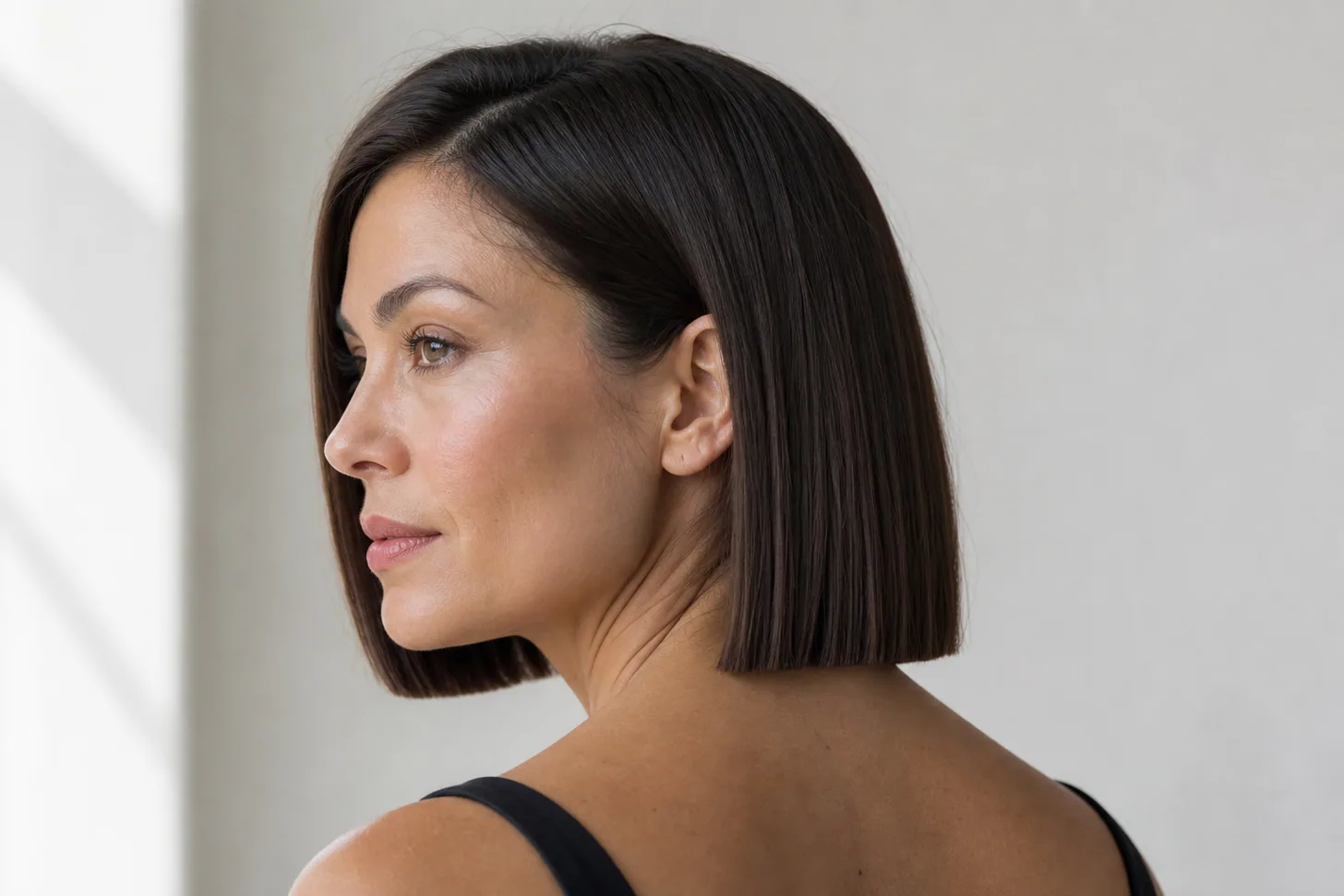
Wedge bob on fine dark blonde hair, jaw-length front angled forward with a stacked graduated back, woman mid 40s
5
The wedge bob
The most wearable version and the one I recommend most often. The front runs to the jaw, the stack stays steep but starts a little lower, and the nape is short without being clipped. You keep most of the structural volume and gain three or four weeks between appointments. If you are coming to the wedge from a standard bob, this is the step that will not frighten you.
Inverted wedge with a strong forward angle on fine chestnut hair, short stacked back and jaw-length front, woman late 30s
6
The inverted wedge
A steeper forward angle, so the difference between the shortest point at the nape and the longest at the front is dramatic. The angle itself becomes the feature, and it draws the eye along a diagonal rather than letting it settle on how much hair there is. It suits a long or heart-shaped face particularly well, and it is the version most likely to be photographed from the side, which is worth knowing when you bring a picture.
Wedge with a deep side part on fine blonde hair, volume built high at the back with a sweeping front section, woman early 50s
7
The deep side-part wedge
Moving the part off-centre does two things at once here. It lifts the roots on the heavier side, because the hair has to travel across the head to lie down, and it breaks the symmetry that makes a short structured cut look severe. On fine hair a deep side part is one of the cheapest volume tricks there is — where you part fine hair works through why, and how to make a new part stay put.
Wedge bob with soft face-framing pieces on fine light hair, stacked back with longer front sections at the jaw, woman mid 50s
8
Wedge bob with face-framing
The only place a wedge can safely take softness is the two front sections, and this version uses it deliberately. The stack and perimeter stay solid; the pieces beside the face are tapered so they drift rather than stop dead at the jaw. It is a good compromise if a hard geometric outline feels like too much, and it costs nothing structurally because those pieces were never carrying the shape. Face-framing layers takes it further.
Wedges for gray and mature fine hair
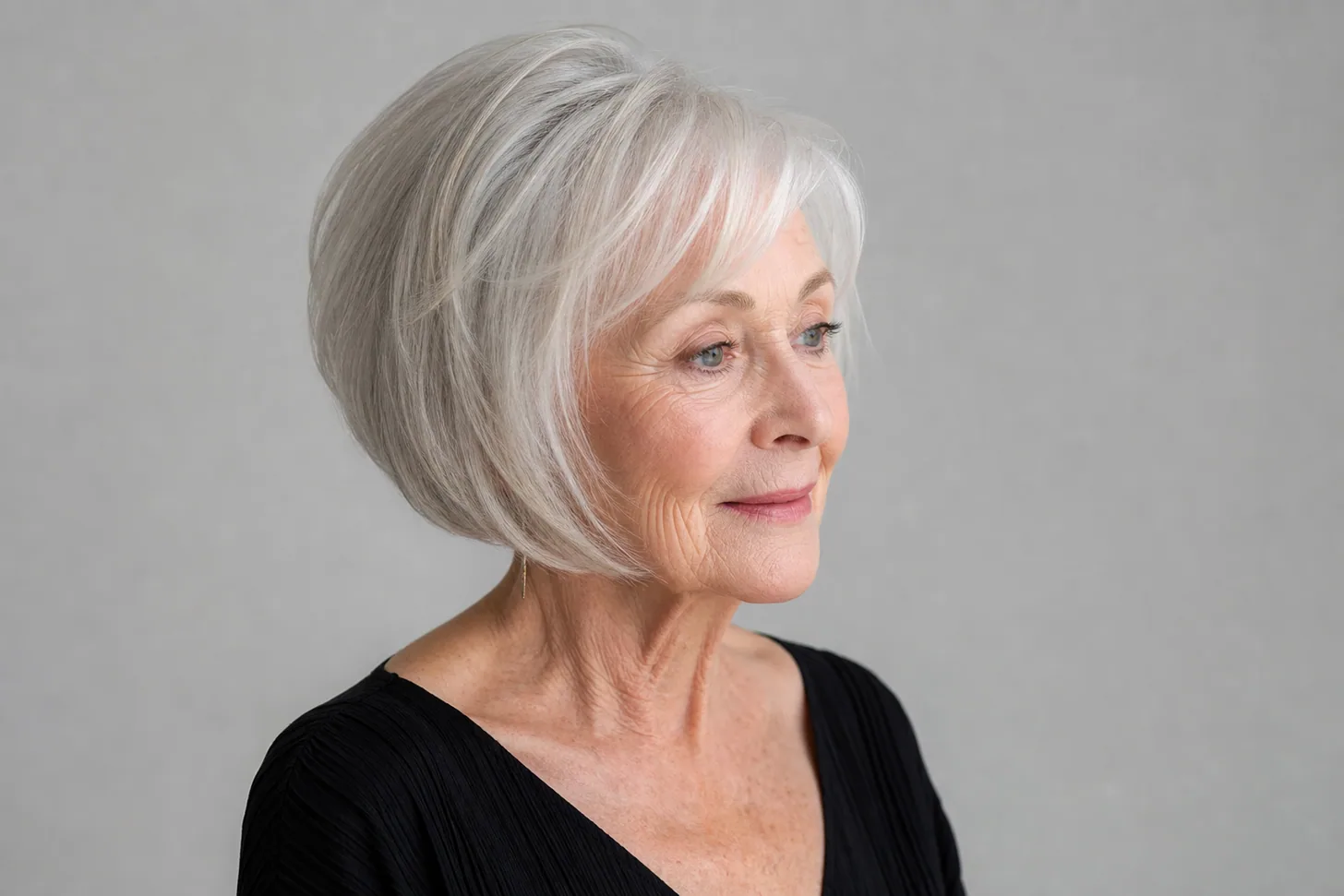
The cut's natural constituency, and for a real reason: gray hair is often coarser and more resistant than the pigmented hair it replaced, which means it holds a stacked shape unusually well.
Silver wedge on fine white-grey hair, close nape and full stacked back catching the light, woman in her seventies
9
The silver wedge
Gray and white hair tends to be wider in diameter and more wiry than the hair it replaced, so it stands away from the head where pigmented fine hair lies flat. In most cuts that is a nuisance; in a wedge it is free volume, because the stack wants exactly that behaviour. This is the cut that makes the texture change work for you rather than against you. Going gray with fine hair covers the rest of the transition.
Low-stacked wedge on fine salt-and-pepper hair with the top left longer to lie over the crown, woman in her sixties
10
The low-stacked wedge, for a thinning crown
The adjustment worth knowing: a wedge builds its bulk at the occipital, which sits below the crown, so it is not automatically ruled out when the crown is thinning. Ask for the stack kept slightly lower and fuller, and the top left long enough to lie over the crown rather than cropped into it. Cuts for a thinning crown is the page built for that specific problem.
Wash-and-wear wedge on fine grey hair, simple structured shape needing no styling, woman in her seventies
11
The wash-and-wear wedge
Cut correctly, this is one of the genuinely low-effort short cuts, because the volume is architecture rather than styling — wash it, rough-dry it, and it falls into shape. The honest caveat is that the low daily effort is bought with a short salon cycle, so it is low-maintenance in the mornings and high-maintenance in the diary. Wash-and-wear cuts for thin hair over 70 sorts the whole category by which kind of effort you can spend.
Wedge cut adapted for glasses, fine grey hair with the front section kept clear of the temples, woman early 60s
12
The wedge, adapted for glasses
Frames and a forward-angled side section compete for the same few inches of face, and the usual result is hair permanently caught behind an arm. The fix is to have the front section cut to fall in front of the temple rather than across it, and kept just long enough to tuck. Small change, and it decides whether you spend the day pushing hair out of the way. Cuts that work with glasses covers the whole set of adjustments.
Two modern hybrids
Where the wedge borrows from shapes the site already covers — useful if you want the built-in back volume without the full geometry.
Wedge and bixie hybrid on fine dark hair, stacked short back with a slightly longer softer top, woman mid 30s
13
The wedge-bixie
A bixie sits between a pixie and a bob, and giving it a stacked back rather than an even one turns it into the most forgiving short cut on this page. You get the wedge's structural lift at the occipital with a softer, less geometric top, which reads as contemporary rather than retro. Good for anyone who wants the volume and does not want to explain the haircut. The bixie on fine hair has the base shape.
Long wedge reaching the collarbone on fine light brown hair with a stacked graduated back, woman early 40s
14
The long wedge
The furthest the shape stretches before it stops being a wedge: front sections to the collarbone, with the graduation still stacked but starting much lower on the head. Volume at the back drops noticeably — there is more length pulling down on it — so treat this as a length compromise rather than an equal option. It buys you a nine or ten week cycle and a shape you can tie back, which for a lot of people is the trade worth making.
The four words to refuse
This is the section that decides whether you get a wedge or something that used to be one. All four will be offered in good faith, because on the average head they improve a cut.
"Texturise."Removing weight through the mid-shaft is the opposite of what builds a stack. On fine hair it also produces the see-through ends the cut exists to avoid.
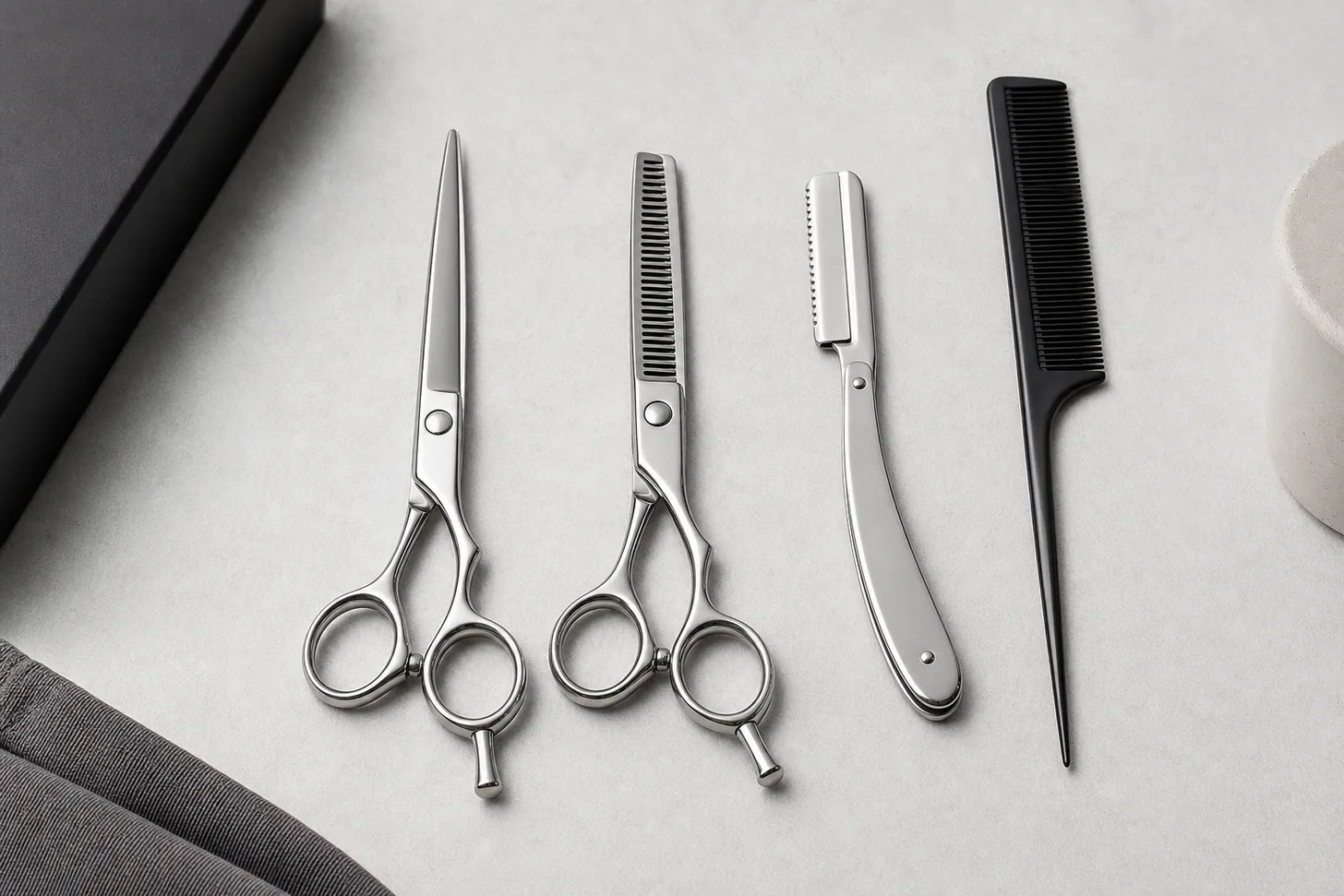
"Thinning shears."Say it explicitly, and say it separately from the above — they are different tools with the same effect. How thinning shears actually work explains why tooth count matters more than the name.
"Razor" or "slide cutting."Both taper along the strand, which is how a stack loses its edge and its density at once. The cutting-techniques glossary puts every technique on one weight axis.
"Soften the back."The most reasonable-sounding of the four and the most damaging, because the back is the haircut. If blockiness is the worry, the answer is a light point-cut on the last quarter-inch of the perimeter — not depth into the stack.
The maintenance reality
Five to seven weeks, and there is no way around it. The whole effect lives in the relationship between a very short nape and a stacked crown, and the nape grows out of proportion first — within about six weeks it reaches the length where it hangs rather than sits, the stack loses its lift, and the shape settles into an ordinary short bob.
Version
Trim cycle
What grows out first
How it ages
Wedge pixie
4–6 weeks
The nape and the sides together
Loses the shape entirely — a committed cut
Classic wedge
5–7 weeks
The nape
Softens into a short graduated bob; wearable, not the same cut
Wedge bob
7–9 weeks
The angle at the front
Grows into a decent A-line; the most forgiving of the group
Long wedge
9–10 weeks
Nothing dramatically
Becomes a layered lob — genuinely fine to leave
Worth naming the trade plainly: a wedge is low effort daily and high effort in the diary. If you can keep a six-week appointment, it will give you more volume for less morning work than anything else short. If you cannot, take the wedge bob or the stacked bob and be happier at week nine.
What to ask your stylist
Bring the structure and the exclusions. Five sentences.
"A short graduated wedge — weight kept in the stack, close at the nape, sides angled forward past the ear."The whole shape in one line, described structurally rather than by name.
"The widest point should sit at the occipital, not at my ears."This is what separates a wedge from a round layered crop, and it is the detail most often lost.
"No thinning shears, no razor, no slide cutting, and please don't texturise through the stack."All four, named. Declining one does not decline the others.
"Keep the perimeter blunt — a light point-cut on the last quarter-inch is fine."Gives your stylist the permission they need to soften the edge without dismantling the cut.
"Can we look at the back in the mirror before I go?"The back is the cut. Check the stack has lift and the nape sits flat against the head.
You can't reliably get to the salon every six weeks. This is the honest disqualifier. Take the stacked bob, which holds its shape three weeks longer and grows out better.
Your hair is fine and curly. The stack expands unpredictably and the close nape shrinks up further than you expect when it dries. Cuts for thin curly hair is the right starting point.
Your part is visibly widening. A wedge builds at the occipital and does nothing above it, so the part stays exactly as visible. Coverage for thinning on top addresses that directly.
You want to be able to tie your hair back. A close nape makes a ponytail impossible for the best part of a year. The lob is the shortest length that still gathers.
You've been over-thinned before and your ends are still see-through. Grow the perimeter back to a solid line first — a stack built from sparse ends won't read as full. Over-thinned fine hair has the timeline.
You're being offered a wedge "softened all over so it isn't so severe." That is the cut being dismantled while you agree to it. Ask where the weight is being removed from before you say yes.
FAQ
It's one of the best short shapes fine hair has, provided it's cut as a weight cut rather than a texture one. A wedge works by stacking short graduated layers up the back so the hair piles into a rounded mass at the occipital bone, with a very short nape underneath and longer pieces angled forward at the sides. That stack is retained weight, and weight is exactly what makes fine hair read as dense. The failure mode is a stylist softening it — point-cutting the back into wisps, texturizing through the stack, thinning the nape — because every one of those removes the weight the silhouette is built from, and what's left is a shapeless short cut.
Length and steepness, mostly. A stacked bob keeps bob length at the front, usually chin to jaw, with graduation building a soft rounded shape at the back. A wedge is shorter and the graduation is steeper: the nape is cropped close, the stack climbs sharply to the occipital, and the sides angle forward past the ear. In profile a stacked bob reads as a rounded curve and a wedge reads as a triangle with its widest point high on the back of the head. They're relatives, and if you want the effect with more length to hold onto, the stacked bob is the gentler version of the same idea.
It makes hair look fuller, and it does it structurally rather than with styling, which is why it lasts through the day where a blow-dry doesn't. Two mechanisms are at work. The stack piles hair on top of hair at the back of the head, so you're looking through more layers of hair at once. And the short nape removes length that was hanging flat and contributing nothing, so the eye sees mass concentrated high rather than thinly spread. What it can't do is add density, and it won't disguise a scalp showing at the crown or a widening part, which are different problems with different answers.
No, and this is the single most useful thing to know before you sit down. The internet is split on it and both halves are confidently wrong in opposite directions. A wedge is defined by retained weight in the stack and a solid line at the perimeter; texturizing shears, razors, slide cutting and heavy point-cutting all remove weight through the mid-shaft, which flattens the stack and makes the ends see-through. What you can safely ask for is a light point-cut on the very last quarter-inch of the perimeter to soften a hard edge. Anything deeper than that is dismantling the haircut you came in for.
The 1970s version is, and the shape underneath it isn't. What dates the original is the extreme graduation, the very high stack and the helmet-round set it was blow-dried into. A modern wedge keeps the architecture — short nape, weight built at the occipital, sides angled forward — and softens the styling rather than the cut: worn with movement instead of set, with a longer front that reaches the jaw rather than the cheekbone, and with a side part rather than a strict center. Ask for a soft wedge or a wedge bob if the word alone makes you nervous, and bring the structure rather than the era.
It suits fine, straight to gently wavy hair better than almost any other type, because the shape depends on hair that will lie where it's cut. It suits people who want volume built into the cut rather than styled in each morning, which makes it a genuinely low-effort choice despite looking structured. Face-shape wise it flatters oval, heart and long faces well, because the width sits high at the back rather than at the cheekbones. It's harder work on very curly hair, where the stack expands unpredictably, and on a round face the high back width needs a longer front piece to balance it.
Every five to seven weeks, and that's the real cost of the cut. The whole effect lives in the relationship between a very short nape and a stacked crown, and the nape grows out of proportion first. Within about six weeks it reaches the length where it starts to hang rather than sit, the stack loses its lift, and the shape softens into an ordinary short bob. That's not a disaster, but it isn't the cut you asked for. If a five to seven week cycle isn't realistic, ask for a longer wedge bob instead, which holds its shape closer to ten weeks.
Often yes, and it can be one of the better options, with one adjustment. A wedge builds its bulk at the occipital, which sits below the crown, so a thinning crown isn't automatically a problem the way it is for a cut that needs height on top. Ask for the stack kept slightly lower and fuller, and for the top left long enough to lie over the crown rather than cropped short into it. What a wedge can't do is cover a visibly widening part, because the part sits above everything the cut is doing. If that's the concern, read the coverage guidance before booking.
Ask for it structurally rather than by name, because wedge means different things to different stylists. Say: a short graduated wedge with the weight kept in the stack, a close nape, and the sides angled forward past the ear. Then the exclusions, which matter more: no thinning shears, no razor, no slide cutting, and no texturizing through the stack. Add that the perimeter should stay blunt apart from a light point-cut on the last quarter-inch, and that you want the widest point of the shape to sit at the occipital rather than at the ears. Those two sentences will get you the cut.
Eleven years behind the chair, cutting fine and thin hair into shapes that hold. Simone's rule on the wedge is that the back of the head is the haircut — and that every kind offer to soften it is an offer to take it apart.
Images in this article are AI-generated illustrations, not photographs of real clients or results. See our image policy.
Results vary with hair type, density, and growth patterns. This guide is educational and not a substitute for an in-person consultation with a licensed stylist.
Get the good hair intel
One honest, stylist-written guide in your inbox each week. No hype.

 SB
SB