Fine-hair haircuts · Recovery

How to Fix a Bad Haircut on Fine Hair

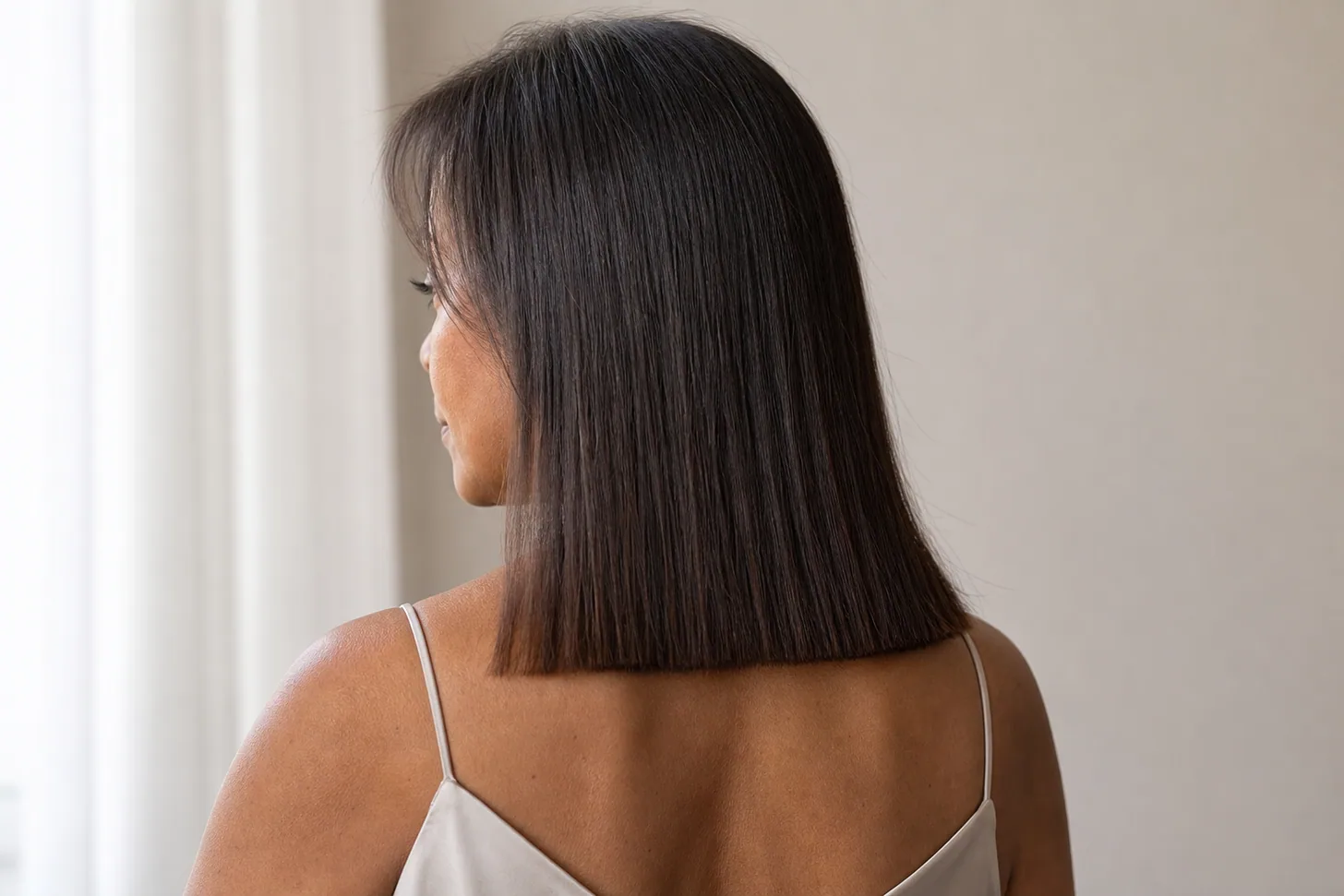
Two rules, and the second one is the one that saves fine hair. First: wait one wash before you decide. What you're looking at tonight is your hair wearing a salon blow-dry — a styling layer sitting on top of the cut, and on fine hair a professional blow-dry supplies the exact thing your hair doesn't have.

Until you've washed it and dried it your own way, you can't tell which of your objections belong to the haircut and which belong to the finish. Second: on fine hair, the fix is almost always to take less, not more. Every instinct — even it up, blend it out, take some bulk off the sides — is a subtraction, and subtraction is usually what went wrong in the first place.

There's no reserve to correct with. So the useful question isn't "how do I fix this", it's "which part of this is a shape problem, which part is a hair-is-gone problem, and which part is neither". Below: the honest triage, the four ways fine haircuts typically go wrong and what actually works on each, the arithmetic of growing it out, and the exact words that get a salon to put it right without either of you having a bad afternoon.

Woman studying a section of her fine shoulder-length hair in a bathroom mirror at home
The honest first look: washed, dried your way, at home — not under salon lighting.

Wait one wash — and know what you're waiting for

"Give it a few days" sounds like a way of getting rid of you. It isn't. It's a specific test, and it fails in both directions often enough to be worth running.

A salon finish adds volume, direction and shine that your bathroom doesn't. On fine hair that gap is at its widest, because a round brush and a nozzle create body that fine hair can't produce on its own. So the first evening is an unreliable read twice over.

Some haircuts look wonderful in the chair and reveal their real shape at home, when the blow-dry stops holding the layers apart. Others look alarming in the chair — too short, too neat, unfamiliar — and settle into something you like by the second wash, once it's moving the way it normally moves.

So: wash it, dry it the way you actually dry it, and look again in daylight rather than under salon spotlights. Then write down what's wrong in physical terms — it's wider at my jaw than I expected, the ends feel see-through, there's a step above my shoulders. That sentence is worth more than any amount of feeling about it, because it's the sentence a stylist can act on.

One thing not to do in that window: nothing at home with scissors. It's the single most common way a two-month problem becomes an eight-month one, and cutting fine hair at home sets out why the ponytail method in particular goes so badly wrong.

What a corrective cut can fix, and what only time fixes

This is the whole page in one table. The dividing line isn't how bad it looks — it's whether the problem is a shape or an absence.

What's wrongFixable now?What actually works
Uneven perimeter, one side longerYes — quicklyA few millimetres off the longer side, checked dry with your head level. Ten minutes
A visible step or shelfYesPoint cutting into the step to break the line, not a new layer below it
Corners too blunt / shape gone squareYesSoftening the front corners so they slope. Costs almost no length
Face-framing too heavy or too shortPartlyToo heavy is fixable today. Too short is a grow-out — see face-framing layers
Silhouette has gone triangularUsuallyBring the perimeter up toward the shortest layers. Counter-intuitive, and it's the right move
Too short overallNoStyling and time. 1 cm a month. Anything else makes it shorter
Over-layered interior, see-through endsNoEight to fourteen months. More layers to "blend" will extend it
Density removed with thinning shearsNoThe hardest one. Over-thinned fine hair has the full recovery plan
Fringe far too short or too wideWidth yes, length noNarrowing a fringe is a two-minute fix. Length is a grow-out

The four ways fine haircuts go wrong — and the fix for each

Nearly everything I'm asked to correct on fine hair is one of these, and three of the four have a fix that's the opposite of the obvious one.

1. Over-layered: the triangle

The commonest by a distance. Layers were cut through the interior to "add movement", the weight that used to sit at the perimeter came out with them, and now the ends are see-through while the sides sit wide — a silhouette narrow at the top and heavy at the jaw. It reads as thinning, and it isn't.

The instinct is to cut more layers to blend the ends in. That's the trap: it removes the little remaining weight and extends the grow-out. The correct move is to bring the perimeter up toward the shortest layers — losing some length in order to get a solid line back — or to leave it entirely and grow the interior down.

Which of those depends on how much length you can bear to lose, and it's a real decision rather than a technicality. Do layers help or hurt fine hair? is the longer version. And before the next appointment, it is worth seeing the shape on your own face first — the try-on apps worth using, and the density illusion to correct for when you look at the result.

2. Thinned out with shears or a razor

Distinct from over-layering even though it looks identical, because the hair was removed from inside the sections rather than from the length. The tells are short, blunt-ended pieces standing up along the part and at the crown, and a ponytail that feels noticeably smaller in your hand.

There's no cutting fix at all, and every further correction makes it worse. Over-thinned fine hair is the page for this one, including the cut that buys back some apparent density while you wait.

3. Too short

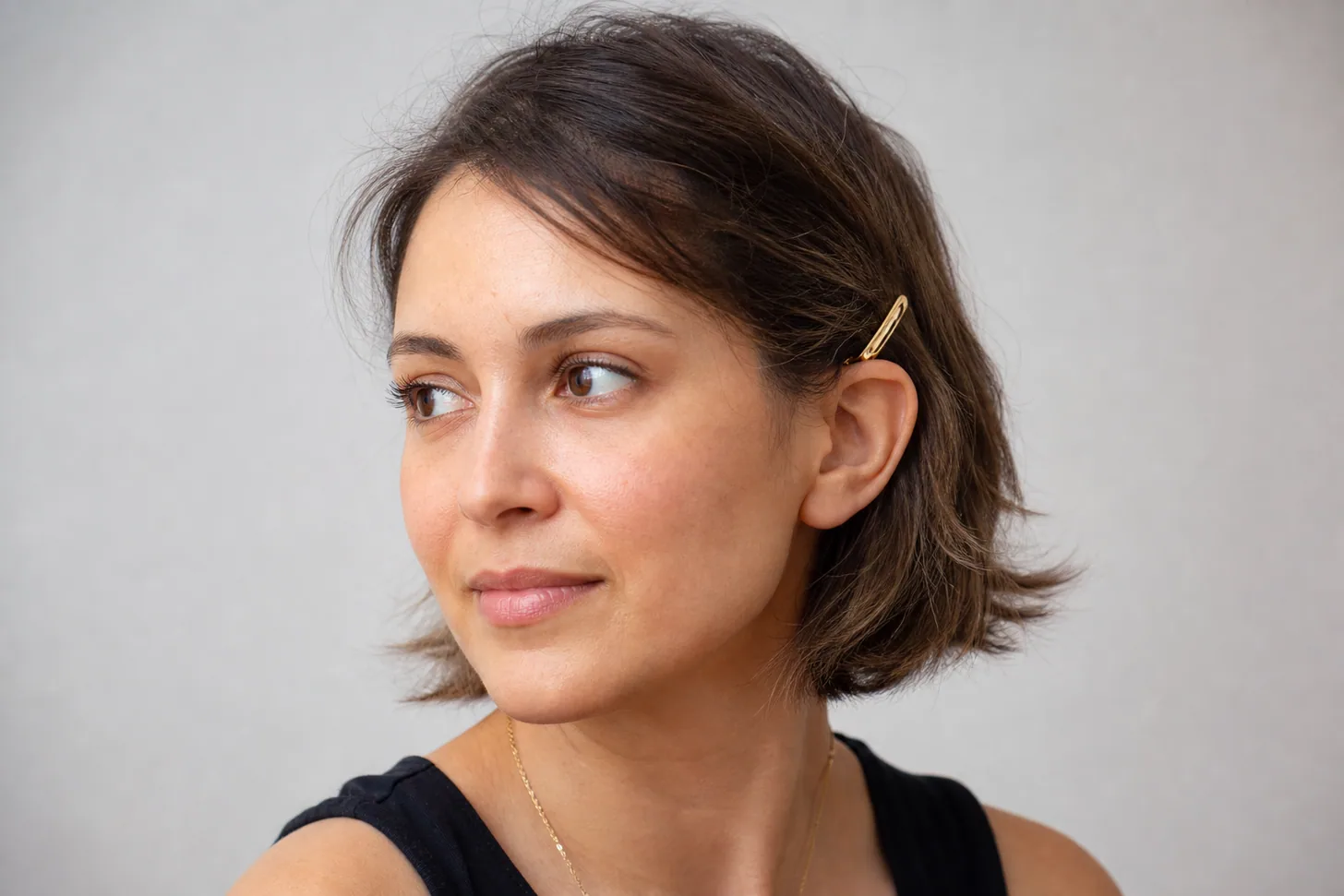
The most upsetting on the day and the least serious in the end. Nothing removes the problem except growth, so the work is entirely styling and shape management for a few months — and the honest consolation is that fine hair usually looks better short than it did long, because weight concentrated in a shorter perimeter reads as density.

Growing out a short cut has the five-stage plan if you've decided to reverse it, and short haircuts for thin hair is worth a look before you do — some people stay.

4. It's fine, but it doesn't look like it did in the salon

Not a haircut problem, and worth separating out before you let anyone near it with scissors. If the shape is right, the length is right, and it simply falls flat by Wednesday, the gap is between a salon blow-dry and yours.

That's fixable and it's a much cheaper fix — how to blow-dry fine hair for volume and why fine hair falls flat close most of it. Handing a good haircut back to a stylist to "sort out" usually returns it shorter.

Chair-side note

When someone sits down and says the last person ruined it, the first thing I do is nothing. I wet it, comb it flat, and look at the perimeter, because I need to know whether I'm looking at a line problem or a density problem before I have an opinion — and those two feel identical to the person in the chair. Then I dry it and look at where the weight ended up.

About a third of the time the actual complaint is a shelf I can break in fifteen minutes; about a third of the time it's over-layering and my honest answer is that I could make it look better today at the cost of five centimetres, or we could wait; and about a third of the time the cut is genuinely fine and what she's unhappy about is that it goes flat by noon. Those are three completely different appointments, and the difference between them is never obvious from the doorway.
Simone BaptisteSB
— Simone Baptiste, Senior Stylist

Going back: the conversation, and what salons will usually do

Most salons have an adjustment policy — commonly a week or two, at no charge — and most clients never discover it because nobody thinks to ask. It's a normal request, not a complaint, and it's worth making before the window closes.

  • Ask for an adjustment, not a refund. In that order you can still have both; in the other order the conversation about fixing it tends to end. Salons will nearly always offer to correct, will often refund if they can't, and will do neither enthusiastically if the opening move is a demand.
  • Call or go in — don't send a message. Tone travels badly in writing and this is a conversation where tone is doing most of the work.
  • Describe the hair, not the person. "It's sitting wider at the sides than I expected and the ends feel see-through" is actionable. "She butchered it" invites a defense.
  • Arrive with it dried your way. Not straight from a shower, not blow-dried by someone else. You need to both be looking at the same problem.
  • You can ask for a different stylist. "I'd rather not make it awkward — could I see someone senior?" Reception hears this weekly and it is not a scene.
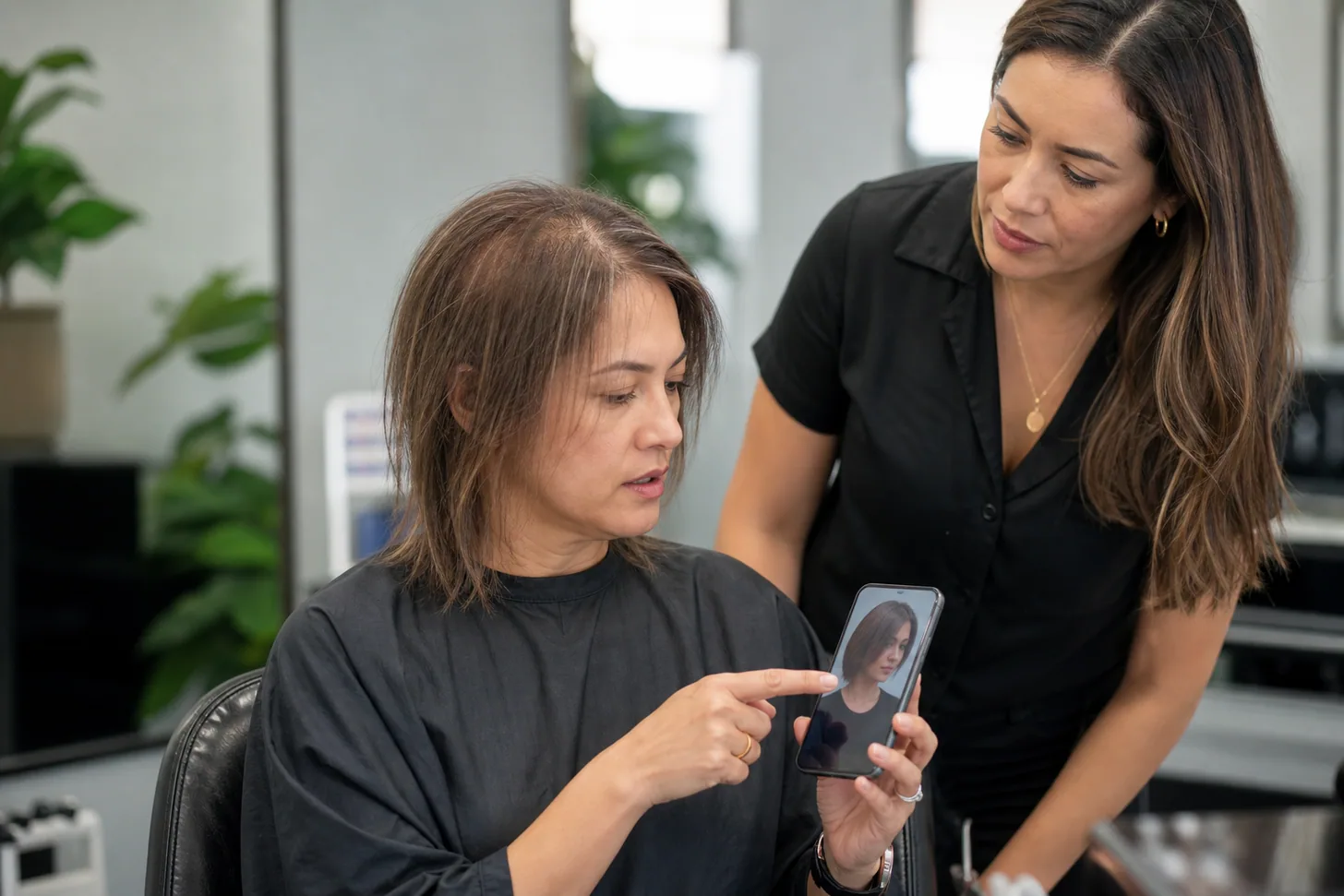
  • Say what you want it to do. On fine hair the right correction is frequently the opposite of the obvious one, so a goal ("I want the ends to feel solid again") gets you further than an instruction ("take the layers out").

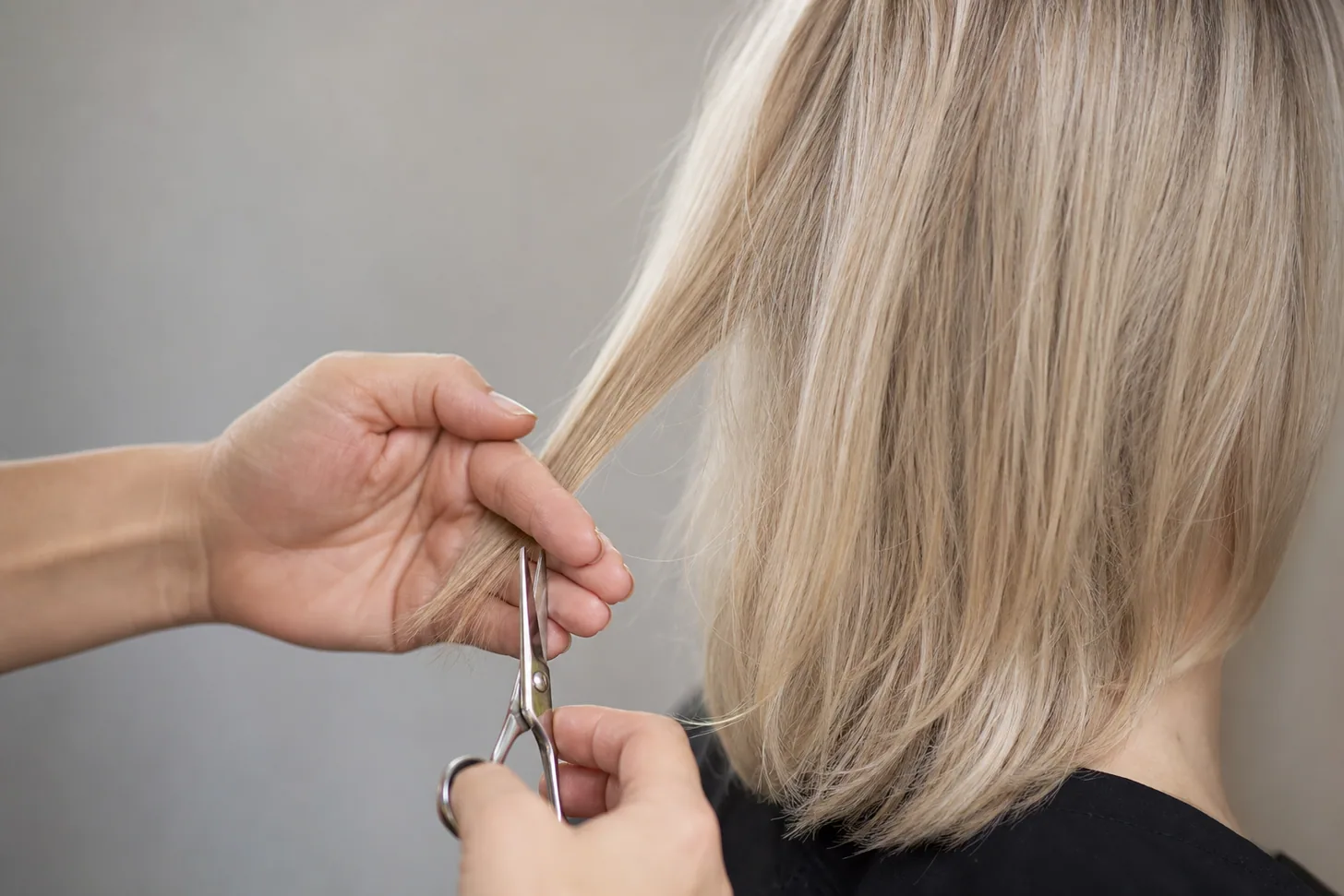
And one sentence to have ready if thinning shears appear at the corrective appointment: "Point cutting rather than thinning shears, please." The exact words to ask for a fuller-looking haircut has the rest of the vocabulary, and wet or dry cutting explains why asking to see it dry before the final decisions is the request that prevents most of this.

The grow-out arithmetic, so you can stop guessing

Scalp hair grows at about 0.35 mm a day — 1 cm a month, 15 cm a year, and that rate is unrelated to how fine your hair is. So:

  • 2–3 cm too short: two to three months, and you'll have stopped noticing by the second.
  • A fringe cut too short: three to four months to your eyes, roughly a year to genuinely blended. Plan for it with how to grow out bangs.
  • An over-layered interior: eight to fourteen months, because you're waiting for the shortest interior pieces to reach the perimeter — and those are usually higher than you think.
  • A bob you wanted to be a lob: five to eight months, and a good trim schedule through it rather than none. Growing out with split ends dragging the perimeter is slower in appearance than in reality.

The thing that makes fine hair feel slower here isn't growth. It's that there's less surrounding hair to disguise whichever stage you're at — the same reason a grow-out looks awkward for longer.

Making it wearable this month

Everything here buys appearance rather than time, and appearance is what you actually need for the next eight weeks.

  • Move your part. Free, instant, and it changes the silhouette more than any product will. It's also the fastest way to disguise an uneven front. How to part fine hair.
  • Put a bend in it. Straight hair shows every line; a soft wave hides a step almost completely, because the eye stops tracking a horizontal edge. This is the single most effective thing for a shelf you can't get cut out this week — heatless waves for fine hair if you'd rather not add heat.
  • Lift the roots rather than treating the ends. Where the volume sits changes the shape; what's on the ends doesn't. How to get root volume.
  • Use the shape you have. A too-short cut wears a claw clip badly and a half-up beautifully — half-up styles for fine hair pulls the short interior up and leaves the length down, which is exactly the geometry an over-layered cut wants.
  • Add shine, not weight. Ends that read dull read sparse. A gloss costs nothing in body and does more for how the ends look than any thickening product.
  • Don't book a color appointment to feel better. Tempting, and it stacks a second variable onto a shape you haven't settled yet. Wait until the cut is where you want it.


When the problem isn't the haircut

  • Your hair looked thin before this appointment too. Then the cut revealed it rather than caused it. Fine hair or thinning? has the checks.
  • Short, blunt-ended pieces are standing up at the crown and along the part. If they were there before the cut, that's breakage rather than scissors — hair breakage on fine hair.
  • The shape is right and it just won't hold. A styling gap, not a cutting one, and a cheaper fix. Blow-drying fine hair for volume.
  • You've had three "corrective" cuts and it's getting shorter each time. Stop cutting. Every correction on fine hair spends density you can't replace. Give it four months untouched.
  • The color was done at the same appointment and the ends now feel rough. That's a condition question sitting on top of a shape one — color correction on fine hair.
  • You hate it, but you can't say what's wrong. Wait the full wash cycle before booking anything. An unspecific complaint reliably produces an unspecific correction, which on fine hair means shorter.

FAQ

Nothing, for one wash. That's not a stalling tactic, it's a diagnostic step. What you walked out with is your hair wearing a salon blow-dry — a styling layer sitting on top of the cut — and on fine hair a professional blow-dry adds the one thing your hair doesn't have. Until you've washed it and dried it your own way, you can't tell which of your objections belong to the haircut and which belong to the finish. A meaningful proportion of bad haircuts turn out to be good haircuts styled unfamiliarly, and a smaller but real proportion look fine in the salon and reveal the problem at home. Wash it, dry it the way you actually dry it, then decide.

Some of it, and the honest split is worth knowing before you book anything. A corrective cut can fix anything that's a shape problem: an uneven perimeter, a visible step or shelf, corners that are too blunt, face-framing that's too heavy, a fringe that's too wide, a silhouette that's gone triangular. All of those are solved by removing a small amount of hair from a specific place. What a corrective cut can't fix is anything caused by hair already being gone — too short overall, too many layers through the interior, or density removed with thinning shears. Those are growth problems, and every additional cut aimed at them makes them worse before it makes them better.

Scalp hair grows at about 0.35 mm a day, or 1 cm a month, which turns the question into arithmetic rather than hope. Two or three centimetres too short is a two to three month problem. An over-layered interior on fine hair is more like eight to fourteen months, because you're waiting for the shortest interior pieces to reach the perimeter, and those were often taken much higher than you realized. A fringe cut far too short is three to four months to your eyes and around a year to fully blended. The reason these feel longer on fine hair isn't slower growth — growth rate has nothing to do with strand diameter — but that there's less surrounding hair to disguise the stage you're at.

Usually yes for anything small, and it's a fairer request than it feels. Most salons have an adjustment or redo policy, typically within one to two weeks and at no charge, and most clients never find out because they never ask. The stylist has also seen your hair wet, knows what was taken and from where, and can correct their own shape faster than a stranger can decode it. Ask for an adjustment appointment rather than a refund, because asking for money back tends to end the conversation about fixing it. If you'd rather not, it's entirely acceptable to ask the salon to book you with a senior stylist instead — reception hears this often and it isn't a scene.

Describe the hair, not the person, and bring one specific outcome. Something like: "It's sitting wider at the sides than I expected and the ends feel see-through — can we take the corners in and check the perimeter?" That's a request a professional can act on. What doesn't work is a verdict, because a verdict invites a defense rather than a fix. Two more things help: go with your hair dried the way you dry it, not straight from a shower, so you're both looking at the same problem; and say what you'd like it to do rather than what you dislike, because on fine hair the fix is often the opposite move to the obvious one.

Almost always one of two things, and they need opposite responses. Either the interior was over-layered, so the weight that used to sit at the ends has been removed and the perimeter has gone see-through — or density was taken out from inside the sections with thinning shears or a razor, which fine hair doesn't have to spare. Both look identical in a mirror and feel identical in your hand, and both get worse if the next appointment removes more hair to even them out. The one useful next step is to have someone assess whether the ends can be brought up to meet the shortest layers, rather than more layers cut down to meet the ends.

No, and this is the correction most likely to turn a disappointing haircut into a year-long one. Bulk on fine hair is nearly always weight in the wrong place rather than too much hair, and the fix is where the line sits, not how much hair is inside it. Thinning shears remove strands from within the section and leave short, blunt-ended pieces that stand up along the part and the crown. If a stylist reaches for them to solve a shape complaint, ask for point cutting instead, which softens how the ends read without taking density out.

Sometimes, but ask for the fix first and the money second, because in that order you can still have both. Most salons will offer an adjustment appointment readily, will offer a partial or full refund if the cut can't be corrected, and will be considerably less willing to do either if the first message is a demand or a public review. Go in person or telephone rather than emailing, be specific about what's wrong, and say what you'd like to happen. If the salon refuses everything, that's worth knowing about them — and a review written a week later with a clear head is more useful to everyone than one written that evening.

Related reads

Simone BaptisteSB
Simone Baptiste
Senior Stylist · Licensed Cosmetologist (NY) & Certified Bridal Stylist

Eleven years of corrective appointments, a third of which turn out to be blow-dry appointments. Simone's rule for a bad cut on fine hair: fix the smallest thing, and let the rest grow.

More from Simone →

Images in this article are AI-generated illustrations, not photographs of real clients or results. See our image policy.

Results vary with hair type, density, and growth patterns. This guide is educational and not a substitute for an in-person consultation with a licensed stylist.