What a tease actually is
It helps to know what you're building, because it changes how you take it apart.
The cuticle is a layer of overlapping scales that lie root-to-tip like tiles on a roof. Comb from root to tip and you're running down the tiles. Comb the other way and you lift their edges so they catch on the scales of neighbouring strands.
Do that repeatedly at the base of a section and you create a small, dense cushion of interlocked fibers — a mat, deliberately made — and the smooth hair above it rests on top of it. That cushion is the volume. Nothing is being lifted, exactly; something is being propped.
Which explains three things at once. It's why a tease outlasts a blow-dry — you're not relying on hydrogen bonds that humidity can undo. It's why clean hair won't hold one — smooth, slippery strands don't catch. And it's why removal is the dangerous part: you are dismantling a tangle that you engineered, and tangles under tension are where fine hair breaks.
Fine hair takes a tease better than anyone — and pays a little more for it
The advantage is real. Fine strands are light, so a small cushion supports a lot of hair, and fine hair's usual problem is that it has no internal structure to hold itself away from the scalp. Teasing supplies exactly the missing thing. It's why the technique looks so dramatic on this hair type and so unremarkable on thick hair, where the section you'd need to tease is bigger than the volume it buys.
The cost is proportional, not catastrophic. The cuticle is only about six to eight scale layers thick on most hair, and a fine strand has less cortex beneath it, so the same surface abrasion removes a larger share of the fiber. The same review names the mechanism precisely: split ends "form more readily from the abrasion (friction) in combination with torsional deformations (grooming and styling)." A tease is abrasion plus torsion by design.
The practical conclusion isn't don't. It's don't do it daily, don't do it in the same square inch, and don't take it out dry. Which is the whole page.
The 7-step method
Five to six minutes for crown volume. Everything before step four is preparation, and it's the part people skip.
Step 1: Tease dry, day-two hair
Freshly washed fine hair is too slippery to hold a tease — the cushion you build slides apart within the hour, and you'll compensate by teasing harder, which is where the damage comes from. A day of natural oil supplies exactly the surface friction the technique needs. This is one of the few times second-day hair is an advantage rather than a problem to solve.
Step 2: Build grip first, not hold afterwards
Mist dry shampoo, a texture spray or a little root powder into the roots of the sections you're about to tease and work it in with your fingertips. This is the single change that makes teasing work on fine hair, and it's the one everyone gets backwards — they tease a slippery head, watch it drop, and reach for hairspray. Hairspray sets what you built; it can't make a tease grip that never gripped.
Step 3: Lift the cover layer out of the way and clip it
Take the top inch to inch and a half of hair across the crown, comb it smooth, and clip it forward out of the way. On fine hair, take more than feels necessary.
This is the layer that will lie over the finished tease and hide it, and a cover that's too thin is precisely why a tease reads as obvious backcombing rather than as volume. If you can see through the reserved section when you hold it up to a window, take another half-inch.
Step 4: Sections no wider than two inches, held straight up
Lift one section vertically and hold it under light tension between two fingers. The tension is doing real work — it keeps the comb operating at the base of the section instead of dragging through the mid-lengths, which is both where volume is useless and where breakage isn't.
Step 5: Three short strokes toward the scalp, and never a sawing motion
Place the comb about two inches from the root, push down toward the scalp in one short, decisive stroke, then lift the comb clear of the hair before repeating. Two or three strokes per section, each starting a little higher than the last, so the cushion builds at the base rather than working its way up the length.
The sawing motion — comb pushed down and dragged back up without leaving the hair — is the thing to eliminate. It doubles the friction for no additional cushion, and it drags the mat you just made along the length of the section, which is how a tease turns into a knot you'll be paying for at midnight.
Step 6: Smooth the cover layer over, without brushing into it
Unclip the reserved section and lay it back over the teased base. Smooth only the surface, with a boar-bristle brush held almost flat or with the pad of your hand. The instinct to "just neaten it" with a brush stroke that catches the teased layer is the single most expensive move in the whole process.
Step 7: One light pass of flexible spray
Hold the can about ten inches away and mist once across the crown. A flexible spray is a deliberate choice: stiff, long-hold formulas make the tease harder to dismantle later, and the AAD lists "applying styling products that offer long-lasting hold" among the habits that damage hair for exactly that reason. On fine hair a light spray also weighs less, and weight is the enemy of everything you just built. Hairsprays for fine hair has the picks.
Chair-side note
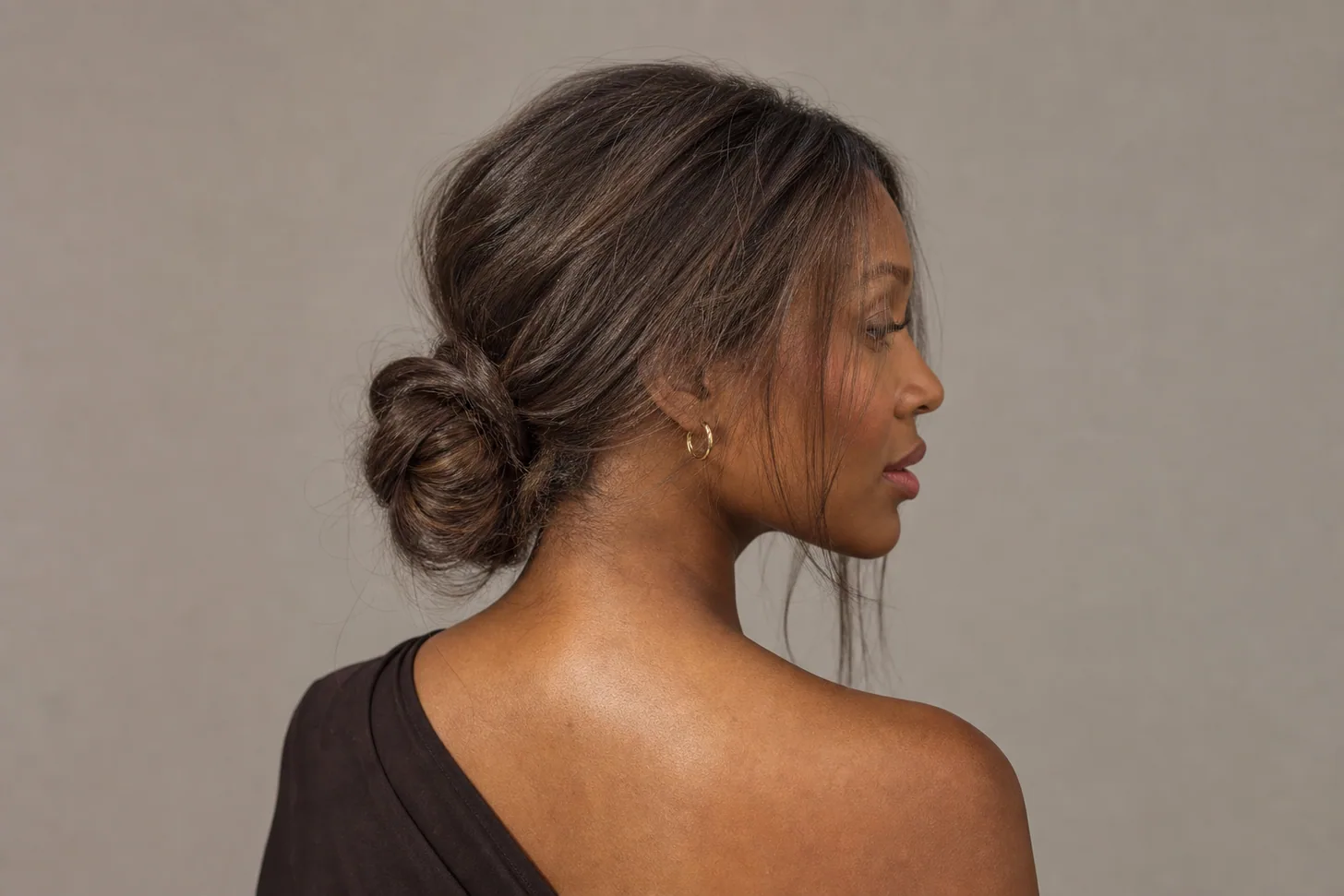
Brides get taught this on the morning of, which is far too late, so I'll say it here: the tease is not the thing holding your style up by nine o'clock — the pins are, and the tease is what gives the pins something to bite into.
Fine hair defeats bobby pins because there's nothing for them to grip; a teased cushion at the anchor point gives them a substrate. Which means you often need much less teasing than you think, placed exactly where the pin goes rather than across the whole crown. I'll tease three one-inch spots for an updo that will outlast the reception, and the client never knows there's any backcombing in it at all.
SB
Taking it out — the half that decides whether it cost you anything
If you read one section, this is it. Everything expensive about teasing happens here.
Condition before you comb. Either take it into the shower and let conditioner sit on the teased area for three to five minutes, or, on dry hair, spray a detangler through the crown and give it the same wait. What you're doing is restoring slip between strands so the interlocked scales can slide past each other instead of tearing.
Comb from the ends upward, in small pieces. Take a section no wider than your comb, start at the very ends and work up in short passes, holding the hair firmly above where you're working so the force stops at your hand and never reaches the root. Each pass should free a little more of the mat from below.
Never comb downward through the tease, and never dry-brush the crown to "get it out quickly." That's the move that produces the two-inch broken pieces standing up at the crown that people mistake for regrowth months later — the diagnosis is in hair breakage on fine hair.
Wet any knot that won't move. A stubborn one is not a test of patience; it's a fiber bundle that will break rather than release. Water and slip solve it in seconds. The wider method for this is in how to stop fine hair tangling, and a wide-tooth comb beats every brush at this job.
Budget ten unhurried minutes. It matters more to your hair than anything you did while styling it.
How often is reasonable — and what to use instead
Once a week is a comfortable rhythm. Teasing is an occasion tool — the hidden base under a bridesmaid half-up is the archetypal use: it's superb for the night that has to hold and mediocre as a daily habit, because the wear concentrates in one patch and the crown is the worst place on fine hair to accumulate it.
If you're teasing every morning, the volume problem is upstream of styling. Here's the honest comparison. Teasing is one of the few older techniques that survives scrutiny; plenty of newer ones do not, which we work through in viral hair hacks tested on fine hair.