Reviewed by Tara Sullivan · Updated August 2026 · 9 min read
Ghost layers aren't a different way of cutting — they're the same layers put somewhere else. They're cut under the top section instead of through it, so the hair you can see never gets shorter and the only thing that changes is how far it sits off your head. That's why ghost layers for fine hair work when ordinary layers don't: the perimeter stays intact, the ends stay blunt, and the lift comes from underneath.
But there's a condition nobody puts in the trend pieces — ghost layers only stay invisible if you have enough hair on top to hide them under, which makes the top of your head the thing to check, not your ends. Below: what to ask for in the chair, 14 versions grouped by length, and the honest list of who should skip them.
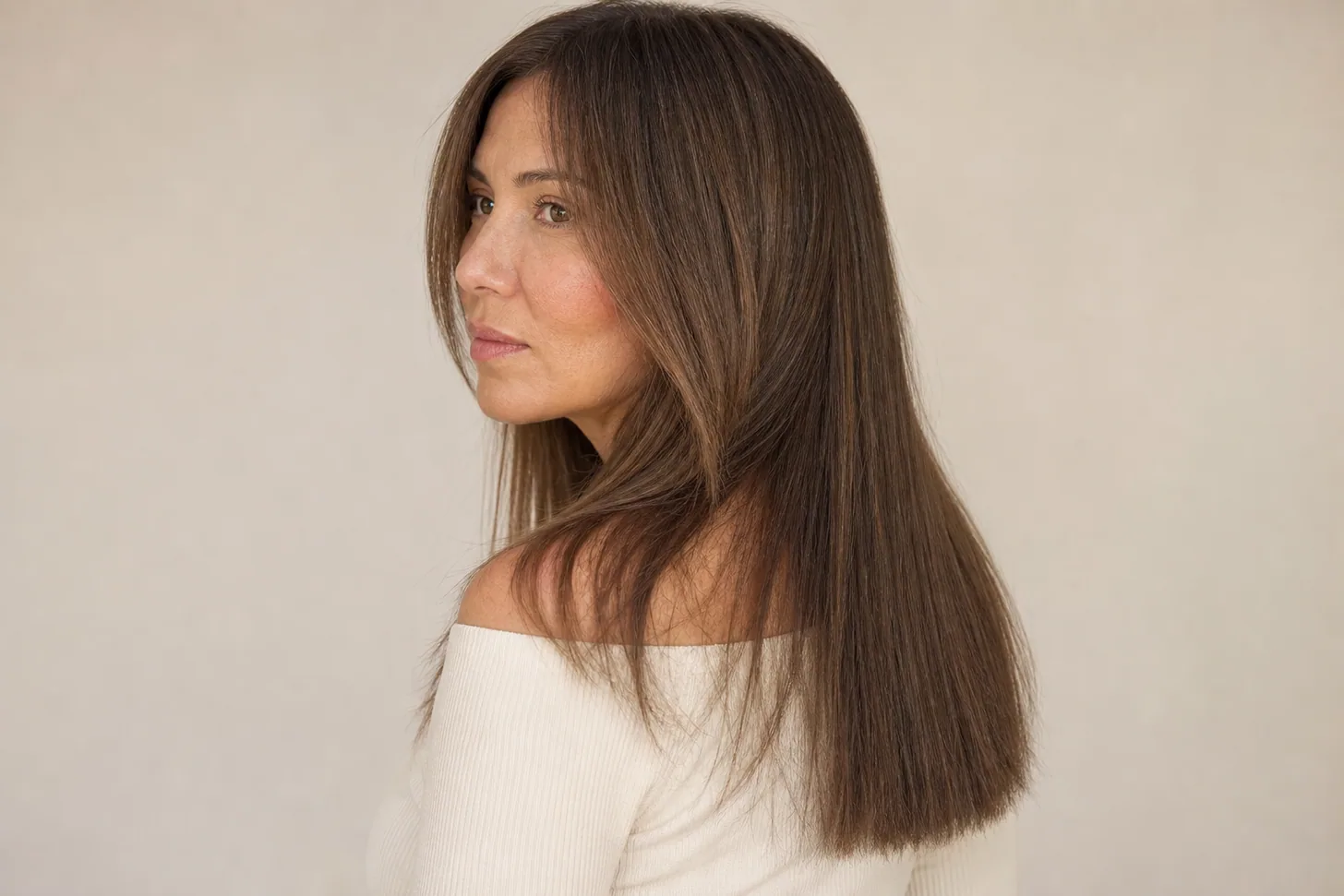
Ghost layers: the length in the mirror doesn't change, the depth does.
Chair-side note
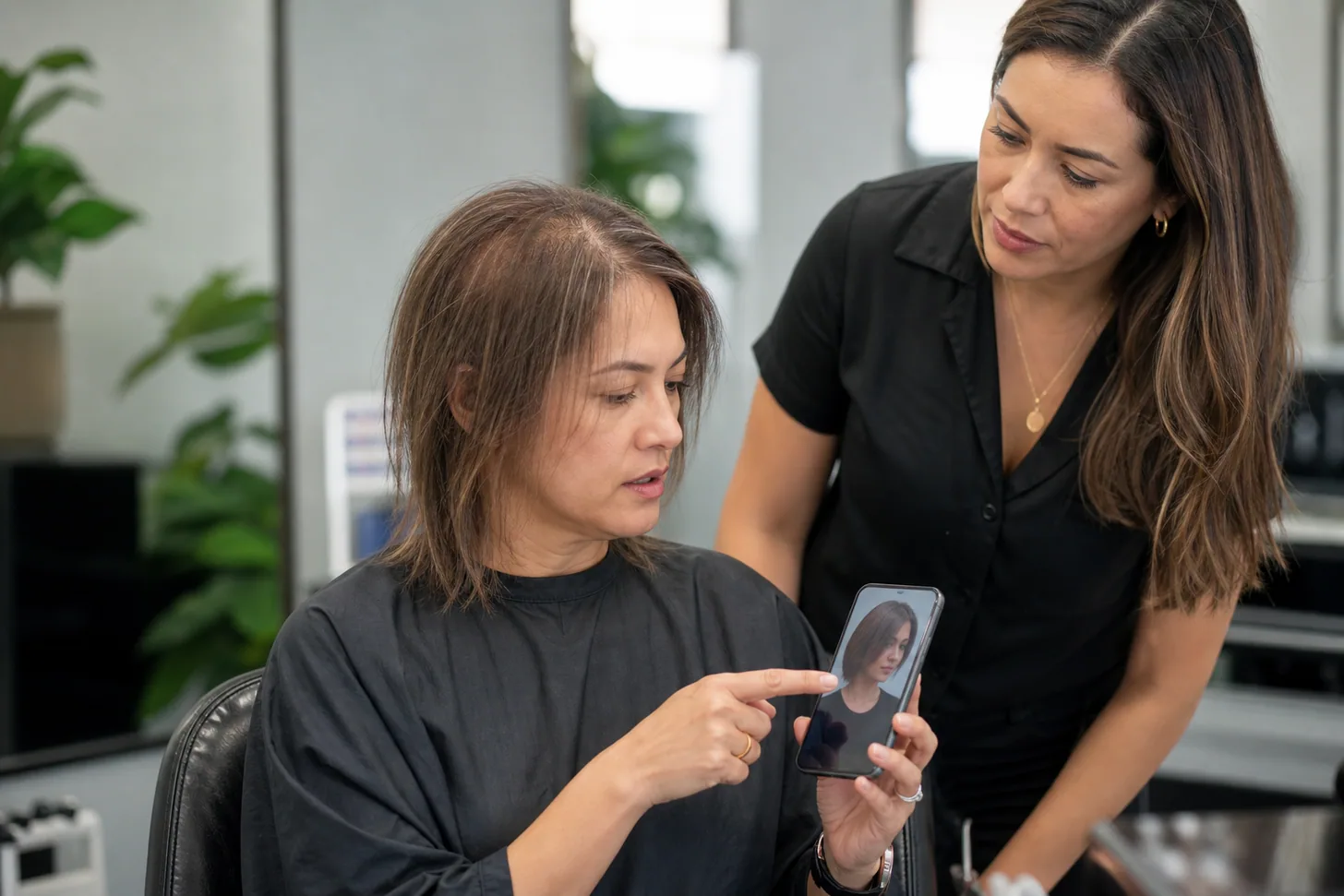
When someone asks me for ghost layers I stop looking at their length and start looking at their part. I take the top section — roughly what a hairband would hold back — drop it, and see how much light comes through it. If that section is dense enough to be opaque, ghost layers will work beautifully and she'll leave thinking I barely cut anything.
If I can see her part widening through it, they won't, because there's nothing to hide the layer under; it'll surface within a month and read as thin ends. That thirty-second check is the entire consultation. Nobody has ever come in and asked me to look at the top of their head, and it's the only part that decides this cut.
SB
— Simone Baptiste, Senior Stylist
What a ghost layer actually is
A layer is just a section of hair cut shorter than the section around it. Everything people argue about — long layers, face-framing, feathering, shattered ends — is a question of where those shorter sections sit and how the stylist gets there.
Ghost layers put them in the interior. The stylist lifts off the top section of hair, works underneath it, and shortens the sections there — sometimes slide-cut down the length, more often point-cut into the ends. Then the top section comes back down over the top and covers the whole thing. The surface of your hair is still one length. The inside of it isn't.
What that buys you is mechanical, not optical. Those shorter interior pieces have less weight hanging from them, so they don't lie flat — they push out slightly and hold the top section away from your head.
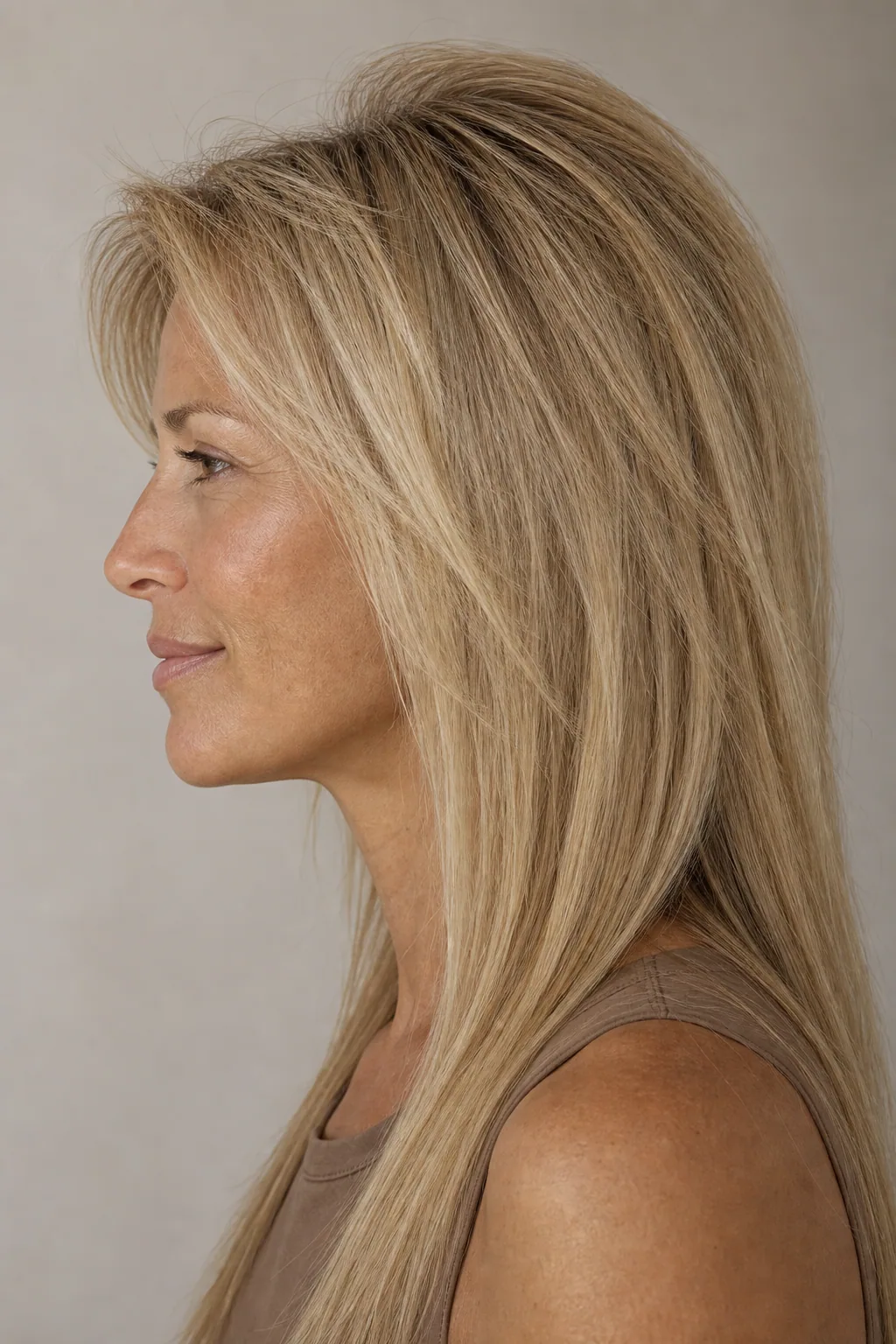
The silhouette gains depth, light stops travelling straight through the hair to your scalp, and the whole thing reads as more hair. You get the volume of a layered cut with the hemline of a blunt one, which is a combination fine hair almost never gets to have.
They also travel under two other names. Invisible layers and internal layers describe the same placement, and the term you'll hear depends entirely on who trained your stylist. If you say any of the three and add "cut under the top section, not through it," you'll be understood.
Ghost layers versus every other layer you've been offered
The reason this technique gets mis-sold is that four different things get called "adding some layers," and only one of them leaves fine hair better off. They are also the quiet technical story behind several of the shapes in fine hair trends for 2026.
Technique
Where it's cut
What fine hair gets
Ghost / invisible layers
Interior only, under the top section
Volume from underneath; perimeter and visible length untouched
Conventional long layers
Through the outer sections, visible as steps
Movement, but the ends of each layer taper and the hair reads thinner at the bottom
Face-framing layers
Front sections only, around the face
Softness at the front; does nothing for volume anywhere else
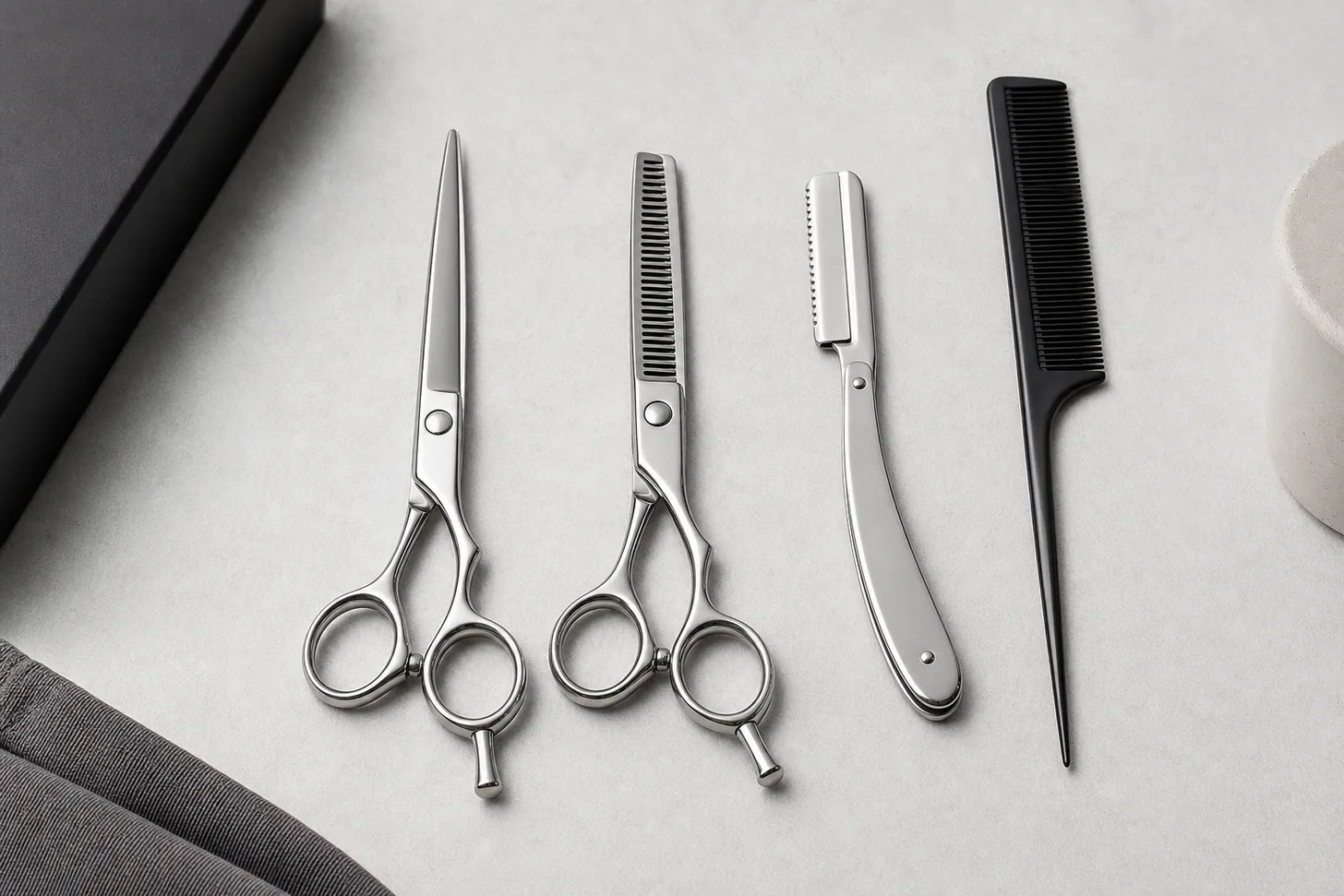
Thinning / texturizing shears
Notched out of the middle of a section
Removes density outright — the one to refuse on fine hair
That last row is where ghost layers most often go wrong, because "invisible" sounds like it should mean "subtle," and the fastest way to make a layer subtle is to notch it in with texturizers rather than cut it.
On dense hair that's a legitimate finish. On fine hair it removes interior density you don't have to give, and the cut collapses in about six weeks — the hair looks fine leaving the salon and wispy by the second wash after that. Point-cut or slide-cut, never texturized is the whole instruction.
If you're still deciding whether to layer at all, the broader case for and against is in do layers help or hurt fine hair — this page assumes you've landed on yes and want the version that costs you the least.
The salon script
Copy this, or say it in your own words — the four elements are what matter.
"I'd like ghost layers — cut under the top section, not through it, so my length stays the same. Please point-cut them rather than using texturizers, keep the perimeter blunt, and leave the shortest interior piece well clear of my ends."
The last clause is the one people leave out and regret. If the interior layers finish too close to the perimeter, they start peeking through the hemline from below and the blunt line you were protecting breaks up anyway. A useful benchmark on long hair: the shortest internal piece should sit around collarbone level when the length is at mid-back.
Ghost layers on long hair
The best-case scenario for this cut. Long fine hair carries the most weight and has the most interior to hide a layer in, so there's the most to gain and the least to lose.
1
The classic long ghost layer
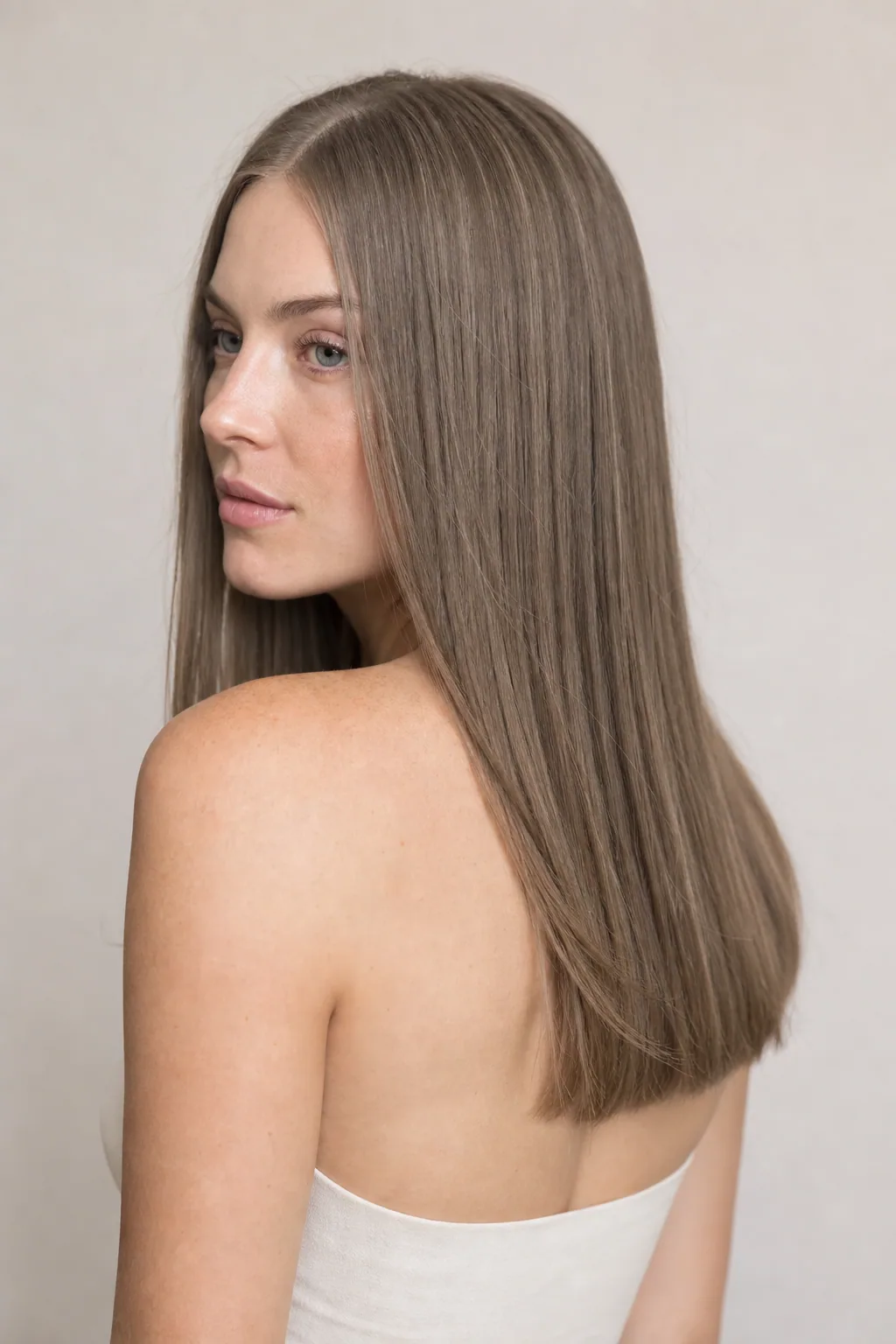
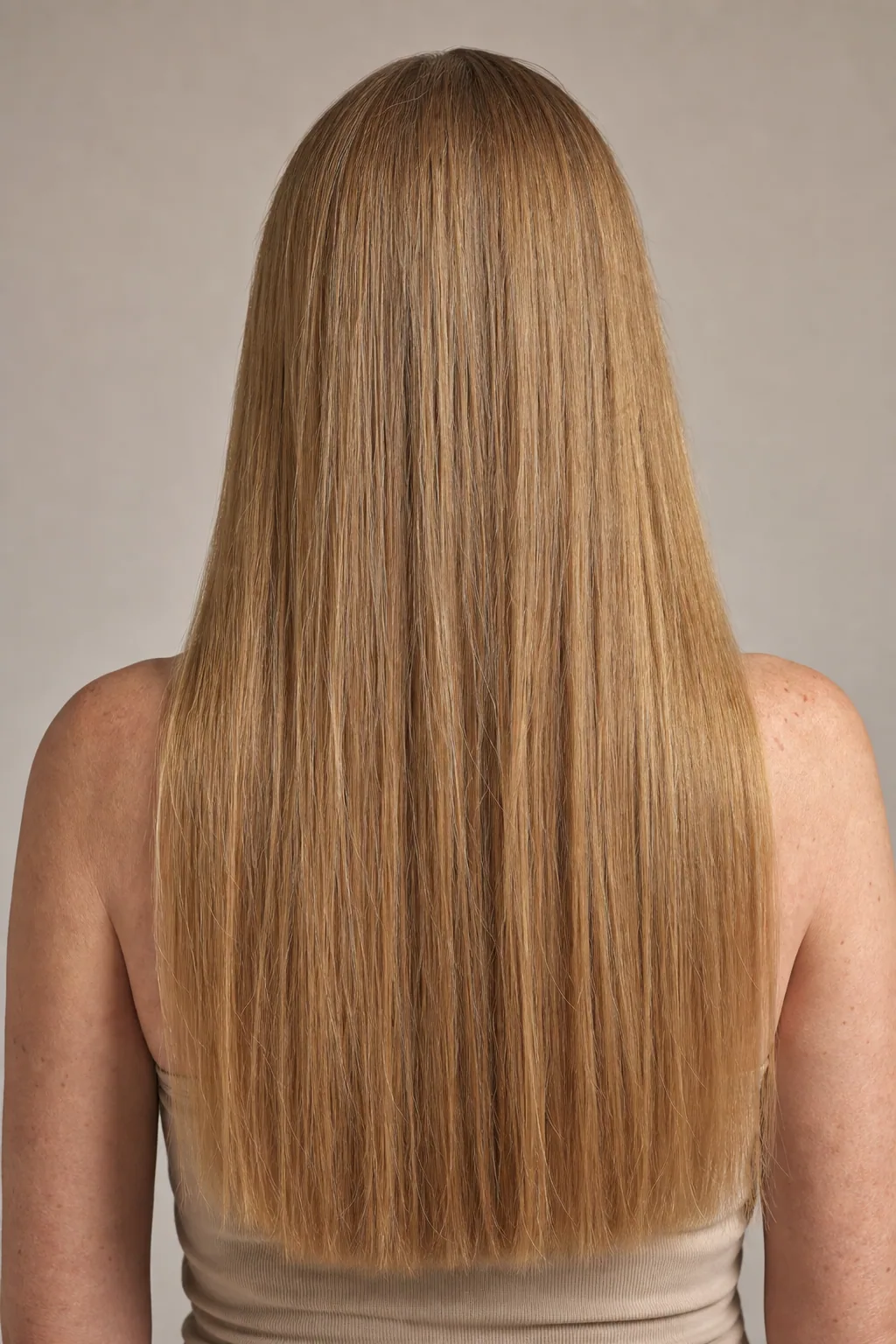
Mid-back length, blunt across the bottom, with the interior shortened by three or four inches under the top section. It's the version to ask for by default: the hemline still reads heavy from behind, and the mid-lengths finally have somewhere to go instead of hanging in a sheet.
2
The crown-weighted version
The same cut with the internal layers concentrated in the top third rather than spread evenly down the head. This is the one to choose if your complaint is flatness rather than shapelessness, because it takes weight off the crown specifically — the spot where fine hair loses height first. It pairs with a root lifter rather than replacing one.
3
Ghost layers with a soft front
Internal layers everywhere, plus two visible pieces at the front cut to cheekbone level. Strictly speaking the front pieces aren't ghost layers at all — they're the one place you want the layer to show — but the combination is how most people actually want this cut, and it stops long fine hair from reading as a curtain either side of the face.
4
The grow-out-friendly minimum
A single shallow interior layer rather than a graduated run of them — enough to stop the hair lying dead flat, not enough to commit to. If you're growing your hair and every stylist visit feels like a negotiation about how much comes off, this is the ask that costs you nothing visible. Book it as a trim with internal layering rather than as a restyle.
5
The wave-friendly ghost layer
On fine hair with a natural bend, internal layers do double duty: they lift, and they let the wave form instead of being dragged straight by the weight below it. Ask for the interior taken a little shorter than you would on straight hair, since a wave shrinks up and forgives more. There's more on working with the bend you already have in haircuts for fine, wavy hair.
Ghost layers on medium-length hair
Shoulder to collarbone is where the technique earns its keep for most people — long enough to have an interior, short enough that flatness at the roots is obvious.
6
The collarbone ghost layer
The most-requested version of this cut and the easiest to live with. At collarbone length the hair is light enough that a modest internal layer changes the whole silhouette, and the blunt end still lands somewhere flattering on almost every face and frame. Twelve-week trims hold it.
7
The shoulder-length blunt-and-ghosted
Cut hard and straight across at the shoulder, with everything interesting happening underneath. Shoulder length is notorious for flicking out where it hits the fabric of your top; keeping the perimeter genuinely blunt and putting all the movement inside is the version that flicks least. Worth pairing with the round-brush method in how to blow-dry fine hair for volume.
8
The version that survives a ponytail
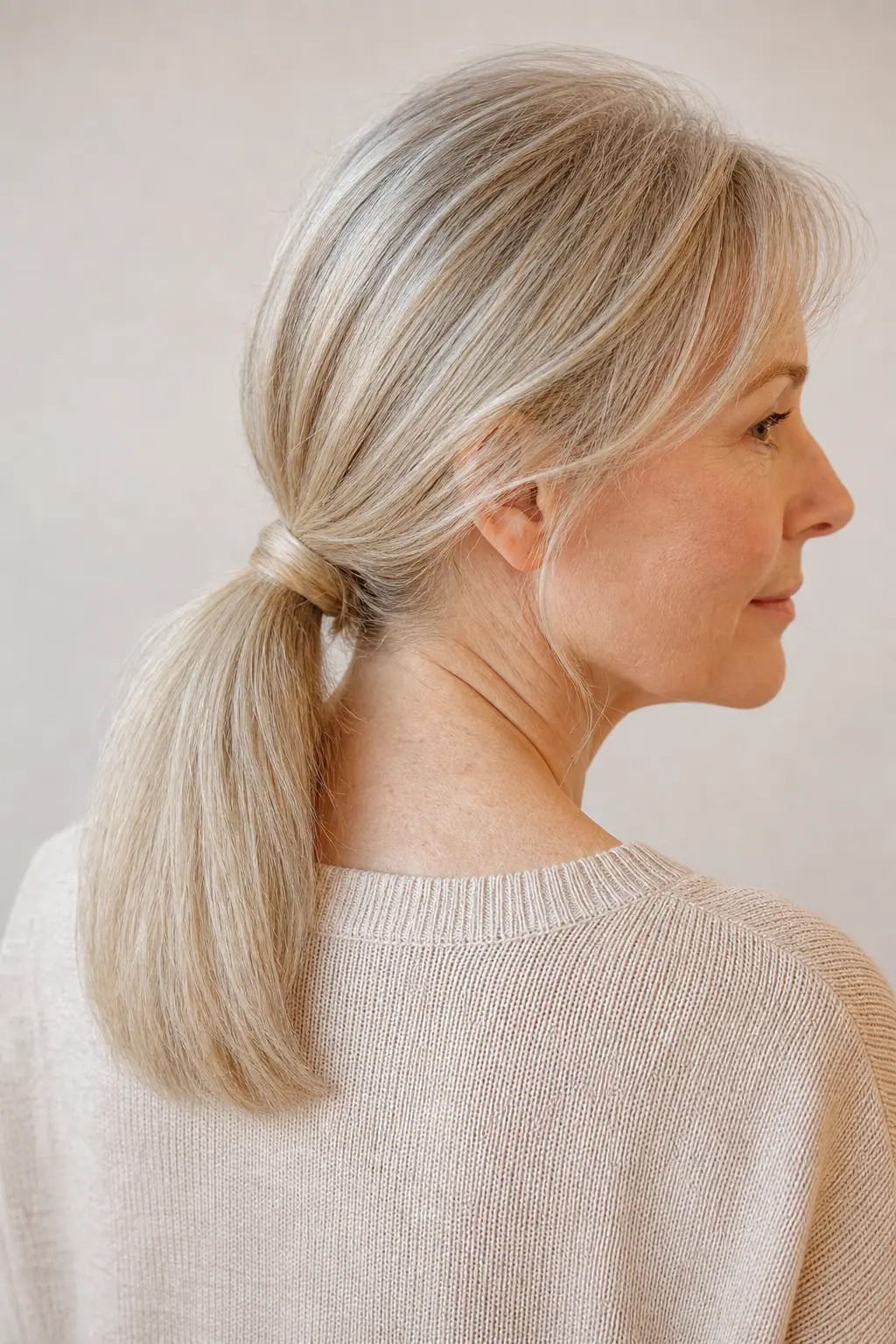
Conventional layers punish anyone who wears their hair up: the short pieces fall out and the ponytail tapers to a point. Because ghost layers keep the perimeter one length, a ponytail made from this cut still ends in a blunt, solid tail. If your hair is up more days than it's down, this is the argument for the technique in one sentence — and it's why it pairs with the tricks in fuller-looking ponytails for fine hair.
9
The deep-side-part ghost layer
Internal layers cut a touch shorter on the heavy side of a deep part, so the hair sweeping over the top has something propping it up. A deep part is already one of the cheapest volume tricks fine hair has; this makes it hold past lunchtime. Ask your stylist to cut it with the part where you actually wear it, not where they find it.
10
Ghost layers under curtain bangs
A fringe already gives the front of your hair a job; ghost layers give the back one. The two work together because the fringe supplies the visible movement and the internal layers supply the height behind it, so nothing has to be cut into the mid-lengths where fine hair shows every step. If you're new to the fringe half, start with curtain bangs for fine hair.
Ghost layers on a lob and shorter
Below collarbone the interior starts running out. These four are the versions that still work, and the last one is a warning as much as an entry.
11
The ghosted blunt lob
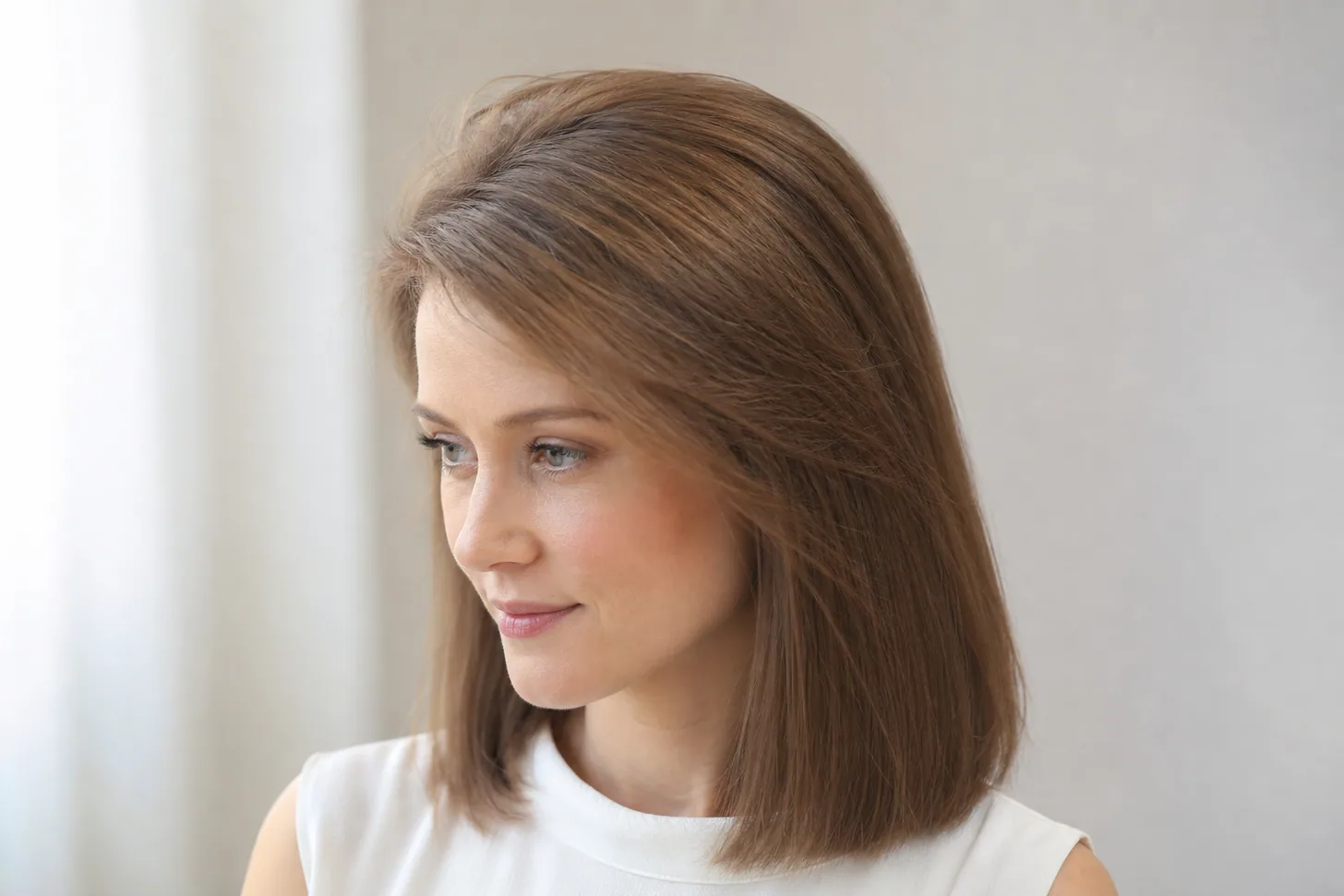
A blunt lob is the strongest fine-hair shape there is, and its one weakness is that it can hang like a helmet. A shallow internal layer fixes exactly that without touching the hemline that makes it work. This is the lowest-risk entry point to the technique — see the lob for fine hair for the length and weight variations underneath it.
12
The crown-only bob version
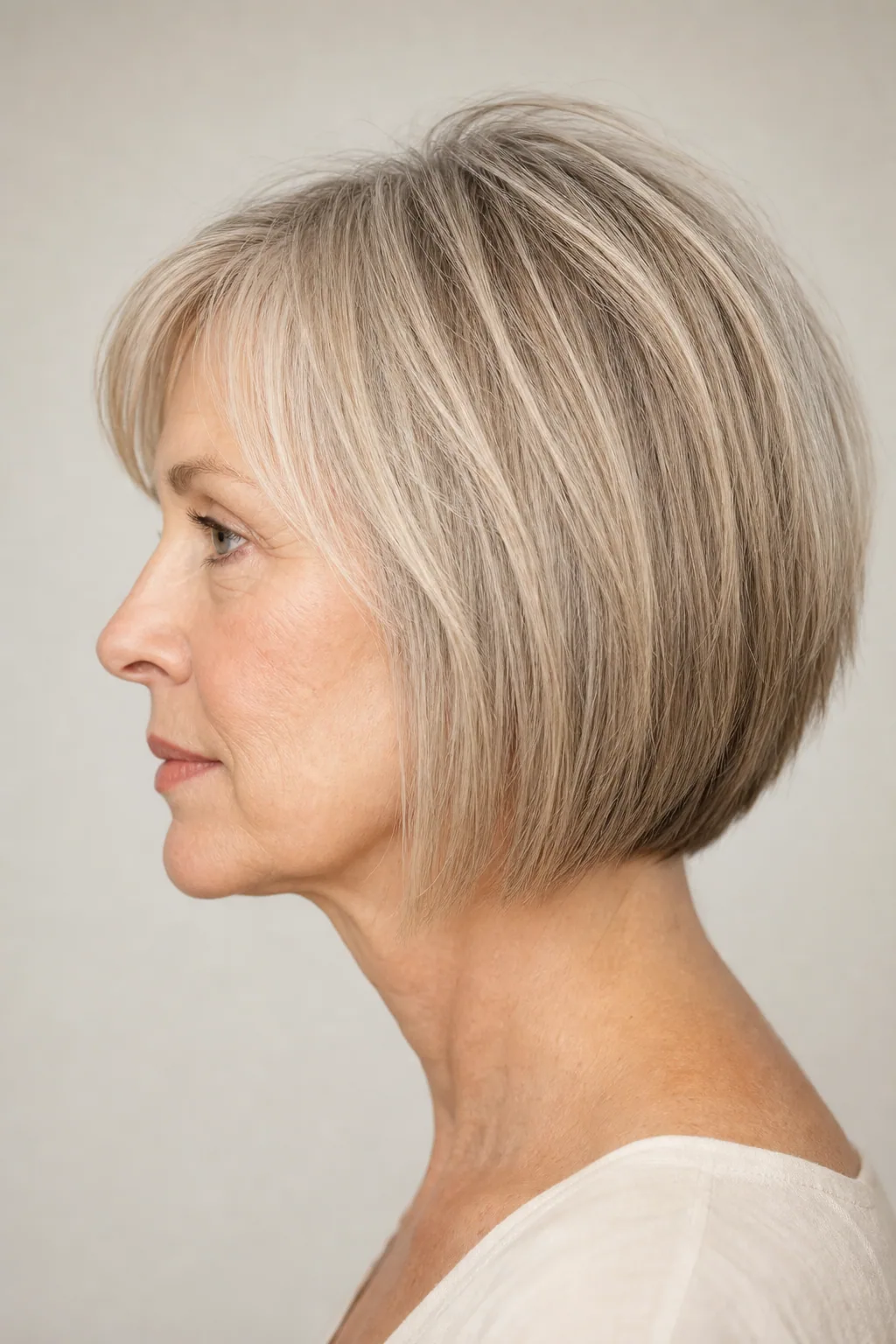
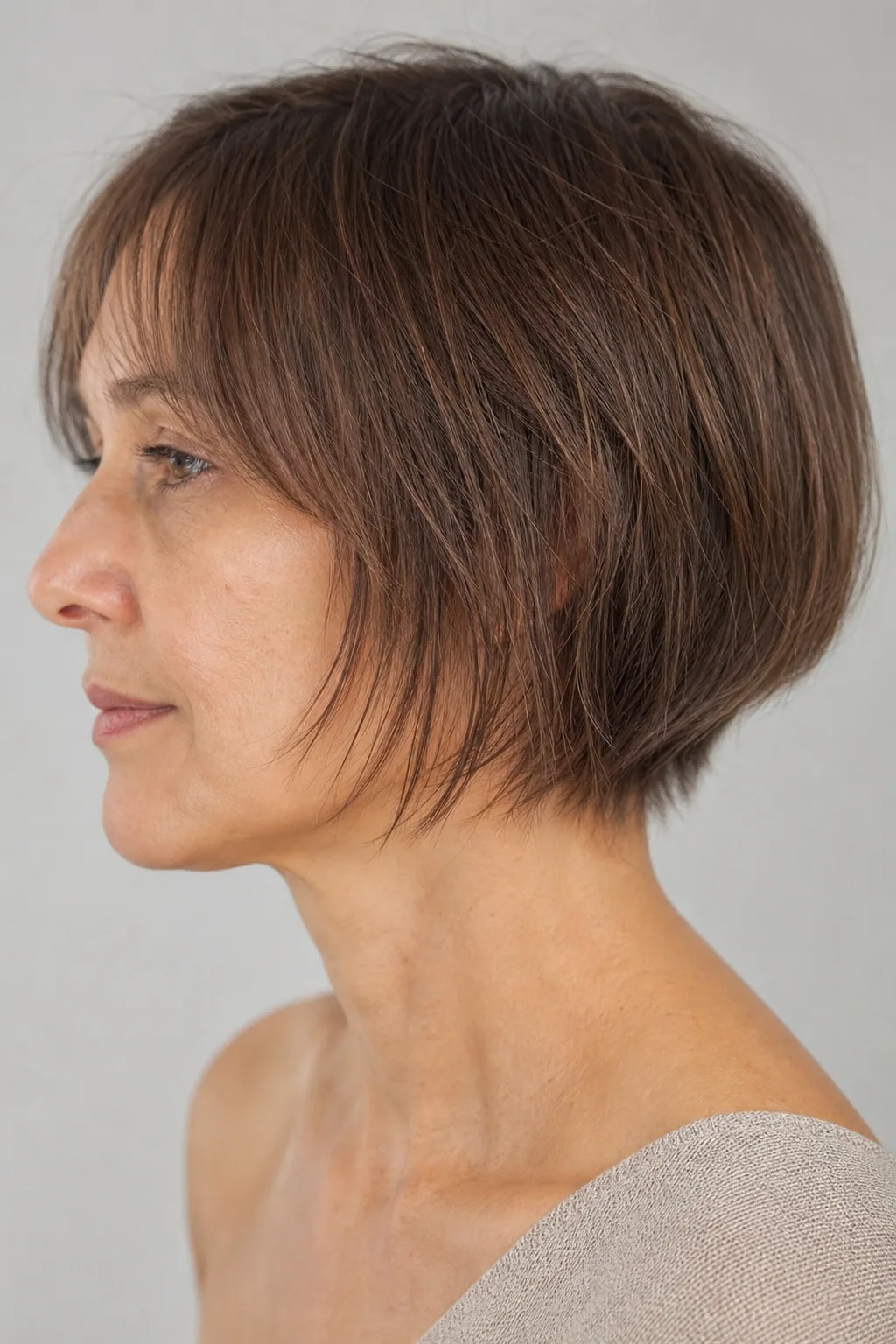
At chin length there's only one place left to hide a layer, and it's the crown. Two or three short interior sections at the top of the head, nothing below — enough to stop the bob sitting flat against the skull. Any lower and the layer surfaces, at which point you have a conventional layered bob, which is a good cut but a different one.
13
The grow-out bridge
The most practical use of ghost layers and the least discussed. Somewhere between a bob and a lob every cut goes shapeless, and the usual fix — layering it — costs you the length you're trying to gain. Internal layers get you through that stage with a silhouette and no sacrifice, and they're the reason people report growing their hair out "without it looking terrible for a year."
14
One to skip: ghost layers above the jaw
Shorter than jaw length, there is no interior — every section is a surface section, so a "ghost" layer surfaces immediately and behaves like an ordinary one, only nobody warned you it would. On fine hair that means visible steps and tapered ends on a cut that has no length to spare. If you're at this length and want height, ask for graduation at the back instead, as in the stacked bob for fine hair.
Making them show
A ghost layer is a permission slip, not a hairstyle. It removes the weight that was stopping your hair lifting; it doesn't lift it for you. Three things get the volume out of the cut:
Dry the interior first. The layers doing the work are underneath, and if you dry the surface and call it done, the pieces holding it out are still damp and flat. Clip the top section up, dry the inside from the roots with your fingers, then let the top down.
Root product only under the top section. A mousse or root lifter applied to the interior roots lifts the layers that prop everything else up, and keeps product off the surface hair where it would flatten the shine. Everything about the weight budget is in how to add volume to fine hair.
Let it cool before you touch it. Hair holds the shape it cools in, which is why a blow-dry looks great in the mirror and flat by the car. Ghost layers give the shape somewhere to hold — the cooling is what fixes it there.
When ghost layers aren't your best move
You can see your part widening at the crown. There's no top section dense enough to conceal a layer, so it will surface. Start with coverage for thinning on top before you cut anything internal.
Your hair is shorter than chin length. No interior, no ghost. Graduation at the back does the same job at that length.
Your complaint is see-through ends. Internal layers don't touch the ends, so they can't fix them. Worn, tapering ends need taking off — that's a length decision, not a layering one.
You've been texturized before and the hair never recovered. Ask specifically for point cutting and no thinning shears, and consider waiting until the notched sections have grown past your shoulders.
You want the change to be visible. This cut is designed not to show. If you want your hair to look different rather than fuller, you want conventional layers or a new shape entirely.
FAQ
Ghost layers are layers cut underneath the top section of the hair rather than through it, so the surface stays one length and only the volume changes. The shorter interior pieces sit beneath the longest pieces and hold them out from the head, which is what reads as fullness. Because the layer never surfaces, you don't see steps, and the length in the mirror is the same length you walked in with. They're also sold as invisible layers or internal layers — the same idea under three names.
They're one of the few layering techniques that suit fine hair, because they add volume without removing anything from the perimeter — and an intact perimeter is the single biggest thing fine hair has going for it. The condition is density on top. Ghost layers only stay invisible if there's enough hair above them to cover them, so they work well on fine hair with average density and poorly on fine hair that's genuinely sparse at the crown. Check the top of your head, not the ends — and if you're not sure which of the two you have, fine hair and thin hair aren't the same thing.
Position, not technique. Normal layers are cut through the outer sections, so you see them as steps in the surface of the hair and they shorten what's visible. Ghost layers are cut only in the interior, under the top section, so nothing on the surface changes length. The practical difference for fine hair is that normal layers make the ends look thinner while ghost layers leave the ends alone and lift from underneath instead.
They make it look fuller rather than thicker, and the distinction matters. Nothing about the cut adds strands or widens them. What happens is that shorter interior pieces prop the surface layer away from the head, so the silhouette gains depth and light stops passing straight through. That reads as more hair. It works best in the top third of the head and does nothing for see-through ends, which is a length problem and needs the ends taken off.
No, and this is the most important thing to say out loud at the salon. Some stylists deliver invisible layers with texturizing or thinning shears, which notch hair out of the middle of a section. On fine hair that removes density you can't spare and leaves the interior wispy, so the hair collapses within weeks. Ghost layers on fine hair should be point-cut or slide-cut with shears — the section is shortened, not thinned. Say: "point-cut, no texturizers." More phrases like it in the exact words to ask for a fuller-looking haircut.
Every twelve to sixteen weeks, which is longer than almost any other layered shape. Because the layer is internal and never forms a visible line, there's no step to grow out awkwardly — it just gradually stops lifting as the interior catches up with the length. Most people notice the volume fading before they notice anything about the shape. That slow, shapeless grow-out is the main practical argument for ghost layers over conventional ones.
Below about chin length there isn't enough interior left to hide anything in, so any layer you cut will surface and become a normal layer. On a jaw-length bob you can get a very shallow version at the crown only, and on a lob it starts to work properly. If your hair is shorter than that and you want volume, the lever is graduation at the back rather than internal layering.
They shouldn't, and that's largely the point of them. The blunt perimeter is untouched, so the hemline stays as heavy and as dense-looking as it was. What changes is what happens above it. The one way to lose the blunt effect is to let the interior layers get too long, so they start falling within an inch of the perimeter and break up the line from underneath — ask for the shortest interior piece to stay well clear of the ends.
Eleven years behind the chair, cutting fine and thin hair into shapes that hold. Simone books ghost layers more than any other technique on long fine hair — and turns them down for anyone whose crown can't cover them.
Results vary with hair type, density, and growth patterns. This guide is educational and not a substitute for an in-person consultation with a licensed stylist.
Hairstyle images in this guide are AI-generated illustrations, not photos of real clients or results. See our image policy.
Get the good hair intel
One honest, stylist-written guide in your inbox each week. No hype.

 SB
SB