Reviewed by Tara Sullivan · Updated August 2026 · 10 min read
The mullet is the only mainstream haircut defined by a disconnection — a deliberate hard break between the short top and the longer tail. And disconnection is the one thing fine hair cannot afford, because a hard line needs enough density on both sides of it to read as a shape rather than as a gap. That's why fine-haired mullets go wrong in a specific, predictable way: the eye lands on the break and reads sparseness.
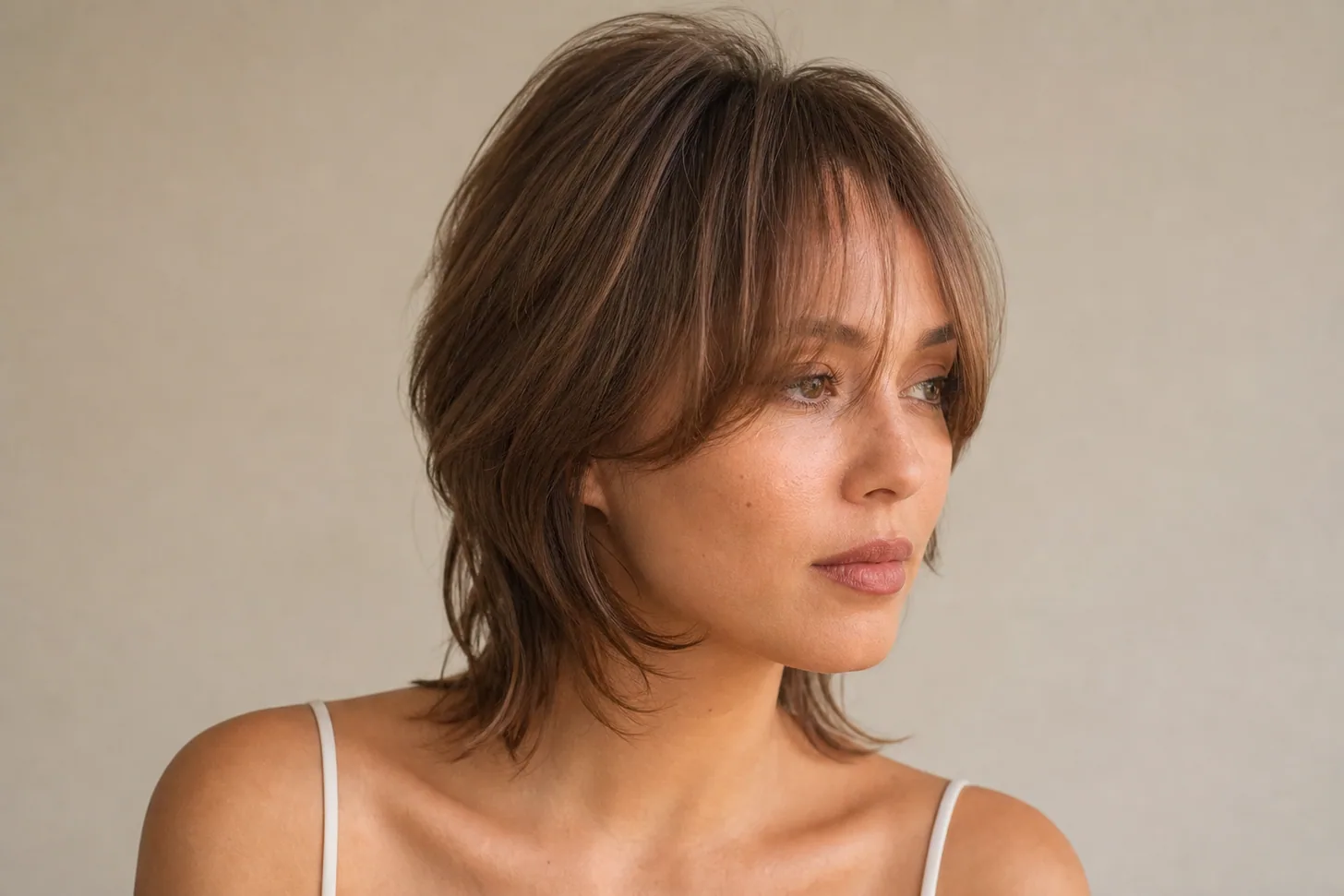
The fix isn't a different length — it's a connected mullet, where the contrast comes from length alone and no line is cut into it. Below: 14 versions built that way, grouped short to long, plus the one to skip, the three rules to hand your stylist, and an honest account of how it grows out.
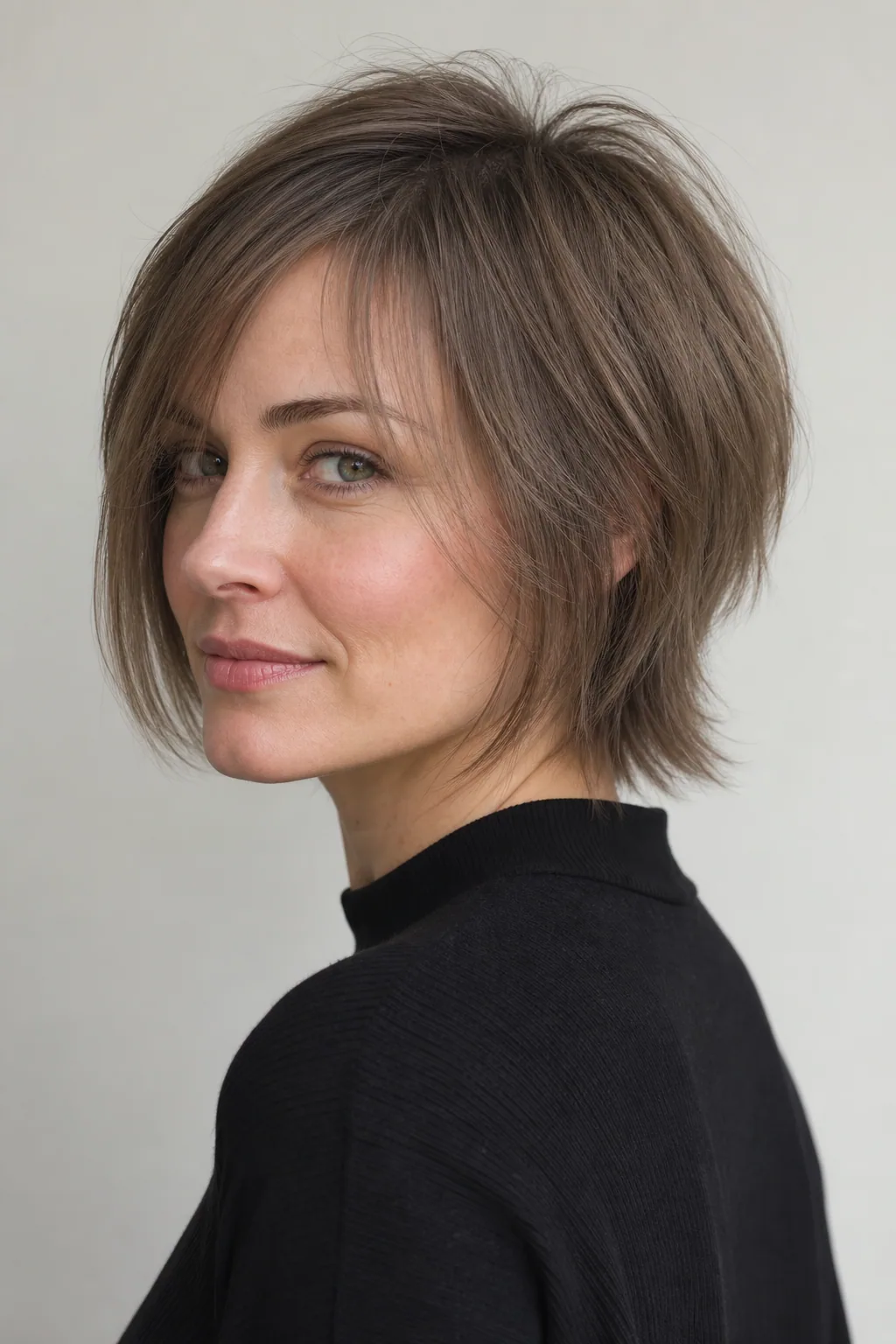
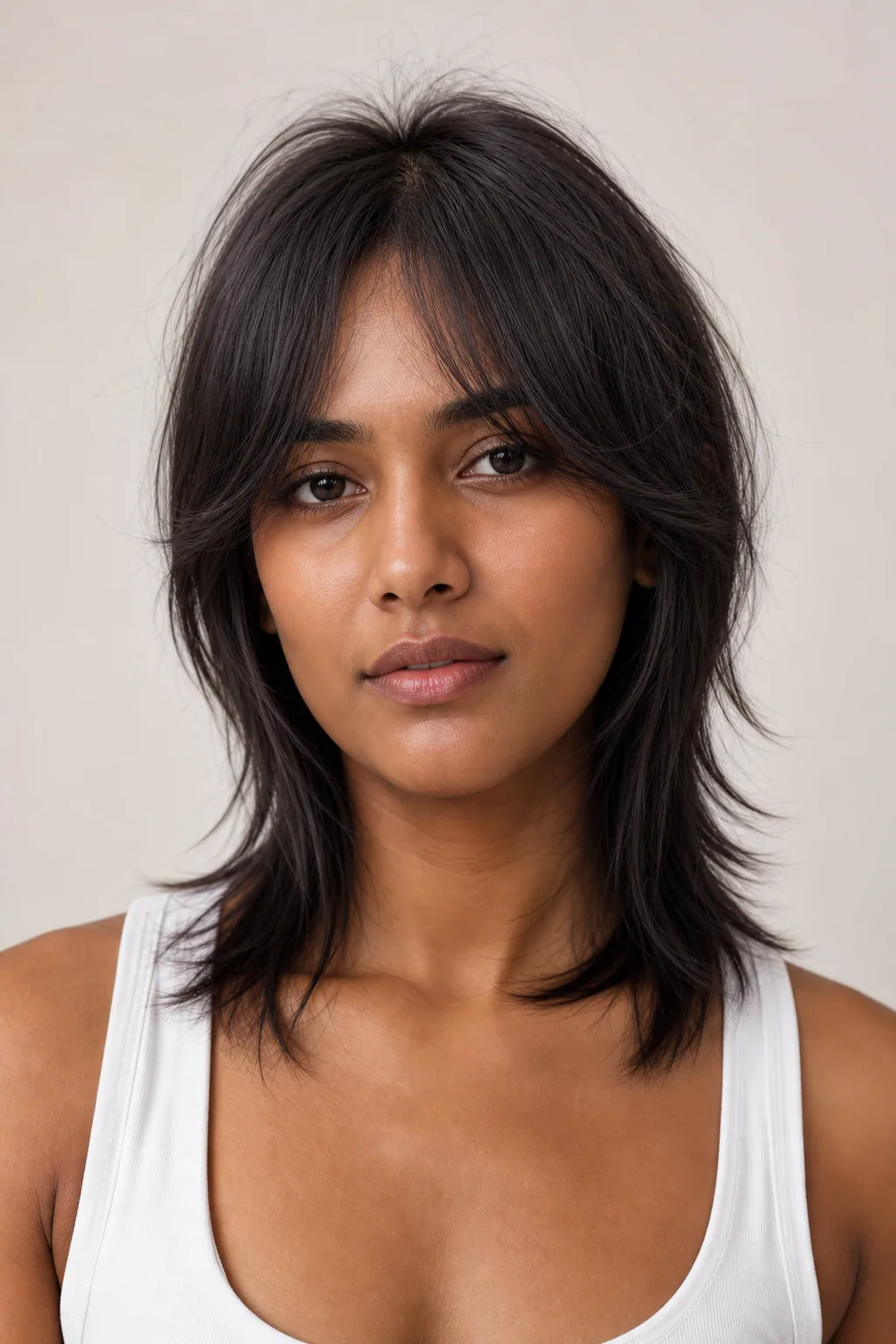
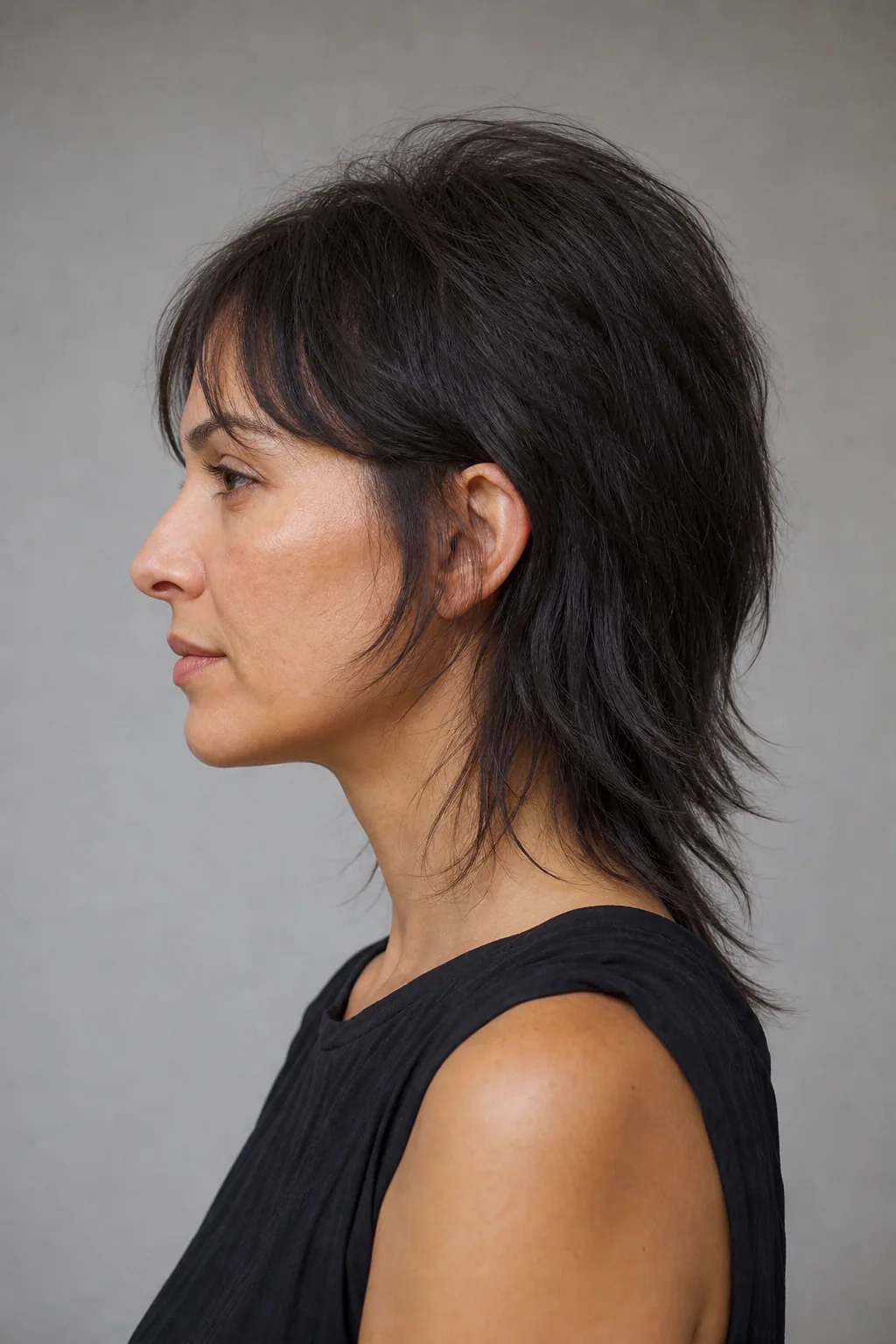
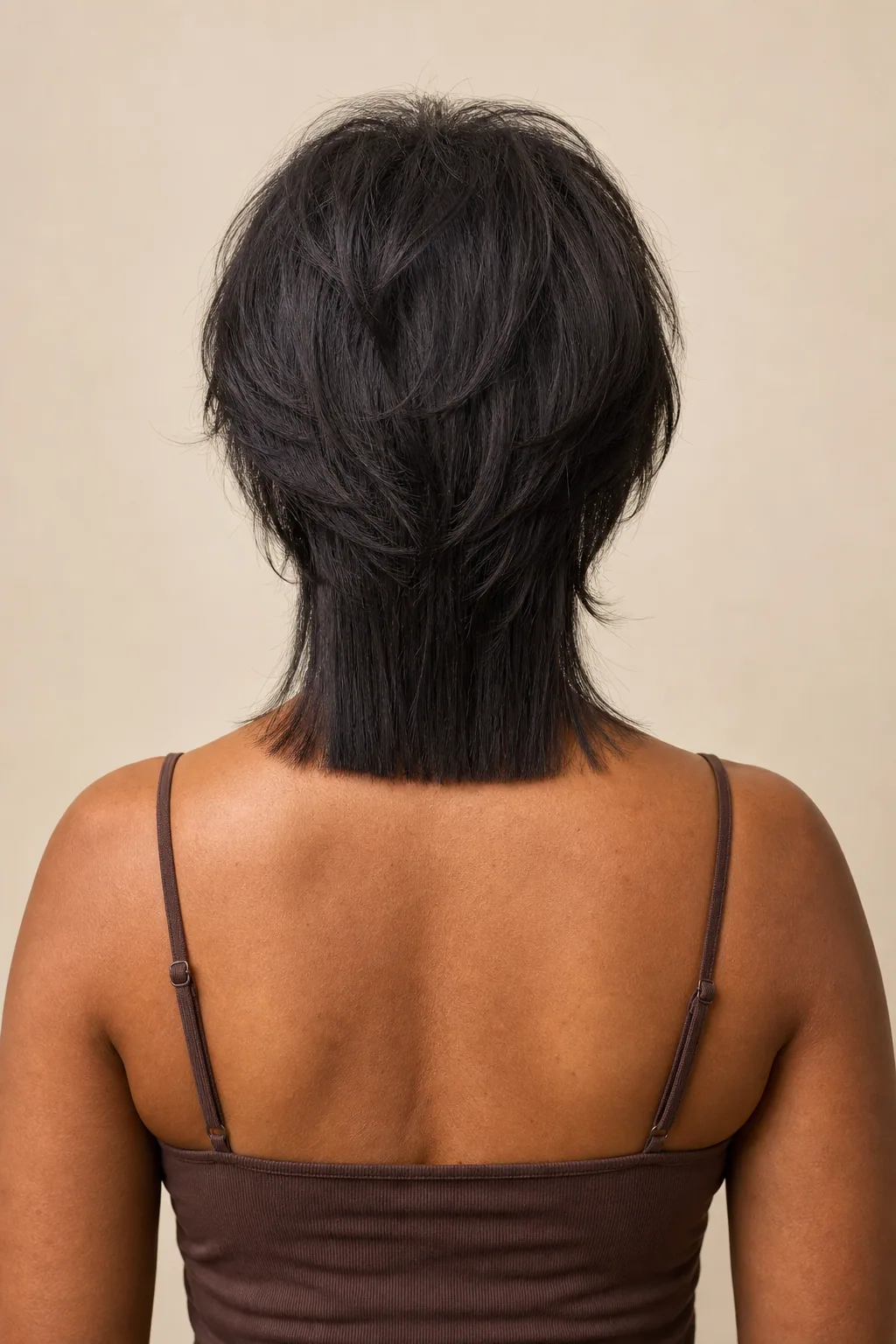
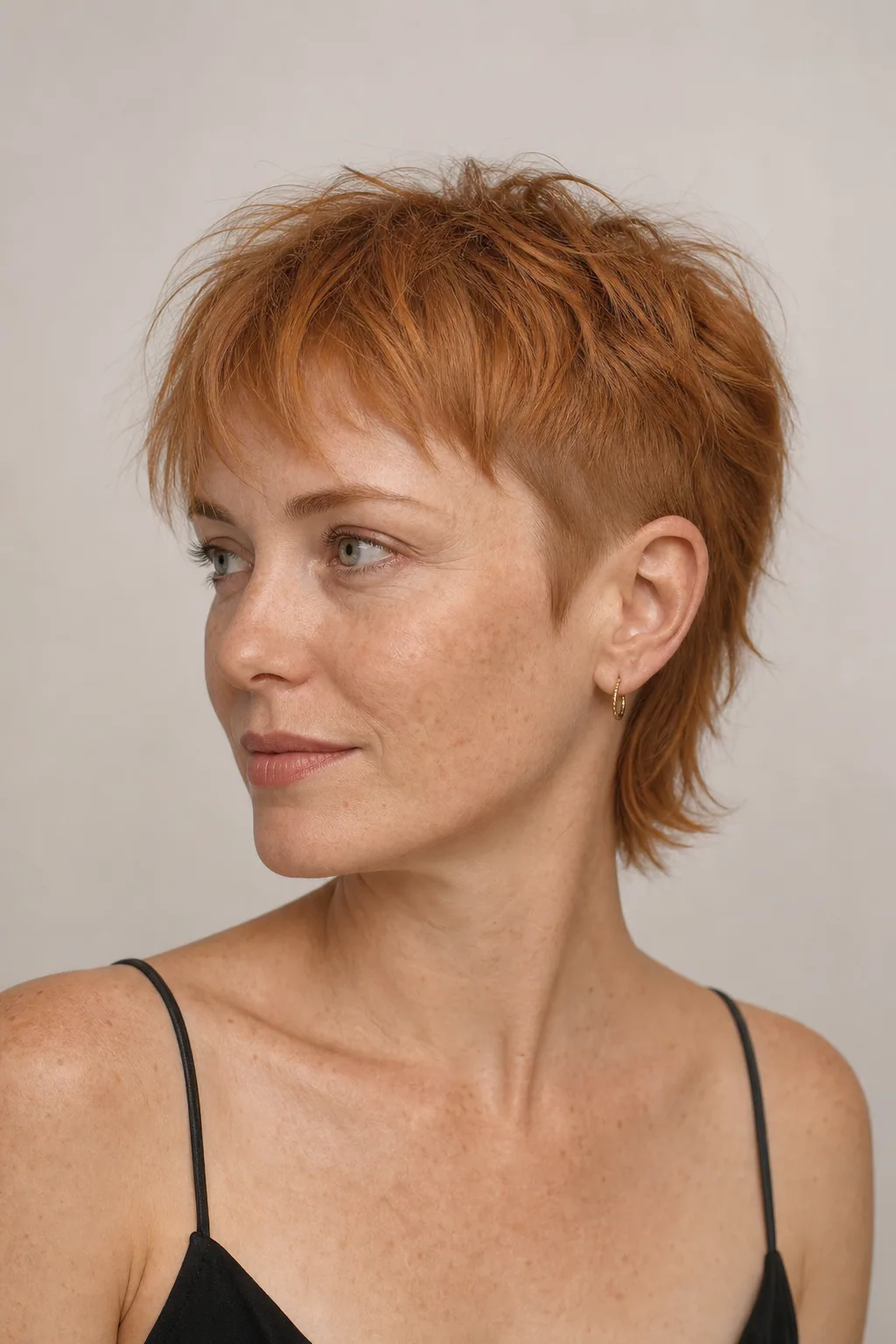
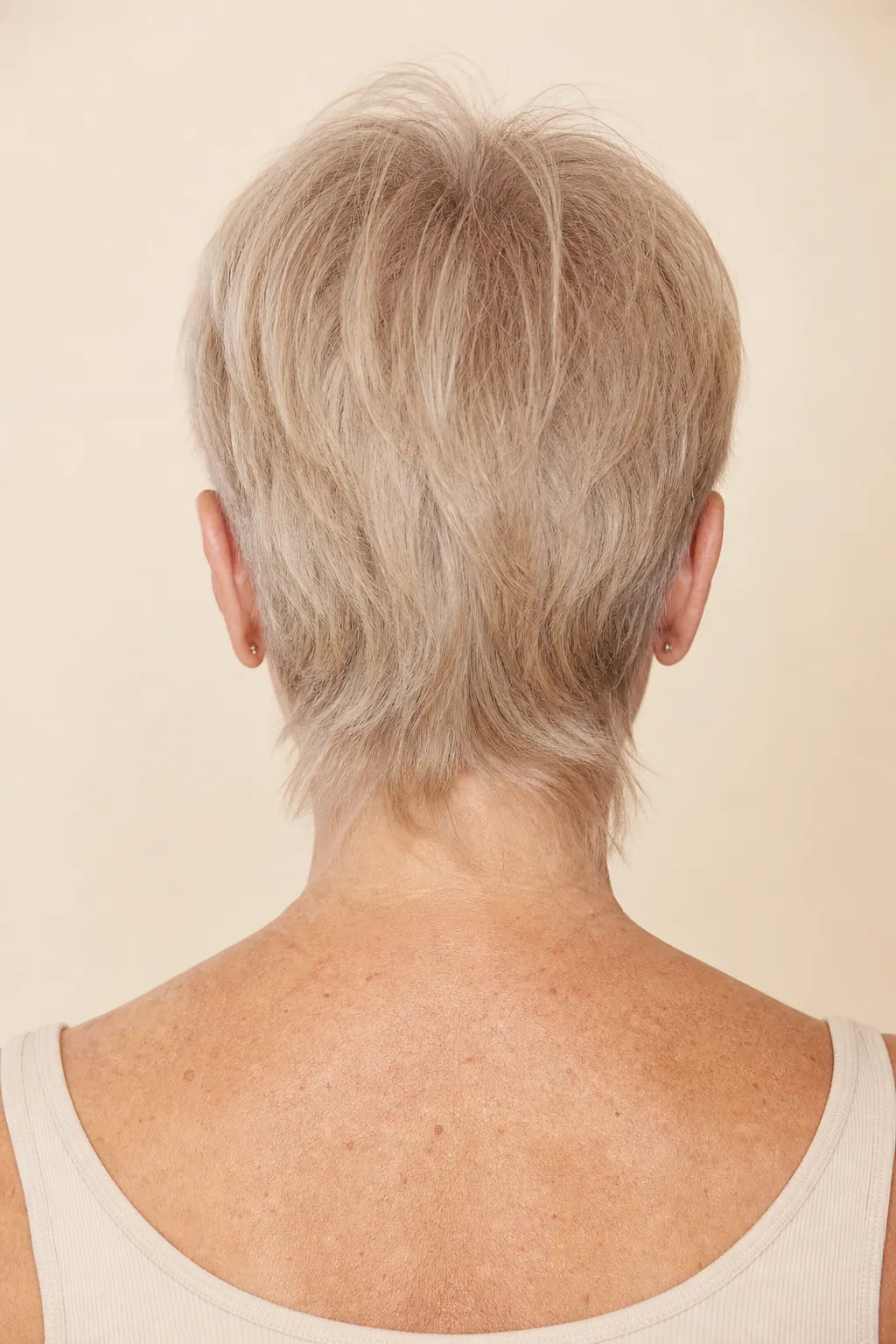
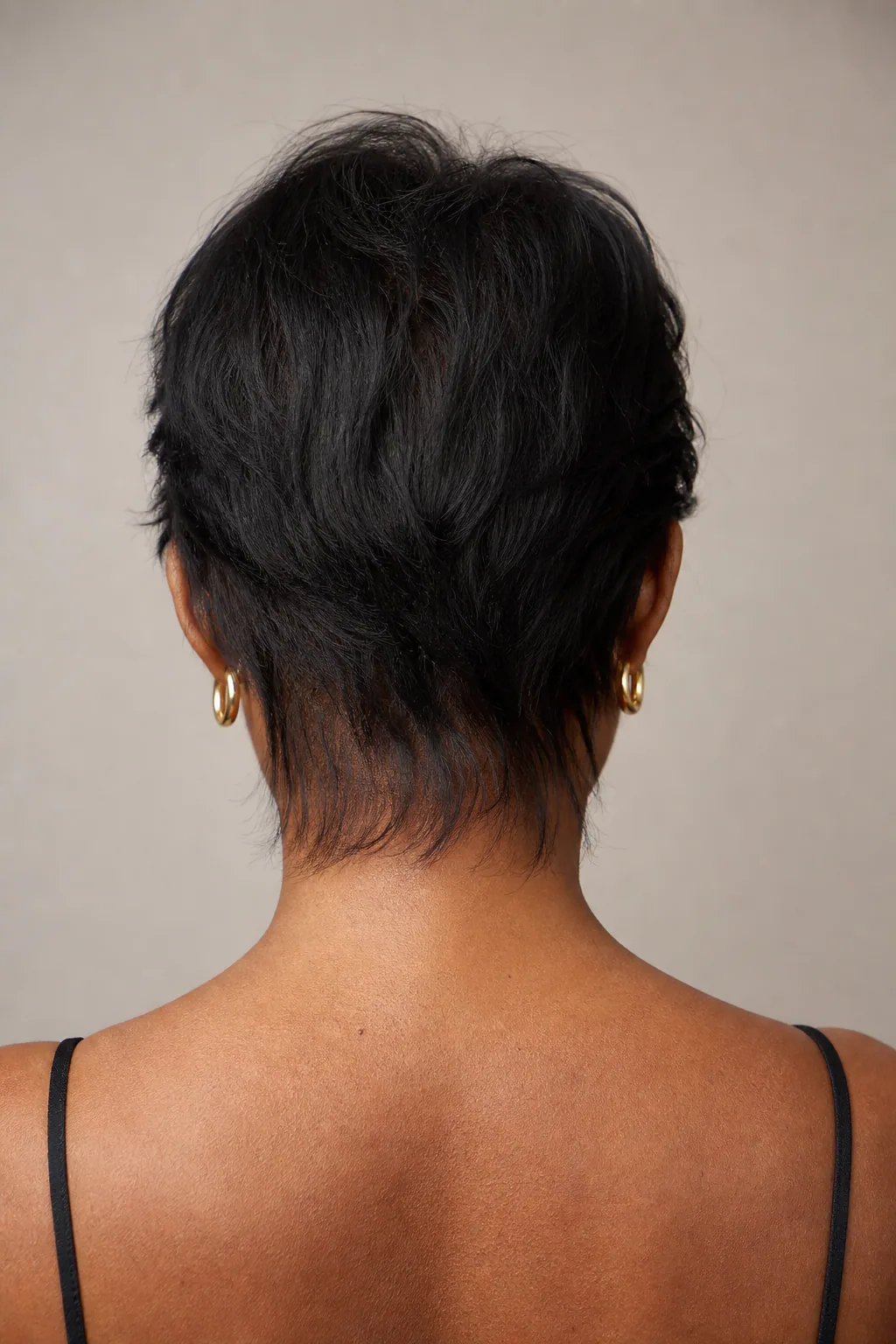
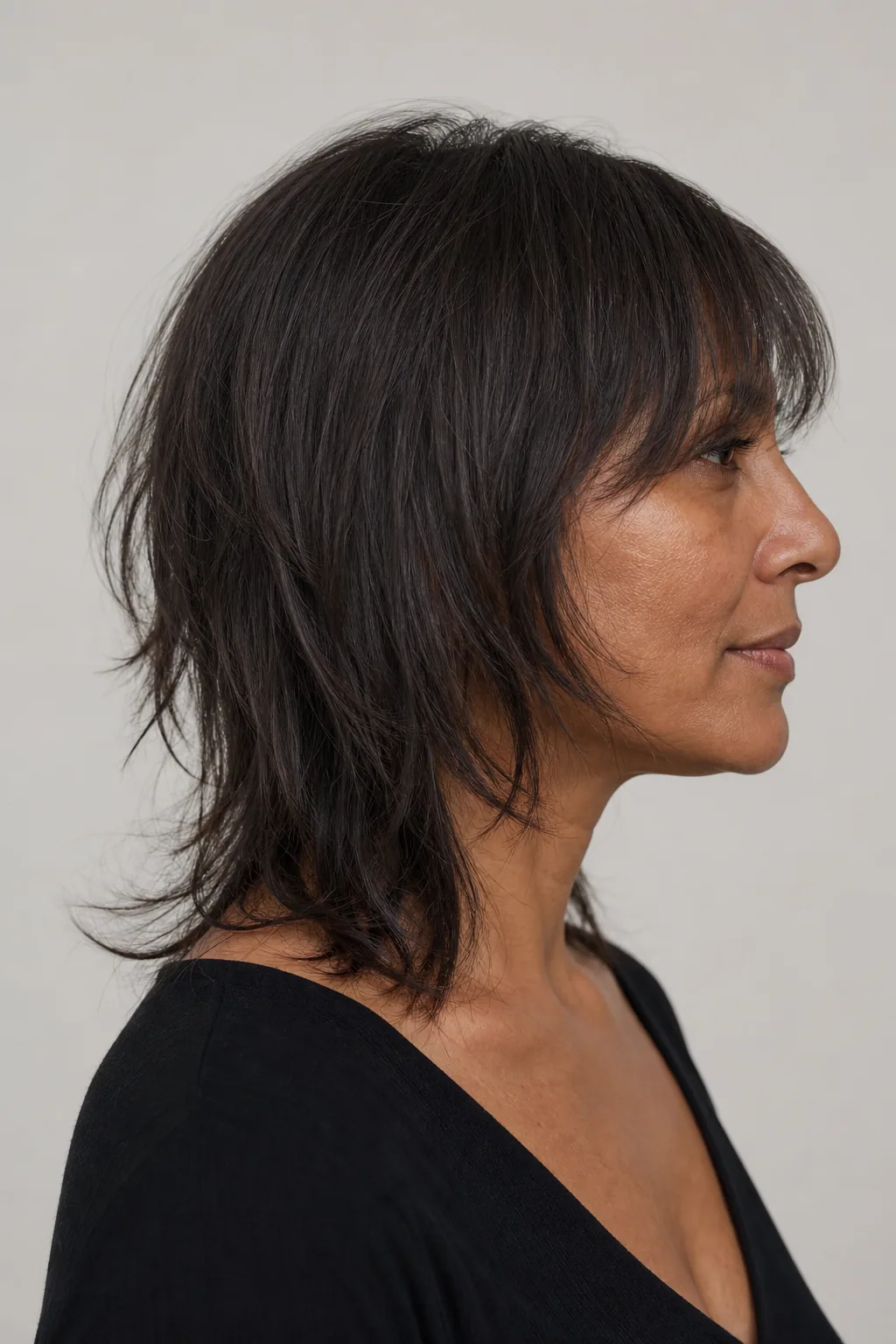
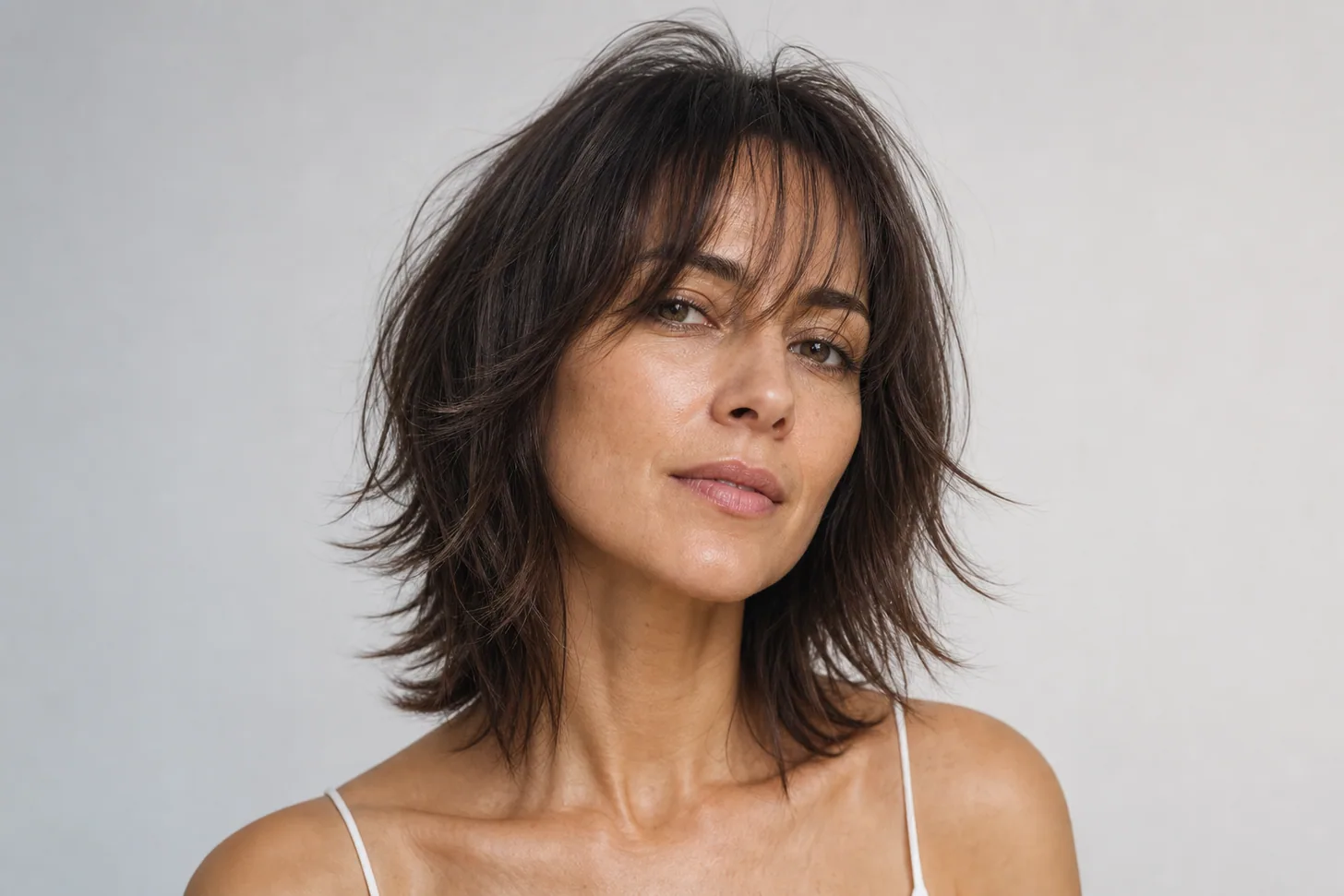
A connected mullet: contrast from length, not from a cut line.
Chair-side note
Every mullet consultation I do on fine hair now starts the same way: I put two fingers at the corner where the side meets the back and say "this is the whole cut." Not the tail — nobody's mullet fails at the tail. It fails at that corner, where a stylist working fast leaves a step.
On dense hair the step disappears under the hair above it. On fine hair it sits there like a shelf, and by week three the client is convinced she has less hair than she did. I blend that corner over about two inches and cut nothing else differently. That's the difference between a mullet that people compliment and one you grow out in silence.
SB
— Simone Baptiste, Senior Stylist
What makes a mullet a mullet — and the word that decides it
Strip away the decades of jokes and a mullet is a simple structural idea: front-to-back length contrast. Short at the top, sides and fringe; longer at the back. Everything else — the fringe style, the texture, the tail length — is variation.
The contrast can be created two ways, and this is the fork in the road. A disconnected mullet cuts an actual break into the hair: the sides stop at one length, the back starts at another, and nothing bridges them. A connected mullet travels between the two lengths through a graduated run of layers, so there's no single line — just a shape that gets longer as it goes back.
Disconnection is what gives a mullet its edge, and it's genuinely great on dense hair, where the layer above falls over the break and turns it into a graphic edge.
On fine hair there isn't enough hair above the break to cover it, so the line stays visible — and a visible line at the point where the hair changes length reads, unmistakably, as a place where hair is missing. Connected is not the timid version. It's the version that survives contact with fine hair.
The three rules for a fine-hair mullet
Hand these to your stylist and almost everything else takes care of itself. For where the mullet sits among everything else being requested this year, see fine hair trends for 2026.
Rule
What to ask for
Why it matters on fine hair
Connected, not disconnected
"Blend the corner where the sides meet the back — no step."
A visible break reads as a gap when there's no density above it to soften it
The shortest tail you'll accept
"Keep the tail collar length or above, with a solid perimeter."
A long, sparse tail below a full crown is the classic failure; length is where fine hair runs out of body
Point-cut only
"Point-cut the ends. No razor, no thinning shears."
A razor tapers each strand to nothing; thinning shears remove interior hair fine hair can't spare
One more thing worth knowing before the gallery, because these three cuts get ordered interchangeably and they aren't. A shag layers evenly all over with no deliberate front-to-back contrast. A wolf cut is a shag with a mullet-leaning tail. A mullet is the contrast itself.
In order of how much density they ask of you: shag, then wolf cut, then mullet. If your hair is both fine and low-density, the shag is the honest starting point — and the same silhouette logic that governs all three is in do layers help or hurt fine hair.
Soft connected mullets
The core of the category for fine hair. Contrast you can see, with nothing cut into the hair to create it.
1
The soft connected mullet
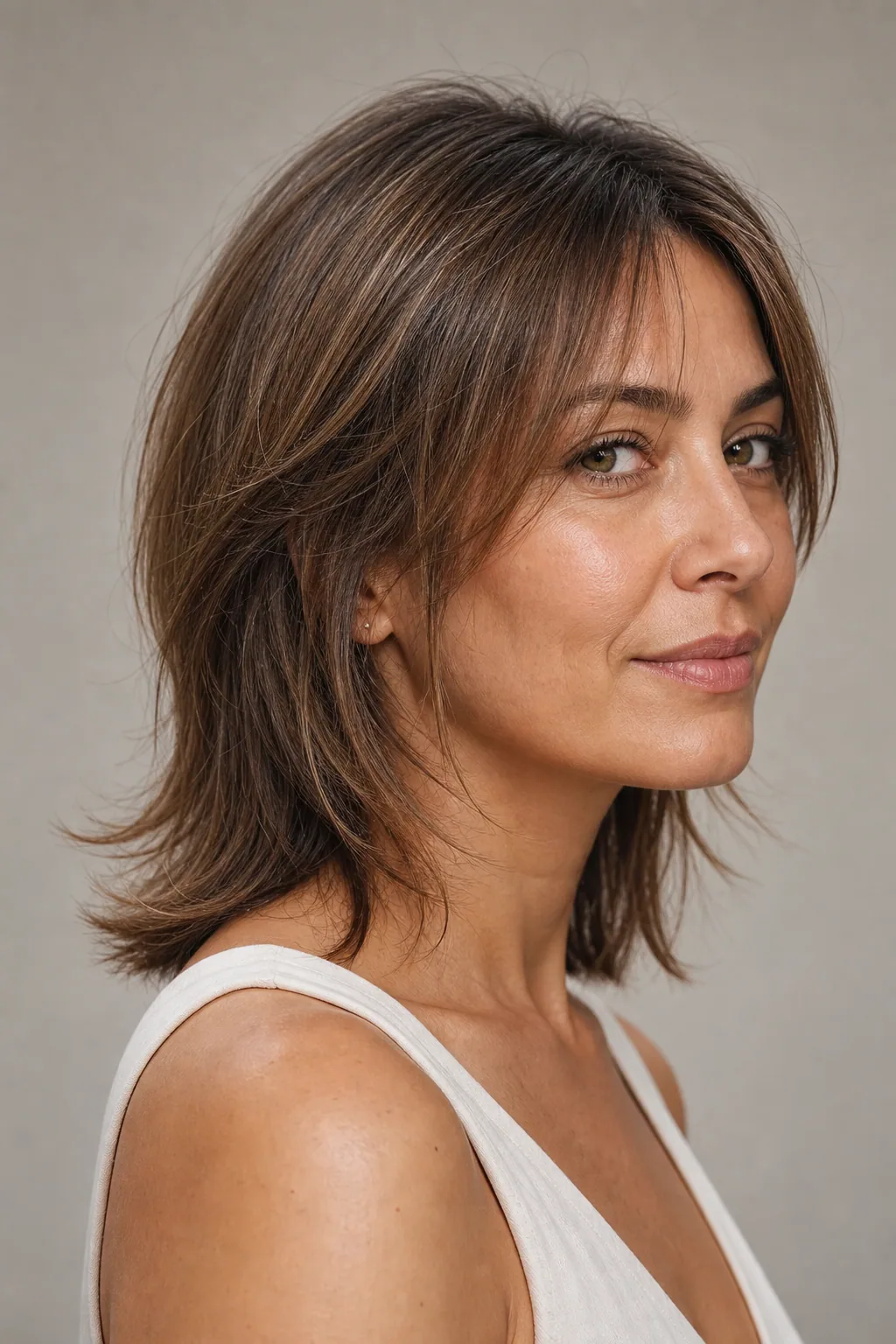
The default version, and the one to ask for if you only remember one thing from this page: chin-length at the front, collar-length at the back, and a graduated run of layers travelling between them with no step anywhere. The contrast is obvious in a mirror and invisible as a line, which is exactly the trade fine hair wants.
2
The curtain-fringe mullet
A centre-parted fringe that sweeps out to the cheekbones, softening the shortest part of the cut so the front doesn't look abruptly cropped. It suits longer face shapes particularly well, since the fringe adds width where a mullet otherwise adds height. If you already wear curtain bangs, this is the smallest possible step into a mullet — the fringe stays, everything behind it changes.
3
The rounded-crown mullet
Layers cut shorter through the crown specifically to build a dome of height at the top of the head, rather than distributing them evenly. This is the version that does the most for density, because it takes weight off the exact spot where fine hair falls flattest. Ask for "more layering through the crown than the sides" and expect to use a root lifter to keep the shape honest.
4
The blunt-tail mullet
Textured everywhere except the very bottom, where the tail is cut straight across and left solid. That blunt edge is doing structural work: an unbroken perimeter is the single most effective way to make fine hair look like it has more of itself, and it stops the tail tapering into wisps. The most under-requested version on this list.
5
The face-framing micro-mullet
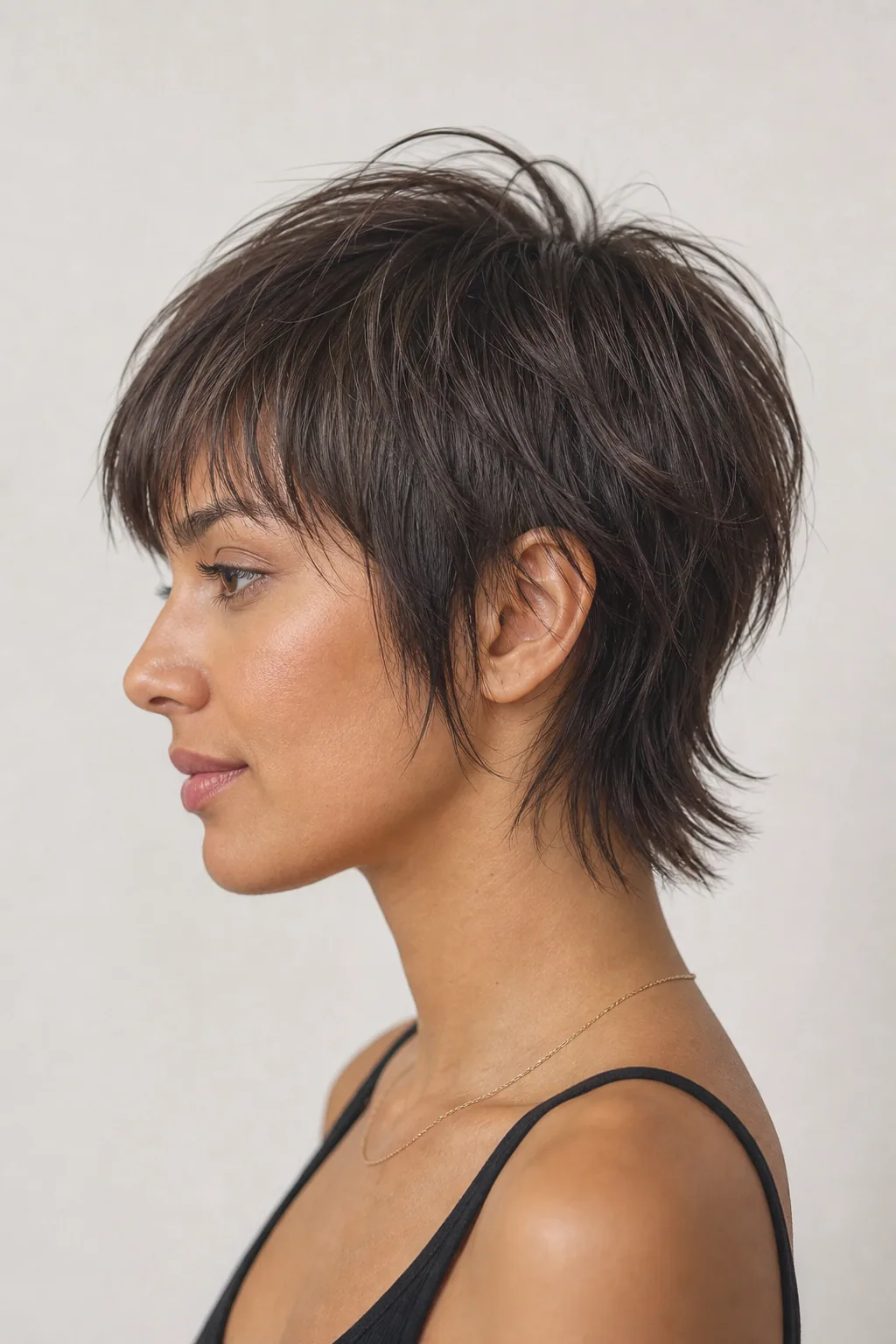
Barely a mullet — the contrast is an inch or two rather than four, with short pieces at the jaw and just enough length at the nape to register. If the idea appeals but the commitment doesn't, this is the trial version, and it grows out into an ordinary layered bob without an awkward stage.
Short mullets: bixie and pixie territory
Where the mullet meets the crop. These are the highest-impact shapes on fine hair, because taking the sides right down concentrates every remaining strand into the crown.
6
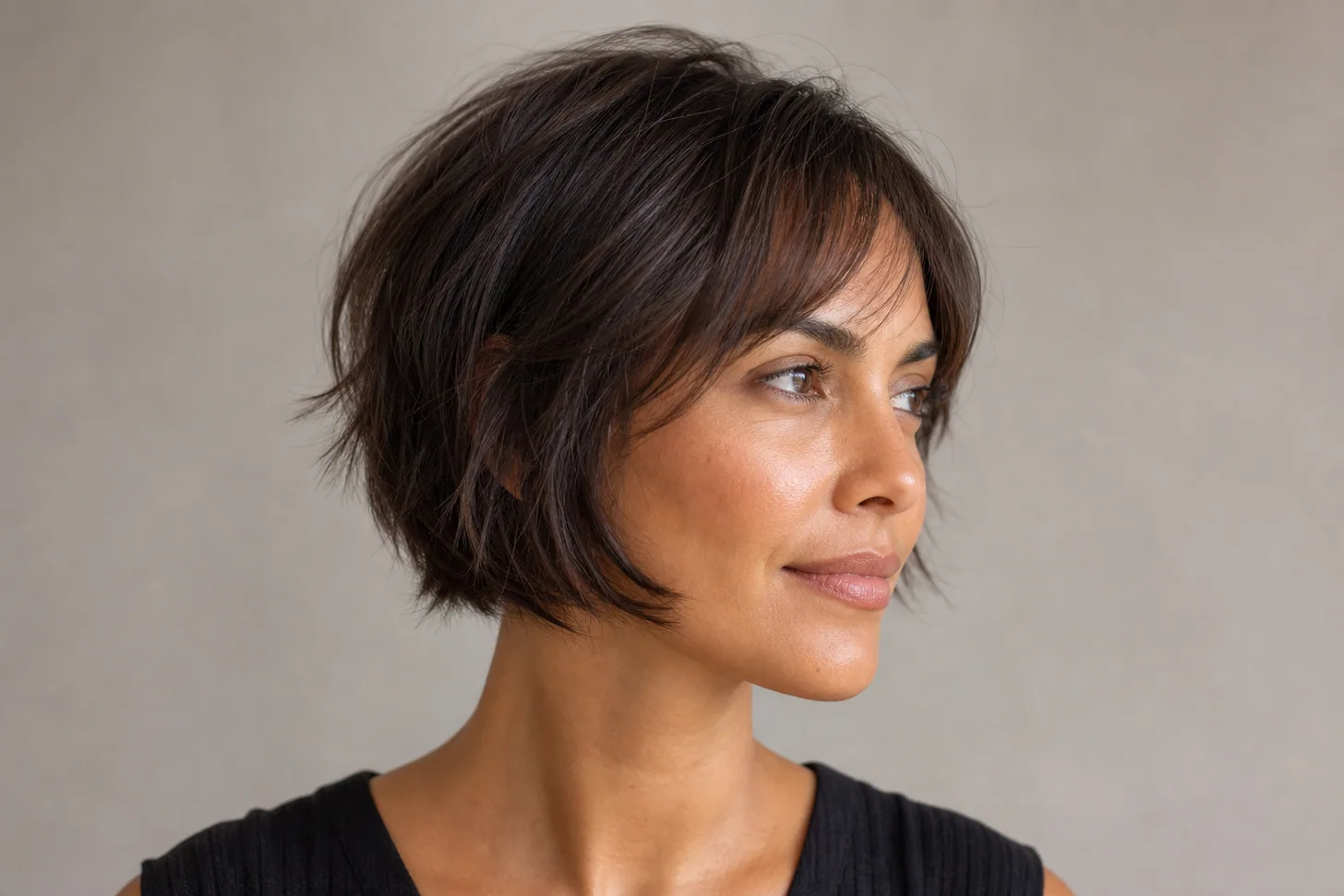
The bixie mullet
A bixie with the nape left long — cropped sides, a textured top with real height, and two or three inches of softness at the back. It's the most flattering short mullet on round and heart-shaped faces, because the height at the crown lengthens the whole silhouette. Maintenance is real: the sides need cutting every six weeks to hold the shape.
7
The nape-length mullet
The tail stops at the hairline rather than below it, which keeps every strand short enough to have body. This is the version I recommend most to clients over 50 with fine hair, because it delivers the shape without the tail that ages badly as density changes — see the fuller discussion in cuts for mature fine hair.
8
The tapered-nape mullet
Rather than a solid tail, the back narrows gradually toward the centre — a soft V that follows the natural hairline. It reads deliberate rather than grown-out, and it's the most forgiving option if your nape hair is finer than the rest of your head, which is true for a great many people.
9
The textured pixie-mullet
Short enough to count as a pixie from the front, with piecey separated layers through the top and a whisper of length at the back. The separation is the whole effect and it's a product effect, not a cut effect — a matte paste worked through dry hair with fingertips. Without it the layers merge and the cut disappears.
Longer mullets and mullet-lobs
The hardest group for fine hair to wear well, because length is where body runs out. These four keep the tail honest.
10
The mullet lob
Collarbone at the back, jaw at the front, with the layers between them doing all the connecting. It's the version that reads as "a lob with attitude" rather than as a mullet, which makes it the easiest to wear to an office. Keep the collarbone length as the absolute floor — below that, fine hair starts hanging rather than moving. The sibling shape is in the lob for fine hair.
11
The shoulder-grazing mullet
The longest length I'd cut into fine hair as a mullet, and it only works with genuinely aggressive crown layering to hold the top up against the weight below. Ask for the shortest crown layer to sit at eyebrow level when pulled forward. If the stylist hesitates at that, they're right to — it's a lot of layering, and it's what the shape needs.
12
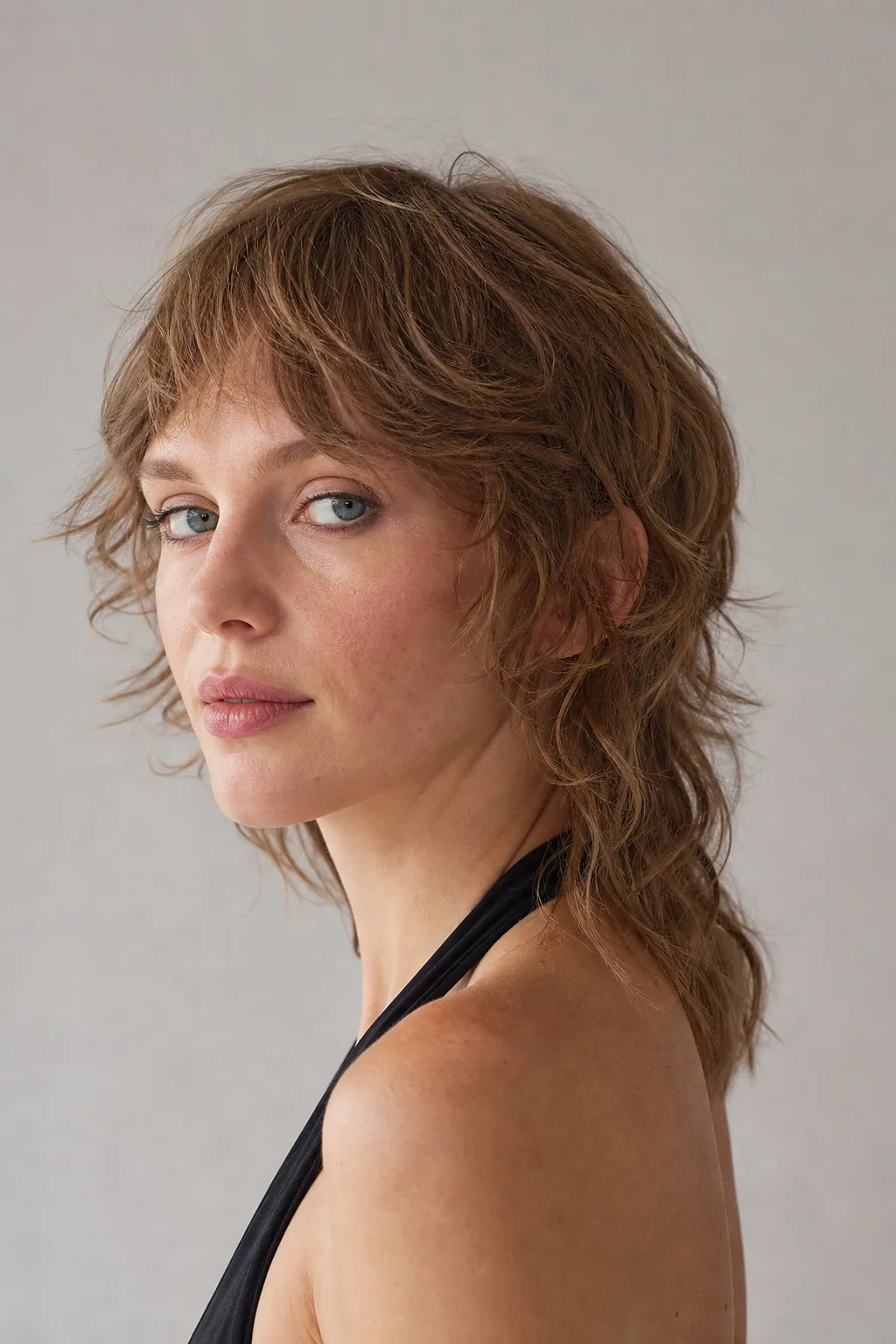
The wavy mullet
If you have any natural bend at all, this is the cheapest fullness on the list — a wave occupies more space than a straight strand does, so the same amount of hair fills more silhouette. Cut it slightly longer than you want it, since fine waves spring up more than you expect once the weight comes off. More on working with the pattern in fine, wavy hair.
13
The grown-out mullet
Worth including as a shape in its own right, because it's where most mullets spend half their life. At around four months a connected mullet stops reading as a mullet and starts reading as a long shag — soft, layered, no contrast worth naming. Some of my clients prefer it there and simply stop booking. That's a legitimate outcome, not a failure.
One to skip
14
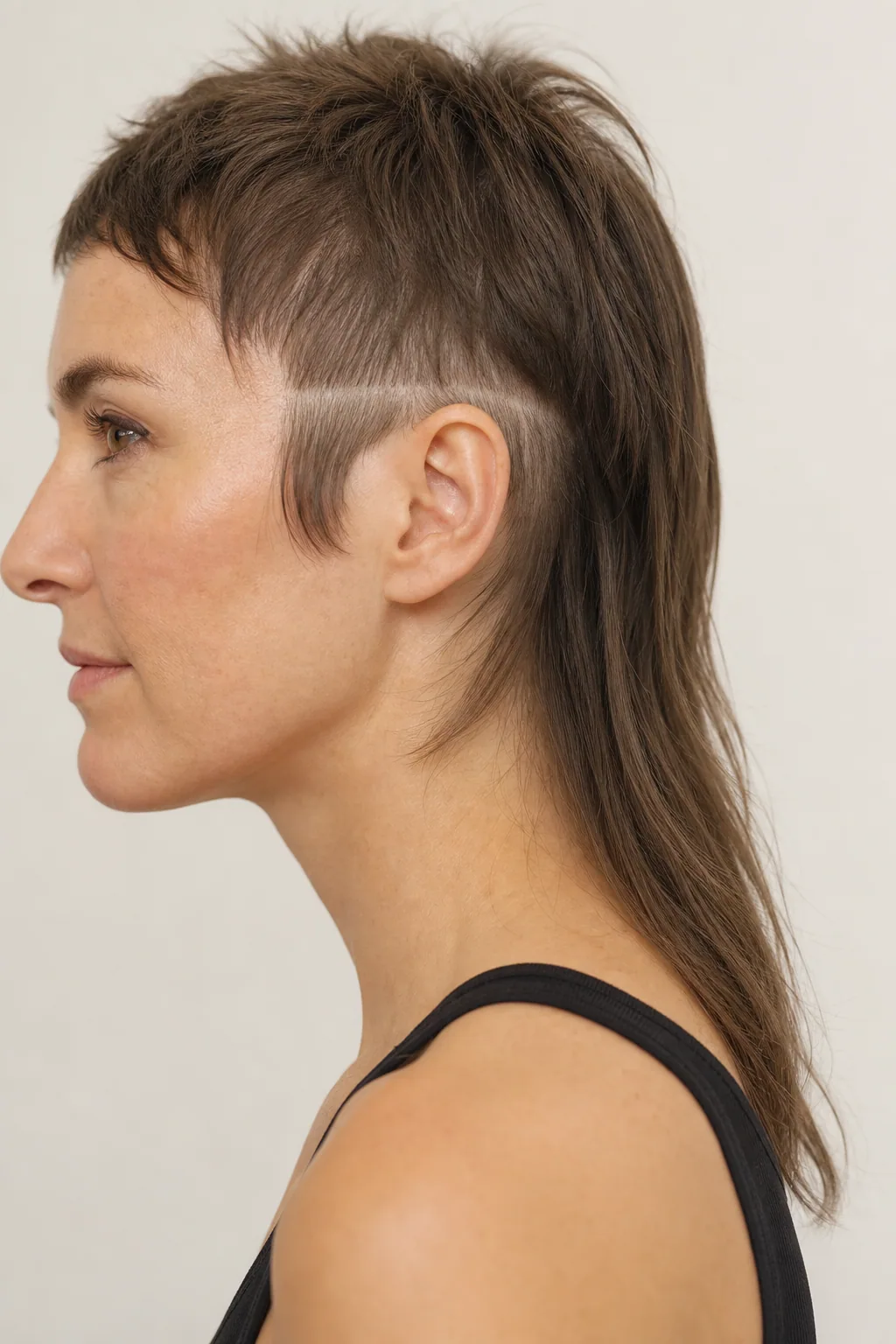
The hard-disconnected mullet — skip it
The version that dominates the trend photography: buzzed or very short sides, a long solid tail, and an unblended step between them. On dense hair it's a genuinely striking graphic shape. On fine hair the step has nothing above it to hide behind, so it stays visible in every light, and the eye reads the transition as a place where hair stopped rather than as a design. If you love the look, take entry 4 — the blunt tail gives you the graphic edge, at the bottom of the cut where fine hair can support it.
What to ask your stylist
Copy this. It's short deliberately — a mullet consultation goes wrong through vagueness, not through disagreement.
"I'd like a soft mullet — connected, not disconnected. Blend the corner where my sides meet the back so there's no step. Keep the tail around collar length with a solid perimeter, and put more layering through the crown than the sides. My hair is fine, so please point-cut the ends — no razor and no thinning shears."
Two additions depending on your situation. If your nape hair is much finer than the rest — common, and easy to check by feel — say so, and ask for entry 8's tapered nape instead of a blunt tail.
And if you're nervous, ask for the length in two stages: cut it to the mullet lob first, live with it for a week, and go shorter at a follow-up. Any stylist will do this, and most would rather. There's more on running the conversation in the exact words to ask for a fuller-looking haircut.
Styling and upkeep, honestly
The daily version is five minutes and three steps. Mousse or a root lifter at the crown on damp hair, rough-dried with your fingers pushing the roots against the direction they fall.
A texture spray through the crown layers once dry, for the separation the shape depends on. And nothing at all on the tail — product there makes it look thinner, not fuller, which is the opposite of what most people's instinct says. The wider technique is in how to get root volume in fine hair.
Trim every eight to ten weeks to hold the shape, though it's more forgiving than a bob about being left. What actually needs the appointment is that corner where the sides meet the back — it grows into a wedge and starts to look accidental long before the tail does. If you're stretching between visits, book the corner, not the length.
When a mullet isn't your best move
Your hair is fine and low density, with visible scalp at the crown. The crown layering that makes a mullet work removes weight from the exact area that's already sparse. Start with coverage for thinning on top, and consider a shag instead.
You want to wear it up most days. A mullet's short crown layers fall out of every ponytail and bun. If updos are your default, a layered bob keeps its options open.
Your nape hair is very fine or sparse. The tail is made entirely of nape hair. Feel it — if it's noticeably wispier than the rest, take the tapered nape rather than a blunt tail, or skip the shape.
You can't commit to styling it. This is not a wash-and-go cut on straight fine hair; without root lift at the crown it collapses into a plain layered shape. If low-effort is the brief, see low-maintenance cuts for fine hair.
You've had a razor cut before and hated how the ends looked. You're not imagining it, and a mullet magnifies it. Insist on point cutting, in those words.
FAQ
Yes, but only a connected one. A traditional mullet is built on disconnection — a deliberate hard break between short top and long tail — and a hard line needs enough density on both sides of it to read as a shape rather than as a gap. On fine hair the eye goes straight to the line and reads sparseness. A connected mullet gets its contrast from length rather than from a cut line, so the crown still reads full and the tail still reads deliberate. That version is genuinely flattering on fine hair, and it's what to ask for.
It can, because it moves weight off the perimeter and onto the crown — the opposite of a one-length cut, which loads all the weight at the bottom and drags the roots flat. Shorter layers around the crown have less mass hanging from them, so they sit up, and the silhouette gains height exactly where fine hair usually loses it. The trade is that the tail has to stay modest: a long, sparse tail below a full crown is the failure mode, and it's what people mean when they say a mullet looked thin at the back.
A shag layers evenly all over with no deliberate break, so it reads as texture rather than shape. A mullet is defined by front-to-back contrast: short at the top and sides, longer at the back. A wolf cut sits between them — shag layering with a mullet-leaning tail. On fine hair the practical difference is how much the cut asks of your density: a shag asks the least, a wolf cut a little more, and a mullet the most, because the contrast has to be legible without a hard line to create it.
Long enough to still lie in a shape when it grows — roughly chin length or a little above at the front, with the shortest crown layers no shorter than three or four inches. Very short crown layers on fine hair look sparse rather than piecey within a few weeks, because there isn't enough mass in each section to stand up on its own once it loses its freshly-cut edge. Ask for the shortest layer to be measured against the top of your ear rather than by eye.
Neither. A razor tapers each strand to a point, so the last inch of fine hair ends up with almost no substance and turns translucent — precisely the look a mullet is meant to avoid at the tail. Thinning shears remove hair from the middle of a section, which fine hair can't spare. The correct technique is point cutting with shears: the stylist cuts into the ends vertically to soften the line without removing bulk from the interior. Say the words if you need to — "point-cut, please, no razor and no thinning shears."
Root lift at the crown, texture through the mid-lengths, nothing on the tail. Mousse or a root lifter at the scalp while damp, rough-dried against the direction the hair falls, sets the height the shape depends on. Then a texture spray through the crown layers for separation. The tail wants to stay smooth and reasonably solid — product in it makes it look thinner, not fuller. It's a five-minute cut once you learn it, and it air-dries better than most shapes because the layers give it somewhere to go.
Every eight to ten weeks if you want it to stay a mullet, and it's one of the more forgiving shapes to let go beyond that. The crown layers grow into a soft shag before they grow into anything awkward, and the tail simply gets longer. What does need attention is the corner where the sides meet the back — that's the point that grows into a wedge and starts to look accidental. If you're budgeting salon visits, that corner is the trim worth booking.
Eleven years behind the chair, cutting fine and thin hair into shapes that hold. Simone's position on the mullet is that it's a better fine-hair cut than its reputation suggests — as long as nobody cuts a line into it.
Results vary with hair type, density, and growth patterns. This guide is educational and not a substitute for an in-person consultation with a licensed stylist.
Hairstyle images in this guide are AI-generated illustrations, not photos of real clients or results. See our image policy.
Get the good hair intel
One honest, stylist-written guide in your inbox each week. No hype.

 SB
SB