Reviewed by Tara Sullivan · Updated July 2026 · 10 min read
The good news about 2026 is that the year's biggest haircut trends happen to be the ones fine hair has always wanted: sculpted jawline bobs, softer tapered shags, and whisper-light curtain bangs — shapes built on a strong perimeter and gentle point-cut movement rather than the heavy razoring that thins fine hair out. The trend calendar is finally on your side, as long as you know which viral cuts to walk past.
Below are 16 of 2026's most flattering trends for fine and thin hair — bobs and lobs, the new soft shags, the modern fringe, and the low-maintenance shapes dominating the year — each with who it suits and the words to bring to your stylist, followed by three trending cuts to skip because they quietly thin fine hair.
Every January I get a wave of clients with a screenshot of the year's "it" cut, and my job is the same each time: figure out whether the trend was built on the fine-hair principles or against them. In 2026 I'm mostly saying yes, which doesn't happen every year.
The move back toward blunt perimeters and softer, less-razored layers is genuinely good for fine hair — it's the industry catching up to what I've been telling fine-haired clients all along. So this is a year to lean in. Just remember that a trend is a starting point, not an instruction: bring me the picture, and let's cut it the way your hair needs, not the way the model's thick hair got cut.
SB
— Simone Baptiste, Senior Stylist
The 2026 bobs & lobs
Bobs dominate the 2026 trend forecasts, and they remain fine hair's most reliable category — a strong perimeter is what makes fine hair read as full, and this year's shapes are all about that clean, sculpted edge. Industry trend reports put jawline bobs, textured waves, and Italian-inspired cuts at the top of the year, and the fine-hair versions of each are below.
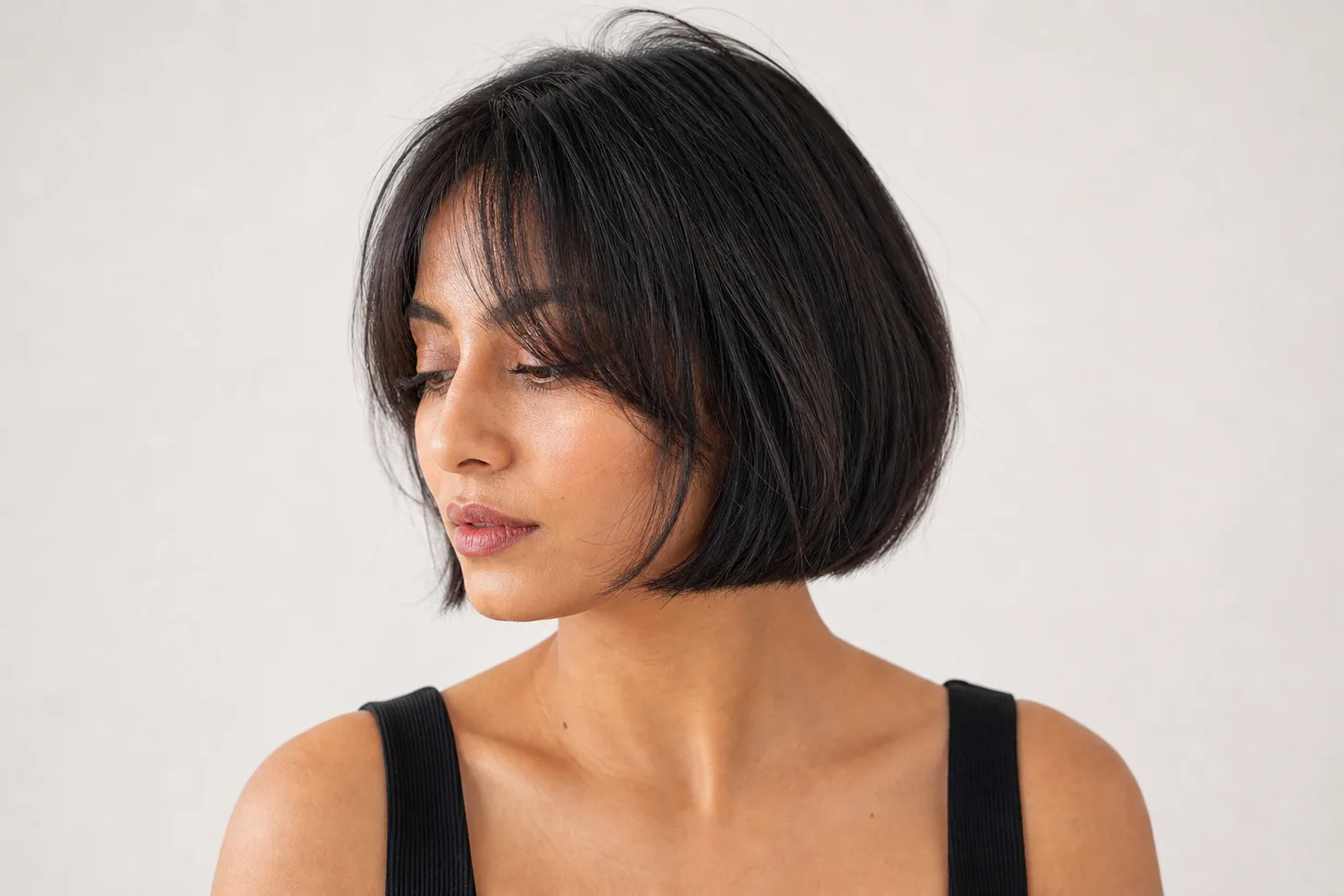
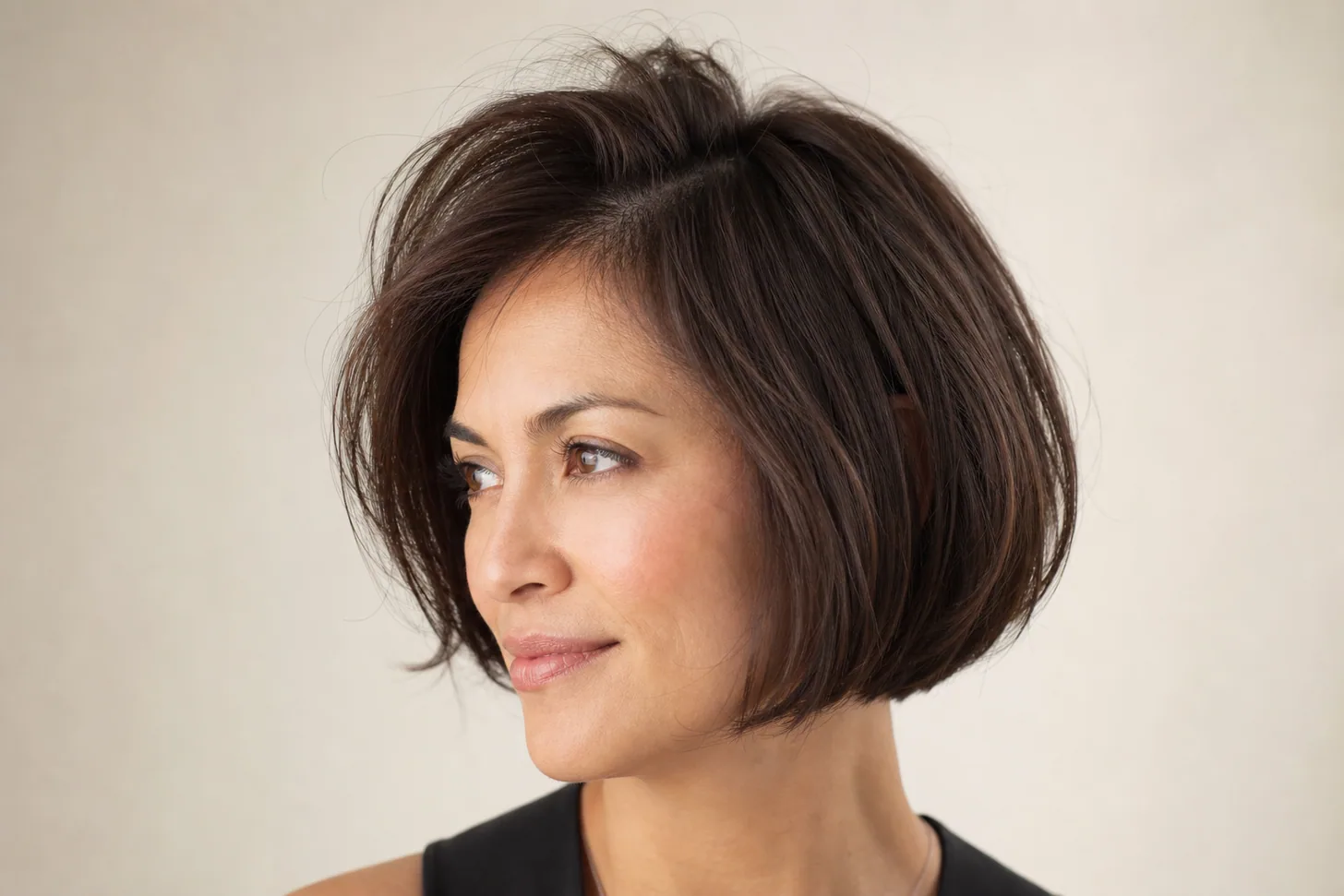
fine hair in a sculpted jawline bob curving just beneath the jaw, blunt strong perimeter, polished and full, 2026 trend
1
The Sculpted Jawline Bob
2026's defining cut and a gift to fine hair: it curves just beneath the jaw with a blunt, sculpted perimeter that gathers the hair into a dense-looking edge. The subtle inward shaping under the jaw makes it appear fuller while flattering the face. Ask for it point-cut, weight kept low, and no thinning — it's the classic fine-hair bob with a sharper 2026 silhouette.
fine hair in a chin-length Italian bob, rounded blunt shape with soft volume, effortless European finish, 2026 trend
2
The Italian Bob
A rounded, chin-length blunt bob with a soft, effortless finish — the European cut trending hard for 2026. Its density comes entirely from the blunt line, which is exactly what fine hair needs, and it's styled undone rather than sleek, so it forgives a fine texture. A close relative of the French bob, cut a touch rounder and worn a little softer.
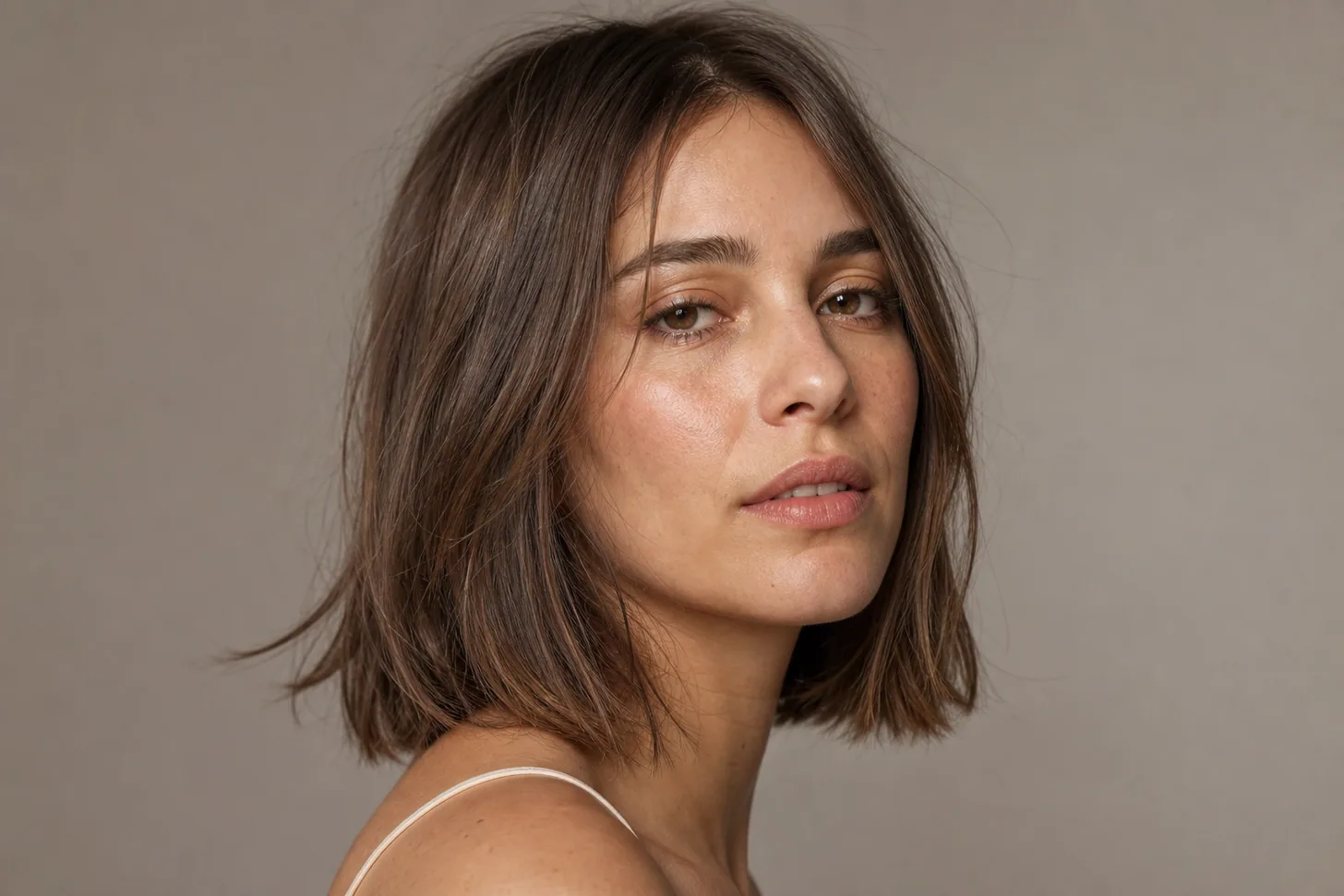
fine hair in a collarbone lob with soft bend and blunt ends, textured waves, versatile 2026 length
3
The Textured-Wave Lob
The collarbone lob stays central to 2026, updated with soft, air-dried waves rather than a poker-straight finish. On fine hair the wave is the trick — it occupies more space than straight hair and hides the flatness. Keep the ends blunt so the length still reads full, and set the wave with a texture spray rather than a heavy product.
fine hair in a graduated stacked bob, shorter and rounded at the back for height, blunt front, 2026 volume trend
4
The Graduated Bob With Back Volume
Graduation at the back — shorter layers building a rounded body at the crown — is the 2026 answer for fine hair that goes flat on top. It's the stacked bob principle, styled softer for the year: height where you need it, a clean line at the front. Best on hair that collapses at the crown by midday.
The softened shags & layered cuts
The big 2026 shift is that the shag has softened. Where recent years pushed a choppy, heavily-razored shag, this year's trend is a gentler, curved "crescent" version that follows the head and keeps fullness along the bottom — which is precisely what makes it wearable on fine hair. These are the layered trends worth trying, cut soft and point-cut, never razored.
fine hair in a soft crescent shag with curved crown layers and preserved fullness at the perimeter, airy modern 2026 shape
5
The Soft Crescent Shag
2026's gentler take on the shag: curved shaping that follows the head, layers concentrated high for lift, and the perimeter left full underneath. It feels airy and modern without sacrificing the density fine hair needs — the first shag in years I'd recommend to fine hair without a caveat. Ask for the layers point-cut and kept above the ear.
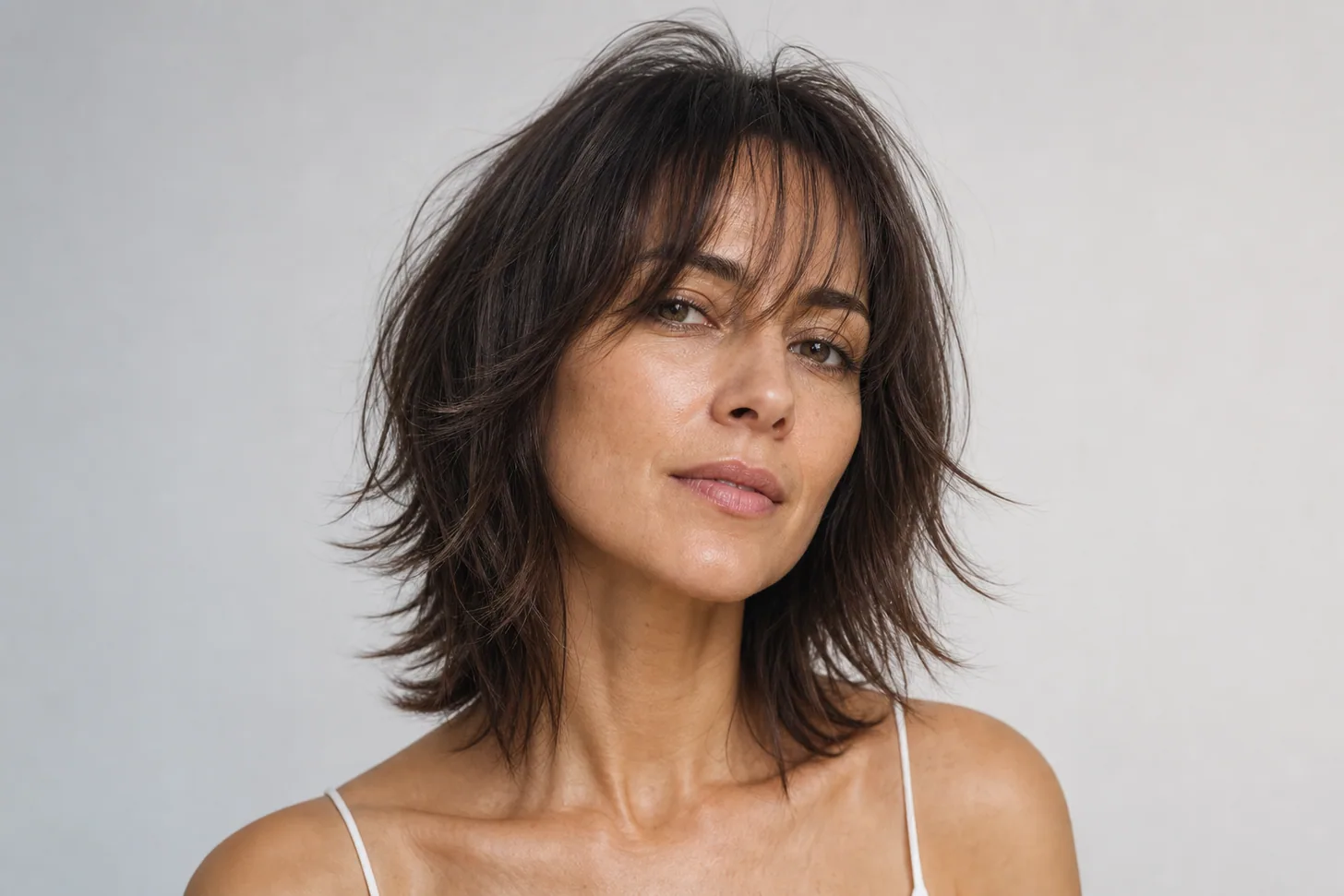
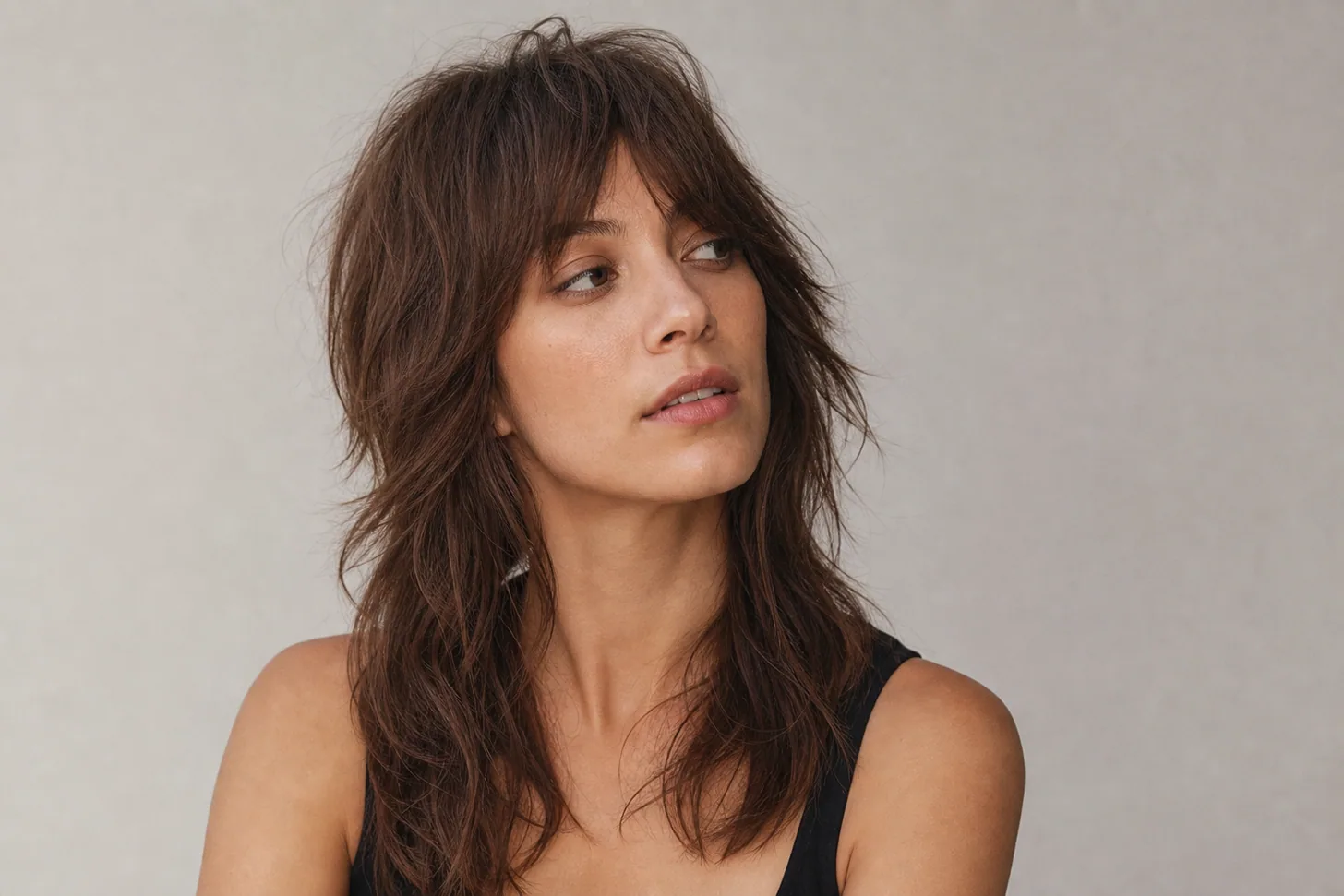
fine hair in a mid-length modern shag with soft crown layers and curtain fringe, movement without thinness, 2026
6
The Modern Mid-Length Shag
A collarbone shag with soft crown layers and a curtain fringe — the most adaptable cut of 2026, and fine-hair-friendly when the layers stay high and few. It gives movement and a lived-in feel while a strong bottom line holds the fullness. See the full range in our shag for fine hair gallery.
fine hair in a bixie cut, blend of pixie and bob with soft texture on top, 2026 short trend, full and rounded
7
The Bixie
The pixie-bob hybrid stays firmly on-trend into 2026, and it's a fine-hair favorite because its short length keeps weight off the roots and its rounded shape reads dense. It suits anyone ready to go short without committing to a full pixie. Our bixie for fine hair guide covers the grow-out, which is gentler than a pixie's.
fine hair in a butterfly cut with soft face-framing layers over a full perimeter, voluminous 2026 layered style
8
The Softened Butterfly Cut
The butterfly cut — short face-framing layers over longer lengths — carries into 2026 in a softer, less extreme form. On fine hair it works only when the face-framing is point-cut and the perimeter stays heavy; done that way it builds real face-framing fullness. The 2026 version tones down the dramatic layering that made earlier ones risky, as our butterfly haircut for thin hair guide explains. The same family has a sharper end that keeps resurfacing — the modern mullet on fine hair, worn softer than its reputation suggests.
The 2026 fringe
Bangs are having a strong year, and the 2026 versions are lighter and more blended than the blunt fringes of a few seasons ago — which is exactly the direction fine hair benefits from. A soft fringe adds fullness at the face without borrowing density from the crown. These three are the on-trend fringes worth asking for.
fine hair with whisper-light curtain bangs blended into soft cheekbone layers, wispy and modern, 2026 fringe trend
9
Whisper Curtain Bangs
The 2026 curtain bang is barely-there — whisper-light pieces blended into soft layers around the cheeks, not the thick curtain of years past. That lightness is what makes it flatter fine hair: fullness at the face, nothing taken from the top. Ask for it point-cut and face-framing, and it grows out with no awkward stage. Full range in our curtain bangs gallery.
fine hair with soft wispy bangs sitting light on the forehead, piecey and delicate, 2026 fine-hair fringe
10
Soft Wispy Bangs
Delicate, piecey bangs that sit light on the forehead — the most fine-hair-appropriate fringe of all, because they're built to look sparse-on-purpose rather than fighting for thickness. They suit anyone whose hairline is fine at the front. Our wispy bangs guide shows how to keep them from separating.
fine hair with a soft bottleneck fringe, longer at the sides framing the face, blended 2026 fringe on fine hair
11
The Bottleneck Fringe
A hybrid between a full fringe and curtain bangs — shorter in the center, longer at the sides where it sweeps into the face. The 2026 iteration is cut soft and blended, which keeps it wearable on fine hair. It's a good middle step for anyone who wants more fringe than a curtain bang but can't carry a blunt one. See where it fits in the full bangs guide.
The low-maintenance & age-friendly trends
2026's "effortless movement" mood favors wash-and-wear shapes over high-styling ones — a genuine trend, and one that overlaps perfectly with what fine hair needs day to day. These five are the low-effort and age-friendly cuts leading the year. Which of these is worth adopting also shifts by decade — fine hair over 40, over 50 and mature fine hair each take a different view of the same shapes.
fine hair in a wash-and-wear blunt lob that air-dries full, low-maintenance 2026 effortless cut
12
The Wash-and-Wear Blunt Lob
The "lazy-girl" cut trending for 2026: a blunt lob designed to air-dry full and look intentional with zero heat styling. Fine hair loves it because the blunt line does the work, not a round brush. It's the flagship of our low-maintenance cuts for fine hair — the trend that outlasts every other on this list.
mature fine hair in a soft layered bob with gentle volume, flattering age-friendly 2026 cut
13
The Soft Layered Bob for Mature Fine Hair
A rounded, softly-layered bob is the 2026 cut for fine hair that's thinned with age — weight kept low, a little crown lift, nothing severe. It flatters a softening jawline and covers a widening part better than length does. Our guides for fine hair over 60 and mature fine hair match the shape to what changes with age.
fine hair in a textured pixie with soft piecey top, modern short 2026 cut with volume at the crown
14
The Textured Pixie
The pixie stays modern in 2026 with a soft, piecey top rather than a spiky one — and short length is fine hair's friend, keeping every strand working on height instead of hanging. It suits anyone wanting the fullest-looking cut for the least daily effort. Our pixie for fine hair guide covers styling the crown for lift.
fine hair in a clavicut, blunt collarbone-length cut with straight full ends, minimalist 2026 trend
15
The Clavicut
The blunt, collarbone-grazing "clavicut" is 2026's minimalist length — one clean line at the collarbone, no layers, maximum density illusion. It's the longest length that still reliably reads full on fine hair, and the easiest to maintain: one strong perimeter, trimmed every few weeks. A perfect bridge for anyone growing out a bob.
fine hair in a bixie-adjacent short cut with soft body wave texture, 2026 trend combining short length and gentle wave
16
The Waved Short Cut
Short hair with a soft, undone wave is a quiet 2026 trend that suits fine hair especially well — the wave adds the body a short cut can lack, and short length keeps it from going flat. Achieve it with a heatless overnight set or, for something lasting, a gentle body wave. Effortless, full, and on-trend.
3 trending cuts to skip on fine hair
Not every 2026 trend is your friend. These three are all over social media this year, and all three quietly thin fine hair out — the technique underneath fights the fundamentals. Here's what they are and what to do instead.
Skip: The Heavily Razored "Lived-In" Long Layers
The razored, undone long-layer look trending on social media relies on tapering the ends to nothing — which on fine hair leaves the perimeter see-through and the bottom stringy. The look (soft movement) is achievable; the method isn't right for you. Ask instead for the same length with soft point-cut layers over a blunt perimeter, as covered in do layers help or hurt fine hair.
Skip: The Extreme Choppy Shag
The heavily-layered, aggressively-textured shag is still around in 2026, and it's the opposite of the soft crescent version above. All that choppy texturizing removes the weight fine hair needs, leaving it thin and shapeless. If you want a shag, take the softened 2026 one; leave the extreme version to thick hair.
Skip: Very Long, One-Length Hair With Feathered Ends
The mermaid-length trend with wispy, feathered ends is a hard one for fine hair: the extreme length adds weight that drags the roots flat, and the feathered ends give the perimeter nothing to gather. If you love length, keep it to the clavicut or a heavy-perimeter long cut with only face-framing — the long hairstyles for fine hair guide shows how to wear length without losing fullness.
Chair-side note
A trend I'm glad to see fade in 2026: the idea that fine hair needs "lots of texture" to look modern. It never did — that was thick-hair advice applied to the wrong heads, and it left a decade of fine-haired clients with stringy, over-textured cuts.
The 2026 return to clean lines and soft, minimal layering is the industry finally cutting fine hair the way it should have all along. If you've been burned by a texturized cut before, this is a genuinely good year to try again — the prevailing trend is on your side for once.
SB
— Simone Baptiste, Senior Stylist
What to ask your stylist for a 2026 trend
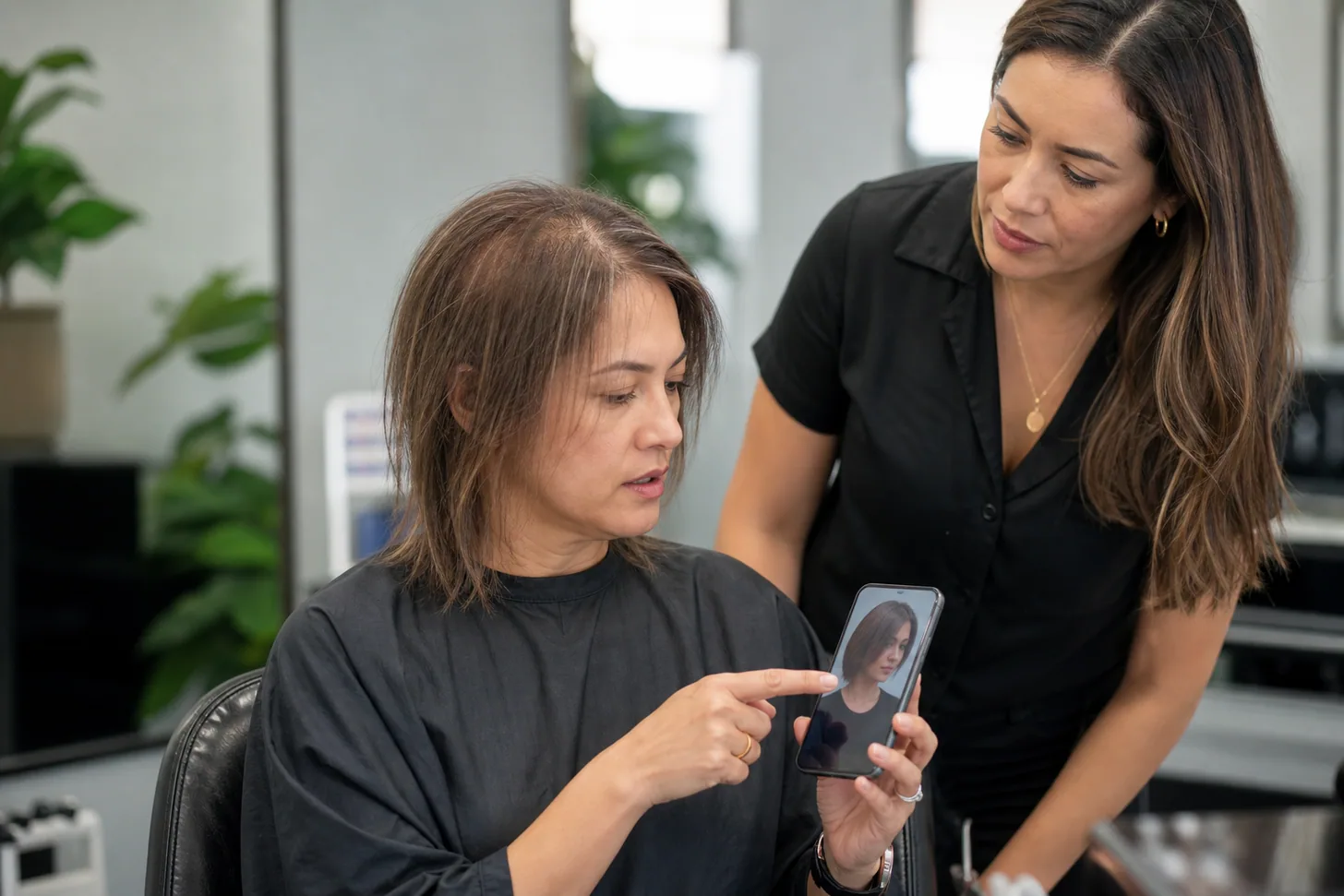
Bring the trend photo, then translate it into fine-hair language so the cut is built for your hair and not the model's. Say: "I love this shape — can we cut it for fine hair? Keep the perimeter blunt and strong, point-cut any layers instead of razoring, and keep the weight low."
For the bobs, ask them to measure the length dry. For the shags and butterfly, ask for the layers kept high and few. For any fringe, ask for soft and blended, not blunt.
The full script for describing your hair and ruling out the wrong techniques is in the exact words to ask for a fuller-looking haircut — worth reading before any trend appointment, because a 2026 trend cut the wrong way flatters fine hair no more than a 2015 one did.
Before you chase a trend
A trend that trended because it's dramatic rarely suits fine hair. The quiet, blunt, clean-lined trends age better and flatter fine hair more than the viral extreme ones.
Your part is widening or your scalp shows. Prioritize coverage over trend — read coverage for thinning on top before booking anything bold.
You want something that lasts past this year. The wash-and-wear cuts and a classic blunt bob outlast every seasonal trend. Trends refresh; fundamentals don't.
Your hair has changed suddenly or is shedding. See a board-certified dermatologist before a big change, not a trend gallery.
FAQ
The sculpted jawline bob is the standout 2026 trend for fine hair. It curves just beneath the jaw with a strong, blunt perimeter, which gathers fine hair into a dense-looking edge and reads as fuller while flattering the face. It needs almost no daily styling to look intentional, grows out cleanly, and works across face shapes. Close behind it are the soft, tapered "crescent" shag and whisper-light curtain bangs — both 2026 favorites that add movement and fullness to fine hair without the thinning that heavier versions cause. What all three share is the fine-hair rule that never goes out of style: build fullness with weight and shape, not with texturizing.
Yes — curtain bangs remain one of the most enduring trends into 2026, and for fine hair the 2026 version is even better suited than before. Stylists are cutting them as whisper-light, wispy pieces blended into soft layers around the cheeks rather than the thick, heavy curtain of a few years ago. That lighter interpretation adds fullness at the face without borrowing density from the top of the head, and it grows out gracefully instead of leaving an awkward stage. On fine hair, ask for a soft, face-framing curtain fringe point-cut rather than blunt, so it moves and blends.
Skip the heavily razored "lived-in" long layers, the ultra-choppy extreme shag, and very long one-length hair with feathered ends — all of which trend on social media but thin fine hair out. Razoring and aggressive texturizing taper fine ends to nothing and leave the perimeter see-through, and extreme length adds weight that drags fine roots flat. The look these trends promise (effortless movement) is achievable on fine hair, but through soft point-cut layers over a strong perimeter, not through the bulk-removal techniques the viral versions use. If a trend's whole appeal is "lots of texture" or "undone and razored," it's usually the wrong one for fine hair.
The 2026 shag has softened. Instead of the choppy, heavily-layered shag of previous years, the trend is toward a "soft crescent" or tapered shag that uses curved shaping to follow the head and preserves fullness along the bottom — airy and modern without sacrificing the density fine hair needs. For fine hair, that softer version is the one to ask for: layers concentrated high at the crown for lift, a solid perimeter left underneath, and point-cutting rather than razoring throughout. It gives the shag's signature movement while keeping the weight line that makes fine hair look full.
The strongest 2026 trends for fine hair sit short to mid-length — the sculpted jawline bob, the Italian/French bob, and the collarbone lob — because that's where fine hair reads fullest. Length adds weight that pulls fine roots flat, so the viral long-layered looks are the harder ones to pull off. That said, longer fine hair is on-trend for 2026 if it's cut for fullness: a heavy, blunt perimeter with only face-framing layers and no razoring. The general rule holds regardless of the year — shorter almost always looks fuller on fine hair, and the 2026 cut calendar happens to favor exactly the lengths that flatter it.
Eleven years behind the chair, specializing in fine-hair texture. Simone translates every trend photo into fine-hair language before she cuts — the shape the client wants, built the way their hair needs.
Results vary with hair type, density, and growth patterns. This guide is educational and not a substitute for an in-person consultation with a licensed stylist. Trend data reflects stylist and editorial forecasts current to mid-2026 (Refinery29, PerfectCorp) and is refreshed yearly.
Hairstyle images in this guide are AI-generated illustrations, not photos of real clients or results. See our image policy.
Get the good hair intel
One honest, stylist-written guide in your inbox each week. No hype.

 SB
SB