Reviewed by Tara Sullivan · Updated October 2026 · 10 min read
Bottleneck bangs are a fringe that is short and narrow in the middle, then gets longer and wider as it curves down past the eyes to the cheekbones. The shape looks like the neck and shoulders of a bottle, which is where the name comes from.
They sit between a full fringe and curtain bangs, and the narrow middle is why they suit thin hair: they take very little hair from the top. Here are 12 bottleneck bangs for fine hair, and how to cut and style them.
bottleneck bangs on fine light-brown hair, short narrow fringe at the brows in the center curving longer to the cheekbones at the sides, soft wispy finish, shoulder-length hair, woman in her 30s, front view
Chair-side note
I cut bottleneck bangs on fine hair from a small triangle section, no wider than the outer corners of the eyes at the front. That keeps enough hair on top for the crown to stay full.
Then I cut the middle first and the sides longer, into dry hair. Wet fine hair shrinks up more than people expect, and a bottleneck that dries too short is just a short fringe.
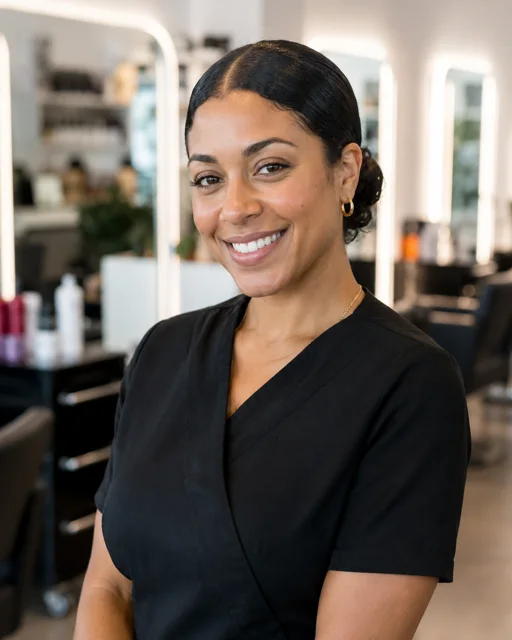
SB
— Simone Baptiste, Senior Stylist
What are bottleneck bangs?
A bottleneck fringe is cut shortest in the center, usually at the brows, and longer at the sides, where it curves down around the eyes. Unlike curtain bangs, the middle is closed rather than parted open, so it covers the forehead.
It is softer than a full blunt fringe, and the sides blend into face-framing pieces. That makes it easier to grow out than most bangs.
Why bottleneck bangs suit thin hair
A full fringe needs a deep section of hair from the top of the head, which can leave thin hair flat at the crown. A bottleneck uses a narrow section, so most of the hair stays on top.
The curved sides also frame the face and add movement at the cheekbones, which makes fine hair look fuller. They're a good choice if a thin hairline or a big forehead is what you want to cover.
Classic bottleneck bangs
These are the bottleneck shape on its own, from airy to brow-skimming. Start here if you are new to bangs.
classic bottleneck bangs on fine dark-brown hair, narrow fringe at the brows in the center flaring longer to the cheekbones, soft finish, collarbone-length hair, woman in her 20s, front view
1
Classic bottleneck bangs
Short at the brows in the middle, longer at the sides down to the cheekbones. It is the shape in its simplest form, and it works on almost any face.
Blow-dry the center down and the sides away from the face.
wispy bottleneck bangs on fine light-blond hair, airy see-through center fringe at the brows with gaps between the pieces, longer wispy sides curving to the cheekbones, woman in her 20s, front view
2
Wispy bottleneck bangs
An airy center with small gaps between the pieces, so a little forehead shows through. It takes the least hair of any bottleneck.
bottleneck bangs on fine medium-brown hair with a fuller center that skims just below the brows, sides curving longer past the eyes, smooth blow-dried finish, woman in her 30s, front view
3
Brow-skimming bottleneck bangs
A slightly fuller center that skims just below the brows. It covers more forehead, so it looks closer to a full fringe.
Trim the center every three to four weeks, or it falls into your eyes.
short bottleneck bangs on fine black hair, very short narrow center fringe above the brows, sides angling down to the cheekbones, sleek straight long hair, woman in her 20s, front view
4
Short bottleneck bangs
A short center above the brows and sides that angle down sharply. It is the boldest bottleneck, and it suits fine, straight hair that sits flat.
Ask for it a little longer than you want, because fine hair springs up as it dries.
Bottleneck bangs with a bob, lob, shag or long layers
The fringe looks different depending on the cut behind it. The sides should blend into the cut's face-framing pieces, so the whole front reads as one shape.
chin-length bob with bottleneck bangs on fine light-brown hair, narrow center fringe at the brows, sides of the fringe blending into the bob at the cheekbones, dense hem, woman in her 30s, front three-quarter view
5
Bob with bottleneck bangs
The sides of the fringe blend into the bob at the cheekbones. A chin-length bob keeps the ends dense, and the fringe softens the line.
collarbone lob with bottleneck bangs on fine dark-blond hair, narrow brow-length center, longer fringe sides flowing into face-framing layers, soft bend at the ends, woman in her 30s, front view
6
Lob with bottleneck bangs
The longer sides flow into face-framing layers on a collarbone lob. It is easy to wear and easy to grow out.
long layered hair below the shoulders with bottleneck bangs on fine medium-brown hair, narrow center fringe, curved sides joining long face-framing layers, soft waves, woman in her 20s, front three-quarter view
7
Long layers with bottleneck bangs
A narrow fringe that joins long face-framing layers. It gives long, fine hair a shape around the face without cutting the length.
shoulder-length shag with tousled bottleneck bangs on fine light-brown hair, piece-y narrow fringe, choppy crown layers, wispy ends, woman in her 20s, front view
8
Shag with bottleneck bangs
A tousled bottleneck on a shoulder-length shag. The fringe and the choppy layers work together, so you can air-dry it.
Wave, glasses and gray hair all change how the fringe falls. These four adapt the shape.
wavy bottleneck bangs on fine wavy auburn hair, soft bend in the narrow center fringe, curved wavy sides to the cheekbones, air-dried shoulder-length waves, woman in her 30s, front view
9
Wavy bottleneck bangs
A little natural bend in the fringe makes it look fuller. Cut it dry, so the wave is part of the shape.
Blow-dry just the roots of the center flat, then let the rest air-dry.
bottleneck bangs on fine dark-brown hair with thin-framed glasses, center fringe sitting just above the frames, longer sides curving around the lenses, woman in her 40s, front view
10
Bottleneck bangs with glasses
The center sits just above the frames and the sides curve around the lenses. It is one of the easiest fringes to wear with glasses.
soft bottleneck bangs on fine silver-gray hair, narrow airy center at the brows, longer sides blending into a layered jaw-length bob, woman in her late 50s, front three-quarter view
11
Silver bottleneck bangs over 50
A soft, airy bottleneck with a layered bob. It covers a thinner hairline and draws the eye up, which is why I suggest it so often after 50.
Gray hair can be wiry at the front, so a quick flat-iron pass keeps the fringe smooth.
grown-out bottleneck bangs on fine light-brown hair, the center now at the cheekbones and parted slightly, sides at the jaw like long curtain bangs, woman in her 30s, front view
12
Grown-out bottleneck bangs
After two to three months, the center reaches the cheekbones and parts into long curtain bangs. That is why the bottleneck is the easiest fringe to grow out.
Style the fringe first, while it is damp, before it dries in the wrong direction. Blow-dry the center down and side to side to flatten any cowlick, then brush the sides away from the face with a small round brush.
Use a little dry shampoo in the fringe, not oil or cream, because bangs on fine hair get greasy first. Our guide to styling bangs has the full method, plus how to fix a fringe that splits.
What to ask your stylist
Say: "I'd like bottleneck bangs from a narrow triangle section, short at the brows in the center and longer to the cheekbones at the sides. Please cut them dry, and don't use thinning shears."
Bring a photo of bottleneck bangs on fine hair. Show your stylist where your hairline is thinnest, so the fringe covers it.
Can you cut bottleneck bangs at home?
You can trim them, but I wouldn't cut them for the first time at home. If you do, cut dry, cut the center first and go longer than you think. Our guide to cutting fine hair at home has the safe method.
When bottleneck bangs may not suit you
You have a strong cowlick at the front hairline. The narrow center splits. A side-swept fringe works with the cowlick instead.
Your skin is very oily. The fringe will need washing or dry shampoo every day.
Your hair is very thin at the crown. Even a narrow section takes hair from the top. Ask for a very shallow triangle.
You want a fringe you never have to style. Long curtain bangs look fine air-dried. A bottleneck usually needs two minutes of blow-drying.
FAQ
Bottleneck bangs are short and narrow in the center and get longer and wider at the sides, curving down to the cheekbones. The shape looks like the neck of a bottle.
Yes. They are cut from a narrow section, so they take less hair from the top than a full fringe. The curved sides also frame the face and make fine hair look fuller.
Curtain bangs part in the middle and open to each side. Bottleneck bangs are closed in the center, sitting at the brows, and get longer at the sides. They cover more forehead.
Blow-dry the center down while it is damp, moving the brush side to side, then brush the sides away from the face with a small round brush. Use dry shampoo, not oil.
No. After two to three months, the center reaches the cheekbones and the fringe becomes long curtain bangs, so there is no awkward stage.
Every three to five weeks for the center. The longer sides can go longer between trims.
Eleven years behind the chair, specializing in short shapes and fine-hair texture. Simone believes the best haircut is the one you can style yourself in ten minutes.
Results vary with hair type, density and growth patterns. Haircut guidance is not a substitute for an in-person consultation with a licensed stylist, and sudden or heavy hair loss is worth raising with a doctor.
Hairstyle images in this guide are AI-generated illustrations, not photos of real clients or results. See our image policy.
Get the good hair intel
One honest, stylist-written guide in your inbox each week. No hype.

 SB