Reviewed by Tara Sullivan · Updated August 2026 · 11 min read
There's a particular kind of holiday photograph where you look at your own hair and don't recognize it. Flat in a way it isn't at home, or oddly rough, or dull, and always by about day two. Your hair didn't change. Three of its inputs did, all at once — and none of them are the things people pack for.
The water is different, and hardness varies enormously from one town to the next. The dryer is a wall unit with weak airflow and, crucially, no cool shot — which removes the single step that makes a blow-dry hold on fine hair. And if you flew, you spent several hours in air at "typically from 10 to 20%" relative humidity with the back of your head pressed against a seat.
Fix the three inputs and you don't need to pack more; you need to pack differently. Below: the arrival protocol for unknown water, how to get height out of a hotel dryer, what actually earns space in the bag, and the one voltage mistake that ends a trip's worth of styling.
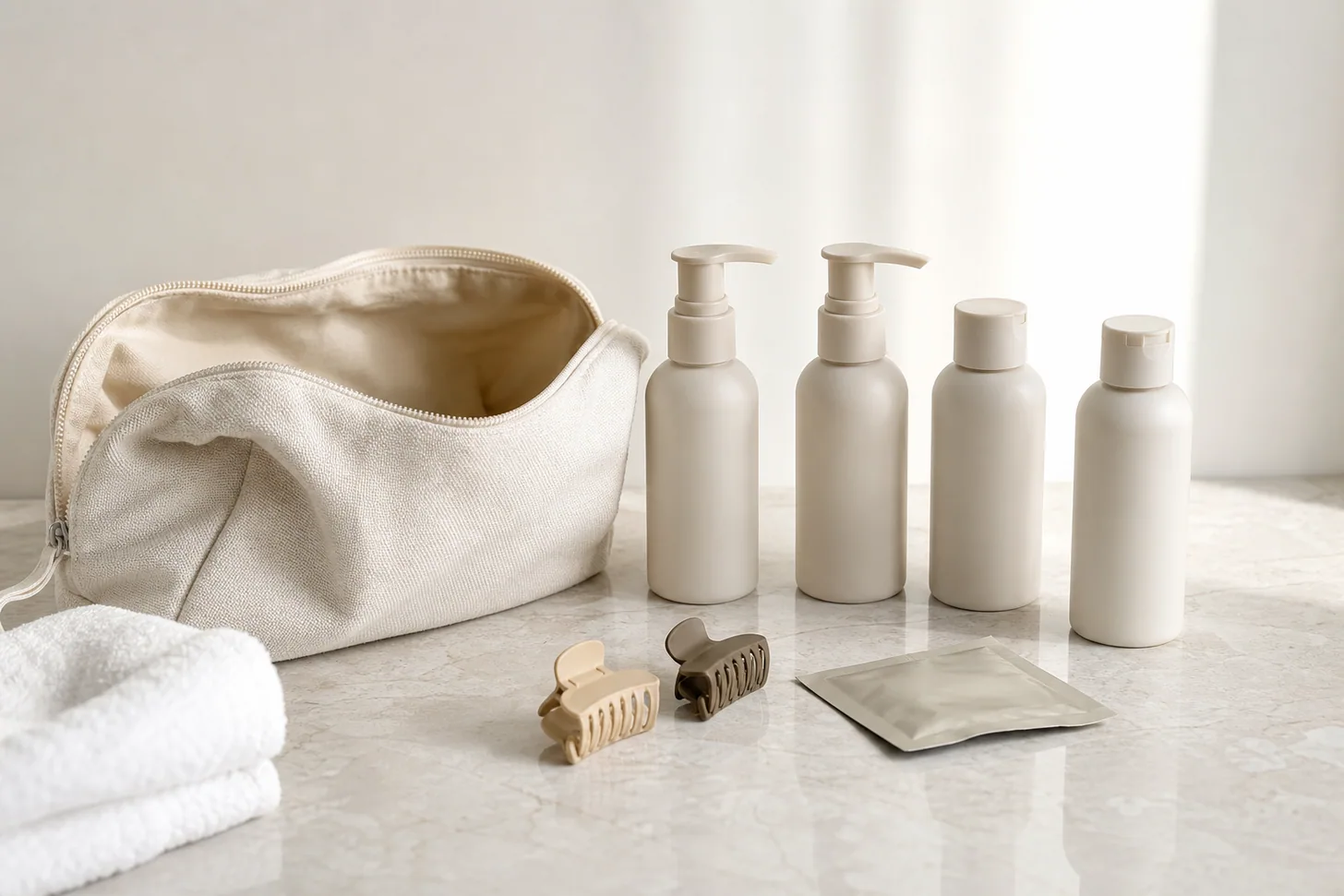
Four products, decanted. The two that matter most touch every strand you own, every wash.
The three things that actually change
Worth naming them all at once, because the reason travel hair feels inexplicable is that they arrive together and you can't tell which one you're looking at.
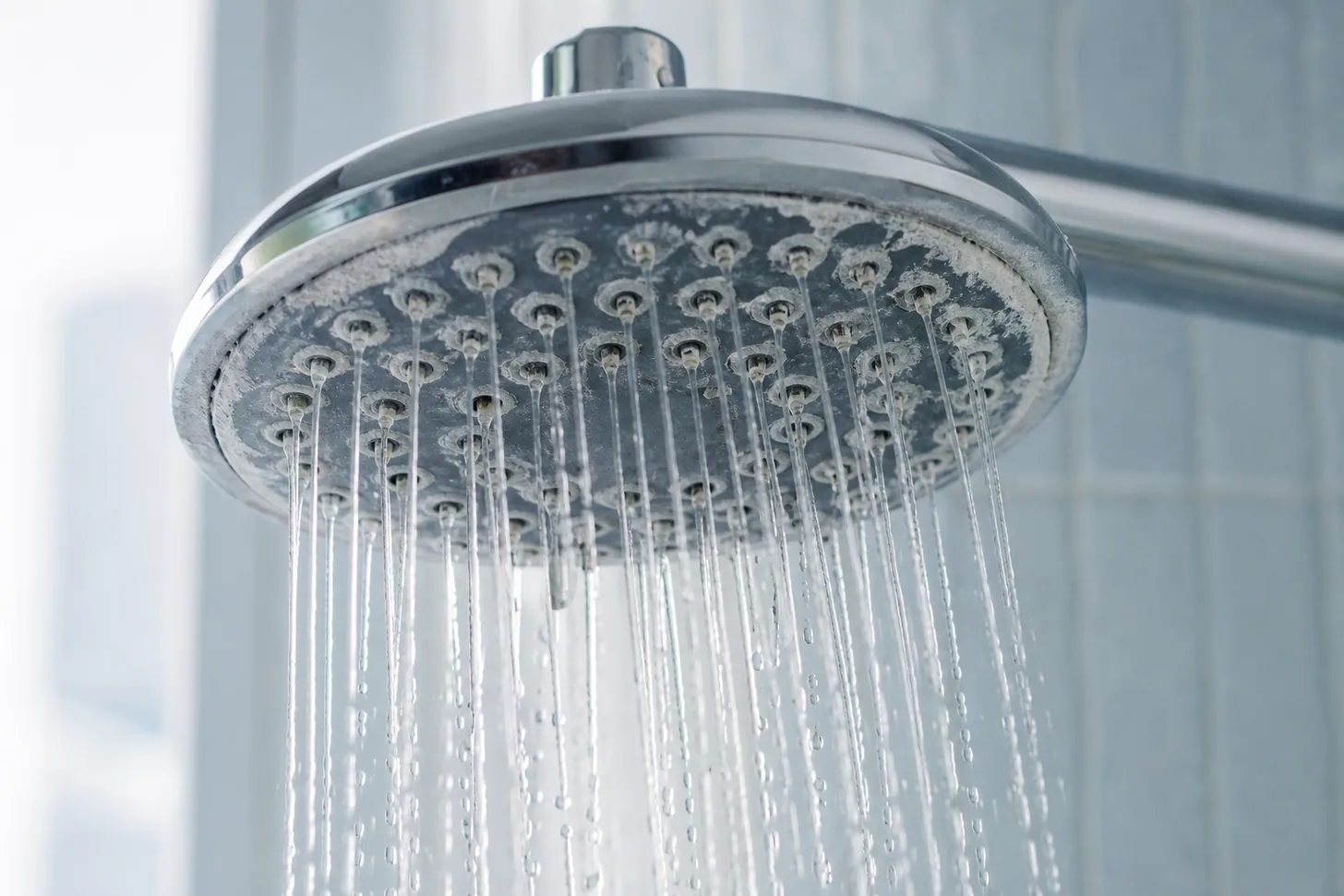
1. The water. This is the big one and it's completely invisible. The USGS is clear that water hardness varies throughout the United States — and internationally the spread is wider still. You've spent years calibrating a routine to one water supply, and then you shower in another.
2. The tools. A hotel dryer isn't a bad version of your dryer, it's a different category of object: low wattage, diffuse airflow, no concentrator, and usually no cool shot. That last omission matters more on fine hair than on anyone else's.
3. The air. Cabin air is desert-dry. The National Research Council's report on the airliner cabin environment puts it at "typically from 10 to 20%" relative humidity, "with an average of 15–19%, depending on the aircraft" — and then your destination has its own climate, which may be far more humid or far drier than home.
Everything below is one of those three.
The water is the biggest variable, and you can't see it
Hard water leaves a mineral film on the hair. Fine hair shows it before anyone else does — same deposit, less fiber to carry it — and the result is hair that feels coated rather than dirty, looks dull, won't hold volume, tangles more, and on colored hair can shift tone within a few days. If you've ever come home from a trip convinced your hair "got damaged", this is usually what happened, and it washes out.
The arrival protocol, in three steps:
Pack one clarifying or chelating sachet — a single-use packet or a small decant. Don't use it on arrival.
Wash normally the first time and pay attention. Squeaky and tangly, or dull and flat in a way it never is at home, is your answer.
If the first wash goes badly, clarify on the second, then follow with a light conditioner on the mid-lengths and ends only. One clarifying wash mid-trip resets a week.
Two habits help regardless of what's coming out of the tap. Rinse cooler than you would at home — heat opens the cuticle and makes deposition and color loss worse. And rinse for longer than feels necessary. Unfamiliar showers have unfamiliar pressure, and under-rinsed conditioner is a more common cause of holiday flatness than the water ever is.
Stop fighting it — wear it up, or embrace the texture
Greasy at the roots a day early
Heat, rich conditioner, or both
Dry shampoo at night, not in the morning
Color looks muted or slightly green
Minerals; copper if you've been in a pool
Chelating wash — a normal clarifier won't do it
Dry, straw-like ends after a beach day
Sun plus salt
Rinse with clean water immediately; condition ends
Chair-side note
The number of clients who come back from a two-week trip convinced something has gone permanently wrong with their hair is genuinely high, and it's nearly always the water. What makes it so convincing is the timing: it's fine on day one, slightly odd on day three, and by the end of the first week it feels like different hair — which reads as damage accumulating rather than deposit accumulating.
The tell is that damaged hair doesn't recover in one wash, and this does. I've had women in the chair braced for me to say they need four inches off, and instead we do a chelating wash at the basin and they can feel the difference before I've even towelled it. So if you take one thing on a trip, take the sachet. It weighs nothing and it's the only thing in the bag that can undo a whole week.
SB
— Simone Baptiste, Senior Stylist
The hotel dryer, and the one rule it breaks
The wall-mounted unit is missing two things and one of them costs you the whole result.
The airflow is weak and undirected. No concentrator means the air spreads instead of hitting the section you're aiming at, so shaping from wet takes forever and half the head dries in the wrong position while you're working on the other half.
There's no cool shot, and that's the real loss. A style sets as the hair cools — the shape is decided on the way down, not while the heat is on — so releasing a warm section undoes what you just built.
Fine hair suffers most here because it heats and cools faster, so the settable window is shorter and easier to miss. Why fine hair won't hold a style is the full mechanism, and it's the single most useful thing to understand before you attempt a hotel blow-dry.
Three workarounds, in order of how much they buy you:
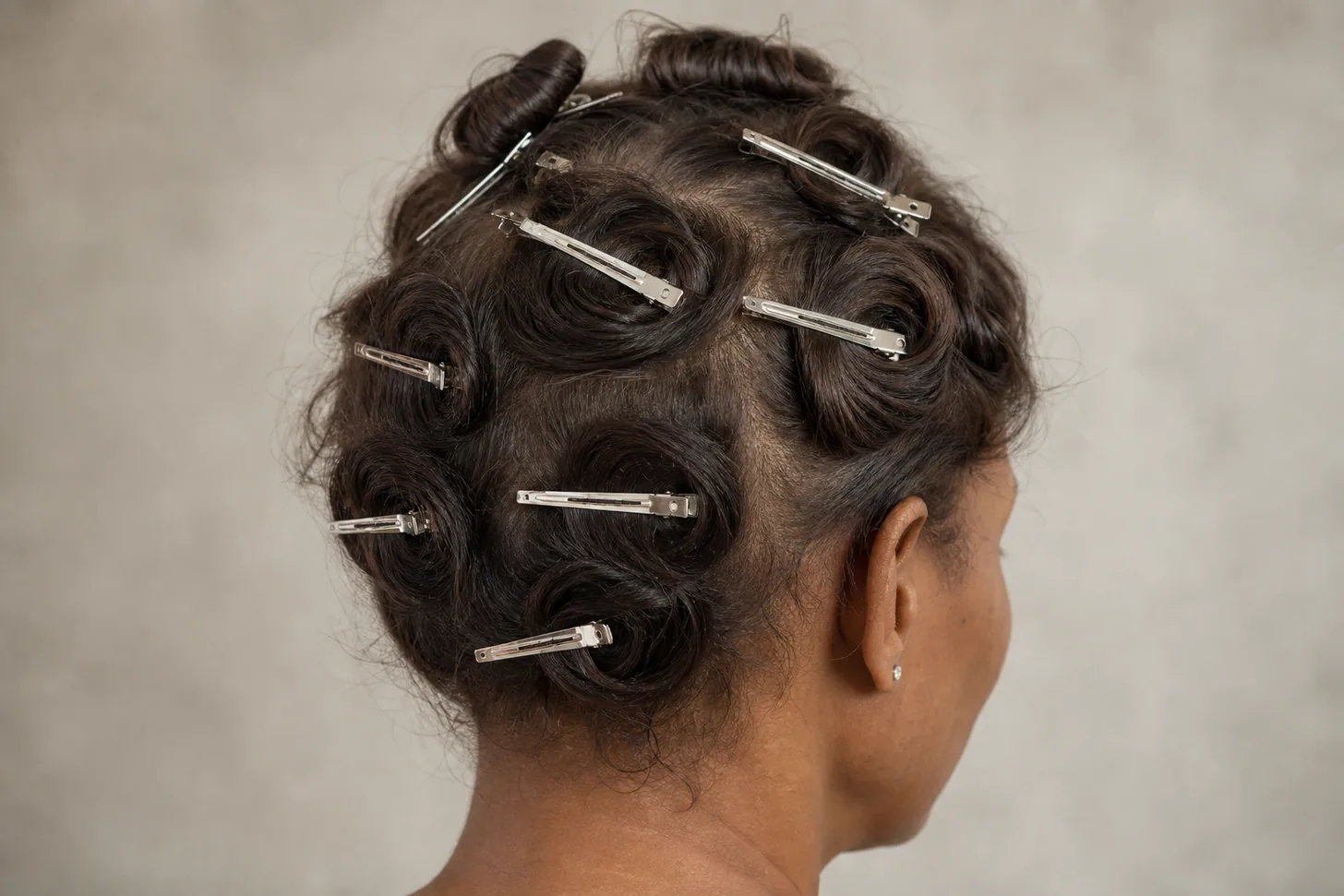
1. Replace the cool shot with time. Shape the section, then don't touch it. Clip it flat to the head, or wrap it around two fingers and pin it, or simply hold it — and leave it until it's cold to the touch, not cool.
Thirty to sixty seconds per section. This is the entire difference between a hotel blow-dry that survives dinner and one that doesn't. If the room has air conditioning, stand in front of it for the last minute: it's a perfectly good substitute cool shot.
2. Rough-dry to about 80% first, head tipped forward. Weak diffuse airflow is bad at shaping and perfectly adequate at removing water. Use it for the part it can do, then shape only the last 20% — which is also the part that determines how it looks. How to blow-dry fine hair has the technique at home.
3. Dry the roots against their direction. Take horizontal sections across the crown, direct the air at the roots from the opposite side to how the hair naturally falls, then let it drop back. You'll get lift at the root without needing a brush you probably didn't pack. Root volume for fine hair and the flat-hair fix both cover it in more depth.
And the honest option nobody offers: plan not to blow-dry. If your hair air-dries acceptably at home, a trip is a reasonable place to let it — you're outdoors more, your hair is up more, and you'll spend the time better. Air-drying fine hair is realistic about what that looks like.
The plane itself
Six hours in a cabin is a specific set of conditions and it deserves its own preparation.
And you spend the whole flight rubbing the back of your head against a seat. Several hours of friction, plus pressure, on the one part of your head where fine hair most needs height. If the back of your head is on the flatter side anatomically, this is the worst possible thing you could do to it — haircuts for a flat back of the head explains why that area behaves the way it does.
What actually helps:
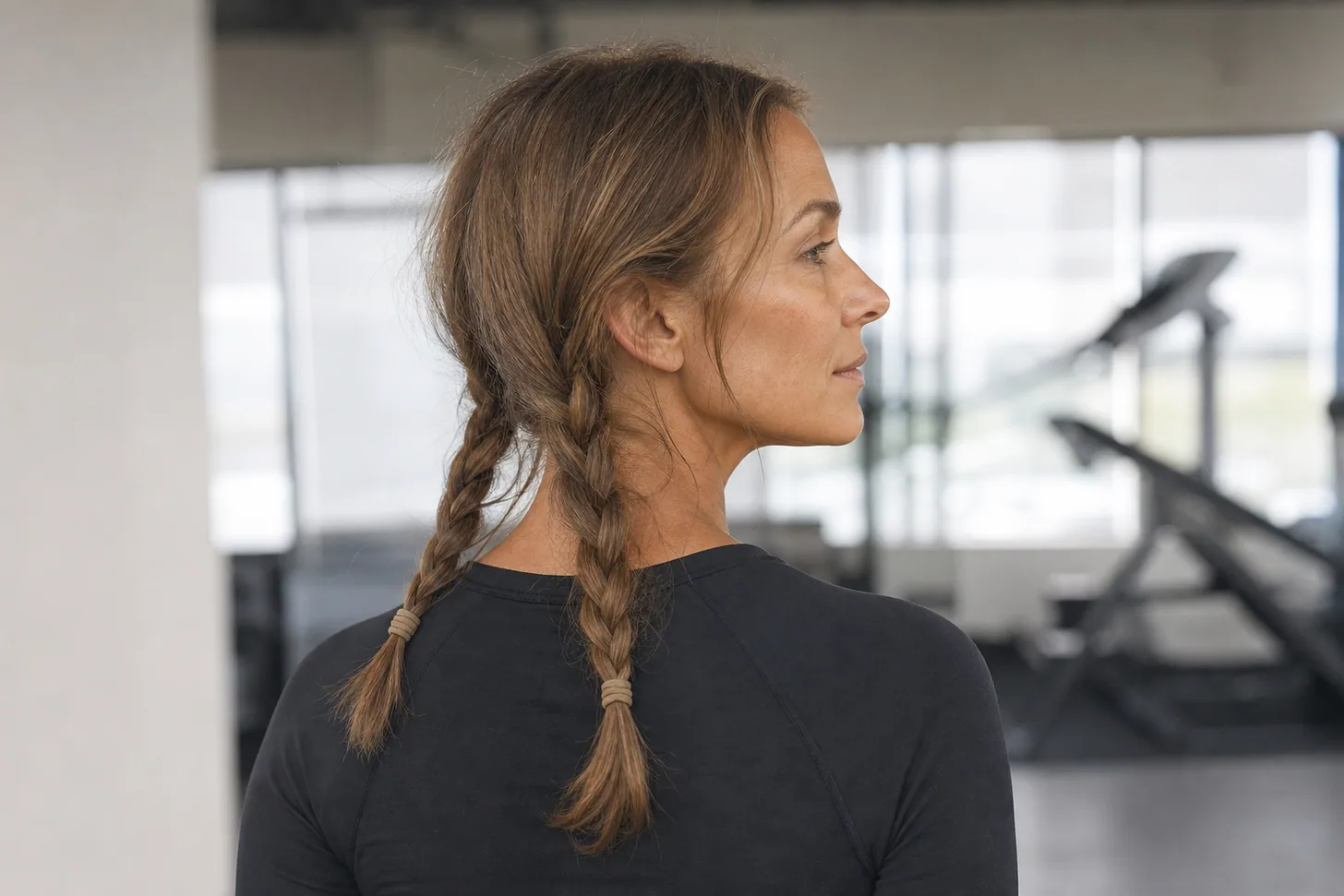
Put your hair up before you board, not after. A soft claw clip or a fabric-covered elastic, loosely, sitting high enough that the seat isn't pressing on it. A bare elastic band on a long flight leaves a dent that outlasts the flight.
Don't sleep on a ponytail. The pressure point becomes a crease and a weak spot. A loose twist or a low soft bun sits better against a headrest.
Carry a trace of hand cream for static. A tiny amount rubbed between the palms and smoothed over the surface — not through the hair — knocks flyaways down instantly and is the one thing you'll definitely already have.
Plan to arrive on hair you don't need to be seen in. Then put it right the next morning, when you have water, a bathroom and time.
Sleeping with fine hair covers the friction question properly, and most of it applies to a headrest.
What earns space in the bag
Ranked by how much of the outcome each one controls, which is not the same as how much you like them.
Take:
Your own shampoo, decanted. Touches every strand you own, every wash. Highest-leverage item in the bag.
Your own conditioner, decanted. Same reason, and hotel conditioner is the single most reliable way to flatten fine hair on a trip.
Dry shampoo. Buys a whole extra day between washes, which on a trip means one less encounter with unfamiliar water. Dry shampoos for fine hair.
One root-focused styling product — a light mousse or a root lifter, not both. Root lifters and mousses.
A clarifying or chelating sachet. Weighs nothing, undoes a week.
Two or three clips. For cooling sections, for holding roots, for wearing it up when the humidity wins.
Leave behind: full-size bottles; a hair mask (a week without one changes nothing); an oil, which does more harm than good on fine hair in unfamiliar conditions; a second styling product that overlaps the first; and any tool you aren't certain you'll actually plug in. Low-maintenance fine hair is a good sanity check on how little you can get away with.
The voltage rule, which matters more than everything above put together. If you're traveling somewhere on 220–240V, check your heat tools for the words 100–240V printed on the handle or the plug. A plug adaptor changes the shape of the pins; it does not change the voltage.
A single-voltage 120V tool plugged into a 240V outlet will be destroyed, usually within seconds, and it is a genuine safety risk rather than just an inconvenience. If your tool isn't dual voltage, leave it at home — a burned-out straightener in a hotel room is a bad start to a trip. Styling tools for fine hair notes which categories are commonly dual voltage.
On liquids: carry-on containers are capped at 3.4 ounces (100 ml) and everything has to fit in one clear quart-sized bag, aerosols included — which is why decanting is the whole strategy rather than a nicety.
Chair-side note
The wash-the-night-before-you-fly thing sounds too small to bother with and it's the best travel-hair advice I have. Arrival day is the worst possible moment to attempt anything: you're tired, you're rushed, the bathroom is unfamiliar, the water is unknown and the dryer is a wall unit.
So don't. Wash the evening before you leave, arrive on second-day hair — which for most fine hair is better hair anyway — and use dry shampoo and a clip to get through the first evening.
It also means you meet the new water for the first time on a morning when you have an hour and nothing depending on the result. I've had clients tell me this one change is the difference between a trip where they liked their hair and one where they wore it up for a week. A compact hot-air brush replaces two items in a case — blow-dry brushes for fine hair notes which sizes travel well.
SB
— Simone Baptiste, Senior Stylist
When travel hair is telling you something else
You started shedding a few weeks after getting home.Look two to four months back, not at the trip — the delay between cause and shed is the whole mechanism. How hair actually grows explains the timeline.
The ends feel like straw after a beach week.That's sun plus salt plus friction, and it's condition rather than deposit. Fine hair in summer and breakage on fine hair.
Your color went green or khaki in a pool.Copper in the water, not chlorine alone, and a normal clarifier won't shift it — you need a chelating product. Brassy fine hair covers the mechanism.
Your scalp is flaking in a dry climate.Dryness and dandruff look alike and are treated completely differently. Dandruff on fine hair separates them.
Your part is sunburned.Genuinely common on fine hair and worth taking seriously — a hat is the only reliable defense. See fine hair in summer.
Nothing works in a humid destination, no matter what you do.Sometimes the honest answer is to stop blow-drying for the week and wear it up. Frizz on fine hair and buns for fine hair.
FAQ
Because three of its inputs change at once, and none of them are the ones people pack for. The water is different — hardness varies enormously by region, so a hotel shower may deposit minerals yours never has. The tools are different: a wall-mounted hotel dryer is low-powered, has no concentrator and usually no cool shot, which removes the exact step that makes a blow-dry hold on fine hair. And the air is different, particularly if you flew — cabin humidity runs "typically from 10 to 20%", drier than most deserts, which produces static and flyaways within a couple of hours. Your hair is behaving normally. It's responding to a different set of conditions.
Assume it's different and give yourself one wash to find out. Hard water leaves a mineral film that fine hair shows faster than any other type, and the result is hair that feels coated, looks dull, won't hold volume, and can shift color tone within days. The protocol: pack a single-use clarifying or chelating sachet, don't use it on arrival, and wash normally the first time. If that first wash leaves your hair squeaky and tangly, or dull and flat in a way it never is at home, that's your answer — clarify on the second wash and follow with a light conditioner on the mid-lengths and ends only. Two habits help regardless: rinse cooler than at home, and rinse longer than feels necessary, since under-rinsing causes more holiday flatness than the water does.
On fine hair, usually not — hotel amenities are formulated for a universal guest rather than for you. The shampoos tend to be detergent-forward, which strips more than fine hair needs, and the conditioners tend to be rich, which is exactly what flattens fine roots. Using both in sequence is the most reliable way to get hair you don't recognize on day two. If there's no alternative, use the shampoo on the scalp only and the conditioner sparingly on the last two inches, well away from the roots. Better: decant your own into small travel bottles. They take almost no space and they're the two products most worth the room, because they touch every strand you own on every wash.
Work around the two things it's missing. It's underpowered with no concentrator, so airflow is diffuse; and it usually has no cool shot, which is the bigger loss, because a style sets as it cools and releasing a warm section undoes the work. Three workarounds. Rough-dry to about 80% with your head tipped forward, using the weak airflow for the part it can do. Replace the cool shot with time: shape the section, then clip it or hold it and leave it completely alone until it's cold to the touch — cold, not cool. And take horizontal sections at the crown, drying the roots against their natural direction before letting them fall back. If the room has air conditioning, standing in front of it for the last minute is a perfectly good substitute cool shot.
Because the cabin is extraordinarily dry. The National Research Council's report on the airliner cabin environment states that relative humidity in most aircraft cabins is "typically from 10 to 20%, with an average of 15–19%, depending on the aircraft". Dry air lets static charge build rather than dissipate, and fine hair carries the least mass to resist being lifted by it, so it separates into individual flyaways. Add several hours of the back of your head rubbing a fabric seat, which both generates charge and flattens the area that most needs volume. Countermeasures: put your hair up before boarding, using a claw clip or fabric-covered elastic rather than a bare band; smooth a trace of hand cream over the surface if static sets in; and don't plan to arrive with hair you want to be seen in.
Fewer than you think, chosen by how much of the outcome each controls. The four that earn their space: your own shampoo decanted, your own conditioner decanted, a dry shampoo (it buys a whole extra day on hair that goes flat fast), and one root-focused styling product — a mousse or a root lifter, not both. Add a clarifying or chelating sachet and a couple of clips. Leave behind full-size bottles, a mask, an oil, a duplicate styling product, and any tool you're not certain you'll plug in. On heat tools the rule that matters is voltage: a single-voltage US tool in a 220–240V outlet will be destroyed, and an adaptor changes the pin shape, not the voltage. Look for "100–240V" on the handle before it goes in the bag.
Not the same day, if you can avoid it — this is one of the highest-return travel habits there is. Arrival day is when you're most tired and most rushed, in an unfamiliar bathroom, with water you've never used and a dryer you can't control. That's a poor set of conditions for anything you want to look good. Wash the evening before you fly, arrive on second-day hair, and use dry shampoo and a clip to get through the first evening. It also means you meet the new water on a morning when you have time to see what it does. If you must wash on arrival, keep it minimal: scalp-only shampoo, conditioner on the ends, rough-dry, and let it cool completely before touching it.
Almost certainly it didn't start there — the timing gives it away. A physical or physiological stress pushes follicles out of the growing phase early, but the hair isn't released until the resting phase completes, so the shed appears a couple of months after the event rather than during it. If you got back a fortnight ago and are shedding now, look at what was happening two to four months ago. What travel genuinely can do in the short term is increase breakage: sun, salt, chlorine, hard water, tangles and rough drying all cost fibers, and on fine hair breakage looks identical to shedding at a glance. The tell is the hair itself — a shed hair has a small pale bulb at the root end, a broken one is a plain fiber snapped at both ends.
Eleven years styling fine hair. Simone's best travel advice costs nothing: wash the night before you fly, and pack the sachet that can undo a whole week of strange water.
Images in this article are AI-generated illustrations, not photographs of real clients or results. See our image policy.
Results vary with hair type, density, and growth patterns. This guide is educational and not a substitute for an in-person consultation with a licensed stylist.
Get the good hair intel
One honest, stylist-written guide in your inbox each week. No hype.

 SB
SB