Chair-side note
The tell I've learned to listen for is a move. Someone books in convinced their hair has changed — flatter, duller, squeaky when wet, ends that tangle in a way they never used to — and somewhere in the conversation it comes out that they moved apartments in the spring, or started staying at a partner's place three nights a week.
Nothing about their hair changed at all. The water did. What makes it hard to spot is that it's gradual and it's everywhere at once, so it reads as your hair getting worse rather than as an external thing arriving. Ask anyone in the house with thick hair whether they've noticed anything and they'll look at you blankly, which is its own kind of diagnostic.

MH
First, confirm it's actually the water
Three checks, in order of effort. None of them costs anything.
The soap test tells you in one wash
Hardness is dissolved calcium and magnesium, and those minerals react with soap instead of letting it lather. The USGS description of water hardness puts the domestic version well: after washing with soap in hard water, "you may have felt like there was a film of residue left on your hands" — the soap has reacted with calcium to make scum rather than rinsing away.
Cloudy glassware out of the dishwasher is the same reaction, and so is a shampoo that suddenly needs twice as much product to foam.
Look at your fixtures, not your hair
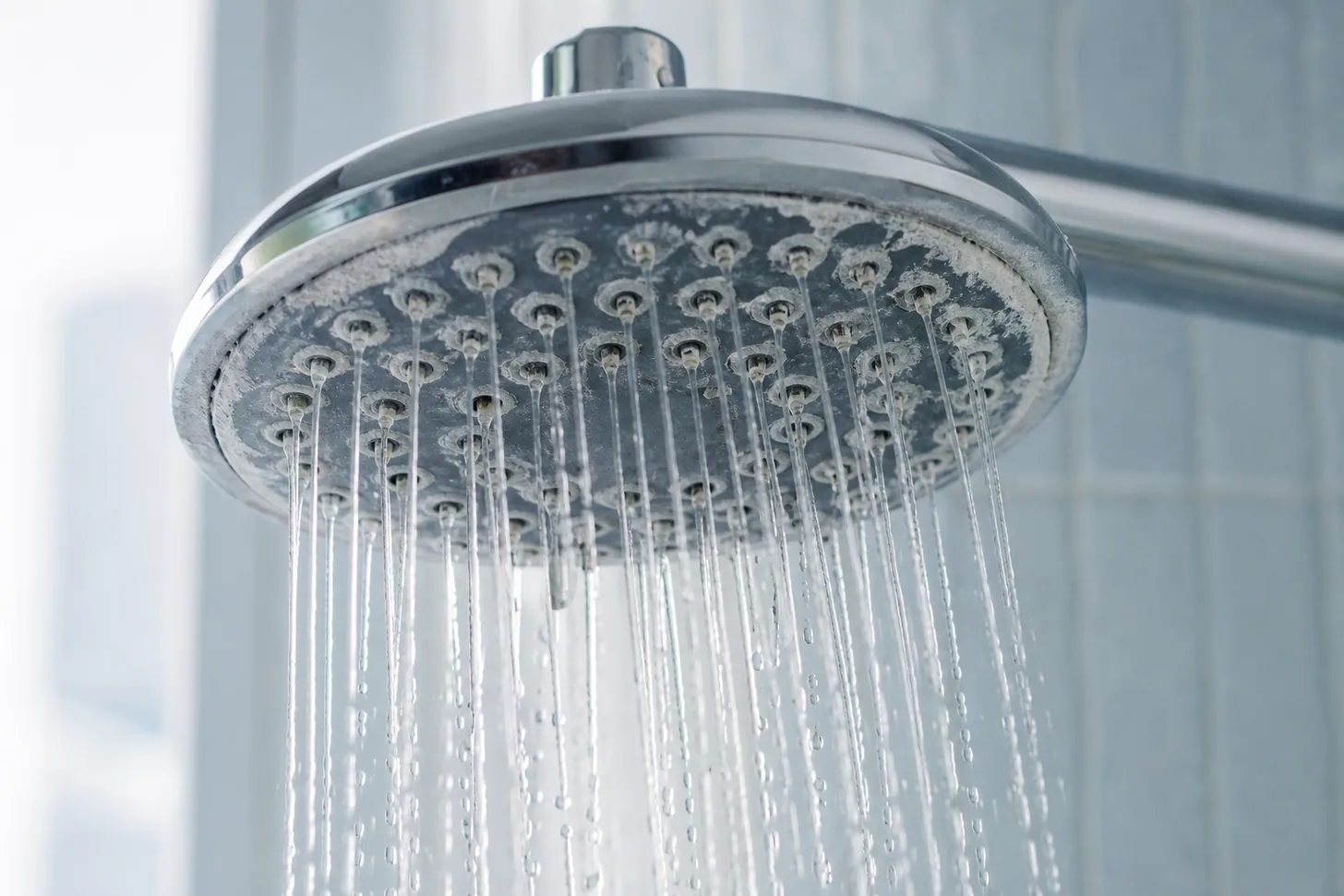
White crust around the showerhead nozzles, a film on the shower screen that returns two days after cleaning, scale in the kettle. These are the same deposits, forming on things that can't complain about it.
Then get the actual number
Your water utility publishes an annual water quality report, and hardness will be in it, expressed in mg/L as calcium carbonate (or in grains per gallon — divide by 17.1 to convert). The USGS classification is the one to measure it against:
- 0–60 mg/L — soft. Not your problem.
- 61–120 mg/L — moderately hard. Fine hair may notice; most people don't.
- 121–180 mg/L — hard. Worth acting on if your hair has changed.
- Above 180 mg/L — very hard. Assume it's a factor.
Well water isn't covered by a utility report, and it's frequently both harder and higher in iron. If you're on a well and your hair has changed, a home test kit is worth the few dollars.
What the research actually found
This is where most articles on the subject overclaim, so here are the three relevant studies with what each one concluded.
Read together, the honest summary is short. Two studies disagree about whether hard water measurably weakens hair, and the one that found an effect found a modest one. The third looked directly at the surface and found the minerals sitting there without visible structural damage — its own conclusion being that hard water "may be associated with increased deposits on the hair shaft surface, however, this does not necessarily translate into evident structural surface changes."
So: the deposit is real and measurable. The destruction is not established. If you've read that hard water is corroding your hair, that's the part the evidence doesn't support — and it matters, because a deposit is removable in a way that damage isn't. This is the good news of the whole page.
Why fine hair notices first
Nothing about hard water targets fine hair. What changes is the ratio.
A deposit adds a small, fixed amount of mass to each strand's surface. On a coarse strand, that's a rounding error against what the strand already weighs. On a fine strand — a fraction of the diameter, and far less mass — the same coating is a substantial addition, and weight is the one thing fine hair has no tolerance for.
It's the identical mechanism that makes rich conditioners and heavy oils a problem on this hair type, which is why fine hair needs less conditioner than the bottle implies.
Low density compounds it in a second, less obvious way. Shine is light bouncing off a smooth surface, and a head of fine, low-density hair has fewer surfaces doing the bouncing, so any roughening of the cuticle shows up as dullness faster than it would on a thick head of hair. Between the added weight and the lost shine, you get the exact complaint I hear: flat, dull, and it feels like there's something on it.
Three practical symptoms worth separating from other causes:
- Flatness that shampoo doesn't fix. If clean hair is already flat at the roots on day one, the cause is weight rather than oil — different problem, different fix. The full diagnostic is in why fine hair goes flat.
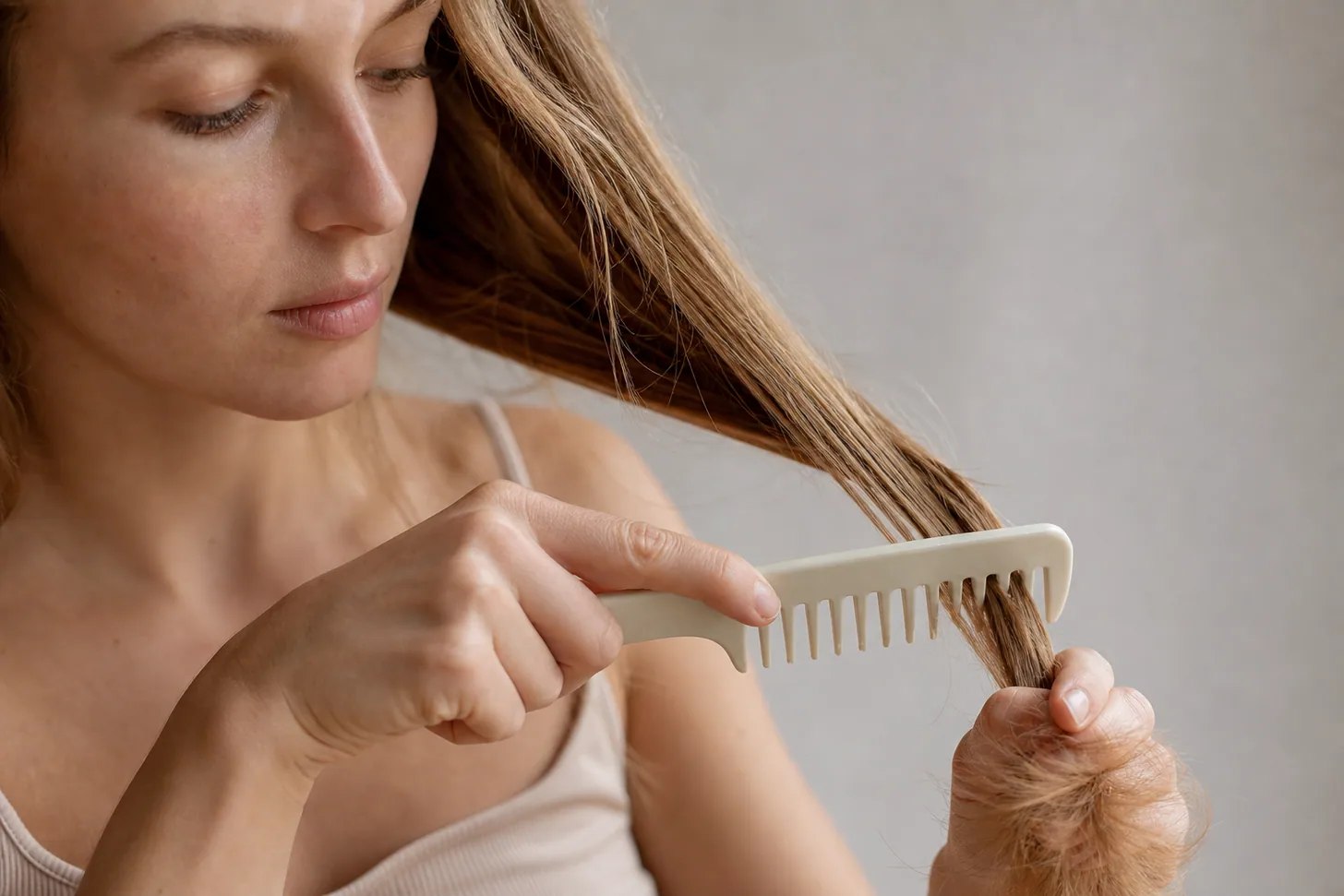
- A squeaky, grabby feel when wet, and tangling when dry. Roughened, mineral-coated cuticles catch on each other. Keeping fine hair from tangling covers the handling side.
- Color that shifts. Iron in the water pulls light hair warm and orange; copper produces a green cast. Both land hardest on porous, chemically lightened hair — see color correction on fine hair.
Chelating vs clarifying: the distinction that decides everything
If your hair is colored, this distinction is also the one that decides which shampoo to buy — a color-protecting formula does nothing about minerals, and a chelating one is what actually lifts the dullness. Shampoo for fine color-treated hair works through the choice.
This is the single most useful thing on this page, and it's the reason so many people conclude that nothing works. The same distinction decides what to do about pool water, where the culprit is copper rather than calcium — see fine hair in summer.
Clarifying shampoos use stronger surfactants to strip organic residue — sebum, silicones, styling polymers, dry shampoo. They're the right tool for buildup from products, and fine hair genuinely benefits from them on a schedule. Between those resets, a mild wash does less damage than a stripping one — see shampoo for dry, fine hair.
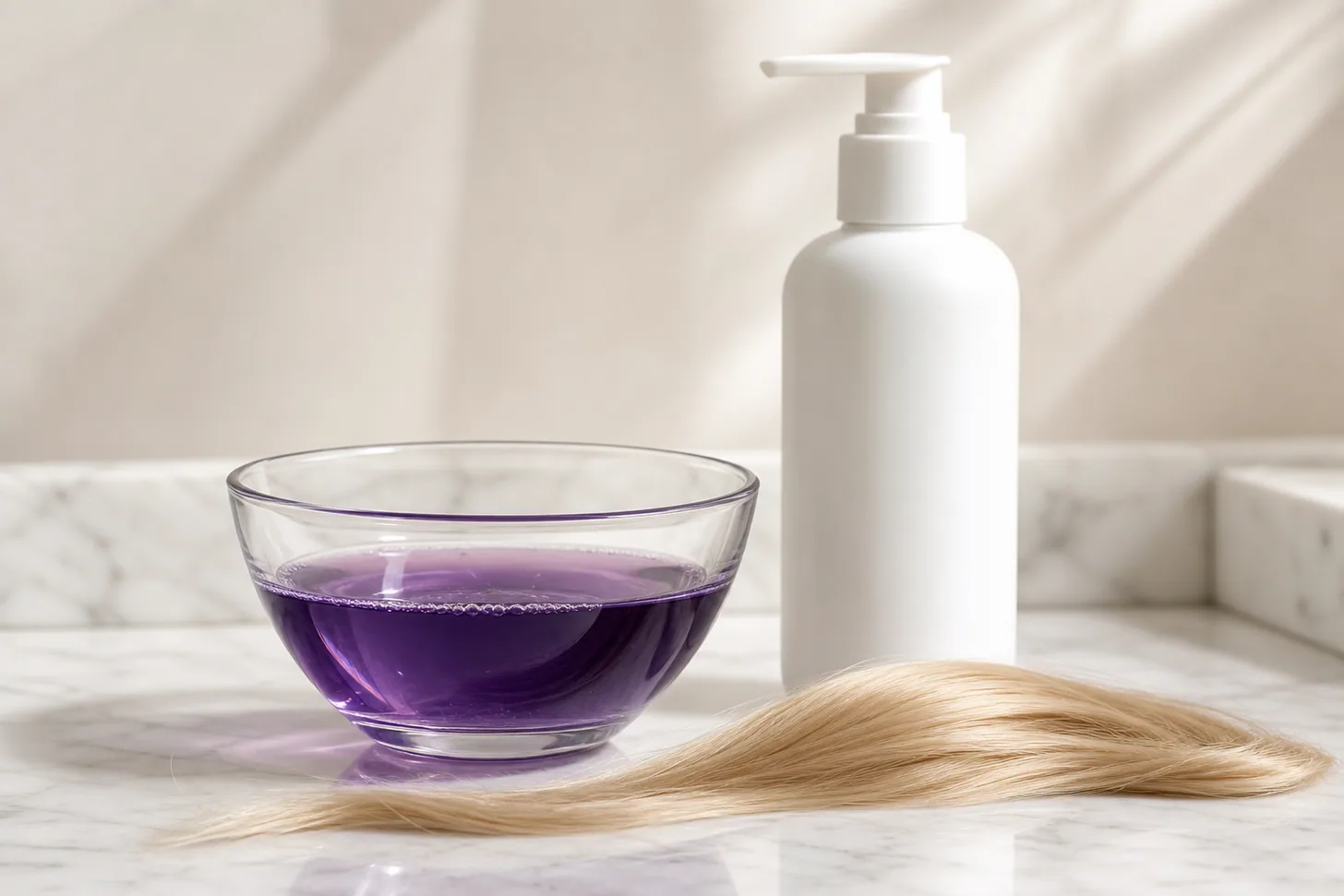
Chelating agents do something chemically different: they bind metal ions and hold onto them so they rinse away instead of clinging to the hair. Detergent alone doesn't remove bound minerals efficiently, no matter how strong it is.
So when you buy a "hard water shampoo," the marketing tells you nothing and the ingredient list tells you everything. Look for any of these:
- Tetrasodium EDTA or disodium EDTA — the most common chelators; often present in small amounts as preservative boosters, so you want them reasonably high in the list, not last
- Phytic acid or sodium phytate — plant-derived, common in "purifying" formulas
- Sodium gluconate, gluconolactone, citric acid — milder, often used together
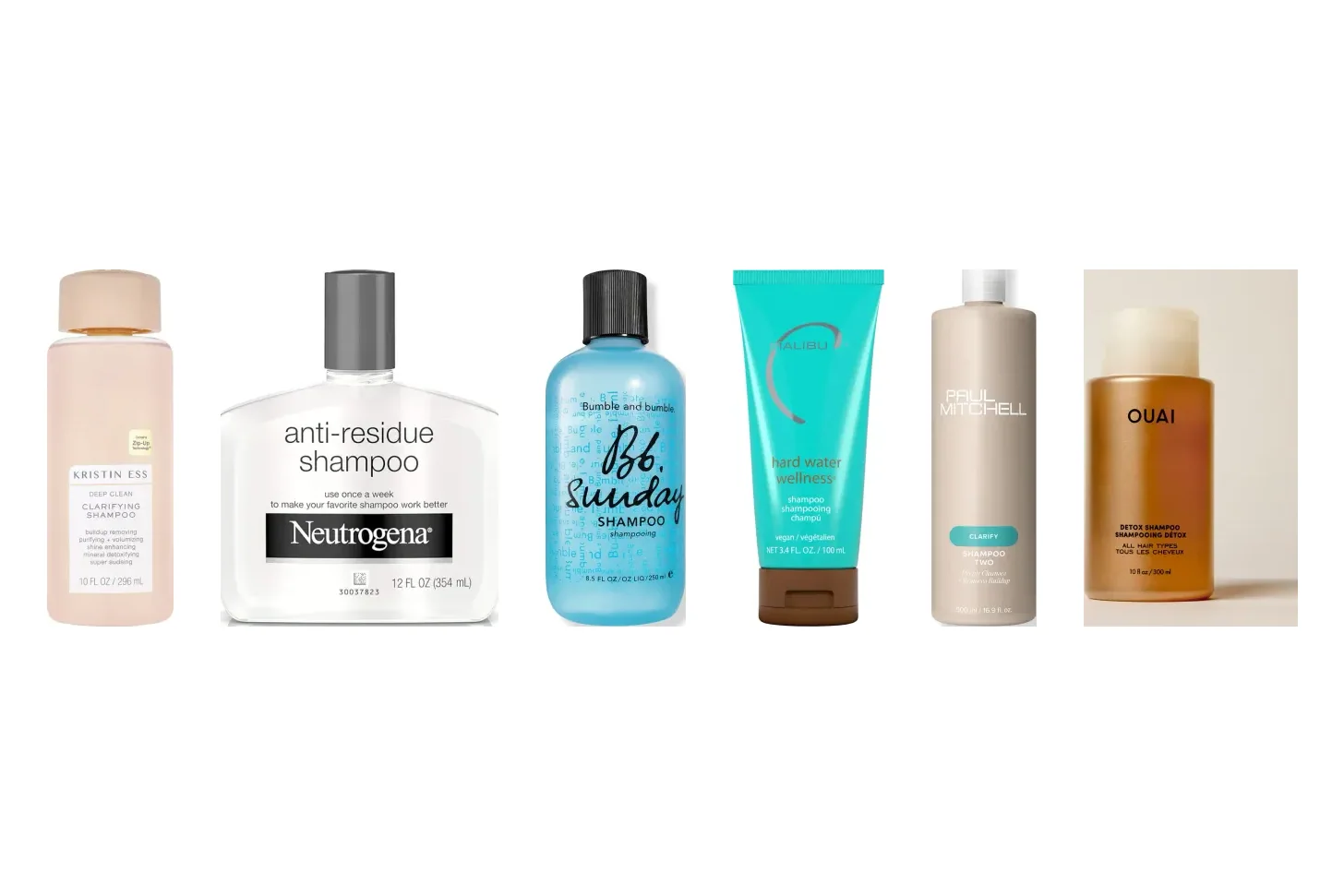
A product with none of those isn't going to remove mineral deposit, whatever the front of the bottle says. Our roundup of clarifying shampoos for fine hair flags which of the picks actually chelate, since a fine-hair formula also has to rinse clean without stripping you into straw.
The routine that fixes it
Chelate on a schedule, not on a whim
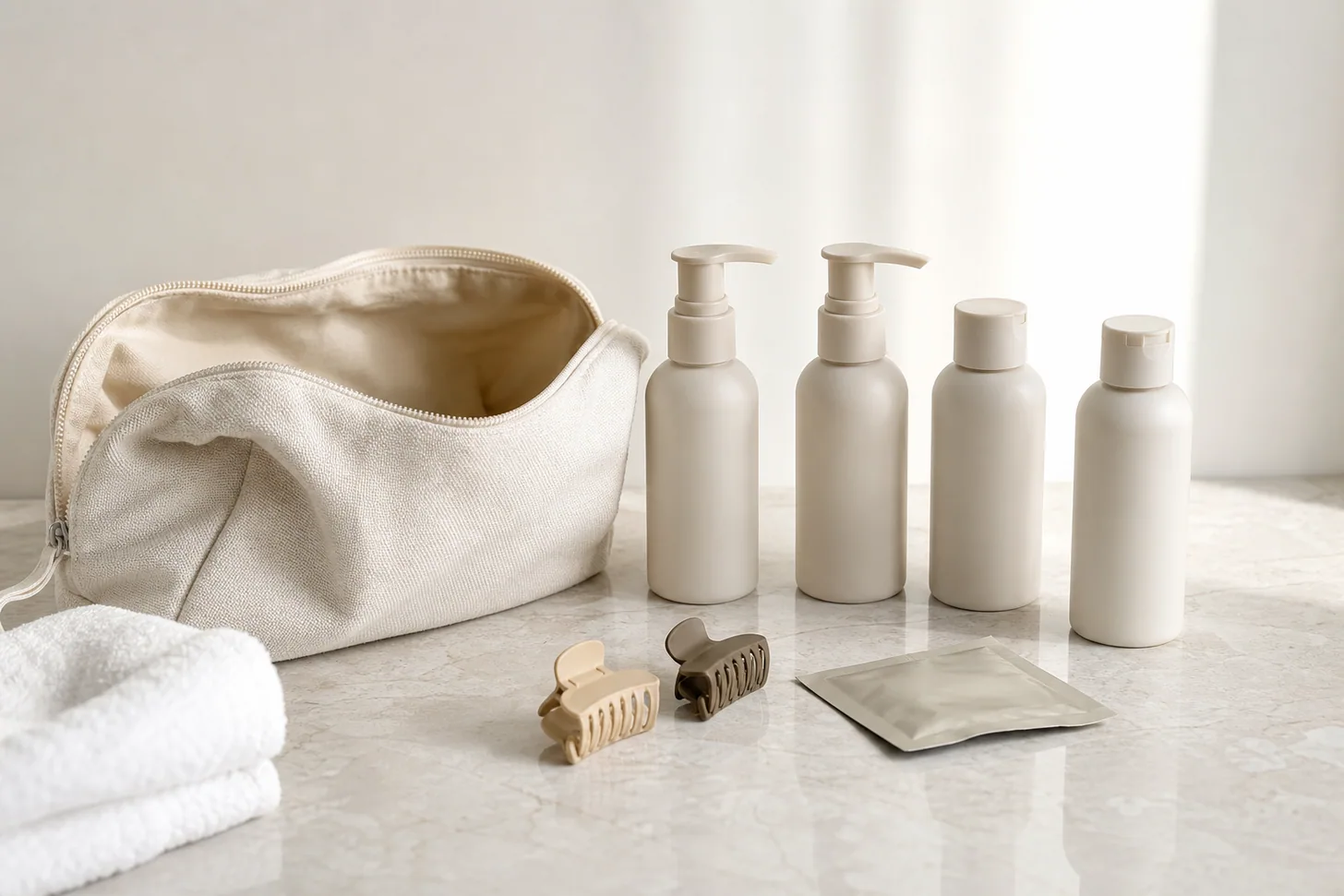
The one exception to a schedule is travel: a trip drops you into water you have never used, and one clarifying or chelating sachet in the wash bag can undo a whole week of it. Fine hair when you travel has the arrival protocol.
Every two to four weeks is right for most fine hair on hard water — closer to weekly if you're on very hard water and use a lot of product, closer to monthly if your hair is color-treated or dry. Deposit accumulates gradually, so a single dramatic wash isn't the answer; a rhythm is. If your hair feels squeaky and grabby after, you've gone too often.
Give it contact time
Chelation is a chemical reaction, not scrubbing. Work the wash through the lengths and leave it in for two or three minutes before rinsing — most people rinse a chelating shampoo in fifteen seconds and get a fraction of the benefit.
Follow it with moisture, not with volume
A chelating wash leaves fine hair clean to the point of being bare. That's when a lightweight conditioner on mid-lengths and ends earns its place, and when a volumizing product does not — you'll get lift you didn't need and a texture like dry grass. The moisture routine for dry fine hair is the right sequence to follow it with.
Change the last thirty seconds of your shower
A cool final rinse flattens the cuticle and buys back some shine — free, and it does more than most bottled solutions. If you're somewhere very hard and have a bottle of filtered water to hand, a final pour over the lengths is a legitimate trick before an event. It isn't a daily practice; it's a lever for the day it matters.
Dry it rather than letting it air-dry stiff
Mineral-coated hair air-dries rougher and flatter than it needs to. Rough-drying to 80% with your fingers and then finishing with a brush gives you back the movement the deposit took away — the method is in how to blow-dry fine hair for volume.
What doesn't work
Vinegar and lemon rinses. An acidic rinse lowers pH and smooths the cuticle, so hair feels better immediately and it's easy to credit it with removing buildup. It isn't chelating at that concentration. Enjoy it if you like it; don't rely on it, and don't do it often on fine hair.
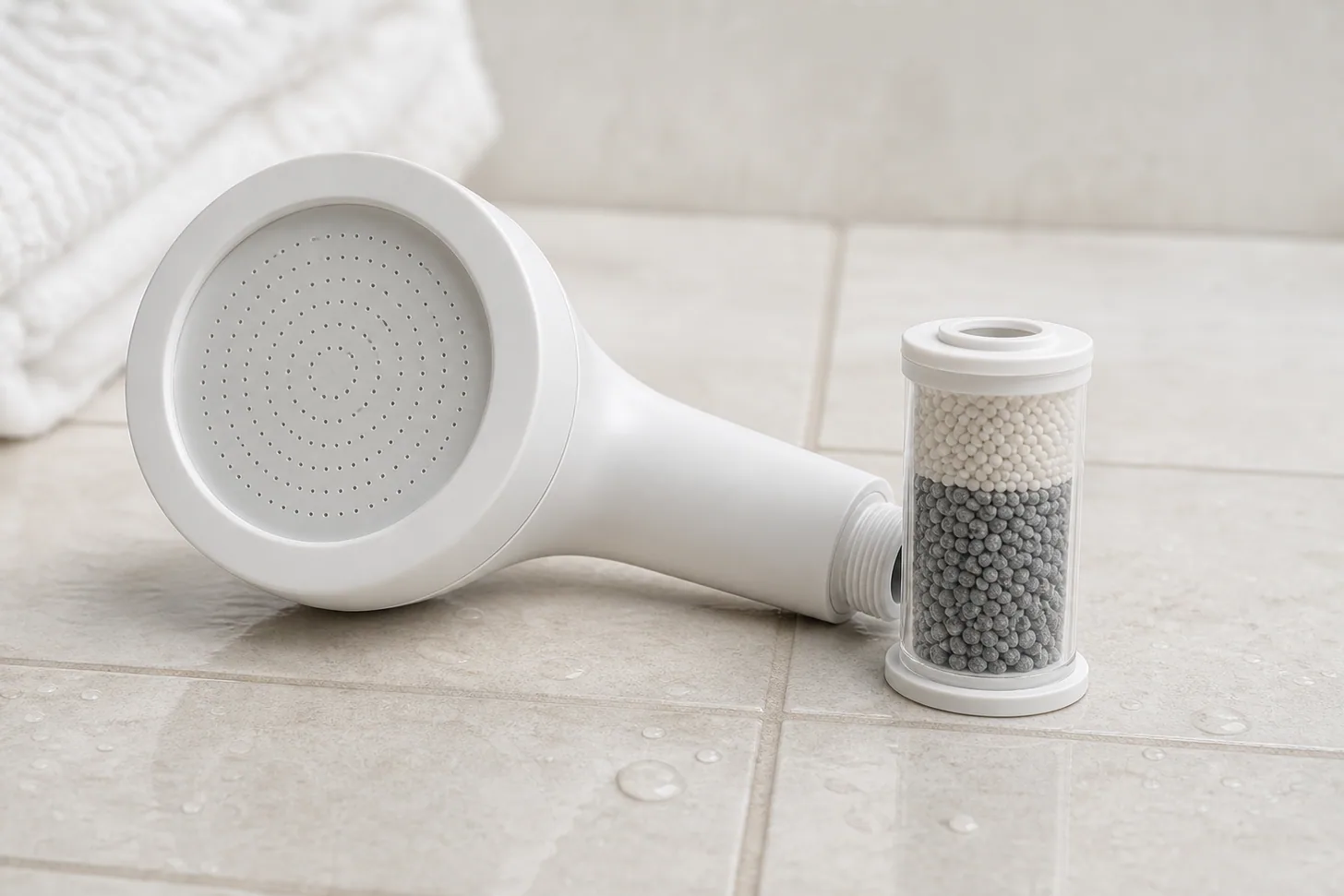
Shower filters, as a complete answer. Most reduce chlorine and some metals, which is worth something if a green cast or a chlorine smell is your issue. Actually softening water means removing calcium and magnesium by ion exchange, which is what a whole-house softener does and what an inline filter generally does not. Small purchase, modest expectations.
Switching shampoo repeatedly. If the new bottle contains no chelator, you're testing the same variable over and over. Read the list first, and give one product six weeks.
Worrying about hair loss. There's no good evidence hard water causes it, and the USGS is clear that hardness is a nuisance property of water rather than a health concern. Rough, tangly hair broken by hard combing does end up in the brush — but that's mechanical breakage with an obvious fix, not follicular loss. If shedding is heavy or your part is widening, look elsewhere: fine hair or thinning? is the place to start.