Fine-hair color · Blonde maintenance

Brassy Fine Hair: Purple Shampoo, Toner and What Works

Almost everyone treats brass as one problem with one answer, and it isn't. Brassiness is two entirely different things wearing the same face: residual warmth coming from inside the fiber, and mineral deposit landing on it from outside. They look nearly identical in the mirror and they need opposite interventions — purple shampoo addresses the first and does nothing whatsoever for the second, which is why so many people are on their fourth bottle and still warm. The fastest way to tell them apart is timing, not color: if a salon toner lasts six to eight weeks and fades gradually, that's normal fade; if you're warm again within a fortnight, it's your water. On top of that, fine hair has its own complication. It lifts faster, becomes porous sooner, takes toner quickly and loses it quickly, so a fine blonde is running on a shorter cycle than the standard salon calendar assumes — and the usual response, more purple shampoo more often, quietly makes the hair more porous and speeds the cycle up further. Below: the diagnosis, the dilution and timing that keep fine hair out of lilac territory, blue versus purple, and the honest ranking of every fix from a bottle in the shower to a chair in the salon.

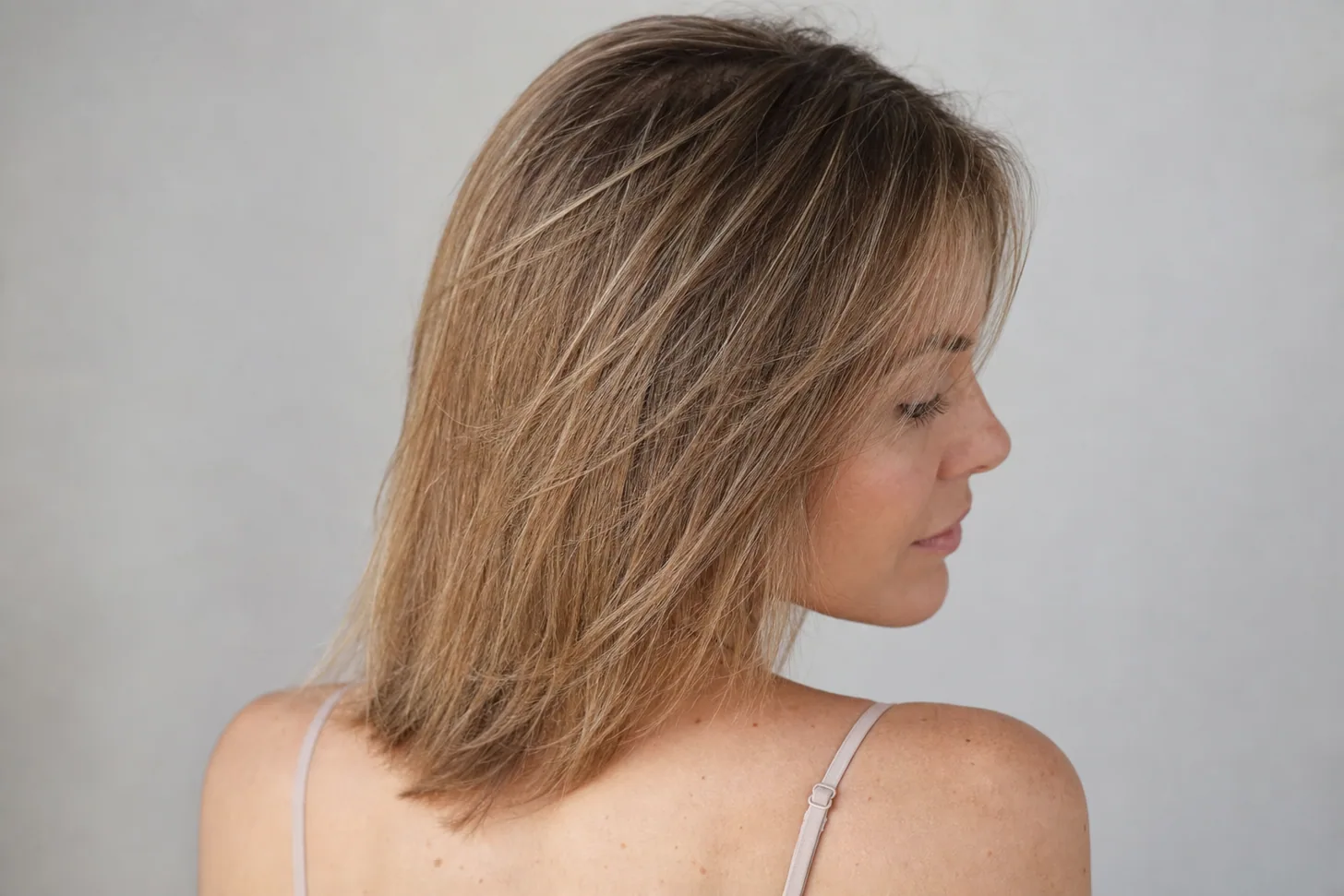
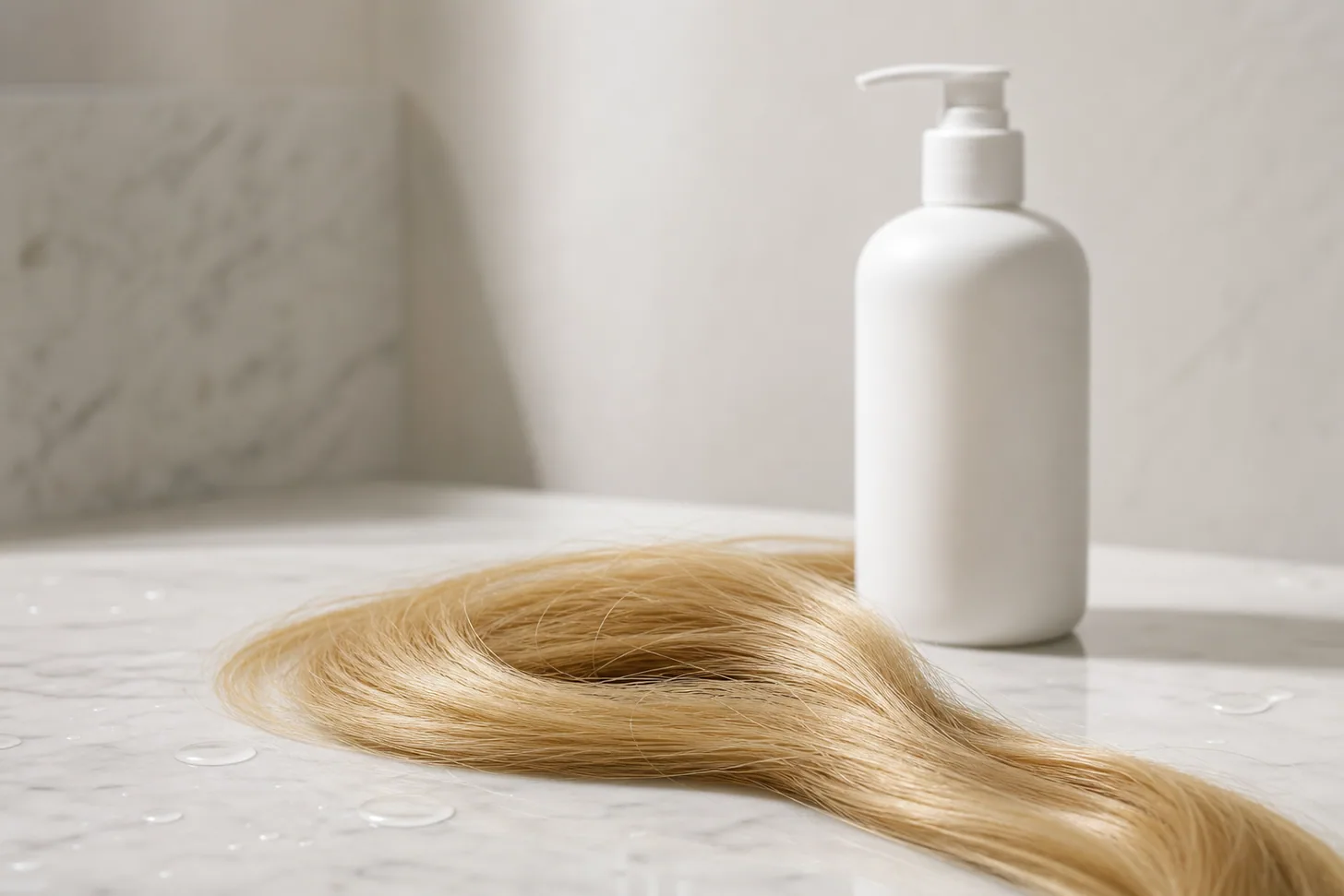
Close view of fine highlighted blonde hair held in daylight showing warm yellow tones through the mid-lengths and ends, cool neutral roots
Warmth that arrives at the mid-lengths and ends first is usually fade. Warmth everywhere, with dullness, is usually water.

Brass is two problems, and they need different things

Get this right and the rest of the page is straightforward. Get it wrong and you'll spend a year buying products for the problem you don't have.

Residual warmth comes from inside the fiber

Lightening removes your natural pigment in stages, and the warm tones are the last to leave. Hair passes through red, then orange, then gold, then pale yellow on its way to true pale blonde — which is why a lift that stops short of the target level leaves warmth sitting in the hair by definition. A toner or gloss then deposits cool pigment over the top to neutralize what's left. That deposit is a coating, not a change to the underlying hair, and it washes away. As it goes, the warmth that was always there becomes visible again.

This is the normal, expected version. It arrives gradually, it shows at the mid-lengths and ends first because they're the most porous, and it's what purple shampoo and glosses exist to manage.

Mineral brass lands on the hair from outside

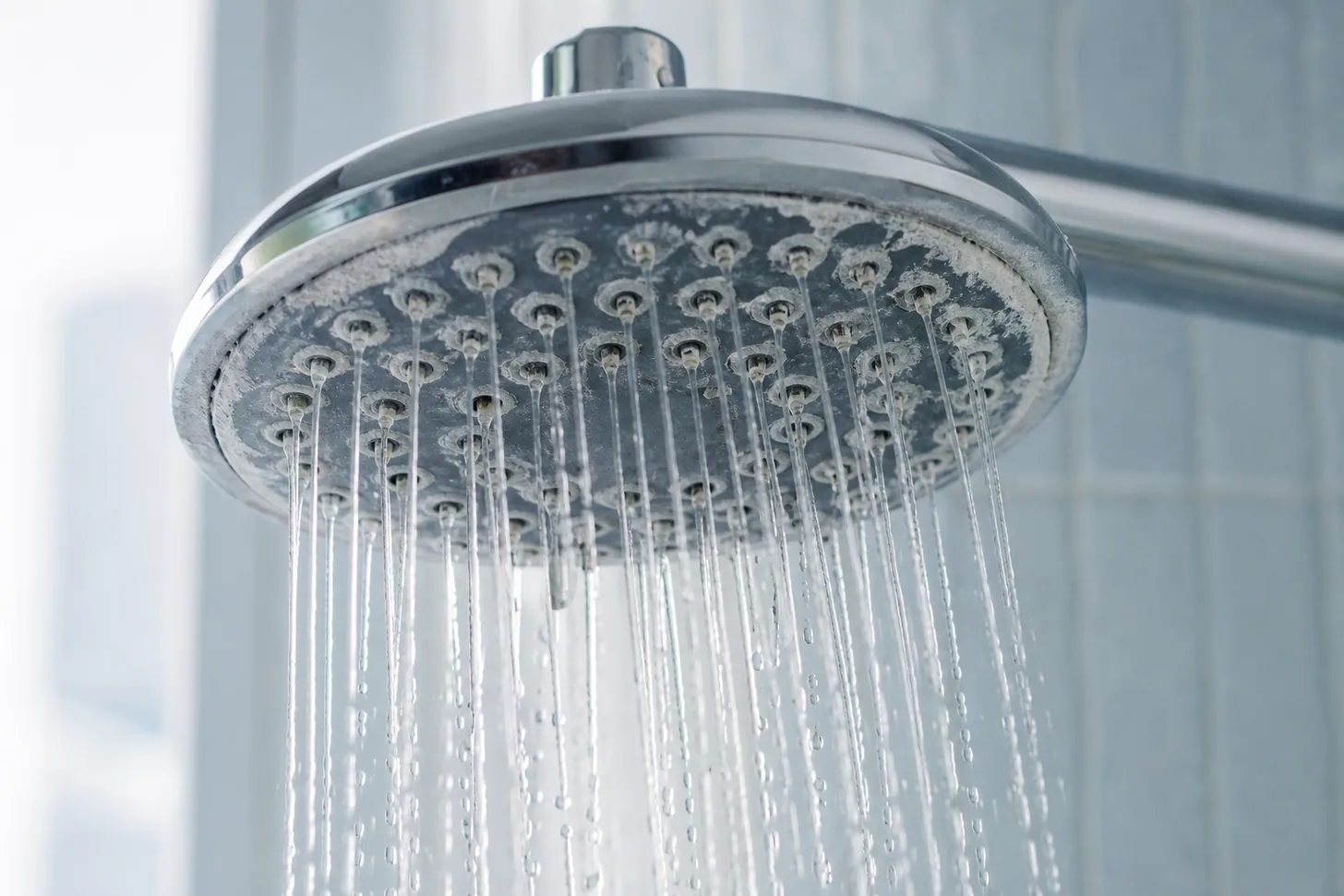
Water carries dissolved metals — copper and iron chiefly — and they deposit onto hair, preferentially onto hair that's light-colored or already damaged and therefore porous. Research on the effects of hard water on hair and scanning electron microscopy of hair shaft changes with water hardness documents the surface consequences. The color consequence is a warm, slightly dirty cast that no toner will hold up against, because you're re-depositing metal every time you wash.

The extreme version of the same mechanism is the green hair swimmers get, and it's instructive: a 2024 case report in Skin Appendage Disorders attributes it to copper — from algicides and from plumbing — rather than to chlorine itself, with chlorine's role being to oxidise the metal and help it bind. Same metals, same susceptibility profile, different color. Our hard water and fine hair guide covers the full picture.

How to tell which you have

  • Timing. Toner holding six to eight weeks with a gradual fade is normal. Warm again inside two weeks of a fresh salon appointment points at the water.
  • Distribution. Fade shows at the ends first and works up. Mineral brass tends to be everywhere at once, including hair that was toned last week.
  • Feel and shine. Faded color still feels and looks like your hair. Mineral deposit usually comes with roughness and a flat, dull surface as well as warmth.
  • Circumstances. A new house, a new city, a swimming habit, or an old boiler. Any of those arriving at the same time as the brass is a strong hint.
Chair-side note

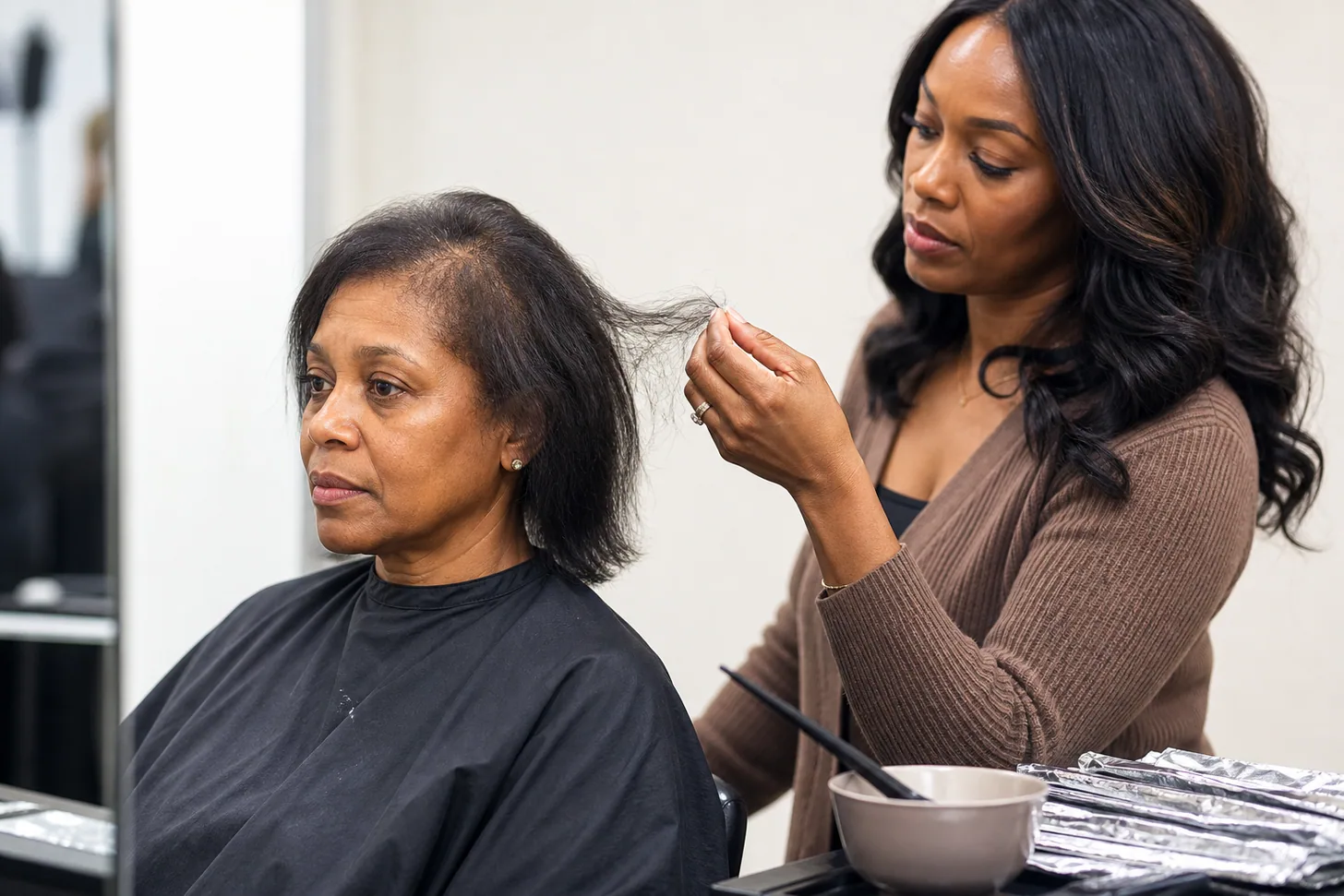
The question I ask before I touch anyone's color is how long the last one lasted, and it tells me more than looking at the hair does. If she says six weeks, I'm toning. If she says "about ten days, it's always like that," I stop and ask where she lives — and it's a specific building, or a specific town, often enough that I've started keeping a mental map. Re-toning that client is charging her for something that will be gone before the next weekend. What she actually needs is a chelating treatment first, then the tone, and then she gets the six weeks everybody else gets. It is the single most satisfying fix in color work, because it looks like magic and it's really just plumbing.
Priya NairPN
— Priya Nair, Master Colorist

Why fine hair runs the whole cycle faster

Everything above applies to any hair. This is the part that's specific to yours, and it explains a pattern most fine blondes recognize immediately.

Fine hair lifts faster. There's less mass in each strand for a lightener to work through, so it reaches a given level in less time than the same formula would need on coarse hair. That's why a fine blonde processes on a shorter timer, and why over-processing is easier — the window between "right" and "too far" is narrower.

It becomes porous sooner. The cuticle is a thin armour on any hair, and a fine strand has a smaller cross-section beneath it, so the same chemical service leaves proportionally more of the fiber compromised. Porosity on fine hair covers what that means day to day.

So it takes toner fast — and loses it fast. Porous hair accepts deposit readily, which feels like an advantage while you're in the chair. But there's less cortex holding onto it, so the same toner washes out sooner than it would on a coarser head. Your color is genuinely on a shorter clock, and it isn't your colorist's fault.

The trap this sets is the important bit. Faced with warmth at week three, the standard response is more purple shampoo, more often. Most purple shampoos are detergent-forward — a toning shampoo has to clean as well as deposit — and they leave fine hair drier. Drier hair is more porous. More porous hair loses tone faster and takes up minerals more readily. Used three or four times a week, purple shampoo accelerates the exact condition it's treating. Once or twice a week, on well-conditioned hair, it stays a useful tool.

Using purple shampoo on fine hair without going lilac

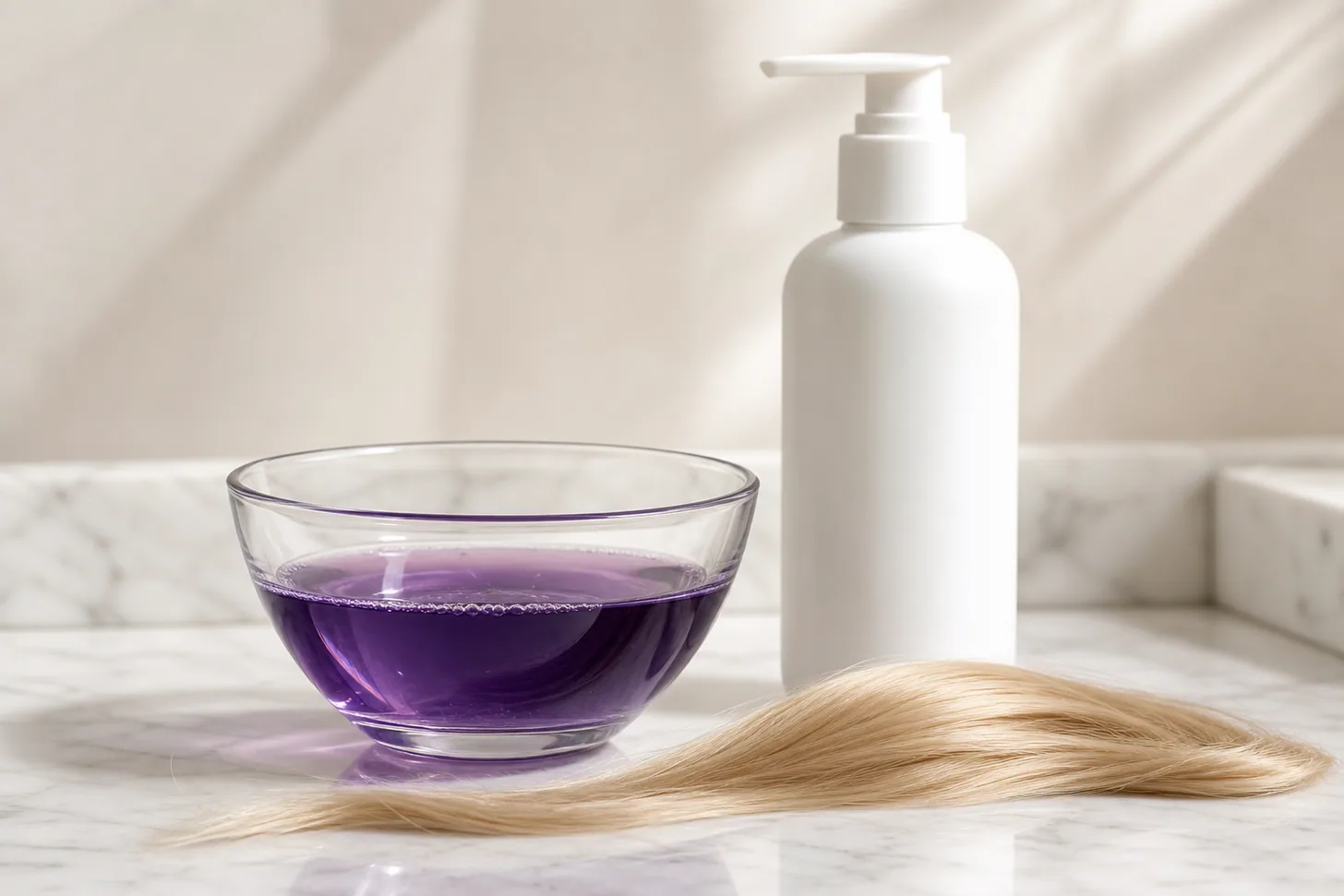
Purple shampoo is a direct dye in a cleansing base. There's no developer, no processing time, no chemical reaction — it deposits on contact, and it deposits fastest onto the most porous hair. On fine, lightened hair, that means it can go from correcting to over-correcting in under a minute.

Five changes to the way the bottle tells you to use it:

  • Dilute it. A coin-sized amount mixed with a little water, or with your usual shampoo, in your palm. Neat purple shampoo on porous fine ends is the most common route to lilac.
  • Mid-lengths and ends first, roots last. The ends are the most porous and the most brassy; the roots are the least of both. Applying at the roots and working down gives the roots the longest contact time and the ends the least, which is backwards.
  • Time it by the clock: one to three minutes. Not the five to ten on the bottle, which is written for average hair. Set a timer the first few times — the difference between two minutes and five is visible on fine hair.
  • Rinse with cool water. Warm water swells the fiber and helps deposit go deeper, which is not what you want at the end.
  • Once or twice a week, not more. Use a gentle lightweight shampoo the rest of the time — see our shampoo picks for fine hair.

If you've already gone lilac or gray, it isn't permanent. Direct dye sits on the surface and comes off with washing — a clarifying shampoo once or twice will take most of it out within a few days. The related case, where purple shampoo turns gray or white hair lilac, has its own treatment in going gray with fine hair, because unpigmented hair behaves differently again.

Blue or purple — check before you buy

Toning works on color opposites: violet cancels yellow, blue cancels orange. Buying the wrong one is the most common reason a toning shampoo appears to do nothing at all.

Hair that lifted properly and went pale usually fades to yellow, and purple is right. Hair that started darker and was lifted to a level reading golden-orange — which describes a great deal of highlighted light-brown hair — is showing orange, and purple laid over orange doesn't neutralize it, it muddies it. Blue is the correct tool there.

The test takes ten seconds: hold a section up in daylight next to something plainly yellow and something plainly orange. Whichever it matches tells you which bottle. If your hair is honestly somewhere between, there are blue-violet formulas made for exactly that, and they're the safer buy.

The sun's contribution is real, and it's UVA

Summer brass isn't imagined. A study of hair color changes and protein damage caused by ultraviolet radiation found significant color changes in every hair type tested after both lamp and natural sun exposure, with the effect more pronounced on lighter-colored hair, and attributed the color shift principally to UVA rather than UVB. What's happening is photochemical degradation of the melanin still in the fiber — which is why sun-exposed blonde tends to read warmer and duller at the surface rather than simply lighter.

Fine hair has no particular vulnerability to the light itself. What it has is a porosity problem: lightened fine hair holds less toner, so there's less cool deposit covering the warmth the sun is exposing. A hat over the part is the most effective single step, and it does double duty — the exposed part line is also the piece of scalp most at risk of burning, which fine hair in summer covers properly.

Every fix, honestly ranked

From the shower to the salon chair, with what each one actually does and what it costs fine hair.

FixWhat it doesHonest verdict on fine hair
Purple or blue shampooDeposits a small amount of direct dye on contact to neutralize yellow or orangeThe right first tool for fade brass. Dilute, 1–3 minutes, once or twice a week. Overuse dries fine hair and speeds the cycle
Purple mask or conditionerThe same pigment in a conditioning base, so it tones while it conditionsOften the better choice for fine hair than the shampoo — gentler, and it offsets the dryness. Still time it
Chelating treatmentBinds copper and iron so they rinse out of the hairThe only thing that fixes mineral brass. Once a month at most — it's aggressive, and overuse restarts the porosity problem
Clarifying shampooRemoves product buildup and oilUseful, and routinely bought for the wrong job. It will not touch mineral deposit. See clarifying shampoo for fine hair
Salon glossDeposits tone and shine with little or no liftThe best maintenance option for fine hair. Smooths the surface, and reflected light is most of what makes fine hair read fuller. See hair gloss for fine hair
Salon tonerDeposits with a developer, so it lifts slightly as it tonesMore effective on stubborn warmth, and a further chemical step. Ask for the lowest developer volume that will do it
Re-lightening the warm areasTakes the underlying pigment further so there's less warmth to coverSometimes genuinely the answer, and the highest-risk option here. On fine hair this is a conversation, not a walk-in
Box toner at homeDeveloper-based toning without a colorist judging the timingThe one I'd steer fine hair away from. The processing window is short and unforgiving — see coloring fine hair at home

Keeping it from coming back

Five things, in the order they're worth doing.

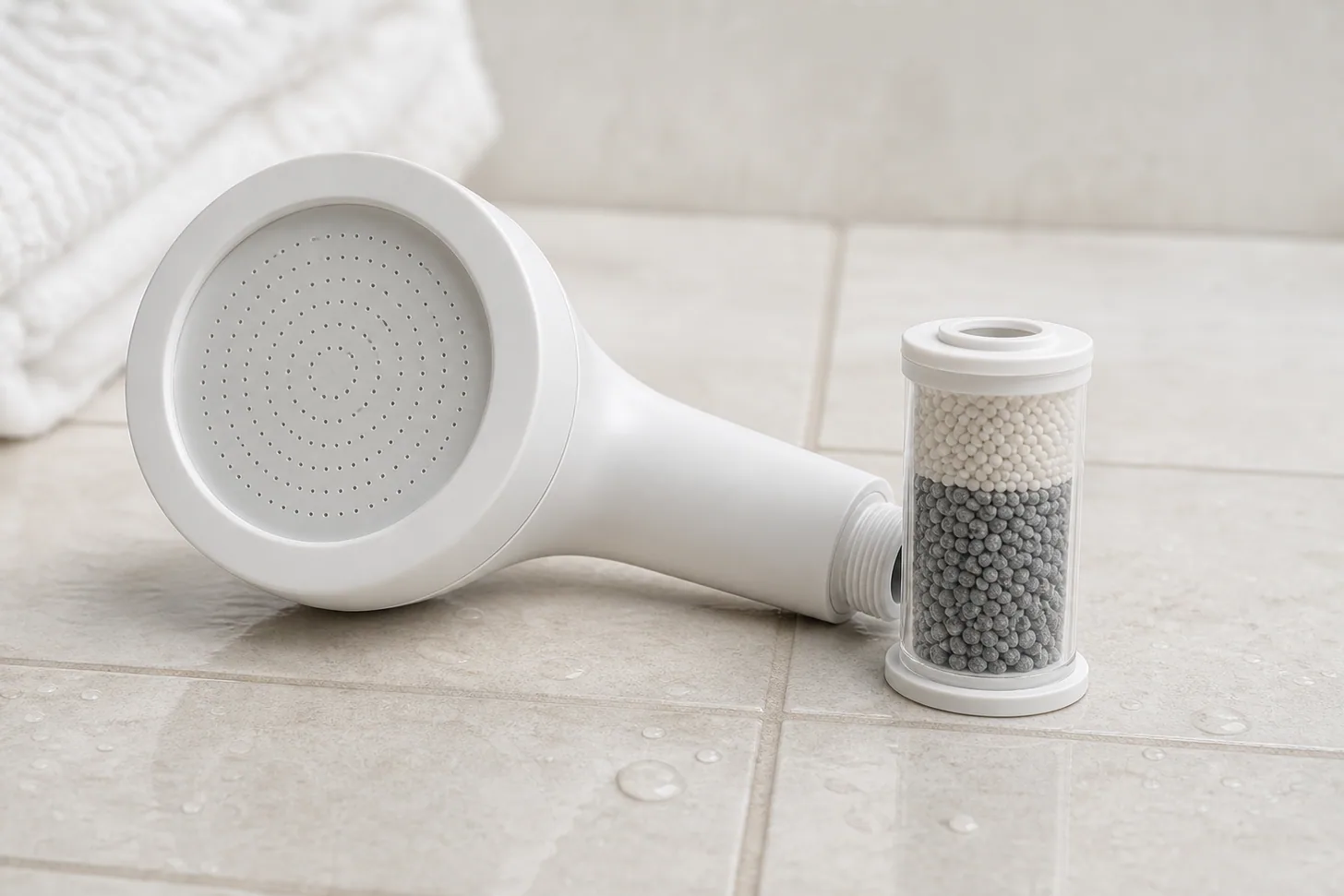
  • Deal with the water first if it's the water. Everything else is temporary until you do. A chelating treatment monthly, and a shower filter if you're in a genuinely hard-water area — it won't remove everything but it moves the needle.
  • Wash in cooler water. Hot water swells the cuticle and accelerates the loss of toner. It's free and it makes a measurable difference to how long a gloss lasts.
  • Book a gloss between color appointments rather than waiting for the full service. On fine hair a gloss at week five and color at week ten is usually a better calendar than color every eight weeks — less total chemical load, more consistent tone.
  • Cover the part in strong sun. UVA changes the color, and the part line is both the most exposed hair and the most exposed skin.
  • Keep the hair conditioned. Not for the tone directly, but because porosity is the variable behind almost everything on this page. A lightweight mask weekly, mid-lengths down.

What to ask your colorist

  • "My last toner was gone in about [x] weeks — is that fade, or should we be looking at mineral buildup?"
  • "Can we do a chelating treatment before the tone?" If the timeline points at water, this changes the result more than the toner formula does.
  • "My hair is fine — can we use the lowest developer volume that will get there, and check it early?"
  • "Would a gloss be enough this time instead of a toner?"
  • "What should I use at home between appointments, and how often?" Ask for a frequency, not just a product. The frequency is the part that goes wrong.

When brass isn't a toning problem

  • You have distinct horizontal bands of different warmth. That's banding from overlapping applications, not fade. Toner evens the tone slightly and won't remove the bands — see color correction on fine hair.
  • The warmth is only at the roots and the rest is fine. Usually regrowth showing your natural depth, or heat from the scalp having pushed the last application warmer. It's a color appointment, not a shampoo.
  • You've used box dye in the last year. Home color can contain metallic salts that react unpredictably with salon products. Say so before anyone applies anything — it matters more than it sounds.
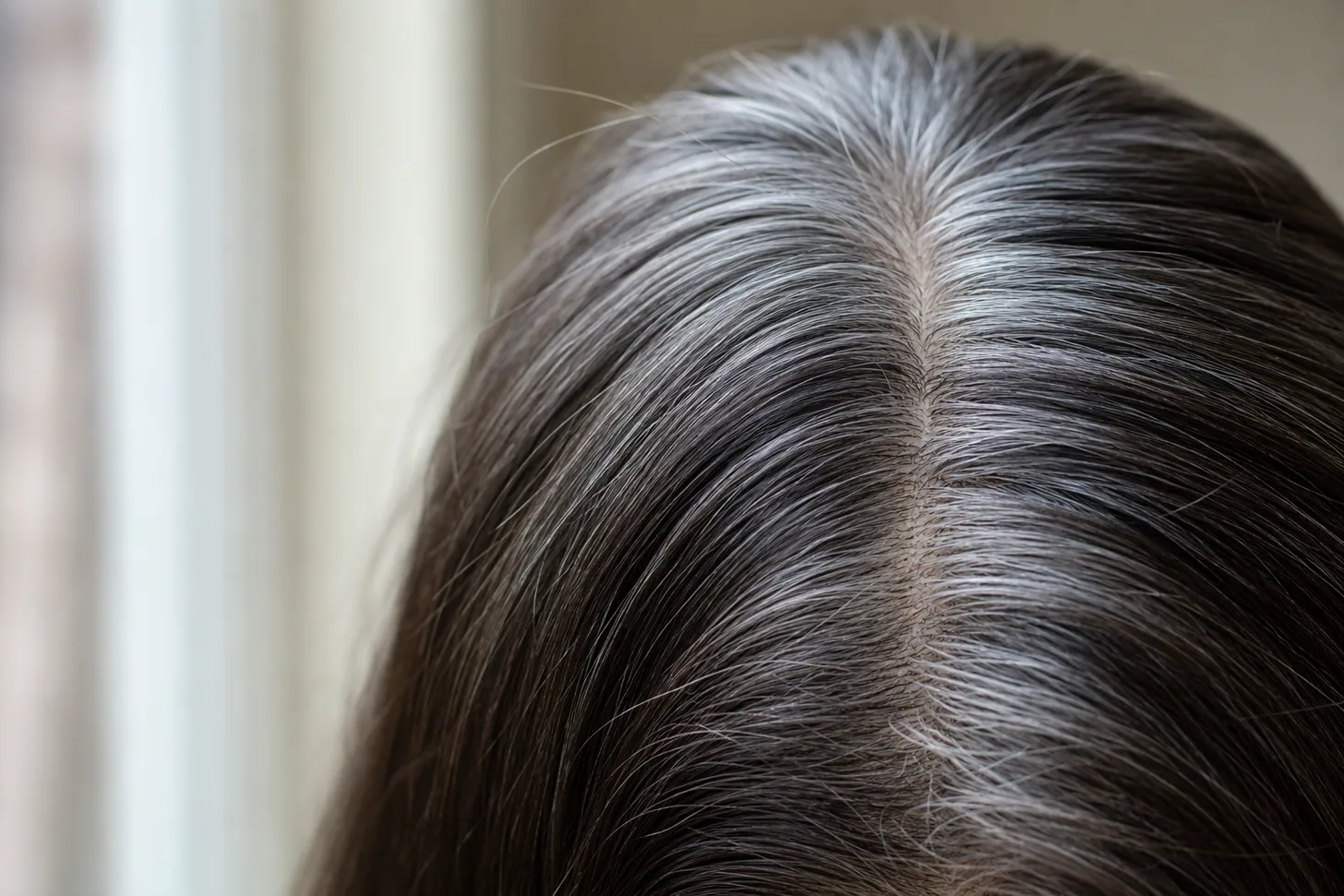
  • Your hair is gray or white and turning lilac rather than warm. Different problem entirely, with a different fix. Going gray with fine hair covers it.
  • Your hair feels stretchy or gummy when wet. That's over-processing, and more chemistry is the wrong direction. Stop toning, rebuild, and talk to your colorist before the next appointment.
  • You're warm again three days after a salon toner. Almost always water rather than an application error. Chelate before you blame anybody.

FAQ

Because the whole cycle runs faster in both directions, which is the part that catches people out. A fine strand has less mass for a lightener to work through, so it reaches a given level of lift sooner and becomes porous sooner. Porous hair takes toner quickly, which feels like an advantage in the chair — but there's less cortex holding that deposit, so it also washes out sooner, and the warmth underneath is uncovered again while a coarser head of hair still looks fresh. If your salon color looks perfect for ten days and warm by week three, nothing has gone wrong. You're on a shorter toner half-life than the standard appointment schedule assumes, and the answer is maintenance at home rather than more lift at the salon.

It can be either, they look almost identical, and telling them apart decides which product will help. Residual warmth comes from inside the fiber: lightening removes pigment in stages and the warm tones go last, so any lift that stops short leaves yellow or orange underneath, and it reappears as the toner covering it fades. Mineral brass comes from outside: copper and iron in the water deposit onto hair, preferentially onto light or already-porous hair, adding their own warm cast. The timing test is quickest. Toner lasting six to eight weeks with a gradual fade is normal. Warm again within a week or two of the salon — or ends that feel rough and look dull as well as warm — points at the water, and purple shampoo will never fix that one.

Dilute it, apply it in the right order, and time it by the clock rather than the bottle. Purple shampoo is a direct dye in a cleansing base — it deposits on contact with no processing time protecting you, and fine hair takes it up fast. Mix a coin-sized amount with a little water or with your regular shampoo in your palm. Apply to the mid-lengths and ends before the roots, because the ends are the most porous and will grab the most while the roots are usually least brassy anyway. Then time it: one to three minutes on fine hair, not the five to ten most bottles suggest. Rinse with cool water. And if you've already gone lilac, it isn't permanent — a clarifying shampoo or two lifts most of it out within a few washes.

It can set up a loop, and it's rarely mentioned. Most purple shampoos are detergent-forward, because a toning shampoo has to clean as well as deposit, and many leave fine hair drier than a gentle everyday shampoo would. Drier, rougher hair is more porous; more porous hair loses toner faster and picks up minerals from the water more readily — so it goes brassy sooner, which prompts more purple shampoo. Three or four times a week is the version that goes wrong. Once or twice a week, on well-conditioned hair, with a gentle lightweight shampoo for the other washes, keeps the tool useful without feeding the problem.

It depends on whether your brass is yellow or orange, and using the wrong one is the most common reason a toning shampoo appears to do nothing. Toning works on color opposites: violet cancels yellow, blue cancels orange. Blonde that lifted properly and went pale usually fades to yellow, so purple is right. Hair that started darker and was lifted to a level reading golden-orange — which describes a lot of highlighted light-brown hair — needs blue, because purple over orange doesn't neutralize it, it muddies it. Hold a strand up in daylight against something plainly yellow and something plainly orange. Whichever it matches tells you which bottle.

It genuinely changes the color, and the research is clear that lighter hair is affected most. A study of hair color change under ultraviolet radiation found significant color changes in every hair type after both lamp and sun exposure, more pronounced on lighter hair, and attributed the shift primarily to UVA rather than UVB. What's happening is photochemical degradation of the melanin still in the fiber, which is why sun-exposed blonde reads warmer and duller at the surface rather than simply lighter. Fine hair has no special vulnerability to the light itself — what it has is porosity, so there's less toner covering the warmth being exposed. A hat over the part is the most effective step, and it protects the scalp underneath at the same time.

A gloss is the better default, particularly on hair that's already been lightened. A toner is applied with a developer and lifts a little as it deposits, which is more effective on stubborn warmth but is another chemical step on a fiber that's had one. A gloss deposits tone and shine with little or no lift, refreshing the color and smoothing the surface without asking much of the hair. On fine hair the smoothing matters more than it does on coarse hair, because a smoother surface reflects more light, and reflected light is most of what makes fine hair look like it has substance. Practically: gloss every six to eight weeks as maintenance, toner when the warmth has got ahead of you, and always ask for the lowest developer volume that will do the job.

A chelating treatment binds metal ions such as copper and iron so they can be rinsed out of the hair. It's a different thing from a clarifying shampoo, which removes product buildup and oil — and people routinely buy the wrong one, because if your brass is mineral, clarifying leaves the hair cleaner and exactly as warm. You probably need chelating if you live in a hard-water area, if you swim, if your ends feel rough and look dull as well as warm, or if a fresh salon toner goes warm again within a week or two. Once a month is plenty: chelating agents are aggressive, and overusing them on fine hair leaves it dry, which restarts the porosity loop. Follow with a lightweight mask.

Related reads

Priya NairPN
Priya Nair
Master Colorist · Redken Certified Color Educator

Twelve years coloring fine and thin hair. Priya's first question on this one is never about the color — it's how long the last toner lasted, because the answer tells you whether you're toning or chelating.

More from Priya →

Results vary with hair type, density, and growth patterns. This guide is educational and not a substitute for an in-person consultation with a licensed stylist.