Reviewed by Tara Sullivan · Updated July 2026 · 8 min read
Second-day fine hair fails at the roots, not the lengths — overnight oil coats the first inch and the pillow presses it flat, so the fix is targeted: absorb the oil, re-lift the root, re-bend the front pieces, lock it with grip.
That's the whole method, and done in order it takes about five minutes. Below is each step the way I'd walk a client through it, the night-before setup that makes morning-you's job easier, and the honest line on when day two is simply a wash day.
Chair-side note
The biggest day-two mistake I see isn't a product mistake, it's a diagnosis mistake: treating flat hair as dirty hair. A client sprays half a can of dry shampoo, the hair is now matte and flat, and she concludes her hair "can't do second days."
But flatness is a root-direction problem — the hair dried and cooled pressed against the scalp all night. Powder can't fix that; sixty seconds of heat and a proper cool-down can. Absorb first, then lift. Two different problems, two different tools.
SB
— Simone Baptiste, Senior Stylist
Why fine hair rarely survives night one
Fine hair loses a night faster than any other type, and it's biology, not bad luck. Fine-haired scalps typically carry more follicles per inch — more oil glands — feeding strands with less mass to absorb what they produce, so the same overnight sebum that vanishes into thick hair visibly coats fine hair by morning. Meanwhile eight hours against a pillow presses warm roots flat, and hair sets in the shape it cools in.
Oil plus flattened roots is the entire day-two problem; everything below attacks one or the other. (The same root-flattening physics, diagnosed across every cause, is in why hair falls flat.) If you're fighting this battle every single morning, your wash rhythm itself may be the thing to adjust — our honest take is in how often to wash fine hair.
The night before: set up day two while you sleep
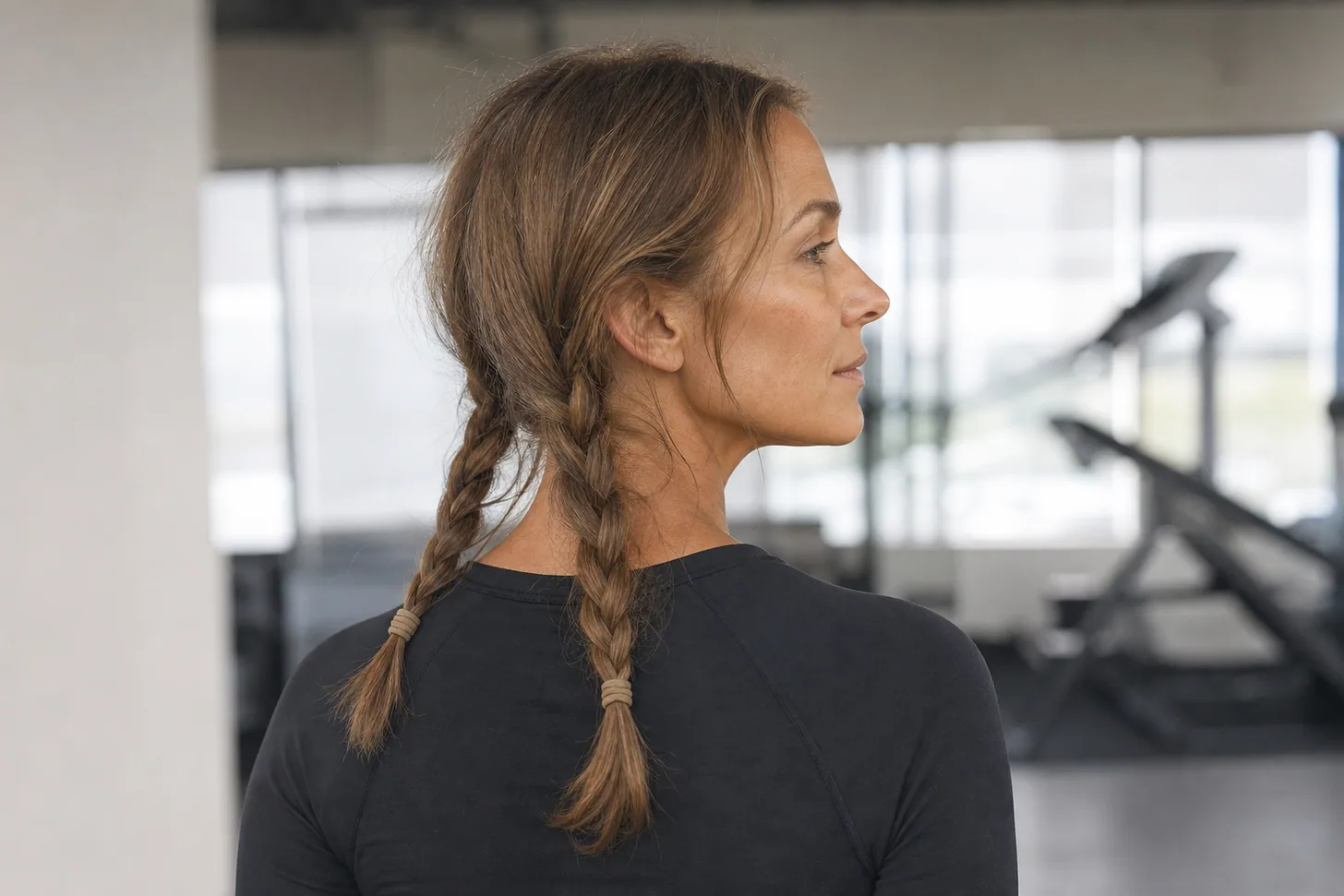
A loose overnight braid does double duty here — it keeps the lengths off the scalp and leaves a soft bend by morning. Braids that don't look thin on fine hair has the versions that hold.
The pillowcase is the part of this that works while you do nothing at all — what to look for is in silk pillowcases for fine hair.
Three habits move most of the work to the night before — and the wider case for each, including the honest read on silk pillowcases, is in sleeping with fine hair:
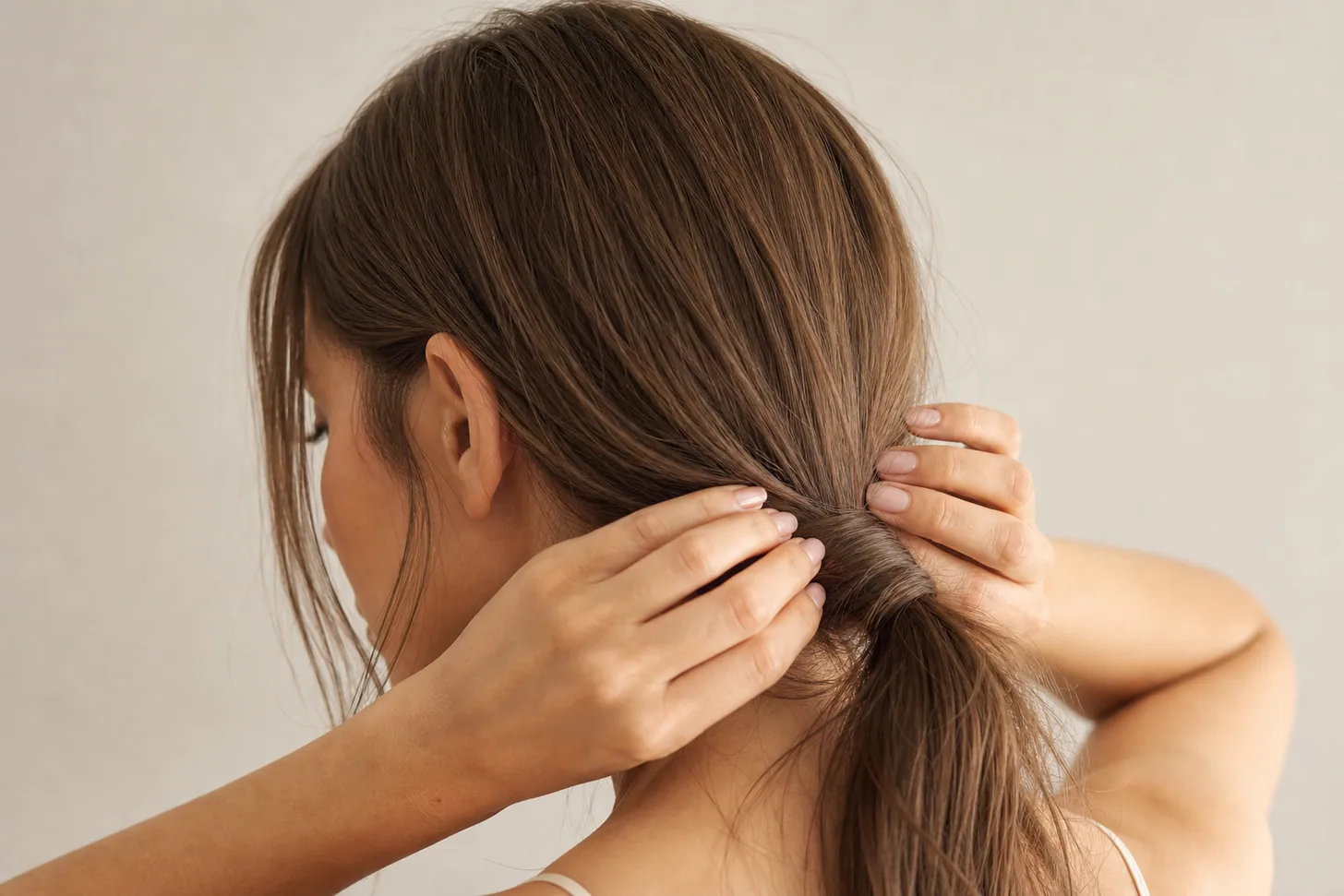
Sleep with it up, loosely. A high, loose knot or "pineapple" secured with a soft scrunchie — never a bare elastic, and see which ties suit fine hair — keeps the lengths off your oil-producing scalp and holds a bend in the hair instead of a crease.
Dry shampoo before bed. The underrated move: powder applied at night absorbs oil as it's produced, and your pillow works it in for you. You wake up closer to clean instead of playing catch-up.
Never sleep on wet hair. Wet hair sets flat against the pillow in exactly the shape you don't want, and it's at its weakest when wet — friction all night is how fine hair breaks. Dry the roots before bed even if you leave the lengths damp.
A silk or satin pillowcase helps at the margins — less friction means less frizz and less root disruption — but it's an optimizer, not a requirement. The knot and the night-time powder matter more.
The five-minute morning revival, step by step
The same revival works after training, with one change to the order — gym and workout hair for fine hair has the version that starts before you train rather than after.
Do the steps in this order — absorption needs time to work, so it goes first, and grip always goes last.
Step 1 — Read the damage before you reach for anything
Ten seconds in the mirror: is the problem oily roots, a flattened crown, collapsed front pieces — or all three? Day two is targeted repair, not a restyle. Oily-but-lifted hair skips the heat step; flat-but-clean hair skips the powder. Treating problems you don't have is how five minutes becomes twenty and fine hair ends up overloaded.
Step 2 — Dry shampoo the roots, then walk away
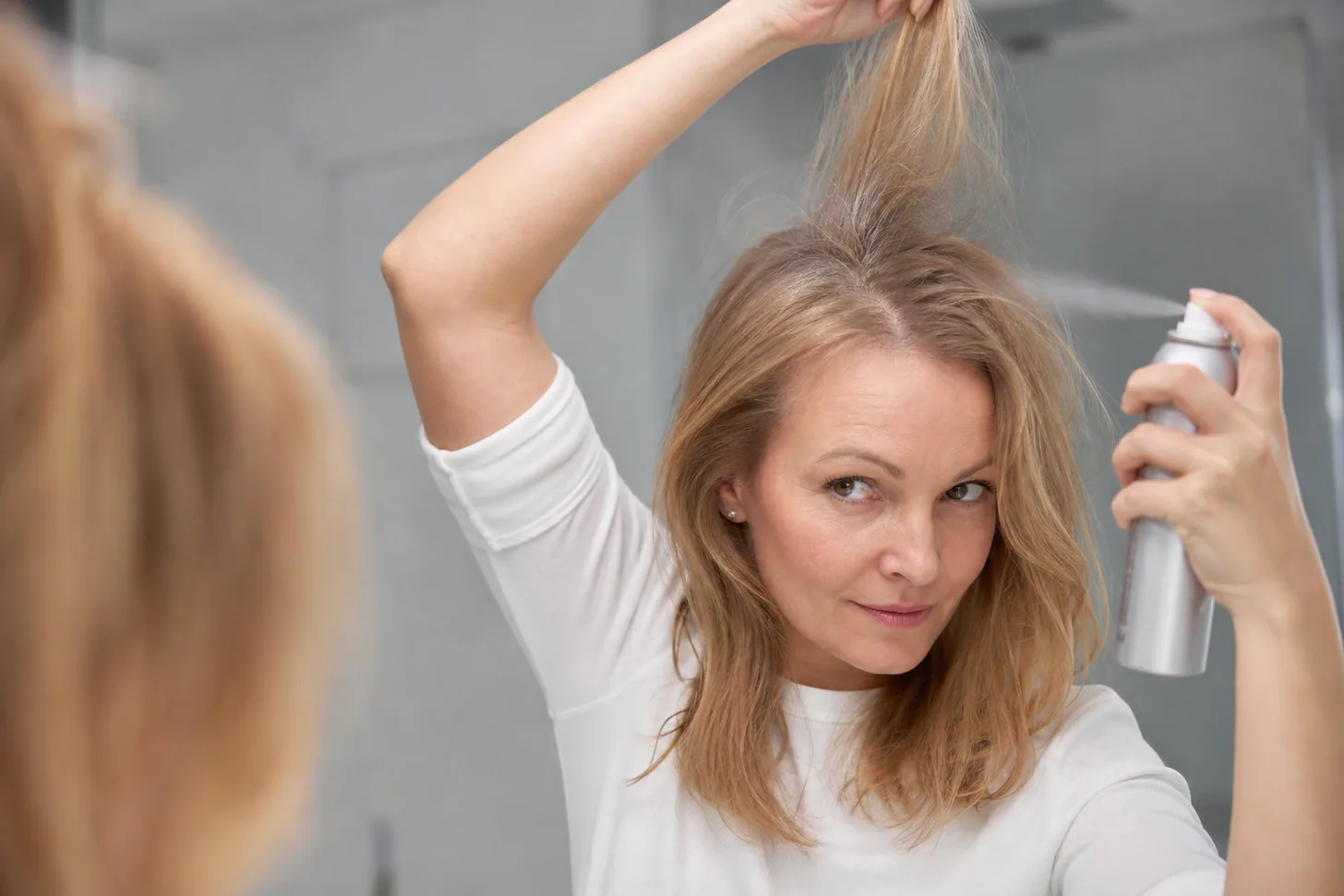
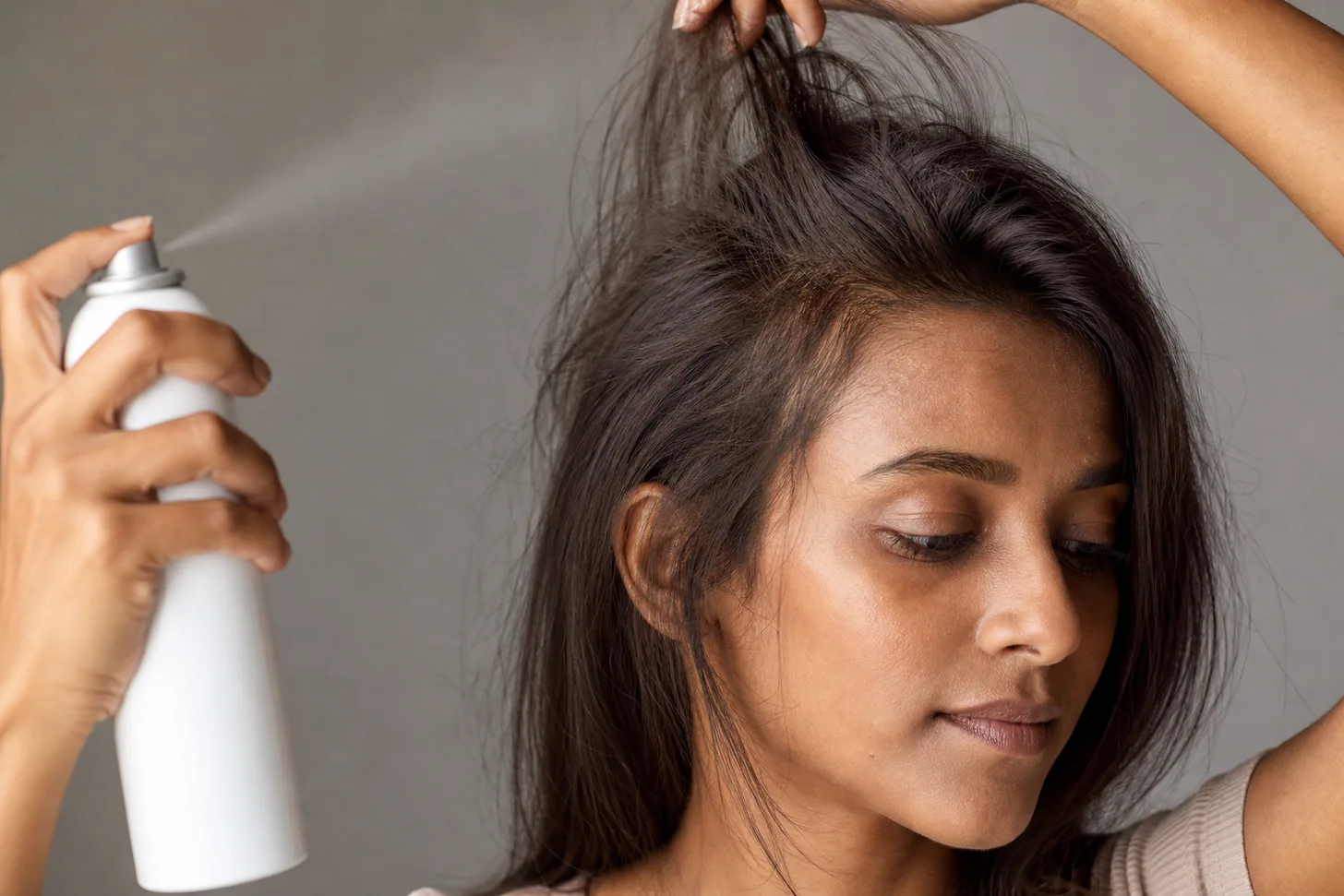
Section the crown and part line, hold the can 8–10 inches out, and spray at the roots — not over the surface. Then do nothing for a minute or two: the starch needs time sitting in the oil to absorb it.
Spraying and instantly rubbing is the single most common dry-shampoo error, and it's why the finish goes chalky. Formula matters on fine hair too — the light-handed ones that don't dull or clump are in our dry shampoo picks for fine hair.
Step 3 — Massage out and brush through
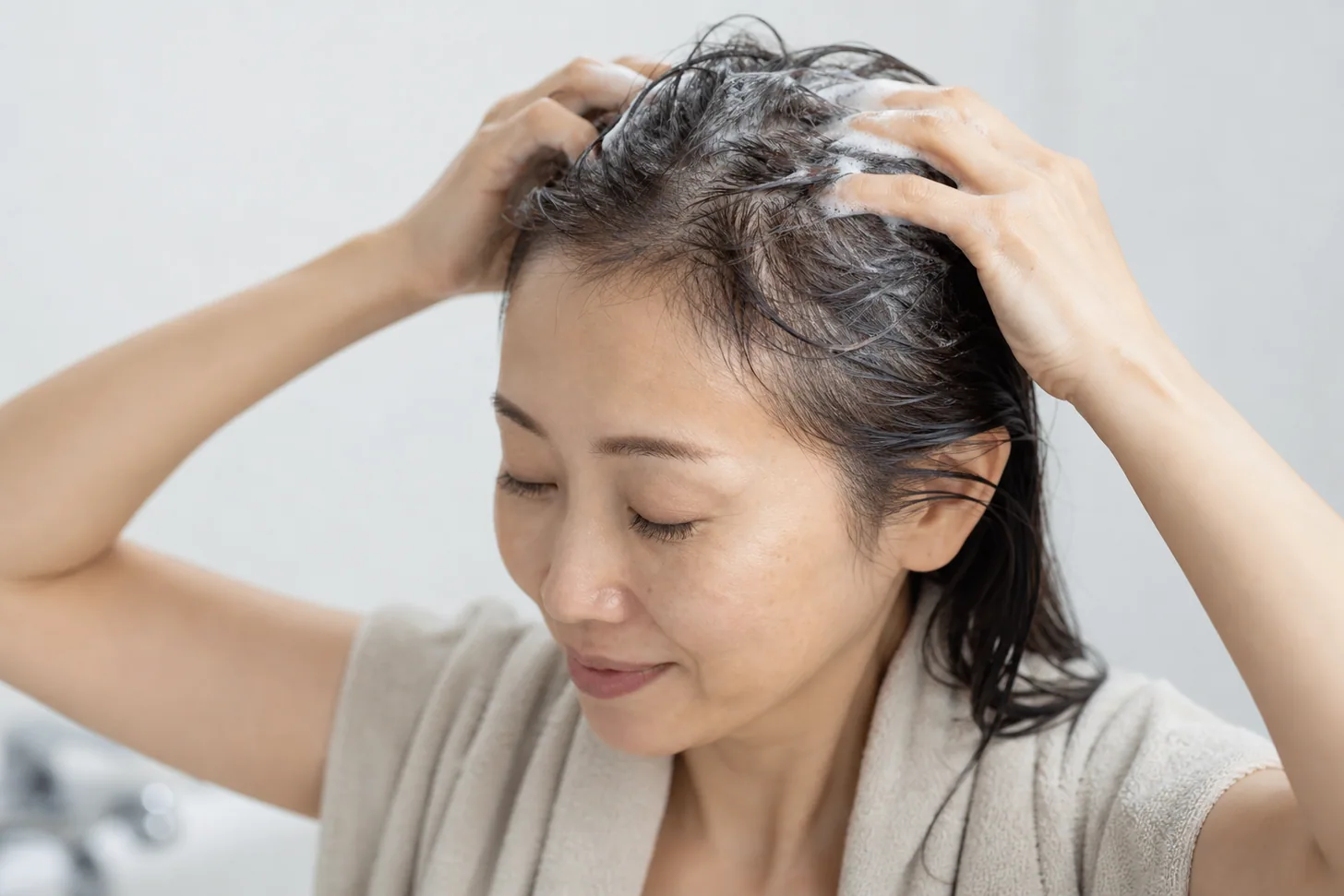
Now rub it through the roots with your fingertips — a real scalp massage, not a pat — and brush or shake out the excess. The massage is doing two jobs at once: distributing the powder so it disappears, and physically standing up roots that spent the night pressed flat. This is also the moment any leftover white cast leaves, so don't skip the brush-through on darker hair.
Step 4 — Sixty seconds of heat, cooled in position
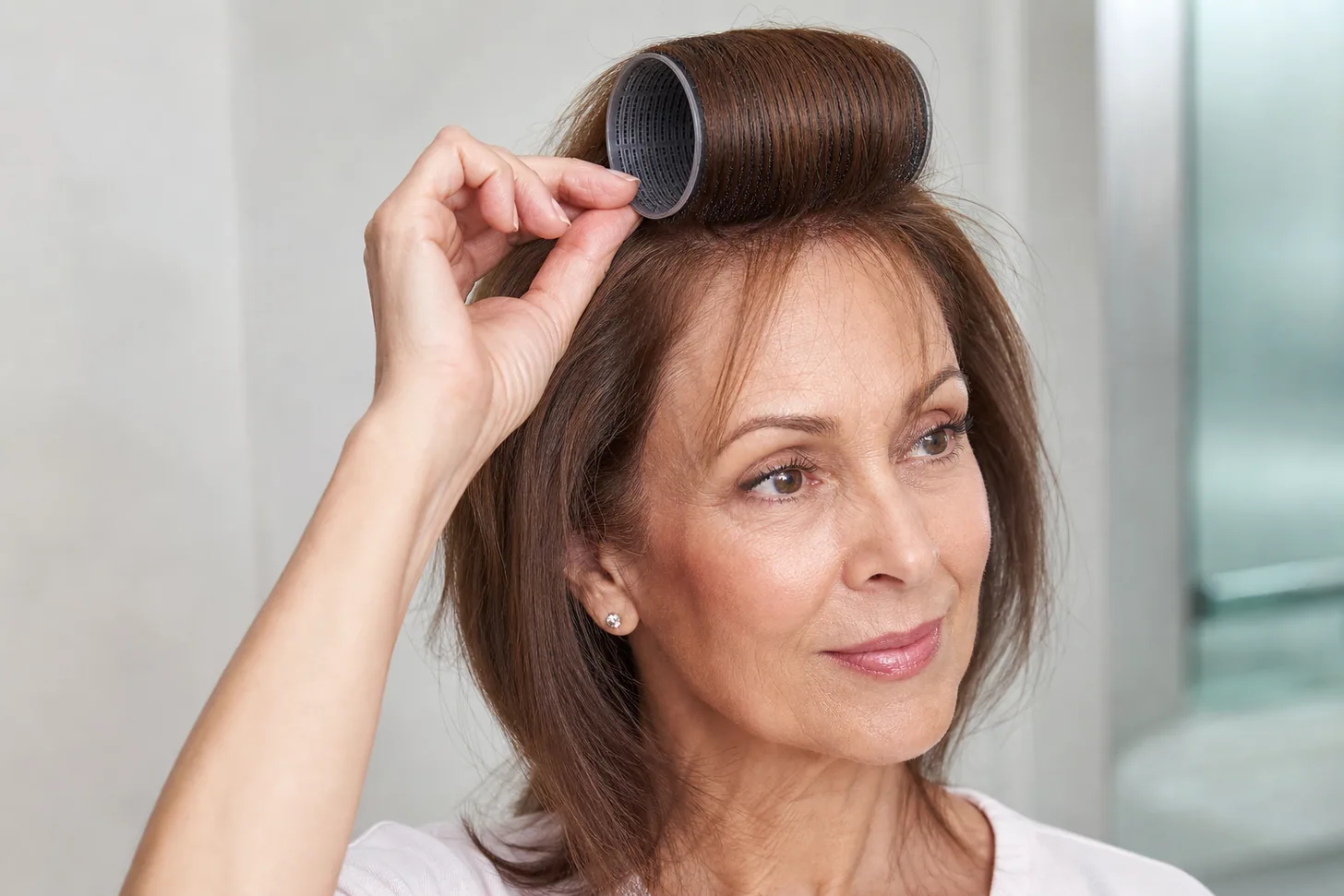
Powder absorbed oil; it did not lift anything. Flip your head over and hit the roots with the dryer on medium for 30–60 seconds, or — the lazier, better version — set one or two large velcro rollers at the warm crown and leave them in while you dress.
Either way, let the hair cool before you drop it or pull the rollers: heat makes hair movable, cooling is what locks the new shape in. This one habit is most of the difference between volume that lasts an hour and volume that lasts the day; the full physics of it lives in how to add volume to fine hair.
Step 5 — Re-bend the front, lock everything with grip
The front 20% of your hair carries 80% of the impression. If the face-framing pieces collapsed overnight, one pass with a round brush and the dryer — or ten seconds with an iron — restores them, and most days you don't need to touch anything behind your ears.
Finish with a light mist of texture spray at the roots and through the mid-lengths: fine hair is slippery, and without grip your rebuilt lift slides back down by lunch. Light passes only — the right texture spray for fine hair should never feel gritty. A light mist of sea salt spray made for fine hair is the other way to buy grip on day two, though it is drying if you reach for it daily.
The styles that save a marginal day two
Worth knowing that day-two hair takes a root set better than day-one does, because it has grip — so if you are going to use root clips or rollers, this is the day for it. Day-two grip is also exactly what a wedding morning needs, which is why bridesmaid hair for fine hair tells you to wash two days ahead.
Some mornings the revival gets you to "good"; some mornings it gets you to "wearable with help." For the second kind, put the hair to work:
The textured half-up. Lifts the oil-prone crown section away from the scalp and turns day-two grip into hold — second-day hair actually does this style better than clean hair. Our gallery of half-up styles for fine hair covers the ones that stay put.
A soft updo. Day-two texture is the best foundation an updo can ask for; slippery fresh-washed fine hair is the thing pins can't hold. Our ten-minute twisted bun was designed for exactly this hair, and there are fourteen more in buns for fine hair that hold.
A pancaked braid. Day-two grip is exactly what a braid needs to stay wide instead of sliding tight against the scalp — the technique is in braids for fine hair.
The deliberate sleek low pony. When the roots won't cooperate, stop fighting them: brush back, low elastic, a rice-grain of smoothing product on the surface. Flat worn on purpose reads as polish.
Notice what's not on the list: piling on more product down the lengths. Day two is won at the roots and with shape — the daily technique that makes all of this faster is in how to style fine hair. A quick flat-iron bend through the mid-lengths revives day-two hair faster than re-curling it — the method is in curling fine hair with a flat iron.
When day two is honestly just a wash day
Your scalp itches, feels tender, or smells like scalp. That's a wash signal, not a styling problem — powder on an unhappy scalp makes it unhappier.
You worked out to a real sweat. Sweat is salt water on your roots; dry shampoo over it turns to paste. Rinse or wash.
The oil has reached the mid-lengths and separated them into strings. Powder handles root oil; once the lengths are coated, only water resets them.
It's the third day and you're negotiating with yourself. Fine hair rarely does graceful third days — wash it and enjoy your hair instead of managing it.
FAQ
Work the roots, not the lengths: dry shampoo sprayed at the part and crown from 8–10 inches away, left to sit a minute, then massaged out; a 60-second root re-lift with a blow dryer or a velcro roller; and a light texture spray to restore grip. Fine hair goes flat at the root first, so that's where the five minutes goes — the lengths usually just need a brush.
Two reasons stack: fine hair has more strands per inch than coarser hair, so there are more oil glands feeding less hair mass — and each narrow strand has less surface to distribute that oil along. The same amount of scalp oil that disappears into thick hair visibly coats fine hair by the next morning. It's normal biology, not a hygiene failure.
Both work, and night application is underrated: sprayed at the roots before bed, it absorbs oil as it's produced and you wake up closer to clean, with the powder already worked in by your pillow. Morning application gives a fresher immediate finish. If your hair is reliably flat by every morning, try the night-before routine for a week — many fine-haired clients never go back.
Heat plus a cool-down, in the lifted position. Flip your head over and warm the roots with a dryer for 30–60 seconds, or set a velcro roller or two at the crown, then let the hair cool completely before you drop it. Hair is reshaped by heat but set by cooling — skipping the cool-down is why most people's day-two volume falls out within the hour.
For many fine-haired people, honestly, yes — daily or near-daily washing with a lightweight shampoo is a legitimate routine, and the internet's push toward less washing was written for thicker, drier hair types. But even daily washers hit days when there's no time, and that's what a five-minute revival method is for. The wrong answer is forcing a wash schedule that leaves you hating your hair half the week.
Eleven years behind the chair, specializing in short shapes and fine-hair texture. Simone believes the best haircut is the one you can style yourself in ten minutes.
Images in this article are AI-generated illustrations, not photographs of real clients or results. See our image policy.
Results vary with hair type, density, and growth patterns. This guide is educational and not a substitute for an in-person consultation with a licensed stylist.
Get the good hair intel
One honest, stylist-written guide in your inbox each week. No hype.

 SB
SB