Reviewed by Tara Sullivan · Updated October 2026 · 10 min read
An asymmetrical haircut suits thin hair because it piles your hair onto one side, and a heavy side reads as thick. A symmetrical cut splits the same hair in half and shows how little there is on each side.
Below are 14 asymmetrical haircuts for fine and thin hair, from low-maintenance pixies to bobs and lobs, with the one thing that makes or breaks them: the short side.
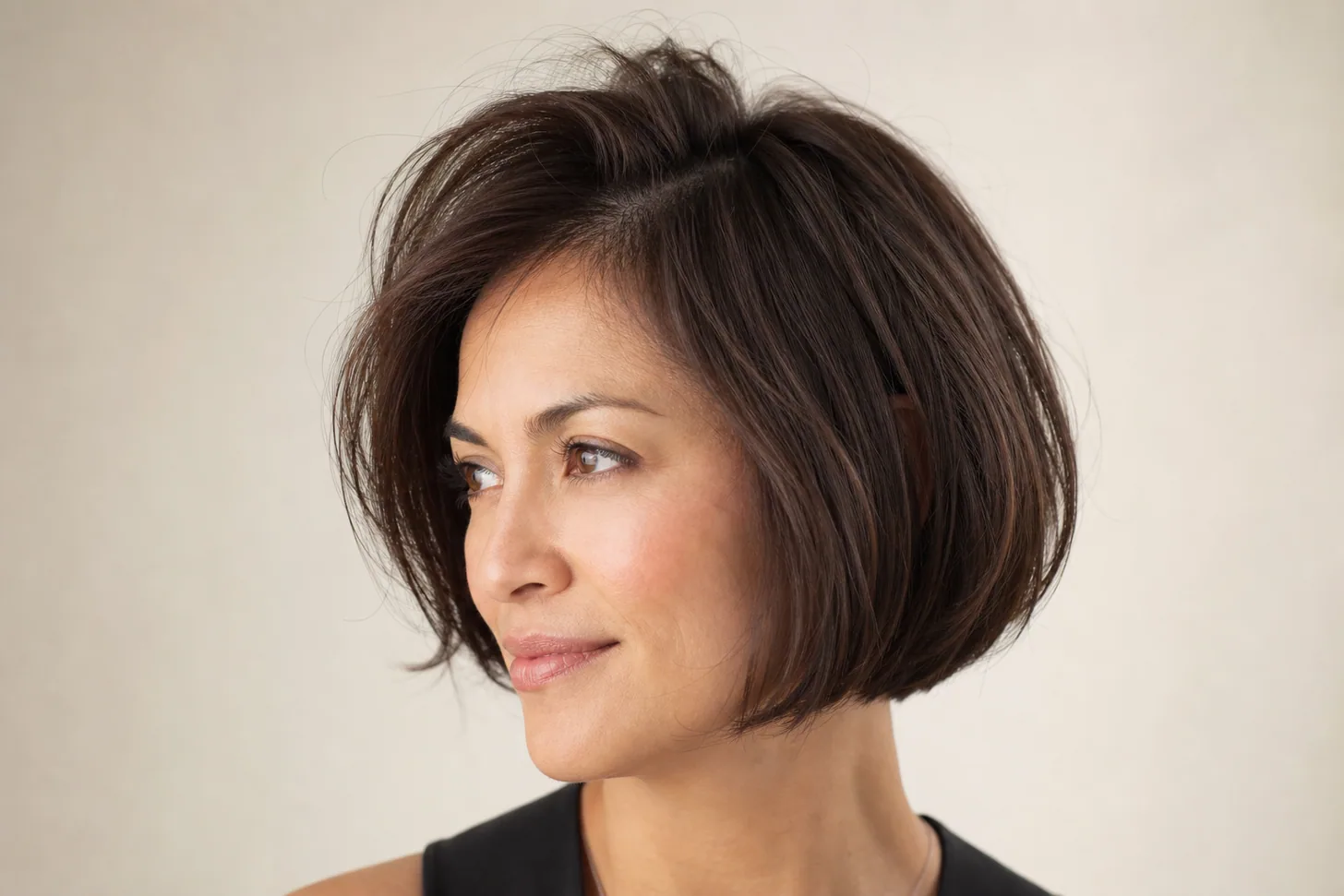
asymmetrical bob on fine dark-brown hair, chin-length on one side and grazing the jaw lower on the other, deep side part, heavy side swept forward, woman in her 30s, front three-quarter view
Chair-side note
I cut more asymmetry into fine hair than most clients expect, usually without telling them. A slightly longer heavy side and a deep part give a thin bob the fullness it was missing.
The rule is to cut the asymmetry from the side that still has hair. The long side should fall from your densest area, and the short side should be where you have least to lose.
SB
— Simone Baptiste, Senior Stylist
Why asymmetrical haircuts work on thin hair
A deep side part moves most of your hair onto one side, and the root on that side stands up because it is lying against its natural direction. That gives you lift and a dense-looking edge for free.
Asymmetry also breaks the eye's habit of comparing left with right. A thin patch on one side is far less obvious when the two sides were never meant to match.
The catch is the short side. If your hair is very low density, a cropped side can show scalp. Check where your hair is fullest with how to part fine hair before you choose which side goes long.
Asymmetrical pixie cuts for fine hair
Pixies are the easiest asymmetrical cut to keep full, because the long side is short enough to stay dense from root to tip.
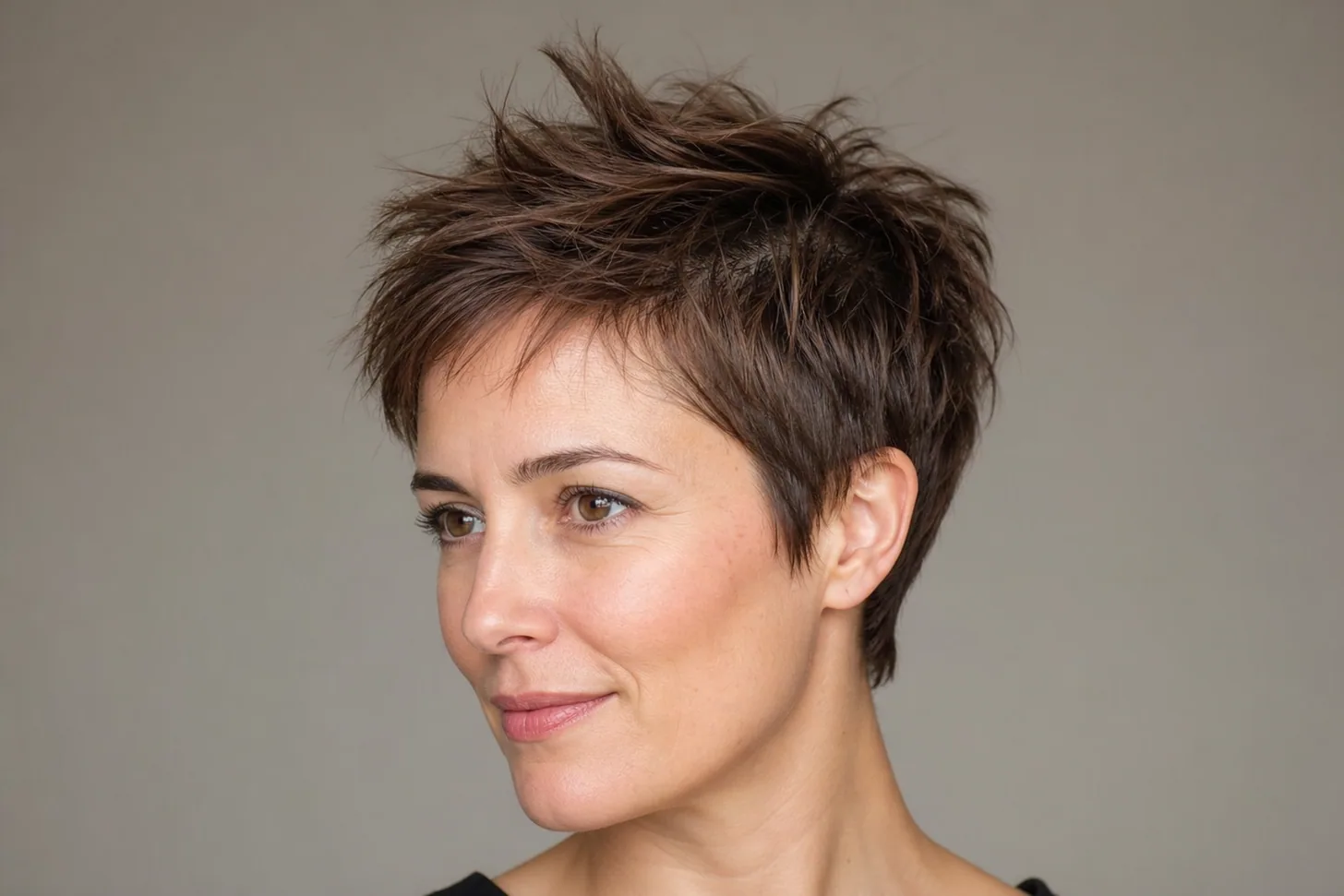
asymmetrical pixie on fine light-brown hair, short tapered on one side, long sweeping fringe on the other reaching the cheekbone, piece-y lifted crown, woman in her 30s, three-quarter view
1
Long-sided asymmetrical pixie
Tapered short on one side, with a long fringe swept across to the cheekbone on the other. The long side does all the work and reads as thick.
Push the crown up with a little paste. More pixies are in the pixie cut for thin hair gallery.
soft low-maintenance asymmetrical pixie on fine dark-blond hair, gently longer on one side, point-cut edges, air-dried texture, woman in her 40s, front three-quarter view
2
Low-maintenance asymmetrical pixie
Only gently longer on one side, with soft point-cut edges. It air-dries into shape, so it is the asymmetrical pixie for people who do not want to style.
Trim it every five to six weeks; the asymmetry fades as it grows.
edgy asymmetrical pixie on fine platinum-blond hair, one side clipped very short, long textured top swept to the other side, woman in her 20s, side three-quarter view
3
Edgy asymmetrical pixie with a shaved side
One side clipped close and the top left long and swept the other way. Removing hair on one side makes the remaining top look denser by contrast.
asymmetrical pixie on fine auburn hair with a curved fringe that is longer on one side and arcs across the forehead, soft tapered nape, woman in her 50s, front view
4
Asymmetrical pixie with a curved fringe
A fringe cut in a curve, longer on one side, so it arcs across the forehead. It covers a thinning hairline at one temple without looking like it is hiding anything.
Between a pixie and a bob, asymmetry lets you keep a little length on one side without the whole cut hanging flat.
funky short asymmetrical crop on fine black hair, ear-length on one side and cheekbone-length on the other, choppy piece-y texture, woman in her 30s, front three-quarter view
5
Funky short asymmetrical crop
Ear-length on one side, cheekbone-length on the other, with choppy ends. The uneven lengths make it look deliberate and full, even on straight fine hair.
A pea of matte paste twisted into the ends keeps the texture.
asymmetrical bixie (pixie-bob) on fine honey-blond hair, short stacked nape, longer bob-length piece on one side falling past the ear, lifted crown, woman in her 40s, three-quarter view
6
Asymmetrical bixie
A short, stacked back with one longer bob-length side. It sits between a pixie and a bob and keeps the volume of both.
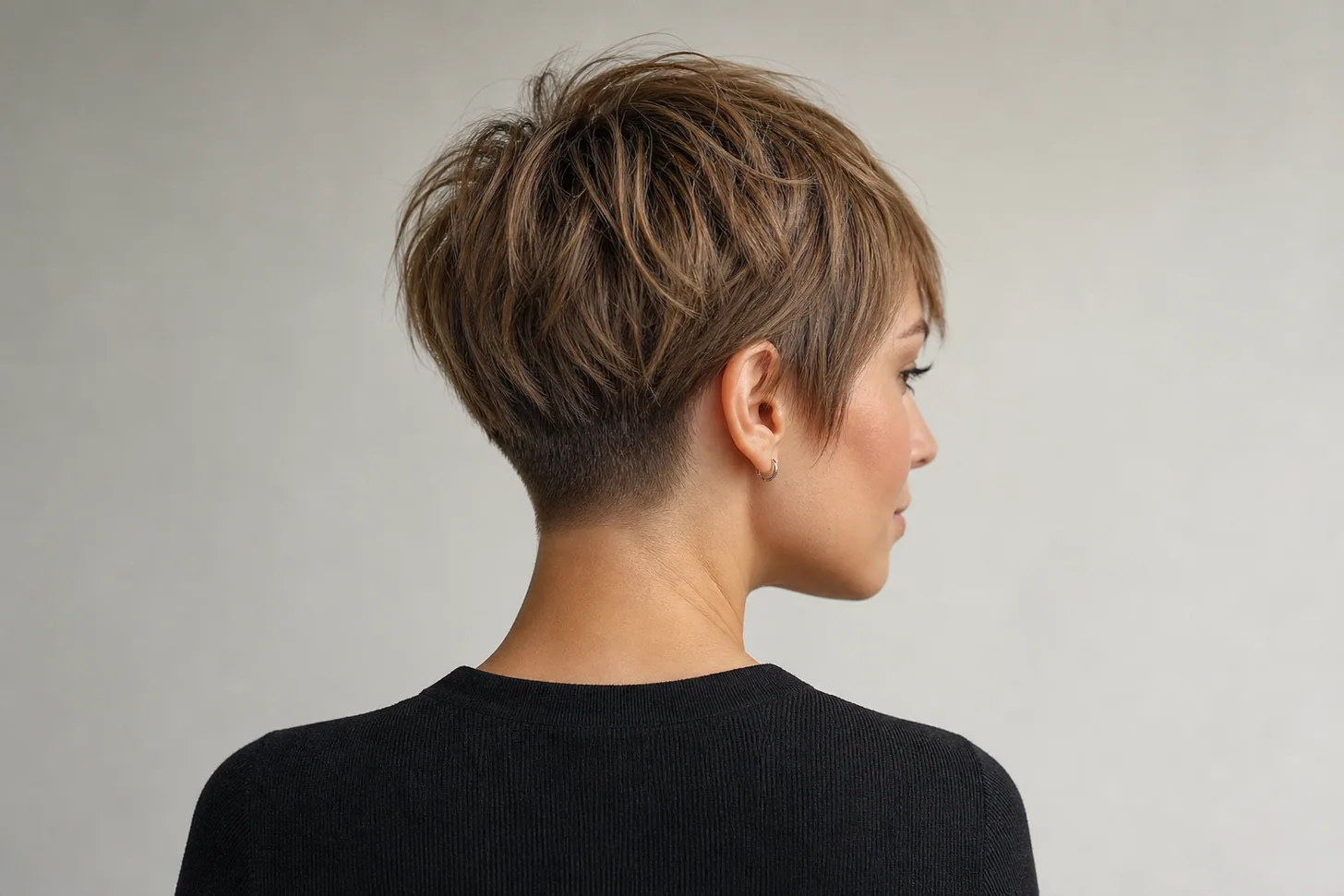
short asymmetrical haircut on fine gray-brown hair, neatly tapered nape, longer side-swept top falling to the jaw on one side, woman in her 50s, back three-quarter view
7
Short asymmetrical cut with a tapered nape
A tapered nape and a longer top falling to the jaw on one side. The neat back makes the long side look fuller.
It also grows out well into an asymmetrical bob.
Asymmetrical bob for fine hair
The asymmetrical bob is the most searched version, and the easiest to wear. The long side should be cut blunt, so its edge stays dense.
classic asymmetrical bob on fine chestnut-brown hair, one side at the chin and the other two inches longer, blunt dense edge, deep side part, woman in her 30s, front view
8
Classic asymmetrical bob
Chin-length on one side, two inches longer on the other, with a blunt edge throughout. It is the safest asymmetrical cut for thin hair.
short asymmetrical bob with soft internal layers on fine ash-blond hair, shorter side above the jaw, longer side at the chin, tousled finish, woman in her 40s, three-quarter view
9
Short asymmetrical bob with layers
A short bob with soft internal layers and one side a little longer. The layers add movement, and the asymmetry keeps the heavy side full.
Ask for point-cut layers, not a razor.
edgy asymmetrical bob on fine jet-black hair, sharply angled from a short side above the ear to a long side past the chin, sleek straight finish, woman in her 20s, front three-quarter view
10
Edgy asymmetrical bob
A sharp angle from above the ear to past the chin, worn sleek. The dramatic long side reads as thick precisely because it is so smooth.
It needs a trim every five weeks to keep the line crisp.
asymmetrical bob on fine light-brown hair with a long side-swept fringe joining the longer side, shorter tucked side, woman in her 50s, front three-quarter view
11
Asymmetrical bob with a side-swept fringe
A long fringe that sweeps into the longer side, with the short side tucked behind the ear. It covers the forehead and a soft hairline in one move.
Good if you wear glasses; the fringe sits above the frames.
Asymmetrical lobs and medium cuts
Past the jaw, keep the asymmetry subtle. A big difference between sides at this length makes the short side look sparse.
asymmetrical lob on fine dark-blond hair, one side at the collarbone and the other an inch shorter, soft bend in the ends, deep side part, woman in her 30s, front three-quarter view
12
Asymmetrical lob
One side at the collarbone and the other just an inch shorter. The difference is small, but with a deep part it gives a lob real shape.
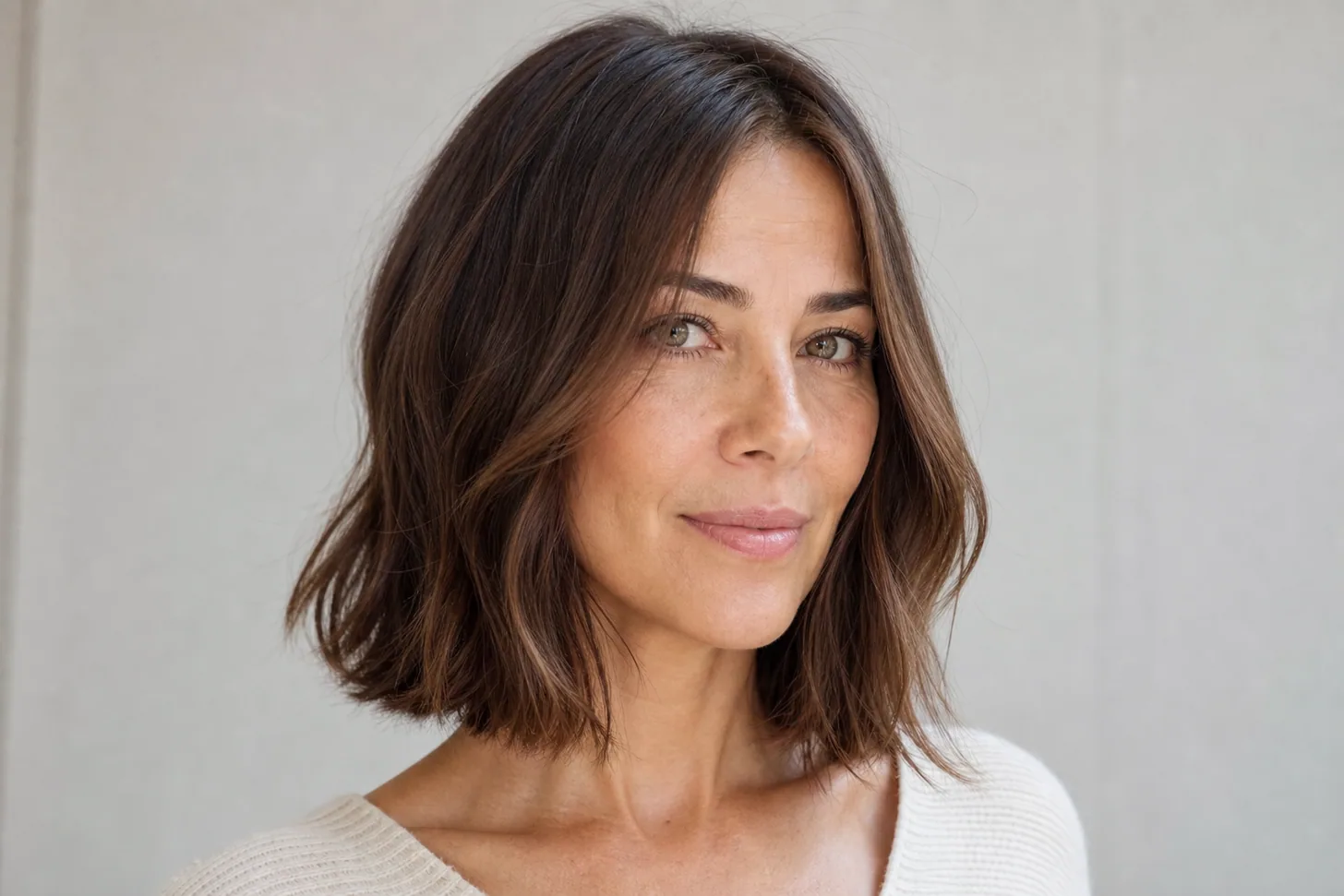
medium-length asymmetrical bob on fine copper hair, longer front on one side reaching below the collarbone, shorter back, soft waves, woman in her 40s, three-quarter view
13
Medium-length asymmetrical bob
A longer front on one side reaching past the collarbone, with a shorter back. Soft waves fill in the shorter side.
It works best on fine hair with some natural wave.
asymmetrical jaw-length cut on fine medium-brown hair, the hair swept from a deep part over the thinner temple, longer on that side, woman in her 50s, front view
14
Asymmetrical cut for a thinner side
Cut longer on the side where the hairline is thinner, and swept over it from a deep part. It is the most practical use of asymmetry there is.
Blow-dry the roots on the heavy side against the part first, then flip them over. That root lift is what makes an asymmetrical cut look full.
Smooth the long side with a light cream and add texture to the short side with a little paste. Different finishes on each side make the shape look intentional.
What to ask your stylist
Say: "My hair is fine and I want an asymmetrical cut. Please put the long side where my hair is densest, keep that edge blunt, and don't take the short side so short that my scalp shows."
Ask to see your part in the mirror before the cut starts. If you have a cowlick, it decides which side goes long; see cowlicks on fine hair.
When an asymmetrical haircut is the wrong call
Your hair is very low density all over. The short side will show scalp. A soft symmetrical bob with a deep part gives you most of the benefit.
You have a strong cowlick on the long side. It will push the long side away from your face. Put the long side on the other side, or choose a different shape.
You want six to eight weeks between trims. Asymmetry fades as it grows. Most asymmetrical cuts need a trim every five to six weeks.
You mostly wear your hair up. A ponytail or bun hides the shape and the short side may not reach. A blunt bob ties back more easily.
FAQ
Yes. An asymmetrical cut moves most of your hair onto one side, and that heavy side reads as thicker. The deep part also lifts the roots. Just keep the short side long enough that your scalp does not show.
A classic asymmetrical bob with a blunt edge, chin-length on one side and a little longer on the other. For shorter hair, a long-sided asymmetrical pixie works just as well.
A soft one is. Ask for only a slight difference between the sides and point-cut edges, so it air-dries into shape. It still needs a trim every five to six weeks.
The side where your hair is densest, usually the side you naturally part away from. If one temple is thinner, cut the long side over it.
Yes, if the long side is cut blunt so its edge stays full. Keep the difference between the sides to an inch or two on very fine hair.
Every five to six weeks. The shorter side grows out first, so the asymmetry fades sooner than you expect.
Eleven years behind the chair, specializing in short shapes and fine-hair texture. Simone believes the best haircut is the one you can style yourself in ten minutes.
Results vary with hair type, density, and growth patterns. Hairstyling guidance is not a substitute for an in-person consultation with a licensed stylist, and sudden or heavy hair loss is worth raising with a doctor.
Hairstyle images in this guide are AI-generated illustrations, not photos of real clients or results. See our image policy.
Get the good hair intel
One honest, stylist-written guide in your inbox each week. No hype.

 SB
SB