Reviewed by Tara Sullivan · Updated October 2026 · 9 min read
Baby bangs are a very short fringe that stops well above the eyebrows, usually around the middle of the forehead. They are also called micro bangs or a micro fringe.
On fine hair they can look sharp and modern, because a short fringe is light and lies flat. They are also the least forgiving fringe there is. Here are 12 baby bangs for fine hair and the honest list of who should skip them.
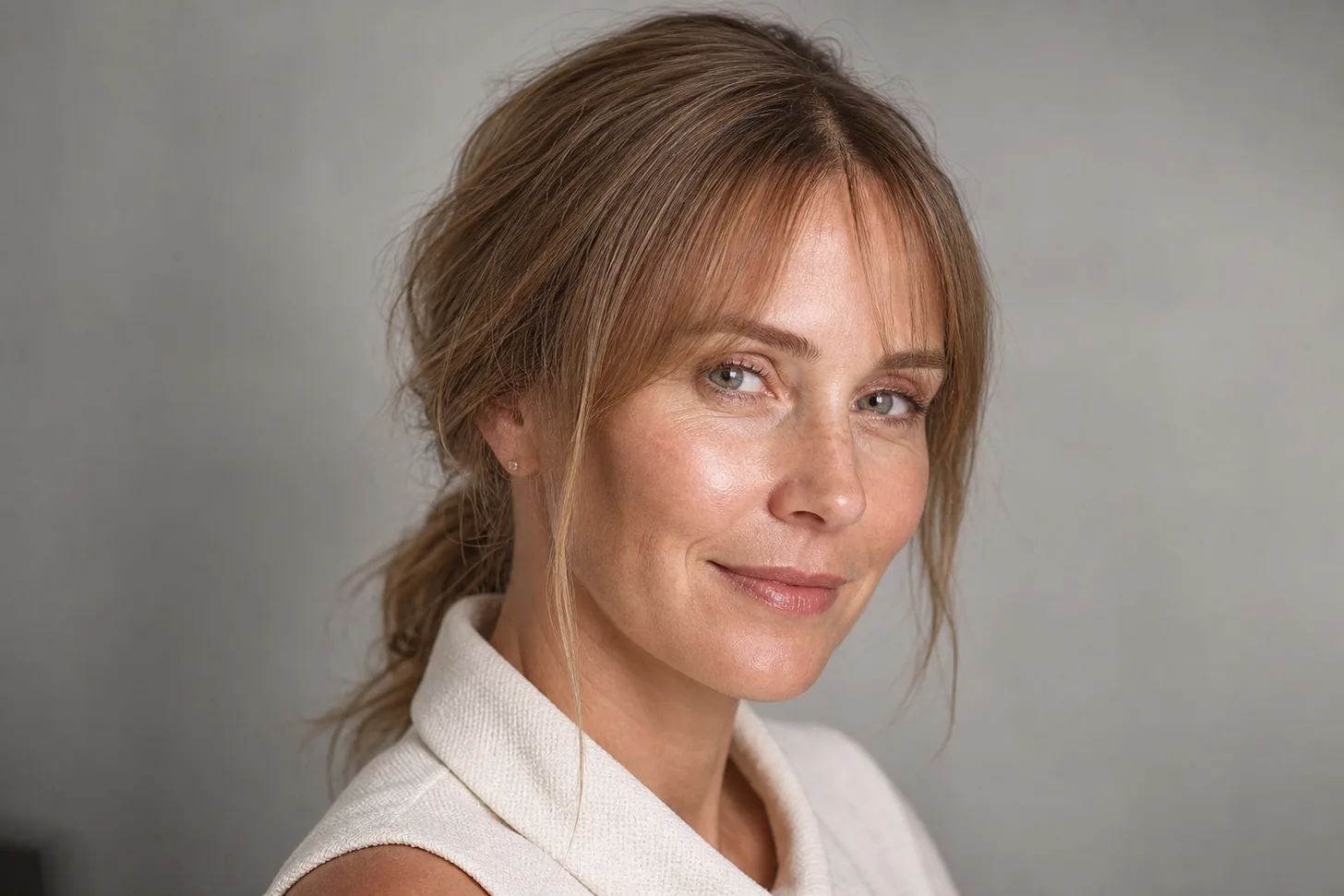
choppy baby bangs on fine dark-brown hair, short piece-y fringe ending at mid-forehead well above the brows, chin-length bob, woman in her 20s, front view
Chair-side note
Baby bangs are the one fringe I talk people out of more often than into. Not because they don't suit fine hair; they can look great. Because there is no hiding a bad day.
On fine hair I cut them dry and choppy, never wet and blunt. Fine hair springs up as it dries, and a blunt line that shrinks half an inch looks like an accident.
SB
— Simone Baptiste, Senior Stylist
What are baby bangs?
Baby bangs are any fringe that sits clearly above the brows, from about a finger's width above them to the middle of the forehead. They can be cut blunt, choppy or wispy, and straight across or slightly curved.
Yes, on straight or slightly wavy fine hair. A short fringe has little weight, so it lies flat rather than separating into strings, which is the usual problem with longer bangs on fine hair.
The risks are a cowlick, which makes short bangs stand up, and an oily forehead, which makes them clump by lunchtime. Baby bangs also need a trim every three to four weeks to stay short.
Classic baby bangs
Four ways to cut the fringe itself. Choppy and wispy versions are the easiest on fine hair.
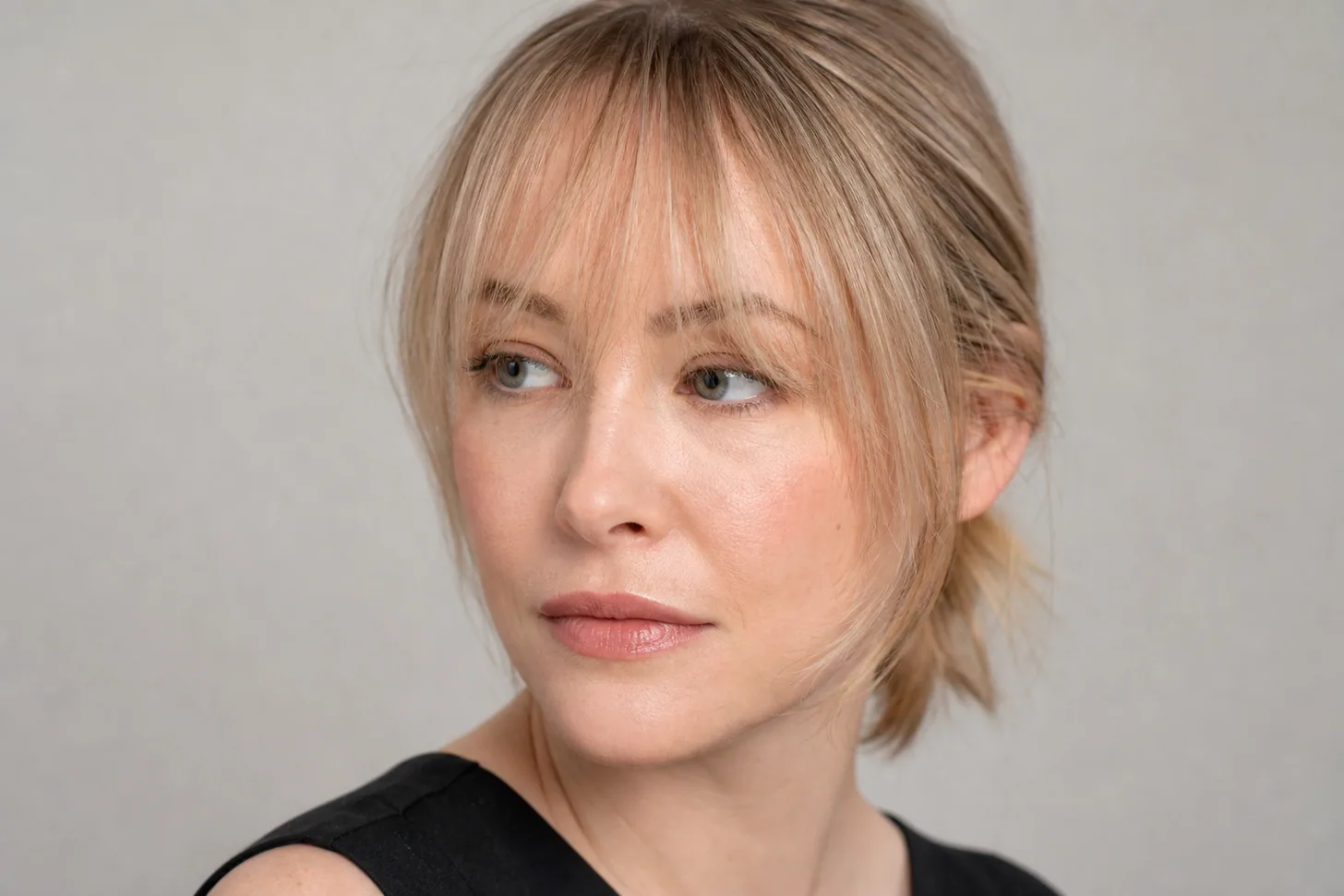
choppy baby bangs on fine light-brown hair, short uneven piece-y fringe at mid-forehead, shoulder-length straight hair, woman in her 20s, front view
1
Choppy baby bangs
Short and uneven, with the ends cut in points. The uneven line hides the way fine hair springs up as it dries.
This is the baby fringe I cut most often on fine hair.
blunt baby bangs on fine black hair, short straight-across fringe at mid-forehead with a clean line, sleek long straight hair, woman in her 20s, front view
2
Blunt baby bangs
A clean, straight line across the forehead. It's the boldest version and needs fine hair with a fair number of strands to look solid.
Have it cut dry, or the line will end up shorter than planned.
wispy micro bangs on fine light-blond hair, very short airy see-through fringe above the brows with gaps between the pieces, long straight hair, woman in her 20s, front view
3
Wispy micro bangs
Airy, with gaps so the forehead shows through. It takes the least hair of any baby fringe, so it suits thin hair best.
Use only a light mist of dry shampoo, never cream.
curved baby bangs on fine medium-brown hair, short fringe shortest in the center and slightly longer at the outer edges forming a gentle arc, bob, woman in her 30s, front view
4
Curved baby bangs
Shortest in the middle and a little longer at the edges, in a soft arc. The curve is softer on the face than a straight line.
It suits a round or oval face especially well.
Baby bangs with a bob, pixie or long hair
Baby bangs change the whole cut, so pair them with a shape that has a strong line. On fine hair that usually means a blunt bob or long, one-length hair.
blunt chin-length bob with short choppy baby bangs on fine dark-blond hair, dense even hem, woman in her 30s, front three-quarter view
5
Blunt bob with baby bangs
A dense, blunt bob with a short fringe. The strong hem makes fine hair look thick, and the bangs make the cut look deliberate.
textured pixie with short piece-y baby bangs at mid-forehead on fine dark-brown hair, lifted crown, close sides, woman in her 30s, front three-quarter view
6
Pixie with baby bangs
A short, piece-y fringe on a textured pixie. It's an easy match, since both are short and need the same trim schedule.
Wave, glasses and age change how short a fringe can go. These four adapt it.
soft wavy baby bangs on fine wavy auburn hair, short fringe with a gentle natural bend above the brows, shoulder-length waves, woman in her 30s, front view
9
Wavy baby bangs
A soft bend in a short fringe. Slightly wavy hair works; very wavy or curly hair springs up too far.
Leave them a little longer than you want, and flat-iron the roots if they flick up.
choppy baby bangs ending well above thick-rimmed glasses on fine dark-brown hair, chin-length bob, woman in her 30s wearing thick-rimmed glasses, front view
10
Baby bangs with glasses
The fringe ends well above the frames, so it never catches on them. Thick frames and short bangs make a strong, graphic look.
Dry the fringe first, as soon as you are out of the shower. Blow-dry it flat with a paddle brush, moving the brush side to side to flatten the roots, then leave it alone.
Use a little dry shampoo at the roots if your forehead gets oily. Skip oils, creams and serums, which separate a short fringe into spikes. Our guide to styling bangs has more fixes.
What to ask your stylist
Say: "I'd like choppy baby bangs from a shallow section, ending about halfway up my forehead once dry. Please cut them dry, and don't use thinning shears."
Ask for them a little longer than you want on the first cut. You can always go shorter at the next trim.
Who should skip baby bangs
You have a strong cowlick at the front. Short bangs stand straight up. A side-swept fringe works with it instead.
Your forehead gets oily quickly. A short fringe sits on the skin and clumps within hours.
Your hair is curly or very wavy. Short curls spring up far shorter than they were cut.
You can't trim them every three to four weeks. Once they reach the brows, they are no longer baby bangs.
You want to cover a thinning hairline. Baby bangs show the forehead. A longer fringe covers more. See bangs for a big forehead.
FAQ
Baby bangs are a very short fringe that sits clearly above the eyebrows, usually around the middle of the forehead. They are also called micro bangs or a micro fringe.
Yes, on straight or slightly wavy fine hair. A short fringe is light and lies flat. Cut them dry and choppy, because fine hair springs up as it dries.
Skip them if you have a strong front cowlick, an oily forehead, curly hair, or can't trim them every three to four weeks.
Oval and heart-shaped faces suit them most easily. On a round face, a curved or choppy baby fringe looks softer than a blunt one.
About six weeks to reach the brows, when they can be swept to the side. Another two to three months takes them to the cheekbones.
Baby bangs are defined by length: they sit well above the brows. Wispy bangs are defined by texture: they are airy and see-through, usually at the brows.
Eleven years behind the chair, specializing in short shapes and fine-hair texture. Simone believes the best haircut is the one you can style yourself in ten minutes.
Results vary with hair type, density and growth patterns. Haircut guidance is not a substitute for an in-person consultation with a licensed stylist, and sudden or heavy hair loss is worth raising with a doctor.
Hairstyle images in this guide are AI-generated illustrations, not photos of real clients or results. See our image policy.
Get the good hair intel
One honest, stylist-written guide in your inbox each week. No hype.

 SB