Reviewed by Tara Sullivan · Updated September 2026 · 10 min read
Every face-shape guide tells an oval face the same thing — lucky you, anything suits you — and then stops. That is true, and it is also the least useful sentence in hairdressing, because on fine hair it does not give you a cut.
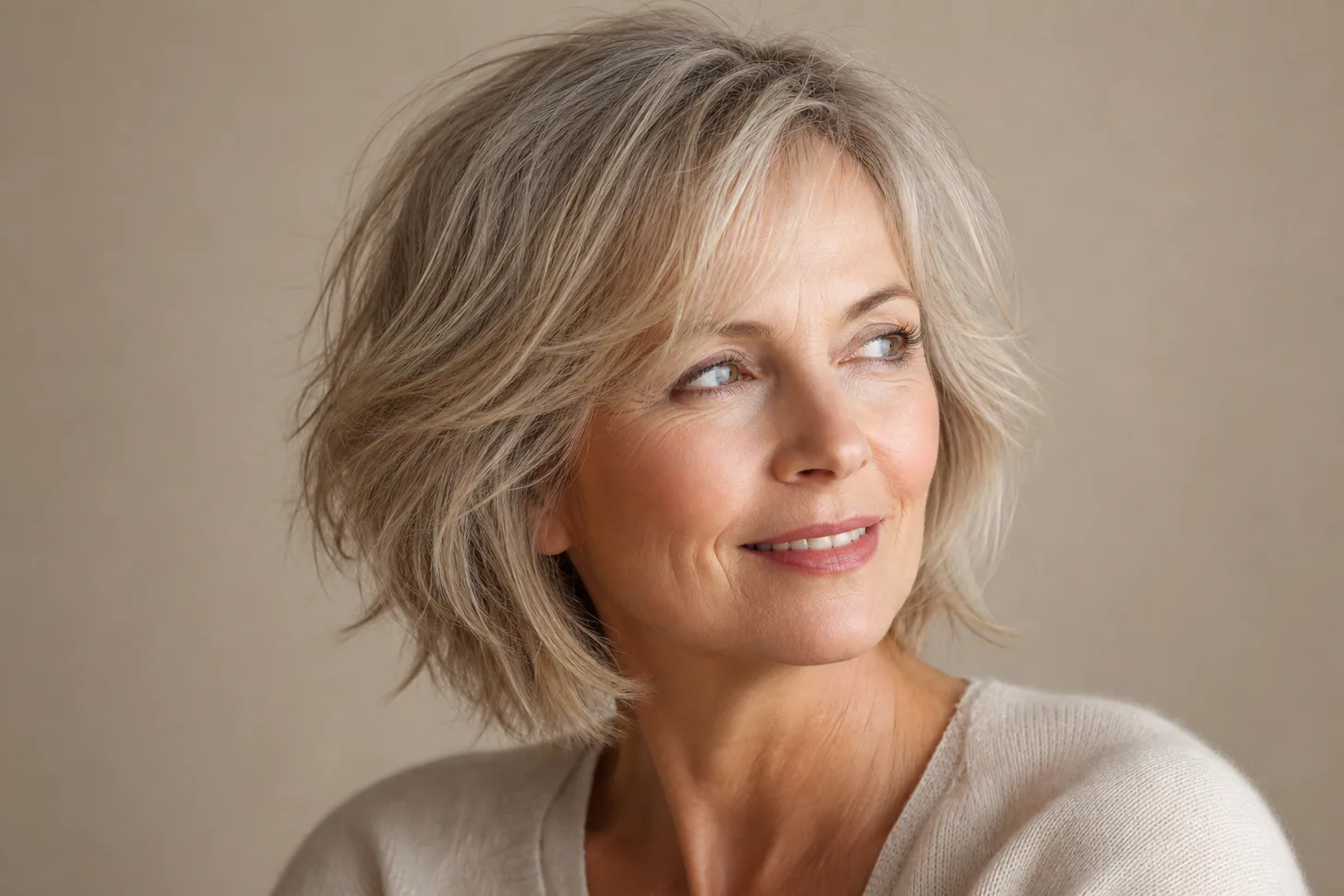
What it actually means is that your face has stopped being the constraint, so your density becomes the constraint instead: a blunt, dense perimeter between the chin and the collarbone, soft point-cut internal layers rather than heavy surface layering, and lift built wide across the top of the head.
An oval face can wear a chin-length blunt bob that a round face has to avoid and a strong jaw has to soften, which matters here because a hard perimeter is the single most effective thing a haircut can do for fine hair. Below are 16 cuts that spend that freedom on fullness, the one caution an oval genuinely does have, and the words to bring to your stylist.
When a client with an oval face sits down, I stop talking about her face almost immediately, and it always surprises her — she has come in expecting the diagram with the arrows. But every other shape I see is a negotiation: a round face wants length past the chin, which costs fine hair root lift; a square jaw wants soft sliced framing, which is exactly the framing that leaves fine ends transparent.
An oval asks for none of that. So the whole consultation goes where it should have gone anyway — how much scalp shows at your part, how the ends behave on day two, whether you will actually pick up a round brush. You are not lucky because everything suits you. You are lucky because nothing is being taken away from your hair to fix your face.
SB
— Simone Baptiste, Senior Stylist
Why "anything suits you" is a starting point, not an answer
An oval face is roughly one and a half times as long as it is wide, with forehead, cheekbones and jaw at close to the same width and a jawline that curves rather than corners.
Face-shape advice exists to correct a proportion that is off — length added to a round face, width added to a long one, softness added to a square jaw. An oval has nothing to correct, which is why the guides run out of things to say.
On fine hair that silence is the useful part. For every other shape, the corrective cut and the fine-hair cut pull against each other and someone has to give. Here they do not pull at all, so every decision in the cut can be spent on density.
In practice that means three things. The perimeter can be blunt — a hard, uninterrupted line is what makes fine ends read thick, and an oval does not need it broken up. The face-framing can be dense rather than sliced — on other shapes framing has a job carving diagonals down the cheeks, and that job costs weight fine hair cannot spare.
And the length is genuinely open, from a crop to past the collarbone, so you can choose it on how flat your roots go rather than on your cheekbones. If you are unsure whether you are working with finer strands or genuinely lower density, our guide to telling fine hair from thin hair is what decides how blunt to keep the ends, and volumizing haircuts for fine hair covers the weight-line principle underneath all of these shapes.
There is one caution, and it is the opposite of what fine hair is usually told. Crown height is the standard prescription for flat roots, and it is right here too — but on an oval it wants shaping. Height is a lengthener: it is why a round face is sent to find it.
An oval is already at balanced proportion, so a tall peak sitting at the back crown pushes the silhouette toward oblong, which is the one direction an oval can actually go wrong.
Build the lift wide and low — across the whole top of the head rather than piled at the back — and keep a little width at cheekbone level. You get the fullness without stretching the shape. That is the only rule on this page that is genuinely about your face.
Mid-length cuts that spend the freedom on density
Mid-length is where fine hair usually lives most comfortably: long enough to feel like hair, short enough that the roots are not being dragged flat by weight. An oval face puts no ceiling and no floor on it, so these four are chosen purely for how they build fullness.
1
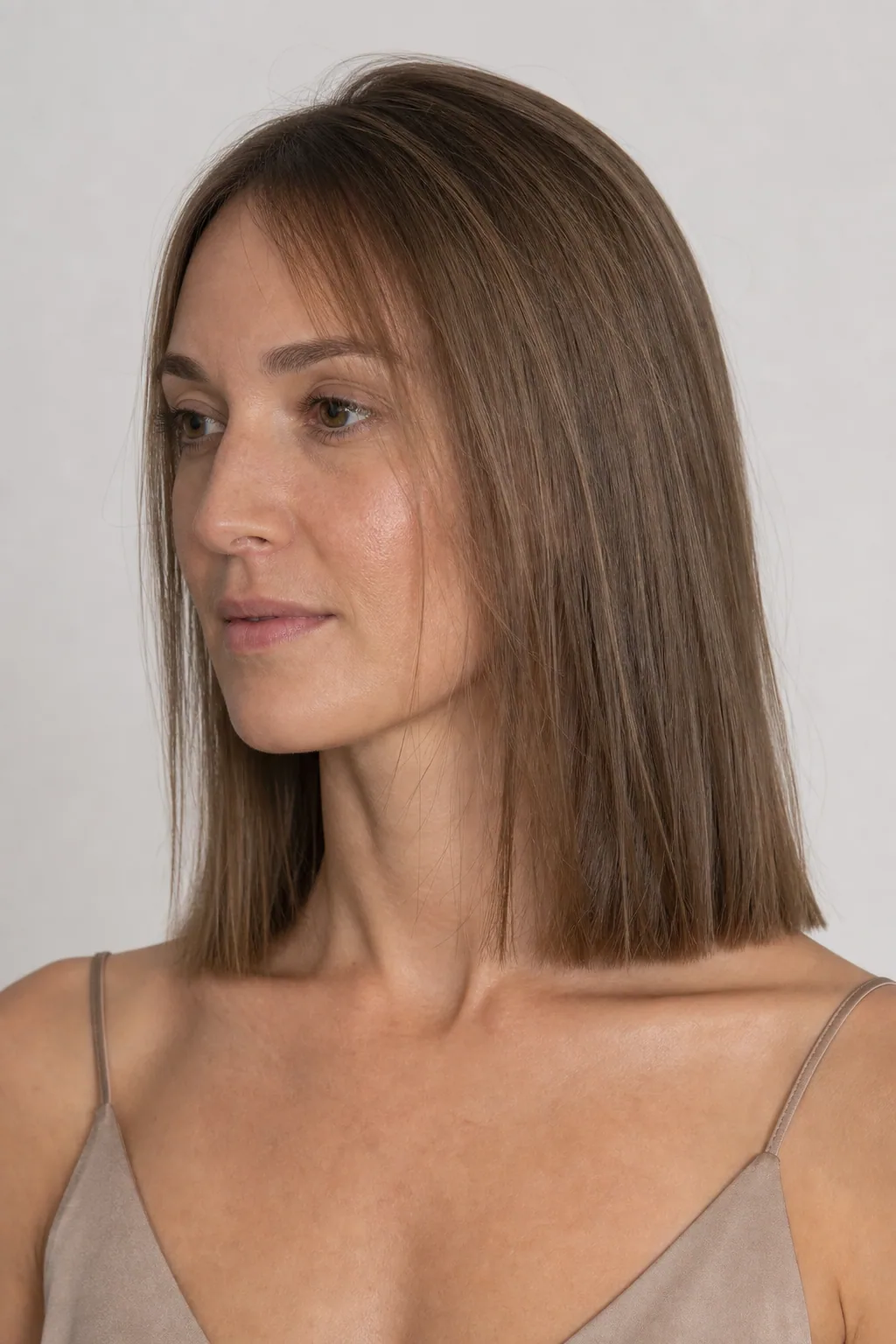
The blunt collarbone cut
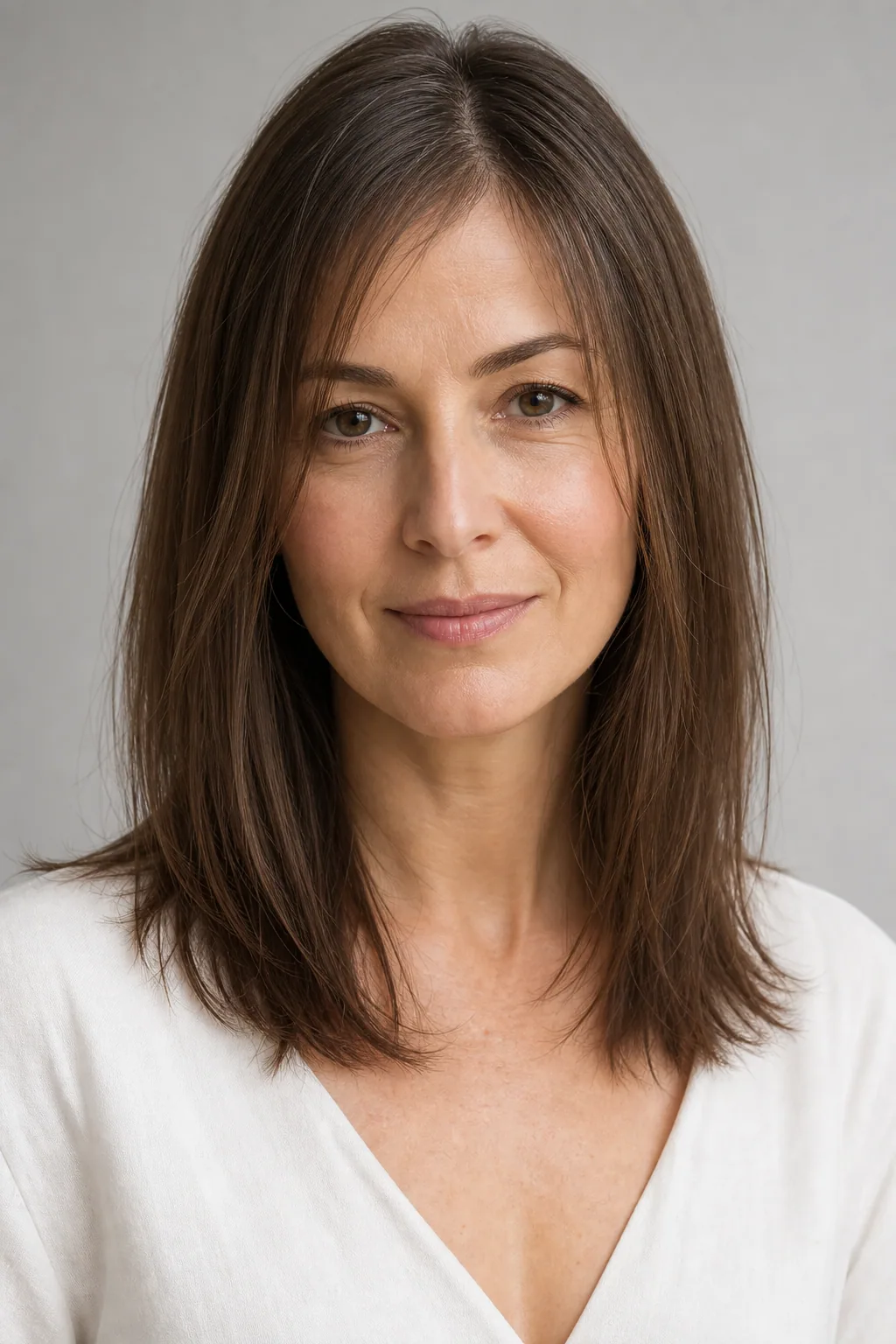
One length, cut to a hard line at the collarbone, with nothing removed from the ends. It is the most straightforwardly effective haircut fine hair can have, because every strand arrives at the perimeter in the same place and the edge reads solid. Most face shapes have to compromise it somewhere; an oval does not. Ask for it "blunt at the collarbone, no thinning shears, no razor."
2
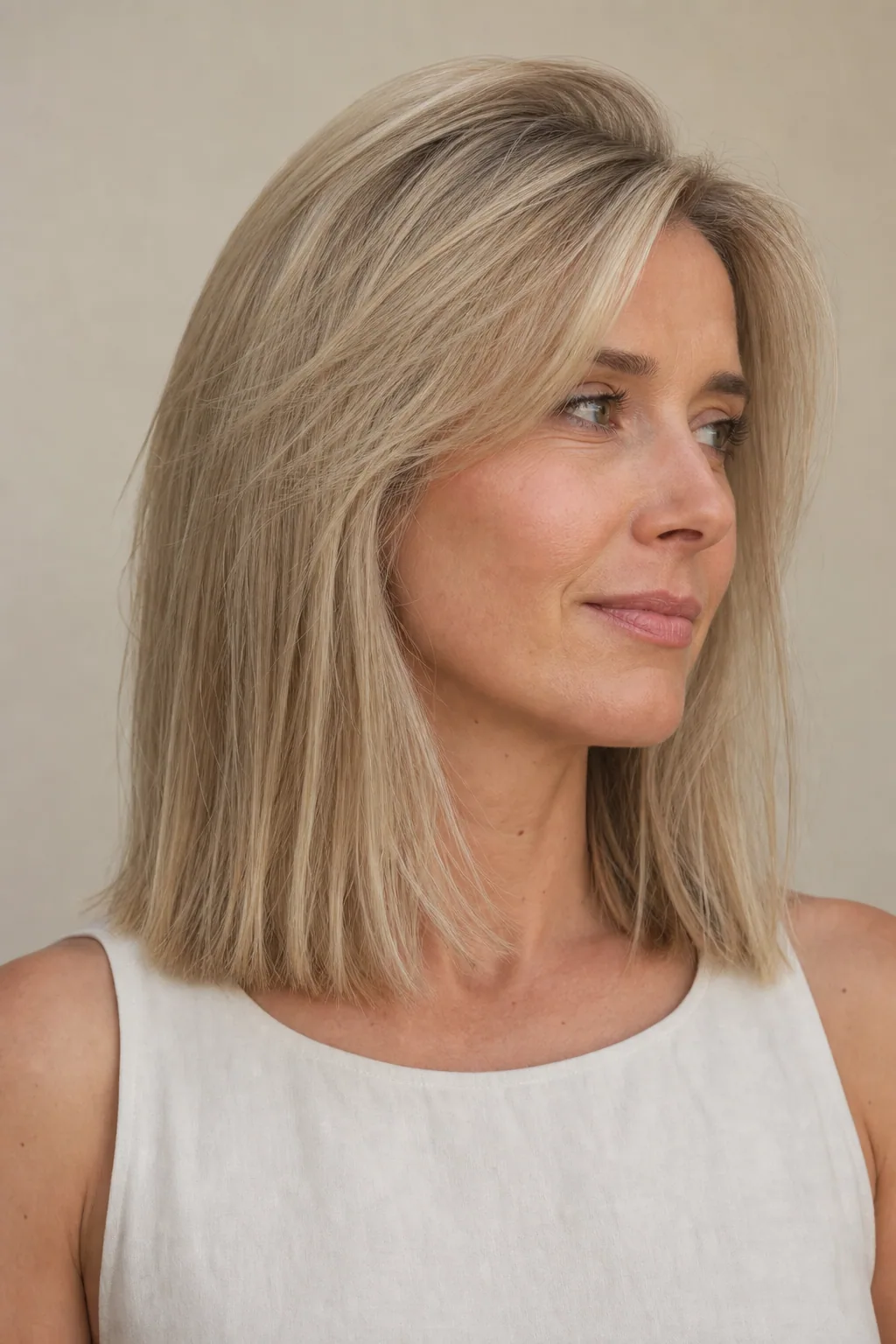
The lob with internal-only layers
A lob that keeps its bottom line intact and takes all its movement from inside — layers point-cut through the mid-lengths, never up on the surface. The ends stay dense while the interior gets enough shape to hold a bend. This is the shape to ask for if your hair goes limp by lunchtime but you are not ready to lose length.
3
The dense face-framing cut
Here is where an oval face saves you something real. On a round or square face, face-framing layers have to be long, sliced and diagonal to do corrective work, and slicing is what leaves fine hair see-through at the front. With nothing to correct, the framing can be cut blunt and stacked at cheekbone level, so it adds visible thickness around the face instead of removing it.
4
The wide-crown shoulder cut
Shoulder length with the volume deliberately built broad across the top of the head instead of peaked at the back. It is the oval-specific version of crown height: full at the roots, but not adding vertical length to a face already in proportion. Set it with velcro rollers laid flat across the top rather than one round-brush lift at the back — see how to build root volume on fine hair.
Bobs and lobs: where an oval can go blunter than anyone else
The chin-length blunt bob is the cut most face-shape guides spend their time steering people away from — it stops at the widest point of a round face, and it squares off an already-square jaw. An oval has neither problem, which makes the whole bob family available at the exact length fine hair benefits from most. If you want the full range, our bob for fine hair gallery goes deeper on each shape.
5
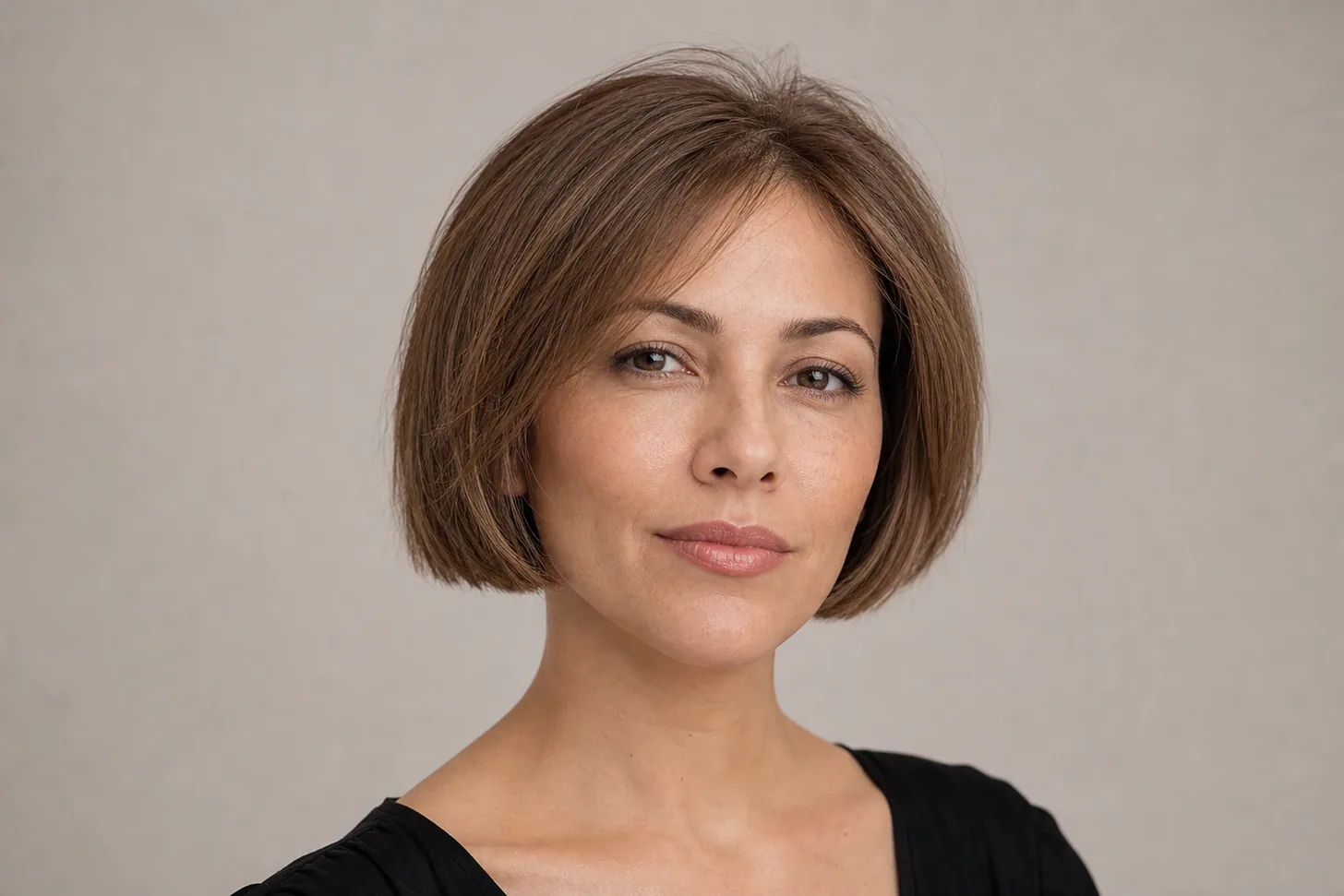
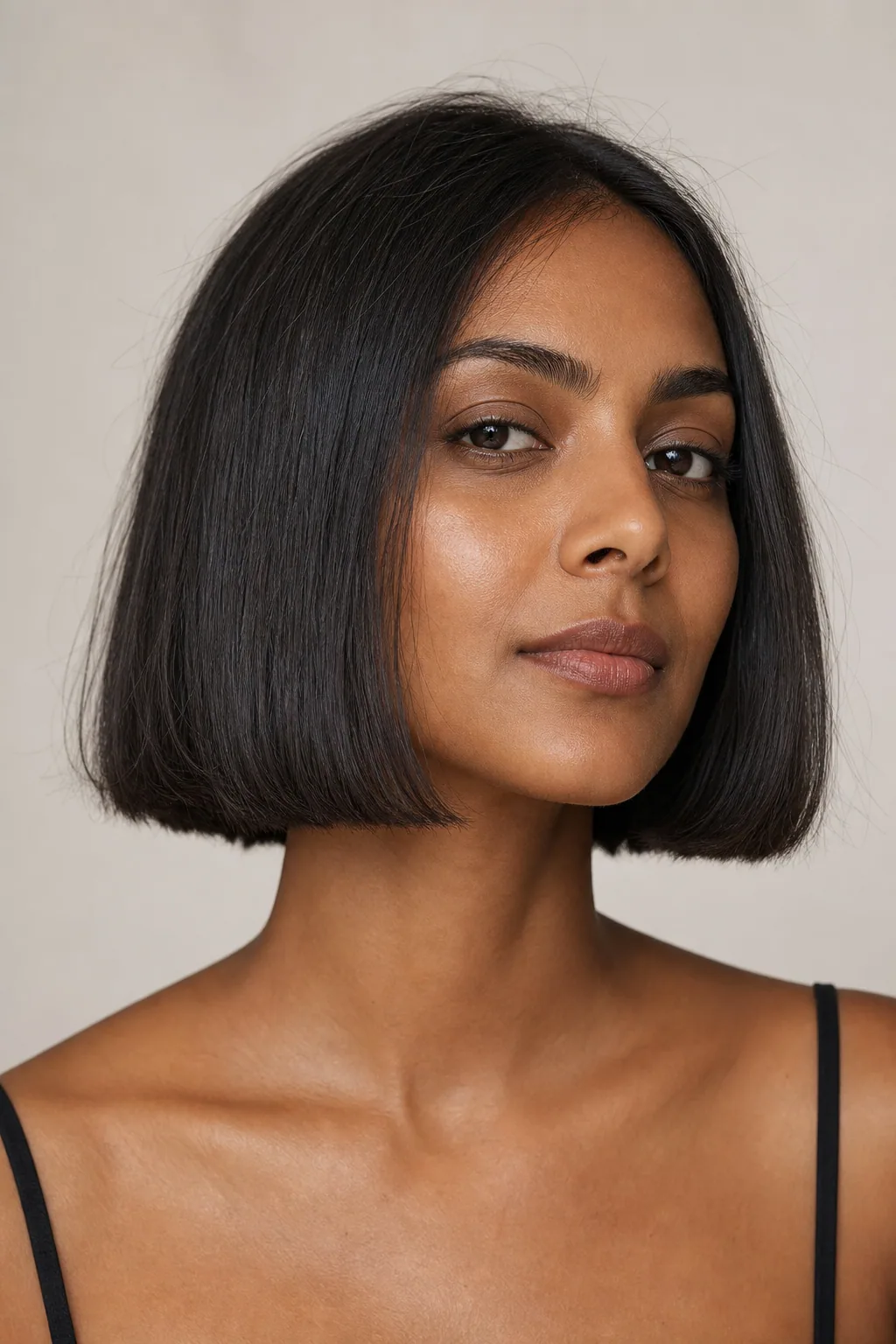
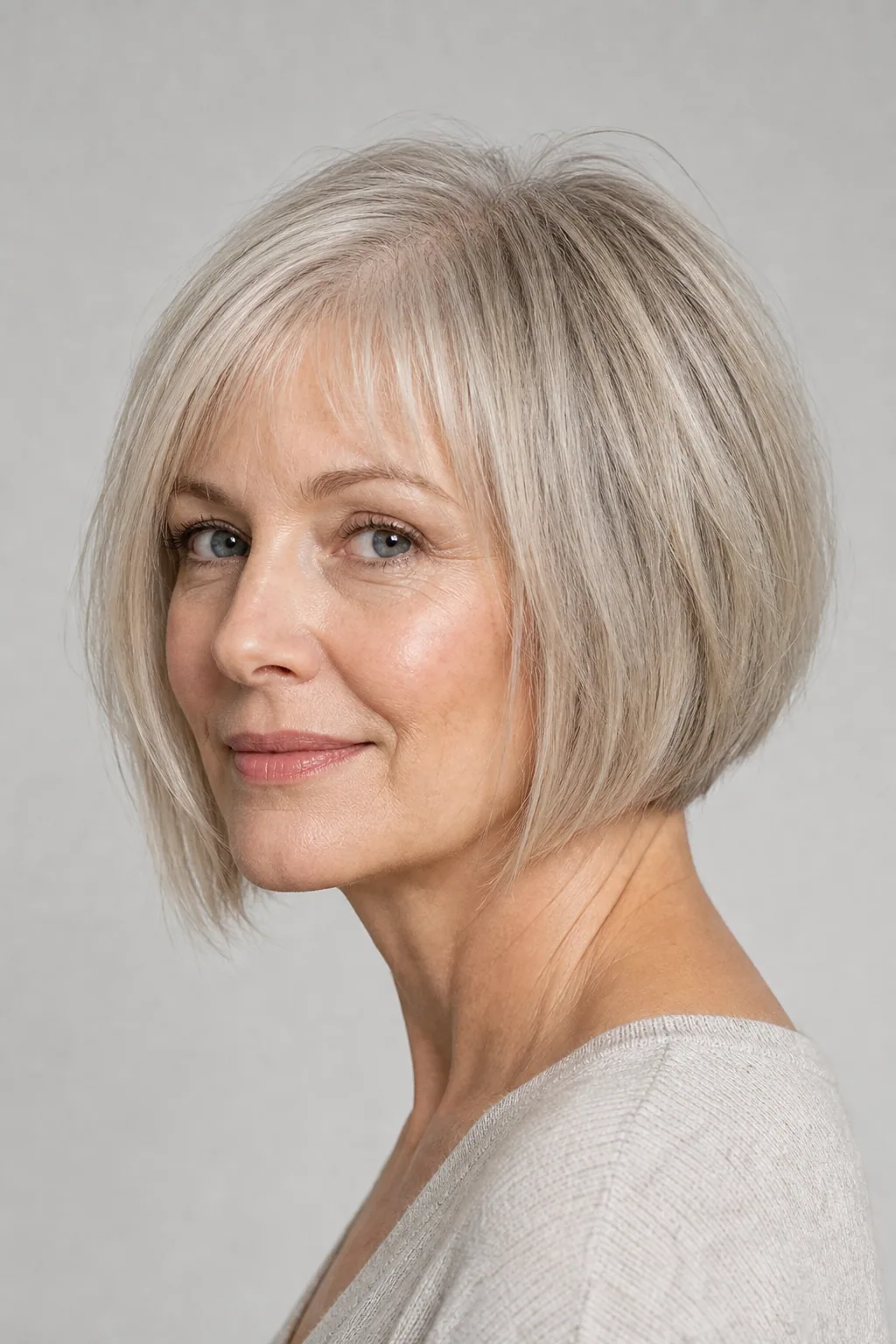
The chin-length blunt bob
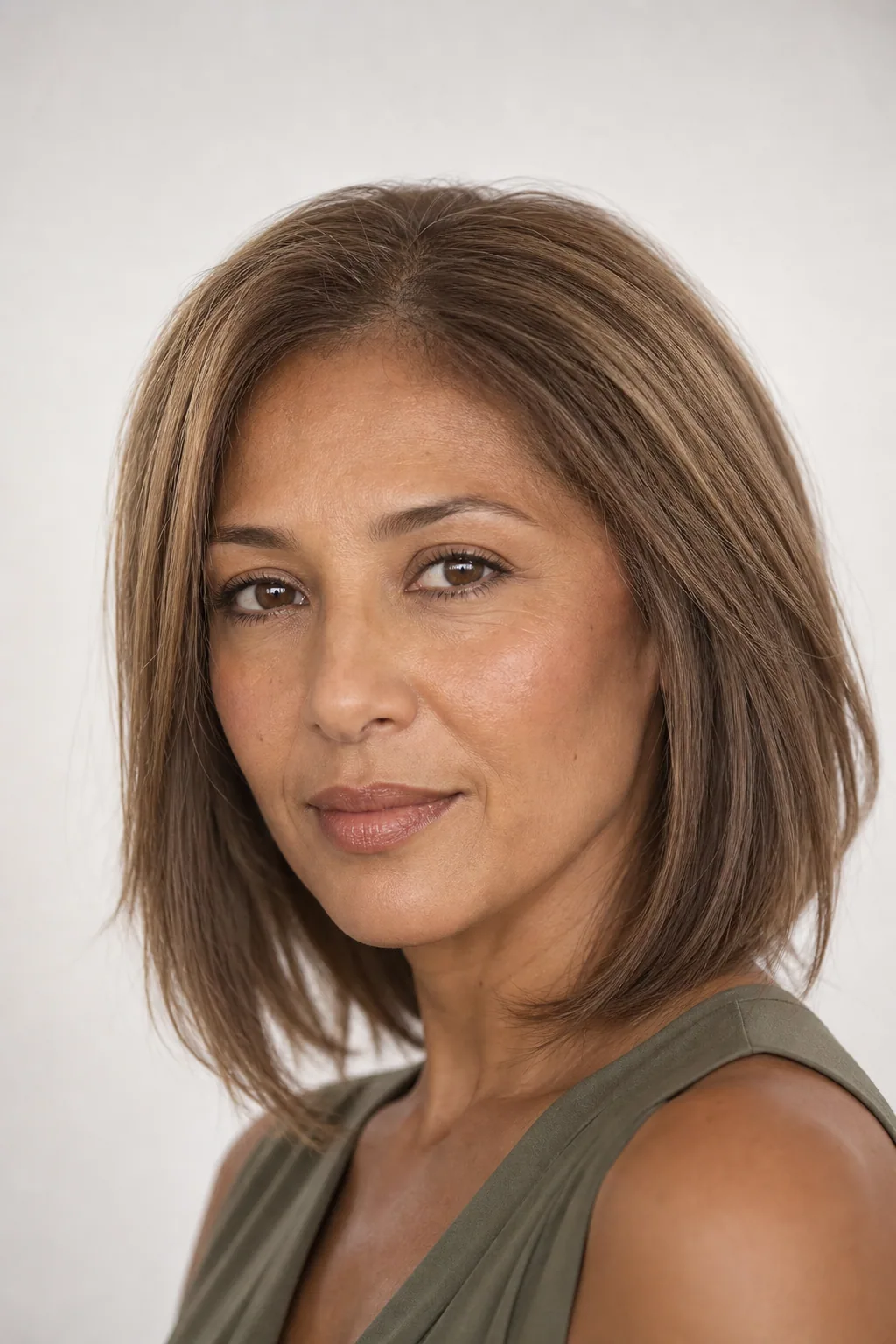
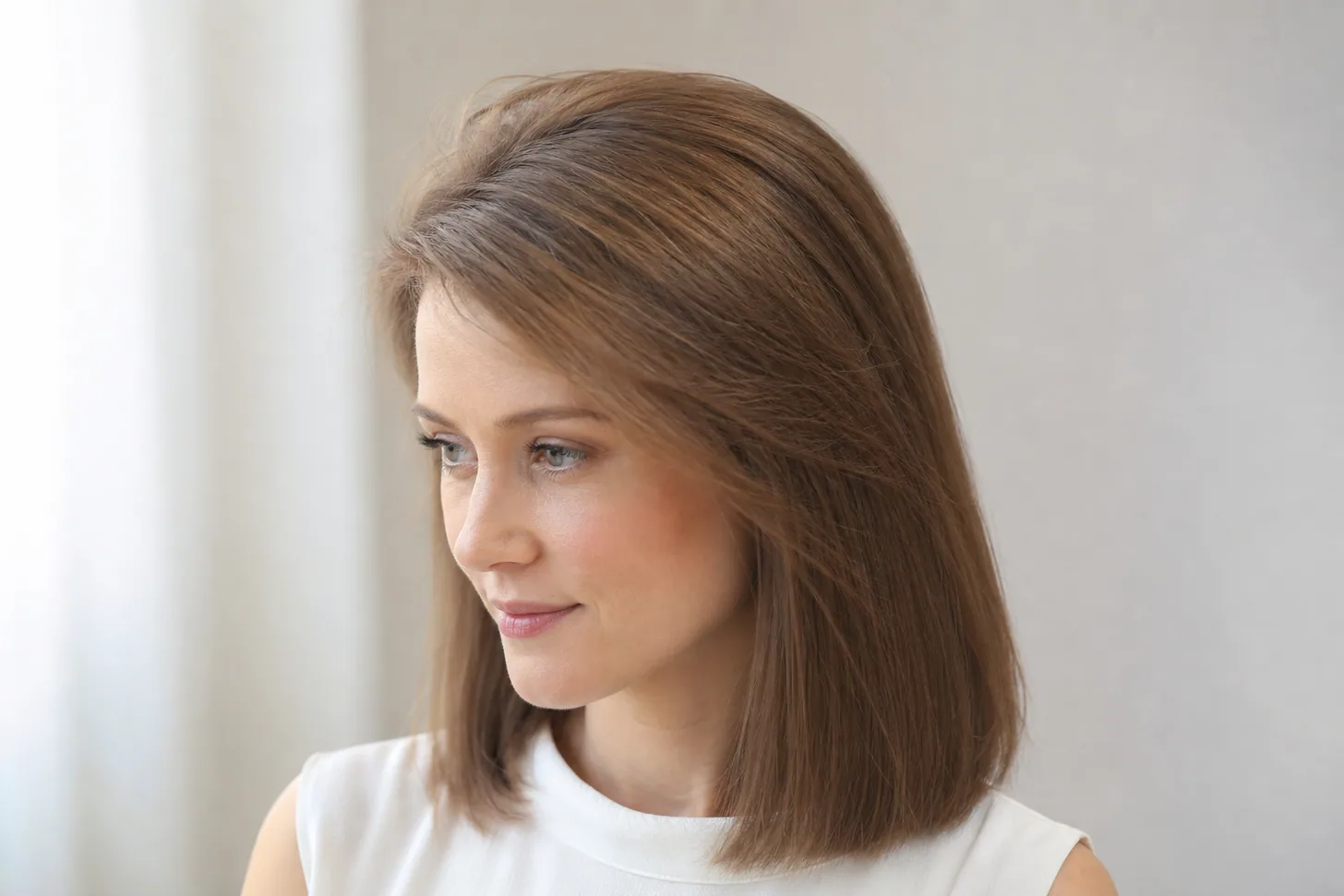
The cut this page exists to release. Chin length, one length, cut to a crisp line — the shortest point at which fine hair still reads like a full head of hair rather than a crop, with every remaining millimetre of weight concentrated at the edge. It is the highest-density-per-inch shape available, and an oval face is the one that can wear it without a single adjustment.
6
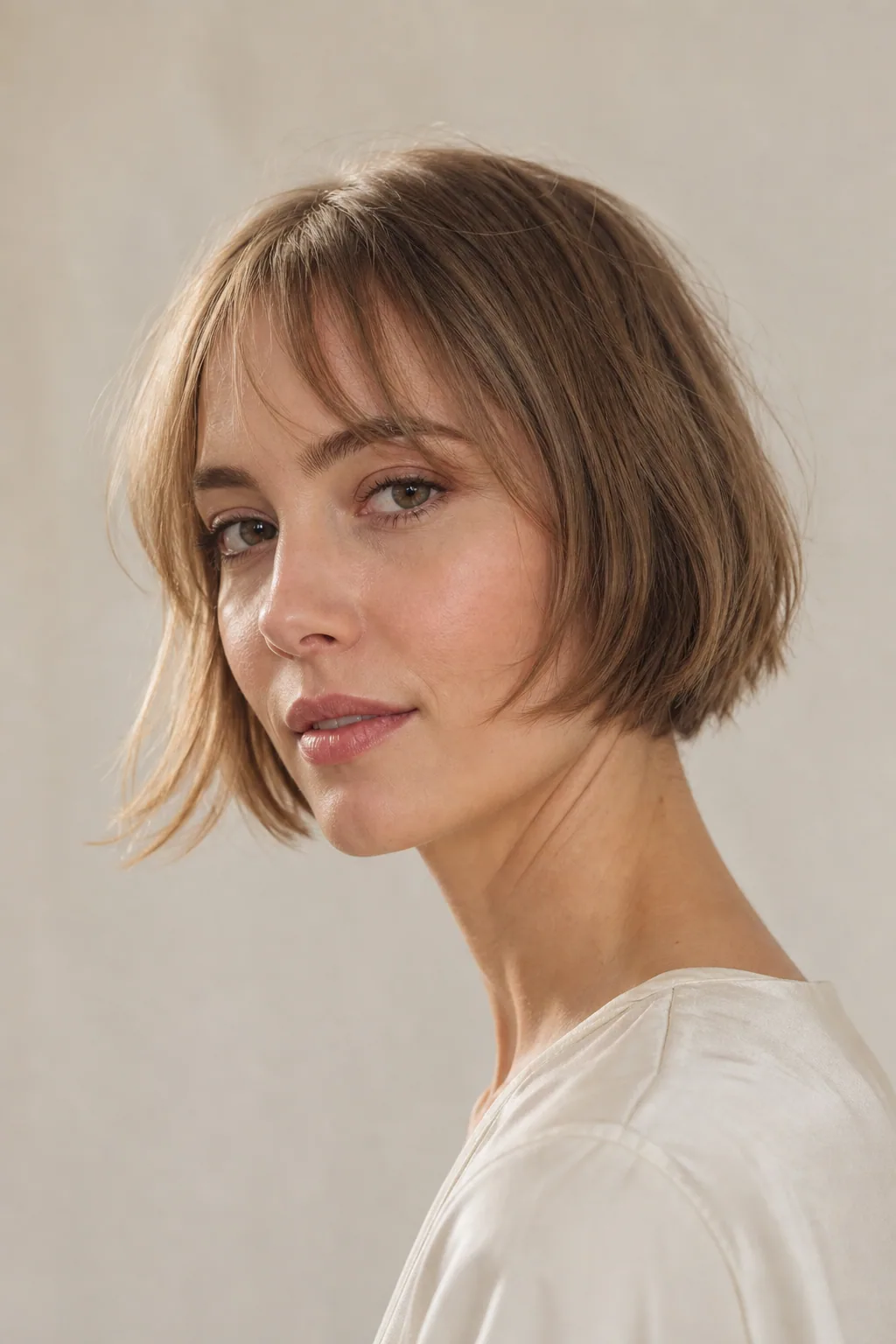
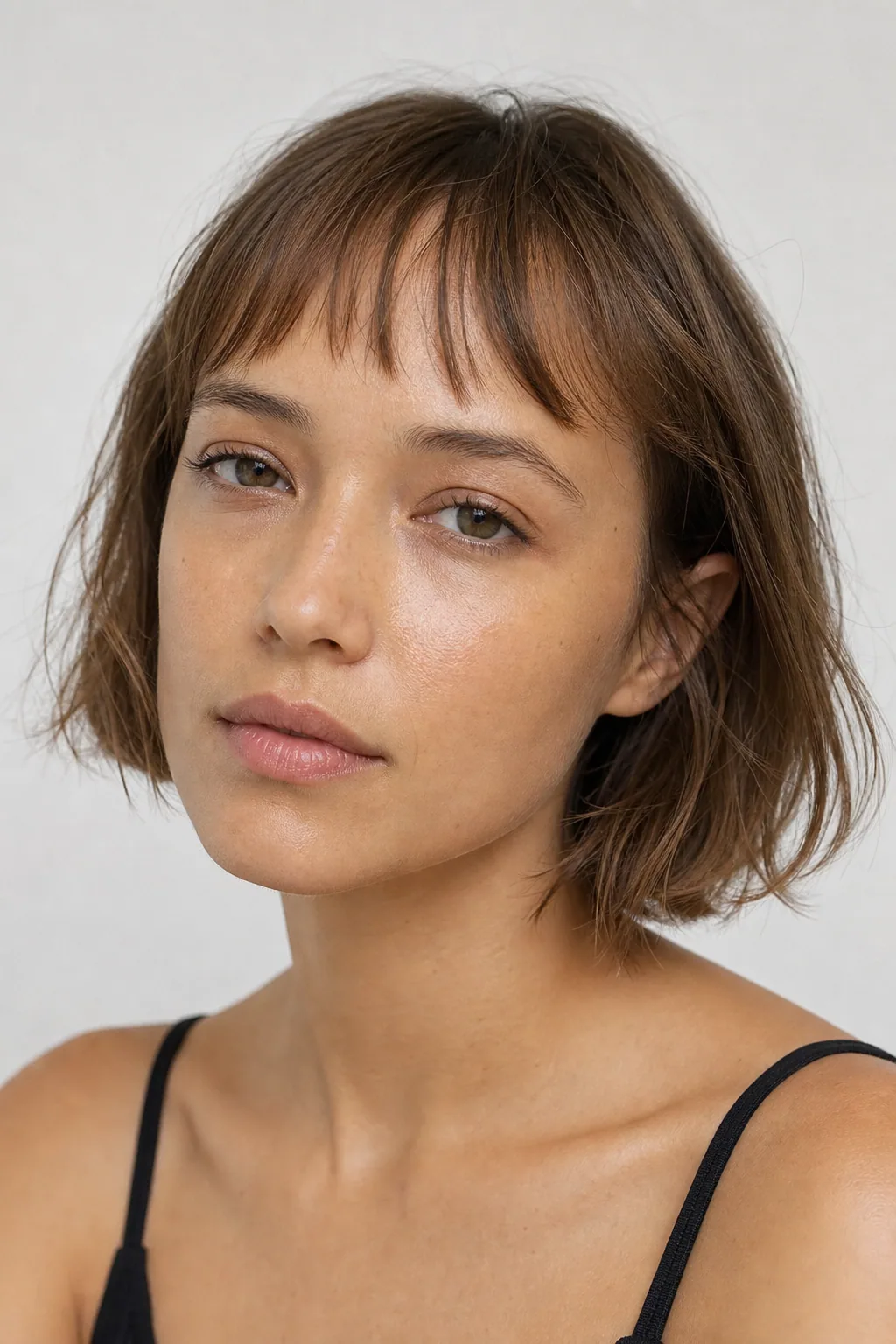
The French bob
Shorter again, sitting between the ear and the jaw, usually with a soft fringe. The French bob works on fine hair because it is weight-forward by design — almost all of the hair is in the perimeter, and there is barely any length left to go flat. Worn undone rather than set, it is one of the lowest-effort shapes here.
7
The graduated bob with a lifted nape
Graduation at the back builds a rounded, self-supporting shape that holds its own height without daily styling — the closest thing fine hair has to a cut that does the work for you. Keep the graduation gentle and the front lengths long enough to reach the jaw, so the silhouette stays wide at the sides rather than climbing into a peak. Closely related to the stacked bob.
8
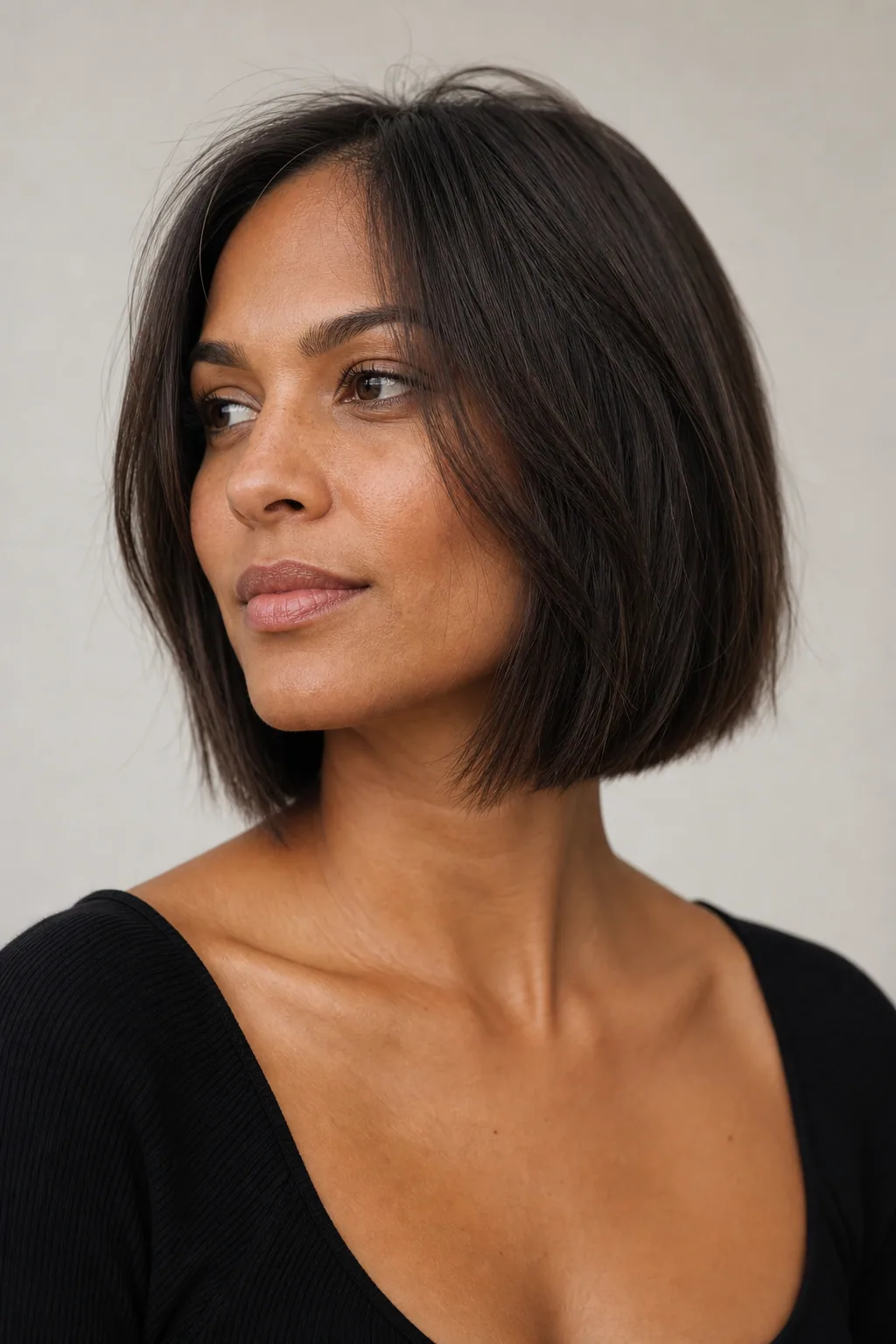
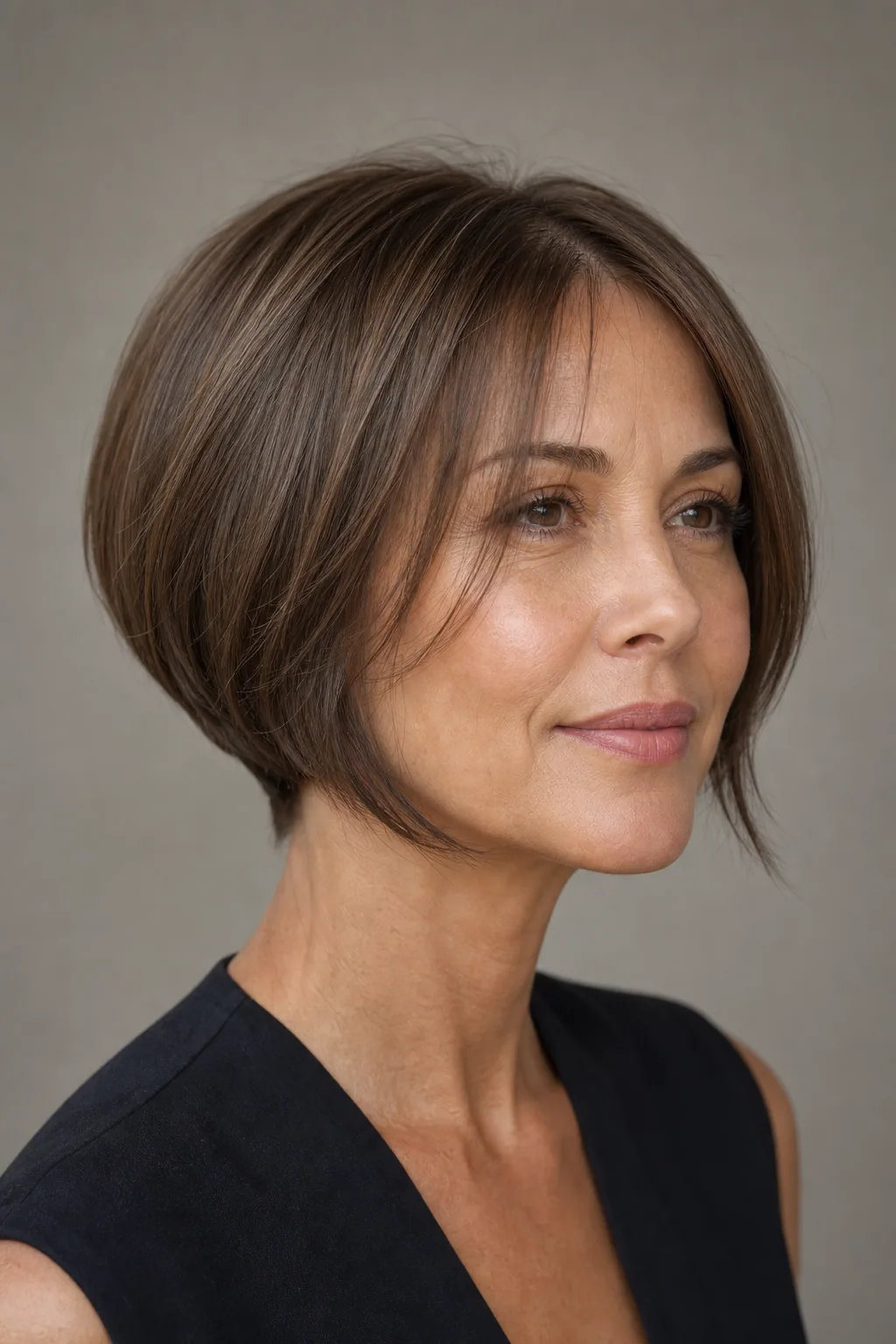
The soft A-line bob
A mild forward angle — half an inch or so longer at the front than the back — keeps a bob from looking flat-sided while leaving the line intact. On other face shapes that angle is doing corrective work and gets pushed steeper; on an oval it can stay subtle, which is what fine hair wants, because a steep A-line thins the back corners.
Short cuts and pixies, the oval's easiest win
Short is where fine hair performs best — nothing is dragging the roots down, and lift is built into the cut rather than applied every morning. It is also the length most often described as needing an oval face, which is one of the few pieces of conventional face-shape advice that holds up. Our full short hairstyles for thin hair gallery has more of each.
9
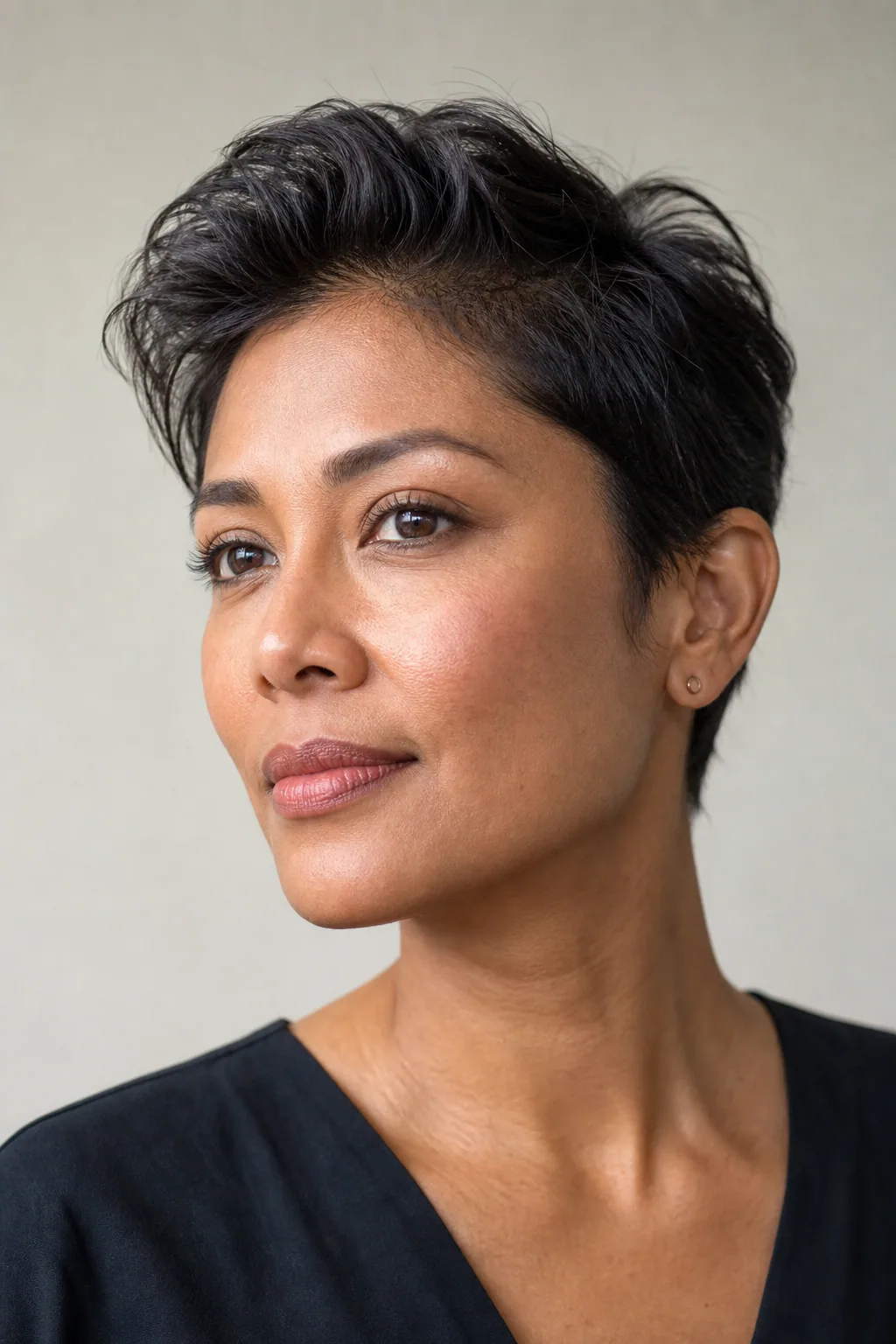
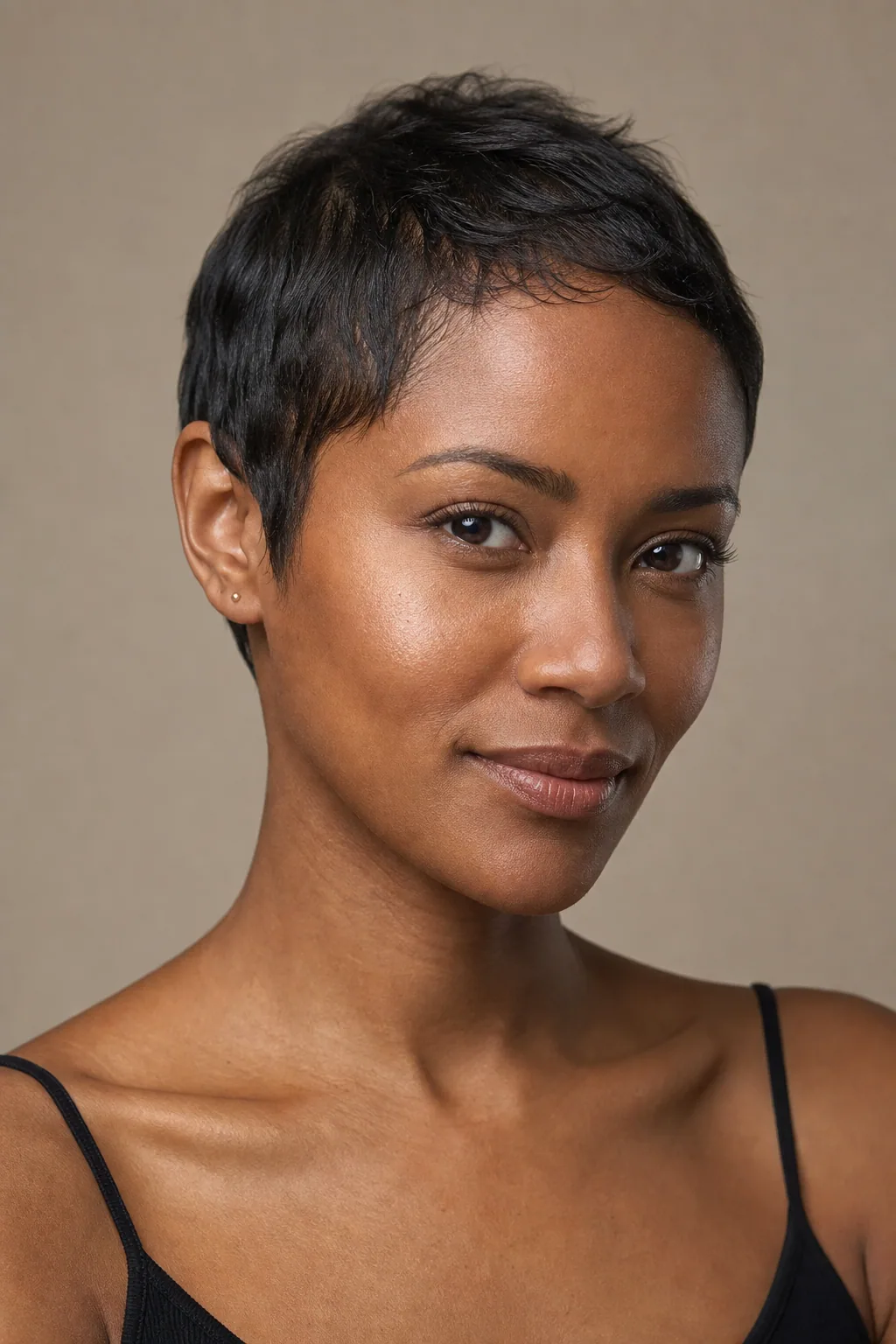
The pixie with a soft quiff
Length kept at the top and front, styled up and back, with the sides and nape tapered close. On a pixie for fine hair that front inch is the whole cut — it is where the fullness reads. Ask your stylist to leave the top-front longer than instinct suggests, and keep the quiff soft rather than tall, so the height sits broad across the front rather than as a point.
10
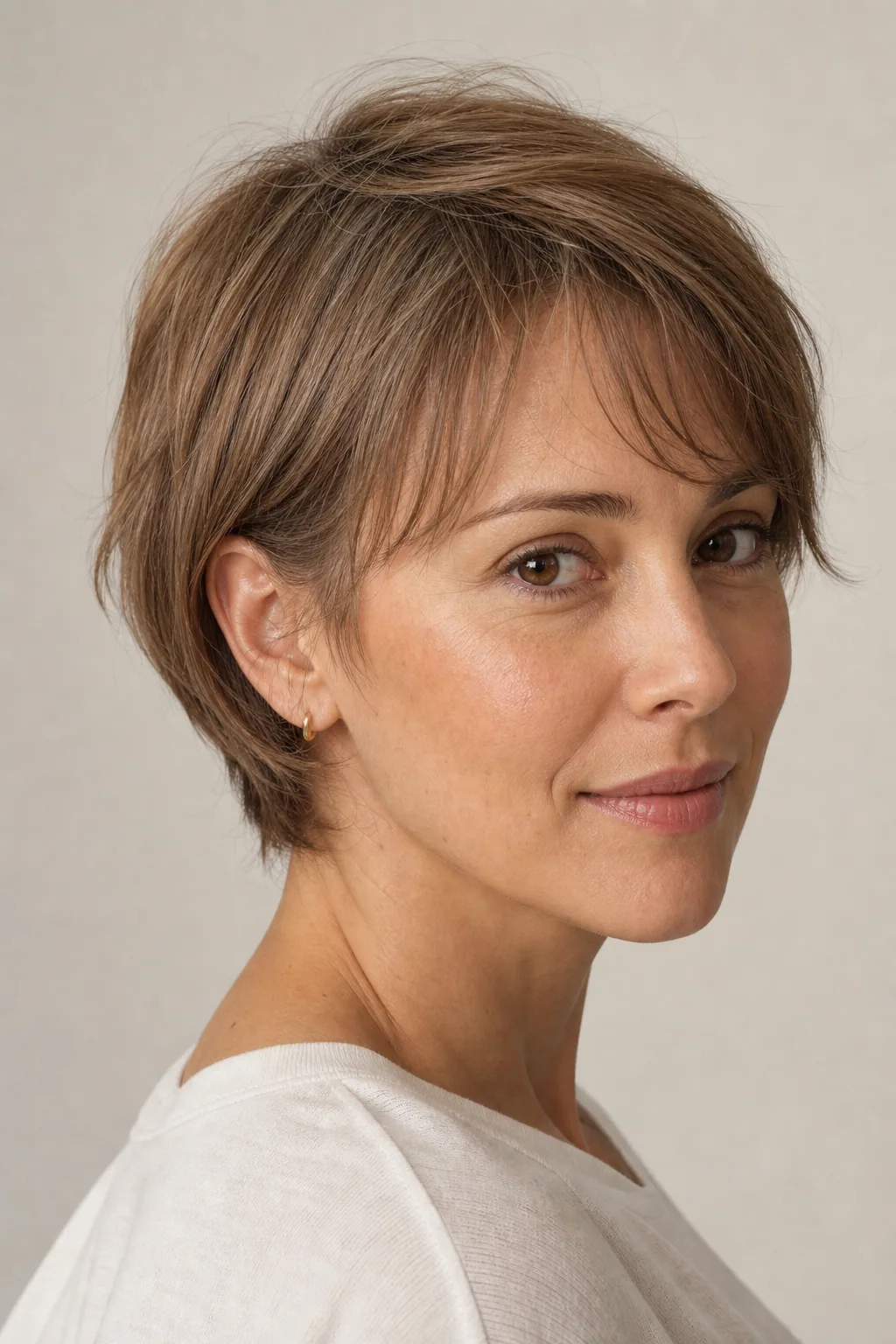
The bixie, or pixie bob
Halfway between a pixie and a bob: short and tapered at the nape, but long enough through the top and sides to tuck, pin or wear pushed back. The bixie is the answer for anyone who wants a pixie's root lift without the commitment, and it grows out into a bob rather than into an awkward stage.
11
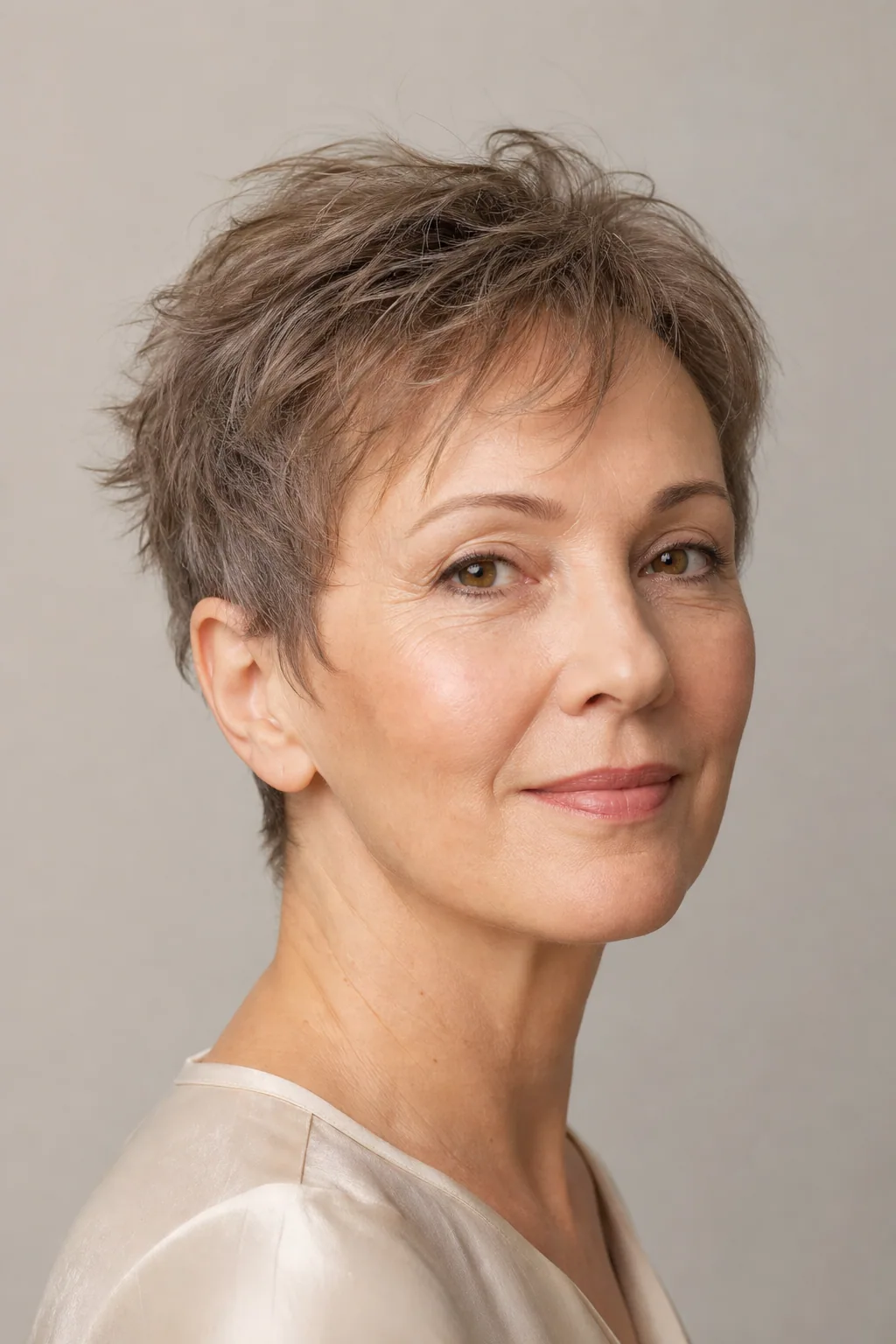
The piece-y textured crop
A crop cut into separated, irregular pieces rather than one smooth cap. The broken surface catches light in more places, which is what makes low density read as texture instead of sparseness. Keep the volume spread across the top; a crop that goes tall at the back is the one short shape that can stretch an oval.
12
The close crop worn face-out
The shortest shape here, cut close all over with nothing framing the face. It puts the whole proportion on display, which is the one thing an oval can afford to do — and it removes the daily volume problem entirely, because there is no length left to fall flat. Read the honest upkeep first in very short cuts for fine hair: a crop this short needs a trim every four to five weeks.
Bangs and parting: the one place an oval has a rule
Fringes are usually where face-shape advice does its heaviest lifting, and an oval is told it can wear all of them. Nearly true — but there is a real distinction underneath. An oval reads as balanced partly because the forehead is part of the proportion.
Cover it with a solid band and you remove roughly a third of the visible face; what is left is shorter and comparatively wider. That can be a deliberate, good-looking choice. It is not a neutral one, and on fine hair it also spends density from the front hairline, where there is least to spare.
13
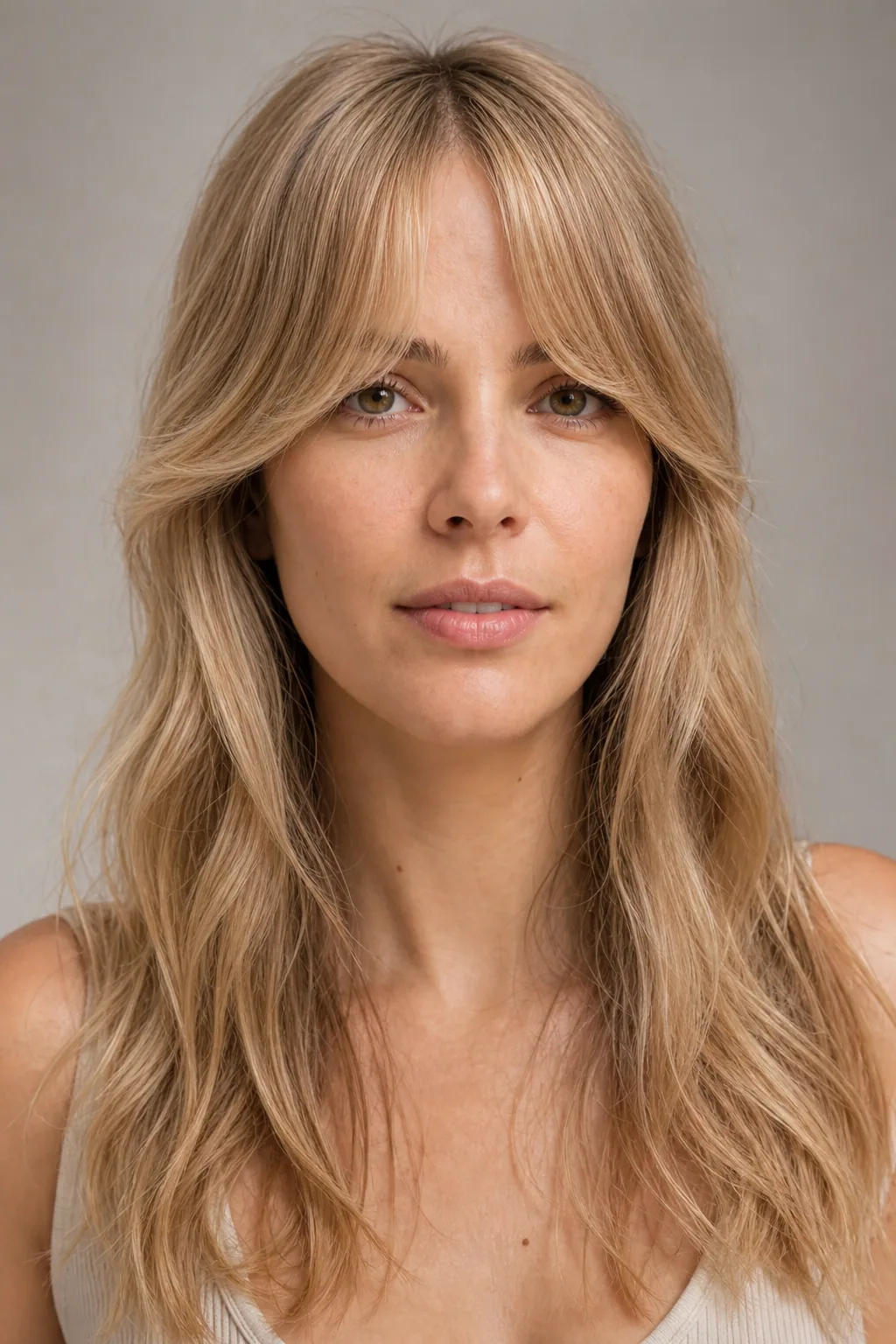
Curtain bangs
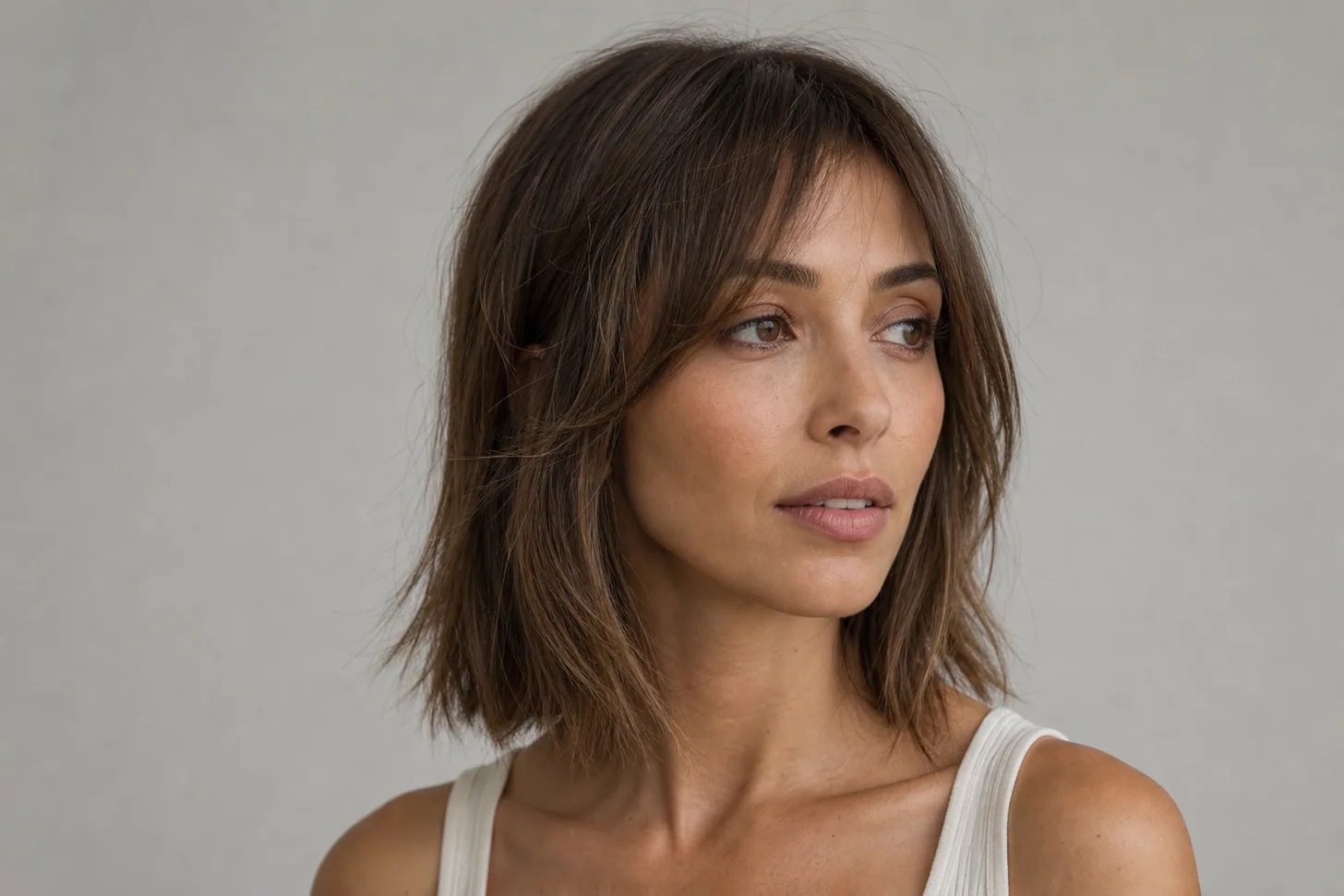
The safest fringe on fine hair, and the one that leaves an oval's proportion intact, because it opens at the centre and keeps the forehead in view. Curtain bangs on fine hair want a narrow section taken from a shallow triangle, not a deep one — a fringe cut too far back borrows from the top of the head, which is where fine hair shows first.
14
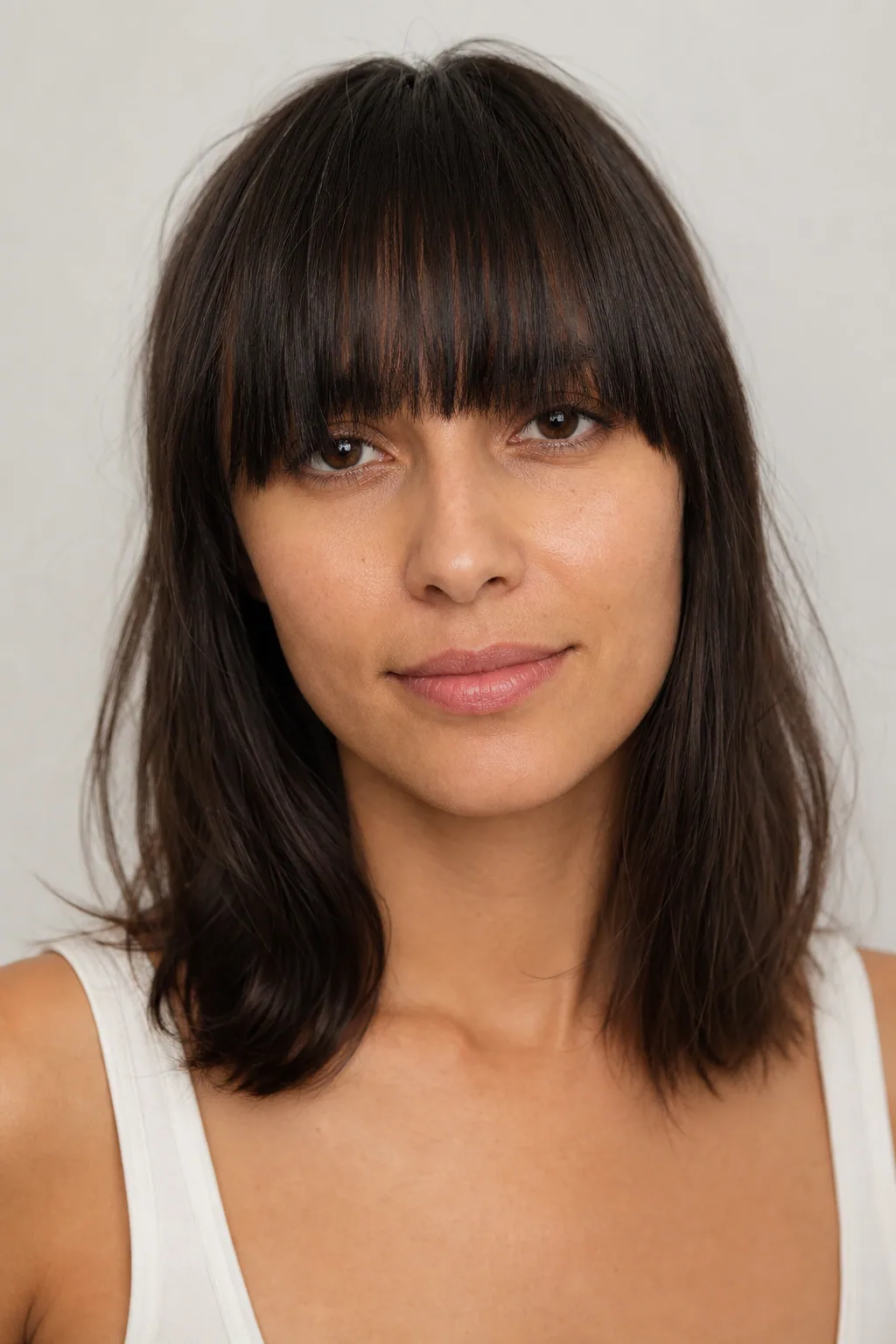
The blunt full fringe — a change, not a default
A heavy, straight-across fringe genuinely suits an oval face, and it is the only entry here that alters the shape rather than working with it: it shortens the visible face and widens the read. Go in wanting that. On fine hair, ask for the section kept shallow and the ends cut blunt rather than thinned — a full fringe on fine hair fails when it is too sparse to look solid, not when it is too heavy.
15
The wispy micro fringe
A short, deliberately sparse fringe sitting above the brows. It reads as an editorial choice rather than a correction, which is exactly the register an oval face can carry, and it works on fine hair precisely because it is meant to be light and separated — see wispy bangs for fine hair. Expect a shape-up every three to four weeks.
16
The centre part
A centre part exposes the symmetry an oval face has and other shapes are usually being parted away from. The trade is real, though: a centre part is the flattest option at the roots, and it puts the parting line where scalp shows most. If your part has been widening, move it an inch off-centre — where to part fine hair explains why that alone lifts the roots.
Chair-side note
The most common thing I have to unpick with an oval-faced client is a cut she was given years ago on the "anything suits you" principle — usually long, one length, centre-parted, and completely flat from the roots down. Nothing about it is wrong for her face. It is just a cut that never had a brief.
Ask for the brief to be your hair. Tell your stylist how much scalp shows at your part in daylight, how long a blow-dry survives, and whether you own a round brush you actually use. Those three answers pick the length, the perimeter and the layering between them, and your face shape does not need to be mentioned once.
SB
— Simone Baptiste, Senior Stylist
What to ask your stylist
Lead with the hair, not the face — the whole point of an oval is that the face is not the constraint. Say: "I have an oval face and fine hair, so I'd rather cut for density than for my face shape. Please keep the perimeter blunt and dense, put any layers inside and point-cut rather than on the surface, and build the volume wide across the top of my head rather than peaked at the back crown. No thinning shears, no razor on the ends."
If you are considering a fringe, say the trade-off out loud: "I know a full blunt fringe will make my face read shorter — I want that, or I don't." And if your part has widened, mention it; it changes where the weight should sit more than your face shape does.
When "anything suits an oval" stops being true
Your face is noticeably more than one and a half times as long as it is wide. That is a long or oblong face, not an oval, and the advice reverses — width and a fringe start doing real work. Read cuts for a long face and fine hair instead.
Your density is low enough that scalp shows clearly at the part in ordinary light. Coverage outranks everything on this page. Shorter with root lift gives more visible fullness, and haircuts that make hair look thicker is the better starting point.
You want the tall, peaked crown volume you have seen recommended for fine hair. It is not wrong, it is just aimed at a rounder face. Take the same volume built wide and low across the top and you keep the fullness without stretching an already balanced shape.
Your jaw is as wide as your cheekbones and squares off at the corners. That is a square face wearing an oval-ish length. The chin-length blunt bob recommended here is the one shape that emphasises it — cuts for a square face and fine hair has the softer version.
The change in your hair has been fast, patchy, or one-sided rather than gradual. A flattering cut helps the look, but check the cause first — read fine hair or thinning and speak to your doctor.
FAQ
Almost any shape suits an oval face, so on fine hair the cut should be chosen for density rather than for your face. That points to a blunt, dense perimeter somewhere between the chin and the collarbone, soft point-cut internal layers rather than heavy surface layering, and lift built across the top of the head. A chin-length blunt bob, a one-length lob, a French bob or a pixie with a soft quiff all work. The one genuinely oval-specific caution is height: a tall, peaked crown adds vertical length to a face that is already balanced, so ask for the lift wide and low across the top rather than piled at the back crown.
An oval face is roughly one and a half times as long as it is wide, with the forehead, cheekbones and jaw close to the same width and the jawline softly rounded rather than angular. Pull all your hair back, look straight into a mirror and check three things: whether the widest point sits at your cheekbones, whether your jaw curves rather than corners, and whether the face is noticeably longer than it is wide without looking stretched. If it is much longer than one and a half times its width, you are working with a long or oblong face and the advice changes. If the jaw is as wide as the cheekbones and squared off, that is a square face.
Curtain bangs, long side-swept fringes and wispy bangs all suit an oval face, and on fine hair they are the safest choices because they borrow the least density from the top. A heavy, straight-across blunt fringe is the one to think twice about, and not for the usual reason: an oval face reads as balanced partly because the forehead is part of the proportion, so covering it with a solid band removes roughly a third of the visible face and what is left reads shorter and wider. That can be a deliberate effect, but it is a change to the shape rather than a neutral choice. On fine hair a full blunt fringe also takes density from the front hairline, where fine hair can least spare it.
An oval face is the shape most often described as suiting a pixie, and on fine hair a pixie is one of the strongest options available, because short hair carries its own root lift and does not have length dragging the roots flat. Ask for length kept on top and through the front, tapered short at the sides and nape, and cut piece-y rather than uniformly round. Keep the height broad across the top rather than peaked at the back, and the silhouette stays balanced. A longer pixie or a bixie, which is a pixie-bob hybrid, gives the same fullness with more to hold on to while it grows.
Yes, and an oval face can wear it at a length that most other shapes have to avoid. A blunt bob ending at the chin sits at the widest point of a round face and squares off a strong jaw, which is why those shapes are steered away from it. An oval has neither problem, so the chin-length blunt bob is genuinely available — and it is the single most flattering shape for fine hair, because a hard, undamaged perimeter is what makes fine ends read dense. Ask for the line cut blunt, no thinning shears or razor anywhere near the ends, and any layers kept internal and point-cut.
Yes, but shape it wide rather than tall. Crown volume is the standard fine-hair prescription and it is right here too — flat roots are what make fine hair look sparse. The oval-specific adjustment is where the height sits. A round face wants a peak, because vertical height lengthens the face. An oval is already at balanced proportion, so a tall peak at the back crown pushes it toward oblong. Build the lift across the whole top of the head and keep a little width at cheekbone level, and you get the fullness without stretching the shape.
Eleven years behind the chair, specializing in short shapes and fine-hair texture. Simone believes the best haircut is the one you can style yourself in ten minutes.
Results vary with hair type, density, and growth patterns. This guide is educational and not a substitute for an in-person consultation with a licensed stylist.
Hairstyle images in this guide are AI-generated illustrations, not photos of real clients or results. See our image policy.
Get the good hair intel
One honest, stylist-written guide in your inbox each week. No hype.

 SB
SB