Reviewed by Tara Sullivan · Updated October 2026 · 11 min read
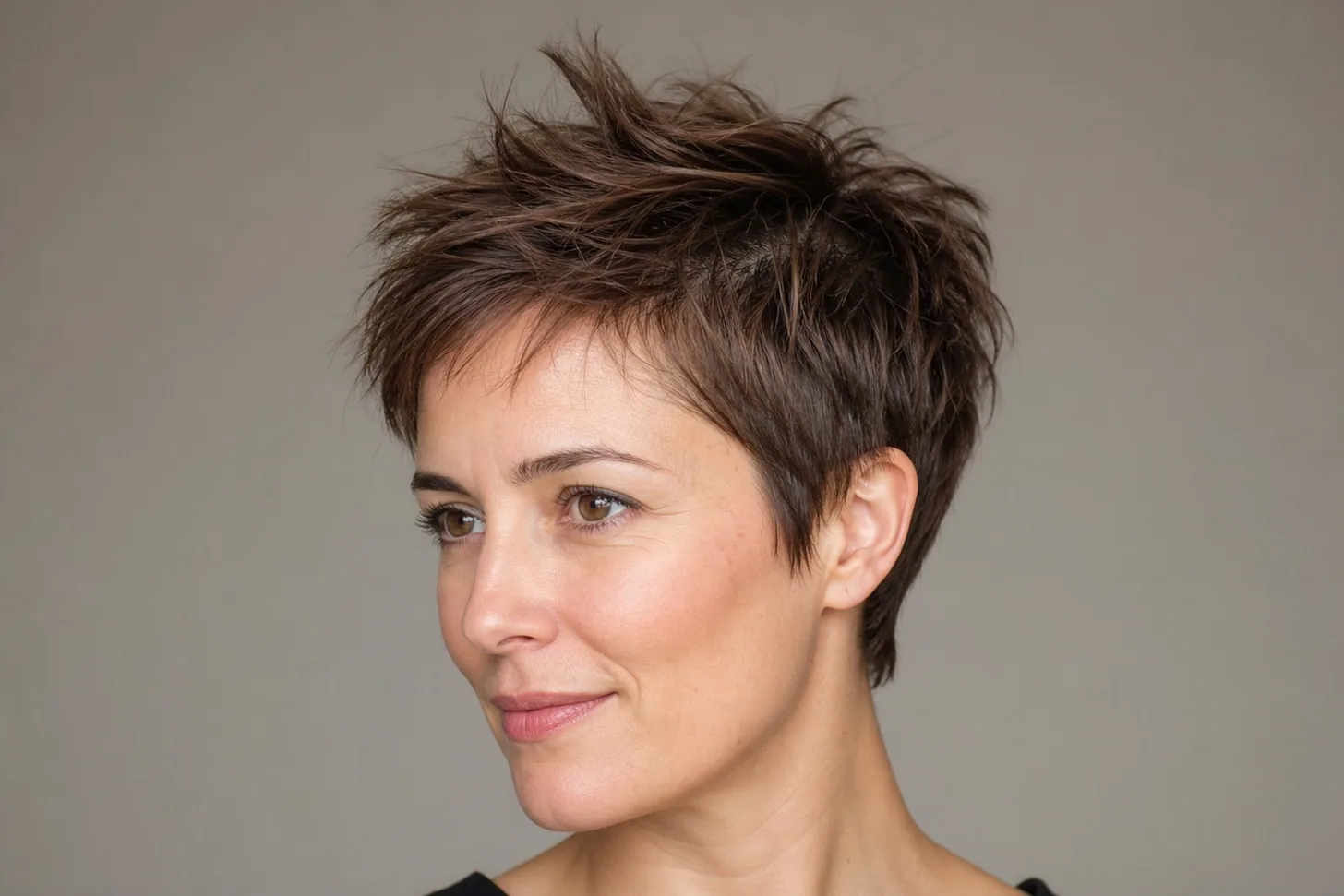
A pixie can flatter a chubby face with thin hair if it follows three rules: height on top, close sides, and one angle, such as a side part or a swept fringe. Height lengthens the face, close sides keep width down, and the angle breaks up the roundness.
Thin hair helps here, because short fine hair lifts at the root more easily than long hair. Below are 14 pixie cuts for a chubby face and thin hair, from long and soft to short and lifted.
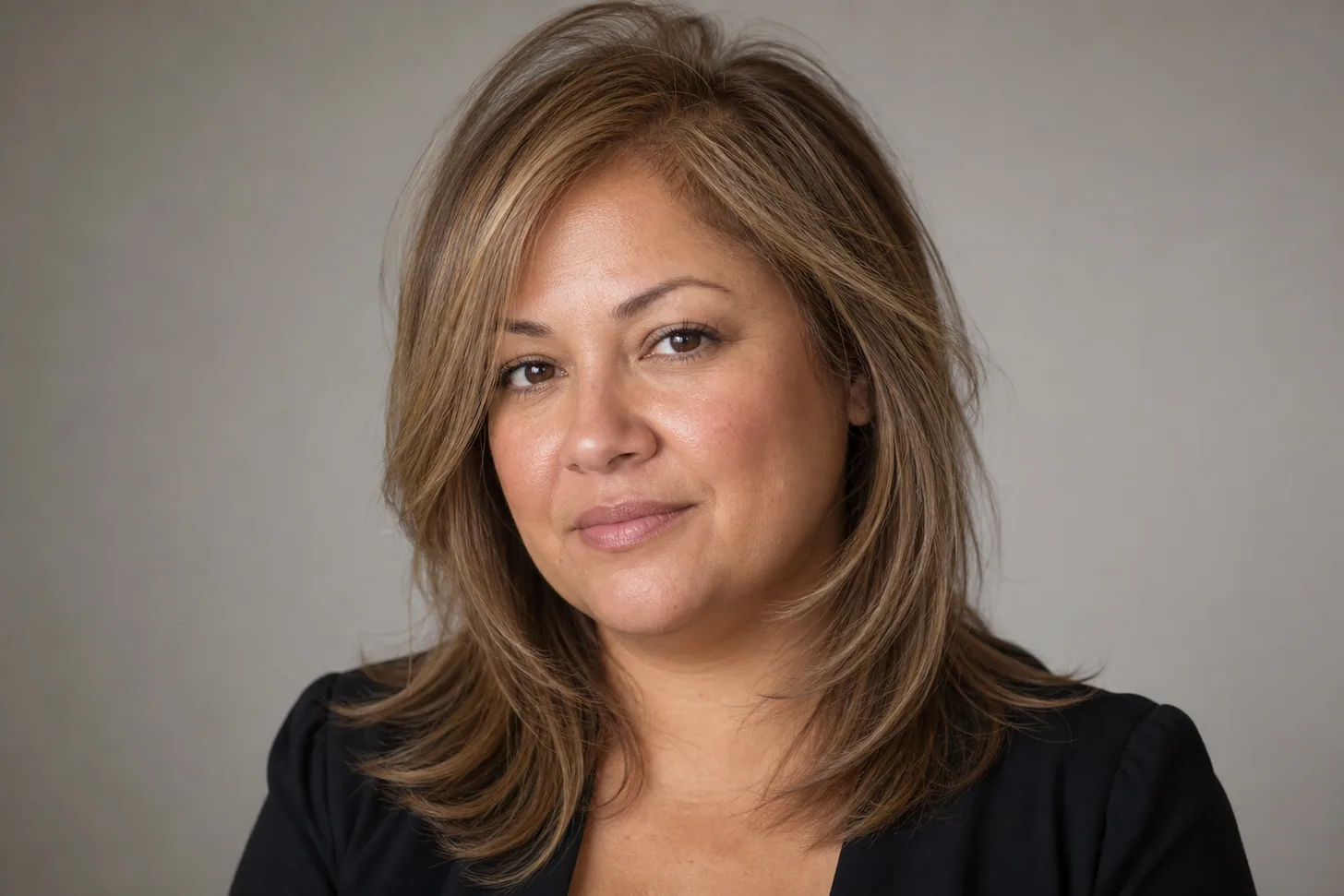
long pixie with lifted crown and a long side-swept fringe on fine light-brown hair, close tapered sides, woman with a round fuller face, front three-quarter view
Chair-side note
Clients with a round face often tell me they've been warned off short hair. The pixie that let them down was usually round itself: the same length all over, full at the ears.
I cut it the other way: the length stays on top, the sides come in close, and the fringe goes on a diagonal. Fine hair is easy to lift when it's short, so the crown does most of the work.
SB
— Simone Baptiste, Senior Stylist
How a pixie flatters a chubby face
Height on top. Lift at the crown makes the face look longer. On thin hair, ask for longer layers on top rather than a uniform crop, and blow-dry the roots up.
Close sides. Hair that puffs out at the ears adds width where a round face is already widest. Keep the sides tapered, with soft pieces in front of the ears rather than bulk.
One angle. A side part, a diagonal fringe or an asymmetric line cuts across the roundness. A blunt, straight-across fringe does the opposite. For every cut for this face shape, see haircuts for a round or chubby face.
Long pixie cuts for a round face
A longer pixie is the easiest place to start. It covers the crown, leaves room for a sweep across the forehead and grows out without an awkward stage.
long pixie with a deep side part on fine dark-brown hair, longer top swept to one side, tapered close sides, soft lift at the crown, woman with a round fuller face, front view
1
Long pixie with a deep side part
A deep side part puts more hair on one side and creates a diagonal line. It is the simplest way to make a pixie flatter a round face.
Switch the part every few weeks so the root keeps its lift.
asymmetric long pixie on fine honey-blond hair, one side longer reaching the cheekbone, other side tapered short above the ear, lifted top, woman with a round fuller face, front three-quarter view
2
Asymmetric long pixie
One side reaches the cheekbone; the other is short above the ear. The uneven line is the angle a round face needs.
soft layered pixie on fine light-brown hair with long wispy pieces in front of the ears reaching the cheekbones, lifted layered top, close nape, woman with a round fuller face, front view
3
Layered pixie with cheek-length wisps
Long, wispy pieces in front of the ears fall onto the cheeks. They soften the roundness without adding bulk at the sides.
Keep the wisps light, so the cheeks show through them.
long pixie with a soft center-parted curtain fringe sweeping to the cheekbones on fine medium-brown hair, lifted crown, tapered sides, woman with a round fuller face, front view
4
Long pixie with a curtain fringe
A curtain fringe parted in the center makes two diagonal lines down the face. It works on a round face as long as the fringe reaches past the cheekbones.
Shorter curtain bangs end where the face is widest, so keep them long.
Pixies with height on top
These are shorter, with the length and texture concentrated at the crown. They suit fine hair with enough strands to stand up, and they make a round face look longest.
soft faux-hawk pixie on fine dark-blond hair, the center of the top brushed up and slightly forward into soft height, short tapered sides, woman with a round fuller face, front three-quarter view
5
Soft faux-hawk pixie
The center of the top is brushed up, and the sides stay flat. It adds the most height of any pixie here.
Use a little light pomade on dry hair, and keep the look soft rather than spiky.
pixie with the top brushed up and back from the forehead into rounded crown volume on fine dark-brown hair, short close sides, woman with a round fuller face, side three-quarter view
6
Brushed-back pixie with crown volume
Brushed up and back from the forehead, with the volume at the crown. Showing the forehead makes a round face look longer.
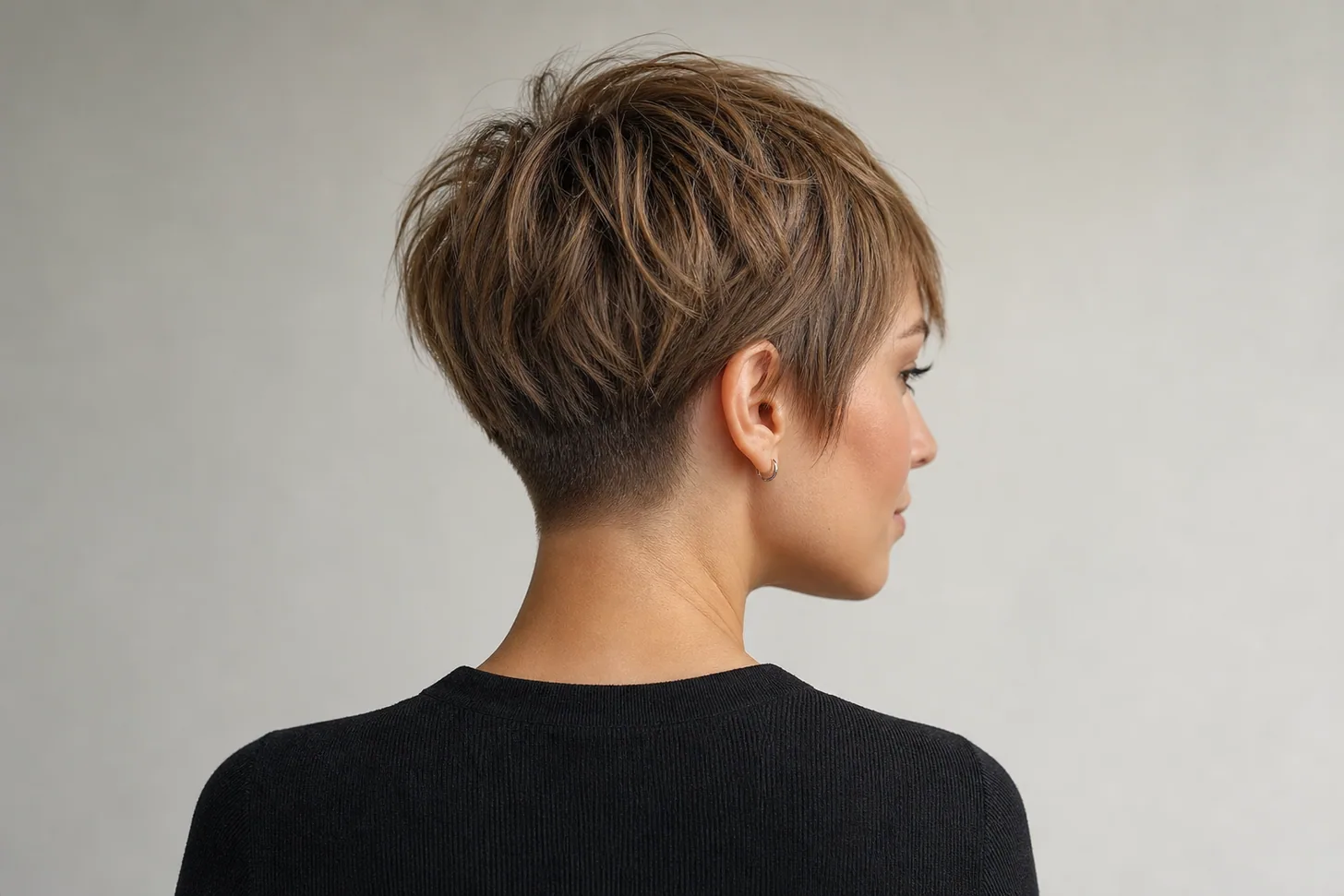
pixie with a hidden short undercut at the sides and nape and a longer textured top swept to one side on fine light-brown hair, woman with a round fuller face, side three-quarter view
7
Undercut pixie with a longer top
A short undercut under the sides keeps them flat, and the longer top sweeps over. The sides can't puff out, so the face looks narrower.
choppy pixie on fine auburn hair with piece-y texture lifting the crown, short tapered sides and nape, a few pieces falling forward, woman with a round fuller face, front three-quarter view
8
Choppy pixie with a lifted crown
Choppy pieces at the crown give height and texture; the sides stay close. It's the shaggy pixie adjusted for a round face.
The right fringe is angled or piece-y, and long enough to cross the forehead. Avoid a short, blunt fringe straight across, which makes the face look shorter and wider.
pixie with a long diagonal fringe cut on an angle from one brow to the opposite cheekbone on fine black hair, lifted crown, close sides, woman with a round fuller face, front view
9
Pixie with a diagonal fringe
The fringe is cut on an angle, from one brow down to the opposite cheekbone. That line runs across the widest part of the face.
Blow-dry it in its direction while it is damp, or it falls straight.
pixie with a piece-y side fringe on fine light-blond hair, separated tapered fringe pieces swept to one side, soft crown lift, tapered sides, woman with a round fuller face, front three-quarter view
10
Pixie with a piecey side fringe
Separated pieces swept to the side, so the forehead shows between them. It's softer than a solid fringe and takes less hair.
pixie with a long layered top and a light wispy fringe at the brows on fine medium-brown hair, crown lifted, close tapered sides, woman with a round fuller face, front view
11
Pixie with a wispy fringe and long top
A light, wispy fringe with gaps between the pieces, under a long, lifted top. The height above the fringe keeps the face long.
Keep the fringe airy; a heavy one sits like a lid.
Pixies for a round face by age and texture
Gray, wave and glasses each change the shape a little. These three adapt the same rules.
soft silver pixie with lifted crown and a long side-swept fringe on fine silver-gray hair, close tapered sides, woman in her 60s with a round fuller face, front three-quarter view
12
Silver pixie for a round face over 60
A lifted crown and a long side sweep, in soft silver. Gray hair has a little extra body, which helps the crown stand up.
wavy pixie on fine wavy light-brown hair with the waves concentrated on top for height, close tapered sides, soft side-swept front, woman with a round fuller face, front three-quarter view
13
Wavy pixie for a round face
Waves on top add height without any styling; the sides are kept close so the waves don't add width.
Scrunch in a little light mousse and dry the top with a diffuser.
long pixie with a lifted crown and side-swept fringe above rectangular glasses on fine dark-brown hair, close sides, woman with a round fuller face wearing rectangular glasses, front view
14
Pixie with glasses for a round face
A side-swept fringe that sits above the frames, with height on top. Rectangular frames and an angled fringe both add lines to a round face.
Blow-dry the roots at the crown upward first, then direct the fringe across. Finish with a small amount of matte paste or texture spray on the top only.
Keep products off the sides. Anything that adds texture there adds width. If the crown falls flat by afternoon, a little dry shampoo at the roots lifts it again.
What to ask your stylist
Say: "I'd like a pixie with length and lift on top, tapered close at the sides, and a fringe swept to one side. My hair is fine, so please don't use thinning shears."
Ask to see the shape from the front before the sides are finished. If the cut looks wide at the ears, ask for the sides to be taken in closer.
When a pixie may not suit a round face
Your hair is very thin at the crown. Short hair can show the scalp there. A cut for a thinning crown covers it better.
You want hair to cover your cheeks or jaw. A pixie shows the whole face. A lob past the jaw frames it instead.
Your hair is very curly. Short curls can grow out rather than up. Ask for a longer top and a tapered nape.
You don't want to style it. A round-face pixie needs a minute of blow-drying for height.
FAQ
Yes, if it has height on top, close sides and an angle such as a side part or swept fringe. A round pixie that is the same length all over and full at the ears is the version to avoid.
A long pixie with a lifted crown and a long side-swept fringe. The length on top covers thinner hair, the height lengthens the face, and the fringe adds a diagonal line.
Yes, but an angled or piece-y fringe long enough to cross the forehead. A short, blunt fringe straight across makes a round face look wider.
Keep the sides tapered close to the head, put the volume at the crown and part the hair to one side. Avoid volume at the ears.
A long pixie is easier, because it leaves room for a long fringe and covers the crown. A short pixie works if it keeps clear height on top.
Yes. A soft pixie with a lifted crown and a long side-swept fringe suits a round face over 60, and gray hair often has the body to hold the height.
Eleven years behind the chair, specializing in short shapes and fine-hair texture. Simone believes the best haircut is the one you can style yourself in ten minutes.
Results vary with hair type, density and growth patterns. Haircut guidance is not a substitute for an in-person consultation with a licensed stylist, and sudden or heavy hair loss is worth raising with a doctor.
Hairstyle images in this guide are AI-generated illustrations, not photos of real clients or results. See our image policy.
Get the good hair intel
One honest, stylist-written guide in your inbox each week. No hype.

 SB