Reviewed by Tara Sullivan · Updated October 2026 · 8 min read
Hair volume is how full your hair looks: the space it takes up around your head. It comes from three things working together: how thick each strand is, how many strands you have, and how far the hair stands away from the scalp.
You were born with the first two, roughly speaking. The third is the one styling changes, which is why a good blow-dry can make fine hair look twice as full. Here is how each one works.
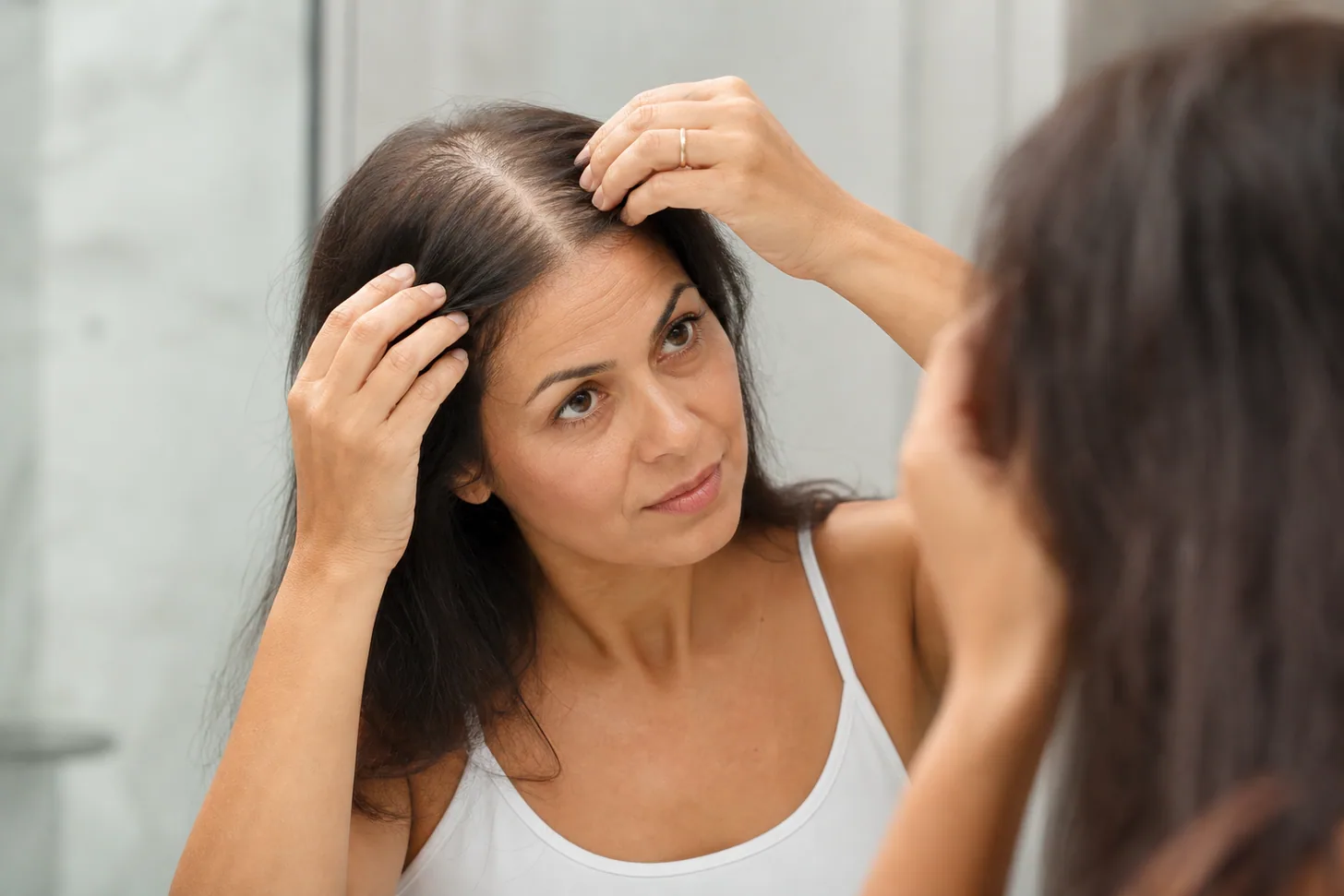
woman with fine shoulder-length hair lifting a section at the crown with her fingers in a mirror, soft daylight
From the editor
Clients say "I want more volume" and mean three different things: thicker strands, more hair, or hair that does not lie flat. The fix for each is different.
Knowing which one you are missing saves a lot of money on the wrong products.
MH
— Megan Holloway, Editor-in-Chief
Hair volume, defined
In hairdressing, volume means fullness and body: hair that looks plentiful and moves away from the head instead of clinging to it. It is a visual result, not a measurement. Two people with the same number of hairs can have very different volume.
That is because volume is made of three separate ingredients. Hairdressers and trichologists talk about them as strand diameter (thickness), density (how many hairs) and lift (how the hair sits).
1. Strand thickness: the diameter of each hair
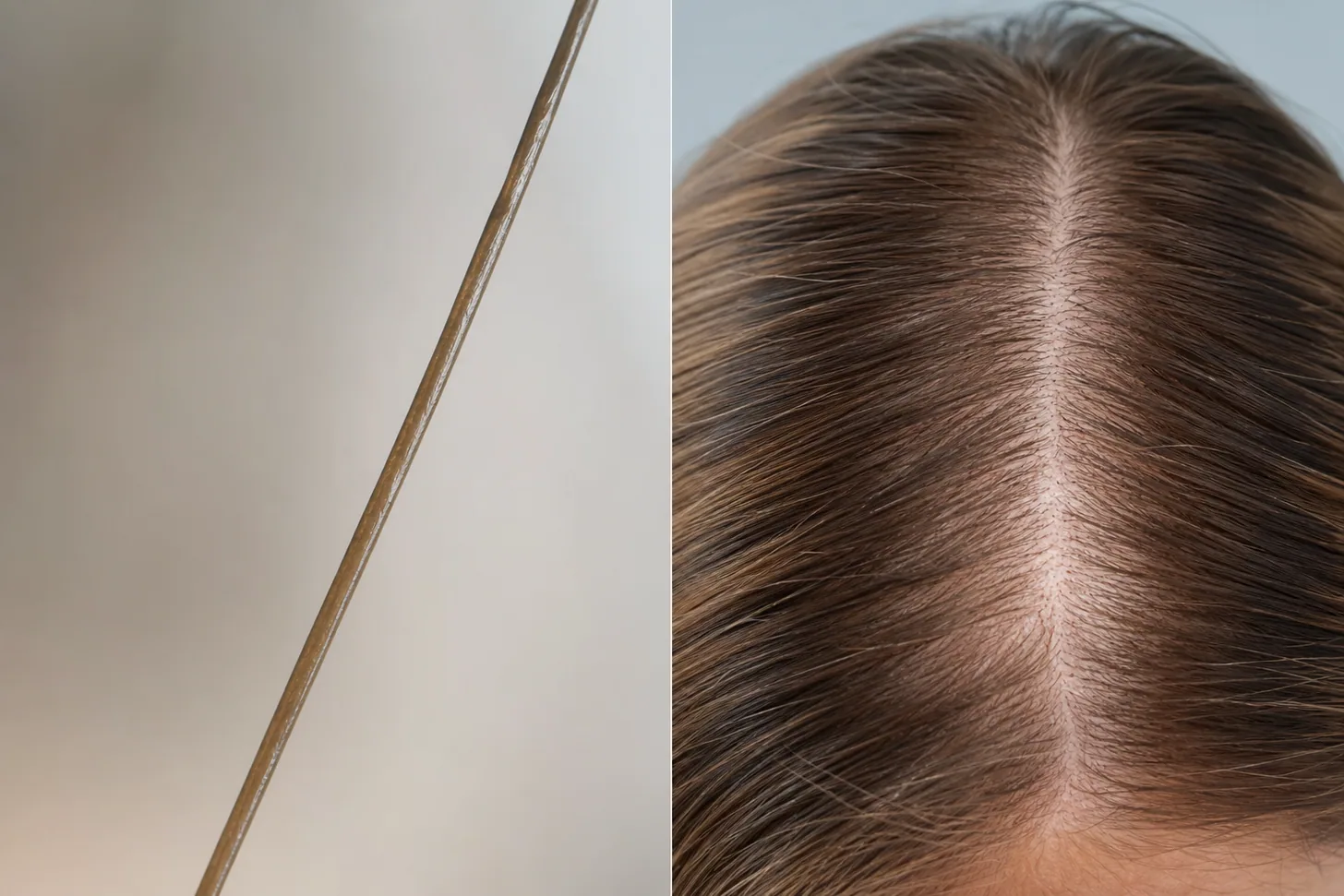
Diameter is how wide a single strand is. In a study of women's scalp hair published in the Journal of the Society of Cosmetic Chemists, individual hairs ranged from about 37 to 111 micrometres across. One dermatology study classes hair under 60 micrometres as fine, 60 to 80 as thin, and over 80 as thick.
Diameter matters more than it sounds, because what fills space is a strand's cross-section, and that grows with the square of the width. A strand 20% narrower has about 36% less area. So fine hair can look much less full than coarse hair with exactly the same number of strands.
2. Density: how many hairs you have
Density is the number of hairs growing from each square centimetre of scalp. Hair-restoration references put it at roughly 150 hairs per square centimetre at the low end to about 300 at the high end, and a 2020 study of 239 healthy adults measured averages between about 134 and 163 depending on the area of the scalp.
The commonly quoted total is around 100,000 hairs on a head, though counts vary widely between people. Low density is what most people mean by thin hair, and it is the one that changes with hair loss. Our guide to fine vs thin hair explains how to tell low density from fine strands.
3. Lift: how the hair sits
Lift is the angle hair leaves the scalp at and how much it springs away from the head along its length. Fine hair is light and flexible, so it tends to fall flat against the head, and oil and product weigh it down further.
This is the part styling controls: a cut with the right weight line, drying the roots against their natural direction, and a light product at the root. Root volume for fine hair covers the techniques.
Part of volume
What it is
Can you change it?
Diameter
How thick each strand is
A little, temporarily: thickening products coat the strand
Density
How many hairs per area of scalp
Only by treating hair loss or adding hair (extensions, toppers)
Lift
How far hair stands from the scalp
Yes: cut, blow-dry and root products
Why fine hair looks low in volume
Fine hair is short on diameter by definition, and often on lift too, because each light strand bends easily. Many people with fine hair have perfectly normal density; they simply have narrow strands that pack flat.
That is good news, because lift is the most changeable of the three. A blunt or lightly layered cut, the right blow-dry and a root lifter can add more visible fullness than any shampoo. Start with how to add volume to fine hair.
What volumizing products actually do
Volumizing shampoos clean without leaving a heavy film, so roots stay light. Mousses, root sprays and thickening lotions leave a thin polymer coating that makes each strand slightly stiffer and wider, which adds lift and a little apparent diameter.
None of them changes density. Texture sprays and dry shampoo add grip between strands so they hold apart, which reads as more hair. The effect lasts until the next wash.
Volume on a hair-colour box means something else
On developer and peroxide, "volume" is a strength rating, not fullness. 20 volume developer is about 6% hydrogen peroxide, 30 volume about 9% and 40 volume about 12%. Our guide to what volume developer to use on fine hair covers that sense of the word.
When low volume is a sign of hair loss
If your hair has always been fine, low volume is normal for you. If it has become noticeably less full in the past year, with a wider part or a smaller ponytail, that is density changing, and it is worth finding out why. Fine hair or thinning? walks through the checks.
FAQ
Hair volume is how full your hair looks, the space it takes up around your head. It depends on three things: how thick each strand is, how many hairs you have, and how much the hair lifts away from the scalp.
Not quite. Thick usually describes wide strands or lots of hair. Volume is the overall fullness, which also depends on lift. Fine hair with good lift can look more voluminous than thick hair that lies flat.
Density is a count: how many hairs grow per square centimetre of scalp. Volume is the visual fullness that density, strand thickness and lift create together.
The commonly quoted figure is around 100,000, but counts vary widely from person to person. Density is usually measured per square centimetre instead, at roughly 150 to 300 hairs.
Fine strands are narrow and light, so they bend and lie flat against the head, and oil weighs them down quickly. Lift from the cut, the blow-dry and a light root product is usually the fastest fix.
You can change lift with a good cut and styling, but that is not permanent. Density and strand thickness are largely set by genetics, though treating hair loss can protect the density you have.
On developer it is a strength rating for the hydrogen peroxide: 20 volume is about 6%, 30 volume about 9% and 40 volume about 12%. It has nothing to do with fullness.

 MH