Reviewed by Tara Sullivan · Updated September 2026 · 11 min read
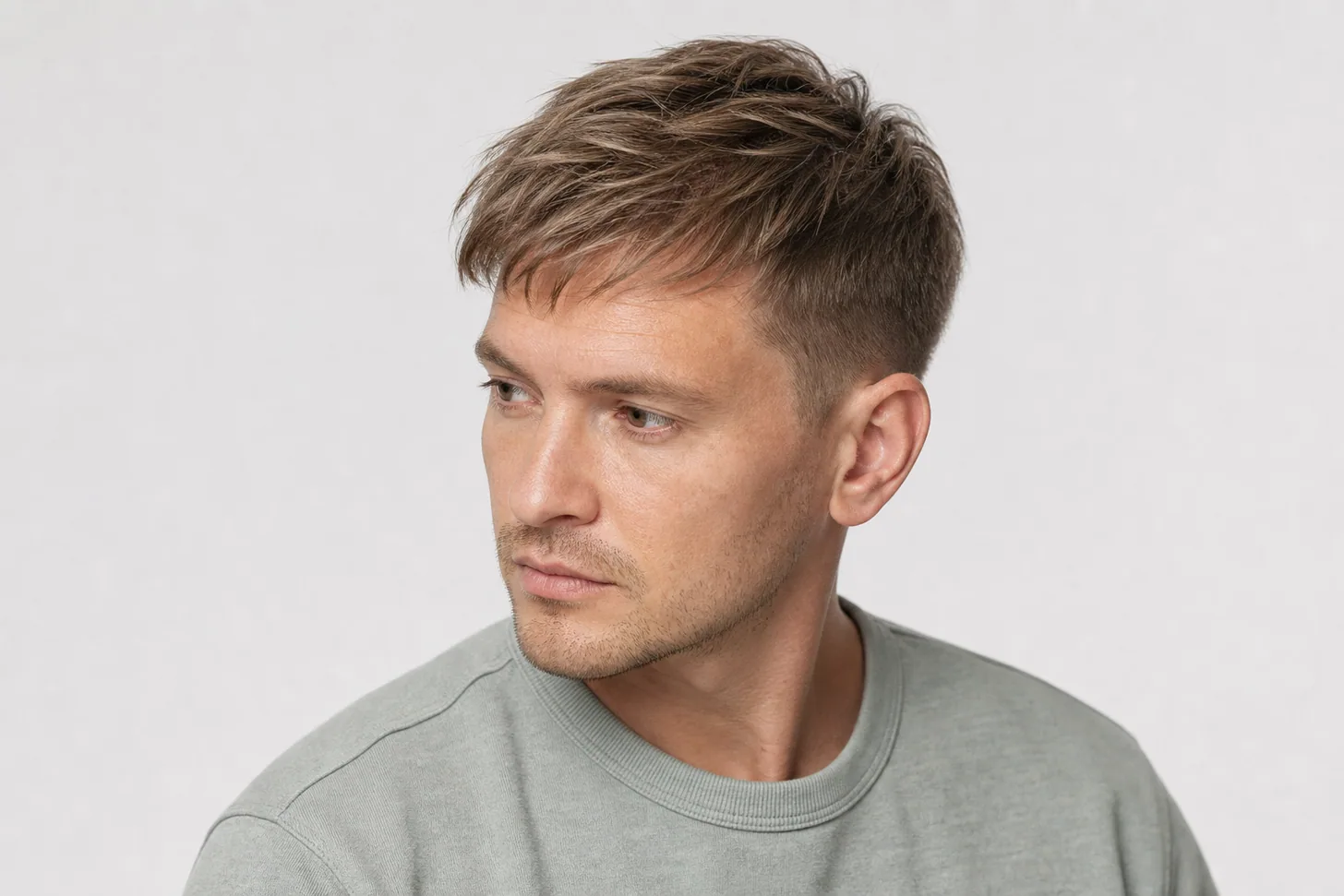
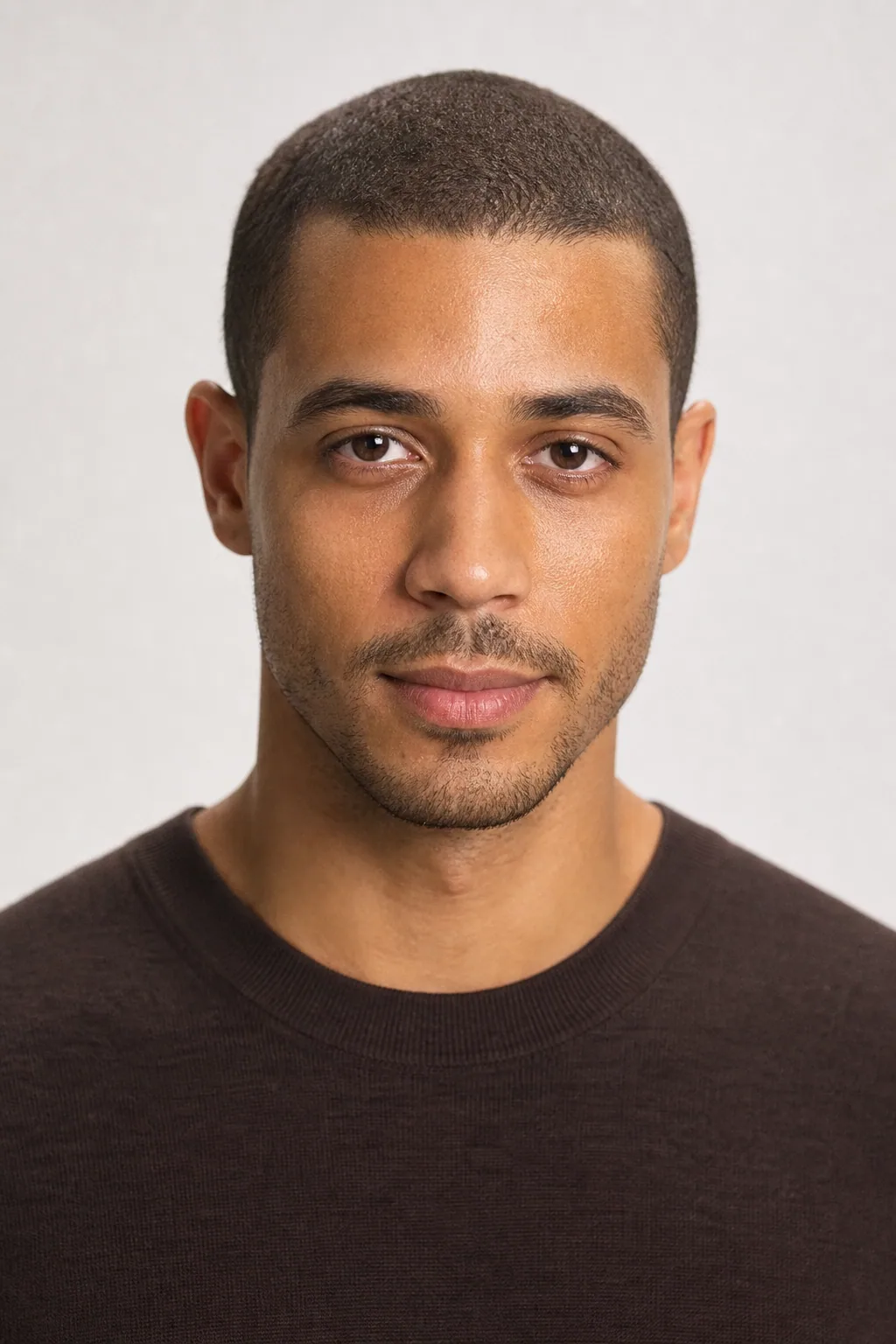
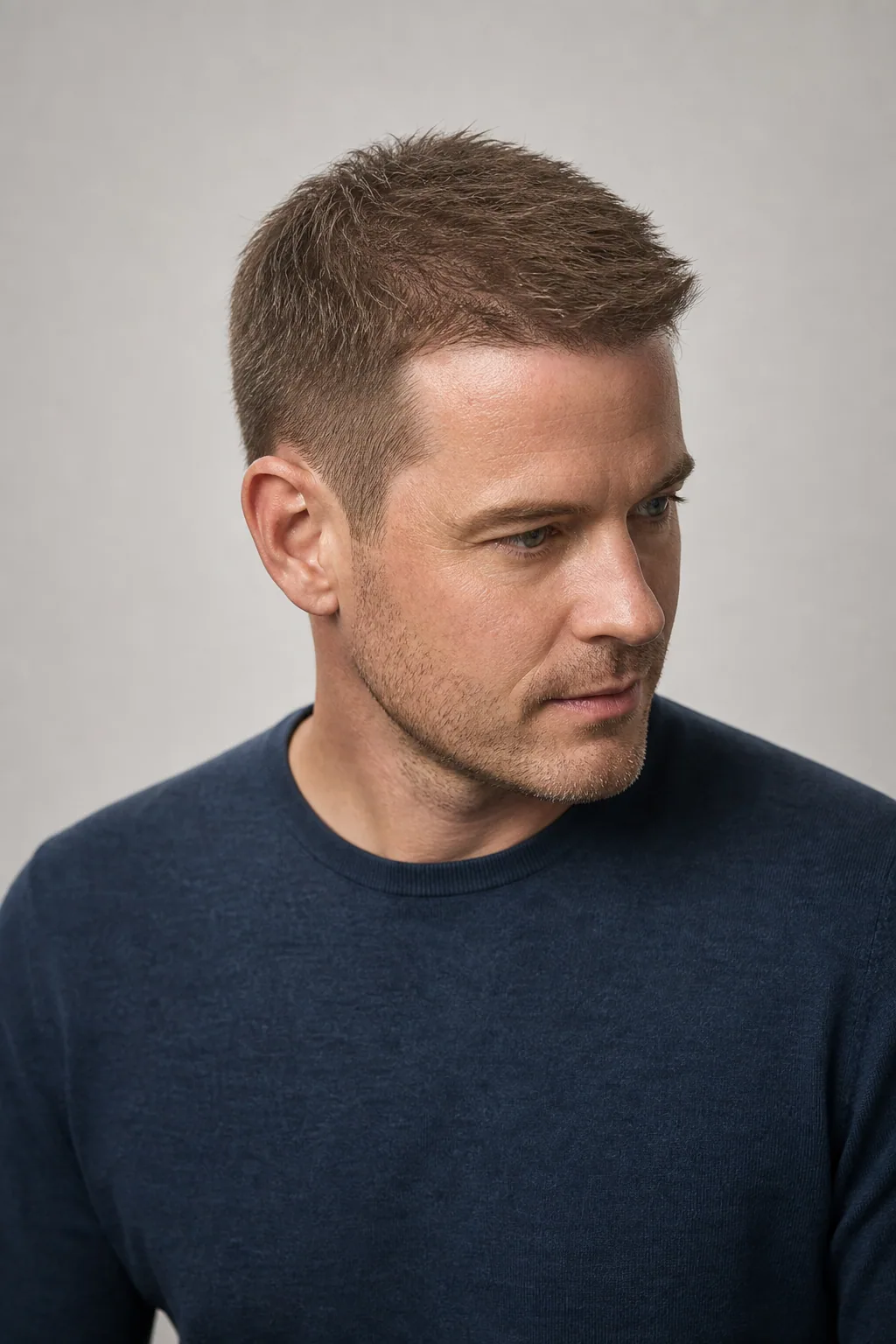
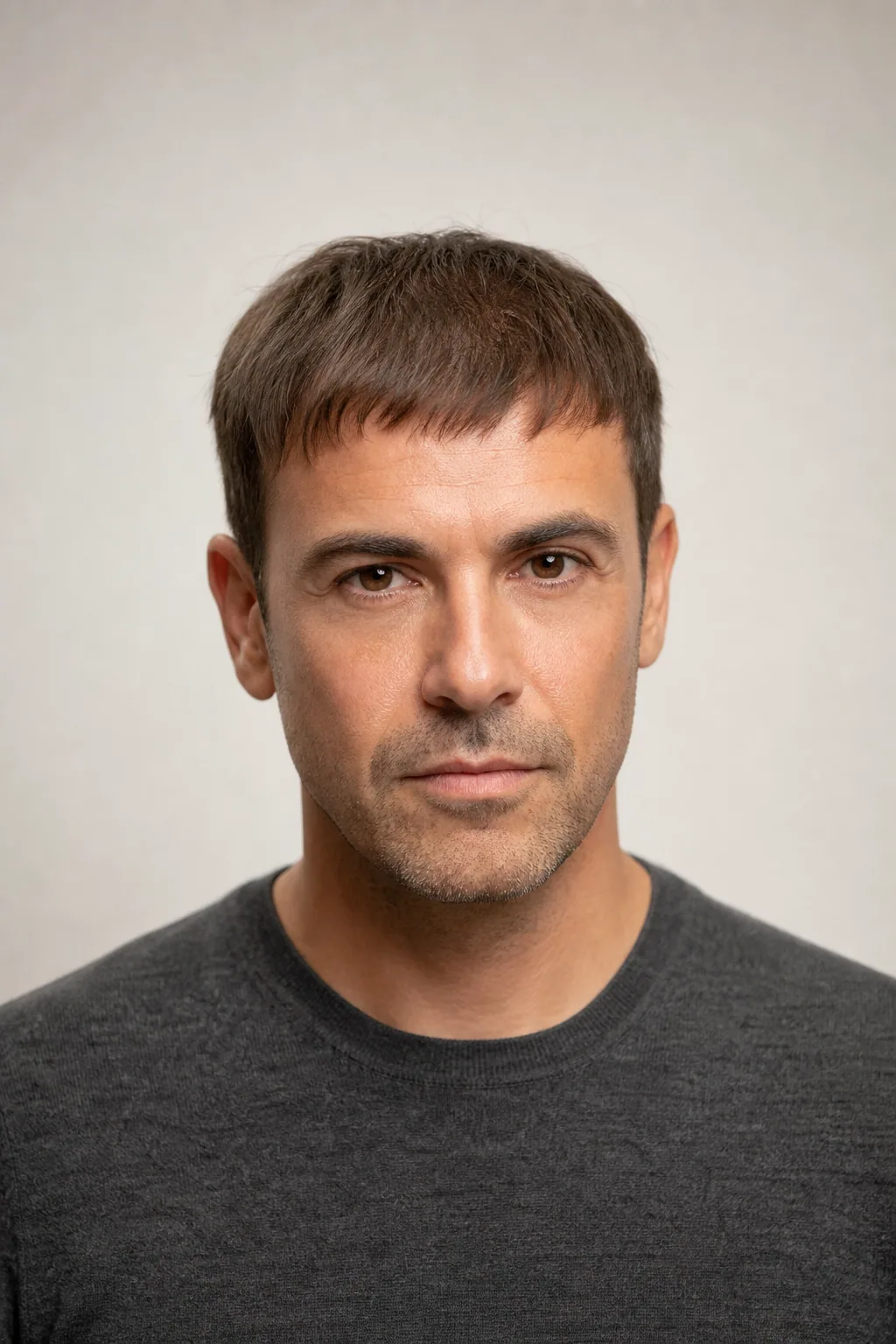
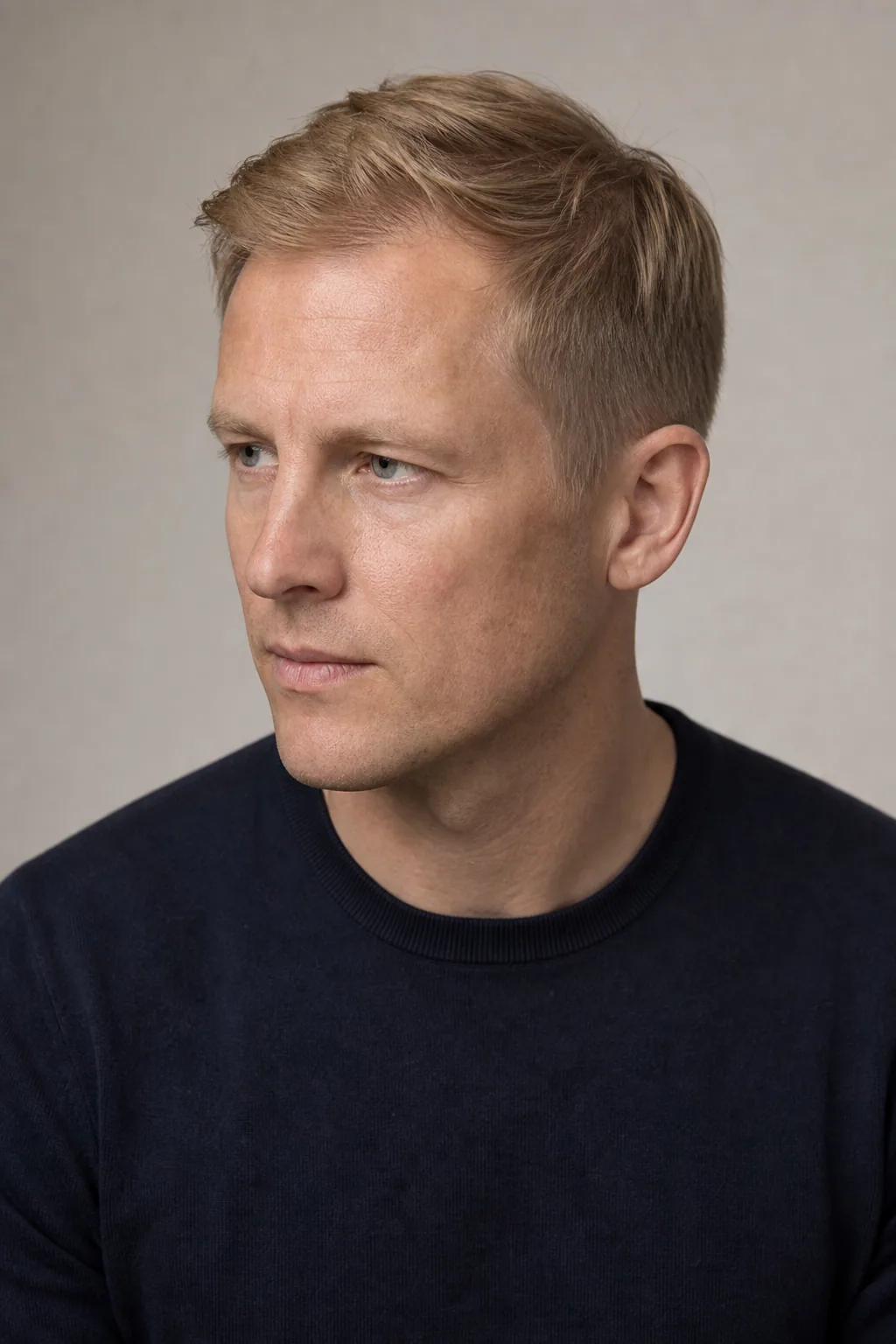
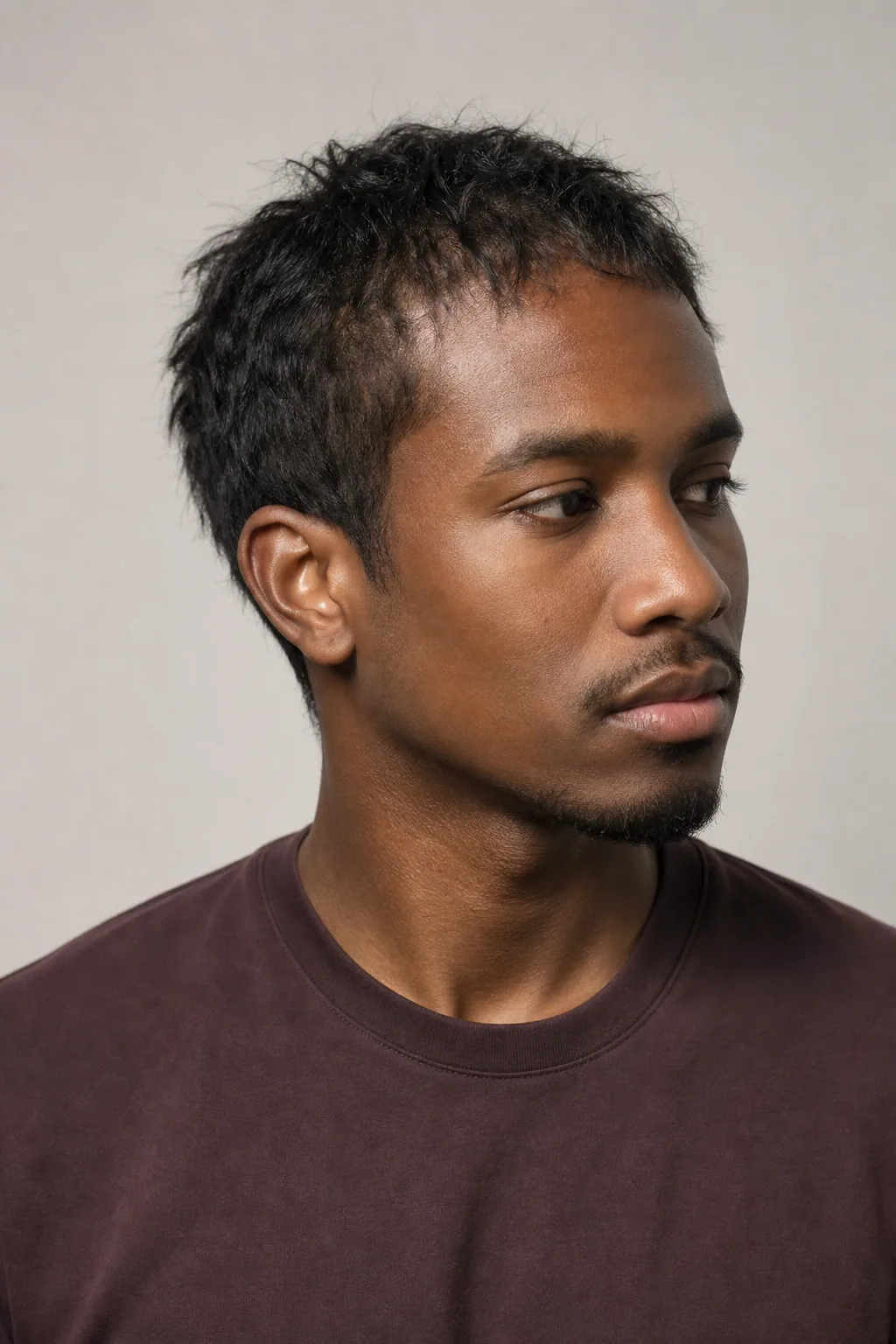
The best haircuts for men with thin hair are short, textured and cut to reduce the contrast between hair and scalp: a textured crop, a crew cut, a Caesar or a buzz, with the sides kept close and the top cut into separated pieces rather than left long and smooth.
Thin hair rarely looks thin because of how much hair there is. It looks thin because light gets through it, and length and smoothness let more light through. Below are 15 cuts grouped by how much length they keep, the two styles that make thin hair look thinner, and the words to bring to your barber or stylist.
If you are not sure whether your hair is fine, thin or thinning, start with what fine hair actually is. The cuts here work for all three, but the reason you are losing fullness changes which one to pick.
Chair-side note
The men I see with thin hair almost always arrive with the same instinct: grow it longer to cover more. It is the wrong way round. Longer hair is heavier, so it lies flatter and splits into strands, and every gap between those strands shows scalp.
Shorter hair stands up on its own and sits closer together, so it covers better. A cut that is half an inch shorter than you are used to often looks like more hair, not less.
SB
— Simone Baptiste, Senior Stylist
Why short, textured cuts make thin hair look fuller
What the eye reads as "thin" is contrast: the light scalp showing between darker strands. Anything that shrinks that contrast makes hair look denser, whatever the actual strand count.
Three things in a cut do it. Short length keeps each strand standing rather than lying flat and parting. Texture cut into the top — point cutting or light scissor texturizing — groups strands into pieces that overlap, so the scalp is covered by a layered surface instead of a combed sheet.
Close sides do the third job. When the sides are shorter than the top, the top reads as the fullest part of the head by comparison. This is also why a skin fade can backfire: taken too high on a thin top, it can make the top look sparse by contrast rather than full.
Fine hair — a small strand diameter — and thin hair — low density — both benefit from this. If the change has been recent, patchy or concentrated at the temples or crown, that is thinning rather than fine hair, and how to tell fine hair from thinning is worth reading before you book.
Short cuts that close the gap
These four take the most length off and give the most reliable coverage. They are the right starting point if you can see scalp through the top in bathroom light.
1
Buzz cut with a number 3 or 4 guard
One length all over removes contrast almost completely, because there is no longer section anywhere to part and show scalp. On thin hair go a guard or two longer than you think: a number 3 or 4 leaves enough length to cover, while a number 1 turns the head into skin with a shadow on it.
Ask for the edges rounded rather than squared if your hairline has started to recede.
2
Classic crew cut
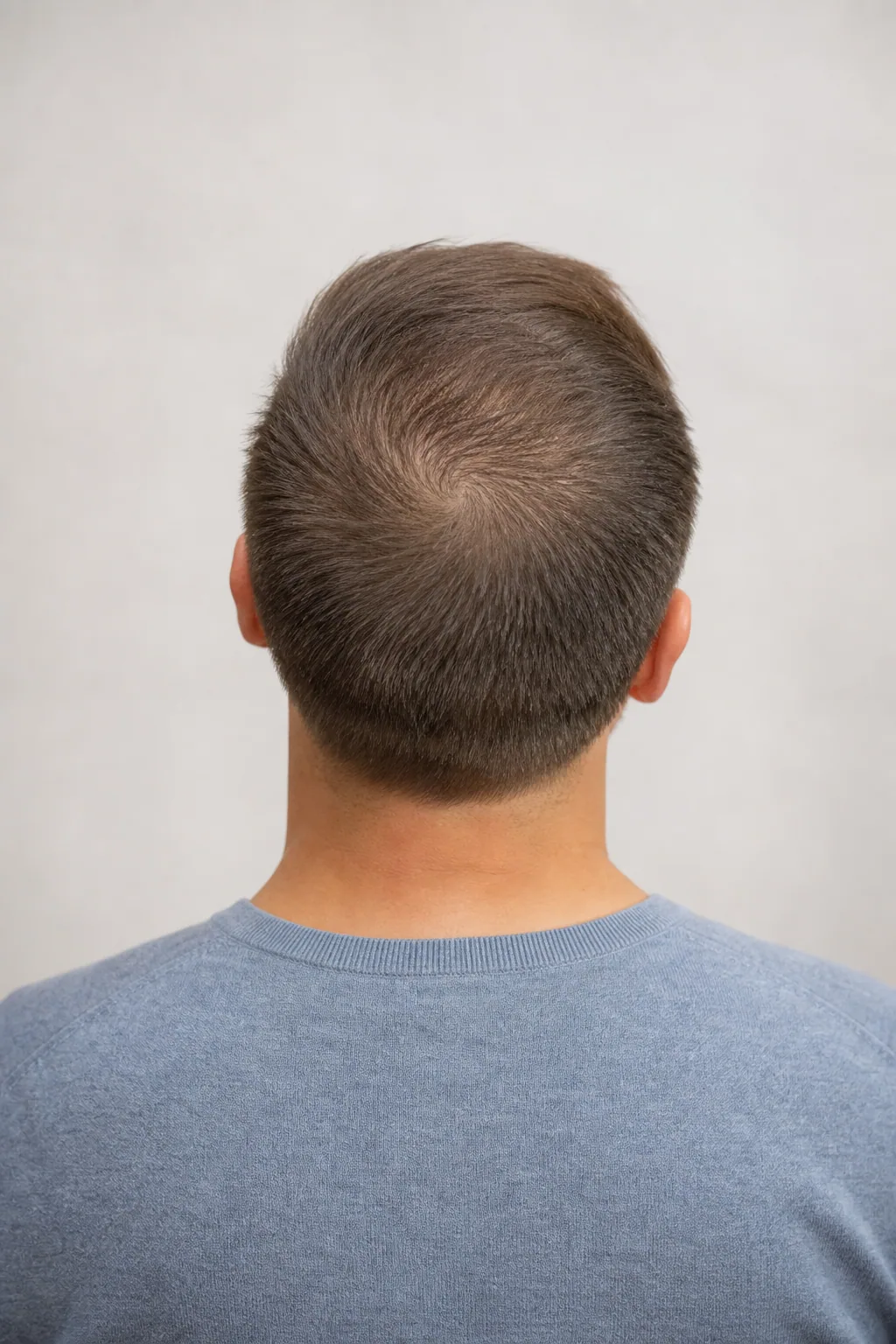
The crew keeps about an inch on top at the front and tapers it shorter toward the crown, with the sides close. That taper is the part that matters on thin hair: the crown is where density usually goes first, and a crew never leaves long hair there to split.
It is the lowest-maintenance cut on this page after the buzz — a trim every three to four weeks and a fingertip of matte product.
3
Caesar cut with a short forward fringe
Everything on top is brushed forward and cut into a short, straight fringe. Because the hair falls toward the forehead rather than away from it, the Caesar covers the corners of the hairline instead of framing them.
It suits a longer face and a receding hairline equally well. If your face is short and round, keep the fringe textured rather than blunt so it does not shorten the face further.
4
Ivy League with a soft side part
A crew cut left just long enough at the front to part. It is the most office-appropriate short cut here, and it keeps a neat outline without needing much density.
Keep the part soft and finger-placed rather than combed into a hard line — a sharp comb part is a straight stripe of scalp, which is the one thing thin hair should not be advertising.
Textured tops that build the look of density
If you want a little more length to style, these keep one to three inches on top and rely on cut-in texture to stop it lying flat. They need a small amount of matte product, and they are where the cut has to be done well.
5
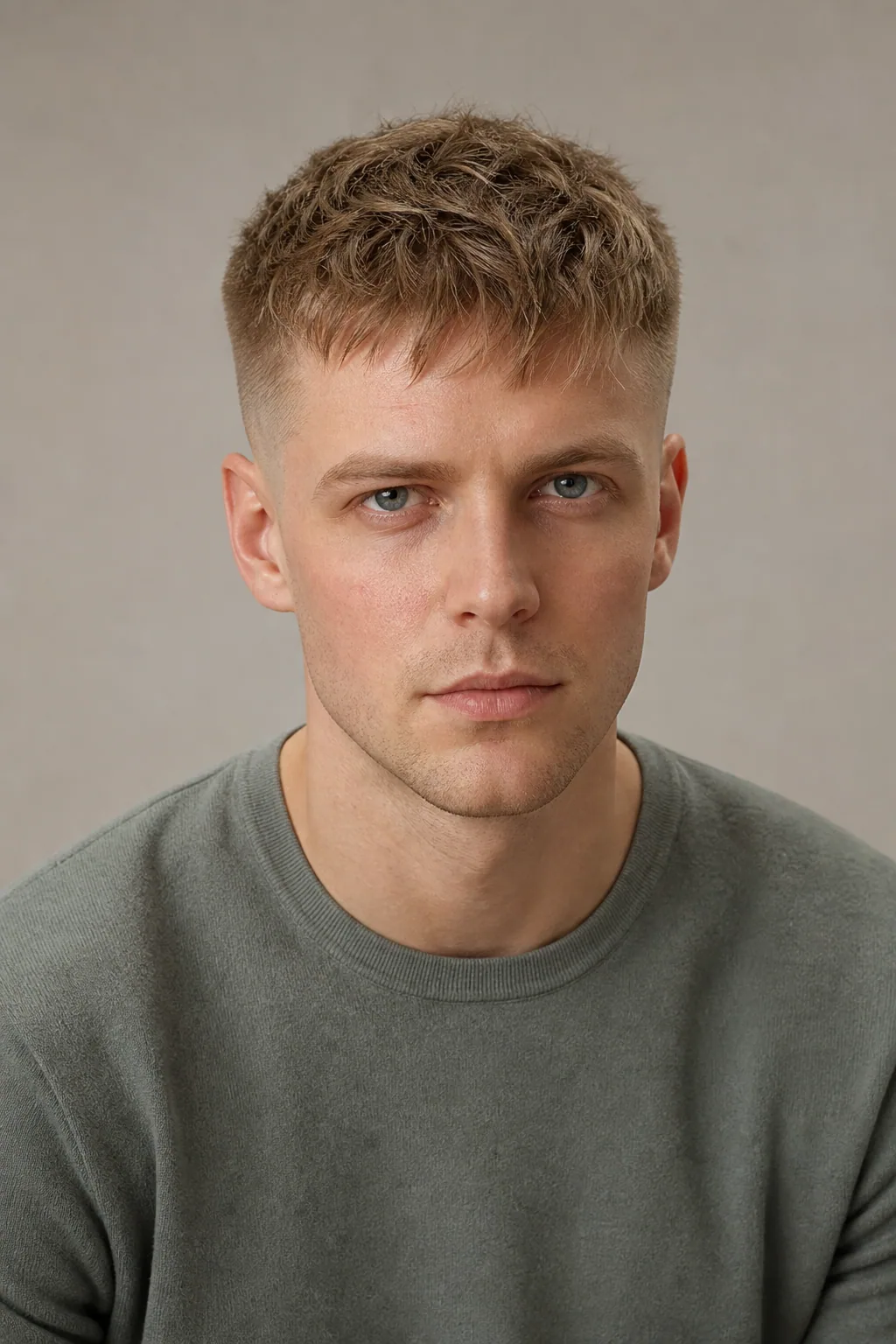
Textured French crop
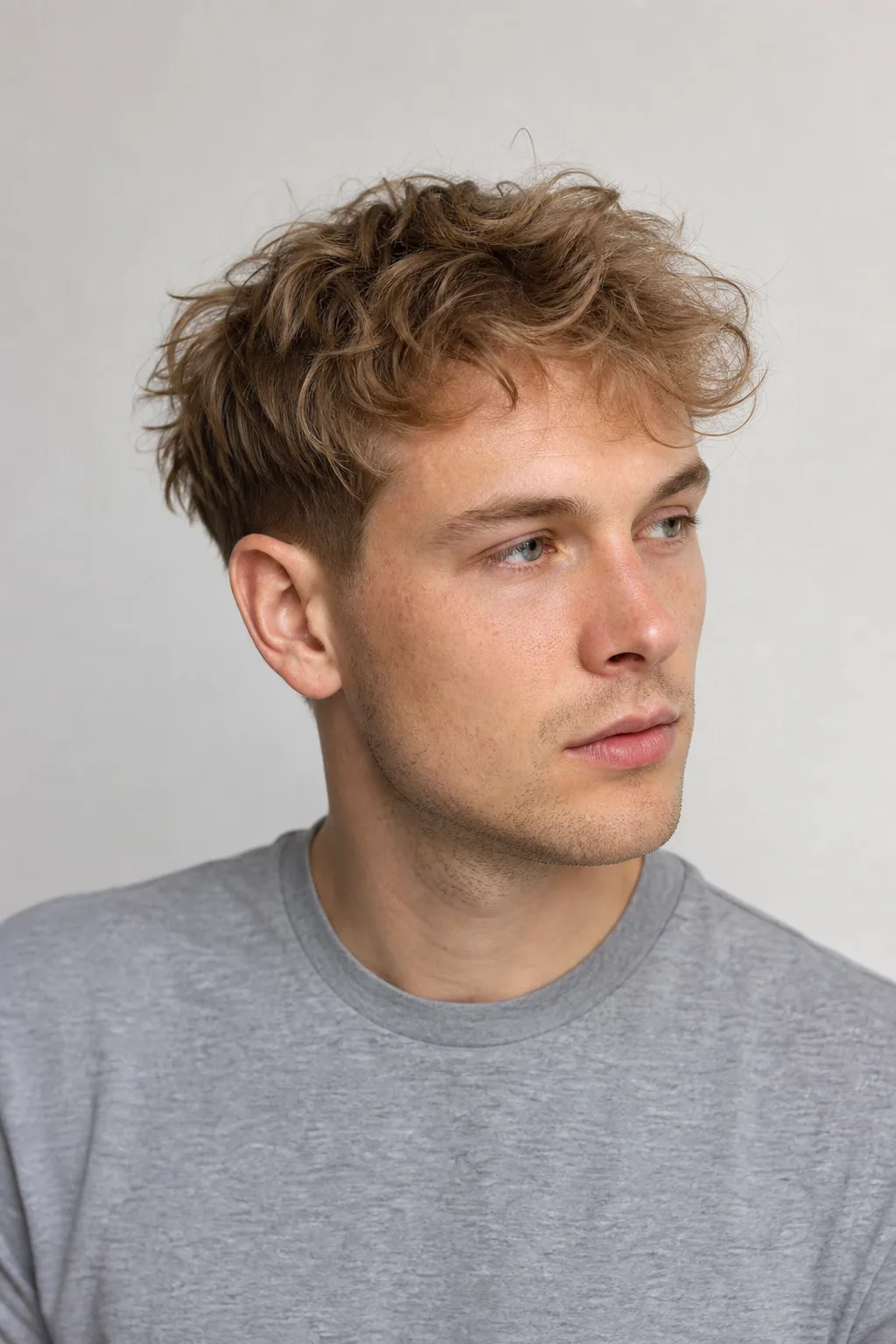
The top is point-cut into short, uneven pieces and pushed forward over a short fringe. It is the cut I recommend most to men with thin hair who still want to look styled, because the choppiness does the covering and the forward direction hides a receding hairline.
Ask for the texture to be cut with scissors or point cutting, not a razor or thinning shears — both remove bulk that thin hair cannot spare.
6
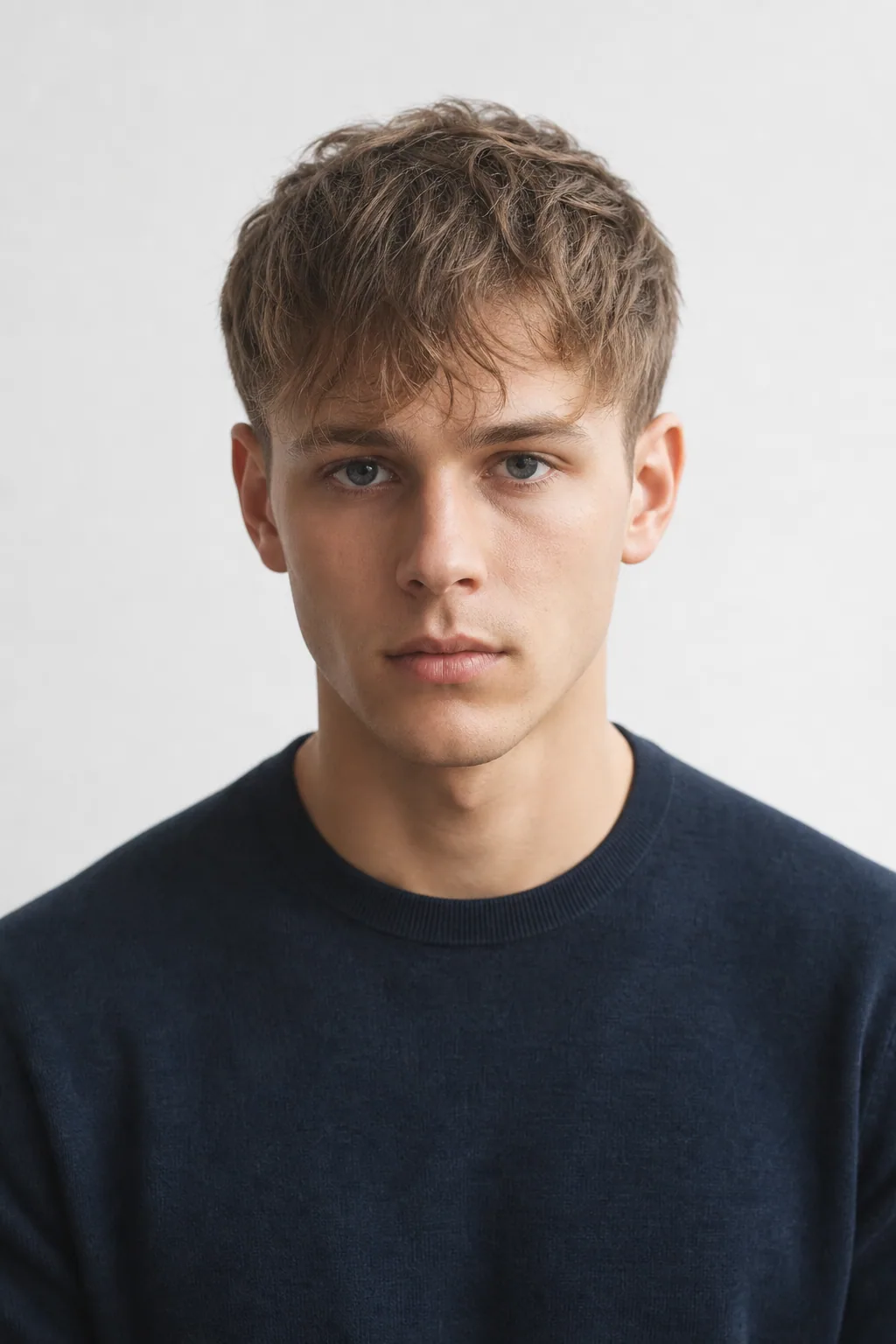
Messy forward fringe
A longer, looser version of the crop, with the top left around two inches and roughed forward with the fingers. The deliberate messiness is doing real work: hair pointing in several directions overlaps, and overlap is what covers scalp.
It works best on hair that is fine but not yet thinning. If the scalp is visible at the front, go shorter.
7
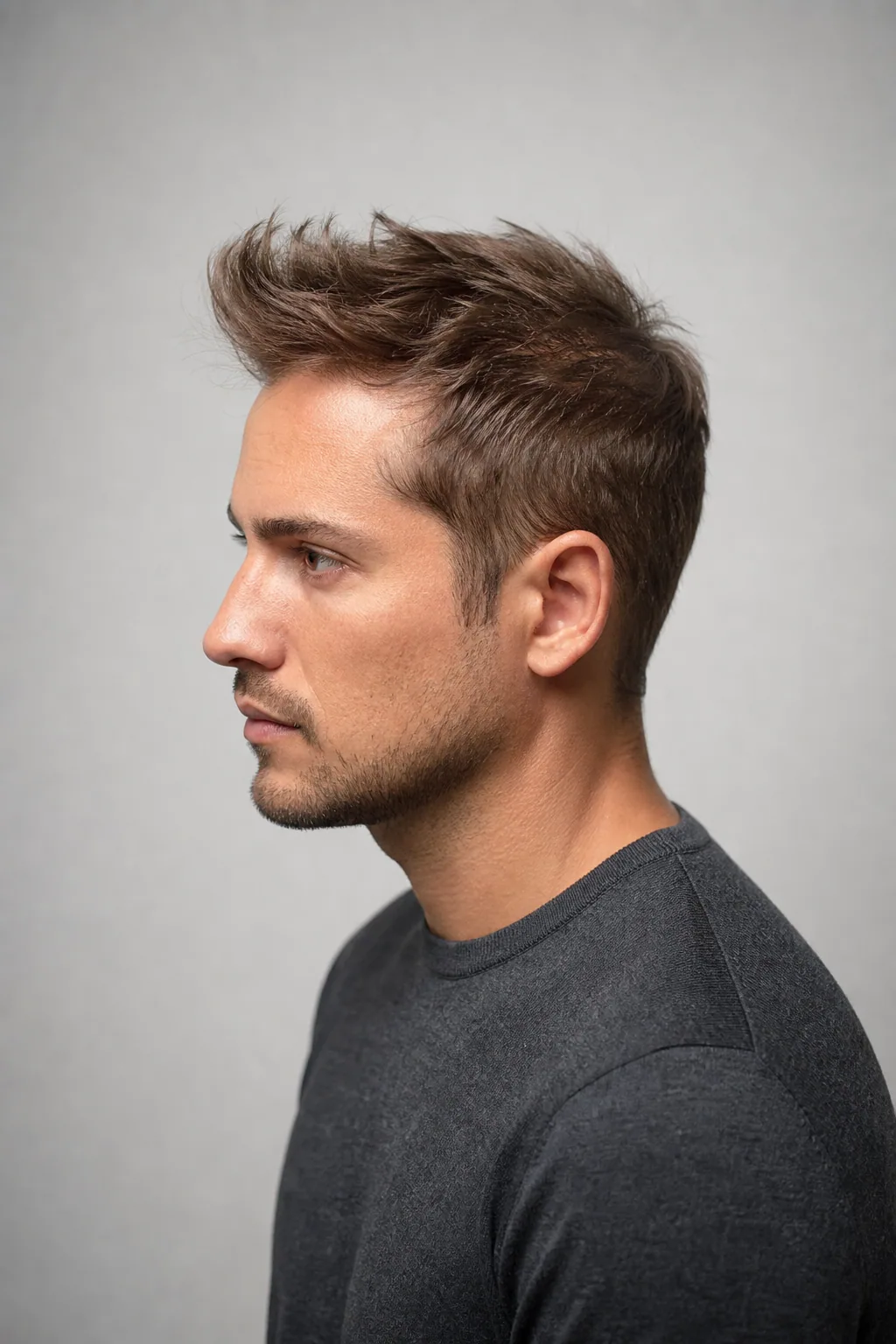
Short textured quiff
Height at the front, kept short. Lift reads as volume, so a small, matte quiff can make a thin top look fuller than a flat one of the same length.
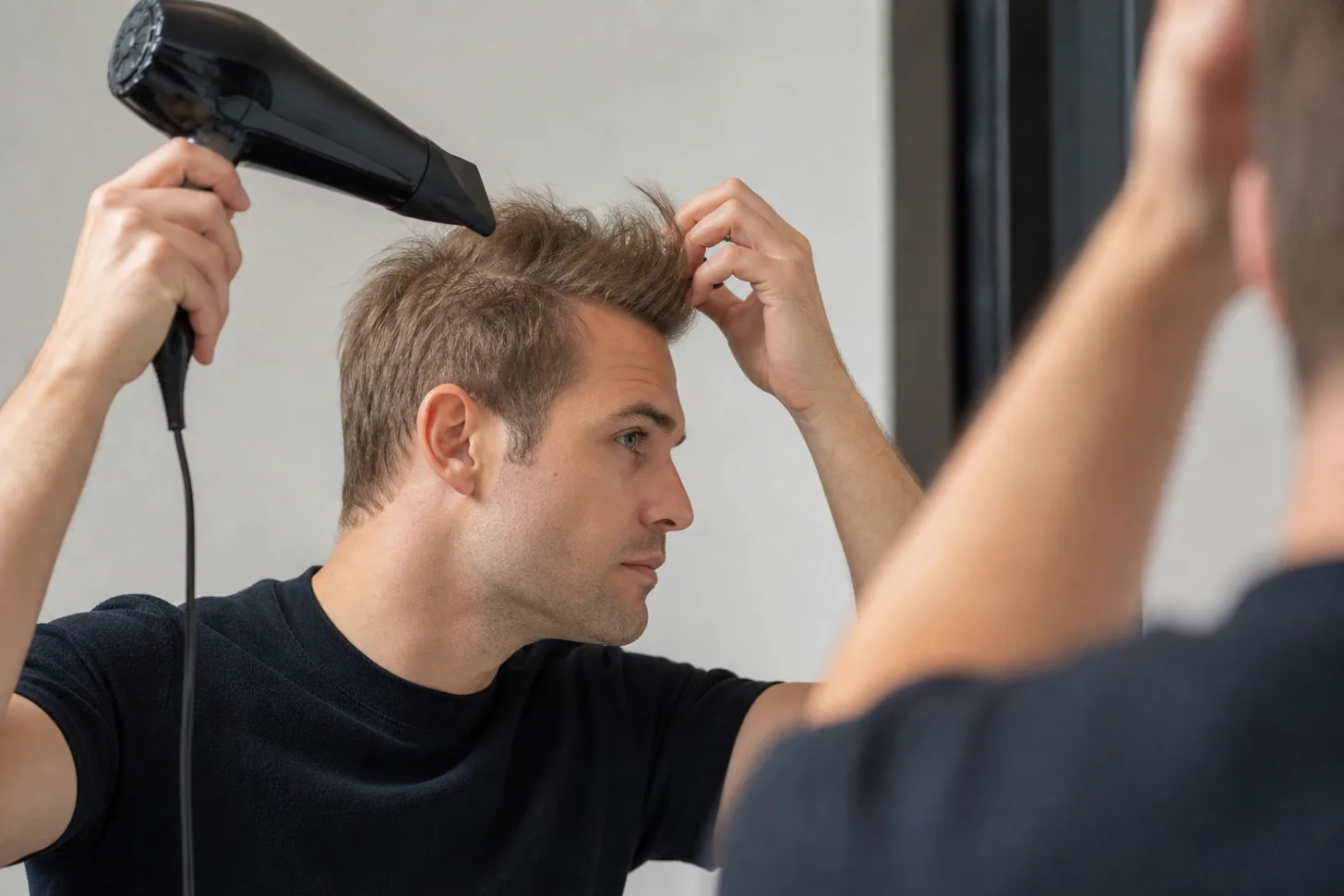
The rule is short and matte: a tall, glossy quiff needs a lot of hair to hold its shape, and on thin hair it separates into ridges with scalp between them. Blow-dry the front upward for thirty seconds before any product.
8
Choppy crop with a low taper
Same textured top as the French crop, but the sides are tapered only at the ears and neckline instead of faded high. On thin hair that sits over a light scalp — or dark hair over lighter skin — keeping more length on the sides stops the top looking isolated.
Ask for "a low taper, not a high fade." It is a small change in the chair and a large one in the mirror.
Keeping some length on thin hair
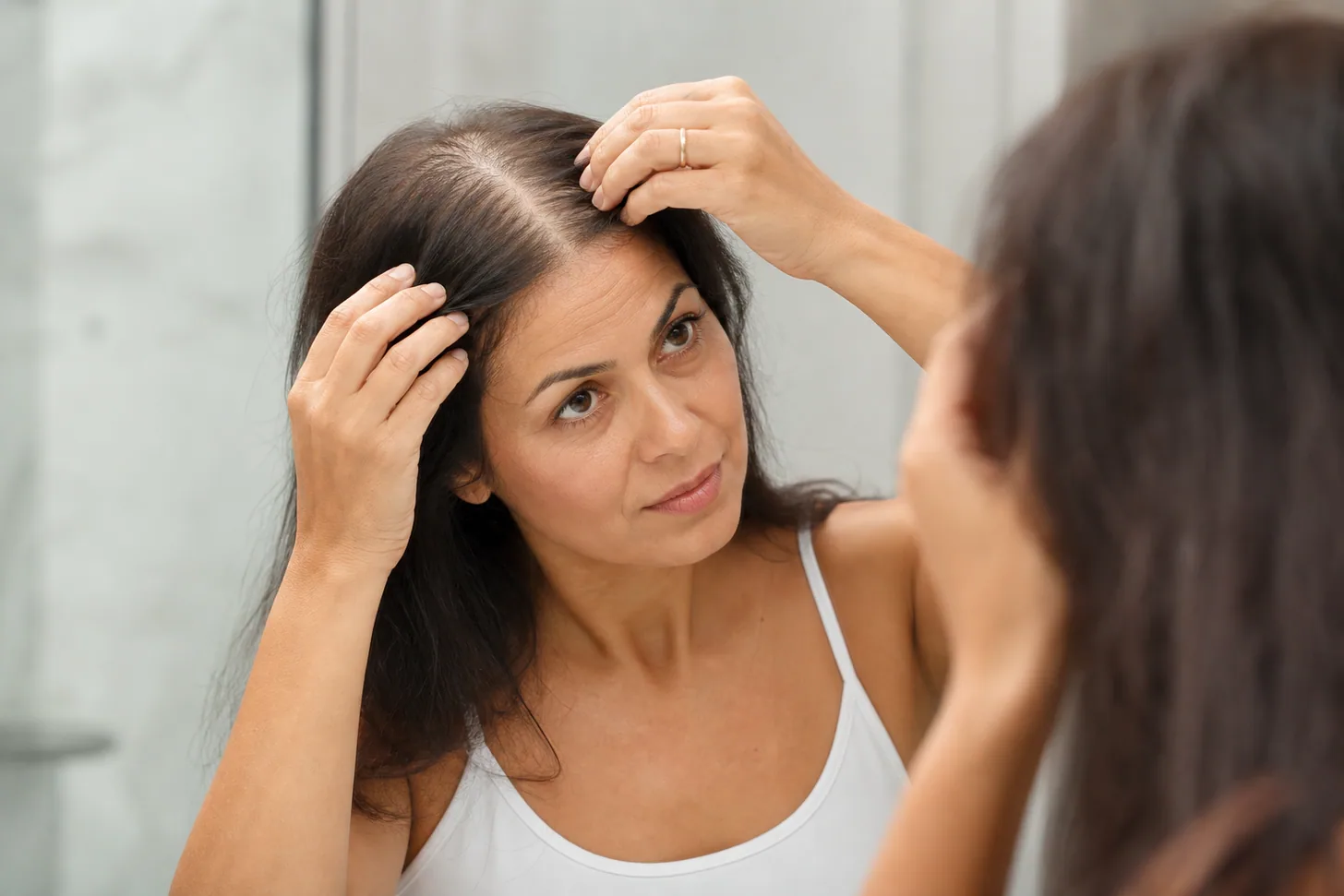
You can keep length if the hair is fine but reasonably dense. These three need an honest check first: look at the top of your head in a phone photo under an overhead light. If scalp shows clearly, go back up the page.
9
Short side part with scissor-cut sides
A classic side sweep with the sides cut with scissors rather than clippers, so they keep a little softness and do not throw the top into contrast. Swept loosely with the fingers, it keeps a relaxed shape that does not depend on density.
Skip it if the part has started to widen. A side part draws a line straight to the thinnest place on the head.
10
Tousled mid-length top
About three inches on top, worn tousled rather than combed. It suits fine hair with a slight wave, because the bend separates the strands into loose pieces on its own.
A light mist of sea salt spray on damp hair and a rough dry with your fingers is the whole routine. On straight thin hair, the same length tends to lie flat by lunch.
11
Classic short back and sides
The barber's standard — short at the back and sides, a couple of inches on top — works on thin hair provided the top is texturized rather than left blunt and heavy. It is the least fashionable cut on this page and one of the most forgiving.
Ask for the top "point-cut so it doesn't sit flat," and style it back and loosely to the side rather than slicked.
When the thinning is at the crown or temples
Where the hair is thinnest decides the cut more than how thin it is overall. These three are built for a specific pattern. If the thinning is progressing rather than stable, haircuts for men with thinning hair matches a cut to each stage.
12
Short crown cut for a thinning crown
Hair at the crown grows out from a whorl, and when it is left long it splits open along that spiral and shows a circle of scalp. Kept very short there, it lies evenly around the whorl instead.
You can keep more length at the front. Ask your barber to "keep the crown short and blend it into the top," and check it with a second mirror. Cuts for a thinning crown goes deeper on the crown specifically.
13
Forward-brushed crop for a receding hairline
Recession at the temples is emphasized by any style that sweeps away from the face, because it exposes the corners. Brushed forward into a short, piecey fringe, the same hair covers them.
Keep the fringe irregular rather than a straight line — a straight edge sitting above receded corners shows the M-shape more clearly.
14
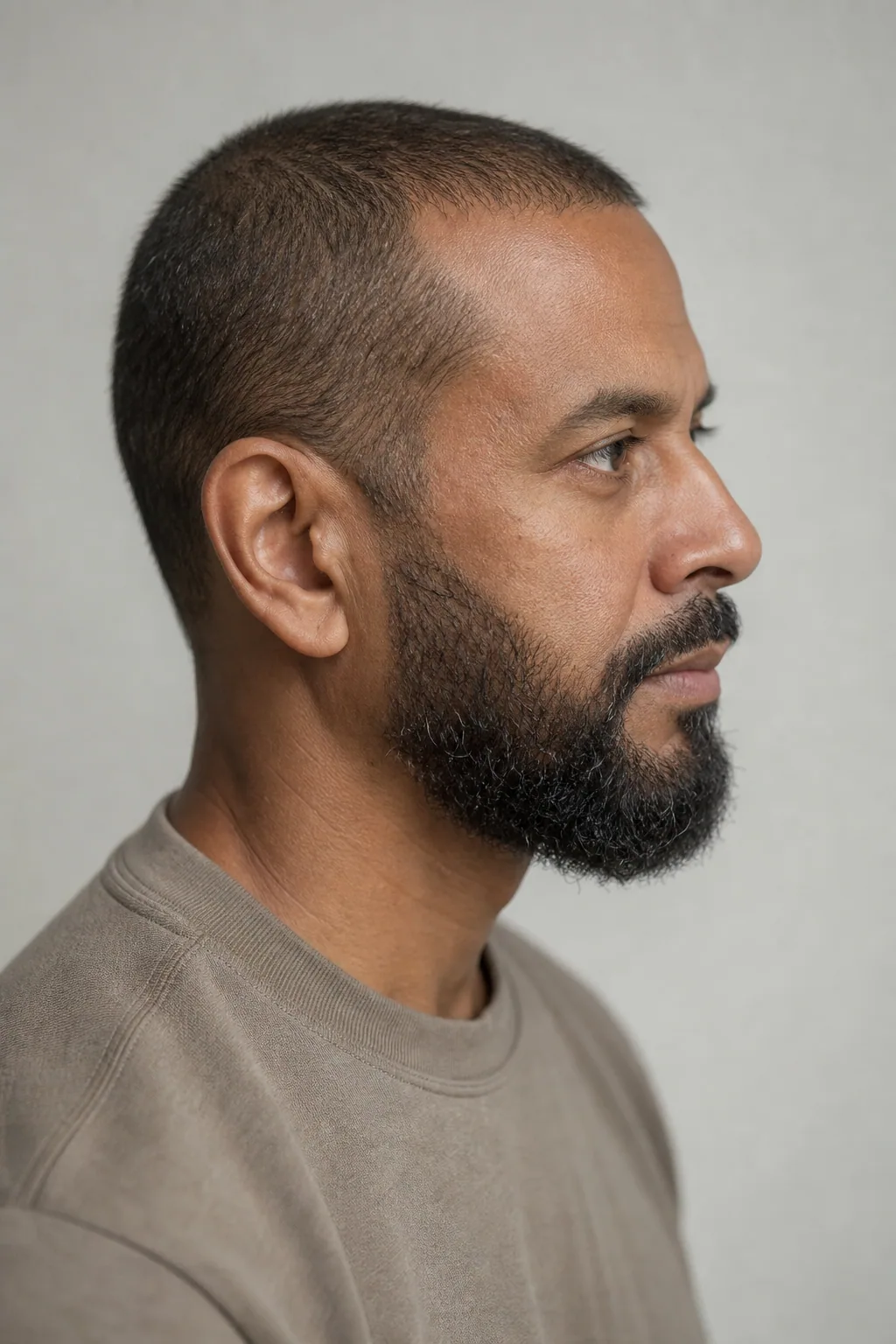
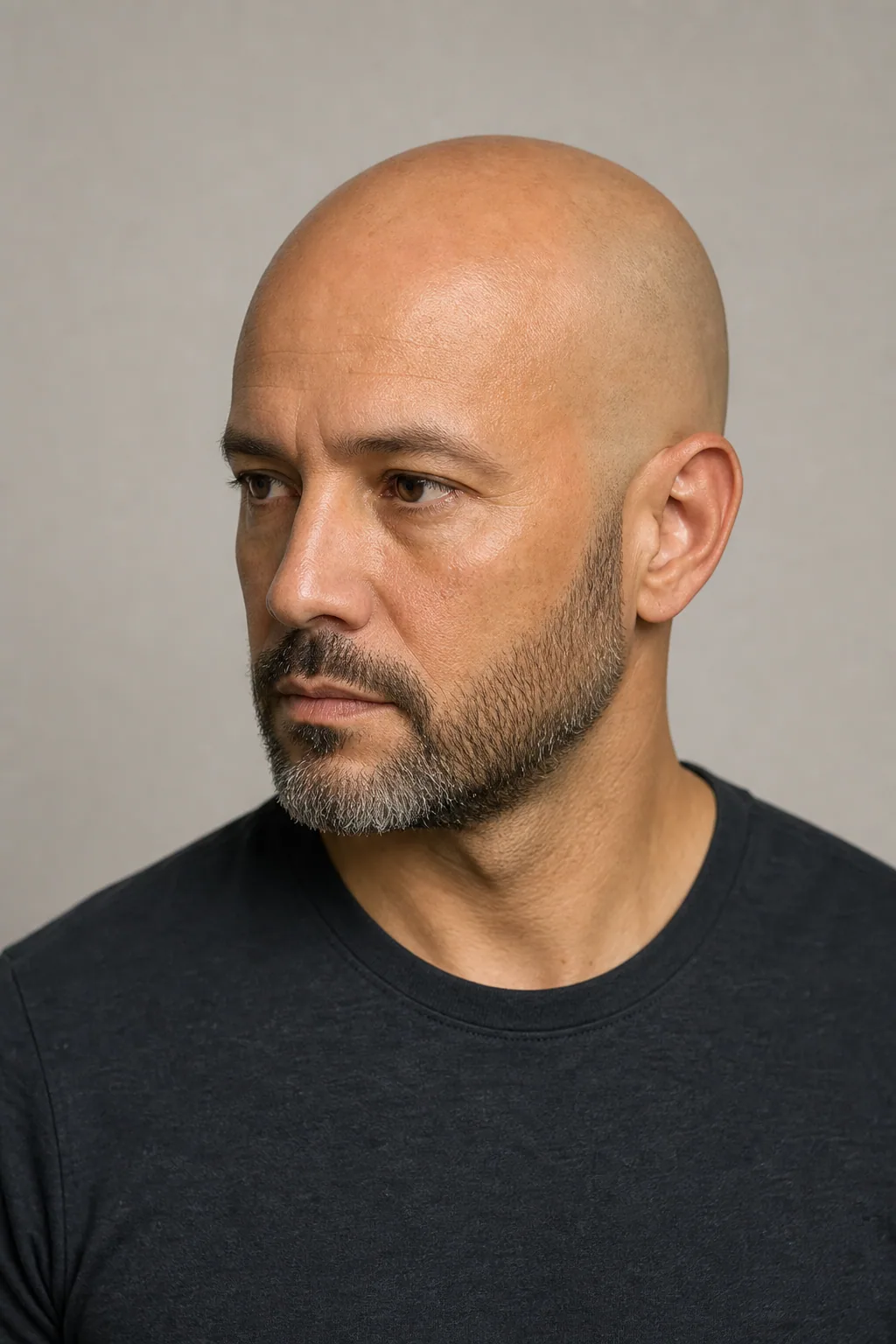
Buzz cut with a full beard
When there is not much hair on top, moving the visual weight down to the jaw rebalances the whole head. A close buzz with a well-shaped beard reads as a deliberate look, not as a man losing his hair.
Keep the beard's cheek line clean and the neckline about a finger above the Adam's apple; a ragged beard undoes the effect.
When thinning is advanced
There is a point at which no length flatters, and the fullest-looking option is to stop trying to cover.
15
Clean shaved head
When the top is mostly scalp and the sides are still full, the contrast between them is the thing that looks like hair loss. Shaving removes it entirely.
It needs more upkeep than people expect — every two or three days with a head shaver, and sunscreen on the scalp every day. If you are not ready for the razor, a number 1 or 2 all over is the halfway step.
Two styles that make thin hair look thinner
Long, slicked-back hair. Combing thin hair back with a shiny pomade presses it into flat, separate lines, and the shine reflects light off the scalp between them. If you like a swept-back look, keep it short, use a matte clay, and blow-dry the roots up first.
A high skin fade under a thin top. The fade itself is fine; the height is the problem. Taken up to the temples, it leaves a sparse top sitting on bare skin and exaggerates the difference. A low or mid taper gives the same clean outline. Our guide to fade haircuts for thin hair shows which heights work.
Heavy, glossy products cause the same problem as a slicked style whatever the cut. On thin hair, reach for matte clays, light pastes or a texture spray. Our pomade, paste and clay guide for fine hair covers which finish does what.
Chair-side note
Almost every thin-hair client I cut has been using too much product. A pea-sized amount of clay, warmed in the palms and worked in from the back of the head forward, will hold a crop all day. A thumb-sized scoop of shiny paste will clump the hair into strands and show the scalp by noon.
If you finish styling and can see your comb lines, you have used too much.
SB
— Simone Baptiste, Senior Stylist
What to ask your barber or stylist
Say: "My hair is thin, so I want it short enough to stand up on its own. Please keep the sides a low taper rather than a high skin fade, point-cut texture into the top so it doesn't lie flat, and keep the crown short so it doesn't split. No thinning shears and no razor on the top."
Then show the area that bothers you most — the crown, the temples, or the part — because it decides where the length goes. If you want the full consultation script, what to ask for a fuller-looking haircut covers it in detail.
Book the next trim before you leave. Short cuts on thin hair lose their shape in three to five weeks, and the first sign is the crown starting to split.
When a haircut is not the answer
Your hair has started shedding noticeably more over a few months. A cut changes how hair looks, not why it is falling. Read fine hair or thinning and see a doctor or dermatologist; treatment works best early.
You have patches of hair loss, a sore or scaly scalp, or loss in your beard or eyebrows too. That is not typical pattern thinning, and it needs a dermatologist, not a barber.
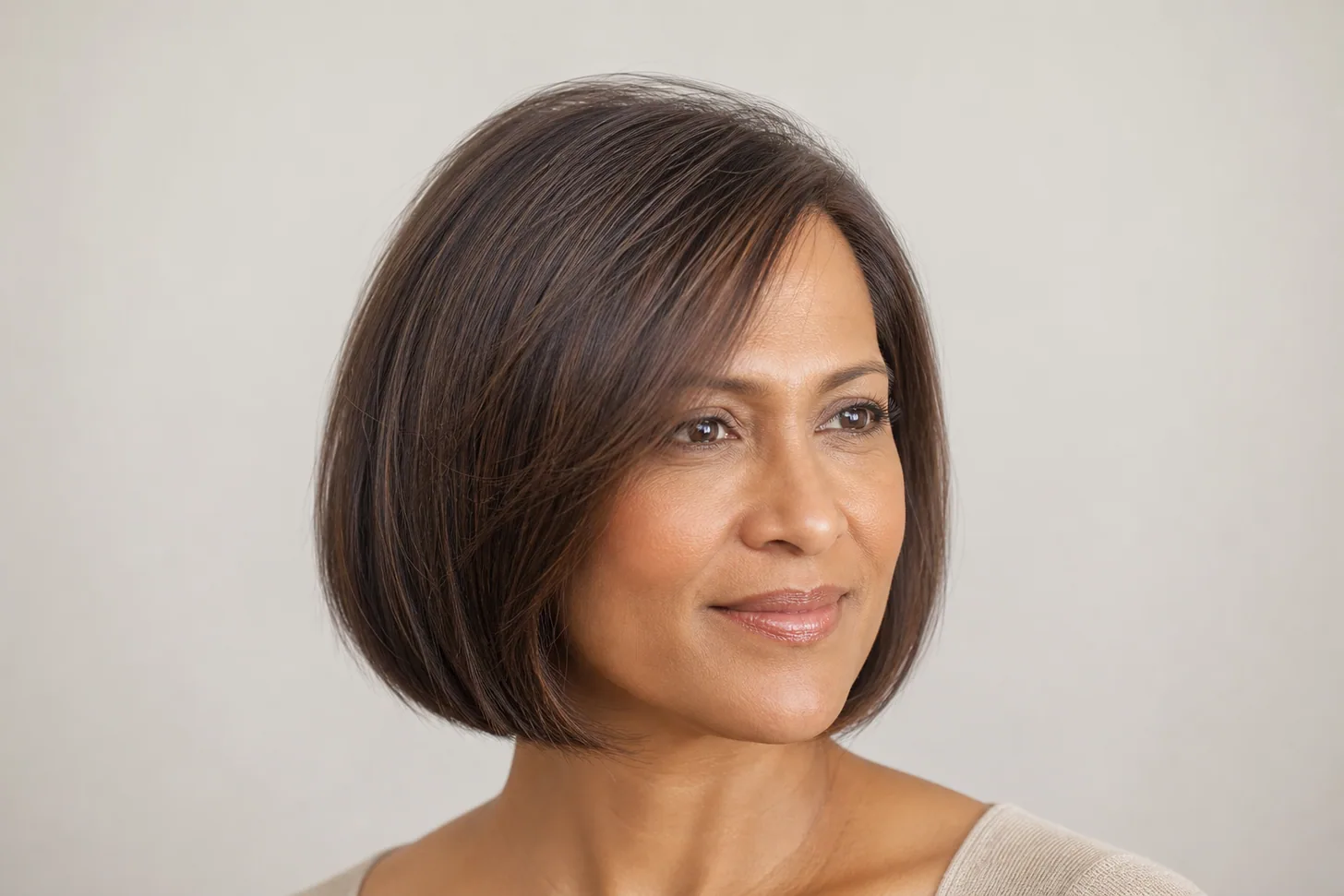
You want to keep long hair. You can, but it will look thinner than a short cut on the same head. If length matters more to you than fullness, keep the ends blunt and style it back loosely rather than parted.
Your hair is thick but fine and just goes flat. Your problem is styling, not coverage. The styling routine in our fine hair guide for men will do more than a new cut.
FAQ
A short, textured cut with close sides is the most reliable option: a textured French crop, a crew cut or a Caesar cut. Short hair stands up on its own and sits closer together, so it covers the scalp better than longer hair, and texture cut into the top groups strands into overlapping pieces. Keep the sides a low or mid taper rather than a high skin fade, and keep the crown short so it does not split open.
Short, in almost every case. Longer hair is heavier, so it lies flat and separates into strands, and the gaps between strands show scalp. A cut that keeps one to two inches on top usually looks fuller than one that keeps four. Men with fine but dense hair can keep more length, but if scalp shows clearly under overhead light, go shorter.
A high skin fade can, because it leaves a sparse top sitting against bare skin and exaggerates the difference between them. A low or mid taper gives the same clean outline while keeping enough length on the sides that the top still reads as the fullest part of the head. Ask for a low taper rather than a high fade if your top is thin.
A forward-styled cut such as a Caesar or a textured French crop covers the corners of a receding hairline, because the hair falls toward the forehead instead of away from it. Keep the fringe short and irregular rather than a straight line, and avoid slicked-back or high-swept styles, which expose the temples. When recession is advanced, a close buzz cut often looks better than trying to cover.
Matte, lightweight products: a small amount of clay or light paste, a sea salt or texture spray, or a volumizing spray on damp roots before blow-drying. Avoid heavy, high-shine pomades and gels, which clump thin hair into strands and reflect light off the scalp. Use a pea-sized amount and work it in from the back of the head forward.
Every three to five weeks for short cuts. Short styles lose their shape quickly, and on thin hair the first thing to go is the crown, which starts to split open as it grows. A buzz cut can be maintained at home between visits with clippers and the same guard.
Eleven years behind the chair, specializing in short shapes and fine-hair texture. Simone believes the best haircut is the one you can style yourself in ten minutes.
Results vary with hair type, density, and growth patterns. This guide is educational and not a substitute for an in-person consultation with a licensed stylist or barber. If your hair is shedding or thinning noticeably, see a doctor or board-certified dermatologist.
Hairstyle images in this guide are AI-generated illustrations, not photos of real clients or results. See our image policy.
Get the good hair intel
One honest, stylist-written guide in your inbox each week. No hype.

 SB
SB