Reviewed by Tara Sullivan · Updated August 2026 · 9 min read
This is the one face shape where our own advice argues with itself. A long face wants less height and more width; fine hair spends its entire life being told to build height at the crown. Both can't win, so the honest version of this page is about where to give — and the answer is that you move the volume rather than lose it.
Take it out of the crown and put it between the cheekbone and the jaw, then add a fringe, which shortens a face faster than any other single change. Below: 16 cuts grouped by length, the three rules that carry most of it, the compromise to make if your crown is genuinely sparse, and the combination to avoid. Not sure which shape you have? Start with the face-shape decision guide.
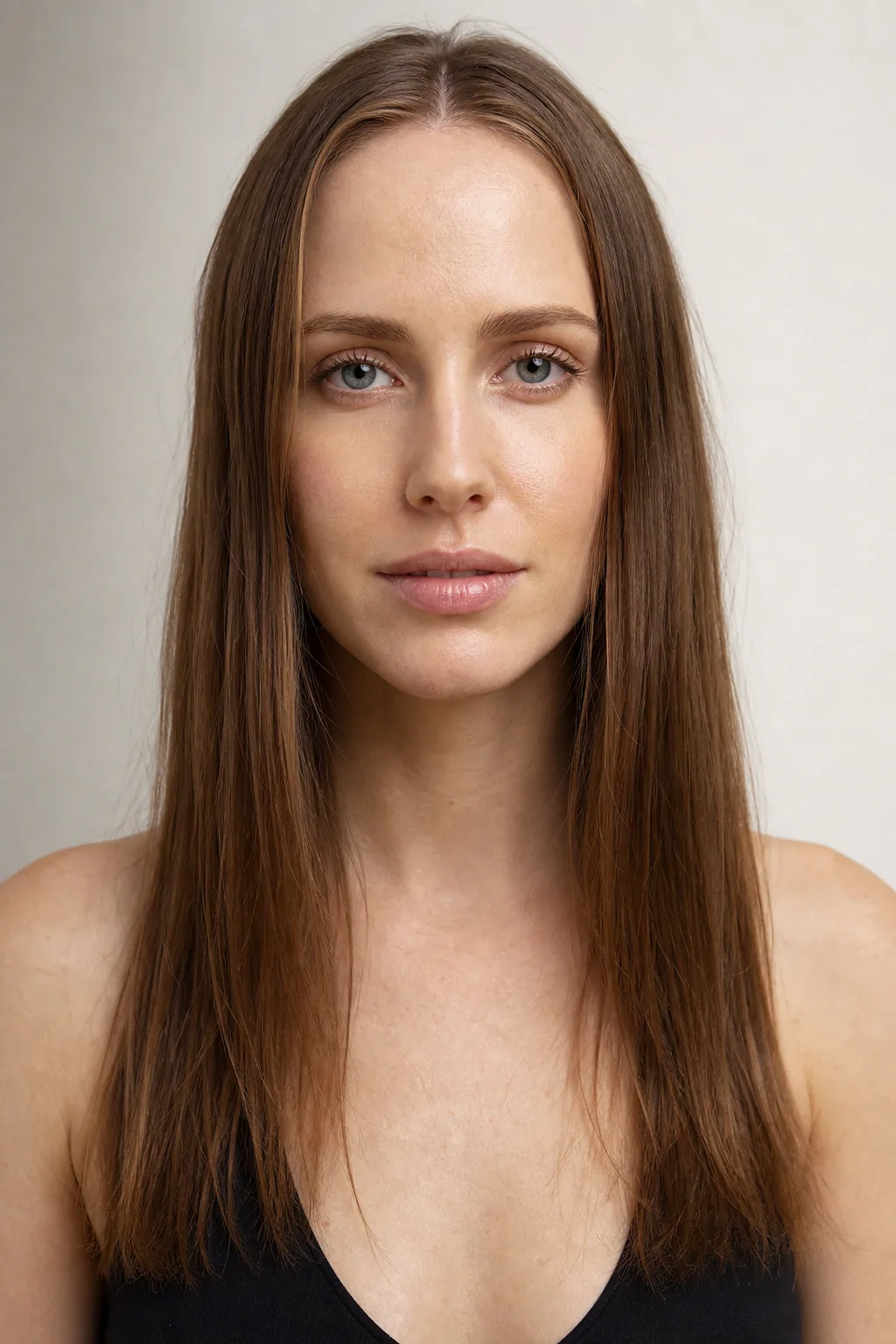
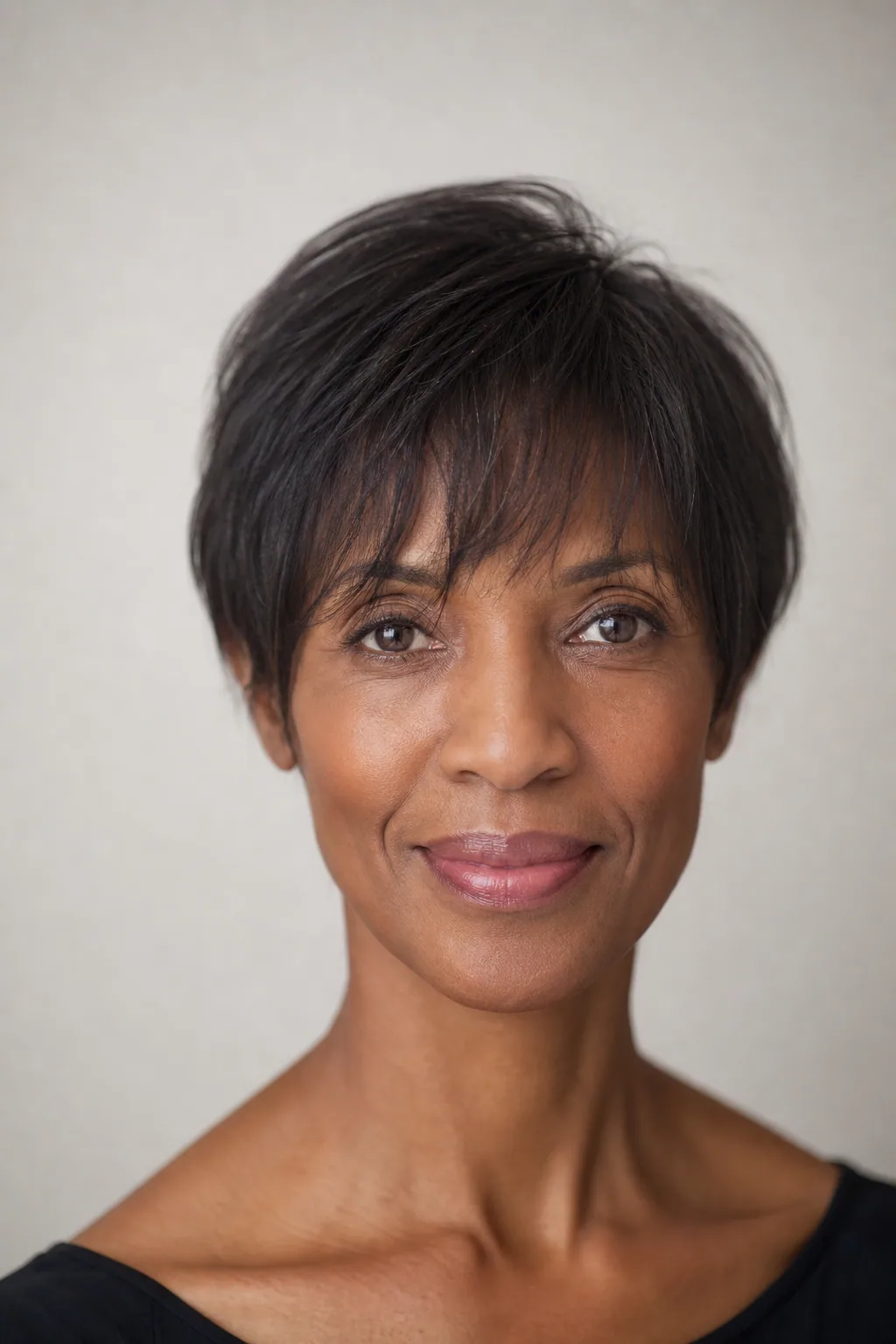
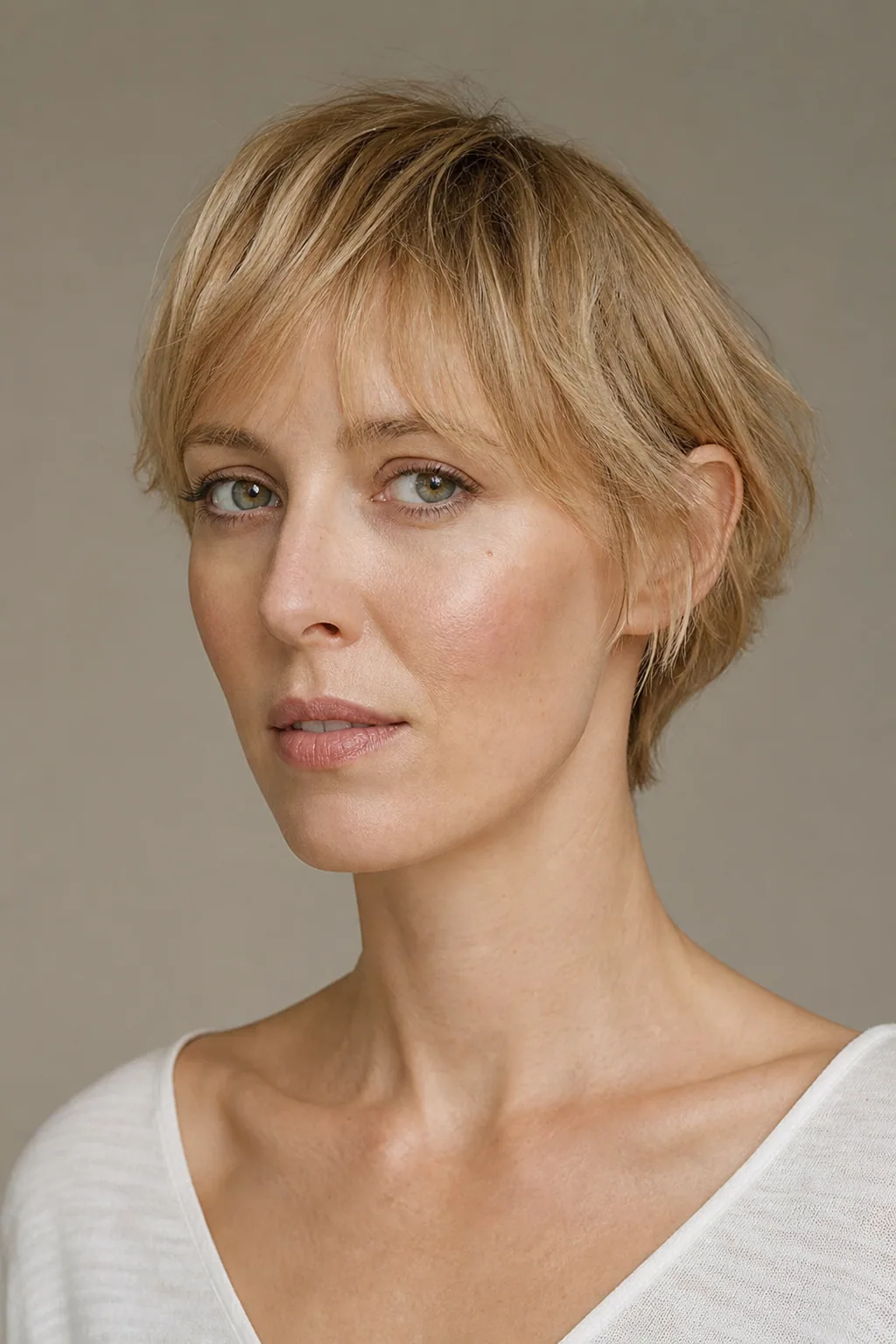
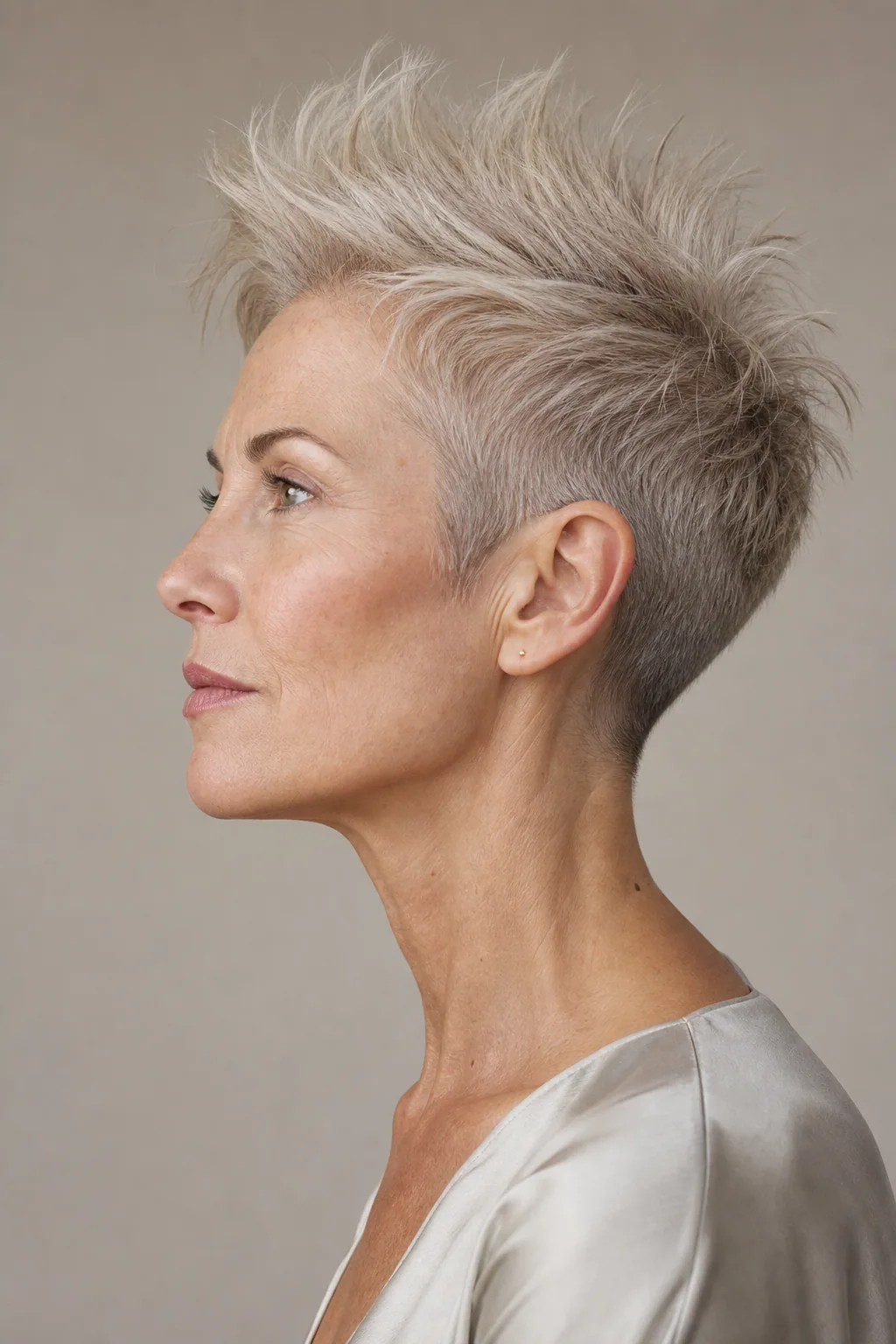
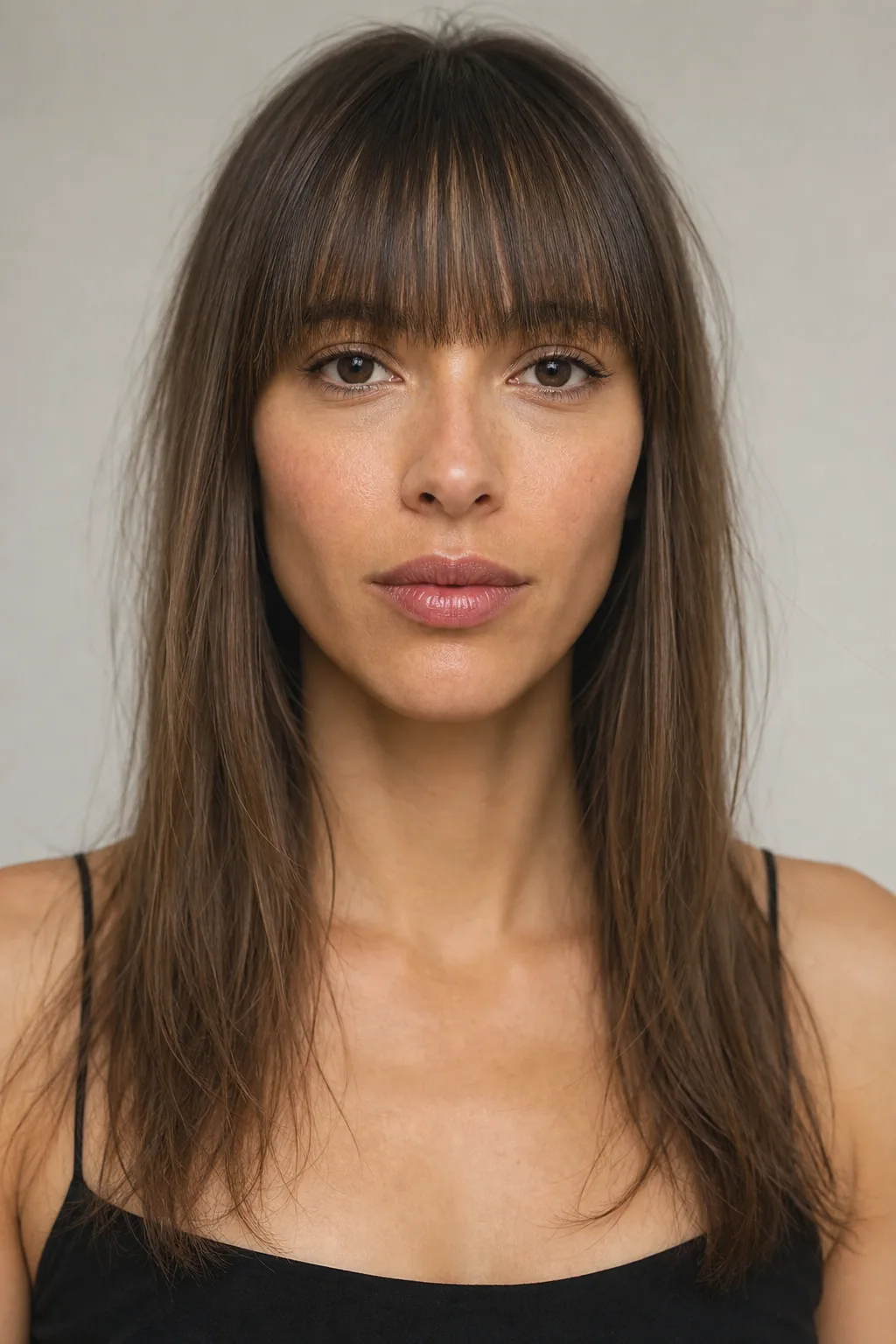
A fringe at the top and width at cheekbone level: the whole brief for a long face.
Chair-side note
I tell long-faced clients with fine hair that we're going to have one honest argument in this appointment, and it's about the crown. Everything they've ever read about fine hair says build it up there. Everything they've read about their face shape says don't. My rule is to ask which one they notice in photographs.
If they say "my hair looks flat," we keep the lift and buy the balance back with a fringe. If they say "my face looks long," we take the height down and put the volume at the sides, and I warn them their roots will need a root spray rather than a blow-dry to look intentional. There's no version where they get both at full strength, and saying so out loud saves everyone a disappointing six weeks.
SB
— Simone Baptiste, Senior Stylist
The one shape where fine-hair rules work against you
A long or oblong face is noticeably longer than it is wide, and fairly even in width from forehead to jaw. The correction is standard: shorten it visually, and widen it.
Shortening a face means introducing horizontal lines — a fringe, a blunt hemline at cheek or jaw level, a bend that runs across rather than down. Widening it means putting fullness at the sides. Neither of those is a problem for fine hair on its own.
The problem is the third instruction that usually accompanies them: keep the crown flat. Crown height is the fine-hair playbook's opening move, the thing that separates hair with a shape from hair lying against a skull. Root volume is most of what we write about, and on a long face it makes the face longer.
The resolution is placement, not sacrifice. Volume put at cheekbone-to-jaw level does the same thing for how full the hair looks and the opposite thing for the face's proportions. So you keep the volume and move it down. And you buy back several visual inches with a fringe, which costs the crown nothing.
The three rules that do most of the work
Rule
What to ask for
What it does
Get a fringe
"A fringe sitting at or just below my brow — curtain if my hair is sparse at the front, blunt if it isn't."
Removes visible vertical inches and adds the horizontal a long face has none of
Move the volume down
"Build the width between my cheekbone and my jaw, not at the crown."
Keeps the fullness fine hair needs while spreading the silhouette outward instead of upward
Stop at the collarbone
"Finish it at or above my collarbone, and no lower."
Long one-length hair draws two vertical lines beside a vertical face and lengthens it further
If you've read our square-face page, you'll notice the advice inverts almost exactly. A square face wants diagonals and no strong horizontals; a long face wants horizontals and gets nothing from diagonals. It's worth knowing which of the two you are before you take either page literally. A heart shape shares the need for width lower down but for a different reason — cuts for a heart-shaped face with fine hair covers it.
Mid-length cuts and bobs — the natural home
Chin to collarbone, with a fringe. This is where a long face and fine hair agree most easily, and it takes the biggest share of the gallery.
1
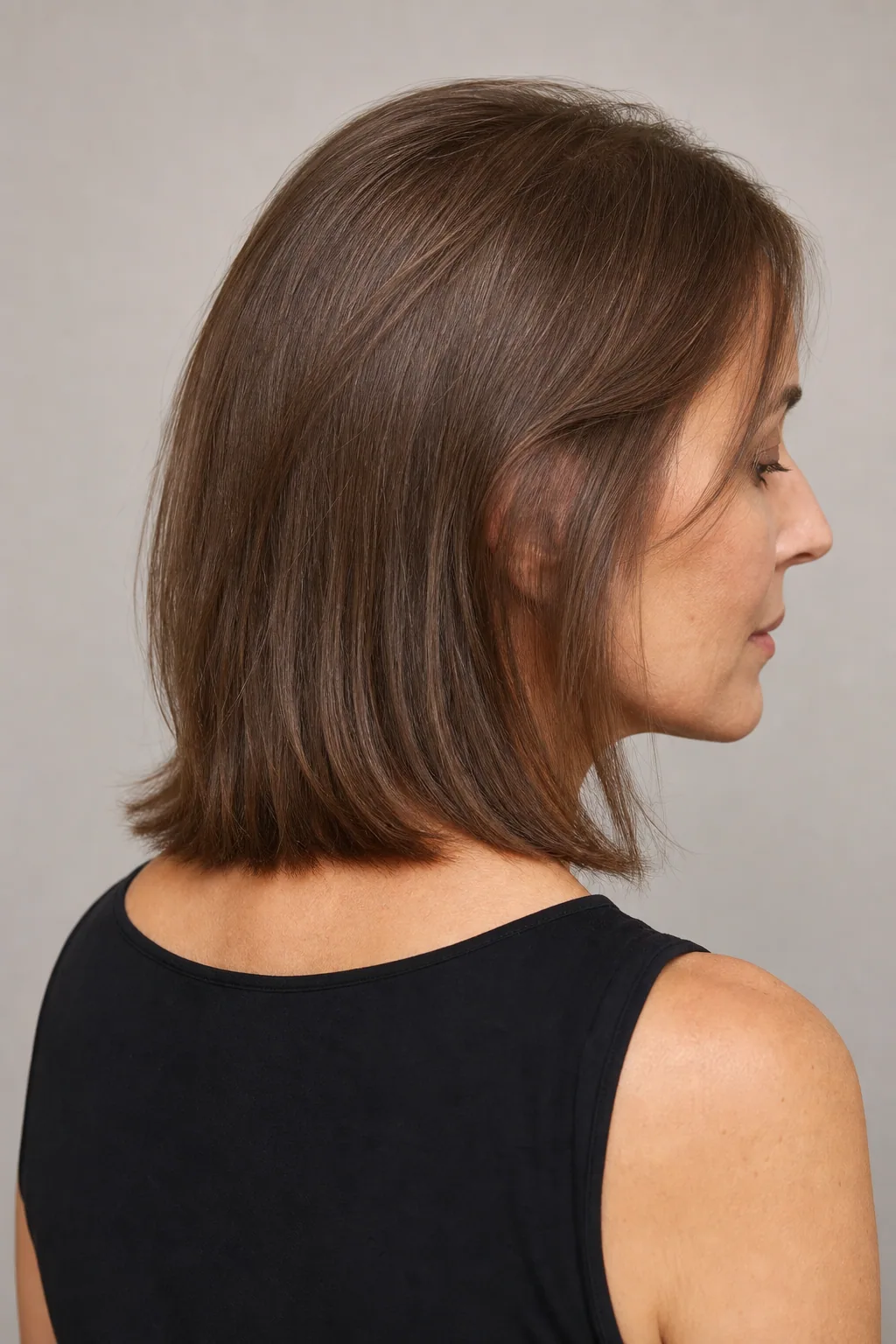
The collarbone cut with a curtain fringe
The default recommendation for this shape and the easiest to live with. The length keeps a heavy edge for fine hair, the fringe takes several visual inches off the face, and the two together need almost no daily styling beyond a bend at the ends. If you're only going to change one thing, change to this.
2
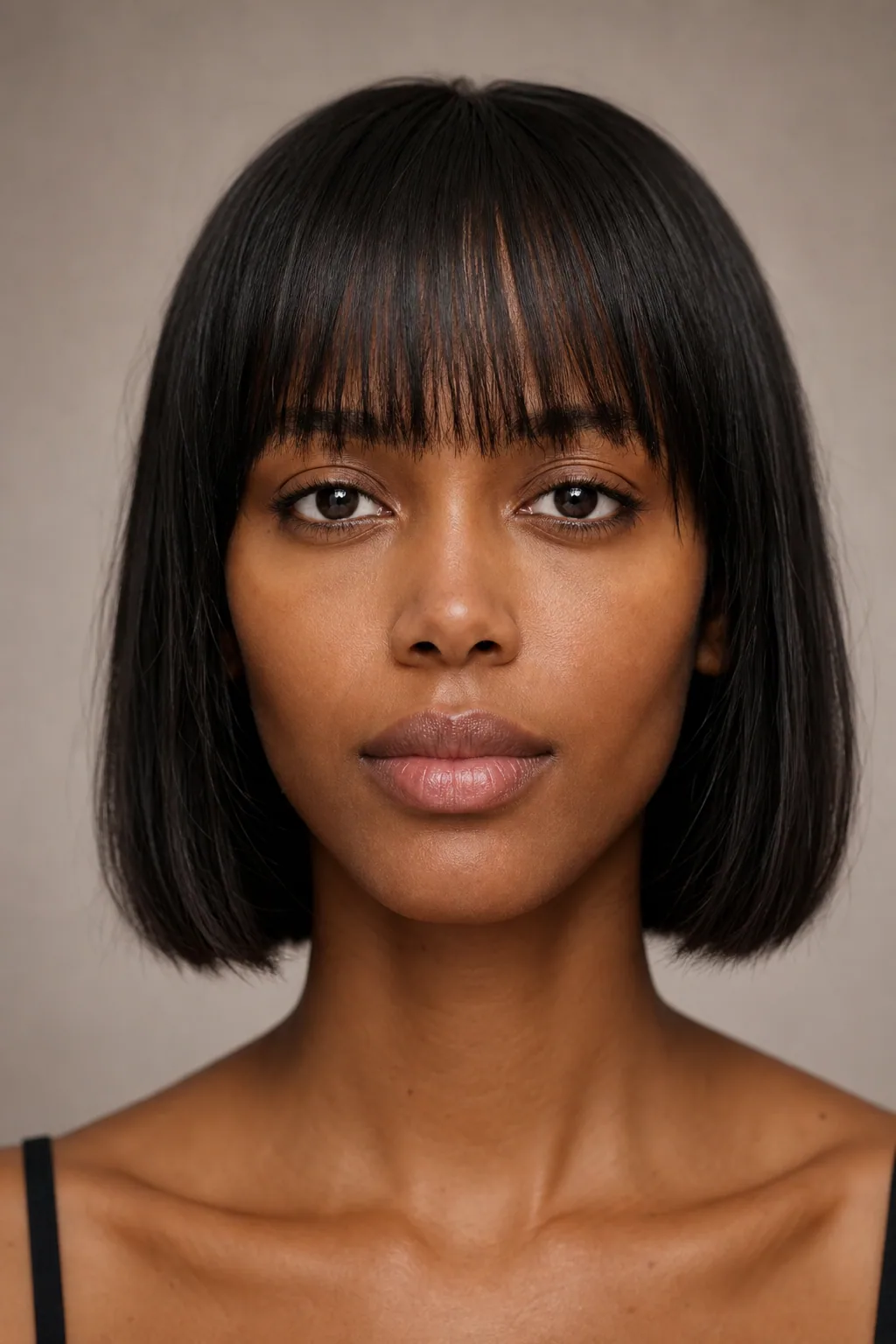
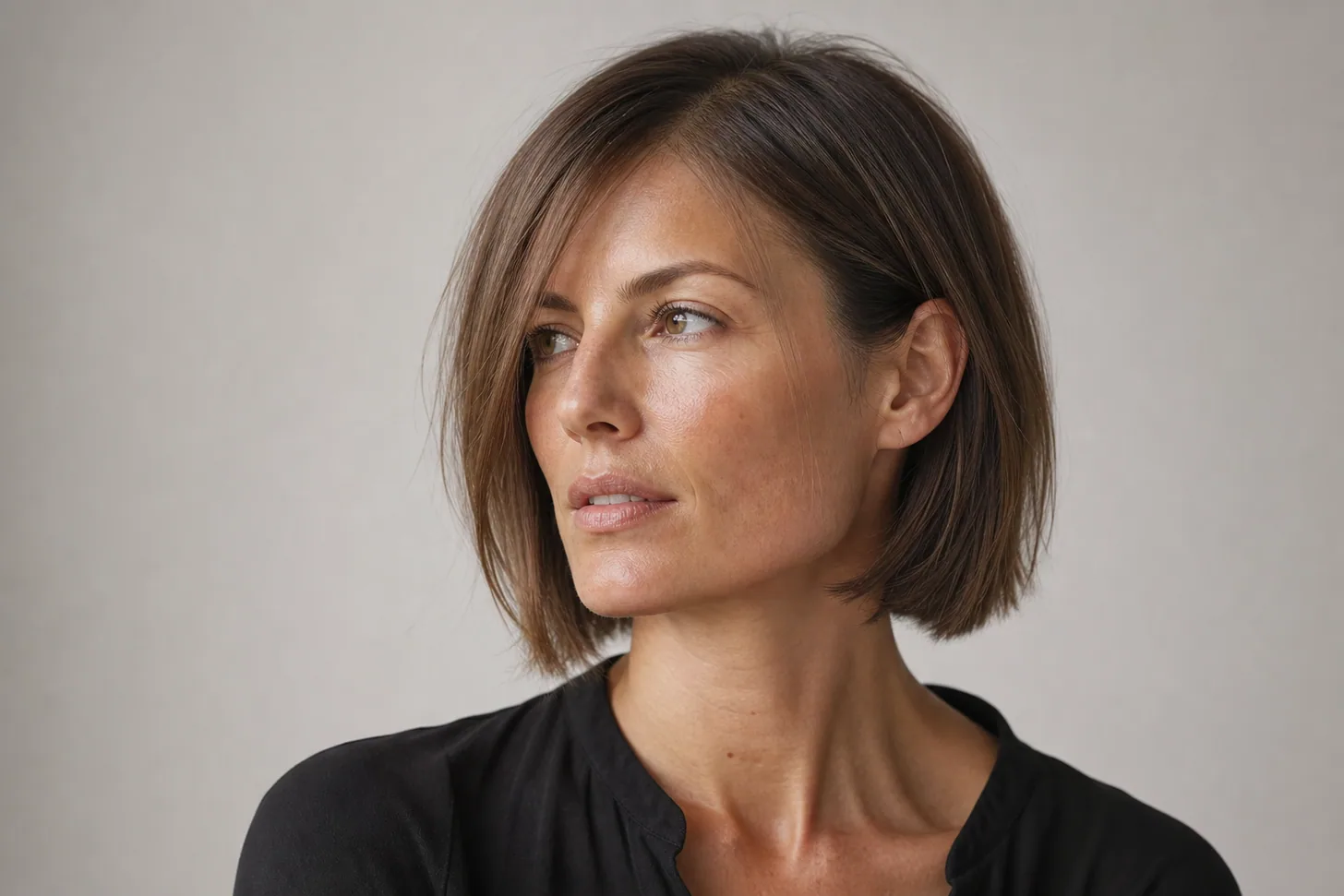
The blunt bob with a full fringe
The most decisive shape available: two strong horizontals, one at the brow and one at the jaw, bracketing the face and shortening it visibly. It's the cut that transforms a long face fastest. The honest cost is density at the front hairline, so check that before you book — the numbers are in bangs for fine and thin hair.
3
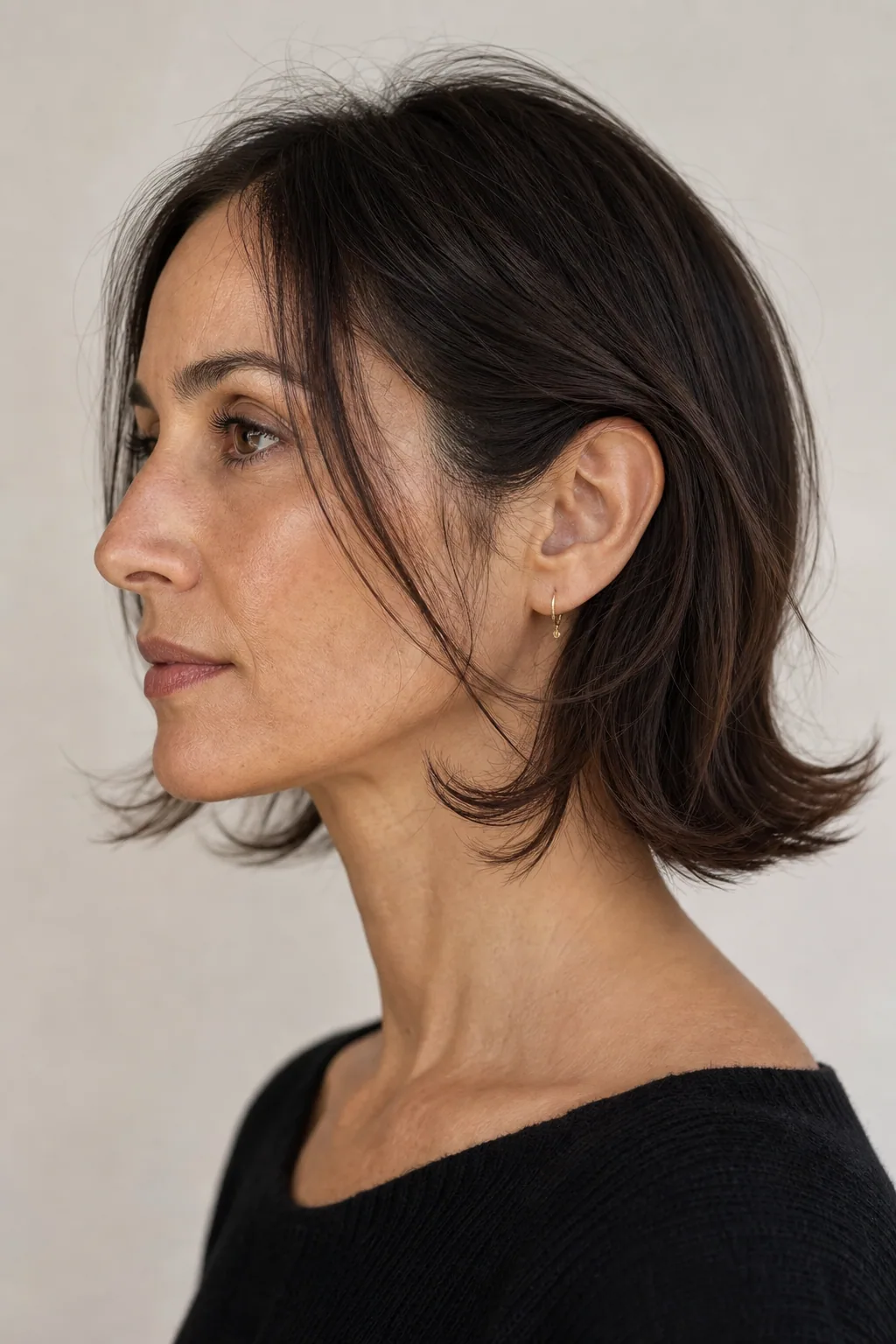
The outward flick at jaw level
Ends bent gently away from the face rather than under it. On most shapes we'd steer clear of a flick, but here it's doing real work: it pushes the silhouette outward at the level where a long face needs the width. Set it with a large round brush and let each section cool in shape — see how to blow-dry fine hair for volume.
4
The lob with graduation at the sides
Rather than layering the top, the weight is built up around the sides and back so the shape reads widest through the middle. It's the structural version of "move the volume down" — you get the fullness from the cut instead of asking a product for it every morning. See the lob haircut for thin hair for the length options underneath.
5
The cheekbone-down wave
Waves that begin at cheekbone level and leave the roots alone. Above that line you want nothing happening; below it, every bend is width. It suits fine hair well because you're only setting the lower two-thirds, which is less heat, less product and less time than a full head — the method is in how to curl fine hair so it holds.
6
The French bob with a short fringe
Short, blunt and fringed — three properties that all happen to shorten a face. The higher the fringe sits, the more forehead stays visible, so a micro fringe is a milder version of this than a brow-length one; choose by how much shortening you actually want. Details in the French bob for fine and thin hair.
Long lengths, made to work
Length isn't forbidden here — unbroken verticals are. Three ways to keep the length and still balance the face.
7
Long hair with a real fringe
If you're keeping the length, the fringe stops being optional. It supplies the horizontal that the length otherwise removes, and it does it independently of everything below. This is the compromise most long-haired clients with long faces end up at, and it holds up well.
8
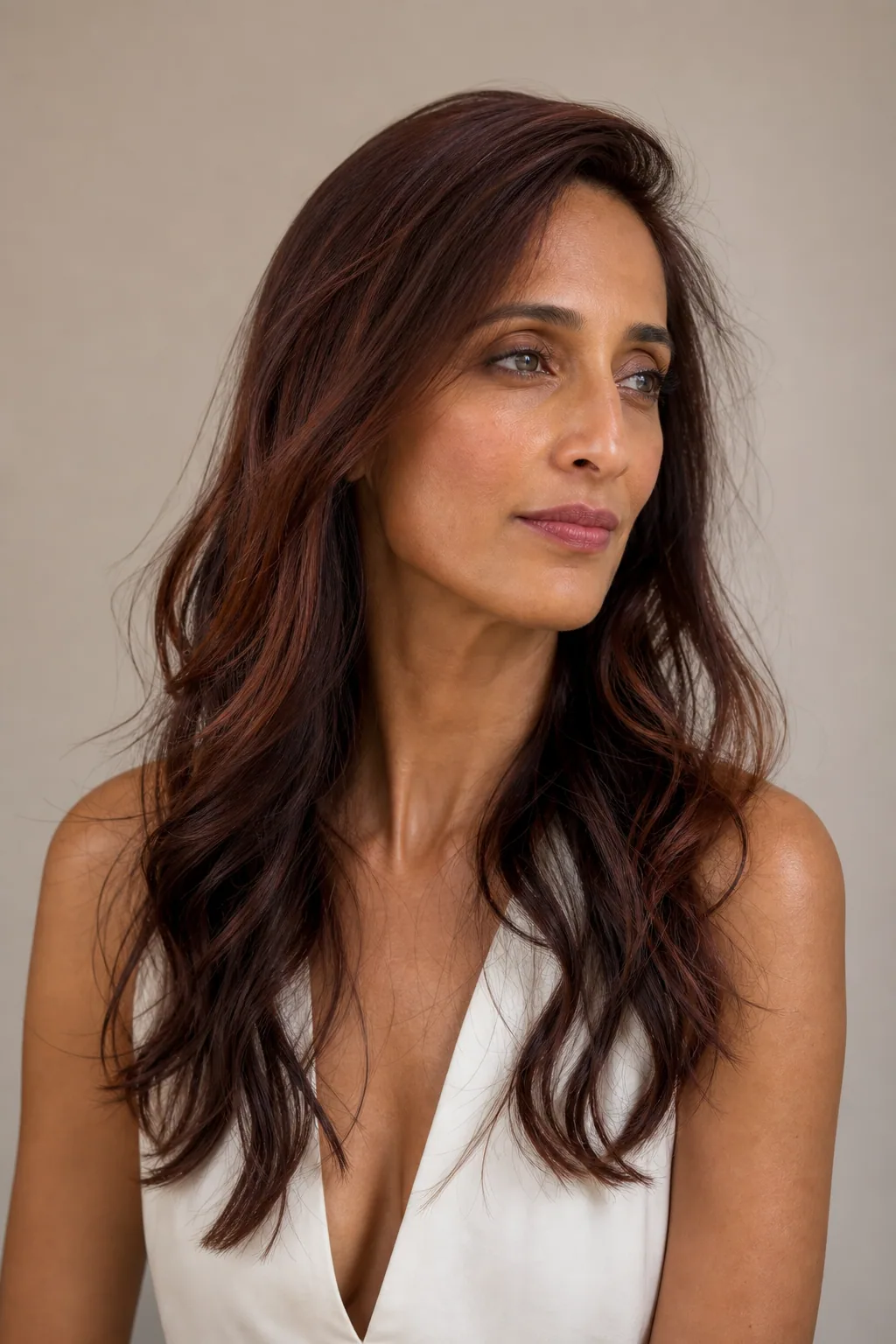
Long, waved, and parted off-center
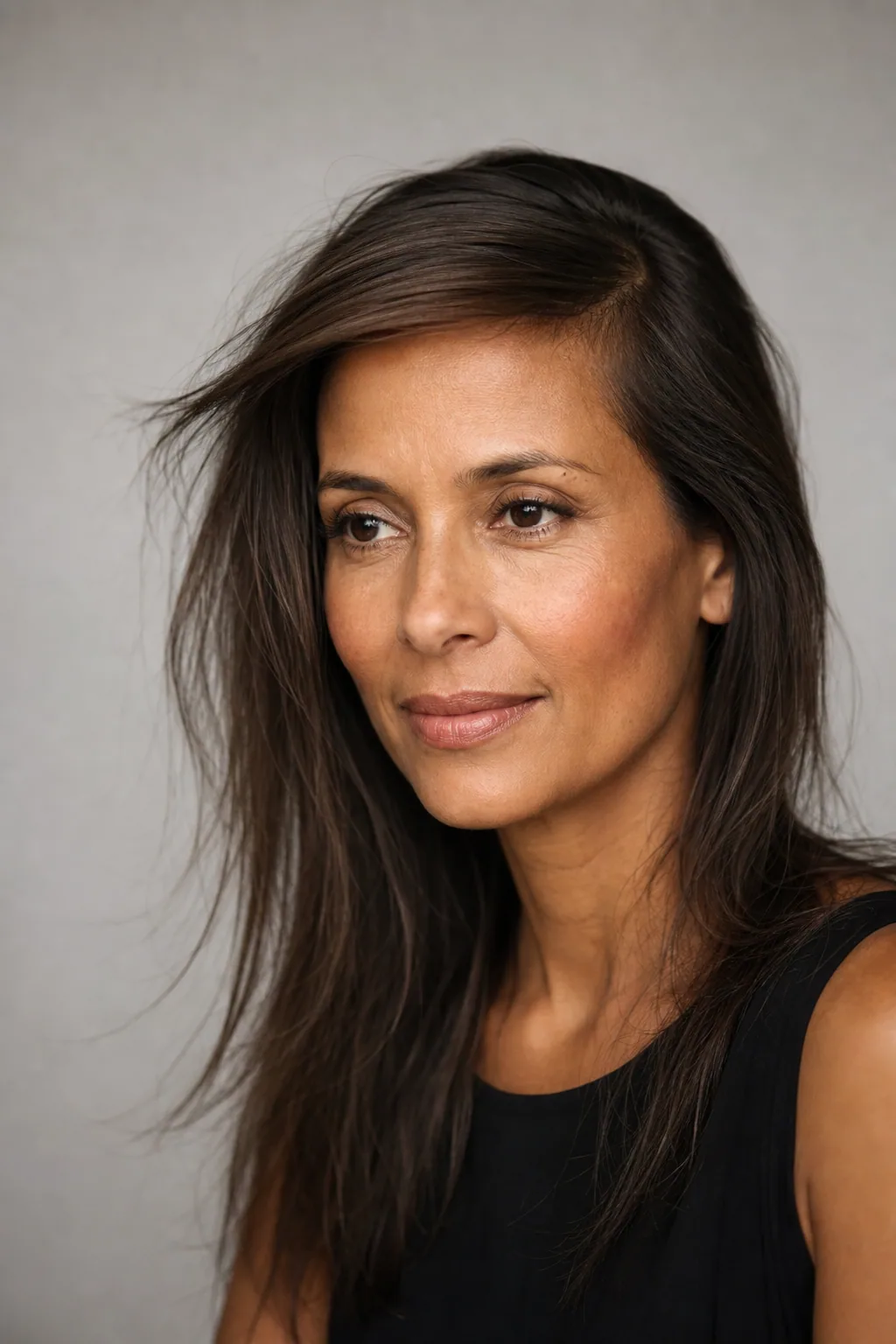
The no-scissors option. Waves through the mid-lengths break the vertical into a series of curves, and a deep side part throws hair across the top of the head so the outline gains width where a center part would have taken it away. Neither costs you a single inch of length.
9
One to skip: long, straight and center-parted
Two flat curtains of hair either side of a face that's already longer than it is wide, plus a straight line down the middle to underline it. This is the single most lengthening combination on the page, and it's also, unhelpfully, the default that long fine hair falls into on its own. A fringe or an off-center part rescues it entirely — the cut doesn't have to change.
Short cuts that go wide, not tall
Short hair is fine here as long as the silhouette is horizontal. That's the opposite of the standard fine-hair short cut, so it needs asking for specifically.
10
The low-weight pixie with a fringe
A pixie with the mass left around the ears rather than piled at the crown, and a fringe across the forehead. Ask for it in those words — the default pixie your stylist reaches for on fine hair is a high-crown one. Expect to reach for a texture spray at the sides rather than a root lifter on top. See pixie cuts for fine and thin hair.
11
The fringed bixie
A little longer than a pixie, which makes the width easier to hold without daily effort, and a fringe as standard. The extra length around the ears is what saves it from reading tall. It's the short cut we'd suggest first for a long face on fine hair — more forgiving to style than a true pixie. Details in the bixie haircut for thin hair.
12
The high-crown crop — the one to think about
Tall on top, tight at the sides. It's the shape most often recommended for fine hair, and on a long face it stacks height onto height. Not forbidden — plenty of people wear it deliberately and look striking — but go in knowing it lengthens, and pair it with a fringe if you'd rather it didn't.
Fringes and partings: your best value per inch
Four front-of-head decisions, in rough order of how much they change.
13
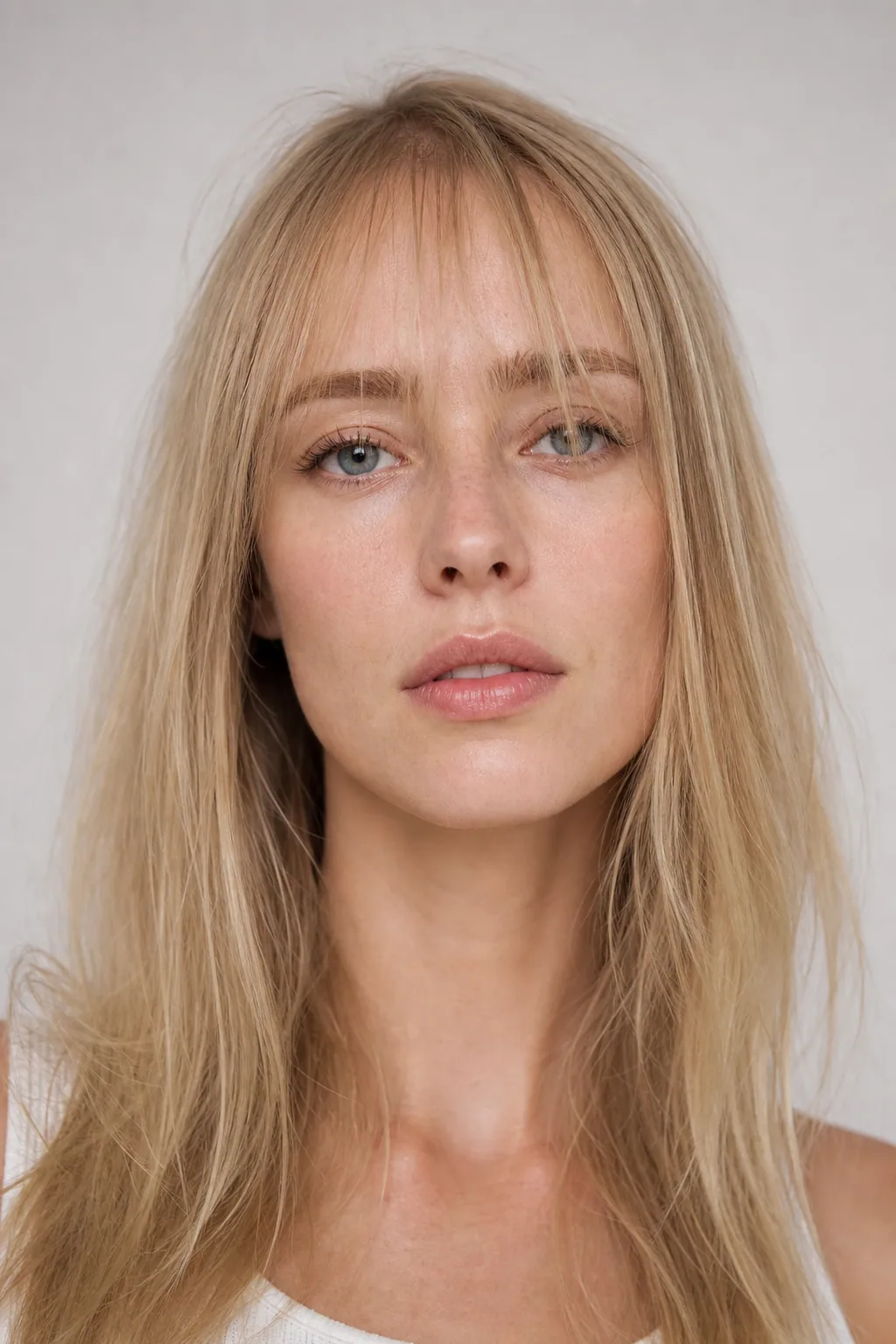
The blunt brow-length fringe
The most shortening thing you can do to a face without touching the rest of the hair. A solid horizontal at the brow removes the forehead from the equation and reframes the whole outline. The trade-off is real maintenance — a trim every three to four weeks — and real density, since it's cut from a deep section.
14
Curtain bangs cut on the shorter side
The version to choose if your front hairline is anything less than dense: cut from a shallow section, so much less hair leaves the rest of the head. Ask for the shortest point at the brow rather than the cheekbone — a long curtain fringe is soft and pretty but shortens the face far less. Sizing in curtain bangs for fine hair.
15
Wispy bangs — the low-commitment entry
Soft, sparse and see-through, so they shorten the face less than a blunt fringe but cost almost no density and grow out invisibly. This is the fringe to try first if you've never had one and aren't sure the commitment is worth it. More in wispy bangs for thin hair.
16
The deep side part
Free, instant, and worth more than most products. Sweeping the hair firmly across the top gives the silhouette some horizontal spread and stops the flat-either-side effect a center part produces. It does raise the crown a little, which is the compromise — but sideways lift costs a long face far less than upward lift does. A long face and a big forehead are commonly confused and want different fringes — the big-forehead guide separates them with a three-part test.
What to ask your stylist
The specific thing to say, because the default fine-hair instinct will otherwise take over:
"My face is long and my hair is fine. I know fine hair usually wants crown height — I'd like the volume moved down instead, built between my cheekbone and my jaw. Finish the length at or above my collarbone, keep the perimeter blunt, and I'd like a fringe at brow level. Please don't build height at the top."
Say the last sentence explicitly. Every good stylist working on fine hair reaches for crown lift by reflex, and it's a reasonable reflex — it just isn't the right one for you.
When these rules bend — and the compromise to make
This page has assumed you can afford to give up crown height. Many readers can't. If you can see your scalp at the part, coverage outranks proportion every time, and the trade to make is: keep a modest amount of root lift, take all your balancing from the fringe, and get the width from the cut rather than from styling.
That combination still shortens the face meaningfully, without asking you to wear flat roots over a visible part. Coverage for thinning on top is the page to read first if that's you.
Two other overrides. Natural wave is a gift here — it produces sideways width without any styling at all, so a wavy reader can wear more length than this page suggests; see haircuts for fine, wavy hair. And a long neck changes the sums: if your face is long but your neck is short, a chin-length bob can crowd the space rather than balance it, and a collarbone length is the safer call.
When a long-face cut isn't the priority
Your part is visibly widening. Take the crown lift and the coverage. Proportion is a nice problem to have once density is handled.
You can't or won't maintain a fringe. A fringe needs a trim every three to four weeks to stay at the right height. If that's unrealistic, use a deep side part and cheekbone-level width instead — you'll get perhaps half the effect for none of the upkeep.
You wear your hair up most days. An updo is the most lengthening thing you can do to a long face. Leave a fringe or a few front pieces down, and see half-up styles for fine hair.
Your face is oval rather than long. An oval face has more latitude than any other shape and doesn't need this correction — which changes what the cut should be chosen on. See oval face shape hairstyles for fine hair, or the face-shape guide for the comparison.
You like your long face. Then none of this is a problem to fix. Take the cut you want — a face-shape page is a set of levers, not a diagnosis.
FAQ
A cut that finishes at or above the collarbone, worn with a fringe and with the fullest part of the shape sitting between the cheekbone and the jaw. The fringe is the biggest single lever, because it removes visible vertical inches from the face in a way nothing else can. The width lower down comes from a soft bend or a graduated shape rather than from crown height, which is the compromise this face shape asks fine hair to make.
Reduce it rather than avoid it, and be honest about which problem is bigger. Height at the crown lengthens the face, so a long face is the one shape where the standard fine-hair instruction works against you — but if your scalp shows at the part, coverage beats proportion and you should keep the lift. The practical middle ground is modest crown lift plus deliberate width at cheekbone level, so the silhouette gains as much across as it does up.
They're the most effective change available for this shape. A fringe cuts the visible length of the face by however deep it sits, and it introduces a horizontal line where a long face has none. Both blunt and curtain fringes work; on fine hair a curtain fringe is the safer choice because it's cut from a shallower section and costs less density, while a blunt fringe balances the proportions more decisively if your front hairline can carry it.
Long, straight, one-length hair is the least flattering combination, because it draws two unbroken vertical lines either side of an already vertical face. Length itself isn't the problem — the absence of any horizontal is. If you want to keep the length, add a fringe, set waves that start at cheekbone level, and part off-center, and the same length reads completely differently.
A center part is the one parting to think twice about here. It runs a straight line down the middle of a face that's already longer than it is wide, and it pulls the hair flat against the sides of the head, removing width exactly where you want it. An off-center or deep side part throws hair across the top of the head and gives the silhouette some horizontal spread instead.
It works if it's wide rather than tall. A pixie with height built at the crown emphasizes the vertical, but the same cut worn with the weight kept low, some softness left over the ears, and a fringe across the forehead does the opposite. On fine hair that's a slightly harder styling brief than the standard high-crown pixie, since you're asking for shape without upward lift — a texture spray at the sides does more for you than a root lifter at the top.
Both are longer than they are wide, and both are fairly even in width from forehead to jaw. The difference is degree: an oval face is around one and a half times as long as it is wide, while a long or oblong face is noticeably more than that, often with a high forehead or a long chin doing the extra. If it is the forehead alone rather than the whole face, bangs for thin hair and a big forehead is the closer fit — the two want opposite fringes. If you've always felt that fringes suit you and center-parted long hair doesn't, that's usually the answer in practice.
Eleven years behind the chair, cutting fine and thin hair into shapes that hold. Simone thinks the long face is the honest test of a stylist, because it's the one shape where the fine-hair reflex has to be argued with out loud.
Results vary with hair type, density, and growth patterns. This guide is educational and not a substitute for an in-person consultation with a licensed stylist.
Hairstyle images in this guide are AI-generated illustrations, not photos of real clients or results. See our image policy.
Get the good hair intel
One honest, stylist-written guide in your inbox each week. No hype.

 SB
SB