Reviewed by Tara Sullivan · Updated August 2026 · 9 min read
Every square-face guide says the same thing: soften the corners with layers and texture. That advice is written for people with density to spare, and on fine hair it costs you the one asset you have — a heavy, intact perimeter. The way out is that you can soften a square face with the line instead of with the layers: a slightly curved hemline, an off-center part, and length that lands anywhere except level with the jaw corner.
Do that and the strong jaw becomes an advantage, because a blunt cut needs a strong jaw to sit against. Below: 16 cuts grouped long to short, the landing rule that decides most of it, the words to bring your stylist, and the one to skip. If you're not certain which shape you're working with, start with the face-shape decision guide.
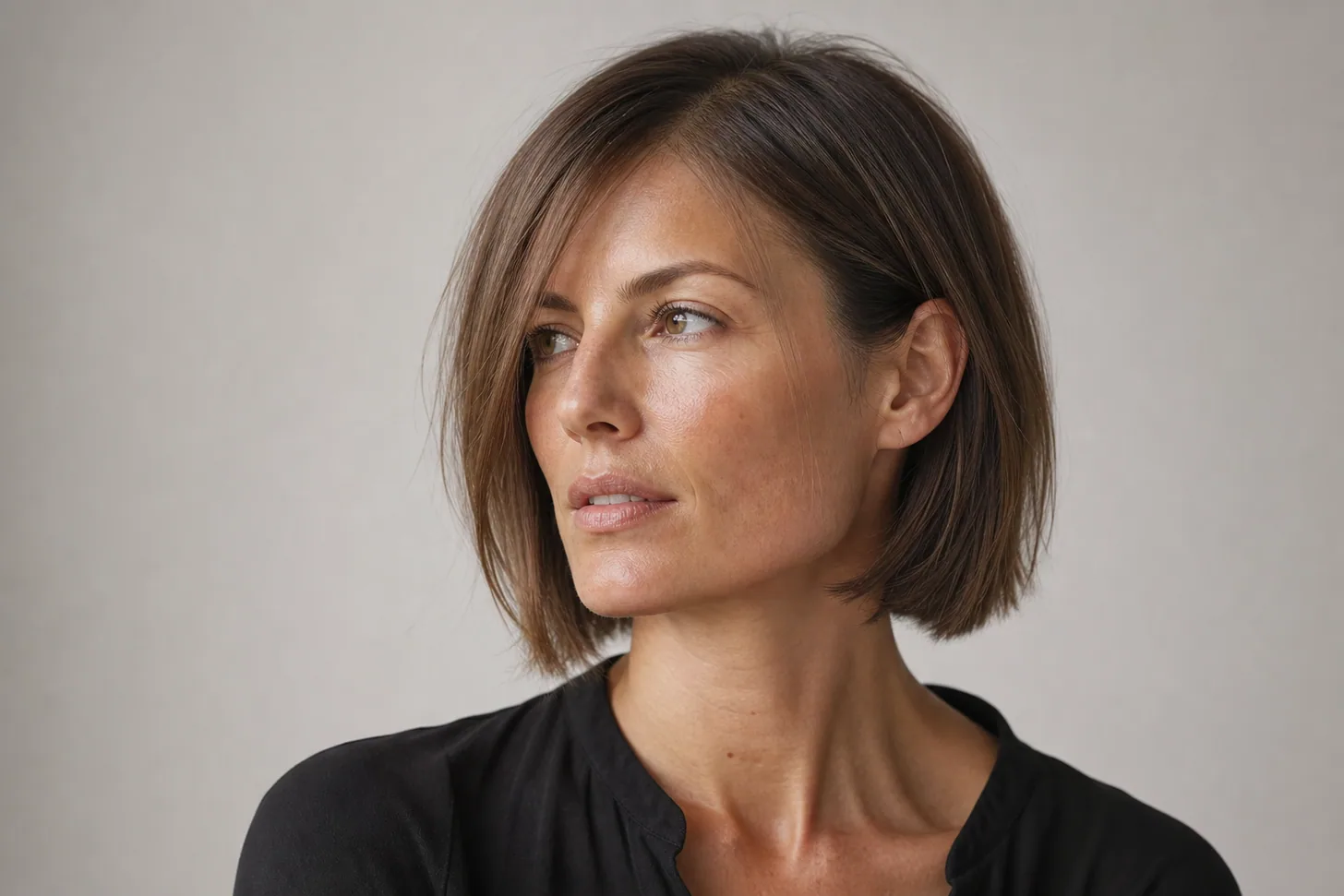
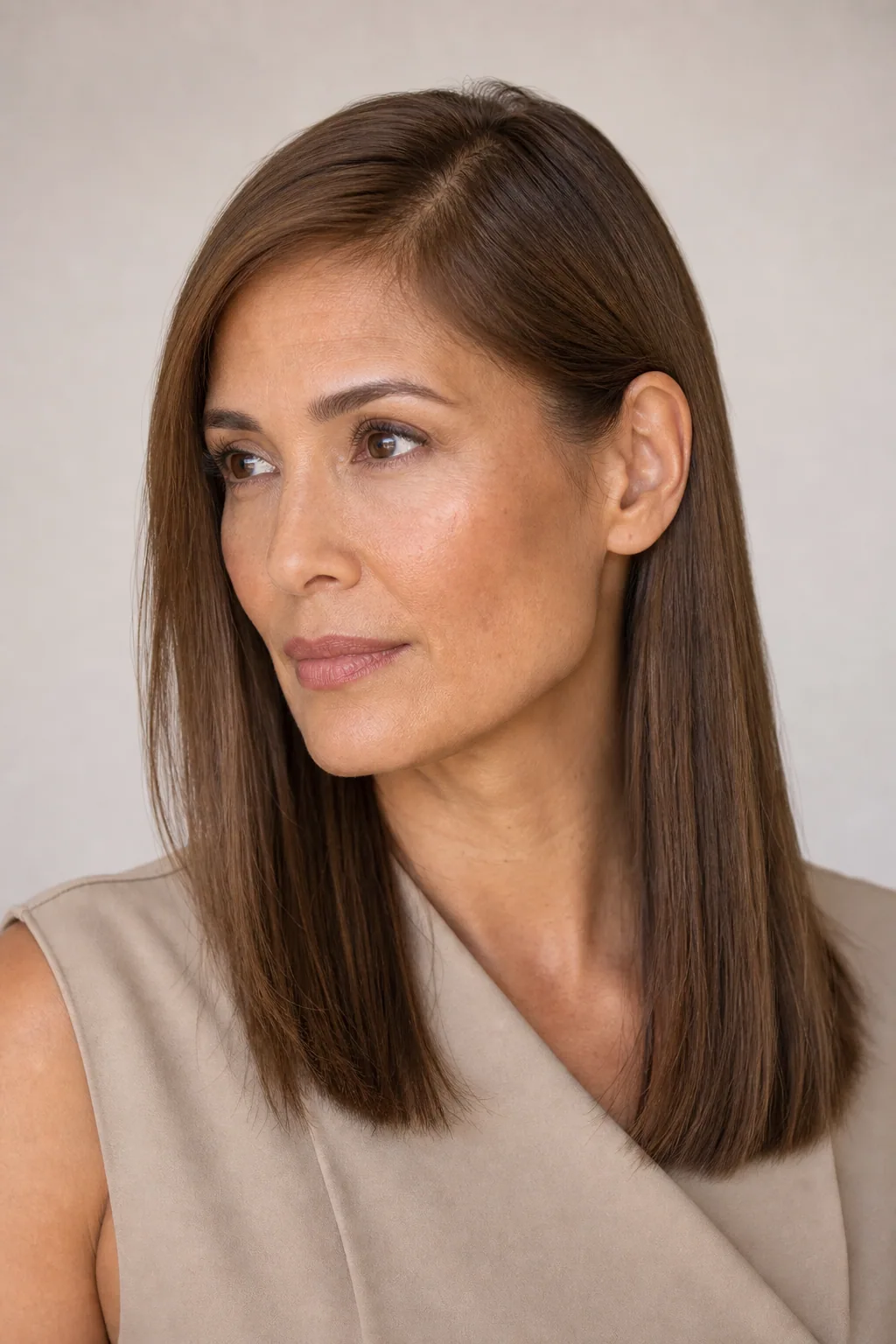
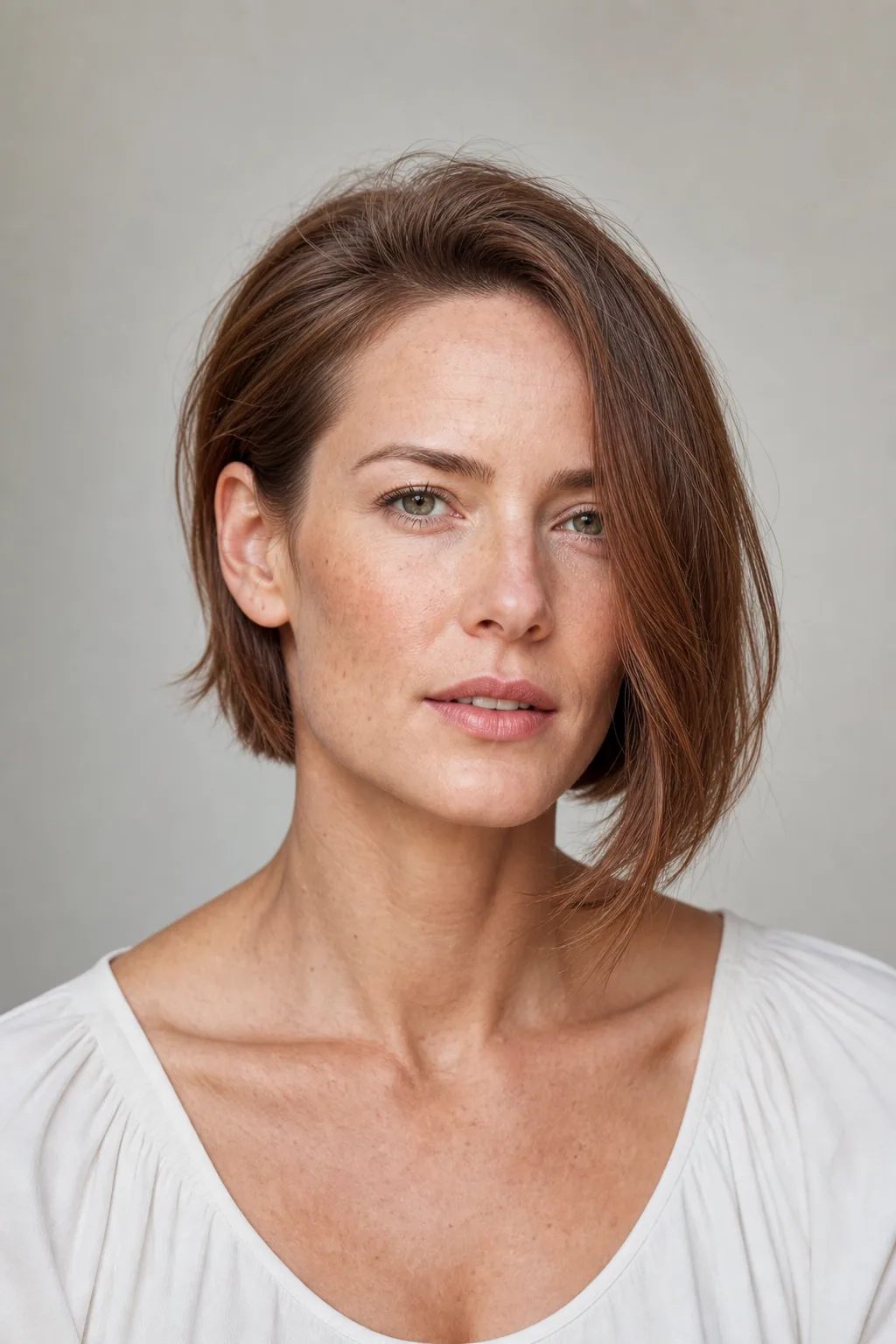
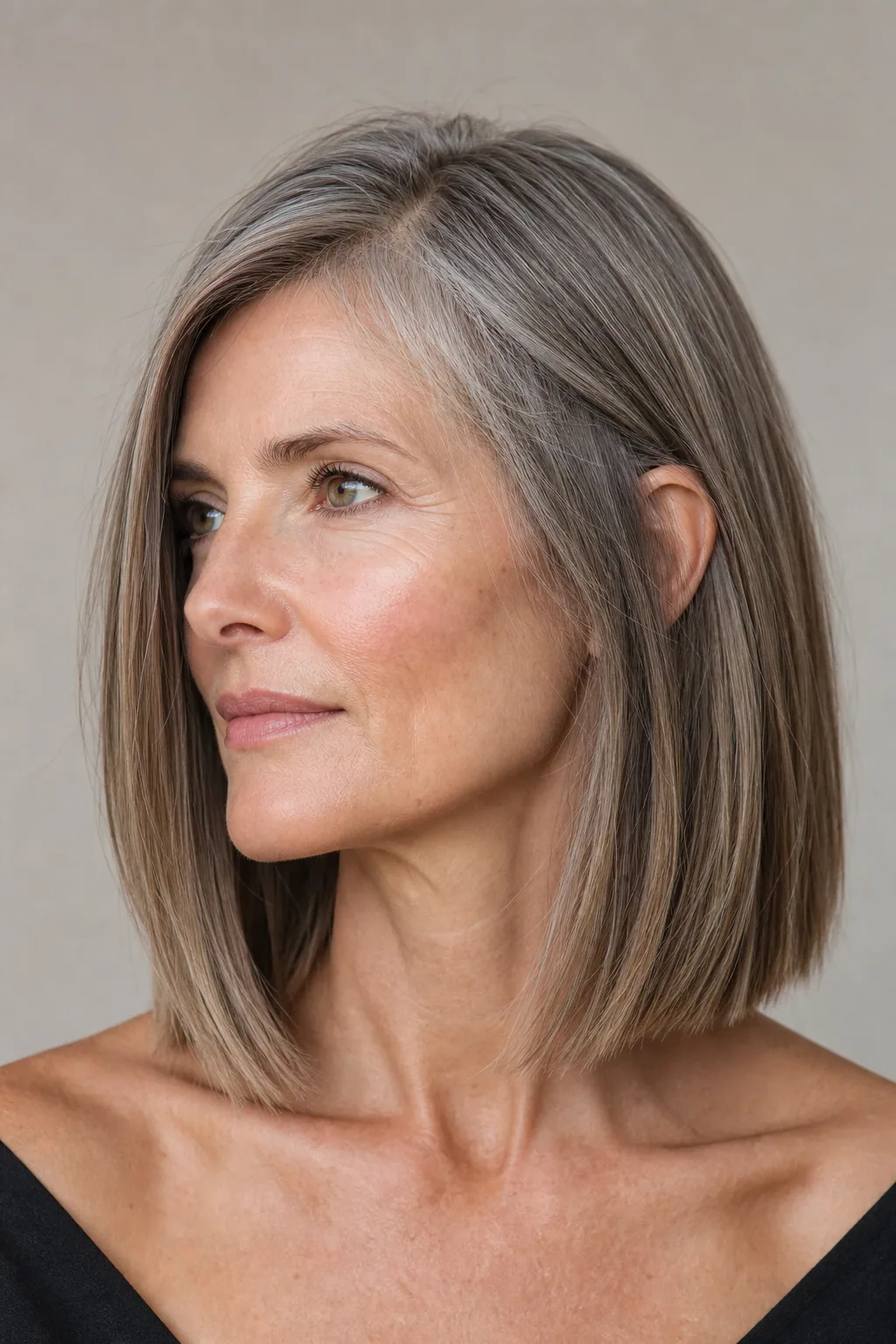
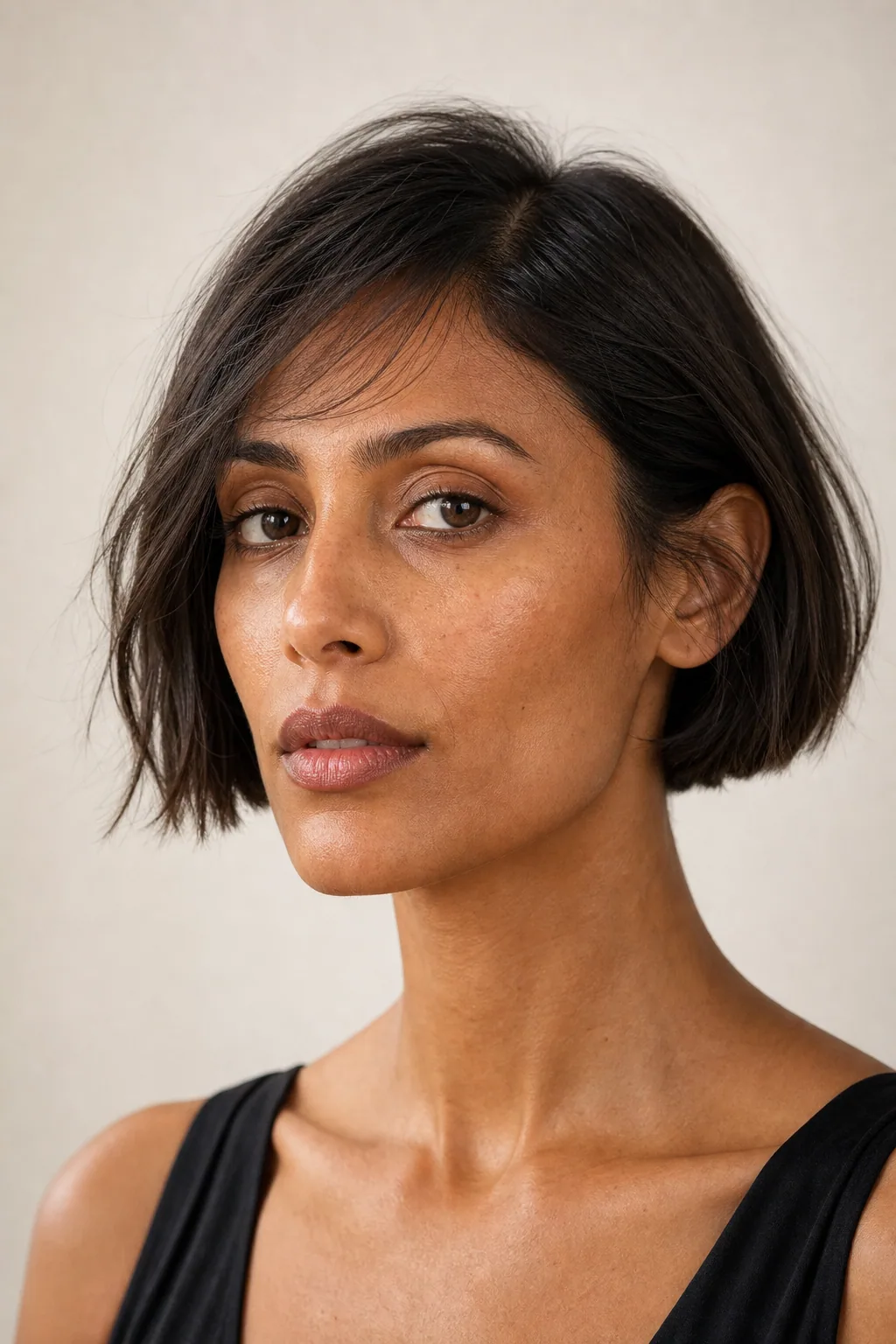
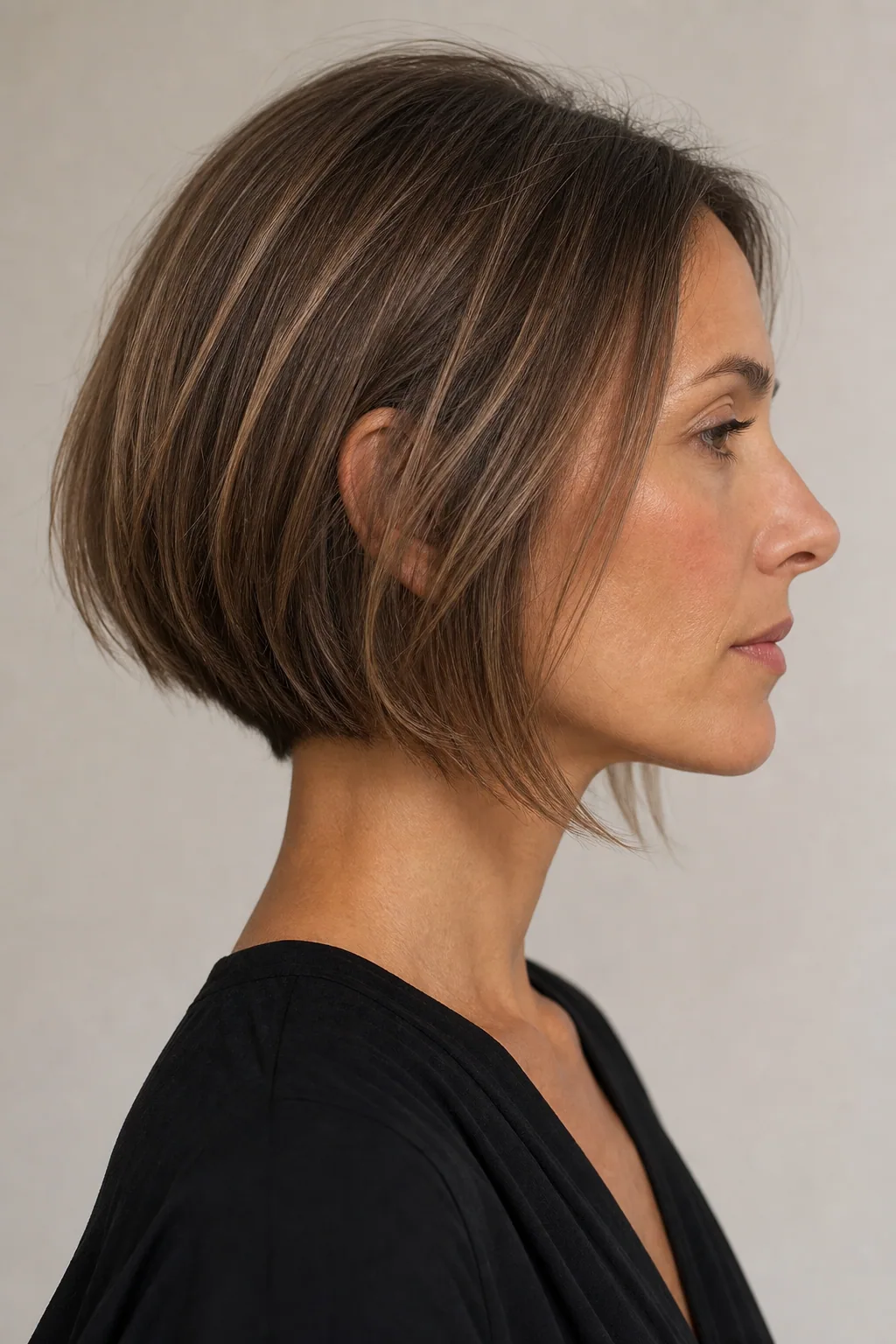
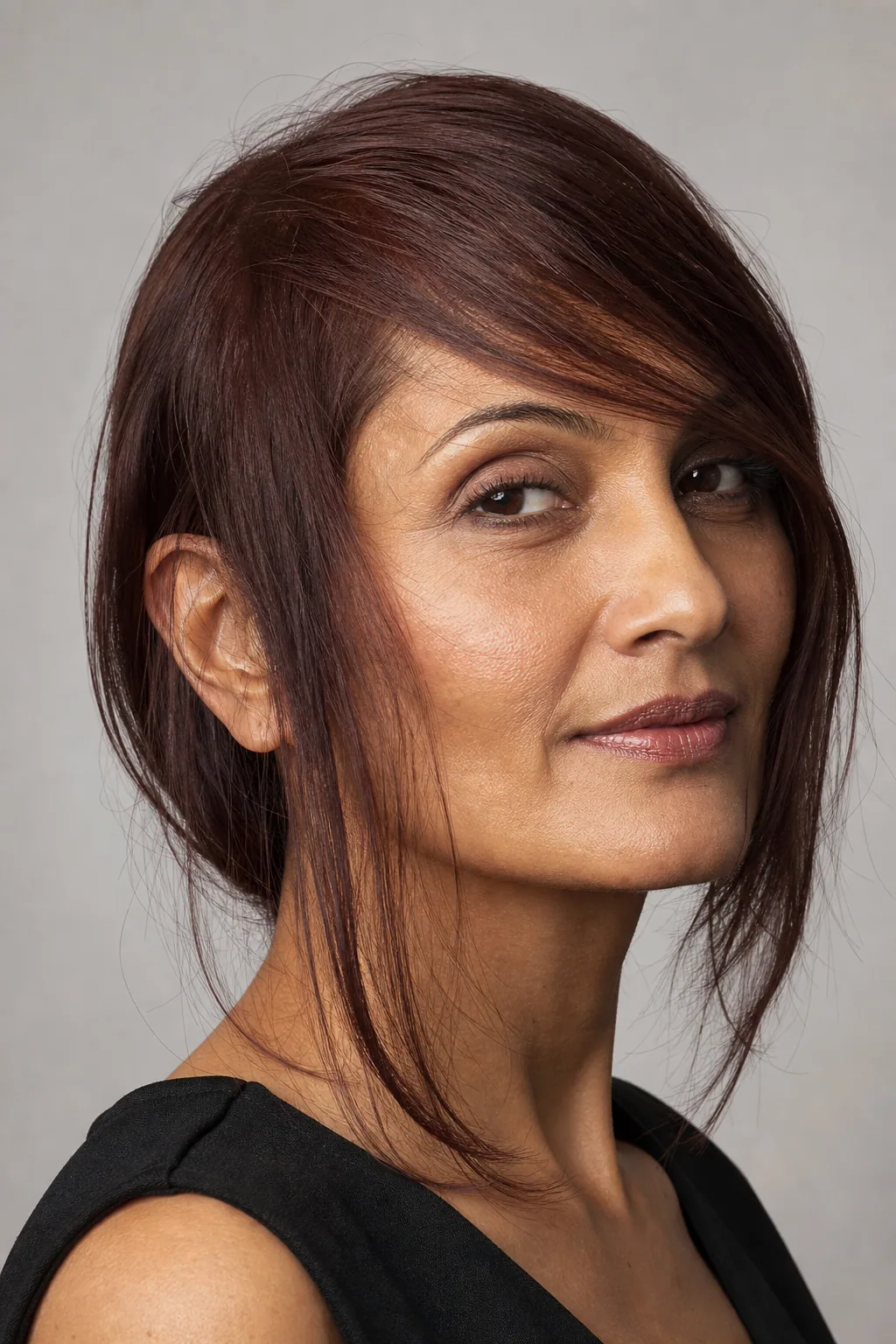
Length below the jaw, a curved hemline, an off-center part — the whole brief in one cut.
Chair-side note
I've stopped saying "soften the jaw" in square-face consultations, because clients hear it as an instruction to hide something and then ask me for the thing that will hurt their hair most — heavy layering all the way up. What I say now is: we're going to move the line off the corner.
Nothing about your jaw is the problem; the problem is that your last haircut ended exactly on it, so the hemline and the jawline drew the same horizontal twice. Move it an inch and a half up or two inches down and the same cut, on the same face, reads completely differently. Nobody has to lose any weight from their ends to get that.
SB
— Simone Baptiste, Senior Stylist
Where square-face rules and fine-hair rules pull apart
A square face is roughly as wide as it is long, with a jaw that runs straight from the ear and turns at a visible corner. The standard prescription is soften: layers, waves, texture, movement — all of which break up the straight lines.
The trouble is that every one of those is a way of removing or redistributing weight, and fine hair has the least weight to give. Layers taper the ends. Texture spray costs shine and can look grabby on a fine strand. Waves need something to hold them. Follow the square-face rulebook literally on fine hair and you get a cut that is softer and visibly thinner, which is a bad trade.
So this page runs on a different principle, and it's the one thing worth remembering: softness can come from the shape of the outline rather than from what's inside it. A curve reads soft. A diagonal reads soft. Asymmetry reads soft. None of those cost you a single strand.
The three rules that do most of the work
Rule
What to ask for
Why it works on fine hair
Land it off the corner
"Finish it at my cheekbone, or below my collarbone — not at my jaw."
Moves the hemline off the widest point without removing any weight from it
Curve the perimeter
"A soft A-line, and point-cut the corners of the hemline a quarter-inch."
Buys softness from the outline instead of from layers, so the ends stay dense
Part it off-center
"Set the part about two fingers off the middle, on my natural fall."
Breaks the vertical symmetry a square face reads by, and lifts the roots on the heavy side
Everything below is a variation on those three. Where a cut needs a fourth instruction, it's named in the entry. If your jaw is narrow rather than strong and the width sits at your forehead, see heart-shaped face cuts for fine hair instead.
Long & mid-length cuts that soften without thinning
The easiest length to get right, because the hemline is already well clear of the jaw and the only real decision is what happens around the face.
1
The long cut with a soft U hemline
One length below the collarbone, but cut in a shallow U rather than straight across, so the outline curves where a square face has corners. It's the least invasive version of this whole page: nothing is layered, nothing is thinned, and the softening is entirely in the shape of the bottom edge.
2
Face-framing that starts below the jaw
Two soft pieces either side, but with the shortest point set at the collarbone rather than at the cheek. Framing that starts above the jaw puts a shape change right beside the corner and draws attention to it; starting below carries the eye downward past it. On fine hair this also spares the front hairline, which is where density is scarcest.
3
The bend-at-the-jaw blow-dry
A cut is only half of this one. A single soft bend set at jaw level, curving inward, puts a diagonal exactly where the face has a right angle — and unlike layering, it costs nothing permanent. Set it with a large round brush or a roller and let the section cool before releasing it, which is the whole trick in how to blow-dry fine hair for volume.
4
The internally layered long cut
If you want movement rather than a single sheet of hair, take it from the inside. Layers cut under the top section lift the surface without shortening it or tapering the ends — the technique covered in ghost layers for fine hair. It's the one way to get square-face softness and fine-hair density in the same appointment.
5
The asymmetric one-side-forward wear
Same cut, worn deliberately uneven: one side tucked behind the ear, the other left forward across the jaw. Asymmetry is the cheapest softener there is and it takes ten seconds. It works particularly well on fine hair because the tucked side gives the illusion of a fuller falling side — all the visible hair is on one half of the head.
Bobs & lobs — the landing rule
This is the section that gets a square face wrong most often, and it's also where fine hair has the most to gain. A blunt bob is the strongest density illusion available; the only question is where the line stops.
6
The collarbone blunt lob
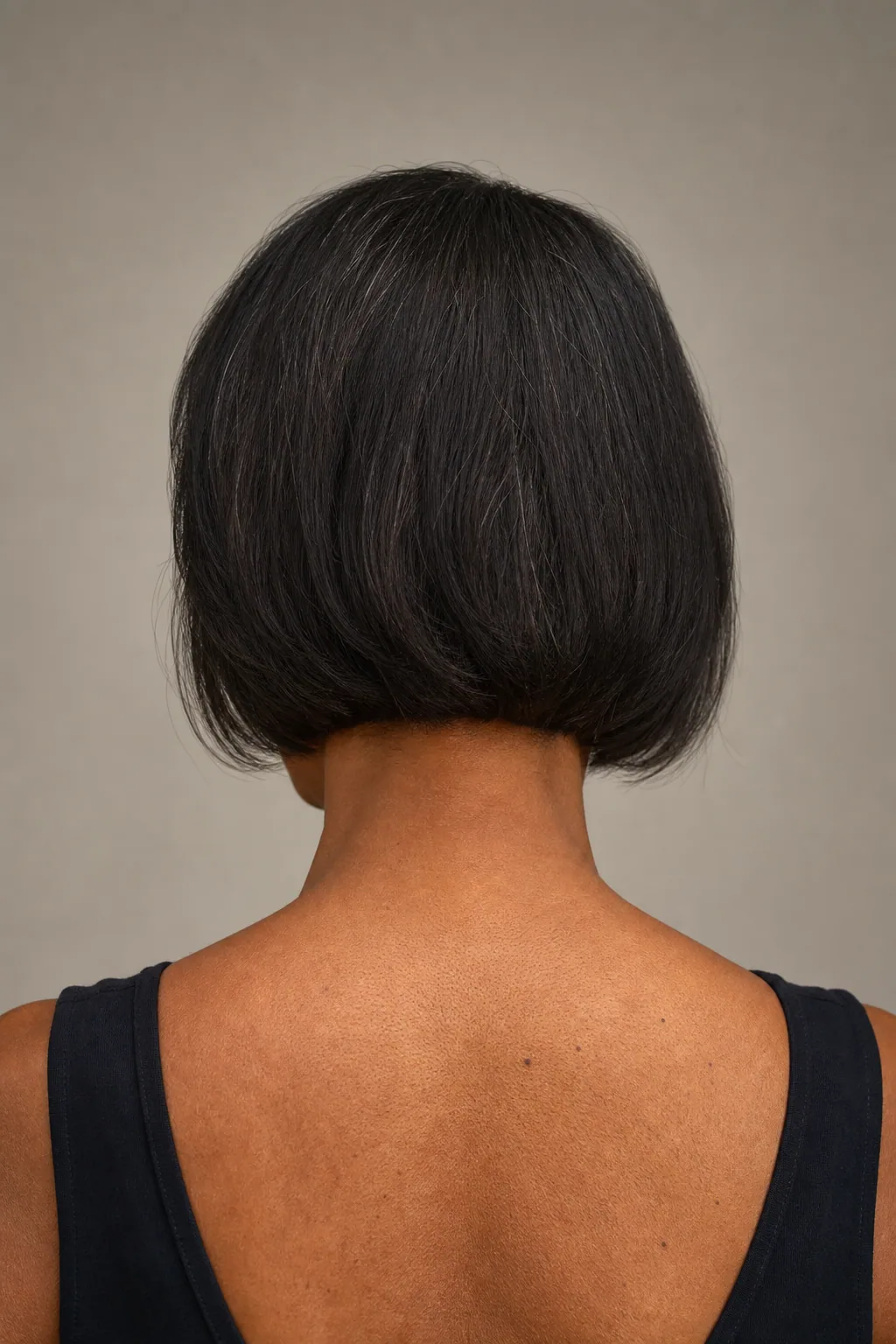
The safest strong cut on this page. It's blunt enough to give fine hair a genuinely dense-looking edge, and it lands far enough below the jaw that the two lines never compete. Ask for a fraction of length graduation toward the front so the outline isn't a perfect rectangle. More on the length variations in the lob for fine hair.
7
The cheekbone bob, above the corner
The other direction, and the braver one. Stopping the line high — level with the cheekbone rather than the jaw — leaves the jaw itself uninterrupted and puts the visual weight up where the face is narrower. Fine hair likes this length because there's almost no weight hanging below the ear to drag the roots flat.
8
The soft A-line
Shorter at the back, angling longer toward the front, so every strand around the face is travelling on a diagonal. That angle is the softening, and because the cut is still one connected line, nothing is thinned. Keep the angle gentle — a steep A-line on fine hair leaves very little at the back, where you need the weight for a full-looking nape.
9
The rounded-under bob
If you want the hair at chin level anyway, curve it inward at the ends so the silhouette turns before the jawline does. A rounded outline against an angular jaw is a genuine contrast rather than an echo. This needs a five-minute round-brush finish most days, so take it only if you'll do that — the version in how to blow-dry a bob at home is the fast one.
10
One to skip: the bob that lands on the jaw
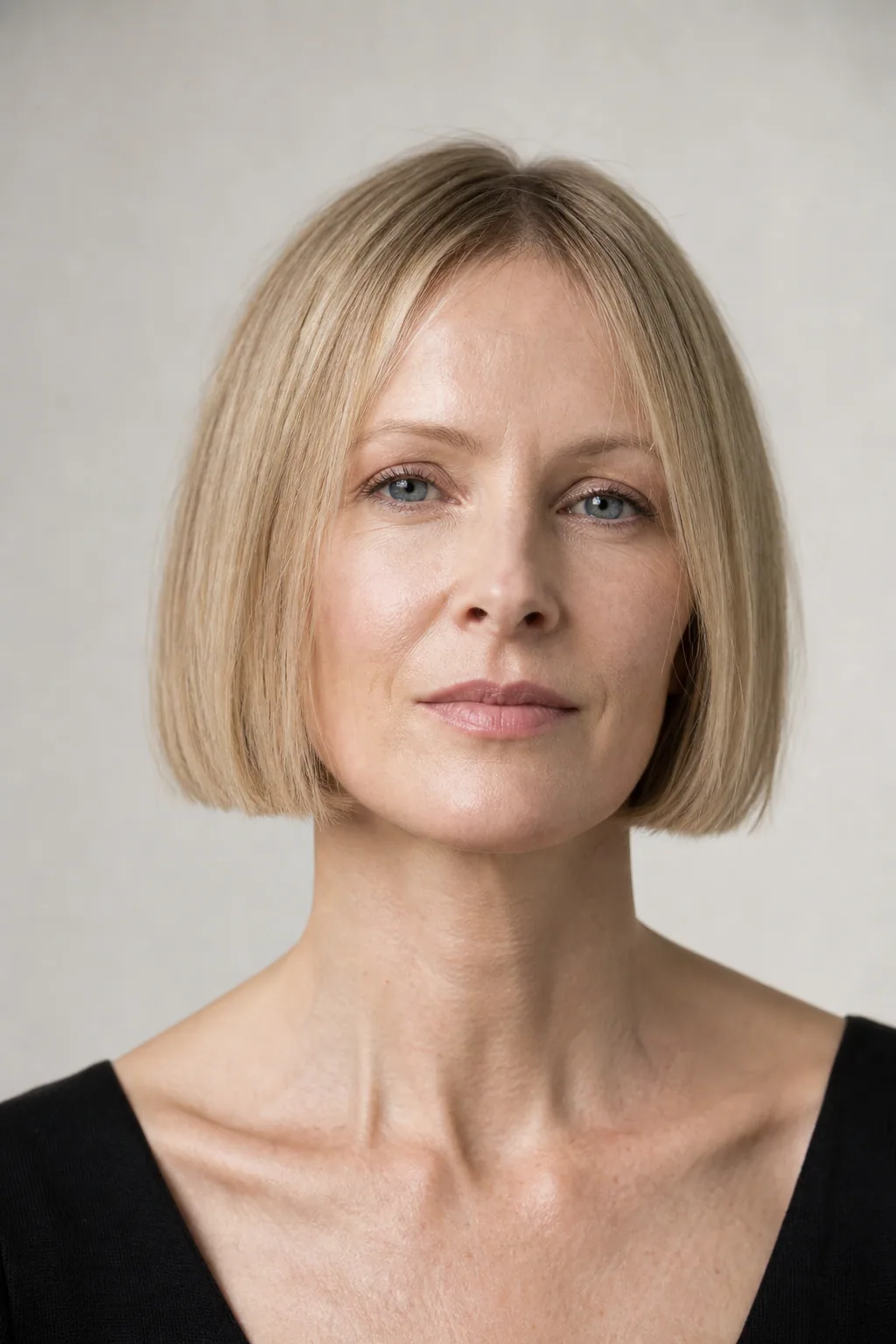
Straight across, exactly level with the corner of the jaw. Two parallel horizontals at the widest part of the face, and the eye reads the pair rather than either one. This is the cut most square-faced clients have been given at least once, and it's the reason so many of them believe blunt bobs don't suit them. The cut was fine. The landing wasn't.
Short cuts that run vertical
Short hair suits a square face well, on one condition: the shape has to be taller than it is wide. Height at the crown lengthens the face; width at the ears repeats it.
11
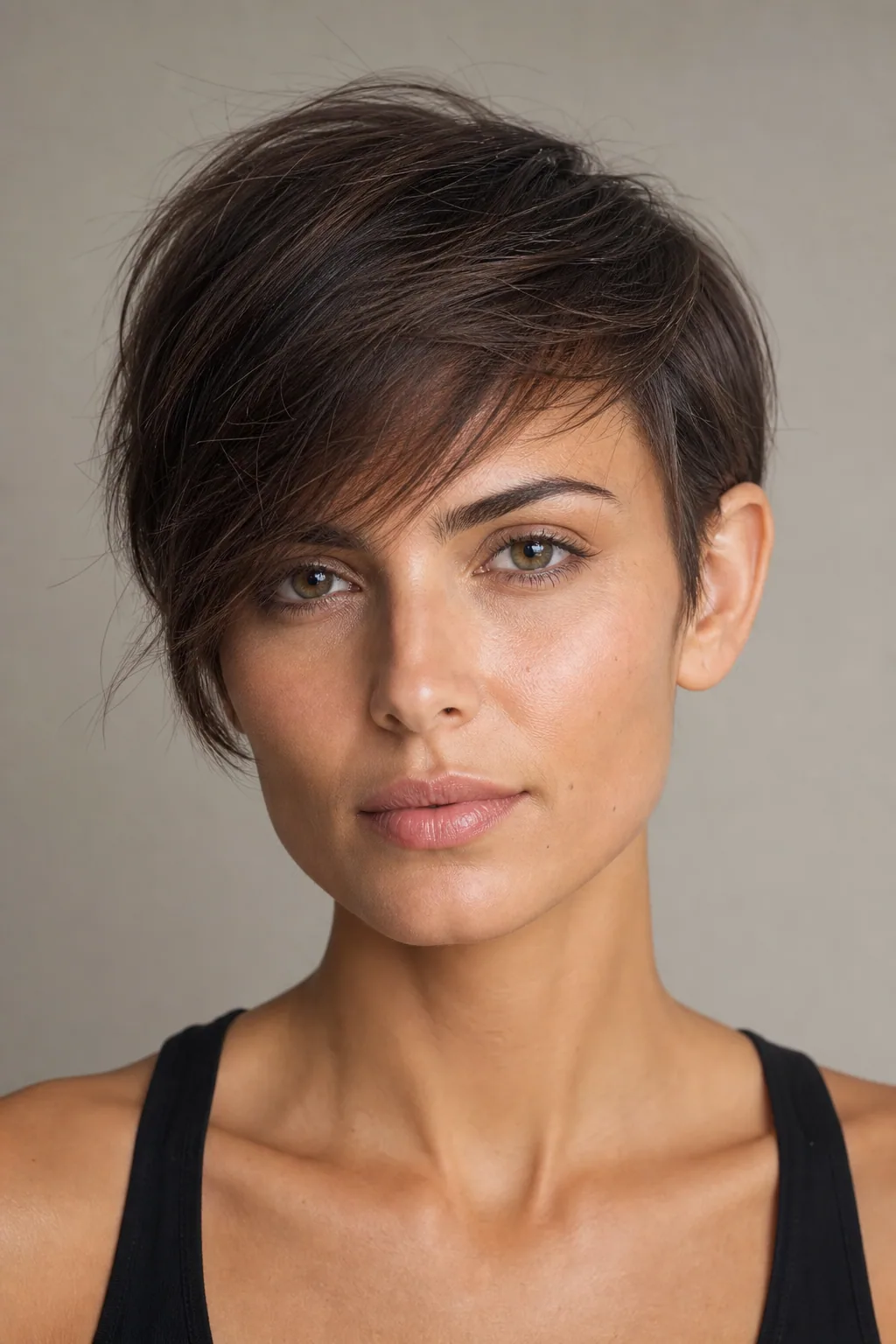
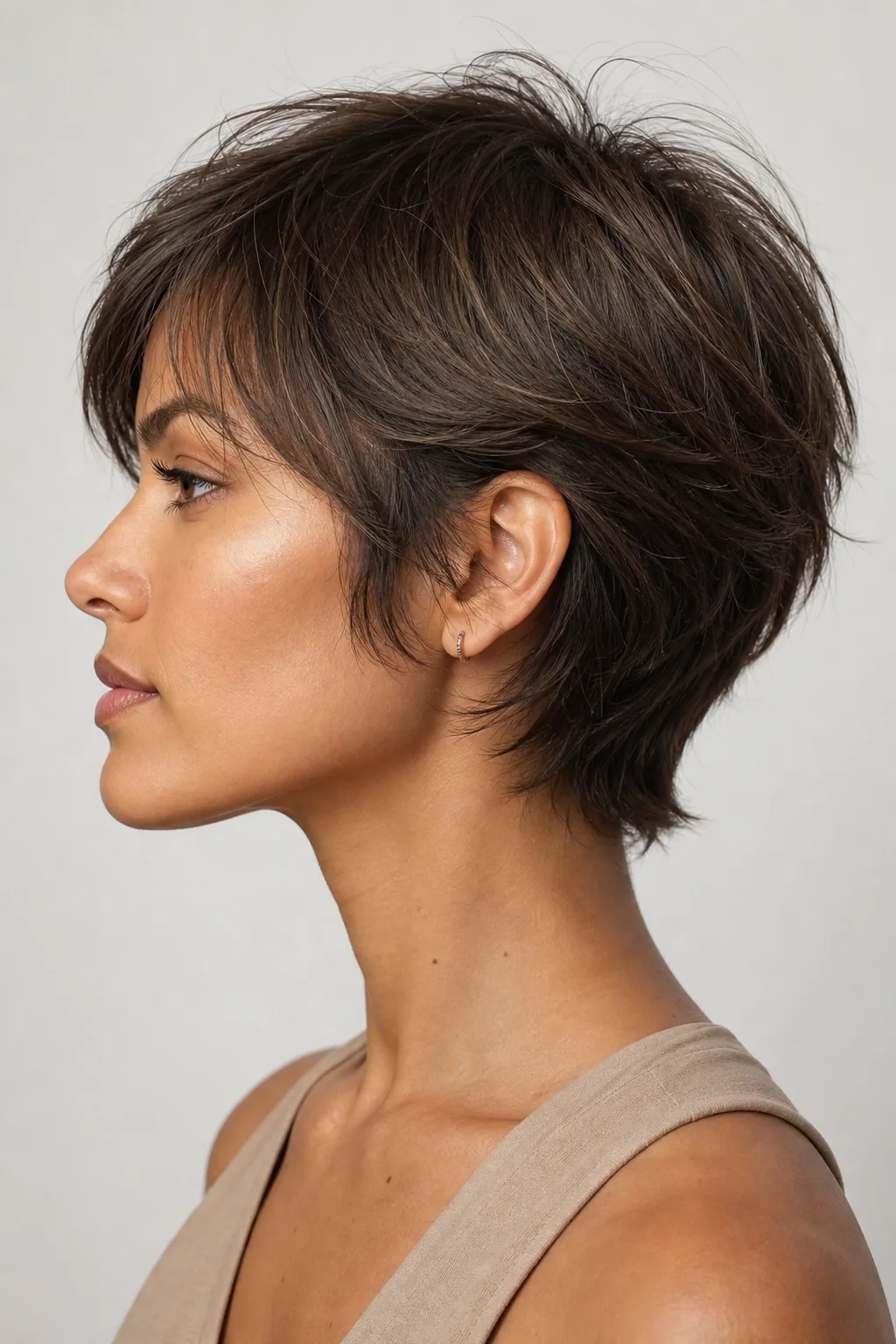
The high-crown pixie
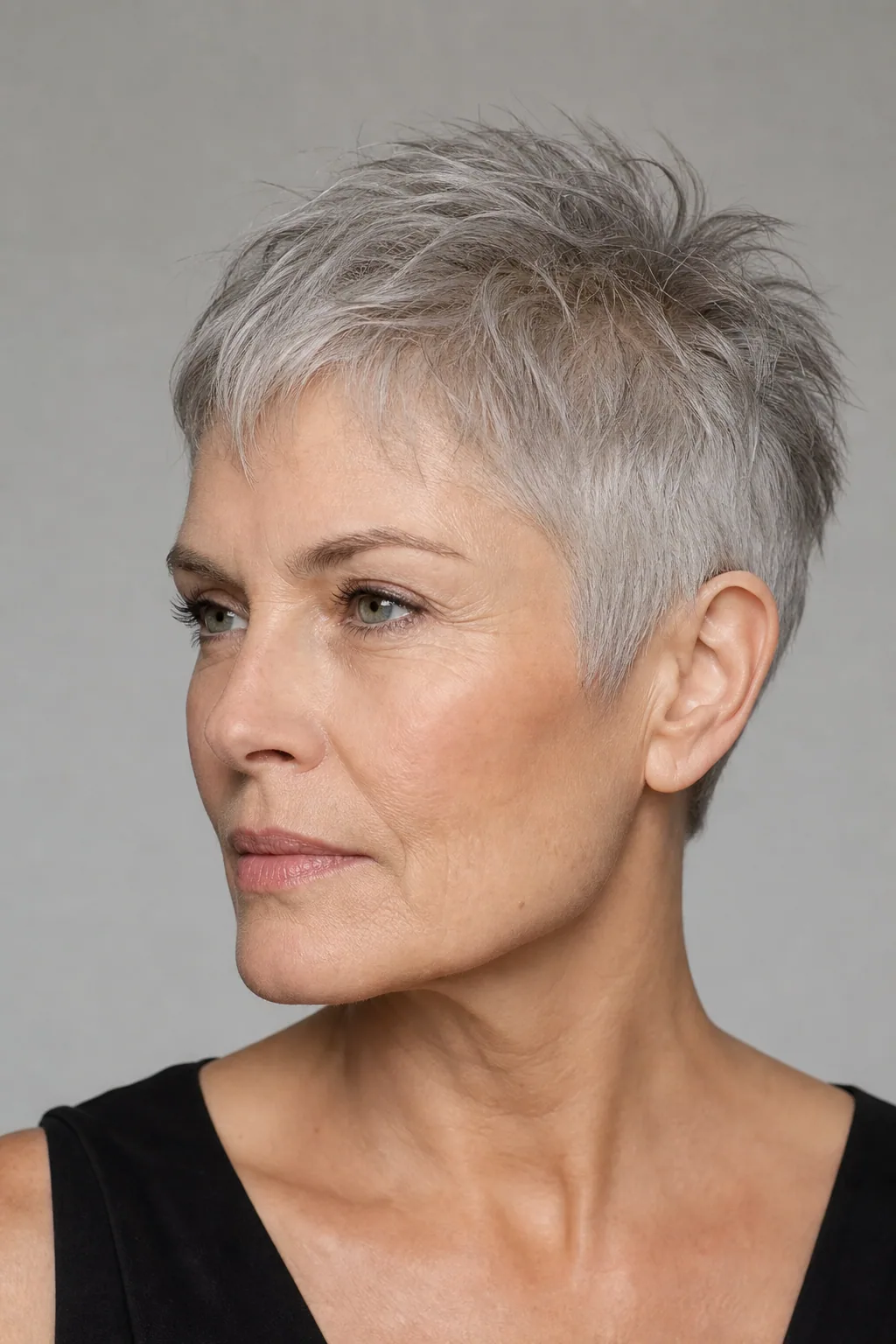
Weight kept high on top, sides taken close and point-cut rather than left blunt. The vertical emphasis does more to balance a square face than any amount of softening around the jaw, and fine hair is at its easiest this short — there's no length pulling the roots down. See pixie cuts for fine and thin hair for the grow-out reality before you commit.
12
The long pixie with a diagonal fringe
A little more length on top, swept firmly to one side so the fringe crosses the forehead at an angle. That single diagonal is doing the same job as an off-center part on longer hair — it interrupts the symmetry. Softer than a cropped pixie and easier to grow out through.
13
The soft-edged bixie
Between a bob and a pixie, with the ends around the ears left piecey rather than cut to a line. The absence of a hard edge anywhere near the jaw is the point. It's also one of the more forgiving short shapes on fine hair, since the length sits above the point where weight starts working against you — the full case is in the bixie for fine hair.
Bangs and parting: diagonals only
The front of the hair is where a square face is won or lost, and the rule is simple enough to hold in your head at the salon door: anything that runs on an angle helps, anything that runs level doesn't.
14
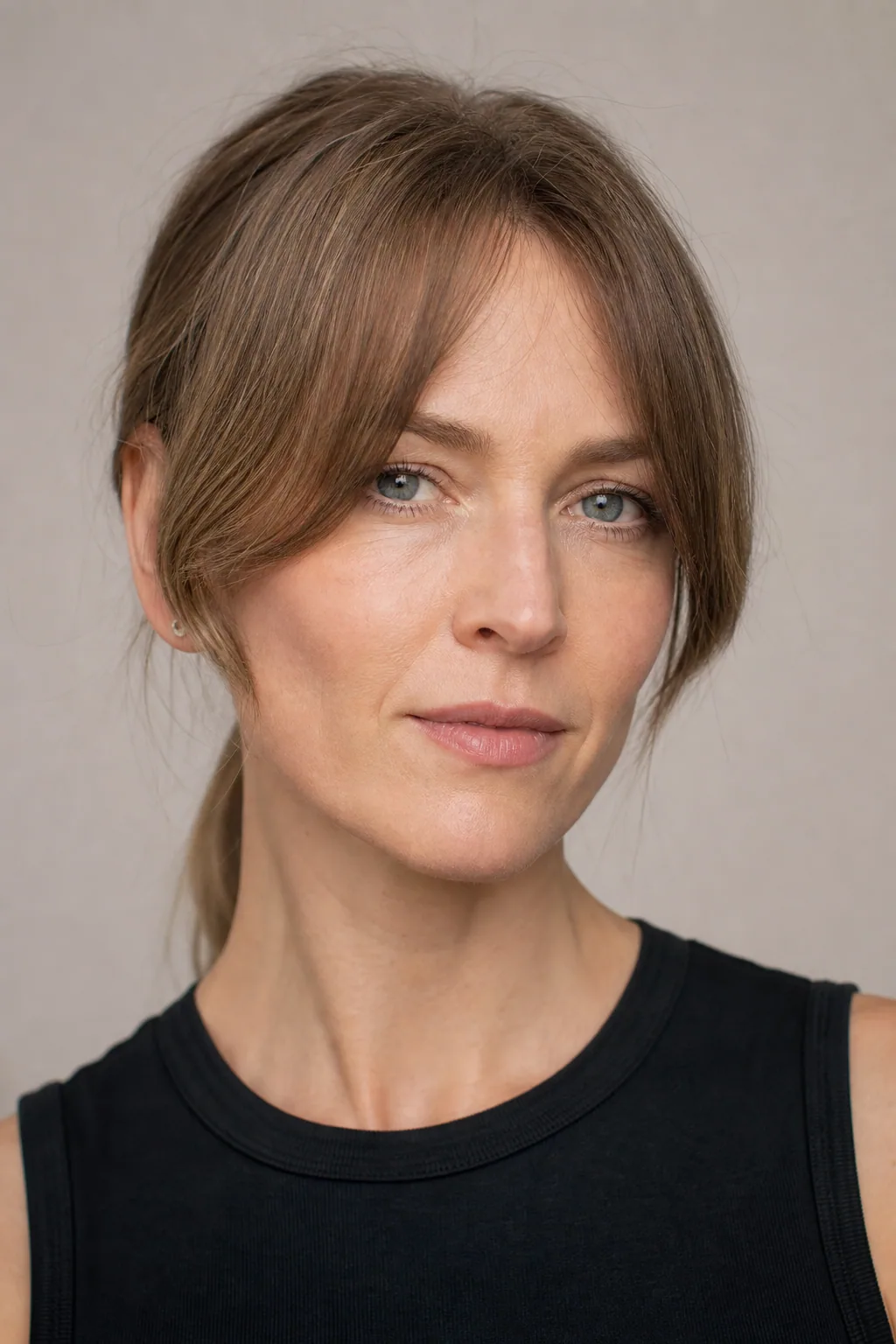
Off-center curtain bangs
The most useful fringe for this face shape, because it opens in a V rather than sitting on a line, and it can be worn without the density cost of a full fringe. Set the parting off-center and let the longer side fall past the cheekbone. Curtain bangs for fine hair covers how much hair a fringe actually borrows.
15
The long side-swept fringe
Longer than a true fringe, cut to blend into the face-framing rather than stop above the brow. It gives you the diagonal without the maintenance of a real fringe or the commitment of cutting into the hairline — which matters if your density at the front is anything less than average.
16
The other one to skip: the level blunt fringe
Straight across at the brow. It creates a second strong horizontal directly above the jaw's, and parallel lines make a face read wider and more rectangular than it is. On fine hair it costs twice: the geometry works against you, and a full fringe borrows density from the front hairline, which is usually the thinnest part of the head. If you love a blunt fringe, wear it long enough to split slightly and part it off-center.
What to ask your stylist
Say this and most of the decisions above happen without further negotiation:
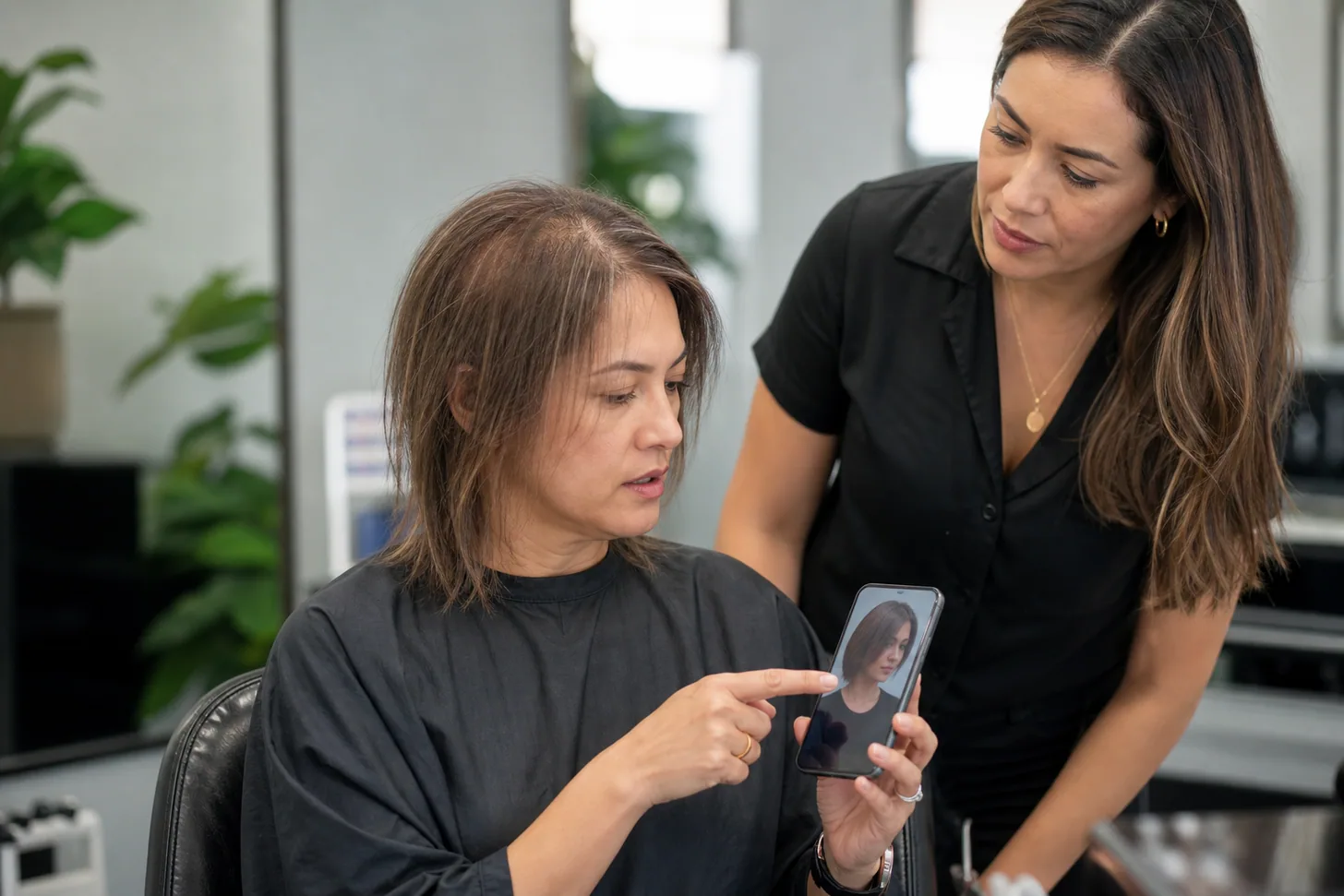
"I have a square jaw and fine hair. I don't want the length to finish level with my jaw — take it to my cheekbone or below my collarbone. Keep the perimeter blunt for density, but cut it as a soft curve rather than straight across, and point-cut the corners. I'd like the part off-center. Please don't use thinning shears or a razor."
The last sentence matters more than it sounds. Softening is exactly the brief that tempts a stylist toward texturizers, and on fine hair that's the one tool that removes density you can't replace. If layers are wanted, ask for them internally.
When these rules bend
Face-shape rules are a starting point, not a verdict, and two things override them. Density comes first: if your scalp is visible at the crown, build height there and accept a little extra width, because coverage beats proportion every time — coverage for thinning on top is the page for that.
And your natural texture decides what's achievable: a wave gives you a diagonal for free, so a wavy square-faced client can wear a blunter, more level cut than a straight-haired one and still read soft. If your hair is dead straight, the softening has to be built into the cut rather than hoped for from the styling — the mechanics are in fine, straight hair.
When a square-face cut isn't the priority
You can see your part widening. Density outranks proportion. Solve coverage first, then come back to the outline.
You wear your hair up most days. None of the framing decisions survive a ponytail. A cut with a strong perimeter and no short pieces is worth more to you — see fuller-looking ponytails for fine hair.
You've been told to "add lots of layers to soften it." On fine hair, get the softness from the outline and the part instead. Layers are optional here; weight isn't.
You want a specific cut you've seen and it breaks these rules. Then break them knowingly — an off-center part and a curved hemline will carry almost any shape. Rules are cheaper to bend than hair is to grow.
A cut with a slightly curved perimeter that lands either above or below the jaw, worn on an off-center part. The curve does the softening that layers would normally do, so the ends keep their weight. Landing the hemline anywhere except level with the jaw corner is the single most important decision — hair that stops exactly at the corner draws a horizontal line across the widest, most angular point of the face and doubles it.
Yes, and on fine hair it's often the best cut available — the usual advice to avoid it is written for people who have density to spare. A blunt perimeter is the strongest fullness illusion fine hair has, and a strong jaw gives that heavy line something to sit against instead of hanging in space. The condition is length: take it to the cheekbone or to the collarbone, not to the jaw itself, and ask for the corners of the hemline to be softened by a quarter-inch of point cutting. The bob for fine hair has the full length ladder.
Off-center, in almost every case. A square face reads square partly because it's symmetrical about a vertical line, and a center part reinforces that line exactly. Moving the part an inch or two off-center breaks the symmetry, throws more hair over one side of the forehead, and creates a diagonal that the eye follows instead of the jaw. It also gives fine hair a little natural lift where the heavier side leaves the scalp.
They can, but they're the expensive way to buy softness when your hair is fine, because visible layers taper the ends and the ends are where fine hair looks thinnest. The cheaper route is the shape of the perimeter — a soft A-line or a slightly rounded hemline reads as softness without removing any weight. If you want layers as well, ask for them internally, under the top section, so the surface and the hemline stay intact.
Anything with a diagonal in it. Curtain bangs, a long side-swept fringe, and soft wispy pieces all cut across the squareness at an angle. What to avoid is a heavy, straight-across fringe sitting level at the brow: it adds a second strong horizontal above the jaw's horizontal, and two parallel lines make a face read wider and more rectangular. It also costs fine hair density from the front hairline, which is the last place you want to spend it. Bangs for fine and thin hair compares the fringe types.
Not at all — but the shape has to run vertical rather than horizontal. Height at the crown and close, softly tapered sides lengthen the face and pull the eye up away from the jaw, which is exactly what a pixie does well. The version that goes wrong is a short cut with equal width at the ears and a flat top, because that repeats the square. Ask for the weight to sit high and the sides to be textured rather than blunt.
Both are roughly as wide as they are long. The difference is the jaw: a square face has visible corners and a jawline that runs fairly straight from the ear to the chin, while a round face curves continuously with no defined corner. If you can feel a distinct angle where your jaw turns toward your chin, you're square. It matters, because the two shapes want opposite things from the hemline — a round face wants length past the chin, a square face wants the line moved off the corner in either direction.
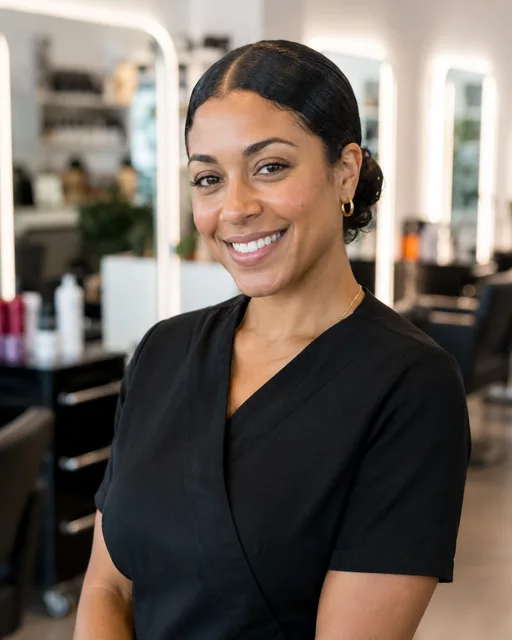
Eleven years behind the chair, cutting fine and thin hair into shapes that hold. Simone's position on square faces is that the jaw was never the problem — the hemline landing on it was.
Results vary with hair type, density, and growth patterns. This guide is educational and not a substitute for an in-person consultation with a licensed stylist.
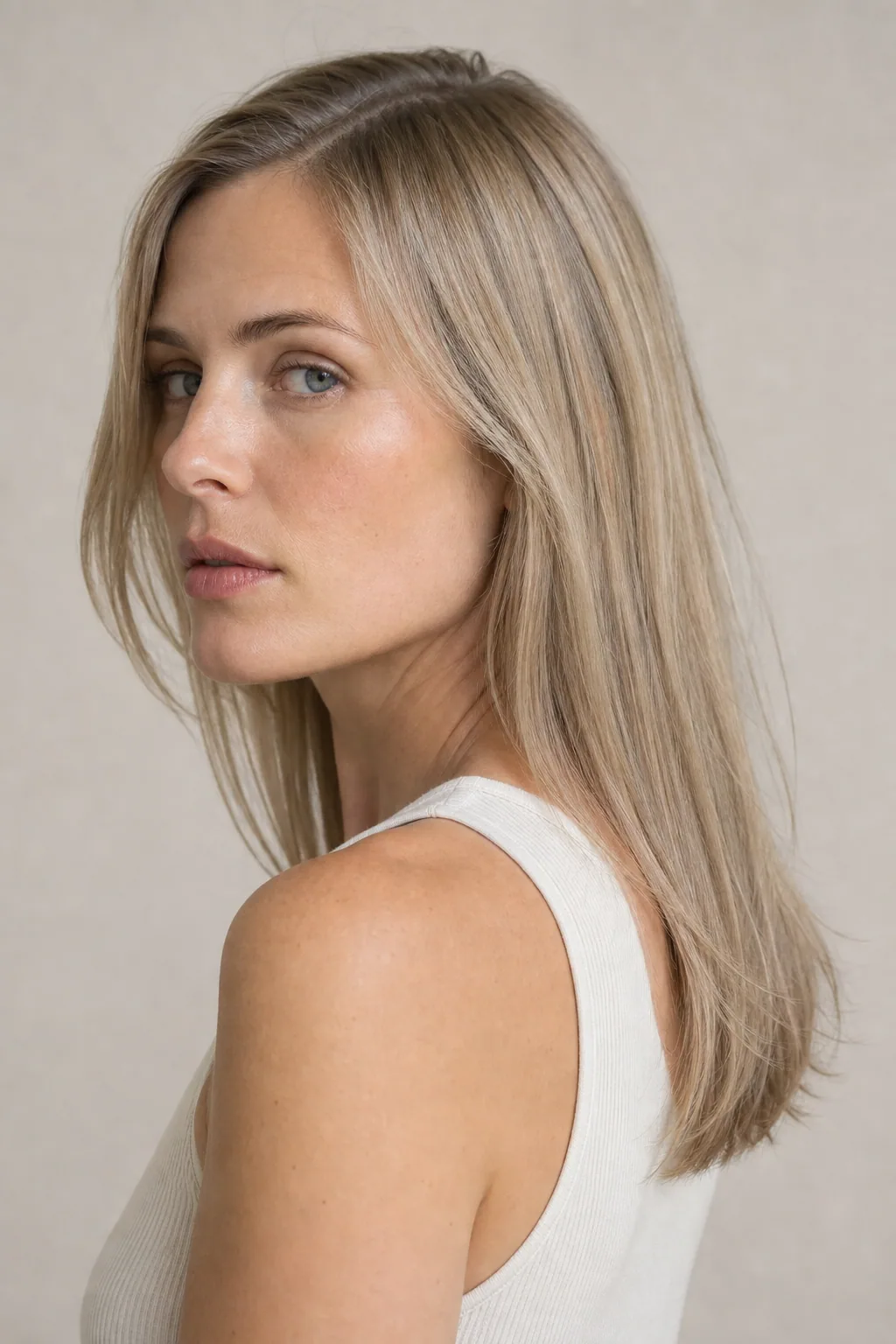
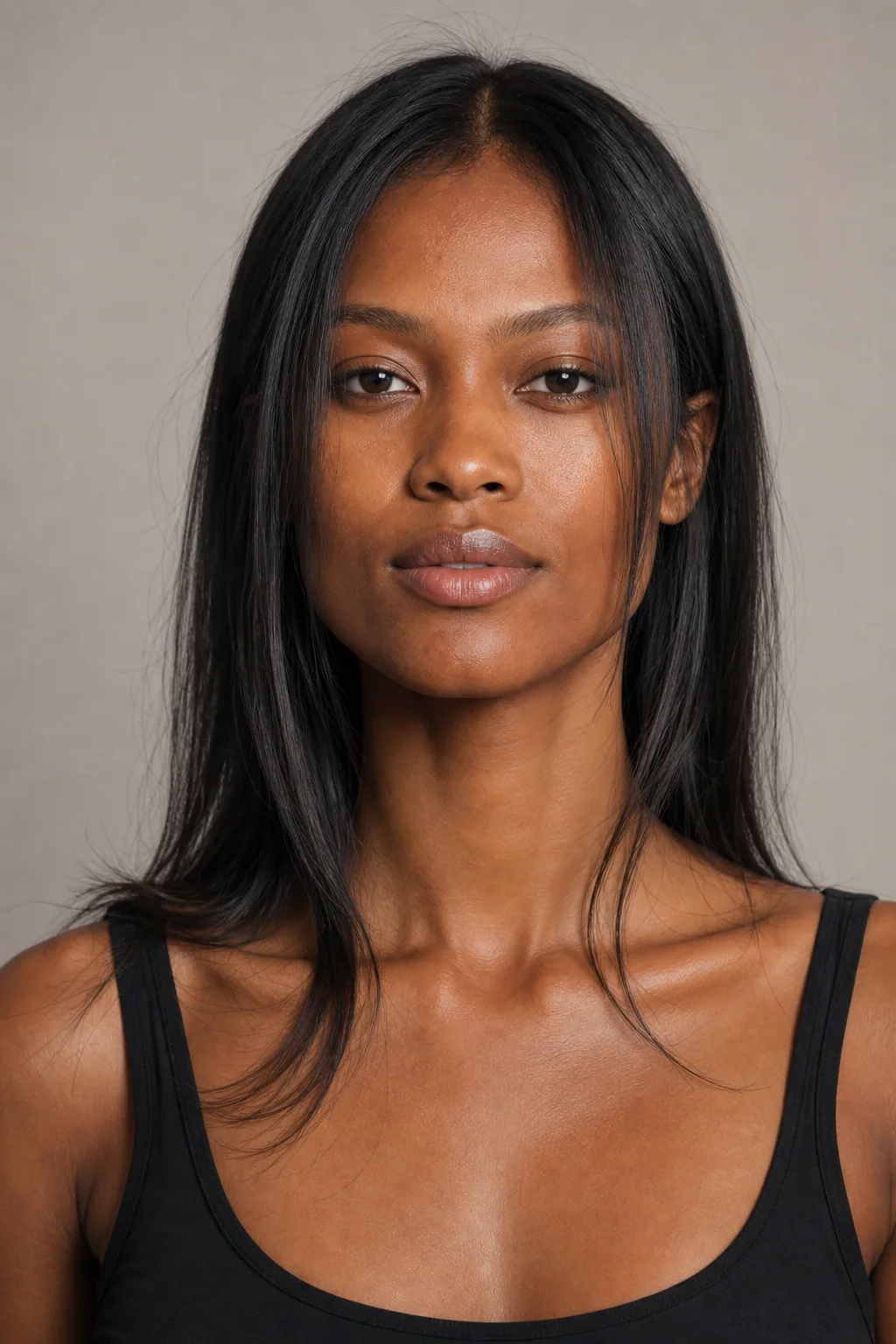
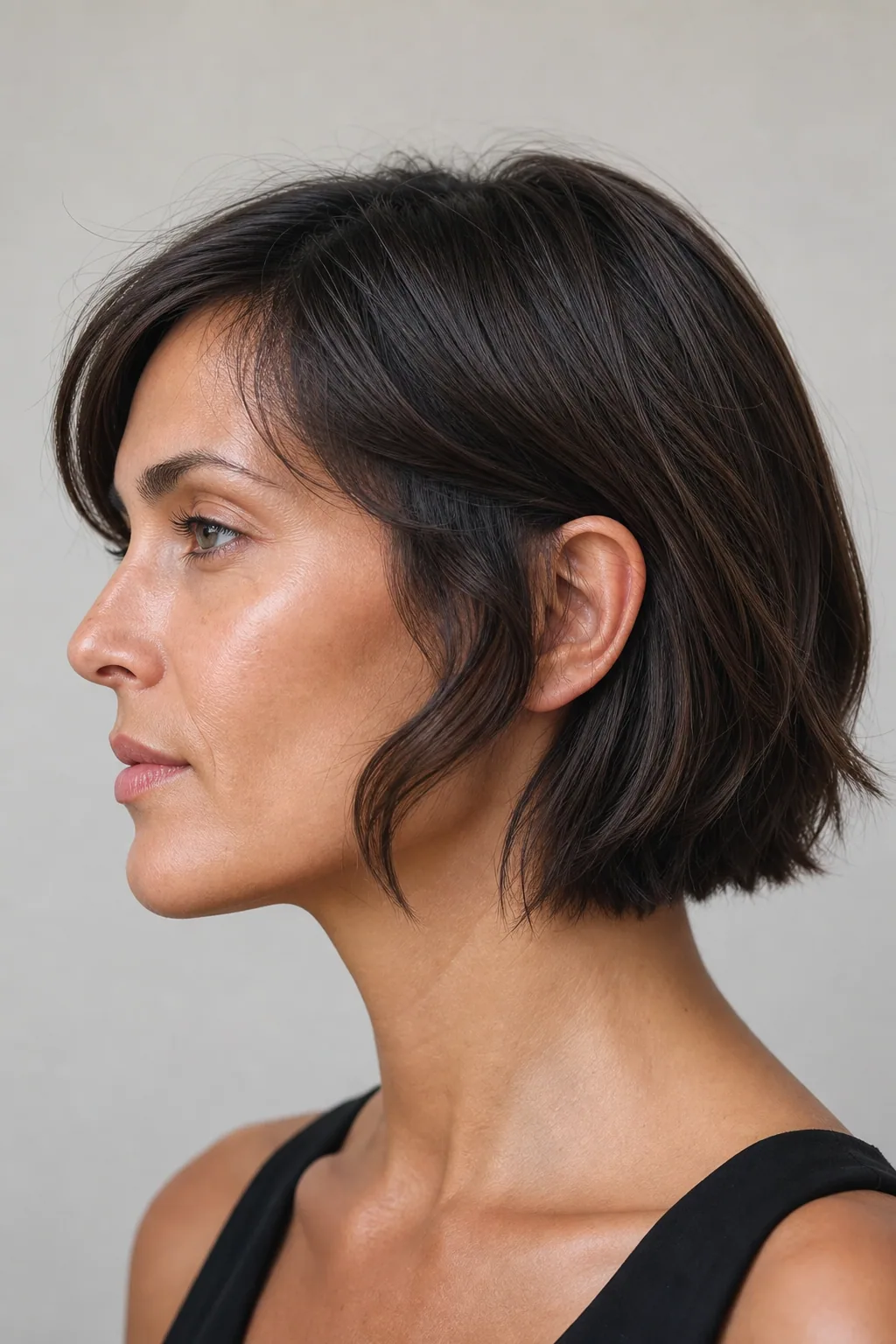
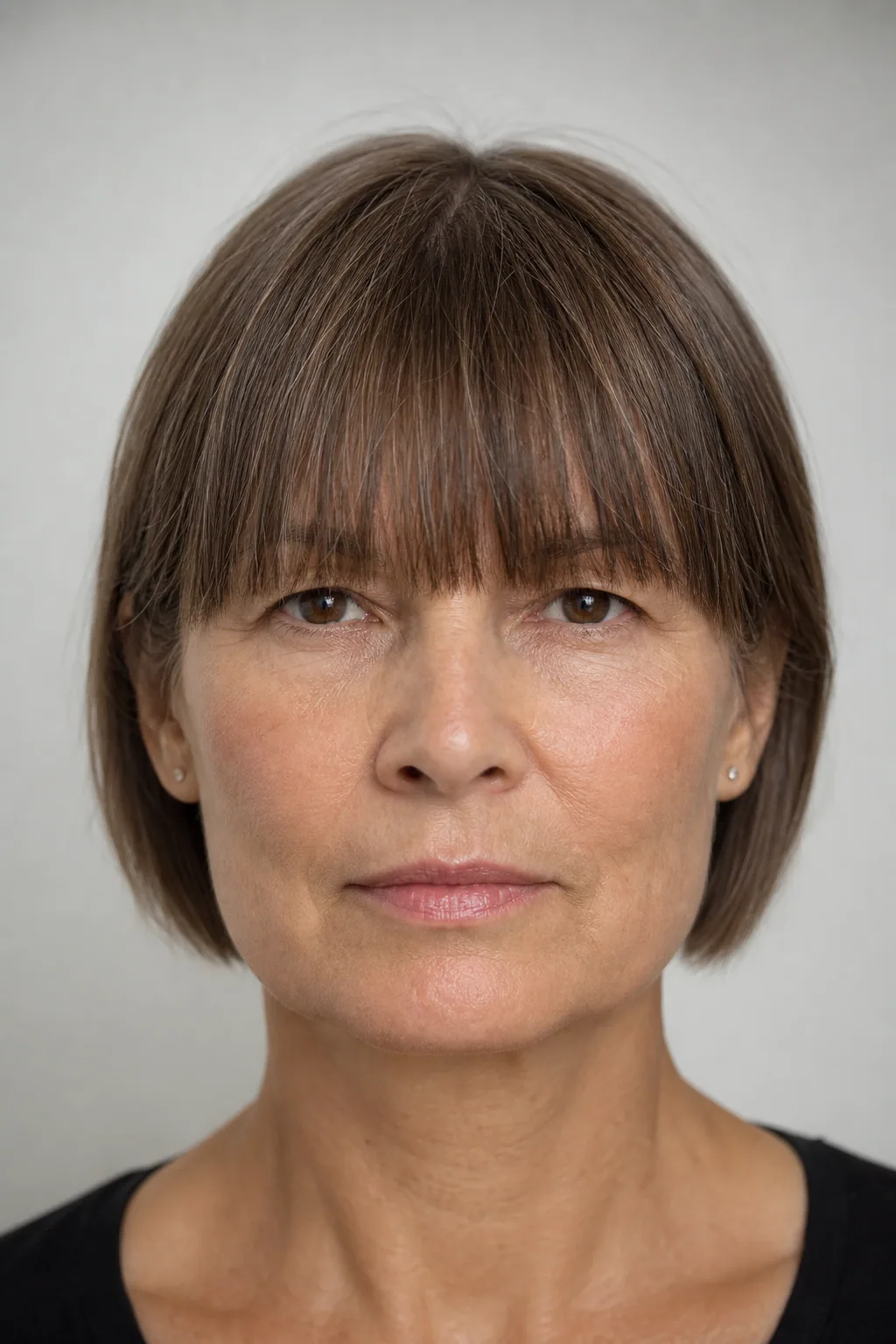
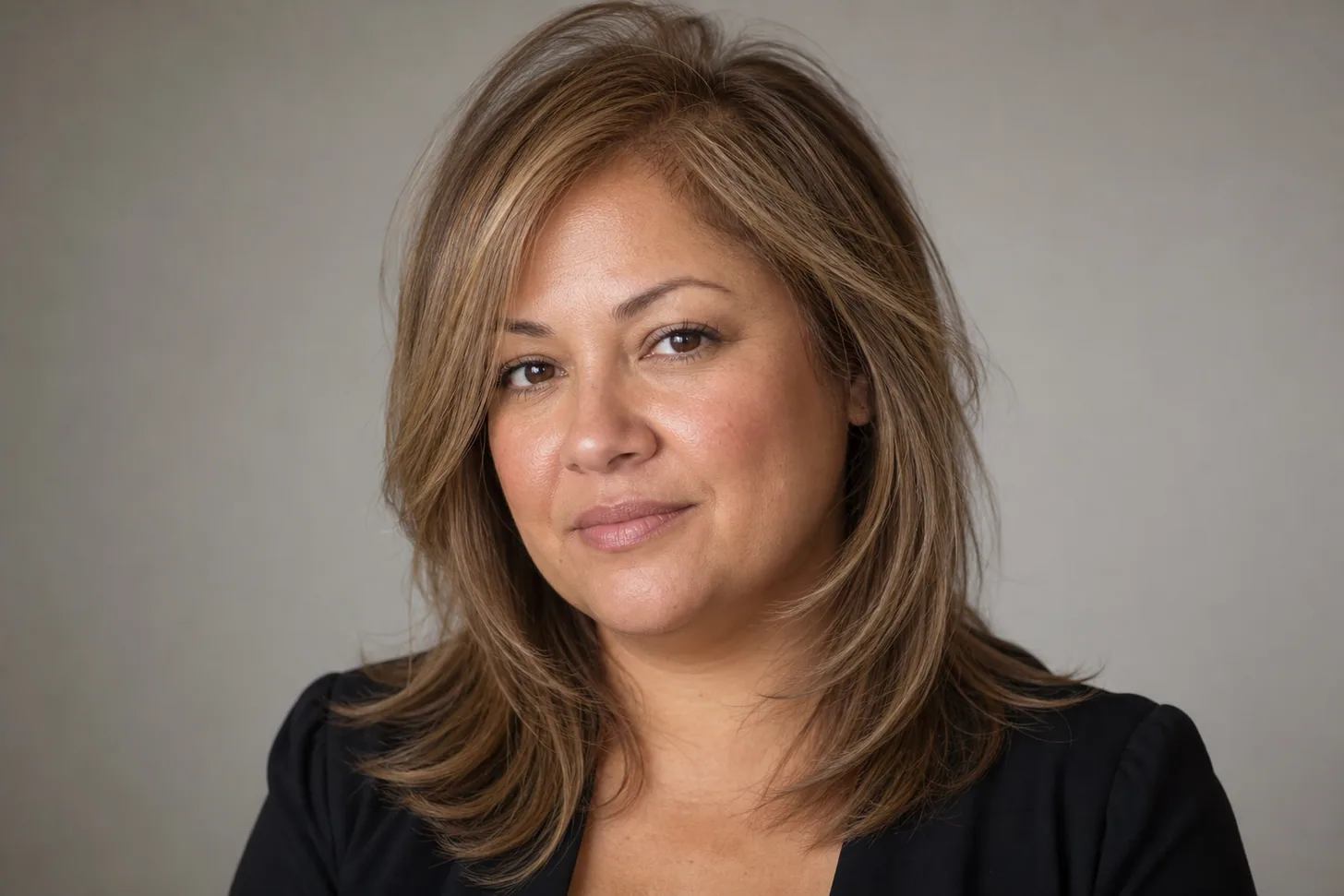
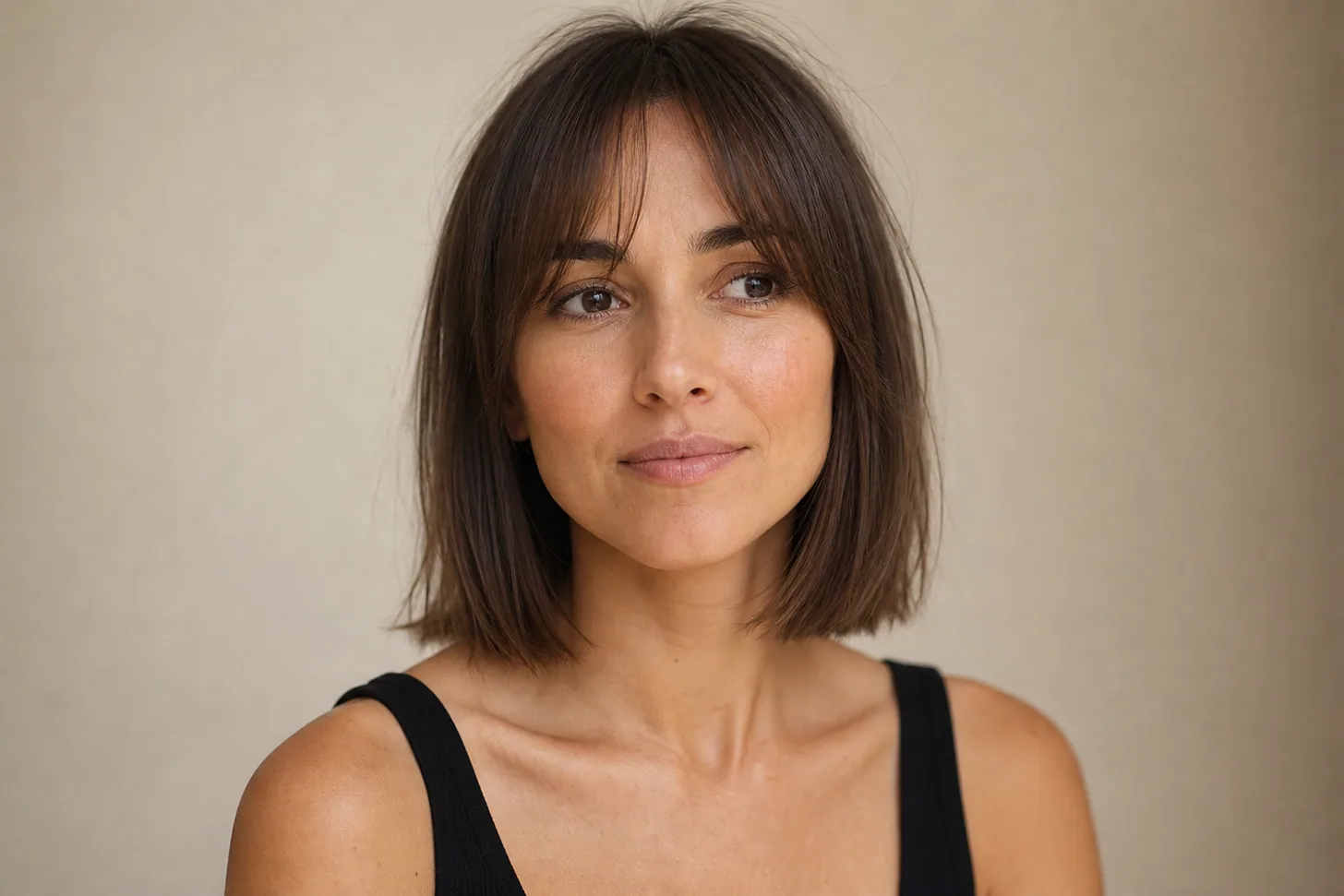
Hairstyle images in this guide are AI-generated illustrations, not photos of real clients or results. See our image policy.
Get the good hair intel
One honest, stylist-written guide in your inbox each week. No hype.

 SB
SB