Reviewed by Tara Sullivan · Updated September 2026 · 10 min read
The best low-maintenance short haircuts for fine hair are soft-edged shapes that air-dry into place and grow out gracefully, like a point-cut pixie or a rounded short bob. Short fine hair lifts on its own, so the styling time drops close to zero.
The hidden cost is the trim. Below are 14 low-maintenance short haircuts for thin hair, with how long each one lasts between appointments.
Chair-side note
"Low-maintenance" means two different things, and clients rarely say which. One is minutes at the mirror; the other is weeks between trims.
The shortest cuts win the first and lose the second. A tight crop takes no styling at all and looks overgrown in five weeks. A soft pixie takes a minute and lasts twelve. I ask which one matters before I pick up the scissors.
SB
— Simone Baptiste, Senior Stylist
What makes a short haircut low-maintenance on fine hair
Two things: it looks finished without a round brush, and it grows out without losing its shape. The second depends on the edge, not the length.
Soft, point-cut edges grow into a longer version of the same cut: ten to fourteen weeks between trims.
Sharp, precision edges (a blunt bob, a tight nape) look overgrown by week five or six.
Very short crops need no styling but a trim every four to six weeks.
If you want low effort both at the mirror and on the calendar, choose from the soft shapes. The all-lengths version of this page is our low-maintenance haircuts for fine hair.
Low-maintenance pixie cuts for fine hair
A pixie is the least styling any cut asks for, because there is no weight to pull fine roots flat. Keep the edges soft and it lasts longer than you would think.
1
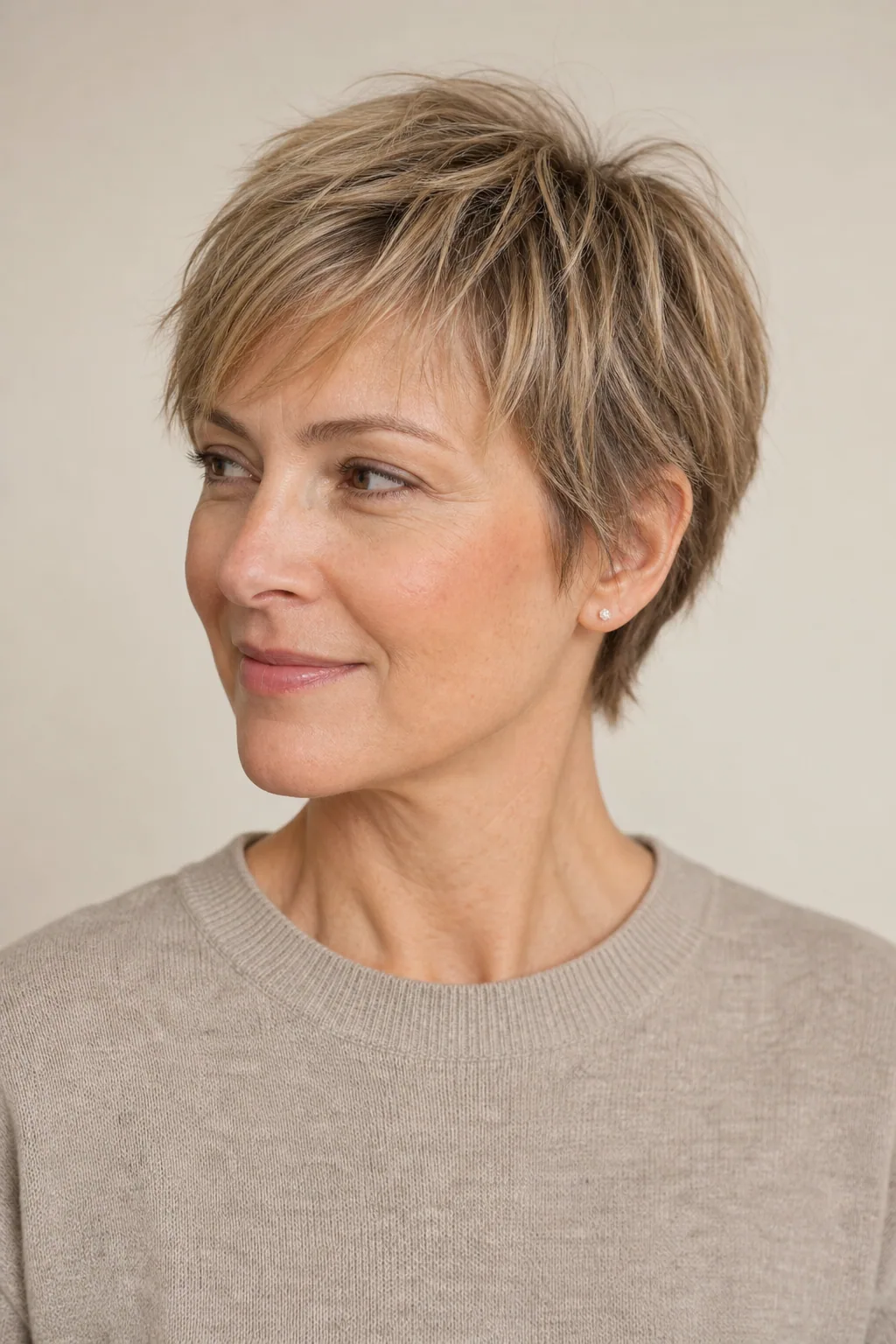
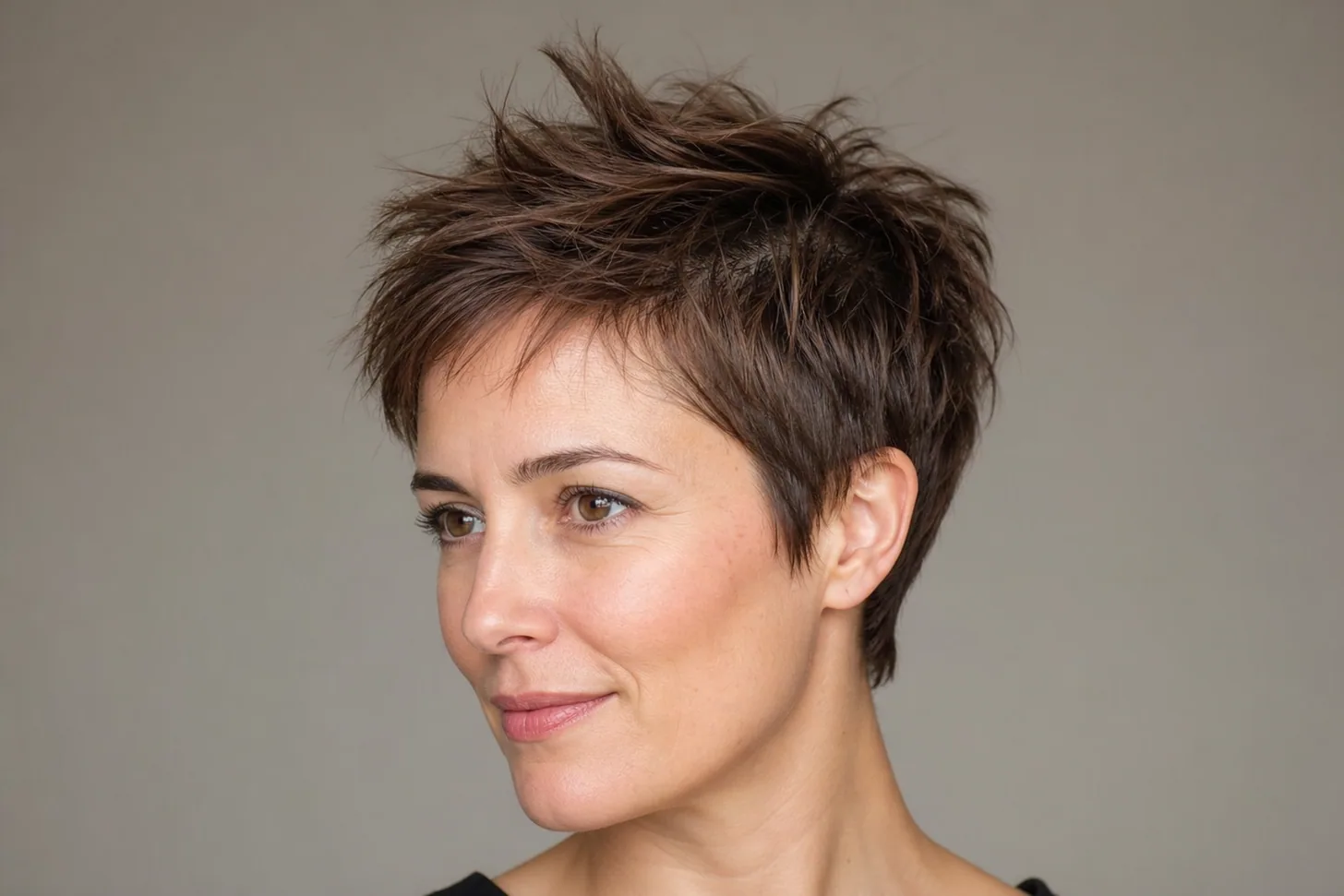
Soft point-cut pixie
Short all over with soft, point-cut edges and a slightly longer crown. It air-dries into shape and grows into a longer pixie rather than out of one.
Ten to twelve weeks between trims. More versions are in our pixie cut for thin hair gallery.
2
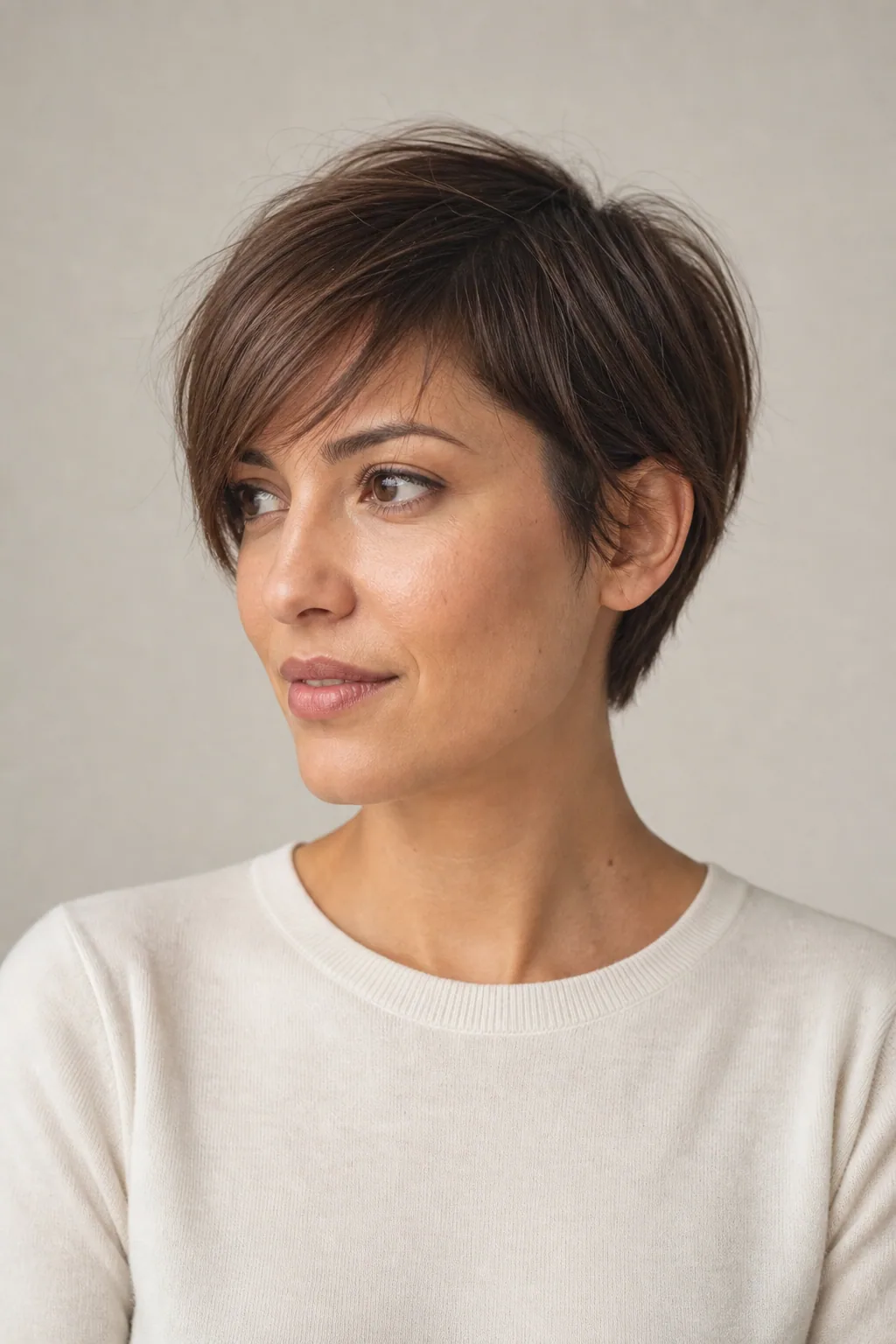
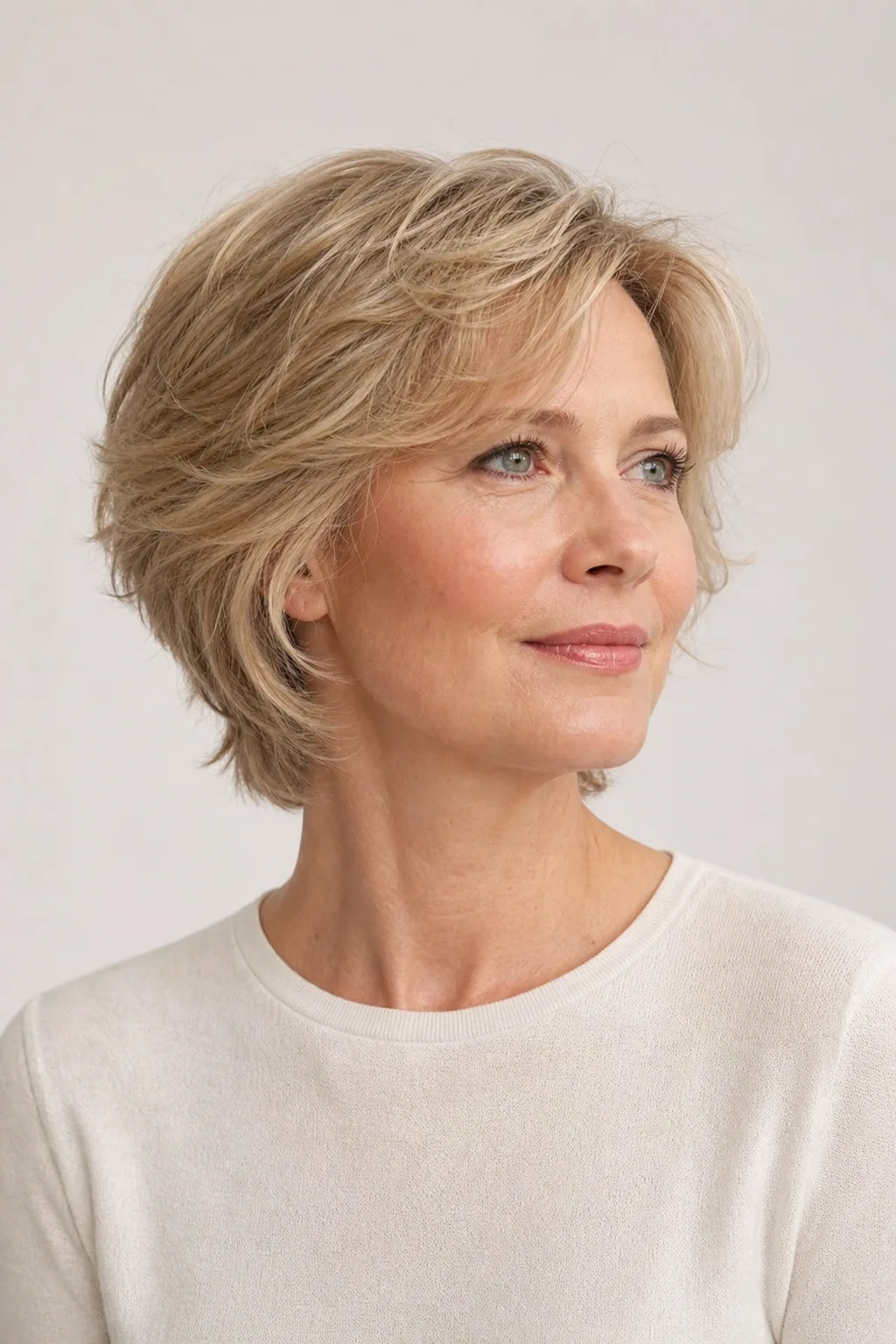
Long pixie you can tuck
A longer pixie with enough length on top to tuck behind the ear. On a day you do nothing, tuck it; on a day you have a minute, sweep it.
It is the most forgiving pixie to grow out, and the gentlest first short cut.
3
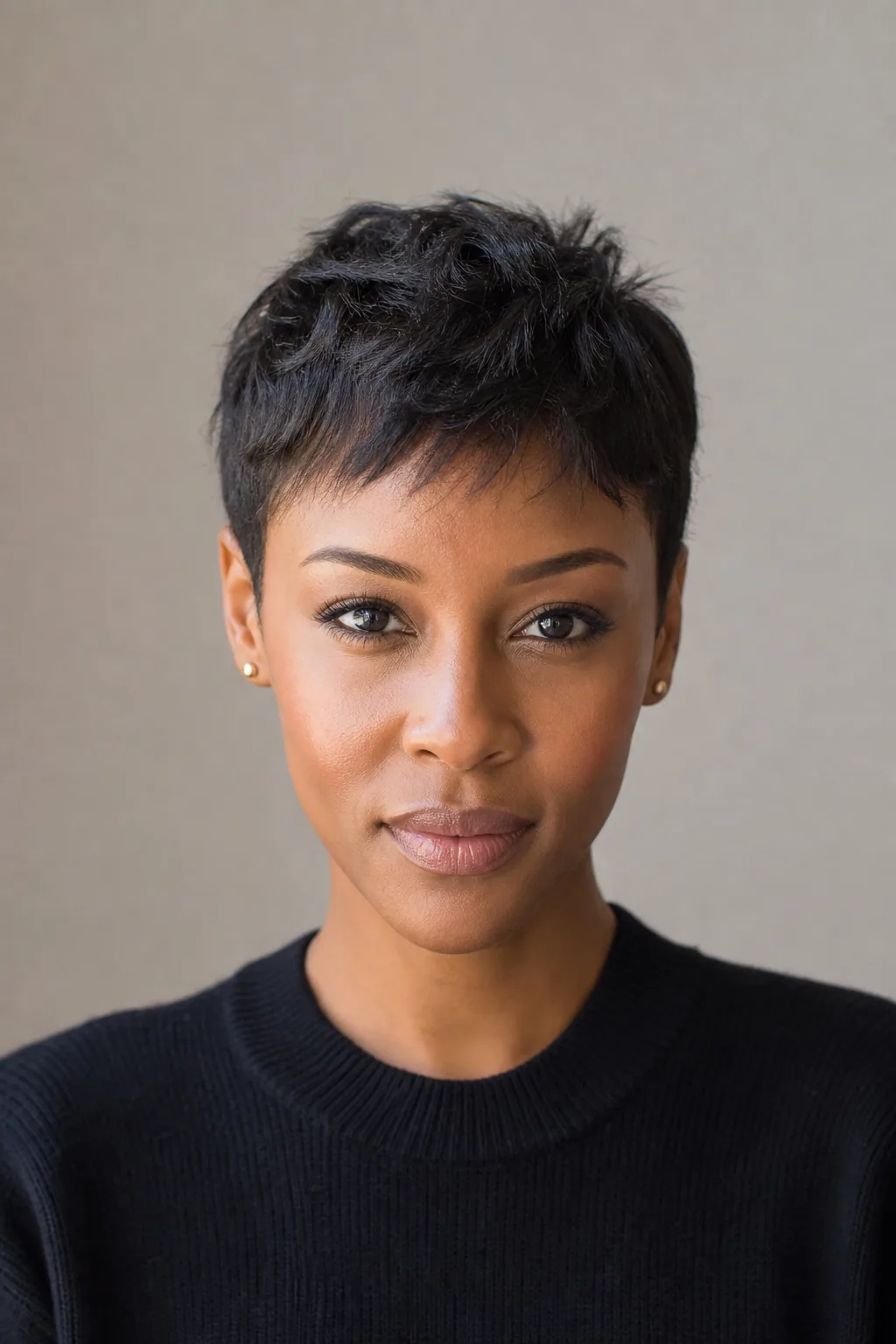
Textured crop
Close sides and a couple of inches on top, finished by pushing it forward with your fingertips. No dryer, no brush.
It is the lowest styling time on the page and one of the highest trim costs: every four to six weeks. Ask for the top to be point-cut, not thinned.
4
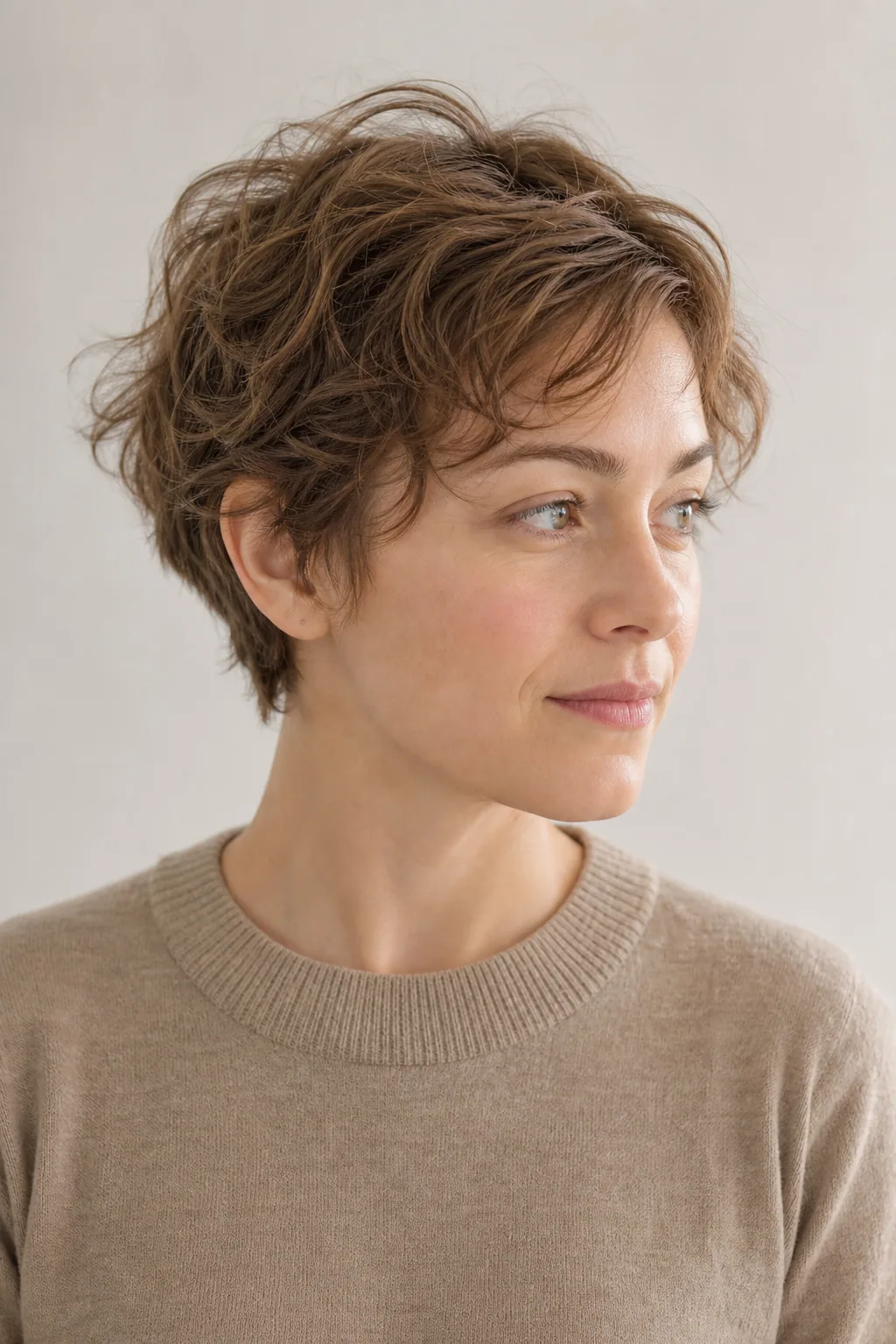
Wavy pixie
A pixie cut dry, so each bend lands where it grows. A natural wave is free volume on short fine hair.
Scrunch in a little mousse and leave it alone while it dries. Touching it is what turns wave into frizz.
Low-maintenance short bob haircuts for fine hair
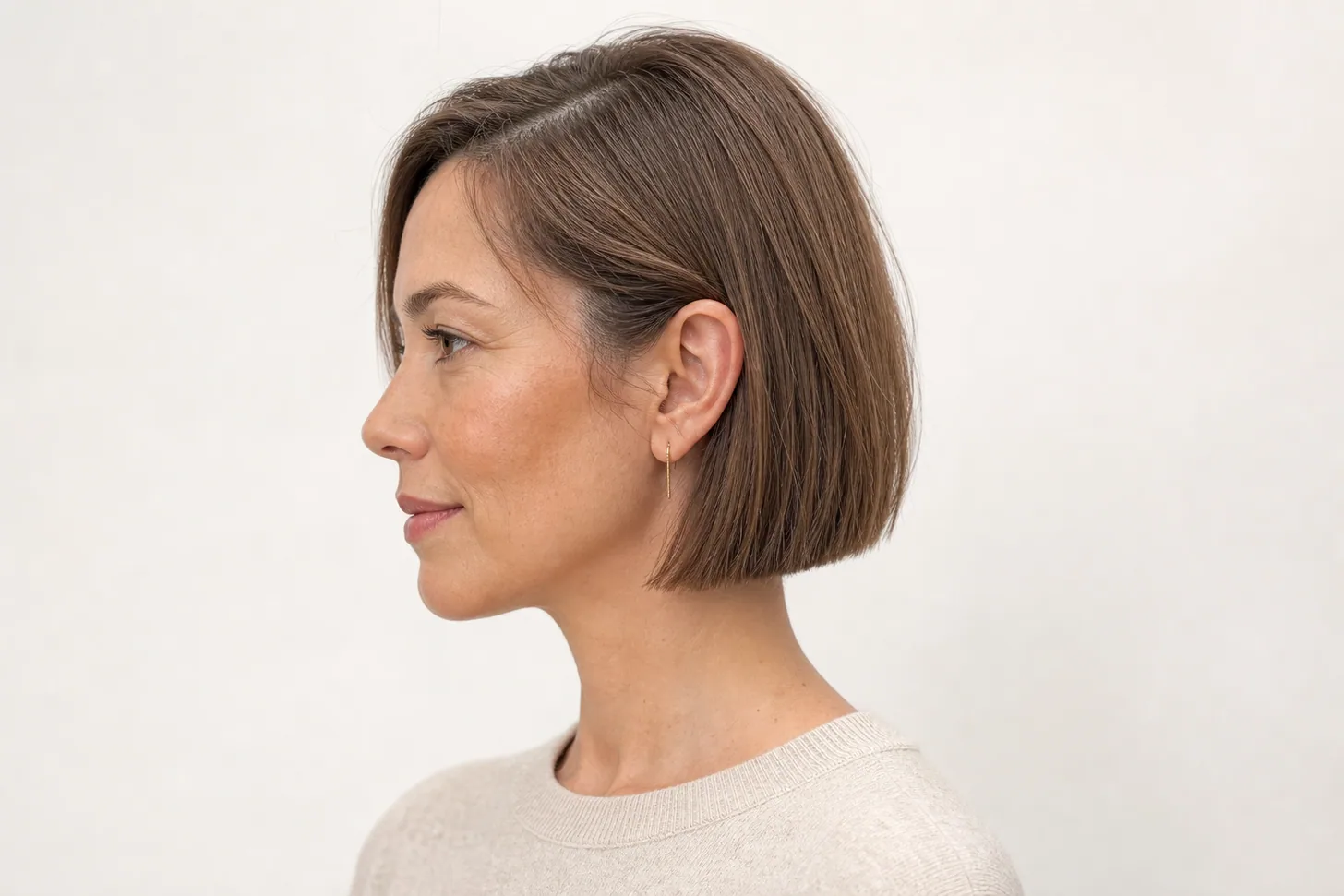
A short bob is only low-maintenance if the edge is soft. A precision blunt bob looks sharp for five or six weeks, then needs a trim and a blow-dry to sit straight.
5
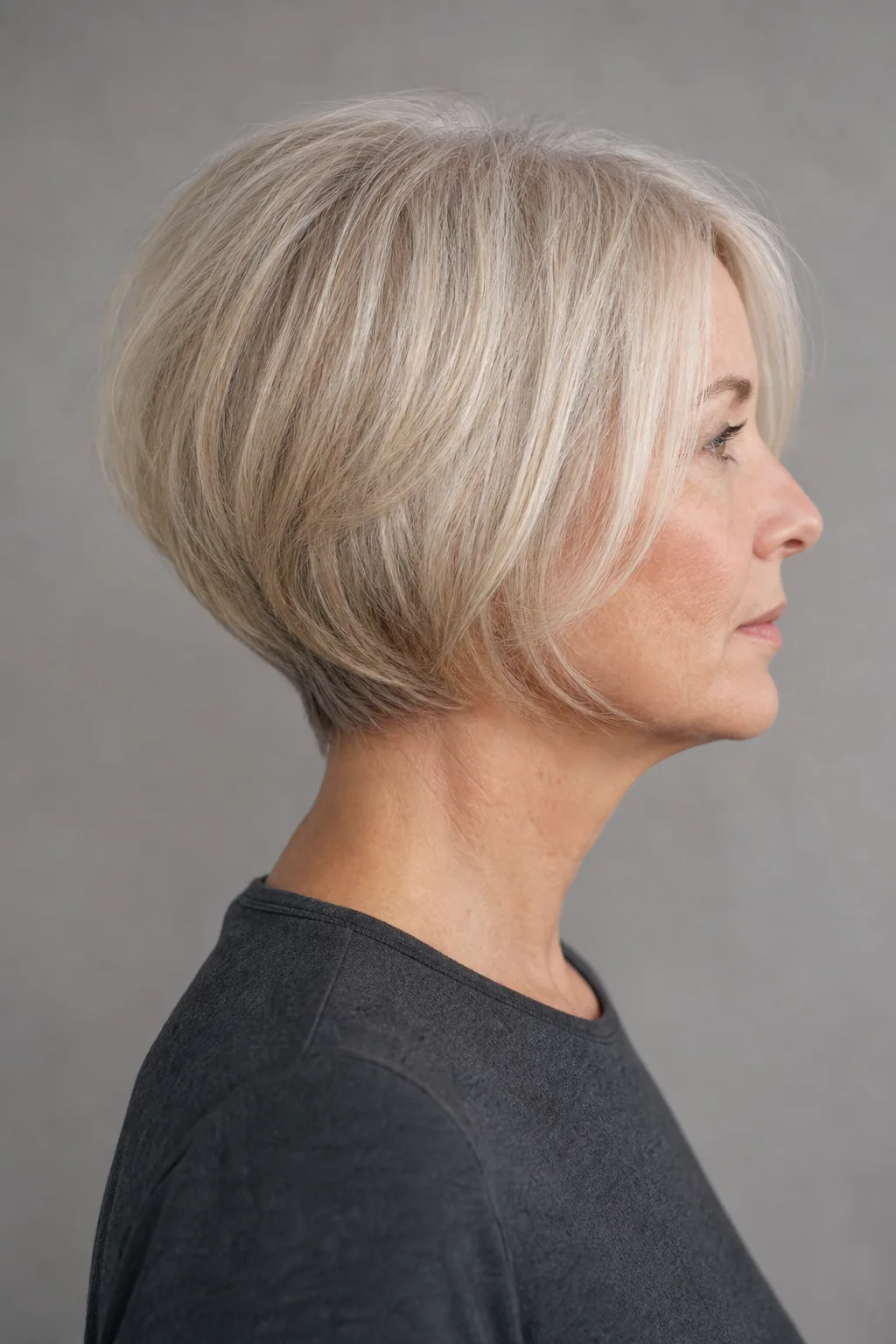
Soft rounded short bob
A short bob with lightly beveled ends that turn under by themselves. The side part does the lifting, so there is nothing to blow into it.
A chin bob with point-cut, piece-y ends, worn undone. A messy finish is the point, so it looks right on the mornings you skip styling.
It needs medium density; on very thin hair the chop reads as gaps. Keep the choppiness to the ends only.
7
Soft stacked bob
Gently stacked at the back so the crown lifts by itself. The graduation is built-in volume, which is why it needs so little styling.
Ask for a softened edge; a crisp graduation needs a trim twice as often. More in the stacked bob guide.
8
Tuck-behind-the-ear short bob
A jaw bob cut slightly longer on one side so it tucks behind the ear. Tucking is the whole styling routine.
It suits a round or square face well, because the tuck adds an asymmetric line.
Layered low-maintenance short haircuts
Layers on short fine hair should be internal and point-cut, so they lift without showing steps. Done that way, they make a short cut look fuller with no extra styling.
9
Layered crop with a soft fringe
Soft internal layers at the crown with a wispy fringe. The layers hold each other up, which is what keeps it full without product.
A good middle ground between a pixie and a bob.
10
Short layered bob
A chin bob with light layers at the crown and a full hem. The layers add lift; the hem keeps it looking thick.
Soft, tapered pieces around the face that fall together without styling. It is genuinely wash-and-wear.
It is also the least forgiving on very low density, because feathering takes weight from the ends. See the feather cut for thin hair.
Low-maintenance short shaggy hairstyles for fine hair
A short shag is low-maintenance because its texture is built into the shape. Air-drying is the intended finish, not a shortcut, and shags grow out more forgivingly than any other short cut.
12
Short soft shag
Ear-to-chin pieces with light crown layers and a wispy fringe. It gets better as it grows, which makes it the lowest trim cost here: ten to fourteen weeks.
The two-minute routine for a low-maintenance short cut
Put a small amount of mousse or root spray on damp roots. Rough-dry with your fingers, pushing the crown up, or let it air-dry with a clip at the crown for ten minutes.
Finish with a pea of paste on your fingertips for the ends. On day two, dry shampoo at the roots brings the lift back; see second-day fine hair.
What to ask your stylist
Say: "My hair is fine and I want a short cut that dries into shape and grows out softly. Please point-cut the edges rather than cutting a sharp line, and no thinning shears or razor."
Then ask the question that settles it: "How long will this look right before I need a trim?" If the answer is under six weeks and that matters to you, pick a softer shape.
When a low-maintenance short cut is the wrong call
You enjoy styling and do it well. A precision bob or a sleek crop can look sharper, if you blow-dry it daily.
Getting to a salon is hard. Skip the very short crops. A soft pixie, short shag or rounded bob can go ten weeks or more.
You have a strong cowlick at the crown or front. Very short hair shows it most. See cowlicks on fine hair before going short.
You are not sure about short hair. Start with the long pixie or the tuck-behind-the-ear bob. Both grow back to a bob easily. Growing out short fine hair covers the in-between.
FAQ
A soft point-cut pixie, for most people. It air-dries into shape and grows into a longer pixie, so it can go ten to twelve weeks between trims. A short soft shag is close behind and grows out even more forgivingly.
For styling, yes: short thin hair lifts on its own and needs almost no product. For trims, it depends on the edge. Soft, point-cut shapes last ten weeks or more; very short crops and sharp bobs need a trim every four to six weeks.
A soft, rounded or softly stacked short bob is. A precision blunt bob is not, because it needs a trim every five or six weeks and a blow-dry to sit straight.
Light, internal, point-cut layers help, because they lift without showing steps. Heavy or razored layers make fine ends look thin and need styling to hide.
A short soft shag with ear-to-chin pieces, light crown layers and a wispy fringe. Its texture is built in, so air-drying is the intended finish, and it grows out more gracefully than any other short cut.
Ask for a short cut that dries into shape, with point-cut edges and no thinning shears or razor. Then ask how long it will look right before a trim, and choose a softer shape if the answer is under six weeks.
Eleven years behind the chair, specializing in short shapes and fine-hair texture. Simone believes the best haircut is the one you can style yourself in ten minutes.
Results vary with hair type, density, and growth patterns. Hairstyling guidance is not a substitute for an in-person consultation with a licensed stylist.
Hairstyle images in this guide are AI-generated illustrations, not photos of real clients or results. See our image policy.
Get the good hair intel
One honest, stylist-written guide in your inbox each week. No hype.

 SB
SB