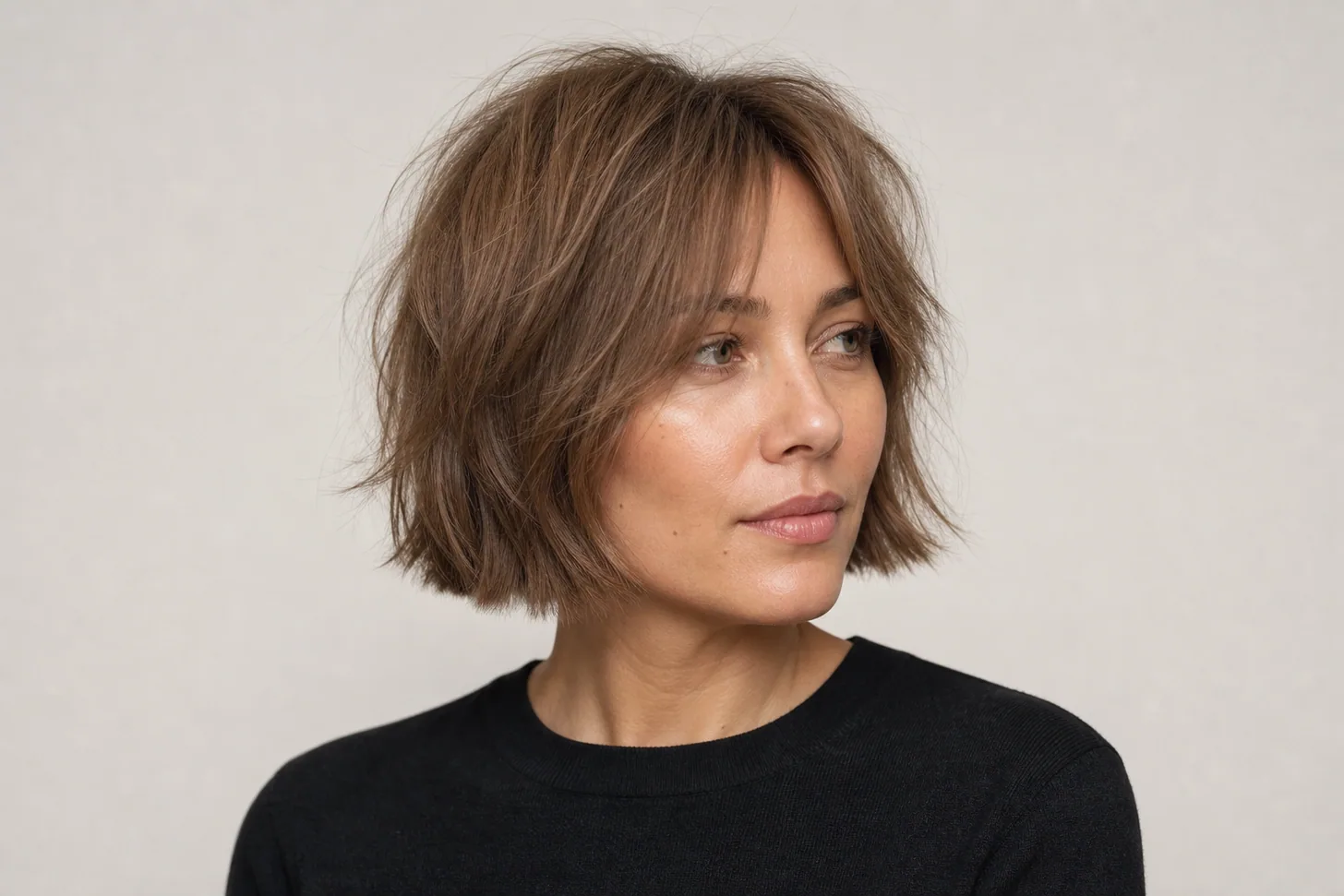
Reviewed by Tara Sullivan · Updated September 2026 · 11 min read
A shaggy hairstyle suits fine hair over 50 because it turns a sparse outline into deliberate texture, so the eye follows movement instead of measuring the ends. The catch is the crown: after 50, fine hair usually thins on top first, and that is where a standard shag takes its weight from.
Below are 14 shaggy hairstyles for fine hair over 50 and over 60, from short choppy shags to soft shoulder-length ones, with how to keep the crown covered.
Chair-side note
When a client over 50 asks me for a shag, she usually brings a photo of someone with twice her hair. I do not talk her out of it; I change where the layers go.
A shag on fine hair after 50 takes its layers from where the hair still is. That usually means the sides and the lengths, not the crown, and it is the difference between a shag that looks full and one that shows scalp.
SB
— Simone Baptiste, Senior Stylist
Why a shag works on fine hair over 50, and where it stops
Thinning hair looks thinnest at the outline. A blunt edge shows exactly how much hair reaches the bottom; break that edge into layers and the eye reads movement instead.
The limit is the crown. A standard shag lifts and texturizes the top, and on a crown that already shows scalp that removes the coverage you have. Our shag haircut guide explains the decade-by-decade rule; this page is the gallery that goes with it.
Short shaggy hairstyles for fine hair over 50
Short shags are the easiest to wear, because short hair lifts on its own. Keep the choppiness at the ends and around the face, and leave the top a little longer than the sides.
1
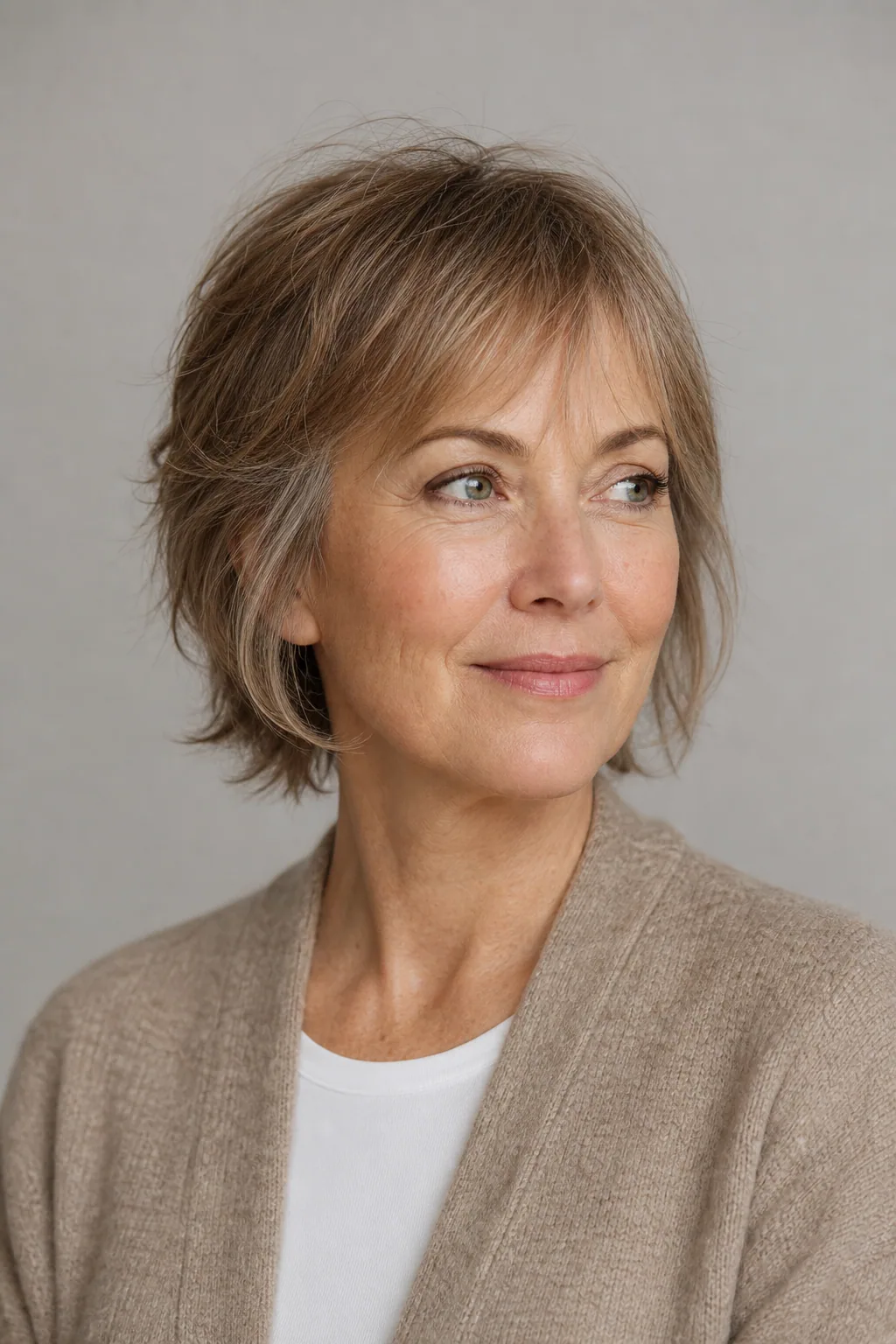
Short soft shag with a longer crown
Ear-to-chin pieces with a soft fringe, and the crown left a little longer than a standard shag. The extra length on top is what keeps it covered.
This is the shag I cut most often for fine hair over 50. Trim it every ten to twelve weeks; it grows into a longer shag, not out of one.
2
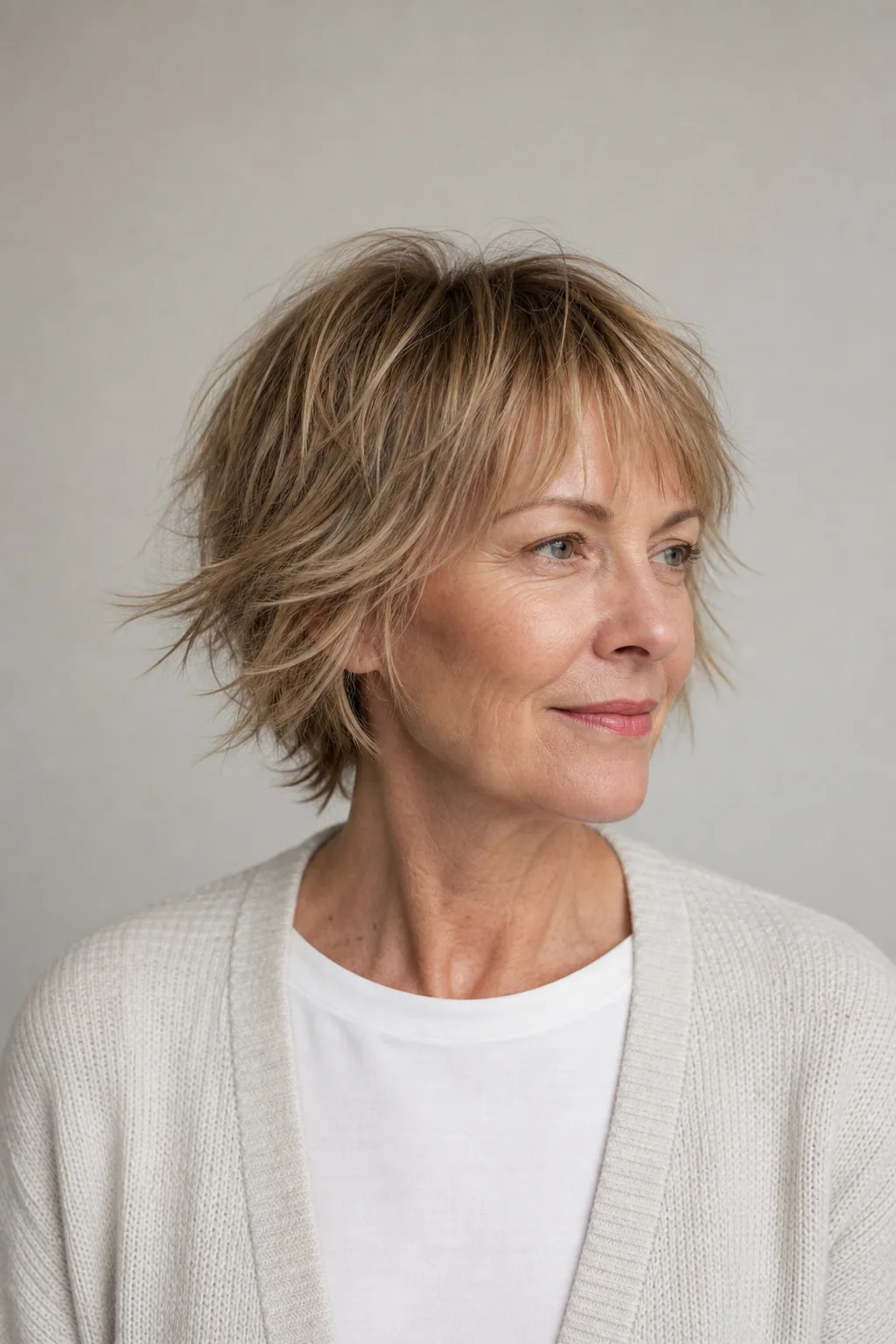
Short choppy shag
Visibly separated ends and a choppy fringe. It only works if your strands are fine but plentiful, because choppiness is weight removed.
If your scalp shows in a bright bathroom, ask for the soft shag above instead. Our guide to choppy shags explains the line.
3
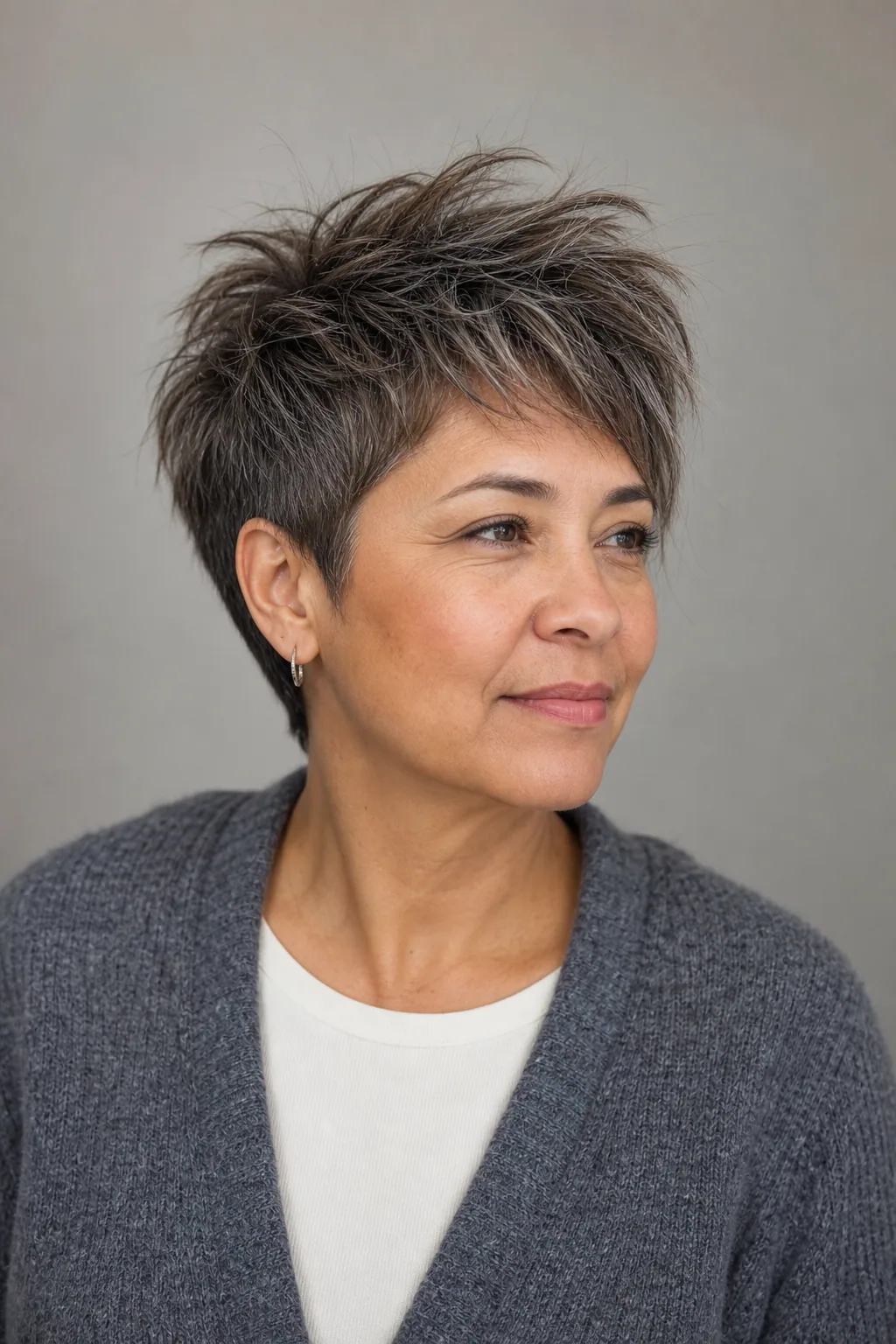
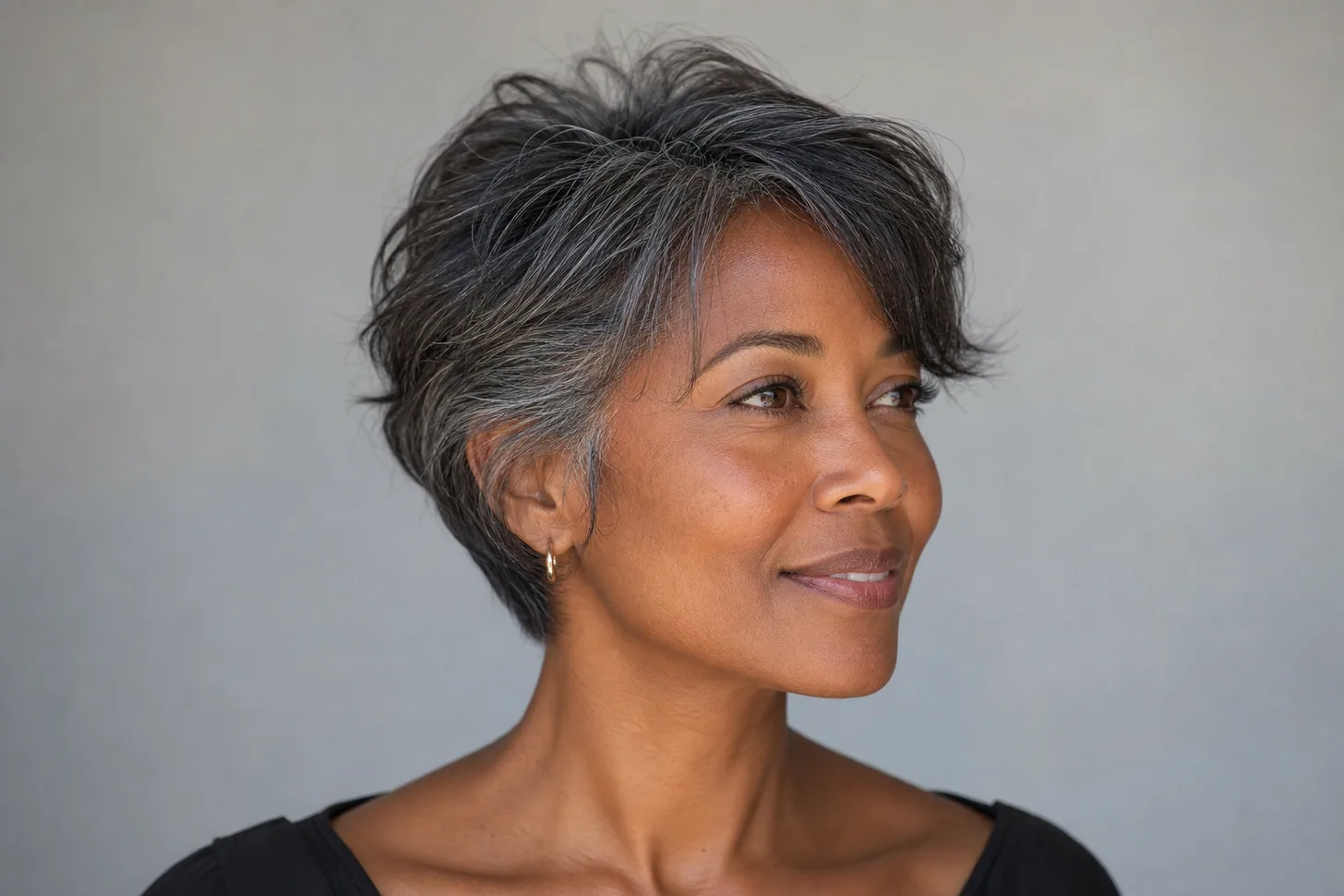
Shixie with a lifted top
A pixie with shaggy layers on top and short, tidy sides. It is the shortest shag, and the easiest to keep full, because there is almost no weight left.
Push the top up with your fingers and a pea of paste. More in the pixie cut for thin hair gallery.
4
Short shag with a curtain fringe
A jaw-length shag with a curtain fringe that sweeps off the forehead. The fringe covers a thinning hairline at the temples without a wide section.
A little wave helps it look tousled. On very straight fine hair, bend a few pieces with a flat iron.
Shoulder-length choppy shaggy hairstyles for fine hair over 50
Most people who ask for a shag over 50 want this length. The rule is the same as for short: layers in the top half, a heavy hem underneath, so the ends still look full.
5
Shoulder shag with a heavy hem
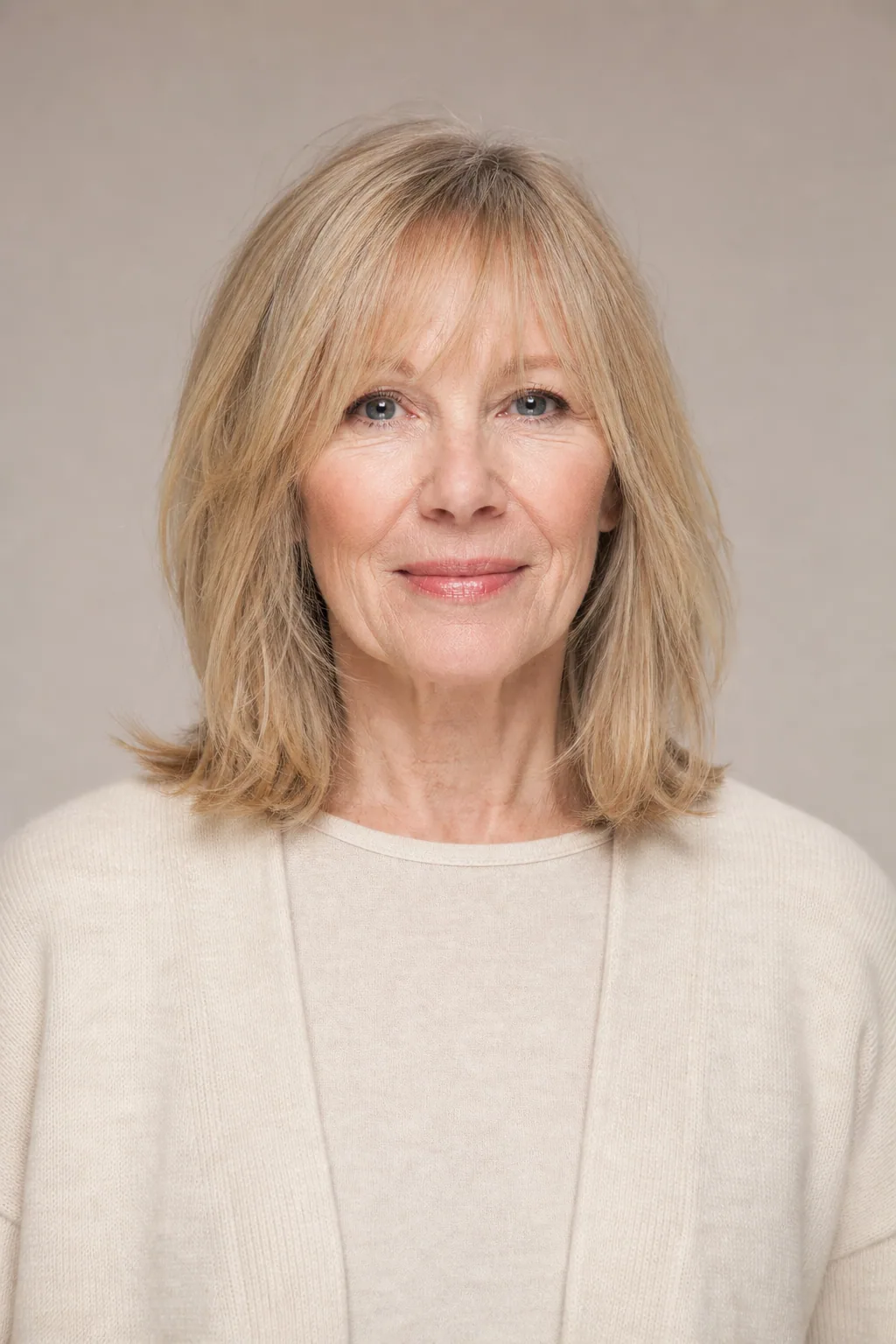
Layers in the top half only, with the hem left heavy at the shoulders. From the front it reads as a shag; from behind the ends still look thick.
This is the safest shoulder shag for fine, thin hair. Ask for point-cut layers, never a razor.
6
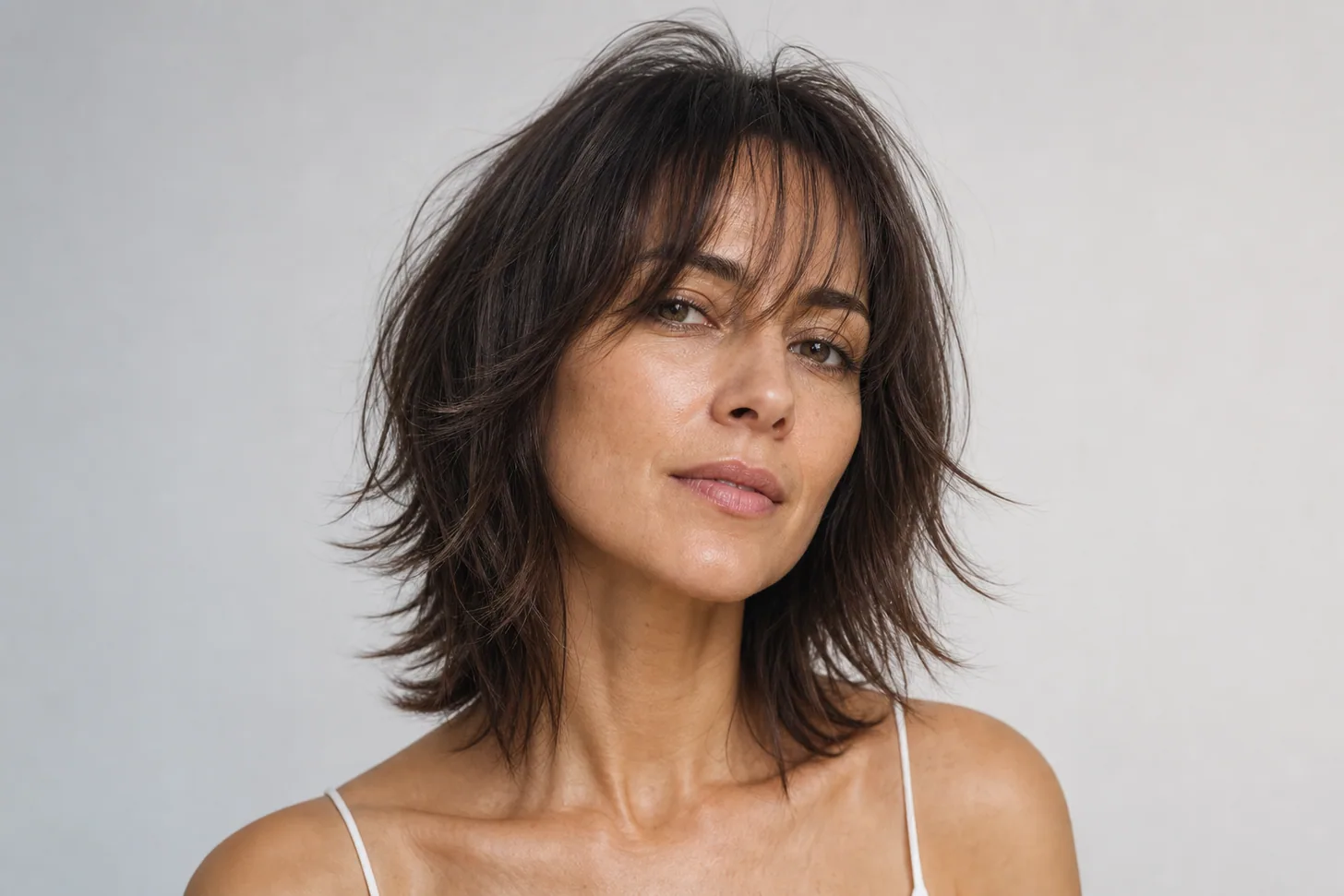
Choppy shoulder-length shag
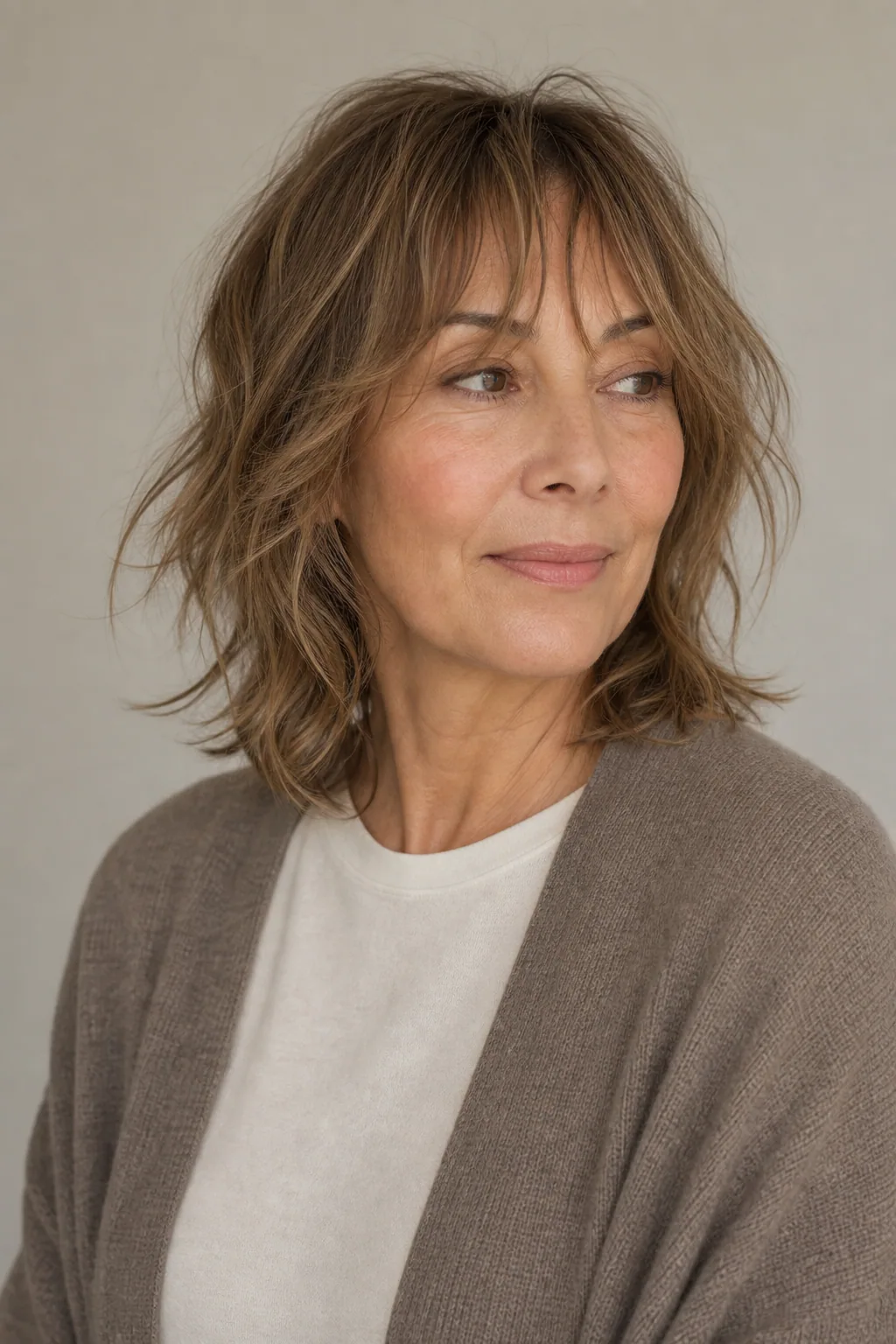
Piece-y layers and curtain bangs, worn tousled. It is the most searched shag at this age, and the one that needs the most hair.
It suits fine hair with a natural wave and medium density. On thin, straight hair the choppy ends read as gaps.
7
Shaggy lob
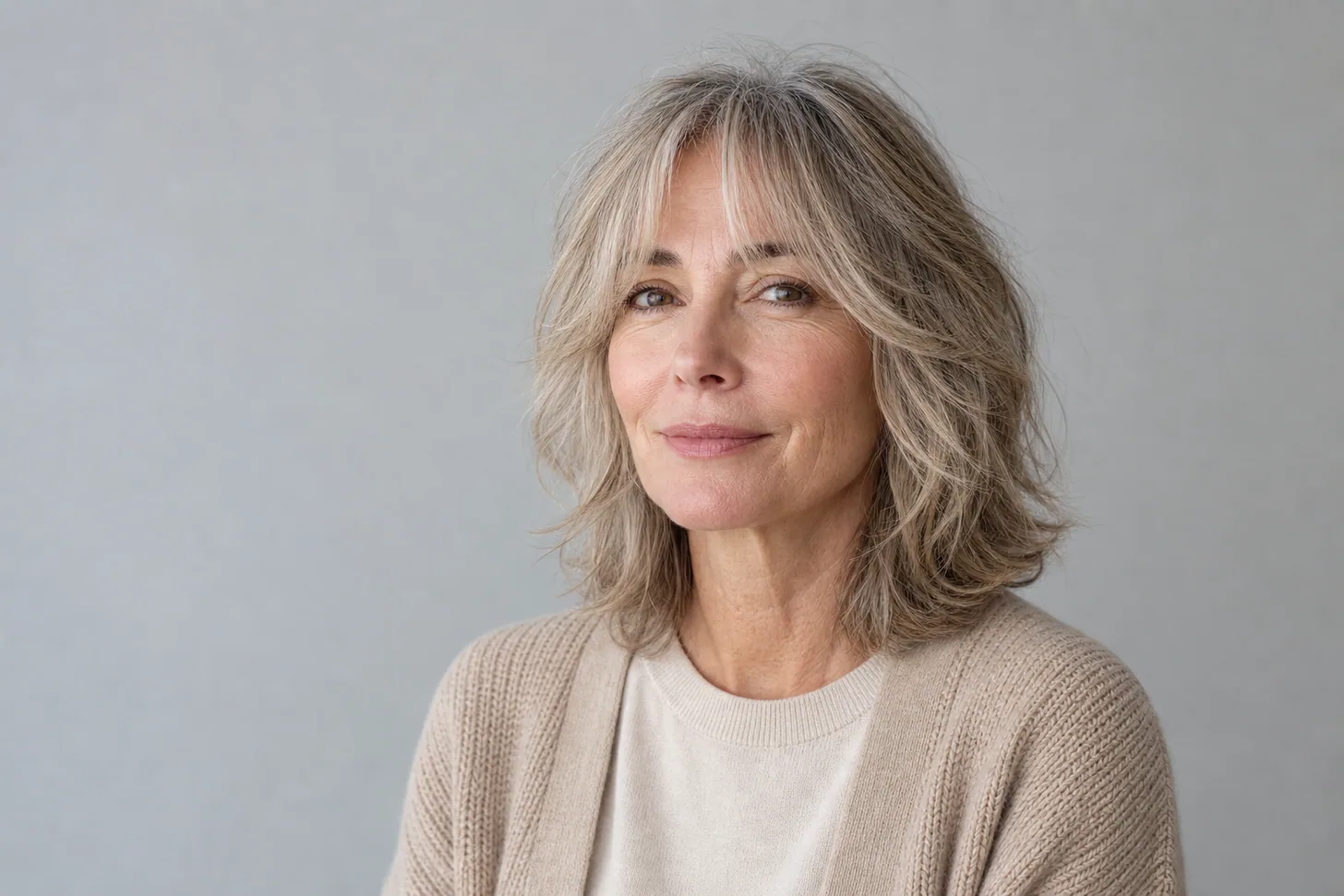
A lob with soft shaggy layers around the face and a bend in the ends. It is the gentlest way into a shag if you are nervous about losing length.
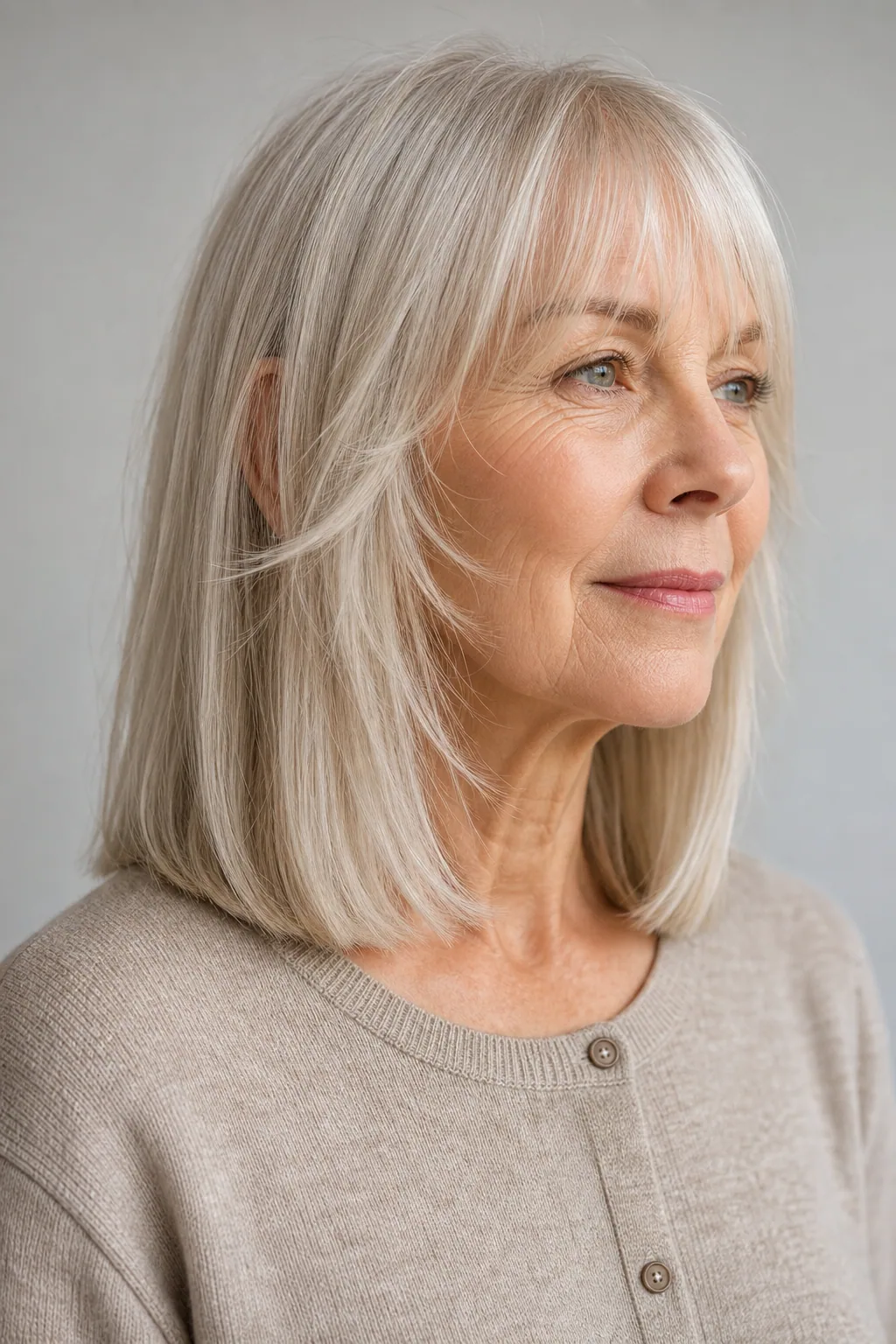
After 60, crown thinning is common, and gray often grows in coarser than the hair around it. The shag softens: layers from the mid-lengths down, the crown left dense, and a fringe to cover the hairline.
8
Softened shag with a dense crown
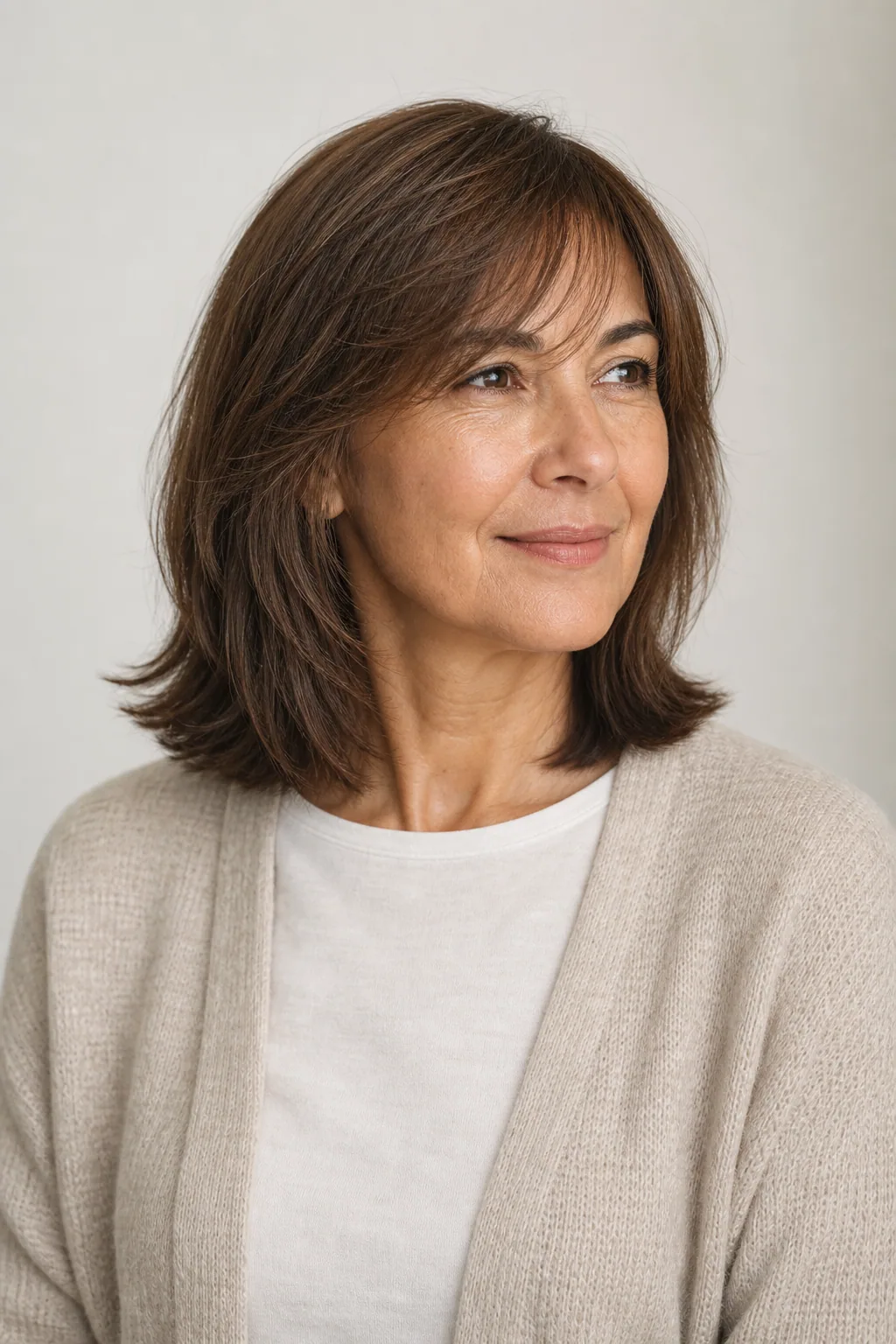
The layers start at the mid-lengths, so the crown keeps every strand it has. The movement is all at the sides and ends.
This is the shag for visible crown thinning. For more cuts built around the crown, see haircuts for a thinning crown.
9
Short silver shag
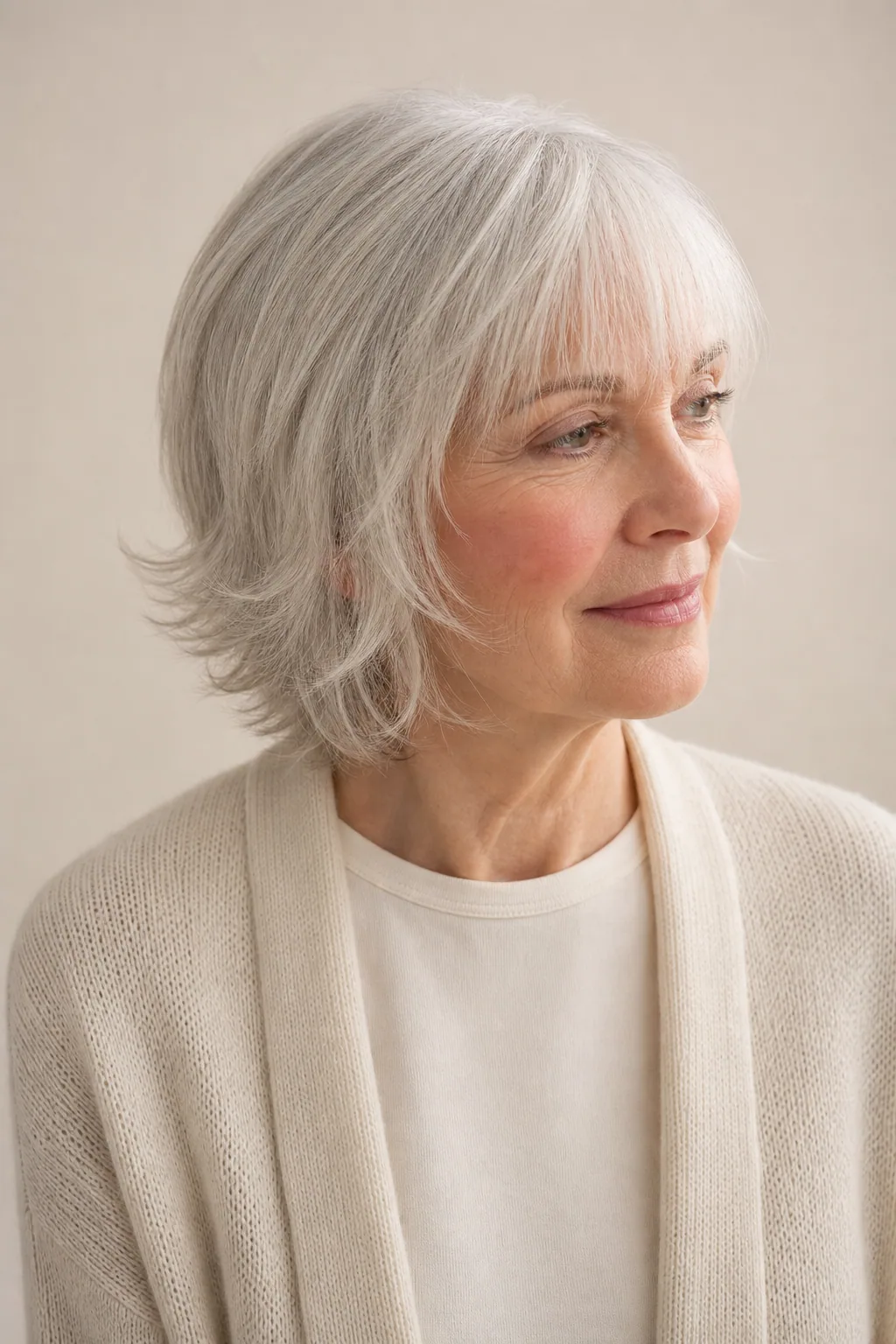
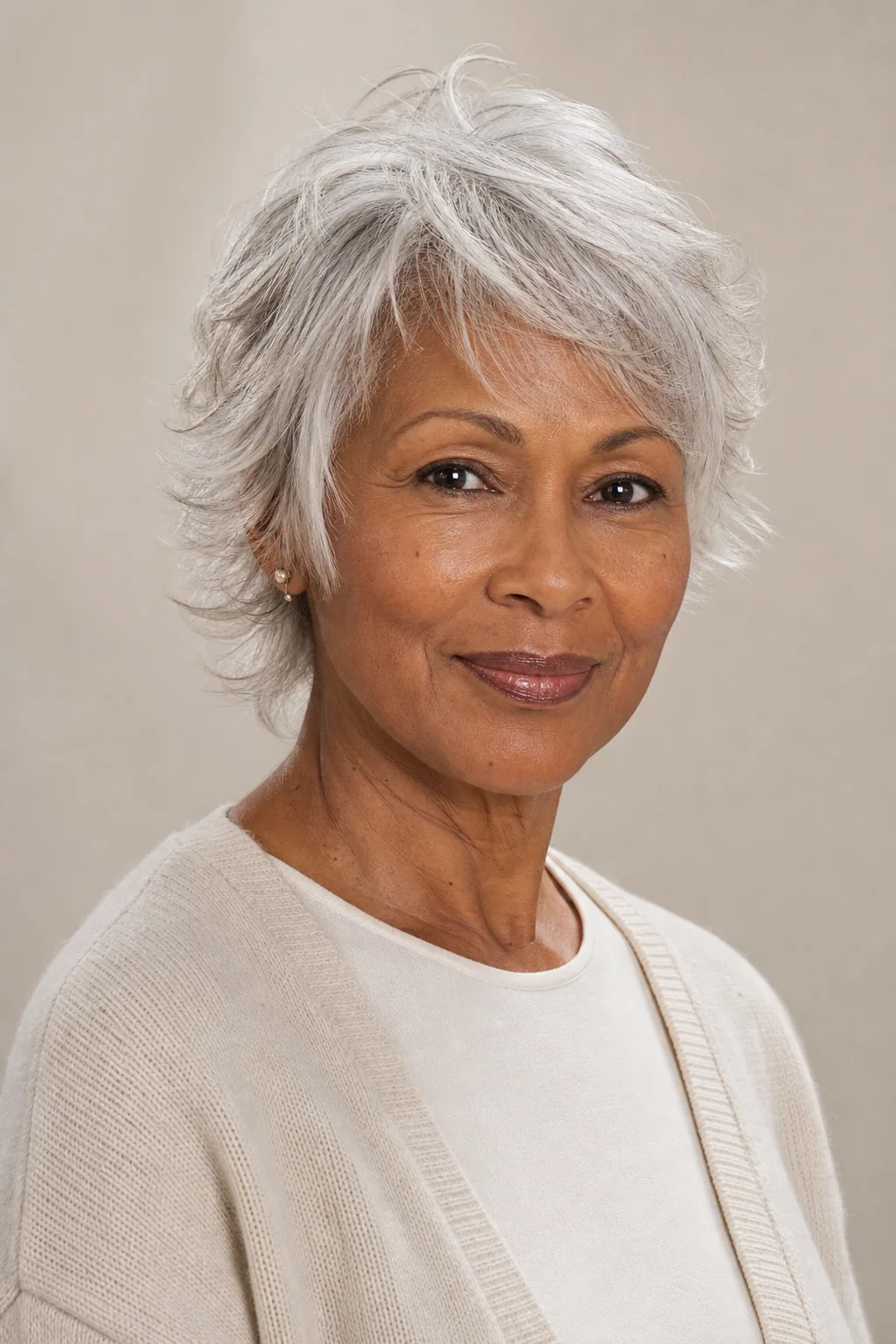
A short, tousled shag with piece-y ends around the ears. Silver hair often has a wiry texture that holds a shag better than it held a sleek cut.
Use a light cream on the ends only, to calm the wiry strands without flattening the top.
10
Shag with a long side fringe
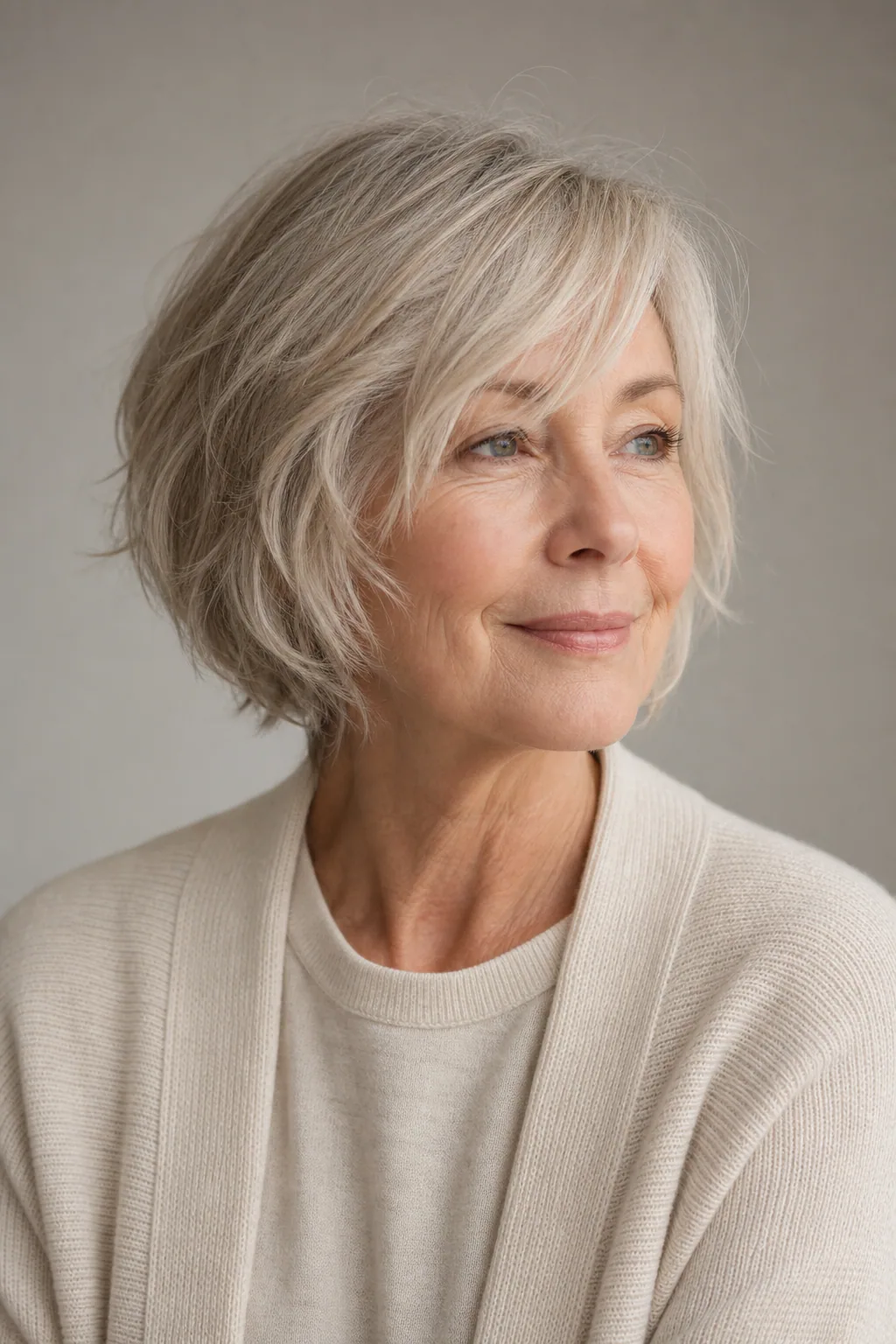
A jaw-length soft shag with a long fringe swept from a deep side part. The part lifts the root on the heavy side, and the fringe covers a thinning temple.
Good if you wear glasses: the side fringe sits above the frames instead of behind them.
11
Wavy shag left to air-dry
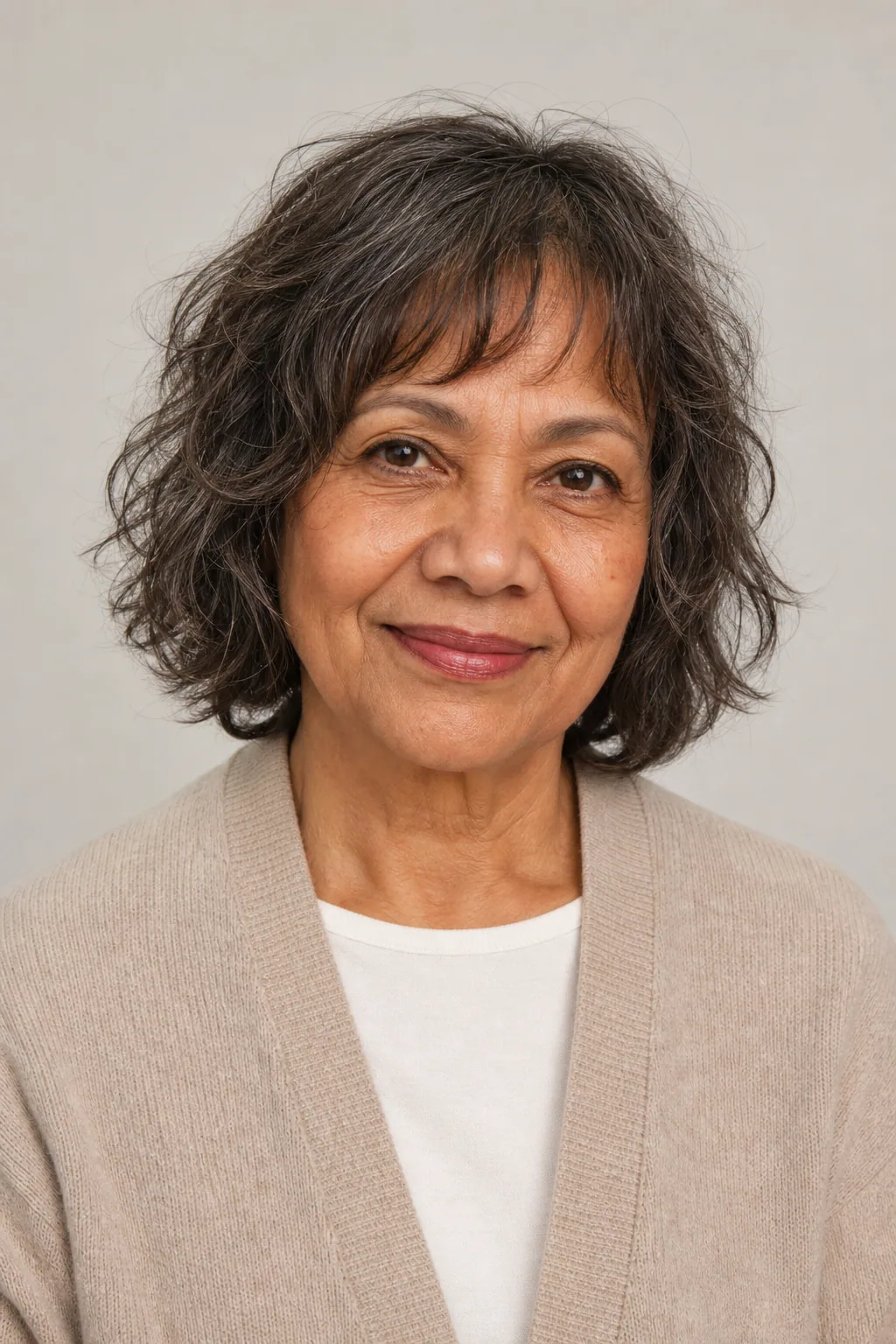
A jaw-length shag cut to the natural wave and left to dry. If your hair started to bend after menopause, this is the cut that uses it.
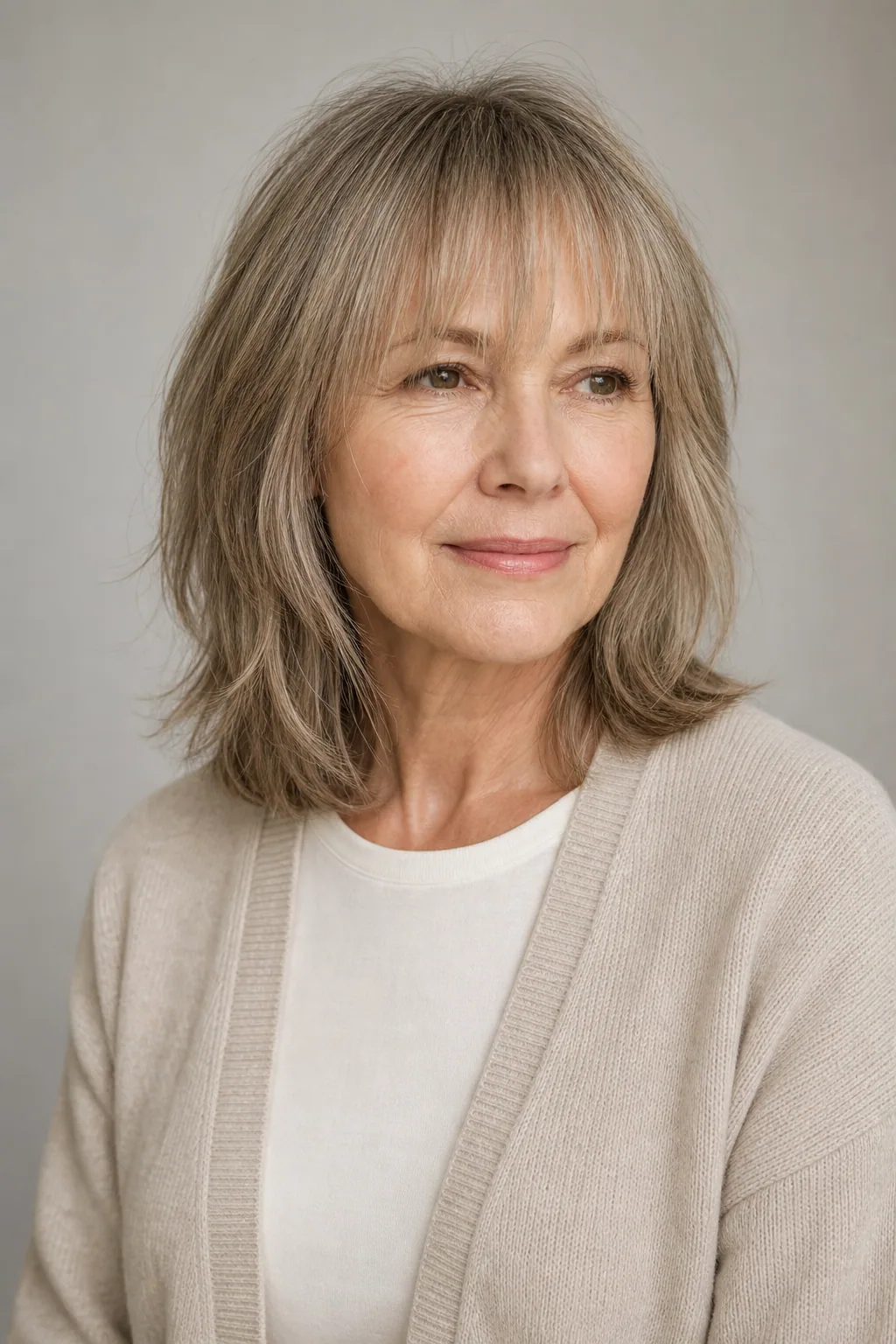
Past the shoulders, with the shaggy layers kept to the front, starting at the cheekbones. The back stays nearly one length.
It is the medium shag for thin hair: all the movement at the front, where people look.
14
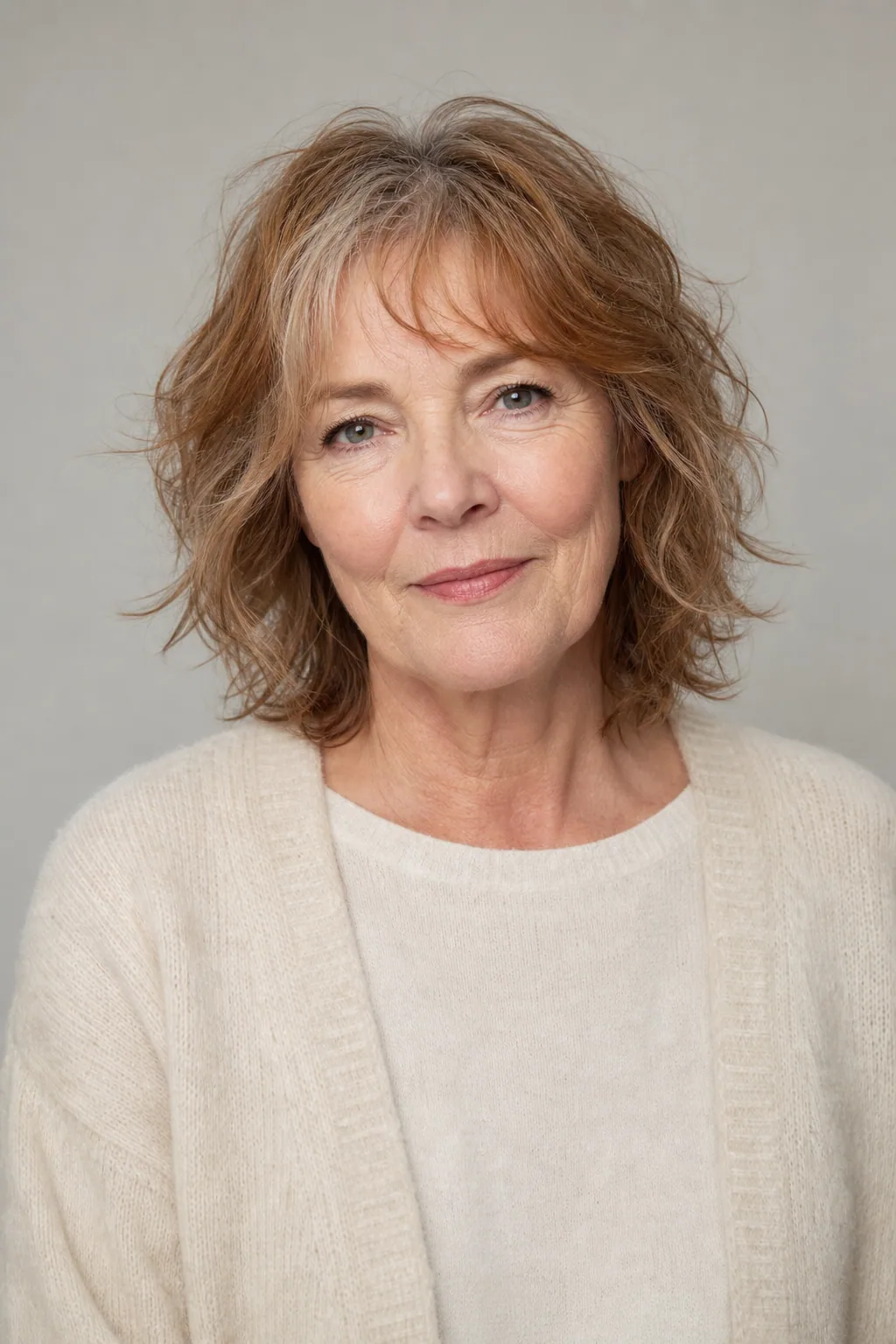
Wavy medium shag
A collarbone shag cut to loose waves, with a piece-y fringe. The wave makes a medium length look fuller than it is.
Plop it in a cotton T-shirt for ten minutes after washing. Our fine wavy hair guide has the routine.
Styling a shag on fine hair over 50
Put a golf-ball of light mousse through damp roots, then rough-dry with your fingers, lifting the crown. A shag should look tousled, so skip the round brush.
Finish with a texture spray on the layers, not the roots, and a flat iron bend on a few front pieces if your hair is straight. Heavy creams and oils make fine shag layers clump into strings.
What to ask your stylist
Say: "My hair is fine and thinner on top than it used to be. I want a soft shag with point-cut layers, taken from the sides and lengths, not the crown. Please keep the hem full and don't use a razor or thinning shears."
Point to where your hair is thinnest before the cut starts. A good stylist will leave that area alone.
When a shag is the wrong call after 50
Your scalp shows clearly at the crown. Any layers on top will show more of it. A blunt bob or a crown clip builds a stronger thickness illusion.
Your hair is very straight and very fine. A shag will fall flat and separate unless you bend it most days. A softer, heavier shape asks less of you.
You are growing out over-layered, stringy ends. Let those layers reach the hem first. Shagging over them makes the ends thinner still.
You want zero styling. A shag needs some texture product to look intentional. Our low-maintenance haircuts ask less.
FAQ
Yes, if the layers come from the sides and lengths rather than the crown. A shag turns a thin outline into texture, which hides lost density. A soft, point-cut shag with a full hem is the safest version for fine, thin hair.
A softened shag: layers from the mid-lengths down, the crown left dense, and a curtain or side fringe to cover the hairline. Chin to jaw length is the easiest to keep full.
Only if you have plenty of fine strands. Choppiness removes weight, and on thin hair that weight is what makes the shag look full. If your scalp shows, ask for a soft shag with choppiness only at the front.
Yes. Keep the layers at the front and the hem nearly one length, and let curtain bangs do the lifting. A natural wave helps a lot.
Light mousse at the roots, rough-dry with your fingers while lifting the crown, then texture spray on the layers. Skip heavy creams and oils, which make fine shag layers clump.
Ask for a soft shag with point-cut layers taken from the sides and lengths, a full hem, and no razor or thinning shears. Show your stylist where your hair is thinnest so they leave it alone.
Eleven years behind the chair, specializing in short shapes and fine-hair texture. Simone believes the best haircut is the one you can style yourself in ten minutes.
Results vary with hair type, density, and growth patterns. Hairstyling guidance is not a substitute for an in-person consultation with a licensed stylist, and sudden or heavy hair loss is worth raising with a doctor.
Hairstyle images in this guide are AI-generated illustrations, not photos of real clients or results. See our image policy.
 SB
SB