Reviewed by Tara Sullivan · Updated September 2026 · 10 min read
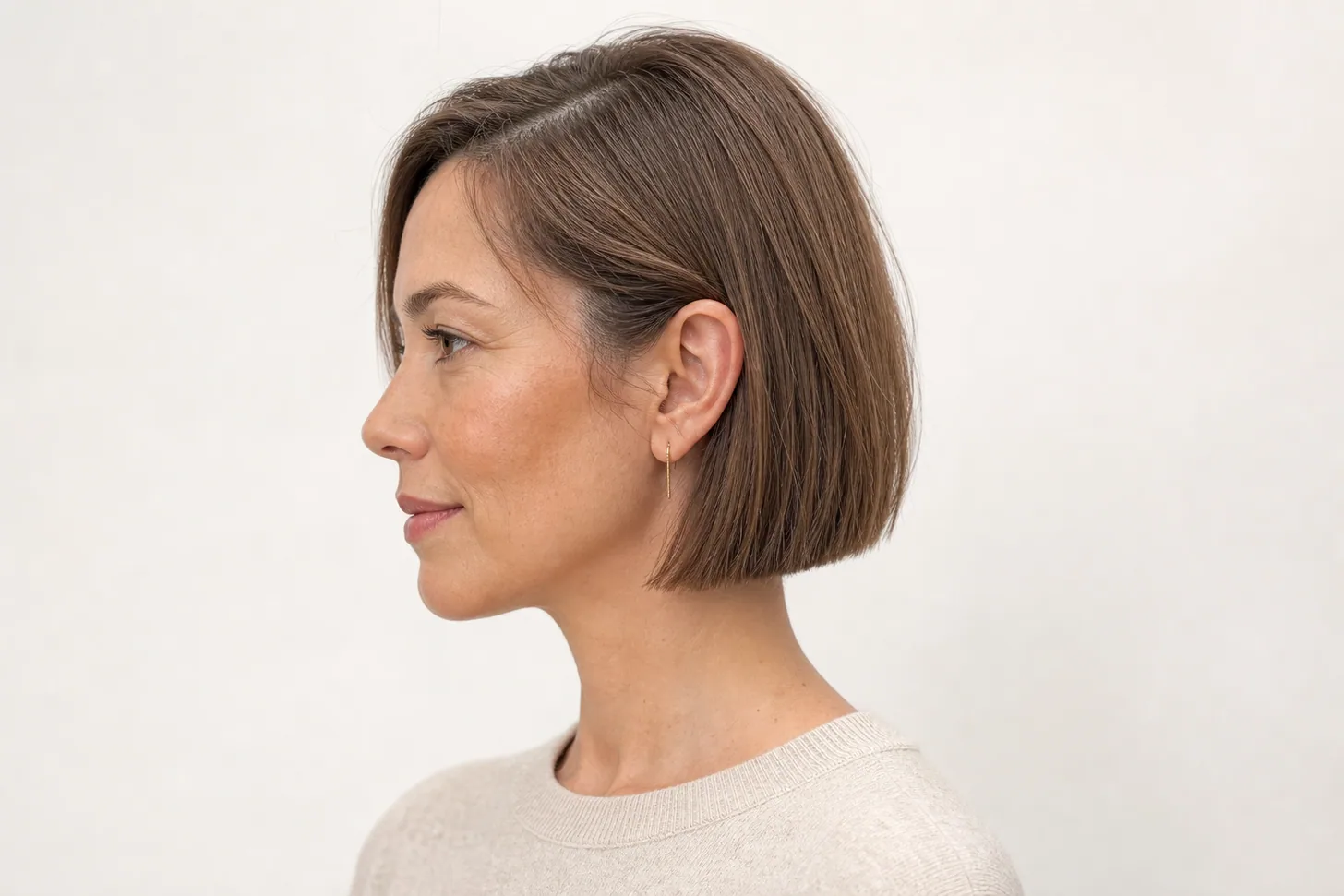
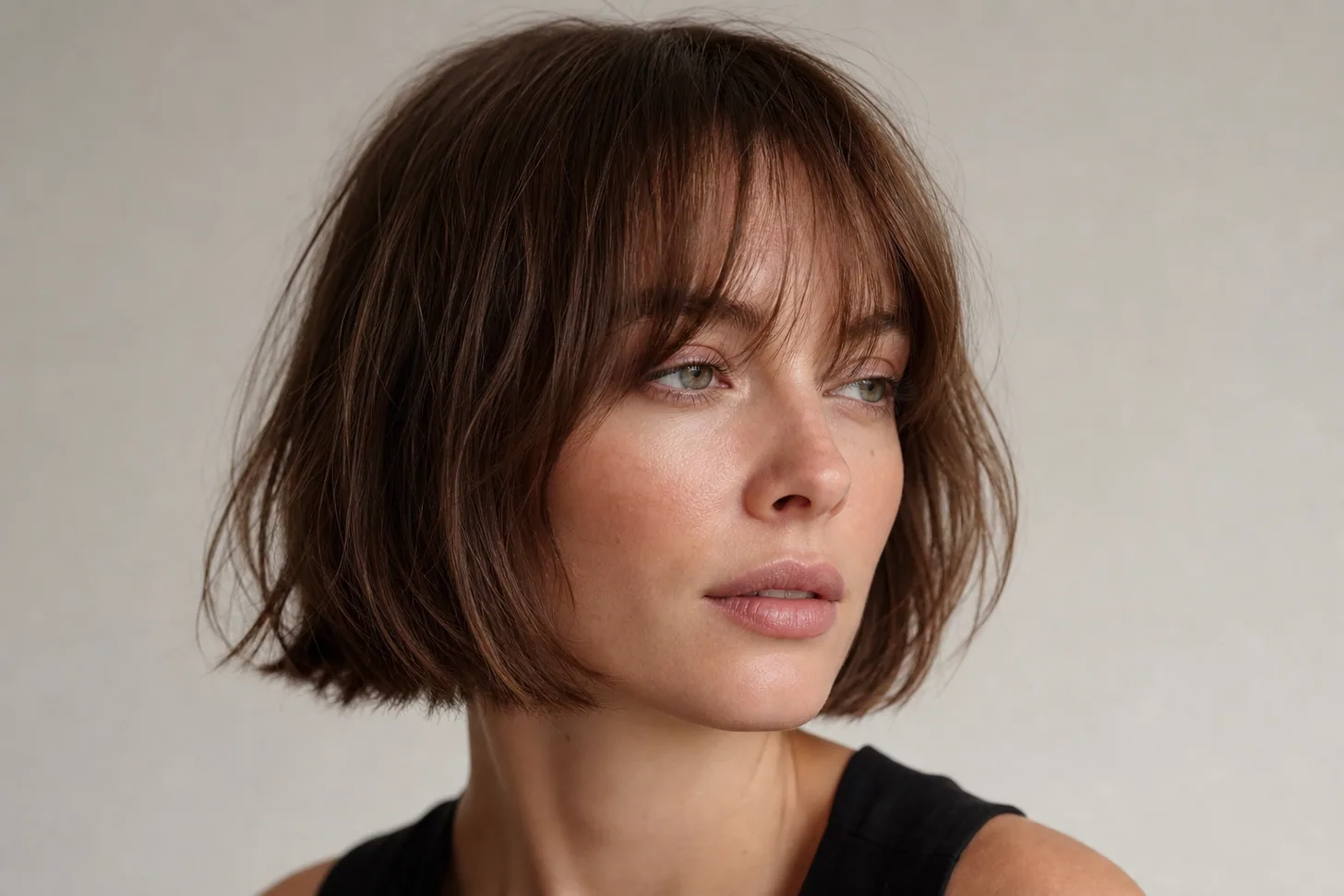
A blunt bob is the most reliable way to make thin hair look thicker: every strand ends on the same line, so all the hair you have shows up in one dense edge. Cut between the ear and the jaw, that edge has too little weight above it to flatten the crown.
Below are 13 blunt bobs sorted by length, with bangs and for over 50, plus where a blunt bob stops helping and what to ask for.
Chair-side note
The blunt bob is the cut I recommend most often to fine-haired clients, and the one that brings the fewest people back unhappy. It works because it does nothing clever.
Every strand stops on one line, and that line is as thick as your hair can look. What decides whether it works is where the line sits.
SB
— Simone Baptiste, Senior Stylist
Why a blunt bob makes thin hair look thicker
Fine hair looks thinnest at the ends, where strands taper and separate. A blunt cut takes that taper off and leaves every strand ending at the same point, so the hem reads as a solid edge.
A bob adds the second half of the trick: it stops the hair before its own weight pulls the roots flat. Our guide to blunt cuts for thin hair covers the technique across every length; this page is the bob.
Where a blunt bob should sit on thin hair
From the ear to the chin, a blunt bob is close to unbeatable on thin hair. There is almost no length pulling on the roots, so the hem stays dense and the crown keeps its lift.
Chin to jaw is still strongly positive, and it is where most people land. Past the jaw toward the shoulder, the blunt line still helps, but it needs a helper against the extra weight: a fringe, a few crown layers, or a rough-dry upside down.
Short blunt bobs: ear to chin
The shortest blunt bobs show the most density for the least effort. They suit fine hair that is not severely thinned at the crown.
1
Short blunt bob at the ear
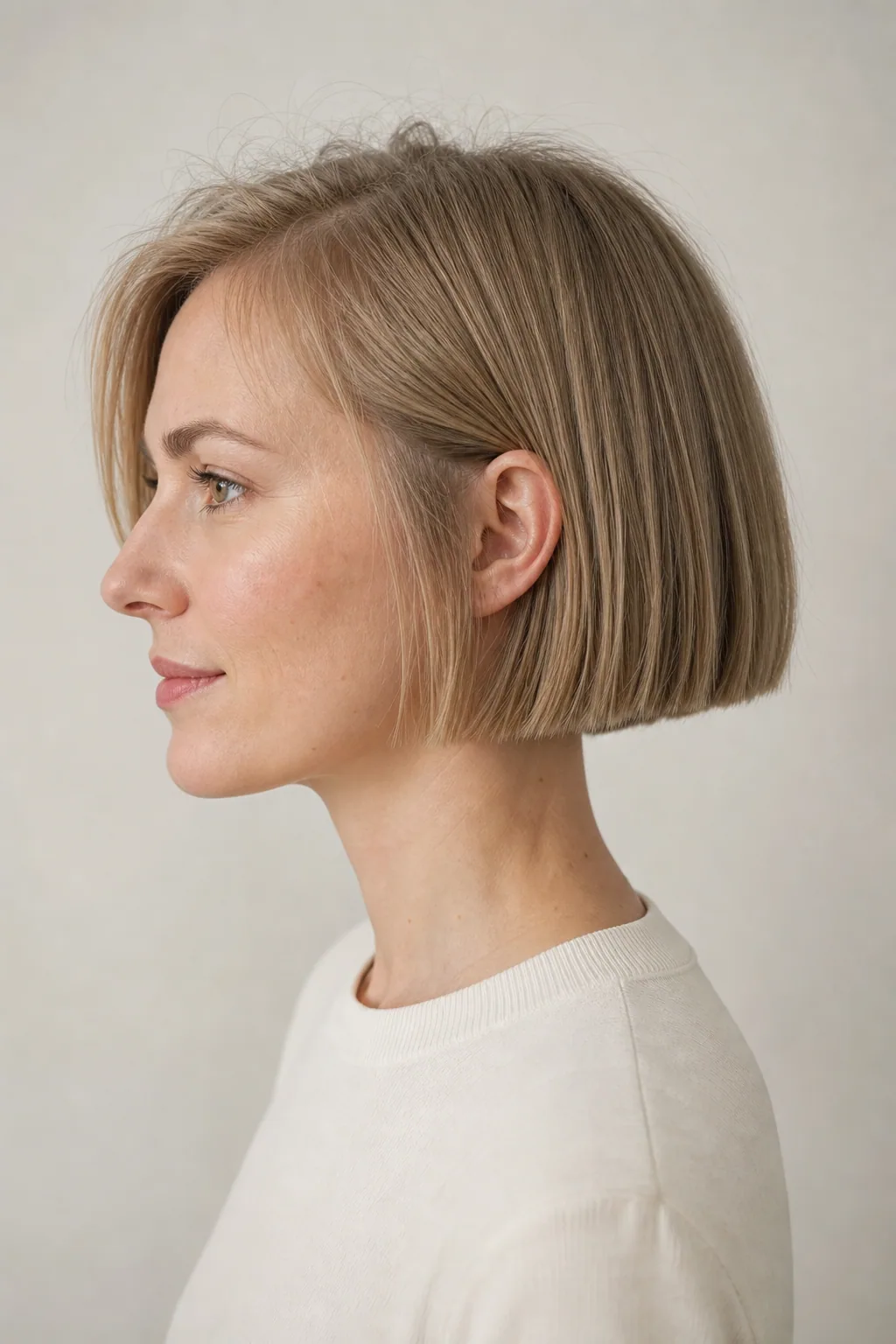
Cut just below the earlobe in one solid line. It is the shortest blunt bob, and the one where fine hair lifts at the crown without any styling.
It suits long necks and oval faces. On thin hair at the crown, go down an inch toward the chin.
2
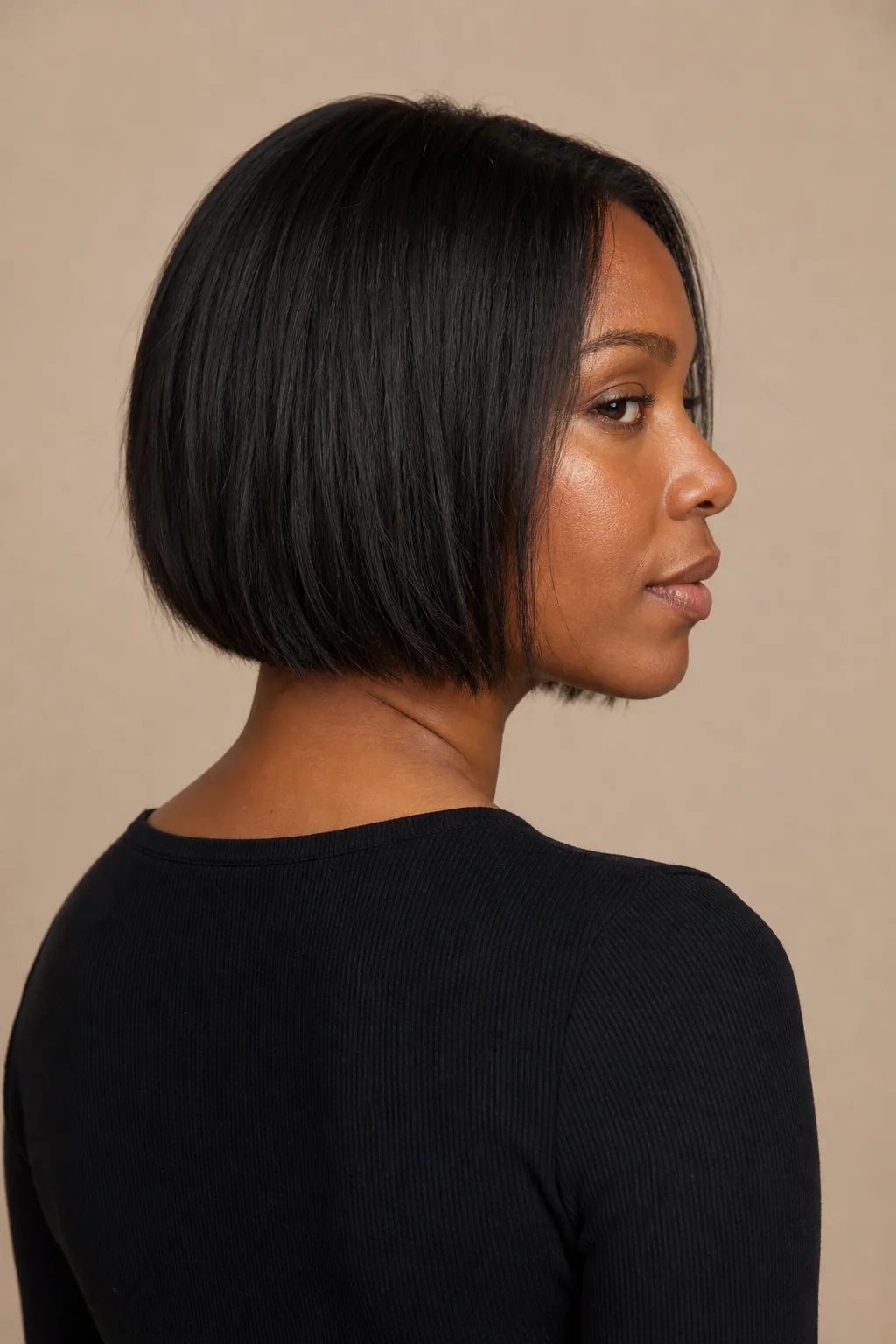
Neck-length blunt bob
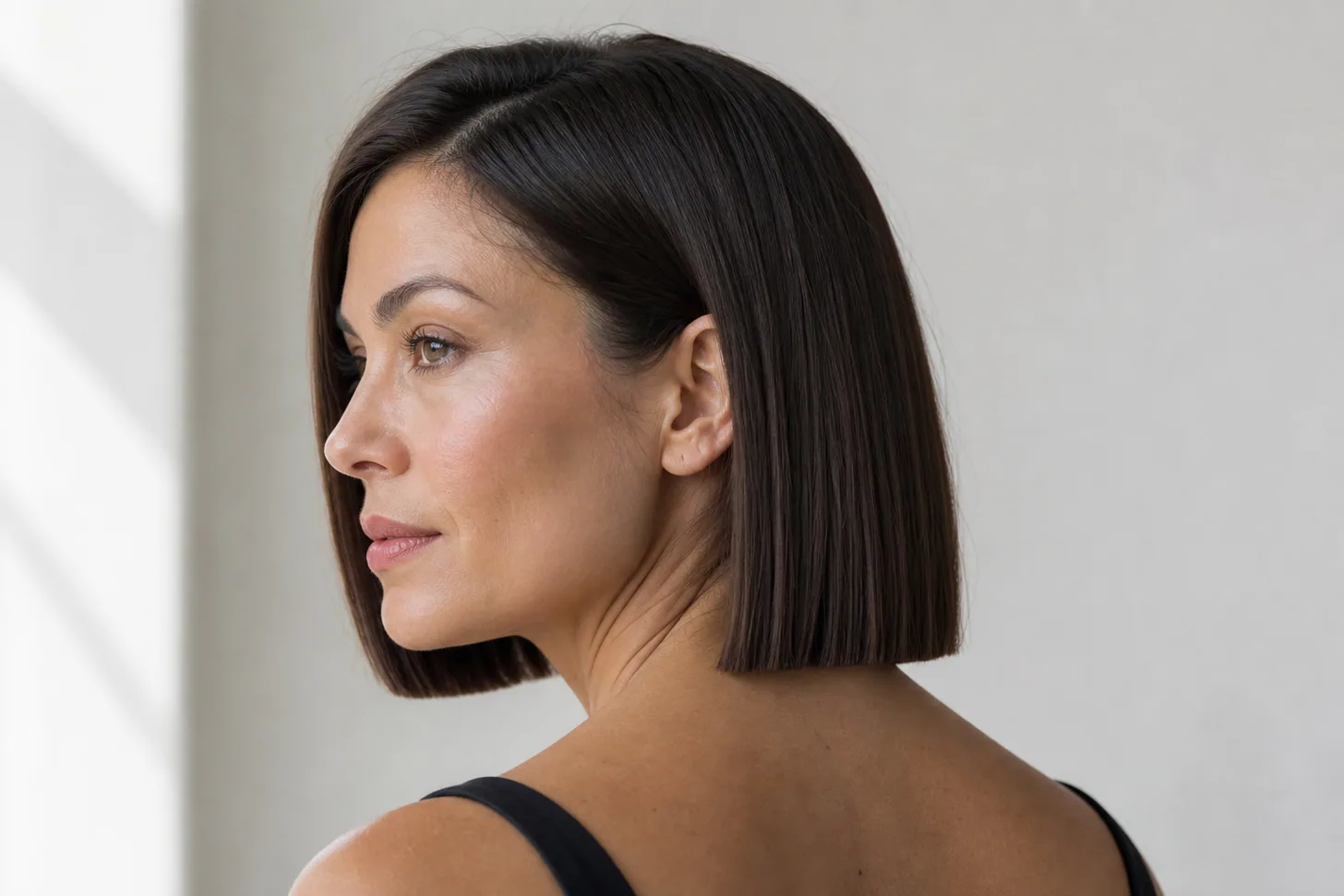
The line sits at the top of the neck behind and just below the jaw at the front. Seen from the back, it is one heavy, level edge.
Ask for the nape to be cut with the head upright, not tipped forward. Tipped, the line springs up shorter than you wanted.
3
Blunt bob with softly bent ends
The same solid line, with the ends turned slightly under with a flat iron. The curve makes the hem look even thicker.
It takes about five minutes. Bend the ends only; ironing from the root flattens the crown.
Chin- and jaw-length blunt bobs
This is the band I would put most thin hair in. The line is long enough to frame the face and short enough to keep its lift.
4
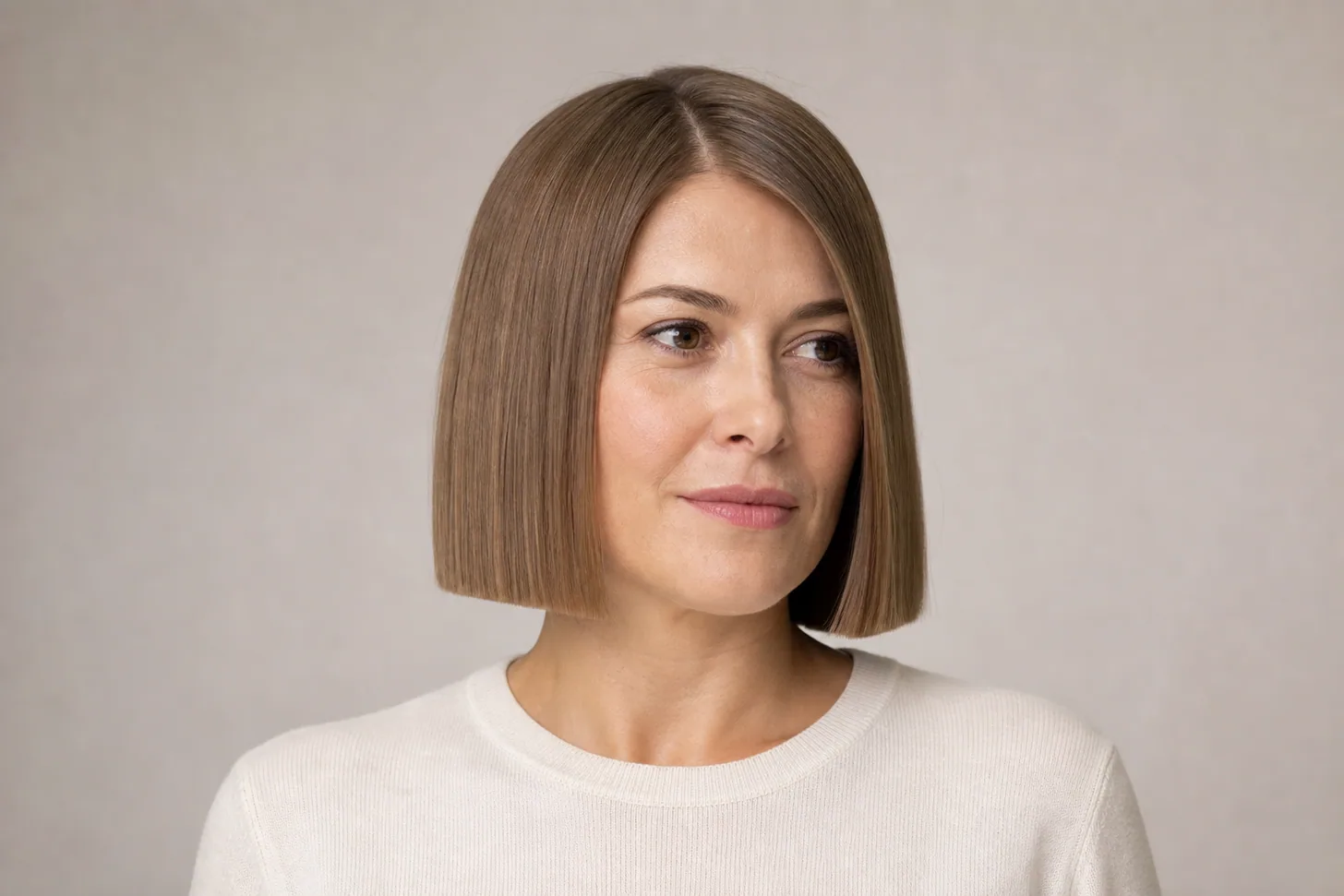
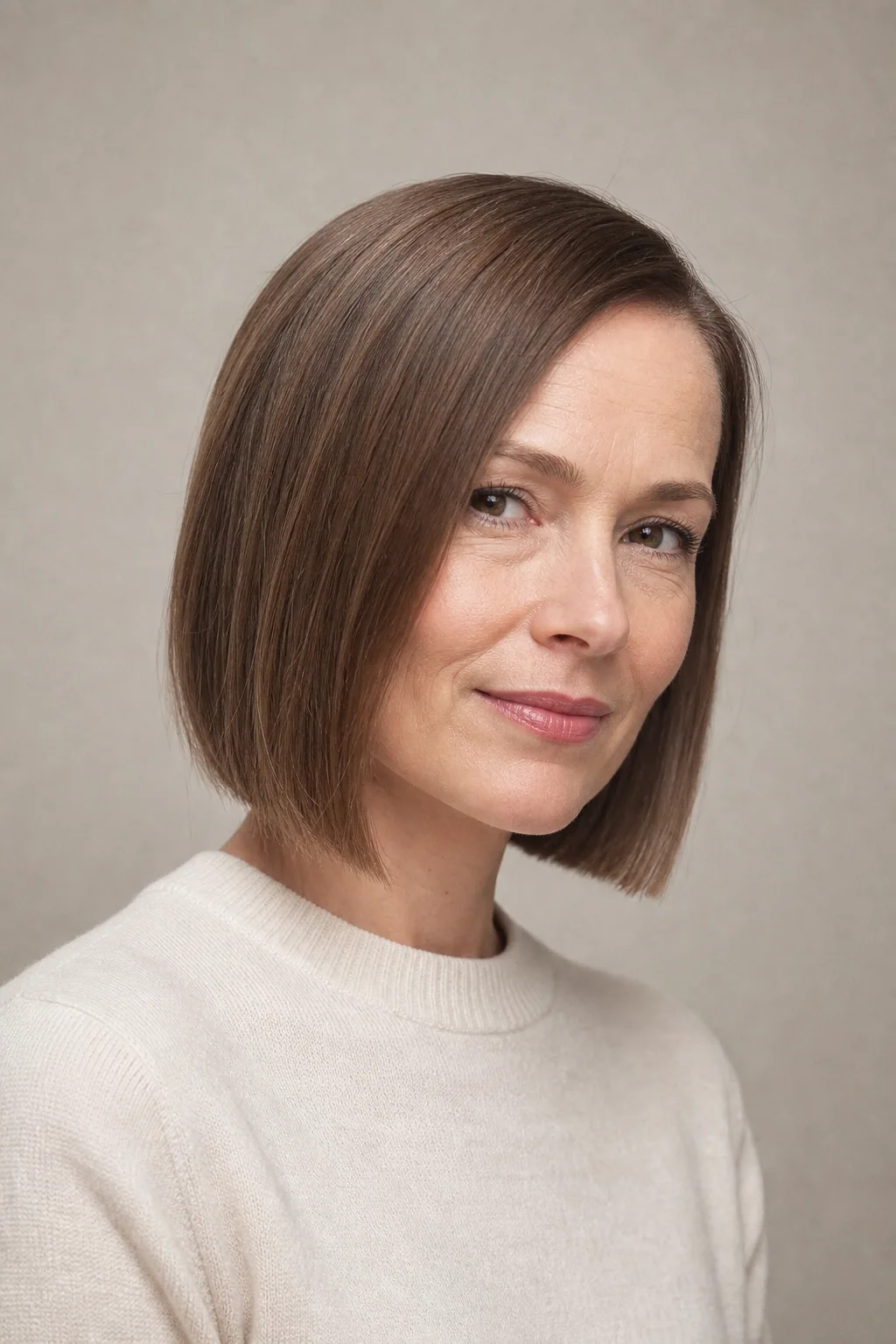
Classic blunt chin bob
One length, dead straight across at the chin, worn off a deep side part. The part lifts the roots where the hair crosses it.
If you want a single cut to ask for, this is it. It flatters most face shapes and grows out without losing its shape for about eight weeks.
5
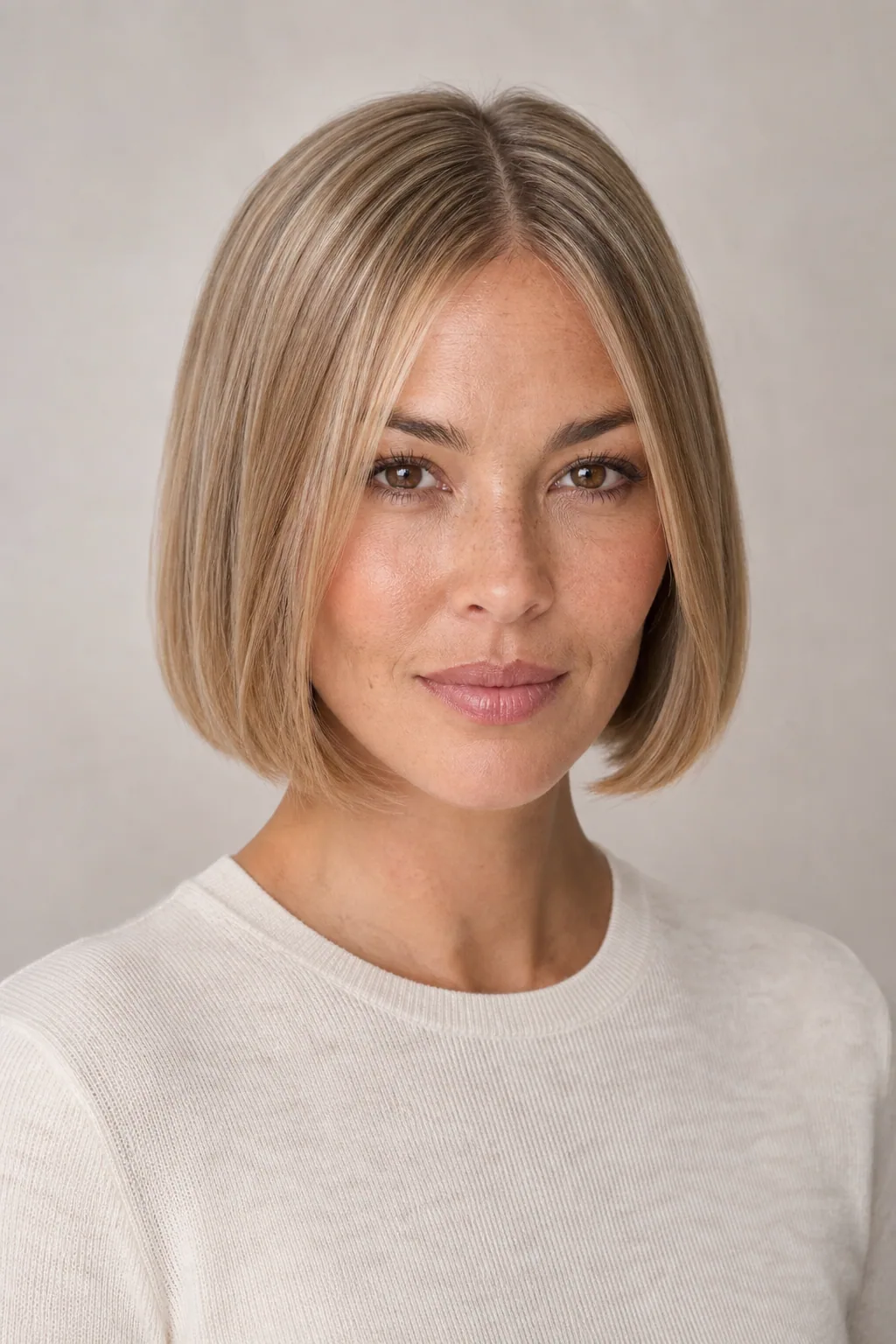
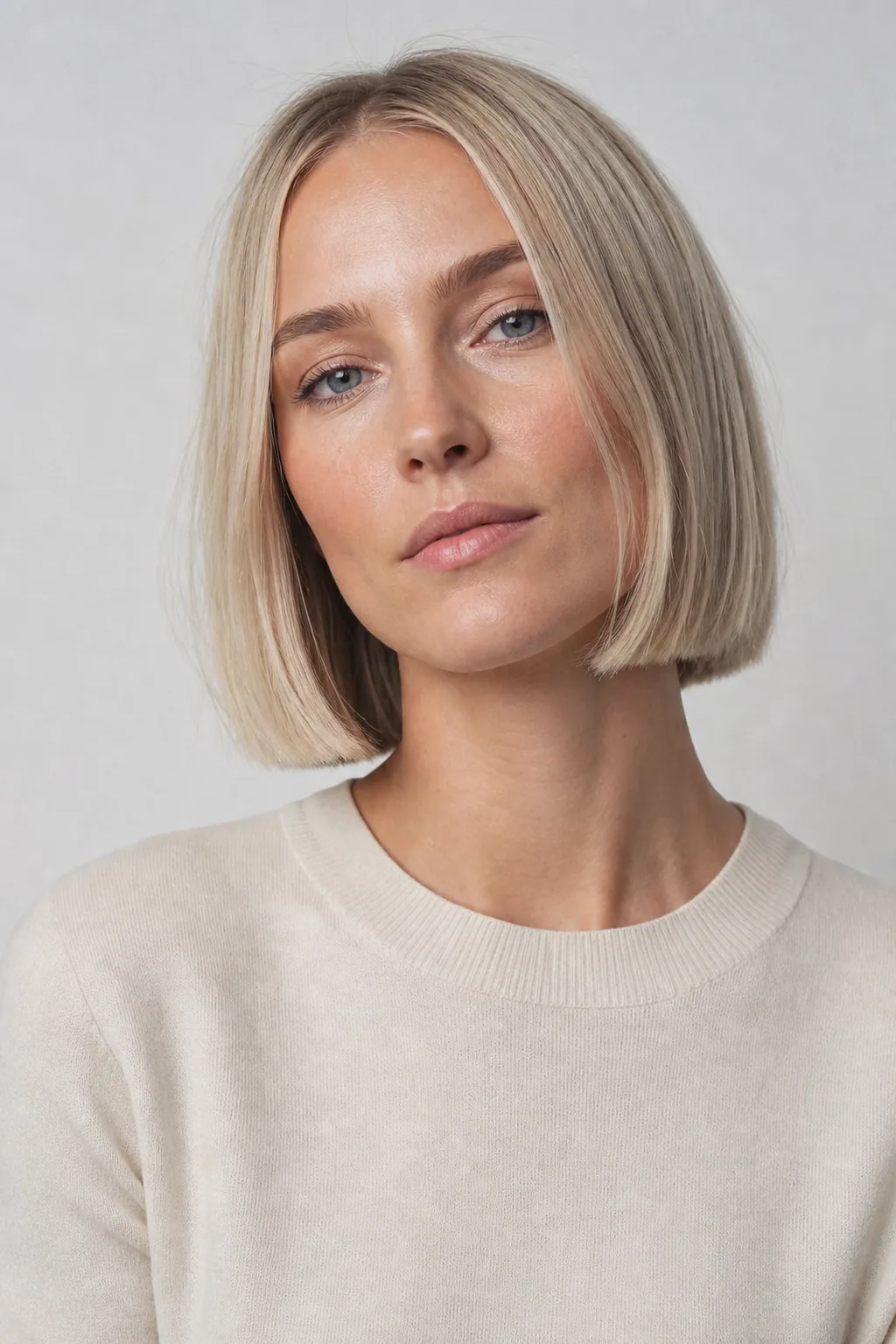
Jaw-length blunt bob with a middle part
A blunt line at the jaw with a middle part. The symmetry makes the hem look even denser.
A middle part lies flatter at the root than a side part. Blow-dry the roots forward and back before you set the part, and it will lift.
6
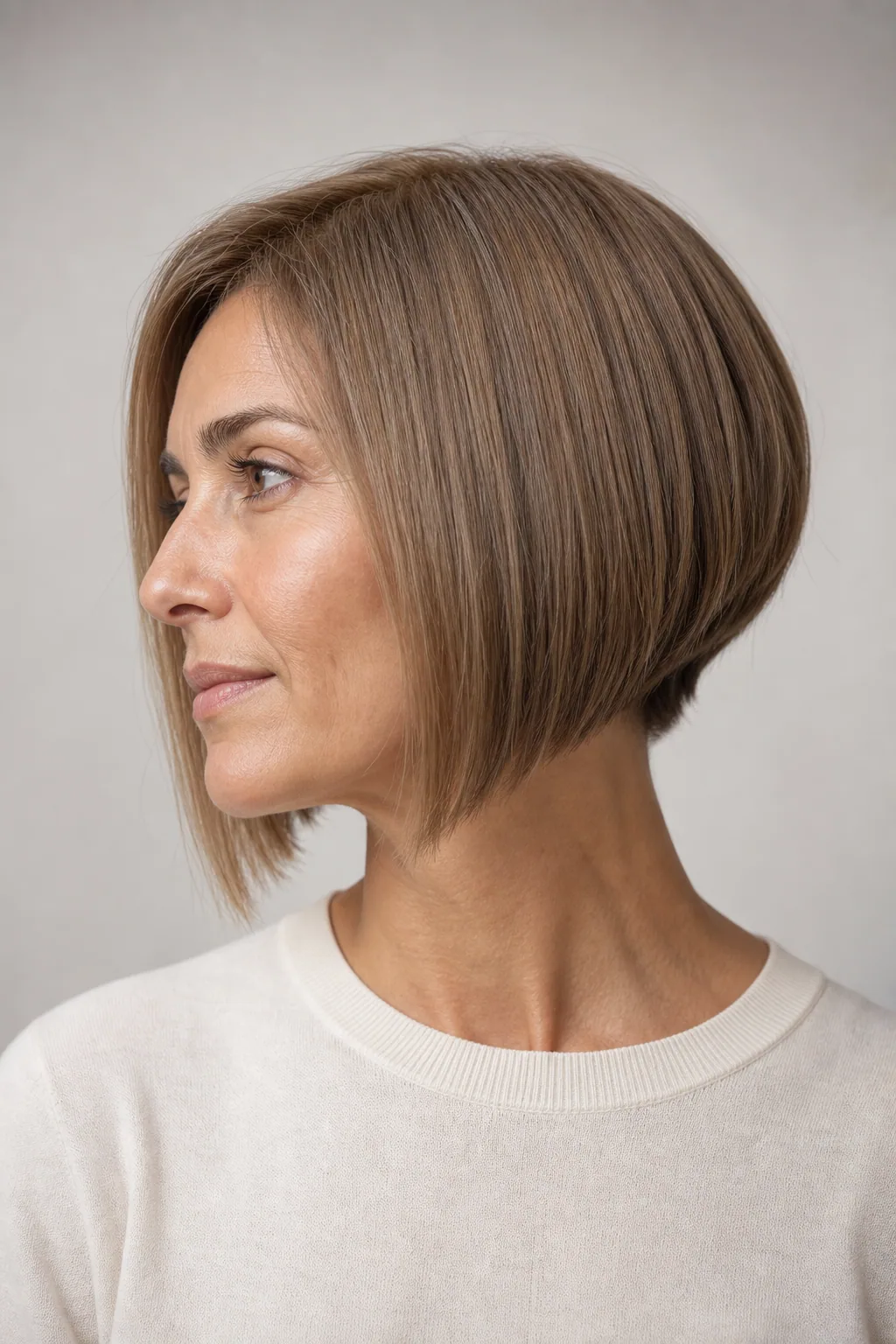
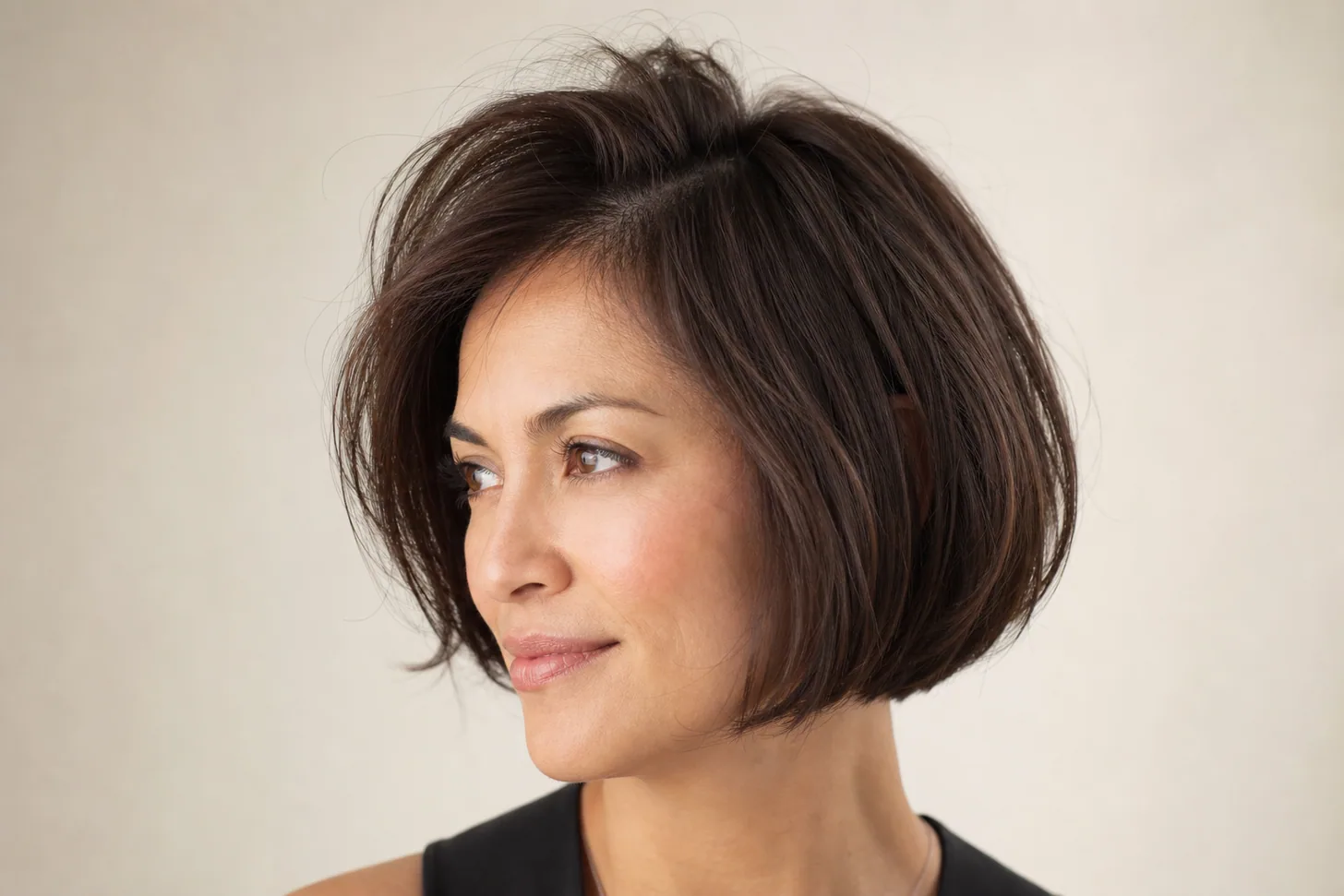
Blunt bob with a graduated back
The front and bottom stay fully blunt, and the back is gently graduated so it lifts at the nape. Graduation adds bulk rather than removing it.
It is the best blunt bob for a flat back of the head. The stacked bob takes the same idea further.
Blunt bobs with bangs
A fringe puts more hair at the front of the face and gives a longer blunt bob the lift it needs. On thin hair, the lighter the fringe, the less it costs the top.
7
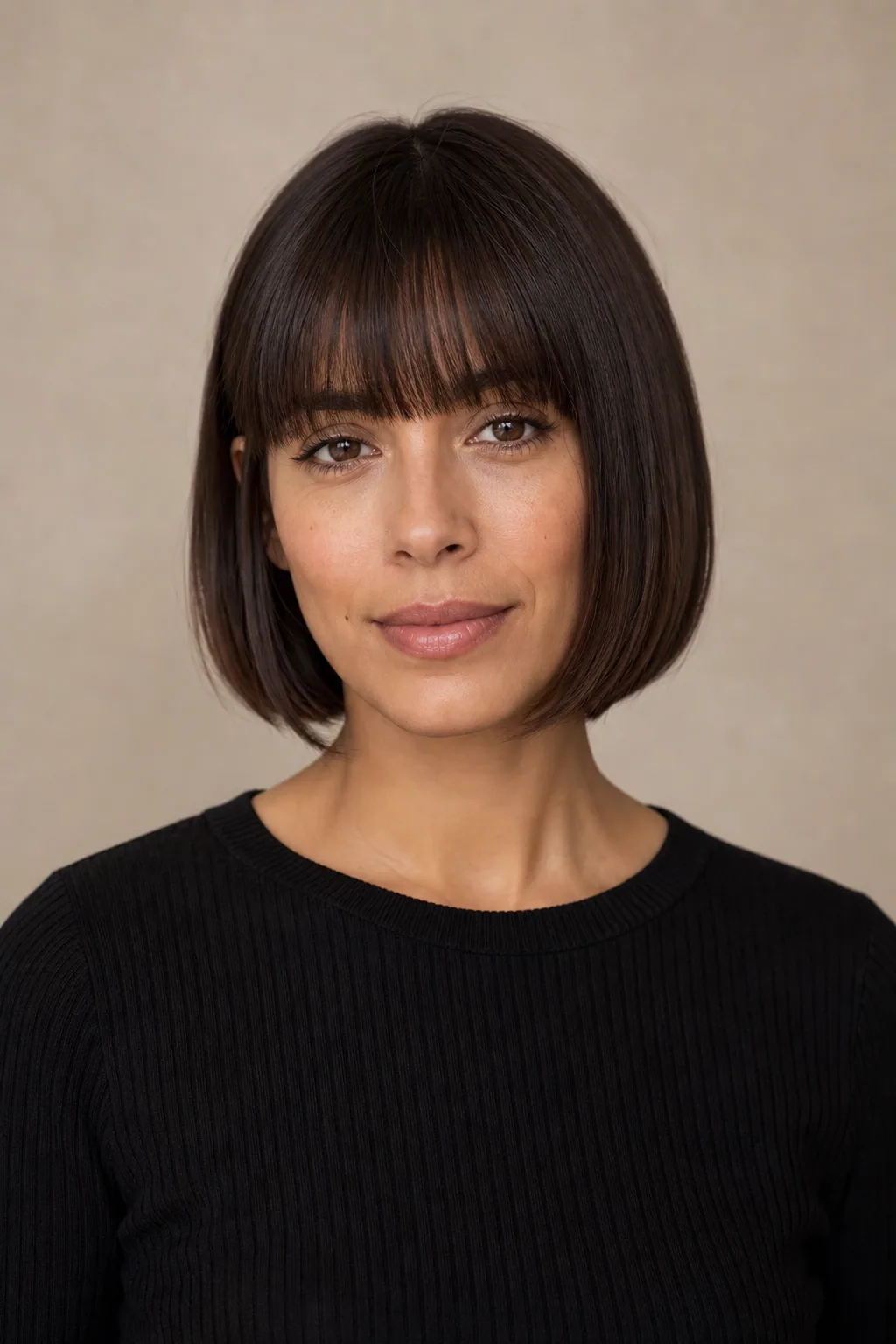
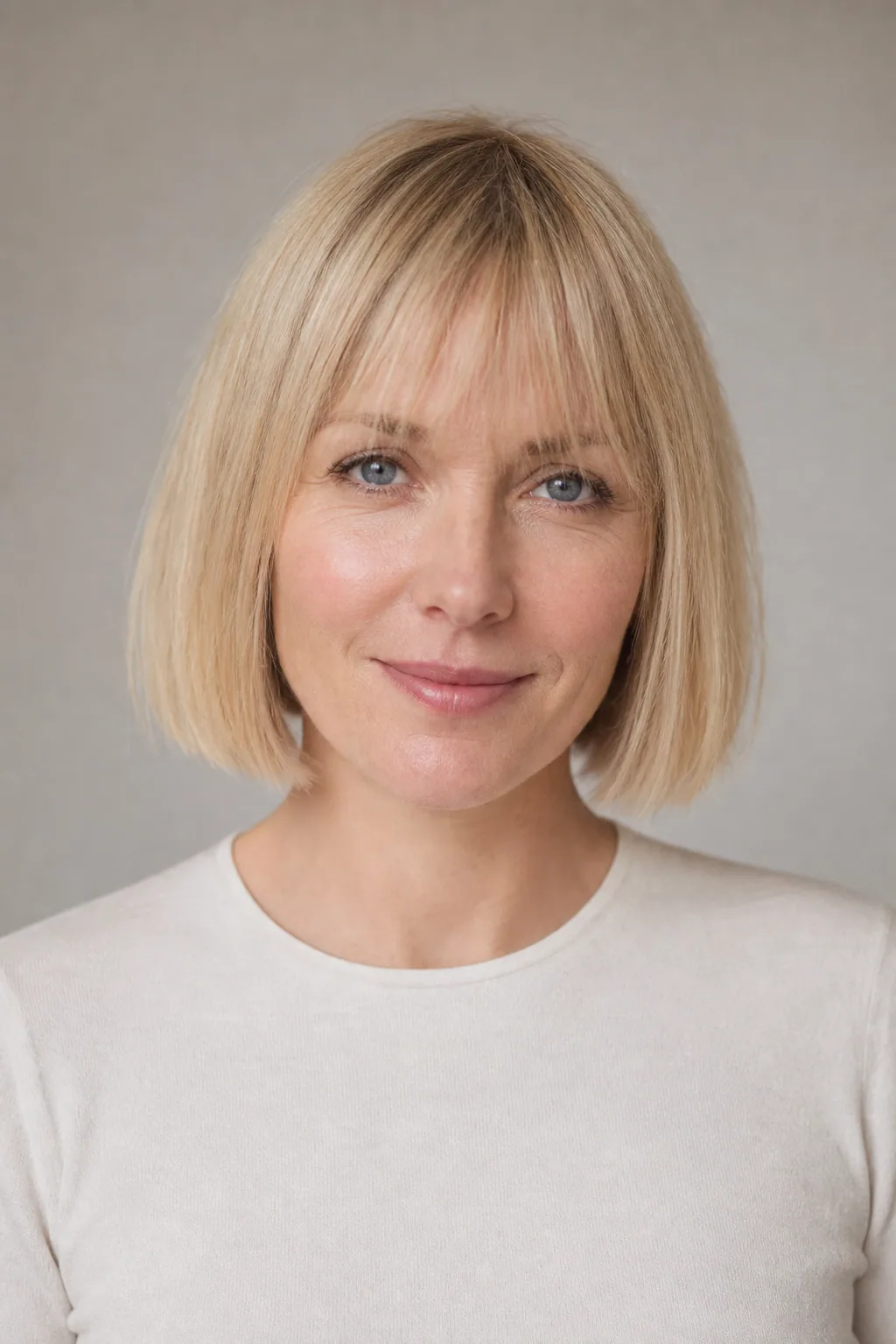
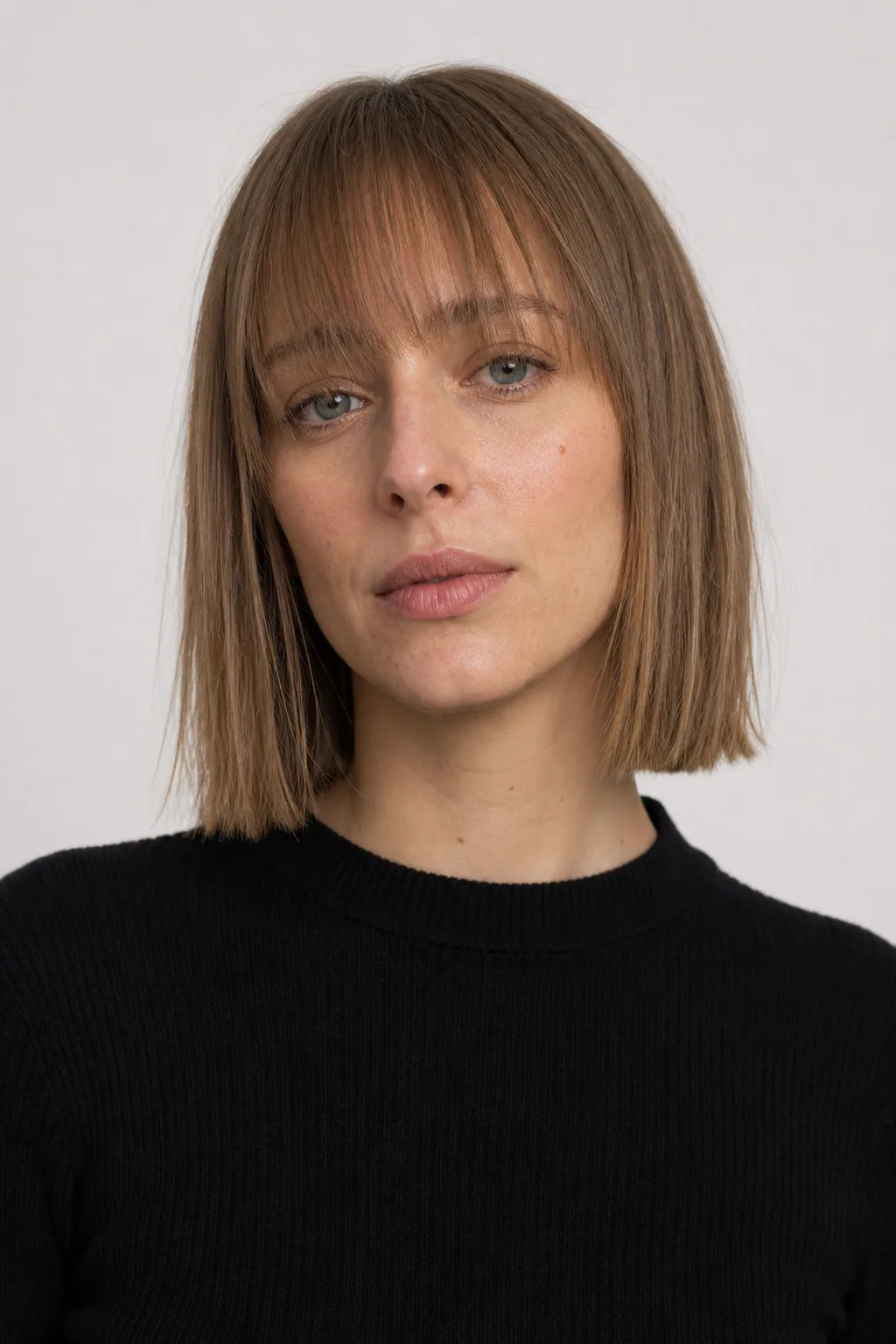
Blunt bob with a full fringe
A blunt fringe at the eyebrows over a blunt chin bob. Two solid lines make fine hair look as thick as it can.
It needs medium density, because a full fringe takes a real section of hair from the top. If your part shows through, choose a lighter fringe.
8
Blunt bob with wispy bangs
Soft, wispy bangs over a solid blunt hem. The bangs take little hair from the top, so they suit thin hair.
The contrast between light bangs and a heavy hem makes the bottom look even thicker.
9
Blunt bob with curtain bangs
Long curtain bangs parted in the middle, over a blunt line just below the jaw. They soften the solid shape and lift the hair at the front.
They grow out easily and can be tucked behind the ears, so they are the safest first fringe.
Shoulder-length blunt bobs
This is past the crossover. A blunt line at the shoulder still looks dense, but the length now pulls the crown flat, so it needs help. These show the fixes that work.
10
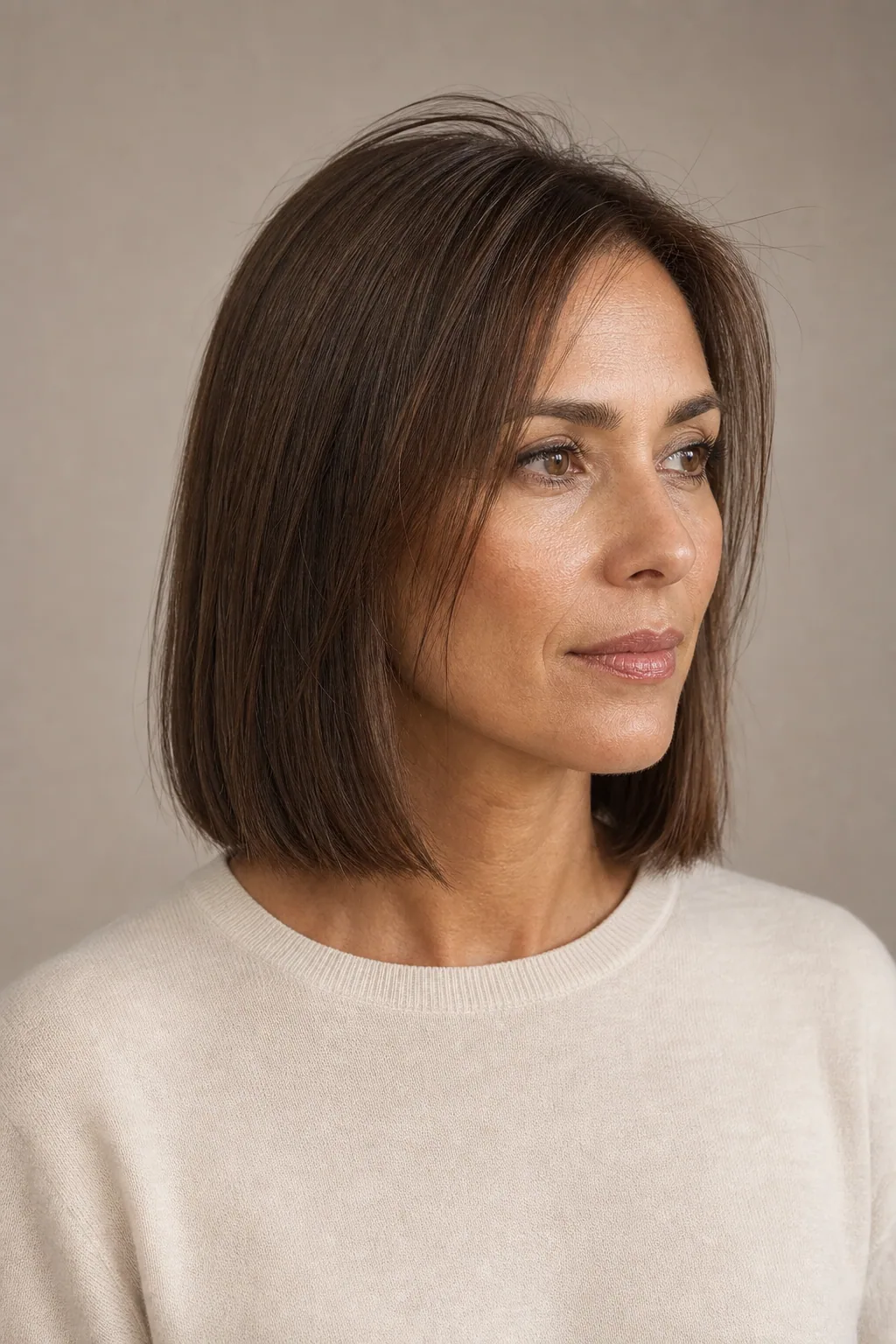
Shoulder-length blunt bob with crown layers
A blunt line grazing the shoulders, with a few long layers at the crown only. The perimeter stays solid, and the crown lifts.
Keep the layers above ear level. Any lower, and they start thinning the hem. The lob guide has more at this length.
11
Shoulder-length blunt bob with a long fringe
A solid shoulder-length line with long bangs that skim the brows. The bangs do the lifting at the front, so the length can stay fully blunt.
Rough-dry with your head upside down for a minute before you smooth the ends. At this length, that minute is what stops the crown going flat.
Blunt bobs for fine hair over 50 and 60
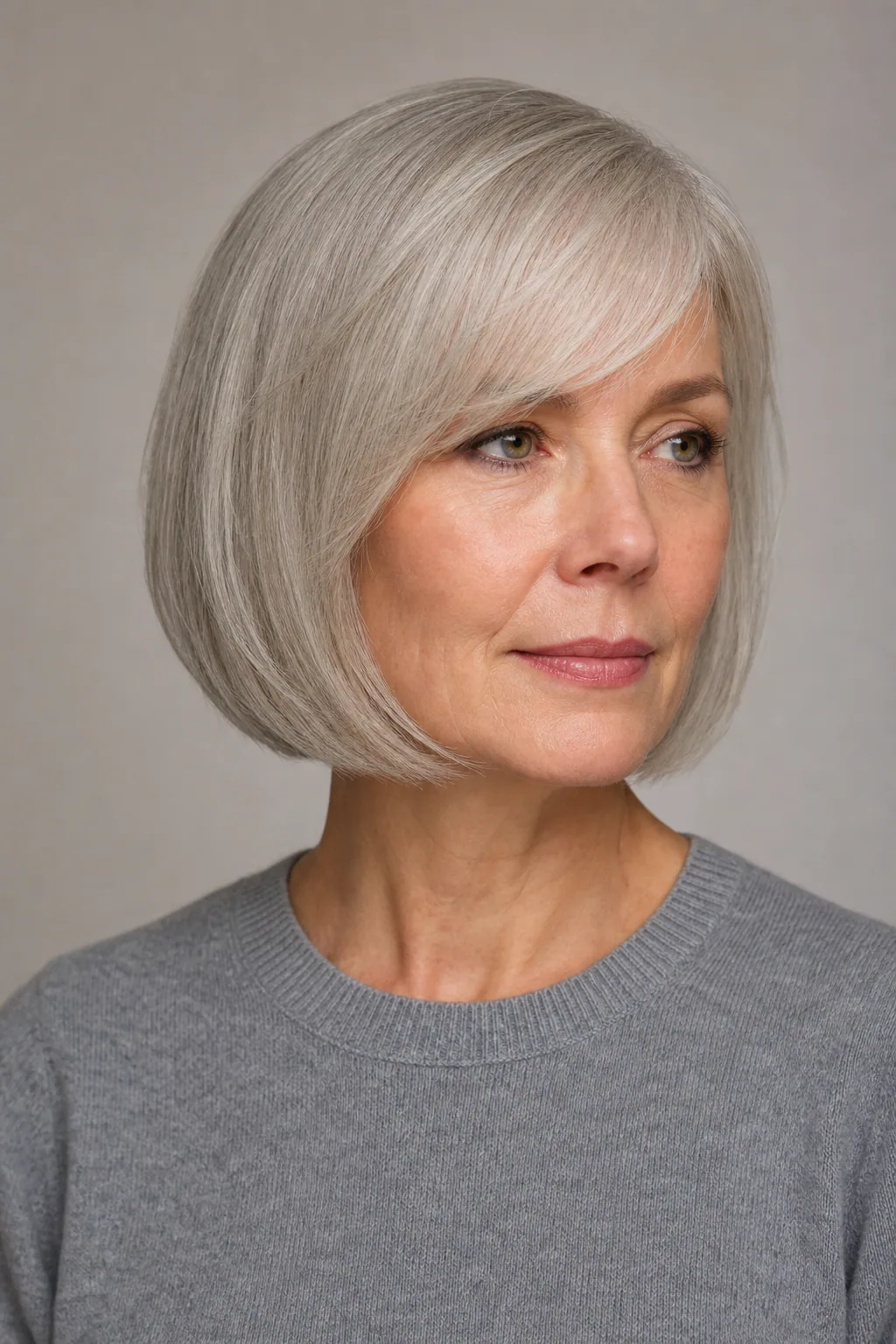
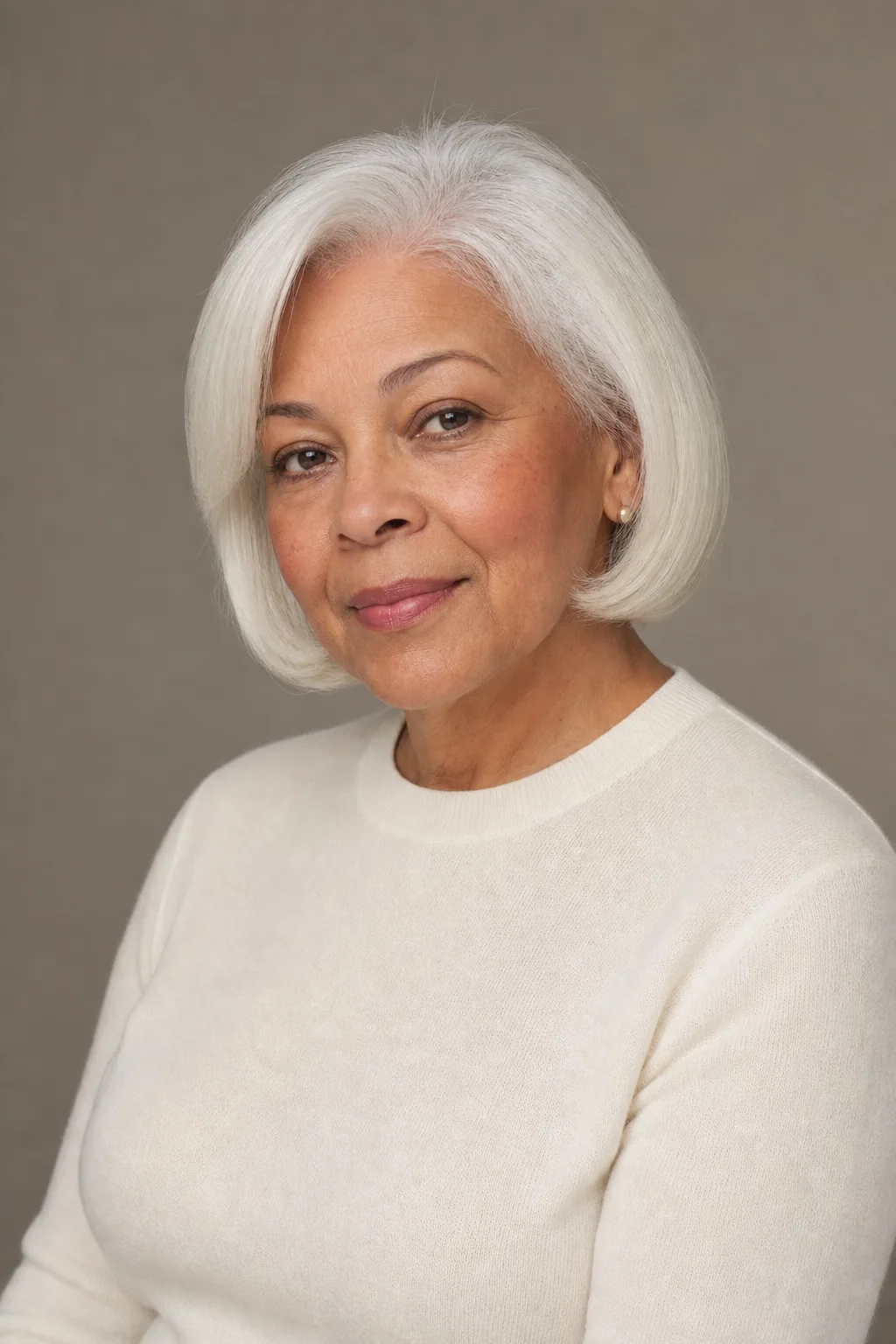
Hair often gets finer with age, and a blunt hem is the simplest way to keep the ends looking full. Keep the line at the chin or jaw, and soften it with a fringe rather than layers.
12
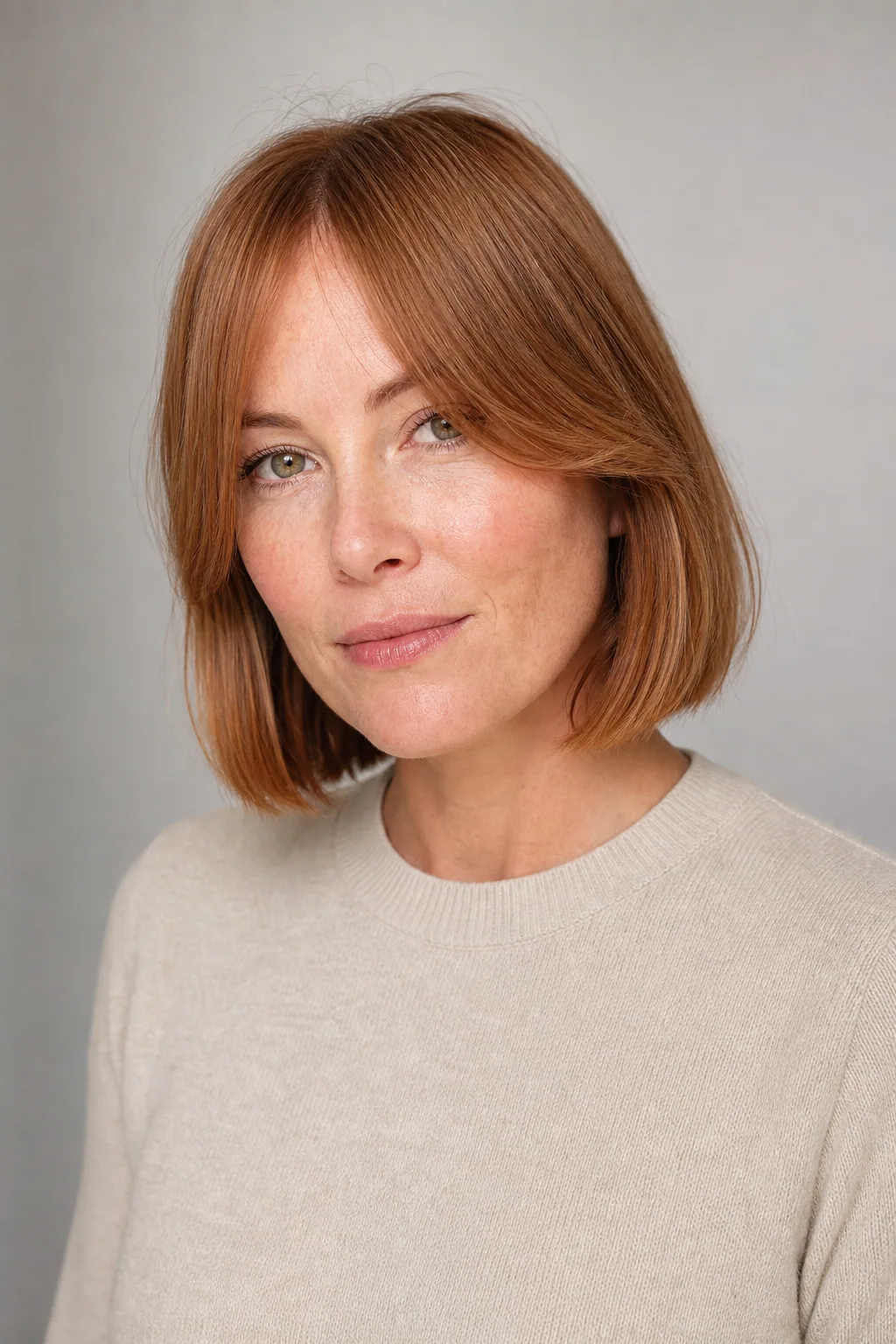
Blunt bob over 50 with a side fringe
A blunt bob at the chin with a long side-swept fringe. Over 50, hair often gets finer, and a blunt hem keeps the ends looking full.
A blunt chin bob with the ends turned gently under and a little lift at the crown. It keeps the density of a blunt line without looking severe.
A velcro roller at the crown for ten minutes gives the lift without extra heat.
Styling a blunt bob on fine hair
Apply a root-lift spray to damp roots, then rough-dry with your fingers, lifting at the crown. Finish the ends with a round brush or a quick pass of a flat iron.
Blunt hair air-dried flat looks limp at any length, so most of the result is in the drying, not the cut. How to add volume to fine hair covers the full routine.
What to ask your stylist
Say: "My hair is fine, so I want a blunt bob with one solid line at [my chin / my jaw]. Please cut the perimeter blunt with scissors and dry-check the line. A light point-cut to soften it is fine, but nothing deep, no razor and no thinning shears."
Book a trim every six to eight weeks. The dense line is the whole point, and once the ends start to wear thin, it becomes an ordinary grown-out bob.
When a blunt bob is the wrong call
Your hair is past the shoulder and you want to keep it. A blunt line at that length flattens thin hair. See the length crossover in our blunt cuts guide.
Your crown is noticeably thin. The shortest blunt bobs leave less hair over the top. Stay at the chin or jaw and add a graduated back.
You want lots of movement and texture. A blunt bob is solid by design. Try a shaggy bob instead.
Your hair is very curly. Curls spring up unevenly, and a blunt line can end up uneven. Ask for a curl-specific cut, cut dry.
FAQ
Yes, it is one of the best cuts for thin hair. Every strand ends on the same line, so the hem looks as dense as your hair can look, and bob length stops the hair before its own weight pulls the roots flat.
Ear to jaw. From the ear to the chin, a blunt bob is close to unbeatable; chin to jaw is still strongly positive. Past the jaw, the blunt line needs help from a fringe, crown layers, or a rough-dry to stop the crown going flat.
Mostly not. The solid perimeter is what makes it work. If the crown needs lift, ask for a few long layers above ear level only, or a gently graduated back, and keep the hem untouched.
Yes. Wispy or curtain bangs take the least hair from the top. A full blunt fringe looks thickest but needs medium density, because it takes a real section of hair away from the crown.
A French bob is a short, blunt bob at the cheekbone or lip, usually with a fringe and worn undone. A blunt bob is any bob cut to one solid line, at any length from the ear to the shoulder.
Every six to eight weeks. The solid line is the whole point of the cut, and once the ends start to wear thin, it loses the density that made it work.
Eleven years behind the chair, specializing in short shapes and fine-hair texture. Simone believes the best haircut is the one you can style yourself in ten minutes.
Results vary with hair type, density, and growth patterns. Hairstyling guidance is not a substitute for an in-person consultation with a licensed stylist.
Hairstyle images in this guide are AI-generated illustrations, not photos of real clients or results. See our image policy.
Get the good hair intel
One honest, stylist-written guide in your inbox each week. No hype.

 SB
SB