Reviewed by Tara Sullivan · Updated August 2026 · 9 min read
A heart-shaped face is wide at the forehead and narrow at the chin, and every guide answers it the same way: build volume at the jaw. That asks fine hair for width at the ends — the exact place it has the least to give — so following it literally leaves you wispier at the bottom than you started.
The fix is to work from the other end: take width away from the forehead with a fringe or an off-center part, and get the balance at the jaw from a heavy, unbroken hemline landing there rather than from layers and texture.
Which is why a blunt cut between the chin and the collarbone is the standout here — it's one of the few times the face-shape brief and the fine-hair brief ask for exactly the same thing. Below: 16 cuts long to short, the one to skip, and the words to bring your stylist. Not sure of your shape? Start with the face-shape decision guide.
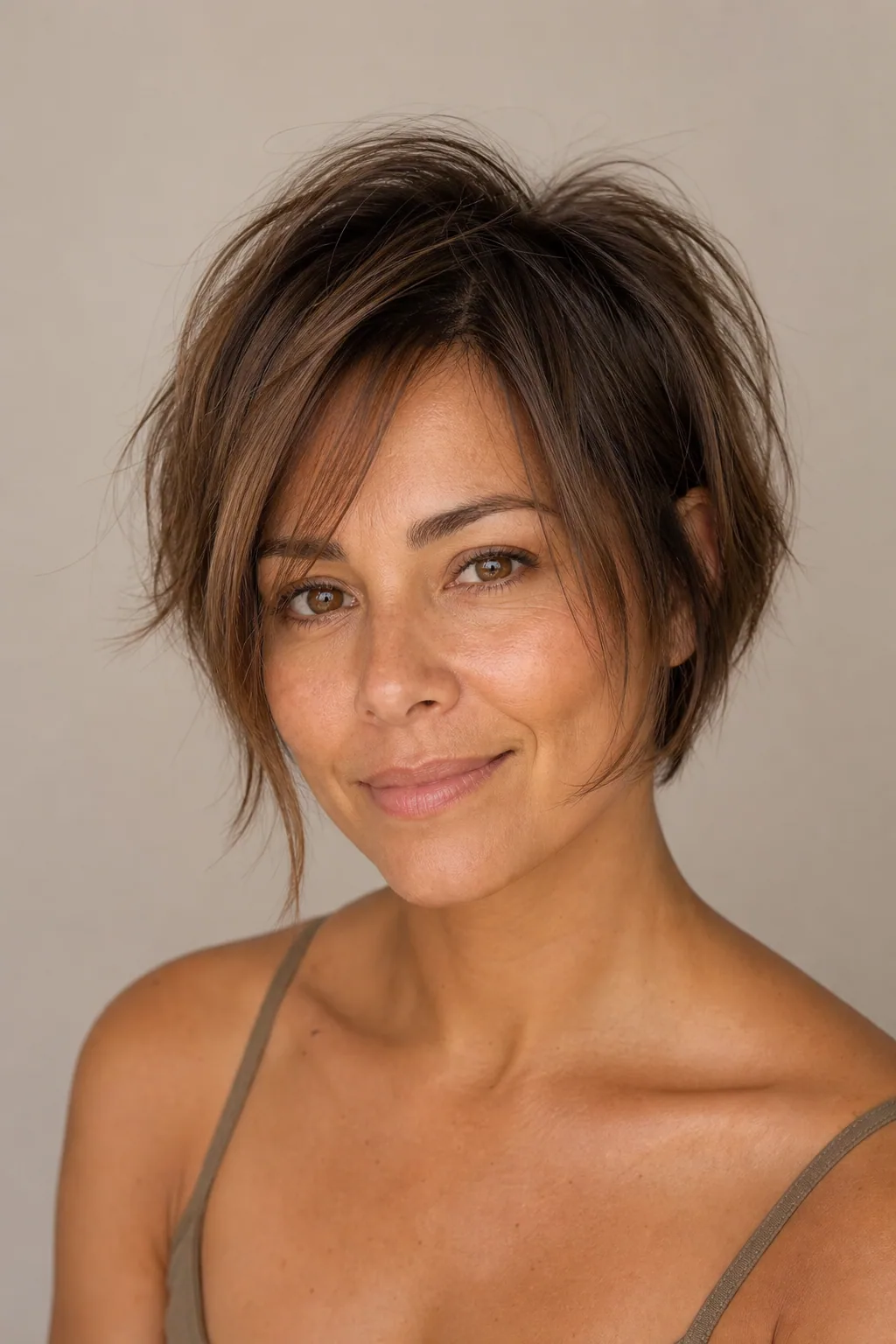
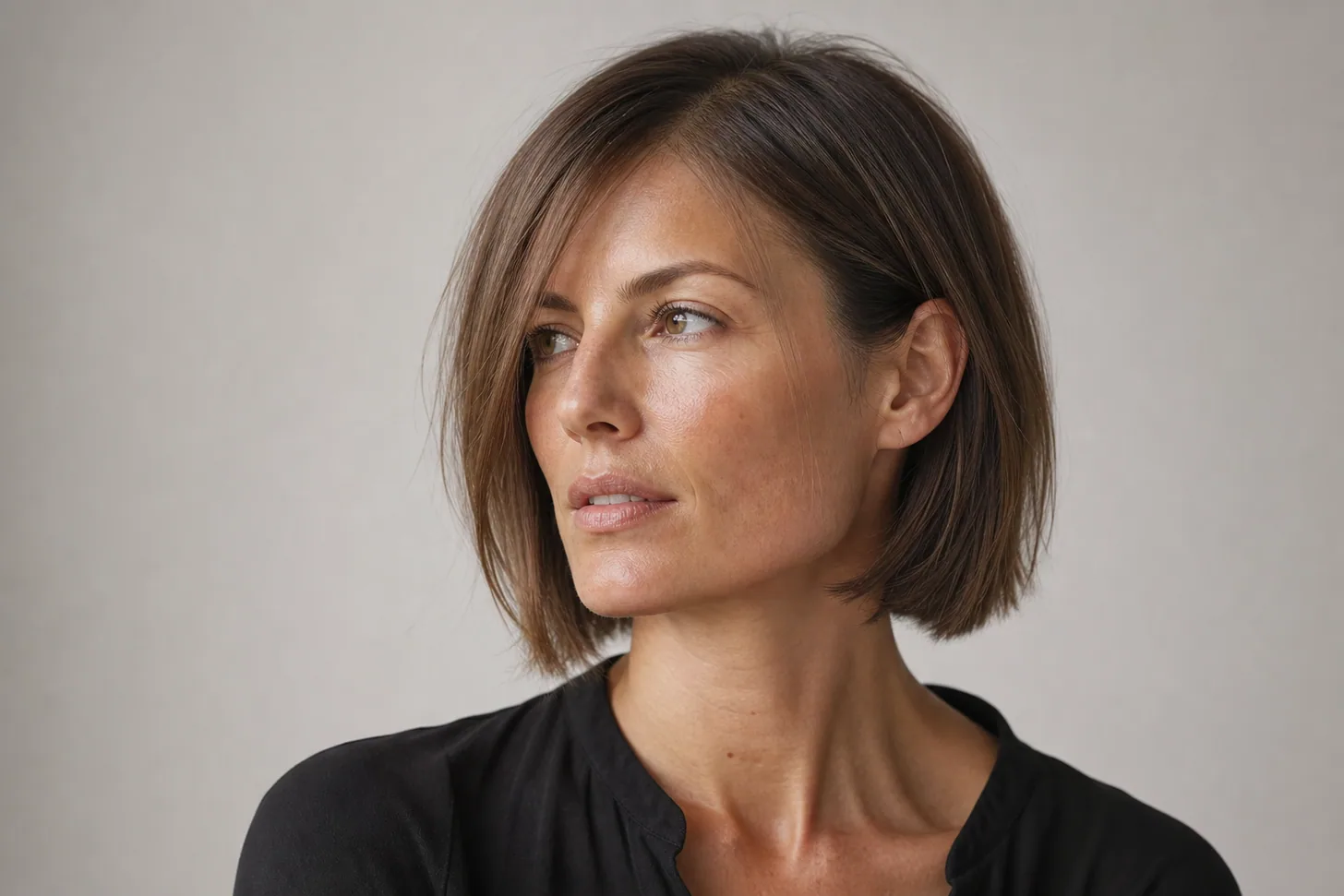
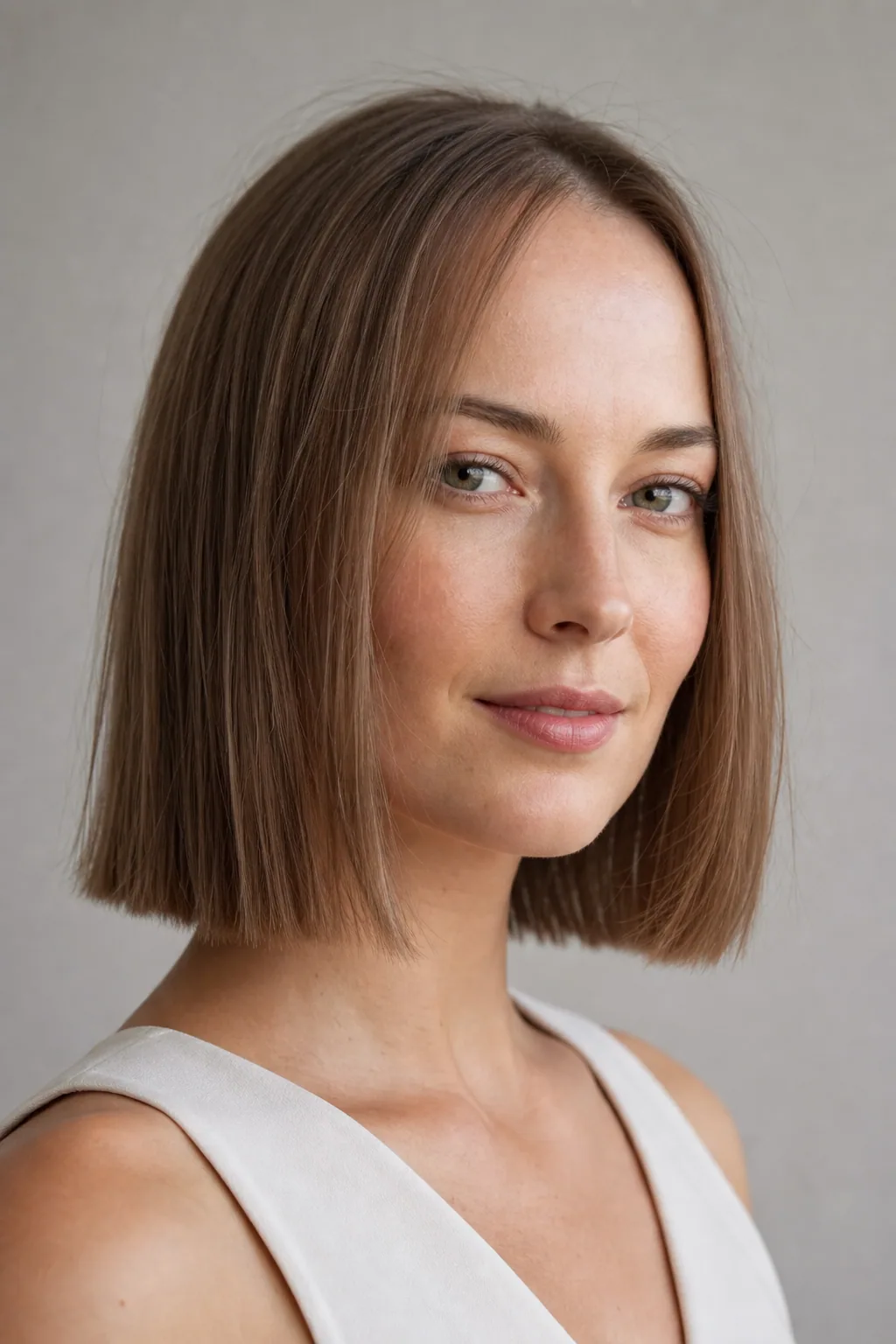
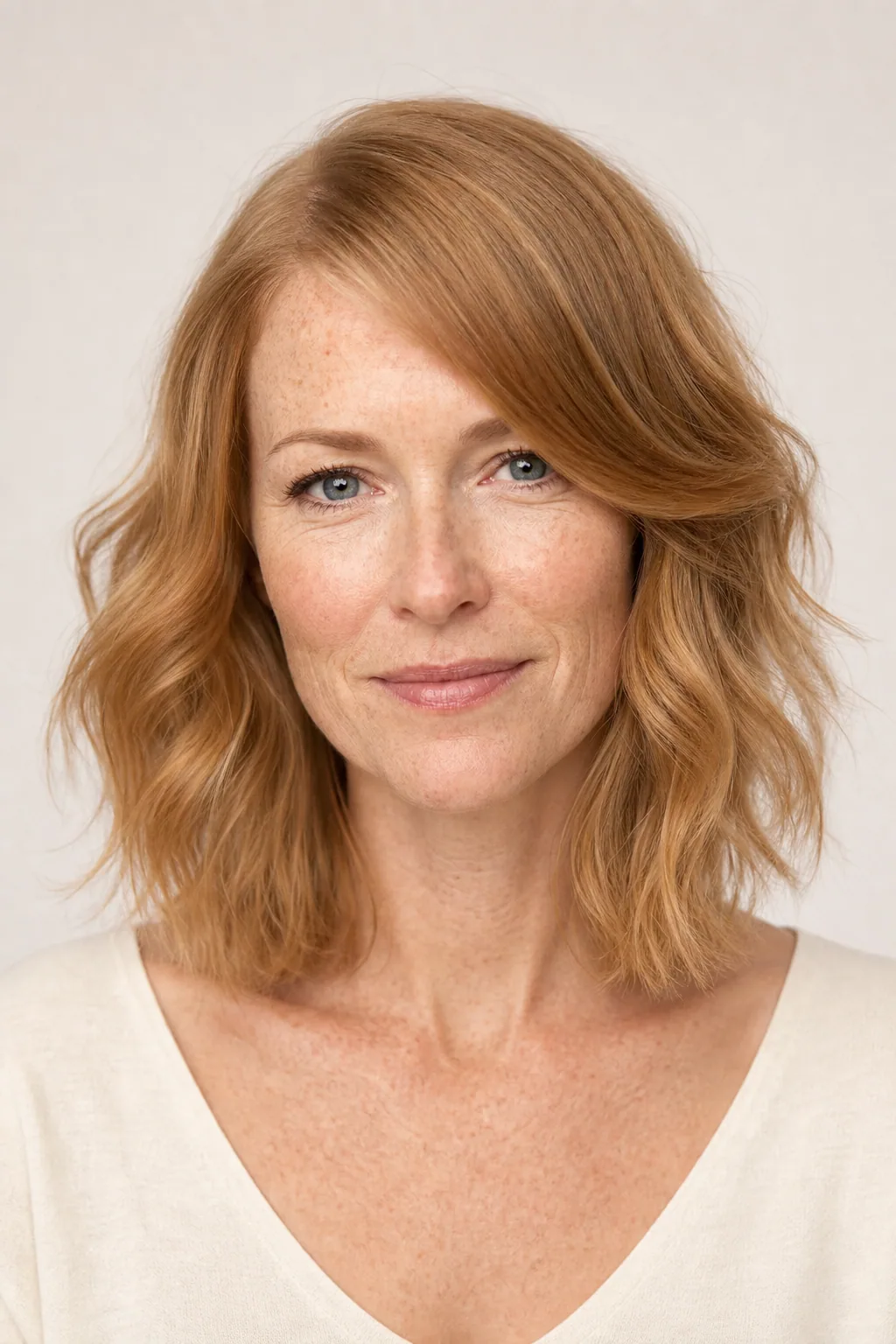
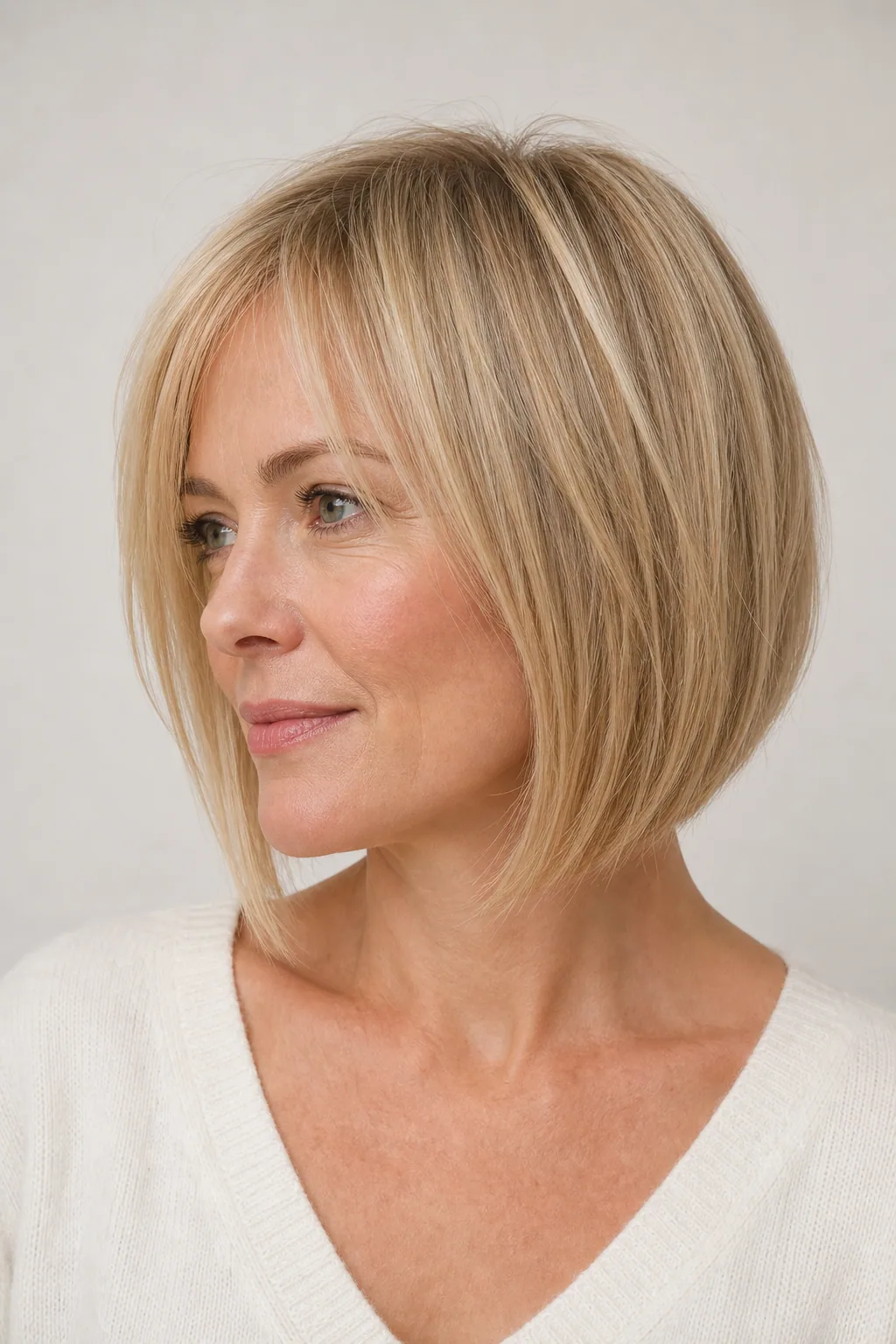
A blunt line at chin level and a soft fringe: width where the face narrows, less forehead on show.
Chair-side note
Heart-faced clients almost always arrive asking for the same two things at once — a fringe, which is right, and long layers "for volume at the bottom", which quietly undoes it. I show them in the mirror: I gather the ends into my hand at jaw level so they read as one solid edge, then let them fan out the way layers would.
The solid version is visibly wider. Every time, the client says some version of "oh, I've been asking for the opposite of what I wanted." The layers weren't a bad idea in general; they were a bad idea at the ends, on this face, with this hair. Put them inside instead and everyone gets what they came for.
SB
— Simone Baptiste, Senior Stylist
Why the usual heart-face advice backfires on fine hair
A heart-shaped face is broadest across the forehead or the cheekbones and tapers to a defined chin. Read as an outline, it's a downward-pointing triangle, and the balancing job is to narrow the top and widen the bottom.
Widening the bottom is where the trouble starts. On dense hair, "volume at the jaw" is delivered by layering the ends so they fan outward and by roughing them up with a texture product.
On fine hair those same two moves have the opposite effect, because a fine strand tapers naturally toward its tip — layer it and the last few inches lose what little substance they had. The silhouette gets airier, not wider, and in daylight the ends read see-through.
So invert the plan. The width at the jaw comes from an intact, blunt hemline that happens to land at that level: a solid edge is genuinely wide, and it's also the most reliable way to make fine hair look like more of itself. And the top of the triangle gets narrowed by subtraction — a fringe, or a part that covers some forehead — which costs nothing at the ends at all.
The three rules that do most of the work
Rule
What to ask for
Why it works on fine hair
Land the weight at the narrow point
"Blunt, finishing between my chin and my collarbone."
A solid hemline is the widest thing fine hair can produce, placed exactly where the face needs width
Take width off the forehead
"A soft fringe, or set the part well off-center."
Narrows the top of the triangle without spending any density at the ends
No taper at the bottom
"No razor, no thinning shears, and no layers below my jaw."
Layered fine ends fan out thin rather than wide, which exaggerates the taper you're correcting
Mid-length cuts — the sweet spot
Chin to collarbone is where this face shape and this hair type agree most completely, so it takes the largest share of the gallery.
1
The blunt collarbone cut
One length, cut hard across, finishing just above the collarbone. Nothing about it is clever, which is the point: the heaviest possible edge sitting in the lower third of the face is both the fullness trick fine hair needs and the width a heart shape is missing. If you take one cut from this page, take this one.
2
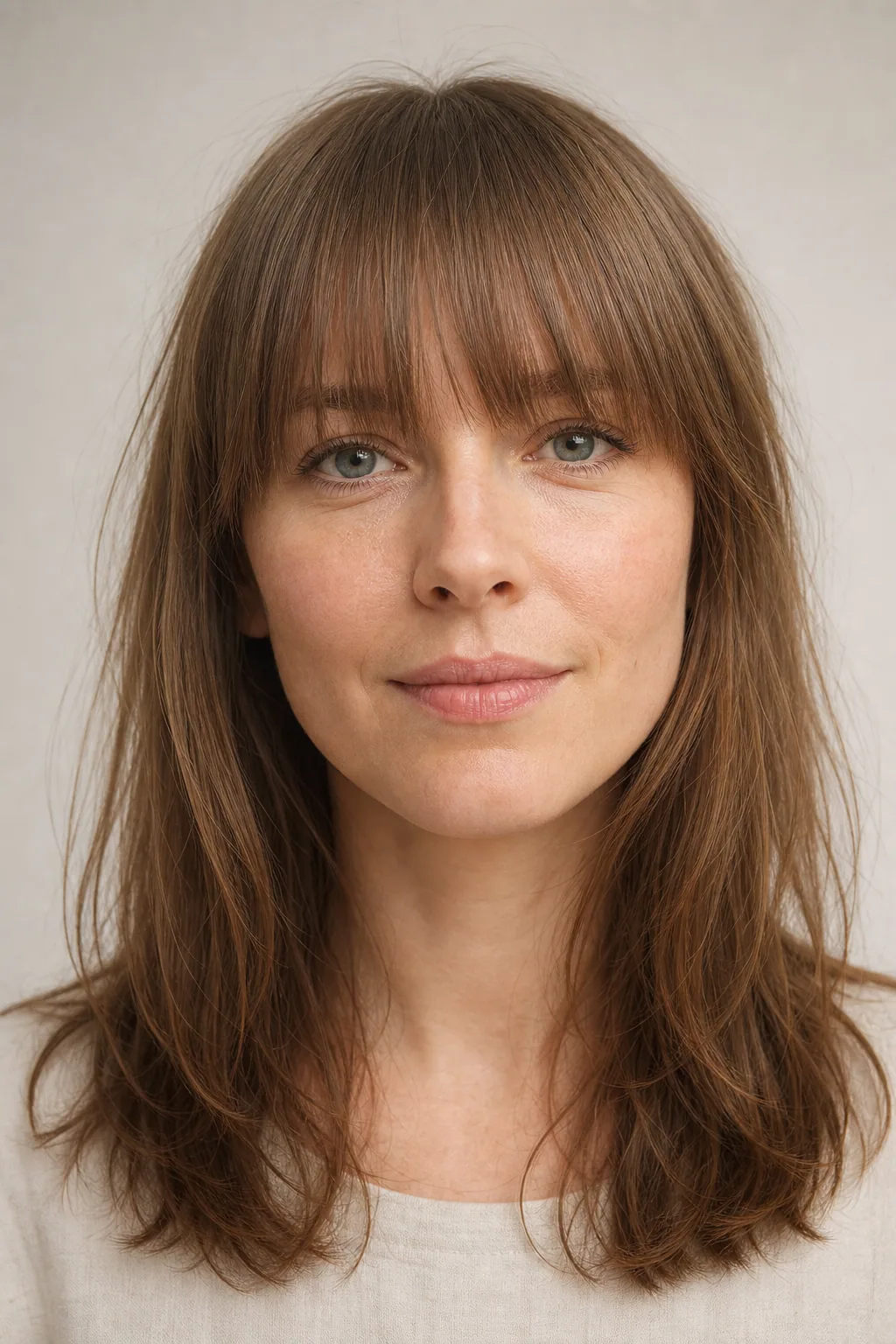
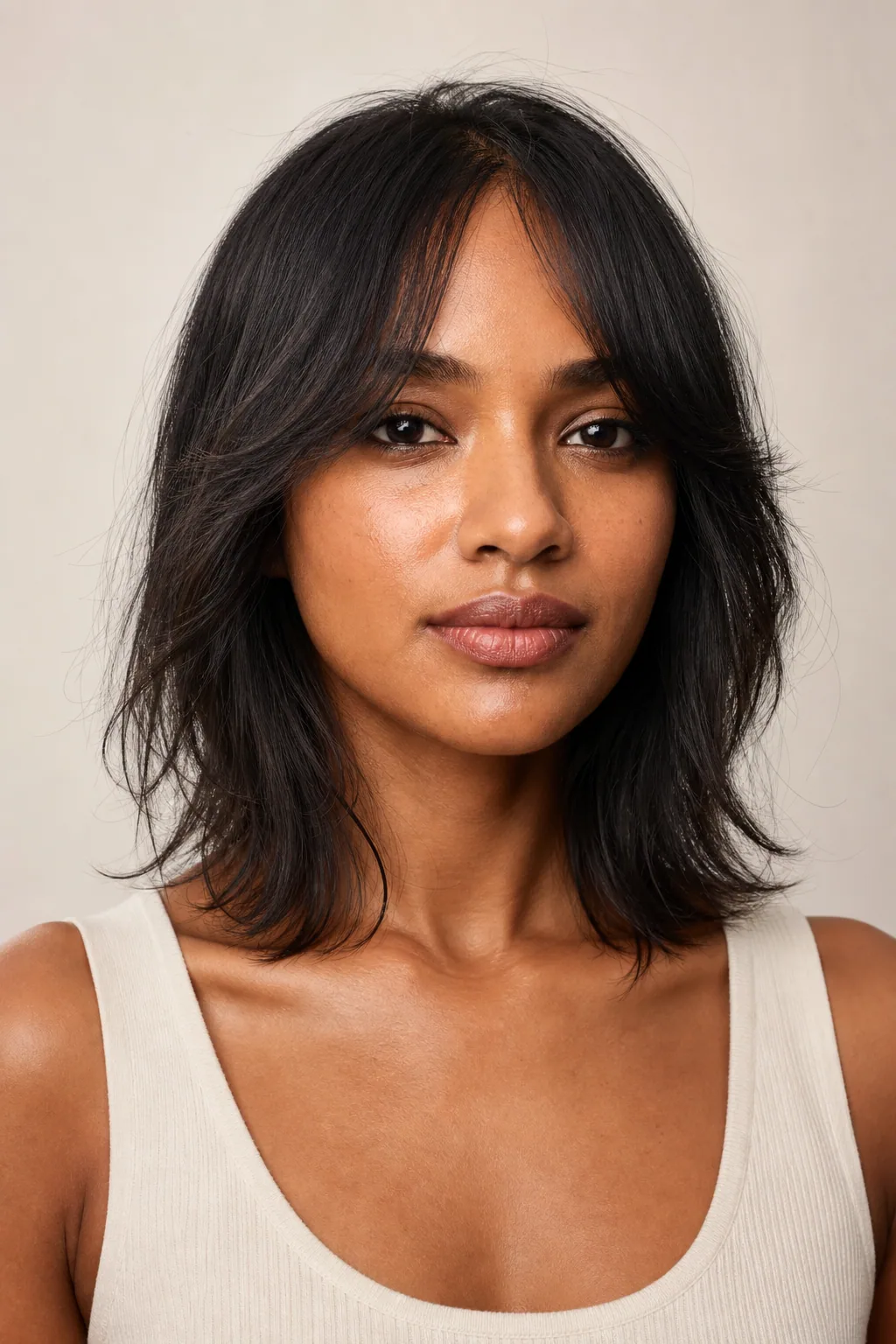
The collarbone cut with curtain bangs
Add the fringe and you have the complete answer: forehead reduced at the top, weight anchored at the bottom. Curtain bangs suit fine hair better than a full fringe because they're cut from a shallow triangle of hair rather than a deep one, so less density leaves the rest of the head. The sizing details are in curtain bangs for fine and thin hair.
3
The jaw-level inward bend
A styling move rather than a cut: bend the section that sits beside the jaw gently inward, so it curves under the chin instead of hanging past it. That curve visually fills the space either side of a narrow chin. Set it with a round brush and let it cool in shape before releasing — that cooling step is the whole difference between a bend that lasts and one that drops.
4
Movement from the inside only
If a completely solid cut feels heavy, put the layering underneath the top section where it never reaches the perimeter — the technique in ghost layers for thin hair. You get lift and movement at the top of the head, which is where a heart shape can afford it, and the hemline stays exactly as wide as it was.
5
The cheekbone-down wave
Waves started at cheekbone level rather than at the roots — above that, the face is already wide enough, and root-to-tip waves add bulk where you don't want it. A soft S through the lower half widens the jaw area and gives fine hair the grip it needs to hold a shape. Two or three large-barrel sections is enough; see how to curl fine hair so it holds.
6
One to skip: long, center-parted and tapered
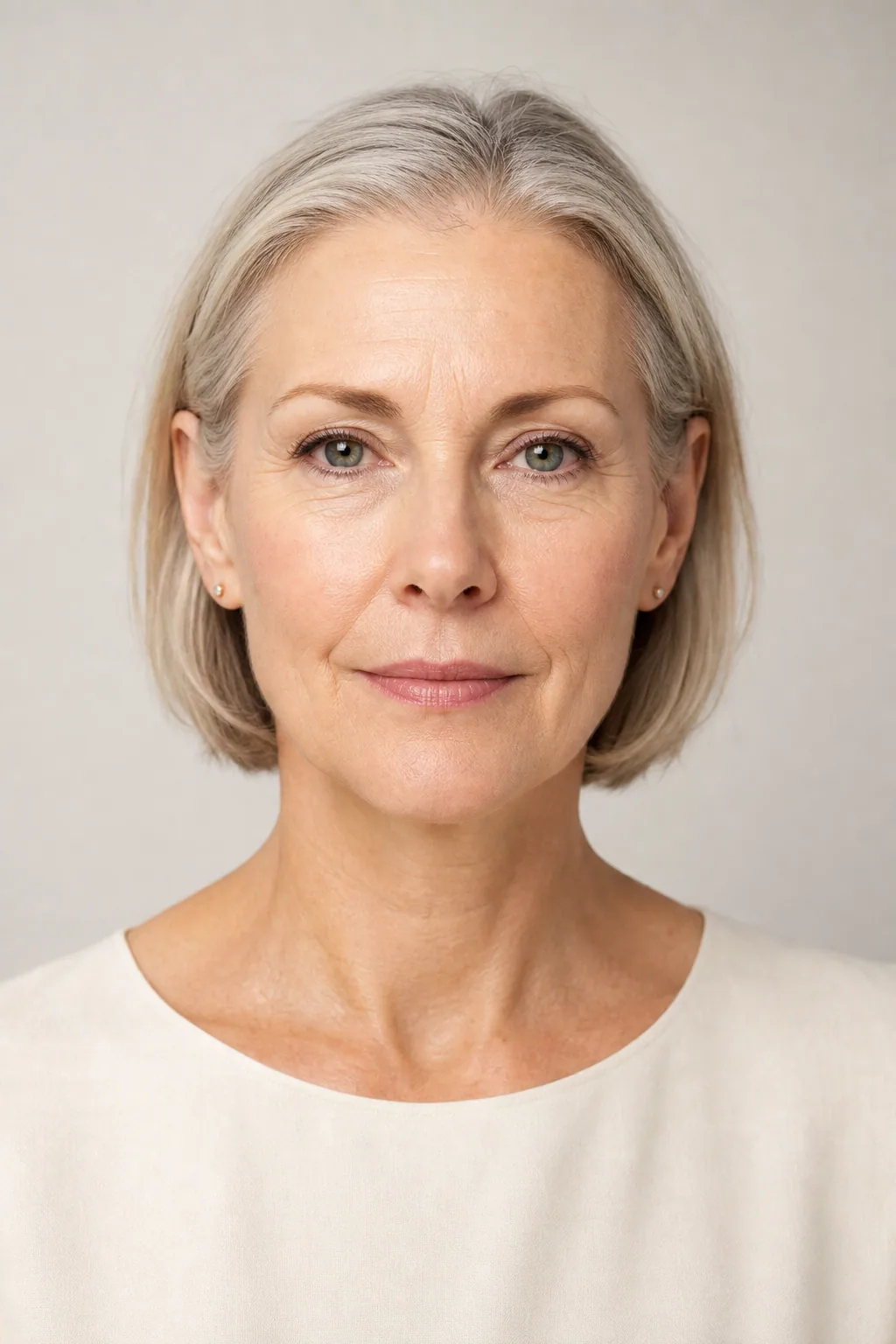
Forehead fully exposed, nothing at the jaw, and the ends narrowing to a point. The hair repeats the face's own outline instead of correcting it, and on fine hair the taper is real rather than stylistic. This is the single most common combination we see on heart-shaped clients, usually arrived at by growing everything out and never re-deciding the shape.
Bobs that land where the face narrows
A bob is the concentrated version of everything above. The variable is how far down the line sits, and for this shape there's less risk in going short than there usually is.
7
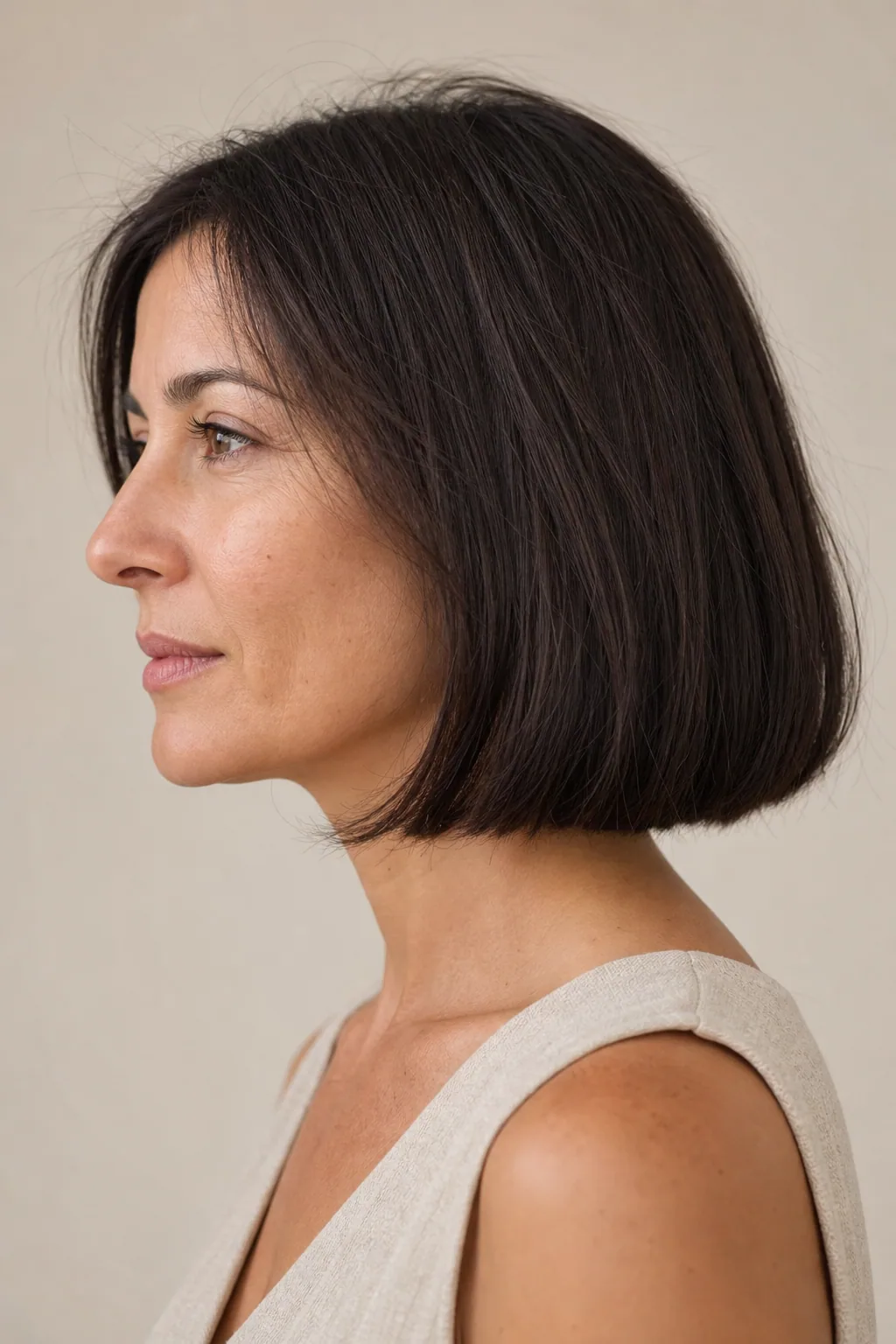
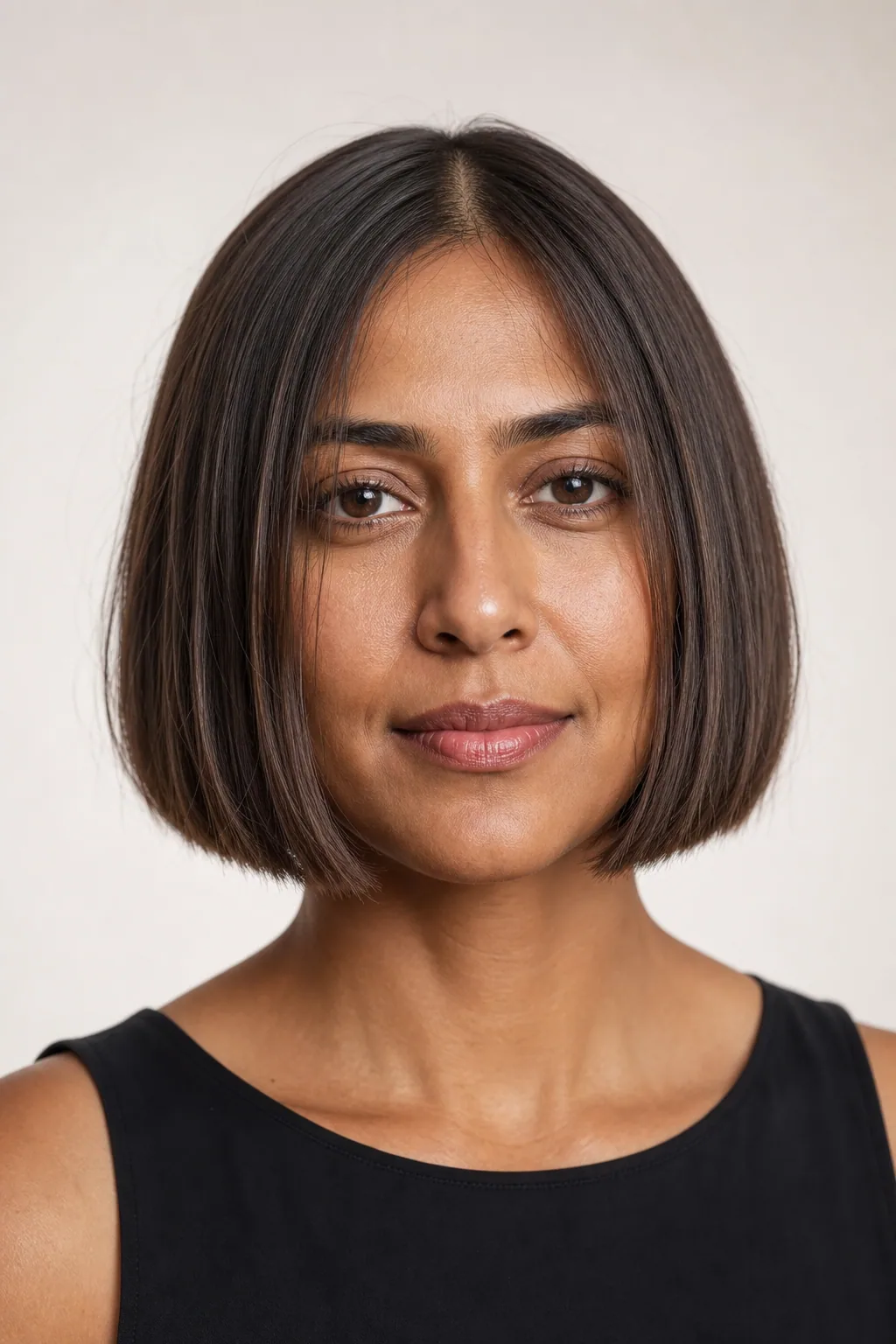
The chin-length blunt bob
Cut straight across, level with the chin. On most face shapes we'd hedge about a blunt line at that height; here it's the whole idea, because the line supplies width at the narrowest point of the face. Ask for it kept genuinely blunt — no point cutting into the hemline beyond softening the very corners. The length ladder is in the bob haircut for thin hair.
8
The French bob with a fringe
Short, blunt, and worn with a fringe as standard — which happens to be exactly the two-part prescription for this face shape. It's a high-impact cut and it wants a decent hairline density to carry the fringe, so check the front of your head honestly first. Everything about the shape is in the French bob for fine and thin hair.
9
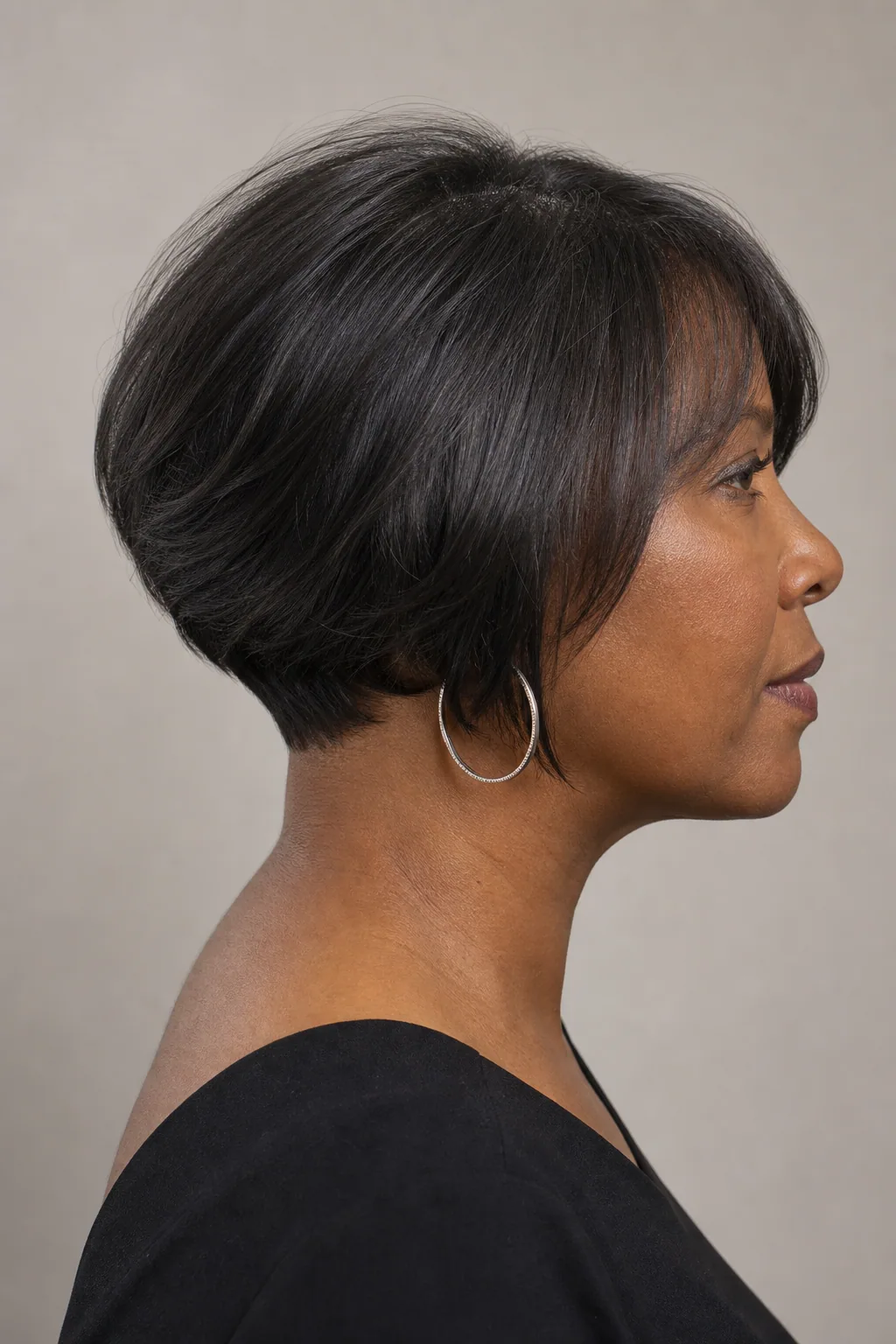
The graduated bob with back volume
Weight built up at the back through graduation rather than layered off, so the silhouette gains depth from the side without losing the front hemline. It's the version to ask for if your hair is fine and flat, because the graduation does the lifting a root product would otherwise have to. See the stacked bob for fine hair.
10
The gently forward-angled bob
A hair longer at the front than the back, so the ends fall slightly forward toward the jaw rather than hanging straight down. The angle carries the eye inward at exactly the point where the face is narrowing. Keep it subtle — a strong A-line takes too much length off the back, and the back of the head is where fine hair most needs to keep its weight.
11
The bob, and how not to wear it
The same good cut, undone by habit: tucked behind both ears. That removes the hair from either side of the chin — the width you just paid for — and opens the forehead completely. Tuck one side if you like the asymmetry, never both. It's a free fix and it changes the proportions more than most haircuts do.
Short cuts that keep something at the front
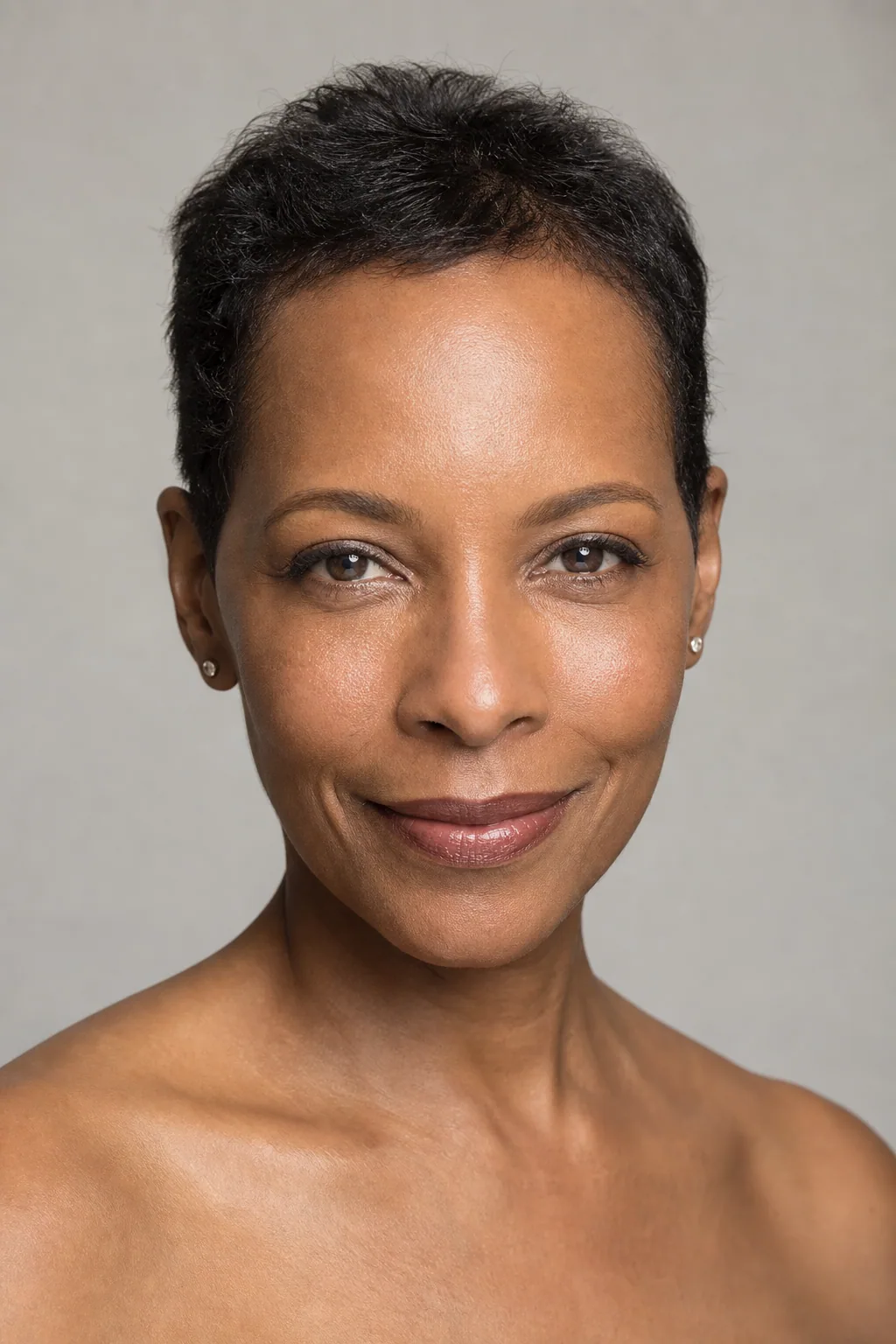
Short hair can work well here, but only if the front of the cut is doing something. A crop worn back off the face maximizes forehead and minimizes chin, which is the wrong direction on both counts.
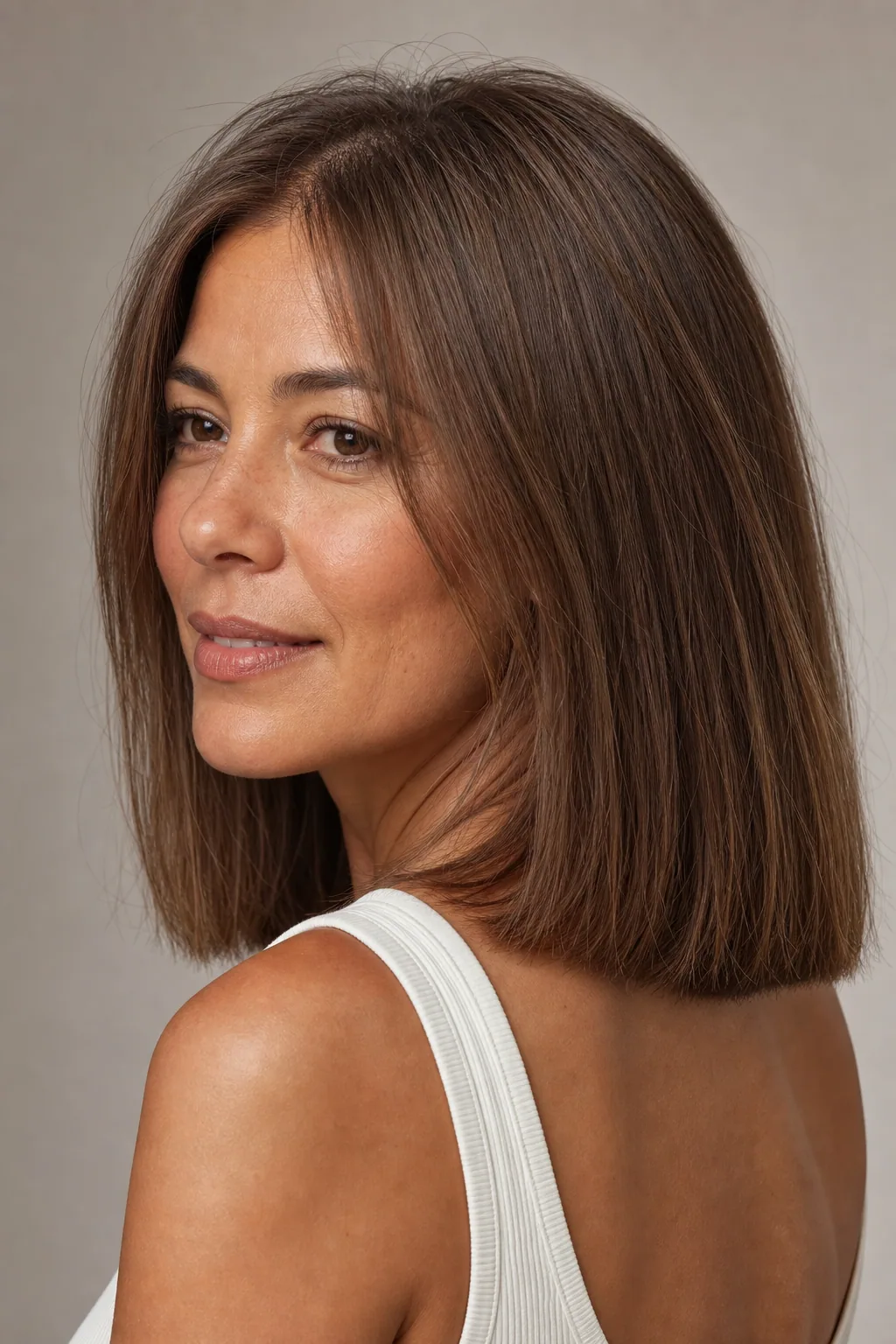
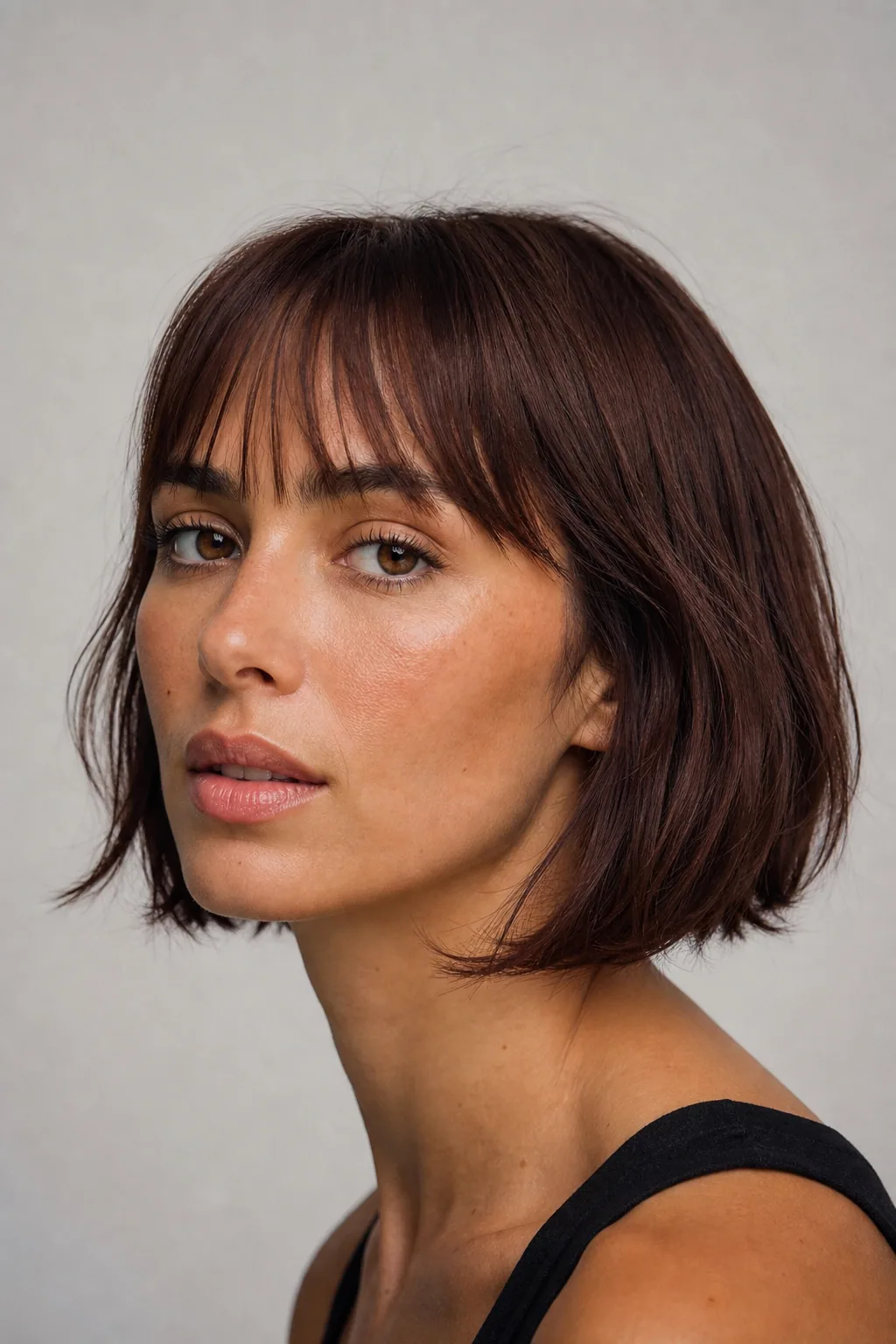
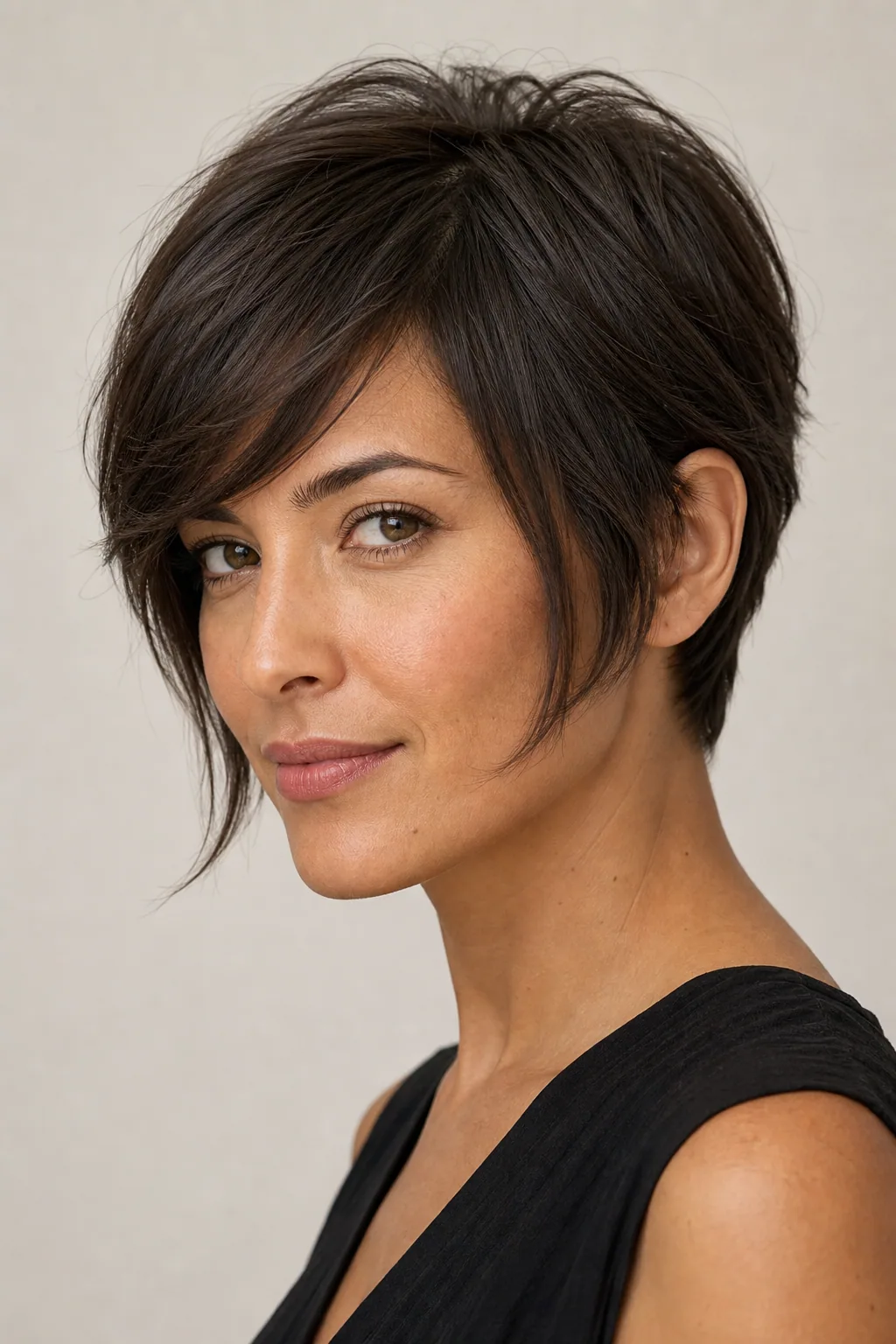
side-swept fringe crossing the forehead and soft pieces at the cheekbone, three-quarter view" width="1200" loading="lazy" decoding="async">
12
The long pixie with a side-swept fringe
Short everywhere except the front, where the fringe crosses the forehead on a diagonal and cuts the widest measurement down. It's the short cut we recommend most often for this shape, and fine hair takes to it easily because there's no length dragging the roots flat. Pixie cuts for fine and thin hair covers the grow-out.
13
The bixie with cheekbone pieces
Longer than a pixie, with deliberate pieces left at cheekbone level so there's something beside the face rather than a clean edge above it. Those pieces are what stops a short cut reading top-heavy on a tapering face, and they cost very little density because they're only a handful of strands.
14
The swept-back crop — handle with care
Not a failure, but the version of short hair that asks the most of your bone structure: nothing covers the forehead and nothing sits beside the chin, so the taper is on full display. If you love it, wear it — and add a little length at the front, or a pair of statement earrings, which genuinely do balance the lower half.
Fringe and parting: the highest-leverage change
If you only alter one thing, alter the front. Nothing else on this page changes the proportions as much per inch of hair.
15
The full soft fringe
The most decisive option: it removes the widest measurement of the face from view entirely and rebalances the whole outline in one appointment. The honest cost is density — a full fringe is cut from a deep section, and on sparse hair that shows behind it. Take it if your front hairline is average or better, and read bangs for fine and thin hair for how much a fringe actually borrows.
16
The deep off-center part
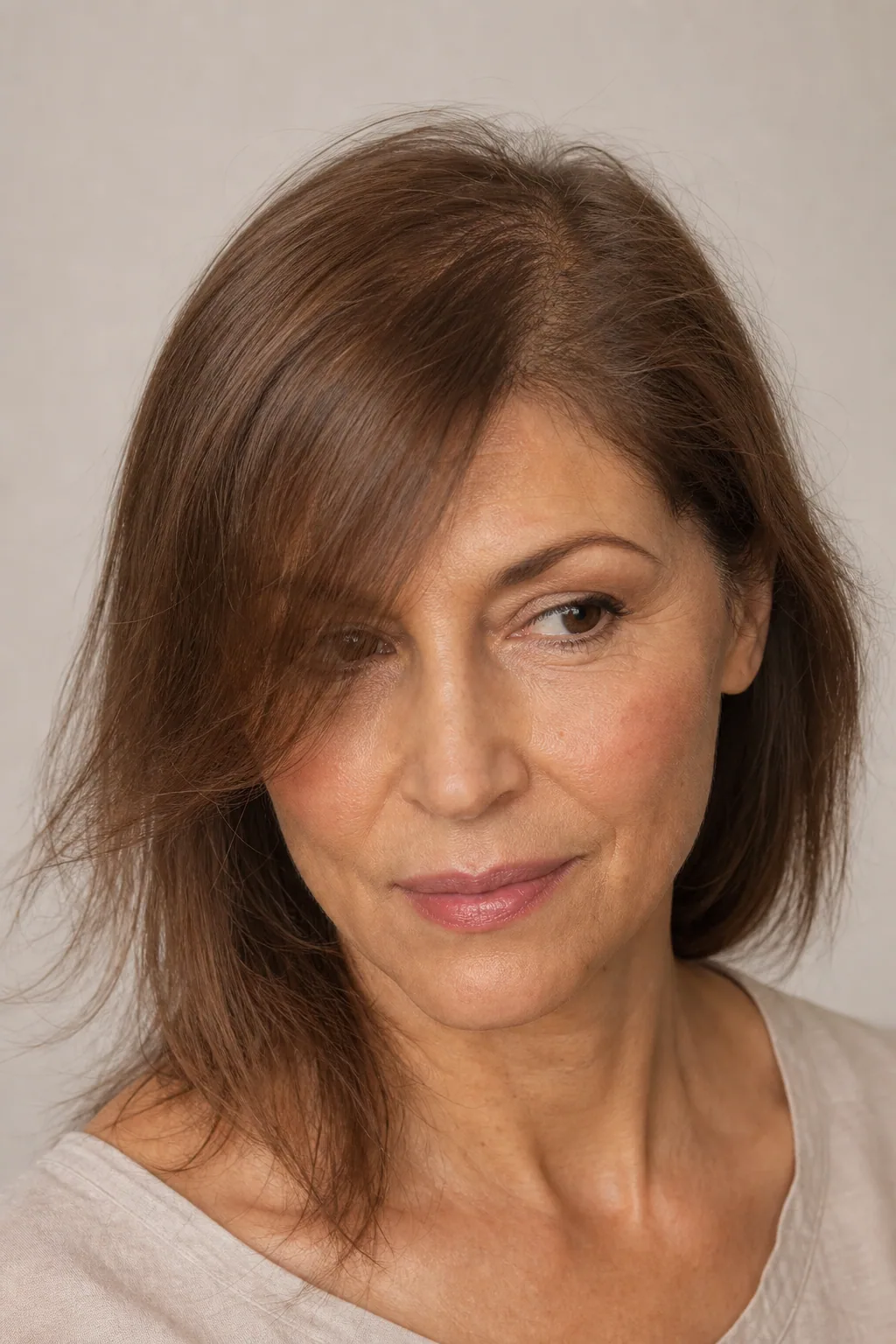
The no-scissors version, and it does a surprising amount of the same work: swept deeply to one side, the hair covers a corner of the forehead and sets up a diagonal across the widest part of the face. It's also the cheapest root lift fine hair has, since the heavy side leaves the scalp at an angle rather than lying flat.
What to ask your stylist
Bring this and you'll get the shape rather than the standard interpretation of it:
"My face is widest at the forehead and narrow at the chin, and my hair is fine. I'd like the length to finish between my chin and my collarbone, kept blunt so it's as heavy as possible at that level — no layers below my jaw, no razor, no thinning shears. If we're adding movement, put the layers internally. And I'd like a soft fringe, or the part set well off-center."
The clause doing the heavy lifting is "no layers below my jaw." Everything else is negotiable.
When these rules bend
Proportion is the second priority, never the first. If density is the real issue — a widening part, visible scalp at the crown — solve coverage before outline, starting with coverage for thinning on top.
If your hair has a natural wave, you have more room than this page assumes: a wave produces width at the jaw honestly, so you can wear more length and less bluntness than a straight-haired reader can, and haircuts for fine, wavy hair is the better starting point. And if your forehead is the part you actually like, ignore the fringe advice entirely — a face-shape guide is a tool for getting what you want, not a list of things to hide.
When a heart-face cut isn't the priority
Your front hairline is sparse. A fringe is cut from exactly that hair. Use an off-center part for the same effect at no cost, and see coverage for thinning on top.
You wear your hair up most days. An updo exposes the forehead and removes width at the jaw — the two things this shape wants least. Keep face-framing pieces out, and see half-up styles for fine hair for a middle ground.
You've been told to layer the ends "for volume at the bottom." On fine hair that produces wisps rather than width. Ask for the weight kept and the layers put inside.
Your widest point is the cheekbones, not the forehead. That's closer to a diamond shape; the fringe matters less and the jaw-level width matters more. The face-shape guide has the comparison.
Your chin is narrow because of a recent change in weight or health. Face shape shifts, and it's worth re-deciding a cut rather than assuming the old rules still apply.
FAQ
A blunt cut that finishes between the chin and the collarbone, worn with a soft fringe or an off-center part. The blunt hemline puts a solid horizontal line exactly where a heart-shaped face narrows, so it supplies the width the shape is missing — and a blunt perimeter is also the single strongest fullness illusion fine hair has. It's a rare case where the face-shape brief and the fine-hair brief ask for the same cut.
That's the standard advice and it's the wrong way round for fine hair. Volume at the jaw usually means layering and texturizing the ends, and the ends are where fine hair has the least substance — so you end up with a narrower, wispier silhouette at exactly the point you were trying to widen. Get the width from a heavy, unbroken hemline landing at that level instead, and take the balancing work from the forehead end by reducing how much of it shows.
They're the most effective single change available, because a heart-shaped face is widest across the forehead and a fringe covers part of it. Curtain bangs and long side-swept fringes work best on fine hair since they can be cut from a shallow section and still read soft. A heavy, full fringe balances the proportions beautifully but borrows a lot of hair from the front hairline, so it suits average density better than sparse.
Only with a fringe or a strong side sweep. A pixie worn back off the face exposes the full width of the forehead and leaves the narrow chin with nothing beside it, which exaggerates the taper rather than balancing it. Keep length and softness at the front — a long pixie with a side-swept fringe, or a bixie with pieces falling at the cheekbone — and the same short cut becomes one of the more flattering options.
Usually not. A center part opens the forehead symmetrically and puts the widest point of the face on full display, then draws a straight line down toward the narrowest point. An off-center part covers part of the forehead on one side and sets up a diagonal that softens the taper. It also gives fine hair some root lift on the heavier side, which a center part never does.
Long, one-length hair with no fringe and a center part, especially if it tapers toward the ends. It leaves the forehead fully exposed, adds nothing at the jaw, and narrows further at the bottom, so the whole silhouette repeats the shape of the face instead of balancing it. On fine hair the taper is worse than on thick hair, because the ends genuinely are thinner and read see-through in daylight.
Widest across the forehead or the cheekbones, narrowing to a defined, fairly pointed chin — often with a hairline that comes to a slight peak in the middle. Pull your hair back and look straight on: if the outline is a downward-pointing triangle rather than a rectangle or a circle, that's a heart shape. If the widest point is the cheekbones rather than the forehead, and the forehead is narrow too, you're closer to a diamond, and the advice about covering the forehead matters less.
Eleven years behind the chair, cutting fine and thin hair into shapes that hold. Simone's most-repeated correction for heart-shaped clients: the layers weren't wrong, their position was.
Results vary with hair type, density, and growth patterns. This guide is educational and not a substitute for an in-person consultation with a licensed stylist.
Hairstyle images in this guide are AI-generated illustrations, not photos of real clients or results. See our image policy.
Get the good hair intel
One honest, stylist-written guide in your inbox each week. No hype.

 SB
SB

 side-swept fringe crossing the forehead and soft pieces at the cheekbone, three-quarter view" width="1200" loading="lazy" decoding="async">