Reviewed by Tara Sullivan · Updated September 2026 · 10 min read
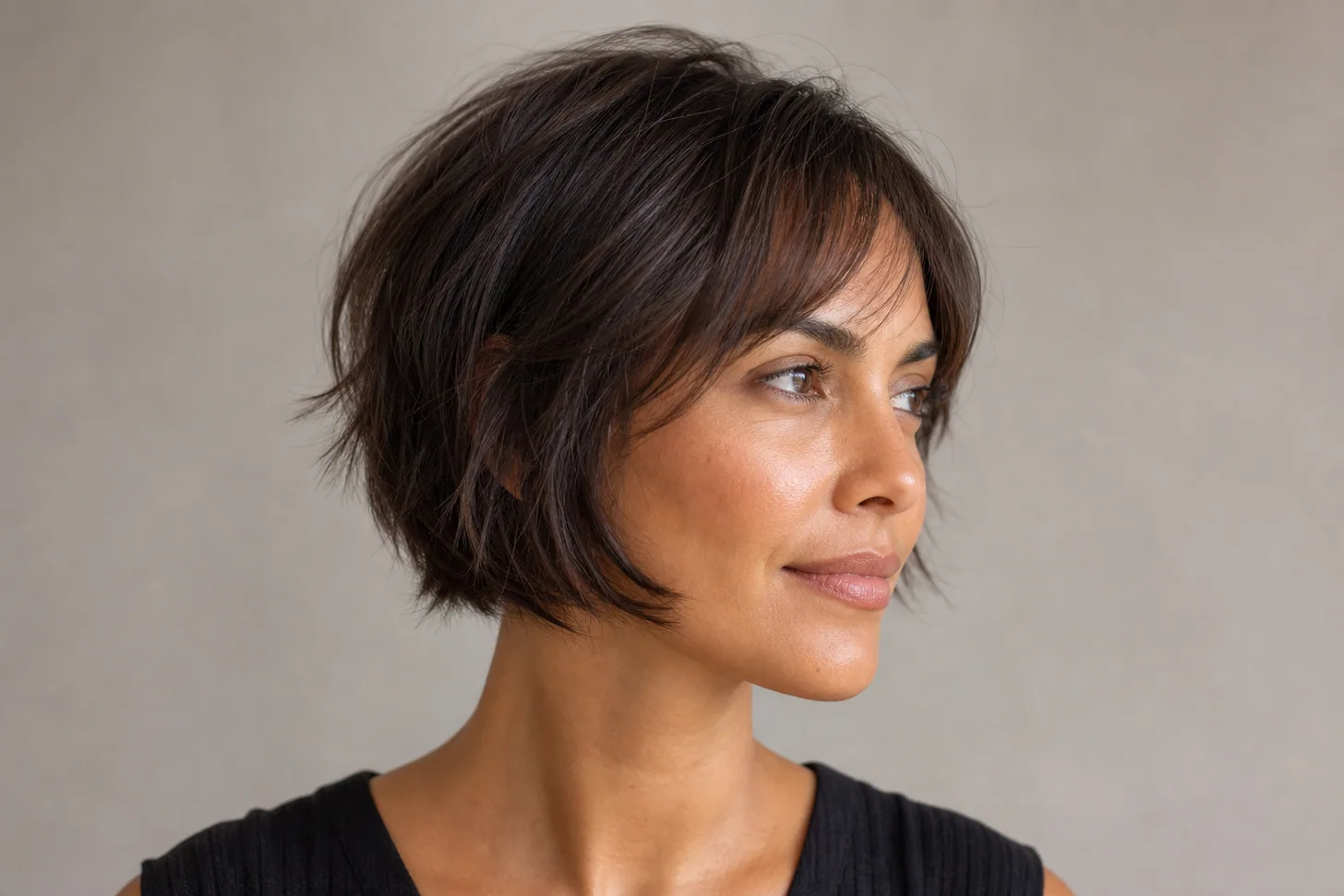
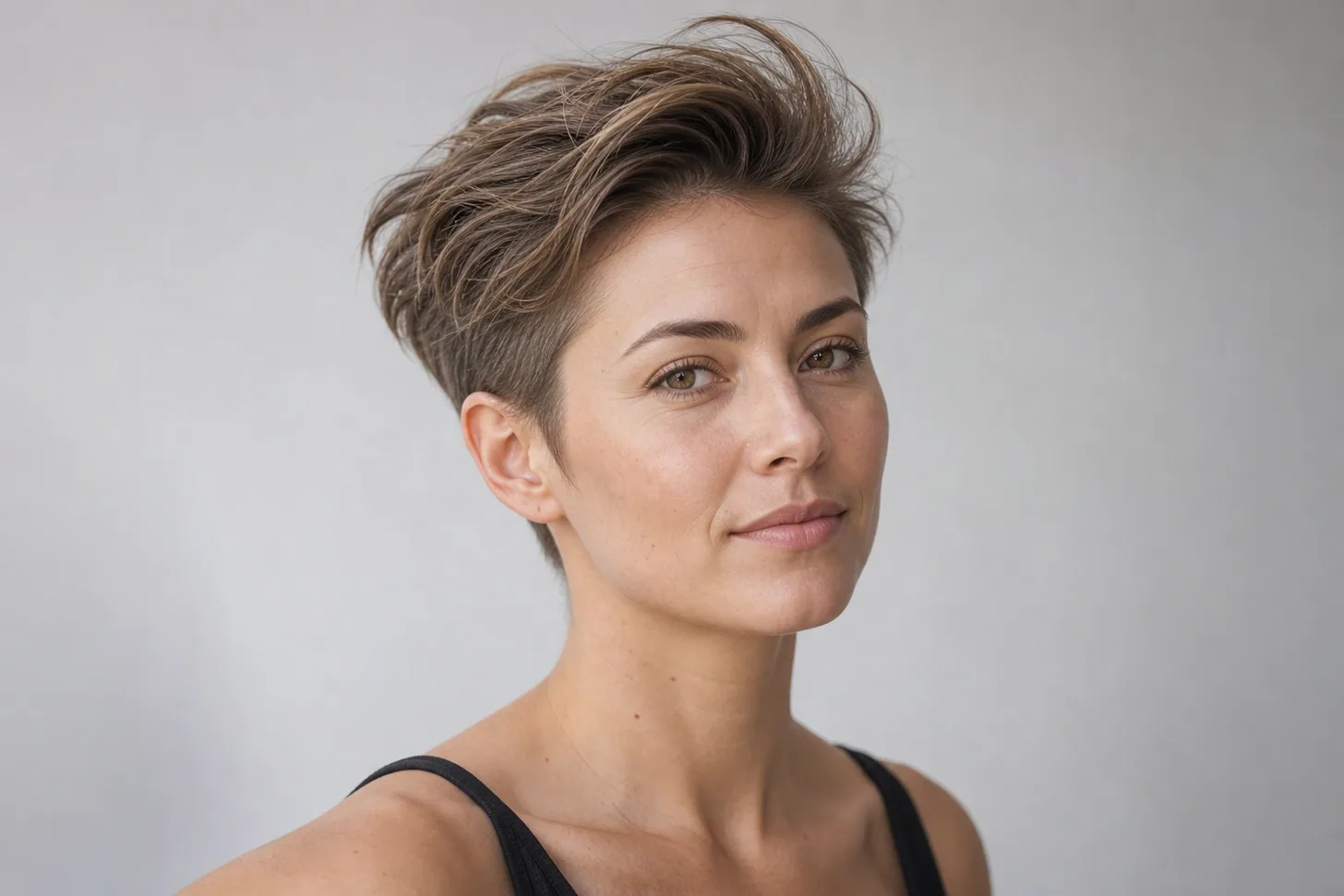
A short bob is one of the most reliable cuts for fine hair, because the less length there is, the less weight pulls the roots flat. Cut between the ear and the chin, fine hair lifts at the crown on its own, and the hem stays dense.
Below are 12 short bobs sorted by where the hem sits, from ear-length to chin, plus versions with bangs and for over 50 and 60, and the exact words to use in the chair.
Chair-side note
When a client with fine hair tells me her bob always goes flat, I look at where it ends. Nine times out of ten it is at the jaw or below, and the weight of that length is pulling the crown down.
Take it up an inch or two, above the jawline, and the same hair suddenly has lift. Nothing about the hair changed. There is just less of it hanging from the roots.
SB
— Simone Baptiste, Senior Stylist
Why a short bob suits fine hair
Fine hair has small strands that bend easily, so every extra inch of length drags it flatter against the head. A short bob removes that length, and the roots lift without much help.
The second reason is the hem. When a bob ends in one blunt line, all the hair you have lands in a single visible edge, and that edge reads as thick. The shorter the bob, the less that edge has to fight gravity.
If you want a longer bob, our bob haircuts for fine hair guide covers chin length to the lob. This page stays above the jaw.
How short is a short bob?
A short bob ends anywhere from the earlobe to the chin. The exact line matters more on fine hair than on thick hair, because it decides how much lift you get and which features the cut shows off.
At the ear, it is closest to a pixie and gives the most lift. At the cheekbone or lip, it shows off the cheekbones and suits oval and heart faces. At the chin, it frames the jaw and is the easiest short bob to grow out.
One caution runs the other way. Fine is about strand width, but if your hair is also low in density, the very shortest bobs leave less hair lying over the crown, and the scalp can start to show there. On thin hair, the chin is the safer line; go shorter only if your ponytail is thicker than a finger.
Ear-length and very short bobs
The shortest bobs are the ones fine hair holds best. They sit between a bob and a pixie, and they need the least styling.
1
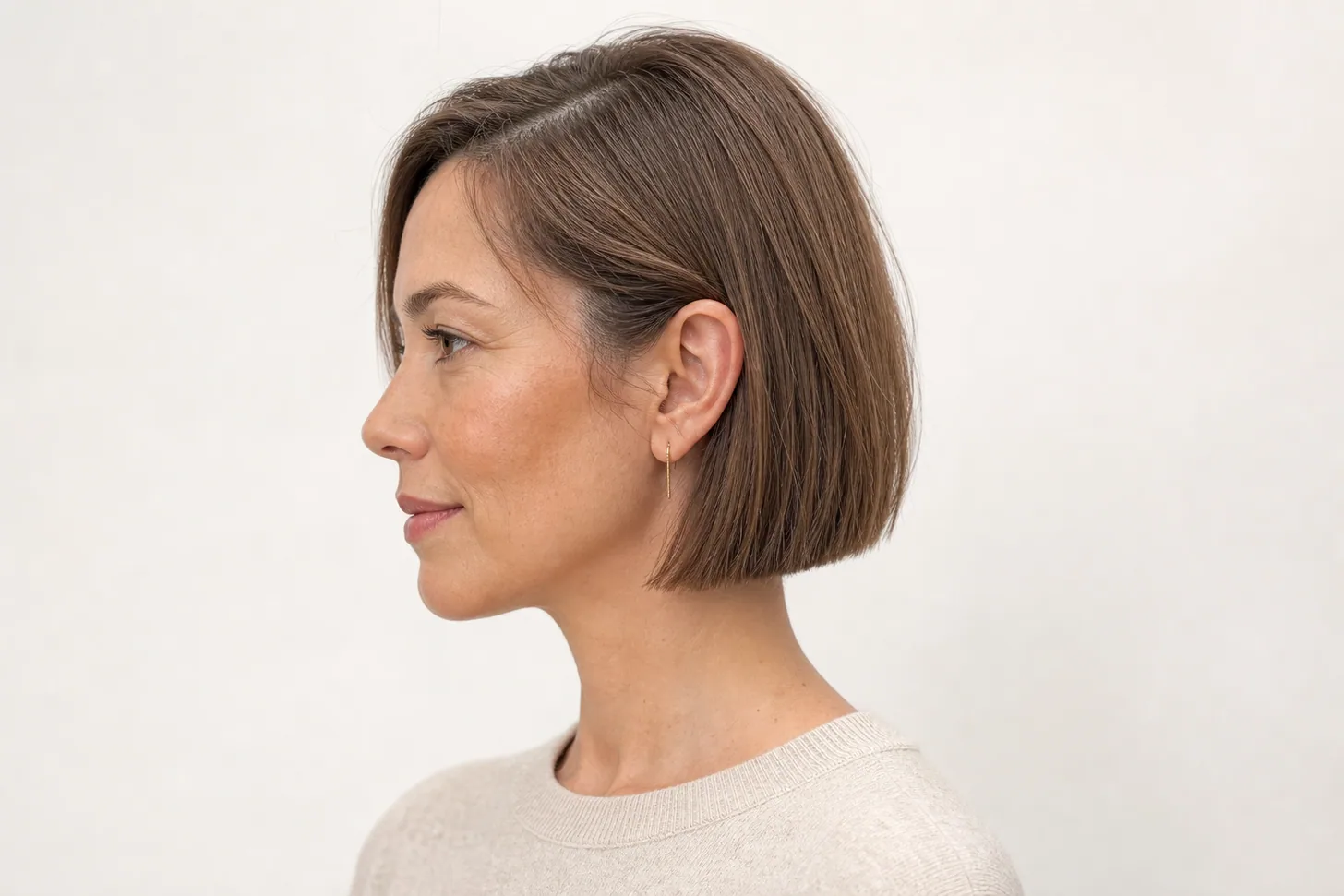
Ear-length blunt bob
Cut level with the earlobe in one solid line. It is the shortest bob that still reads as a bob, and fine hair lifts at the crown with no product at all.
It suits oval and heart faces, and long necks. On a round face, keep the front a little longer.
2
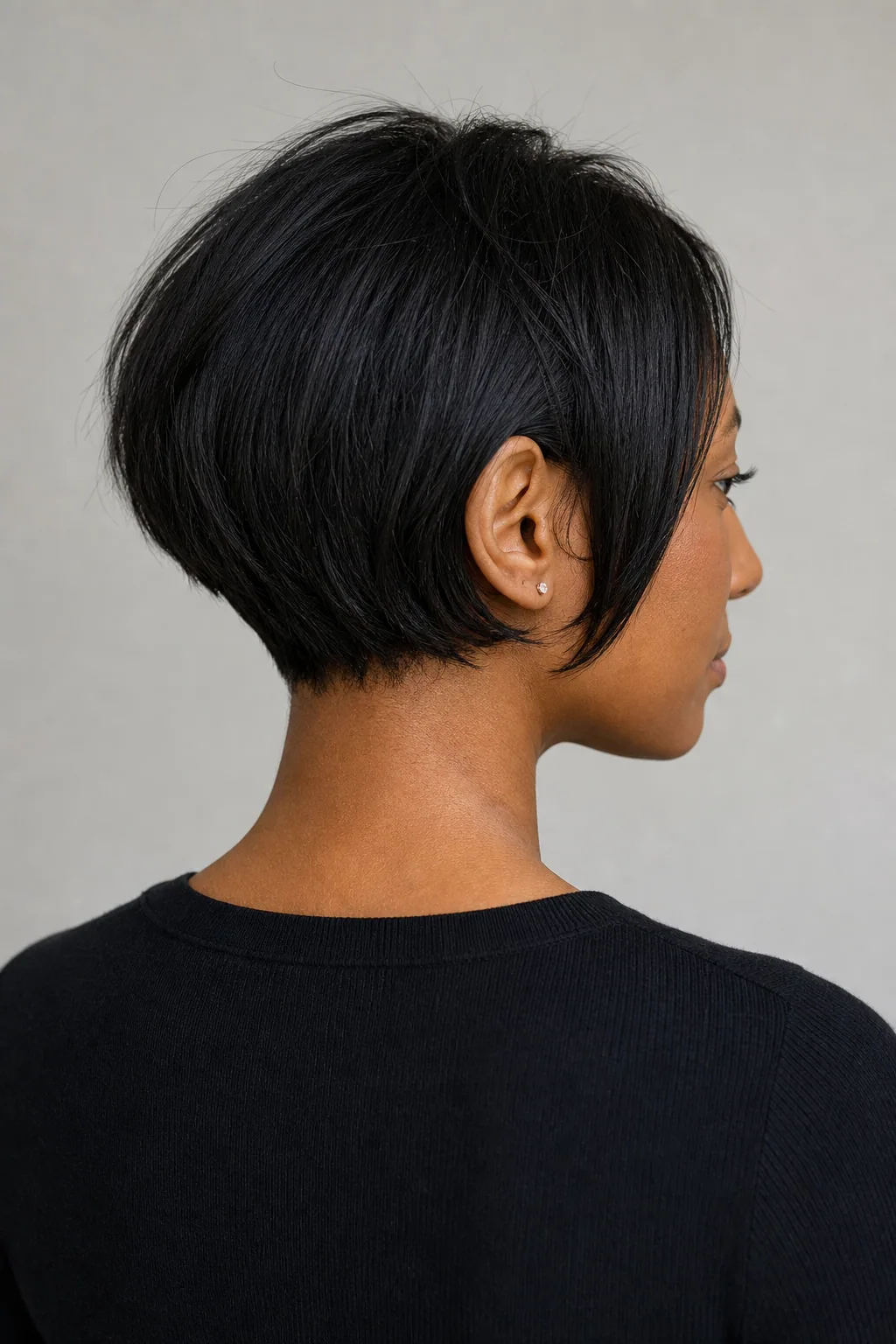
Very short bob with a tapered nape
The nape is tapered short and the front falls to the earlobe. Taking the wispy hair at the back of the neck short lets the bob sit neatly instead of fluffing outward.
If you are between a pixie and a bob, start here. It grows out into a classic short bob in about two months.
3
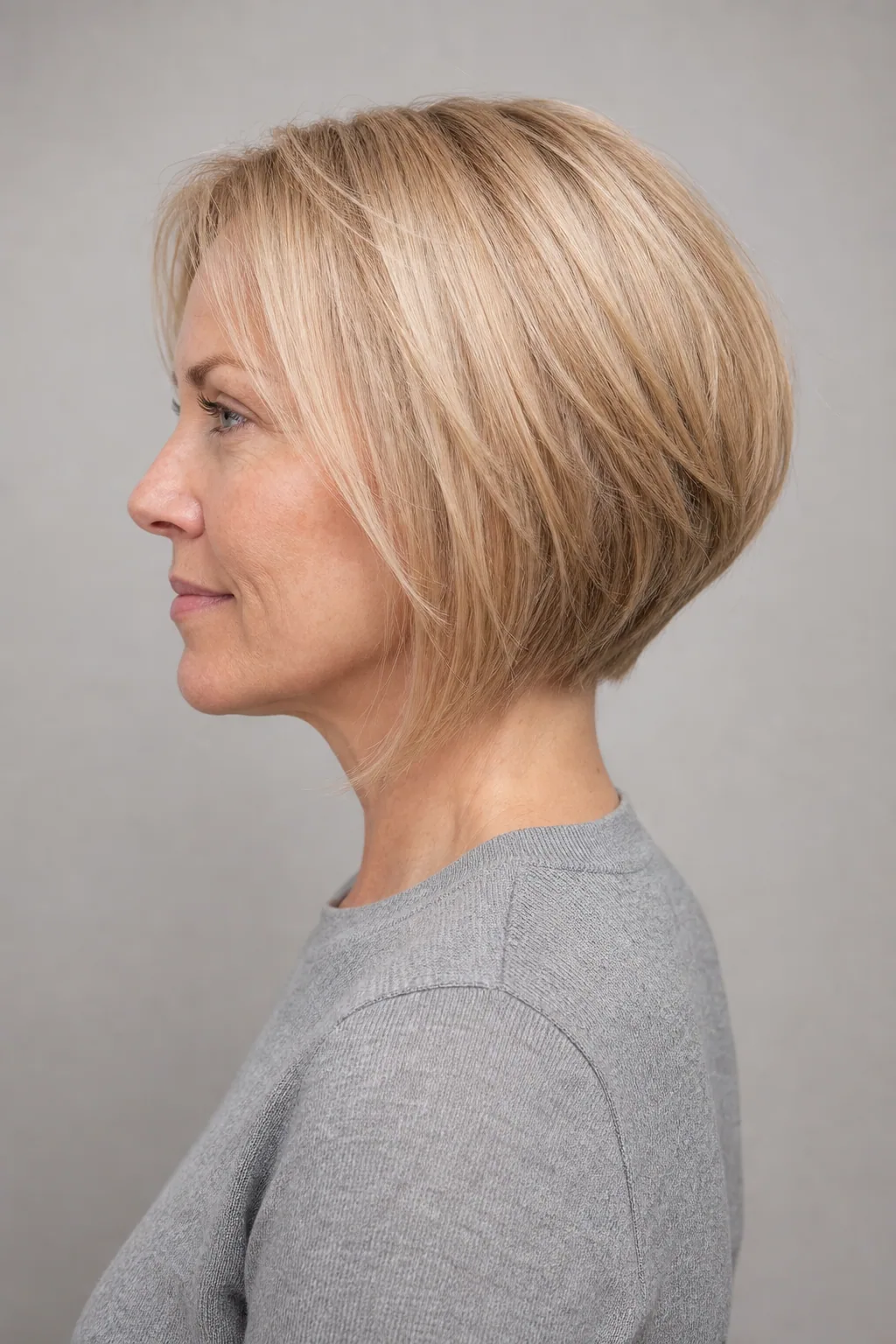
Short bob with a lifted crown
A few long layers at the crown, point-cut so they stand up, over a solid hem just below the ear. From the side, the profile rises at the back of the head.
Ask for the crown layers to be at least four inches long. Shorter layers on fine hair stick up instead of lifting.
For the step shorter than this, with a bob's shape and a pixie's lift, see the bixie cut for fine hair.
Cheekbone and lip-length short bobs
These sit in the middle of the short-bob range. They show off the cheekbones and the mouth, and they are the length the French bob is usually cut to.
4
Lip-length bob with a soft bend
Cut at the lip, with the ends bent inward with a flat iron or a round brush. The bend makes the hem look thicker than a flat, straight end.
It takes about five minutes to style, and it holds well on second-day hair.
5
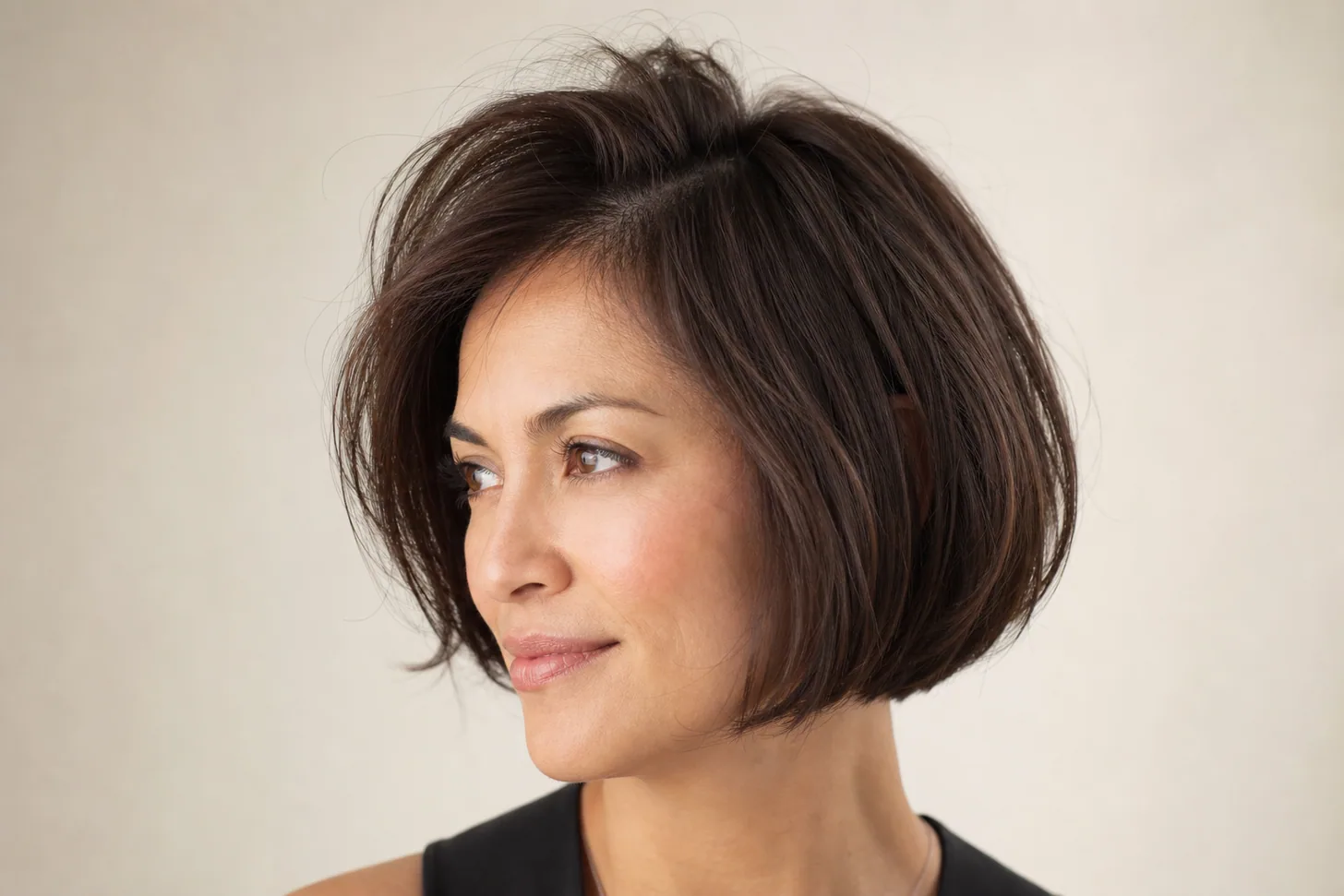
Short bob with a side part and a swoop
A deep side part with the front swept across the forehead. The part lifts the roots where the hair crosses it, which is the cheapest volume there is.
Flip your part to the other side on day two. The roots will stand up where they have been lying flat.
6
Short textured bob for fine wavy hair
Fine hair with a natural wave fills out a short bob by itself. Cut to where the wave lands, it dries into shape with a scrunch of light mousse.
Have it cut dry, so the length allows for the wave springing up.
Chin-length short bobs
At the chin, a short bob is at its most versatile. It is long enough to tuck behind the ears and short enough to keep its lift.
7
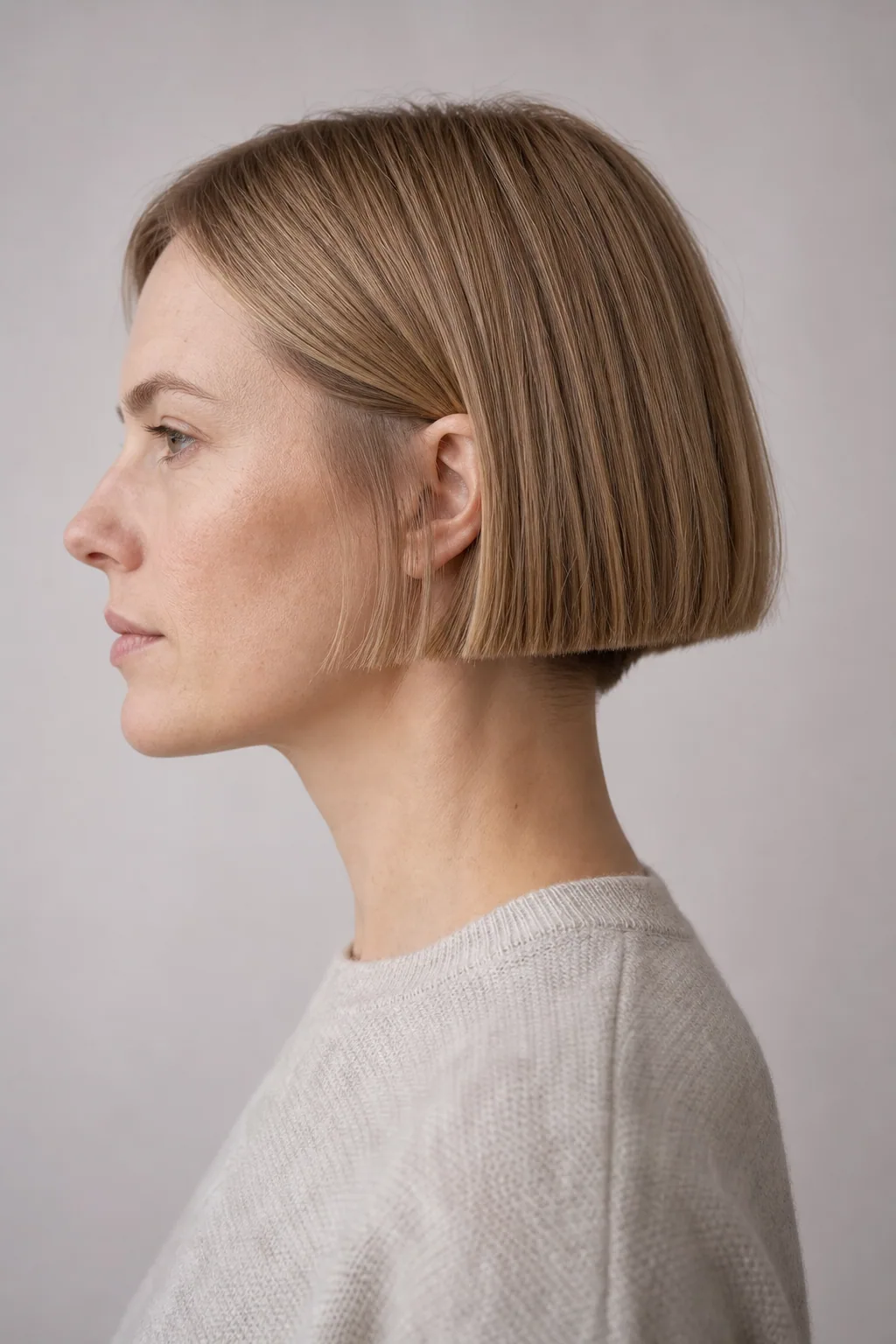
Chin-length short bob with a stacked back
The front sits at the chin and the back is gently stacked, so the shape is rounded from behind. It builds volume at the back of the head, where fine hair falls flattest.
Ask for soft graduation, not a steep one. Our stacked bob guide has more of this shape.
8
Short bob with wispy bangs
Soft, wispy bangs over a chin-length bob. Wispy bangs take very little hair from the top, so they suit thin hair better than a heavy fringe.
Trim them every three to four weeks. Most salons do a free fringe trim between cuts.
9
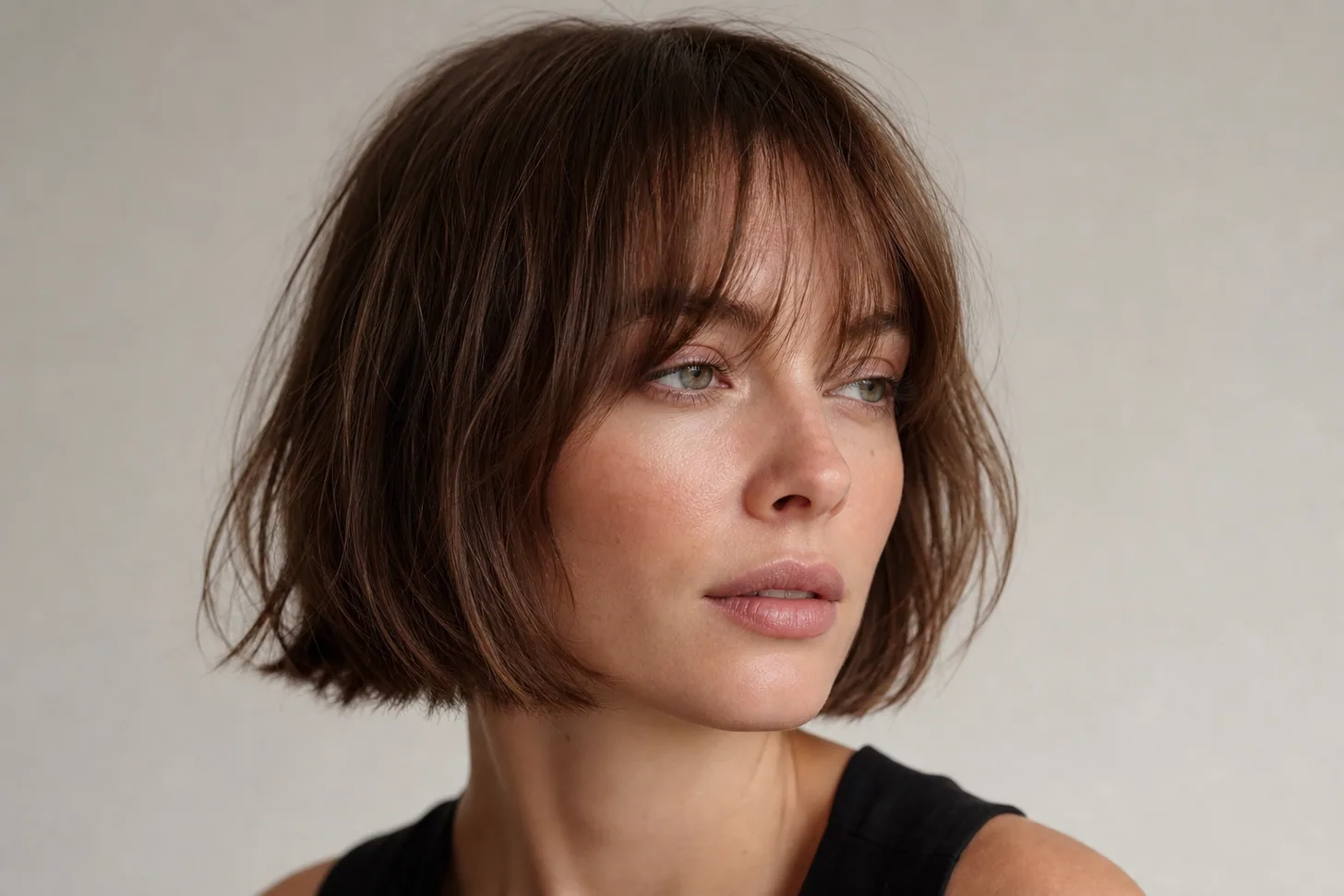
Short bob with curtain bangs
Long curtain bangs parted in the middle, blending into a chin-length bob. They soften a strong jaw and a high forehead.
They grow out easily and can be tucked behind the ears, so they are a low-risk first fringe.
Short bobs for fine hair over 50 and over 60
A short bob is one of the most flattering cuts for fine hair over 50. Hair often gets finer with age, and a short bob keeps it from hanging flat, while the blunt hem keeps the ends looking full.
Over 60, keep the bob soft rather than sharp, and add a few long crown layers if the top has thinned. If you wear glasses, a hem at the lip or chin sits clear of the frames. Short hairstyles for fine hair over 60 has more cuts at this age.
10
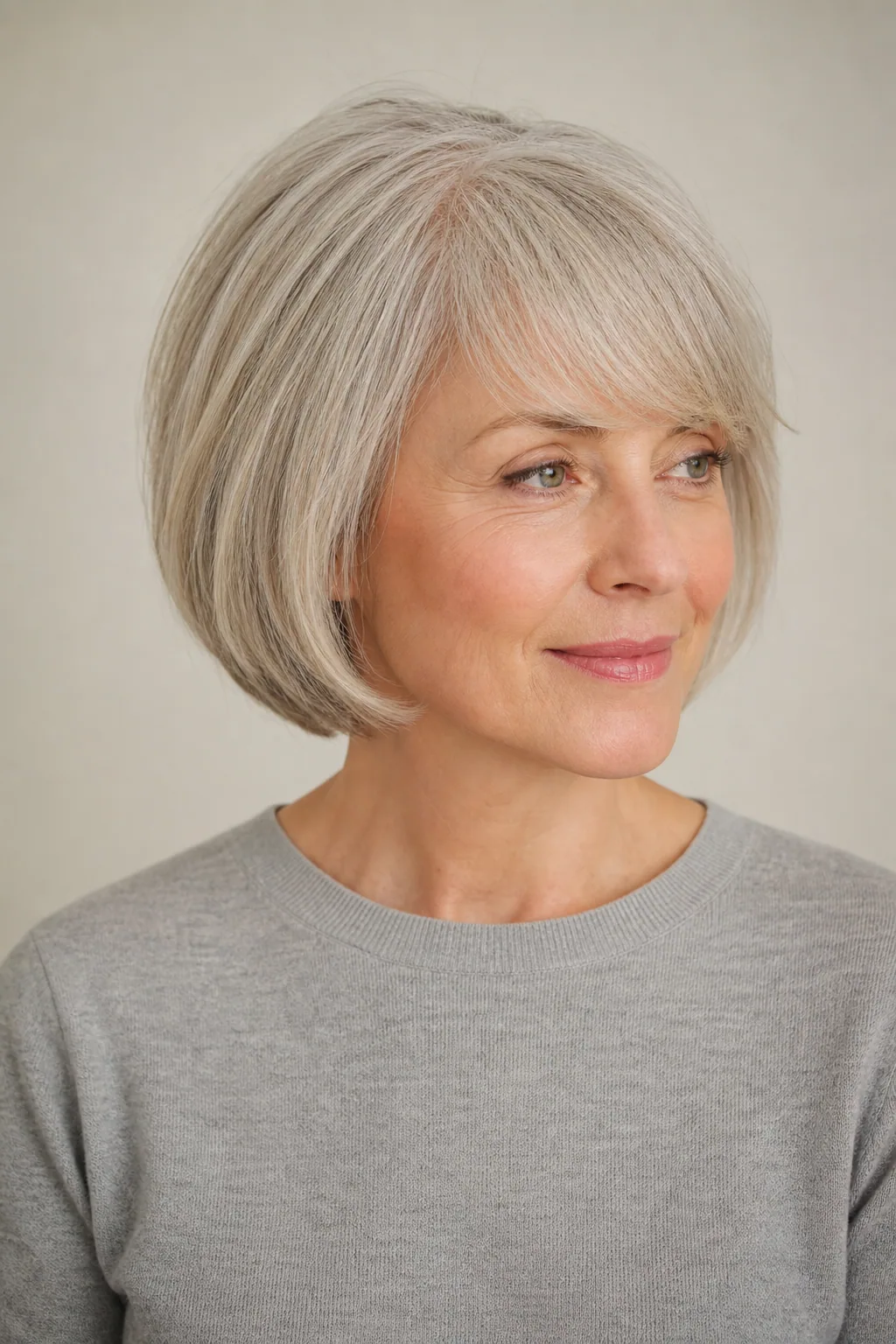
Soft short bob for fine hair over 50
Gentle crown layers, a side-swept fringe and a rounded outline. It is softer than a sharp blunt bob, which flatters a softer jawline.
Blow-dry the crown up with a round brush for a minute. It is the one step that keeps it from lying flat.
11
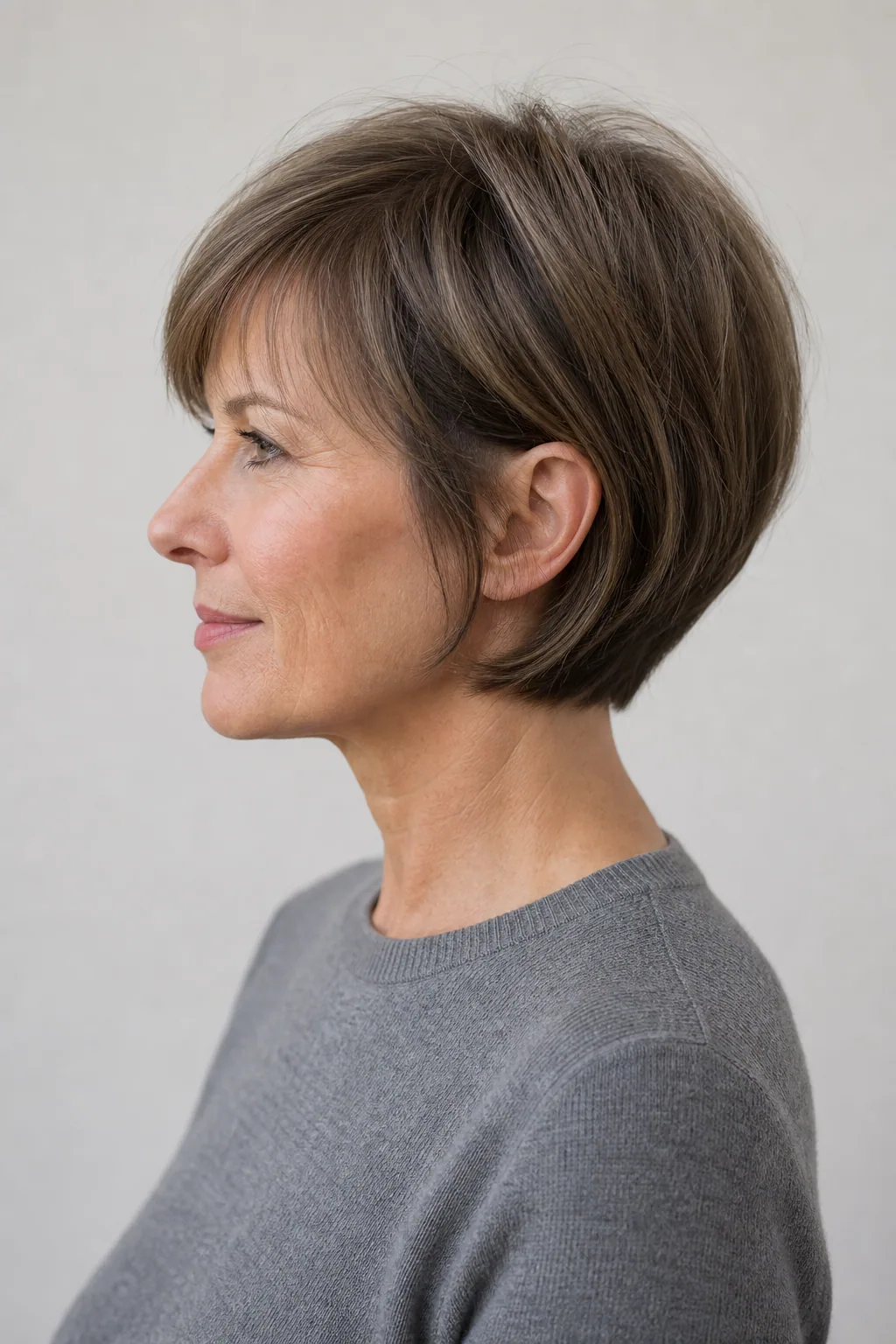
Short layered bob for fine hair over 60
Long, soft layers at the crown over a rounded hem just below the ear. The layers add lift where hair has thinned, and the short length keeps the frames of your glasses clear.
A purple shampoo once a week keeps grey from turning yellow.
12
Low-maintenance short bob over 60
Cut to air-dry, with the hem at the chin and the layers placed where the hair already bends. It dries into shape with a little mousse and a scrunch.
If you want a short bob with the least daily effort, this is it. It looks fine at eight weeks.
Styling a short bob on fine hair
Apply a root-lift spray or light mousse to damp roots and rough-dry with your fingers, lifting at the crown. Finish the ends with a round brush or a flat iron, bending them slightly under.
That takes five to ten minutes. Skip heavy creams and oils, which make a short bob look greasy by lunchtime. How to style short fine hair covers the full routine, and the choppy bob covers the textured short bob.
What to ask your stylist
Say: "My hair is fine, so I want a short bob with a blunt, heavy hem. Please cut it [at my earlobe / at my lip / at my chin], point-cut the ends to soften the line, and no razor or thinning shears."
Show the length with your finger on your face, not a photo alone. Book a trim every five to seven weeks; a short bob loses its shape faster than a longer one, because an inch of growth is a bigger share of the length.
When a short bob is the wrong call
Your hair is very curly. Curls spring up, and a short bob can end up much shorter than planned. Ask for a curl-specific cut, cut dry.
Your density is very low at the crown. An ear-length bob leaves little hair lying over the top. Keep the hem at the chin, or see a crown-focused cut.
You want to wear your hair up. Most short bobs are too short for a ponytail. A lob keeps that option.
You cannot book a trim every five to seven weeks. A short bob grows out of its shape fast. A longer bob forgives a missed appointment.
Yes, it is one of the best cuts for fine hair. The short length means less weight pulling the roots flat, so the crown lifts on its own, and a blunt hem puts all your hair in one dense visible edge.
Between the earlobe and the chin. Shorter gives more lift, but on low-density hair the very shortest bobs can let the scalp show at the crown, so the chin is the safer line. Go above the jaw if your current bob always falls flat.
A short bob ends above the jaw, from the earlobe to the chin. A classic bob sits at the chin or jaw, and a long bob, or lob, reaches the collarbone. The shorter the bob, the more lift fine hair gets.
Mostly not. A blunt hem is what makes fine hair look thick. If the crown needs lift, ask for a few long point-cut layers at the top only, and keep the perimeter solid.
Yes. It keeps finer hair from hanging flat and the blunt hem keeps the ends looking full. Keep the shape soft, add long crown layers if the top has thinned, and keep the hem clear of glasses frames.
Every five to seven weeks. An inch of growth is a bigger share of a short bob's length, so it loses its shape faster than a longer cut.
Eleven years behind the chair, specializing in short shapes and fine-hair texture. Simone believes the best haircut is the one you can style yourself in ten minutes.
Results vary with hair type, density, and growth patterns. Hairstyling guidance is not a substitute for an in-person consultation with a licensed stylist.
Hairstyle images in this guide are AI-generated illustrations, not photos of real clients or results. See our image policy.
Get the good hair intel
One honest, stylist-written guide in your inbox each week. No hype.

 SB
SB