Why fine wavy hair gets bad advice from both shelves
The two categories are not being careless. They are each solving a real problem for a real texture, and fine wavy hair sits in the gap between them.
| Shelf | What it is designed to do | What it does to fine wavy hair |
|---|
| Fine / volumising | Clean thoroughly, deposit as little as possible, leave the strand bare so it can lift. | Roots stay up. The wave pattern loses the slip it needs to clump, so strands separate and you get a frizz halo instead of a wave. |
| Curly / low-poo | Clean gently while leaving conditioning agents behind, so coarse curls stay hydrated and detangle. | The waves clump and define. The deposit also lands at the roots, where fine hair cannot carry it, and the whole thing collapses within a few hours. |
| What you actually need | The first behaviour at the scalp and the second behaviour on the lengths. | A narrow shelf: sulfate-free but genuinely rinsing, with conditioning agents low in the list rather than absent. |
There is a physical reason the curly shelf fails you rather than simply being too rich. A given quantity of conditioning residue is a much larger fraction of a fine strand's own mass than of a coarse one, because there is less strand to spread it over.
So the same formula that adds welcome slip to a coarse 3B curl adds visible, measurable weight to a fine 2B wave. This is also why silicone buildup on fine hair shows up faster than the ingredient lists suggest it should.
The rule: shampoo cleans the scalp, everything else does the moisture
Once you accept the two-shelf problem, the solution stops being a hunt for a perfect bottle and becomes a question of placement. Moisture is not the enemy of fine hair — moisture at the roots is. And a shampoo is the worst possible vehicle for moisture precisely because you apply it at the scalp and it runs down over everything on its way out.
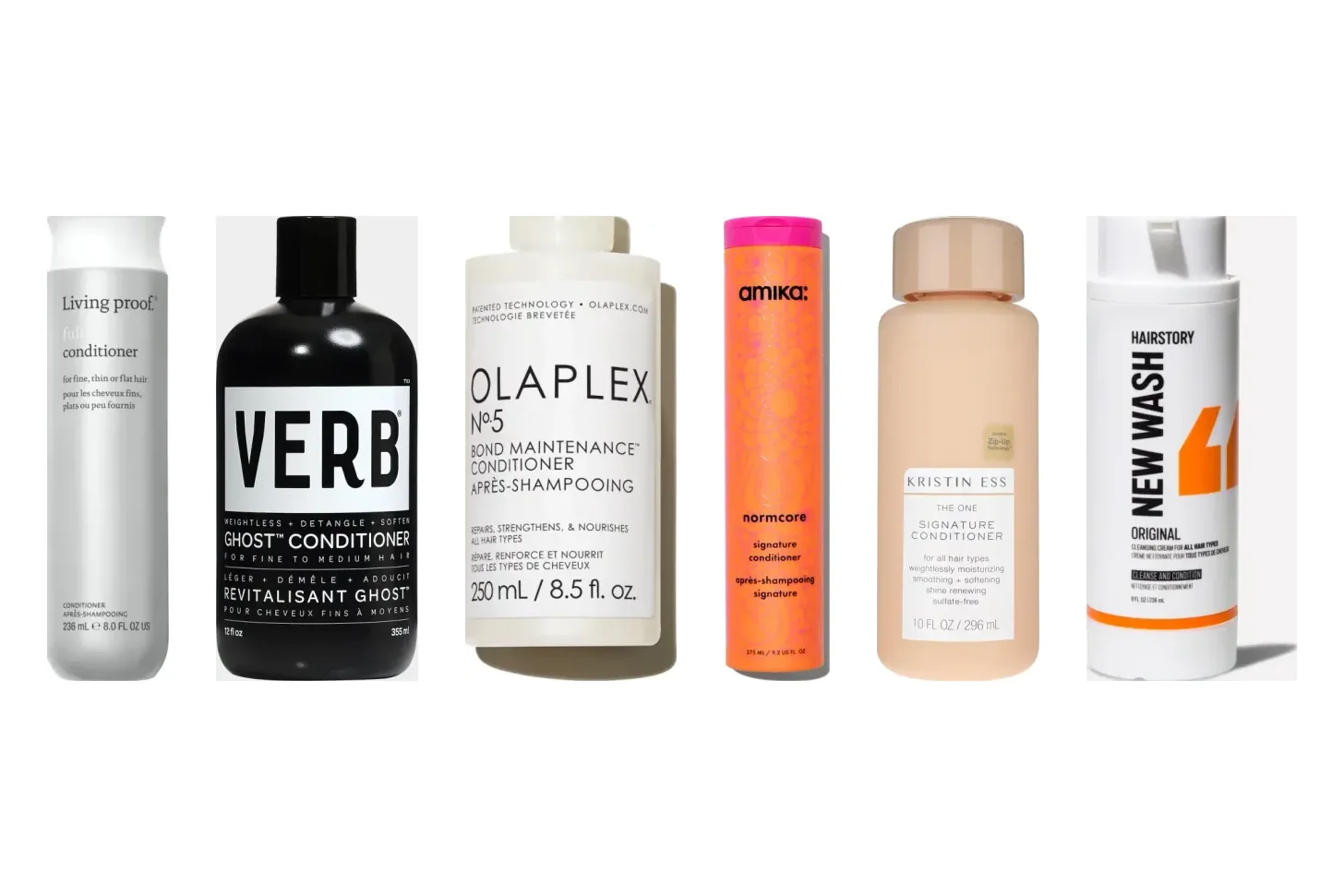
So the division of labour looks like this. The shampoo handles the scalp: it removes the sebum that flattens fine roots, and it does not need to condition anything. The conditioner handles the lengths, applied from the ears down and nowhere near the crown.
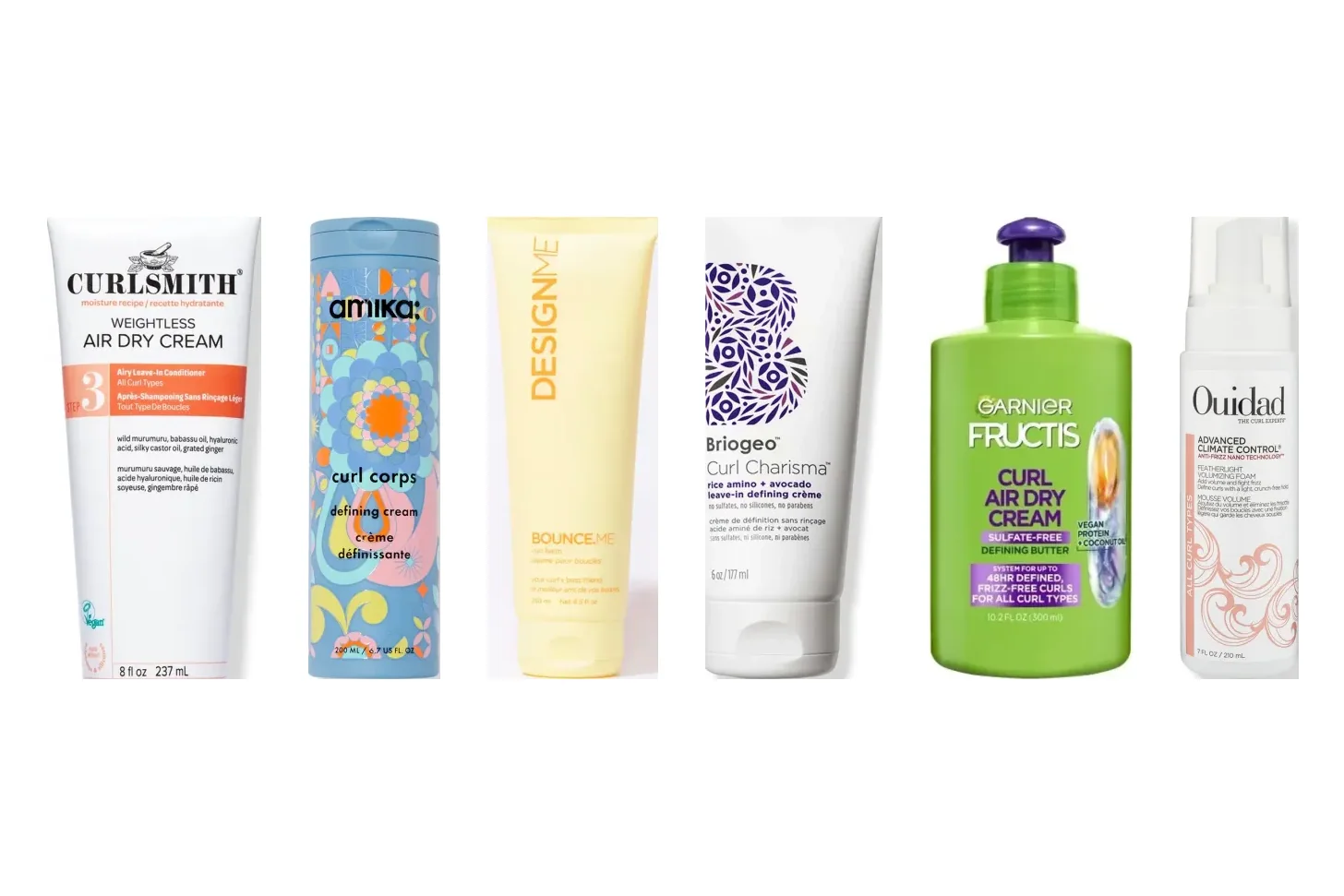
And the styler — a light curl cream, a mousse, or a soft gel — handles the clumping, applied to soaking-wet hair where it can do the most work per gram. Three products, three zones, no overlap. That is the entire method, and it is why a shampoo that tries to do the styler's job is working against you.
Chair-side note
When someone tells me their waves used to be better, the culprit is almost always a switch they made on good advice. They read that fine hair needs volumising shampoo and the waves went scratchy. Or they found the curly-hair community, threw out their shampoo, started co-washing, and the roots died within a week. Both times the product was fine and the placement was the problem.
The fastest diagnostic I know takes one wash: shampoo only the scalp, rinse, then condition only from the ears down, and see what your hair does. If the roots come up and the ends stay soft, you never needed a different bottle — you needed to stop letting the two products meet in the middle.

MH
Which wave you have changes which shampoo you need
"Wavy" covers a wide range, and the right answer at one end is the wrong answer at the other. The practical question is which of your two problems is bigger — flat roots, or undefined frizz — and your wave number is a good proxy for it.
| Your wave | What it looks like | Your bigger problem | Shop from |
|---|
| 2A | A loose S that only shows when hair is damp or long; mostly reads as straight-ish. | Flat roots, by a wide margin | The fine-hair shelf. Treat yourself as fine first and wavy second. |
| 2B | A defined S from mid-length down, with a flatter crown and some frizz. | Both, roughly equally | The narrow middle: sulfate-free, rinses clean, light conditioning agents low in the list. |
| 2C | Waves that start near the root, with defined S-bends and a persistent frizz halo. | Frizz and definition | The curl shelf — but applied at the scalp only, and rinsed thoroughly. |
If you are not sure which you have, look at your hair air-dried with no product at all. That is the honest reading; anything applied is showing you the product's pattern rather than your own.
Our gallery of haircuts for fine wavy hair uses the same three-way split, because the cut has to answer the same question. If your S-bends close into loops when wet, you are past waves and into curls, where the trade-offs shift — shampoo for fine curly hair is the page for that.
What to look for on the label
Two lists, and the position in the ingredient list matters more than the presence of any single item.
Good signs. Mild surfactants doing the cleaning — cocamidopropyl betaine, sodium cocoyl isethionate, sodium lauryl sarcosinate, decyl glucoside. The trichology literature on hair cosmetics describes amphoteric surfactants of this kind as very mild with excellent dermatological properties, which is the class most of them belong to. Glycerin or panthenol for light hydration. A conditioning agent present but sitting below the fragrance line rather than in the first five ingredients.
Warning signs, in order of how often they cause trouble. A long-chain quat — behentrimonium chloride, cetrimonium chloride — in the first six ingredients, which means the shampoo is designed to deposit. Shea butter, coconut oil or castor oil near the top of the list; all three are excellent on coarse curls and reliably flatten fine waves.
Non-water-soluble silicones such as dimethicone, which build up on fine hair faster than the ingredient list suggests because there is simply less strand to spread across. And sodium lauryl sulfate high in the list, for a reason worth stating precisely: the same review notes that anionic surfactants increase the negative electrical charge on the hair surface, which raises friction between strands. More friction on a wave pattern means less clumping and more halo — so the frizz complaint about sulfates has a mechanism behind it rather than only marketing.
The best shampoos for fine, wavy hair, by job
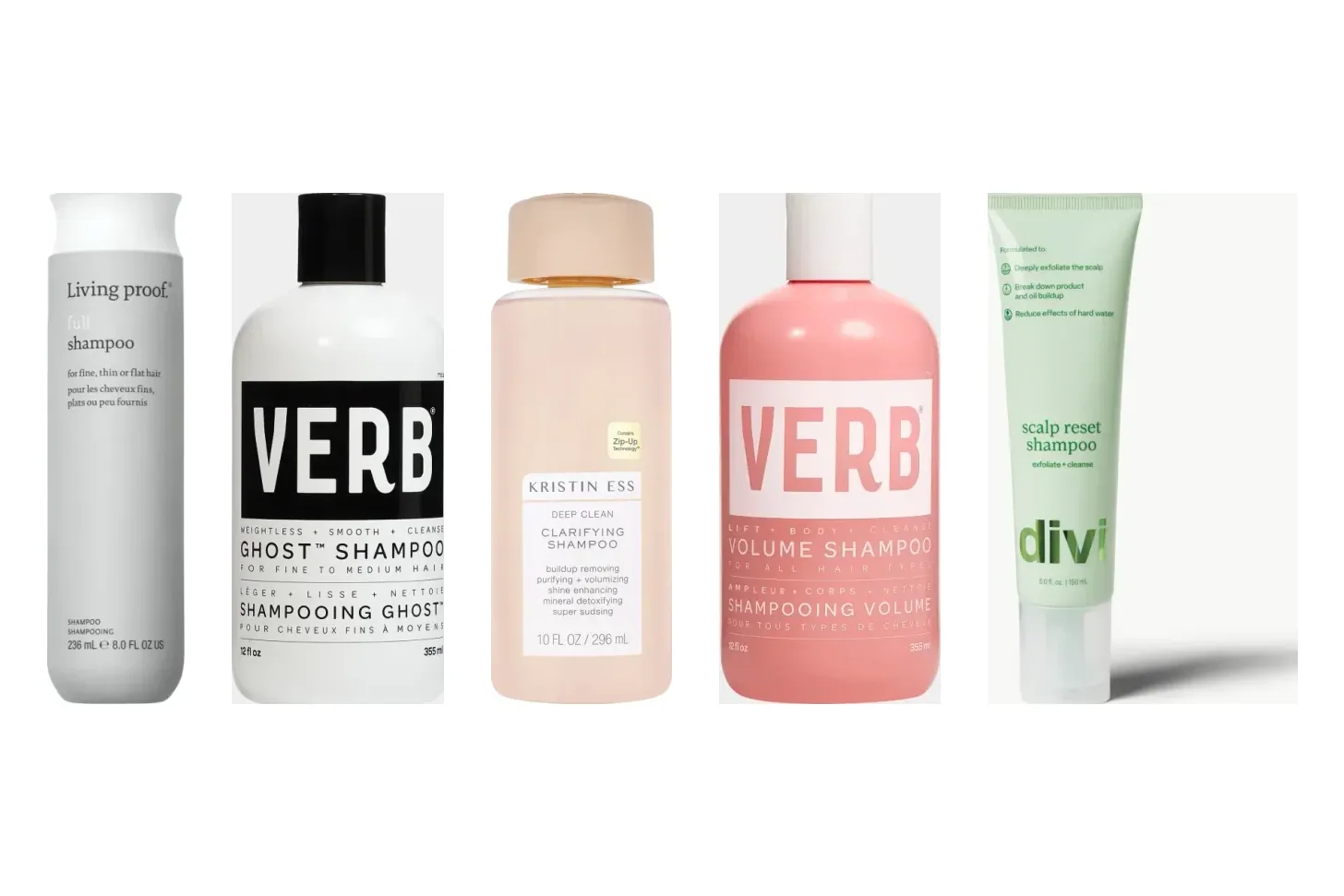
Six picks across five brands, chosen against the rule above: they clean at the scalp without loading the lengths, and none of them is a curl cleanser pretending to be a shampoo. Each has one honest limitation named, because every one of them is a compromise somewhere.