Reviewed by Tara Sullivan · Updated July 2026 · 8 min read
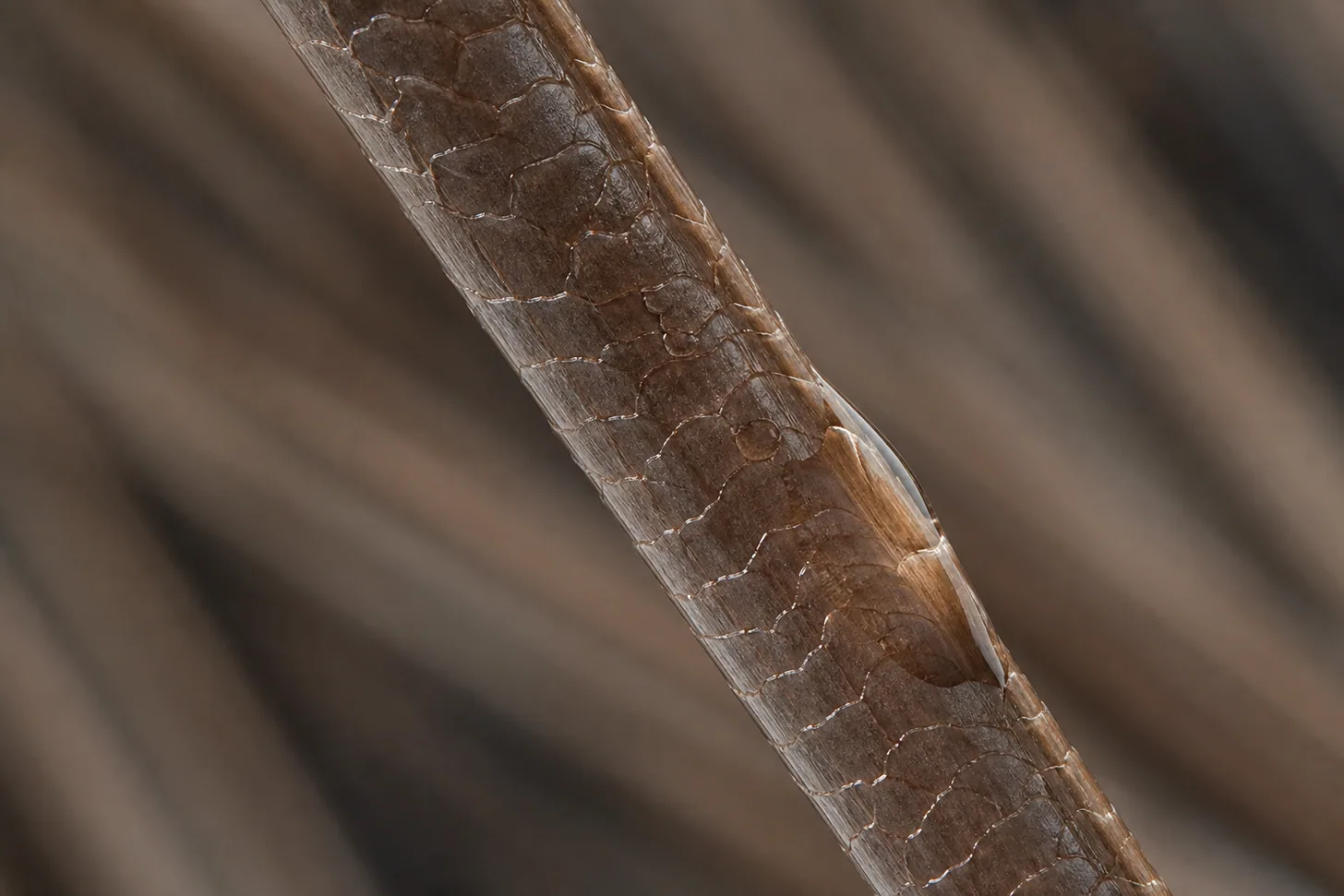
Porosity is how easily moisture and product move in and out of your hair — and it's set by the condition of the cuticle, the shingle-like outer scales of each strand.
It matters more for fine hair than almost any other trait, because fine hair is unforgiving about product: get porosity wrong and you either flatten it with formulas that sit on top, or starve it with ones that rush straight through. Here's what porosity actually is, why the popular "float test" is unreliable, and how to read and care for fine hair at every porosity level.
What hair porosity actually is
Every strand of hair is wrapped in a cuticle — a layer of flat, overlapping scales arranged like shingles on a roof, protecting the cortex inside (Hair Cosmetics: An Overview, peer-reviewed). When those scales lie flat and tight, water and product move through slowly — that's low porosity. When the scales are lifted, chipped, or eroded by damage, moisture moves in and out fast — that's high porosity.
In other words, porosity is largely a measure of how intact or damaged your cuticle is; researchers even use porosity as a way to quantify hair damage (study on identifying damaged or porous hair). It isn't a fixed personality your hair was born with — it's mostly a record of what your hair has been through.
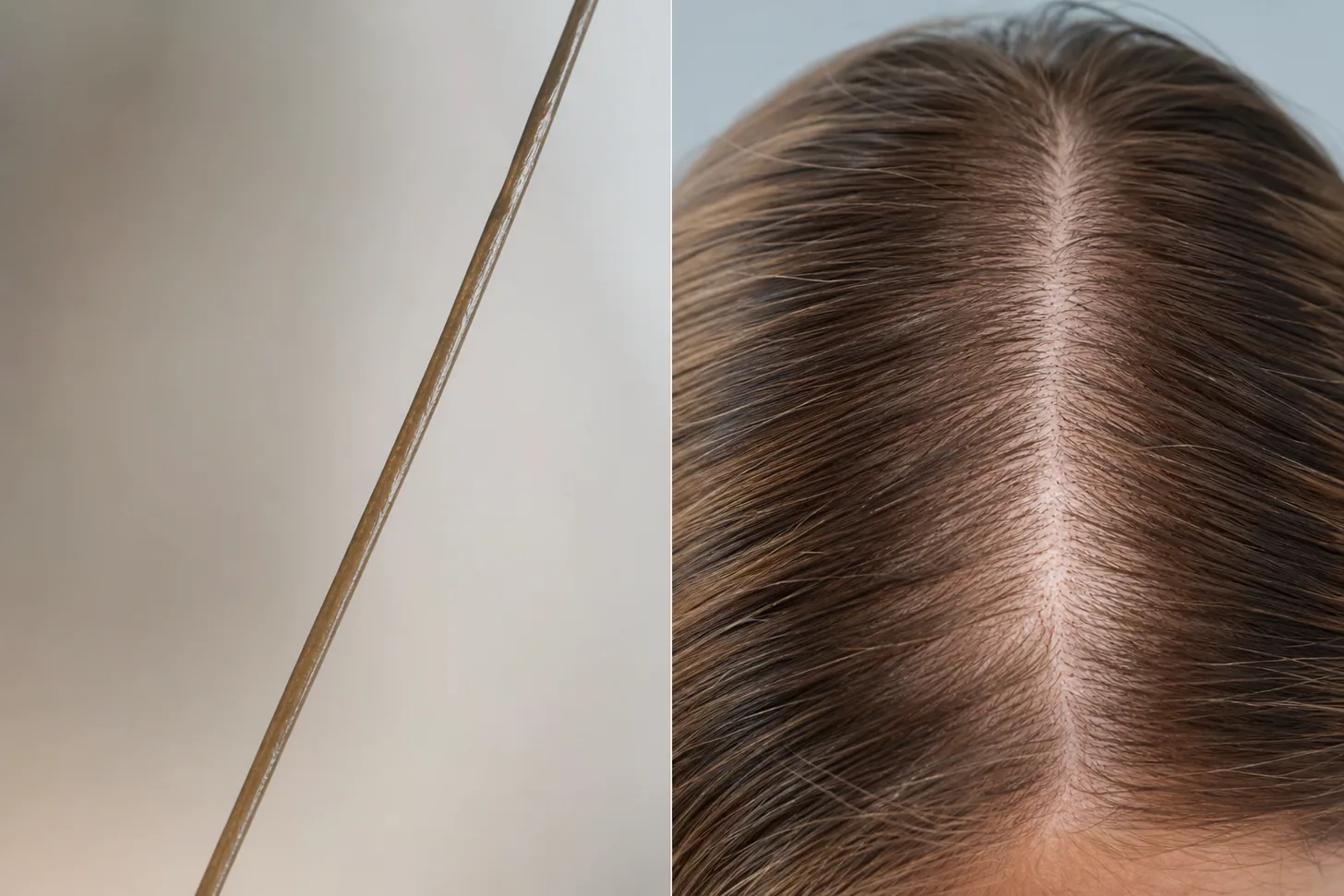
One thing to get straight first: porosity is not the same as being fine or thin. Fineness is the diameter of the strand; porosity is the condition of its surface. You can have fine, low-porosity hair or fine, high-porosity hair — and the difference changes your whole routine. If you're still sorting out the fine-versus-thin question, our two-minute fine-vs-thin check is the place to start.
The float test is not reliable — here's what is
You've probably seen the float test: drop a shed strand into a glass of water and watch whether it sinks (supposedly high porosity) or floats (low porosity). It's everywhere online, and it's genuinely unreliable. Whether a strand sinks depends heavily on product residue, natural oils, surface tension, and how you drop it in — not just porosity.
Actual porosity is measured in labs with methods like gas sorption that quantify pore volume and surface area, which no glass of water can replicate. Skip the parlor trick.
What does work is observation. Your hair tells you its porosity every time you wash it — you just have to watch:
Signs of…
Low porosity
High porosity
Getting wet
Water beads; takes a while to fully soak in
Soaks water in almost instantly
Drying
Takes a long time to air-dry
Air-dries quickly
Product behavior
Sits on top; can feel coated or greasy fast
Drinks it in; seems to need more, frizzes anyway
Feel
Smooth, sometimes hard to saturate
Rougher, especially toward the ends
Most people land in the middle, and porosity varies along a strand — ends are almost always more porous than roots, because they're older and more weathered.
Why porosity matters more for fine hair
Fine hair has almost no margin for error with product — a narrow strand is coated and weighed down by amounts that coarse hair wouldn't even register. Porosity is what tells you which way that error will go:
Low-porosity fine hair repels product. Heavy creams, oils, and rich masks sit on the surface with nowhere to go, so they build up and flatten the hair within hours. This is the classic "my volumizing product made my hair limp" trap.
High-porosity fine hair drinks product in and loses moisture just as fast through the damaged cuticle. It can look dry, dull, and frizzy — yet still get weighed down if you reach for rich ingredients to fix it. It needs light reinforcement, not heavy hydration.
Either way, the fix is lightweight — but the reason differs, and so does the technique. Because fine strands carry fewer cuticle layers to begin with, they also tip into high porosity from heat and color faster than coarse hair does, which is why so much fine hair is low-porosity at the roots and high-porosity at the ends.
Chair-side note
When a client tells me "nothing works on my hair," porosity is the first thing I check — and nine times out of ten they're using the wrong-weight product for their cuticle, not the wrong brand.
Low-porosity fine hair being slathered in a rich "repair" mask is the most common one I see: the mask never absorbs, so it just sits there flattening the roots, and the client concludes their hair "can't be repaired." It can. It just needed a lighter formula and a little warmth to let it in.
MH
— Megan Holloway, Editor-in-Chief
How to care for low-porosity fine hair
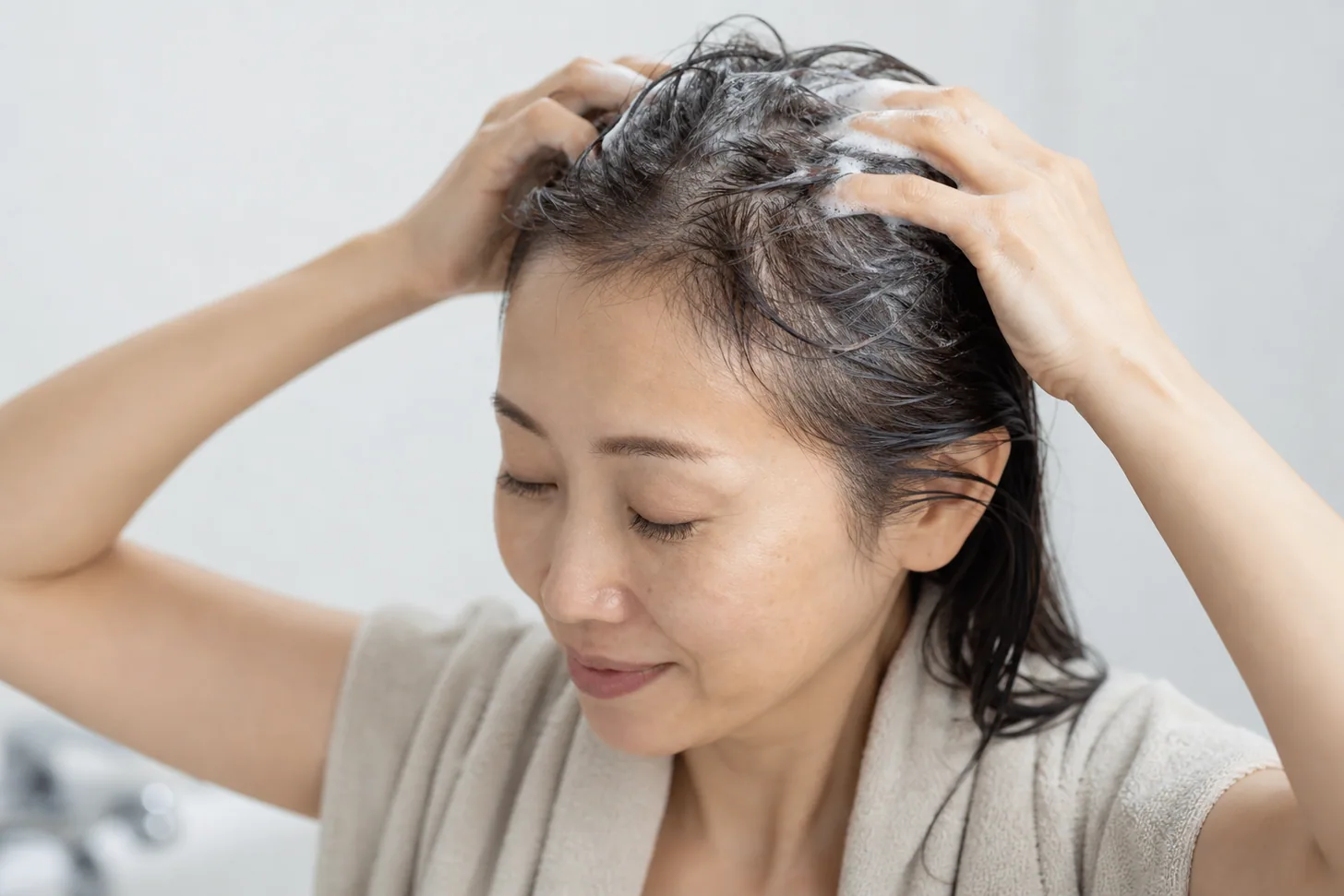
Your enemy is buildup. Product sits on the surface, so everything you use has to be light and easy to rinse. Curl pattern compounds this, because sebum struggles to travel down a curved shaft at all — shampoo for fine curly hair works through it.
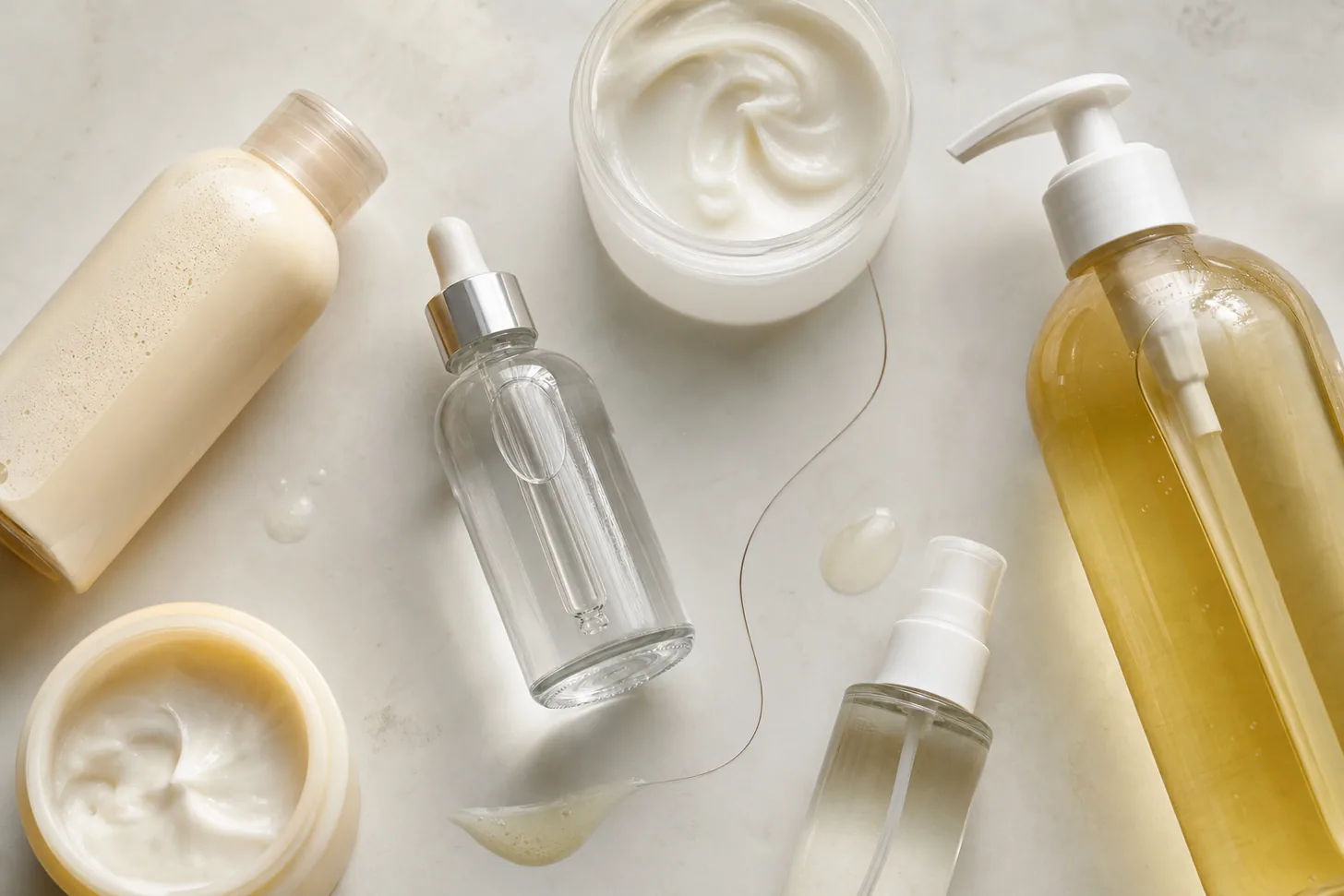
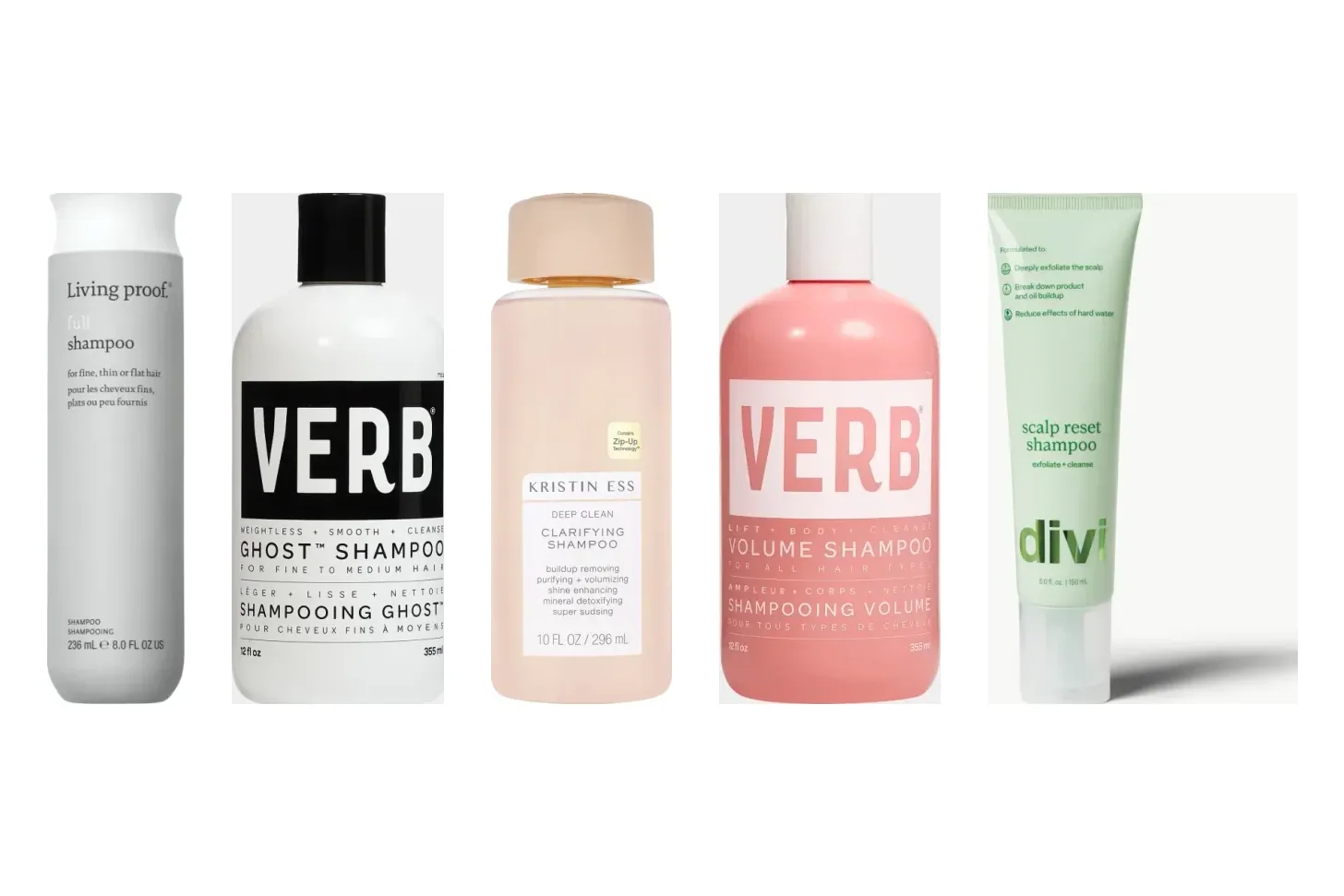
Go lightweight everywhere — volumizing or lightweight shampoo, a light conditioner on the ends only, and mousse or spray rather than cream for styling. Our shampoo picks for fine hair lean this way by design.
Use warmth to open the door. Apply conditioner or a light mask to damp (not soaking) hair and add gentle heat — a warm towel or a minute under a dryer — so the cuticle relaxes enough to let a little product in.
Skip heavy oils and butters. They never absorb; they just coat. If you use an oil, it's a pinhead amount on the very ends only.
Clarify occasionally. A clarifying wash every couple of weeks resets the buildup that low-porosity fine hair accumulates.
How to care for high-porosity fine hair
Your enemy is moisture loss and further damage. The cuticle is lifted, so the goal is to smooth and lightly reinforce it without piling on weight. Scalp condition sits alongside porosity in deciding what a wash should do; if flaking is part of your picture, dandruff shampoo for fine hair is the companion page. If the porosity is showing up as ends that never stay moisturized, start at the wash step with shampoo for dry, fine hair.
Reach for lightweight protein and bond-builders, not heavy hydration. Small amounts of hydrolyzed protein or a bond-building treatment temporarily fill and smooth the cuticle — we cover exactly which ingredients earn their place in what actually repairs fine-hair damage.
Seal lightly. A tiny amount of a lightweight serum on the ends after styling helps hold moisture in without the weight of an oil.
Stop the source. High porosity is damage — lower your heat, protect with a heat spray, and stretch your color appointments. Prevention does more than any bottle.
Don't over-wash. Porous hair loses its natural oils fast; a gentle, appropriately-spaced wash routine keeps it from drying out further. Our guide to how often to wash fine hair helps you find the balance.
Porosity myths that trip up fine hair
Trusting the float test. Residue and oils skew it — read how your hair behaves in the shower instead.
Treating "high porosity" as a license for rich, heavy products. Porous fine hair needs light reinforcement, not butters and oils that weigh it flat.
Assuming porosity is fixed and unchangeable. It's mostly damage — you can prevent it worsening and manage the look, even if you can't un-grow existing hair.
Confusing porosity with density or fineness. They're separate traits; a full routine accounts for both — start with fine vs thin hair.
Protein overload. High-porosity hair loves protein until it doesn't — too much makes fine hair brittle. Alternate with light moisture.
FAQ
Porosity is how easily moisture and product move in and out of your hair. It's governed mainly by the condition of the cuticle — the overlapping outer scales of each strand. When the cuticle lies flat and tight, water and product move in slowly (low porosity); when it's lifted or damaged, they move in and out quickly (high porosity). Porosity is largely a measure of cuticle damage, not a fixed personality your hair is born with.
Not really. The float test — dropping a strand in water to see if it sinks or floats — is popular online but unreliable. Whether hair sinks depends heavily on product residue, natural oils, and how you drop it, not just porosity. Scientists measure true porosity with lab methods like gas sorption, not a glass of water. A better real-world read is how your hair behaves: how fast it soaks water in the shower, how quickly it air-dries, and how product absorbs.
Because it decides how fine hair handles product — and fine hair is unforgiving about product. Low-porosity fine hair repels product, so heavy formulas sit on the surface and flatten it fast. High-porosity fine hair drinks product in and loses moisture quickly, so it can look dry and frizzy yet still get weighed down by rich ingredients. Knowing which you have tells you how light to go and how often to feed the hair.
Watch how your hair behaves. If water beads and takes a while to fully wet the hair, and products sit on top, you likely lean low porosity. If your hair soaks water in instantly, air-dries fast, and seems to drink up product yet still frizzes, you lean high porosity. Most people are somewhere in the middle, and porosity can vary along a single strand — the ends are usually more porous than the roots.
You can't change the porosity of hair that has already grown, but you can manage it. High porosity is usually damage — from heat, color, or friction — so preventing further damage stops it getting worse, and lightweight bond-building or protein products temporarily fill and smooth the cuticle. Low porosity is managed by using warmth to help products absorb and choosing lighter formulas. New hair grows in at your baseline; the lengths reflect their history.
It can be either — porosity and fineness are different things. Fineness is strand diameter; porosity is cuticle condition. That said, fine strands have fewer cuticle layers to spare, so they can become high-porosity from damage faster than coarse hair. Undamaged, virgin fine hair is often low porosity. Colored or heat-stressed fine hair frequently drifts high, especially at the ends.
Fourteen years in hair — eight behind the chair, six in editorial — with a focus on scalp health and the science of fine, flat-prone hair. Megan reads an ingredient label the way she'd read one for her own clients: weight first, evidence always.
Images in this article are AI-generated illustrations, not photographs of real clients or results. See our image policy.
Results vary with hair type, density, and growth patterns. This guide is educational and not a substitute for an in-person consultation with a licensed stylist or, for scalp concerns, a board-certified dermatologist.
Get the good hair intel
One honest, stylist-written guide in your inbox each week. No hype.

 MH
MH