Reviewed by Tara Sullivan · Updated November 2026 · 10 min read
An A-line bob is a bob cut shorter at the nape and gradually longer toward the face, so the outline slopes forward like the letter A. On thin hair it works best with a gentle angle of one to two inches and a softly graduated back, which lifts the crown without leaving the nape sparse.
Below are 12 A-line bobs for thin hair, from barely angled to stacked, plus how steep to go for your density, what to ask your stylist and who is better off with a blunt bob.
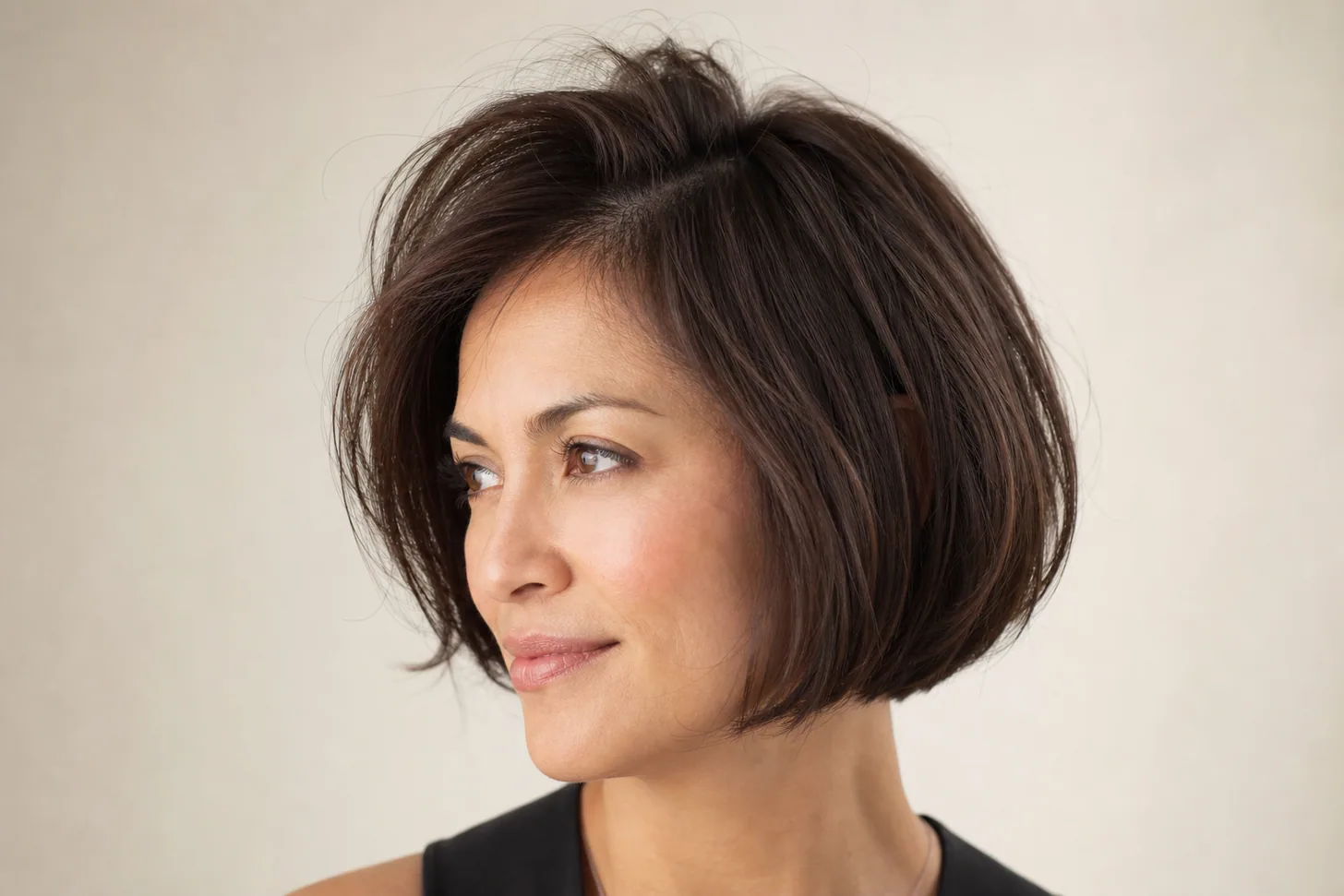
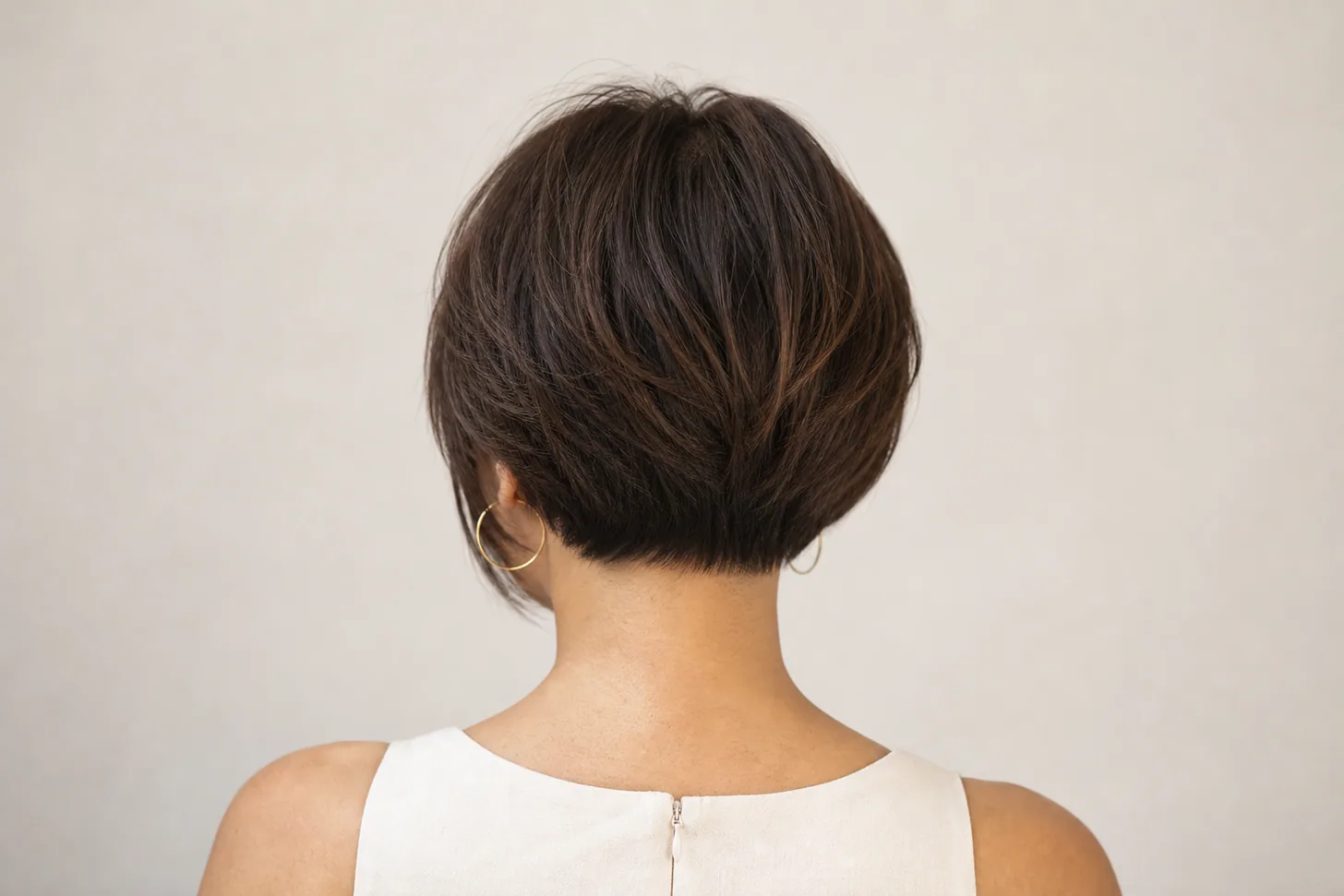
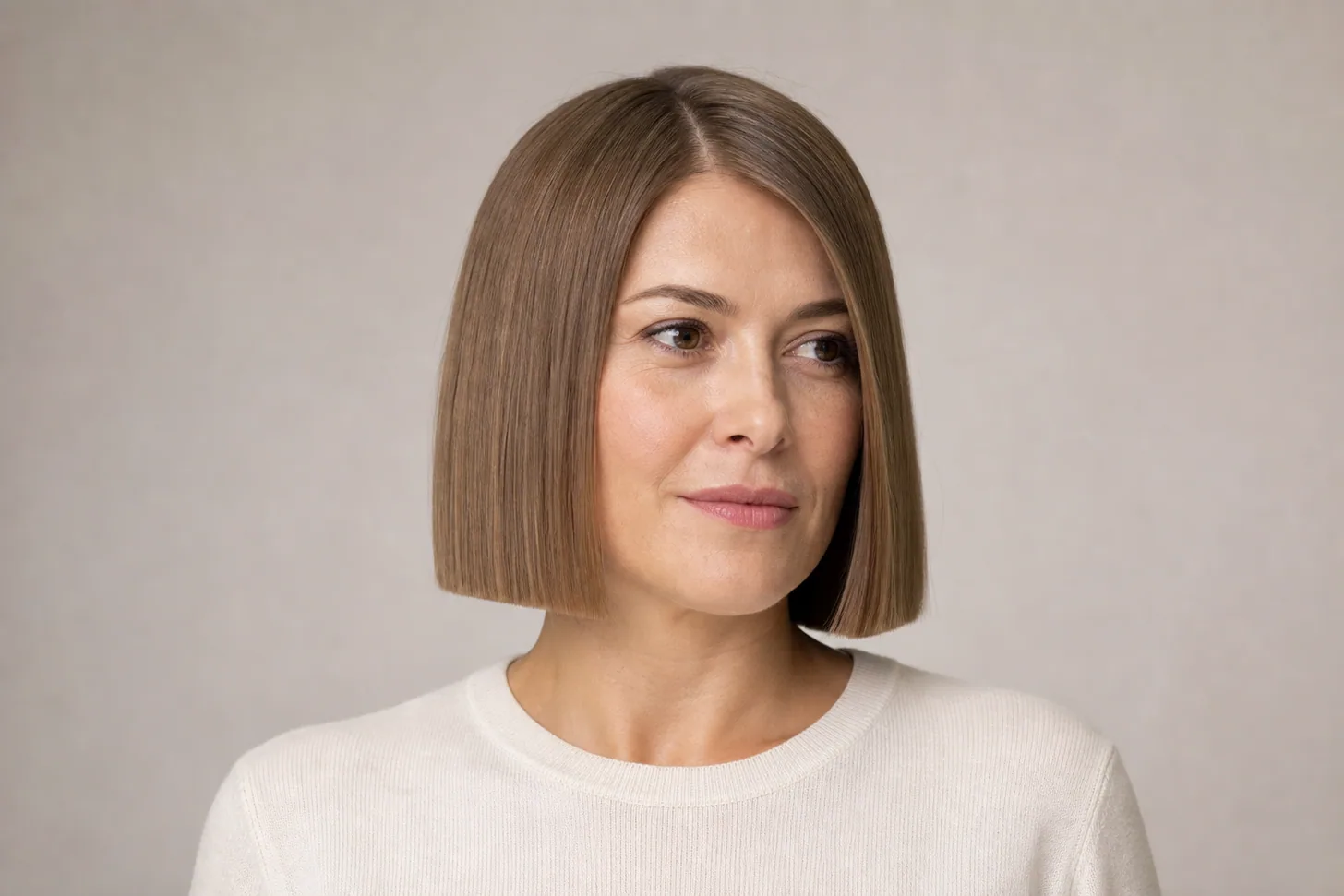
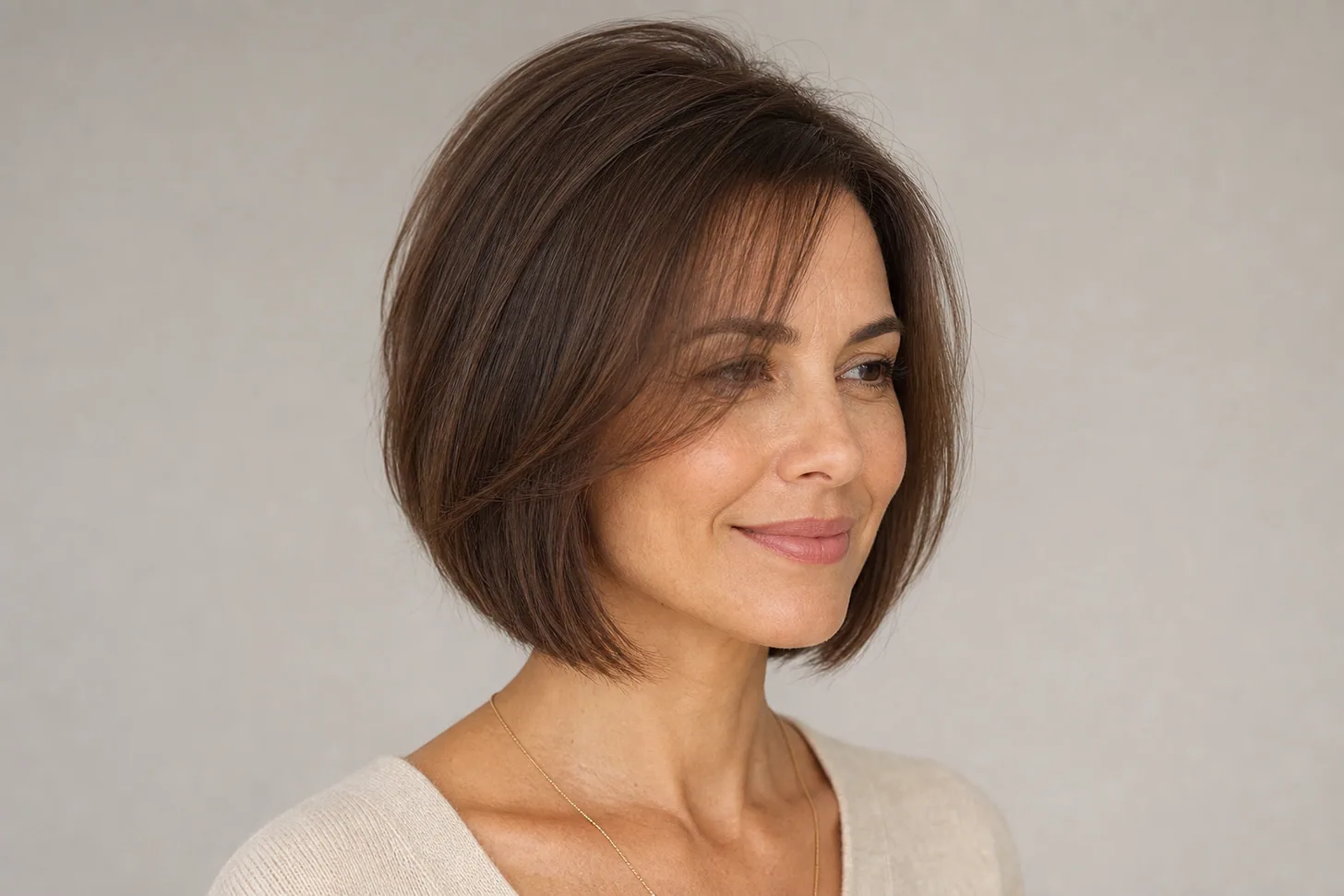
A-line bob on fine light-brown hair, about an inch shorter at the nape and angling to just below the chin at the front, softly graduated back with a lifted crown, woman in her late 30s, front three-quarter view
Chair-side note
When someone with thin hair asks me for an A-line bob, the first thing I ask is how steep they want it. The pictures people bring usually show a two- or three-inch drop on thick hair.
On fine hair I keep the angle to about an inch, two at most. The steeper the angle, the less hair is left at the nape and the more the front points have to carry alone. A gentle slope gives you the lift at the back and keeps both ends looking full.
SB
— Simone Baptiste, Senior Stylist
What is an A-line bob?
It is a bob whose perimeter slopes downward from back to front. The back is cut shorter, often with a little graduation, and the front pieces are left longer, usually around the chin or jaw.
The difference from a blunt bob is the slope; a blunt bob is level all the way round. For every other shape, see bob haircuts for fine hair.
Is an A-line bob good for thin hair?
Yes, with a gentle angle. The shorter back lifts at the crown, which is where fine hair usually falls flattest, and the forward slope gives the front a solid edge. The perimeter should still be cut blunt, with any texture point-cut into the ends rather than razored, so the hem stays dense.
A steep angle is where it goes wrong. The back has to be cut very short to make the drop, and fine hair can look patchy there, while the long front pieces separate into strings.
Subtle A-line bobs
The gentlest angles, closest to a one-length bob. These are the safest choice for very fine or low-density hair.
subtle A-line bob on fine light-blond hair, about one inch shorter at the back and ending at the chin in front, blunt dense perimeter, woman in her early 30s, front three-quarter view
1
Barely-there A-line at the chin
About an inch of drop from nape to chin. From the front it reads as a neat blunt bob, and the angle only shows from the side.
It is the version I suggest for thin hair that has never had an angle before.
soft A-line bob on fine dark-brown hair worn with a deep side part, slightly shorter at the nape and angling to jaw length, smooth blow-dried finish, woman in her early 40s, front view
2
Soft A-line with a side part
A deep side part piles hair onto one side of the angle, so that side looks thicker and the crown lifts.
Blow-dry the roots against the part first, then flip it back.
A-line bob on fine medium-brown hair with ends smoothed under with a round brush, angled from a short nape to below the chin, glossy finish, woman in her late 40s, side profile view
3
A-line bob with tucked-under ends
Turning the ends under with a medium round brush makes the forward angle look rounder and fuller.
long A-line lob on fine dark-blond hair, shoulder length at the back angling to the collarbone at the front, blunt ends, loose bend, woman in her mid 30s, front three-quarter view
4
Collarbone A-line lob
The same slope on a longer base. It keeps enough length for a ponytail and is the easiest A-line to grow out.
These build visible height at the back with short graduated layers. They give the most crown lift, and they need the most frequent trims.
A-line bob on fine light-brown hair with soft graduation at the back creating a rounded crown, angling to the jaw at the front, back three-quarter view
5
A-line bob with soft graduation
Short layers stacked gently at the back curve the shape and lift the crown. In the chair, this is where an A-line earns its place on fine hair.
Ask for the graduation to stop below the occipital bone so the nape doesn't look sparse.
stacked A-line bob on fine dark-brown hair with visible short stacked layers at the back and a longer front at the chin, woman in her early 50s, side profile view
6
Stacked A-line bob
More pronounced stacking, with the shape visible from the side. It reads full at the back even on low-density hair.
short A-line bob on fine silver-blond hair with a neatly tapered nape and the front ending at the jaw, soft volume at the crown, woman in her early 60s, back three-quarter view
7
Short A-line with a tapered nape
A clean, short nape lets the back lift on its own, and the jaw-length front keeps it soft.
A-line bob on fine medium-blond hair with one hidden internal layer under the crown for lift, blunt angled perimeter, woman in her late 30s, front three-quarter view
8
A-line bob with an invisible layer
One short layer cut underneath the top section lifts the crown and stays invisible. The blunt angled edge keeps its density.
A fringe or a soft wave softens the angle and makes the top look fuller.
A-line bob on fine light-brown hair with soft curtain bangs blending into the longer front pieces, angled from a short nape to the chin, woman in her mid 30s, front view
9
A-line bob with curtain bangs
Curtain bangs blend straight into the long front pieces and carry the angle up to the cheekbones.
A-line bob on fine black hair with a light wispy fringe at the brows, jaw-length angled front and a short graduated back, woman in her late 20s, front view
10
A-line bob with a wispy fringe
A see-through fringe uses very little hair, so the angle keeps most of its weight.
wavy A-line bob on fine wavy auburn hair with loose bends, slightly shorter at the back and angling to below the chin, air-dried finish, woman in her early 40s, front three-quarter view
11
Wavy A-line bob
Fine wavy hair shrinks as it dries, so ask for the angle to be cut dry or checked dry. A loose wave hides small unevenness in the line.
choppy A-line bob on fine dark-blond hair with point-cut piecey ends, angled from the nape to the jaw, tousled texture-spray finish, woman in her early 30s, front three-quarter view
12
Choppy A-line bob
Point-cut ends break up the angle for a more lived-in look. Keep the choppiness at the very ends so the hem stays solid.
Both slope forward. An A-line bob is mostly about the outline, with a gentle angle and little or no stacking. An inverted bob has a much steeper angle and a short, heavily stacked back. On thin hair, the A-line is the easier choice. The stacked bob guide covers the inverted version and when it works.
Which face shapes suit an A-line bob?
A longer front that falls below the chin makes a round face look longer. A softer angle with bangs balances a long face. On a square face, end the front just below the jaw rather than at it, and add soft texture so the line doesn't echo the jaw.
What to ask your stylist
Say: "I'd like an A-line bob with about an inch of angle from the back to the front, a blunt perimeter and soft graduation at the back that stops above my nape. No razor or thinning shears, please." Bring a photo of the angle you want, and ask your stylist to check your density at the nape before cutting the back short.
How to style an A-line bob
Put a little volumizing mousse at the roots, then blow-dry with a round brush, lifting the back and pulling the front pieces forward and under. Finish with a light texture spray. It takes about ten minutes. Trim every six to eight weeks, because the front points grow past the chin first and the angle softens.
Who should skip an A-line bob
Your hair is very thin at the nape. A short back will show it. A blunt bob keeps the weight even all the way round.
You want a steep, dramatic angle on low-density hair. Most of your hair ends up in the front points, which separate. Keep the angle to two inches or less.
You have a strong cowlick at the nape. A short back makes it stand up. Ask for a longer, softer back or a one-length bob.
You do not want to blow-dry. An A-line looks best with a quick round-brush dry. If you air-dry, a soft everyday bob is easier.
FAQ
A bob cut shorter at the back and gradually longer toward the face, so the outline slopes forward like the letter A. The front usually ends around the chin or jaw.
Yes, if the angle is gentle. About one to two inches of slope with soft graduation at the back lifts the crown, while a steep angle leaves the nape sparse and the front pieces stringy.
An inverted bob has a steeper angle and a short, heavily stacked back. An A-line bob is mostly about the sloped outline, with gentle or no stacking.
Ask for an A-line bob with about an inch of angle, a blunt perimeter and soft graduation at the back. Ask for no razor or thinning shears, and bring a photo of the angle.
Every six to eight weeks. The front points grow first and the angle softens, so a quick trim keeps the shape.
Yes. Curtain bangs or a light wispy fringe blend into the front and suit fine hair, because they use little hair and leave the angle full.
Eleven years behind the chair, specializing in short shapes and fine-hair texture. Simone believes the best haircut is the one you can style yourself in ten minutes.
Results vary with hair type, density and growth patterns. Haircut guidance is not a substitute for an in-person consultation with a licensed stylist, and sudden or heavy hair loss is worth raising with a doctor.
Hairstyle images in this guide are AI-generated illustrations, not photos of real clients or results. See our image policy.
Get the good hair intel
One honest, stylist-written guide in your inbox each week. No hype.

 SB