Reviewed by Tara Sullivan · Updated October 2026 · 9 min read
A mom bob is a chin-to-jaw-length bob with soft, face-framing layers and a loose, easy finish. It is the bob you can dry in five minutes and wear to school drop-off, and it is not meant to look styled.
On fine hair, the mom bob works if the layers are few and point-cut, not razored or heavy. Below are 10 mom bobs for fine hair, how to blow-dry one, what to say at the salon, and who should pick a different bob.
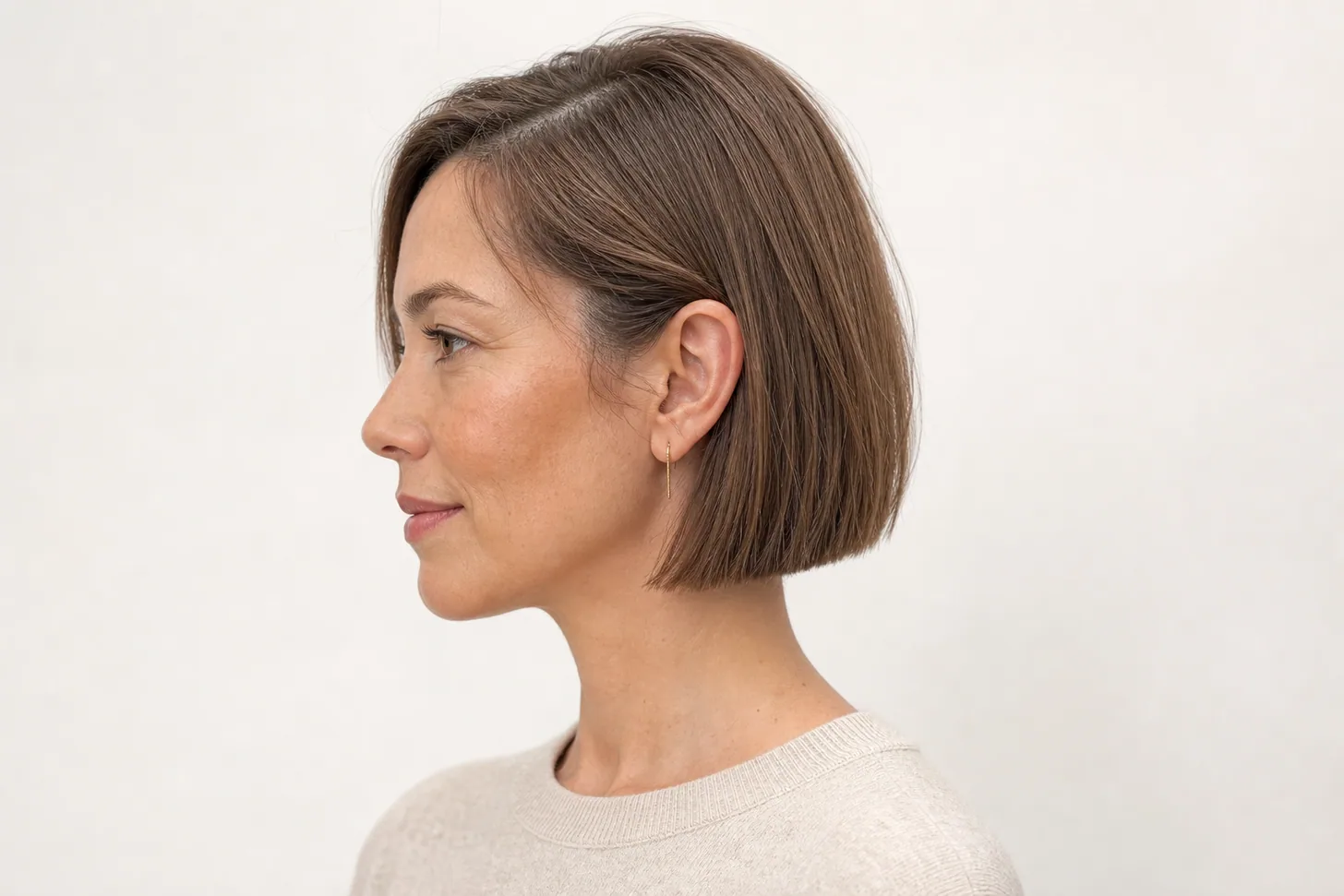
mom bob on fine light-brown hair, chin-length with soft face-framing layers and a loose finish, side part, woman in her late 30s, front three-quarter view
Chair-side note
When a client asks for a mom bob, she usually means "a bob I do not have to think about." That is a fair request, and it is also where fine hair gets over-cut. Too many layers and the ends go see-through.
I keep the layers to two or three, and I point-cut them. The weight stays in the lowest inch, the face-framing pieces start at the cheekbone, and the bob looks soft rather than shredded.
SB
— Simone Baptiste, Senior Stylist
What is a mom bob?
It is a bob that sits between the chin and the jaw, cut with light layers around the face so it moves, and styled with a quick, loose blow-dry. There is no strict definition, which is why the name stuck: it describes a practical bob rather than a precise cut.
Yes, with restraint. A blunt perimeter with a few soft face-framing layers keeps the hem dense and adds movement at the front. A heavily layered mom bob is the version that fails on fine hair, because each layer takes density from the ends.
The everyday versions, in order of how much work they take.
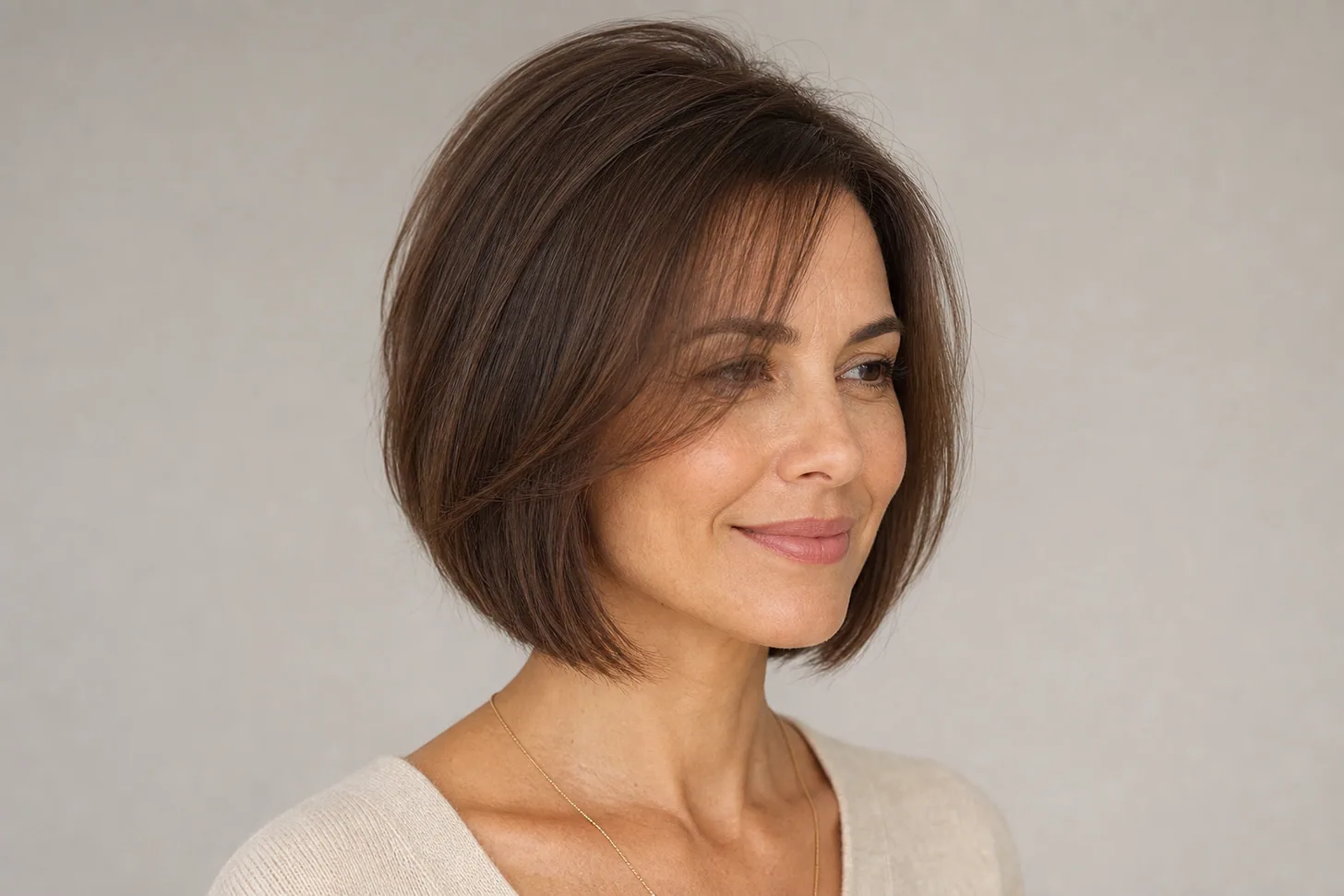
chin-length bob on fine light-brown hair with soft face-framing layers and a soft side part, loose blow-dry, woman in her late 30s, front three-quarter view
1
Chin-length mom bob with a side part
The base version. Chin length, a side part, and two or three point-cut layers around the face.
A side part lifts the roots on the heavier side of the head, which is where fine hair falls flattest.
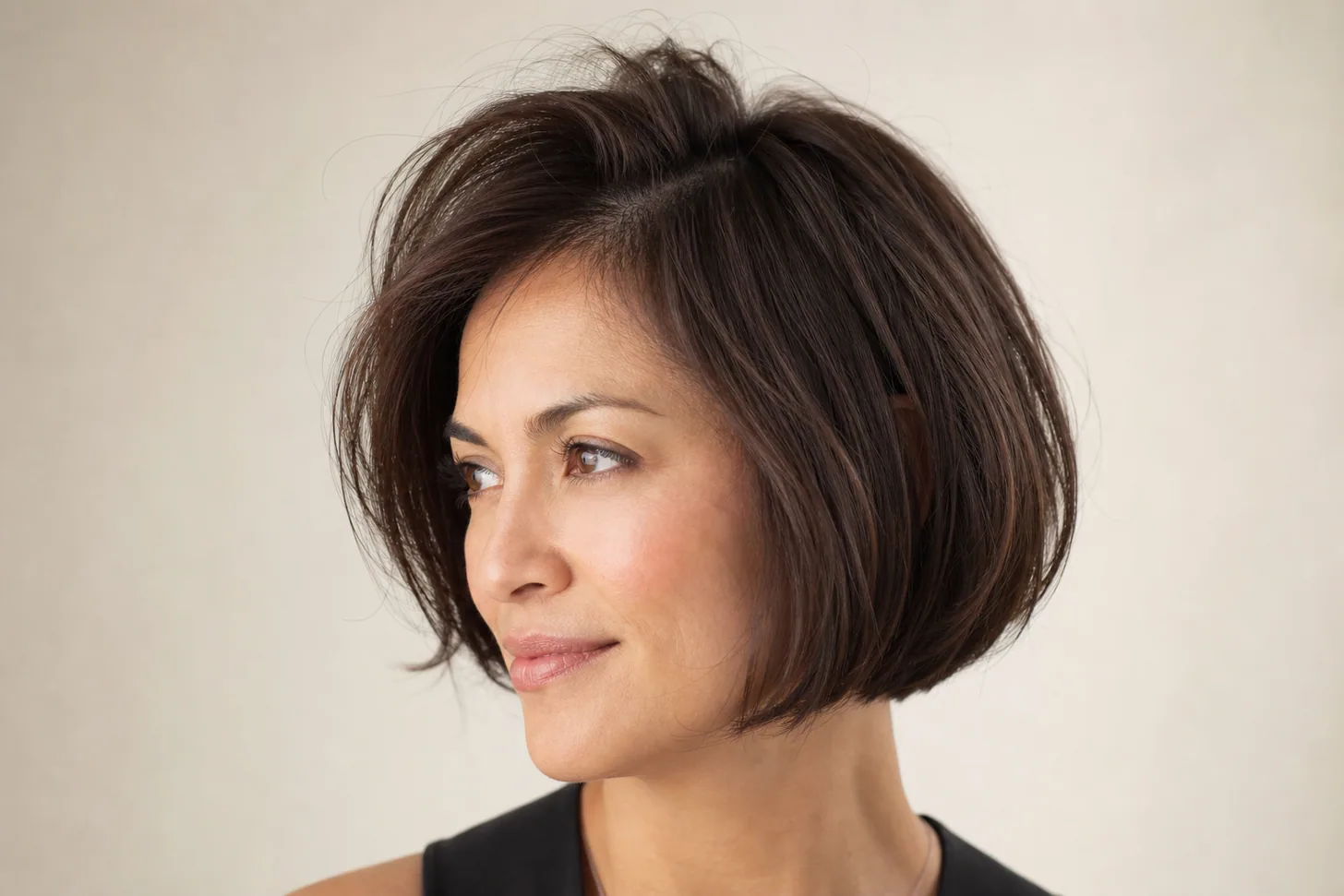
jaw-length bob on fine dark-brown hair with a soft middle part and slightly tucked ends, woman in her early 40s, front view
2
Jaw-length mom bob with a middle part
A middle part and a slightly shorter back keep the line neat. It suits oval and long faces.
Fine hair parts show more scalp in the middle, so swing the part an inch to one side if it looks wide.
chin-length wavy bob on fine wavy honey-blond hair with a loose air-dried finish, woman in her mid 30s, front three-quarter view
3
Wavy mom bob
A bob cut to suit your natural wave, with minimal layers so the curl pattern does the work.
Fine waves need a light mousse and air-drying. Read fine wavy hair for the full routine.
chin-length graduated bob on fine medium-blond hair, slightly shorter at the nape with a rounded crown and soft face-framing pieces, woman in her mid 40s, back three-quarter view
4
Graduated mom bob with a fuller crown
The back is cut a touch shorter than the front, which stacks the hair and lifts the crown. It is the mom bob for flat-at-the-back hair.
A fringe turns the mom bob into a different look, and on fine hair the fringe must be cut thin enough to blend. Always ask for it to be cut from the crown section, not the sides.
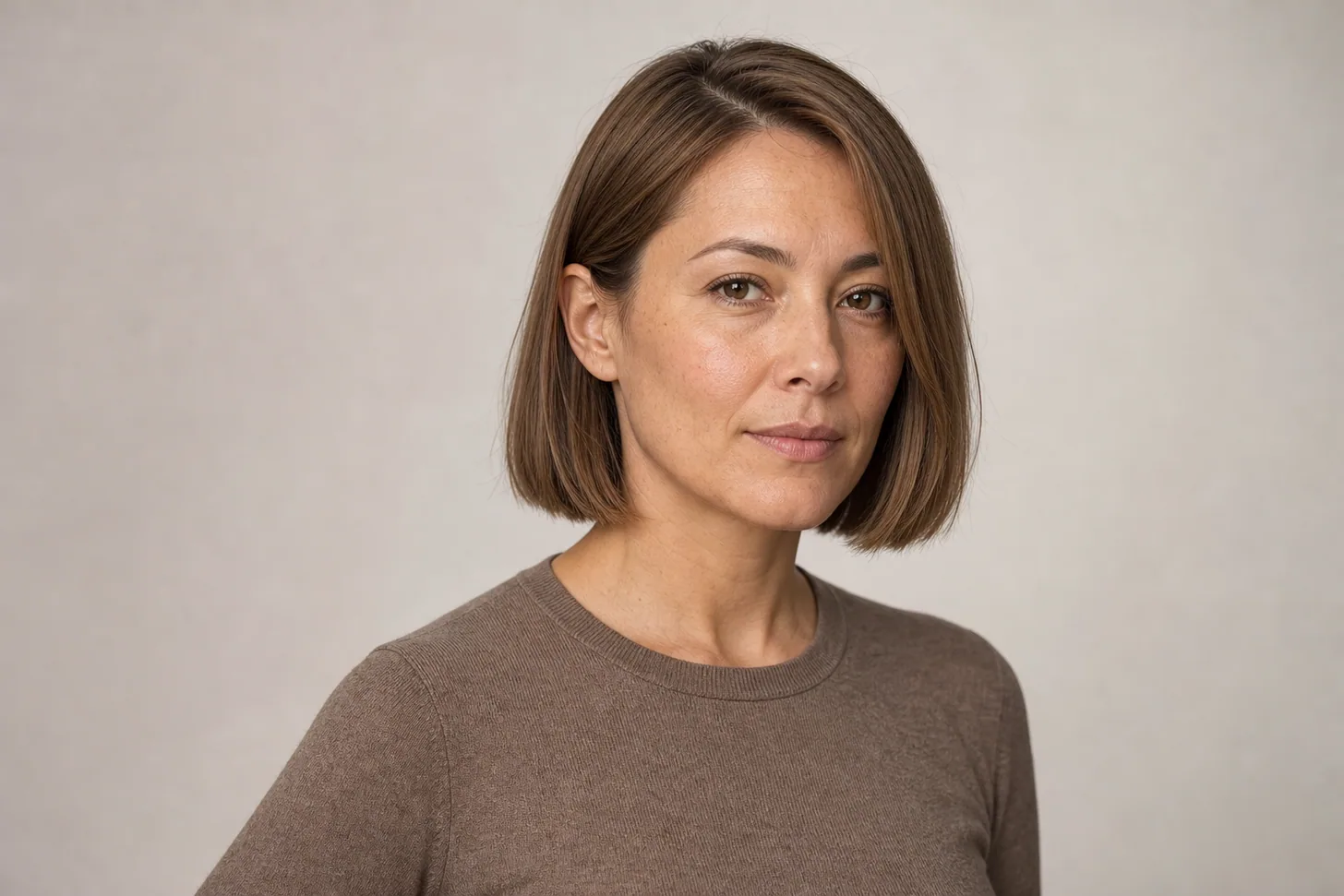
chin-length bob on fine medium-brown hair with soft center-parted curtain bangs blending into face-framing layers, woman in her early 40s, front view
6
Mom bob with curtain bangs
Curtain bangs blend into the face-framing layers, so there is no hard line to grow out.
chin-length bob on fine dark-brown hair with soft shaggy texture at the ends and a loose air-dried finish, woman in her mid 30s, front three-quarter view
10
Soft shaggy mom bob
A softly textured bob with a little more movement at the ends. Keep the texture subtle on fine hair.
Say: "I'd like a chin-length bob with a blunt perimeter, two or three point-cut face-framing layers from the cheekbone, and nothing thinned out. I want to dry it in five minutes." Bring a photo and ask your stylist to check your density before cutting.
How to blow-dry a mom bob
Rough-dry the roots first with a little mousse, then use a medium round brush to bend the ends under or out. Our guide to blow-drying a bob has the full method. Trim every eight weeks so the line stays neat.
Who should skip a mom bob
You want a sleek, polished bob. The mom bob is soft and loose. A blunt bob is a cleaner line.
Your hair is very thin at the ends. Layers will make the ends look see-through. Keep the cut one length.
You will not trim it. Without a trim every eight weeks, a chin-length bob loses its shape and goes shapeless.
A chin-to-jaw-length bob with soft, face-framing layers and a loose, easy finish. It is a practical everyday bob rather than a precise cut.
Yes, with few layers. Two or three point-cut face-framing layers keep the ends dense. Heavy layering makes a mom bob look stringy on fine hair.
Ask for a chin-length bob with a blunt perimeter, two or three point-cut layers from the cheekbone, and no thinning. Bring a photo and say you want a five-minute dry.
Every eight weeks to keep the line neat. If you wear bangs, trim those every four to five weeks.
Mostly. It dries in about five minutes and needs no heat styling, but it needs a regular trim to stay shaped.
A mom bob has softer, face-framing layers and a looser finish. A regular bob is often one length with a sharper line.
Eleven years behind the chair, specializing in short shapes and fine-hair texture. Simone believes the best haircut is the one you can style yourself in ten minutes.
Results vary with hair type, density and growth patterns. Haircut guidance is not a substitute for an in-person consultation with a licensed stylist, and sudden or heavy hair loss is worth raising with a doctor.
Hairstyle images in this guide are AI-generated illustrations, not photos of real clients or results. See our image policy.
Get the good hair intel
One honest, stylist-written guide in your inbox each week. No hype.

 SB