Reviewed by Tara Sullivan · Updated October 2026 · 11 min read
A low-maintenance bob for fine hair is one that looks finished after a towel-dry and five minutes. The cut has to do the styling, because fine hair will not hold a blow-dry for long.
Below are 14 low-maintenance bob haircuts for thin hair: short and chin-length bobs, layered bobs, French bobs, bobs with bangs and shoulder-length bobs, each with its real upkeep.
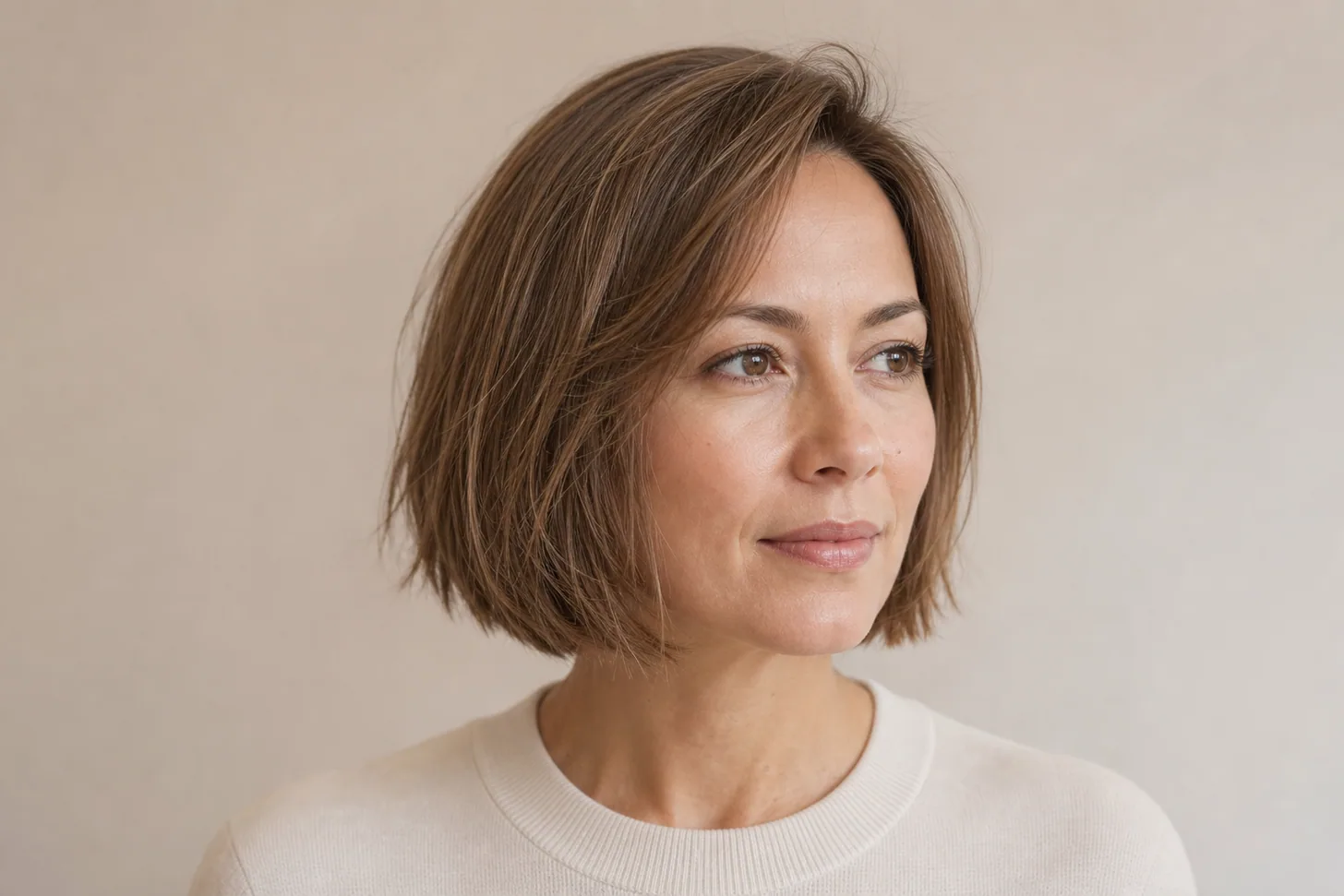
air-dried chin-length bob on fine light-brown hair, blunt dense hem, soft natural bend, side part, woman in her 30s, front three-quarter view
Chair-side note
When a client asks for a low-maintenance bob, I ask how she dries her hair now. If the answer is "I don't", the cut has to be built for that.
The easiest bobs on fine hair are blunt at the hem and cut to fall where they want to fall. Every layer and every angle you add is one more thing to style.
SB
— Simone Baptiste, Senior Stylist
What makes a bob low-maintenance on fine hair
Three things decide it: a blunt hem, a length that air-dries well, and a part that suits your growth. A blunt hem keeps the ends looking thick with no styling at all.
Length matters because fine hair behaves differently at each one. Chin length lifts easily; collarbone length can flip out on the shoulders. Cut the bob to sit just above or well below the shoulder, never on it.
Finally, cut it dry or check it dry. A bob cut wet on fine hair can shrink or kink once it dries, and that is when the daily fixing starts.
Low-maintenance chin-length and short bobs for fine hair
Short and chin-length bobs give the most lift for the least work. Short hair is lighter, so it rises off the scalp without a round brush.
air-dried chin-length bob on fine dark-blond hair, one-length blunt hem, soft natural bend, side part, woman in her 30s, front view
1
Air-dry chin bob with a blunt hem
One length at the chin, left to air-dry. The blunt hem does all the work, so towel-dry, part and go.
It is the lowest-effort bob there is. A trim every eight weeks keeps the line sharp.
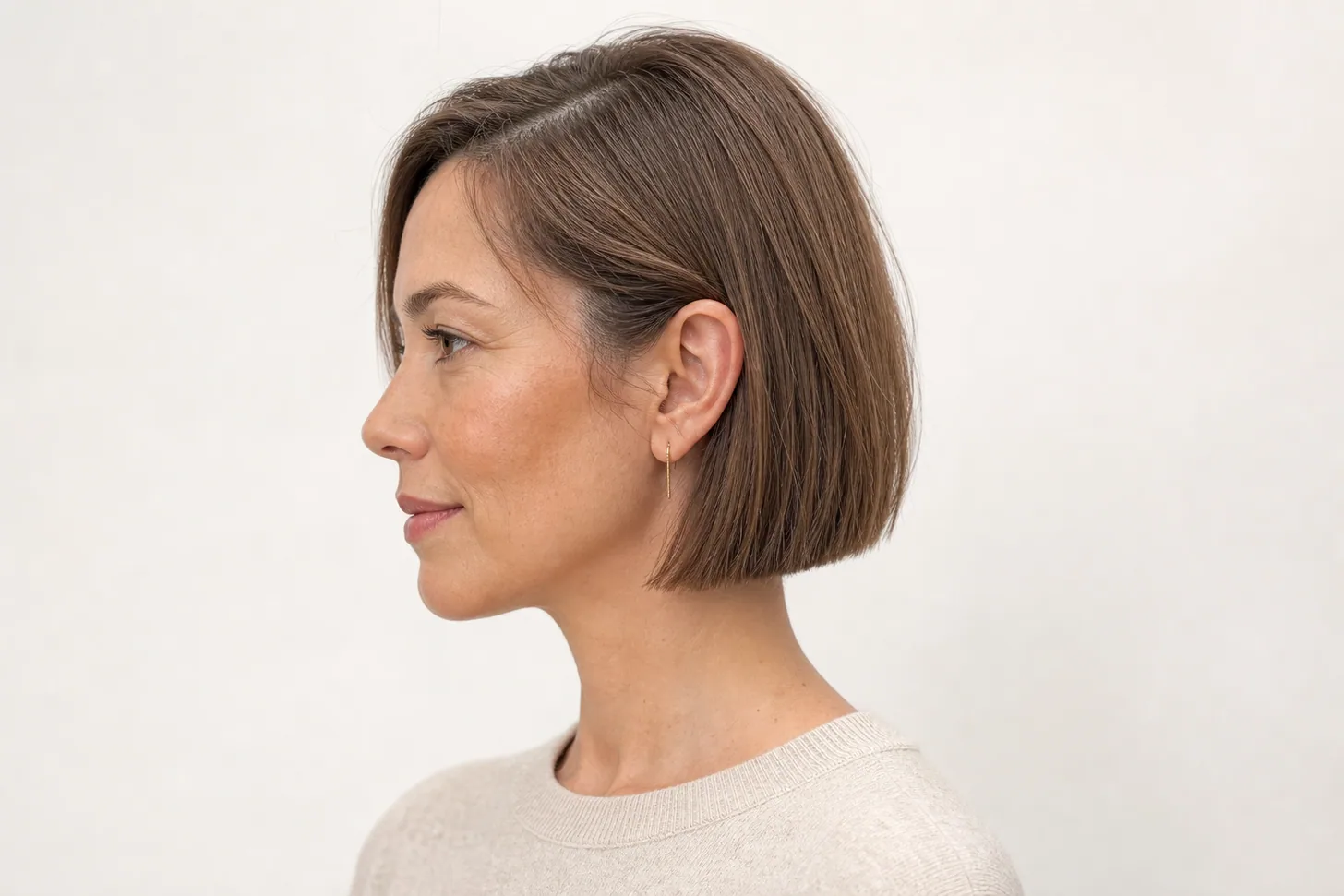
jaw-length bob on fine medium-brown hair, cut to fall from its natural part, smooth surface, ends resting at the jaw, woman in her 40s, three-quarter view
2
Jaw bob cut to its natural part
A jaw-length bob cut from the part your hair already falls into. Because it is not fighting a cowlick, it lands in the same place every morning.
Ask your stylist to find your natural part before cutting.
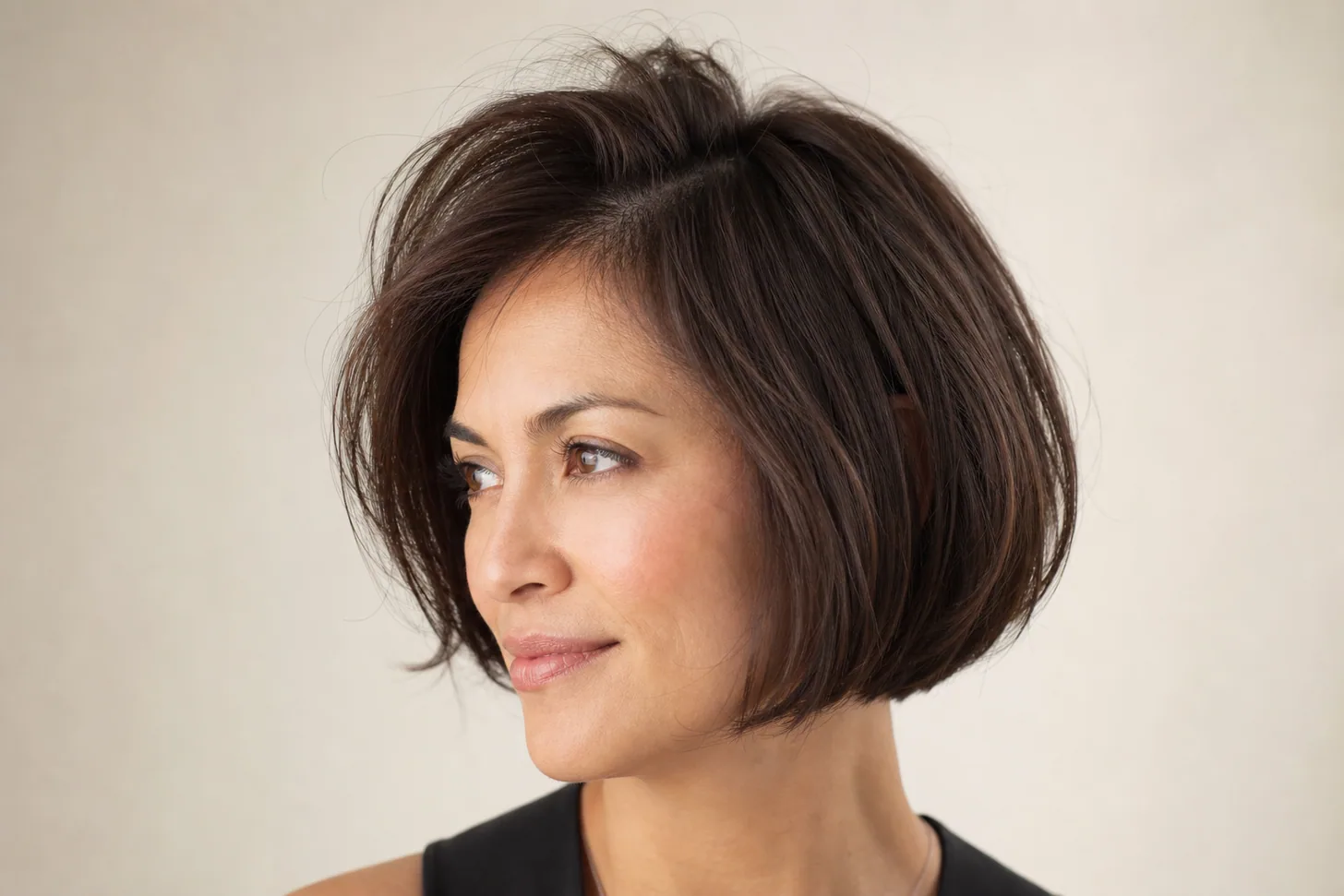
chin-length bob on fine black hair with softly point-cut ends, gentle movement at the hem, middle part, woman in her 30s, front view
3
Chin bob with point-cut ends
The hem is point-cut instead of razor-straight, so the ends move without looking thin. It grows out softly between trims.
Good if a perfectly blunt line looks too severe on you.
short choppy bob between ear and chin on fine wavy honey-blond hair, piece-y air-dried texture, solid weight line underneath, woman in her 30s, three-quarter view
4
Short choppy bob for air-drying
Piece-y texture on top of a solid line, made for hair with a little wave. Scrunch in texture spray and let it dry.
Layers usually add styling time, but the right ones save it. Soft layers kept above the ear lift the crown on their own, so you need less root product and no round brush.
Keep them soft and few. Our layered bob guide explains where layers help and where they thin the ends.
layered chin bob on fine ash-brown hair, short soft layers only at the crown giving lift, heavy even hem, woman in her 40s, three-quarter view
5
Layered bob with crown layers only
Short layers at the crown only; the rest stays one length. The crown lifts after a towel-dry, and the hem stays full.
It is the layered bob I cut most for clients who never blow-dry.
jaw-length layered bob on fine wavy chestnut hair, loose lived-in waves, soft layers through the top, slightly messy second-day texture, woman in her 30s, front view
6
Wavy layered bob for second-day hair
Soft layers through the top of a jaw-length bob, cut for hair that bends. It looks better on day two than on wash day.
Refresh it with water and a little mousse instead of rewashing. See fine wavy hair for the routine.
layered bob at the chin on fine light-brown hair with a soft side-swept front section, layers lifting the top, deep side part, woman in her 50s, three-quarter view
7
Layered bob with a soft side sweep
Longer layers at the front that fall into a side sweep from a deep part. The sweep hides a flat crown without any styling.
Flip the part every few weeks so the root does not flatten.
Low-maintenance French bobs for fine hair
The French bob is meant to look a little undone, which makes it easy on fine hair. It sits between the cheekbone and the jaw and is worn tousled, not smoothed.
undone French bob at the jaw on fine light-brown hair, slightly tousled, soft brow-skimming fringe, air-dried texture, woman in her 30s, front view
8
Undone French bob
Air-dried and slightly messy, with a fringe that skims the brows. It is built to look better without effort.
French bob at the cheekbone-to-jaw line on fine dark-brown hair, no fringe, tucked behind one ear, soft bend, woman in her 40s, three-quarter view
9
French bob with no fringe
The same short French shape with no fringe to trim. Tuck one side behind the ear and it reads as styled.
A good choice if you do not want a fringe appointment every three weeks.
Low-maintenance bobs with bangs for thin hair
Bangs add a trim, but the right ones remove styling time. A soft fringe covers a thin hairline and hides a flat front, so the rest of the bob needs less work.
chin bob on fine auburn hair with long side bangs falling from a side part across the brow, smooth easy finish, woman in her 40s, three-quarter view
10
Bob with long side bangs
Long side bangs grow out without an awkward stage, so you can stretch the trims. They fall into place from a side part.
jaw-length bob on fine golden-brown hair with soft curtain bangs parted in the center and falling to the cheekbones, air-dried, woman in her 30s, front view
11
Bob with soft curtain bangs
Curtain bangs that fall to the cheekbones and blend into the bob. They need a quick push with your fingers, not a blow-dry.
Cut them from a small triangle at the front so they do not borrow hair from the top.
Low-maintenance shoulder-length bobs for fine hair
A longer bob can be tied back, which is the most low-maintenance style of all. Keep it just above the shoulders or just below, so it does not flip out.
blunt bob ending just above the shoulders on fine light-brown hair, one-length heavy hem, smooth straight finish, woman in her 40s, front view
12
Blunt bob just above the shoulders
One length, ending an inch above the shoulders. It is long enough for a small clip and short enough not to flip.
The hem stays dense even on thin hair.
long bob just below the shoulders on fine dark-blond hair, middle-to-side part, one side tucked behind the ear, soft bend at the ends, woman in her 30s, three-quarter view
13
Long bob with a tuck-and-go part
Just below the shoulders, with one side tucked behind the ear. The tuck gives it shape on days you do nothing else.
Ask for the back a touch shorter than the front so it falls forward.
shoulder-length bob on fine black hair pulled into a short low ponytail with a few face-framing pieces left out, woman in her 40s, back three-quarter view
14
Shoulder-length bob with a low ponytail option
A shoulder-length bob cut with every section long enough to reach a low ponytail. On busy days, tie it back.
Use a soft scrunchie, not a tight elastic, to protect fine hair.
The five-minute routine for a low-maintenance bob
Towel-dry gently, then add a pea of mousse or a few sprays of root lift at the crown only. Part the hair and let it air-dry most of the way.
Finish with two minutes of blow-drying at the roots, or none at all. A light texture spray on dry ends separates them. For the full method, see how to air-dry fine hair.
What to ask your stylist
Say: "I have fine hair and I don't blow-dry. I want a bob with a blunt hem, cut to my natural part, and checked dry. Please don't use thinning shears or a razor."
Tell your stylist how long you spend on your hair now. A low-maintenance bob is cut for your routine, not the salon's.
When a bob is not the low-maintenance choice
Your hair sits right on your shoulders. It will flip out every day. Go an inch shorter or longer.
You have a strong cowlick at the front. A blunt bob will fight it. A side-swept fringe or a pixie works with it.
You need to tie your hair back for work. Most bobs are too short. A shoulder-length bob or a lob is safer.
Your hair is very curly. A short blunt bob can turn triangular. Ask for a longer, curl-specific shape.
FAQ
A blunt chin-length bob cut to your natural part. The blunt hem keeps the ends full with no styling, and chin length lifts on its own after a towel-dry.
Yes for styling, less so for trims. A short bob needs almost no styling but a trim every six to eight weeks to keep its shape.
It can be if the layers are few, soft and kept above the ear. Crown-only layers lift the top without any blow-drying.
Yes. It is meant to look tousled, so it suits fine hair that does not hold a blow-dry. Skip the fringe if you want fewer trims.
A bob with long side bangs. They grow out without an awkward stage and fall into place from a side part, so they need no styling.
Every six to eight weeks for a short or chin-length bob, and every eight to ten for a shoulder-length bob.
Eleven years behind the chair, specializing in short shapes and fine-hair texture. Simone believes the best haircut is the one you can style yourself in ten minutes.
Results vary with hair type, density, and growth patterns. Hairstyling guidance is not a substitute for an in-person consultation with a licensed stylist.
Hairstyle images in this guide are AI-generated illustrations, not photos of real clients or results. See our image policy.
Get the good hair intel
One honest, stylist-written guide in your inbox each week. No hype.

 SB
SB