Fine-hair care · Getting answers

Telogen Effluvium: Why Your Hair Is Suddenly Shedding, and When It Stops

Telogen effluvium is a temporary phase of heavy shedding that starts a few months after a shock to the body, such as a high fever, an operation, giving birth, crash dieting or major stress. Too many hairs switch into the resting phase at once, then fall out together. The American Academy of Dermatology says hair usually returns to its normal fullness within six to nine months.

The hair follicles are not damaged, so the hair grows back. On fine hair, though, the loss shows sooner and the wait feels longer. Below is how to recognize it, find the trigger, and get through the months it takes. Not sure it is shedding at all? Start with hair shedding vs hair loss.

Woman with fine light-brown hair looking at a small cluster of shed hairs in her palm

What is telogen effluvium?

Each hair cycles through a long growing phase (anagen) and a short resting phase (telogen), after which it falls out and is replaced. Normally around 50 to 100 hairs shed a day. In telogen effluvium, a trigger pushes a large share of growing hairs into the resting phase together. A couple of months later, they shed at the same time. It is one of the most common causes of diffuse, non-scarring hair loss, and stress is the trigger most often found (Jimeno Ortega and Stefanato, 2023). See the hair growth cycle for how the phases work.

What triggers it?

The AAD lists these common triggers:

  • A high fever or recovering from an illness, including COVID-19
  • An operation
  • Giving birth (see postpartum hair loss)
  • Losing 20 pounds or more (see shedding after weight loss and GLP-1s)
  • A lot of stress, such as a divorce, bereavement, job loss or caring for someone ill
  • Stopping birth control pills

Low iron, thyroid problems and some medications can cause it or keep it going. See medications that cause shedding. Post-COVID telogen effluvium became common enough during the pandemic to show up in population studies (Jeon et al., 2025).

The telogen effluvium timeline

  • The trigger: nothing visible yet.
  • About two to three months later: shedding starts, often suddenly. Hair comes out in the shower, on the pillow and in the brush.
  • The next few months: shedding stays heavy, then slows.
  • Six to nine months after it began: most people are back to normal fullness, with short regrowth hairs along the part and hairline.

Because of the delay, people often blame whatever happened last week. Count back three months instead. If shedding lasts longer than about six months, it is called chronic telogen effluvium, and it is worth looking for a cause that is still there.

Why it looks worse on fine hair

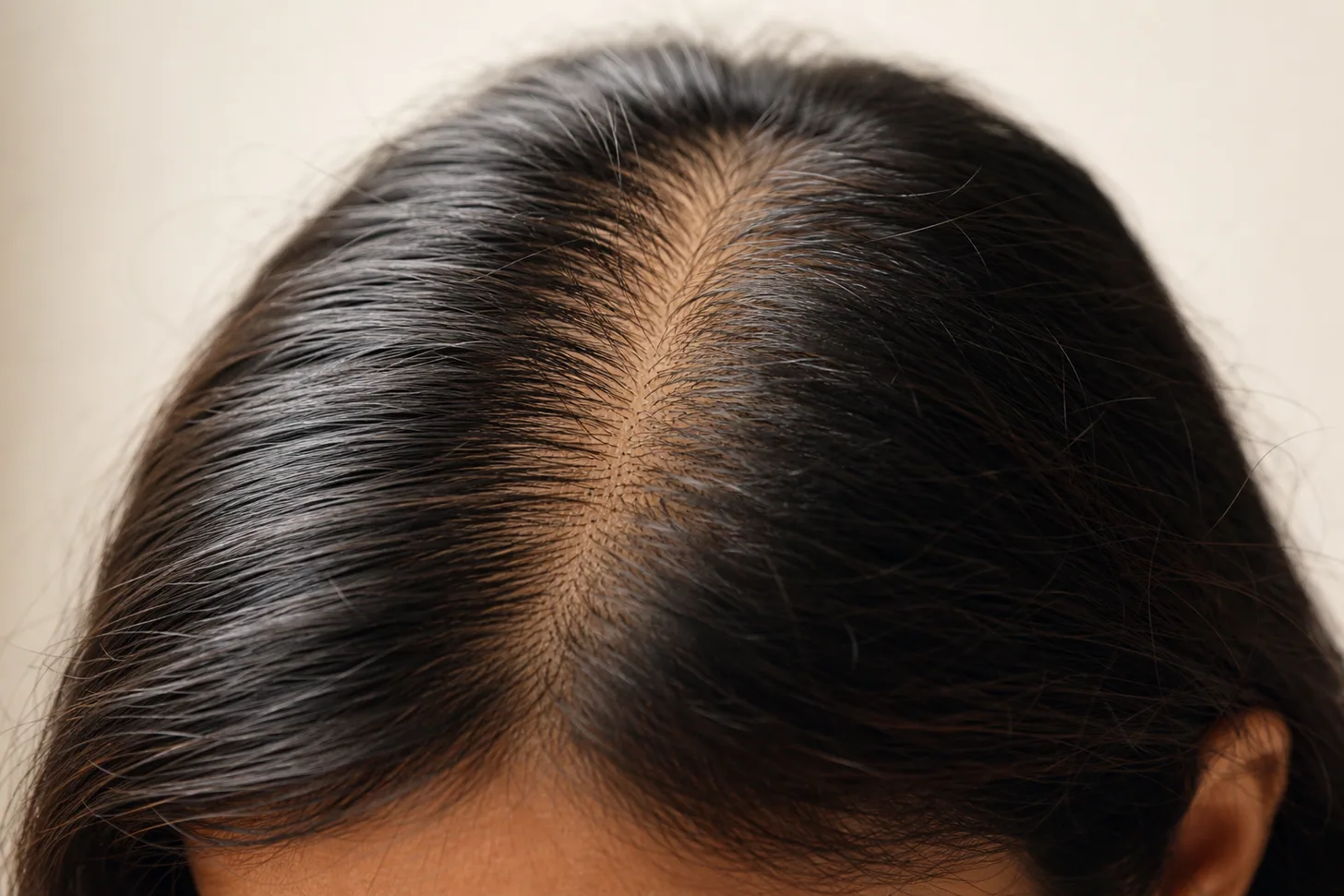
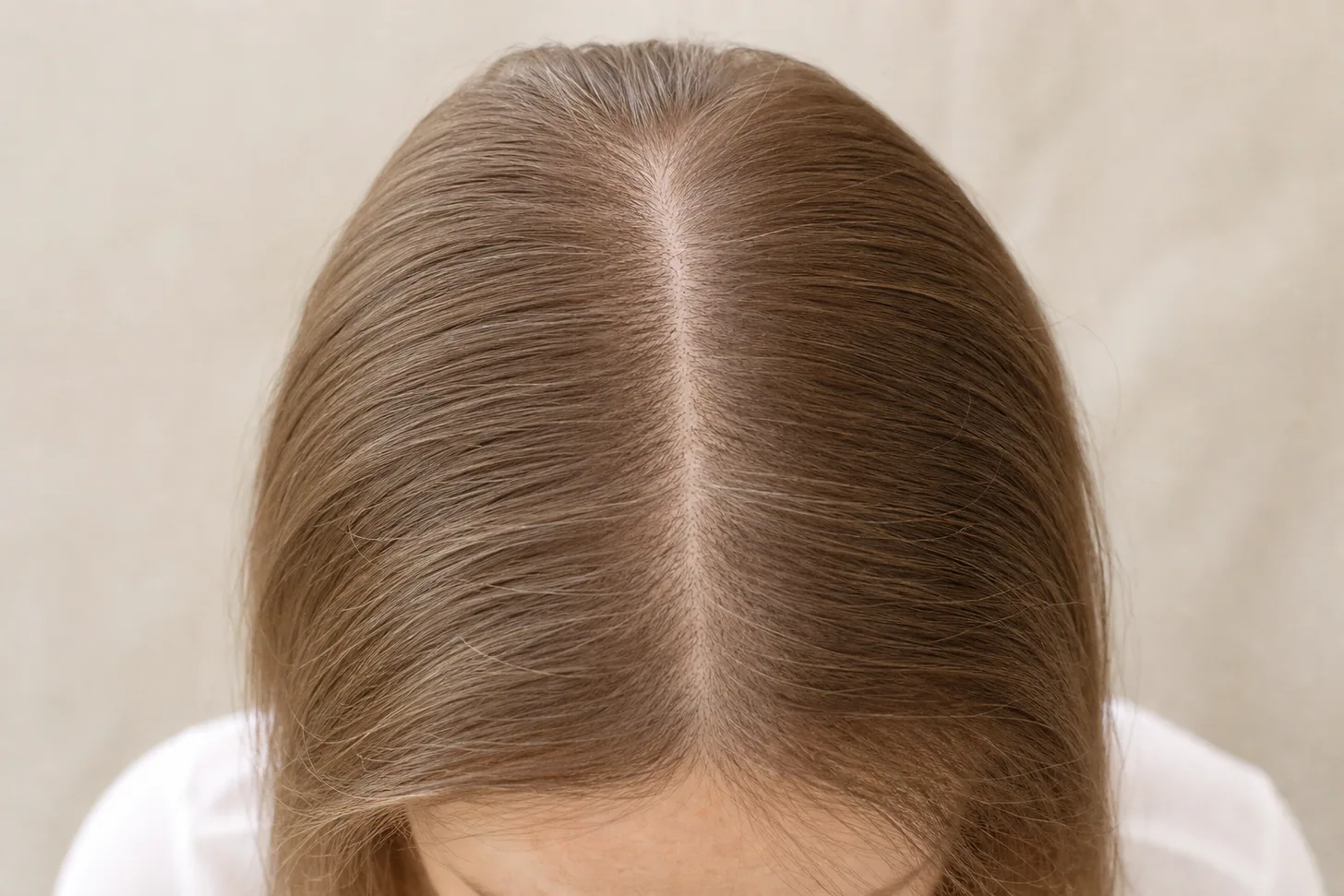
Fine hair has less volume per strand, so losing the same number of hairs shows more scalp. A ponytail that was thin to start gets noticeably thinner. That is also why it can be hard to tell whether you have telogen effluvium or pattern thinning that has been unmasked. See diffuse thinning: which pattern is it?

Chair-side note

The question I ask every client with sudden shedding is, "What happened three months ago?" Most of the time there is an answer: a bad flu, a move, a crash diet, a bereavement. Once they know, the panic eases, because they know it is likely to stop.

Keep a photo of your part every month. Regrowth shows up as short hairs standing up along the part long before the mirror says you look fuller.

Megan HollowayMH
— Megan Holloway, Editor-in-Chief

What helps

  • Find and treat the trigger. Ask your doctor for a ferritin test and thyroid tests. See blood tests for hair loss.
  • Eat enough protein and calories. Crash dieting is a common trigger.
  • Be gentle. Loose styles, a soft brush, and less heat reduce breakage while you wait. Brushing does not cause shedding; the hairs that come out were already loose.
  • Don't stack supplements unless a test shows a deficiency. See hair supplements for fine hair.
  • Ask about treatment if it drags on. A dermatologist may suggest minoxidil for chronic shedding. See thinning hair treatment.
  • Style for fullness in the meantime. See how to hide thinning hair.

When it might not be telogen effluvium

  • The hair is coming out in round patches. That can be alopecia areata. See a dermatologist.
  • Your part is gradually widening, without a sudden shed. That sounds more like female pattern thinning. See why is my hair thinning.
  • Your scalp is red, scaly, painful or scarred. A scalp condition needs a diagnosis. See why does my hair hurt.
  • The shedding has gone on for more than six months. Ask for tests and a dermatology referral.

FAQ

A temporary phase of heavy hair shedding, usually starting two to three months after a trigger such as fever, surgery, childbirth, crash dieting or major stress.

According to the American Academy of Dermatology, most people regain their normal fullness within six to nine months. Shedding that lasts longer than about six months is called chronic telogen effluvium.

Yes. The follicles are not damaged, so hair grows back once the trigger has passed. Regrowth starts as short hairs along the part and hairline.

Yes. Telogen effluvium after COVID-19 is common, typically starting two to three months after the illness.

Shedding 50 to 100 hairs a day is normal. In telogen effluvium, it can be several times that.

Telogen effluvium is a sudden, all-over shed with a trigger a few months earlier. Pattern hair loss is a gradual widening of the part. You can have both, so see a dermatologist if you are unsure.

Related reads

Megan HollowayMH
Megan Holloway
Editor-in-Chief · Licensed Cosmetologist & Certified Trichology Practitioner

Fourteen years in fine-hair care, eight of them behind the chair. Megan's rule for hormonal thinning: photograph the part, not the drain.

More from Megan →

This article is for general education and is not medical advice. If you have patchy hair loss, scalp pain, or shedding that continues beyond six months, see your doctor or a board-certified dermatologist.

Results vary with hair type, density and growth patterns.

Images in this guide are AI-generated illustrations, not photos of real clients or results. See our image policy.