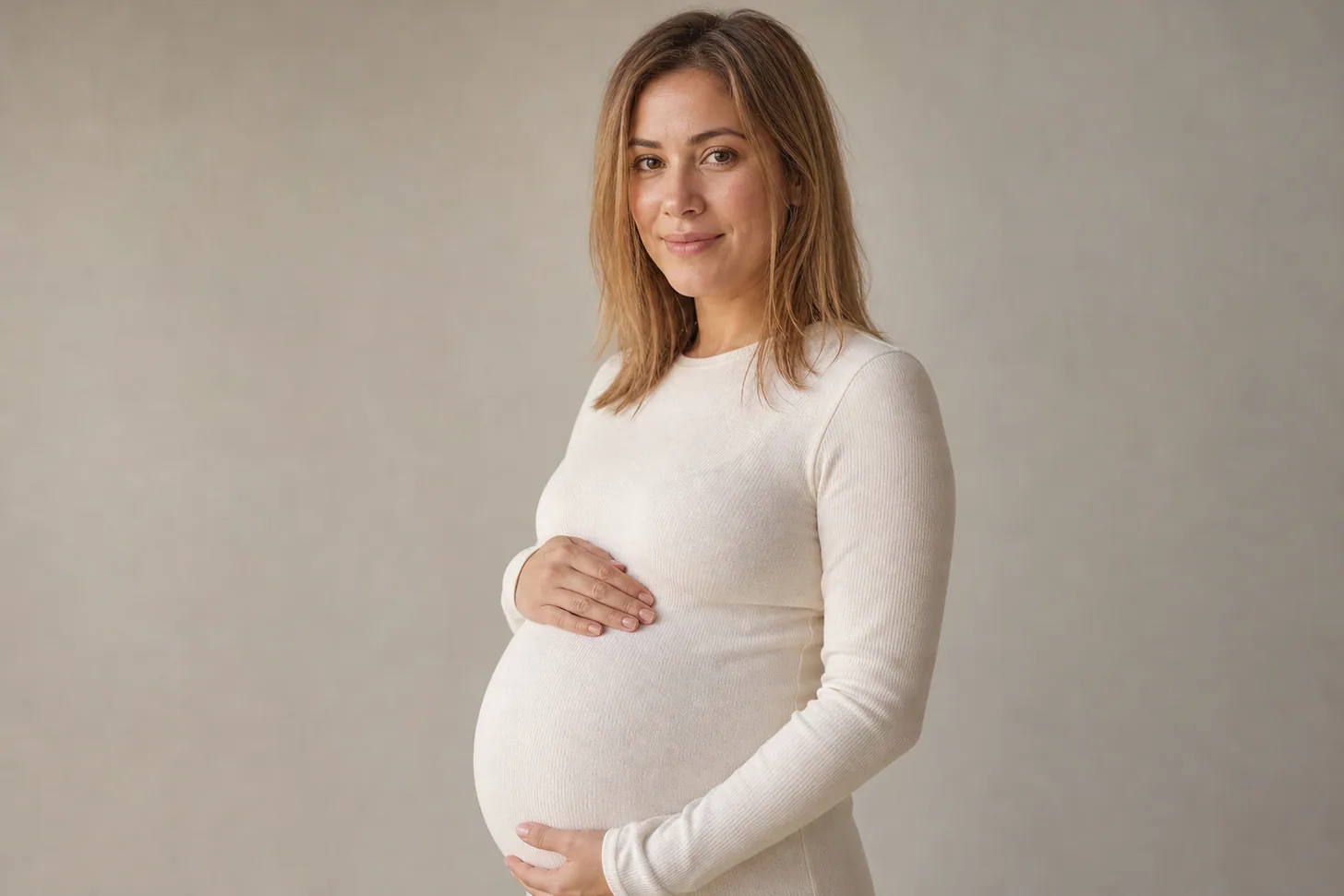
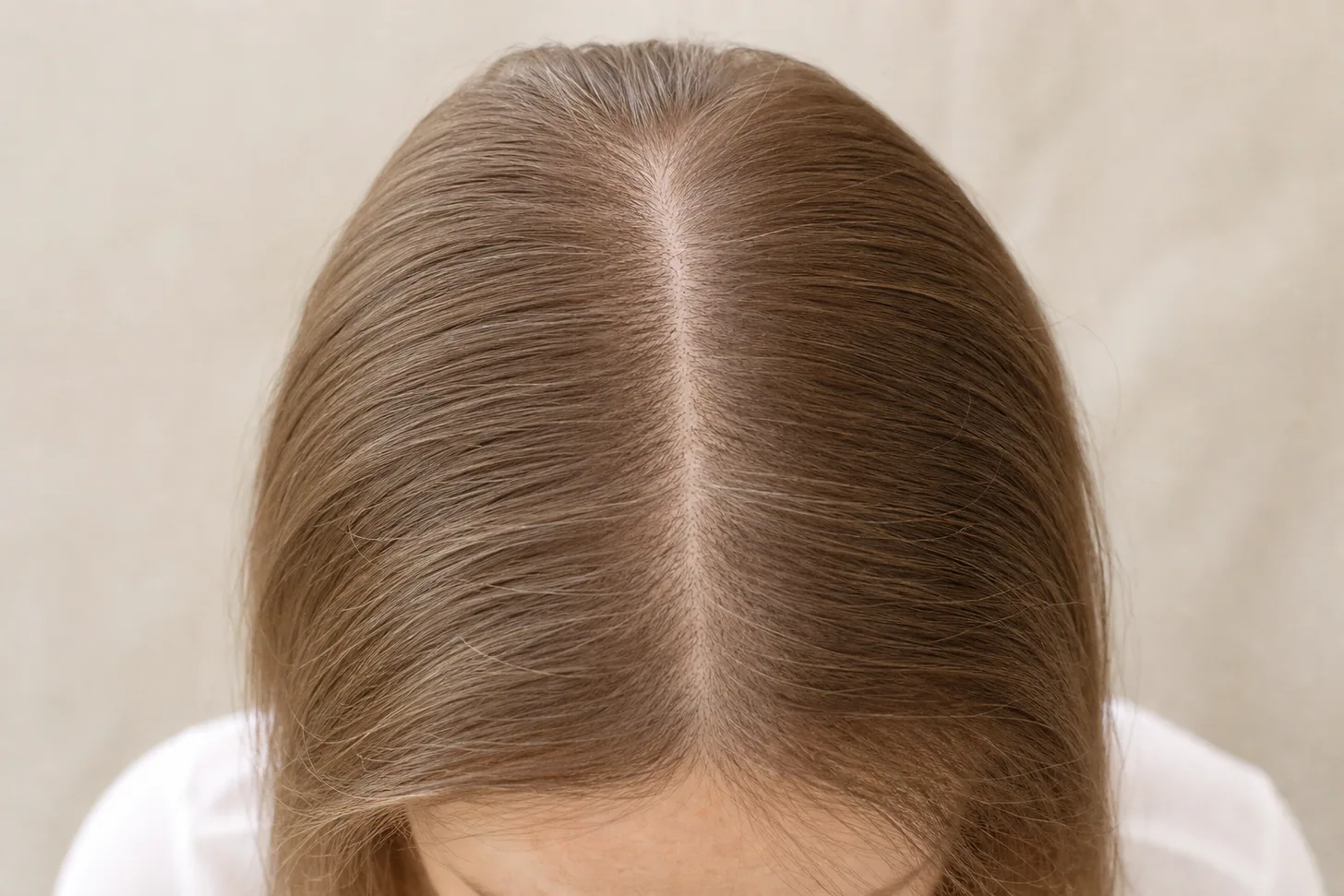
Most women shed less hair during pregnancy, not more: pregnancy keeps more hairs in the growing phase, which is why the big shed usually comes after birth. So if your hair is thinning while you are pregnant, it is worth finding out why. The most common causes are low iron, a thyroid change, a recent illness or fever, and stopping hormonal birth control before conceiving.
Fine hair shows any loss early, because there are fewer strands to hide it. Below are the causes, which blood tests to ask your doctor or midwife about, what is safe to try, and how to make thin hair look fuller in the meantime.
Is it normal to lose hair while pregnant?
A little day-to-day shedding is normal at any time. Noticeable thinning is not the typical pattern. Studies of the hair cycle in pregnancy find that more hairs stay in the growth phase, especially later in pregnancy, and then move into the shedding phase together after delivery (Gizlenti and Ekmekci, 2014). That delayed shed is postpartum hair loss, which the American Academy of Dermatology says usually peaks around four months after birth.
Thinning before birth usually has a separate cause, and most of the causes can be treated.
What causes hair thinning during pregnancy?
Low iron is the most common cause
Your iron needs rise sharply in pregnancy. The NIH recommends 27 mg a day for pregnant women, against 18 mg for most women who are not pregnant (NIH Office of Dietary Supplements). Low iron stores are linked with diffuse shedding. A ferritin test shows your stores better than hemoglobin alone. See blood tests for hair loss.
Thyroid changes
Pregnancy changes how the thyroid works, and both an underactive and an overactive thyroid can cause shedding. The American Thyroid Association notes that thyroid problems in pregnancy need treatment for the baby's sake as well as yours, so tiredness, feeling cold or hot, and thinning hair together are worth a test.
Illness, fever or stress two to three months ago
A high fever, a bad virus or a major shock can push many hairs into the resting phase at once. They shed about three months later. This is called telogen effluvium. It is temporary.
Stopping hormonal birth control
Coming off the pill or another hormonal method can trigger a shed a few months later, which can land in early pregnancy. See medications that cause shedding.
Early pregnancy loss
After a miscarriage, the same hormone shift that causes postpartum shedding can cause a shed a few months later.
Pattern thinning that was already there
If your part was widening before pregnancy, it may just be more noticeable now. See diffuse thinning patterns.
Chair-side note
When a pregnant client tells me her hair is thinning, I ask two things: has she been checked for iron, and was she ill in the last few months? Almost every time, one of those answers explains it. And almost every time, the hair recovers once it is fixed.
MH
— Megan Holloway, Editor-in-Chief
What to ask your doctor or midwife
A full blood count and ferritin (iron stores).
Thyroid tests (TSH, sometimes free T4).
Whether your prenatal vitamin covers your iron needs, or if you need more.
Treat the cause first: iron if you are low, thyroid medication if your doctor prescribes it. Don't start any hair-growth treatment without asking, and that includes minoxidil, which is not recommended in pregnancy. Skip extra supplements beyond your prenatal unless your doctor suggests them. Too much iron or vitamin A can be harmful, and biotin can affect some blood test results. See hair supplements for fine hair.
Essential oils, including rosemary oil, have little safety data in pregnancy. Ask before using them on your scalp. See rosemary oil for thinning hair.
How to make thinning hair look fuller while pregnant
Use a light volumizing shampoo and conditioner on the ends only. See shampoo for fine hair.
A tinted scalp concealer or hair fibers hide a widening part on the day.
Swap tight ponytails for soft clips and loose ties.
See a doctor promptly if
The hair is coming out in round patches. That can be alopecia areata, which needs a dermatologist.
Your scalp is red, scaly, painful or itchy. A scalp condition needs treating before anything else.
You also feel very tired, short of breath, or unusually hot or cold. Those can be signs of anemia or a thyroid problem.
The shedding is heavy and still going after three months. Ask for blood tests and a referral if they come back normal.
FAQ
Some daily shedding is normal, but noticeable thinning is not the usual pattern. Most women shed less while pregnant and more in the months after birth.
The most common causes are low iron, thyroid changes, a recent illness or fever, stopping hormonal birth control, and pattern thinning that was already there.
Thinning in the first trimester is often a delayed shed from something a few months earlier, like stopping the pill or an illness. Later in pregnancy, low iron becomes more common.
Yes. Iron needs rise in pregnancy, and low iron stores are linked with diffuse shedding. Ask for a ferritin test.
Minoxidil is not recommended during pregnancy or breastfeeding. Ask your doctor about safe options.
Usually, yes, once the cause is treated. Postpartum shedding may follow after birth, and it typically settles within a year.
This article is for general education and is not medical advice. Nothing here should be started while pregnant or breastfeeding without your doctor's or midwife's guidance. If you have patchy hair loss, scalp pain, or heavy shedding, see your doctor or a board-certified dermatologist.
Results vary with hair type, density and growth patterns.
Images in this guide are AI-generated illustrations, not photos of real clients or results. See our image policy.
Get the good hair intel
One honest, stylist-written guide in your inbox each week. No hype.

 MH