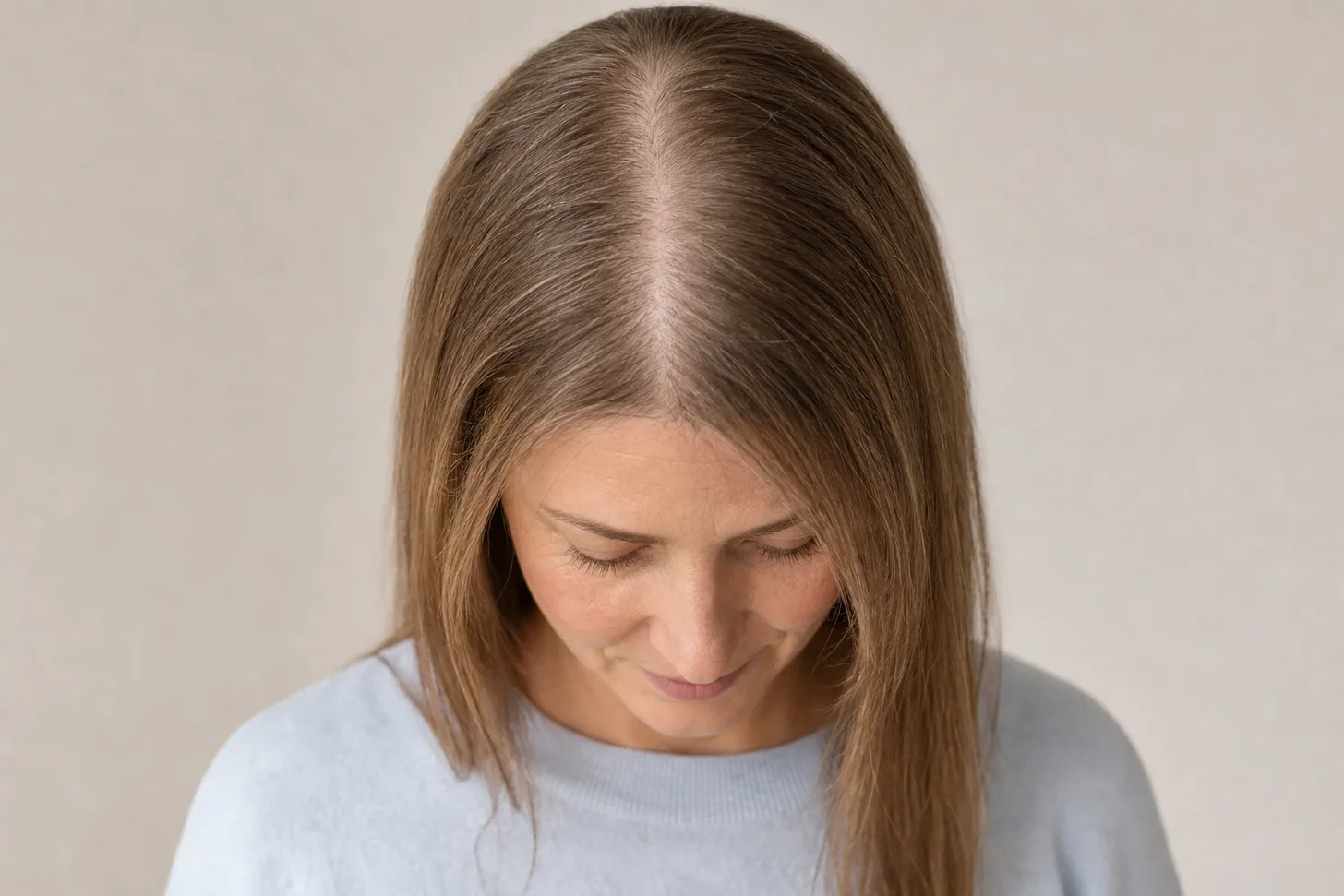
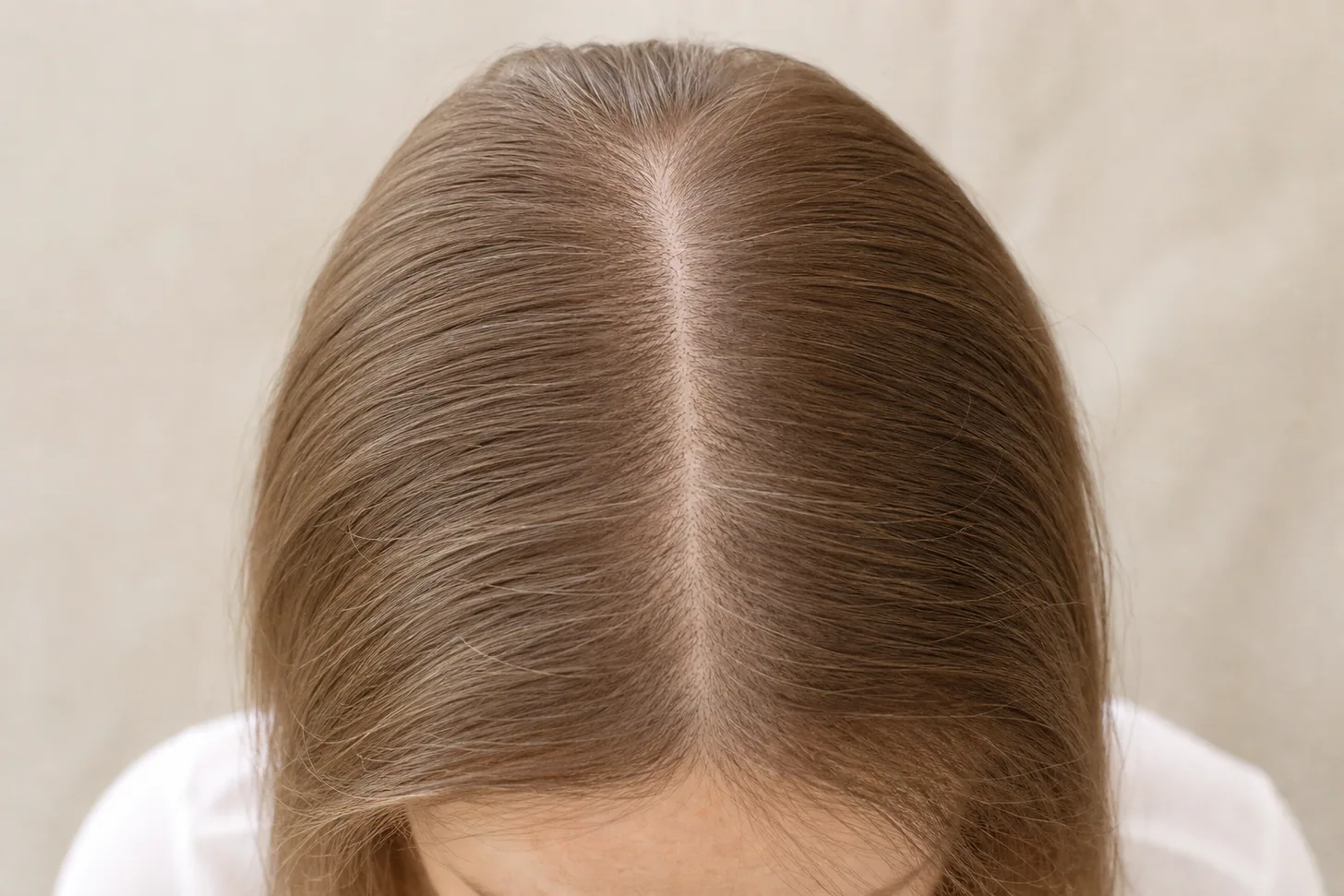
The first signs of hair thinning in women are usually a part that looks wider, a ponytail that feels thinner, and more scalp showing under bright light or in photos. Strands may also feel finer and grow more slowly. The American Academy of Dermatology names a widening part and a thinner ponytail as typical early signs of female pattern hair loss.
Spotting it early matters: the AAD notes that treatment works best when started at the first sign. Below are eight early clues, a five-minute monthly check, and when to see a dermatologist.
8 early signs of thinning hair
1. Your part looks wider
In female pattern hair loss, the hair along the top of the head thins first, so the center part widens while the hairline usually stays put. It is the most common first sign.
2. Your ponytail is thinner
The elastic needs an extra wrap, or the tail looks narrower than it used to. This reflects density loss across the whole head.
3. More scalp in photos and under bright light
Overhead lights, flash photos and sunlight show the scalp through the crown before a mirror at home does.
4. Strands feel finer
Pattern thinning works by shrinking follicles, so each new hair grows in thinner and shorter (Ramos and Miot, 2015). Hair can feel softer and more limp before it looks thinner. See fine hair vs thin hair.
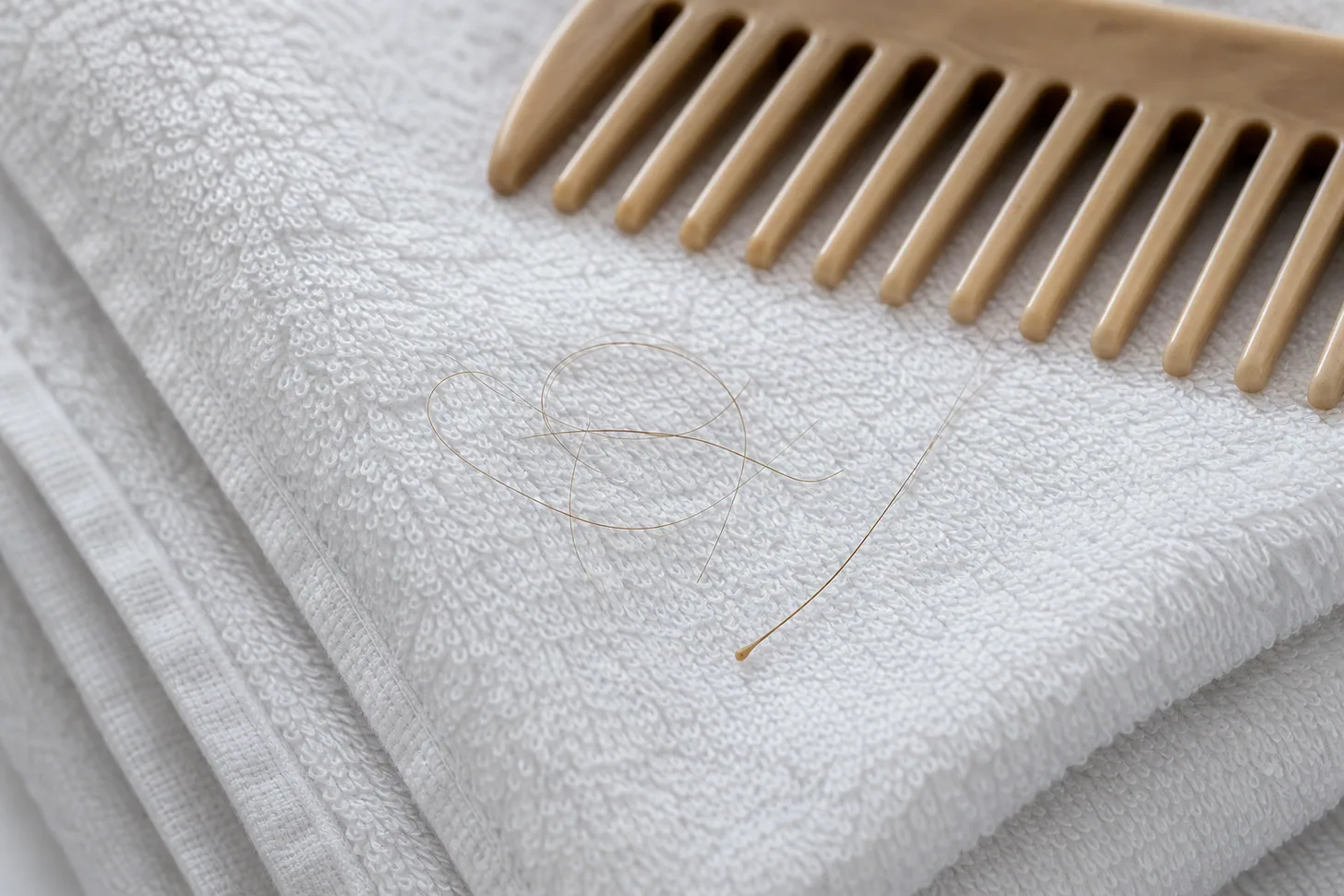
Losing 50 to 100 hairs a day is normal, according to the AAD. A sudden jump in shedding is more often telogen effluvium than pattern thinning. See hair shedding vs hair loss.
7. Thinning at the temples
The AAD notes hair near the temples may recede. It can also come from tight styles. See thinning hairline.
8. Your styles stop working
The cut that used to look full now looks flat, or your usual volume routine doesn't hold. That is often the first change people notice, before they can name it.
Chair-side note
Most clients who come to me worried about thinning noticed it first in a photo, not a mirror. The camera flash shows your crown from an angle you never see. If a picture surprised you, take one yourself the same way and compare it in a month.
MH
— Megan Holloway, Editor-in-Chief
A five-minute monthly check
Photograph your part from above in the same spot and light each month, hair dry and parted in the same place.
Photograph your hairline and temples with hair pulled back loosely.
Measure your ponytail by noting how many wraps your usual elastic takes.
Compare against three and six months ago, not yesterday.
Fine hair always shows more scalp than thick hair, and that's not a change. The signs above matter when they are new, getting worse over months, or different from how your hair used to be. If the change is all over and sudden, read diffuse thinning: which pattern is it?. For the common causes, see why is my hair thinning.
What to do next
See a dermatologist if your photos show a change over three to six months.
This article is for general education and is not medical advice. If you notice your hair thinning, see your doctor or a board-certified dermatologist for a diagnosis.
Results vary with hair type, density and growth patterns.
Images in this guide are AI-generated illustrations, not photos of real clients or results. See our image policy.
Get the good hair intel
One honest, stylist-written guide in your inbox each week. No hype.

 MH