Reviewed by Tara Sullivan · Updated July 2026 · 9 min read
The honest answer up front: color correction takes multiple visits because hair can only be processed so far, so fast, before it breaks. Removing or neutralizing unwanted color and building the color you actually want is a staged job — the colorist lifts a little, lets the hair rest, and returns to it, so you end up with the right shade and hair still attached to your head.
On fine hair, which reaches its limit sooner than coarse hair, that patience matters even more. Here's what's really happening, and why "just fix it today" is the request that ruins hair.
What color correction actually is
Color correction is any service that fixes an unwanted color result rather than simply creating a new one from a neutral starting point. The usual culprits: a box dye that went darker than the photo, brassy or uneven tone after lightening, bands of color built up from years of dyeing, a home attempt that turned patchy or green, or a salon color that just missed.
What makes it "correction" is that the colorist has to deal with what's already on the hair — remove it, neutralize it, or work around it — before building the target shade. That extra layer of problem-solving is why it's the most technical thing a colorist does.
Why it can't be done in one visit
Hair has a finite tolerance for chemical processing. Lightening works by opening the cuticle and oxidizing pigment, and in doing so it breaks a share of the internal disulfide bonds that give the strand its strength (Hair Cosmetics: An Overview, peer-reviewed).
Push that too far in a single session and you don't get lighter hair — you get breakage: strands that snap off, or wet hair that stretches and disintegrates. A skilled colorist reads how much the hair can take, lifts to a safe point, and stops, even if you're not at the goal yet. The remaining distance is covered at the next appointment, after the hair has rested.
There's also a color-theory reason. Removing an unwanted tone often exposes underlying warmth (the brassy orange and gold that live under dark hair), which then has to be neutralized and re-toned in stages. Trying to lift, neutralize, and deposit a finished color all at once — on hair that's already compromised — is how corrections go wrong. Slower is not the colorist padding the bill; slower is the only way the hair survives.
Starting situation
Typical sessions
Why
Brassy highlights → cool blonde
1–2
Mostly toning; little lifting needed
Box-dye brunette → lighter
2–4
Dense artificial pigment lifts slowly and unevenly
Box-dye black → blonde
3–6+
Heavy pigment; high breakage risk if rushed
Banded / built-up color
2–4
Different bands lift at different rates
Green/patchy home lift
2–3
Neutralize, even out, then re-tone
Ranges assume healthy-to-average hair. Fine or damaged hair usually adds sessions to stay safe.
Fine hair and correction: why colorists go even slower
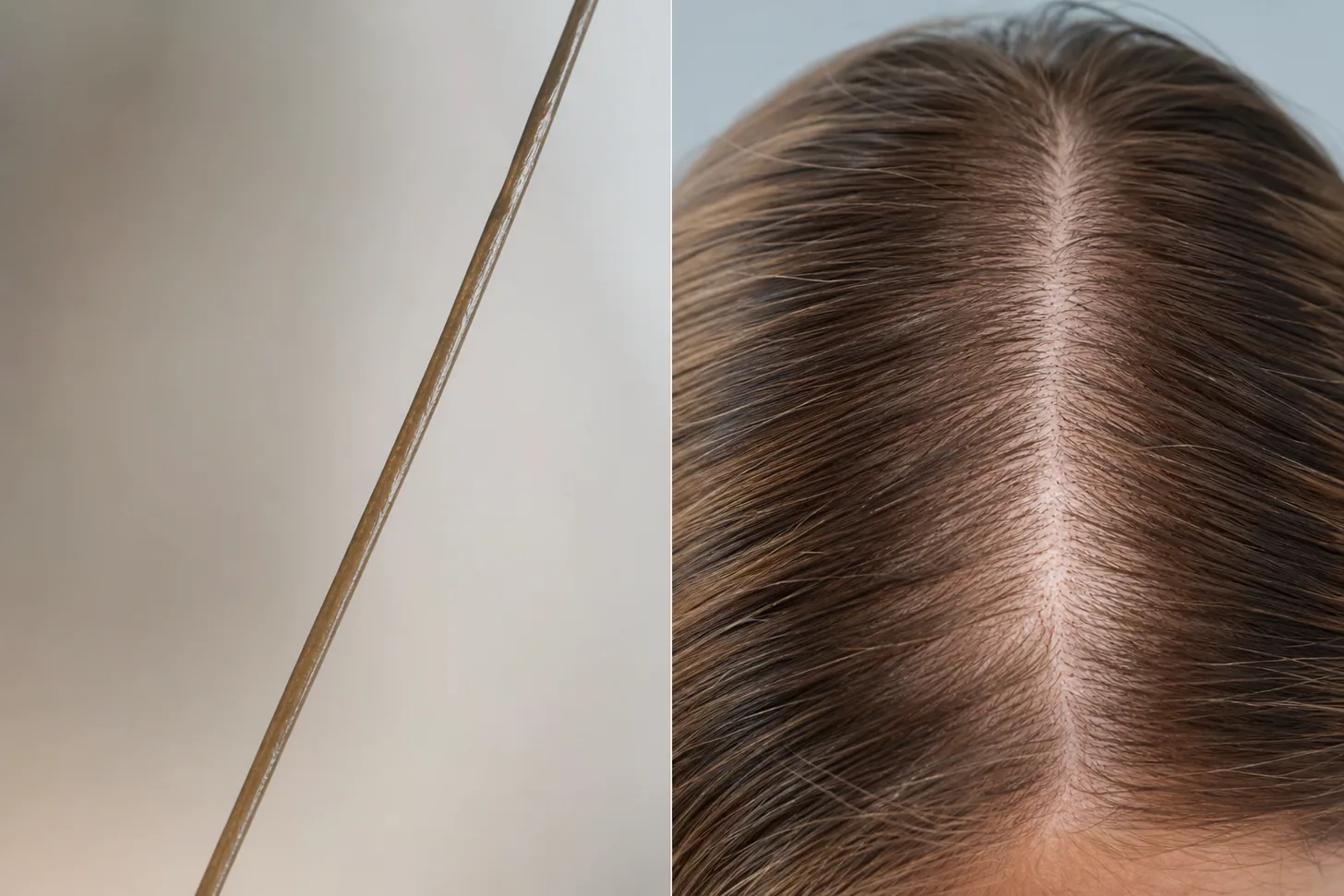
Fine hair is made of narrow strands with less internal cortex to buffer chemical stress, so it lifts faster — and reaches its breaking point faster — than coarse hair. That's a double-edged trait in a correction: the color moves quickly, which sounds efficient, but the margin between "lifted enough" and "damaged" is thinner.
A colorist correcting fine hair works more conservatively on purpose: the gentlest effective formula, bond-builders in every step, lightener kept off the fragile roots, and more sessions rather than fewer. If you'd like to understand why fine hair behaves this way, our explainer on fine vs thin hair and the guide to porosity both feed directly into how your colorist plans the work.
Once you're through it, the way to stay out of a second correction is to keep future color low-contrast and deposit-led — the placements in highlights for fine hair and the shade logic in hair color ideas for fine hair are both built around that.
Chair-side note
The hardest part of my job isn't the chemistry — it's the consultation where I tell a fine-haired client their correction will take three visits and they were hoping for one. I understand the disappointment. But I've seen what happens when a colorist caves to "please just finish it today" on fine hair: it comes out in the comb.
I'd genuinely rather lose the instant gratification than lose your hair. A correction done in stages grows back into beautiful color; a correction rushed into breakage grows back as a pixie you didn't choose.
PN
— Priya Nair, Master Colorist
What to expect — time, cost, patience
And the cheapest correction is the one you avoid: balayage on fine hair is the lowest-risk way to add dimension, because far less of the head goes through a lightener.
Nearly every correction I do started in a box, which is not an argument against boxes so much as against using one for a job it cannot do — at-home color for fine hair sorts them by what each is actually for.
Go in with realistic expectations and you'll have a far better experience:
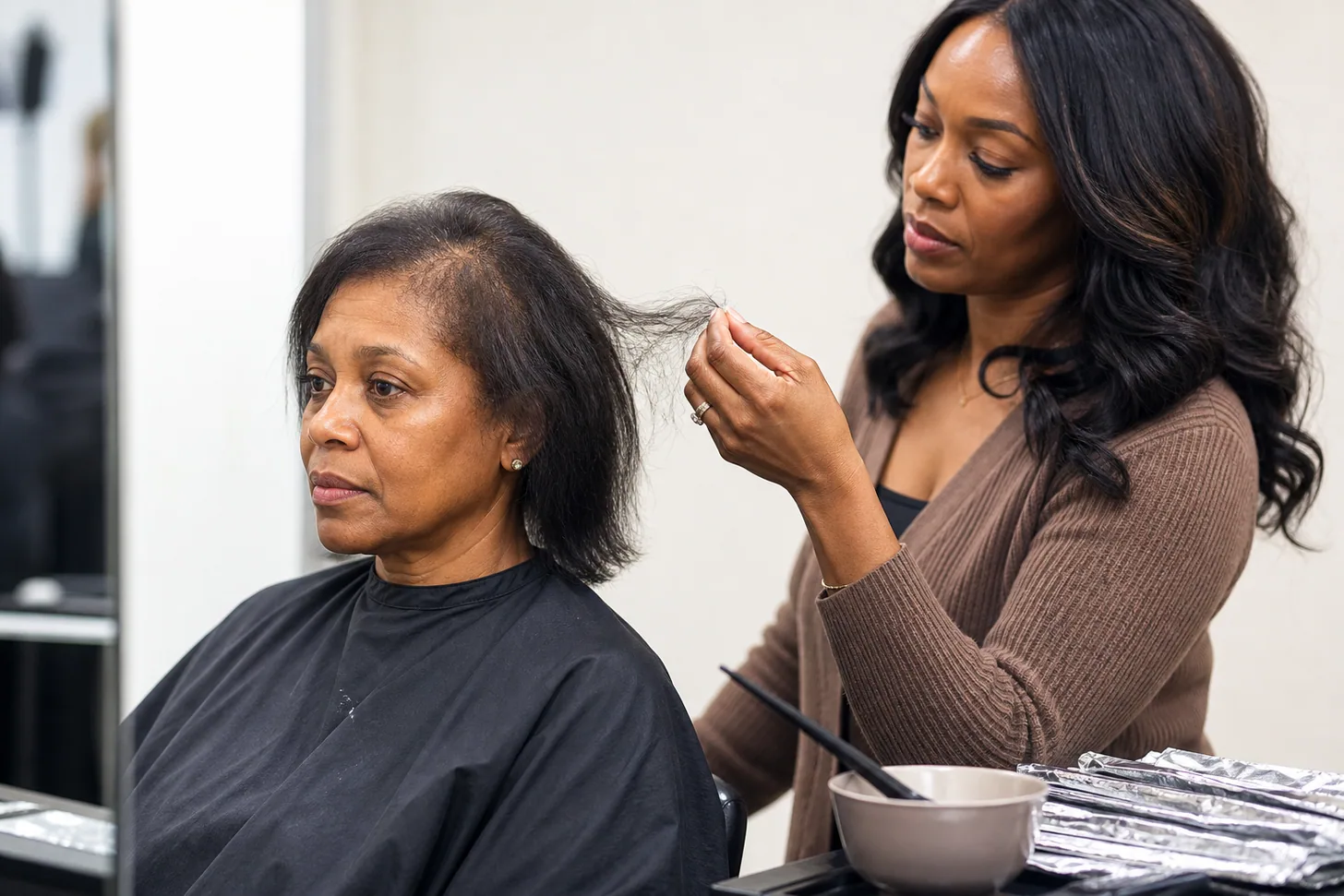
A real consultation first. A good colorist assesses your hair's history and condition, often does a strand test, and gives you a session count and timeline before touching your color. If someone promises a dramatic one-visit fix on compromised hair, that's a red flag.
Sessions spaced out. Visits are usually weeks apart, giving the hair time to recover and letting bond-building work do its job between appointments.
Higher cost. Correction is priced by time and complexity — often billed hourly — so it costs several times a standard color, multiplied across sessions. A suspiciously cheap, fast quote usually means corners will be cut.
A colorist promises a drastic one-session correction on fragile or box-dyed hair. Get a second opinion — this is how breakage happens.
Your hair is already stretching, gummy, or snapping when wet. It may need to be cut, not corrected — pushing further risks losing length entirely.
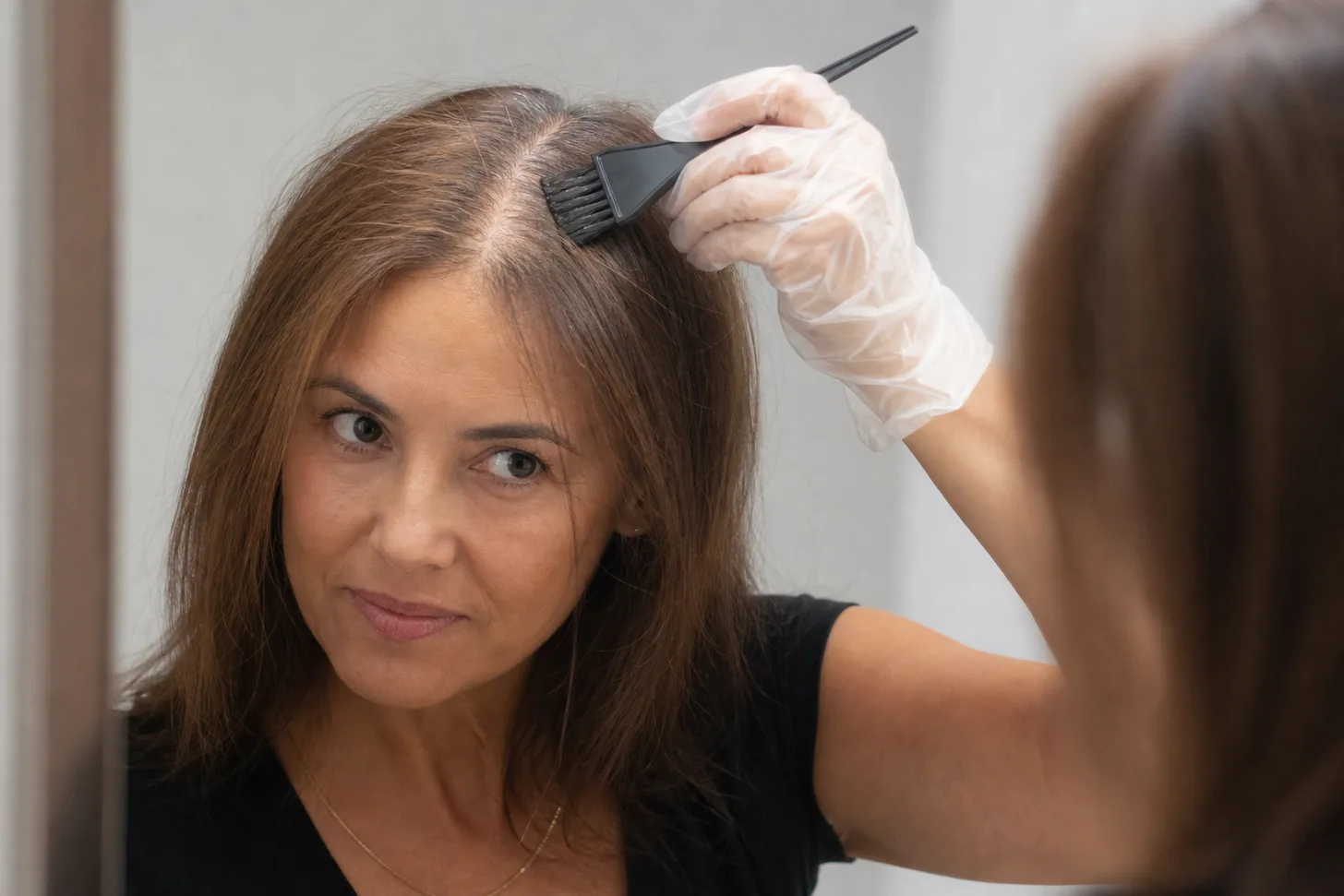
You're tempted to "fix" a bad color at home. Home correction almost always deepens the problem; see when at-home color is a mistake.
The quote is far cheaper or faster than everyone else's. Proper correction takes time and product; a bargain usually isn't one.
FAQ
Color correction is the process of fixing an unwanted hair-color result — brassy or uneven tone, a box dye that went too dark, bands of color from repeated dyeing, a failed at-home attempt, or a color that simply didn't turn out as planned. It's different from a normal color service because the colorist has to remove or neutralize existing color before creating the new one, which is more complex and more stressful on the hair.
Because hair can only take so much processing safely in one sitting. Lifting existing color opens the cuticle and breaks internal bonds, and pushing too far too fast causes breakage — hair that snaps off or turns to mush. A responsible colorist lifts in stages across multiple visits, letting the hair rest between them, so you end up with the color you want and hair still attached to your head. One visit is a shortcut that fragile hair rarely survives.
It varies with how far the current color is from the goal and how healthy the hair is, but two to four sessions is typical, and dramatic changes (like box-dye black to blonde) can take more, spaced weeks apart. Fine or already-damaged hair usually needs the process stretched further to stay intact. Your colorist should give you a realistic session count and timeline at the consultation.
Yes. Fine hair has narrow strands with less internal structure, so it lifts faster and reaches its breaking point sooner than coarse hair. That means a good colorist works even more conservatively — gentler formulas, more sessions, bond-builders throughout, and lightener kept off the fragile roots. It's absolutely doable, but rushing a correction on fine hair is the fastest route to breakage.
Color correction is priced by time and complexity, so it costs considerably more than a standard color — often several times more, and multiplied across sessions. Many salons charge by the hour for corrective work because it's unpredictable. Ask for an estimate at the consultation, and treat a suspiciously cheap or fast quote as a red flag: proper correction takes skill, product, and time.
Not safely. The pace is set by what your hair can tolerate, not by impatience — and the biggest correction disasters happen when someone pushes for one-visit results on hair that needed three. The most helpful things you can do are follow your colorist's aftercare and bond-building routine between sessions, avoid adding heat or box dye in the meantime, and trust the staged plan. Rushing risks the breakage that turns a correction into a haircut.
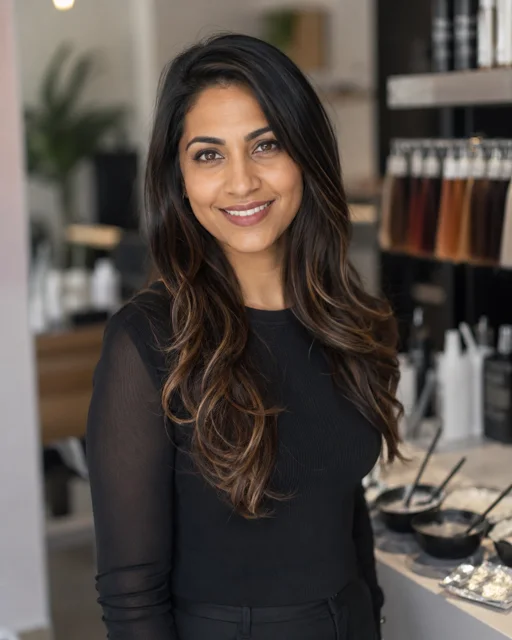
Twelve years coloring at a high-end studio, now a Redken-certified educator who trains stylists in balayage, foilyage, and color correction. Priya would rather tell a client the truth about a three-visit correction than watch them rush it into breakage.
Images in this article are AI-generated illustrations, not photographs of real clients or results. See our image policy.
Results vary with hair type, density, and growth patterns. This guide is educational and not a substitute for an in-person consultation with a licensed stylist or colorist.
Get the good hair intel
One honest, stylist-written guide in your inbox each week. No hype.

 PN
PN