Reviewed by Tara Sullivan · Updated November 2026 · 10 min read
The octopus haircut is a layered cut with a short, rounded crown and longer, separated pieces below it, so the top looks like the head of an octopus and the lengths look like its tentacles. It is usually cut at shoulder length or longer, often with curtain bangs.
Whether it works on fine hair depends on density, not strand size. Fine hair with plenty of strands takes it well. Fine, low-density hair needs a softer version with fewer, longer layers, or a different cut. Below are 10 octopus cuts for fine hair and how to tell which group you are in.
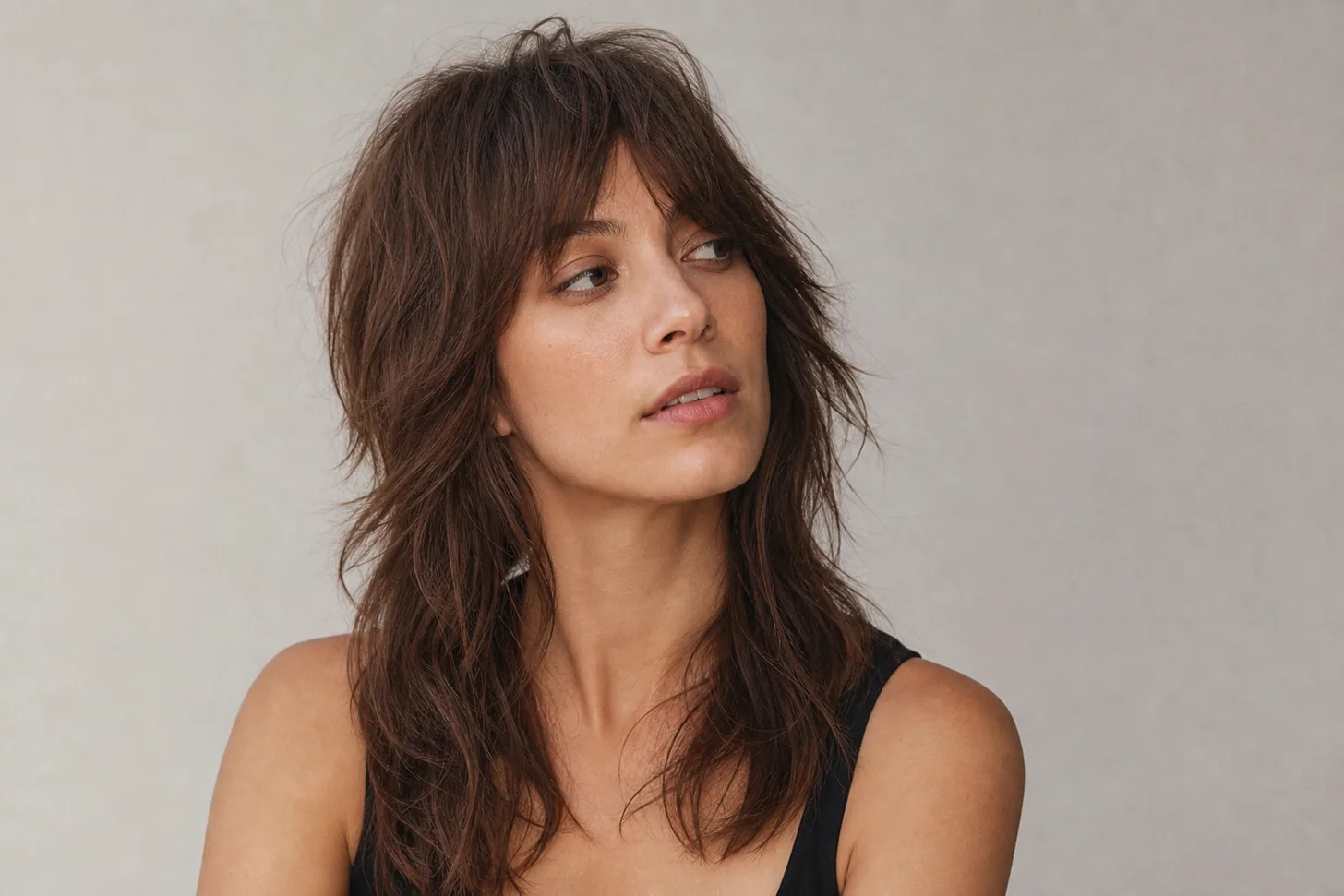
soft octopus haircut on fine light-brown hair, rounded layered crown with lift and longer separated pieces below falling past the shoulders, curtain bangs, woman in her early 30s, front three-quarter view
Chair-side note
The octopus cut divides stylists on fine hair, and both sides are right. The short crown layers give fine hair the lift it never has. The long, separated "tentacles" can look sparse if there aren't enough strands to fill them.
Before I cut one, I gather the hair at the nape into a ponytail and look at its thickness. If it is about the width of a thumb or more, we can cut a real octopus. If it is closer to a pencil, I cut a soft version with longer crown layers and keep most of the weight at the ends.
SB
— Simone Baptiste, Senior Stylist
What is an octopus haircut?
It has two parts. The top is cut in short, rounded layers that sit up and frame the crown. The lengths underneath are left longer and point-cut into separated pieces, with a clear step between the two. It grew out of the shag and wolf-cut trend and is softer than a wolf cut, with less of a mullet shape at the back.
On fine hair with medium or high density, yes. The short crown layers lift the roots, and the longer pieces still have enough strands to look full. On fine hair with low density, a full octopus takes too much hair out of the lengths and the ends go see-through.
Fewer, longer layers and dense ends. They give the shape without the gaps.
soft octopus haircut on fine thin light-blond hair, long rounded crown layers starting at the cheekbones and dense blunt-ish ends below the shoulders, woman in her late 20s, front three-quarter view
1
Soft octopus with long crown layers
The crown layers start around the cheekbones instead of the top of the head, and the ends stay mostly blunt.
It is the version I cut most on low-density fine hair.
octopus-inspired lob on fine dark-brown hair, rounded layered crown and slightly longer separated ends at the collarbone, soft curtain bangs, woman in her early 30s, front view
2
Octopus-inspired lob
A shorter base means fewer strands have to fill the tentacles. The shape reads clearly even on thin hair.
soft octopus haircut on fine medium-brown hair with long curtain bangs blending into the crown layers, shoulder-length separated ends, woman in her mid 30s, front view
3
Octopus cut with curtain bangs
Curtain bangs blend straight into the crown layers and make the top look fuller.
subtle octopus haircut on fine dark-blond hair with one hidden internal layer at the crown for lift and longer dense lengths, woman in her early 40s, front three-quarter view
4
Octopus cut with a hidden layer
The crown lift comes from one layer under the top section, so the outside looks smoother.
Classic octopus cuts for fine hair with more density
A clearer step between the crown and the lengths. These need fine hair with a good number of strands.
classic octopus haircut on fine black hair with a short rounded crown and longer piecey separated lengths at the shoulders, visible step between layers, woman in her mid 20s, front three-quarter view
5
Classic octopus at shoulder length
A visible step between a short, rounded crown and the longer lengths. Straight fine hair shows the shape most clearly.
It works best when the ponytail test shows medium density or more.
long octopus haircut on fine chestnut-brown hair, rounded layered crown and long separated pieces falling below the shoulder blades, woman in her late 20s, back three-quarter view
6
Long octopus haircut
Long lengths with a short crown. The longer the hair, the more strands each tentacle needs, so keep the separation at the ends.
wavy octopus haircut on fine wavy auburn hair, rounded crown layers with bounce and longer waved pieces at the shoulders, diffused finish, woman in her early 30s, front view
7
Wavy octopus cut
A natural wave fills out the tentacles, so the cut looks thicker than on straight hair.
octopus haircut on fine light-brown hair with a center part, rounded crown layers framing both sides of the face and longer separated lengths, woman in her late 30s, front view
8
Octopus cut with a middle part
A center part shows off the symmetry of the crown layers.
If your roots go flat in a center part, switch to a slightly off-center one. See where to part fine hair.
The octopus haircut on fine hair over 40
A short crown is a good way to lift hair that has thinned on top, as long as the ends stay full.
polished soft octopus haircut on fine light-brown hair with a lifted rounded crown and smooth shoulder-length ends, blow-dried finish, woman in her mid 40s, front three-quarter view
9
Polished octopus cut over 40
Blow-dried smooth, the octopus looks like a lifted, layered shoulder-length cut. The crown lift does most of the work.
soft octopus haircut on fine silver hair with a rounded layered crown and chin-to-shoulder-length ends, curtain bangs, woman in her late 50s, front view
10
Soft octopus on silver hair
A shorter, softer version for hair that has thinned at the crown. The bangs and short top hide a widening part.
All three have short layers on top and longer lengths. The wolf cut has the most contrast, with a choppy, mullet-like back. The shag spreads its layers through the whole head. The octopus puts a rounded crown on top of separated lengths, with less going on at the back. On fine hair the order from gentlest to boldest is usually shag, octopus, then wolf cut. The feather cut guide compares the wider family.
What to ask your stylist
Say: "I'd like a soft octopus cut: rounded layers at the crown, longer lengths underneath, and please keep the ends as full as possible. Point-cut, no razor or thinning shears." Ask where your crown layers will start; on low-density hair they should start lower, around the cheekbones.
How to style an octopus haircut
Apply a little root lifter at the crown and rough-dry with your head upside down. Smooth the top layers with a round brush, then twist a few lengths around your finger and finish with a light texture spray to separate the tentacles. It takes ten to fifteen minutes. Trim every eight to ten weeks to keep the crown layers rounded.
Who should skip the octopus haircut
Your ponytail is about pencil-thin. A full octopus takes too much hair from the lengths. Ask for the soft version, or a blunt cut with a few face-framing layers.
You want to wear your hair sleek and straight. The cut is built to look tousled. Without a texture spray the crown layers can look like a step.
Your stylist suggests a razor for the texture. Razored ends on fine hair go transparent. Look for a stylist who point-cuts.
You are growing your hair long. Short crown layers take months to grow down. A long cut with a few long layers is a better fit.
FAQ
A layered cut with a short, rounded crown and longer, separated pieces below it, like the head and tentacles of an octopus. It is usually shoulder length or longer, often with curtain bangs.
On fine hair with medium or high density, yes. On fine, low-density hair, choose a soft version with fewer, longer layers and full ends, or the lengths can look sparse.
A wolf cut has more contrast and a choppy, mullet-like back. An octopus cut has a rounded crown on top of separated lengths, with less shaping at the back.
Ask for rounded crown layers with longer lengths underneath and full ends, point-cut with no razor or thinning shears. On thin hair, ask for the crown layers to start around the cheekbones.
Every eight to ten weeks, to keep the crown layers rounded and the ends full.
Use a root lifter at the crown, rough-dry upside down, smooth the top with a round brush and separate the ends with a light texture spray.
Eleven years behind the chair, specializing in short shapes and fine-hair texture. Simone believes the best haircut is the one you can style yourself in ten minutes.
Results vary with hair type, density and growth patterns. Haircut guidance is not a substitute for an in-person consultation with a licensed stylist, and sudden or heavy hair loss is worth raising with a doctor.
Hairstyle images in this guide are AI-generated illustrations, not photos of real clients or results. See our image policy.
Get the good hair intel
One honest, stylist-written guide in your inbox each week. No hype.

 SB