Medically reviewed by Dr. Rachel Kimura, MD · Updated July 2026 · 9 min read
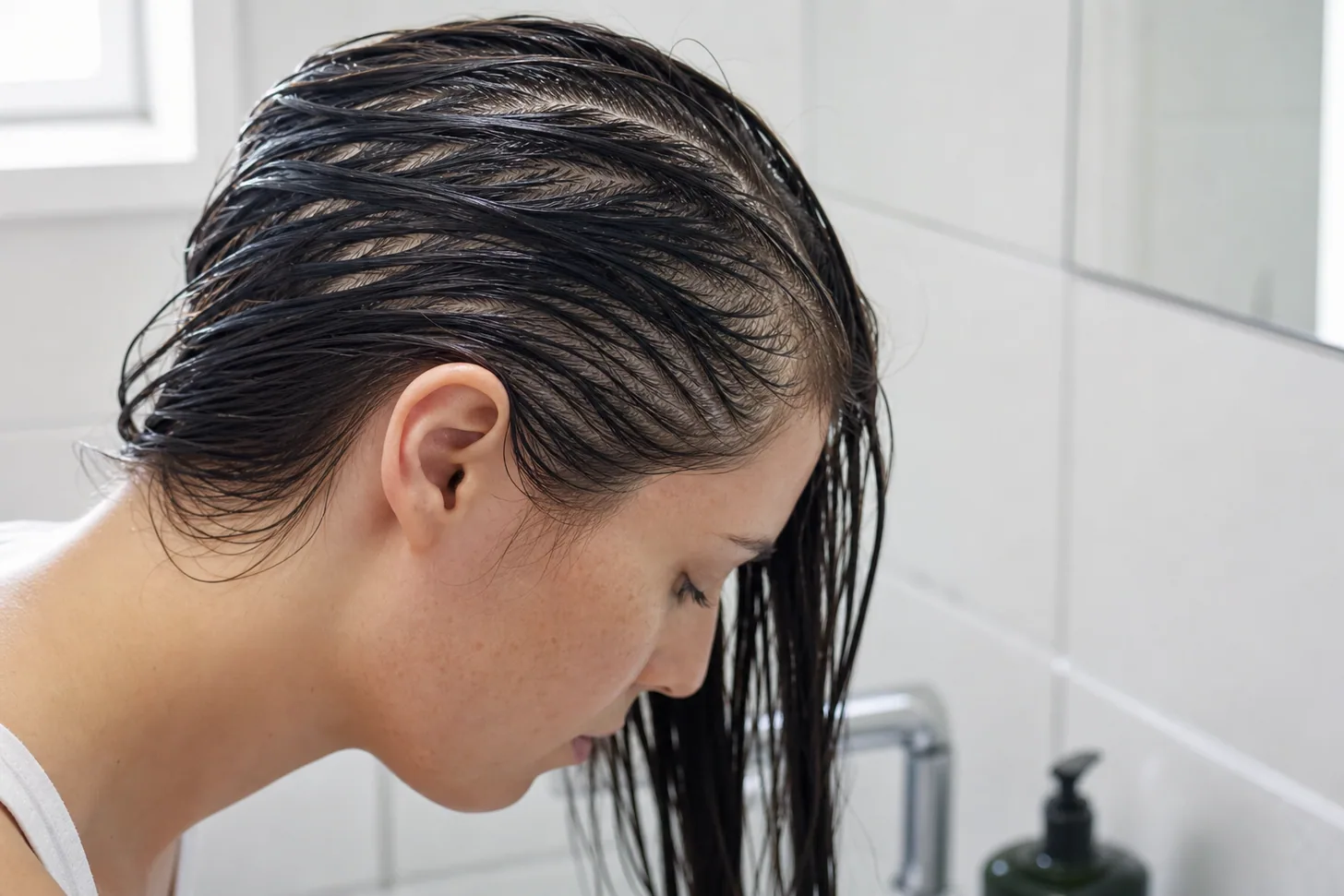
The moment in front of the bathroom mirror that ruins a lot of mornings has a very ordinary explanation. Most of what you read as thickness in dry hair is air, and water takes it away — surface tension pulls neighbouring strands into ropes, the whole mass lies flat against the scalp, and the scalp between those ropes becomes visible.
Everyone's hair does this, including people with a great deal of it. Fine hair looks the most alarming wet because loft makes up a bigger share of its apparent volume to begin with. But wet hair is also the closest thing you get to an honest view of your actual density, which makes it worth reading properly rather than panicking at.
Below: what the wet view really shows, the three checks that do tell you something (all done dry), what "thin at the ends" and "thin at the front" usually mean, and the specific signs that warrant a doctor rather than a new product.
Chair-side note
This is the single most common thing clients get upset about at the basin, and I have started warning people before I rinse. Wet hair at the shampoo bowl looks like a fraction of what walked in, and the client catches sight of it in the mirror on the way to the chair and goes quiet.
What I tell them is what I will tell you: I see fifty heads of wet hair a week, including people whose hair is so dense I struggle to get a section clip through it, and every single one of them looks thin wet. If wet hair were the measure, nobody on earth would have thick hair. Judge it dry, in daylight, on a day you did not wash it.
MH
— Megan Holloway, Editor-in-Chief
What water actually does to hair
Three things happen at once, and none of them involve losing hair.
The air goes. Dry strands hold each other apart. The gaps between them are not empty space visually — they are the loft that gives a style its shape, and they can account for most of the apparent bulk of a head of hair. Wet, those gaps fill with water and the strands collapse together.
Surface tension clumps. Water pulls adjacent strands into ropes, so instead of an even veil across your scalp you get a few dozen dark, defined bundles with visible gaps between them. Every gap reads as scalp, and scalp reads as thinness.
Weight flattens the roots. Wet hair is significantly heavier than dry hair, and a fine strand has almost no stiffness to resist that added weight — so the roots lie flat against the head. The height that made your hair look full is the first thing to go.
Fine hair experiences all three most dramatically, because loft is doing proportionally more of the work in the first place. If you want the distinction between having fine strands and having few of them — they are genuinely different things, and they call for different responses — it takes two minutes in fine hair versus thin hair.
Why the wet view is still worth having
Here is the part nobody says: wet hair is not lying to you. It is showing you roughly the amount of hair you actually have, with the styling, the product, and the loft stripped out. That is uncomfortable, and it is also the most useful thing about it.
What it cannot do is tell you whether anything has changed. You have no wet baseline from five years ago to compare against, the light in a bathroom is unforgiving, and the wet view exaggerates in a consistent direction. Which is why the checks that actually mean something are all done dry — and why "my hair looks thin wet" is almost never, on its own, evidence of hair loss.
Three checks that tell you something (all done dry)
Check
How to do it
What a change means
Part width
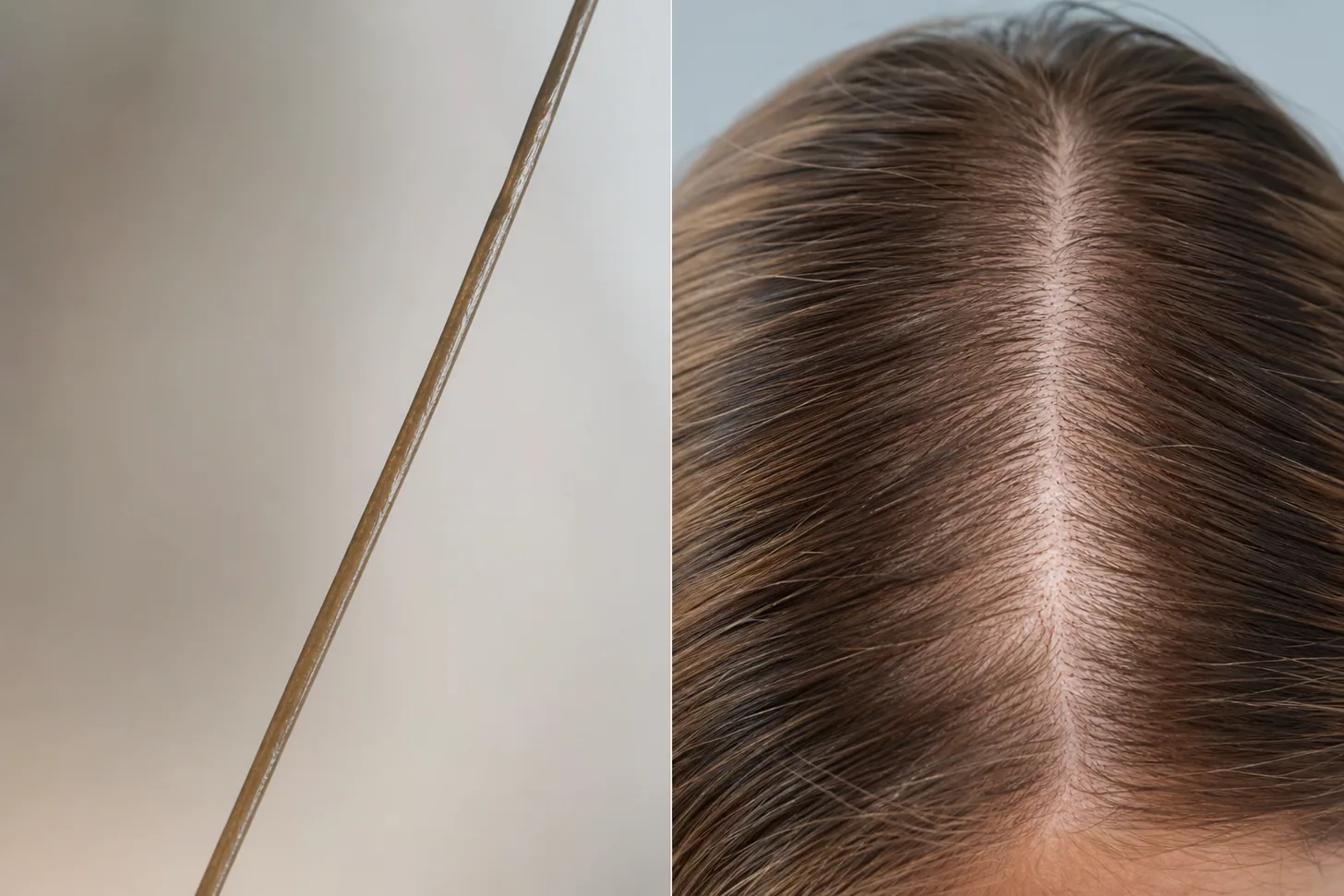
In daylight, compare the width of your part at the front with the same part a few inches back
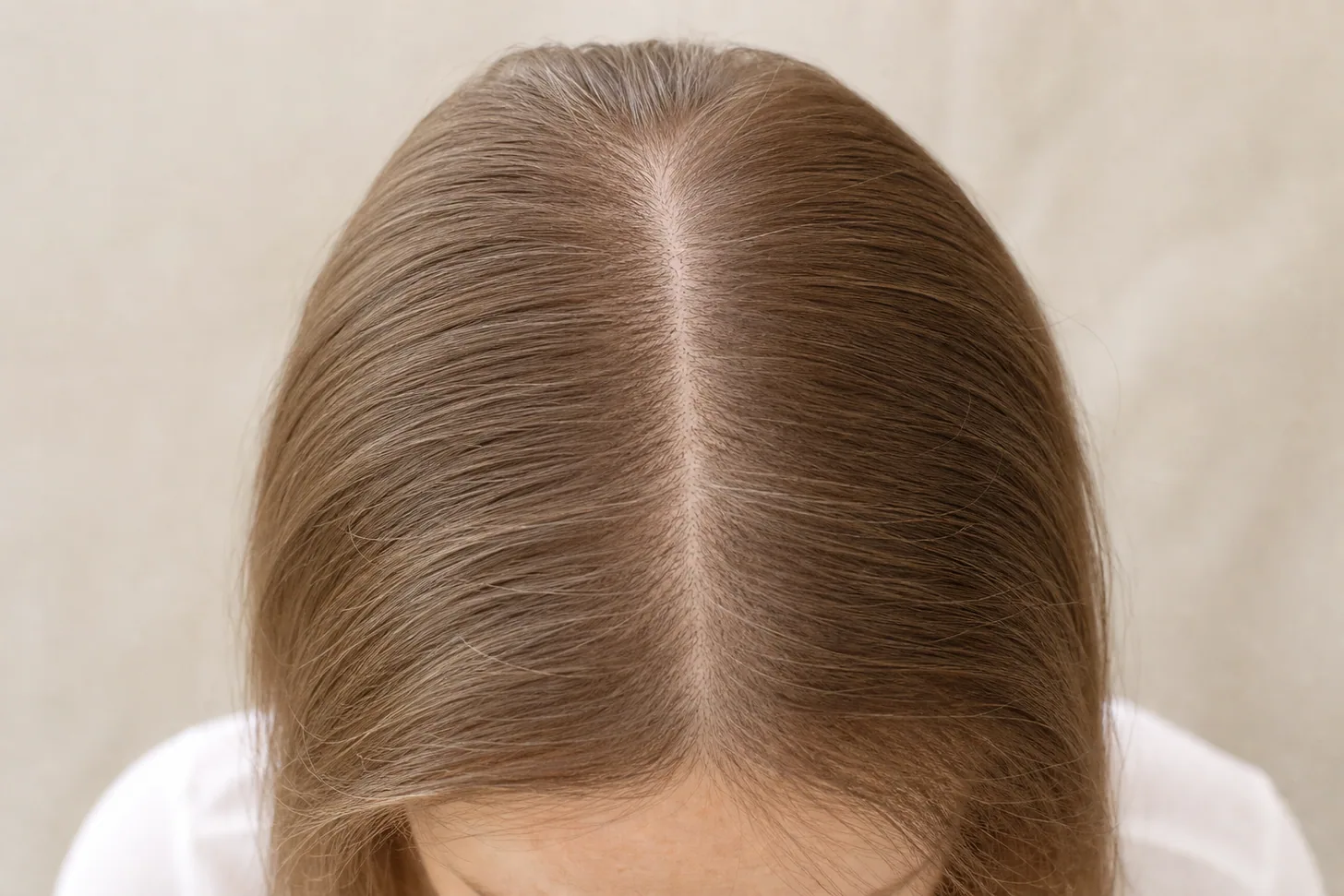
A part that widens toward the crown is the classic early pattern — worth a doctor's look
Ponytail circumference
Gather all your hair and note where your fingers meet, or measure it with a tape
The most objective home measure of density; track it every few months
The same photograph
Same parting, same light, same day of the wash cycle, every three months
Memory is unreliable; two photos six months apart are not
Do them dry, on second-day hair rather than freshly washed, and in daylight rather than under a bathroom downlight — overhead lighting casts shadow straight down the part and makes everyone's scalp show. Consistency matters more than precision: the value is in the comparison over time, not in any single reading.
The hair in the drain
The other half of the shower panic is what is left behind. Most people shed in the region of 50 to 100 hairs a day, and wash day collects several days' worth at once, because shampooing releases hairs that had already detached and were simply sitting in the hair (American Academy of Dermatology).
If you wash twice a week, the handful in the drain is three or four days of normal shedding arriving together. It looks like a catastrophe and is arithmetic.
What matters is change against your own baseline, not the absolute amount. Excessive shedding that lasts more than six to eight weeks, handfuls coming out daily, hair coming out in patches, or shedding accompanied by scalp pain, itching, or visible scaling should be assessed by a board-certified dermatologist rather than managed with products.
"Thin at the ends" is usually two different problems
A taper is normal. The ends of long hair are literally years old. They have been through every wash, every brush, every ponytail and every hot tool you have ever used, and the outer cuticle layers have worn away, so the hair genuinely is finer there than at the root.
On long fine hair this produces the see-through, wispy ends that make the whole length look sparser than it is. The remedy is a haircut: take off the worn length, keep a blunter perimeter, and the hair immediately reads denser — the reasoning is in do layers help or hurt fine hair.
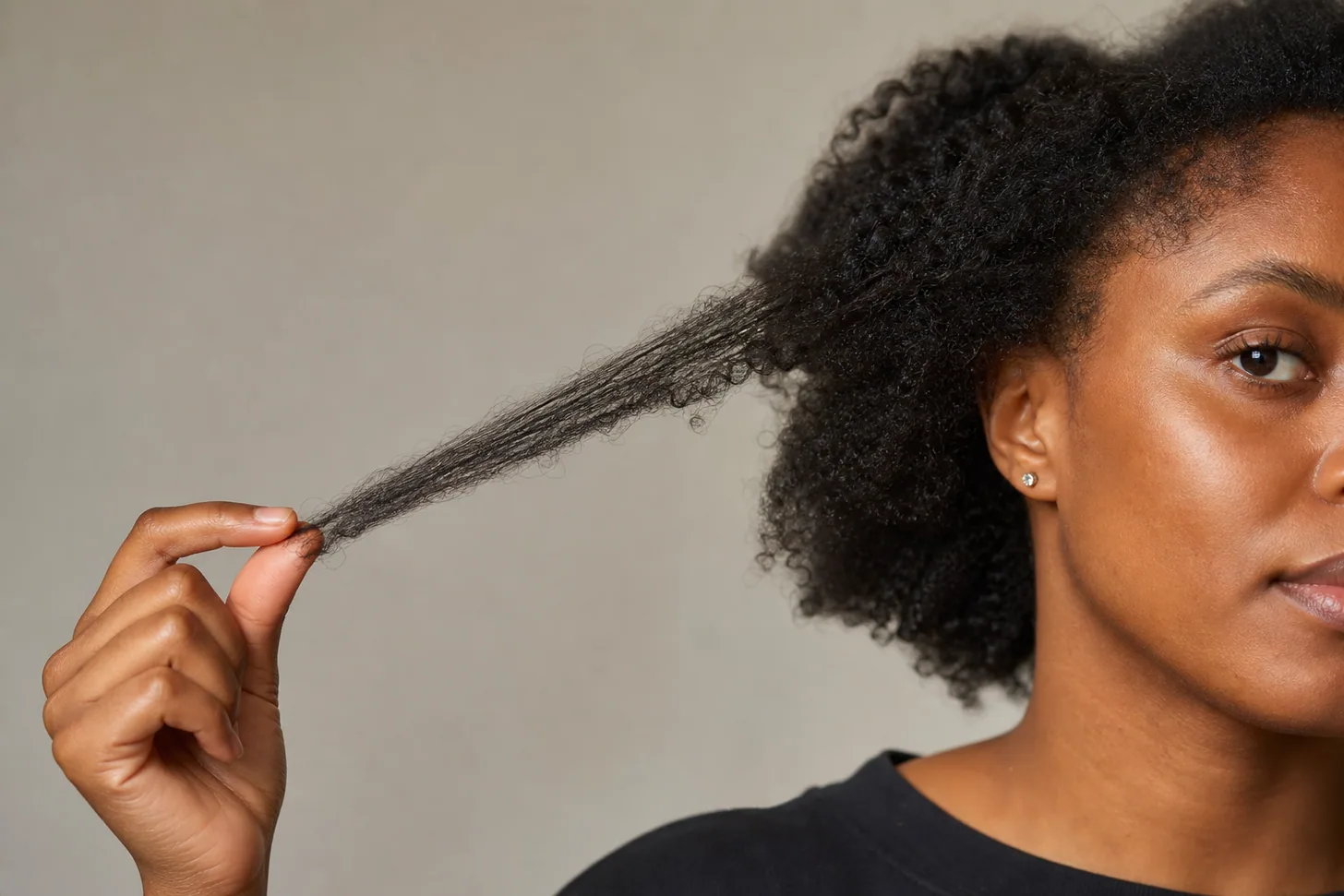
Breakage is different. Hair snapping mid-length shows up as short pieces standing up all over the head — a halo of flyaways of inconsistent lengths, rather than a smooth taper toward the ends.
That means something in the routine is doing damage: heat without protection, rough brushing while wet, tight ties, or over-processing. It has to be fixed before length will hold, and the diagnostic between dry, damaged, and over-proteined hair is in the moisture routine for dry, fine hair.
"Thin at the front" is partly by design
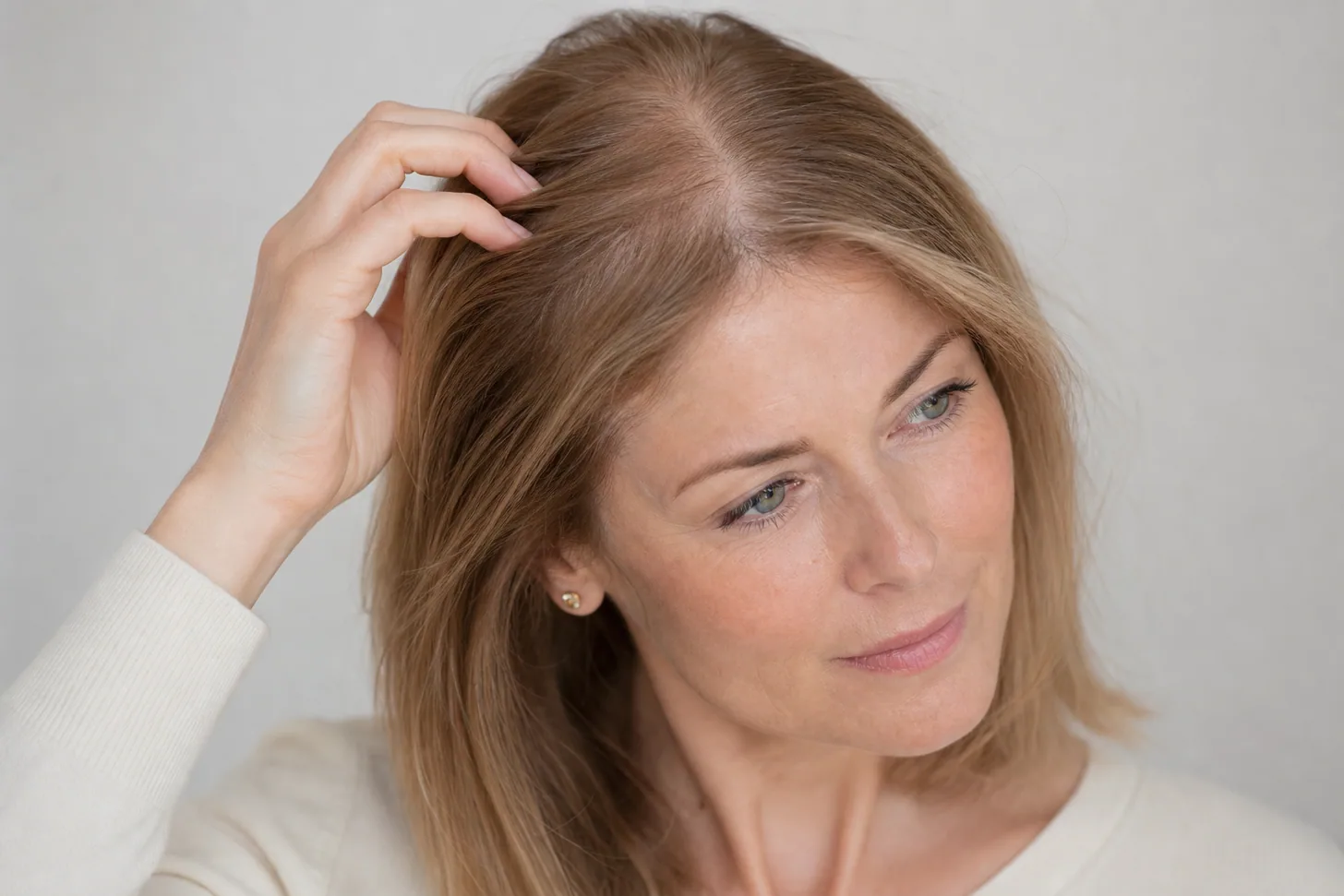
The hairline is naturally the finest, shortest, softest hair on your head. It is meant to be — that graduated edge is what makes a hairline look natural rather than drawn on. So the front looking sparser than the rest, particularly wet and particularly in bright light, is usually normal anatomy rather than loss.
The complication is that the hairline is also the area under the most repeated mechanical stress: ponytails, tight elastics, headbands, and clips worn in the same place every day. Over years that tension can genuinely thin the hairline, and traction damage is one of the few types of hair loss that is largely preventable.
Vary where you tie and clip, avoid tight styles on wet hair, and choose accessories that spread tension rather than concentrating it — our clip and tie picks for fine hair are chosen partly on that basis. If the front is genuinely receding rather than simply looking fine, that is a dermatology question, because hairline changes have several distinct causes and are treated differently.
What to change in the shower
Two goals: stop the wet view from being quite so alarming, and stop wet handling from causing the damage you are worried about. Wet hair is at its most fragile — the strand swells with water and stretches further before it breaks, so it is easier to damage wet than dry.
Don't pile it on top of your head to lather. Tangling wet hair into a nest and then combing it out is a reliable way to break it. Shampoo the scalp with your fingertips and let the lather run down.
Detangle with conditioner in, from the ends up. Conditioner gives the slip that lets a comb pass without dragging. Start at the ends, work upward in sections, and use a wide-tooth comb rather than a brush.
Squeeze, don't rub. Press the water out with your hands, then blot with a T-shirt or a microfibre towel. Rubbing with a terry towel roughs up the cuticle and creates exactly the flyaway halo people mistake for new thinning.
Keep conditioner off the roots. On fine hair that is the difference between volume at hour four and flatness at hour one — the amounts are in how much conditioner fine hair actually needs.
Don't tie it up wet. A tight elastic on swollen, stretchy wet hair is one of the most avoidable sources of breakage there is.
And then dry it properly, because the loft you lost in the shower is entirely recoverable — lifting the roots while they dry is the whole method in how to get root volume in fine hair.
When to see a dermatologist rather than change your routine
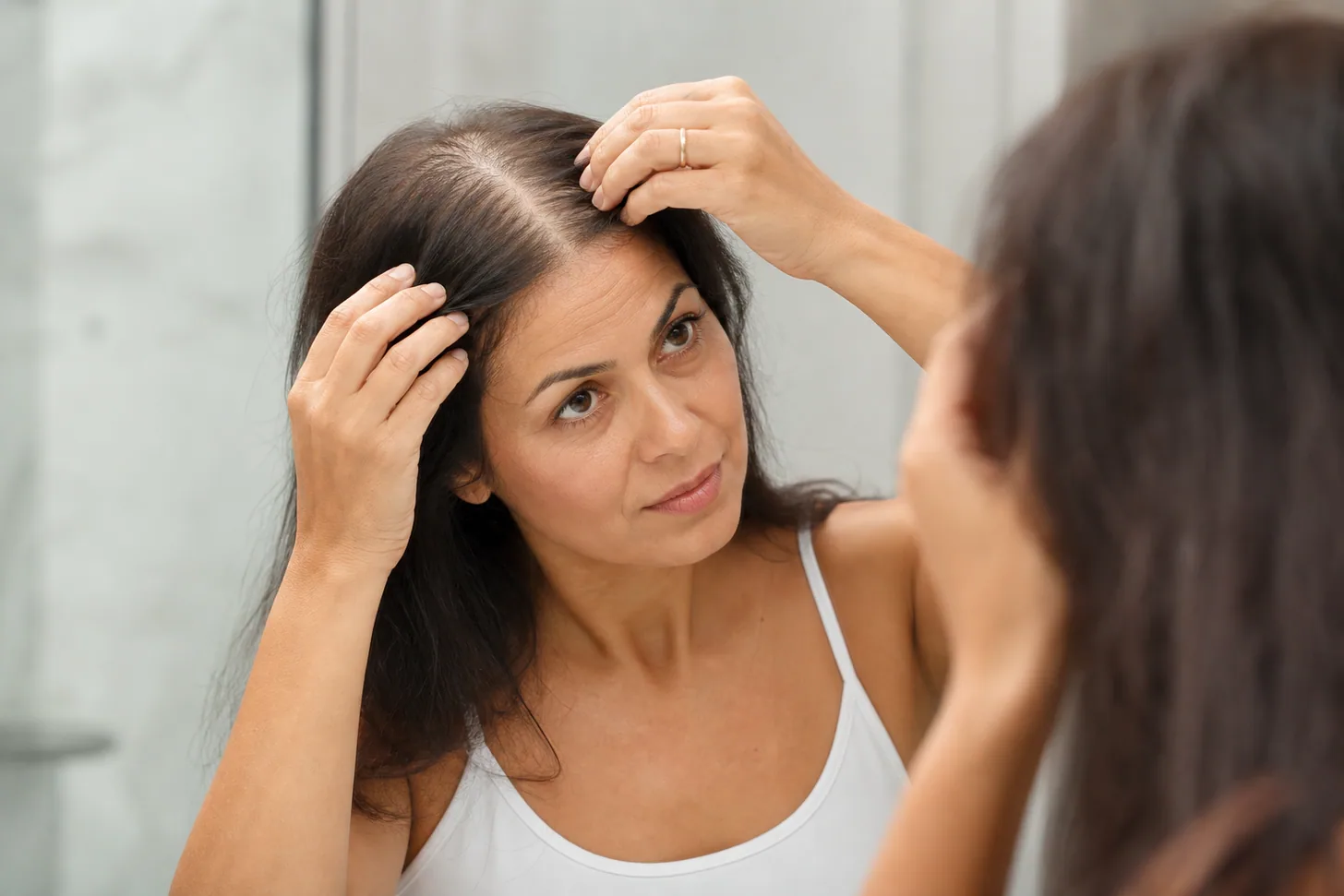
Your part is visibly wider than it was six months ago. Particularly if it widens toward the crown. This is assessable and, caught early, more treatable.
Shedding has been heavy for more than six to eight weeks. Sudden diffuse shedding often follows illness, surgery, childbirth, or major stress, and it has a name and a course — get it identified.
Hair is coming out in patches, or the scalp is painful, itchy, scaly, or red. These point to specific conditions that need diagnosis, not a different shampoo.
The change came with other symptoms. Fatigue, weight change, cycle changes, or new medication — hair is often the visible end of something systemic.
FAQ
Because most of what you read as thickness in dry hair is air, and water removes it. Dry strands sit apart from each other with space between them, and that loft is what fills out a hairstyle. Wet, the water's surface tension pulls neighbouring strands together into ropes, the whole mass lies flat against the scalp, and the volume you were seeing disappears. Everyone's hair does this, including people with very dense hair. Fine hair looks the most dramatic wet because loft is a bigger share of its apparent volume in the first place — there's less actual hair holding up the shape.
It's closer to the truth than dry hair, but it's not a verdict. Wet hair strips away styling, product, and loft, so what you see is roughly the actual amount of hair on your head — which is why it's confronting and also why it's useful. What it can't tell you is whether anything has changed, because you have no wet baseline to compare against, and the wet view exaggerates in its own direction. The reliable assessments are done on dry hair: part width, ponytail circumference, and photographs of the same parting in the same light over months.
Most people shed somewhere in the region of 50 to 100 hairs a day, and a wash day collects several days' worth at once because shampooing releases hairs that had already detached and were sitting in the hair. So a handful in the drain after washing twice a week is expected rather than alarming. What matters is change: noticeably more than your own normal, handfuls coming out daily, or shedding that continues for more than six to eight weeks is worth a doctor's opinion rather than a styling fix.
Usually one of two very different things. A gradual taper is normal: the ends of long hair are years old, have been through every wash, brush, and heat exposure you've ever done, and the outer cuticle has worn thinner, so the hair genuinely is finer there than at the root. That's a haircut problem, solved by taking off the worn length and keeping a blunter perimeter. The other cause is breakage — hair snapping mid-length, which shows up as short flyaway pieces standing up all over the head rather than as a smooth taper. Breakage means something in the routine is doing damage, and it needs fixing before length will hold.
The hairline is naturally finer than the rest of the head — the hairs there are shorter, softer, and less dense by design, which is why the front looks sparser in wet hair and in bright light. It's also the area most exposed to repeated tension from ponytails, tight ties, headbands, and clips worn in the same spot, which over years causes traction damage that thins the hairline for real. Vary where you tie and clip, avoid tight styles on wet hair, and if the front is receding rather than just looking fine, see a dermatologist — hairline changes have several causes and they're treated differently.
Not on its own. Wet hair clumps into separated ropes, and scalp between those ropes is what everyone sees in the mirror after a shower, including people with dense hair. The check that means something is done dry, in consistent light: look at the width of your part where it starts at the front versus a few inches back, and compare a photograph of it with one taken six months ago. A part that's visibly wider than it was, a crown that shows through in daylight, or a change that came on quickly or in patches is worth a dermatologist's assessment.
Fourteen years in hair — eight behind the chair, six in editorial — with a focus on scalp health and the science of fine, flat-prone hair. Megan warns clients before she rinses, because every head of hair looks thin wet.
This article is for general education and is not medical advice. If you are experiencing sudden or patchy hair loss, scalp pain, or other concerning symptoms, see a board-certified dermatologist.
Results vary with hair type, density, and growth patterns. This guide is educational and not a substitute for an in-person consultation with a licensed stylist.
Hairstyle images in this guide are AI-generated illustrations, not photos of real clients or results. See our image policy.
Get the good hair intel
One honest, stylist-written guide in your inbox each week. No hype.

 MH
MH