Getting answers

“Fine as Frog Hair”: What the Saying Means, and What Truly Fine Hair Is Like

"Fine as frog hair" is an old American saying that means very fine indeed, or, more often, "doing great". The joke is that frogs have no hair, so frog hair would be impossibly fine.

If you searched it because someone said it about your hair, they were probably being affectionate. Below is where the phrase comes from, and then what truly fine hair is and how to look after it.

woman holding a single strand of fine blonde hair up to window light between two fingers, smiling, soft daylight

What “fine as frog hair” means

The phrase has two meanings, and both rely on a pun on the word "fine". Wiktionary lists it as a colloquial simile meaning extremely fine, in the sense of slender or delicate. The Phrase Finder records the other, more common use: "fine" meaning excellent, as in "How are you?" "Fine as frog hair."

Either way, the humour is the same. Most frogs have no hair at all, so anything as fine as frog hair is too fine to see.

Where the saying comes from

The Phrase Finder describes it as an American simile from the mid-19th century, and its earliest example is an 1865 diary in which the writer says they are in high spirits, "as fine as frog's hair". It survives mostly as a folksy, rural expression, and folklore collections link it with the South and Texas.

There are playful extensions, such as "finer than frog hair split four ways", which splits a hair that does not exist. A related Southern saying, "slippery as frog hair", is used for something hard to pin down.

Do any frogs have hair?

Almost none. The Phrase Finder notes one exception: the so-called hairy frog of Central Africa. Its males grow hair-like strands of skin in the breeding season. They are not true hair, which keeps the joke intact.

What truly fine hair is

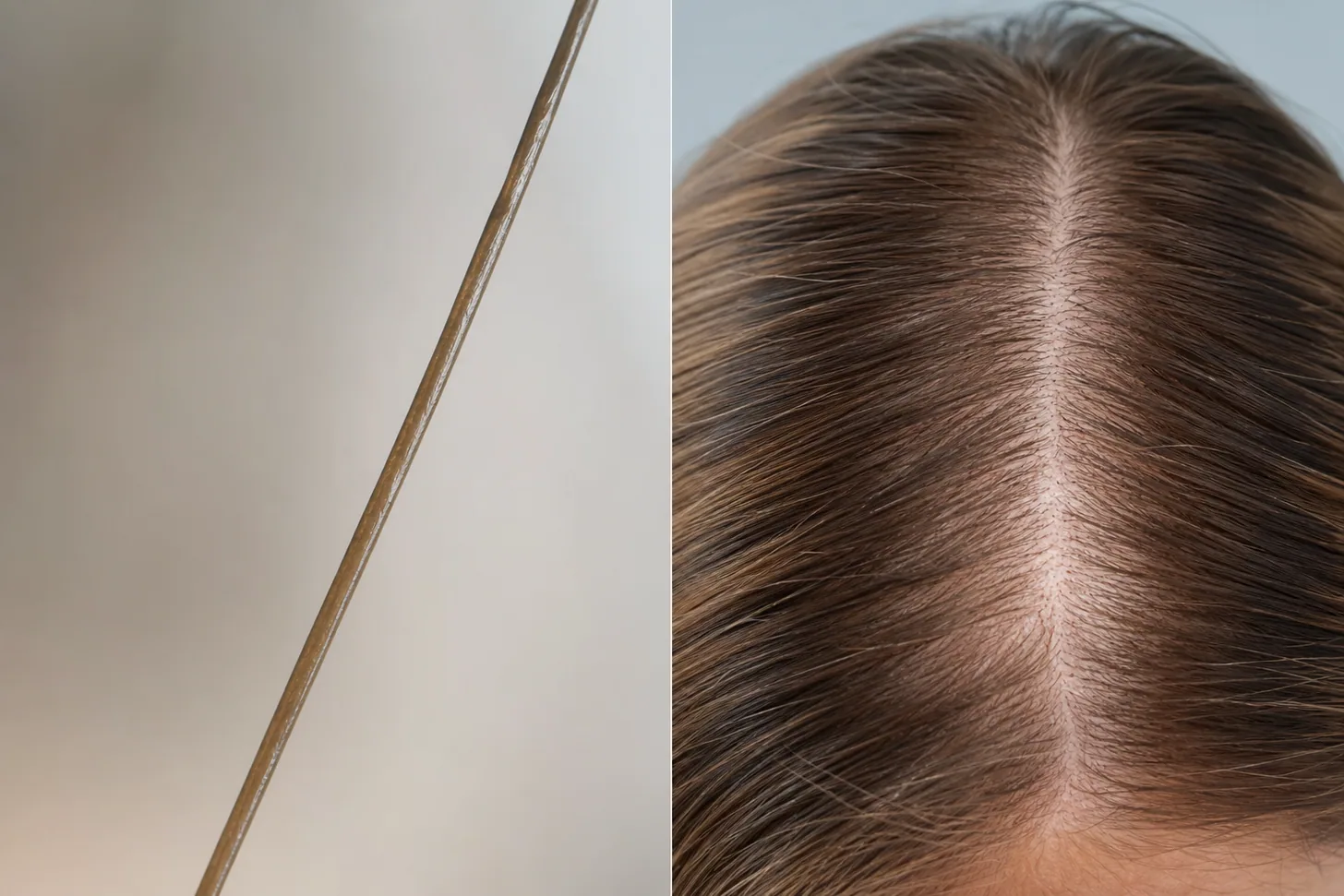
In hair care, "fine" describes the width of each strand, not how much hair you have. One dermatology study classes hair under 60 micrometres across as fine; in a study of women's scalp hair, strands ranged from about 37 to 111 micrometres. So the finest human hair is roughly a third the width of the coarsest.

Fine is not the same as thin. Thin, in most people's use, means low density: fewer hairs. You can have fine hair and plenty of it. Fine vs thin hair explains the difference in detail.

How to tell if your hair is fine

Take a single shed strand and roll it between your thumb and finger. If you can barely feel it, or cannot feel it at all, your hair is fine. Compared with a piece of sewing thread, fine hair is noticeably narrower.

Other signs: hair that goes flat a few hours after washing, gets oily quickly, slips out of clips, and will not hold a curl for long. None of these is a problem in itself; they are just how fine hair behaves.


From the editor

Fine hair has real advantages: it is soft, it moves beautifully, and it dries fast. The clients who are happiest with it are the ones who stop fighting it.

The right cut and a light routine do more for fine hair than any heavy "thickening" product.

Megan HollowayMH
— Megan Holloway, Editor-in-Chief

Looking after hair that really is fine as frog hair

  • Wash more often than you think. Fine hair shows oil fast, and daily or every-other-day washing is fine for most people. See how often to wash fine hair.
  • Condition the ends only. Conditioner at the roots flattens fine hair within hours.
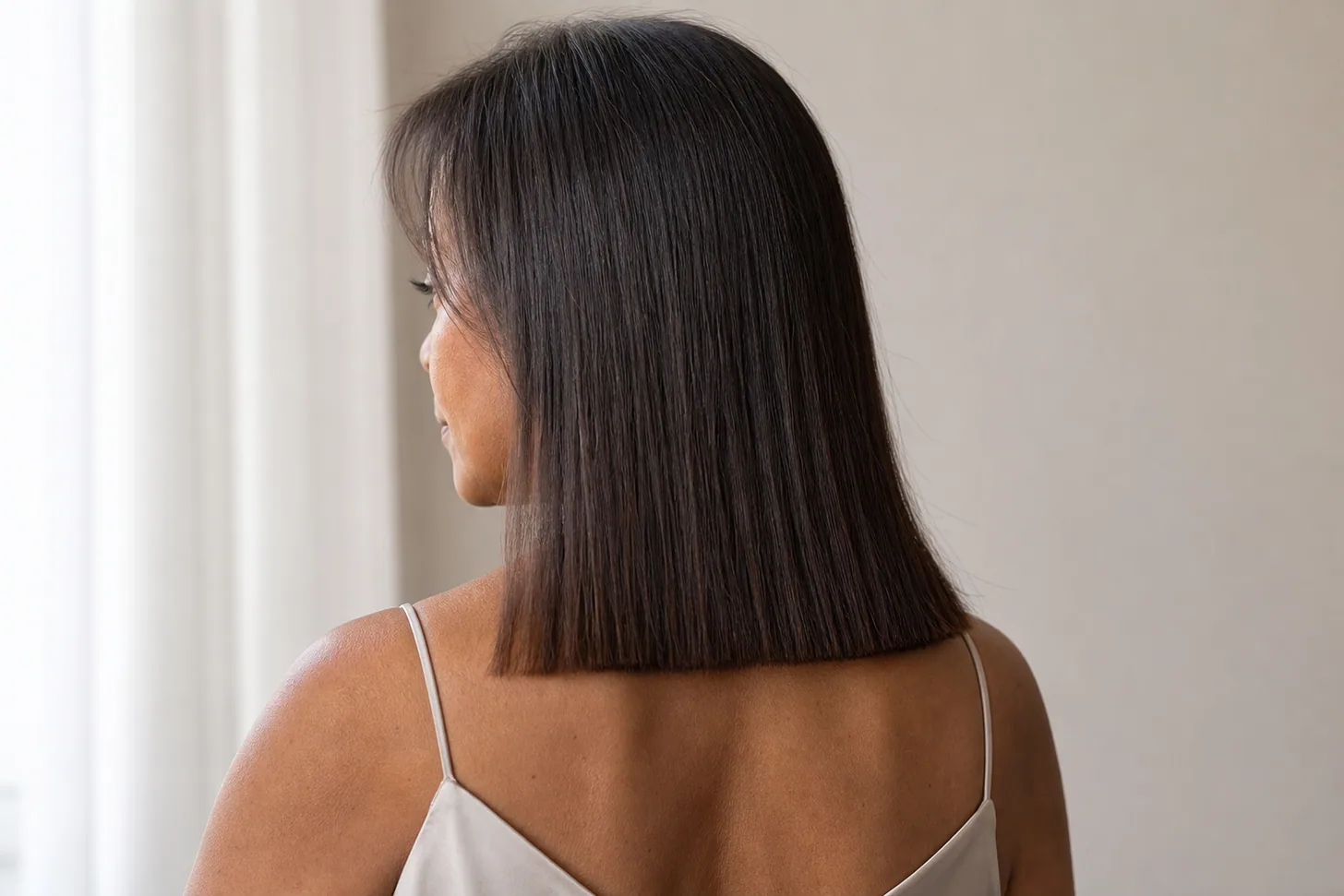
  • Choose a cut with weight in the right place. Blunt lines and a few long layers look fuller than heavy thinning. Our haircuts that make fine hair look thicker show the options.
  • Lift at the root when you dry. Blow-dry the roots against their natural direction first, then smooth the lengths.
  • Go gently with heat and tension. Fine strands break more easily, so keep tools at a lower temperature and avoid tight ponytails.

For the whole routine in one place, see the fine hair care routine.

FAQ

It means extremely fine, or, more often, doing very well. It is a joke that plays on two meanings of “fine”, slender and excellent, and on the fact that frogs have no hair.

It is an American simile from the mid-19th century. The Phrase Finder’s earliest example is an 1865 diary in which the writer says they feel “as fine as frog’s hair”. It survives mostly as a rural, folksy expression.

Almost no frogs do. The hairy frog of Central Africa is a famous exception, but its “hairs” are thin strands of skin that males grow in the breeding season, not true hair.

No. Fine describes the width of each strand. Thin usually means low density, or fewer hairs. You can have fine hair with plenty of density, or coarse hair that is thinning.

Roll a single shed strand between your thumb and finger. If you can barely feel it, it is fine. Fine hair also tends to go flat and oily quickly and to slip out of clips.

A playful extension of the same saying, used as a cheerful answer to “How are you?”. It splits an imaginary hair into four, which makes it even finer than impossible.

Usually not; it tends to be said fondly. If you have fine hair and hear it, it is a nod to how soft and delicate fine hair is.

Related reads

Megan HollowayMH
Megan Holloway
Editor-in-Chief · Licensed Cosmetologist & Certified Trichology Practitioner

Fourteen years in fine-hair care, eight of them behind the chair. Megan's rule for hormonal thinning: photograph the part, not the drain.

More from Megan →

This article is general information about hair, not medical advice.

Images in this article are AI-generated illustrations, not photos of real clients or results. See our image policy.