Reviewed by Tara Sullivan · Updated October 2026 · 10 min read
Korean bangs are a light, softly curved fringe cut from a thin section of hair, so the forehead shows through. The best-known version is "air bangs", a fringe so sheer it looks almost weightless.
That lightness is why they suit thin hair better than most Western bangs: they need very little hair to look finished. Here are 12 Korean bangs for thin hair, how to set the curve, and who should skip them.
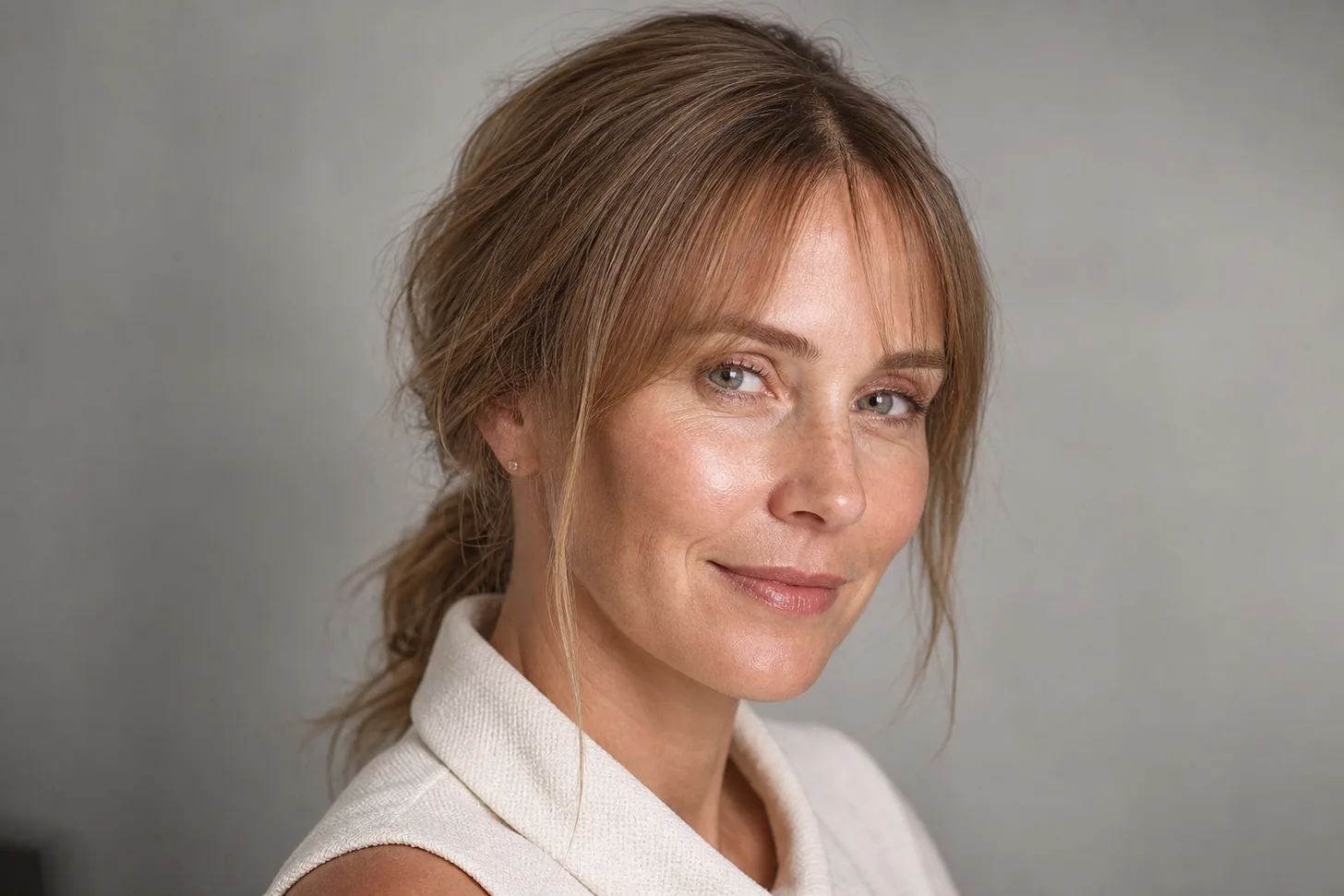
Korean air bangs on fine dark-brown hair, sheer light fringe ending between the lashes and brows with the forehead showing through, soft C-curl, long straight hair, woman in her 20s, front view
Chair-side note
Most bangs ask fine hair for something it doesn't have: weight. Korean bangs don't. They are cut from a narrow, shallow section and styled into a curve, so a few strands look deliberate rather than sparse.
The secret isn't the cut, it's the curl. A soft inward curve stops a light fringe from lying flat and separating on the forehead. Five minutes on a roller does more than any product.
SB
— Simone Baptiste, Senior Stylist
What are Korean bangs?
Korean bangs are a family of light fringes popularized by K-beauty and K-dramas. They are thinner than Western bangs, usually end at or just below the brows, and are styled with a gentle inward curve called a C-curl.
The main types are air bangs (the sheerest), see-through bangs (a little fuller), full bangs (denser but still soft) and side or curtain-style bangs. For every fringe type, see bangs for fine hair.
Do Korean bangs work on thin hair?
Yes. They are one of the best fringes for thin hair, because they are designed to be light. A thin section leaves more hair for the rest of the cut, and the forehead showing through is the point, not a flaw.
The catch is oil. A sheer fringe sits on the forehead, so it clumps into strings faster than a heavy one. Plan on dry shampoo and a quick restyle at midday. If you mainly want coverage, wispy bangs are the closest Western cousin.
Types of Korean bangs
Four ways to cut the fringe itself, from the lightest to the fullest.
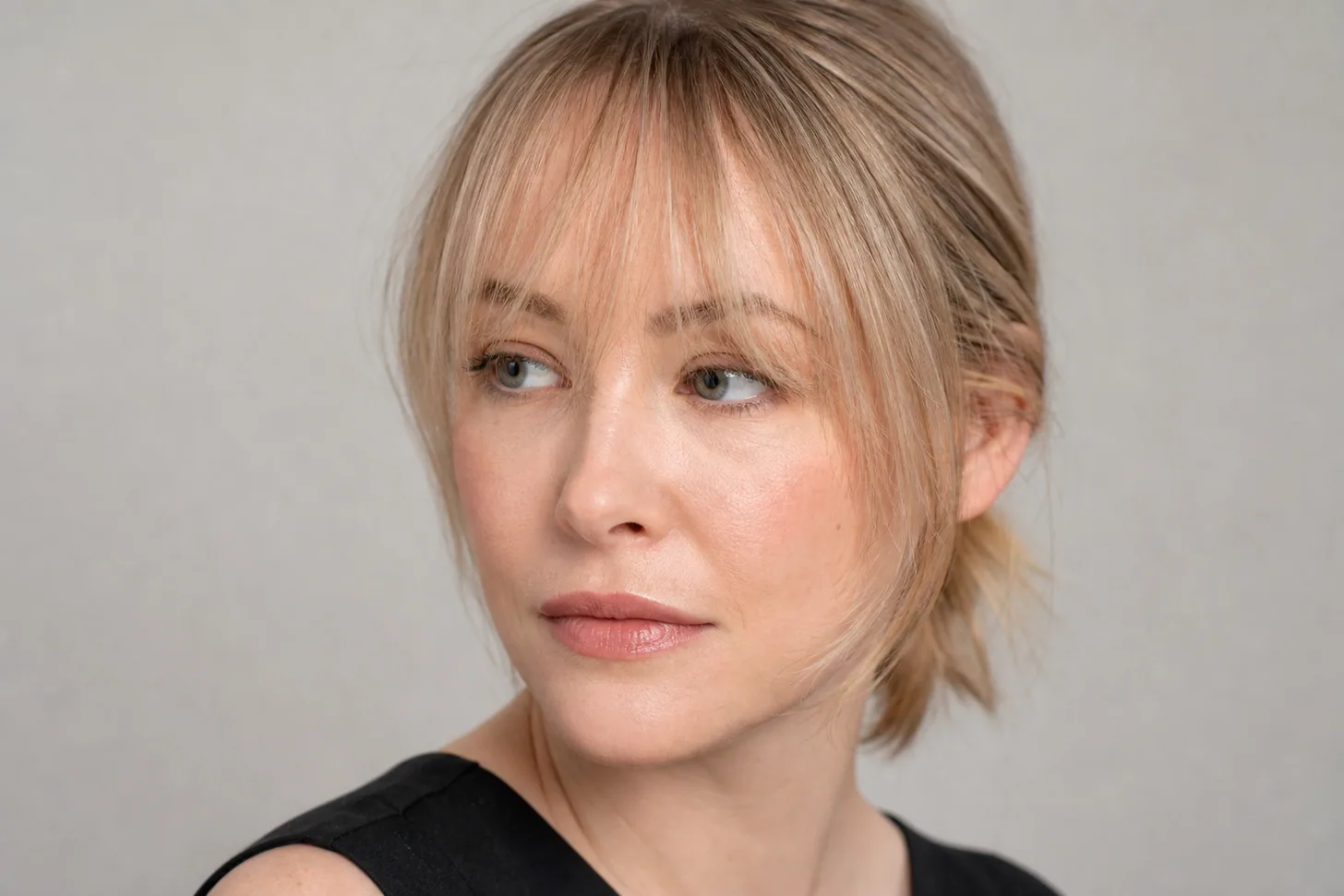
Korean air bangs on fine black hair, very sheer fringe of a few strands ending at the brows, forehead visible, soft inward curve, long straight hair, woman in her 20s, front view
1
Korean air bangs
The lightest Korean fringe, cut from just a few strands. It ends at the brows and lets most of the forehead show.
It uses the least hair of any fringe, so it is the safest choice for very thin hair.
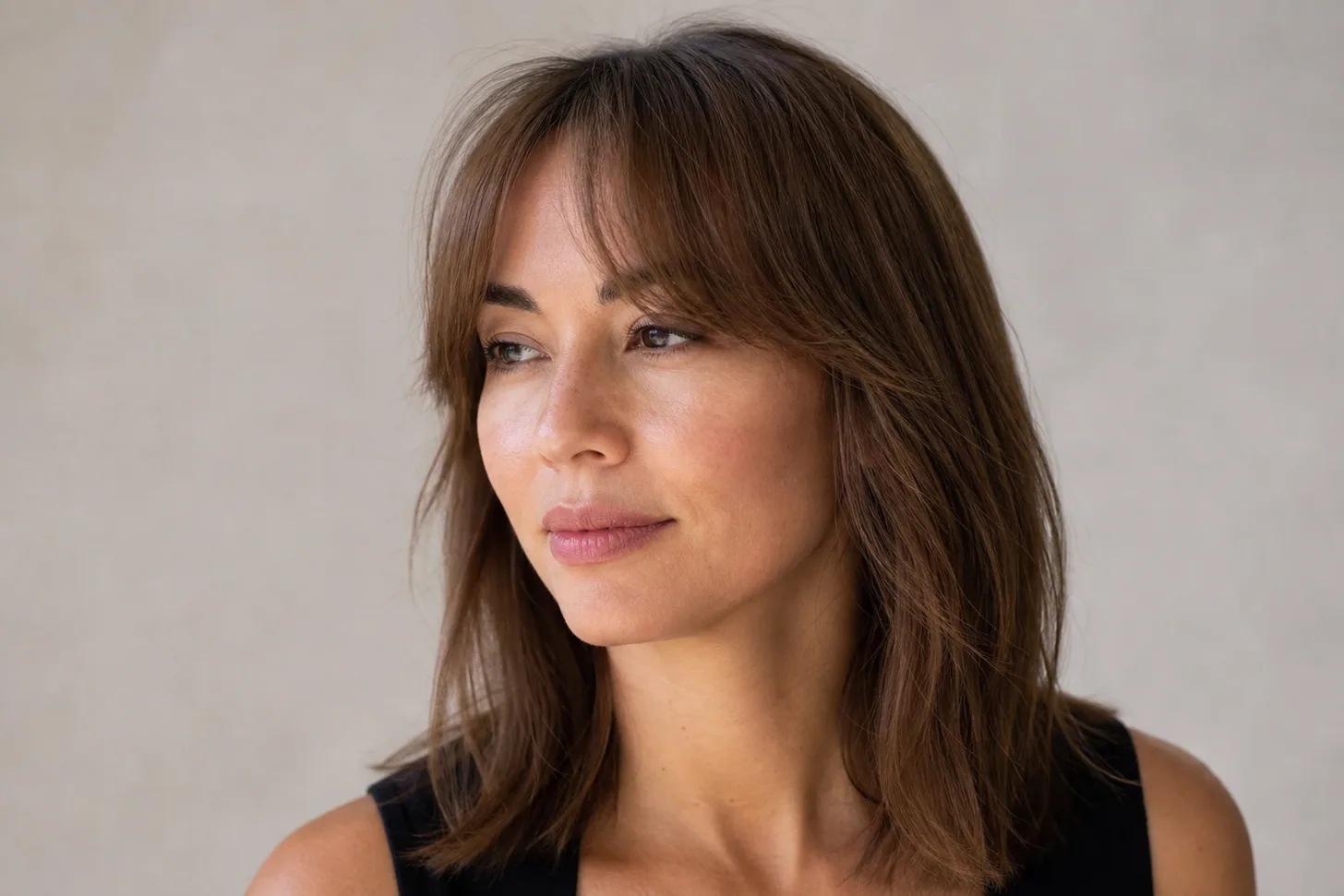
see-through Korean bangs on fine dark-brown hair, light fringe with small gaps showing the forehead, ending just below the brows, shoulder-length straight hair, woman in her 20s, front view
2
See-through Korean bangs
A little fuller than air bangs, with small gaps that show the forehead. It ends just below the brows and frames the eyes.
full Korean bangs on fine medium-brown hair, denser soft fringe covering the forehead with a rounded inward curve, no hard line, bob, woman in her 30s, front view
3
Full Korean bangs
Denser bangs that cover the forehead, but softened at the ends so there is no hard line. The rounded curve keeps them from looking heavy.
They need fine hair with an average number of strands. On very thin hair, start with air bangs.
Korean-style curtain bangs on fine light-brown hair, center-parted light fringe curving out to the cheekbones, long layered hair, woman in her 20s, front view
4
Korean curtain bangs
A light fringe parted in the middle and curved out toward the cheekbones. It's softer and lighter than most curtain bangs.
Korean bangs are usually worn with a soft, rounded cut rather than a sharp one. On thin hair that means a bob with a curved hem or long hair with only a few layers.
chin-length Korean bob with ends curved under and light air bangs on fine dark-brown hair, rounded silhouette, woman in her 20s, front three-quarter view
5
Korean bob with air bangs
A chin-length bob with the ends turned under and a sheer fringe on top. The rounded shape makes thin hair look full at the jaw.
long straight one-length hair past the shoulders with light Korean see-through bangs on fine black hair, glossy finish, woman in her 20s, front view
6
Long hair with Korean bangs
Long, one-length hair with a light fringe. Keeping the length blunt keeps the ends dense, so the bangs look intentional rather than thin.
Trim the ends every eight to ten weeks.
Korean layered cut with long side-swept bangs on fine dark-brown hair, soft face-framing layers from the cheekbones, collarbone length, woman in her 30s, front three-quarter view
7
Korean layered cut with side bangs
A long fringe swept to one side and blended into face-framing layers. It's the easiest Korean fringe to grow out.
The same light fringe works on most faces; length and curve are what change.
light Korean see-through bangs ending below the brows on fine dark-brown hair, longer face-framing pieces past the cheeks, woman with a round face in her 20s, front view
9
Korean bangs for a round face
A light fringe with longer pieces at the sides, falling past the cheeks. The vertical lines lengthen a round face.
soft wavy Korean bangs on fine wavy light-brown hair, light fringe with a natural bend, shoulder-length waves, woman in her 30s, front view
10
Wavy Korean bangs
A light fringe left with its natural bend. A slight wave already gives the curve that straight hair needs a roller for.
Cut them a little longer, because wavy hair shrinks as it dries.
light Korean air bangs ending just above thin round glasses on fine black hair, long straight hair, woman in her 20s wearing round wire glasses, front view
11
Korean bangs with glasses
A sheer fringe cut to end just above the frames. Light bangs don't press against the lenses, so they stay clean longer.
Style the fringe first, while it is damp. Blow-dry it straight down with a flat brush, then roll it under around a medium Velcro roller and give it a blast of heat. Leave the roller in for five to ten minutes while you do your makeup.
Say: "I'd like Korean air bangs from a narrow, shallow triangle section, ending between my lashes and brows. Please cut them dry and point-cut the ends, with no thinning shears."
A narrow section is the key on thin hair. It keeps the fringe light and leaves enough hair at the sides and crown.
Who should skip Korean bangs
Your forehead gets oily quickly. A sheer fringe sits on the skin and separates into strings within hours.
You have a strong front cowlick. Light bangs flip up with it. A side-swept fringe can follow it instead.
You won't spend five minutes on the fringe. Without the curve, a light fringe lies flat and looks sparse.
Your hair is tightly curly. Curls need a deeper, fuller fringe section than a Korean cut takes.
FAQ
Korean bangs are a light, softly curved fringe cut from a thin section of hair, so some of the forehead shows through. Air bangs, see-through bangs and full bangs are the main types.
Yes. They are one of the best fringes for thin hair, because they are designed to be light and need very few strands. A soft C-curl keeps them from lying flat.
Air bangs are the sheerest, cut from just a few strands. See-through bangs are slightly fuller, with small gaps that still show the forehead.
Blow-dry the damp fringe straight down, roll it under around a medium Velcro roller, heat it, and leave it for five to ten minutes. Finish with a light hairspray.
Yes, if they are kept light and paired with longer face-framing pieces at the sides. Avoid a full, heavy fringe, which widens a round face.
Every four to six weeks. Because they are light, they look messy rather than heavy when they grow, so a quick fringe trim is usually enough.
Eleven years behind the chair, specializing in short shapes and fine-hair texture. Simone believes the best haircut is the one you can style yourself in ten minutes.
Results vary with hair type, density and growth patterns. Haircut guidance is not a substitute for an in-person consultation with a licensed stylist, and sudden or heavy hair loss is worth raising with a doctor.
Hairstyle images in this guide are AI-generated illustrations, not photos of real clients or results. See our image policy.
Get the good hair intel
One honest, stylist-written guide in your inbox each week. No hype.

 SB