Reviewed by Tara Sullivan · Updated July 2026 · 8 min read
Here's the honest starting point: hair is dead, so nothing "heals" it — what good products do is reinforce. They fill gaps in the cuticle, deposit protein where the strand is weak, and, in the case of bond-builders, chemically reform some of the bonds that damage broke.
That's real and worth doing — but it's temporary, and for fine hair the weight of the product matters as much as the active inside it. Below: the ingredients that genuinely strengthen fine hair, the ones that only add weight, and how to build a repair routine that doesn't flatten you.
The honest truth: "repair" means reinforcement
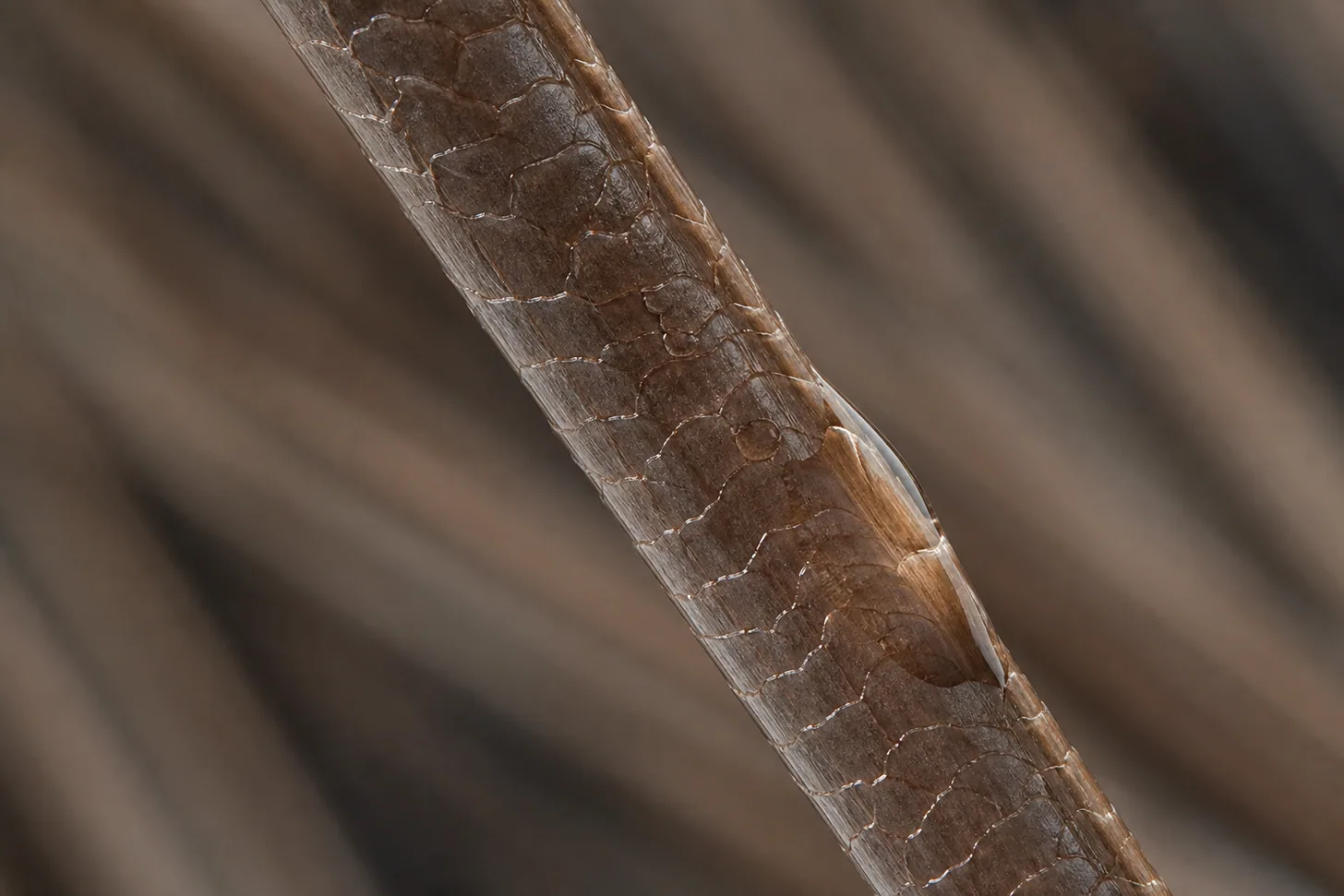
Hair is a fiber of dead, keratinized cells. Its strength comes from an internal network of protein chains held together by bonds — including strong disulfide cross-links — that give the strand its elasticity and resilience (Hair Cosmetics: An Overview, peer-reviewed). Bleach, permanent color, heat, and even daily friction break some of those bonds and erode the cuticle.
Because the fiber isn't alive, it can't knit itself back together — so "repair" products don't restore hair to new. What they do is reinforce what's left: fill, coat, and in the best cases reform a fraction of the broken bonds. The effect lasts until it washes out, which is why the only permanent fix for truly fried ends is a trim.
That's not a reason to skip these products — reinforcement genuinely makes fine hair stronger, smoother, and less breakage-prone in the meantime. It's a reason to have realistic expectations and, on fine hair especially, to choose the lightest effective version of every one.
The ingredients that actually work
The bond-repair molecules sit in their own category, with their own evidence and their own weight problem on fine hair — covered in bond builders for fine hair.
Four categories have real evidence behind them. Notice that for fine hair, each one comes with a weight caveat.
Bond-builders — the only true structural repair
Bond-builders (the maleic-acid and similar technologies behind salon "bonding" treatments) are the standout, because they work chemically rather than by depositing weight. Research on hair-repair agents shows compounds that can reform the disulfide bridges broken during bleaching, coloring, and aging — actually reinforcing the protein matrix inside the strand rather than just sitting on top (study on thiol cross-linking hair-repair compounds). For fine, color-treated hair this is the category most worth your money: it strengthens without flattening.
Hydrolyzed proteins — reinforcement, in moderation
Hydrolyzed keratin, wheat, and silk proteins are broken into small enough pieces to cling to — and in the case of the smallest fragments, penetrate — the hair, temporarily filling weak spots and improving strength.
Low-molecular-weight hydrolyzed keratins in particular have been shown to enter the fiber and improve its physical properties (study on hydrolyzed keratin penetration into hair). The catch for fine hair is dose: a little strengthens, too much stiffens. Use protein in moderation, not at every wash.
Humectants — lightweight moisture
Panthenol (pro-vitamin B5) and glycerin attract and hold water in the strand, improving flexibility and reducing brittleness without much weight. Panthenol is a fine-hair favorite because it adds a little body as it conditions. These are the "moisture" side of the balance that keeps protein from tipping hair into brittleness. The same humectants are the ones worth looking for in a wash — see shampoo for dry, fine hair.
Lightweight emollients — smoothing, used sparingly
A small amount of a light emollient or silicone smooths the cuticle and cuts friction, which reduces breakage and adds shine. On fine hair the operative word is light: a lightweight serum on the ends, not a rich cream root-to-tip.
Ingredient
What it does
Fine-hair verdict
Bond-builders (maleic acid, etc.)
Reform broken internal bonds
Best repair for fine hair — strengthens, doesn't weigh
Hydrolyzed keratin / wheat / silk protein
Fill & reinforce weak cuticle
Yes, in moderation — overuse stiffens fine hair
Panthenol / glycerin (humectants)
Hold moisture, add flexibility
Great — lightweight and body-friendly
Lightweight silicones / serums
Smooth cuticle, reduce friction
Ends only, sparingly — buildup flattens
Heavy oils & butters (coconut, shea)
Coat & soften surface
Usually too heavy — flatten fine roots
Chair-side note
The word "repair" on a bottle tells you nothing about whether it suits fine hair — the texture in your palm tells you everything. If a "repair" mask feels like a thick, buttery cream, it's built to add weight, and on fine hair that means flat by noon no matter how good the actives are.
I steer fine-haired clients toward repair products that feel like a light lotion or a spray, and toward bond-builders, which do their work chemically and rinse clean. Read the feel, not just the front label.
MH
— Megan Holloway, Editor-in-Chief
What weighs fine hair down (limit or skip)
Plenty of "nourishing" ingredients are wonderful on coarse or curly hair and wrong for fine hair. It's not that they're bad — they're heavy, and heavy is the one thing fine hair can't carry.
Heavy oils and butters — coconut, castor, shea, and rich argan blends. They coat and flatten; most fine hair looks greasy and limp within hours. A pinhead of light oil on the ends is the ceiling.
Rich "deep repair" masks — built to deposit a lot of conditioning agents. On low-porosity fine hair they never fully absorb and just sit as weight (more on that in our porosity guide for fine hair).
Too much protein — the flip side of a good ingredient. Fine hair reaches protein overload fast, going stiff and snap-prone.
Heavy film-forming silicones used every wash — they build up, dull the hair, and require clarifying to remove.
But not silicones as a class — the volatile and water-soluble ones are genuinely fine-hair-friendly, and several popular "silicone-free" conditioners are heavier than what they replaced. Are silicones bad for fine hair? sorts the families out.
Building a fine-hair repair routine
You don't need a shelf of products — you need the right few, used in balance. A realistic fine-hair repair rhythm:
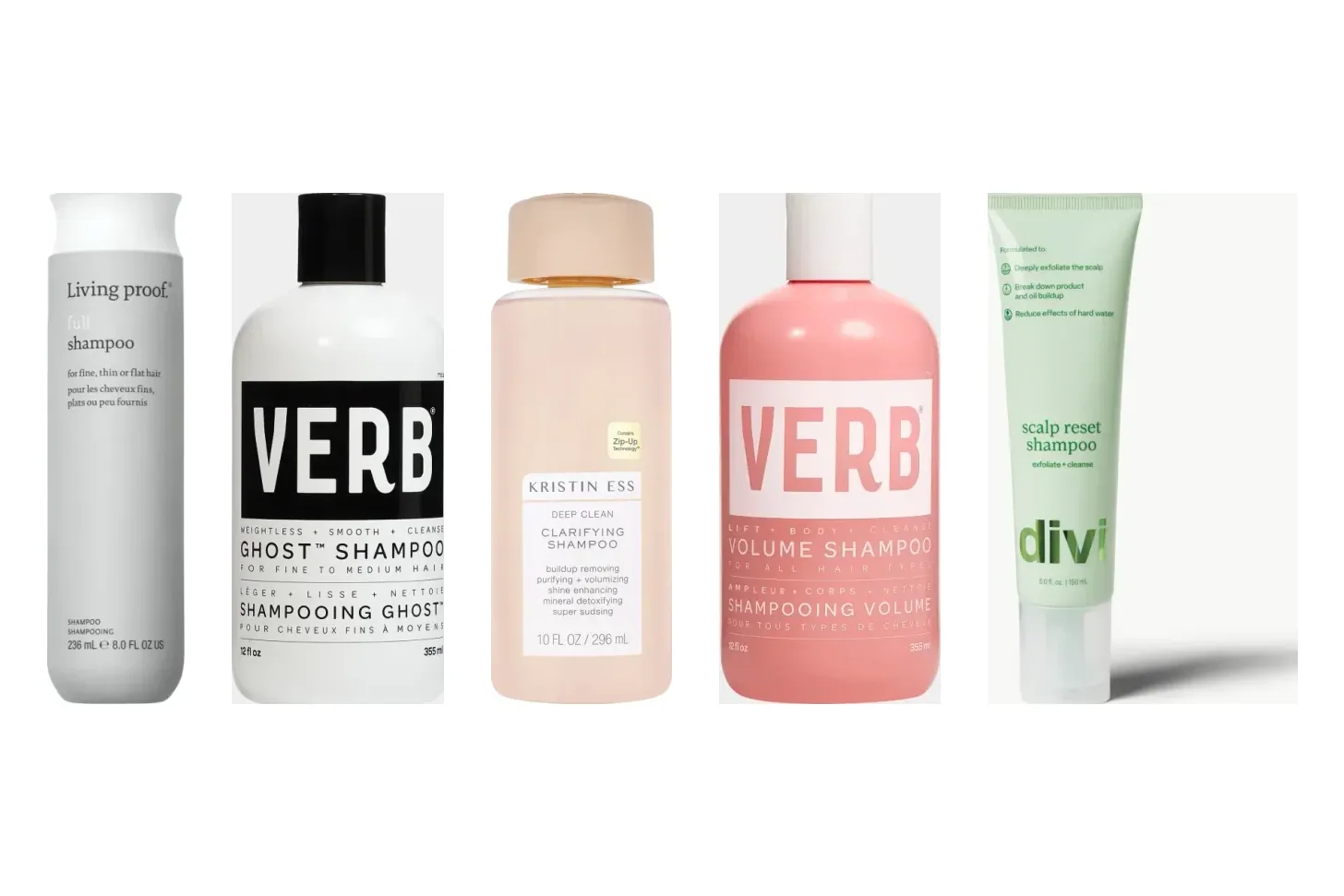
Every wash: a lightweight shampoo and a light conditioner on the ends. Keep it simple and low-weight — our shampoo picks for fine hair are chosen on exactly this principle.
Weekly-ish: a lightweight protein or a light leave-in with panthenol on the mid-lengths and ends. Not every wash — watch for stiffness.
Every 2–4 weeks (or after color): a bond-building treatment, following its timing. This is your real structural repair.
As needed: clarify once to reset buildup, especially if hair suddenly goes limp or dull.
Always: lower the heat and use a lightweight heat protectant — preventing damage does more than any repair bottle, because reinforcement is temporary and cutting is the only true reset.
And remember porosity sets the dial: low-porosity fine hair needs the lightest formulas and a little warmth to absorb them; high-porosity fine hair takes protein and bond-building more readily but loses moisture fast. If you haven't read your porosity yet, start with hair porosity, explained for fine hair.
Repair-product mistakes that backfire on fine hair
Chasing "repair" with rich, buttery masks. The weight flattens fine hair before the actives can help — choose light lotions, sprays, or bond-builders.
Using protein at every wash. Fine hair tips into brittle protein overload fast; alternate with lightweight moisture.
Believing oil repairs damage. It smooths and coats temporarily — useful, but it rebuilds nothing, and most oils are too heavy for fine hair.
Expecting products to save fried ends. Reinforcement is temporary; badly damaged ends need to be cut, not treated.
Ignoring the cause. Heat and color created the damage — lowering both does more than any bottle on the shelf.
FAQ
Not in the sense of healing — hair is not living tissue, so it can't mend itself the way skin does. What good products do is reinforce: they temporarily fill gaps in the cuticle, deposit protein into weakened areas, and in the case of bond-builders, chemically reform some of the broken internal bonds. The effect is real but not permanent, and it lasts only until the next few washes. The only true fix for badly damaged ends is cutting them off.
Three categories carry the real evidence: bond-builders that reform broken disulfide bonds inside the strand, low-molecular-weight hydrolyzed proteins (keratin, wheat, silk) that penetrate and reinforce, and lightweight humectants like panthenol that hold moisture. For fine hair the key is the delivery — the same ingredient in a light leave-in helps, while in a heavy butter it just flattens. Weight matters as much as the active.
Good in moderation, bad in excess. Small, regular doses of hydrolyzed protein temporarily strengthen fine, damaged hair by filling weak spots in the cuticle. But too much protein makes fine hair stiff and brittle — the dreaded protein overload — because there's little internal structure to buffer it. Alternate protein treatments with lightweight moisture, and don't use a protein product at every single wash.
No — oils don't repair, they coat. A light oil can smooth the cuticle, reduce friction, and make hair look and feel healthier temporarily, which has value. But it doesn't rebuild anything, and on fine hair most oils are too heavy: they weigh the strand down and flatten the root. If you use one, keep it to a pinhead amount on the very ends, and don't mistake the cosmetic smoothing for structural repair.
Protein overload is when too much protein builds up on the hair, making it feel stiff, straw-like, and prone to snapping. It's more common on fine hair because fine strands need less protein to tip over. The fix is to stop all protein products, clarify once to remove buildup, then rebuild with lightweight moisturizing conditioners for a few weeks before reintroducing protein sparingly. Balance, not more product, is the answer.
Yes — bond-builders are the one "repair" category with genuine structural evidence, because they reform some of the disulfide bonds broken by bleach, color, and heat rather than just coating the surface. They're especially worth it for color-treated fine hair. Choose a lightweight formula and follow the timing instructions; because they work chemically rather than by depositing weight, they suit fine hair well and won't flatten it the way a rich mask can.
Fourteen years in hair — eight behind the chair, six in editorial — with a focus on scalp health and the science of fine, flat-prone hair. Megan reads an ingredient label the way she'd read one for her own clients: weight first, evidence always.
Images in this article are AI-generated illustrations, not photographs of real clients or results. See our image policy.
Results vary with hair type, density, and growth patterns. This guide is educational and not a substitute for an in-person consultation with a licensed stylist or, for scalp concerns, a board-certified dermatologist.
Get the good hair intel
One honest, stylist-written guide in your inbox each week. No hype.

 MH
MH