A dandruff shampoo is scalp medicine that happens to be delivered through your hair — and on fine hair, the hair is what pays. The actives work; that part isn't in doubt.
The problem is the vehicle: a medicated shampoo is formulated around what the skin needs, so the detergent system is usually harsher than an everyday shampoo's, and then the label tells you to leave it on for five to ten minutes. Do that to your lengths twice a week, indefinitely, and you get straw-like ends and a scalp that's finally behaving.
The way out is a routine rather than a stronger bottle, and the AAD gives this hair type its own instruction: for fine or straight hair with an oily scalp, "wash your hair often...daily and use your dandruff shampoo twice a week" — the opposite of the wash-less advice most people absorb. Below: what each active actually does and which suit fine hair, five picks by job, and the one application change that prevents most of the damage.
Every product here is chosen independently, on the merits — what genuinely suits fine, thin hair. Links go to each brand's official page, and we don't take payment for placement. Price tiers are rough guides because prices change.
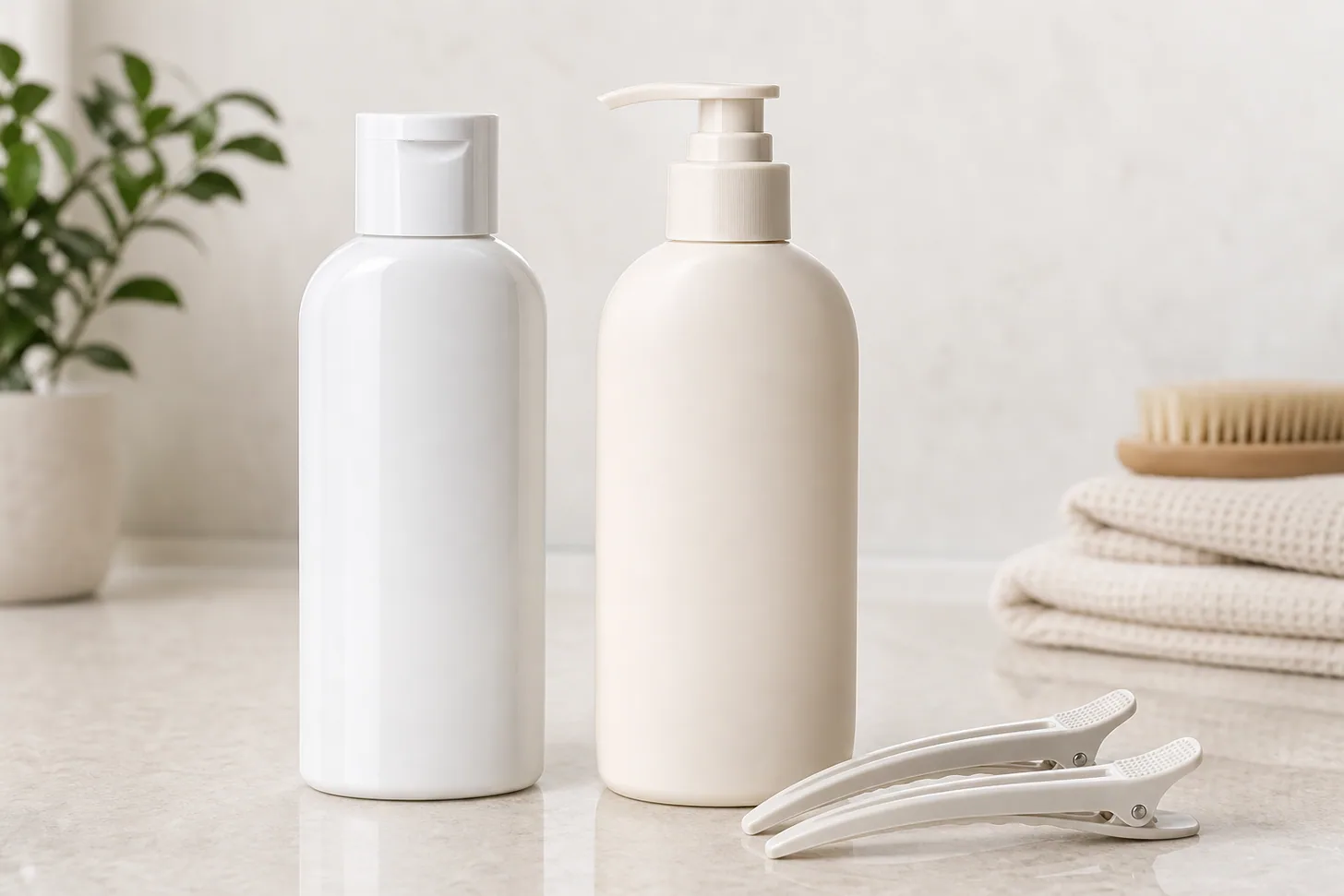
Two bottles, not one — the medicated shampoo treats the scalp, the everyday one keeps the hair.
Antifungal — targets the yeast behind dandruff directly
Stubborn cases; when gentler actives have stopped working
Generally color-safe; twice weekly is plenty
Selenium sulfide
Antifungal, and reduces oil
An oily scalp with visible flaking
Can affect tone — keep it off lightened lengths
Zinc pyrithione
Antifungal and antibacterial, milder
Everyday management; the easiest to live with
The safest default; several formulas are color-safe
Salicylic acid
Dissolves scale and buildup — it doesn't treat the yeast
Thick, stuck-on flakes and crusting
Drying on lengths; pair it with a real antifungal
Coal tar
Slows the overproduction of scalp skin cells
Psoriasis and severe seborrheic dermatitis
Can stain light hair, and increases sun sensitivity
Sulfur
Antifungal and keratolytic
Combination formulas, usually with salicylic acid
Effective, but the smell puts most people off
Coal tar is on the AAD's list and gets no pick on this page, deliberately. It's a legitimate and sometimes necessary treatment, but for most fine-haired readers it's the wrong first choice: it can leave a cast on light or lightened hair, product labels warn that it increases sensitivity to sunlight for up to 24 hours after use, and it's the most drying of the group on the lengths.
If your dermatologist has recommended it, use it — but it isn't where to start on your own.
On fine hair, the vehicle matters more than the active
This is the part almost no roundup says, and it's why people with fine hair have such bad experiences in this aisle.
A medicated shampoo is designed as a delivery system for a scalp treatment. Its formulator's job is to get an active onto skin, keep it stable, and make it lather — not to leave your lengths soft. So the surfactant system tends to be more aggressive than an everyday shampoo's, conditioning agents are often minimal because they'd interfere with deposition, and the recommended contact time is long.
Now stack that on fine hair. A fine strand has less cortex to buffer a stripping wash, and — as covered in oily roots and dry ends — the ends are already the oldest, most porous hair you own. Five minutes of a medicated detergent on two-year-old ends, twice a week, for months, is a slow-motion problem, and it arrives as straw, static and tangling rather than as anything dramatic enough to connect back to the shampoo.
The fix is not a gentler active. It's putting the product where the problem is.
Chair-side note
When someone tells me a dandruff shampoo wrecked their hair, I ask them to mime how they use it — and every time, they show me a hand going to the top of the head, then a scrubbing motion down through the lengths.
That's washing your hair with scalp medicine. Watch how it's done properly and almost nothing moves: you part the hair into four sections, put the shampoo directly onto the skin with your fingertips, clip the lengths up out of the way, and let it sit there while you do something else.
Then you rinse, and the run-off cleans the lengths on its way past, which is all they needed. Same bottle, same five minutes on the clock, and the ends never carry it. I've had clients keep the exact shampoo they'd blamed and get their hair back inside a month, purely from that.
MH
— Megan Holloway, Editor-in-Chief
The two-shampoo routine, and why it's the opposite of what you've heard
The instinct when your scalp is flaking is to wash less, because washing feels like the thing that's drying you out. For this hair type that's backwards, and the AAD says so directly.
Two days a week: the medicated shampoo, on the scalp only. Sectioned, fingertips, clipped up, left to process for as long as the label says. The AAD notes it may need to sit on your scalp for up to 5-10 minutes before rinsing.
The other days: a lightweight everyday shampoo, washed normally, so the roots stay clean without the lengths taking another medicated wash. Our shampoo picks for fine hair cover which ones don't weigh roots down.
Conditioner on the mid-lengths and ends every single time, including the medicated days. This is non-negotiable on fine hair, and it's the step people skip because they associate conditioner with greasiness.
Once the flaking is controlled, most people can drop the medicated shampoo to once a week and go back up when it returns. Dandruff is managed rather than cured — the mechanism is explained properly in dandruff on fine hair, which is worth reading before you buy anything here.
The five worth owning, by job
Match the active to your problem, then stop. You need one of these plus an everyday shampoo — not three of these.
Nizoral Anti-Dandruff Shampoo bottle, ketoconazole anti-dandruff shampoo, product shot on white
1
Strongest active over the counter: Nizoral Anti-Dandruff Shampoo
Head and Shoulders Clinical Strength dandruff shampoo bottle, product shot on white
2
Best for an oily fine scalp: Head & Shoulders Clinical Strength Advanced Oil Control
The pick when your scalp is greasy as well as flaking, which on fine hair is the common combination rather than the exception. It's a selenium sulfide formula at 1%, described as "Clinical Strength Advanced Oil Control Shampoo, for Stubborn Dandruff" delivering the brand's "Maximum Dandruff Protection", which "starts working 2X faster to fight the main cause of dandruff". Selenium sulfide is genuinely good at the oil half of the problem, which is why it's here rather than a second zinc formula. Best for: flaking plus an oily scalp, and anyone who wants a result quickly. Honest limitation: the brand says "You can use it every wash", and on fine hair I'd ignore that — twice a week on the scalp is plenty and every wash is how ends get wrecked. Selenium sulfide is also the active most likely to shift tone, so if you're blonde or lightened, keep it strictly off the lengths.
dpHUE Apple Cider Vinegar Hair Rinse bottle with applicator tip, product shot on white
4
Best when it's buildup, not dandruff: dpHUE Apple Cider Vinegar Hair Rinse
A sizeable share of people who buy dandruff shampoo don't have dandruff — they have product and dry-shampoo residue flaking off a scalp that's perfectly healthy. This is the pick for that case, and it's on the list precisely because it makes no medicated claim at all. dpHUE positions it as "Protect your color and keep your scalp and hair healthy with this unique cleansing alternative", which claims to "gently exfoliate the scalp and unclog hair follicles" with "a gentle cleanse that won't strip away essential oils or hair color". It's sulfate-free and color-safe, and the applicator tip is designed to part the hair and deliver product to the scalp — the right delivery for this hair type. Best for: flakes that are dry, small and white, on a scalp that isn't itchy, in someone who uses dry shampoo regularly. Honest limitation: it is not a dandruff treatment and won't touch a fungal problem. If your flakes are large, yellowish or greasy and your scalp itches, this is the wrong aisle and you want one of the three above.
Paul Mitchell Tea Tree Special Shampoo bottle, product shot on white
5
The one that feels like a treatment and isn't: Paul Mitchell Tea Tree Special
This is here as a correction rather than a recommendation, because it's the bottle more people reach for than any medicated shampoo on this page. Paul Mitchell describes the "invigorating tingle" of a formula that "helps wash away impurities for a scalp with a fresh, clean feeling", built on a tea tree, peppermint and lavender blend. Read that carefully: it's a cleansing and sensory claim. There is no anti-dandruff or medicated claim on the page, because there's no anti-dandruff active in the bottle — and the tingle that everyone reads as proof it's working is menthol. As a pleasant clarifying wash for an itchy-feeling scalp with no real pathology, it's genuinely nice, and the brand itself says to "Consult a dermatologist for use on infected and/or sensitive scalp". Best for: a scalp that feels congested rather than one that's flaking from a condition. Honest limitation: if you have actual dandruff, this will make it feel better for an hour and treat nothing, and the months people spend on it are months the flaking isn't being addressed.
2× weekly despite the label; keep off lightened hair
Jupiter Balancing
Zinc pyrithione 1%
Mild-to-moderate flaking; color-treated hair
The most livable long-term; sulfate-free
dpHUE ACV Rinse
None — not medicated
Small dry white flakes; heavy dry-shampoo use
Gentle; won't treat a fungal problem
Paul Mitchell Tea Tree
None — not medicated
A congested-feeling scalp with no pathology
Pleasant; the tingle is menthol, not treatment
Chair-side note
The single most common mistake after choosing the wrong bottle is stopping too early. Someone treats for three weeks, the flaking clears, they're delighted, they stop — and six weeks later they're back, convinced the shampoo stopped working. It didn't. Dandruff is a condition you manage, not one you finish, in the same way you don't stop moisturizing because your skin is no longer dry.
When it's under control, drop to once a week and stay there. The other thing worth saying out loud: if you've been avoiding dark clothes, or you've stopped wearing your hair down because of what lands on your shoulders, that's not a shampoo problem any more, that's something a dermatologist can sort out in one appointment. People wait years on this, and there's genuinely no need to.
MH
— Megan Holloway, Editor-in-Chief
When a dandruff shampoo isn't the answer
The flakes are small, white and powdery, and your scalp feels tight.That's dry scalp, not dandruff, and a medicated shampoo makes it worse. Dandruff on fine hair separates the two properly.
Nothing has changed after a few weeks of correct use.The AAD's own advice is to stop experimenting and "partner with a board-certified dermatologist" — psoriasis, eczema and fungal infections all flake and none respond to the same bottle.
Your scalp is red, sore, weeping or crusted.That needs examining, not treating over the counter.
The flakes appear within hours of styling and your scalp doesn't itch.That's product residue. A clarifying wash and fewer root products will do more than any active.
You're also losing noticeably more hair.Flaking plus shedding is worth a proper look rather than a shampoo — see fine hair or thinning?.
It's confined to one patch, or there's hair loss in that patch.Localized scaling with hair loss is a different category of problem and needs a dermatologist now rather than after another bottle.
FAQ
The one whose active matches your problem, used two or three times a week rather than every wash, and alternated with a lightweight shampoo on the days between. There's no single best bottle, because the four common actives do different jobs. Ketoconazole is the strongest antifungal available over the counter and the one to reach for when other shampoos have stopped working. Selenium sulfide suits an oily scalp and works quickly. Zinc pyrithione is the gentlest of the effective actives and the easiest to live with on fine hair. Salicylic acid is for scale and buildup rather than the fungus itself. What matters as much as the choice is the routine: a medicated shampoo is a scalp treatment, so it belongs on the scalp.
They can dry it, and on fine hair drying is the route to damage rather than damage itself. A dandruff shampoo is formulated around what the scalp needs, so the vehicle carrying the active is usually more detergent-forward than an everyday shampoo. Add the standard instruction to leave it on for several minutes and you have a medicated detergent sitting on your lengths, twice a week, indefinitely. On fine hair that shows up as straw-like ends, static, tangling and dullness long before it shows up as breakage. Two things prevent almost all of it: apply the shampoo to your scalp rather than your hair and let only the rinse-off touch the lengths, and condition the mid-lengths and ends every single time you use it.
Twice a week for most fine hair, and the AAD gives this hair type its own instruction. Its guidance for fine or straight hair with an oily scalp is to wash your hair often — daily — and use your dandruff shampoo twice a week, whereas coarse or curly hair is told to use dandruff shampoo about once a week. That's the opposite of the advice most people absorb online, which is to wash less. It works because the two jobs are separated: the medicated shampoo treats the scalp on its two days, and a gentle everyday shampoo keeps the roots clean on the others without stripping the ends. Once the flaking is controlled, many people can drop to once a week and go back up when it returns.
They're different problems with opposite treatments, which is why guessing is expensive. Dandruff flakes are larger, yellowish or greasy-looking, cluster in the hair and on the shoulders, and the scalp is often oily rather than tight. Dry scalp produces small white powdery flakes, comes with tightness and often dry skin elsewhere on your body, and improves when the air gets more humid. The practical test is what happens when you moisturize: dry scalp gets better, dandruff usually gets worse, because the yeast involved feeds on oil. Using a medicated shampoo on a genuinely dry scalp makes it drier and flakier, which people then read as needing a stronger shampoo. If you're unsure, that question is worth an appointment rather than another bottle.
Not in the way people fear, and the timing usually explains the alarm. Anti-dandruff shampoos don't cause hair to fall out, but two things make it look as though they do. If you've been washing less because of the flaking, your first wash with a new shampoo collects several days of hairs that had already released, which arrive all at once in the drain. And an inflamed, itchy scalp that's being scratched can shed more, so the shedding was there before the shampoo was. What does need attention is hair that's genuinely thinning at the same time as a persistently inflamed or sore scalp, because that combination has causes worth diagnosing rather than treating with a shampoo. The overlap between this aisle and the thinning one is real, though: the only shampoo actives with any hair-density evidence are ketoconazole and zinc pyrithione, and best shampoo for thinning hair explains what that evidence is worth.
Some are, and two actives deserve caution. Selenium sulfide and coal tar are the ones colorists warn about, because both can affect tone, and coal tar in particular can leave a cast on light or lightened hair. Ketoconazole and zinc pyrithione are generally the safer choices if you color, and several zinc pyrithione formulas are explicitly labeled color-safe. Beyond the active itself there's a fading question that applies to all of them: medicated shampoos tend to be more detergent-forward, and more washing with a stronger detergent shortens the life of any toner. If you're blonde and treating flakes, keep the medicated shampoo strictly on the scalp, use it twice a week rather than daily, and expect to tone slightly more often than you otherwise would.
Usually because the routine drifted rather than because the product failed — and occasionally because the diagnosis was wrong. The commonest reason is that people stop as soon as the flaking clears, the condition returns because the underlying cause hasn't gone anywhere, and the shampoo then appears to have lost its effect. Dandruff is managed rather than cured, so a maintenance frequency matters. The second reason is application: a shampoo worked through the hair rather than massaged into the skin never reaches the place it's meant to treat. The third is that it isn't dandruff. If a correctly used medicated shampoo makes no difference over a few weeks, the AAD's advice is to stop experimenting and see a board-certified dermatologist.
On your scalp, yes, if the label says so. On your lengths, no. The AAD notes that dandruff shampoo may need to sit on the scalp for up to five to ten minutes before rinsing, and that contact time is genuinely how the active does its work. The distinction that saves fine hair is where the product spends those minutes. Section the hair, apply the shampoo directly to the skin with your fingertips, clip the lengths up out of the way, and let it process on the scalp only. Then rinse, and let the run-off do whatever cleaning the lengths need. Five minutes of a medicated detergent sitting on two-year-old ends, twice a week, is the reason so many people conclude that treating their scalp wrecked their hair.
Fourteen years in fine-hair care, eight of them behind the chair. Megan's rule for this aisle: the shampoo goes on the skin, the conditioner goes on the hair, and neither swaps places.
This article is for general education and is not medical advice. Persistent flaking, a red, sore or crusted scalp, or flaking with hair loss should be assessed by a board-certified dermatologist rather than treated over the counter. Always read and follow the label on any medicated shampoo.
Images in this article are AI-generated illustrations, not photographs of real clients or results. See our image policy.
Results vary with hair type, density, and growth patterns. This guide is educational and not a substitute for an in-person consultation with a licensed stylist or physician.
Get the good hair intel
One honest, stylist-written guide in your inbox each week. No hype.

 MH
MH