

1
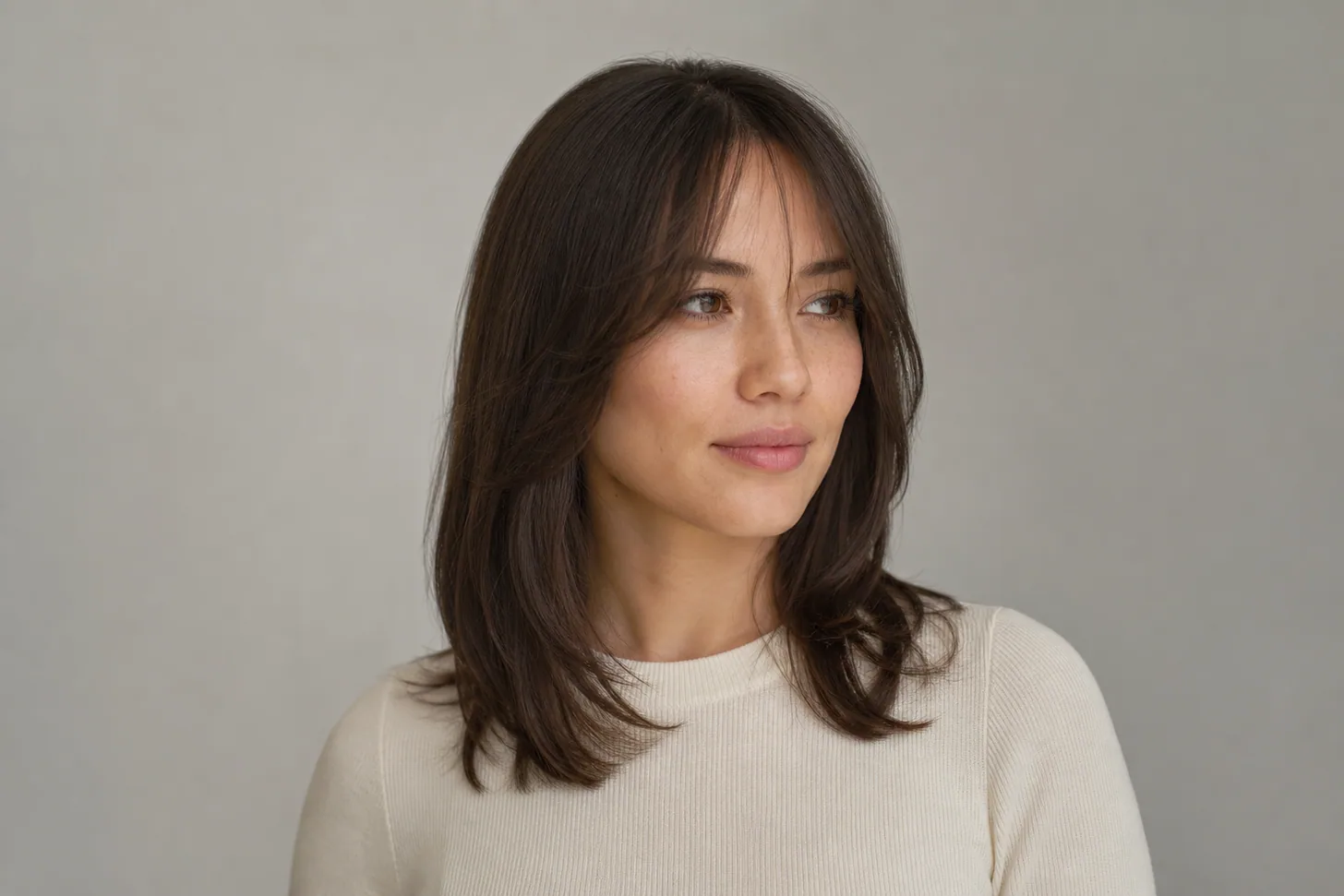
Hush cut lob
Collarbone length with layers only at the face. The bottom stays nearly blunt.
The easiest hush cut to wear on thin hair. See the lob for fine hair.
 SB
The hush cut is a Korean layered cut with soft, feathery layers concentrated around the face and crown, and lengths that stay fairly full. It is usually cut between the collarbone and mid-back, often with curtain or see-through bangs, and is styled to look airy rather than done.
On fine hair it works if the layers stop where your density does. Cut through the whole head, it leaves the ends thin and stringy. Kept to the face and the top, it gives fine hair movement without losing the bottom line. Below are 10 hush cuts for fine hair and where each one stops.
Most hush cuts I see on fine hair were cut for thick hair. The layers run all the way to the ends, and by the second wash the bottom looks see-through.
My rule is to layer the front and top, and leave the back hemline alone. On fine hair I keep at least the bottom two inches uncut by layers. The face still gets that soft, feathered frame, and the ends stay thick enough to read as healthy.
SBIt started in Korean salons and spread on social media. The hush cut has soft, wispy layers around the face and through the crown, cut so they flip and move instead of sitting as one sheet. The lengths underneath are kept fuller than in a shag. It is softer and less choppy than a wolf cut or a shag, and closer to a feather cut with more weight at the bottom.
Yes, if the layers are kept to the face and crown. The soft top layers lift fine hair at the root and give it movement it doesn't have when cut to one length. The risk is in the ends. Fine hair has fewer strands to share, so every layer taken through the lengths makes the bottom look thinner. For the full argument, see layers on fine hair.
Shorter lengths need fewer strands to look full, so these are the safest place to start.
Collarbone length with layers only at the face. The bottom stays nearly blunt.
The easiest hush cut to wear on thin hair. See the lob for fine hair.
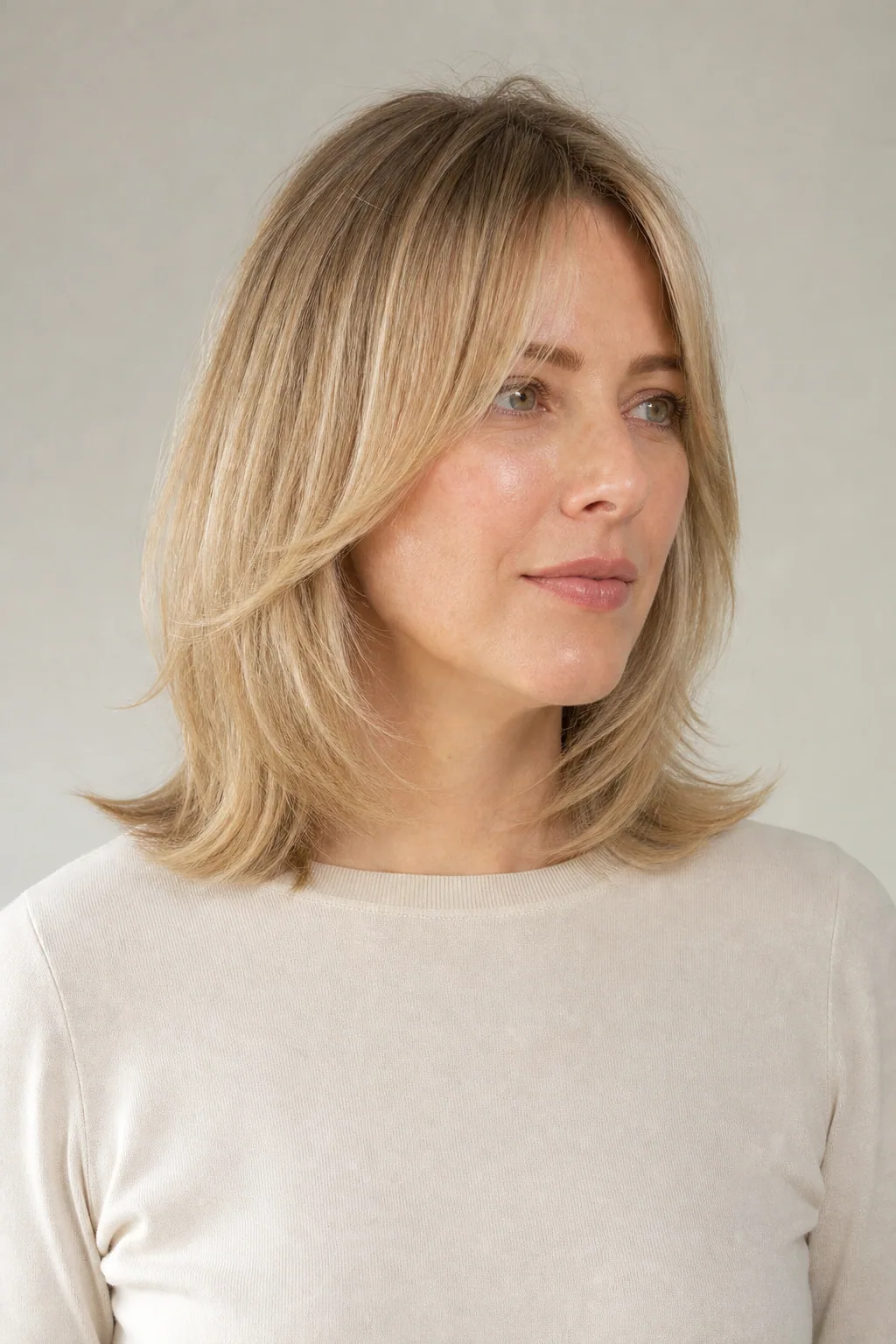
Curtain bangs carry straight into the face-framing layers, so the front reads as one soft shape.
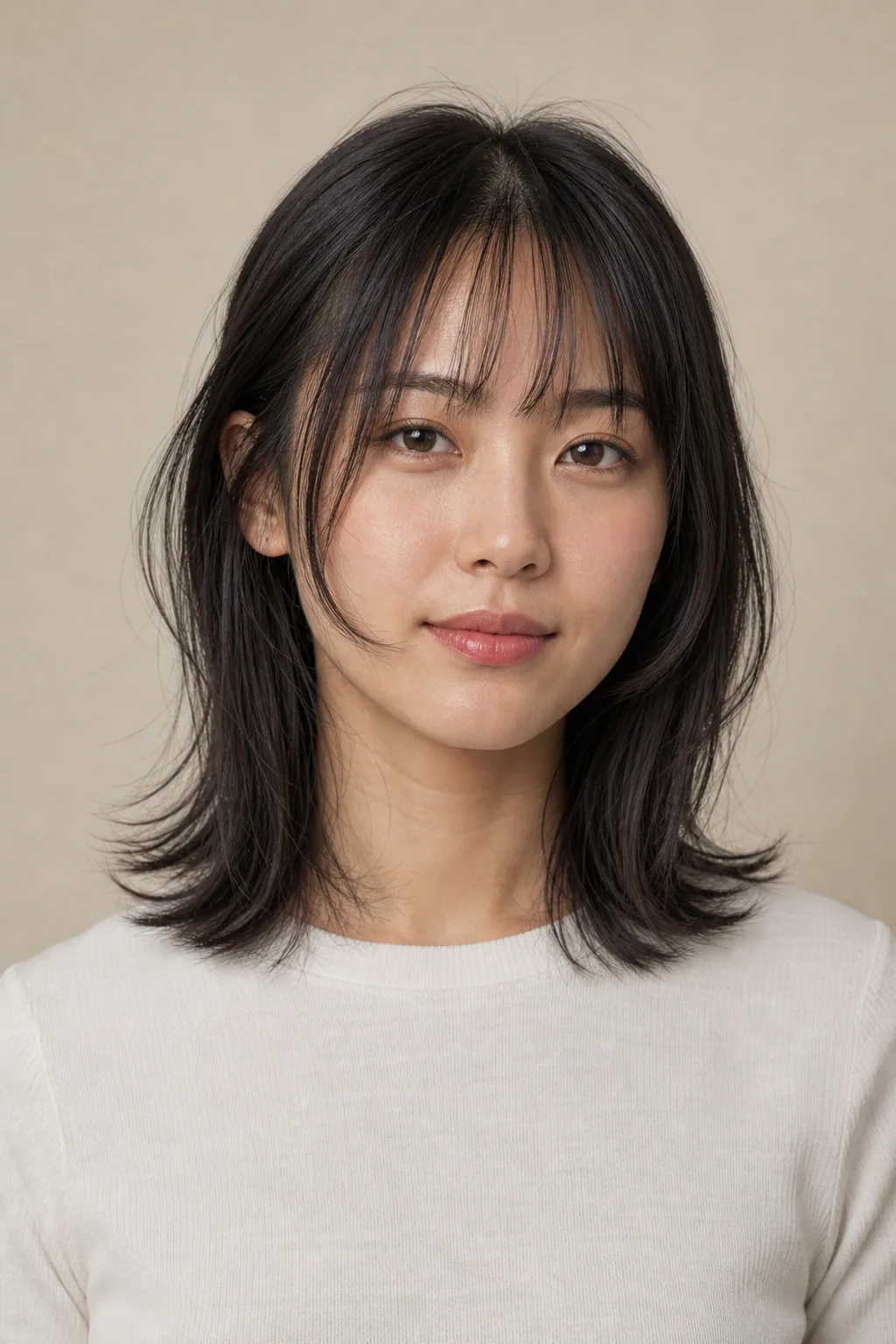
The original Korean pairing. Light, separated bangs take only a shallow section from the front.
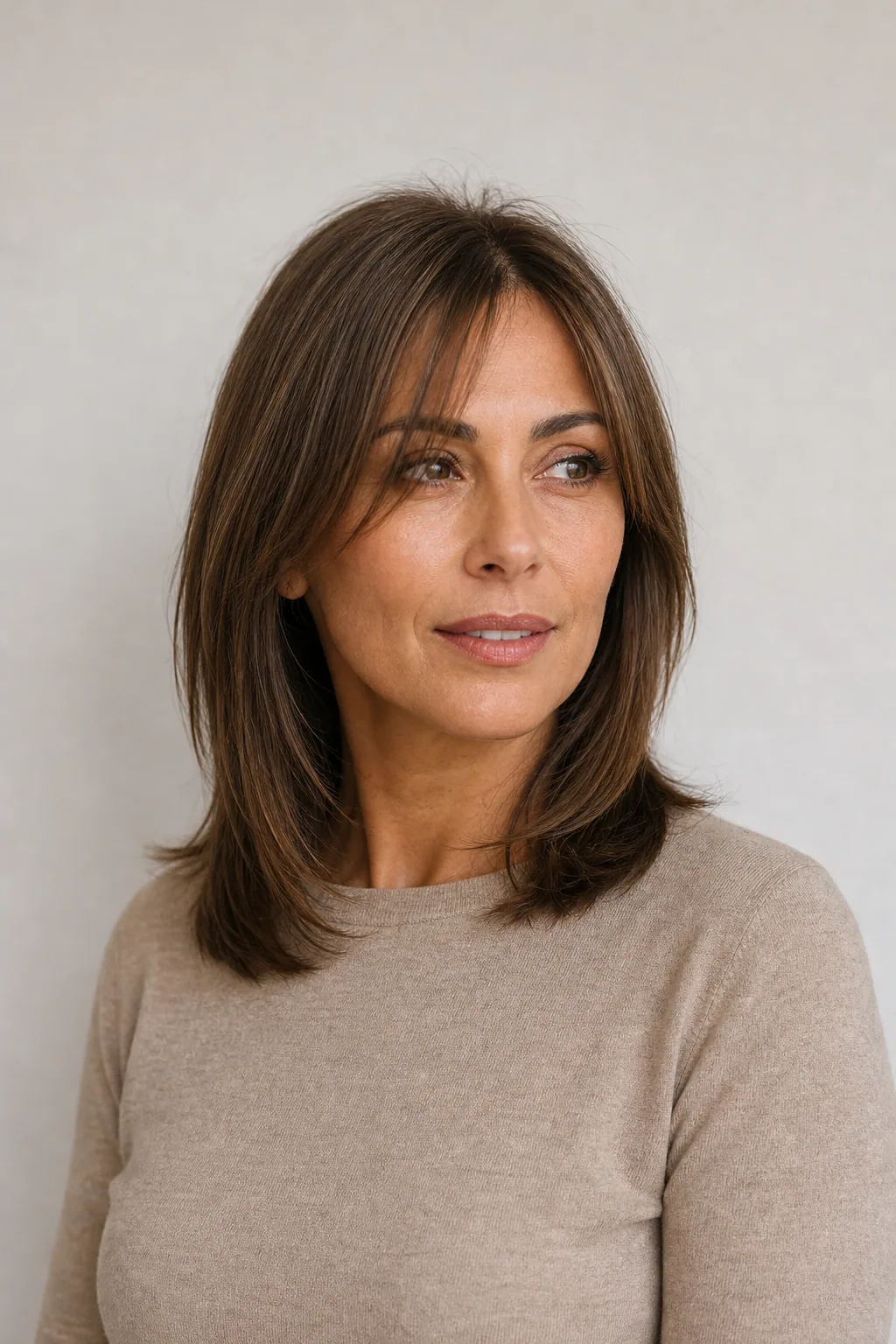
One layer under the top section lifts the crown without breaking up the outside of the cut.
The longer the hair, the more the ends need protecting. Keep the layers high.
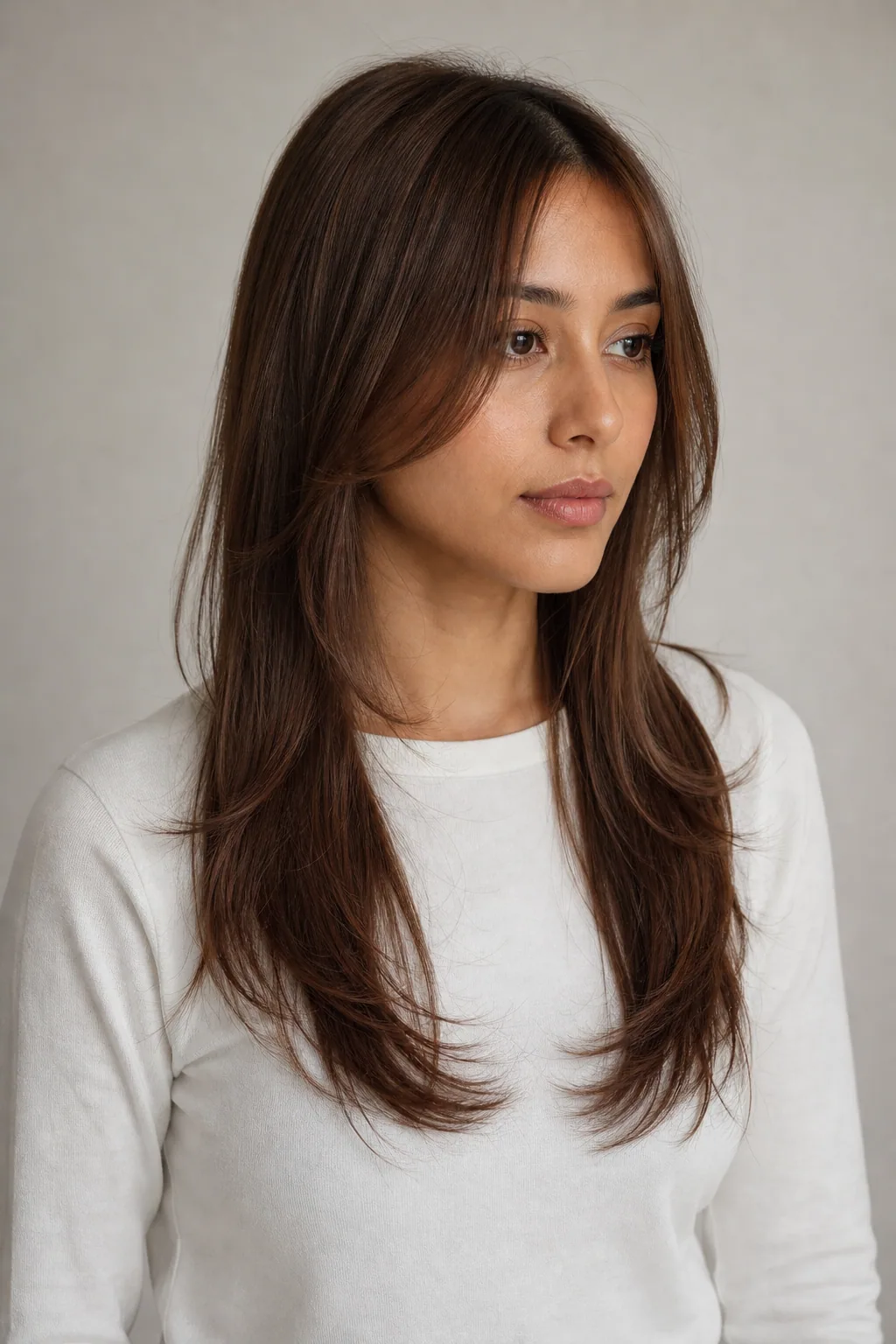
The layers stop around the chest, and the last few inches are cut to one length.
That keeps the bottom of long fine hair from tapering away. See long hairstyles for fine hair.
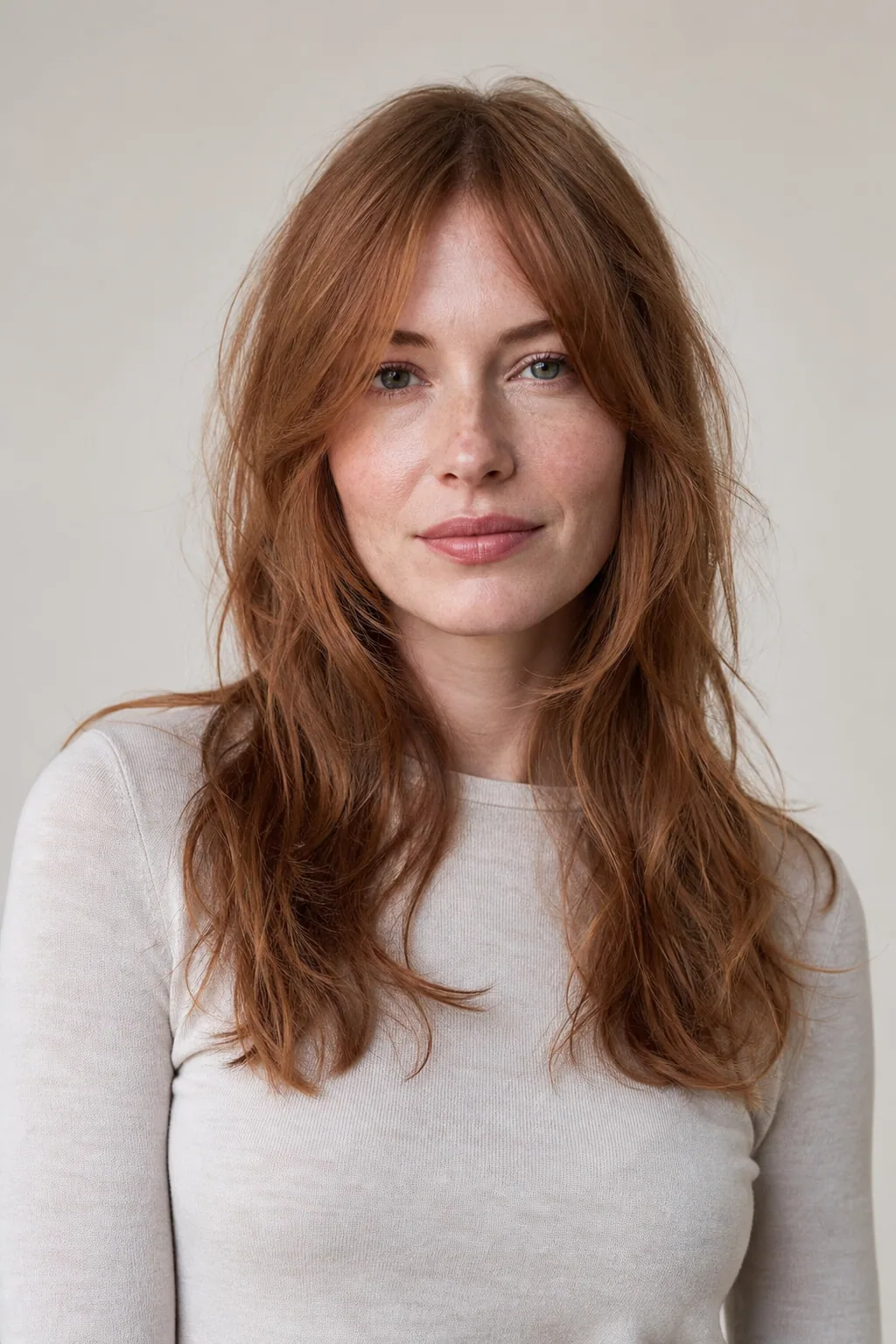
A natural wave makes the layers look fuller, so you need fewer of them.
Scrunch in a light mousse and diffuse. See fine, wavy hair.
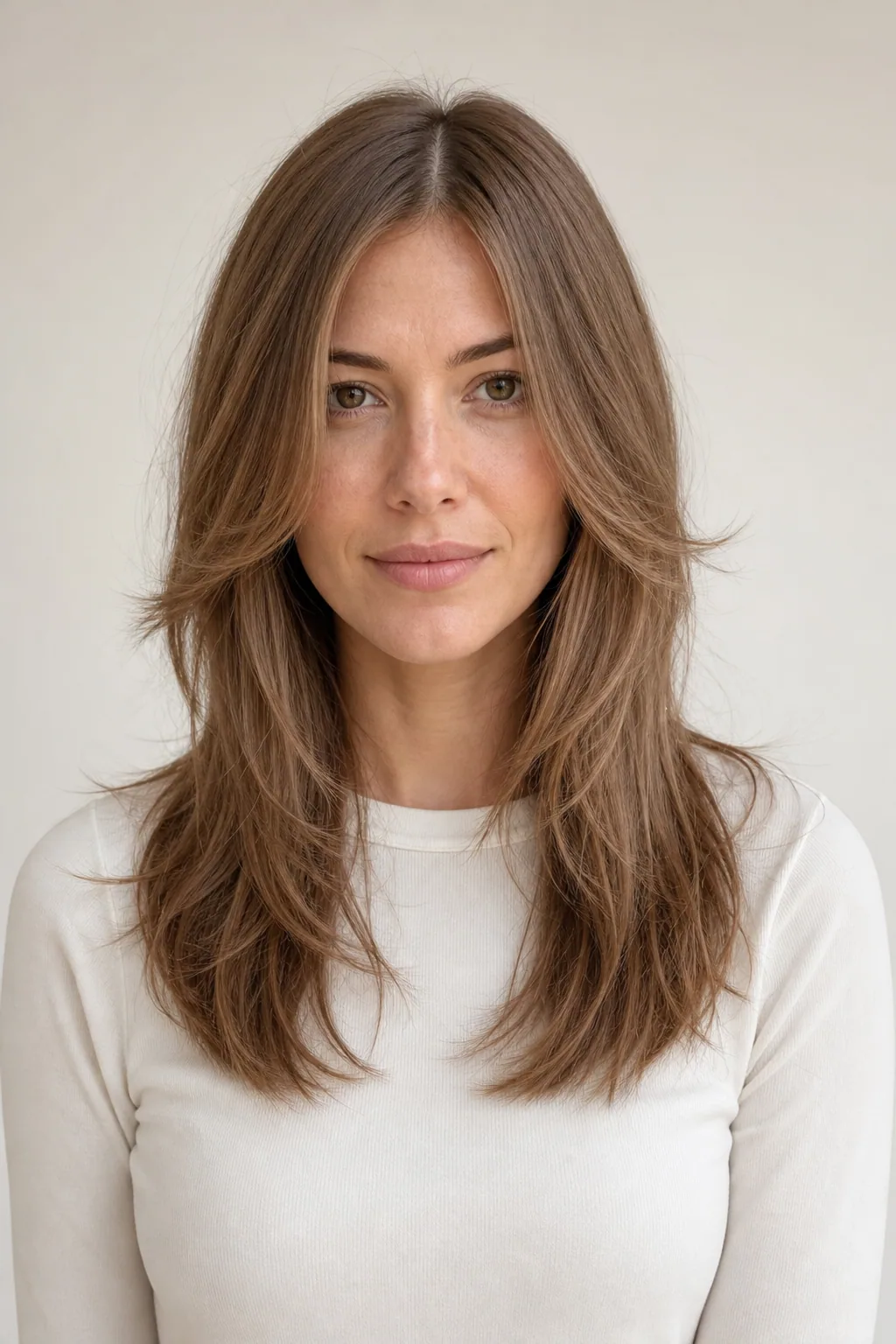
A center part and symmetrical face-framing layers that flick out.
If the roots go flat at a center part, move it a half-inch off-center. See where to part fine hair.
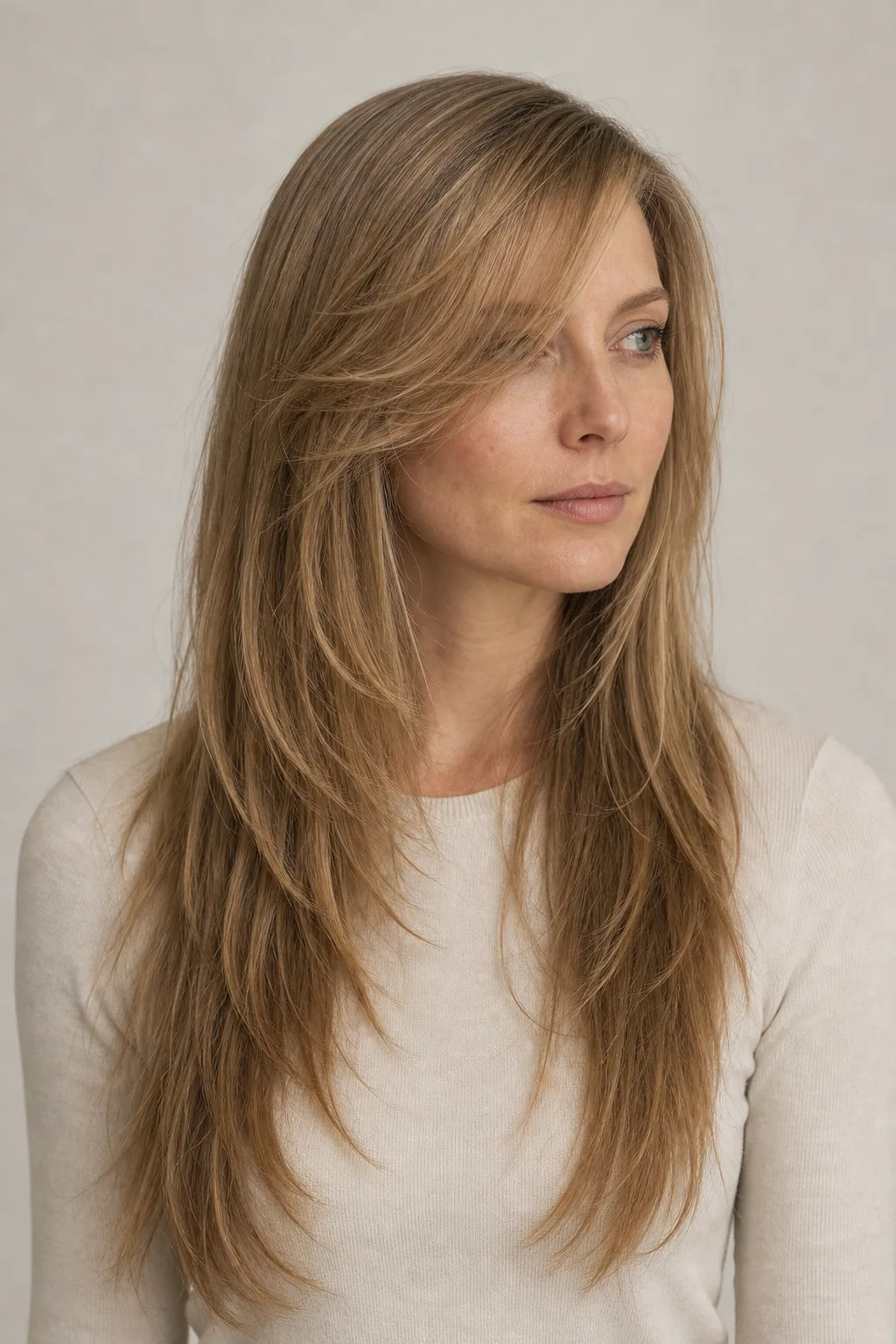
A deep side part throws more hair over the crown, and side-swept bangs hide a flat spot at the front.
Good if your hair won't sit in a center part. See side-swept bangs for fine hair.
Soft face-framing layers lift the features and blur a thinning part line.
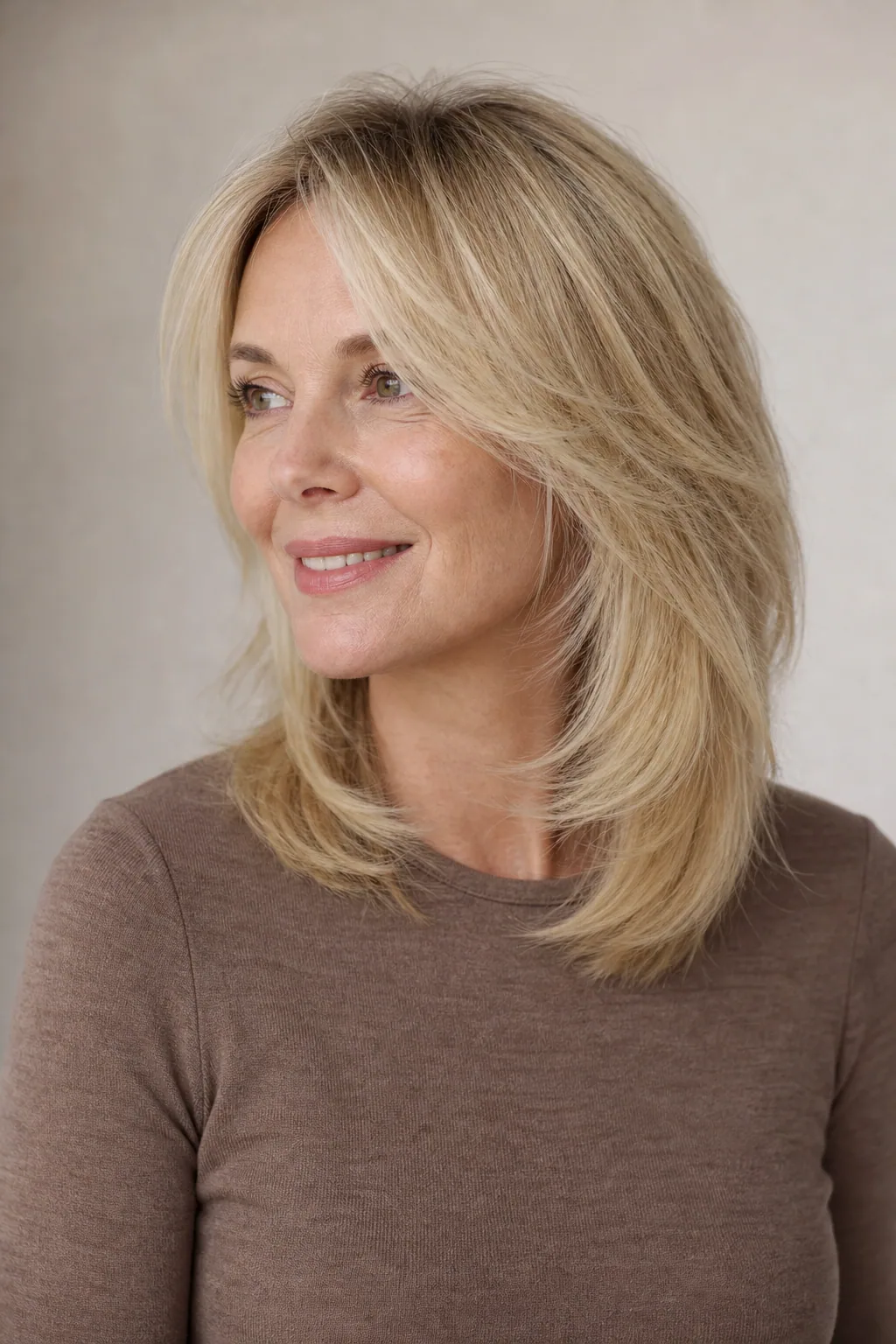
Blow-dried with a round brush, the hush cut looks like a soft, lifted shoulder-length cut.

Long side bangs and layers from cheekbone to chin. The rest stays full.
The hush cut is the softest of the four: wispy layers at the face and crown, full lengths below. A shag spreads choppier layers through the whole head. A wolf cut adds a short, mullet-like crown. A butterfly cut has a short face-framing tier over long lengths and is the closest relative. On fine hair, the hush cut and the butterfly cut take the least hair from the ends.
Say: "I'd like a hush cut for fine hair: soft, point-cut layers around my face and through the crown, but please keep the bottom two inches full and don't layer through the ends. No razor or thinning shears." Show a photo of a hush cut on hair as fine as yours, not on thick hair.
Spray a root lifter at the crown and rough-dry until it is almost dry. Then use a medium round brush on the face-framing pieces, rolling them away from the face. Finish with a light mist of texture spray and shake it out with your fingers. Ten to fifteen minutes. Trim every eight to ten weeks to keep the face-framing soft.
A Korean layered cut with soft, feathery layers around the face and crown and fairly full lengths underneath. It is usually collarbone to mid-back length, often with curtain or see-through bangs.
Yes, if the layers are kept to the face and crown. Layered through the ends, it makes fine hair look thin at the bottom.
A hush cut is softer and keeps more length and weight. A wolf cut has a short, choppy crown and a mullet-like shape.
Ask for soft, point-cut layers around the face and crown, with the bottom two inches kept full and no razor or thinning shears.
No. Curtain or see-through bangs are common, but the face-framing layers can stand on their own.
Every eight to ten weeks, so the face-framing layers stay soft and the ends stay full.

 SB
Eleven years behind the chair, specializing in short shapes and fine-hair texture. Simone believes the best haircut is the one you can style yourself in ten minutes.
More from Simone →Results vary with hair type, density and growth patterns. Haircut guidance is not a substitute for an in-person consultation with a licensed stylist, and sudden or heavy hair loss is worth raising with a doctor.
Hairstyle images in this guide are AI-generated illustrations, not photos of real clients or results. See our image policy.