Reviewed by Tara Sullivan · Updated September 2026 · 11 min read
A wash-and-wear haircut for thin hair over 60 is one that dries into its shape from a towel, with one product and no round brush. The cut does the work, so it has to be built for the texture your hair has now, which is often not the texture it had at 45.
Below are 14 wash-and-wear cuts sorted by length and texture, with the trim cadence for each and the words to use in the chair.
Chair-side note
The most common thing I hear from a new client in her sixties is that her haircut stopped working and she does not know why. She has had the same cut for ten years, from a stylist she trusts.
Usually the cut did not change. The hair did. It got finer, or straighter, or it suddenly started to bend and frizz. A wash-and-wear cut has to be recut for the hair on your head today.
SB
— Simone Baptiste, Senior Stylist
What makes a haircut wash-and-wear for thin hair over 60
"Wash-and-wear" means the shape shows up without styling. Three checks tell you whether a cut qualifies, and you can ask your stylist to prove each one before you leave.
It dries into shape. Comb it wet, let it dry on its own, and it already looks like a haircut.
It needs one product. A little mousse or root spray at most. If it needs a round brush and a flat iron to look right, it is not wash-and-wear.
It grows out softly. It still looks deliberate at eight to ten weeks, not only at two.
At 60 most of our clients can still blow-dry. They would just rather not, and they want a cut that looks right on the mornings they skip it. After 70 the reasons often shift to hands and shoulders, which is why our wash-and-wear haircuts for thin hair over 70 sorts cuts by effort instead.
Your texture after 60 decides the cut
Hormone changes around menopause affect how hair grows. A 2022 review of hormones and hair growth describes the hair's growing phase shortening as estrogen falls, which is part of why hair can feel thinner and behave differently after 50.
In the chair, that shows up in one of three ways. Hair gets finer and straighter and lies flat; hair develops a new, uneven bend and frizz; or incoming gray grows in wiry among fine pigmented strands. A wash-and-wear cut works with whichever you have, so each entry below says which texture it suits.
If your part is widening fast or you are shedding in handfuls, that is a density question, not a haircut question. Fine hair and menopause covers what is normal and when to see a doctor.
Short wash-and-wear haircuts for thin hair over 60
Short is the most wash-and-wear length there is, because fine hair lifts once the weight is gone. These five need fingers and a towel, and nothing else on most days.
1
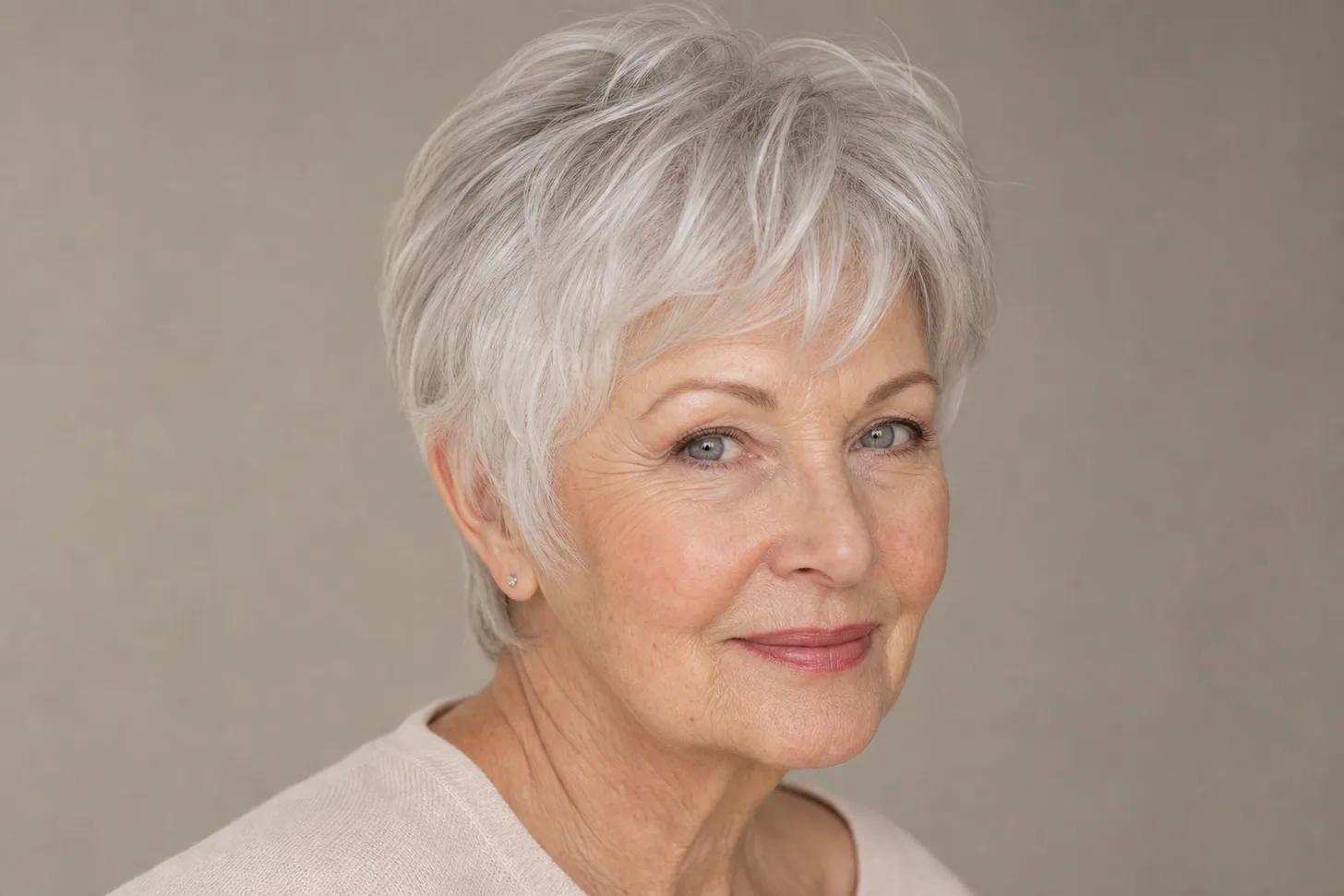
Soft point-cut pixie
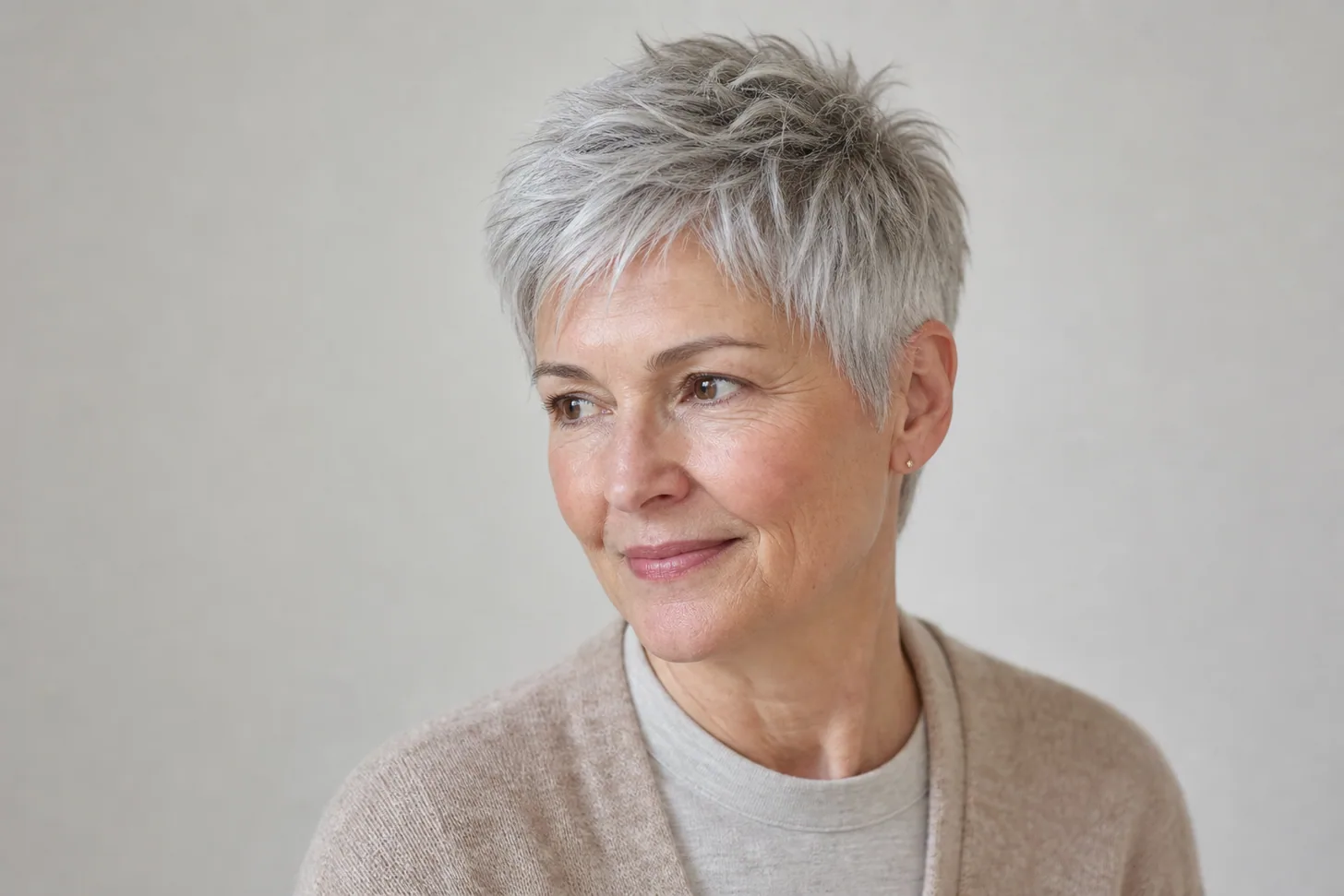
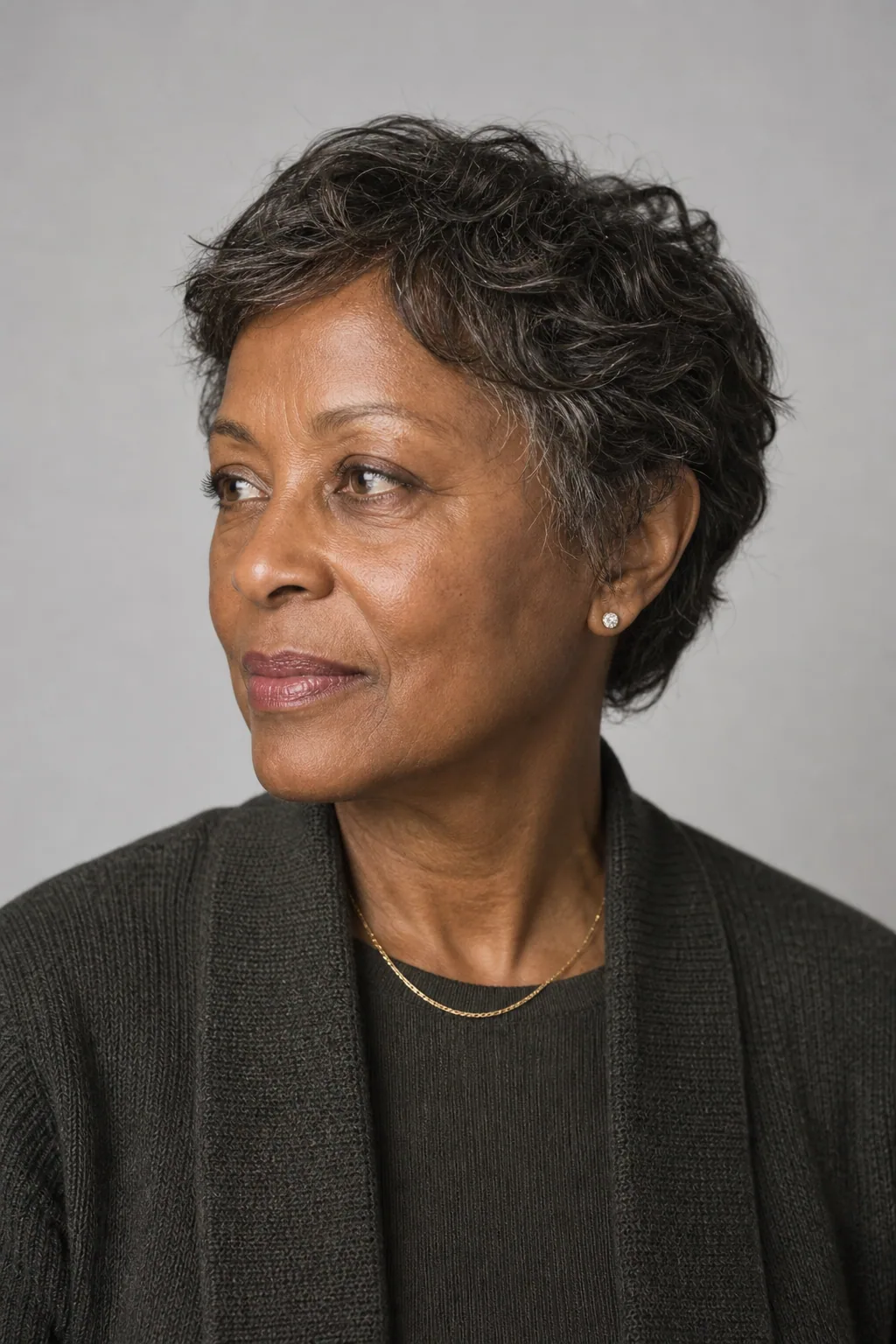
Short all over, with the crown left about an inch longer and point-cut so it stands rather than lies. On fine, straight hair this is the most reliable wash-and-wear cut there is.
It grows into a longer pixie rather than out of shape, so ten to twelve weeks between trims is realistic. More versions are in our pixie cut for thin hair gallery.
2
Textured crop with a forward fringe
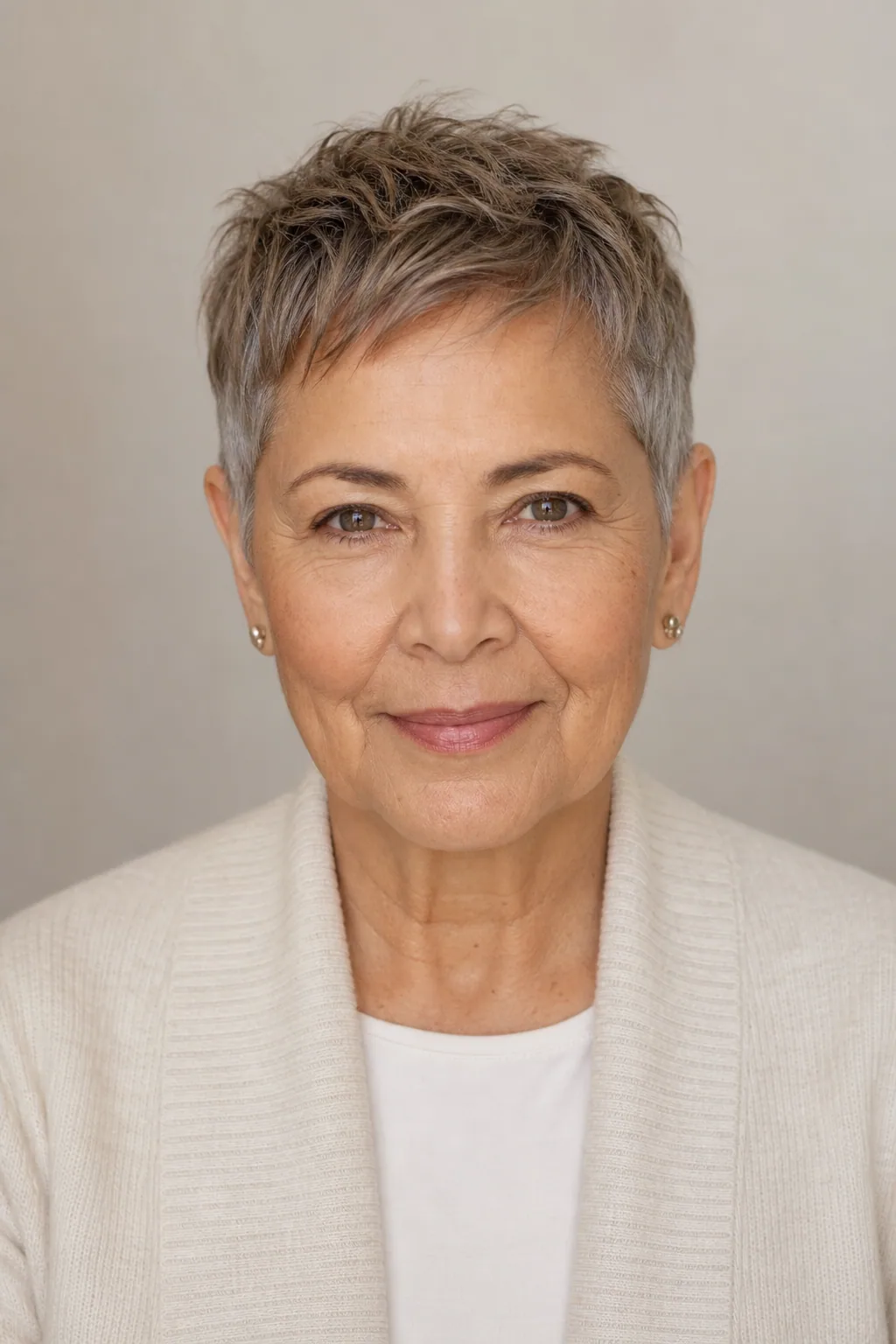
Close at the sides, two to three inches on top, finished by pushing it forward with your fingertips. The forward fringe hides a receding or thinning front hairline.
It suits straight hair that has gone flat. Trim every six to eight weeks, because a crop this short loses its line faster than a pixie.
3
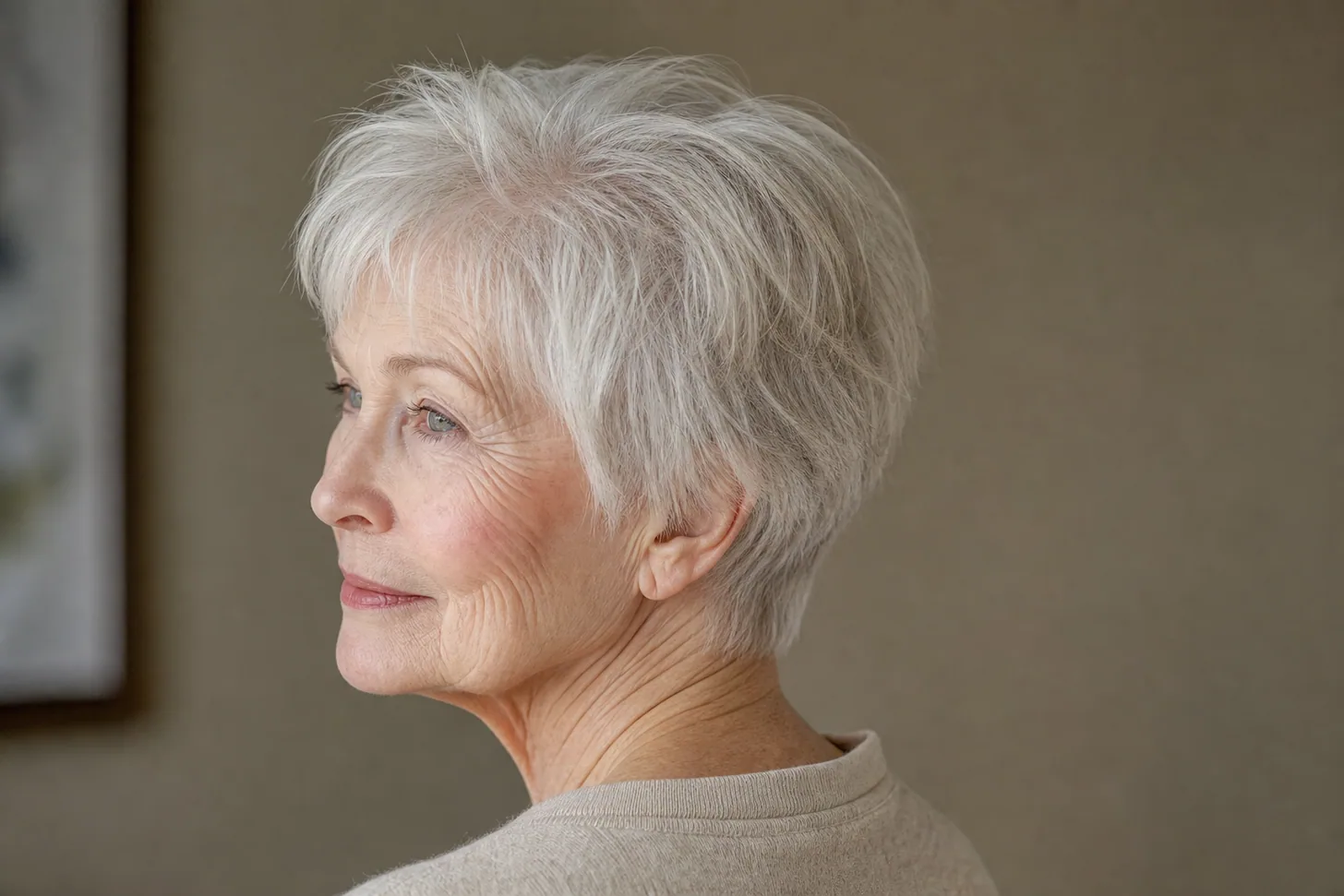
Grown-out pixie with a side sweep
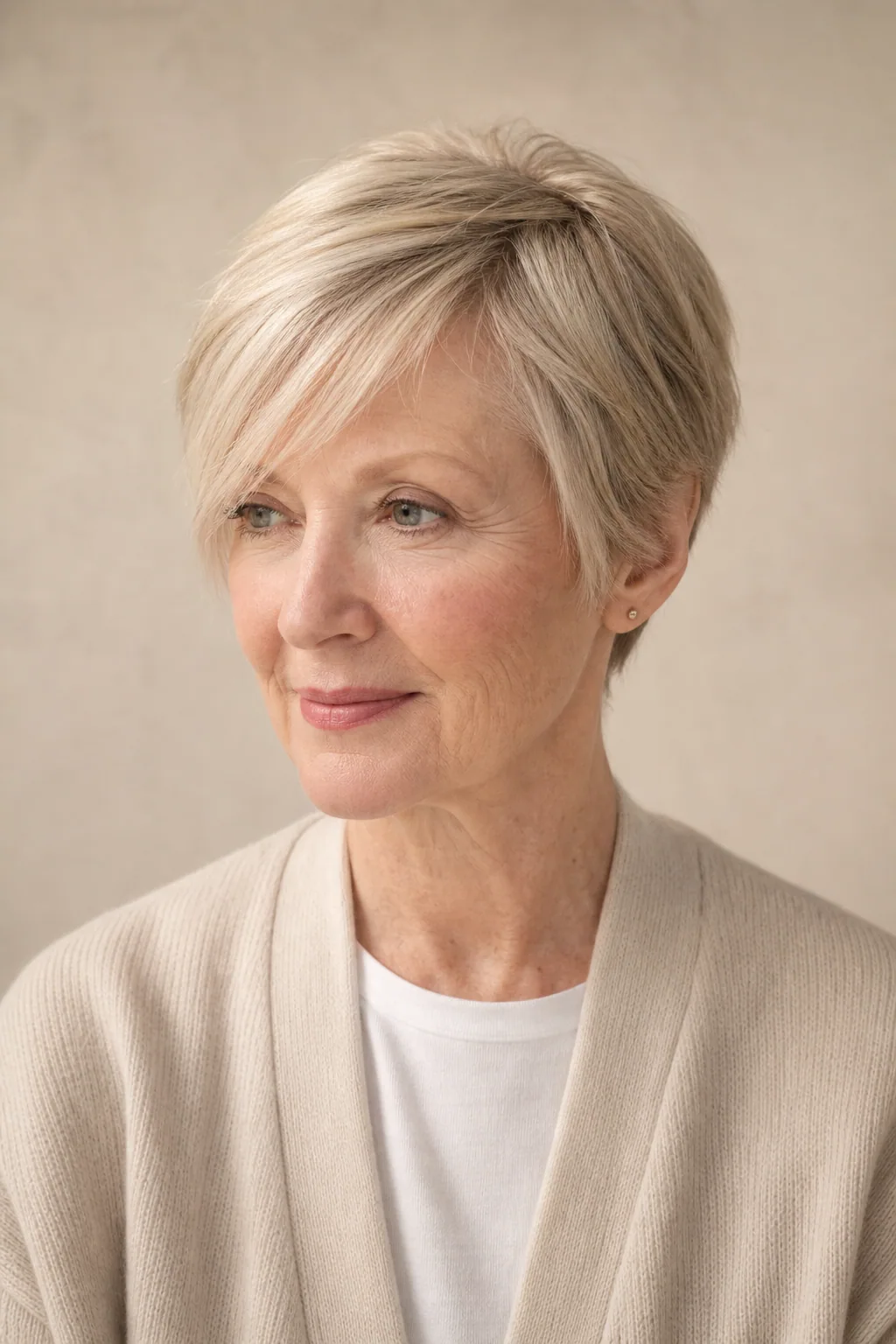
A longer pixie with the fringe swept across from a deep side part. The part flips the hair over, which lifts the root on the heavy side without any heat.
This is the gentlest short cut for someone who has never been above the jaw. It covers the ears, which many first-time pixie clients prefer.
4
Wavy pixie left to air-dry
Cut dry, curl by curl, so each bend falls where it grows. If your hair started to wave after menopause, a short cut is the easiest way to let it.
Scrunch a little light mousse into damp hair and leave it alone. Touching it while it dries is what turns a new wave into frizz.
5
Short shag with a soft crown
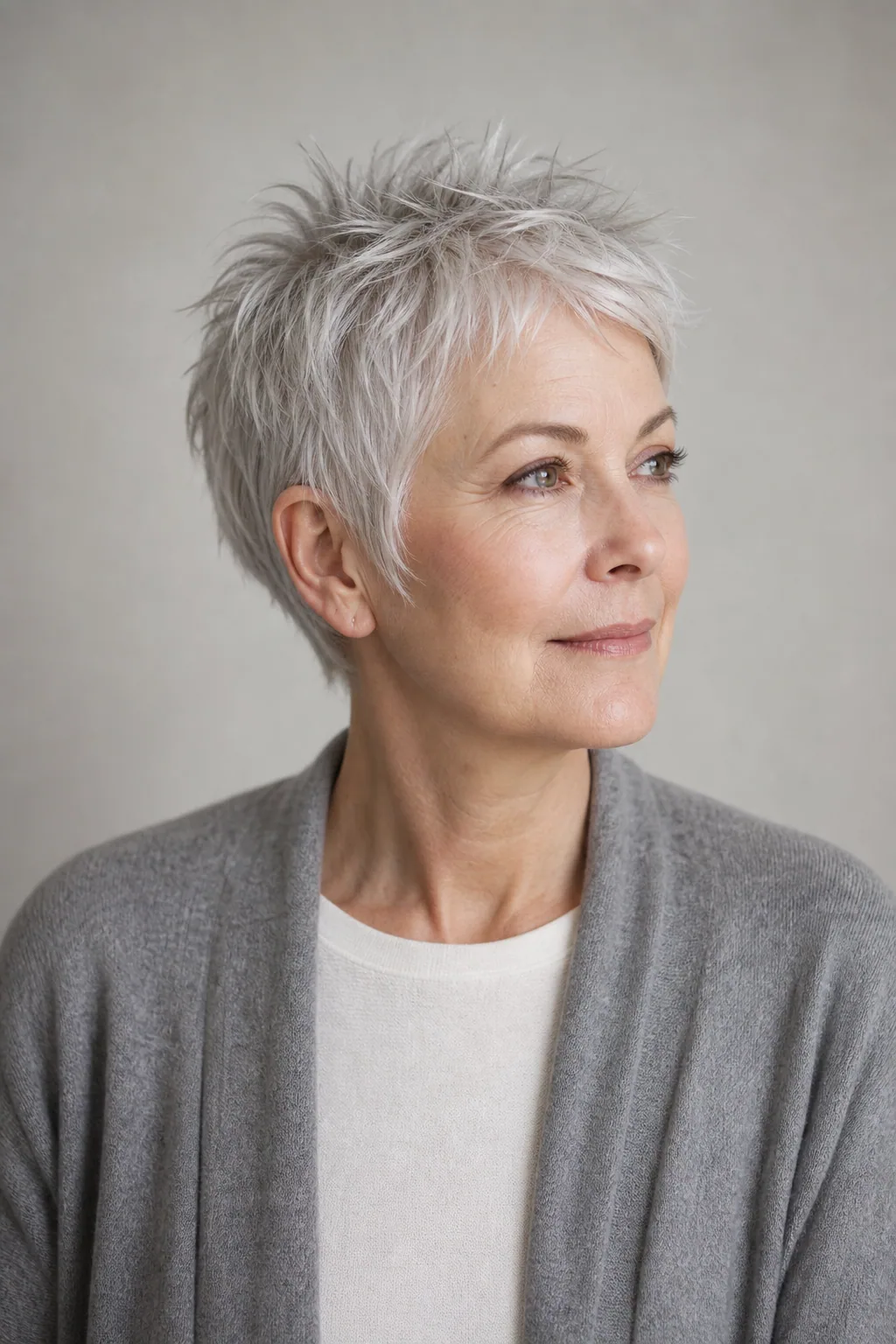
Ear-to-chin pieces with light crown layers and wispy bangs, worn tousled. Shags are built from texture rather than lines, so they grow out the most forgivingly of any short cut.
Ask for the layers to stay above the ear. On thin hair, layers that run all the way down make the ends see-through. Expect ten to fourteen weeks between trims.
Wash-and-wear bobs over 60
A bob only counts as wash-and-wear if it looks finished without a round brush. That rules out the precision one-length bob, which looks right for five or six weeks and needs a blow-dry to sit straight.
These four are softer at the edges, so they dry into shape and grow out without a hard line to break.
6
Soft graduated bob
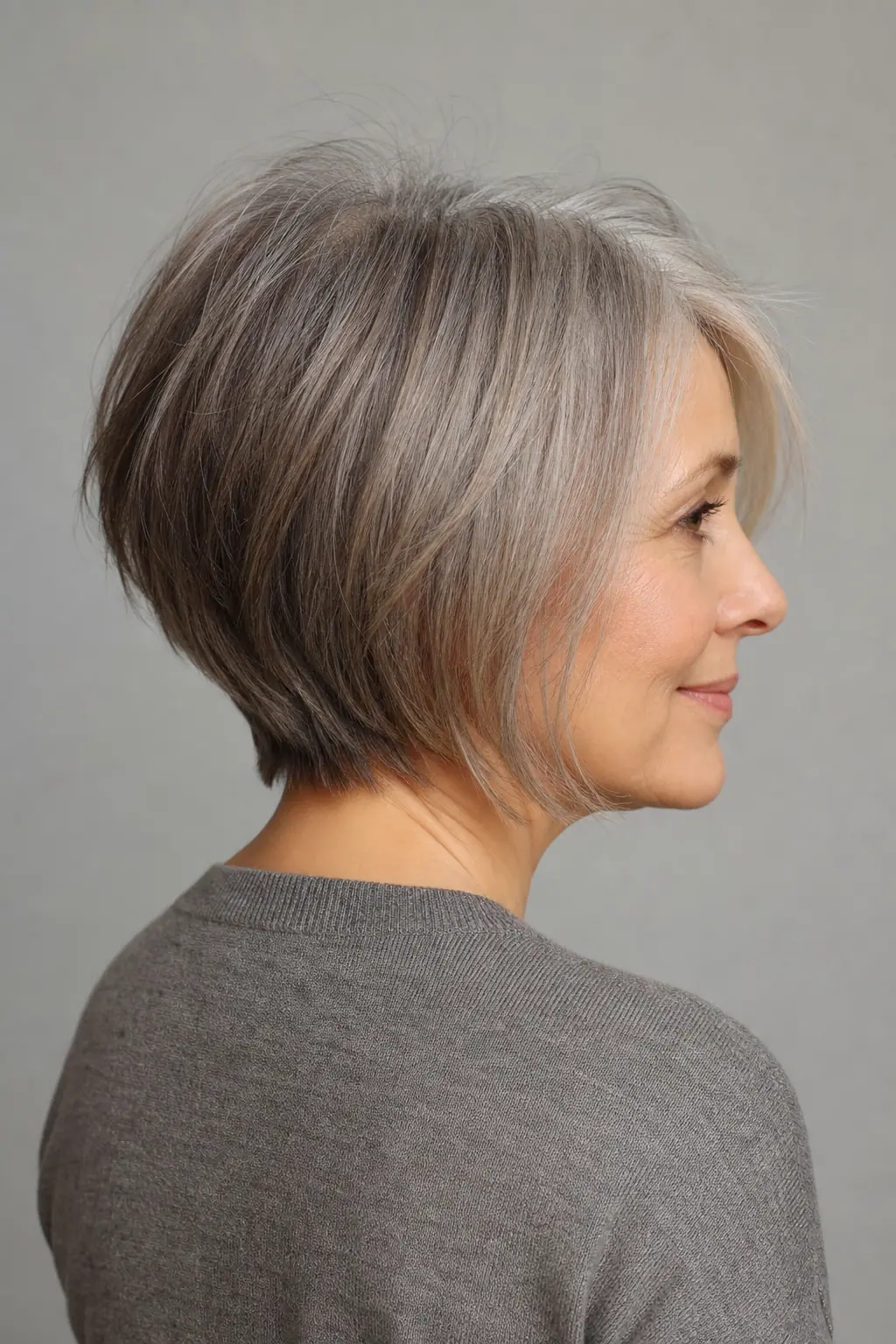
Gently stacked at the back so the crown lifts on its own, with the front falling to the chin. The graduation is the built-in volume, so there is nothing to blow into it.
Ask for the edge to be softened. A crisp graduation needs a trim at five weeks; a soft one lasts nine to eleven. See the stacked bob for fine hair for more.
7
Rounded chin bob with a side part
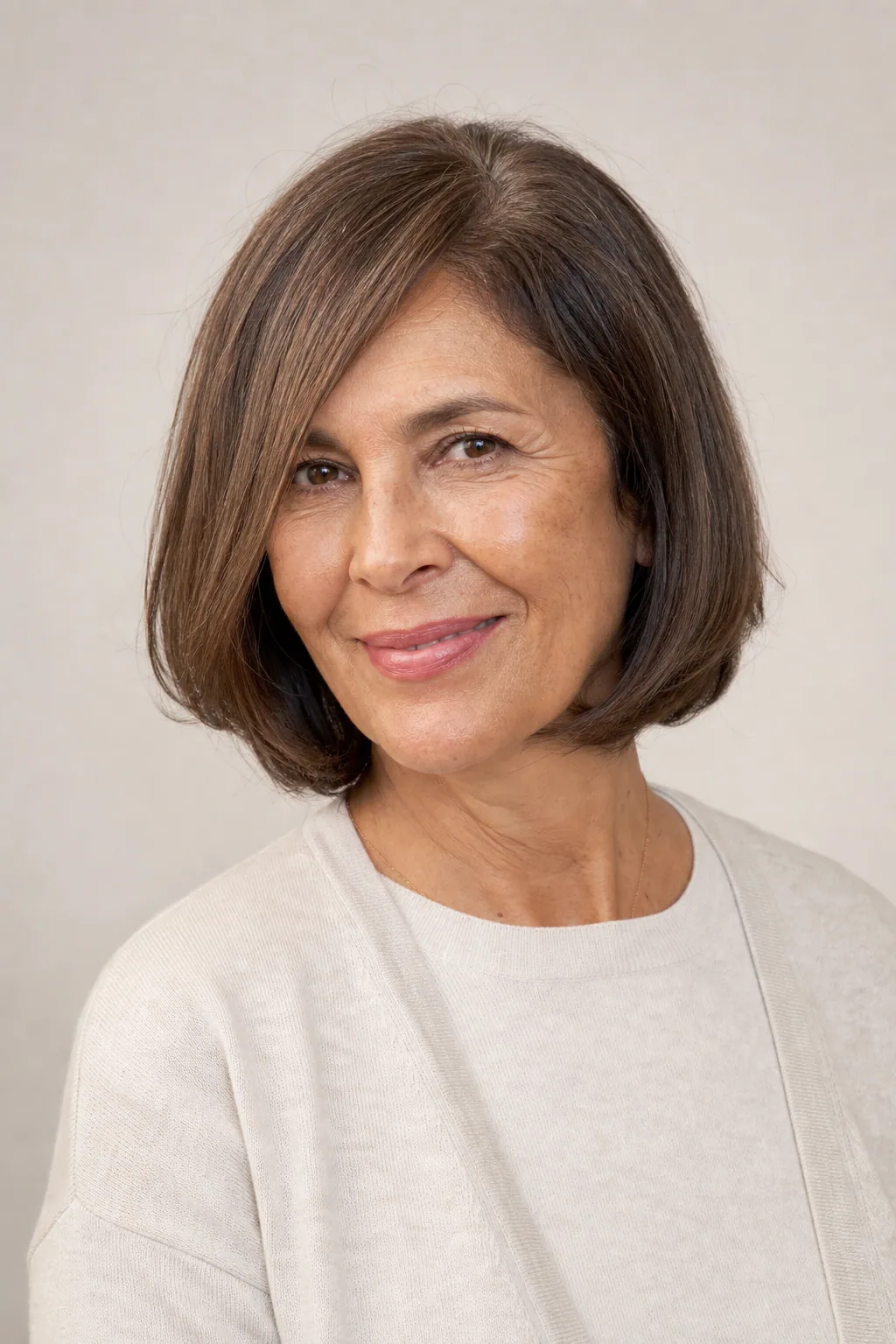
A chin bob with the ends lightly beveled so they turn under by themselves. The deep side part does the lifting, so no brush is needed.
It suits straight hair that has lost body. Switch the part to the other side between washes and you get fresh root lift for free.
8
Air-dry wavy bob
A jaw-length bob cut to where the wave falls, then left to dry. If your hair has started to bend, this is the bob that works with it instead of against it.
Scrunch in a little mousse, clip the crown for lift while it dries, and leave it. The wave hides how few strands there are.
9
Bob with long side-swept bangs
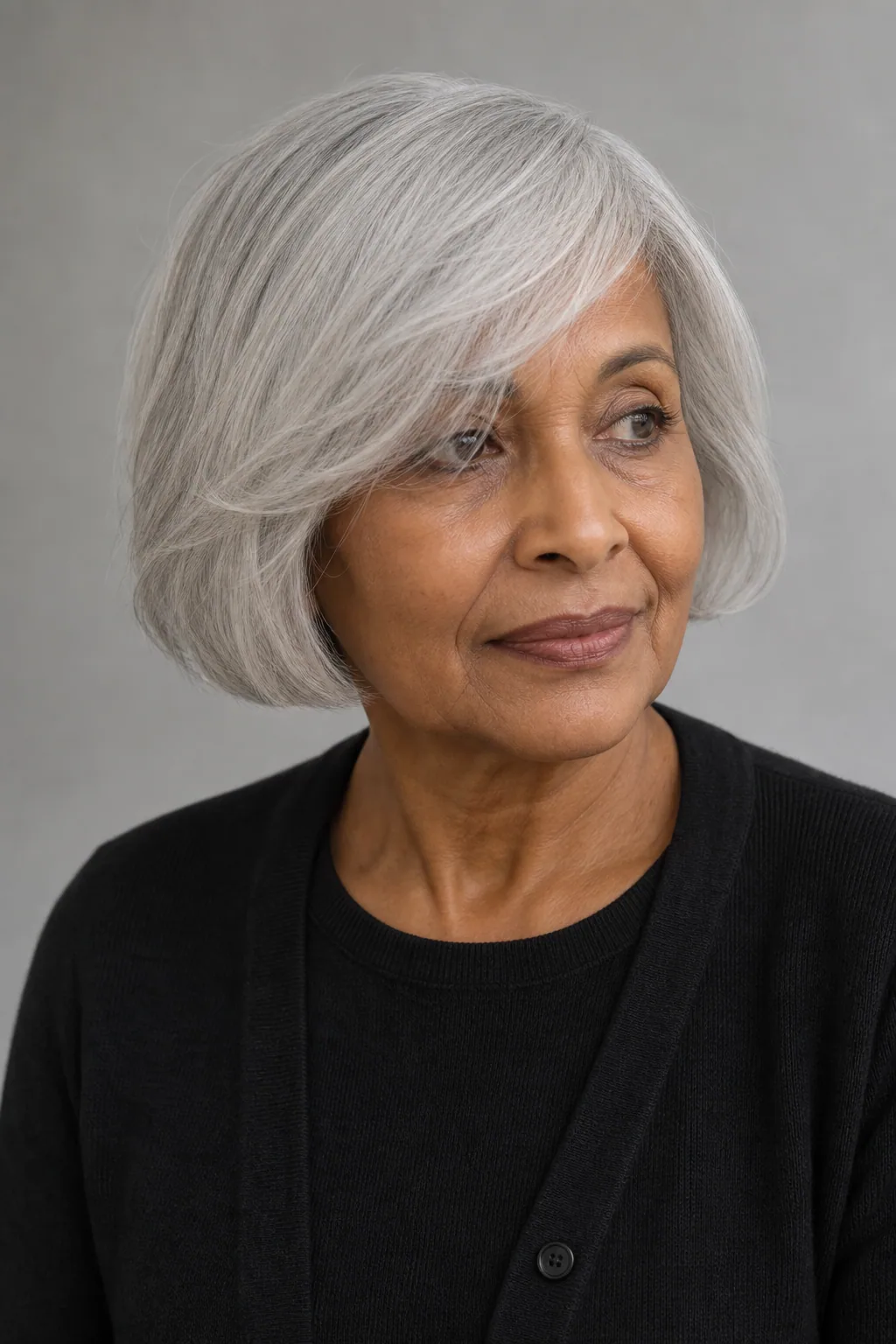
Long bangs cut to the cheekbone and blended into a soft bob. They cover thinning temples without taking a wide section from the crown.
Side bangs are the lowest-effort fringe, because they can be swept, tucked or pinned. More pairings are in bob with bangs for thin hair.
Wash-and-wear haircuts for fine hair over 60 with some length
Length is harder to wear with no styling, because its weight pulls fine roots flat. These three keep some length and still dry into a shape, as long as the hem stays full and the layers stay light.
10
Collarbone lob with invisible layers
A lob that grazes the collarbone, with the layers cut underneath where they lift without showing. The hem stays one length, so the ends look full.
It grows into a longer lob rather than out of a shape, so ten to twelve weeks between trims is fine. Our lob for fine hair guide has more.
11
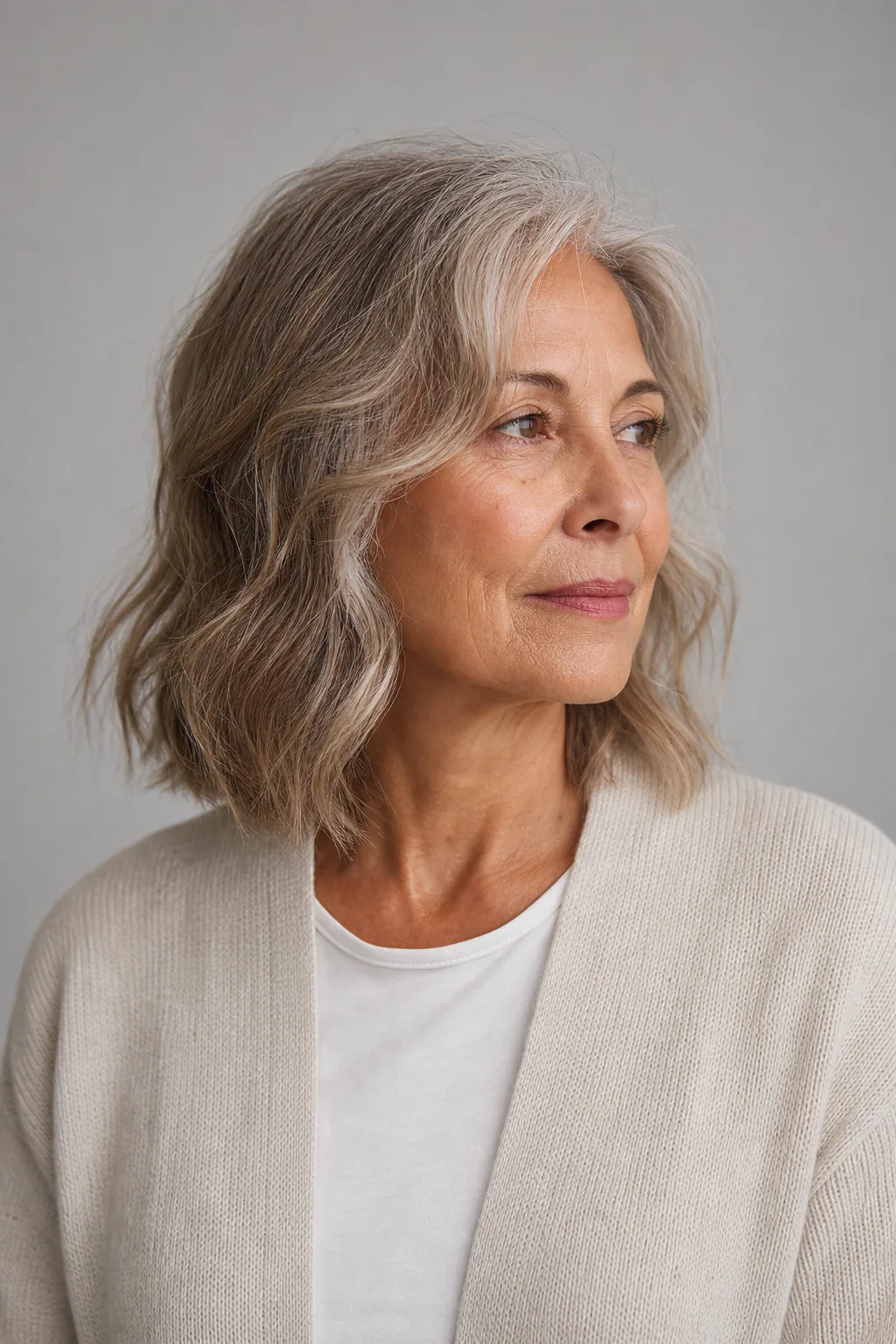
Soft shoulder-length shag
Shoulder length with soft layers at the crown and curtain bangs, worn tousled. It is the most forgiving medium cut to air-dry, because there is no line to keep straight.
It needs some wave to work. On very straight fine hair, a shag can look stringy without a daily blow-dry, so choose the lob instead.
12
Shoulder-length cut with face-framing
One length at the shoulder with face-framing pieces from the cheekbone down. The framing does the work a blow-dry would do, putting shape where people look.
Hair that starts to wave after menopause is a gift for wash-and-wear, if the cut lets the wave form. The mistake is cutting it like straight hair and then fighting it every morning with a flat iron.
13
Wavy lob cut dry
A lob cut dry, so the stylist can see where each wave lands and keep the hem even. Wet-cut wavy hair often dries into a jagged, uneven line.
Plop it in a cotton T-shirt for ten minutes after washing, then let it finish on its own. Our fine wavy hair guide explains the routine.
14
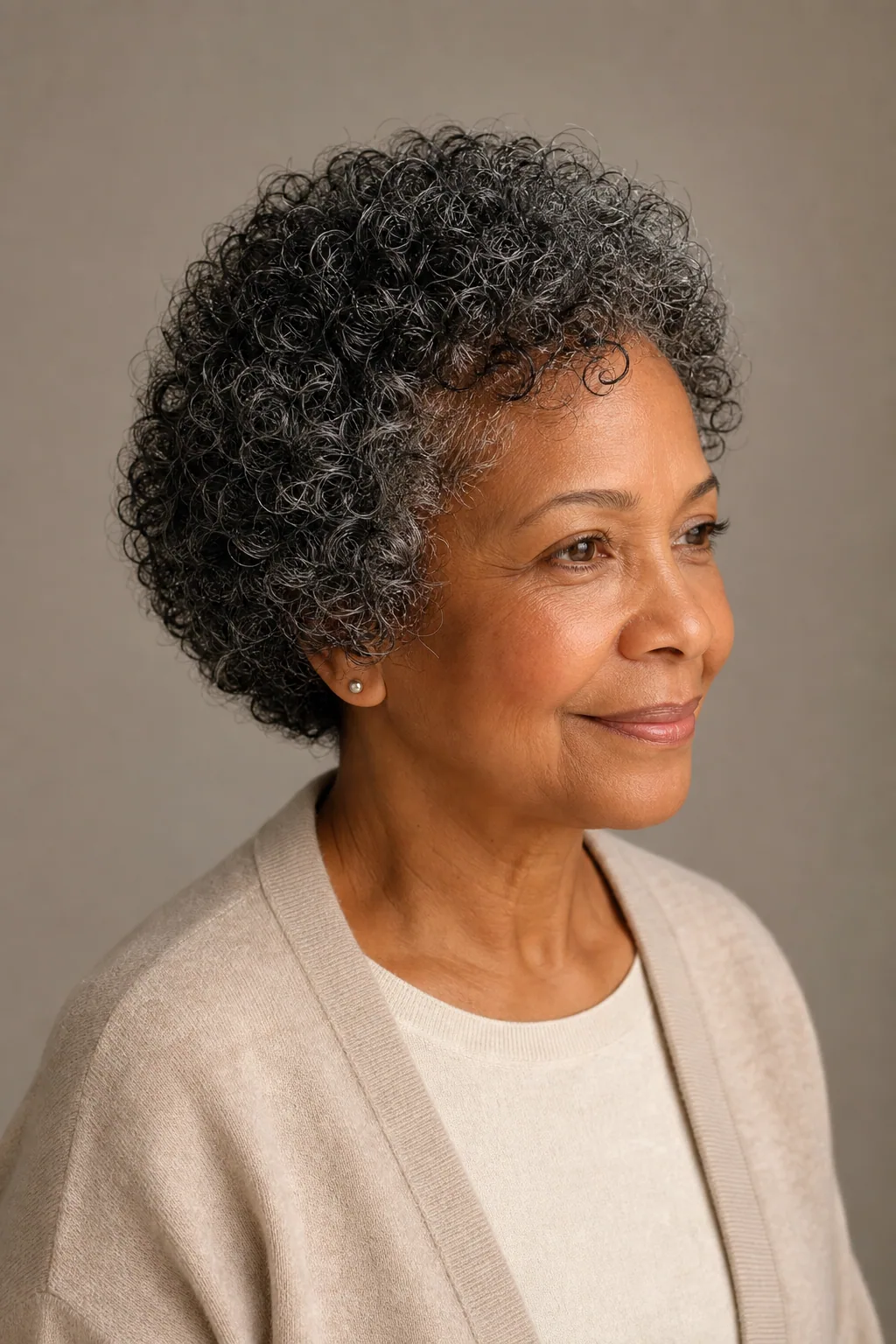
Curly chin-length cut with lift
A rounded chin-length curly shape, cut so the weight sits at the crown and not the ends. Fine curls go triangular when the weight is at the bottom.
Wash, add a light curl cream, and leave it. See thin curly hair for the products that will not drag fine curls down.
The two-minute finish for wash-and-wear cuts
Every cut above dries into shape on its own. These three steps make it look deliberate rather than just dry.
One product, at the root. A golf-ball of light mousse or a few sprays of root lifter on damp roots. Nothing heavy on the ends.
Lift the crown while it dries. Push the crown up with your fingers, or put one velcro roller or clip there for ten minutes.
Finish with your fingers. Break up the front and the part with your fingertips. A brush smooths fine hair flat again.
A soft edge grows out gracefully, and a hard edge does not. That matters more than length: a soft pixie or shag can go ten to fourteen weeks, a soft graduated bob nine to eleven, and a precision blunt bob or tight crop only five to six.
If getting to the salon is the hard part, choose from the soft shapes. The shortest cut is not always the lowest-maintenance one.
What to ask your stylist
Say: "My hair is fine and it has changed texture. I want a cut that dries into shape with no round brush, with soft edges that grow out well. Please point-cut rather than use thinning shears or a razor."
Then ask to see it air-dried before any styling. Whatever it looks like then is what you will have at home, so that is the cut to judge.
When a wash-and-wear cut is the wrong call
You enjoy styling and do it well. A cut built for blow-drying, like a precision bob, can look sharper. Wash-and-wear trades some polish for ease.
Your crown is noticeably thin. No cut hides it with zero styling. A crown clip or a topper does more. See haircuts for a thinning crown.
Your hair is changing fast. If the texture or density is still shifting, keep the cut soft and mid-length for a few months before you go very short.
You want to keep long hair. Long fine hair almost always needs some styling. Our long hairstyles for fine hair over 60 guide is honest about the daily cost.
FAQ
A soft point-cut pixie, for most people. It lifts on its own because there is no weight to pull fine roots flat, and it grows into a longer pixie rather than out of shape. If you want more length, a soft graduated bob is the next most reliable.
Yes. A collarbone lob with invisible layers, a soft shoulder-length shag if your hair waves, or a shoulder-length cut with face-framing all dry into shape. Keep the hem full and the layers light, and expect a little more work than a short cut.
Usually because your hair changed, not the cut. Around menopause many women find their hair gets finer, straighter, or newly wavy, and gray hair grows in with a different feel. Ask your stylist to recut the shape for the texture you have now.
It depends on the edge. Soft shapes like a point-cut pixie or a shag can go ten to fourteen weeks. A soft graduated bob lasts nine to eleven weeks. Precision cuts and tight crops need a trim every five to six weeks.
Often better than for straight hair, because the wave adds body with no heat. Ask for the cut to be done dry so the stylist can see where the waves fall, and use only a light mousse or curl cream.
Ask for a cut that dries into shape without a round brush, with soft, point-cut edges, and no thinning shears or razor. Then ask to see it air-dried before any styling, and judge it on that.
Eleven years behind the chair, specializing in short shapes and fine-hair texture. Simone believes the best haircut is the one you can style yourself in ten minutes.
Results vary with hair type, density, and growth patterns. Hairstyling guidance is not a substitute for an in-person consultation with a licensed stylist, and sudden or heavy hair loss is worth raising with a doctor.
Hairstyle images in this guide are AI-generated illustrations, not photos of real clients or results. See our image policy.
Get the good hair intel
One honest, stylist-written guide in your inbox each week. No hype.

 SB
SB