Reviewed by Tara Sullivan · Updated August 2026 · 10 min read
Almost everything written about wedding hair is written for the bride, and it assumes three things a bridesmaid does not have: a brief you wrote yourself, a trial, and as long in the chair as the style needs. A bridesmaid works to someone else's brief, on rationed time, and is then photographed in a line-up beside other people's density — which is the one part of the day where fine hair is genuinely at a disadvantage, and the one part nobody prepares you for.
The 14 styles below are sorted by the constraint they solve rather than by shape: five for a twenty-minute booking, five built to survive from the ceremony to the last dance, and four for short, bob and lob-length fine hair. If you are the bride or the mother of the bride, our guide to wedding and mother-of-the-bride styles for fine hair is the one written for your side of the day.
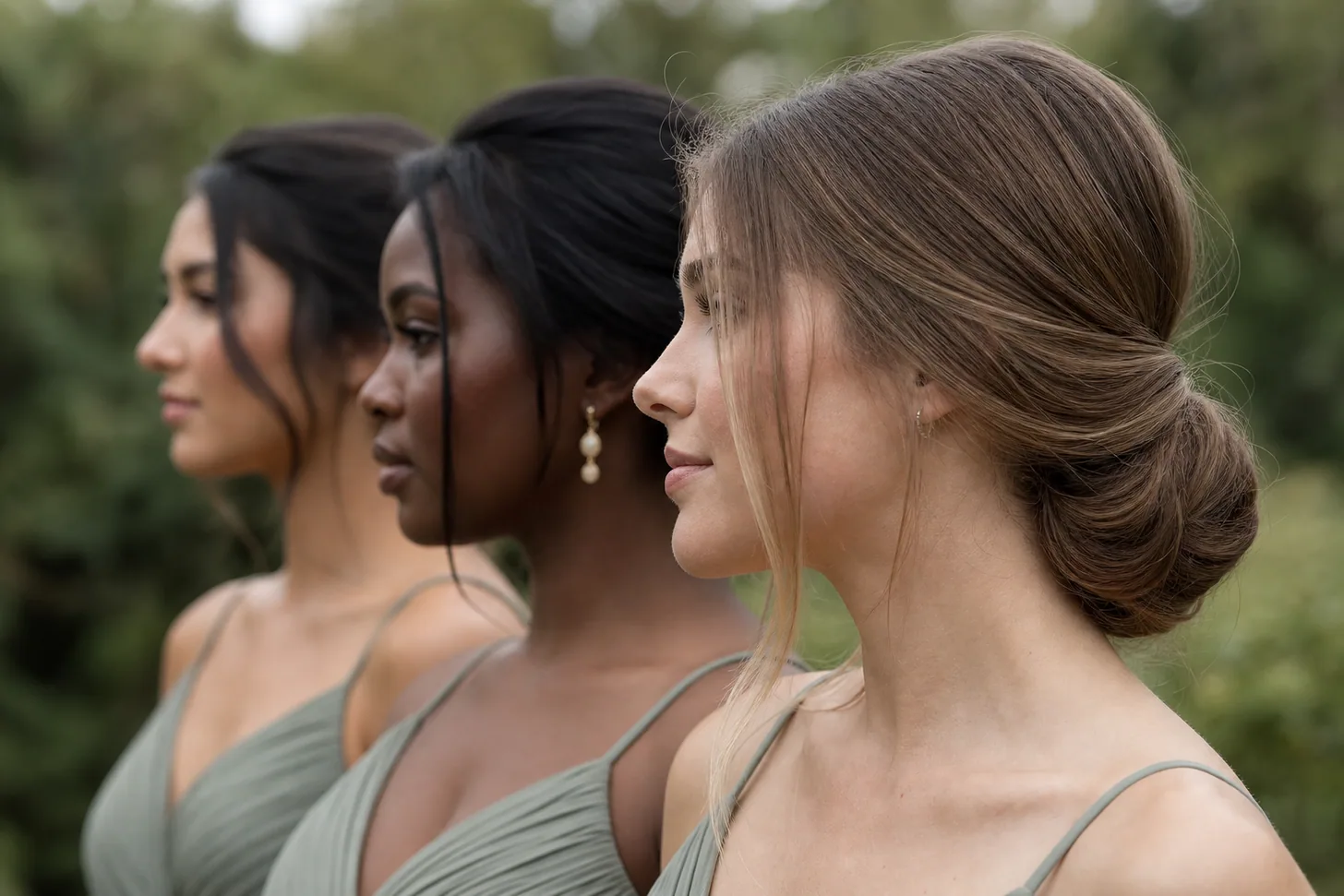
The line-up is where density differences show. Height and width in the outline are what close the gap — not more hair.
Chair-side note
When I style a bridal party, the bridesmaids get somewhere between fifteen and twenty-five minutes each, in an order set by whoever is running the morning. The fine-haired ones are almost always the people who arrive with clean, freshly washed, still slightly damp hair — because they have been told all week to look nice — and that single decision costs them half their slot and most of the hold. Come to me with day-old hair, fully dry, roughly textured.
I can build on that in twelve minutes. I cannot build on hair that was washed an hour ago, and if I try, it will be resting on your shoulders by the speeches. The bride is allowed to be precious about her hair that morning. You have to be practical about yours, and practical starts the night before.
SB
— Simone Baptiste, Certified Bridal Stylist
Why bridesmaid hair is a different problem from bridal hair
Bridal hair is a commission. Bridesmaid hair is a constraint, and there are three of them. The brief is not yours. Someone else has chosen a mood, and often a specific photograph, and the polite assumption is that everyone in the party can wear it — which is true of a mood and untrue of an execution.
The time is rationed. A group booking divides a morning between four or five heads, so the deciding question stops being what suits you and becomes what a stylist can build quickly, or what you can build yourself before anyone else is awake. And the photograph is comparative. A bride is photographed alone for most of the day; a bridesmaid is photographed in a row.
None of these are reasons to worry — they are just a different set of things to solve, and they are solvable in advance rather than on the morning. The prep that makes any of it hold is the same prep in how to add volume to fine hair, and the pinning technique behind every style here is in easy updos for fine and thin hair.
The line-up problem, and what it actually means for fine hair
This is the part worth understanding properly, because it changes what you should ask for. In a group photograph everyone is lit the same way, stood at the same distance, and reduced to roughly the same size in the frame — which turns hair into silhouette.
Silhouette is unkind to fine hair in a way that mirrors are not: standing at your bathroom mirror you see shine, colour and movement, none of which survive being shrunk to two centimetres of outline in a group shot. What survives is the shape of the edge.
Which means the goal is not to look like you have more hair. It is to occupy more outline — and outline is built from width and height, both of which are free. A bun spread flat and wide takes up more edge than the same hair coiled tight. A braid pancaked before it is pinned doubles its silhouette without a single extra strand.
Crown lift gives the top of your head a curve instead of a flat line, and that curve is the single most visible difference between a fine-haired bridesmaid and a dense-haired one in a row of five. The corollary is the thing to refuse: anything slicked, scraped or sleek reduces your silhouette to the shape of your skull, which is the one shape where density differences are total.
These are chosen for a low pin count and few anchor points. A style with six well-placed pins can be built fast and corrected fast; a style with forty small ones needs a calm hour nobody has on a wedding morning. Each of these also survives being built quickly, which is a separate property and the more important one.
simple two-pin twist-back on fine light-brown hair with soft crown height, side view, wedding morning daylight
1
The two-pin twist-back
The fastest style in this list and the one I reach for when the schedule has slipped. Two sections from the temples, each twisted back and pinned to meet in the middle, over a crown that has been lifted first. It takes five minutes, it holds because the twists brace against each other rather than against the pins, and it keeps length visible for the photographs. Ask for the twists to be pulled slightly loose after pinning — a tight twist on fine hair looks like a cord rather than a section.
low ponytail with the elastic wrapped in a strand of hair, tail fanned wide, on fine blonde hair, back view
2
The wrapped low ponytail that reads as an updo
A low ponytail with the elastic hidden under a wrapped strand, then the tail fanned wide rather than left to hang in a rope. From the front, and in every group photograph taken from more than a few feet away, it reads as a finished occasion style rather than as a ponytail — the wrap is what does it. Set the tail with a bend rather than leaving it straight so it holds width. The full set of fuller-looking versions is in ponytails for fine hair.
rope-twisted half-up on fine wavy hair, twists spread wide across the back of the head, soft daylight
3
The rope-twisted half-up
Two rope twists — each made from two strands wound around each other — taken from the front hairline and joined at the back. Rope twists suit fine hair better than braids do at speed, because they build width as they are made and they do not need the tension a three-strand braid needs to stay tidy. Loosen each one along its length before pinning. This is the occasion version of the shapes in half-up hairstyles for fine hair.
folded low knot at the nape on fine straight brown hair, wide flat shape, a few loose tendrils at the temples
4
The folded nape knot
Gathered low, folded up against the head rather than coiled, and pinned through the fold. It is quick because the fold gives the pins several layers to bite through immediately, so it is secure at pin three rather than pin fifteen. It is also flatteringly wide instead of round, which is exactly the silhouette a line-up photograph rewards. Leave two fine pieces out at the temples before pinning, never after.
dutch-braided crown fading into loose length on fine light hair, braid pancaked wide, three-quarter view
5
The pancaked crown braid into loose length
A single Dutch braid across the crown, pancaked wide, with the length below left down. One braid is quick, and pancaking it — gently pulling each loop outward once the braid is tied — is where all the width comes from. It solves the common bridesmaid brief of hair down while giving you a crown shape that survives the photographs. How to keep a braid looking full on fine hair is covered in braids for fine hair that don't look thin.
Five styles built to last from the ceremony to the last dance
A bridesmaid day runs longer than a bridal photoshoot and involves more physical contact than anyone plans for — hugging, lifting, dancing, carrying things. These five are the ones I have watched hold. The common feature is that all of them are anchored to a hidden foundation rather than to loose hair.
soft overnight-set waves brushed out on fine shoulder-length hair, full at the root, morning light
6
The overnight set, brushed out at dawn
If the brief is hair down, this is how to do it. Set the night before on heatless rollers or damp braids, sleep on it, and brush it out in the morning — a set that has cooled and dried in shape holds for hours longer than one curled with an iron at eight o'clock. Brushing it out rather than leaving the curls separate is the part people skip, and it is what turns ringlets into the soft body a bridesmaid photograph wants. Method in heatless volume for fine hair.
half-up style with visible crown height built over a hidden teased base on fine hair, side profile
7
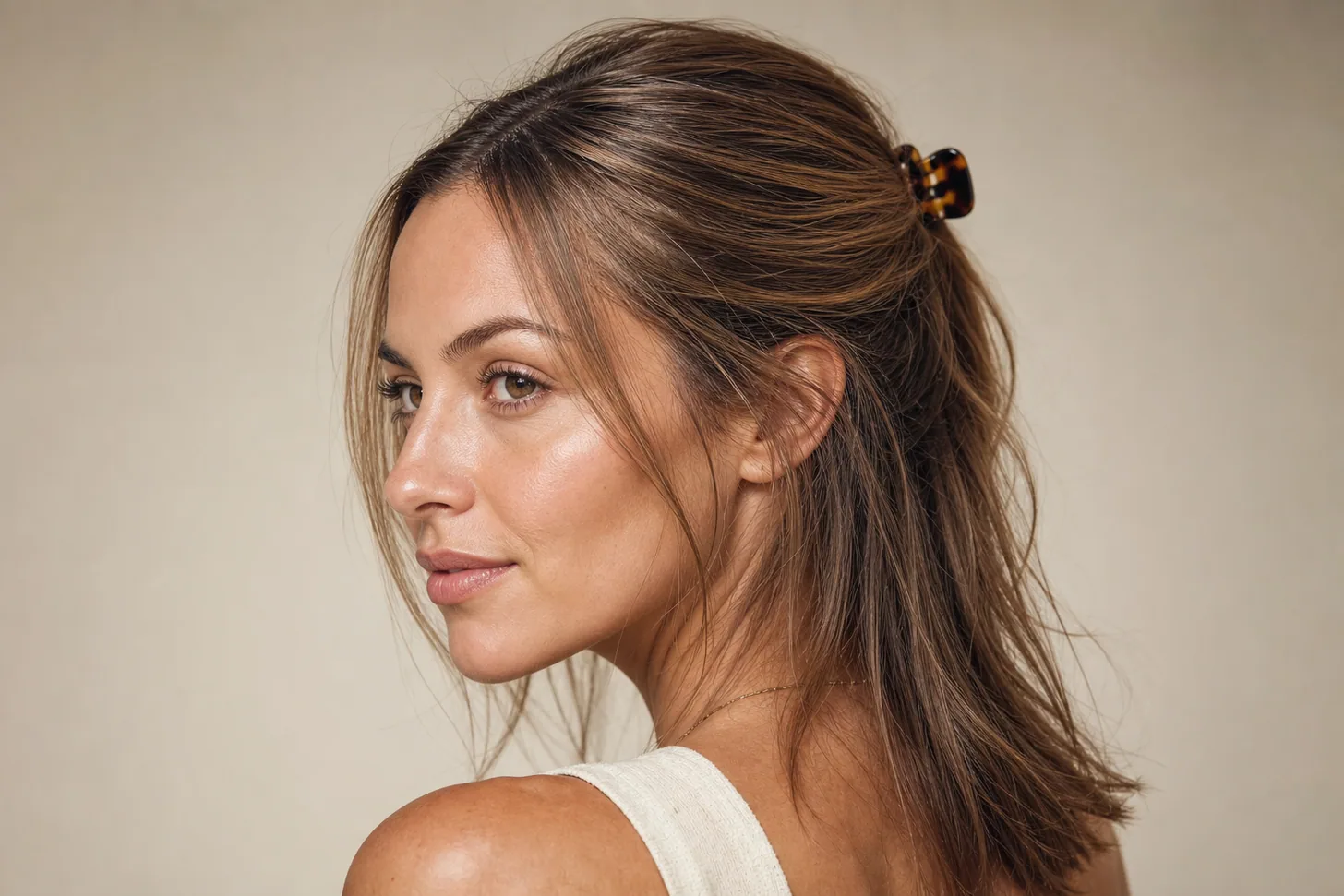
The half-up over a hidden bump
The strongest all-day compromise there is: crown height where the line-up photograph reads it, length still visible, and nothing resting on your shoulders to be pulled loose by a hug. The bump underneath is either lightly teased hair or a small padding piece, and the half-up section is pinned into that, not into the loose hair around it. That single distinction is the difference between a style that holds to midnight and one that slides at four. Teasing technique, done safely on fine hair, is in how to tease fine hair without damaging it.
low bun spread wide and pancaked on fine light-brown hair, soft and full rather than round, back view
8
The spread low bun
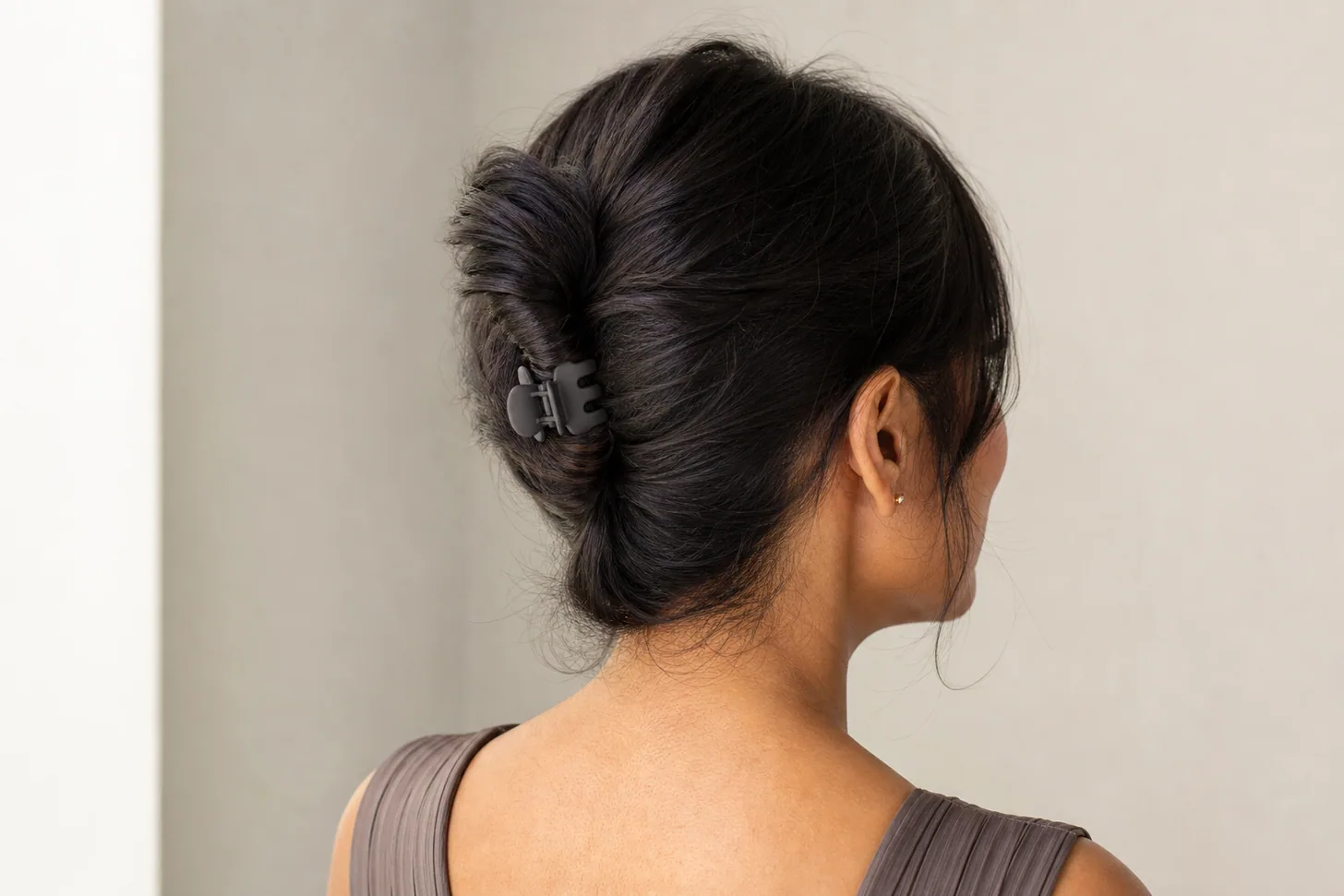
A low bun that has been deliberately flattened and widened after pinning rather than left as a tight coil. It is the same amount of hair occupying nearly twice the outline, it is comfortable enough to sit against a chair back all evening, and it is very hard to dislodge because the pins sit inside a broad shape rather than at the edge of a small one. Take it low, not mid-height — a low bun cannot droop, because it is already there.
deep side part with a set wave sweeping across the forehead on fine hair, glamorous but soft, warm light
9
The deep side part with a set wave
Moving the part further over than you normally wear it lifts the hair on the heavy side off the scalp and gives you height for nothing. Add one deep set wave through the front and the effect is dressed without being a project. This is the highest-return, lowest-effort thing on the list for anyone whose brief is essentially hair down and pretty. It does need to be moved a day or two ahead so the roots stop remembering the old part — see where to part fine hair.
soft low french roll on fine straight hair with volume lifted at the crown, elegant three-quarter view
10
The soft French roll, taken low
A roll is structure, and structure is what fine hair benefits from most on a long day — the shape supports itself instead of relying on pins to hold hair against gravity. Taken low and left soft rather than pinned tight, it is also one of the few genuinely formal styles that does not expose the scalp. Build the crown height before you roll, not after; once the roll is pinned, adding lift means starting again.
Chair-side note
Every bridal party has a shared kit and it is always the same four things, none of which are what fine hair needs. Bring your own small bag: a travel-size flexible hairspray rather than the freeze-hold can somebody's aunt bought, six matte bobby pins in your own colour because the shared box is always shiny black, a fine-tooth comb for one discreet re-tease before the reception, and dry shampoo at the roots only for the same moment.
That is the entire toolkit, it fits in a clutch, and it is the difference between re-pinning your own hair in ninety seconds and asking a stylist who left at noon. The picks that actually grip fine hair are in hairspray for fine hair and clips and pins that hold in fine hair.
SB
— Simone Baptiste, Certified Bridal Stylist
Four for short, bob and lob-length fine hair
The bridesmaid with short hair is the one the group plan forgets, and she is usually offered extensions so she can match. She rarely needs them. Short fine hair holds its own structure, which means it is often the most reliable head in the party by the end of the night — it just needs to be treated as a deliberate look rather than as a problem to be corrected.
chin-length bob on fine hair with a set bend through the ends and one side pinned behind the ear, occasion styling
11
The bob with a set bend and a pinned side
One bend set through the mid-lengths, one side pinned behind the ear, and the bob is dressed. The bend is what stops a fine bob reading flat in photographs, and the asymmetry of a single pinned side is what makes it look intentional rather than tidy. Set the bend the night before if you can; it holds far better cool than warm.
lob-length fine hair in a small high half-up with soft crown volume and loose length below
12
The lob half-up, taken high enough to see
The mistake with a half-up on a lob is taking it too low, where it disappears into the length and reads as nothing at all. Taken from the crown instead, it produces a clear shape at the top of the silhouette — which is the part of the outline that carries in a group shot. Small, high, and slightly loosened once it is secured. More lob-length shapes in the lob for fine hair.
pixie cut on fine hair styled with occasion texture and a single decorative jewelled pin at one side
13
The pixie with occasion texture and one pin
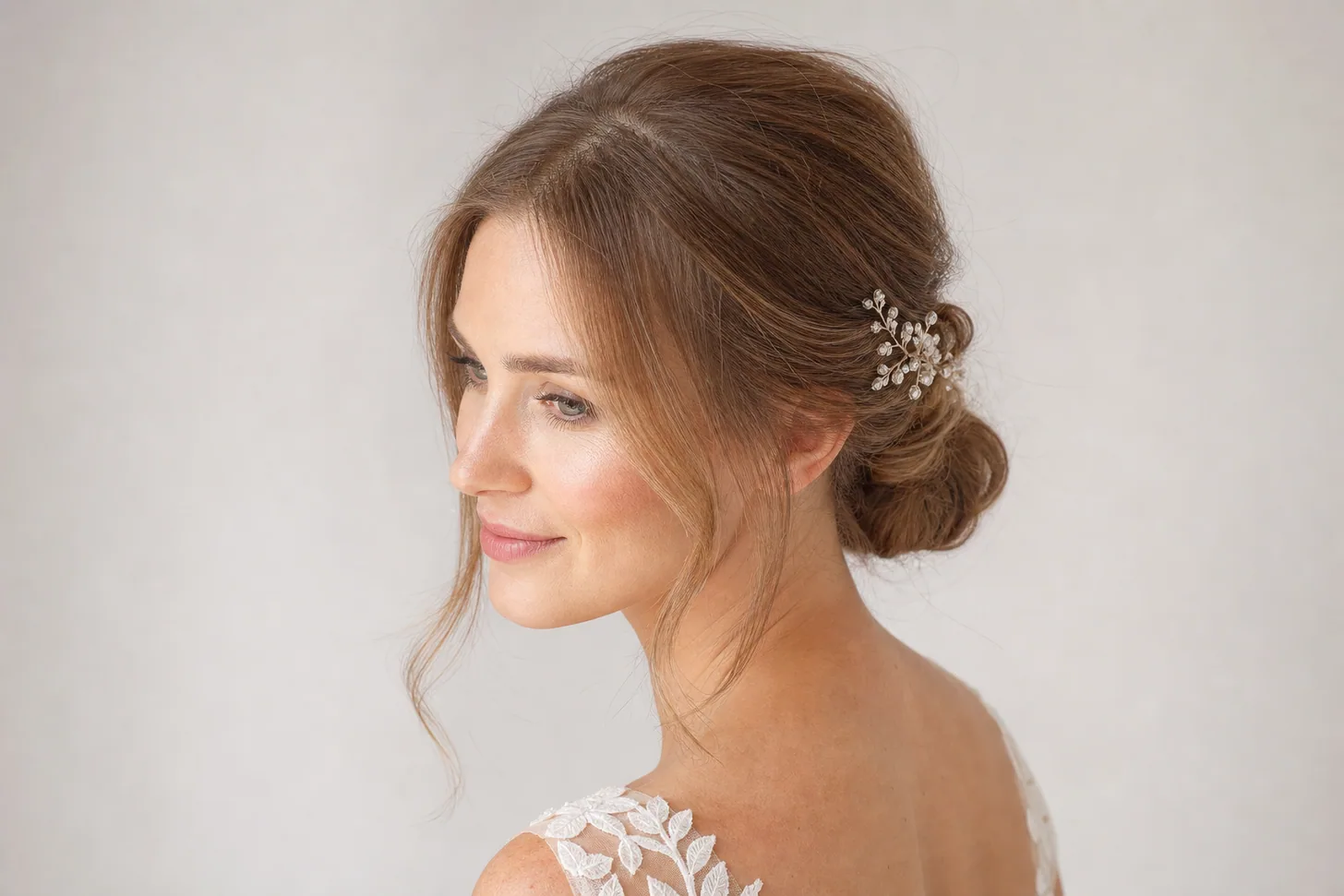
A pixie does not need to be made to look like long hair for a wedding. Texture through the top for height, a clean line at the nape, and one decorative pin at the side — the pin is what signals occasion, and one is more elegant than three. This is the entry where I most often have to talk someone out of a clip-in solution they do not need. Day-to-day styling for the same cut is in how to style short fine hair.
jaw-length fine bob with a jewelled slide holding one side back, soft volume at the crown, warm daylight
14
The jaw bob with a jewelled slide
The shortest properly formal option: a jaw-length bob with volume at the crown and a decorative slide holding one side back off the face. It photographs cleanly, it is comfortable for twelve hours, and the hardware does the formal work so your hair does not have to be tortured into doing it. Choose a slide with a grip designed for fine hair rather than a heavy one that will slide — the ones that stay put are in barrettes that hold in fine hair.
If you are doing it yourself at seven in the morning
Half of all bridesmaids do their own hair, usually earlier than they would like and in a room belonging to someone else. Three things make that go well. Do the whole thing once, weeks ahead, and leave it in for six hours — not to check that it looks nice, but to find out where it fails at hour four, because that is a different question and the only one that matters.
Wash two days ahead, not the day before: the usual second-day advice assumes a stylist is adding the texture, and when you are working alone the extra day of grip is worth more than the extra day of freshness. And set the shape the night before wherever the style allows it — rollers, braids or pin curls — so the morning is assembly rather than construction.
When the brief doesn't suit fine hair — what to actually say
The useful move is to ask for the version, not the exception. Almost every bridal brief is really a mood — soft and romantic, sleek and modern, everyone with their hair down — and there is nearly always a version of that mood that fine hair carries.
Asking to be excused from the brief puts the bride in the position of making a ruling. Asking for a version keeps you inside it and changes only the execution, which is a conversation about hair rather than about the wedding.
So: "I love that look — on my hair the slicked-back version shows scalp, so could I do the soft version of it with a bit of height at the crown?" Or: "I'm happy with hair down, I'll set mine the night before so it holds — it goes flat if I curl it in the morning."
Send a photograph of the version you mean, because a described difference sounds like a refusal and a pictured one looks like agreement. And do it weeks ahead rather than in the chair, where the only options left are the ones the clock allows. If you are unsure whether what you have is fine hair, low density, or both — worth knowing before you brief anyone — fine hair versus thin hair is the two-minute test.
When a bridesmaid style won't hold on fine hair
You washed it that morning. Freshly washed fine hair is too slippery to grip a pin. Wash two days ahead if you are styling it yourself, or revive it with texture spray and a rough blow-dry before anyone starts.
The style is pinned into loose hair. Without a teased base or a padding piece to anchor to, a fine-hair updo sags under its own weight — usually between the photographs and the meal.
The brief is sleek and scraped back. A slicked style reduces your silhouette to the shape of your skull, which is where density differences show most in a line-up. Ask for the soft version.
You are relying on the shared kit. Shared pins are the wrong colour and shared spray is usually a freeze hold that snaps on fine hair. Six matte pins and a flexible spray of your own is the whole fix.
You were talked into extensions to match the others. Badly matched added hair photographs worse than a shorter style worn deliberately. If you do want them, read how extensions behave on fine hair first — the coverage problem is the one that catches people out.
FAQ
A soft, low style with a hidden foundation — a folded nape knot, a wrapped low ponytail, or a half-up built over a discreet bump. Low placement lets you build height above it, and a slightly undone finish reads fuller than anything sleek. What matters more than the shape is the prep: style on second-day hair, or on clean hair revived with texture spray, and pin into a teased base rather than into loose strands. If the bride has asked for one style across the whole party, pick the version of it that carries volume — a half-up rather than a scraped-back pony, a folded knot rather than a tight coiled bun.
Group bookings ration chair time, so the deciding factor is not what looks best but what a stylist can build fast and what survives being built fast. Arrive with your hair already dry, already textured, and already a day old — that alone saves ten of your twenty minutes. Ask for a style with few anchor points rather than many: a twist-back, a wrapped low ponytail, or a folded knot needs a handful of well-placed pins, while an intricate braided updo needs constant small corrections that the clock does not allow. Tell the stylist at the start that your hair is fine and slippery so they build a base rather than discovering the problem halfway through.
Photographs of a bridal party are usually taken as a line-up at roughly the same distance, which turns hair into silhouette. Density differences that are invisible in a mirror become obvious in outline. The fix is width and height, not more hair: spread a bun rather than coiling it tightly, pancake a braid before you pin it, and give the crown genuine lift so your outline has a curve at the top. Avoid anything sleek and scraped back, which reduces your silhouette to the shape of your skull. A slightly larger, softer shape reads as equal density in a line-up even when it isn't.
Ask for the version rather than the exception. Most briefs are about a mood — soft and romantic, sleek and modern, all down — not about a specific set of pins, and there is nearly always a version of that mood that fine hair carries well. Say something like: I love the look, and on my hair a slicked-back version will show scalp, so can we do the soft version with a little volume at the crown? That keeps you inside the brief and changes only the execution. Raise it before the day, not in the chair, and send a photo of the version you mean.
Up or half-up, in most cases, because a bridesmaid day is long and fine hair worn fully down loses its shape faster than anyone expects — usually somewhere between the photographs and the meal. Half-up is the strongest compromise: it holds crown volume where the line-up photograph reads it, keeps length visible, and does not collapse when you hug two hundred people. If the brief is hair down, set it the night before with heatless rollers or braids rather than curling it in the morning, and accept that it will need a re-pin before the reception.
Yes, and it usually needs less rescuing than long fine hair does, because a short shape holds its own structure instead of relying on pins. A bob takes a set bend and a pinned side beautifully; a lob does a small half-up that reads clearly in photographs; a pixie takes occasion texture and a single decorative pin. The thing to resist is being talked into extensions so you match the others — a well-set short style photographs as a deliberate choice, while badly matched added hair photographs as exactly what it is.
Not usually, and most group bookings do not include one — which is precisely why fine hair benefits from a private rehearsal. Do it yourself once, a few weeks ahead, on a normal day: build the style, leave it in for six hours, and see what drops. You are not testing whether it looks good in the first ten minutes; you are testing where it fails at hour four. If it slides, the fix is grip and foundation rather than a different style, and knowing that before the morning is worth more than the trial you were not offered.
Eleven years behind the chair, with a specialty in bridal work and fine-hair texture. Simone has styled hundreds of weddings and believes a fine-hair updo that lasts is built in the prep, not the pins.
Results vary with hair type, density, and growth patterns. This guide is educational and not a substitute for an in-person consultation with a licensed stylist.
Hairstyle images in this guide are AI-generated illustrations, not photos of real clients or results. See our image policy.
Get the good hair intel
One honest, stylist-written guide in your inbox each week. No hype.

 SB
SB