Reviewed by Tara Sullivan · Updated October 2026 · 10 min read
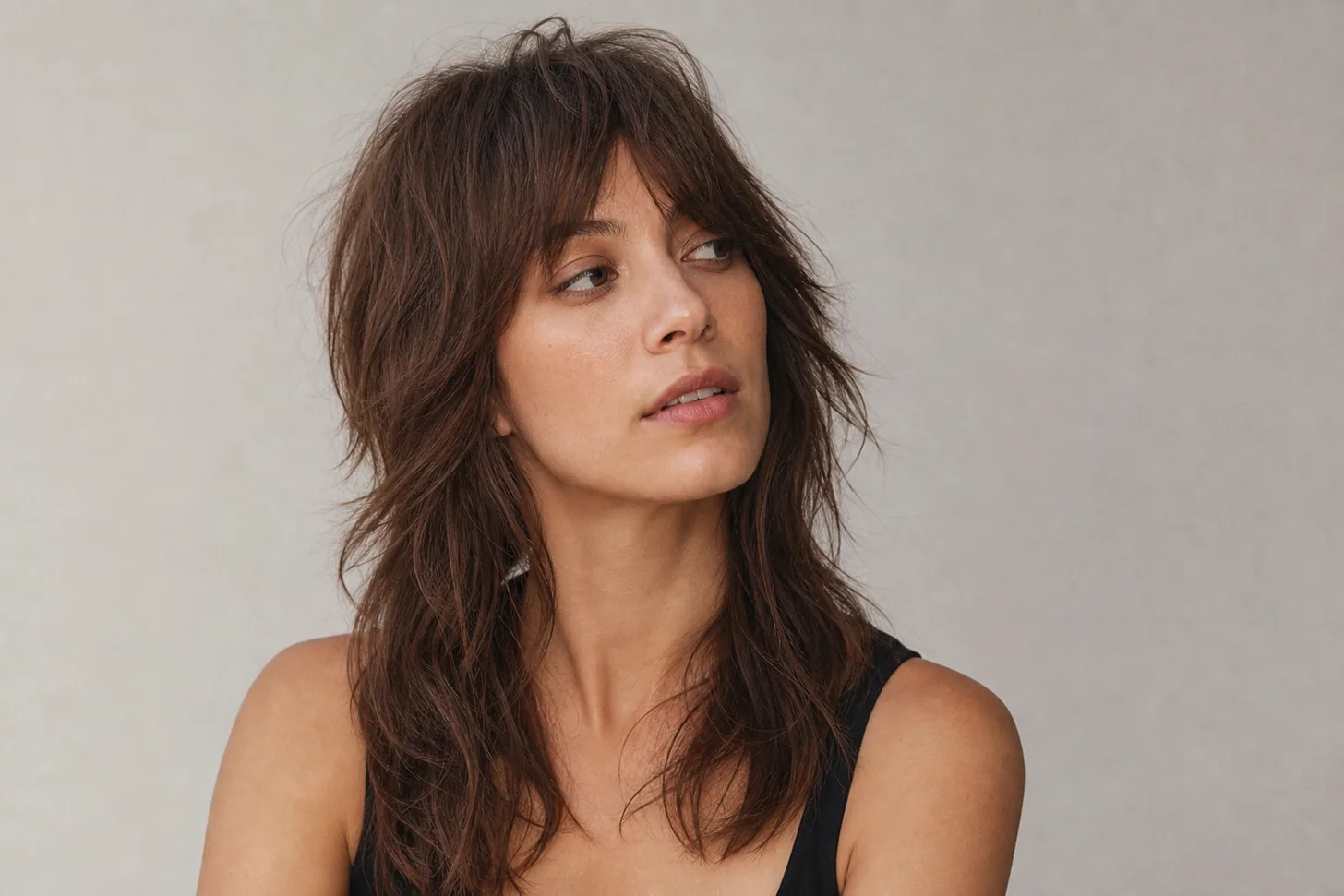
A men's wolf cut is a shaggy cut with choppy layers on top, a longer back like a soft mullet, and a fringe that falls forward. On thin hair it can add fullness, because short layers on top stand up and the texture hides how few strands there are.
It works best when the hairline and crown are still full. Below are 12 wolf cuts for men with thin or fine hair, from short and tidy to wavy and long, with the test that tells you which one your hair can carry.
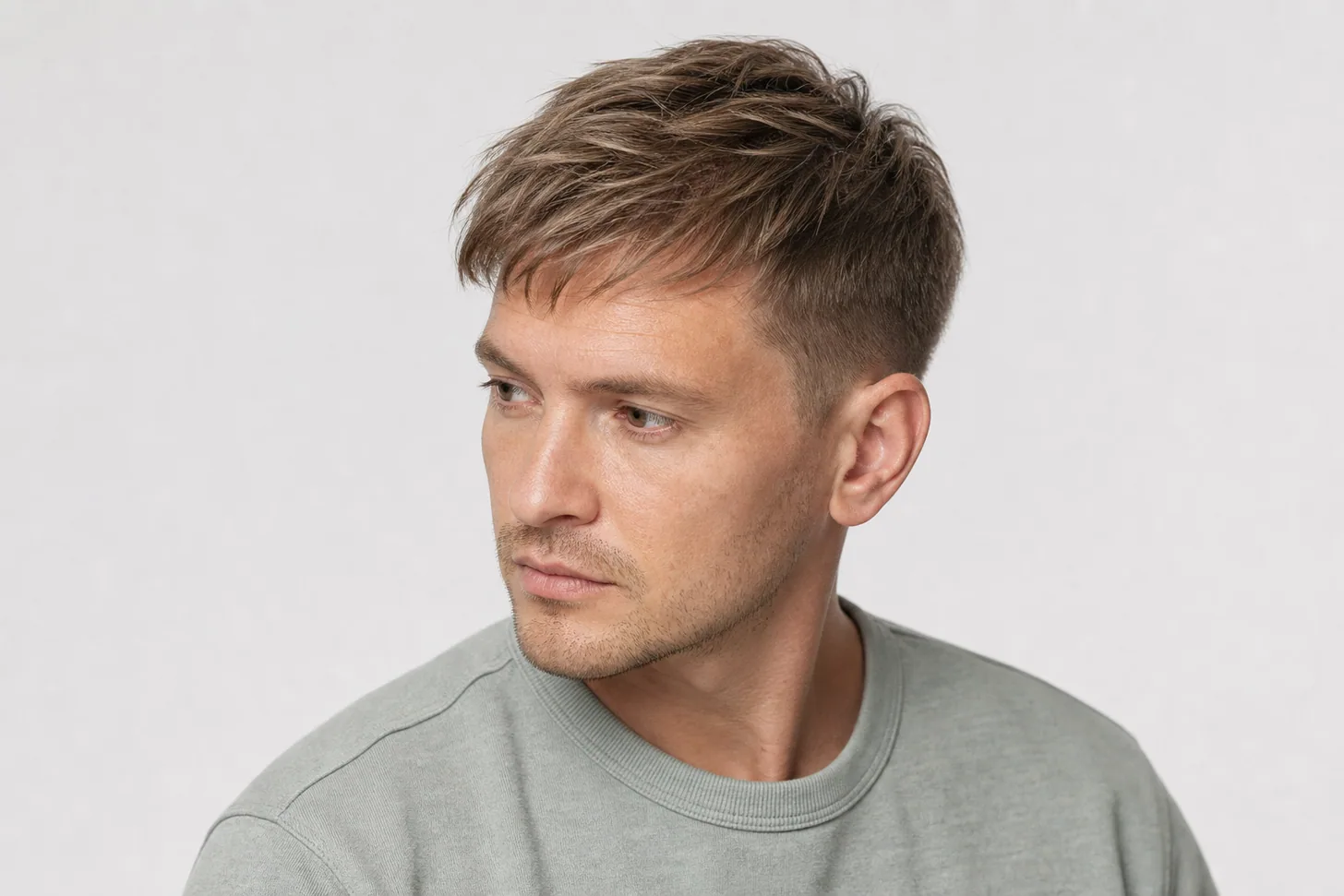
textured medium wolf cut on a man with fine light-brown hair, choppy layered top pushed forward into a messy fringe, longer layers at the back reaching the collar, tapered sides, three-quarter view
Chair-side note
Before I cut a wolf on a man with thin hair, I push his hair forward and look at the crown under the light. If I can see scalp there, the long back will make the top look even thinner.
If the crown is full, I keep the layers soft and the weight low. The choppy top gives the volume; the back stays solid so the cut never looks stringy.
SB
— Simone Baptiste, Senior Stylist
Does a wolf cut work on thin hair for men?
Yes, on fine hair with a full hairline and crown. Short, choppy layers on top stand up because they weigh less, and the messy texture reads as more hair. The forward fringe also hides a high forehead.
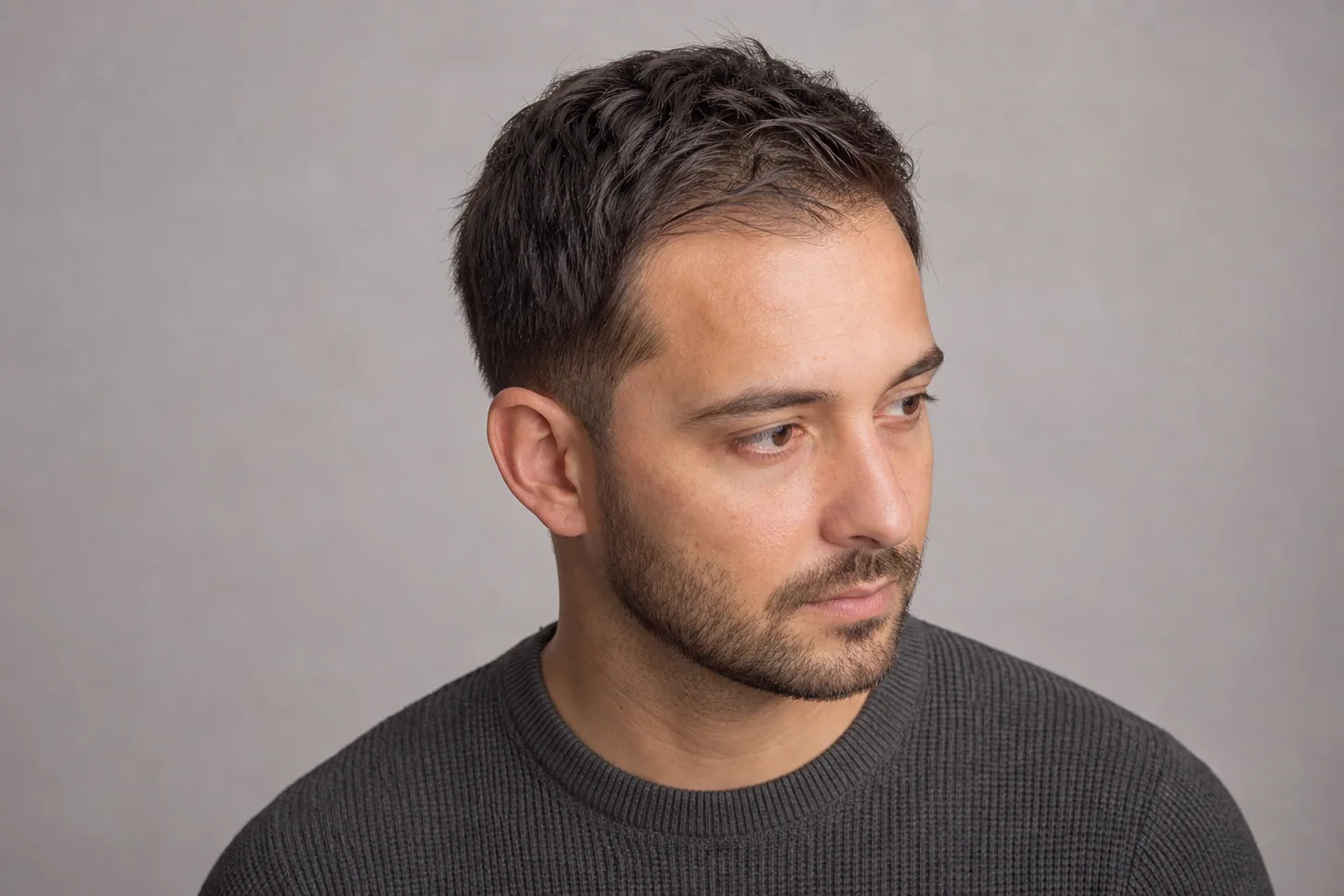
It works less well once the hair is thinning at the crown or the temples have receded a long way. The long back draws attention to a thinner top. If that is you, a cut for thinning hair or a crew cut will look fuller.
The crown test
Push your hair forward with damp hands and take a photo of the top of your head from above. If the scalp barely shows, any wolf cut below will work. If it shows clearly at the crown, choose the short wolf or the textured crop wolf.
Not sure if your hair is fine or thinning? Our guide to fine hair or thinning hair walks through the signs.
Classic wolf cuts for men with fine hair
These are the standard men's wolf cut and its softer versions. All of them need the crown to be full.
classic men's wolf cut on fine dark-brown hair, choppy layered top, messy fringe falling to the brows, longer shaggy layers at the back to the collar, man in his 20s, three-quarter view
1
The classic men's wolf cut
Choppy layers on top, a messy fringe and a longer, shaggy back. It is the standard men's wolf cut, and it needs fine hair with plenty of strands.
Rough-dry it with your fingers and finish with a little matte clay.
short men's wolf cut on fine light-brown hair, short choppy textured top, short fringe, back only slightly longer touching the top of the neck, tapered sides, man in his 20s, three-quarter view
2
Short wolf cut
Shorter all over, with the back only just longer than the top. Less length means less weight, so thin hair stands up better.
This is the wolf cut I suggest first for men with thin hair.
soft blended men's wolf cut on fine medium-brown hair, gentle layers flowing from the top into a slightly longer back, soft forward fringe, no harsh steps, man in his 30s, side three-quarter view
3
Soft blended wolf cut
The layers blend into each other instead of stepping. Fine hair keeps more weight this way, and the ends don't look wispy.
Ask for point-cut layers, not a razor.
men's wolf cut with neatly tapered short sides on fine dark-blond hair, textured choppy top and fringe, longer layers at the back, man in his 20s, side profile view
4
Wolf cut with tapered sides
The sides are tapered short, so the volume on top looks bigger by contrast. It also looks tidier for work.
Ask your barber for a scissor taper rather than a skin fade if your hair is very fine.
Wolf cuts for thinner hairlines
These four adapt the wolf for a higher forehead, slight recession or a crown that is starting to thin.
men's wolf cut on fine light-brown hair with a heavier choppy fringe brushed forward covering slightly receding temples, textured top, longer back, man in his 30s, front view
5
Wolf cut with a heavy forward fringe
A heavier fringe brushed forward covers the corners of the hairline. It's the best wolf cut for slight recession at the temples.
short textured crop with a wolf-cut shape on fine dark-brown hair, choppy forward top and short fringe, back slightly longer, short sides, man in his 30s, three-quarter view
6
Textured crop wolf
A crop with a choppy forward top and a slightly longer back. It keeps the wolf shape at a length that thin hair can carry.
If your crown is starting to thin, this is the safest wolf cut.
men's wolf mullet on fine light-brown hair, textured choppy top and fringe, low taper fade at the temples, longer layers at the nape, man in his 20s, side profile view
7
Wolf mullet with a fade
A low fade at the temples and a longer nape. The fade makes the top look thicker, and the back keeps the wolf shape.
men's wavy wolf cut on fine wavy dark-blond hair, loose natural waves through choppy layers, wavy fringe, longer wavy back, man in his 20s, three-quarter view
8
Wavy wolf cut
Natural waves through the layers make thin hair look much fuller. Wavy hair is the easiest texture for a wolf cut.
Longer wolf cuts need the most hair. Choose these only if your crown is full and your ends are thick.
medium men's wolf cut with a middle part on fine dark-brown hair, curtain-style front falling to the cheekbones, choppy layers, longer back to the collar, man in his 20s, front view
9
Medium wolf cut with a middle part
A middle part with the front falling to the cheekbones. It is a softer wolf cut that frames the face.
Switch to a side part on days when the part looks wide.
long men's wolf cut on fine light-brown hair, choppy layered top, layers falling to the shoulders at the back, tucked behind the ears, man in his 20s, three-quarter view
10
Long wolf cut
Layers to the shoulders at the back. It needs fine hair that is plentiful, or the ends look thin.
Trim the ends every eight weeks to keep them dense.
men's curly wolf cut on fine curly dark-brown hair, loose defined curls on top and in the fringe, longer curls at the back, shorter sides, man in his 20s, three-quarter view
11
Curly wolf cut
Curls on top and a longer curly back. Curls hide thin spots better than straight hair does.
grown-out men's wolf cut on fine medium-brown hair, softer longer layers, fringe pushed to the side, back at the collar, relaxed shape, man in his 30s, three-quarter view
12
Grown-out wolf cut
The wolf cut a few months on, with softer layers and the fringe pushed aside. It is a good look in itself.
To go shorter, ask for the back to be cut first and the top kept.
How to style a wolf cut with thin hair
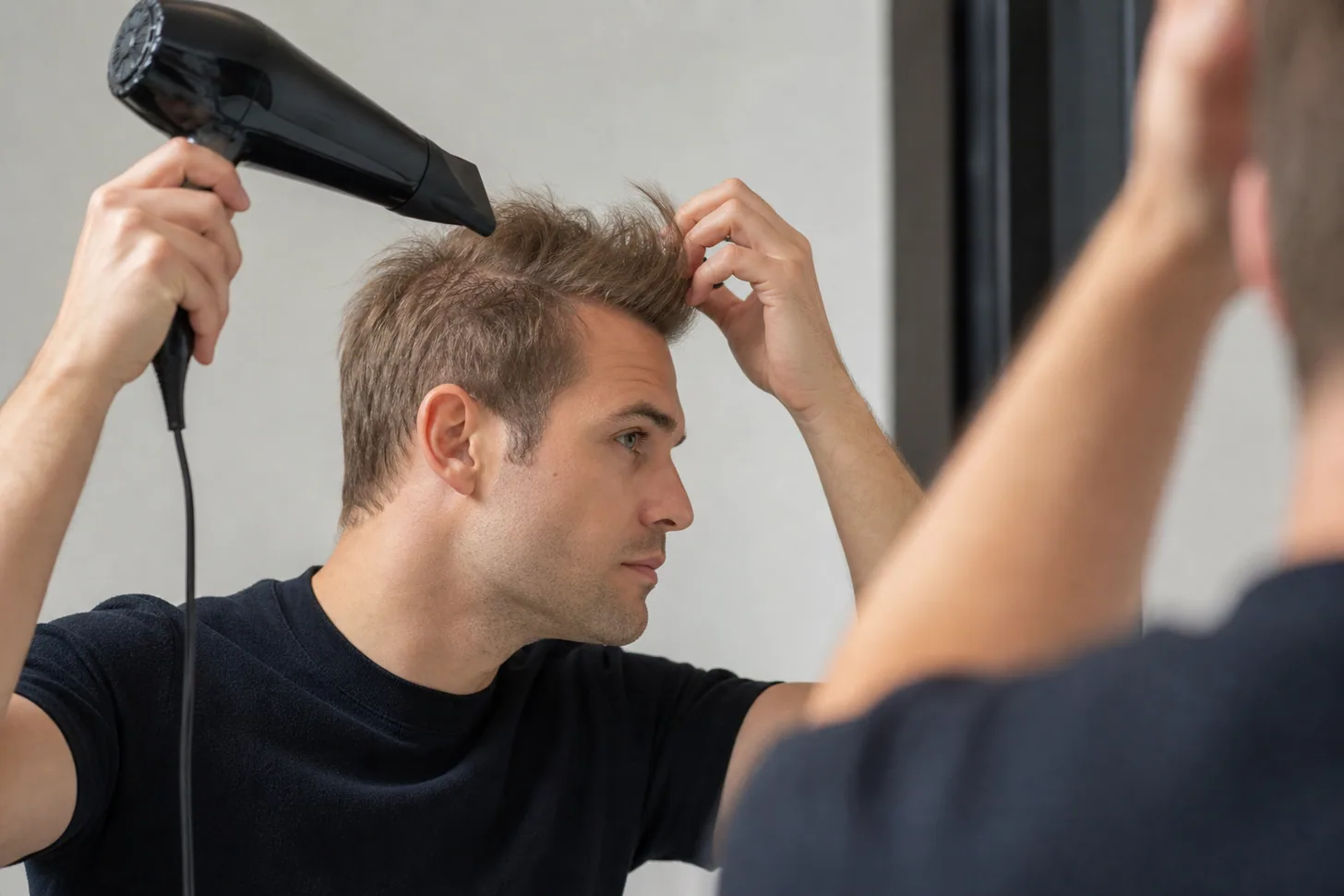
Towel-dry, then blow-dry the top with your fingers, pushing the roots forward and up. Work a small amount of matte clay or texture spray through dry hair and twist a few pieces.
Say: "I'd like a wolf cut with soft, choppy layers on top, a forward fringe and a slightly longer back. My hair is fine, so please keep the weight at the ends and don't use thinning shears."
Bring photos of a wolf cut on fine hair, from the front, side and back. Tell your barber where your hair is thinnest before they start.
When to skip the wolf cut
Your scalp shows clearly at the crown. The long back makes the top look thinner. A buzz cut or crew looks fuller.
Your temples have receded past the corners of your eyes. The fringe can no longer cover them. A short textured crop works better.
You want a cut that needs no styling. A wolf cut on fine hair needs a minute with a dryer and a little product.
Your hair is shedding more than usual. Wait for a diagnosis before a big change. See why hair thins.
FAQ
Yes, if the hairline and crown are still full. Short, choppy layers on top stand up and add fullness. If the crown is thinning, choose a short wolf or a textured crop instead.
A shaggy cut with choppy layers on top, a fringe that falls forward and a longer back like a soft mullet. It is a mix of a shag and a mullet.
Usually, yes. The layers on top add volume and the messy texture hides how few strands there are. Long, thin ends at the back are the risk, so keep the back short if your hair is thin.
Blow-dry the top forward and up with your fingers, then work in a little matte clay or texture spray. Avoid heavy wax and gel.
For slight recession, yes: a heavier forward fringe covers the temples. If the temples have receded a long way, a short textured crop is better.
A mullet is short on the top and sides and long at the back. A wolf cut has more layers and texture on top and a fringe, so the change from top to back is softer.
Eleven years behind the chair, specializing in short shapes and fine-hair texture. Simone believes the best haircut is the one you can style yourself in ten minutes.
Results vary with hair type, density, and growth patterns. Hairstyling guidance is not a substitute for an in-person consultation with a licensed barber or stylist.
This article is not medical advice. If your hair loss is sudden, patchy, or accompanied by an itchy, sore or scaly scalp, see a board-certified dermatologist.
Hairstyle images in this guide are AI-generated illustrations, not photos of real clients or results. See our image policy.
Get the good hair intel
One honest, stylist-written guide in your inbox each week. No hype.

 SB